

All that is necessary for evil to succeed is for good men to do nothing. ~ Edmund Burke (Disputed)
There has been much heated debate about the subject of Stand Your Ground Legislation. Proponents argue that when faced with a dangerous situation, a person’s fight-or-flight response should default to flight by law.
![keep-calm-and-stand-your-ground-5[1]](https://logicallibertarian.com/wp-content/uploads/2014/04/keep-calm-and-stand-your-ground-51.png?w=257&h=300)
Imagine a scenario where a middle-aged person of average health like myself gets confronted by a would be attacker who is much younger, fitter, stronger, and faster. I’m expected to make an attempt to flee in states where Duty-To-Retreat is the legislation du-jour instead of Stand-Your-Ground.
What happens in this scenario? Ultimately I run—hopefully to some place safe. But this creates a very unsafe situation for me instead of my attacker, because now I’m on defense and I have to hope I can run fast enough to get away. I also have to hope my attacker doesn’t have a gun, because I wouldn’t know once I started running; I have my back to them—a position that makes me as vulnerable as a person can be. Plus, like most people, I can’t outrun a bullet, if they’re armed.
In this situation, the victim is ultimately expected to put themselves in a more dangerous position because of the actions of a would-be attacker, but also they’re often expected to abandon their property as well. But why does the attacker get the benefit of having the upper hand or having their rights protected while mine are diminished?
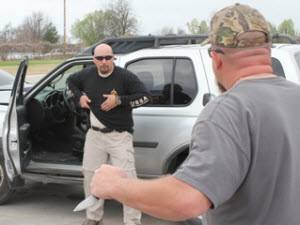
With Stand-Your-Ground, I simply draw my gun, keep my eyes on my would-be attacker, and ultimately either they flee, or they get shot due to a scenario they created. I could flee if I thought it was the best way to protect myself, but I shouldn’t have the threat of 20-to-life hanging over me if I opt not to.
The problem has often been that politicians hear news stories about young attackers getting shot and killed and court voters as the compassionate one who feels it’s a tragedy a child is dead. While I agree it is sad on the face of it, I feel this is disgusting to act as if a young felon’s life is somehow more important than the life of the innocent victims they decided to attack.
Let’s dispel some scientific nonsense first. Nothing magical happens at 18 years of age. There’s no radical change that takes place in the human body. Making 18 the age of adulthood was something Americans decided via legislators, and it has little do with science. It is generally just that we know humans stop growing around that age, not their mental capacity to understand the weight of their actions; that varies from person to person.
To act as if a 16-year-old for instance, who is putting someone’s life or property at risk with malicious intent is somehow innocent or unaware of what they are doing, or doesn’t understand the heinousness of the act, requires a monumental amount of ignorance.
To act as if the victim should understand the person is under 18 is equally nonsensical. Attackers usually don’t show you an I.D. first.
I don’t want anyone to die needlessly, but whatever bad outcome happens to a violent felon caught in the act, up to and including death, is justice in my eyes. Whether they are 14, 18, or 40 is irrelevant. They voluntarily chose to create this situation, and they’ll potentially pay the price for it. If so, they will serve as a warning to others not to choose a psychopath’s lifestyle.
However, an often not discussed issue I want to delve into is the psyche of the victim. While I don’t profess to live in the middle of gangland, I have had the unfortunate honor of being attacked, robbed, and had a gun put in my face at different times in my life.
While it’s easy for politicians to pass laws that a rational person would adhere to, until you’ve been victimized, it’s impossible to understand the natural and sometimes uncontrollable rage that will fill every victim who is put into that situation.
In each instance, if I had been carrying a firearm, I would have emptied it into my attacker and then probably pulled the trigger at least a dozen more times to make sure there weren’t any bullets left that my gun just somehow missed.
Now maybe you’re thinking I’m a violent guy, but I’ve genuinely never instigated a physical altercation, so the evidence indicates otherwise. These three instances are the only ones I’ve been involved in since 5th grade, and all of them were unprovoked on my part.
It is a fool’s mission to expect a reasonable person to behave reasonably when they are thrust into a situation that puts them in mortal danger. It’s hard to predict what a situation like that will do to someone, but assuming they’re not an emotionless sociopath or a trained soldier mentally equipped for such an act, it will affect them in a way they’ve never been affected before, and a controlled outcome should not be expected.
Putting innocent victims in jail because they overreacted to a violent attack is one of America’s biggest atrocities it commits on its own denizen.
Not only do I believe that the Constitution should be amended to include Stand-Your-Ground, I also believe that the law should clearly state two things:
- Attackers have no rights during the commission of, or while fleeing from a felony. Nor shall they or their family have any legal right to civil damages incurred by their counter-attacker later.
- If the victim, or an innocent bystander harms the attacker in any way during the commission or fleeing of a felony, the person acting against the attacker should be immunized from all criminal prosecution.
(In both instances, I emphasize during the act—I do not condone hunting them down later in an act of vigilantism)
I understand that people may think my idea is radical and heartless, but you shall not convince me I’m on the moral low ground.
While I do value life, I only value the lives of people who respect the rights of others. If you opt to attack, rape, murder, or rob another person, I feel your early and untimely death will be to the benefit of humanity.
It not only protects society from your future bad acts, but if sociopathy is genetic, which some in the psychiatric profession suspect it is, the genes of a sociopath are removed from the gene pool as well. From a purely logical standpoint, my argument makes the most sense to advance society as a whole.
So what about the Edmund Burke quote? My plan would hopefully encourage the good men from the anecdote to do something instead of nothing. If a victim is killed because a good person who could have helped opted to do nothing out of a fear of prosecution for intervening, then evil will have triumphed, and the right to life isn’t nearly as Constitutionally protected as it should be.


 The Logical Libertarian™