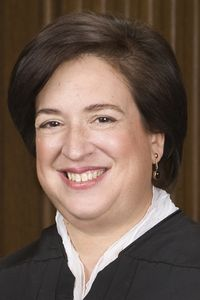
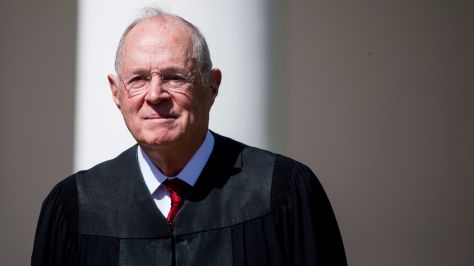
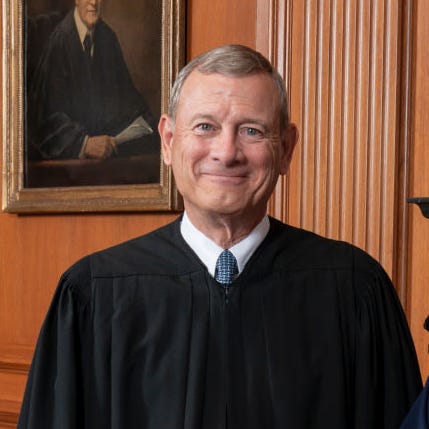
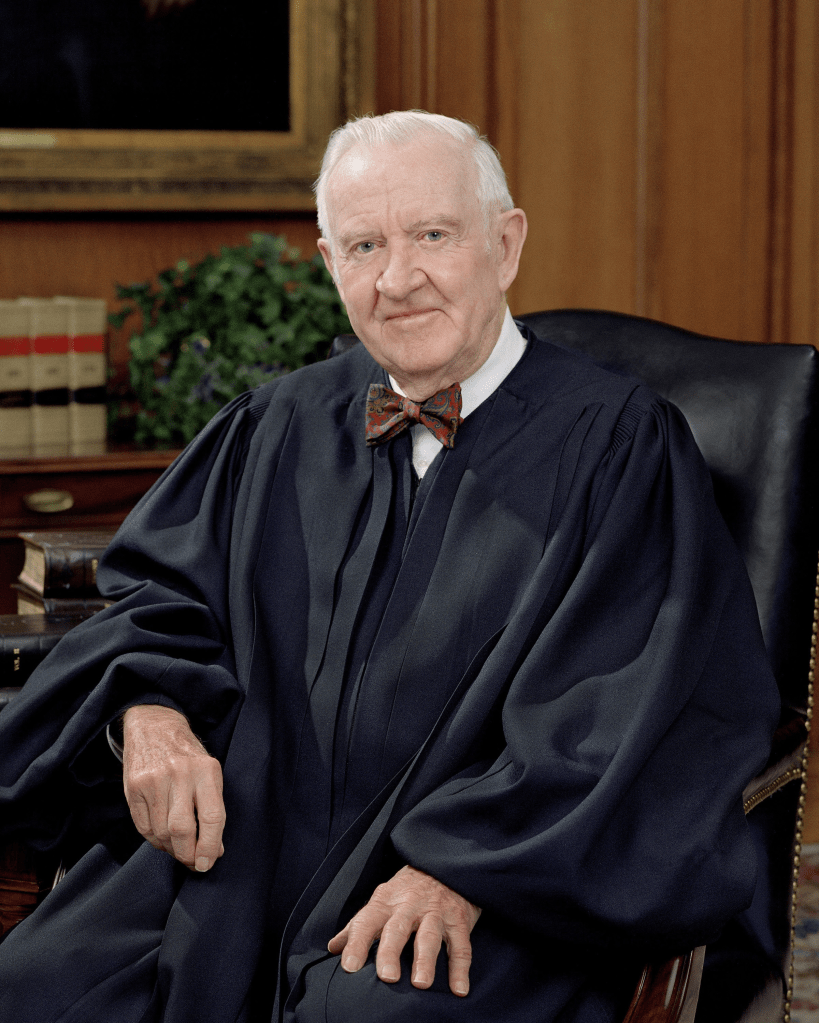
Every person who, under color of any statute, ordinance, regulation, custom, or usage, of any State or Territory or the District of Columbia, subjects, or causes to be subjected, any citizen of the United States or other person within the jurisdiction thereof to the deprivation of any rights, privileges, or immunities secured by the Constitution and laws, shall be liable to the party injured in an action at law, suit in equity, or other proper proceeding for redress, except that in any action brought against a judicial officer for an act or omission taken in such officer’s judicial capacity, injunctive relief shall not be granted unless a declaratory decree was violated or declaratory relief was unavailable. For the purposes of this section, any Act of Congress applicable exclusively to the District of Columbia shall be considered to be a statute of the District of Columbia. ~42 U.S.C. § 1983
This little 155-year-old beauty from 1871 (it doesn’t look a day older than 154) was established during the Reconstruction era—the period after the Civil War and the ending of slavery. It gives you, me, and anyone else in the US the right to hold government officials civilly liable if they violate our constitutional rights.
Civilly liable just means you can sue the bejeezus out of them.
For brevity’s sake, we’ll just call it § 1983 going forward.
That one run-on sentence — and it’s a doozy — is the whole statute. Small but important.
But, the Supreme Court has sadly manipulated this well-intentioned statute in ways that few would have imagined.
Before we dig in to how, I’m going to keep a running score regarding the status of § 1983, because this shit gets complicated.
Here’s our baseline:
1871: Government official violates your rights while doing their job? You may sue them. An unmolested § 1983 in a nutshell.
You might be wondering what triggered this law in the first place—you could have always sued someone who wronged you—right?
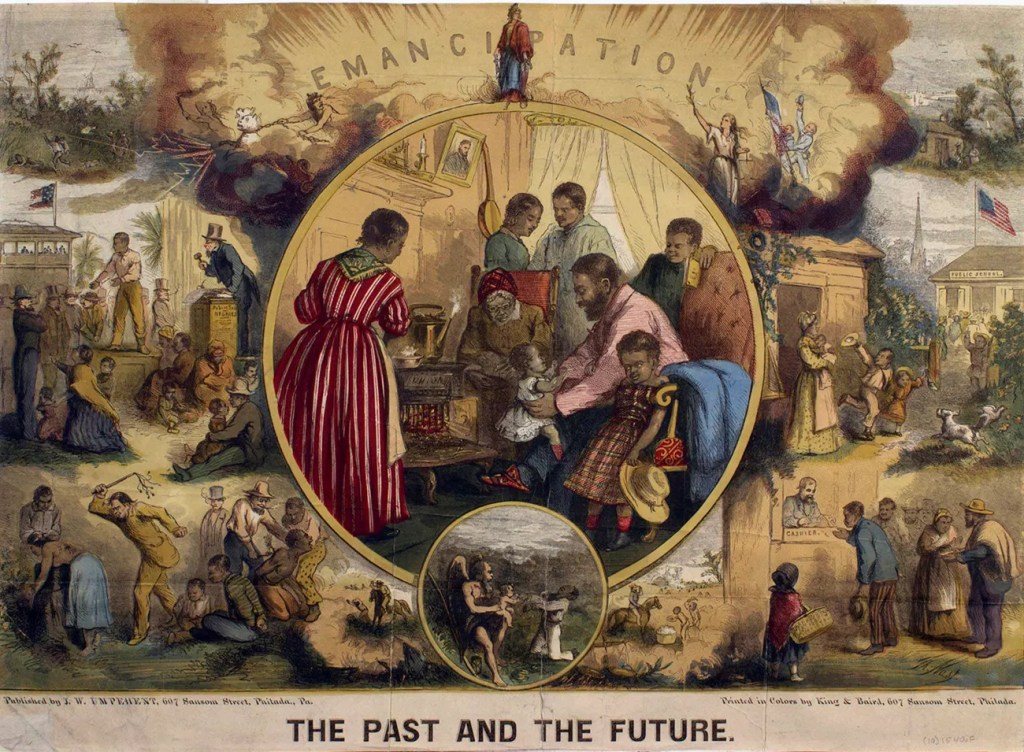
Well, let’s go back to June 19th, 1865 (now known as Juneteenth). After Union soldiers arrived in Galveston, Texas and announced slaves were officially freed, I think we can imagine southern government officials were less than polite to our newly emancipated black friends. Heck, many were members of the Ku Klux Klan and happily committed frequent racist acts of violence towards them.
So here were government officials, fresh off of getting their ass handed to them in the Civil War, who had sworn to support and defend the Constitution of a country they’re probably still pissed at, willfully trampling the rights of the very people they used to own as slaves, whom they’d just been ordered to set free. That order went against everything they fought for—sucked to be them.
The racist acts these traitors committed were so commonplace, and justice was so sparsely meted out when it happened, that Congress felt compelled to take action. They wanted a federal statute that gave anyone harmed by a government official in an unconstitutional manner a way to claw something back and be made whole, because the states where these horrible acts occurred were rarely going to prosecute it themselves—they were part of the problem.
Of course, many atrocities can never be made whole—I think we all understand that—but a large sum of cashola rarely makes anyone less whole.
~ 1875 ~
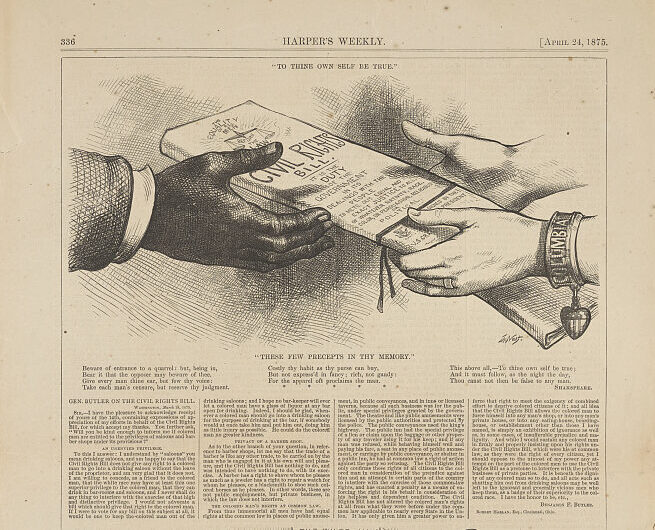
Shortly after the passage of § 1983, Congress then passed the Civil Rights Act of 1875 (CRA 1875). No, not the famous one from 1964 that everybody thinks of today—this older version was an entirely different animal.
It essentially guaranteed that certain public accommodations—inns, public transportation, theaters, and the like—couldn’t turn people away based on race, nor exclude them from juries.
And with that, racism was dead, the Klansmen all hung up their Casper the Friendly Ghost costumes, and the black community lived happily ever after.
If only, right?
~ 1883 ~
Despite Congress’ best intentions with CRA 1875, just eight short years later, SCOTUS decided 8-1 with the Civil Rights Cases, that CRA 1875 was unconstitutional.
I know that’s a weird name for a SCOTUS case—it’s usually two parties with a “v.” in the middle. But there were five separate cases where a black individual was denied accommodations by an entity that would have happily given them to someone who was white. So instead of rattling off five different names against five different respondents, they just combined them all and called them “The Civil Rights Cases.”
While it’s very plausible this ruling against CRA 1875 was motivated by racism, there is a legitimate reason they cited here that’s worth understanding—a fact about federal law that few people know. It’s going to blow your mind—it did for me, anyway.
We often think that Congress can write any law it wants, and technically it can. If it passes and the president signs it—or just sits on it for ten days without vetoing it—it’s active law.
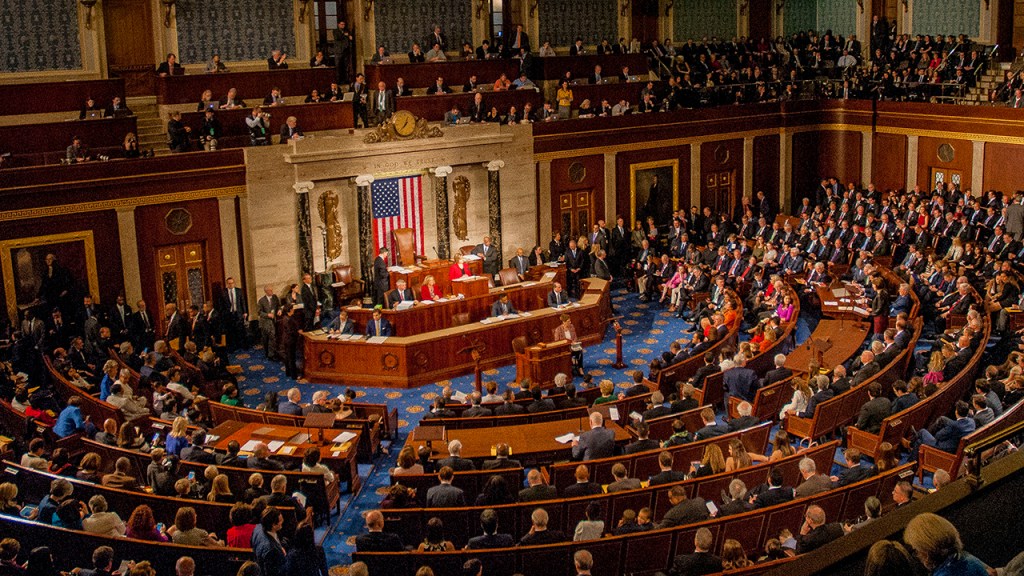
View, from the balcony, of congressmen and congresswomen on the house floor as the 115th Congress is called into session on its opening day, Washington DC, January 3, 2017. (Photo by Mark Reinstein/Corbis via Getty Images)
However, if that law were to be challenged in court, it might face judicial review. The Court could then deem it unconstitutional and strike it down.
We tend to think of courts striking down laws as unconstitutional solely because they take away someone’s enumerated constitutional rights. It might be a hate speech law that violates the First Amendment, or a gun law that violates the Second.
These restrictions apply to government at all levels—not just Washington. This is thanks to a doctrine called incorporation, which runs the Bill of Rights through the Fourteenth Amendment’s Due Process Clause and applies it against the states.
They reason that if the states, counties, and cities weren’t bound by the Constitution, then practically speaking, you wouldn’t have those rights at all—every level of government below the federal one could just take them away from you.
But the mind-blowing side of constitutionality I referred to is the application of the Tenth Amendment and what it actually means. The text says:
The powers not delegated to the United States by the Constitution, nor prohibited by it to the States, are reserved to the States respectively, or to the people.
Right there, in black and white, it tells you that federal laws must be underpinned by something in the Constitution that says Congress can regulate that thing. Anything else must be done at the lower levels of government (e.g. state, county, city).
A great example of this principle is from United States v. Lopez (1995), where a 12th grader carried a concealed firearm into school. While he didn’t shoot anyone, he did get busted and charged under a 1990 law called the Gun-Free School Zones Act (GFSZA).
The government argued it had the authority to pass the GFSZA via the Commerce Clause—Article I, Section 8, Clause 3 of the Constitution, which empowers Congress to:
Regulate Commerce with foreign Nations, and among the several States, and with the Indian Tribes.
They reasoned that schools provide education, education helps kids grow up, those grown-up kids will engage in economic activity, and therefore this law regulates commerce.
No, I’m not making that shit up—that was really the justification the government argued when it defended the law against young Señor Lopez in court.
They argued this convoluted nonsense because the Constitution doesn’t give Congress the power to regulate guns, so a Commerce Clause link was their hail Mary at keeping this law in force.
A staggering amount of federal law is tied to the Commerce Clause. For a big chunk of the twentieth century, courts assumed Congress could find an interstate-commerce angle for almost anything it wanted to pass.
The Commerce Clause
Look, libertarians like me tend to celebrate any time a gun law gets tossed—so take my bias as a given. But this one shouldn’t sit right with the pro-gun-control crowd either.
Forget guns for a second: if a law can be justified because it “affects commerce” this loosely, then Congress can regulate damn near anything. The Tenth Amendment should not be hung out to dry like that—not cool, Congress. Not cool!
SCOTUS thought so too. For the first time in 60 years, they told Congress to cut the shit with this Commerce Clause nonsense, and summarily struck the GFSZA down. Carrying a gun near a school isn’t commerce, and stretching the Commerce Clause to cover it insulted the Court’s intelligence.
Now, that whole Lopez detour wasn’t a random tangent—it’s the exact same principle at work when SCOTUS neutered the Civil Rights Act of 1875. In the aforementioned Civil Rights Cases, SCOTUS ruled that nothing in the Constitution empowered Congress to regulate civil rights the way it sought to. Same “disease” as the gun law—Congress reached for a power it didn’t have, so that law had to “die.”
To defend CRA 1875, Congress leaned on the 13th and 14th Amendments. The 14th, it argued, guarantees equal protection. The 13th which killed slavery, they reasoned, should also let Congress kill slavery’s leftovers.
SCOTUS rejected both of those arguments because the 14th only restrains government, not private businesses.
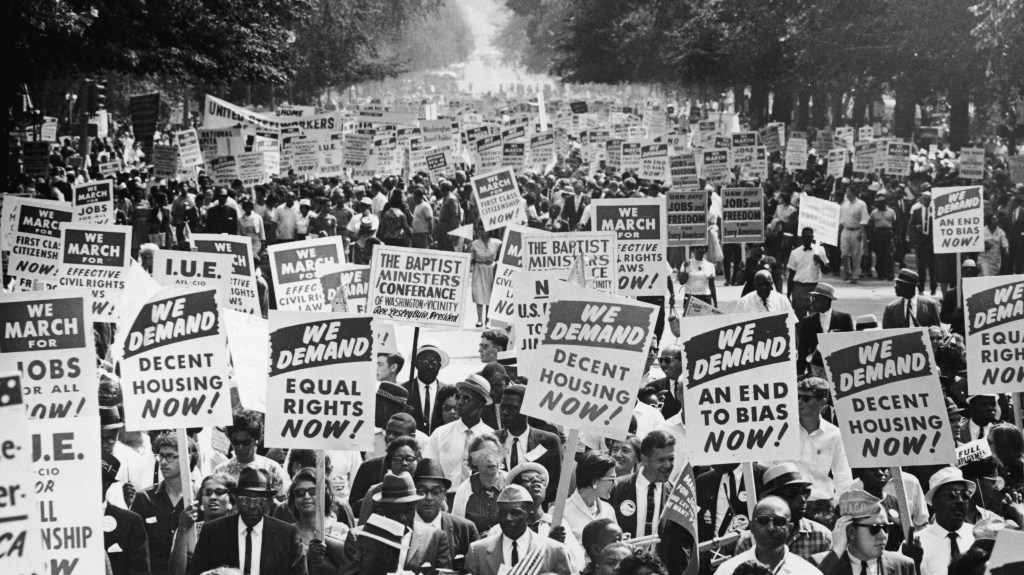
Demonstrators march down Constitution Avenue during the March on Washington on Aug. 28, 1963.
And, getting turned away from a hotel—however humiliating—wasn’t a “badge of slavery” it felt the 13th could reach.
Naturally, you may be wondering how the Civil Rights Act of 1964 has survived.
Well…because its authority was derived from, you guessed it, the good ol’ Commerce Clause. I told you—that shit is everywhere.
Going back to 1883, in its ruling on the Civil Rights Cases, SCOTUS reiterated that a private entity discriminating against you might be vile, but it isn’t “state action.” So the 14th Amendment can’t touch it—a principle known as the state-action doctrine. Therefore CRA 1875 was unconstitutional as a result.
While it’s subtle, the part that matters for our discussion is that the court drew a clear line between what was and wasn’t state action. It did so in helping to interpret the Fourteenth Amendment, but its interpretation went much further.
For instance, what about a government official who abuses their power in a way no law authorizes?
Is a cop beating a random black person “the government acting,” or just a bigoted thug who happens to wear a badge? If it’s the latter, § 1983 won’t reach him at all.
So that unbridgeable gap is where § 1983 went on vacation for nearly eighty years—failing to deliver on its promise almost entirely.
There’s no law that says our wayward racist cop should be beating that person in the first place—so you could argue they’re not acting “under color of law” at all.
More broadly, when would any government pass a statute that orders a government official to blatantly violate your rights? Almost any bad act a government employee does to someone is going to be them running afoul of the law, not enforcing it.
With that nonsensical framework now case law, it was nearly impossible to win a § 1983 claim, making the statute about as useless as a screen door on a submarine.
Our score now:
1883: Government official violates your rights while doing their job? You may sue them—but only if the violation was somehow their official duty. Since violating rights is essentially never anyone’s official duty, § 1983 is now about as useful as a parachute that opens on impact. Paradox #1 created (there will be more)—Godspeed.
Here’s another fact you may not know: just because SCOTUS says a law is unconstitutional, doesn’t mean someone grabs the nearest eraser and deletes that shit from the U.S. Code. It’ll sit there doing nothing in perpetuity unless Congress votes to remove it or SCOTUS throws stare decisis to the wolves and overrules themselves later. Laws ruled unconstitutional merely become unenforceable.
Stare decisis is the courts’ unwritten dogma of sticking to their own past rulings. It’s a Latin term that means “let the decision stand.” Courts adopted this approach to bring some level of consistency, predictability, and stability to the law
Theoretically, if some rogue official tried to enforce such a law anyway, you could sue them under § 1983—and then, in a ironic twist, they’d turn around and claim qualified immunity to dodge you. But that’s mostly academic, because it’d never even get that far in the first place. Courts are bound by precedent, so any prosecution under a dead law gets laughed out of court immediately.
Apologies if this is feeling like an Amway pitch up until now. I’ve danced around what this is about without naming it. But I didn’t want to poison your mind and have you “check out” thinking you already knew it all.
So yes, as you may have guessed, we’re discussing “qualified immunity.”
As you may recall from my post on the origins of strict scrutiny (you can read it here, if you haven’t already), the courts sometimes recognize that rights can’t always be absolute, as a matter of practicality.
Think about the old notion that you “can’t yell fire in a crowded theater”—even though that one’s actually a myth these days (the case behind that notion got overruled in 1969—Brandenburg v. Ohio). But the underlying idea holds: rights have limits. The First Amendment is broad, but it won’t protect you if you incite a riot.
Qualified immunity was a way for courts to protect government officials from what they felt were wrongful and unintended applications of § 1983.
Qualified immunity isn’t a statute from Congress—it’s purely caselaw (Judge-made law, not congressional).
It’s also not a direct result of one case—it was slowly built over time—a series of exceptions the Court deemed necessary and proper when interpreting § 1983.
~ 1958 ~
Now—let’s fast forward to the awakening of § 1983—and also to the building blocks of qualified immunity that got stacked alongside it, one by one, ultimately keeping the statute from ever doing the work it was designed for.
These weren’t gentle knocks and a polite request to search the place. Pape and his crew kicked in two doors, no warrant in sight, and dragged Monroe and his wife—both of them stark naked—into the living room at gunpoint. Then they herded in all six of the Monroe kids to come witness it all for good measure.
Pape went to work on Monroe with his flashlight while dropping N-bombs like there was some racist shock and awe campaign he was training for.
Another officer shoved his wife around while others hit and kicked the kids hard enough to knock them down.
Meanwhile, the rest of the squad tore the place apart—dumping drawers, ripping open mattresses, just generally treating this family’s home like a crime scene they were allowed to invent.
After all that, they hauled Monroe to the station and sat on him for ten hours, interrogating him about the murder without ever bringing him in front of a judge, letting him call a lawyer, or letting him call his own family. Eventually, with no evidence to charge him with, they cut him loose.
Pape and his merry band of asshole cops were investigating the murder of a man named Peter Saisi.
After the murder, Saisi’s wife told investigators that two black men had done it.
The next day, she came to the station and looked at a photo array, stopped at a photo of James Monroe, and said he looked like one of the killers.
So this prompted the incident at the Monroe home above which led to Monroe being hauled in and placed in a lineup where Mrs. Saisi failed to identify him, despite dropping the dime on him a day earlier.
It’s easy to defend Mrs. Saisi by assuming she witnessed a tragedy, and in her unparalleled state of grief committed an act of innocent mistaken identity. It’s also forgivable to wonder whether Monroe had actually committed this crime in the first place, before you’re willing to bestow any sympathy on him.
Her defense at trial was that after the murder, Lansing held a gun on her and threatened to kill her and her children unless she told police it was a black man who did it. The trial court and the Illinois Supreme Court found this claim less than believable. She was already sitting in the pokey—sentenced to 60 years—so they cordially invited her to stay there.
Also, before you think maybe Pape was a fine cop, just know what that prick had to say regarding the citizens he killed: “Of the nine people I shot, every one of them had a gun and in every instance they had used it or were about to use it. I wouldn’t take them into custody and I don’t give a damn who criticized me for it.”
Not for nothing, he also occasionally brought a Tommy gun to raids as well. I think that suggests he wasn’t encumbering himself with the burden of using his handcuffs.
But hey, he inspired a show called M Squad, which ran from 1957 to 1960, so there is that.
~ 1961 ~
In the aftermath of all this came SCOTUS case Monroe v. Pape (1961). Monroe sought to sue those thirteen bastards in blue under § 1983, and the municipality they worked for. He wanted to make them pay him, his wife, and his children a total of $570,000 for all the harm they’d done—a princely sum for the time, according to a loose reference from The Chicago Defender.
The cops argued that because their brutality violated Illinois law, they couldn’t possibly be considered acting “under color of law”—they were just rogue criminals, beyond § 1983’s reach.
Weird that their defense is an admission they were breaking the law, right?
The Court rejected that artistic interpretation, though.
It held that abusing power you possess solely because you wear a badge in the first place is acting under color of law. So yes, § 1983 reached them—not despite the badge, but because of it.
Unfortunately, Monroe didn’t get everything he sought. The same ruling held that the City of Chicago couldn’t be touched at all. A municipality, SCOTUS said, isn’t a “person” under § 1983. So the city’s coffers remained unmolested, and Monroe was left collecting from the individual officers (which is where that $13,000 eventually came from).
The Court felt you can’t blame the city for dumb shit the fuzz does, no matter what the reason. But this wasn’t awarding absolute immunity—it was simpler and dumber than that. Since § 1983 only reaches “persons,” and they ruled a city wasn’t one, the statute never touched Chicago to begin with.
But at least the majority saw the paradox that had festered since the Civil Rights Cases, and had finally had enough. They looked at the history of the law, the congressional debates during its formation, and clarified it so it was no longer self-defeating.
With that ruling, § 1983 was awoken after its 78-year slumber and all of a sudden found some teeth again—thanks James Monroe!
The score now:
1961: Government official violates your rights while doing their job? You may sue them—so long as they’re abusing the authority that job gave them. Paradox #1 solved.
But the city they work for? Untouchable.
~ 1967 ~
The next step in our timeline came six years later with Pierson v. Ray (1967).
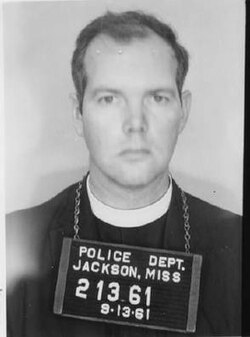
In 1961, fifteen clergymen, some black, some white, decided they were going to preach to the world that God says you shouldn’t be a racist prick. While spreading their message in Jackson, Mississippi, they were at a segregated bus terminal. Realizing this was a teachable moment, they all sat together in the “whites only” room as an act of civil disobedience.
Robert Laughlin Pierson
Jackson police and a Jackson judge—apparently all atheists—were unimpressed by the teachings of Jesus and these clergymen’s show of unity in the matter. So the rozzers arrested them, and the judge threw the book at them, for breach of the peace. Yes, you heard me, their obviously peaceful protest was deemed a breach of the peace.
Ahh, the South in the sixties…a racist’s heaven.
The charges eventually went away. My guess? Arresting clergymen is usually bad fucking press for a city.
But then, four years later, the Court in an unrelated case ruled Mississippi’s breach-of-the-peace law was unconstitutional.
So the clergymen, armed with that knowledge, were like, “Jesus has answered our prayers.” This had to mean the cops violated their constitutional rights, they assumed.
Apparently not completely sold on Jesus’ teaching of forgiveness—they sued those Jackson pricks: the po-po and the judge.
However, in an 8-1 ruling, SCOTUS—seeing that they could be in trouble if they weren’t careful—said judges got absolute immunity from § 1983 for judicial acts. Doesn’t matter how corrupt or morally repugnant it is—they get to interpret the law without fear of being sued if they get it wrong.
Editorial: Many will assume it’s pure self-preservation—giving judges immunity. But my joke aside, the reasoning SCOTUS provided is fair and worth understanding.
Judges are supposed to interpret the law faithfully.
If a judge considers “I might get sued for this” instead of just relying on the legal text, they might make a decision out of fear, not their actual interpretation of the law.
My own take: it’s a great argument, but it should be far more narrowly tailored. There are many ways a judge could violate someone’s rights and not be faithfully interpreting the law in doing so. There should be a mechanism to address that.
As it stands, a judge who takes a bribe to rule a certain way is just as immune from civil damages as one making an honest call. Our founding fathers would have immunized them with musket balls, not legal precedent.
SCOTUS took a little less forgiving approach with the cops, however—while still handing them a win. They created a good-faith exception to § 1983.
They reasoned that if a law is on the books, a police officer is duty-bound to enforce that law—barring the discretion they’re given not to when they deem it unwarranted. But if officers are enforcing active law, you couldn’t sue them for doing their job faithfully.
They also said cops aren’t fucking psychics. If a law is later ruled unconstitutional, you can’t expect some random beat cop to become Nostracopus—accurately predicting that shit. Last I checked, Johnny Law doesn’t keep psychics on staff, either.
That said, if cops aren’t enforcing good law—if they’re just violating people’s rights for no reason—then the good-faith defense doesn’t save them. They were abusing the authority the badge provides, which is exactly what § 1983 was built to reach. So sue away, brother!
Since these cops were enforcing valid Mississippi law at the time, they win. Jesus couldn’t be bothered to come to the courtroom that day.
The score now:
1967: You can still sue officials for abusing their authority—but the exceptions are piling up. Judges? Completely immune, however they rule. Cops? A good-faith defense: if they were enforcing a law on the books, they walk—even if that law gets struck down later.
~ 1970 ~
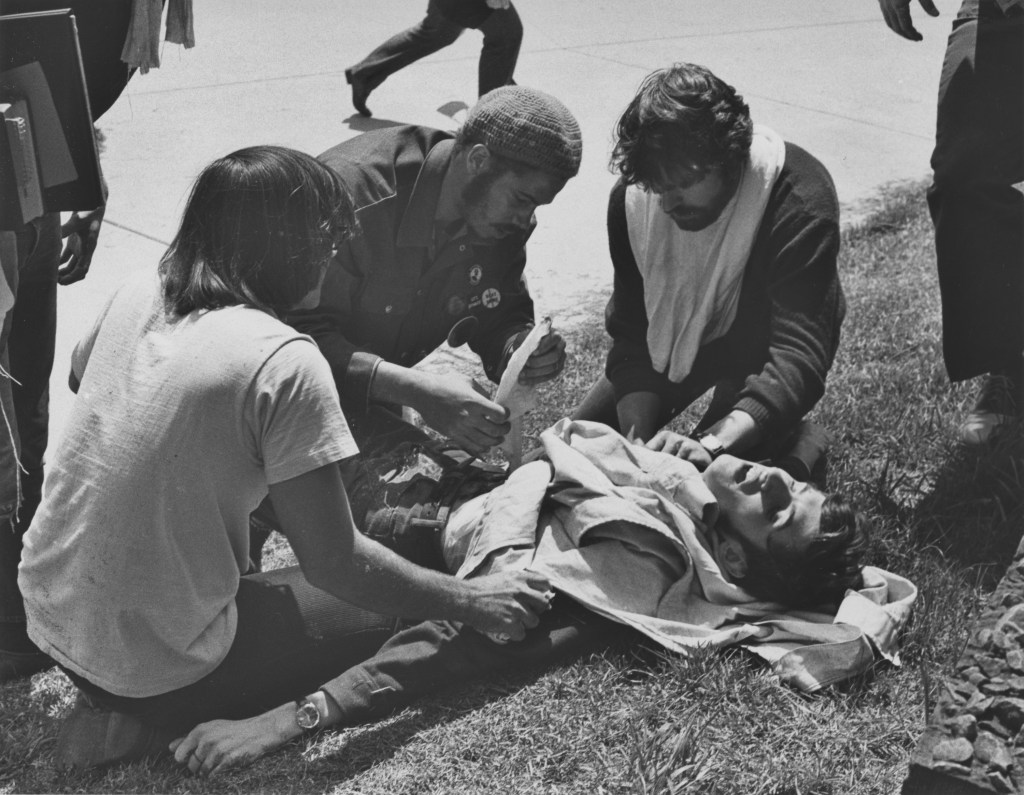
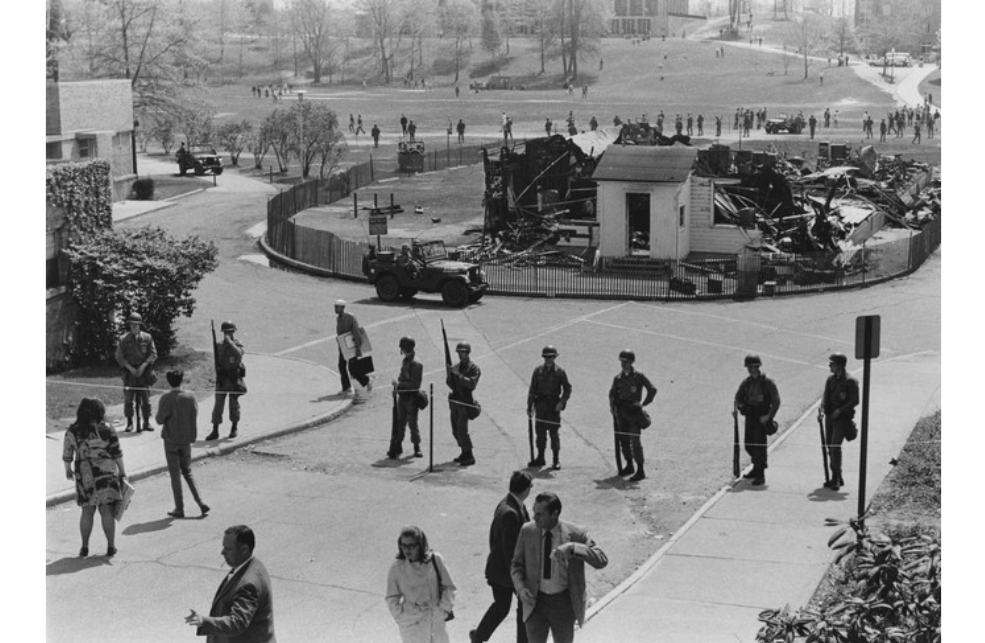
The next step on this journey is the Kent State University shootings in Ohio on May 4th, 1970.
With Vietnam in full swing—Nixon heard that North Vietnam (the communist side) was getting supplied through Cambodia. So ignoring the fact this war was already quite unpopular, he decided: what the fuck, let’s invade Cambodia as well.
Some college students at Kent State University took exception to the Vietnam war, and therefore to the expansion into Cambodia. I suppose it was partly philosophical, but, “I really don’t want to get drafted and sent to Cambodia myself” was surely part of it too.
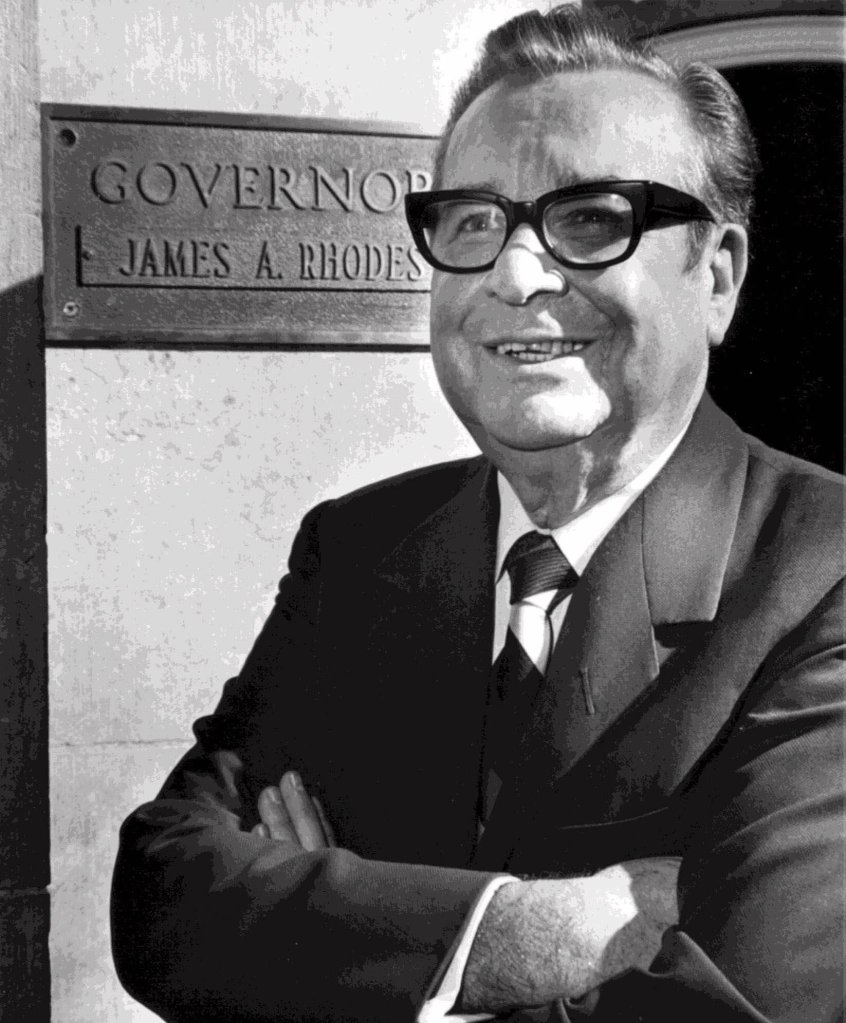
Former Ohio Gov. James A. Rhodes, shown in his office in this 1981 file photo (AP Photo/File)
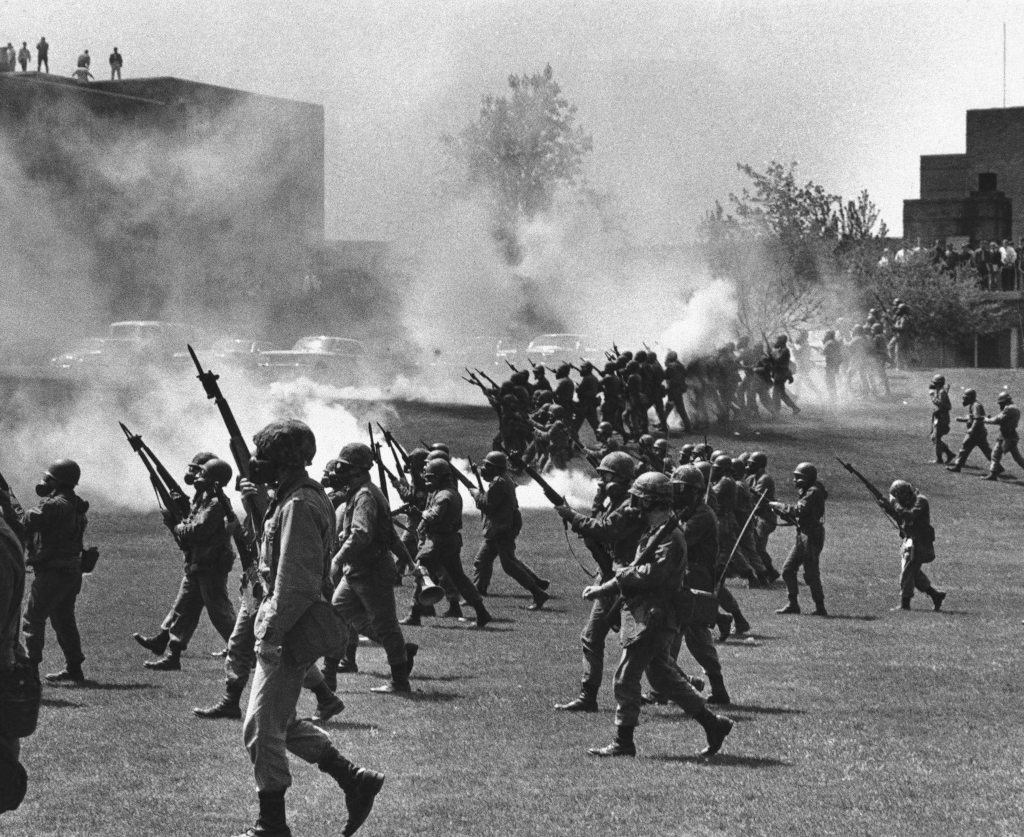
The following day, Guardsmen moved in to disperse the crowd, deploying tear gas and advancing with fixed bayonets. The crowd didn’t take kindly to this and threw rocks and shit at them.
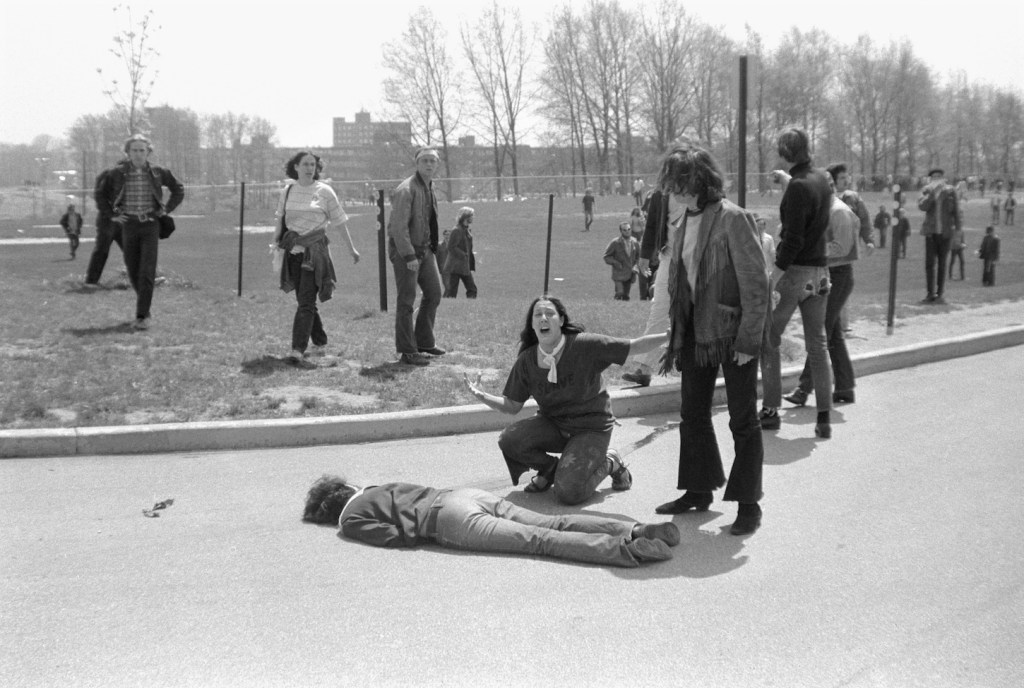
In response, the Guardsmen took position at the top of an area called Blanket Hill, then for reasons we’ll never know, started firing into the crowd—67 rounds in about 13 seconds.
This should bother every American.
Four students were killed, nine others were wounded. There’s no other way to describe this—in any other circumstance, this would be considered murder. No doubt, one of the darker days in American history.
We’ve been discussing § 1983, which is about civil suits, but surely this incident also carried criminal charges, right? It did, and we’re going to take a little sidebar to explore that.
Technically there is a federal murder statute—18 U.S.C. § 1111—but it only reaches killings on federal turf: military bases, national parks, federal buildings, U.S.-flagged ships, etc.
Why the narrow scope?
Same enumerated-powers wall we’ve been talking about. The Constitution never handed Congress a general power to prosecute murder; it only gets to apply homicide charges where it has a specific foothold, like its own territory or its own ships thanks to the Enclave Clause—Article I, Section 8, Clause 17, which gives them the power to “exercise exclusive legislation in all cases” over any federal lands.
Kent State was a state campus on Ohio soil—so § 1111 wouldn’t apply. Which left the feds reaching for the one hook they did have.
They charged them under 18 U.S.C. § 242—which criminalized “willfully depriving someone of their constitutional rights under color of law.” Known as the Civil Rights statute—it was passed five years prior to § 1983.
That statute was largely underpinned by the same motive—to prevent freed slaves, and the black community in general—from being deprived of their rights. But it provided a path to criminally prosecute civil rights violators, not sue them like § 1983. It was originally written to protect former slaves, and the black community in general, but later broadened to cover all Americans who’ve had their rights trampled on.
The key to that statute is that “willfully” part. You may have heard the term “mens rea” before, yes? It’s a legal term that comes from the Latin phrase for “guilty mind.” It’s a common element in many crimes, which dictates that for the person to be found guilty, the government has to prove they intended to commit the crime at hand, as opposed to an accidental or unintentional act that just ended quite badly.
While federal prosecutors tried, their evidence for mens rea was so flimsy that the judge ended the proceedings mid-trial, feeling that there was insufficient evidence to prove intent—the jury didn’t even get to deliberate or render a verdict. The acquittal carried double-jeopardy protection, so the Guardsmen were free and clear of those federal charges under § 242.
That likely leaves you wondering about state murder charges then. That’d be up to the state of Ohio, where the shooting happened. And here’s the problem: the whole state apparatus—right up to Governor Rhodes—had every incentive to make this go away. You can guess how well that served the victims.
The state reasoned first that it had no idea who actually fired the lethal shots. Forensic matching of the bullets to the guns was nearly impossible. Too many identical rifles in play, and some of the bullets had fragmented and couldn’t be matched anyway.
Not to mention, solid evidence preservation techniques weren’t really “a thing” in law enforcement at that point. They knew how to do it, but they didn’t prioritize it like we do today.
Second, a grand jury failed to indict the Guardsmen, finding it reasonable that they honestly and sincerely believed they’d be attacked by the crowd had they not fired.
But this grand jury was dubious. The prosecution never called the Guardsmen who actually fired to testify, and never presented the FBI’s report on the shooting—hardly an earnest effort to get an indictment. And the whole thing unfolded in a climate Rhodes had inflamed from the start.
Maybe Rhodes was worried about it coming back on him. Who knows? But the end result is the Guardsmen were free to go with no justice being meted out for the victims.
~ 1974 ~
That travesty brings us to Scheuer v. Rhodes (1974). We’ve established that Rhodes was the Ohio Governor. Scheuer was a representative for one of the victims. They sued under § 1983, arguing that Governor Rhodes had acted intentionally, recklessly, willfully, and wantonly in deploying the National Guard, which resulted in the deaths of their loved ones.
Deploying the Guard wasn’t crazy on its face—there’d been serious unrest. And if protesters really did torch the ROTC building, that crosses from peaceful protest into violence. A governor could reasonably call in the Guard to restore order, there.
So the hard question in Scheuer isn’t whether Rhodes could send troops—it’s whether he can be held liable under § 1983 for what those troops did: killing unarmed students. Deploying the Guard is one thing. Four dead kids is another.
The lower courts argued that the 11th Amendment, which says you can’t sue a state in Federal court (a “state’s rights” thing) barred the federal court from even hearing this shit. On appeal, the federal appellate court reasoned that executive immunity applied, and the Governor couldn’t be sued for doing his job—they’d have to sue the state. But that takes us back to the 11th Amendment issue, making this case a spiraling toilet drain of failure for the plaintiffs.
This idea of executive immunity was around long before Trump v. United States from 2024 (which I wrote about here), and it applied to Governor Rhodes here. The idea is that their job is to execute the law, and they must have significant leeway to do so. They can’t be in court every other week because their political opponents keep suing them. The voters put them there to do what they said they’d do, and how they said they’d do it. The court was wary of getting in the way of them achieving the political promises that got them elected.
But remember, unlike politicians, courts are not supposed to make decisions based on popular opinion, so we should oddly have a problem with them considering it.
Editorial: I have my qualms with this “executive immunity” doctrine. At a minimum, immunity should hinge on whether a reasonable person would find the executive was acting in good faith, similar to the Court’s early exemptions for § 1983.
Meaning if a jury felt they were behaving corruptly, such as accepting a bribe to appoint a judge, then fuck ’em, hang ’em at high noon for all I care. There’s no credibly argument I’ve heard for making such acts untouchable—our founding fathers would be ashamed.
In a unanimous win for Scheuer, although not in the way he hoped, SCOTUS reversed the lower courts.
First, it tossed the 11th Amendment argument: because the plaintiffs were suing the officials as individuals for personal liability—not trying to raid the state treasury—it wasn’t really a suit against the state.
Second: the Court flatly rejected the idea that a governor gets absolute executive immunity. Instead, it held the immunity is only qualified—it varies with the official’s discretion and responsibilities, and turns on the circumstances as they reasonably appeared at the time. In other words, good faith and reasonableness matter.
The Court didn’t rule on whether Rhodes himself was liable—it just said the case couldn’t be thrown out on immunity grounds at the starting gate, and sent it back down for trial.
In that opinion, SCOTUS laid the groundwork that the good faith immunity for cops we mentioned earlier could also apply to a governor or other executive branch officials.
Score update.
1974: You can still sue officials for abusing their authority—but now governors and other executive-branch officials join the club: they get qualified immunity too, shielded so long as they acted reasonably and in good faith. Absolute immunity for executives? Rejected.
That shit barely registered on the alcohol scale though, it came in at a measly 0.91% by volume…pussies. Definitely not worth getting in trouble over.
Anyway, a teacher named Mrs. Powell got them to confess to her by saying she’d handle it if they did. But then, MHS Principal Duddy Waller started snooping around after the gossip mill was in high gear, leaving Powell unable to contain it as she promised. So Powell was like, sorry you little bitches, only god can help you now—I’m out. I’m not losing my job over Malt Liquorgate.
Principal Waller suspended the students for two weeks, pending a hearing by the school board, which then expelled them for the rest of the semester—without letting the students attend the hearing and argue their side.
They were given a second hearing where they did attend, but the school board wasn’t swayed and upheld the suspension.
Honestly not sure what their side could have been—”We spiked the punch because we heard alcohol is good for developing young brains?”
Anyway, one of those board members was John Wood (the lead petitioner in the SCOTUS case). Let’s get into their arguments, because it’s some good nerdy law shit.
SCOTUS 1975
First, we’ll talk about a legal principle called “reliance.” We’re all familiar with plea deals, right? A prosecutor says, “Tell me everything and I’ll take the death penalty off the table” or something like that. The person only confessed because they were “relying” on the offered deal. The courts expect the government to honor such deals faithfully, lest they become so dubious criminals would stop making deals altogether.
Well, same thing here, just at a lower level. They confessed to Powell because she said she’d handle the punishment herself if they did. They “relied” on what she told them when they agreed to fess up. But that promise evaporated once it went up the chain to the board. So her “plea deal” got tossed—which, in their view, was fundamentally unfair.
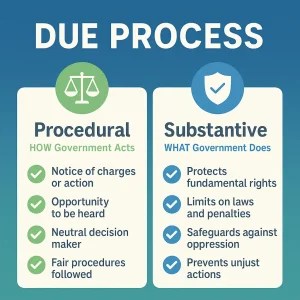
A second issue was procedural due process—basically, the right to a fair hearing. She and her parents weren’t even allowed in the room during the board’s initial deliberations—so how the fuck did they get a fair ruling? Even if they did finally get a bite of the apple at that second hearing, the damage was done.
Third, and the one a lower court seemed to care about most when it sided with the students, is substantive due process. This is where it gets nerdy on a whole new scale.
The school’s policy banned intoxicating beverages—So that was the rule the students were charged with breaking.
So the students argued that the punch, which tested at 0.91% ABV, couldn’t have gotten a fly drunk. Therefore, it wasn’t “intoxicating” under their rule. So they reasoned, they weren’t in violation of anything.
These were pretty solid arguments by the two students who chose to sue—seems like they had some good lawyers.
This isn’t the only nerdy law lesson here. The school board, of course, argued intent, and this is a big facet of law few think about.
Consider this: when cops impersonate a child online to catch a child predator, the scumbag in that scenario was not actually preying on a child, they were chatting up an adult police officer. So how is it a crime?
Well, he’s still guilty, just not of the completed crime (there was no actual child). Instead, he’s guilty of attempting it. The law doesn’t let you off just because your target turned out to be a cop; you intended the crime and took real steps toward committing it. Intent plus action is enough.
Pretty interesting thought experiment, right? And it’s basically the instinct the school board was reaching for: sure, the punch was weak as hell, but the girls intended to spike it—and to the board, that intent was the violation.
SCOTUS was unimpressed though—but not in the way you’d guess. Instead of ruling cleanly for either side, it announced a brand-new rule and sent the case back to the lower court to reconsider accordingly. That rule is now a cornerstone of qualified immunity as we know it.
They said that school officials are immune from § 1983 damages unless they knew—or reasonably should have known—that what they were doing would violate a student’s constitutional rights, or unless they acted with malicious intent.
Or as the dissent characterized it:
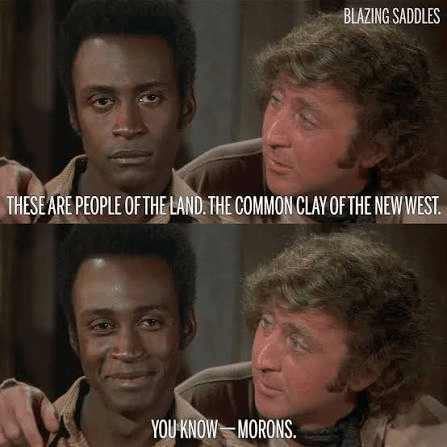
Being morons, you can’t expect them to understand the law well enough to know if they’re violating someone’s civil rights, for purposes of a § 1983 violation—they’re trained to be teachers, not stewards of the law.
But let’s be clear—there are limits to that shit.
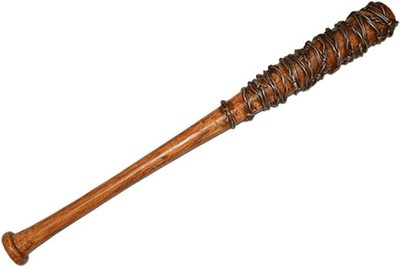
Don’t walk your ass into court after beating some kid’s ass with Lucille from Walking Dead, and ask the court to assume you didn’t fucking know better.
Lucille – Walking Dead
As for the students’ clever weak-liquor argument—SCOTUS wasn’t buying it. It held the board’s reading of its own rule (no alcohol, period—not just the strong stuff) was reasonable and backed by evidence. So they punted the lower court’s ruling in the students’ favor. Mens rea, it turns out, doesn’t haunt a school handbook the way it haunts a criminal statute.
Score Update:
1975: Judges: still absolute. Cops, governors, executives: still good-faith. New this round—school officials get folded in, under a ‘knew or should have known, or acted with malice’ standard.
This case isn’t about qualified immunity, but it profoundly changed § 1983 litigation.
At this time in history, pregnant women weren’t protected by labor laws like they are today. These particular women, employees of New York City, got knocked up and were forced to take an unpaid leave of absence under department rules, even before it was medically necessary.
The women thought this was unconstitutional bullshit and sued the city, seeking backpay for their grievance.
While a district court agreed it was unconstitutional, it didn’t agree these prego ladies could sue the city for wages, because the city wasn’t a person acting under color of law, as stated in our aforementioned Monroe v. Pape case.
SCOTUS, however, decided that this was an official decision by the city, therefore, the city can be treated like a person in situations like this, and sued under § 1983.
This matters because most government officials earn a modest income and have debt like the rest of us. It’s a good job, but they’re rarely getting rich. So if you sue them, they’re likely what’s known in the legal biz as “judgment-proof.” This just means that even if you win a judgment against them, they don’t have the money to pay it.
A million dollar judgment against someone with $57 in the bank isn’t going to go the way you hope—you know—the blood-turnip thing.
So the promise of this ruling is that § 1983 doesn’t just leave you stuck with a broke individual anymore—there’s a path to reach the government behind them, and governments have deep pockets.
It’s fair to ask yourself: If a cop goes rogue—isn’t following orders, wasn’t trained that way, etc.—is it really fair to make the taxpayers pay for the official’s wrongdoing?
That’s a fair point, in my opinion. If I were king for a day, I’d say this: if the government sanctioned the bad act, trained the cop to do it, or looked the other way on prior complaints against that officer for similar acts—then arguably they should be liable. Otherwise, I think it seems fair to limit the liability to just the bad actor(s) alone.
But with this ruling, SCOTUS opened the door to successful § 1983 claims against the individual and now to the government they worked for. You’re still a heavy underdog to win a § 1983 claim, but if you do, you might finally win a life-changing settlement.
Score Update:
1978: Judges: still absolute. Cops, governors, executives: still good-faith. School officials have a ‘knew or should have known, or acted with malice’ standard.
Now, there’s a path to sue the government itself where applicable.
~ 1982 ~
Next we’ll time travel to four years in the “qualified immunity” future and discuss Harlow v. Fitzgerald (1982).
Ernest Fitzgerald, an Air Force analyst, testified before Congress about some eye-watering cost overruns on a cargo plane—$2 billion worth. Fourteen months later, his job was mysteriously “eliminated,” leaving him jobless.
He sued then-President Nixon and the two aides who orchestrated it—Bryce Harlow and Alexander Butterfield. He claimed he was canned for testifying, not because the job was genuinely unneeded, and he wanted compensated for the loss of income.
Ernest Fitzgerald
But here’s a wrinkle worth understanding. Remember the actual text of § 1983? It only reaches someone acting “under color of any statute, ordinance, regulation, custom, or usage, of any State or Territory.”
The statute only targets state and local officials. It says nothing about federal ones. So a city cop, a county sheriff, a state trooper, a public school board? All fair game under § 1983. A federal agent, a soldier, a presidential aide? Not covered.
This left a gaping hole for most of American history. You basically couldn’t sue a federal official for violating your constitutional rights, because no statute provided a vehicle for you to do so.
The courts finally plugged that hole in 1971 with Bivens v. Six Unknown Named Agents, inventing a damages remedy against federal officials out of whole cloth. Think of Bivens as § 1983’s judge-made federal cousin—same idea (sue the official who violated your rights), different entity (federal instead of state).
Since Fitzgerald was suing federal officials, his case rode in on Bivens, not § 1983.
But here’s why it still matters for our story: the immunity rules the Court laid down, they ruled, apply to both vehicles. So this federal case ends up rewriting the qualified-immunity standard for § 1983 cases too.
In an 8-1 decision, SCOTUS sided with Harlow, one of the presidential aides who “fired” Fitzgerald. But what they did regarding qualified immunity was eliminate the good-faith exception and replace it with an objective one.
They felt that trying to get in someone’s head and prove mens rea is pretty fucking hard, and they simply didn’t need to. So they decided instead that if the constitutional right they violated was clearly established law at the time, and the government miscreant reasonably should have known as much, then they can be sued.
That “clearly established” part may sound simple, but it is shady as fuck. Even though the opinion didn’t say it directly, this generally meant the courts must have previously ruled that what the government officials did was a violation before anyone else can sue for it.
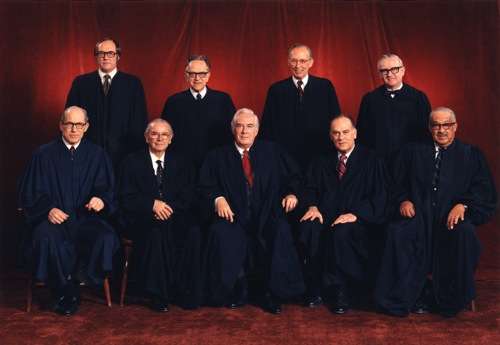
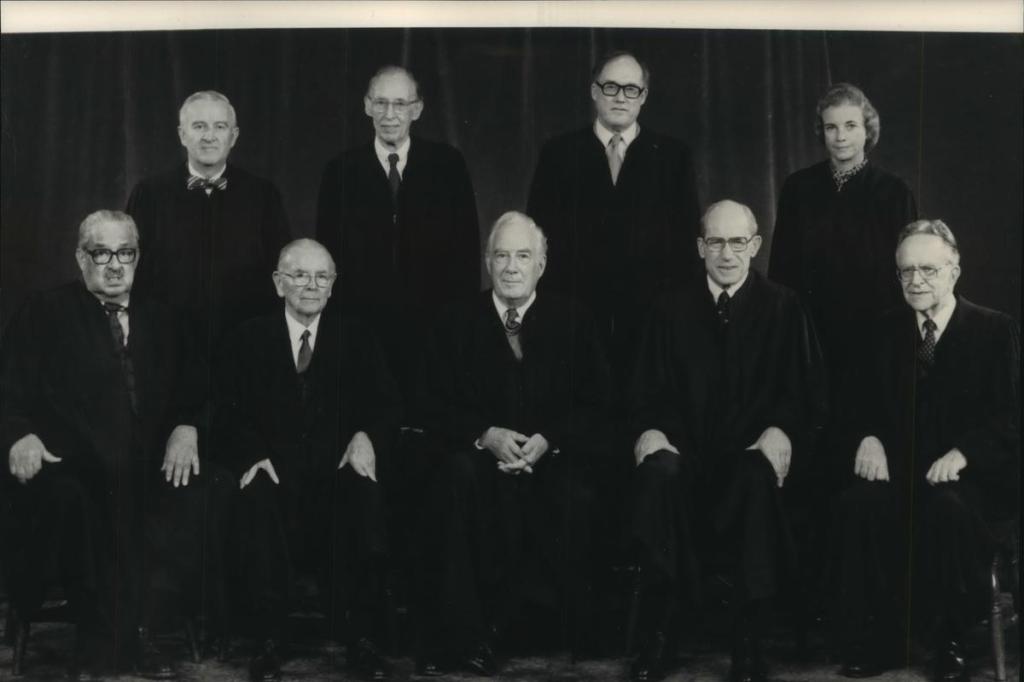
This official 1982 portrait of the Supreme Court shows, seated, from left: Justices Thurgood Marshall, William Brennan Jr., Chief Justice Warren Burger, Justices Byron White and Harry Blackmun. Standing, from left, are: Justices John Paul Stevens, Lewis Powell, William Rehnquist and Sandra Day O’Connor. Four members, Chief Justice Warren Burger and Justices Marshall, Blackmun, and Stevens, once labored in greater anonymity as federal appeals court judges. U.S. Supreme Court
There are exceptions, which we’ll get to later, but the net effect is a catch-22. If no one ever won in court before, the case is dead on arrival without even getting to argue the merits. No new precedent can be created to satisfy “clearly established” in the future, so bad government actors can just keep doing that unconstitutional thing without ever having it ruled as a violation. Not cool, SCOTUS, not cool.
Side note: they also added presidential aides to the list of people who get qualified immunity.
Scoring update:
1982: You can still sue government officials for abusing their authority. Judges are completely off the table.
For everyone else, a good faith defense is gone. Now replaced with the “clearly established constitutional violation” rule: no prior caselaw, no lawsuit.
New paradox unlocked.
~ 1985 ~
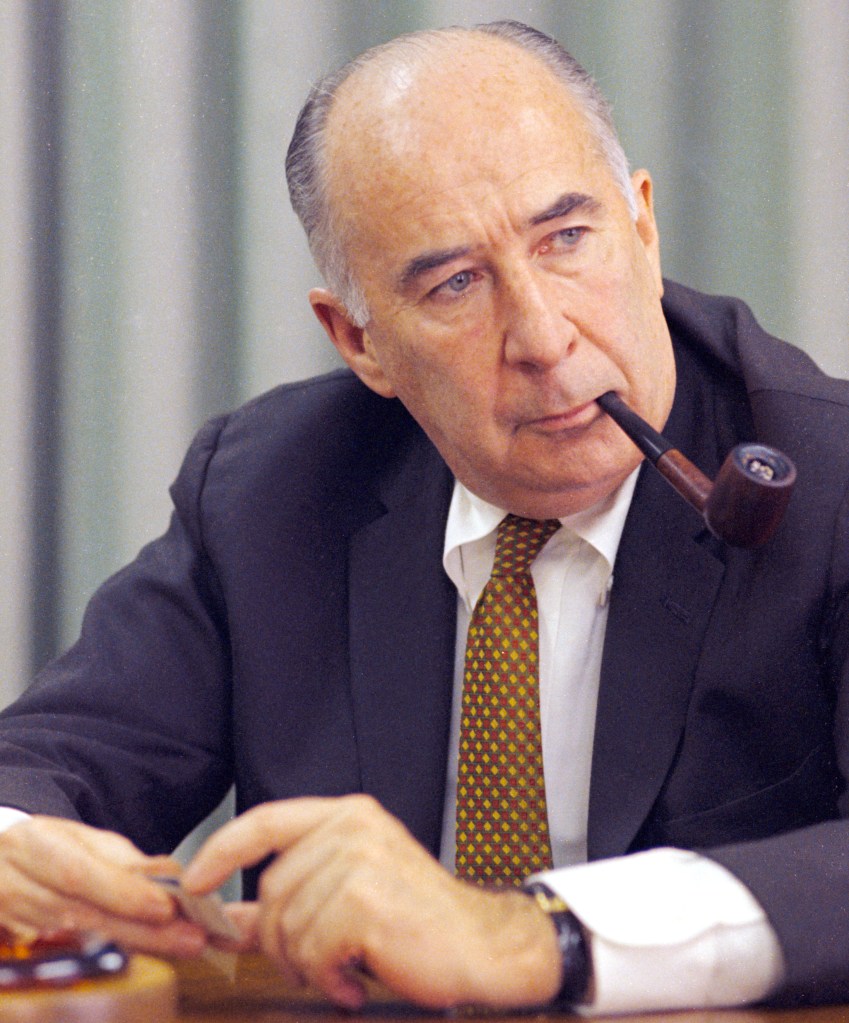
Next up, we have Mitchell v. Forsyth (1985). This case started in 1970 when John Mitchell was Nixon’s Attorney General. Based on FBI intel, he suspected the ironically named East Coast Conspiracy to Save Lives (ECCSL) was going to blow up a tunnel connecting two federal buildings, and/or kidnap Henry Kissinger.
So Mitchell issued a warrantless wiretap for ECCSL member William Davidon, who called anti-war activist Keith Forsyth—both Americans.
Not going to go too deep in the woods here, but three years earlier, in Katz v. United States (1967), SCOTUS had already ruled you need a warrant to wiretap somebody in a normal criminal case.
What Katz didn’t settle was whether that rule still held when the government hollered “national security.”
That gray area is exactly the loophole Mitchell tried to drive a truck through. It wouldn’t get closed until two years later, when SCOTUS decided in United States v. U.S. District Court (1972) that if you want to wiretap Americans—national security excuse or not—get a fucking warrant, full stop.
Government is free to wiretap non-Americans not in America, because the Fourth Amendment obviously doesn’t apply to foreign nationals on foreign soil. But Mitchell was spying on Americans.
Anyway, because the Court ruled warrantless wiretaps were unconstitutional, we had a “clearly established constitutional violation” going forward.
But remember how we said cops can’t predict the future? Mitchell couldn’t know that two years later, SCOTUS would ban warrantless wiretaps of Americans entirely. So Forsyth was shit out of luck.
Up to this point, if a government official was going to claim qualified immunity, it would happen at trial where they raised it as a defense. But the courts opted to insert a fast lane to obtain a “get out of jail free” card. They made qualified immunity a procedural protection you could raise and immediately appeal before the trial even started.
So now, even if you had a legitimate “clearly established constitutional violation” claim, the government official could appeal immediately—freezing everything. No discovery, no depositions, no legal maneuvers to help you solidify your case, zip, zilch, zero, nada. The government agent can stall until all their appeals are exhausted while your case lies dying in legal purgatory.
We already established it was nearly impossible for an aggrieved citizen to win a § 1983 claim, but now the courts made it so you had to potentially wait for years, denying you the ability to demand evidence to make your claim. The legal term for this is, Fututus es. (Latin for “you have been fucked.”)
Score Update:
1985: You can still sue officials for abusing their authority. Judges: completely off the table.
Paradox #1 stands: the ‘clearly established’ rule—no prior ruling on point, no case.
Paradox #2 unlocked: officials can appeal an immunity denial before trial even starts, freezing discovery. Can’t get the evidence, can’t build the case. Fututus es
FBI Agent Russell Anderson was on the hunt for suspected bank robber Vadaain Dixon, who had supposedly withdrawn money from a bank earlier that day using a gun instead of a withdrawal slip.
Anderson claimed he had probable cause to believe Dixon was at the home of Robert Creighton Jr., (a black man—I’m sensing a theme) and his family.
So he and his team, without a warrant, went to the Creighton home and knocked on the door. When Creighton opened, they pushed him aside and forced their way in.
Creighton asked for a warrant and was told they didn’t need one, which is true if there’s probable cause coupled with exigent circumstances.
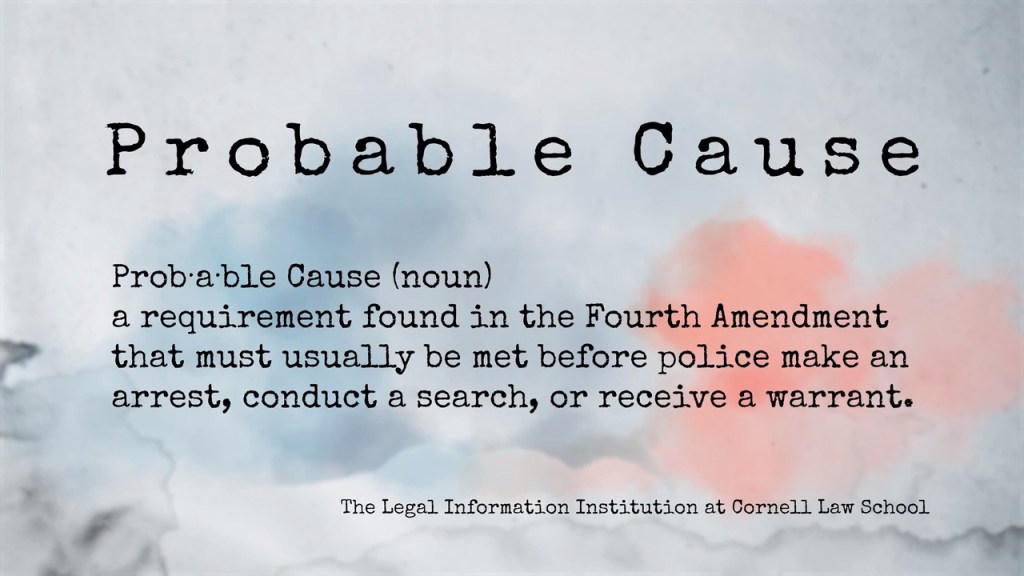
Sidebar: Probable cause is just a fancy way of saying a reasonable person, looking at the facts, would think it’s likely a crime happened, this is the guy, the evidence is in here, etc. It’s more than a hunch, less than certainty. It’s the baseline cops need before they can arrest you, search you, or get a warrant. It can’t just be a gut feeling.
Exigent circumstances is legalese for “there’s no time to screw around getting a warrant.”
Normally, to enter your home, cops need a warrant—the home gets the strongest protection there is. But if there’s a genuine emergency—someone’s about to get hurt, the suspect’s about to bolt, evidence is about to get flushed—they can skip the warrant and go in. The key word is emergency. No emergency, no shortcut.
So to bust into a home without a warrant, you need both: probable cause (good reason to think the guy’s in there) and exigent circumstances (a real emergency that won’t wait). Without either one, the government needs a warrant.
If we assume Anderson was being truthful and acting in good faith, and he really believed Dixon was in the Creighton home, you might justify him being a dick to Creighton, and he most certainly was.
That said, Creighton’s daughter was screaming in terror, and the officer yelled at her to shut up and sit her ass down, then grabbed her arm, injuring it so bad she had to go to the emergency room later.
His wife also asked for a warrant and was forcefully told again that one wasn’t needed, then cordially invited her to shut the fuck up.
So even if you give them a pass on how they handled Creighton—there’s no justifying what they did to his wife and daughter.
When Creighton led officers to his garage as part of the search, an officer punched him and knocked him to the ground. He was then arrested on baseless obstruction charges and spent the night in the pokey before being released when cops realized they had nothing on him.
What we know now is that Dixon was not at the Creighton home, and there’s no evidence he ever was.
You can imagine Creighton was pissed—I sure as hell would be. So he sued—as I sure as hell would have.
The first question I wanted an answer to: what was the probable cause? Reasonable question, right?
Yet I don’t have that information—do you know why? Creighton’s lawyers couldn’t fucking demand it in discovery, because qualified immunity can now be claimed at the outset instead of as a defense during trial.
See the problem now?
Creighton should be able to demand information about why they knocked on his fucking door, in order to determine if the officer was there for good reason. If he was there for an unlawful reason, that’s absolutely a violation of his rights—a reasonable basis for winning a § 1983 claim, or Bivens claim in this case—Anderson was a fed.
Since it was a warrantless search, that is a clearly established rights violation—which means qualified immunity shouldn’t protect Anderson, right?
Well, here’s why this case matters. SCOTUS again added a new layer of protection for officers: even if Anderson’s search was unconstitutional, he’s entitled to qualified immunity as long as he reasonably believed it was legal.
Sure, it was a warrantless search that violated the Fourth Amendment—but Scalia said you can’t define the right that broadly. The specific conduct has to be clearly established as illegal, not just spun out of a general principle like “warrantless searches violate the Fourth Amendment.”
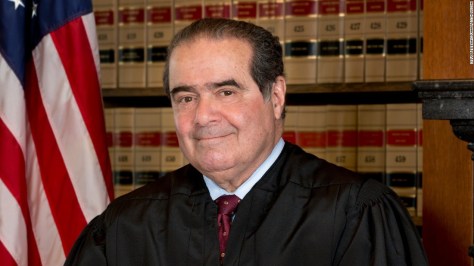
Antonin Scalia – Associate Justice: Supreme Court of the United States Served 1986-2016 Lived: 1936-2016
Meaning, you can’t argue that a particular action violated the Fourth Amendment and therefore any such violation is “clearly established” for purposes of qualified immunity. The specific action—here, a warrantless home search with claimed exigent circumstances—has to be the thing that’s clearly established as unlawful. Otherwise, qualified immunity applies.
I know this is maddening—it’s maddening for me writing it. But you can see the other argument. Five-0 certainly have a tough job. Sometimes they have to react quickly and instinctively, and might get it wrong. We don’t want a good person, trying to do a good thing, to make a mistake and end up in bankruptcy court for it. Fine! I’ll accept that.
However, this position is incredibly short-sighted and assumes things that are often untrue. In this case, Agent Anderson wasn’t in some “I have to react in a split-second” scenario. He and his team had ample opportunity to sit on the house while someone fetched a warrant—they simply chose not to.
So while I accept the court’s desire to protect well-intentioned coppers, I think it’s inexcusable that nine of the premier legal experts in the country so obviously created an avoidable set of paradoxes. I refuse to accept they couldn’t do better.
Justice Stevens in his dissent was certainly furious. He argued that officers already have some protection, because they get the benefit of the doubt on whether probable cause existed. Now they get a second layer that says even if they were wrong, as long as they thought they were right, they’re still immune? That’s ridiculous, and he knew it.
Score update:
1987: You can still sue officials for abusing their authority. Judges: still off the table.
Paradox #1 gets worse: the violation must now be ‘clearly established’ at a specific level—not the general principle (warrantless search bad), but the exact conduct. And good faith sneaks back in the side door: if the officer reasonably believed their action was legal, they’re immune.
Paradox #2 still stands: officials can appeal before trial, freezing discovery
~ 2001 ~
The next wrinkle in qualified immunity came in 2001 with Saucier v. Katz.
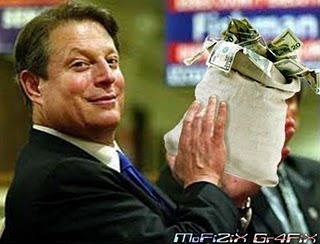
In 1994, at the Presidio Army Base, Vice President Al “I invented the internet” Gore was giving a speech. Elliot Katz was no fan of Gore’s promotion of the national parks at this speech—he was a big animal rights guy. He thought the new park would willingly allow some untoward animal testing, so he decided to protest.
Former Vice President Al Gore
As Gore began to speak, Katz unfurled his banner which read— “Please Keep Animal Torture Out of Our National Parks”—and approached the stage. MP Officer Donald Saucier saw it going down and was like, “absolutely not!”
Saucier and a cohort grabbed Katz and pulled his ass outta there. Katz had a knee brace and wasn’t able to walk very fast, so the officers largely dragged him, then supposedly brutally shoved him into a van.
Katz sued and alleged they used excessive force on him, despite having no injuries to speak of. Saucier, as you’d expect, invoked qualified immunity.
SCOTUS, having recognized they had some serious paradoxes with qualified immunity rules they had made, decided to create a new two-step process to help resolve it in this case.
Their process was simple:
First: taking the facts in the light most favorable to the plaintiff, did the officer’s conduct violate a constitutional right?
Second: if “Yes” to the above, was that right clearly established at the time in the specific context of the case, not as a broad general proposition?
Before this new wrinkle, the right had to be clearly established by prior court rulings—which the paradox prevented. But now, courts had to answer the merits question first—did the officer’s conduct violate a constitutional right? Answering that first puts a ruling on the books and “clearly establishes” that violation for future cases. And THEN they’d decide whether it was already clearly established at the time.
Now, if your rights were violated, you could be the sacrificial lamb for others to benefit from, but you still couldn’t win yourself. You don’t get anything but a sense of having done your civic duty for future victims.
The problem with this fix is that it had multiple egregious unintended consequences. If qualified immunity is still applied at the beginning, before the discovery phase, the trial, the merits, etc., then it’s nearly impossible for courts to obtain evidence to “clearly establish” this as a rights violation—they don’t have access to all the facts!
Because courts were ruling on such thin, incomplete records, they set bad precedent, invited a flood of appeals, and made their own jobs harder—all while degrading the quality of their work.
I applaud Justice Kennedy for trying to fix the paradox with his majority opinion, but again, I’m struggling to believe nine of the country’s preeminent legal masterminds couldn’t do better.
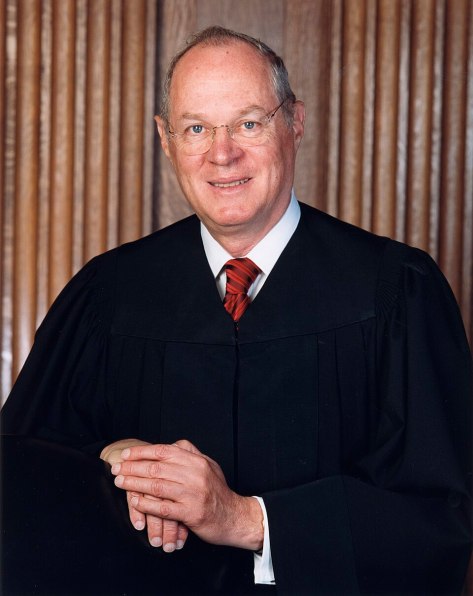
Anthony Kennedy – Associate Justice: Supreme Court of the United States Served: 1988-2018
Score Update:
2001: You can still sue officials for abusing their authority. Judges: still off the table.
Still in effect: the violation must be ‘clearly established’ specifically, not generally; and officials who reasonably believed they were acting legally are immune.
New this round—a paradox patch: courts must decide the merits first (was it a violation?), which puts a ruling on the books for future cases. Then they check whether it was clearly established at the time.
Paradox #1 gone, #2 not so much.
~ 2002 ~
The next case we’ll discuss is rather disturbing, but arguably a step in the right direction. It’s Hope v. Pelzer 2002.
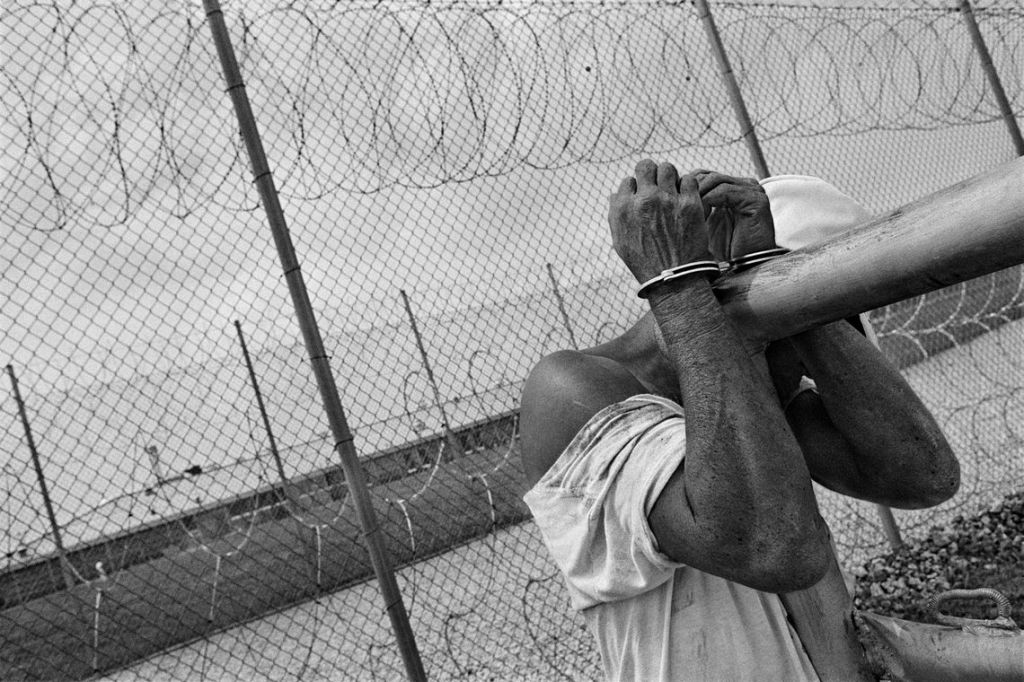
While in prison, guards twice handcuffed Hope to a hitching post for being “disruptive”—the second time for seven hours in the Alabama sun with no shirt. His arms were cuffed above his shoulders, cutting off circulation until he lost feeling in them.
Larry Hope was tied to a post at the Limestone Correctional Facility in Harvest, Alabama, in 1995. James Nachtwey Archive, Hood Museum of Art, Dartmouth
Over those seven hours he was given water once or twice with no bathroom breaks at all—forcing him to piss himself.
The lower courts, trying to apply these “impossible to overcome” qualified immunity rules, argued the guards were entitled to qualified immunity.
But SCOTUS, in a rare move, surprisingly said no—the facts were so clearly a violation of Hope’s rights that the guards had to know it was unconstitutional, even without a prior case on point. Obviousness alone was enough to clear the bar in this case.
Even SCOTUS and its deference to government officials had heard enough. They knew what § 1983’s intent was, and while they tended to shield government officials for good-faith actions, it was plainly obvious that this wasn’t that.
In so doing, they set a precedent letting lower courts make an exception to applying qualified immunity in cases where the violation is so obvious that no official could plausibly claim they didn’t know it was wrong.
SCOTUS 2002
So did this actually change things? Sort of. For nearly two decades, Hope’s caselaw mostly gathered dust—lower courts largely ignored it, and the mountain of pro-immunity Supreme Court rulings buried it.
The Taylor v. Riojas case is a little different, because it’s a per curiam opinion—meaning it comes from the court as a whole, not one particular author. It was also decided without oral argument. That usually happens when the Court takes a case but finds the lower court’s ruling so obviously wrong that it doesn’t need more—it just summarily reverses.
What was so obvious about that one?
The facts of this case were that Trent Taylor, an inmate in Texas, was held in a prison psychiatric unit for mental health care. For six days, guards confined him across two cells. The first was covered in shit—and I mean literally, nearly floor to ceiling: the floor, the walls, the window, even packed inside the water faucet. It was left there by a previous inmate, and they put Taylor in that cell without cleaning it in any way. Taylor was so afraid of contamination he didn’t eat or drink for nearly four days.
The second cell they moved him to was frigidly cold—no furniture, no toilet, just a clogged drain in the floor. He held his bladder for over 24 hours, but eventually his body gave out, and when he relieved himself the clogged drain overflowed, flooding the cell.
With no bunk and no clothing, he was left to sleep naked on the floor, in a cold room, in raw sewage.
Trent Taylor
The guards made statements such as “he’s going to have a long weekend,” and another guard said he hoped he’d “fucking freeze.”
Again, SCOTUS reversed a lower court that had handed the guards qualified immunity—holding that the conditions were so obviously unconstitutional that any reasonable officer should have known better. They pointed to the guard’s own statements as proof.
Score Update:
2002: You can still sue officials for abusing their authority. Judges: still off the table. All the usual paradoxes still apply.
New this round: if the violation is a blatant and obvious rights violation, qualified immunity won’t save your ass, even with no case on point to clearly establish it as a violation.
In 2002, Afton Callahan decided to break bad and started slinging crystal meth like he was going to be the inspiration for Walter White or something.
The Utah police employed a connoisseur of meth himself, an individual named Brian Bartholomew. He liked helping cops more than he liked the idea of going to jail, so he opted to assist Utah detectives in a sting operation to bust Callahan.
First, he went in and set up the buy to go down later. He left, the cops handed him a marked $100 bill, and he went back in.
Armed only with a microphone and cops hiding outside, Bartholomew went back and completed the meth purchase he’d set up earlier.
Bartholomew gave the magic word for cops to come in and yell, “Gotcha,” and they burst through the door like the Kool-Aid man.
You’ll notice I didn’t mention a warrant—this was a warrantless search. However, there’s a doctrine in play called “consent once removed.” It basically goes like this:
Hopefully we all know that if an officer asks if they can come in, and you say yes, they can come in—no warrant needed, right? Eerily similar to vampire rules, but let’s not dwell on that.
That’s consent.
If officers see evidence of a crime in your home, they can use that evidence in court against you because you fucking let them in. It’s as if you never watched a single god damn vampire movie—fuck!
Anyway, sure, Callahan didn’t allow cops in, but he did allow Bartholomew in, and Bartholomew had a secret Batphone to signal the cops if he saw some criminal shit.
So the “consent once removed” doctrine says: because Callahan let Bartholomew in, and Bartholomew then witnessed the deal go down, that consent extended to the cops Bartholomew was working with—letting them come in after—no warrant needed.
If it seems shady, imagine a different scenario where we have a suspected kidnapper of a five-year-old. They of course won’t let cops come in to search their home But what if cops talked their mom to help out. So cops send her in all covertly and shit, she tells them via a wire that she sees the kidnapped lad, and boom! They bust in to save the day.
Surely that’s OK, right? Well, same principle.
Here’s the problem: officers orchestrated everything. This shit took some planning to get Bartholomew in place, set up the buy, etc. Yet not one fucking cop had the wherewithal to think, “maybe I should go get a god damn warrant.”
Bartholomew had gone into Callahan’s shithole earlier wearing his wire, asked for meth, and set up the buy. Cops had probable-cause falling out of their assholes. Getting a warrant at that point would have been easy-peasy-lemon-squeezy.
So Callahan reasoned exigent circumstances didn’t apply because they had ample opportunity to get a warrant and didn’t. Therefore, Fourth Amendment violation—checkmate, bitches!
The 10th Circuit had a problem with this, though. Unlike other courts that had extended it, they believed the “consent-once-removed” doctrine only applies to undercover cops, not informants.
Remember, this is about you consenting for an officer to come in. So they reasoned: if you let an undercover cop in, you technically let the cops in. But if you just let in an informant, you didn’t consent to a cop—that’s just some random schmo. They also figured a cop understands the law and what makes a search lawful, which they felt was important.
On appeal, it went up to SCOTUS, and in a weird move, they decided not only to hear the case and answer the questions in front of them (which is typically all that they do) but they also asked whether the Saucier two-step process needed to go away as well. Because of the problems we noted, it had become a nightmare of jurisprudence, so they opted to “fix” it here.
SCOTUS decided the two steps didn’t have to be steps anymore—just prongs. They could be answered in whatever order the court saw fit.
Which obviously means we’re back in Paradoxland. If courts jump straight to the second prong, they never reach the first—and now a violation never gets “clearly established.” I’m guessing Anthony Kennedy was screaming at his cohorts, “I gave you one fucking job!”
Not saying the courts are lazy, but answering the first question required extra work. So they now had an incentive and a right to just not do that work anymore—so they didn’t.
Score update:
2009: You can still sue officials for abusing their authority. Judges: still off the table. All the prior rules still stand—clearly-established-at-a-specific-level, reasonable-belief immunity, the works.
What’s new: the Saucier two-step is now optional. Courts can answer the two prongs in any order—which means they can skip the ‘was it even a violation?’ question entirely and just rule ‘not clearly established.’ So violations keep happening without ever getting clearly established. Paradox #1, reopened.
This is largely where qualified immunity stands now.
So let’s think skeptically about this. We can understand that the Court is trying to protect government officials acting in good faith—that’s a fair and reasonable goal.
You can also see where it’s fair to say that cops in particular are often faced with split-second decisions, and again, may act with good intentions but get it wrong.
Here’s where I think it starts to break down.
Many of these actions by cops were not split-second well-intentioned decisions. They were premeditated, corrupt, unconstitutional and unlawful acts. The courts have drawn such distinctions before, so they damn well should be able to draw them now.
Justice Kennedy, when he and the majority created the two-step process, clearly identified a paradox. The country’s highest court couldn’t figure this out sooner?
They knew the history of § 1983. When they interpret law, their job is to help ensure the outcome Congress intended when it passes one.
While I can concede some good intentions from the Court, I cannot abide the willful manipulation of a statute with caselaw that creates a nearly impossible situation for anyone trying to win a claim against the government under § 1983.
They knew there are bad government actors out there doing bad things, and that § 1983 is there as a remedy for that. They also knew why that statute existed in the first place. It’s shameful of the Court not to fix the flawed applications of it over the years. It’s additionally disgusting because it’s a problem they created.
It’s worth noting that this is somewhat apolitical. Clarence Thomas, usually a right-wing voice, has consistently opposed qualified immunity, for the same reasons he, Alito, and the majority overruled Roe v. Wade: the rules they were making weren’t rooted in statutory or constitutional text, they were made up by the court. Something he feels the court should not do.
Associate Justice Clarence Thomas
Samuel Alito didn’t get the memo, though—he’s sided with qualified immunity all along, and even wrote the majority opinion in Pearson. It’s an obviously hypocritical position considering his reasoning for overruling Roe was that the courts shouldn’t be making up rules from whole cloth.
Between qualified immunity making civil suits nearly impossible, and the “willfully” standard making criminal convictions almost unwinnable, cops who violate your rights are largely untouchable on both fronts, based on current court interpretations.
That’s a fucking problem!
And here’s the part that should really piss you off. Even in the rare case where a plaintiff does win—clears the qualified immunity gauntlet, survives the pre-trial appeals, gets a judgment—the cop usually doesn’t pay a dime of it—you do.
A national study by UCLA law professor Joanna Schwartz found that governments paid 99.98% of the money plaintiffs recovered in police misconduct suits—about $730 million over the study period. The officers themselves covered the other 0.02%. And it gets worse: officers almost never chipped in even when they were disciplined, fired, or criminally prosecuted for what they did—and they never once paid a punitive damages award.
Professor Joanna Schwartz
So think about what that means for the “deterrence” argument.
The theory behind letting people sue is that the threat of paying damages keeps officials honest.
But if the officer never pays—if the taxpayer foots the bill every single time—then that deterrent effect is essentially zero. Taxpayers are stuck picking up the tab for the bad acts of dirty cops.
You don’t have to assume a single cop is thinking “I’ll never pay for this” to see the problem. Strip away the personal consequence, and you’ve built a system that quietly tolerates abhorrent behavior when it has a mechanism to punish it.
It’s also worth understanding that if a cop commits a crime, there are a lot of issues in play that many don’t think about. The prosecutor who’d have to charge them is often someone they work with every day. That brotherhood—the willingness to overlook things because you’re on the same team—is real, documented, and problematic.
This brings me to a broader point. If you’re anti-cop or anti-government, it makes sense you’d hate qualified immunity and the toothless enforcement of § 242—you see it as cops evading justice, and it certainly can be.
But I’d argue, even if you’re pro-police, you should have a problem with these protections as well.
Decades ago, police were revered. Kids wanted to grow up to be cops. Andy Griffith and Dragnet reruns were on TV, Dirty Harry was considered a hero by most people, not the serial rights violator he obviously was. The police were culturally considered pretty cool.
But with modern generations, that’s changed. Bad cops doing bad things get caught now—by professional media, or by average citizens who all carry cameras in their pockets and post the footage straight to social media. That visibility has severely weakened the once-sterling image cops used to enjoy, because now everyone can see when they cross the line and usually face zero consequences for it.
This isn’t abstract. Cops have been assaulted and even killed in apparent retaliation for misconduct other officers committed—ambushes and attacks fueled by rage at a system that never seems to hold bad cops accountable. When people lose all faith that the badge will ever be checked, some of them decide to check it themselves—and it’s often good cops who pay that price.
If police truly care about the mission—protecting and serving the public—they must abandon this “brothers in blue” mentality and be ready to hang any “brother” out to dry the moment he/she commits a crime or act of corruption. But they rarely do.
But he was one of them, a cop, and her death was initially written off as an accidental drowning. It wasn’t reinvestigated until years later, after his fourth wife, Stacy, vanished without a trace, too.
The police had a duty to investigate Savio’s claims, but because the accused was one of their own, no fair argument can be made that they applied any scrutiny to Peterson at all—they let it go every single time. Had they done their job, she might still be alive.
Kathleen Savio
Every cop should know this story, and every cop should be ashamed that things like this are tolerated among their ranks. If they don’t, they are a disgrace to their badge.
Even if prosecutors want to go after the offending officer—and few do, since they’re coworkers, remember—the officer’s fellow cops will often refuse to cooperate or help gather evidence against one of their own.
It goes beyond cops and prosecutors, though. Executive branch politicians are their bosses, and those people want votes. If a city or state has bad cops in their midst, it reflects poorly on the executives in charge of them. So they often sweep it under the rug to avoid the impression of incompetence.
The courts, however, have no excuse—and this is why qualified immunity is so infuriating. In the rare case where a prosecutor, fellow officers, and local officials all show the courage to go after a bad cop, the courts step in and protect them anyway. So the message becomes: even for a bad cop, leave ’em alone.
I seem to recall this country was founded on defying unjust government. Our founding fathers created the Second Amendment so we’d always have the means to shoot unjust government.
Allow my friends Penn & Teller to explain that bit, if you don’t know what I’m talking about.
The court repeatedly suggests that they will take into account the history and tradition of our country when interpreting laws and the constitution, yet qualified immunity, every step of the way, flies in the face of that.
So how do we fix this? It’s actually pretty simple. If the Court is interpreting the constitution, and the people want to change that interpretation, it requires a constitutional amendment. But, if they’re interpreting a statute, it just requires Congress to pass a new one.
42 U.S.C. § 1983 is a statute. Congress can simply amend it to remove some or all of the protections the Court has built through qualified immunity, and they should do it tomorrow—this madness needs to stop.
It might surprise you that I’m sympathetic to the argument for good faith exceptions to liability—not everything the Court did here is crazy. Congress could incorporate the good parts into an amended statute, and thank the Court for the suggestions.
But so many of these actions above weren’t that—yet they went unpunished. That’s not OK.
Any reasonable person would conclude that many of those bad government officials knew better. If we know anything about American history and our Constitution, we know our founding fathers didn’t want bad government officials to be shielded—they wanted them dead, or at least in prison. It’s time we demand our congresspeople fix this or vote them out.
I’ve been meaning to get to this one for a while because it’s often talked about and almost always misunderstood. I’ve watched people hold viscerally strong opinions on this case who couldn’t tell you who Citizens United are, what questions were before the court, or any other basic facts of the case. They just know what the news, pundits, or their chosen political tribe told them—which is usually somewhere between incomplete and flat-out wrong.
Many journalists don’t have a background in law, probably didn’t read the opinion nor listen to the arguments, and instead just reported what they thought it meant based on what others have said. I hope we all understand that second-hand info is shit.
If you want to understand a court’s opinion, you really either need to go to the source itself, or at least look at an analysis from someone with a background in law. If you’re desperate, you can read my shit.
FYI—BCRA is an acronym. The justices and solicitors don’t say “The Bee-See-Arr-Ay,” which would be more formal—they just say “Bickra.” I’ll do the same throughout this piece—leaving out the “the” before BCRA. So when you see BCRA, that’s what you should hear in your head. I don’t want anyone thinking my grammar is more trash than it already is.
One of BCRA‘s goals was limiting the amount of money that could be spent on political campaigns. The prevailing wisdom is that money buys elections. More importantly, it potentially buys quid pro quo corruption, or at least gives the appearance of it.
Also, ever noticed how candidates in ads always say, “I’m Cunty McCunterson, and I approve this message?” That’s also from BCRA. The thought was that if politicians had to attach their names to ads, they’d be less likely to run nasty or misleading ones, for fear of looking untoward.
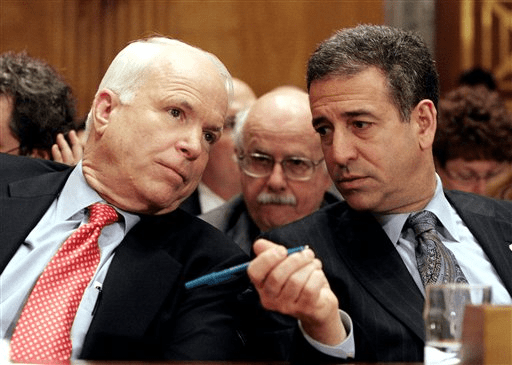
Senators John McCain (R) left, and Russ Feingold (D) right
As it turns out, with both of Trump’s victories, data suggests he spent less than his opponents, so maybe this argument isn’t so strong.
[Editorial: I suspect if you have enough money to get your ads and information out there, that might be sufficient. And frankly, if the other side overspends and inundates you with ads, you might actually be repulsed by it. But who knows, right? I sure as fuck don’t. Psychology is weird, man.]
A Soft Money Ban: Limited political party committees from accepting or spending funds not subject to federal limits.
Electioneering Communications: Restricted unions and corporations from funding television ads that mention a federal candidate within 30 days of a primary or 60 days of a general election.
Section 203 of BCRA amended 441b of FECA to include a ban on such funds being used for electioneering communications as well.
We’ll cover express advocacy and electioneering communications in a bit, but just know that these provisions were pivotal in this case.
You may hear the justices and petitioners refer to 203 or 441b throughout this case. They’re essentially interchangeable for our purposes since one simply modified the other.]
“Stand By Your Ad” Provision: Required candidates to include statements in advertisements identifying themselves and stating they approved the message.
The bill was sponsored by John McCain (R) and Russ Feingold (D) and was signed into law by President George W Bush (R)—so it was a truly bipartisan effort.
Before we go further, I probably need to explain Political Action Committees (PACs), too.
Currently, if you want to personally donate to Cunty McCunterson’s campaign, you may give them only $3,300 per candidate per election.
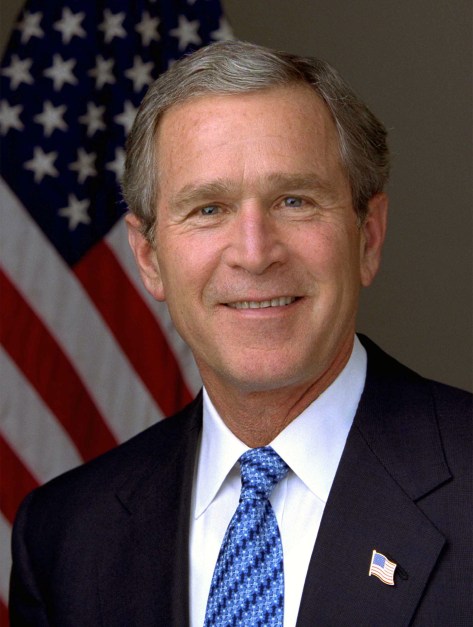
George W. Bush
If you own a company, however, and you want to write a check to McCunterson’s campaign from the company’s bank account, that’s a big no-no. What you can do instead is form a PAC.
PACs have certain requirements, like disclosing who put money into the PAC.
Your PAC can gather no more than $5,000, and give it to McCunterson’s campaign to use how they see fit—again, per candidate and per campaign. But that money STILL cannot come from the company treasury, it must be from individual donors within the corporation.
The $5,000 is misleading though, because PACs can also bundle up individual donations, too.
Let’s say your company has 100 execs who each want to pitch in the $3,300 max—you’d bundle up that $330,000, and give it to McCunterson’s team, along with the PAC’s $5k donation. A PAC’s not limited on total monies, just money per person.
Executives, shareholders, and their families can be solicited freely, but rank-and-file employees are a different story. They can only be solicited by mail, and only twice a year, so as not to feel pressured by a zealous boss.
Now that we’ve covered that, back to the case.
Along came a group called Citizens United—a conservative not-for-profit group that was founded in 1988 by David Bossie. Saying they were not fans of Hillary Rodham Clinton is understatement of the year. Not a lot of us are, but Bossie went nuclear on her.
Once Hillary’s Senate term ended and she began eyeing a presidential run, Bossie went in to action. He put together a documentary about her, funded in part by corporate donations, titled ‘Hillary: The Movie.’ Let’s just say it was less than flattering.
Why did this end up in court?
Citizens United was a 501(c)(4) non-profit organization, which identifies them as a “social welfare” group, not a PAC. That designation means they’re supposed to primarily serve the public good, not advance a political agenda, which I concede, in the view of political zealots, is the same fucking thing.
They got some of the money to make this “documentary” from corporations and intended to release it shortly before the Democratic primary, in which Hillary was an early favorite to win.
Knowing that BCRA might prohibit what they’d done, they proactively reached out to the Federal Election Commission (FEC) to see if they could move forward distributing their stupid film. The FEC gave them a hard “no,” arguing it ran afoul of BCRA’s provisions, exactly as Citizens United feared.
Citizens United screamed, “This is bullshit! We have every right to make our movie and put it out into the world. It’s not a political ad, it’s a documentary. We’re just sharing factual information about her.”
The FEC fired back, “Do you really expect us to believe that this is somehow not an attack ad against Hillary? This clearly violates BCRA rules, and you can go pound sand up your ass if you expect us to believe anything different.”
Funny thing about this case—it was argued twice. That doesn’t happen often. The first oral arguments were largely just about Citizens United themselves, their stupid movie, and whether it was a political ad under BCRA. Since BCRA was a statute, that made this a statutory question.
But the justices kept gravitating toward a bigger issue—do corporations even have First Amendment speech rights in the first place, and if so, can Congress restrict them? That’s a constitutional question—inarguably a far more consequential one.
Neither side really came prepared to make that broader constitutional argument the first time, nor do I think the government’s side wanted to, so they were cordially invited to do some homework and come back a few months later.
Before we get into the arguments, let’s cover something we haven’t discussed much.
When someone appeals to SCOTUS, they don’t just show up to re-litigate their entire case—it’s not a do-over.
Typically, they objected to something in their lower court case, had it overruled, and now they’re appealing that objection. If they didn’t object in lower court, preserving the issue for appeal, they essentially waived their right to appeal it later.
If they feel the lower court applied the law or the Constitution incorrectly, they can appeal that as well. What they don’t appeal are the facts of the case. That was already addressed in the lower court, and ain’t nobody got time for going through all that shit again.
When someone goes to court, they have to formally pose a legal question(s) they want the court to answer.
The courts interpret the law—they don’t just settle beefs between parties.
Petitioners lay out these questions in their briefs. If the court in question is SCOTUS, they decide whether to take the case and answer them—a process called granting certiorari.
This is unique to SCOTUS, which receives thousands of requests each year—they couldn’t possibly hear them all. So they have developed the certiorari process to decide which ones they feel are the best use of their time, typically accepting fewer than 100 cases a year. Lower courts generally have to hear whatever cases are presented to them.
SCOTUS opinions are typically very specific—answering the precise questions asked of it, not just declaring a winner.
The general goal is to answer as narrowly as possible to avoid the argument that they’re legislating from the bench.
If a narrow ruling would give the petitioner everything they asked for, but the court goes buck wild and strikes down an entire law, that starts to look less like interpreting law and more like making it. That’s what people mean when they say a court is “legislating from the bench.”
In this case, there were four questions before the court.
First: This case was decided in January of 2010. But about eight years earlier, SCOTUS heard McConnell v. Federal Election Commission. That particular group of justices ruled that BCRA’s rules banning “soft money” donations were not a violation of free speech. Specifically, BCRA required companies to disclose what they had donated. So it wasn’t so much that it was banned speech, as it was compelled speech.
What the hell is “soft money” you ask?
Well, “hard” money is what is given directly to campaigns. “soft” money is money given to parties to do party work. Hard money must be disclosed, so people were donating soft money to get around that shit.
So the question today: does McConnell already answer the First Amendment question here since that ruling said the disclosure requirement wasn’t a violation of the First Amendment?
U.S. Constitution: 1st Amendment
Second: There are two types of speech in this realm—political speech and campaign speech.
Political speech is just talking politics in general—you like this idea, hate that policy, whatever.
But campaign speech is “You should vote for this dick-drizzle over here,” or “you should not vote for that twat-waffle over there.”
The argument is that political speech is the most protected of speeches, a Holy Grail, if you will. Campaign speech is electioneering though, and that can be regulated, such as in BCRA’s rules.
Citizens United argued that BCRA’s disclosure requirements are political speech, not campaign speech. So if they’re correct, is it constitutional to regulate their movie, if it’s political speech?
Third: If their speech doesn’t contain “vote for this asshole” or “don’t vote for that cocksucker,” is it subject to regulation under BCRA at all?
And Fourth: Is a feature-length documentary like “Hillary: The Movie” a political advertisement, subject to BCRA’s restraints, or is it just a fucking movie?
Oral Arguments #1 – March 24, 2009
First, for Citizens United (the petitioners), was Theodore B. Olson. His opening argument was this:
Theodore B. Olson
Mr. Chief Justice, and may it please the Court
Participation in the political process is the First Amendment’s most fundamental guarantee. Yet that freedom is being smothered by one of the most complicated, expensive, and incomprehensible regulatory regimes ever invented by the administrative state.
In the case that you consider today, it is a felony for a small, nonprofit corporation to offer interested viewers a 90-minute political documentary about a candidate for the nation’s highest office that General Electric, National Public Radio, or George Soros may freely broadcast.
Its film may be shown in theaters, sold on DVDs, transmitted for downloading on the Internet, and its message may be distributed in the form of a book. But its producers face 5 years in prison if they offer it in the home through the vehicle of Video On Demand.
Because the limitation on speech, political speech, is at the core of the First Amendment, the government has a heavy burden to establish each application of a restriction on that form of speech is a narrowly tailored response to a compelling governmental interest.
The government cannot prove and has not attempted to prove that a 90-minute documentary made available to people who choose affirmatively to receive it, to opt in, by an ideologically oriented small corporation poses any threat of quid pro quo corruption or its appearance.
Indeed, this documentary is the very definition of robust, uninhibited debate about a subject of intense political interest that the First Amendment is there to guarantee.
First to question him was Justice David Souter—a fascinating man, may he rest in peace.
More Perfect is the best SCOTUS podcast out there, in my humble opinion—this episode in particular is not to be missed.
Justice Souter started by asking, “What if GM made this ‘movie,’ would the argument be the same?”
He wanted to know if it mattered the size of the group, the amount of money spent, etc., or whether it was just about the speech given? Also, did them being a right-wing organization, versus a corporation with no obvious political leanings, matter?
Olson responded that he didn’t believe BCRA was passed to ban feature-length documentaries, even if they were biased.
David Souter – Associate Justice to the Supreme Court of the United States Served: 1990-2009 Lived: 1939-2025
Justice Breyer, smelling what Souter was cooking, asked if GM could make a 90-minute ad that just said, “Vote for this prick” over and over again. Can the government ban that?
They were drawing lines, as they do, between political speech and campaign speech.
We all know the First Amendment wasn’t created to discuss the weather, yeah? It was meant so you could call the current president a cunt, your Senator a prick, shit like that.
Stephen Breyer – Associate Justice to the Supreme Court of the United States (1994-2022)
BCRA was trying to limit buying elections, but money doesn’t win elections directly—it pays for putting speech in newspapers, magazines, television, or social media, which helps win elections.
But speech is fucking protected—it’s the First Amendment, man!
Before you argue the left’s goal is to stifle free speech, like a right-wing pundit might, it’s fair to point out that they consider things like buying ad space as more of a mechanism to amplify speech, not actually speech itself.
It’s not a horrible point no matter how much you want to have the First Amendment’s baby. The Court rejected this argument in a previous case, Buckley v. Valeo, which we’ll delve into a little later. But I at least wanted to be honest in my portrayal of what the respondents believe.
That’s the impossible tightrope BCRA was trying to walk—limit money in politics without violating free speech.
Olson, trying to draw a distinction, said that Hillary: The Movie wasn’t saying not to vote for Hillary, it was just trying to educate people about what a piece of shit she is. If they learn all that and still think she’s better than Obama or Romney, then fuck it, pull the trigger on her.
Justice Souter asked:
Doesn’t this one fall into campaign advocacy?
I mean, I’ve got the government’s brief open at pages 18 to 19 with the quotations:
She will lie about anything.
She’s deceitful.
David Souter – Associate Justice of the Supreme Court of the United States 1990-2009
She’s ruthless, cunning, dishonest, do anything for power, will speak dishonestly, reckless, a congenital liar, sorely lacking in qualifications, not qualified as commander in chief.
I mean, this sounds to me like campaign advocacy.
Souter clearly struggled with the idea that this was somehow just providing information—it was also inarguably opinion.
Olson responded with a not-so-eloquent dodge—he pointed out that BCRA issues are normally about advertisements that generally last under a minute, not a documentary.
Nice try, but Breyer, who was asking along these lines earlier, chimed in and wasn’t having it. He told Olson to answer the question he was asked. Souter, seemingly answered for him, saying this was clearly a “don’t vote for that prick” situation.
Stephen Breyer – Associate Justice to the Supreme Court of the United States (1994-2022)
Olson’s argument was that this was no different than what you see on the news, or more specifically opinion news, every day. So if Sean Hannity can call Hillary a piece of shit for an hour on his show, why can’t we call her a piece of shit for 90 minutes in our movie?
Breyer then said, “I’ll grant you that information is provided, you don’t just sit there and say, ‘Don’t vote for that scumbag’ over and over again. But still, how is that not trying to influence an election?”
“Are we really going to argue that it’s OK to send someone to the pokey for five years because they dropped some fucking facts about a politician and they weren’t the right type of organization to do so? That doesn’t sound like the America I learned about in school.” Olson asked.
Justice Anthony Kennedy then wondered, “So we should draft an opinion that says if a video is a minute or less, you can fuck right off, but if it’s 90 goddamn minutes, well, it’s golden?”
Olson admitted that was a stretch, but then pivoted to the fact that these one-minute-or-less ads you are inundated with are commercials which interrupt your regularly scheduled programming. What they made was a video-on-demand documentary. If people watched it, it was because they wanted to, not because someone paid to shoehorn it into their Judge Judy reruns.
Chief Justice Roberts, being wise to this pivot, asked, “I get the new angle, but first let’s talk about content. How is a 10-second ad different than your 90-minute diatribe about why Hillary sucks?”
Olson chose to argue about whether he shifted or not, instead of answering the actual question at hand—arguing semantics is probably not a great strategy, if I’m honest.
Justice Antonin Scalia, may he rest in peace, seemingly doling out campaign lessons, chirped, “You can inform people in thirty seconds, you don’t need ninety minutes to make a fucking point. Your documentary makes a hundred points, so you could just pick one of them and make it a ninety-second ad, right?”
Antonin Scalia – Associate Justice to the United States Supreme Court Served 1986-2016 Alive: 1936-2016
Olson dodged Scalia’s question too—saying that BCRA was about banning things that were potentially corrupting, like giving money to a candidate for a little quid-pro-quo action.
Olson had been arguing this was a First Amendment issue, but when pressed, suddenly shifted to defending BCRA’s intent instead.
Scalia, never one to let a dodge slide, interjected, “A second ago, we were talking about the First Amendment. Now you’re talking about BCRA. What the fuck is your argument, man?”
Olson quipped, “I’m making both arguments. I’m trying to get you to see that BCRA was constructed to be constitutionally compliant. They wouldn’t have made a law that they thought violated the First Amendment on purpose. So I’m saying that clearly BCRA doesn’t apply to political speech, which is what we think our brilliant fucking movie is.”
He then pointed out that the government is burdened with proving this movie isn’t protected speech, but how can they say it isn’t when it’s the same shit you see on the news every day?
Justice Ruth Bader Ginsburg, may she rest in peace, pointed out that the whole documentary focused on someone who was currently running for president, and only shared how much of a sociopath she is, so folks would consider only the bad shit before voting for that monstrosity in a pantsuit.
Ruth Bader Ginsburg – Associate Justice of the United States Supreme Court Served: 1993-2020 Lived: 1933-2020
Olson conceded it was likely to influence some voters. But he flipped the script and was like, “Even if it were more even-handed, and we complimented her on what nice pantsuits she wore, we’d still be in trouble. So I don’t think it matters whether we’re even-handed or whether we tell the world what a psychopath she is.”
Justice Souter was quick to jump back into the fray and asked Olson, “What fucking evidence do you have that BCRA cared about 60-second ads arguing what a piece of shit Hillary is, and somehow not 90 minutes of that brilliant point?”
He went back to the argument that he felt BCRA was meant to limit how many times you’d get inundated with ads you don’t choose to view, and this isn’t that—folks clicked on this shit and paid to watch it.
Next up was Deputy Solicitor General of the United States, Malcolm Stewart.
He started his opening remarks with this, but was interrupted before he could even complete it.
Malcolm Stewart – Deputy Solicitor General of the United States
Mr. Chief Justice, and may it please the Court: The lead opinion in Wisconsin Right to Life didn’t just use the term functional equivalent of express advocacy, it explained what that term meant. And on page 2667 of volume 127 of the Supreme Court Reporter, the plurality—the lead opinion stated:
“In light of these considerations, a court should find that an ad is the functional equivalent of express advocacy only if the ad is susceptible of no reasonable interpretation other than as an appeal to vote for or against a specific candidate. “
So the functional equivalence test doesn’t depend on the length of the advertisement or the medium in which the advertisement…
At which point, Chief Justice Roberts jumped in and pointed out that neither this case, nor the Wisconsin Right to Life (WRTL) cared about the length of the video in question.
Wisconsin Right to Life v. Federal Election Commission is worth a quick detour. In 2004, WRTL ran ads urging Wisconsin residents to contact their senators—ironically including BCRA co-sponsor Russ Feingold—urging them to drop the hammer on judicial filibusters.
That’s when minority senators filibuster to prevent the president’s judicial nominees.
The FEC said those ads violated BCRA’s electioneering communications ban because they mentioned federal candidates within 30 days of a primary.
WRTL cordially invited the FEC to eat a bag of dicks. They said, “We’re talking about a Senate procedure, not telling anyone how to vote. We’re directing them as to whom they should call, not telling them who to vote for.”
The Court agreed, and carved out an exception. If an ad can reasonably be interpreted as advocating for an issue rather than a candidate, it can’t be banned under BCRA. Makes sense, right? You can’t bribe a policy position.
That “functional equivalent of express advocacy” test is what Stewart was harping about. His argument was that Hillary: The Movie can only reasonably be interpreted one way—don’t vote for that pantsuit-wearing sociopath. Citizens United disagreed, obviously.
Chief Justice Roberts and Olson bandied about this subject for a bit before Stewart was like, “Listen Chief, Congress’ intent was to look at the definition of electioneering communication. They defined that shit as a broadcast, cable, or satellite communication aired within 30 days of a primary or 60 days of a general election. So this is definitely that.”
Justice Roberts hit him with the ol’ hypo and asked:
So if Wal-Mart airs an advertisement that says we have candidate action figures for sale, come buy them, that counts as an electioneering communication?
He was like, “Fuck Walmart. But they could get an exception if…” at which point Justice Alito interrupted him before he could finish his thought. (I’m sensing a theme here—let the man speak!)
Justice Alito asked if Stewart felt the Constitution forced Congress to draw the line at broadcast, cable, or satellite, as opposed to DVDs, books, the internet, etc.
Stewart didn’t think so. It could have applied to other media as well.
Samuel Alito Associate Justice of the United States Supreme Court
The exchange between him and Alito that followed has become somewhat of a legend.
Samuel A. Alito, Jr.
That’s pretty incredible.
You think that if a book was published, a campaign biography that was the functional equivalent of express advocacy, that could be banned?
Malcolm L. Stewart
I’m not saying it could be banned.
I’m saying that Congress could prohibit the use of corporate treasury funds and could require a corporation to publish it using its PAC.
Samuel A. Alito, Jr.
Well, most publishers are corporations.
And a publisher that is a corporation could be prohibited from selling a book?
Malcolm L. Stewart
Well, of course, the statute contains its own media exemption or media…
Samuel A. Alito, Jr.
I’m not asking what the statute says.
The government’s position is that the First Amendment allows the banning of a book if it’s published by a corporation?
Malcolm L. Stewart
Samuel Alito – Associate Justice of the United States Supreme Court
Because the First Amendment refers both to freedom of speech and of the press, there would be a potential argument that media corporations, the institutional press, would have a greater First Amendment right.
That question is obviously not presented here.
Stewart knew this was not going to go well for him. Banning books is a political death sentence in the United States.
Justice Kennedy then jumped in and asked, “What if some advocacy group wrote a book, and just made an ad to help sell the book?”
Stewart left the door open on that, so Kennedy walked through even further and asked, “What about if it’s on a Kindle, and that Kindle is transmitted to via a satellite?”
Remember, satellite communications are prohibited if you were wondering whether Kennedy was just waxing poetic or some shit.
Anthony Kennedy – Associate Justice: Supreme Court of the United States Served: 1988-2018
Stewart was like, “I’m not saying it would be banned. I’m saying the company couldn’t pay for it from its own treasury, it’d have to come from a PAC.”
At this point, Stewart was probably shitting bricks, and the onslaught didn’t stop.
Stewart, later in his career, was recognized by Justice Roberts in session, for appearing before the court and arguing effectively for the government 100 times.
Quite the milestone—but today, by all accounts, he had his ass handed to him by Justice Roberts”.
Their exchange was also quite legendary, and it’s likely a huge reason the FEC lost.
John G. Roberts, Jr.
If it has one name, one use of the candidate’s name, it would be covered, correct?
Malcolm L. Stewart
That’s correct.
John G. Roberts, Jr.
If it’s a 500-page book, and at the end it says, and so vote for X, the government could ban that?
Malcolm L. Stewart
Well, if it says vote for X, it would be express advocacy and it would be covered by the pre-existing Federal Election Campaign Act provisions.
John G. Roberts, Jr.
No, I’m talking about under the Constitution, what we’ve been discussing, if it’s a book.
Malcolm L. Stewart
If it’s a book and it is produced—again, to leave one side the question of…
John G. Roberts, Jr.
Right, right.
Forget the…
Malcolm L. Stewart
…the possible media exemption, if you had Citizens United or General Motors using general treasury funds to publish a book that said at the outset, for instance, Hillary Clinton’s election would be a disaster for this…
John G. Roberts, Jr.
John Roberts – Chief Justice: Supreme Court of the United States
…No, take my hypothetical.
It doesn’t say at the outset.
If funds—here is—whatever it is, this is a discussion of the American political system, and at the end it says vote for X.
Malcolm L. Stewart
Yes, our position would be that the corporation could be required to use PAC funds rather than general treasury funds.
John G. Roberts, Jr.
And if they didn’t, you could ban it?
Malcolm L. Stewart
If they didn’t, we could prohibit the publication of the book using the corporate treasury funds.
Between Alito and Roberts, they got him to admit the government would potentially ban a book.
Justice Breyer, seemingly throwing Stewart a lifeline, asked, “What if The Teamsters said, ‘You know what, we fucking love Hillary Clinton—she’s our kind of corrupt sociopath.’ The First Amendment doesn’t allow them to ban such speech, right? They can only ask who the fuck is paying for them to say it in a public forum, such as buying ad space?”
“The government can’t ban the speech, they can just limit the amount of money spent to promote such speech. Right?” Breyer continued.
Stewart agreed.
Antonin Scalia – Associate Justice: Supreme Court of the United States Served 1986-2016 Alive: 1936-2016
Justice Scalia then jumped in with, “Let’s go back to a media company. That’s their fucking job. So now, they can’t report on candidates and shit, because they’re paying for that news coverage, and your way around this clear paradox is to say that the First Amendment’s freedom of the press makes them, and only them, exempt?”
Elaborating further he asked:
Antonin Scalia
But does “the press” mean the media in that constitutional provision?
You think in 1791 there were people running around with fedoras that had little press tickets in it, (saying) “Press”?
Is that what “press” means in the Constitution?
Doesn’t it cover the Xerox machine?
Doesn’t it cover the right of any individual to write, to publish?
Stewart weirdly switched gears and brought Alito back into this mess to make a new point he hadn’t addressed earlier.
He mentioned that if Citizens United had just put the video on their own webpage or YouTube, we wouldn’t be in this mess. The fact that they made it video on demand, which the government considered broadcast or satellite, is where the problem lies.
Stewart likely didn’t know it, but he handed his own ass to himself on a plate.
Justice Alito saw an open door and walked through it like he was on a mission from god, asking, “Alright, great point. So what if Congress decides that the internet is part of the problem too and amends the law to include that—is that speech now banned?”
Samuel Alito – Associate Justice of the United States Supreme Court
He wasn’t wrong—that seemed like a weak point for Stewart.
He was trying to carve out some technicality exemption to what Alito likely believes is a blatant First Amendment violation, which Congress could easily fix, pulling the rug out from under Stewart’s entire argument.
Justice Kennedy then laid a trap, pressing Stewart on the opposition’s central distinction—the 60-second ad versus the 90-minute documentary.
Stewart argued he saw no legal distinction.
Justice Kennedy was like, “If we rule against you, not only is his 90-minute documentary allowed, but all those 60-second ads are allowed too, right? Because you see no distinction?”
Stewart was like, “That’s up to you, dawg. If you say there’s a distinction between the two, then no.”
Stewart argued that Hillary: The Movie not only painted Clinton in a bad light—it also argued she’d make a shitty president. That second part is a big reason why they’ve got a fucking problem with this—that’s advocacy.
Justice Ginsburg asked about a similar film called Fahrenheit 9/11, from Michael Moore, conveniently released during the 2004 election cycle. It cast President Bush in a pretty negative light. So she asked if that would be banned if it were aired within the 60-day bar that BCRA sets?
Ruth Bader Ginsburg – Associate Justice of the United States Supreme Court Served: 1993-2020 Lived: 1933-2020
“I never watched that shit, so I wouldn’t know. But maybe,” said Stewart.
Justice Scalia, not done with his First Amendment questions yet, asked whether the Constitution protects the person who wants to hear the speech as much as the person making the speech.
Stewart again answered a different question than he was asked. He talked about the efficacy of a 90-minute documentary that people have to ask to watch, versus a campaign commercial that interrupts what they were watching.
Scalia wasn’t having it. He jumped in, “That wasn’t my question, man. Two people, one of them wants to speak, the other wants to hear them speak, and you’re telling me the First Amendment doesn’t apply to that speech—government can just say:
No, the two of you can’t do this?
Stewart, running low on good answers, retreated again to the Video on Demand argument. He felt that VOD fell under the broadcast or satellite rubric, and therefore was a problem. If they had made a DVD people could buy, apparently that would have been OK in his mind.
Sidebar: You may have noticed Stewart dodged a lot of questions, which seems like a bad strategy. However, he may have been sly like a fox. We’ll never know—I can’t peek inside his mind. He was almost certainly afraid of losing on Constitutional grounds, which would be a huge fucking loss with big implications, as we’ll get to later, so I suspect he was hoping to focus solely on the statutory issues instead.
Justice Roberts then waded into the “exemption to disclosure requirements for those with a fear of reprisal” issue.
After a dispute between the two, Alabama tried to compel the NAACP to hand over their membership list. The court unanimously ruled that the NAACP didn’t have to do shit. They rightly reasoned those folks would be harassed by some pricks in white bedsheets and pointy hats who don’t take kindly to people like the NAACP ’round their parts.
Roberts wanted to understand if that applied here. Maybe the disclosure requirements would lead people of one party to attack supporters of the other, and therefore they deserved some level of anonymity. I mean, Trump has had at least three fucking would-be assassins at this point, so it’s fair to say that political disagreements might lead to violence.
Chief Justice John Roberts Being Sworn In
Counsel Stewart was like, “They fucking disclosed before with no reprisals. So why the fuck we even talkin’ ’bout this, bro?”
“You only get an exemption after someone has faced some sort of reprisal? That doesn’t seem very fucking smart, does it?” said Roberts. “Are we gonna make it so that someone has to get shot before we authorize restraining orders now, too?”
Stewart seemed willing to concede this point—he likely didn’t care about the disclosure aspect of BCRA so much as the banning of anything they considered corporate-funded political ads.
With that, the first oral arguments were complete.
Because there were both statutory and constitutional questions in this case, the court decided that McConnell’s constitutionality may need to be revisited.
This occurred in private deliberations among the justices, so we don’t have records on that. But the logic is pretty clear — they weren’t certain they could reasonably side with Citizens United yet leave McConnell standing.
Since both parties in the first set of oral arguments didn’t fully explore the broad constitutional issues, and focused mostly on the as-applied ones, they were asked to consider those, and come back for round two.
“As-applied” just means that they discussed the constitutionality of BCRA “as it applied” to Citizens United. If they were to win, it could just mean that the Court ruled BCRA didn’t apply to them, but would still remain as valid law for everyone else.
But the Court could also rule that BCRA, or at least the provisions of BCRA in question here, were wholly unconstitutional and must be struck down entirely.
For the second go-around, only Theodore Olson returned to the fray, this time with Floyd Abrams by his side as an amicus (friend of the court) arguing for the ageless Mitch McConnell.
Malcolm Stewart was out for the FEC, replaced by two people—Seth Waxman representing John McCain—who as you recall sponsored BCRA. And also Elena Kagan, then Solicitor General for the DOJ, who is currently now a Supreme Court Justice.
Oral Arguments #2: September 9th, 2009
First up again, Theodore Olson, who opened with this:
Theodore Olson
Mr. Chief Justice and may it please the Court: Robust debate about candidates for elective office is the most fundamental value protected by the First Amendment’s guarantee of free speech.
Yet that is precisely the dialogue that the government has prohibited if practiced by unions or corporations, any union or any corporation.
The government claims it may do so based upon the Austin decision that corporate speech is by its nature corrosive and distorting because it might not reflect actual public support for the views expressed by the corporation.
The government admits that that radical concept of requiring public support for the speech before you can speak would even authorize it to criminalize books and signs.
This Court needs no reminding that the government when it is acting to prohibit, particularly when it is acting to criminalize, speech that is at the very core of the First Amendment has a heavy burden to prove that there is a compelling governmental interest that justifies that prohibition and that the regulation adopted, in this case a criminal statute, is the most narrowly tailored necessary to accomplish that compelling governmental interest.
Justice Ginsburg was the first out of the gate noting that an individual is “endowed by their creator” with inalienable rights but a corporation is just created by a person or persons. “Are we to draw no legal distinction regarding rights, between a person and a corporation?” she wanted to know.
Ruth Bader Ginsburg – Associate Justice of the United States Supreme Court Served: 1993-2020 Lived: 1933-2020
Olson cited several cases where corporations were entitled to First Amendment protections to support his argument that yes, the First Amendment applies to both.
Justice Ginsburg then wanted to know “Even corporations that are owned entirely by foreign nationals outside the United States?”
Olson was like, “Doesn’t fucking matter.”
Because this is a restriction on political speech, he then went on to lay the groundwork for why strict scrutiny applies.
If you’re not familiar with what strict scrutiny means in case law, read this piece I wrote about the subject HERE in a previous post. Strict scrutiny is nearly a century in the making, and case law in the US is littered with examples where it underpinned the ruling. It’s fundamental to this one as well, so I reference it throughout. If you’re interested in the courts, you’ll want to understand this concept.
Justice Scalia asked if the government could prevent foreign interests from funding US electioneering speech.
Antonin Scalia – Associate Justice: Supreme Court of the United States Served 1986-2016 Alive: 1936-2016
Olson responded with the “I don’t know” defense.
That’s fair—it wasn’t an issue here, so he couldn’t fathom everything they’d ask.
Sticking with this theme, Justice Stevens reiterated RBG’s question about the rights of corporations versus people, and then Justice Alito asked if foreign-owned companies, operating in the US, have less free speech rights than American ones as well.
Olson was like, “What is it with you fucking people? The First just says “government shall make no law.” It doesn’t say “make no law if you’re from here.” The Court has said political speech is the pinnacle of protected speech, so to restrict it would have to fall under strict scrutiny.”
Justice Ginsburg asked why Olson kept saying “prohibition.” Corporations aren’t prohibited from funding such speech—they’re just supposed to go through a PAC.
He pointed out that corporations can’t actually contribute via a PAC either. As we covered earlier, a PAC is funded by individual donors within a corporation—executives, shareholders, employees—giving their own personal money—the corporate treasury never enters the picture.
Buckley v. Valeo, which we mentioned earlier, was heavily discussed. The important facet of that case is that there are two types of spending in play.
Donations: money given to a candidate.
Expenditures: money spent independently to express a political view, with no candidate involved.
Remember, Citizens United made a movie. They never gave a dime to Barack Obama, who beat Hillary in the primary, nor to Mitt Romney, who would have been her general election opponent, had she gotten that far.
No campaign donation here—just an expenditure.
I won’t dig deep into Buckley, but the court ruled restrictions on donations were constitutional—restrictions on expenditures were not.
This is an easy concept to understand—it’s the linchpin in this case. If I give a politician money (donations), it stands to reason that asshole might do me a favor in return. That’s quid pro quo, and that’s corruption.
But if I just spend money to advance my opinion to the public (expenditures) without any interaction with a politician, it’s hard to say I corrupted anyone—I never gave a red cent to an actual person.
That meant expenditures were essentially a protected right, and to regulate them would have to pass the strict scrutiny test. Since BCRA limited them to 30 days before the election, Congress felt that the law was narrowly tailored enough, as required by strict scrutiny, to pass the test.
Stephen Breyer – Associate Justice to the Supreme Court of the United States (1994-2022)
Breyer was like, “OK, Congress restricted electioneering communications to a 30-day window, and only on television ads. Doesn’t that survive strict scrutiny? If not, does it not meet the definition of a compelling interest, or is it not narrowly tailored enough?”
Olson responded, “You must always second guess Congress when the First Amendment is in play—they’re shady AF.”
He pointed out that the government provided no evidence of corruption via expenditures, unlike donations, where the appearance of corruption is much harder to dismiss.
Justice Ginsburg had the receipts, though. She mentioned that a three-judge court found that Federal officials feel indebted to corporations or unions who support them.
Olson conceded this, but reasoned, “We’re talking about expenditures, remember? That’s a great point on contributions if we were talking about those—let’s stay on topic, you old battle axe.”
The exchange he had with Breyer, Kennedy, and Ginsburg was largely around coordination. Remember, these laws exist because the government feared bribery and corruption.
If a company just goes off and makes its own ad—at no point discussing it with a candidate—that ad might actually be something the candidate actively opposed, and therefore wouldn’t result in a returned favor.
Consider this—Obama benefitted from Hillary: The Movie, but he may have been none too keen on how badly it reflected on the DNC by association.
So in that light, Citizens United’s speech was politically protected—and Obama, the very person who benefitted, never gave them a thing in return.
Hillary Rodham Clinton
Justices Roberts and Stevens then brought up First National Bank of Boston v. Bellotti, where the court noted that influencing elections was the point of protected speech.
The majority opinion held that the speech is what’s protected, not the speaker.
Put an individual behind these exact same words and nobody bats an eye, so restricting it from a corporation shouldn’t change anything.
They also discussed candidates versus ballot issues. Bellotti involved a company speaking out against an issue, not supporting a candidate.
Again, these laws are restrictions on content-based speech—therefore strict scrutiny applies. The compelling interest is quid pro quo corruption, so how would a ballot issue pay you back for getting it passed?
The ballot issue part of Bellotti doesn’t apply here but the speech protection sure does, according to Olson.
He then made an interesting point—issues and candidates are often inseparable. A corporation might only care about, say, marijuana legalization, and there might be only one candidate who shares their position. If that corporation speaks out in support of legalizing the Devil’s lettuce, does that speech suddenly become a problem just because only one candidate agrees with them?
The corporation might despise everything else about that candidate—their character, their voting record, their stupid haircut—but they agree on this one thing. It’s a hell of a stretch to call that corruption.
Therefore, he argued, the court can’t really distinguish between issue support and candidate support.
Official Portrait of United States Supreme Court Justice Sonia Sotomayor Click for Biography
Justice Sonia Sotomayor, who replaced Justice Souter on the Supreme Court between the first arguments and this second round, asked if Olson was abandoning his statutory argument from the first round, and focusing only on the constitutional ones now.
Olson was like, “Nope. We think we win either way, and both support us. But you dragged my ass back here on these broader constitutional questions, so that’s what I’m talking about now.”
Next up was Floyd Abrams, in support of Citizens United.
Floyd Abrams
He opened by arguing that the courts could just address the statutory question, leave the other precedents alone, and move on.
But if they did, it would lead to an inevitable shit-storm of similar cases they’d have to resolve, until they eventually just decide this is a First Amendment issue and invalidate all this other case law.
So they might as well gut this pig now and save everyone a trip back here in two years.
Not exactly argument of the year, but not wrong either.
That said, the Court usually shies away from answering broad constitutional questions when a simpler statutory one will suffice—this can be deemed legislating from the bench. So Abrams’ argument of expedience is ill-advised.
Abrams was brief, so not much to say about his time at the pulpit, and that was kind of the point.
He was just there as an amicus for Mitch McConnell, whose loss in McConnell v. FEC was mentioned earlier. Ol’ Mitch hated this fucking law with the heat of a thousand suns and he wanted it gone.
Up next was then Solicitor General for the DOJ, Elena Kagan.
She opened by saying:
Associate Justice Elena Kagan
For over 100 years Congress has made a judgment that corporations must be subject to special rules when they participate in elections and this Court has never questioned that judgment.
Justice Scalia was like, “WTF are you talking about? We never questioned it, but we never approved it, either! We’re not some group of political hacks who just jump in and pick shit to approve or disapprove. Someone with standing to do so has to come here and ask us to give an opinion. We don’t just issue opinions out of the blue. Assholes like your clients have to come in and complain first.”
In this case, SCOTUS ruled that similar federal election rules violated MCFL’s First Amendment rights. The Court carved out an exception for MCFL because:
They were formed solely for political purposes
They had no shareholders
They did not accept contributions from for-profit corporations.
In their opinion, no business interests in political influence—no corruption.
Citizens United is a little different in that they accepted money from for-profit corporations to achieve their mission.
While Meat Loaf may argue that two out of three ain’t bad, Kagan and the FEC felt it should be all three or nothing when all of this started.
It’s worth noting that at this point, it was already looking like Citizens United would win.
Kagan’s play was to get the MCFL exemption applied to Citizens United, which is a narrow statutory ruling. That would at least leave the BCRA provisions they were debating in place—and preserve the other case law that helps limit corporate campaign influence.
She was willing to shift her position and lose the statutory battle so the government could still win the constitutional war.
Justice Roberts, clearly understanding this was where she was going, pressed her to admit as much. She responded:
If you are asking me, Mr. Chief Justice, as to whether the government has a preference as to the way in which it loses, if it has to lose, the answer is yes.
Justice Kennedy and Kagan then sparred extensively about whether BCRA, specifically section 203 which prohibited electioneering communications paid for by corporate treasury funds, was overbroad. Meaning, as we know from strict scrutiny (hopefully), laws around restricting what you say (content-based speech) must pass three tests—compelling interest by government, narrowly tailored to meet that interest, and least restrictive means.
Anthony Kennedy – Associate Justice: Supreme Court of the United States Served: 1988-2018
The government arguably has a compelling interest in preventing quid pro quo corruption, so that’s a big check. It’s the “narrowly tailored” part that they’re concerned about.
Seemed like Kennedy was arguing that BCRA may restrict more speech than it needs to, in order to achieve this goal. The concern was that BCRA may prevent people from opining on why they want government to eat their entire ass, even when those people have absolutely no quid pro quo expectation.
Kagan was trying to save section 203, which was arguably on life support at this point. She hoped to get SCOTUS only to quash it as applied to Citizens United. But Kennedy was leaning toward “this whole fucking provision of BCRA is a problem and needs to go.”
She then had exchanges with justices Stevens and Breyer about whether they should just strip out a provision in BCRA that exempts non-profits, which again means Kagan loses, but BCRA 203 remains largely intact.
Justice Roberts next wanted to discuss the compelling interest in a previous case, Austin v. Michigan Chamber of Commerce. He was setting her up, but it’s a fair and nuanced point.
In Austin, a similar case to this about a Michigan law like BCRA, the court ruled that the government’s compelling interest for limiting content-based speech was that corporations shouldn’t appropriate shareholders’ money for expressive purposes. They argued this causes “distortion.”
Sidebar: Distortion is the idea that corporate political spending can make one viewpoint appear more powerful or widely supported than it really is among actual voters.
A corporation may be made up of shareholders, employees, and members with all kinds of political views, but leadership can use corporate treasury money to push one message. That money does not get spread out according to everyone’s opinions; it gets concentrated behind one position, making that opinion artificially louder than it otherwise would be because it has a shit ton of money behind it.
That is the basic concern: corporate economic power can be converted into political influence in a way that does not necessarily reflect genuine democratic support.
The constitutional fight is whether that concern qualifies as a compelling governmental interest to satisfy strict scrutiny and thus allow limiting political speech.
Quid pro quo corruption had already been accepted as a compelling governmental interest by the Court in previous case law, but this “distortion” idea was about to be hotly debated, as SCOTUS hadn’t opined on that shit yet.
Kagan agreed with this understanding of the compelling interest, but she relied on Austin as support for BCRA’s 203 amendment to FECA 441b.
Associate Justice Elena Kagan
Kagan agreed that the government’s compelling interest in Austin was preventing quid pro quo corruption, not distortion. So Justice Roberts was essentially arguing that she can’t rely on Austin to help her if it’s not even the same compelling interest for the purpose of satisfying strict scrutiny.
Kagan, not wanting to lose this argument, essentially argued that she felt both were compelling interests, and each applied in both cases—they were two sides of the same coin.
Justice Scalia then launched this missile. He pointed out that most companies are single-shareholder corporations. So if strict scrutiny applies, and you’re restricting these single-shareholder corporations where distortion clearly would not apply, can you say the law is narrowly tailored and the least restrictive means?
She had no choice but to agree with this point. Again, she was losing this battle, and you had to feel for her. She was trying to salvage something, and it was just not working.
Justice Scalia suggested that Congress too had self-interest. With his trademark cynicism in hand, he argued that the courts are very suspicious when congress restricts content-based speech, because they’d always vote to help themselves, the incumbents, win elections.
But out of nowhere and nearly down for the count, Kagan spotted a weakness and handed him his ass on a plate. She pointed out that:
I think, Justice Scalia, it’s wrong.
Antonin Scalia – Associate Justice: Supreme Court of the United States Served 1986-2016 Alive: 1936-2016
In fact, corporate and union money go overwhelmingly to incumbents.
This may be the single most self-denying thing that Congress has ever done.
If you look at the last election cycle and look at corporate PAC money and ask where it goes, it goes ten times more to incumbents than to challengers, and in the prior election cycle even more than that.
And for an obvious reason, because when corporations play in the political process, they want winners, they want people who will produce outcomes for them, and they know that the way to get those outcomes, the way to get those winners is to invest in incumbents, and so that’s what they do.
As I said, in double digits times more than they invest in challengers.
So I think that that that rationale, which is undoubtedly true in many contexts, simply is not the case with respect to this case.
Kagan then argued that corporations are different because while people might hold a political position because they just like it, for family reasons, moral reasons, religious reasons, the list could go on forever—corporations mostly just care about return on investment, because they’re soulless capitalist pigs.
Justice Roberts responded, “That’s poppycock. Corporations are diverse, just like people, and while it may be true that many are only motivated by money, corporations often reflect the morals of their board members, and it’s a little demeaning to say they only ever care about money.”
John Roberts – Chief Justice: Supreme Court of the United States
It was clear that Justice Roberts was apprehensive about what he saw as socialist rhetoric. Kagan might have been wise to avoid characterizing corporations so pejoratively—implying greed is their only interest.
Justice Scalia then pointed out that single shareholders can just do the same thing as individual voters, without hiding behind the corporate structure. The only reason they wouldn’t is to save on their income taxes.
Justice Breyer, deciding to play a bit of softball, mentioned that he’d seen, in a litany of DC Court briefs, where politicians talked about fundraising as something that’s always on their mind as they grant access to donors.
He was giving Kagan an opportunity to defend BCRA by showing that the appearance of corruption was clearly there, supporting the compelling interest argument.
Here’s the thing, though—we’re discussing expenditures, not donations, remember? Citizens United didn’t give money to anyone, they made a movie that, as far as we know, wasn’t supported by any candidate. So Breyer, while trying to help Kagan, went off the rails here.
Justice Roberts next asked whether it was insulting to assume shareholders in a company couldn’t exercise influence or sell their shares, if they didn’t like a company’s political activities. They’re not helpless, and don’t need big brother to protect them from things they simply don’t like.
Associate Justice Elena Kagan
Kagan argued that it’s tough when a busy person, who owns shares in multiple companies, is juggling a job and multiple investments.
“So isn’t it extraordinary that we have to protect shareholders from themselves?” asked Justice Roberts.
Kagan snapped, “Man, my shares are all wrapped up in mutual funds like most people, I don’t fucking know what those assholes are doing.”
“So we do have to protect idiots from themselves?” Justice Roberts quipped.
Justice Ginsburg, joining Breyer in a game of softball, asked, “It’s not like unions, am I right?”
She was referring to Abood v. Detroit Board of Education. The Court ruled that it’s a violation of the First Amendment to force union members to pay for speech they don’t agree with. If that happens, they can ask for that money back. They are only required to pay for fees the union uses to do its business, not advance political causes.
But then she threw a curveball and asked, “Should we remove unions from BCRA?”
Kagan was like, “Whoa, let’s not get crazy! Unions could still engage in some quid pro quo corruption shit. We’re not just worried about distortion and misrepresentation.”
As Kagan’s time was coming to an end, Justice Ginsburg decided she still had questions. She wanted to know about media such as books and print ads, which are also potentially problematic in BCRA, even though they’re not at issue here.
Ruth Bader Ginsburg – Associate Justice of the United States Supreme Court Served: 1993-2020 Lived: 1933-2020
Kagan, hoping to avoid the whole “banning books” problem all over again, was like, “In 60 years, we haven’t fucked with books, and we’re not gonna start now.”
Justice Scalia was having none of it. He asked:
What happened to the overbreadth doctrine?
I mean, I thought our doctrine in the Fourth Amendment is if you write it too broadly, we are not going to pare it back to the point where it’s constitutional.
If it’s overbroad, it’s invalid.
What happened to that?
Kagan hit back, “Listen, you old prick, we’ve never applied it to books. You could take that shit off—we won’t care—it won’t affect a goddamn thing we’re concerned about. You don’t need to eighty-six a good fucking law because of one little issue. Congress worked hard on that shit.”
Justice Roberts, also not having it, replied:
But we don’t put our First Amendment rights in the hands of FEC bureaucrats.
And if you say that you are not going to apply it to a book, what about a pamphlet?
Kagan, apparently now completely in “fuck it” mode, was like, “Pamphlets are classic electioneering, chief. That’s a different animal.”
Justice Scalia, not done with this argument yet, snapped back:
So you’re a lawyer advising somebody who is about to come up with a book and you say don’t worry, the FEC has never tried to send somebody to prison for this.
This statute covers it, but don’t worry, the FEC has never done it.
That going to comfort your client?
I don’t think so.
With that, Kagan’s time in the hot seat mercifully ended.
Last to argue was Seth P. Waxman in support of the FEC.
He quoted an old court opinion from United States v. Auto Workers (1956), about the Taft-Hartley Act from 1947, which BCRA built on, that said:
What is involved here is the integrity of our electoral process and not less the responsibility of the individual citizen for the successful functioning of that process.
He was invoking what he considered one of the most powerful compelling interests possible: protecting the integrity of elections.
Justice Roberts was like, “As I understand it, no one enforced that fucking law, because they knew it was a classic First Amendment violation, and they wanted to avoid us striking it down.”
Waxman, deciding that a citation from 80 fucking years ago wasn’t old enough, dug up a quote from over a century ago by highly revered Senator Elihu Root, who asked Congress to enact legislation that would address:
A constantly growing evil which has done more to shake the confidence of plain people of small means of this country in our political institutions than any practice which has ever obtained since the founding of our government.
Kennedy was like, “Good quote, but he was talking about contributions, not expenditures, and we all fucking know it.”
Anthony Kennedy – Associate Justice: Supreme Court of the United States Served: 1988-2018
Waxman responded, “There’s no real difference in this example. Corporations are using their great aggregations of wealth to influence elections. That’s the problem—whether they give money or spend money is irrelevant.”
Justice Scalia pushed back:
Great aggregations of wealth.
The amicus brief by the Chamber of Commerce points out that 96 percent of its members employ less than 100 people.
These are not aggregations of great wealth.
You’re not talking about the railroad barons and the rapacious trusts of the Elihu Root era; you are talking mainly about small business corporations.
Waxman was undeterred and hammered home the point that the focus was on much larger corporations. But again, he fell into a trap.
Remember, we were in “strict scrutiny” territory here, which means laws should be “narrowly tailored” and “the least restrictive means.”
We can hardly say that was true if the law affected all corporations when the government was saying it was only worried about the 4% of them that are large corporations.
Scalia pointed out that they could have drawn a line that excluded corporations with less than 100 employees, or some shit like that.
Waxman was like, “If some Podunk company wants to challenge it, let them. But these laws have been on the books forever with no challenges of this nature, until now.”
Samuel Alito – Associate Justice of the United States Supreme Court
Justice Kennedy retorted, “Well, TV ads haven’t been around forever, and the history you’re talking about again applies to contributions, not expenditures.”
Justice Alito seemed rather annoyed at how Waxman kept mentioning legislation older than all of them.
Waxman was hoping that they’d accept the idea that an old law means it’s well-tested and accepted, and therefore beyond reproach.
Alito unimpressed with that quipped, “Old-ass laws get challenged for the first time every day. We don’t fucking care how old it is, we’re judging this shit on the merits—not its tenure.”
That was it for Waxman.
At this point, Theodore Olson had a five-minute rebuttal, and he started with how he believed the government kept moving the goalposts. First they could ban books—then they couldn’t.
But Notorious RBG interrupted him on that point, and argued, “The book-banning issue isn’t in play here, so why you bringing that shit up?”
Olson then added, “The government now says they’re willing to back off certain corporations, where before it was ‘No exceptions!'”
Then he said, “They also keep changing the rationale. Is it corruption, shareholder protection, equalization, distortion? Fucking pick a compelling interest already!”
Stephen Breyer – Associate Justice to the Supreme Court of the United States (1994-2022)
Justice Breyer asked, “The state created this artificial person we call corporations, then gave them abilities and capacities—so surely they can take them away.”
Olson responded, “Stop calling me Shirley,” then ended oral arguments with this:
My point is that the government here has an overbroad statute that covers every corporation irrespective of what its stockholders think, irrespective of whether it’s big, and whether it’s general—a big railroad baron or anything like that, and it doesn’t know, as it stands here today two years after this movie was offered for—to the public for its view, what media might be covered, what type of corporation might be covered and what compelling justification or narrow standard would be applied to this form of speech.
In cases like this that are clearly going to be “big fucking deals,” sometimes the court announces its opinion from the bench, where the Justice(s) who write the opinions give a synopsis of their opinion orally, as well as their written opinion—they did so here.
Justice Kennedy was first, announcing the majority opinion.
Anthony Kennedy – Associate Justice: Supreme Court of the United States Served: 1988-2018
He started by rejecting the notion that this was an objective documentary, as opposed to just a political ad against Hillary Clinton.
Point for the FEC.
Second: Citizens United argued that because this was Video on Demand, delivered one house at a time, it wouldn’t meet the 50,000 or more persons provision for viewership that a normal television program would—it would essentially be one person, over and over again, and each instance would fall 49,999 short.
Kennedy was like, “That’s fucking stupid. One at a time isn’t just one—it can still add up to 50,000, even if they aren’t all viewed at precisely the same time.”
Point two for the FEC.
You might think the FEC is winning, but then his opinion took a quick right turn.
He opined that the difficulties created in interpreting all this shit would lead to a chilling of political speech by companies like Citizens United, who aren’t sure if the rules apply to what they’re doing or not. Political speech is absolutely the speech the First Amendment was designed to protect most.
As such, he announced that McConnell and Austin, which allowed restrictions on corporate political speech, must be “reexamined.”
He then said:
If the First Amendment has any force, it prohibits Congress from fining or jailing citizens or associations of citizens for simply engaging in political speech.
U.S. Constitution: 1st Amendment
Austin in its rationale, however, would allow the Government to ban corporations from expressing political views through any media, including media beyond those presented here and in this case such as by printing books.
Political speech is indispensable to decision making in a democracy and this is no less true because the speech comes from a corporation rather than an individual.
Austin’s rationale would produce the dangerous and unacceptable consequence that Congress could ban political speech of media corporations.
Media corporations are now exempt from 441b’s ban on political speech, but they amass wealth like other business corporations, so under Austin the Government could diminish the voice of a media business.
There is no precedent for permitting this under the First Amendment.
He went on to say:
The Government seeks to use its full power, including the criminal law, to command where a person may get his or her information or what distrusted source he or she may not hear, it uses censorship to control thought.
This is unlawful.
The First Amendment confirms the freedom to think for ourselves.
With that, Austin was overruled.
He then specifically added that with Austin in the shitcan, the ban on corporate independent expenditures was invalid and could not apply to this film.
So this was not just the BCRA 203 FECA amendment which banned electioneering communications, but the original FECA 441b provision which banned express advocacy was annihilated as well.
Big point for Citizens United.
The next point he addressed was the disclosure requirement—the provision in BCRA that requires donors to be outed. Justice Kennedy was like, “An informed electorate is a good thing—the right to free speech doesn’t confer a right to anonymity, so we’ll let that shit slide.”
Another win for the FEC. He left the door open, though, for future cases where one might be able to show that the threat of reprisal for political speech is real and challenge that later. Citizens United didn’t show that to be true for them, so the court wasn’t answering that shit now.
It’s worth noting that because there were many questions before the Court in this case, there was no one opinion answering everything. The justices concurred on certain questions, but then wrote separate opinions on others.
The only other oral opinion given was by Justice Stevens, who concurred in part with the majority, but was the main dissenting opinion.
John Paul Stevens – Justice Supreme Court of the United States Served: 1975-2010 Lived: 1920-2019
He, along with Ginsburg, Breyer, and Sotomayor agreed that the reporting and disclosing part of BCRA was hunky-dory.
But they thought striking down BCRA 203 prohibiting corporations and unions from using general treasury funds for electioneering speech, and the overruling of Austin and McConnell were some grade-A bullshit.
Justice Stevens was in the majority on the McConnell opinion, so it was fair to say he hadn’t wavered on the belief of his own genius.
Justice Stevens took issue with the Court making such a broad ruling.
Like Kagan who was trying to choose how she was going to lose, he didn’t think they needed to go nearly this far. They could have left the other case law in place, left BCRA largely alone, and just carved out an exception for non-profits, in a much narrower ruling.
Let’s be honest—he was retiring soon. The idea that if they didn’t rule so broadly, there’d be a shit-ton of cases coming to the Court, seeking similar relief, wasn’t going to be his fucking problem.
He went on to lay out what he saw as five flaws with the majority opinion.
John Paul Stevens – Justice Supreme Court of the United States Served: 1975-2010 Lived: 1920-2019
They said that corporations were banned from political speech, the most protected of speech rights. But he argued this was just a limit on expenditures. He wasn’t wrong, but he wasn’t right, either.
He thought it was bullshit that the First Amendment is absolute for corporations and people alike. He apparently liked the idea that since government created corporations, they were not endowed with inalienable rights like us people.
He really didn’t like this new court shitting all over the previous court’s rulings in Austin and McConnell.
[Editorial: My less-than-libertarian friends will probably always disagree on this, but the fact is corporations are just an entity made up of people.
Limiting a corporation’s speech is limiting the speech of the people who own that corporation. That’s inarguable.
What we’re really fighting about is whether they’re free to use the money the corporation earns to get that speech to more ears than normal. Both arguments have fair points, but I think in a free country, we should err on the side of more freedom, not less.
You might wonder why an owner doesn’t just pay themselves the money and donate it personally—bypassing the whole corporate treasury problem. The answer is our convoluted tax code. The moment that money becomes personal income, they pay income tax on it before donating.
Keeping it in the corporate structure is simply cheaper, which is why these rules exist in the first place—to close that tax loophole. A simple tax structure goes a long way to fix this, and many other legal issues that are surprisingly a result of an overcomplicated tax system.]
He disagreed with the idea that the only compelling interest the government has is quid pro quo corruption, which again was not in play here since these were expenditures, not donations. He thought that the court should consider the “distortion” argument as a compelling governmental interest as well.
He took issue with the idea that an enlightened self-government can only arise in the absence of such regulations.
The majority was hinting that stifling political speech means people who may have wanted to hear that speech, and who would have been moved by it, suddenly wouldn’t get to hear it.
Therefore, we wouldn’t become a better nation, since we missed out on some great fucking arguments, solely because corporations were making them.
He went on to point out that unlimited corporate speech can drown out the speech of individual citizens because it would have so much more money behind it to do so.
He then closed with this zinger:
While American democracy is still imperfect, few outside the majority of this Court would have thought its flaws included a shortage of corporate money in politics.
Whew, that was a doozy.
The court addressed four formal questions—let’s summarize their answers to those, before we get to the more controversial shit they did as well.
1) Did the Supreme Court’s decision in McConnell v. FEC resolve all constitutional as-applied challenges to BCRA when it upheld the disclosure requirements of the statute as constitutional?
Answer: No, it didn’t
2) Do BCRA’s disclosure requirements impose an unconstitutional burden when applied to electioneering communications because they are protected “political speech” and not subject to regulation as “campaign speech”?
Answer: No, they do not
3) If a communication lacks a clear plea to vote for or against a particular candidate, is it subject to regulation under the BCRA?
Answer: No, it is not
4) Should a feature length documentary about a candidate for political office be treated like the advertisements at issue in McConnell and therefore be subject to regulation under BCRA?
Answer: No, it should not
Now, this is the shit that will be debated for as long as Citizens United is case law. The Court went much further than just answering the questions before them, which was a fundamental part of Stevens’ dissent.
The Court overruled Austin and McConnell on constitutional grounds, and Stevens felt that this was judicial overreach (legislating from the bench), which it arguably is.
But Kennedy believed that if you leave Austin in place and carve out some weird statutory exemption for Citizens United, you’ve basically given them a win that only applies to them. A court ruling should carry broader precedential weight than that—it should apply to similar cases going forward, not just this one weird fucking case.
He clearly felt that if they left Austin in place, other similar cases would drag their asses to SCOTUS and bring up the same constitutional questions, until they finally answered this shit once and for all.
Leaving Austin in place as case law, when they clearly didn’t believe in it any more, meant they generally didn’t want other courts relying on it going forward either—they sure as hell wouldn’t rely on it.
He also felt that the “distortion” rationale from Austin was unconstitutional nonsense. Congress built BCRA on top of “distortion” as their “compelling governmental interest.” But the majority was like, “The First Amendment doesn’t go away because a corporation is more or less influential, man. That’s fucking crazy.”
Now that we’ve gotten through it, I urge you to think about all the arguments and take away one thing above all others. Both sides make pretty strong arguments. Let’s assume they mean well, and are trying to make America a better place as they see it, as opposed to holding some zealous ideological line that assumes the other side is evil.
We certainly all want less corruption in politics, and thus would have good cause to support the FEC’s position here. But we also believe in freedom and don’t want political speech stifled. Congress tried to address the issue fairly—BCRA was bipartisan, after all.
It’s clear that the majority feared the slippery slope of governmental censorship, and many of their arguments addressed what could happen if this law were enforced to extremes.
What I’d ask of every reader is to remember a mantra often echoed in science: “That which can be destroyed by the truth, should be.”
For years, people have said Citizens United created corporate personhood. Let’s shut that shit down right meow.
Nowhere in the majority opinion did that occur—nor the dissent, for that matter.
The opinion was far more nuanced and narrow. An easier way to frame it would be to say this case suggests that the First Amendment protects speech itself, not just the speaker.
Corporations had “rights” for over a hundred years. You couldn’t steal from them, you couldn’t blow them up, you couldn’t violate them in pretty much any way that was illegal if you did it to an actual person.
The second fallacy about this case was that it allowed unlimited corporate money to flow into politics. No the hell it did not.
Remember, this case was about expenditures, not donations. Corporate donations were completely unaffected by this and are still prohibited to this day. Any provisions preventing corporations from greasing palms were left unmolested.
What changed is that corporations were free to put out political messages at their own expense. Since these were independent acts unrelated to the efforts of a politician, where no money exchanged hands, it’s hard to argue it could lead to government corruption. Even the FEC argued it was a distortion issue, not corruption.
I’ll give you the distortion argument all day—that’s real, and a fair argument against this ruling. But the court failed to consider distortion a compelling governmental interest, as required by strict scrutiny when limiting political speech, and I can see that argument. Stifling such speech shouldn’t be taken lightly.
I’ve spoken with a lot of people who have strong opinions about this case, yet know very little about it outside of shit they read on the socials, pundit misinformation, uninformed reporting, or what their idiot uncle Fred read on FreedomEaglePatriot69.com (a most reliable source).
I would suggest everyone find their humility button on these cases. Be open to new information.
Accept that even if you’re a lawyer, you may not fully understand this case unless you took the time to listen to oral arguments and the opinions.
Appreciate that like a significant amount of case law, both sides have fair arguments. If one side was ridiculous, it probably wouldn’t have made it to SCOTUS in the first place.
You can pick who you think should have won, but at least accept the other side wasn’t batshit crazy, and then debate their position with the respect you’d want them to show you.
The enumeration in the Constitution, of certain rights, shall not be construed to deny or disparage others retained by the people.
This is the Ninth Amendment to the United States Constitution and unfortunately, it doesn’t do much work. Anyone who’s philosophically pro-liberty should be quite bothered by this.
We talk about freedom a lot in the United States as a core principle of our nation. But legally, it’s hard to say that’s who we really are. Think about these two competing ideologies.
In a non-free country, you don’t have rights unless the government gives them to you.
Conversely, in a free country, everything should be considered your right to do, unless the people’s government has a “compelling interest” in making it illegal. We’ll talk about compelling interest in a bit, because it’s kind of a “thing.”
The duty of government I think most all of us agree on, no matter where we land on the political spectrum, is that our exercise of freedom should end when that exercise harms another. In that case, the government could, and should, restrict that act.
This principle is the essence of the Ninth amendment. Just because we didn’t name other rights in the Constitution, doesn’t mean you don’t have them, and they aren’t equally worthy of Constitutional protections.
There was intense debate when our Constitution was framed as to whether the Bill of Rights should be included, for this very reason. The fear was that naming specific rights might imply that anything not listed wasn’t protected—that the list would be treated as exhaustive. The Ninth Amendment was Madison’s direct response to that concern.
That said, did you know the Ninth is rarely cited in court nor used successfully to protect the people from government oppression as it was intended? Case Law is littered with instances where the First Amendment was used to protect people’s rights, so why not the Ninth? The courts have largely abandoned it.
They put it in the Constitution for a reason—it’s not just there to increase word count. It should do some work, yet it just doesn’t.
In our country, the government can and does restrict your freedoms quite often. Unless you can show that your constitutionally-recognized rights were violated by, and you were harmed by, said law, you likely won’t have standing to go to court and challenge it.
Sidebar: “Standing” just means you essentially have a right to go to court. This matters, because if you weren’t harmed, and just don’t like a law, the court considers this a political issue you should take up with your congressperson.
The courts don’t want someone to be mad Congress passed a law, and try to get the courts to fix it, like when you’re upset your mom says “no,” so you go ask your dad.
Therefore, the Court separates political issues which congress handles, from justiciable issues, which they handle. The difference is generally that if you just don’t like a law, take it up with your congressperson. But if you were harmed by a law and you can show as much, take that to court.
I know we mentioned them earlier, but I should define the term “enumerated rights.” It just means those that are actually laid out in the Constitution by name in the Bill of Rights.
The United States Constitution
This system we have, is arguably not freedom, because it operates as if you have no rights, unless the government gives them to you. That is in direct opposition to principles in the Ninth Amendment and the Constitution itself.
Government overreach wasn’t always as prevalent as it is today. Between 1897 and 1937, an era often called the “Lochner Era,” the courts were more keen to strike down laws that infringed on their laissez-faire attitudes.
It got its name with Lochner v. New York (1905), a case where New York passed the Bakeshop Act, which restricted bakers’ hours. Bakeshops were hot places—air conditioning was invented only three years earlier, and was not something you’d find in a typical bakery at the time. So New York was essentially trying to protect workers from hazards like heat stroke or respiratory illness.
The Court struck the Bakeshop Act down as a 14th Amendment due process violation. They argued that it violated the rights of employees and employers to voluntarily enter into a contract they both agreed to.
In the Lochner Era, the courts struck down several laws as 14th Amendment’s due process violations, but it was very Ninth Amendment adjacent, in that it suggested restricting people’s freedom, mostly economic freedom, was a violation of their rights in general, even if those rights weren’t enumerated. So what happened in 1937?
One tyrannical son-of-a-bitch named Franklin Delano Roosevelt (FDR) was president, and he was trying to reshape America with his “New Deal.” It wasn’t just big government, it was massive government. At the time, as was mentioned, the court make up was a majority of Republican appointees who held laissez-faire capitalism quite near and dear to their hearts, and were striking down laws like Nolan Ryan in his heyday.
Roosevelt, getting sick of being thwarted left and right by the Supreme Court, pitched the Judicial Procedures Reform Bill of 1937, which would pack the Court with additional justices until he had a majority—then use that majority to dismantle the vast case law of his opponents and replace it with New-Deal-friendly precedent.
Franklin Delano Roosevelt – President of the United States Served: 1933-1945 Lived: 1882-1945
Sound familiar? Alexandria Ocasio-Cortez proposed packing the Court when Biden was president to undo the then Republican-appointee majority’s case law, also.
Many believe that in order to prevent this, Justice Owen Roberts unexpectedly gave FDR a win. Roberts had previously sided with the conservative bloc striking down New Deal legislation, so his vote to uphold minimum wage laws in West Coast Hotel Company v. Parrish came as a surprise.
With the Court appearing to somewhat bend to FDR’s will now, he stopped his efforts to pack the Court. To be fair, such a bill might have failed, but the Court didn’t seem to want to find out.
With all that in mind, let’s talk about scrutiny, a framework created over time by the Supreme Court. They soon understood that occasionally there are situations with competing rights. For instance, freedom of the press can interfere with your right to a fair trial, if the press is poisoning a jury that will be judging you.
When government restricts your constitutional rights, the courts have developed tests to determine whether that restriction is justified. This isn’t statutory law passed by congress. It’s case law that has formed over many cases. So you won’t find this all wrapped up neatly in one previous case. There are currently three of them.
Rational Basis
Intermediate Scrutiny
Strict Scrutiny
Understand that this framework only applies when constitutional rights are at stake. If a case is purely about what a law means or how it should be applied—with no constitutional rights implicated—these tests don’t enter the picture.
The default is Rational Basis. It’s akin to a speed bump. Pretty much everyone can drive over it, but if someone had a broken-down clunker, well…good luck.
Rational Basis has a test with two prongs.
Is the law rationally related to achieving that interest?
Does the government have a legitimate interest in passing the law?
This case was about a company that made “filled milk” which is milk with added ingredients, such as fat or oil, other than milk fat. Carolene Products used vegetable oil in their milk, and then sold off the milk fat for use in making butter, and more valuable products.
In response to this practice, Congress passed the Filled Milk Act of 1923, banning interstate shipment of such milk, arguing it was harmful to public health.
It was nonsense. Filled milk was nutritionally comparable to whole milk; the dairy industry simply didn’t want the competition. Carolene Products was selling the valuable milkfat separately for use in butter, then replacing it with cheaper vegetable oil to make the de-fatted milk palatable—and selling the result at near whole-milk prices.
Carolene Products challenged the law, saying it violated their interstate commerce rights, which it arguably did, but the Court decided that the health interests were legitimate, and the law was rationally related to protecting them, allowing the law to stand.
With Rational Basis, the government generally doesn’t even have to name its interest in passing such a law; the courts have often just agreed that if they can conceive of a legitimate interest, that will suffice. The second part is just, “is the law rationally related”—not a large hurdle to jump.
Very few laws have failed Rational Basis, but giving a real-world example helps burn it into your brain, so I’ll give you one.
Obergefell v. Hodges, from 2015, was the landmark case legalizing same-sex marriage. What many don’t know, is two years prior, there was a similar case challenging the Defense of Marriage Act (DOMA) called United States v. Windsor.
Windsor is somewhat doctrinally contested—Justice Kennedy, who wrote the majority opinion, never explicitly named the standard of review he was applying. But the Court’s reasoning essentially functioned as Rational Basis, and it’s widely discussed in that context.
Anthony Kennedy – Associate Justice: Supreme Court of the United States Served: 1988-2018
DOMA, as you recall, was a federal statute that defined marriage as a legal union between one man and one woman.
When one partner in a married lesbian couple died, her surviving spouse (Edie Windsor) was forced to pay estate tax because DOMA didn’t recognize her as a legal spouse.
So it was ruled to be a violation of Windsor’s right to equal protection under the law, and the Court’s reasoning, while never explicitly naming a standard of review, essentially applied Rational Basis analysis.
It was a speed bump the Government couldn’t drive over. The Court saw no legitimate reason for government to deny Windsor her rights under equal protection, simply to “defend marriage.”
Edie Windsor
Generally speaking, the harm principle—the idea that your freedom ends where another’s begins — is the philosophical standard I’d argue government should meet. Rational Basis is the legal standard courts actually apply, and it’s considerably more permissive than the harm principle. But even rational basis has its limits, as Windsor shows.
That said, if your law is just discriminating against a certain group without protecting another, courts have held that’s not a legitimate government interest—and therefore such laws fail even the low bar of Rational Basis.
I understand that DOMA was “defending marriage,” but marriage is a thing, not a person. It doesn’t have rights. So DOMA was denying rights to a person who was harming no one.
Make sense?
Next up is Intermediate Scrutiny.
The test for this is as follows
The law serves an important government interest — not just legitimate like Rational Basis
The law is substantially related to achieving that interest — more than rationally connected like Rational Basis
This standard came about in 1976 in a case called Craig v. Boren—a largely unremarkable dispute where Oklahoma allowed women to buy beer at 18 but required men to wait until 21.
The Court decided that discrimination based on sex or gender deserved more than a Rational Basis rubber stamp, but wasn’t quite serious enough to demand Strict Scrutiny. So they created something in between—Intermediate Scrutiny.
So, Test #1: was there an important government interest?
Yes, it was traffic safety. The law was crafted because the Oklahoma legislature felt men got drunk and drove like idiots more than women. So they were trying to keep the roads safe.
Test #2: was the law substantially related?
On that, the Court said no. There wasn’t strong enough statistical evidence to show that men were substantially more likely to cause an accident when drunk than women. So even though the state had a good reason, the law wasn’t backed by data that established a relation to the interest.
For the record, yes men drive more dangerously at that age than women, but it’s not about alcohol. Young men are just more likely to take risks when driving in general—drunk or sober. Being a man, is the statistical issue, not being drunk, as both are significantly worse drivers when they’ve knocked back a few too many. So the law didn’t solve that. Not to mention, it weirdly only restricted beer consumption, and not other alcoholic drinks, so it arguably didn’t solve much.
Intermediate Scrutiny has since evolved to apply in other cases besides gender discrimination, such as content-neutral speech restrictions. Content neutral just means situations where government restrict when or where you can speak, not what you can say.
Last up is Strict Scrutiny—arguably the most talked about, because it usually involves controversial rights restrictions.
The test for that is currently:
The law serves a compelling governmental interest
The law is narrowly tailored to achieve that interest
It uses the least restrictive means available to achieve it
Strict Scrutiny applies when:
Fundamental rights are involved, like voting, privacy, free speech, etc.
Suspect classification, such as by race or national origin
Content-based speech restrictions—meaning laws targeting what you’re actually saying, like banning certain viewpoints or subjects entirely, rather than just regulating when or where you speak
Even though these three scrutiny classifications exist as a framework, they weren’t created at the same time. We mentioned Carolene Products, in 1938, and Craig v. Boren in 1976.
But Strict Scrutiny was built over time. The first seed was created via dicta in the majority opinion of Carolene Products.
Sidebar: Dicta is text in a court opinion that isn’t strictly binding because it goes beyond what was necessary to decide the case—but it isn’t throwaway either. Justices often use dicta deliberately to signal where the law might go in future cases.
Harlan Fiske Stone – Associate/Chief Justice: Supreme Court of the United States Associate: 1925-1941 Chief: 1941-1946 Lived: 1872-1946
Justice Harlan Fiske Stone, who wrote that majority opinion, said:
There may be narrower scope for operation of the presumption of constitutionality when legislation appears on its face to be within a specific prohibition of the Constitution, such as those of the first ten amendments, which are deemed equally specific when held to be embraced within the Fourteenth.
What he’s saying is, the Court would let this fly under Rational Basis, because there wasn’t any serious denial of enumerated constitutional rights here. But if government were to attack those rights, the Court may have to consider a test stronger than Rational Basis.
You might recall this little skirmish named World War II?
In the wake of Pearl Harbor—’a day that will live in infamy’—one tyrannical son-of-a-bitch named Franklin Delano Roosevelt (again with this fucking guy) signed Executive Order (EO) 9066 in 1942, forcing Japanese-Americans into internment camps.
If you know anything about EO’s, you know they are orders from the president to employees of the executive branch. So how could FDR direct private citizens like Japanese-Americans to go to these camps?
Well FDR, that tyrannical son-of-a-bitch, and his congressional enablers then passed Public Law 503, which provided criminal penalties for violating military orders issued under EO 9066. Astounding how little respect FDR had for the Constitution.
In this case, Fred Korematsu, a Japanese-American citizen, refused to leave his home and report to an internment camp. He was arrested and convicted of violating the military exclusion order and Public Law 503.
Fred Korematsu
He challenged his conviction, and fought his case all the way to the Supreme Court, but sadly he lost. It was a dark time in America.
In 1983, Korematsu’s conviction was thrown out, when it was shown the government suppressed evidence in the case, and in 1998 then President Clinton awarded him the Presidential Medal of Freedom.
In that case however, Justice Hugo Black wrote the majority opinion in Korematsu. He said:
It should be noted, to begin with, that all legal restrictions which curtail the civil rights of a single racial group are immediately suspect. That is not to say that all such restrictions are unconstitutional. It is to say that courts must subject them to the most rigid scrutiny. Pressing public necessity may sometimes justify the existence of such restrictions; racial antagonism never can.
You’ll notice he said “most rigid scrutiny,” not “Strict Scrutiny.” So that term came later, but again, Strict Scrutiny was built over time, and this was another step on the Strict Scrutiny ladder.
This established that race alone can never justify a law—any racial classification demands the most searching judicial review, and mere racial antagonism can never satisfy it. You can’t just make law against a certain group of people because you don’t like them. You have to have a compelling reason that goes well beyond mere dislike or antagonism.
Unfortunately for Korematsu, this didn’t translate to a win.
Hugo Black – Associate Justice Supreme Court of the United States Served: 1937-1971 Lived: 1886-1971
The Court ruled that because of the war we were in, the government had a compelling interest to detain Japanese Americans, as they were feared to be spies or operatives.
So they upheld his conviction, because it wasn’t just about racial animus, it was about a real belief that people like Korematsu might be working for the enemy, even though we now know, that was absolute nonsense.
Another case worth mentioning, from 1942, was Skinner v. Oklahoma. The Court addressed Oklahoma’s Criminal Sterilization Act of 1935, which allowed the state to forcibly sterilize people convicted of two or more felonies involving moral turpitude—though notably not all felonies qualified, a distinction that would prove legally significant.
Representing a unanimous Court, Justice William O. Douglas wrote:
Marriage and procreation are fundamental to the very existence and survival of the race. The power to sterilize, if exercised, may have subtle, far-reaching and devastating effects. In evil or reckless hands, it can cause races or types which are inimical to the dominant group to wither and disappear. There is no redemption for the individual whom the law touches. Any experiment which the State conducts is to his irreparable injury. He is forever deprived of a basic liberty. We mention these matters not to reexamine the scope of the police power of the States. We advert to them merely in emphasis of our view that strict scrutiny of the classification which a State makes in a sterilization law is essential, lest unwittingly, or otherwise, invidious discriminations are made against groups or types of individuals in violation of the constitutional guaranty of just and equal laws.
In this case, Skinner won, where Korematsu did not. The Court found that Oklahoma’s sterilization law failed Strict Scrutiny because the state couldn’t demonstrate a compelling interest in sterilizing some felons but not others—the arbitrary distinction between which crimes qualified revealed the classification had no legitimate justification, let alone a compelling one.
William Douglas – Associate Justice Supreme Court of the United States Served: 1939-1975 Lived: 1898-1980
It’s worth pausing here to note a semi-related and ugly part of American jurisprudence. 15 years before Skinner, in a case called Buck v. Bell, the Court took a very different and ugly tone.
Carrie Buck was a young woman who had been raped by a cousin and was institutionalized by her family to hide the shame.
There was likely no psychological condition she suffered from. She was just a young girl who had been victimized, not only by a rapist, but then by her immediate family, who unfairly stigmatized her and sent her away.
At the time she was officially called, “Feeble-minded.” Today, it isn’t a recognized medical condition, but back then, it was a catch-all phrase to describe people who were intellectually challenged, or sometimes, such as in Buck’s case, people that nefarious actors just wanted to marginalize.
Buck’s “feeble mind” was a condition that authorities said had been present in her family for three generations.
A Virginia law at the time allowed for sterilization of inmates, or other institutionalized people, ostensibly to promote the “health of the patient or welfare of society.”
This time, the question of whether sterilization violates due process and equal protection was answered in a way that should make your skin crawl. In the majority opinion, famous (or infamous) justice Oliver Wendell Holmes wrote:
Oliver Wendell Holmes – Associate Justice Supreme Court of the United States Served: 1902-1932 Lived: 1841-1935
Three generations of imbeciles are enough.
Yes, he really said that in a Supreme Court opinion to justify sterilizing a young woman who’s only real crime was being victimized.
If thats not bad enough for you, consider this—Nazi Germany’s eugenics program drew direct inspiration from American eugenics laws like this, and their legal scholars cited Buck v. Bell approvingly as validation for their own racial hygiene policies.
When Americans criticized Nazi eugenics, German officials pointed right back at us and said, essentially, “you’re doing this too.”
They weren’t wrong.
Holmes’ “three generations of imbeciles” line was well known to Nazi eugenicists and cited in their literature. The United States Supreme Court had blessed compulsory sterilization, and Hitler’s government was happy to use that fact as a shield against American moral criticism.
This is possibly one of the most disgusting passages ever penned by someone on our highest court. Along with Chief Justice Roger Taney’s opinion in Dred Scott v. Sanford (1857), a case about a free black man who’d been enslaved and was challenging that, where Justice Taney wrote:
They had for more than a century before been regarded as beings of an inferior order, and altogether unfit to associate with the white race either in social or political relations, and so far inferior that they had no rights which the white man was bound to respect, and that the negro might justly and lawfully be reduced to slavery for his benefit.
Roger Taney – Chief Justice Supreme Court of the United States Served: 1836-1864 Lived: 1777-1864
Both are reminders of why robust judicial scrutiny of laws targeting vulnerable groups matters.
Back to Skinner.
Over the next few decades the three prongs of Strict Scrutiny solidified into the framework we use today—imperfect, judge-made, and still debated, but the strongest tool available for protecting your rights against government overreach.
This brings us back to where we started—the Ninth Amendment, and what it could still become.
So how does this help you, or why should you care?
With this knowledge, if your rights are being violated, you might understand how you could attack those violations in court, using the Constitution and scrutiny as your wingman.
And if you’re motivated enough about protecting all our rights, not just the enumerated ones, YOU might be the person to get the Ninth Amendment involved in more case law—giving those unenumerated rights the legal force they were always promised.
Just because the Ninth doesn’t do much work now doesn’t mean it can’t. The text of the Ninth suggests it could do more heavy lifting than the other nine in the Bill of Rights combined.
No one knew at the time, that it would be a landmark case, initially, it was your basic snooze fest. But, it has since been cited in other cases over 18,000 god damn times.
Was Chevron a fascinating case with a compelling opinion? That’s a big nope. And, since this isn’t our case today, I’m just going to give a simple overview.
But before we get into that, we need to explain a distinction I don’t think I’ve covered before.
In the United States, we tend to think that congress are the only people who write laws. While this is the framework the constitution lays out, it gets complicated.
The word law, for our purposes, is a generic term that basically encompasses anything the government has created to control, regulate, or restrain itself, or the people. But, there are five types of things that carry the weight of law, which have different purposes.
The Constitution: It is the document creating government and restraining government, which all other laws derive from. So it’s the shit. From there, if:
Congress wrote it: This is called a statute, often called an act. This is how the constitution suggests laws are to be passed, and aside from the constitution, they carry the most weight.
The courts wrote it: This is called case law, or precedent. The constitution didn’t really grant this power to the courts, SCOTUS gave it to themselves in Marbury v. Madison (1803), by suggesting the constitution gave them this power when it created the courts and ordered them to interpret law. (That said, congress can then rewrite the law—invalidating the opinion. However, if the courts strike down a law as unconstitutional, congress can’t just repass a law with the same unconstitutional premise—they’d need a constitutional amendment to do that.
The executive (president) wrote it: This is called an executive order. Also not in the constitution, much like SCOTUS with case law, presidents just decided to start doing it. These derive from the president’s authority to execute the law. Many think of these as laws directing the people, but they are just formal orders to members of the executive branch. Because the executive branch often direct people what to do, an EO can indirectly affect the public, but citizens aren’t beholden to follow executive orders in any way. They carry the weight of law, but SCOTUS can strike them as unconstitutional or illegal, and congress could even modify a law that the EO is intended to enforce, invalidating the EO by design.
An agency wrote it: This is called a regulation. It is meant to expand upon laws (statutes) congress wrote, not to have been new law created from nothing.
As you can see, congress ultimately has the broadest power to write laws, since they can invalidate any other forms of law, aside from the constitution itself.
President Barack Obama delivers a health care address to a joint session of Congress at the United States Capitol in Washington, D.C., Sept. 9, 2009. (Official White House Photo by Lawrence Jackson)
This case will specifically hinge around statutes and regulations, so I will make sure to use those terms appropriately. I wanted to make sure you, the reader, understand those distinctions, as this case is all about that shit.
We all know about the Environmental Protection Agency (EPA), right? Well, the 1970 Clean Air Act was their jam. It had a rule that said any new major “stationary sources” of pollution had to have a permit.
The idea was, if you had a factory or some large device in a place of business which was putting out pollutants, when it came time to replace that shit or build a new one elsewhere, it required a permit. The permit would then require that the replacement was cleaner than it’s outgoing counterpart.
However, to make life easier, if a company had for instance, a group of major polluting devices that worked in concert together at one location, then one of the components of that group took a shit, the company could replace it without obtaining a new permit, so long as the replacement component didn’t increase the total pollution coming out of the whole “bubble” of devices, as they called it.
It didn’t have to be better, just equal.
So, Chevron went about replacing one of these polluting devices, without upgrading it, under this bubble rule.
Great googly moogly, did that piss off environmentalists—they were none too fucking pleased. They wanted it replaced with a cleaner device.
Since the Clean Air Act (a statute written by congress, remember) didn’t really define a “stationary source” very well, the EPA (a regulatory agency) wrote the “bubble” rule into their regulation to clarify.
In their infinite wisdom, they felt it was a reasonable interpretation of the Clean Air Act’s intent—they were the experts after all. They didn’t think that just needing to repair an otherwise operative system somehow meant a company had to overhaul it completely. Not to mention, sometimes upgrading one component would require upgrading all of them, which could get really expensive.
But of course, environmentalists are the most nauseating group of social justice warriors that ever lived, and they decided to file suit, arguing that the EPA had no right to create this definition out of nowhere, just because it wasn’t well-defined in the Clean Air Act.
SCOTUS however, decided that since the Clean Air Act was ambiguous on this shit, and the EPA were the fucking experts, in such situations the court should defer to their judgement.
This one ruling, and the precedent it set, eventually translated into the idea that all government agencies should be deferred to, going forward, if they made a regulation in their expertise, that clarified ambiguous statutes written by congress, used to create the agency, or written to be regulated by that agency. It became known as the Chevron Deference, and it has been case law ever since.
As you can imagine, with a lot of government agencies, and a shit-ton of regulations, it makes sense that this case has been cited 18,000 times.
Now that you understand the basics of Chevron, let’s move on to our case today.
A group of fisherman (Loper Bright Enterprises) liked to fish in federal waters. But in this country, we often have a problem with over-fishing, where these commercial vessels take so many fish, that those populations of fish can’t reproduce fast enough to keep the species around for others to fish later.
Congress had had enough of this shit. They passed the Magnuson-Stevens Act (MSA), which is enforced by the National Marine Fisheries Service (NMFS), a federal agency, similar to the EPA referenced in the Chevron case above, albeit much smaller.
I know what you’re thinking. You’re thinking, “So how the hell does the government make sure that some asshole fishermen don’t overfish an area? They’re in the middle of the fucking ocean!”
No, it’s not with satellites, or sharks with laser beams on their fucking heads. They decided that they would require these fishermen to take a fed out on the boat with them. What made it worse to the fishermen, they had to fucking pay that fed to sail with them.
Imagine, in order to prevent speeding, if the Highway Patrol made you carry an officer in the car with you, and pay their salary for doing so. It’s hyperbolic, and just used to illustrate the point, but you can see why they might have beef with this.
The Magnuson-Stevens Act passed by congress didn’t specify this was the plan, but the NMFS decided to write that regulation, presumably because they couldn’t afford to pay these narks on their own budget. Since Chevron suggested such ambiguous law could rightly be clarified by them, they fucking went for it.
Under Chevron, the courts couldn’t really undo the rules made by NMFS, since the MSA didn’t create a clear rule for them to follow. So that’s why we’re here. To determine if these fishermen have a fair beef with NMFS, and potentially, if a previous SCOTUS was running a little fast and loose when creating this Chevron deference shit.
I’m going to go out on a limb, and explain the politics of this, because why the fuck not.
It’s important to understand a couple things. Remember, regulatory agencies are created by statutes which congress writes, but then the head of that agency is appointed by the president (with the consent of congress), and can by fired by that president, if the president is unhappy with the work they’re doing.
As such, a regulatory agency, is essentially, part of the executive branch.
So the concern, is that there are situations where the president might want congress to pass a statute, but Congress simply don’t have the votes to do so.
So what may happen, is the president looks at the regulatory agencies they oversee, and if one has some tacit connection to the statute they wanted passed, but couldn’t get passed, they tell the head of that agency to write a regulation that resembles the law they wanted. And then—abracadabra-alakazam—you have a law, and you didn’t need congress to pass it.
Since the constitutional principle of separation of powers suggests laws are to be passed by congress as statutes, and not the executive orders or regulations that come from the president, you can understand the separation of powers issue some people have.
People on the right tend to be for limited government, or at least that’s what they say, so they aren’t keen to give presidents this much power.
For Democrats, they argue that if a law is ambiguous about something, it makes sense for regulatory agencies to clarify. They’re the fucking experts, and it’s why congress creates these agencies in the first place.
For instance, imagine congress passes a law that creates the EPA, and says they’re supposed to ensure that the CO2 levels in the air stay within a range that’s acceptable for all current life on earth.
Since they don’t provide an actual number, it’s ambiguous.
So then they rely on the nerds at the EPA to do some science, come up with a number, and make that the regulation. Scientists are open to revising their beliefs based on new information, so if they find out their number is wrong, they can easily update the regulation based on the new science they did.
But you know who wouldn’t figure out what that number is? The fucking courts. They’re law nerds, not science nerds.
Now that you understand both political arguments, you know what I think? They’re both fucking right! They’re making extremely valid points.
Here’s where the politics come in. The left argue that the right are basically rebuking the expertise of the scientists, and instead, acting like they can do just as good of a job interpreting this shit.
They argue that this “separation of powers” issue is swamp gas. But this, I have a problem with.
I won’t re-explain the whole thing here, just know these basic facts.
Joe Biden is not an expert in virology or communicable diseases.
During the COVID pandemic, Joe Biden wanted congress to pass a law requiring everyone get vaccinated, and if not, to wear a mask in public. Presumably for as long as the CDC suggested we were in a pandemic.
Democrats were tacitly supportive of this, but Republicans were like, “Absolutely not! This is America. We’re a free country, and we don’t do shit like this.”
Joe Biden, being the senile by crafty fucker he is, unable to get congress to pass such a law, asked OSHA to make a regulation requiring vaccinations or a mask in the workplace, instead. This effectively would have had almost the same effect as the law he wanted, since the unemployment rate is only about 4%.
SCOTUS overruled that regulation, and Biden lost. But at the time, for whatever reason, they did not overturn Chevron.
President Joe Biden
So like it or not, there was a real world example of precisely what the right-wing were complaining about, that is quite recent, and quite true. A non-expert president, overstepped his constitutional authority, and bypassed congress to achieve his political goals.
So accusing the right of being conspiratorial and shit, is pretty unfair, in this case.
Anyway, now that you know all that, on to the arguments…
Up first, for the Loper Bright team, represented by veteran SCOTUS counsel Paul Clement.
Paul Clement
He opened first, by arguing that the expense of lugging around, and paying for, a fed on a fishing boat isn’t insignificant. It can be as much as 20% of their cost, for a smaller operation.
Not to mention, some of these boats are small, and an extra person gets in the way.
But then, he went after the big fish—the Chevron deference itself.
He spent most of his opening remarks saying that this deference was wrongly decided, and should be abandoned, while maintaining that the Chevron case itself was probably fairly decided.
His argument is that the courts need not determine whether the statute is ambiguous, and therefore a regulatory agency has the unquestionable right to clarify. But instead, that the courts should do what they always do, give their opinion as to what the best reading of the statute is.
Justice Thomas started by asking counsel about mandamus. What is mandamus you ask? I had to look that shit up, too.
Mandamus is when the courts, issue an order to a lower government official, telling them to do their fucking job the way they think that person ought to do it, under the law.
So for instance, if a higher court thinks a lower court have wrongly denied an innocent person their freedom on appeal, and that lower court refuses to take the actions needed to release the person, maybe because they’re arrogant cunts who think they could not have possibly fucked up, they may use a writ of mandamus and basically say, “We weren’t asking, motherfucker—release him now.”
So the nature of his question, is about whether higher courts should tell lower courts how to consider these questions, versus what the opposition wants, which is to defer to regulatory agencies and their expertise, in matters where the law isn’t very specific.
Clement was like, “the constitution gave the power to interpret law to the fucking courts. Then your predecessors, in Chevron, basically gave that power away to the executive branch, since regulatory agencies answer to the president. That’s some grade A bullshit, right there.”
So in summary, he’s saying it’s a separation of powers issue, and the court was wrong to relinquish that power. Unless we’re to amend the constitution, interpreting statutes is the job of the fucking courts.
So if a statute is ambiguous, either congress needs to rewrite it, or the courts get to interpret it. The courts are certainly free to agree with a regulatory agency, but Chevron suggests they shouldn’t even look at the agency’s regulation if the statute is ambiguous, and that shit is wrong.
Justice Sotomayor, digging her heels in early, accused Clement of using some wonderful rhetoric.
Official Portrait of United States Supreme Court Justice Sonia Sotomayor
Click for Biography
She stated that if a statute uses the word “reasonable,” that it’s delegating the authority to define what is reasonable to the agency the statute created.
However, Clement was having none of this shit. He was like, “the law on domestic fisheries is that they shouldn’t incur more than 2-3% of the cost of the catch—clearly they fucking thought about this issue.
So by what reason would your dumb ass think a 20% expense for these fishermen fishing off-shore waters is what congress intended? Have you ever even running a fucking business?”
While I’m sure the regulatory agency feels empowered to do such a thing, their power comes from congress, and congress wrote similar provisions into the statute where they capped it much lower.
So the problem with Chevron is, courts would normally answer statute questions—they’re the fucking experts on that. They should be well within their wheelhouse to look at one, and say, “this dog doesn’t fucking hunt.”
Justice Roberts, coming to the defense of Chevron asked, “It seems to me, you’re arguing that the law is not ambiguous, and therefore Chevron doesn’t apply. Right?”
Supreme Court of the United States Chief Justice John Roberts
Counsel Clement was like, “let me put it another way. Chevron says, if you look at a law, and you think you could interpret it in more than one way, you assholes normally decide what the best interpretation is.
That’s your fucking job.
So why would it make sense, in this Chevron context, to all of a sudden be like, ‘Nah, we’ll let the president and his fucking minions sort this shit out.’?”
Justice Kagan chimed in next and said, “Listen you little fuckwit. In normal statutes, if congress writes a shitty fucking law, you’re right. We’re on our own interpreting that shit. We do our best best with our legal expertise.
But if there’s a law that creates an agency, congress has given us a tool to answer such questions in the form of experts. Hell, you could even argue, that the law specifically created the agency to answer those questions. But you’re saying we should shove that tool squarely up our asses and ignore it? I think not.
We’ll use that tool, because a lot of times, they fucking understand the issue way better than we do, and why the fuck wouldn’t we defer to them when congress created them for that purpose?”
Counsel Clement then tried to argue that they had an amicus brief from the House of representatives saying it doesn’t want Chevron. But boy did he fuck up mentioning this, because Justice Kagan fucking drilled him.
She rightly pointed out that congress has the power right now to overturn any aspect of Chevron it wants with new law. Clearly they fucking don’t have the votes. For forty fucking years, they haven’t done so. So you and I both know, it’s just a bunch of your right-wing assholes that wrote that shit, not congress as a whole.
Associate Justice Elena Kagan
Counsel Clement regained his composure, and put Justice Kagan back on blast with this:
It’s really convenient for some members of Congress not to have to tackle the hard questions and to rely on their friends in the executive branch to get them everything they want. I also think Justice Kavanaugh is right that even if Congress did it, the president would veto it.
And I think the third problem is, and fundamentally even more problematic, is if you get back to that fundamental premise of Chevron that when there’s silence or ambiguity, we know the agency wanted to delegate to the agency.
That is just fictional, and it’s fictional in a particular way, which is it assumes that ambiguity is always a delegation. But ambiguity is not always a delegation.
And more often, what ambiguity is, I don’t have enough votes in Congress to make it clear, so I’m going to leave it ambiguous, that’s how we’re going to get over the bicameralism and presentment hurdle, and then we’ll give it to my friends in the agency and they’ll take it from here.
And that ends up with a phenomenon where we have major problems in society that aren’t being solved because, instead of actually doing the hard work of legislation where you have to compromise with the other side at the risk of maybe drawing a primary challenger, you rely on an executive branch friend to do what you want.
And it’s not hypothetical.
He’s not wrong. The above Biden example, with his OSHA vaccine mandate—is exactly what counsel Clement is pointing out.
Counsel Clement also mentioned a “Brand X” decision often in his arguments, citing it as a prime example supporting his argument.
He’s referring to National Cable & Telecommunications Association v. Brand X Internet Services. A case where the Rehnquist court in 2005, decided that Brand X, a broadband internet company, who was trying to avoid telecommunications regulations by saying it was an internet company, won their case, because the FCC basically stated they weren’t a telecommunications company, and Chevron deference meant the courts were supposed to simply accept that shit—which they did.
His argument was that the courts didn’t agree with the FCC, but the Chevron precedent suggested they had to go with the FCC’s interpretation whether they liked it or not.
Clement seemed to be arguing that this is an opportunity for the court to say, “You know what, we have the power, not these fucking agencies. We’re not handing the power over entirely anymore, we’re taking it back.
His other underlying concern, is that these agencies are vast and varied. So their decisions create new conflicts and precedents, where one agency might decide one way, and another addressing the same exact ambiguity, might regulate in a polar opposite way.
This is in contrast to the courts, who have case law and precedent, which aims to make consistent, things like this.
He even went on to attack congress rather directly, saying that the minority are using Chevron deference to get the president, if they agree with them, to pass laws as regulations, where they know they don’t have the votes to pass themselves. That’s not a soft jab, that’s a straight bomb to the face.
It’s a clear argument that Chevron is leading to direct violations of the separation of powers doctrine our constitution lays out.
Justice Alito asked counsel Clement about what he thinks changed since Chevron was decided. Was it right then, but wrong now?
Associate Justice Samuel Alito
Counsel Clement first laid out that the courts seem to have embraced textualism more, now.
Textualism just means that the courts interpret the laws as written, not how they think congress may have intended.
He points out, that he thinks the courts were simply wrongly removed from the equation entirely, with Chevron.
If the regulation is based on the expertise of the agency, the courts could and should recognize as much, and let it stand. But the courts should not just assume that’s true and walk away before even examining it.
If the courts recognize that it’s not a regulation based on expertise, but instead, based on politics where the minority and the executive are bypassing congress, the courts should step in and put a stop to it.
Justice Kagan, not a fan of Clement’s position, asked, “we have over 70 SCOTUS cases that relied on Chevron, and over 17,000 lower court cases relied on it. You want us to blow all the shit to kingdom come? What the fuck is wrong with you? The courts will be inundated with new cases, dogs will be sleeping with cars, it’ll be total chaos!”
Clement was like, “I’m not suggesting you blow up anything. No need to revisit a bunch of old cases. I’m suggesting you have the power to interpret law. Not congress. So why the fuck would you entirely give that power to congress, in this context?”
He specifically even said:
I don’t think you actually want to invite, in all candor, that particular fox into your henhouse and tell you how to go about interpreting statutes or how to go about dealing with qualified immunity defenses.
It is rather interesting he’s trying to get the courts to take power back, and the left-leaning justices seem very unwilling to take it.
I know this is disrespectful or arrogant, and I feel bad even saying it, but I think this is a case of political ideology clouding judgement. These justices are toeing a line their political compatriots want them to, instead of thinking critically. But I will try to remain humble, and open to the idea that I’m wrong here.
Clement went on to say, “Listen, I’m not saying overturn a shit ton of cases that relied on Chevron. Again, all I’m saying, is the court shouldn’t remove itself entirely. If the agency can demonstrate to the court, it’s decision is based on expertise the courts don’t have, then the courts should certainly let that shit ride, and not decide it themselves.
But if the courts recognize it’s simple politics, and not expertise, tell them to go pound sand up their ass.
However, Chevron is saying that they shouldn’t even analyze this, and that’s the problem Clement has.
Next up for the government, Solicitor General Elizabeth Prelogar.
Solicitor General Elizabeth Barchas Prelogar
She started off by saying the opposition acknowledges that congress can grant authority to agencies, allowing the executive to fill in the gaps they may leave in their legislation for an expert the executive appoints, to fill.
If so, then what the fuck is this grand attack on Chevron? If congress can expressly delegate those powers, why can’t they implicitly delegate them?
She also pointed out stare decisis (latin for “Stand by what’s decided”). The courts generally don’t like to overrule themselves, because then the law is all over the fucking place. Ain’t nobody got time for that.
So she argues, the court could clarify or build upon Chevron, while maintaining the basic principle, as overruling it entirely violates stare decisis.
Justice Thomas started by asking about situations where the law is ambiguous, versus the law is just silent.
General Prolegar pointed out that there are several provisions in the act pertaining to the fishery that talk about how it would be monitored, and by whom. So she argues that the statute isn’t silent at all.
Associate Justice Clarence Thomas
Justice Neil “Golden Voice” Gorsuch was like, OK if you think this statute is clear, and we think it’s clear, isn’t that the kind of shit we interpret every day? Why should we defer that to someone else?
He then asked, “if we all, in this room, think it’s clear, but a lower court didn’t think it was, isn’t that a fucking problem?
Isn’t that evidence that interpreting the statute is almost always ambiguous? If experts on law like us, can come to two different interpretations, there has to be some ambiguousness.
If so, then this Chevron test itself, is too ambiguous? Certainly we’re not supposed to give up on interpreting every statue and related regulation and let agencies handle it? We’re the experts on statutes, not regulatory agencies.
So we should decide if it’s a statutory issue, or an issue of expertise. If it’s statutory, then we fucking decide it. The nerds can handle the other shit.”
He points out that the “ambiguity” trigger in Chevron is so vague, we can’t even decide if it applies to this case or not.
I understand if congress specifically gives the authority to the agency to answer a question in the statute. But you lost me at the idea we should just infer it if the language seems unclear to anyone. That’s crazy talk!”
Associate Justice Neil Gorsuch
Counsel Prelogar pointed out that when creating an agency, congress wholly understands its limits of expertise. It purposefully leaves gaps in these laws for these agencies to fill in with regulation, and they have the authority to do so. All Chevron does is recognize that, and honor what congress intended.
Justice Barrett then asked about the previous Brand X ruling, that used the Chevron deference as it’s underpinning. She asked, “Brand X basically said, even if we, the court, have an opinion about the law, and we think it’s better than the regulatory agency’s interpretation, if the court deems the agency’s interpretation is fair or reasonable, it has to go with the interpretation, and ignore what the court thinks is best. But you’re saying we don’t do that, we just use our best judgement based on all the interpretations?”
General Prelogar said she didn’t read Brand X that way. She felt that if the court could see congress did or didn’t delegate the authority to the agency in Step 1 (the statute), then there was no need to go to step 2 (the regulation) and decide if the regulation is fair or reasonable—the court should defer to the agency.
This talk of steps should probably be explained. Chevron was a two-step process.
Step one was to determine if the law was ambiguous or not. If it wasn’t, then Chevron doesn’t apply, and the courts should interpret the statue or regulation, how they see fit.
If the courts believe the statute is ambiguous, then they go to step 2, and determine if the regulation the agency wrote to clear up that ambiguity is reasonable. If it is, then the courts should defer to it, as opposed to coming up with their own interpretation.
Justice Barrett seemed concerned that there’s a facet of step 1 that says they don’t even go to step 2. Barrett’s argument is that the courts should at least go to step 2 and consider the regulation. Step 2 could have some pretty repugnant shit that the courts would never allow.
Associate Justice Amy Coney Barrett
Justice Roberts asked if Chevron applies to constitutional questions.
Sometimes the court just clears up ambiguously written law, but sometimes it weighs whether the law is even constitutional.
So if step 1 (the statute) is ambiguous, and step 2 (the regulation) is unconstitutional in the court’s eyes, Chevron seems to suggest the courts should still allow the unconstitutional regulation, because they were not supposed to even go to step 2.
But General Prelogar, conceding Justice Robert’s point, suggested Chevron was not meant to block constitutional questions, only to clarify statutory questions.
Counsel Prelogar suggested that they’re interpreting Chevron wrong. It isn’t that the courts don’t even get to step 2. Her opinion is that they always would.
They look at step one and simply determine if the statute is ambiguous. If it isn’t ambiguous, they would ensure that step 2 jibes with step 1, or is constitutional.
If the statute is ambiguous, then they look at step 2, and see if the regulation is reasonable, and presumably constitutional. If it is, then they roll with that shit, instead of trying to interpret it better themselves. If it isn’t reasonable, then they do what they do best—strike that shit and rewrite it.
Either way, they always get to step 2.
After this, Justice Gorsuch and General Prelogar went on a lengthy back and forth about the idea that when considering a statute, congress goes through a lengthy process, where voters can petition their congressperson, and give their opinions before a statute is passed.
Associate Justice Neil Gorsuch
But regulatory agencies just pass regulations without telling anyone, necessarily.
Justice Gorsuch is concerned that the people’s government isn’t consulting the people when regulations are passed, and Chevron cuts the people out even more.
He even reiterated the idea that every person gets their day in court, if they want it. But this deference rule sort of says, well, if the law is ambiguous, and the regulation says they don’t, then fuck ’em. They can’t get their day in court.
Justice Sotomayor went back and asked about Clement’s previous argument in regards to the 20% cost of the catch estimates, which are too unworkable, and would often leave these fisherman with no profit margin left.
General Prelogar responded that this 20% number they came up with, were from a land of pure imagination.
This was an estimate provided that it said it could go as high as 20%. In the real world where we live, it falls in the 2-3% like the others he mentioned.
She went on to say, that even if it were higher, the agency provided for waivers and exemptions, if it was truly an unworkable burden for them. So in her opinion, Clement was talking shit.
Supreme Court of the United States
I think we’ve talked about the Major Questions Doctrine, before in the aforementioned OSHA case. But it’s worth reiterating that the current court feels that major questions are to be answered by congress, not regulator agencies, working as minions for the president.
Again, citing the OSHA case, it was effectively saying the entire working population should get vaccinated, or wear a mask when at work. That’s a major question, as it affects about 96% of the population. The right-wing segment of the court things such questions should be handled by congress, who are answerable to the people if they vote that way, and should not be sneakily pushed through an agency at the president’s behest instead.
General Prelogar knows this court’s majority agrees with this doctrine, so she made an effort to suggest that Chevron is workable within the major questions doctrine, because again, she’s suggesting that Chevron allows for the courts to analyze both steps, the statutory and regulatory, and decide if there’s some sort of over-reach, or other political bullshit going on, and rule accordingly.
Convincing them of that, is probably her only chance of winning this shit.
Counsel Clement did get an opportunity for rebuttal at the end.
He made the point that because of Chevron, members of congress who want to achieve something controversial, which they know would not pass the house and senate, would purposefully make a law ambiguous. Then, they would lean on a sympathetic president to push the agency under their control, to write a clarifying regulation the way that they wanted to pass the law, but couldn’t.
So he feels that overturning Chevron is necessary to shut this shit down.
And overturn it, they did.
2024 Supreme Court of the United States
In a 6:3 partisan split, where Justices Sotomayor, Kagan, and Jackson dissented, SCOTUS sided with Loper Bright, and while doing so, rebuked the Chevron deference.
The majority’s opinion is pragmatic, in my opinion. We’ve covered the political arguments over this case fairly well, and the courts reiterated them.
They agree, that expert opinions, on areas where expertise is warranted, should be considered, and accepted, if they are reasonable interpretations, they don’t violate any constitutional principles, and it seems fair that the statute used to create that agency, give them the power to make such a regulation.
So the left’s argument that the courts are looking to overrule experts in areas that they don’t have expertise, is hyperbolic nonsense, usually reserved for assholes in congress, not the Supreme Court.
So as an example, if congress writes a law asking the EPA to regulate the air in such a way as to ensure healthy air to breathe for humans, and then the EPA writes a regulation saying the air should have no more than 100 parts per million (PPM) of some harmful pollutant, because studies have shown, that more than 100PPM is when it becomes statistically significant to human health, the courts will and should recognize the court is out of it’s bailiwick, and not try to answer that question better.
If the regulation in question however, seems more about statutory interpretation, then the courts can and should consider how they’d interpret it, and if they feel their interpretation is better, they should have no qualms smacking down the regulatory agency.
For example, if congress passes a statute asking the EPA to regulate the air quality, and the EPAs response is to enact some political scheme that bans fossil fuels, that may be a problem. The courts should consider that as a major question, and decide whether that’s an agency’s expertise, or a political question for congress to decide with the consent of the people.
Because, it’s possible fossil fuels could have a place in the market, along side cleaner energy, and banning them completely isn’t really science at all, but a political ideology being put into play.
Hear oral arguments, read about the case, and the opinion here at Oyez.com
Here is another great video from Yale law professor Jed Rubenfeld, explaining it more professionally, than yours truly.
While professor Rubenfeld seems to take an unbiased approach to these issues, here is another, less than unbiased interpretation from Legal Eagle.
Some of you may remember, we recently had a president named Donald J. Trump. It was in the news, actually.
Donald Trump
Anyway, after four years in office, he was such a good president, that despite being an incumbent, and having the advantages that come with that, he lost to a senile old man who loses his train of thought like I lose my car keys.
It’s worth noting that he won the election when he wasn’t president, against Satan herself, when he had no power at all. But then, when he was in power, he lost to Captain Dementia, and somehow claimed the election was rigged. Again, he was in fucking power when he lost. If it was to be rigged, he was the one to rig it! It’s like he’s never even heard of Vladimir Putin.
Anyway, after he clearly lost, he decided to go on a spree of videos and Twitter posts claiming the election was stolen—stirring up a shitstorm among his loyal voters.
A few of these fine upstanding assholes even decided to invade congress and take an unguided tour outside of visiting hours. It didn’t go well.
After the peaceful protests became less than peaceful, to his credit, Trump did tell his merry band of miscreants to go home, lending some level of credence to the idea that he wasn’t actually asking for violence. So I’ll give him the benefit of the doubt, that he was seeking some sort of non-violent resolution to his loss that could still keep him in power.
It didn’t work. We got the Inappropriate-Hair-Sniffer-In-Chief.
Trump also tried to fire his Attorney General William Barr if he didn’t try to overturn the election. He tried to get Pence to not certify the election. He called states and tried to get them to submit false electoral votes in his favor. He was a fucking trainwreck, ya’ll.
Anyway, because some believe Trump broke a few fucking laws here, he’s been charged with as much. However, Trump claims that as president, which he was when some of these issues happened, he’s immune from prosecution for anything he does in office.
As you can imagine, prosecutors would love to have at the orange tyrant. But many have put those trials on hold until SCOTUS determine what immunity he is entitled to, if any.
Because this case is a landmark of landmark cases, this question was fast-tracked by SCOTUS. They presumably understood this may need resolved quickly since there’s another election coming up.
Now…on to the arguments!
Opening for Trump, counsel D. John Sauer, with the sultry voice of a diseased chicken (Listen to it and tell me I’m wrong), started with this rather ambitious statement. “Without presidential immunity from criminal prosecution, there can be no presidency as we know it.”
Counsel D. John Sauer
He went on to point out that no president has ever been tried for criminal acts. Not sure where he learned debating, but that could just mean, no president committed a serious crime while in office, that was deemed worth prosecuting.
Also, this statement has a little asterisk next to it, as Nixon almost assuredly would have been, had he not resigned. Plus, Reagan may have been for the Iran Contra-Affair, but it became obvious after he left office, his senility was so great, he could not fairly assist in his own defense.
Trump’s reason for this, is somehow the same as cops use for qualified immunity. “If you do this, no one will want to be president, because when it comes time to react to a tough situation in the moment, they’ll be too afraid to pull the trigger.”
This of course, is overcome by the fact that no previous presidents had these qualms.
Saddam Hussein
He went on to point out that Bush could have been tried for lying about WMDs in Iraq.
Pretty creative, but acts of war are bestowed upon the president, if they can fairly claim they’re defending the country or its allies. Rioting within the US to overturn an election, even if you’re delusional enough to think you won, isn’t a power bestowed upon the president by our Constitution. I don’t think this argument goes very far.
Associate Justice Clarence Thomas
He wrapped up his opening argument that “prosecuting presidents for official acts” is the supposed crime.
I’m not sure what the president is accused of is somehow an official act, but hey. Go for it, bud.
Justice Thomas, who arguably seems to favor Trump, was first to ask questions. He was like, “Where the fuck does it say the president can do this shit while in office?”
The executive Power shall be vested in a President of the United States of America. He shall hold his Office during the Term of four Years, and, together with the Vice President, chosen for the same Term, be elected, as follows
Each State shall appoint, in such Manner as the Legislature thereof may direct, a Number of Electors, equal to the whole Number of Senators and Representatives to which the State may be entitled in the Congress: but no Senator or Representative, or Person holding an Office of Trust or Profit under the United States, shall be appointed an Elector.
The Electors shall meet in their respective States, and vote by Ballot for two Persons, of whom one at least shall not be an Inhabitant of the same State with themselves. And they shall make a List of all the Persons voted for, and of the Number of Votes for each; which List they shall sign and certify, and transmit sealed to the Seat of the Government of the United States, directed to the President of the Senate. The President of the Senate shall, in the Presence of the Senate and House of Representatives, open all the Certificates, and the Votes shall then be counted. The Person having the greatest Number of Votes shall be the President, if such Number be a Majority of the whole Number of Electors appointed; and if there be more than one who have such Majority, and have an equal Number of Votes, then the House of Representatives shall immediately chuse by Ballot one of them for President; and if no Person have a Majority, then from the five highest on the List the said House shall in like Manner chuse the President. But in chusing the President, the Votes shall be taken by States, the Representation from each State having one Vote; A quorum for this Purpose shall consist of a Member or Members from two thirds of the States, and a Majority of all the States shall be necessary to a Choice. In every Case, after the Choice of the President, the Person having the greatest Number of Votes of the Electors shall be the Vice President. But if there should remain two or more who have equal Votes, the Senate shall chuse from them by Ballot the Vice President.
The Congress may determine the Time of chusing the Electors, and the Day on which they shall give their Votes; which Day shall be the same throughout the United States.
No Person except a natural born Citizen, or a Citizen of the United States, at the time of the Adoption of this Constitution, shall be eligible to the Office of President; neither shall any Person be eligible to that Office who shall not have attained to the Age of thirty five Years, and been fourteen Years a Resident within the United States.
In Case of the Removal of the President from Office, or of his Death, Resignation, or Inability to discharge the Powers and Duties of the said Office, the Same shall devolve on the Vice President, and the Congress may by law provide for the Case of Removal, Death, Resignation or Inability, both of the President and Vice President, declaring what Officer shall then act as President, and such Officer shall act accordingly, until the Disability be removed, or a President shall be elected.
The President shall, at stated Times, receive for his Services, a Compensation, which shall neither be encreased nor diminished during the Period for which he shall have been elected, and he shall not receive within that Period any other Emolument from the United States, or any of them.
Before he enter on the Execution of his Office, he shall take the following Oath or Affirmation:– I do solemnly swear (or affirm) that I will faithfully execute the Office of President of the United States, and will to the best of my Ability, preserve, protect and defend the Constitution of the United States.
Section 2
The President shall be Commander in Chief of the Army and Navy of the United States, and of the Militia of the several States, when called into the actual Service of the United States; he may require the Opinion, in writing, of the principal Officer in each of the executive Departments, upon any Subject relating to the Duties of their respective Offices, and he shall have Power to grant Reprieves and Pardons for Offences against the United States, except in Cases of Impeachment.
He shall have Power, by and with the Advice and Consent of the Senate, to make Treaties, provided two thirds of the Senators present concur; and he shall nominate, and by and with the Advice and Consent of the Senate, shall appoint Ambassadors, other public Ministers and Consuls, Judges of the supreme Court, and all other Officers of the United States, whose Appointments are not herein otherwise provided for, and which shall be established by Law: but the Congress may by Law vest the Appointment of such inferior Officers, as they think proper, in the President alone, in the Courts of Law, or in the Heads of Departments.
The President shall have Power to fill up all Vacancies that may happen during the Recess of the Senate, by granting Commissions which shall expire at the End of their next Session.
Section 3
He shall from time to time give to the Congress Information of the State of the Union, and recommend to their Consideration such Measures as he shall judge necessary and expedient; he may, on extraordinary Occasions, convene both Houses, or either of them, and in Case of Disagreement between them, with Respect to the Time of Adjournment, he may adjourn them to such Time as he shall think proper; he shall receive Ambassadors and other public Ministers; he shall take Care that the Laws be faithfully executed, and shall Commission all the Officers of the United States.
Section 4
The President, Vice President and all civil Officers of the United States, shall be removed from Office on Impeachment for, and Conviction of, Treason, Bribery, or other high Crimes and Misdemeanors.
Sauer also claimed that somehow the Marbury v. Madison‘s precedent suggests that the president is immune, since then Chief Justice John Marshall basically allowed the new president Thomas Jefferson (Marshall’s cousin, whom he did not get along with) to withhold a judicial appointment of Justice Marbury, legally commissioned by the previous president John Adams, who Jefferson also disliked.
I guess he thinks Marshall said in this opinion, the president can do whatever they fuck they want in office, as long as it’s official. I don’t recall that part.
Justice Thomas, seeming somewhat skeptical, asked, “If we accept your argument that official acts are where the immunity lies, how the fuck do we determine what an official act is?”
Counsel Sauer pointed to an older case, Nixon v. Fitzgerald, where the court ruled that immunity applied to the “outer perimeter” of his duties. Which basically meant, anything related to his job—a much broader set of duties than something more narrow, like the president’s duties enumerated in the constitution.
Chief Justice Roberts was like, “What if the president appoints someone to an official position after that person or someone else bribed him to get the fucking job. That’s an official act, and it’s a fucking crime. We’re just supposed to sit back and take that shit?”
Chief Justice John Roberts
But as always, it’s the chief, and he did it with a smile.
Counsels response was that “bribery is not an official act.”
Counsel seemingly leaving the door open to the idea that the president is prosecutable for bribery, because that’s a separate act from the appointment.
Counsel didn’t say this, but I assume it plays out that the president would be impeached and prosecuted for accepting a bribe, and the appointee would then be impeached because they were nominated as the result of a bribe.
So while the crux of Trump’s argument is that he has full immunity, counsel Sauer seems to be more tempered in his argument, that it’s just full immunity for official acts. He is likely trying to ensure that he’s not making some overarching case that the president is above the law, which is certainly pretty smart if he’s to win this shit.
Chief Roberts followed up with asking, “bribery isn’t official, but the appointment is. So what do we do with that shit?”
Sauer suggested they defer to the courts to parse out what’s official and what’s not, then prosecute from there, any unofficial acts that are crimes.
Justice Sotomayor, launched a technique that’s rather common in science, and with SCOTUS—think in extremes to test the position.
Official Portrait of United States Supreme Court Justice Sonia Sotomayor
Click for Biography
She asked, “can the president have the military assassinate their electoral rival if they think the person is somehow a threat or corrupt?”
This mother fucker actually responded, “it depends on the hypothetical, but that could well be an official act.”
Are you fucking kidding right now? That’s his response? He could have done so much better on this. I’m guessing he was leaving an opportunity open for a situation where it could be shown the rival was a traitor and had committed some heinous act against the United States, but otherwise no, that’d be murder. He fumbled this one, in my opinion.
Justice Sotomayor points out that in counsel’s examples for Bush and Obama, they did what they did to protect the country, not for personal gain. Trump however, is trying to stay in office when everyone else is telling him he lost, which is for personal gain.
I agree with her, but this is the easiest question for him to answer so far, because he could just say Trump felt he was protecting America by trying to prevent Biden from taking over as president, when he may have truly believed Biden lost.
She pointed out that the framers actually discussed granting immunity to the president, but they never actually put it in the constitution, suggesting that he/she does not have that power. It’s actually a pretty great point from her.
Justice Kentanji Brown Jackson was next to chime in. She first established what counsel Sauer wants, which is absolute immunity. He agreed.
Justice Ketanji Brown Jackson
She then clarified, that in the past, when they grant absolute immunity, it’s in the context of official acts. He also agreed.
So then she asked, so the real question here, if we accept your stupid fucking argument is whether these things he’s being prosecuted for are official acts, right?
He responded that it was an important determination…to which Justice Jackson was like, “mother fucker, it’s THE determination and you know it!”
She then asked, if the president is using the office for personal gain, then by definition, that’s not for the benefit of the fucking United States, is it? Therefore, not an official act. Therefore, you’re talking shit. Therefore, checkmate, bitch.
Counsel Sauer, again was tongue-tied. He tacitly agreed, but then pointed out, that in the Nixon v Fitzgerald case, they didn’t want to allow the courts to assess the president’s state of mind. The business of proving someone’s motives is fraught with issues.
They just wanted to judge the acts on their merits. So if a plausible case could be made that a president does something for the betterment of the country, then BOOM, immunity—otherwise, no immunity. Prosecutors don’t have the need or leeway to prove an additional mens rea element.
She then went on to argue that every fucking president before Trump operated under the premise that they could be prosecuted after they left office, which is laid out in the impeachment process. So what he’s asking for is not the status quo, but for them to somehow infer some new power, granted to the president, that wasn’t accepted before.
Counsel Sauer’s retort was about how Benjamin Franklin once pointed out that “History furnishes one example only of a first Magistrate being formally brought to public Justice. And the people cried out against this.” He was referring to Charles I who was removed and executed.
Colorful argument. Stupid, since again, this didn’t make it into the constitution, but colorful.
Justice Neil “Golden Voice” Gorsuch was next to jump in. He was like, “We all agree, once the prez leaves office, they can be charged with a crime for their personal conduct (not official), yeah?”
Associate Justice Neil Gorsuch
Counsel Sauer agreed.
He asked about a previous circuit course case called Blassingame v. Trump, and the test they provided for separating official vs. private acts, but didn’t elaborate, presumably making sure counsel Sauer was also aware of this case and understood the test.
Counsel Sauer seemed to side with the opinion of Justice Katsas from that case.
My own cursory and amateur pass at the opinion of this case from Katsas is that they argued that if the president were at a campaign rally, or some other shit that was clearly not the work of the people, immunity isn’t attached. But that if they were in office, or doing the work of the people, and during that time, just happened to say some political shit to help their election, such as jabs at their opponent during a state of the union address, then immunity would apply.
Justice Amy Coney Barrett began rattling off things Trump has been accused of, where he had private conversations with his lawyers and shit, asking if those things were private or official.
Associate Justice Amy Coney Barrett
Counsel agreed they were private, and attempted to distinguishing the things he felt his client did officially, which is meeting with the DOJ to determine who’ll be the acting attorney general, communicating with the public, and congress. I wonder if telling them they should “fight like hell” was deemed official by counsel Sauer, because that’s kinda why he’s here?
Sauer, addressing Justice Roberts, suggested that he felt many of the things in the indictment were official acts, and he agreed some may be private.
So he essentially wanted SCOTUS to parse that shit out, removing all official acts from the indictment, and only letting Trump be charged with things that were un-official acts. Presumably feeling the unofficial stuff, in their opinion, weren’t that serious, or were more easily defeated if they go back to court.
Justice Roberts, seeming perplexed by his arguments was like, “if appointing a justice is an official act, but bribing the president to appoint that justice isn’t, how the fuck do we prosecute the president for taking a bribe to appoint a justice? Giving someone money is perfectly legal. Appointing the justice is the official act, and perfectly legal. It’s giving someone money to appoint a justice that’s the fucking problem. If you have us remove the “appointing a justice” part, it’s just giving someone money, and that’s AOK. See the fucking problem here, dipshit?
His response was…well…incoherent to me. I’ll let you be the judge:
In this particular indictment, where we say virtually all the overt conduct is official, we don’t believe it would be able to go forward.
I mean, there could be a case where it would, but if you look at—even the government’s brief in this case divides up the indictment into things that, other than the electors allegations, don’t really—are—they haven’t disputed that they are official acts.
But what they do is say, well, we tie it all together by characterizing it as done, and these are the allegations that the Court just referred to, by an improper private aim or private end.
Again, that’s their words.
And that just runs loggerheads, you know, dead-set against this Court’s case law saying you don’t look at with immunity determinations the—the—the motive—improper motivation or purpose.
I’m not saying Sauer was drunk, but that response felt like someone should have requested a breathalyzer.
Justice Kagan, having none of this shit, was like…
Does it strike you as odd that your understanding of immunity goes way beyond what the Office of Legal Counsel has ever claimed for the former president?
Associate Justice Elena Kagan
He responded by saying that any time a congressional statute seemed to indict a president, they went out of their way to avoid that.
As usual, he didn’t answer the question, and Kagan wasn’t interested in letting that slide.
She then asked, what if the president sold nuclear secrets to enemies?
His answer was that he couldn’t just be tried. He’d have to be impeached, then tried in the senate, and only after a conviction there, could he be tried in criminal court.
I know it seems like I’m mentioning they asked him a bunch of hypotheticals, because they did. Like, there were hypotheticals falling out the court’s asshole.
She went on to ask, what if the president got the military to stage a coup. Clever what she did there, because it wasn’t the military, but that’s kinda the argument as to what he did, right?
He had the same response as before, but Kagan wasn’t done. She was like, but in this case, the president is out of office now, so impeaching him and convicting him in congress is off the table. So he just gets away with it?
I don’t think I’ve ever heard any counsel arguing before SCOTUS struggle to find his words and a coherent argument more than Sauer at this point.
To be fair, he may just be a fine attorney in an unenviable position. But again, Trump has a history of two things:
Firing good attorneys who give him good advice, but said advice just happens to be not what Trump wants to hear
Good attorneys firing Trump as a client because he’s often batshit crazy, from a legal perspective, and asks them to do dumb shit they don’t want to do, for sake of their reputation and law license.
Kagan, like a cat playing with a mouse, finally dropped the hammer. She was like, “the fucking framers didn’t put an immunity clause into the constitution. They weren’t fucking idiots—they certainly knew how to. They just didn’t. Why? Because they didn’t want assholes like your client to become unremovable tyrants. You fucking know this, yeah?”
Again, he attempted to argue the vesting clause above, somehow was understood to provide immunity. But as Trump himself is famous for saying…
His argument was again, that the path to prosecute the president is impeachment, not a trial in criminal court, which is why they created such a process.
Justice Gorsuch posed the question about Trump potentially pardoning himself. He pointed out that the court has thankfully never had to address such a question. Counsel Sauer agreed, and admitted he didn’t have an argument for that either.
Sauer then reiterated the idea that that the president will be afraid to do anything, if they know future congress could pass a law making their acts illegal, and then prosecute them accordingly.
I’m gonna add an editorial here—this argument is fucking nonsense. The president is aware of current laws, and therefore should know not to break them. If a future congress passes future laws to make an act criminal, those laws cannot be retroactive.
You can’t prosecute someone for a law that didn’t exist when they committed the act, because people can’t predict the future. So while this is seemingly a decent argument, it’s my opinion that this argument assumes everyone else is an idiot, and doesn’t understand what I just pointed out.
Trump Impeachment Vote
It’s also worth noting, his position that the impeachment process must be performed to convict a president is really just a way to say, as long as the president’s party controls one of two houses, he’s unlikely to ever be prosecuted, as opposed to a criminal court which would typically weed out such partisanship in the jury selection process.
Justice Barrett chimed in and asked, “Us nine assholes in a robe are also subject to the same impeachment rules as the president. No one has suggested the laws don’t apply to us, have they? Are we afforded that same luxury?”
He disagreed. He argued this only applies to the president, again citing the framers and the constitution without offering an ounce of language to support this argument.
Justice Barrett then hit him with the ole, “What if the crime wasn’t discovered until after they leave office, removing the impeachment process from the equation? They just skip Jail, hit Go, and collect $200?”
His response was that the framers just assumed that risk.
It’s my observation, he assumes a lot with very little evidence.
Justice Barrett also hit him with, “You say the president is exempt from these criminal statutes, except for a couple. So how is he to be convicted after the impeachment process, if he’s exempted as you argue?”
Associate Justice Amy Coney Barrett
She went on to ask, “Giving the example of the president arranging a coup, even if the president were impeached and convicted in the senate, he still couldn’t be convicted in criminal court, unless congress specifically mentioned the president in the law—that somehow he’s presumed exempt.”
Counsel agreed. Let me say that again…counsel AGREED. He didn’t excuse it away, he basically said, unless the congress specifically writes a law that says the president is a criminal if they do this thing, it’s assumed the president cannot be criminally prosecuted for any other crime.
Again, this is fucking crazy, y’all.
Justice Jackson asked, “We know the fucking president, as a matter of fact, has the best lawyers in the world at their disposal. So why the fuck, would the framers give that person immunity, when others do not get it. Seems kinda silly, yeah?”
Counsel Sauer was like, “You’re talking shit. The president must follow the law. Our argument is that you assholes in robes don’t hold them accountable in criminal court, congress does via impeachment.”
She was like, “Maybe I spoke French and you didn’t understand. So let me repeat the question, dipshit. Others, like us, other appointees, and elected officials, don’t have the legal protections the president does. Why? Why can we go to jail, but the president alone is only prosecutable in congress?”
Counsel Sauer responded by citing Nixon v. Fitzgerald again, where it was determined the president can’t be sued. But, that’s fucking civil court—not criminal.
Justice Jackson was like, “Dude, we ruled that way, because we know every Tom, Dick, and Harry would sue the president if they could, and he’d spend his whole life in civil court. But criminal convictions are done by the government, and therefore, that risk isn’t nearly the same. Are you kidding me with this shit?”
Associate Justice Ketanji Brown Jackson
His argument was that the president is held liable by the people who choose not to reelect him (which is ironic), or the congress which can impeach and convict him.
Honestly, there’s no way Sauer needed over an hour to argue. He basically had three songs he sang over and over again. He could have wrapped in ten minutes.
Justice Brown, with her own editorial was like, “Can you imagine someone being elected president, knowing that they’ll be the most powerful person in the world, and then on top of that shit, you tell them they’re immune from any criminal prosecution? That sounds like a recipe for tyranicism. So what disincentivizes the president from becoming such a tyrant in your argument?”
She went on to argue, “You’re asking us to take criminal prosecution off the table, and therefore creating incentives for all future presidents to be career criminals.”
Justice Jackson, then wrapped with, “If congress decides a future action should be criminal, why the fuck do they have to specify it’s criminal if the president does it, too? Do you really expect us to buy that shit? That’s crazy talk.”
And mercifully with that, counsel Sauer’s time in the hotseat was over.
For the United States, counsel Michael Dreeben.
Michael Dreeben
He basically opened with, “My friend on the other side is a fucking idiot. The constitution doesn’t grant immunity for the president anywhere in the text.
If we’re to believe this idiot, the president could ass rape Mitch McConnell on the White House lawn, then shoot him for not lubing up first, and basically not worry about it.
Our founders knew too well about the abuses of a tyrant. No fucking way they give that power to a president.”
Justice Thomas, as usual, was the first with questions. He asked, “Are you saying there’s no presidential immunity whatsoever? Not even for official acts?”
Justice Thomas referred to Operation Mongoose, which was a Kennedy plan to kill Castro in Cuba. “Why wasn’t that prosecuted?” he asked.
He responded that the reason there were no prosecutions, was because there were no crimes.
Woah! I’m kinda on his side, but that seems like a statement that requires balls the size of Texas. But nonetheless, he has my attention.
He points out that in the example Justice Thomas gave, that doesn’t mean that the president can’t commit murder, but that the constitution gives the president the power to command the military to eliminate threats to the United States, in this case, Fidel Castro, but in Obama’s case, generic terrorists.
Justice Alito jumped into the fray, asking counsel Dreeben, why is your opponent’s argument that the president must go through the impeachment process before they can be criminally prosecuted a bad system?
Associate Justice Samuel Alito
Counsel Dreeben was like, “I don’t know if you noticed this, but congress is a bunch of whiny ass political hacks. If the president’s party is in power, then he/she will NEVER get impeached. Or do you not recall Clinton and Trump’s impeachments being thwarted by their respective parties.
Criminal acts shouldn’t be subjected to the political whims of the political parties in charge at the time, it should be up to the criminal courts.
You’re a fucking judge, why would you not see your people are better equipped, and more fair, at handling such things, than those contemptuous zealots in congress? Give me a fucking break, with this question.”
Justices Kavanaugh, Alito, and Gorsuch all seemed to want to understand that with the checks and balances clearly enshrined into our constitution, are there presidential acts that congress may not criminalize.
Meaning, is the president protected from a congress, who simply doesn’t like what the president is doing, all of a sudden, making presidential acts a crime, so they can remove a sitting president they just don’t like?
Counsel Dreeben was like, “No dawg. If the constitution bestows powers onto the executive, congress can’t just criminalize them. It would have to amend the constitution. Surely you know this, yo?”
With that agreement, then Gorsuch was like, “OK, we agree that there are some things that are off limits for congress to do to the president, now we simply have to draw a line as to what congress may or may not do, to criminalize actions a president might take.”
Associate Justice Neil Gorsuch
An example Justice Gorsuch gave was, what if the president arranged a peaceful sit-in at Congress—protesting some legislation they seemed poised to pass—and this sit-in preventing congress from moving forward with their legislative duties, could congress criminalize that?
This is clearly a reference to what happened when President Trump organized rallies to protest Biden’s win, although it eventually was not so peaceful.
Counsel Dreeben’s response was basically, “If it’s not outlined as a power the president is constitutionally enshrined with, it’s complicated.”
After covering powers that he’s granted by the constitution, then past areas where congress may specifically prevent the president from doing something, the answer becomes, is the president subject to criminal law in general. Gorsuch, seemed to agree, that was the heart of the question, which counsel believes they are.
Justice Sotomayor asked:
If he’s not covered by the criminal law, he can’t be impeached for it.
She elaborated on her question by asking if the president is subject to the criminal code, except when somehow a criminal code would criminalize the president’s actions that the constitution grants them.
Dreeben agreed.
She then asked, “is it not mandated that the president faithfully execute the laws, and therefore violating them would be a direct violation of their duty to violate any code they swore to protect?
Dreeben was like, “You’re speaking my love language, mama!”
I think the heart of Sotomayor’s question is that if the president has immunity, then how can they be impeached for “high crimes and misdemeanors” if they’re immune from them? Seems like some weird circular logic to me.
Official Portrait of United States Supreme Court Justice Sonia Sotomayor
Click for Biography
Justice Alito had heard enough of this shit, though. He was like, “The fucking president has to make a lot of tough decision to protect the United States from harm. Isn’t it fair to say on occasion, it might mean breaking a few stupid fucking laws? Like, the president makes one fucking mistake, trying to keep us safe, and you’re going to land their ass in jail?”
Counsel Dreeben, having enough of Alito’s shit, was like, “Mistakes won’t land a fucking president in prison, you ignorant fuck.”
He also pointed out, that the president has no role in certifying their own election. The VP does. So anything a president does to interfere with the election, is not a constitutionally protected action—it’s not in his fucking job description.
Justice Alito, apparently trying to figure out why Trump is the first idiot to be indicted for a crime while he was president asked, “What about Roosevelt throwing Japanese Americans in concentration camps? Could that be something the president could be charged for—violating American’s rights?”
Counsel Dreeben was like, “By today’s standards, hell yes.”
He then went on to add some nuance, part of which was that White House counsel at the time would have fucking told him he was allowed to do that under presidential powers of war, which gives the president some level of innocence.
So Alito asked, “you’re telling me, if his lawyers are like, ‘you’re good dog’, that this ineffective (ignorant) assistance of counsel would exonerate the president from wrongdoing?
Associate Justice Samuel Alito
Dreeben agreed that he felt it would. Presumably the president is not a lawyer. Certainly not in Trump’s case. So if the AG and other top government lawyers give him legal advice, and he follows it, that seems unfair to come after them later—they thought they were following the fucking law.
He brought up a legal principle he called entrapment by estoppel. This is not just about the president, it applies to anyone. If a government official, in this case, Trump’s lawyer, tells you that you may do something, and you then do it, they can’t come later and arrest you for it. That’s fucked up!
Imagine a cop says, “sure, smoke that joint, your fine.” So you do. Then he nabs you and charges you for smoking a joint. I think we can all understand why this is wrong.
So if the Attorney General tells the president, “Hey man, you’re within the law to do this,” it would be wrong for the same reason, for someone to then arrest the president for doing it.
Justice Alito then asked, “but what if the president just picks some random fucking idiot as their AG, and this person is literally hired to be a “yes man?”
But again, Dreeben had an answer for that. “He’s like, again with stupid questions. The president nominates, but the congress approves this person. So such an idiot should never make it to being AG.
Justice Alito then asked the question Gorsuch asked of Sauer earlier, “Can the president pardon him/herself?”
Biden Pardoning President Trump
Counsel Dreeben responded, “we’ve never chimed in on that, and the constitution doesn’t answer it. Probably because we never had any half-wit president consider it before now. So he also had no argument on this one. Plus, to be fair, Trump never said he’d do it, and even tacitly rejected the idea.
Alito then hit Dreeben, who works for the DOJ, with the left hook. “Don’t we need to know your position, as a representative for the DOJ on this? I mean, if you have no position against it, can’t the president just pardon themselves for every imaginable crime on the way out the door?”
It’s worth noting here, the presidential pardon power is for federal crimes only. Not state and local ones. If someone is charged by a state, then the governor of that state is who may pardon them.
Counsel Dreeben was like, “I would assume that the bedrock principle in our laws, that no person shall be the judge in their own case, applies here, and therefore the president may not pardon themselves.”
Justice Kagan asked, “What should we do here? Is it within our power to decide if the president may pardon themselves, if they may commit crimes in office, etc.?” Are we not potentially stepping on the power of congress and the president”
Associate Justice Elena Kagan
Counsel Dreeben agreed that there was plenty of precedent that the courts could indeed draw these distinctions, as they do with any other constitutional questions.
In response to Justice Gorsuch, asking about the distinction in this case, between office seeker, which isn’t protected, and office holder, which is, counsel Dreeben stated that when Trump is on the phone saying he needed them to find 11,000 votes, that’s quite obviously an office seeker, and therefore not protected.
Justice Kavanaugh, almost assuredly referring to New York AG Alvin Bragg, who campaigned on the idea he’d get Trump on criminal charges, asked about the corruption concern of opposing parties picking someone they don’t like, and just looking for a crime to hang on them. This is opposed to what should happen, where there’s evidence of a crime first, then an investigation, which potentially then leads to the person in question.
Counsel Dreeben pointed out that during Iran-Contra, the judge looking at the issue, reviewed the evidence and dismissed the criminal complaint. His suggestion being, that the justice system does have some effective checks to ensure an ambitious prosecutor can’t just go on a political witch hunt, and succeed.
Justice Kavanaugh gave another hypothetical, that what if President Johnson had purposefully lied to the American people about Vietnam, in order to achieve political goals there. Could he have been prosecuted for that?
Counsel Dreeben’s response was a healthy respect for the first amendment, that we don’t prosecute speech. We prosecute illegal actions.
Kavanaugh then asked, “What about Johnson pardoning Nixon?”
Dreebon’s response, “That’s a presidential action granted by the constitution. Soooo…”
Dreeben responded that the DOJ reviewed this and felt it was not an unlawful killing and chose not to prosecute. Suggesting that the system worked to protect the president when he was acting to protect the country.
Truthfully, seems like kind of a dodged question. He didn’t really explain why Obama was deemed to be within his right as president to deny a citizen due process before killing them. But I think he ultimately was relying on the “entrapment by estoppel” argument mentioned earlier, pointing out that White House advisors gave Obama the go-ahead to nuke that terrorist cunt.
In a long series of question, Justice Jackson asked if Dreeben felt there were any acts Trump is accused of, they he feels falls under official acts, and therefore are immune from prosecution.
Dreeben was like, “No. We agree official acts aren’t prosecutable. So we wouldn’t have sought prosecution if we thought for a minute, they were official acts. It’s our position, he did this entirely for personal gain, to take control of an election his dumb ass clearly lost, and he damn well knows it.”
Associate Justice Ketanji Brown Jackson
Without a question in sight, Justice Jackson went on to make a political statement that she thinks Trump’s argument that allowing these prosecutions to go through, would chill all presidents in the future, when they’re faced with a tough action, while valid, is no less valid than the concerns of a president who’s entirely immune from prosecution, going on a criminal bender like they’re both Thelma and Louise.
This case has made my head spin. It’s a pretty crazy thing.
While I always listen to the oral arguments, I rarely read the full opinion of the court. That shit is long, full of legal mumbo-jumbo (mostly citations, actually), and boring. A synopsis is usually good enough for me to opine. But for this one, I actually did read that shit.
Here it is (Click the link), as delivered by the chief himself, Justice Roberts.
Supreme Court of the United States Chief Justice John Roberts
There is a LOT of fucking nuance, and if people have strong opinions about this case, they should shut the fuck up until they’ve actually read the opinion.
Because I think it largely stands on it’s own. Here’s the last few paragraphs of the opinion, if you don’t want to read the whole thing. I think it’s a pretty good summary. I’ve removed the citations below in all the actual quotes to make it easier to read.
This case poses a question of lasting significance: When may a former President be prosecuted for official acts taken during his Presidency?
Our Nation has never before needed an answer. But in addressing that question today, unlike the political branches and the public at large, we cannot afford to fixate exclusively, or even primarily, on present exigencies. In a case like this one, focusing on “transient results” may have profound consequences for the separation of powers and for the future of our Republic.
Our perspective must be more farsighted, for “[t]he peculiar circumstances of the moment may render a measure more or less wise, but cannot render it more or less constitutional.”
Our first President had such a perspective. In his Farewell Address, George Washington reminded the Nation that “a Government of as much vigour as is consistent with the perfect security of Liberty is indispensable.” A government “too feeble to withstand the enterprises of faction,” he warned, could lead to the “frightful despotism” of “alternate domination of one faction over another, sharpened by the spirit of revenge.” And the way to avoid that cycle, he explained, was to ensure that government powers remained “properly distributed and adjusted.”
It is these enduring principles that guide our decision in this case. The President enjoys no immunity for his unofficial acts, and not everything the President does is official. The President is not above the law. But Congress may not criminalize the President’s conduct in carrying out the responsibilities of the Executive Branch under the Constitution. And the system of separated powers designed by the Framers has always demanded an energetic, independent Executive. The President therefore may not be prosecuted for exercising his core constitutional powers, and he is entitled, at a minimum, to a presumptive immunity from prosecution for all his official acts. That immunity applies equally to all occupants of the Oval Office, regardless of politics, policy, or party.
The judgment of the Court of Appeals for the D. C. Circuit is vacated, and the case is remanded for further proceedings consistent with this opinion.
It is so ordered.
Anyway, here’s my analysis of the whole opinion. I know, this is new for me, but let’s give it a whirl.
*takes deep breath in*
Trump largely won.
SCOTUS separated actions by a president into four categories, and then outlined what actions, if any could be taken against the president related to them:
Powers or duties enumerated by the constitution – Absolute immunity
Powers or duties granted by congress – Presumptive immunity
Powers or duties assumed by the people – Presumptive immunity
Unofficial acts (everything else) – No immunity
First, constitutional powers: the basic principle is that powers the president is granted by the constitution are the supreme law of the land. Don’t like it? Amend the fucking constitution.
The president has the discretion on how to achieve these goals, and can’t be prosecuted for doing them, even if some law says that act is illegal. Why? Because laws don’t have more power than the constitution, they have less.
Some on social media, and even the dissent, are showing some level of hyperbole by saying Trump could have ordered the military to kill Biden while in office, to eliminate the threat of losing the election, and that would be OK.
In my humble opinion, that is not what the opinion says. Also, remember when Justice Roberts asked Trump’s counsel Sauer about bribing the president to get an appointment and his response was, “a bribe isn’t an official act?”
Clearly, even Trump’s attorney understood that there is a distinction between something criminal and something official, and that one can lead to the other, but it doesn’t mean they’re entirely enjoined as an official act.
The majority stated that the constitution lays out what the president’s duties are, and if the president does them how they see fit, the president is “absolutely” immune from congress or the courts trying to remove that power from them, or prosecute them from doing them. It’s a separation-of-powers joint. Absolute just means, it can never ever happen, and no takesy backsies.
2024 Supreme Court of the United States
Here’s the snippet from the opinion addressing this:
We conclude that under our constitutional structure of separated powers, the nature of Presidential power requires that a former President have some immunity from criminal prosecution for official acts during his tenure in office. At least with respect to the President’s exercise of his core constitutional powers, this immunity must be absolute.
For instance, the president has an enumerated power to pardon federal criminals. Congress cannot at some point decide that the person the president pardoned, somehow makes that pardon a crime. That power is absolute, and congress can’t fuck with it.
The gave the example of when Lincoln pardoned confederate soldiers. Congress at the time didn’t agree and tried to pass a law preventing the president from doing it. SCOTUS at the time struck that shit down, because of the reasons current SCOTUS is citing now—the president’s power to pardon is a constitutional one which congress cannot remove or modify by law—only a constitutional amendment can change that. Make sense?
Chris Goldstein receives pardon from President Biden for marijuana protests.
From there, we move on to congressional acts giving the president powers and duties.
They ruled that the president has “presumptive” immunity on official acts, that are not enumerated in the constitution.
For instance, congress creates agencies, which then are headed by someone appointed by, and answering to, the president. So in this situation, congress is giving the president a new power.
The courts argue that congress should let the president carry out those duties however the president sees fit. If they don’t like it, amend the fucking law, which SCOTUS agrees is perfectly acceptable.
I believe their concern is with congress trying to retroactively prosecute a president they don’t like by changing laws so they can prosecute them. But they seemed to feel that they could cross that bridge when congress builds it. They just suggested that in the meantime, the president should be presumed to be immune, unless a good case can be made otherwise.
Here’s what they said on that:
As for his remaining official actions, he is also entitled to immunity. At the current stage of proceedings in this case, however, we need not and do not decide whether that immunity must be absolute, or instead whether a presumptive immunity is sufficient.
The last bit, the “outer perimeter” likely refers to acts that are assumed to be the job of the president, but aren’t specifically outlined in the constitution, or created by congress.
For instance, when Donald Trump spoke to supporters after he lost, and conveyed his lame-ass notion the election was stolen, it was arguably him conveying what he thought was necessary information for the people to know. At least, that’s what his rep Sauer said in oral arguments—talking to the people, and informing them, is part of the president’s job, even if there’s no text stating as much.
His detractors argued he was inciting people to riot, of course, which is part of why he’s here now.
I just think he was either delusional, in denial, or full of shit. I don’t think he actually wanted rioting. But I’m an optimist at heart.
Now that we’ve covered that shit, they went on to outline who can prosecute the president and when:
No matter the context, the President’s authority to act necessarily “stem[s] either from an act of Congress or from the Constitution itself.” In the latter case, the President’s authority is sometimes “conclusive and preclusive.” When the President exercises such authority, he may act even when the measures he takes are “incompatible with the expressed or implied will of Congress.” The exclusive constitutional authority of the President “disabl[es] the Congress from acting upon the subject.” And the courts have “no power to control [the President’s] discretion” when he acts pursuant to the powers invested exclusively in him by the Constitution.
If the President claims authority to act but in fact exercises mere “individual will” and “authority without law,” the courts may say so. In Youngstown, for instance, we held that President Truman exceeded his constitutional authority when he seized most of the Nation’s steel mills. But once it is determined that the President acted within the scope of his exclusive authority, his discretion in exercising such authority cannot be subject to further judicial examination.
They’ve clearly outlined the framework of how and when a president can be prosecuted. If the president commits acts that are bestowed upon them in the constitution, congress nor the courts can step on that without violating the separation of powers. So that’s a big old can of “No No.”
If the president exercises power granted to them by congress, or acts that are those understood to be something the president does, then congress may impeach him if they believe he has acted outside the laws they created.
And if it’s an unofficial act entirely, then off to court they may go.
The majority also left it open for the lower courts to decide if they’re official acts or not. If they deem they’re not official, the president could be in real fucking trouble. The “presumptive” thing just means that it is assumed the president is immune, unless they can make a good case why they’re not—establishing a baseline that starts from immunity.
The majority even pointed out that with Nixon and Jefferson, the courts established that a president can be subpoenaed, and compelled to turn over evidence, just as any other citizen may be forced to do. The only narrow exception was if those bits of evidence, if made public, could be a danger to the country or its people.
Former President Richard Nixon
They agreed with Sauers overarching theme, that if the president doesn’t enjoy this immunity structure they’ve laid out, then the president will be “chilled” as they put it, from acting in a way they think is best, if they’re worried about going to jail for it later.
I see their point, but frankly, that bit concerns me, as it seems to be an open door for criminal actors who may become president, to more easily commit crimes, if they can frame it as an official act, well enough.
The majority however, hammered it home by saying:
We must, however, “recognize the countervailing interests at stake.” Federal criminal laws seek to redress “a wrong to the public” as a whole, not just “a wrong to the individual.” There is therefore a compelling “public interest in fair and effective law enforcement.” The President, charged with enforcing federal criminal laws, is not above them.
They then elaborated on how they felt that should be restrained, while still describing when the door is open for the president to be prosecuted:
At a minimum, the President must therefore be immune from prosecution for an official act unless the Government can show that applying a criminal prohibition to that act would pose no “dangers of intrusion on the authority and functions of the Executive Branch.”
They next went on to explain why they kicked the question of what’s official and not official to the lower courts.
The White House
They basically said, none of these assholes in front of us bothered to argue what’s official and what’s not in their briefs for us to consider. Nor did the lower courts who decided these cases that led these assholes here. So we’re not doing that fucking work for you, you lazy pricks. We’re the court who settles your arguments. We don’t make the arguments ourselves.
They then went on to say that the president’s motives for official conduct are off limits. Meaning, if it’s official conduct, it’s official. You don’t get to drag his ass off to court because you don’t like the motives you assume he had while doing it. Not to mention proving someone’s mental state is pretty fucking hard.
They didn’t give an example, but I’ll fucking try. Why not?
The president appoints justices to the supreme court. Imagine a male president appoints some ultra-hot female Instagram influencer. Congress doesn’t get to come in and make that illegal because they believe he only did it to get laid. He has the power, and he did it how he saw fit. His motive can’t be the basis of it being criminal. Make sense? Good.
All of that speaks to their opinion on presidential powers and immunity in general.
They then went on to address the particular past president in front of them—one Donald J. Trump. So let’s dig in to his issues, and why he’s here.
They first addressed Trump threatening to fire his Attorney General William Barr if he didn’t help him overturn the election. Since the AG is answerable to the president, that is within the presidents constitutional authority, and therefore, he cannot be prosecuted for it, even if his motives were bullshit.
Second, we have Trump trying to get Pence to overturn the election by not certifying the vote.
While they acknowledge the president and VP are joined at the hip, and there are a lot of official acts between them, the VPs role is also as the president of the senate. Things the VP does in the senate, are not official acts of the president.
So, they argued presumptive immunity applies there. Meaning, let’s assume he was confiding and advising the VP as a president often does in his official role, but if the government can prove it was anything but that, and a criminal act, then by all means, the lower courts consider the merits of the arguments against him, and proceed accordingly.
Third, they covered a broad range of shit—his communications with state officials, private parties, and the public at large. Specifically, trying to get the states and republican electors, to cast fraudulent votes for Trump.
SCOTUS was like, “You didn’t provide nearly enough evidence in these cases for us to rule on it. We’re not going to provide an opinion facts not in evidence. So they basically punted that to the lower courts, and for the two sides to prepare their cases accordingly.
So no immunity granted or rescinded. Genuinely no opinion. This is for the lower courts to first decide, and we’ll see you later if it comes to that.
Fourth, his Tweets and speeches on January sixth.
Again, they punted this to the lower courts, because the evidence was incomplete. They had some Tweets but not all of them. They had portions of speeches but not the whole speech. The court refuses to opine without the full evidence.
Next, here’s where it gets a bit tricky. If the president uses his official acts to do something unofficial, his official acts cannot be part of the indictment for the unofficial act he’s being tried for.
They didn’t give examples for this, and I’m not sure I can come up with one either. But they point out, if we can use his official actions to secure a conviction on unofficial actions that are deemed criminal, then immunity means nothing.
They wrote on this:
If official conduct for which the President is immune may be scrutinized to help secure his conviction, even on charges that purport to be based only on his unofficial conduct, the “intended effect” of immunity would be defeated.
I get the argument. How can one be immune from something, but that thing still harms them? But still seems maybe a little too friendly to a potentially criminal act by a president, for my tastes.
They then moved on to Trumps much more broad immunity claims. That he can’t go to try for jack shit. That they could only prosecute him by impeachment and removal in the house and senate.
SCOTUS were having none of that shit. They were quoting the Federalist papers, previous precedents, and statements from the framers destroying that gobbledygook.
Trump also alleged that if the impeachment failed while in office, he couldn’t be tried in criminal court later. They shut that shit down as well.
They then turned to the government’s argument that he has no immunity at all. They were like, “You even fucking agreed with us at oral argument when we talked about constitutional powers being absolute. Are you fucking nuts?”
They then dropped a hammer on the idea that such prosecutions by the government against Trump, or future presidents, would be assumed to be on the merits, and not some political witch hunt. They said on this subject:
As for the Government’s assurances that prosecutors and grand juries will not permit political or baseless prosecutions from advancing in the first place, those assurances are available to every criminal defendant and fail to account for the President’s “unique position in the constitutional scheme.” We do not ordinarily decline to decide significant constitutional questions based on the Government’s promises of good faith. “We would not uphold an unconstitutional statute merely because the Government promised to use it responsibly.” Nor do we do so today.
The majority then went after the minority, who…well…let’s just say, may have played a little politics, and got a little (actually a lot) hyperbolic. It was ugly.
On the minority’s assertion that this is bullshit because there is no immunity clause, they wrote:
True, there is no “Presidential immunity clause” in the Constitution. But there is no “ ‘separation of powers clause’ ” either.
The majority frankly took the gloves off with this shit. I think Justices Sotomayor, Jackson, and Kagan probably need an IV drip after this.
Justices Sotomayor, Jackson, and Kagan (left to right)
After shitting all over some of their poorly substantiated arguments, they wrote next that:
The principal dissent’s most compelling piece of evidence consists of excerpted statements of Charles Pinckney from an 1800 Senate debate. See post, at 7. But those statements reflect only the now-discredited argument that any immunity not expressly mentioned in the Constitution must not exist. And Pinckney is not exactly a reliable authority on the separation of powers: He went on to state on the same day that “it was wrong to give the nomination of Judges to the President”—an opinion expressly rejected by the Framers. Given the Framers’ desire for an energetic and vigorous President, the principal dissent’s view that the Constitution they designed allows all his actions to be subject to prosecution—even the exercise of powers it grants exclusively to him—defies credulity.
By now, you’ve all heard that Sotomayor basically said that the court made the president above the law. Oh, boy. The majority was not pleased with that shit. They responded rather forcefully:
Coming up short on reasoning, the dissents repeatedly level variations of the accusation that the Court has rendered the President “above the law.” As before, that “rhetorically chilling” contention is “wholly unjustified.” Like everyone else, the President is subject to prosecution in his unofficial capacity. But unlike anyone else, the President is a branch of government, and the Constitution vests in him sweeping powers and duties. Accounting for that reality—and ensuring that the President may exercise those powers forcefully, as the Framers anticipated he would—does not place him above the law; it preserves the basic structure of the Constitution from which that law derives.
Justices Roberts, Thomas, Alito, Gorsuch, Kavanugh, and Barrett
They went on to accuse Sotomayor and Jackson of “fearmongering” (She kinda was). And they then explained why their argument is so problematic.
That without this framework, congress, courts, prosecutors, etc., can and will go after the president for every little fucking thing they can come up with, and the president will spend his whole fucking presidency dealing with that bullshit.
They’re not wrong. For a while now, we’ve endure several attempts to prosecute former presidents for things that are essentially political grandstanding and posturing, and not really trying to protect the people from real criminal acts.
Trump may well deserve a lot of this shit, but a lot of it was an absolute waste of time and taxpayer money. So I applaud this part of the opinion most. Congress is a fucking joke, and this should help reign in some of the attempts to use the legal system for political gain, when they simply don’t have the votes to win otherwise.
They then went on to complain about how the dissent wanted them to outline official acts and shit. The majority was however, like:
They have a point. The majority can’t come up with every possible scenario and create some sort of fucking legal vaccine. They have to let the parties make their arguments, lower courts can rule on them, and if they think they need to weigh in, they fucking will.
Justice Barrett, in her concurrence, felt that the majority didn’t need to kick everything to the lower courts. She agreed with the constitutional powers immunity, but on the non-constitutional issues, she felt they could have addressed them here.
Meaning, she didn’t think they needed to cover every fucking possible scenario, but they could have at least addressed the ones Trump tried to argue were official acts.
She also took issue with the ability to use official acts as evidence for prosecuting non-official acts. She wrote:
The Constitution does not require blinding juries to the circumstances surrounding conduct for which Presidents can be held liable. Consider a bribery prosecution—a charge not at issue here but one that provides a useful example. The federal bribery statute forbids any public official to seek or accept a thing of value “for or because of any official act.” The Constitution, of course, does not authorize a President to seek or accept bribes, so the Government may prosecute him if he does so. Yet excluding from trial any mention of the official act connected to the bribe would hamstring the prosecution. To make sense of charges alleging a quid pro quo, the jury must be allowed to hear about both the quid and the quo, even if the quo, standing alone, could not be a basis for the President’s criminal liability.
Associate Justice Amy Coney Barrett
As usual, she makes a pretty valid point. Barrett is no idiot.
So, despite what the minority, and every left-wing pundit says, it wasn’t that they made him above the law. They specifically said their opinion was not that.
What they did do, is lay the framework for when the president can be prosecuted and how, while also ensuring congress nor the courts, take presidential power from the executive and give it to themselves.
*exhales*
Hear oral arguments or read about the case, and the final opinions here at Oyez.
As an added bonus, watch this video from Yale Law Professor Jed Rubenfeld, from his “Straight Down the Middle” series. He provides a pretty great and fair analysis.
If you’re reading this, I’m going to assume you’re aware SCOTUS overturned the Roe v. Wade decision in 2022, returning the issue of the legality of abortions to the states. This then meant it was no longer a constitutional right, by precedent, for a woman to have an abortion. If you didn’t know that, sorry to hear you were in a coma, but glad you seem to be recovering.
As a result of that decision, this case, along with many others that address abortion rules and regulations, now became up for debate.
This particular case is about Mifepristone—a commonly drug used to induce a woman to have an abortion by breaking down progesterone in her body, which then causes the uterine wall to become detached, and the fertilized egg/fetus connected to it, to detach from the uterus. A second drug then causes contractions that flush all of that out.
It was approved, under a lot of contentious debate, by the Food and Drug Administration (FDA) in 2000 for this purpose, and is used in over half the abortions performed in the US.
Initially, the drug required the patient go to the hospital and be administered by a doctor, while under supervision, in case an emergency arises. The reason for this requirement was that many were concerned that there would be complications when used, that may need to be immediately treated at the emergency room. Therefore, they didn’t want it to be given outside a hospital setting.
As you can imagine, having to go to the hospital and then stay there while under observation, for a drug that shows almost no danger, is expensive. It clogs up hospitals, and causes excess expense to the women who choose to have an abortion, may of whom are low income, which is why they’re getting one in the first place.
So in 2016, the FDA allowed it to be prescribed by a doctor, so they could use it in the privacy of their own home. This may seem like no big deal, but have you seen an abortion clinic? It’s wall to wall asshole protestors intimidating, scaring, and even attacking both doctors and patients alike.
Hell, they’ve sometimes even opened Crisis Pregnancy Center clinics next door, making them look like they’re abortion clinics, hoping abortion seekers come to their location by accident, where they can shove god up their ass, lie to the them about the dangers of abortions, and hope they bullshit these folks into changing their mind.
So this new regulation, in the immortal words of the famous philosopher Biden, “is a big fucking deal.” It protects women and healthcare practitioners alike, by protecting medical anonymity, as they should.
Then in 2021, when COVID was fucking everything up, they also allowed it to be distributed by mail-order pharmacies after being prescribed by online doctors.
As you can imagine, anti-abortion folks were like, “Wait a fucking minute!” They were not OK.
Despite the FDA’s findings, because of their bias against abortions, they continued to hammer home the idea that it should not be given outside a hospital, for the reasons cited. Forget the fact that the evidence is against them, they’ve got God on their side. God would want them to lie and mislead people to prevent abortions, which he never mentions in the bible once.
I know I attack them unmercifully, but here at Logical Libertarian, we’re both pro-science, and anti-zealotry. So they fucking deserve it.
I concede, there are perfectly fair, valid, and ethical reasons to oppose abortion. It is inarguably a human life being ended. If folks really believe in fetal personhood, and that’s their sole argument, while I don’t agree, I can and will respect that.
But when they make misleading arguments, lie to people, or manipulate them, just for their own political gain, like the ones about risks that just aren’t there, I take issue with that. Bad science should never be tolerated.
It’s frankly far too difficult to have a fair and honest discussion about abortion in this country. I won’t rehash it here, I already wrote about this shit before. So back to the case.
In comes the Alliance for Hippocratic Medicine (AHM). Might sound like some fancy doctor group and shit, but it’s literally just a group of Christian doctors who came together, founded a political “company” which does nothing but fight abortion rights, in Amarillo Texas. It’s conveniently next to one Judge Matthew Kacsmaryk’s district, a Trump appointee who is rather pro-life. And they conveniently filed in that district, since that’s where their bullshit office is located. But no fair argument can be made that this is just some rando group of doctors, who have some actual business in Amarillo, and are bringing this case out of nowhere. This was clearly planned.
Judge Matthew Kacsmaryk
So once this judge put a hold on the drug, based on, and I shit you not, blog posts and studies that were withdrawn from medical journals for ethical and methodology reasons (meaning, they weren’t legit studies), the 5th circuit, who make our current conservative SCOTUS look like Bernie Sanders, affirmed his decision.
But then SCOTUS were like, “Whoa, cowboy. Are you guys fucking nuts? You’re making us on the right look bad with this shit!”
So they put those decisions on hold so they could decide this shit themselves, leaving mifepristone still legal again, until they handed down a decision.
Caution, political argument: If we have to mislead people to get them on our side, we’re probably on the wrong side. The majority of the American public, in poll after poll, are pro-choice under reasonable circumstances, like the ones set forth in the Roe v. Wade decision. So these pro-life groups hide behind misleading names and bullshit arguments to achieve their goals, instead of being open and honest, because they know, they’re just on the losing side of the debate.
Anyway, sorry. I was rambling…back to the case.
AHM decided they’d sue the FDA, and argue the safety issues, which the FDA already overcame, and hope they could convince nine justices to forget all about that science shit, by claiming more research was needed. It isn’t.
So there were a few questions before the court.
First: does AHM even have standing? You’ll hear this “standing” thing a lot in SCOTUS cases. It means, were the people bringing the case harmed by the FDA’s decision in some way that requires a remedy, or are they just butt-hurt little bitches who don’t like the decision. If the answer is no, they don’t have standing, and the other arguments become irrelevant.
Second: Was the FDAs approval arbitrary and capricious? Also a very common argument. In a nutshell, it just means the FDA had no reason for their determination, they just did it because they wanted to. But again, they did have a reason…fucking data.
Third: Was the district court right to give them relief? Prior to getting to SCOTUS, a judge and the 5th circuit did put the sale of mifepristone on hold, agreeing with AHM’s arguments, which is why we’re here on appeal.
Up first, for the FDA, is SCOTUS veteran Solicitor General Elizabeth Prelogar.
She pulled zero fucking punches, opening with saying, “Listen, these assholes have no reason to be here. This isn’t their fight, and not one of those motherfuckers will see any harm from these FDA rulings. So they don’t have standing, and they damn well know it.
Solicitor General Elizabeth Barchas Prelogar
Even if they do have standing, their argument is shit. We have lots of fucking data showing how safe mifepristone is, and therefore, the rule they want is draconian and stupid.
We all know, these assholes are just trying to backdoor a way to make it more difficult for a woman to get an abortion, right?
Lastly, if you give in to these assholes, in states where abortion is legal, you’ll make it so that women may end up doing riskier surgical abortions, causing more harm than to the women these assholes say they’re protecting.
As such, we invite AMH to eat our entire ass. Thank you.”
Justice Thomas, being the elder statesman, goes first. He asked simply, if AMH doesn’t have standing, then who would?
She was like, “Certainly not these assholes. They don’t take the drug, they don’t prescribe the drug, they’re not forced to administer the drug.
If anyone would have standing, it might be mifepristone competitors who feel it was unfairly approved while their shit wasn’t.
Justice Alito, jumping on Justice Thomas’ argument was like, “What about some doctor in an ER somewhere, a woman comes in, having taken mifepristone, is now having complications. And in order to save her life, the doctor must perform an abortion of an otherwise viable fetus. Can that doctor sue?”
General Prelogar was like, “We’ve looked at 20+ years of data. That hasn’t happened, in the tens of thousands of cases reviewed. So, it’s a stupid hypothetical, and you can fuck right the hell off with it. But sure, I’ll play your stupid fucking games. When that happens, that shit doctor can sue here.”
So again, Alito was like, “shouldn’t there be someone who could sue over this regulation?”
Associate Justice Samuel Alito
She responded, “Just because we can’t think of someone who wouldn’t have standing, doesn’t mean these assholes do have it. Capiche?”
Interestingly, she cited a case, Clapper v. Amnesty International, where one Justice Samuel Alito wrote the majority opinion, where he specifically stated, just because we can’t think of someone who’d have standing, doesn’t mean these assholes have it.”
I’m sure the irony wasn’t lost on him, and he probably stewed on the fact that she used his own words against him for the rest of the day.
If the FDA’s rules were different, for instance if doctors were forced to prescribe against their will, or patients who sought other treatments pushed into using mifepristone, you could see some argument for harm being done to them. But since that isn’t the rule, those are just hypotheticals that aren’t based in reality.
She then went on to say, if the FDA had gotten it wrong, and mifepristone were harming people, those people would have standing. But they’d also have tort law to go after the makers of mifepristone. And guess what, mifepristone hasn’t been hit with these suits, because the fucking drug is safe.
The problem for these assholes across the aisle, is it isn’t hurting anyone (except the fetus). The FDA got it right, there’s no one who is harmed, thus no one has standing to be sue over this shit.
Not to mention, doctors can’t have standing here, because they are never required to prescribe any drug. This is America, bro! Freedom and shit.
Before I go into Amy Coney Barrett’s next question. We should explain a few things. In the US, we have a law called The Emergency Medical Treatment and Labor Act (EMTALA). This law, is the reason why a hospital must treat you, if you go to the ER, regardless of whether you can pay. They must only save your life, not treat you for non-life-threatening situations.
Associate Justice Amy Coney Barrett
So Justice Barrett asked, “What about EMTALA, can a doctor, faced with a women who’s going to die if she doesn’t get an abortion, refuse to do the abortion? For them, it’s a dilemma. They’re ending one life to save another.”
But general Prelogar made it clear, that hospitals ask doctors in advance if they have such objections, and staff accordingly, so this situation never occurs. As such, while it’s an interesting objection, it currently has no basis in reality. No doctor, will be forced to provide an abortion.
She then asked general Prelogar, what about other cases where they’ve shown that regulations might cause these groups like AMH to have organizational injuries. Like they may have to do extra paperwork or processes to comply with the regulation. What about that? Isn’t that an injury.
Again, general Prelogar was like, “It would be if it were true. But these assholes at AMH don’t have to do a damn thing because of this regulation. So, this is a useless question. Their expenses are entirely self-afflicted, in an attempt to win this case.”
Justice Neil “Golden Voice” Gorsuch chimed in and asked about the principle of “offended observer standing?” This is something Gorsuch, and Justice Thomas have quashed before. But some courts still seem to want to offer some notion of distress or offense as an injury. So justice Gorsuch, not defending offended observer standing, wanted her to opine on it nonetheless.
General Prelogar responded that in those instances, the government did something directly to the person that offended or distressed them. In this case, government merely removed a restriction on a drug. So it wasn’t an action taken against anyone. Therefore, that argument is fucking stupid.
Associate Justice Neil Gorsuch
Justice Alito, seemingly still skeptical, asked, what about a study that suggested that there were more ER visits from women who received mifepristone outside the hospital?
General Prelogar pointed out, that this doesn’t suggest, on it’s own, that women were experiencing more adverse effects. It just shows, that if a woman takes it without medical supervision, she may experience normal reactions to the drug, that worry her, so she goes to the hospital to make sure she’s OK, and they confirm as much. Most of the additional visits weren’t treated for any condition. The hospital just confirmed they were OK, and sent them home.
For the merits of this case, what matters is whether women had more adverse effects from the drug, which they didn’t.
Justice Sotomayor chimed in and asked, “while the more ER room visits is concerning, whether the rise is deemed a sufficient safety risk is up to the FDA to determine, right?”
Official Portrait of United States Supreme Court Justice Sonia Sotomayor
Click for Biography
General Prelogar confirmed it is, then again hammered home, that adverse affects is what actually matters, and their studies showed no real increase of those.
She went on to point out, that the FDA also considers the burden on the health care industry. They created this rule, not just because mifepristone was quite safe when taken without medical supervision, but also, that the need for medical supervision created an unnecessary burden on the healthcare system. This rule actually makes healthcare safer, because someone might die as a result of a doctor being busy watching a woman take a drug that was of little to not threat to her, instead of being available to help a truly at-risk patient. Not to mention, all the dangers from pro-life activists.
Justice Jackson chimed in with a phenomenal question for the respondents, however, she was still speaking with petitioner’s counsel. Not that she didn’t know that, but she was basically testifying for the petitioner, and getting general Prolegar to agree with her.
Associate Justice Ketanji Brown Jackson
She asked, “Since these assholes are claiming an injury of conscience, where they’re being forced to participate in a process they oppose to on moral grounds, it would make sense to provide them an exemption. But you state they already have that, under federal law. So what they’re asking for, is to not only have to participate, but to prevent others who aren’t morally opposed to also be unable to participate.
General Prolegar was like, “You’re speaking my love language, KBJ!”
What the fuck do they have to do with this? They make mifepristone. So they are here supporting the FDA’s side, and their drug.
She opened by laying out the absurdity of the respondent’s claim. Remember, that they argue they do have standing, if a doctor must perform an abortion, after someone has used mifepristone without medical supervision, in order to save the mother’s life. Let’s review what would have to happen for this to be true:
The drug would have to fail to work as intended. It doesn’t.
The patient would have to have a severe adverse affect that harms the mother. But that isn’t happening.
If they had such an adverse effect, it would somehow cause a severe risk to the mother’s life, yet the fetus would still be viable. This also isn’t happening.
The doctor would have to work at a hospital where no other pro-choice doctor is available. But the hospital’s hire in such a manner as to ensure this doesn’t happen.
If the they were somehow the only doctor on duty at the time, the doctor would then have to perform an abortion procedure under EMTALA. Again, the doctor does have that right under federal law, to refuse to perform a service they morally object to.
Justice Thomas mentioned the Comstock Act and it’s ramifications. This is a law that’s older than your mom, or your mom’s mom. It’s from 1873, for fuck’s sake. You remember, the time when society was very repressed and people walked around with crucifixes up our poop shoots?
These Christian zealots wanted to ban anything that went against their Christian values. The law was drafted by one grade A, Christian fundamentalist asshole, Anthony Comstock, a man who surely never encountered a party he was invited to.
Anthony Comstock
I can’t believe this stupid law is still even on the books. But anyway, it specifically prohibited sending sexually explicit materials and contraception or abortion aids in the mail.
I know what you’re thinking. Then how did I get that mega pack of condoms from Amazon in the mail?
Well, the law has been revised now and again, and for the most part, it’s been construed as limiting those things, if they’re illegal in the state it’s being mailed to. But let’s be honest, the law just needs to go. We’re way past this shit, now. It absolutely violates the fuck out of the first amendment.
Ironically, it may still be law, because it’s rarely enforced, and thus no one has standing to challenge it, because no one gets harmed since they don’t enforce it.
Counsel Ellsworth was like, “Listen, that fucking law hasn’t been enforced in nearly 100 years. So why start now?”
Justice Alito, seeming rather skeptical of counsel Ellsworth and her company’s motives, was seeking first to understand why they’re an amici. He rightly questioned if this is about money for them, as they’ll presumably sell more if the restrictions before 2016 are reimposed.
She agreed.
He then went on a tangent about asking if the FDA’s data is beyond question, and do they ever fuck up.
I don’t think he understands how the FDA works, but for the cheap seats, they don’t just approve something and let it ride. They continue to monitor these drugs, and if new evidence comes to light, they reevaluate their decisions accordingly. This is the scientific method.
Associate Justice Samuel Alito
And frankly, even if they do fuck up, some justice in a robe, is not the person to determine they fucked up. That’s for medical researchers, which the FDA has falling out their assholes. Know your role, Alito!
I think Alito’s argument was that the FDA could’ve fucked up, and that the AMH may have a valid argument. But the FDA have evidence, and the AMH have none. So we don’t bias towards those without evidence in science, any more than we should favor such things in court.
It was frankly, a poor line of questioning from Alito, in my humble opinion. But understandable from someone without a science background, or an understanding of FDA operations.
It’s also worth noting, if AMH were to win on the merits, it would undermine the entire FDA approval process, and every single drug approved for use in the US. Because now, any doctor with beef about a drug, can get the courts, who did zero science and are not scientists, to overrule the FDA, an organization of scientists who are trained to understand the dangers, safeness, and efficacy of drugs.
For instance, if a doctor who thinks people who use pain pills are all addicts who need to suck it up, then they could try to ban all pain pills. Hopefully, you see the problem here?
Justice Kagan then asked about the adverse effect reporting Danco was beholden to. That they were held to a higher standard of reporting.
Justice Kagan’s referring to the FDA’s Risk Evaluation and Mitigation Strategy (REMS).
Associate Justice Elena Kagan
Counsel Ellsworth noted that before 2016, prescribers had to report their adverse events to Danco, and Danco then reported to the FDA. But in 2016 when they changed the rule, they aligned it with the approximately 20,000 other FDA approved drugs, based on it’s safety record. She didn’t explain what changed, but I assume Danco no longer had to be in the middle.
Justice Jackson, shitting on her own branch of government was like, “Do you worry about us law nerds opining on you medicine and pharmacology nerds, and the shit you do, that we clearly don’t fully understand?
Counsel Ellsworth reminded them that the lower court, in the ruling for AMH, relied on citations of anonymous blog posts (not science), and other debunked or flawed studies the FDA would never accept as evidence, because their methodology was so flawed, no scientists would ever consider them good science.
She went on to respectfully point out that this isn’t the expertise of the courts, and that’s why they should rely on the FDA here.
Last up, for AMH, counsel Erin Hawley
If her name sounds familiar to you, she’s the wife of Senator Josh Hawley. A pro-life match made in heaven.
She started off by citing the the increased ER visits noted (and debunked) before, suggesting mifepristone has a significant increased risk when not taken under medical supervision.
Erin Hawley
She then went on to explain why she feels they do have standing, but her arguments, frankly, make little sense in that regard.
She essentially walked into the petitioner’s trap, by reciting the thing about all the things that would have to be true for them to be harmed, as if that wasn’t an absurdity, when the opposition showed it absolutely is.
Justice Thomas was like, “What’s your harm here? You claim additional time and resources, but as near as we can tell, that’s all self-imposed. The additional time and resources used, are just you here fighting this shit.”
She was like, “No, dawg. These doctors are morally opposed to doing an abortion. And this fucking rule might put them into a position where they have to either perform an abortion or let a woman die. That’s some grade A bullshit!”
Again, this was disproven by the petitioners, but that was her argument, and apparently she didn’t have a backup plan.
She then went on to colorfully argue, that now that they’re allowing this drug to be prescribed without medical supervision, their organization has had to divert from their mission of creating a pro-life society, to explaining the dangers of abortion drugs. You know, the dangers that the FDA have a shitload of data suggesting are not harmful at all?
I’m sorry to be so obviously biased here, but again, while I respect the basic pro-life position on it’s face of just wanting to preserve human life, these arguments are trash. They’re desperate attempts to win an argument they know they lose when they’re honest about the merits. It’s pathetic.
Justice Jackson chimed in with the “Show me the money” question. She was like, “where exactly did this injury occur to the doctor from the AMH group?”
Associate Justice Ketanji Brown Jackson
Counsel Hawley started to provide a hypothetical scenario where it would happen, but justice Jackson shut that shit down immediately. She was like, “I don’t want a hypothetical. I want you to show me actual harm your clients incurred. Do you have any?”
She was like, “No, but that doesn’t mean we won’t in the future.”
Justice Jackson was like, “if we ruled, that a doctor will never have to be faced with this extremely absurd hypothetical situation you describe by law, is that good enough?”
Counsel Hawley was like, “Fuck no. These are emergency situations. When the doctor is called and scrubbed in, they may not know that’s the situation. So for them to find out, object, scrub out, and attempt to bring another doctor in, puts the patient at added risk. That’s what we’re worried about.”
Justice Jackson was like, “So because of this highly unlikely scenario, you want to ruin this shit for everyone else because your people are pro-life zealots? I’m sorry, but you’re an asshole.”
Justice Gorsuch, tagged in for Justice Jackson, and was like, “Listen. When we provide a remedy, it’s supposed to be for your clients, but we typically don’t offer a remedy that goes above and beyond that.
For instance, your client lost a thousand bucks, we don’t give them a judgement for two thousand.
So what you’re seeking is a little unfair, is it not?”
Justices Gorsuch. Roberts, and Jackson’s all then asked questions wondering why the fuck are AMH wanting to ruin it for everyone else, when we can offer a remedy just for them…the one they already have by law, where they can refuse to do the treatment.
Chief Justice John Roberts
She really didn’t have a new response. She felt the conscience objection, in and of itself, was sufficient.
Justice Gorsuch then asked about universal injunctions.
What’s that you ask?
It’s when the court forbids government from enforcing a law against anyone, not just the people who got the injunction, which is what she’s asking for here.
Justice Gorsuch was like, “This was never done during Roosevelt’s 12 years in office, and over the last four years, maybe 60 times around the country by lower courts. But we’ve never done it. So what makes you so fucking special?”
Here response was essentially that her side deserves relief, and she feels it’s the only way they can get it, via this desired universal injunction. So that’s what makes them special.
Justice Kagan went on the warpath, next.
Channeling her best Law & Order “gotcha” skills, she was like, “We agree with standing rules, right?”
Counsel agreed.
So she then asked, “if you had to pick one of your asshole clients as the person who has standing here, who would it be?”
Counsel named two of the doctors.
Then Kagan was like, “So what fucking imminent injury are these two assholes facing if we rule against them?”
Associate Justice Elena Kagan
Her response again was a “harm of conscience.” That the doctors not only object to performing an elective abortion (elective just means, not an abortion to save the mother’s life, just an abortion to end the pregnancy because she doesn’t want to have a child), but also, they are morally opposed to finishing a procedure of that nature. For instance, if there were complications after the pregnant women takes the mifepristone.
So then, Justice Kagan was like, “Has she ever had a situation where this occurred to her?”
Counsel replied it had. That the doctor was asked to do a dilation and curettage procedure that was life threatening to the patient.
Justice Kagan then asked, “Did she object, and invoke her right to refuse?”
Counsel replied that there wasn’t time. It was an emergency, and she either did the procedure, or the woman would have likely died, had she opted out and sought another doctor in the hospital to do it.
Justice Kagan, seemed rather skeptical. Arguing that they didn’t make their objection known, they just decided to proceed and help the patient. So it must not bother them that fucking bad.
To Kagan’s point; imagine a neo-Nazi shoots up a Jewish school, gets shot doing it and goes to the ER, the doctors still treat the murderous fuck. Things like this happen all the time. Doctors treat someone they almost assuredly wish would die.
So the idea that they can’t help a desperate pregnant woman who just doesn’t want to see her life fall to shit, deal with complications from taking mifepristone? Give me a fucking break.
But again, counsel hammered home the idea, that it was a dilemma she was faced with, which didn’t provide her time to avoid. She had no way of knowing what she was walking into, and getting someone else to handle it in a timely manner.
Justice Alito threw counsel a bone, when he pointed out a New York voting district case. The courts gave standing to a political group because there was a citizenship question on the census document they tenuously argued would cause them harm. They knew that a certain percentage of citizens wouldn’t fill out the form because that question was there, which would then mean, New York would count fewer citizens than it actually had, leading them to potentially losing a voting district (electoral vote).
So if that convoluted set of “maybes” was good enough for standing, shouldn’t this be?
Counsel was like
Justice Sotomayor, however, was in no “bone throwing” mood with this shit. She went on to ask, that if it’s illegal in these states anyway, then what’s her point? The “injuries” these doctors incurred appear to be before Roe v. Wade was overturned, so they’re essentially claiming that they were injured before when abortions were allowed, so shouldn’t they assume they won’t be in the future?
Counsel Hawley responded that many of these women go out of state to get the prescription, buy the pill, take it, and go home, where the complications then occur.
Justice Barrett jumped in and noted that the two doctors she mentioned never actually terminated a fetus, which is what they claimed their opposed to.
Her response was that it was a broader conscience harm, meaning, she felt she was participating in the abortion process, even if she didn’t specifically terminate the fetus.
Under questioning from multiple justices, she also wanted to point out that requiring in-person visits gives the doctor an opportunity to do an ultrasound and detect complications before they become emergencies.
But as was made clear earlier, the increase was only to ER visits, not actual emergencies. Many were simply women worried about what was happening, and not experiencing life threatening.
Justice Barrett then questioned her on the financial harm she incurred. But again, they all seemed related to the expenses they racked up fighting this regulation, and not regulations they incurred from just doing what the FDA advised or walking away.
She tried to mention studies and such they performed, but they were all to make the case here, not costs they endured just by following the FDAs guidelines. So hard to really call that an expense, as it’s self-inflicted damage.
In the US, we don’t typically let people consider legal expenses, damage. Especially, when they’re the ones who instigate the litigation, and weren’t harmed otherwise.
Anyway, to wrap things up, solicitor general Prelogar was allowed a few minutes of rebuttal where she shit all over counsel Hawley’s claim these doctors incurred an ounce of fucking harm to give them standing.
I’ll let Prelogar wrap it up in her own words.
Solicitor General Elizabeth Barchas Prelogar
Thank you. On associational standing, Mr. Chief Justice, you asked where do you cross the line to get to a certainly impending injury.
One thing the Court has looked at is whether that harm has materialized in the past and how often.
Now it doesn’t always guarantee there will be a future injury, but it can be a source of information.
And, here, what is so telling is that Respondents don’t have a specific example of any doctor ever having to violate this care in violation of their conscience.
Instead, Respondents have pointed to generalized assertions in the declarations that never come out and specifically say by one of their identified members: Here’s the care I provided, here’s how it violated my conscience, and here is why conscience protections were unavailable to me.
The fact that they don’t have a doctor who’s willing to submit that kind of sworn declaration in court, I think, demonstrates that the past harm hasn’t happened, and the reason for that is because it is so speculative and turns on so many links in the chain that would have to occur and at the end would be back-stopped by having the federal conscience protections in play.
On organizational standing, my friend has pointed to the fact that they invested time in preparing their citizen petition.
She says they voluntarily conducted studies and then generally refers to diversion of resources.
If that is enough, then every organization in this country has standing to challenge any federal policy they dislike. Havens Realty cannot possibly mean that.
The Court should say so and clarify it is at the outer bounds and Respondents don’t qualify under that standard.
On remedy, Justice Gorsuch, Justice Jackson, you pointed out the striking anomaly here of the nationwide nature of this remedy. Justice Jackson, you suggested maybe a more tailored remedy to the parties protecting their conscience protections should have been entered.
The problem here is they sued the FDA. FDA has nothing to do with enforcement of the conscience protections.
That’s all happening far downstream at the hospital level.
And the only way to provide a remedy based on this theory of injury, therefore, was to grant this kind of nationwide relief that is so far removed from FDA’s regulatory authority that it’s ultimately requiring all women everywhere to change the conditions of use o f this drug. And I think it’s worth stepping back finally and thinking about the profound mismatch between that theory of injury and the remedy that Respondents obtained.
They have said that they fear that there might be some emergency room doctor somewhere, someday, who might be presented with some woman who is suffering an incredibly rare complication and that the doctor might have to provide treatment notwithstanding the conscience protections.
We don’t think that harm has materialized.
But what the Court did to guard against that very remote risk is enter sweeping nationwide relief that restricts access to mifepristone for every single woman in this country and that causes profound harm.
It harms the agency, which had the federal courts come in and displace the agency’s scientific judgments.
It harms the pharmaceutical industry, which is sounding alarm bells in this case and saying that this would destabilize the system for approving and regulating drugs.
And it harms women who need access to medication abortion under the conditions that FDA determined were safe and effective.
The Court should reverse and remand with instructions to dismiss to conclusively end this litigation.
In a unanimous decision, authored by Justice Kavanaugh, the FDA prevails by demonstrating that AMH has no standing to bring this to court. They won’t be harmed in any way by a woman taking Mifepristone in an effort to perform an abortion.
2024 Supreme Court of the United States
Standing may seem like something the court does, just to get out of making a decision, but the implications are a “separation of powers” issue. If a plaintiff doesn’t have standing, then it’s effectively the courts just weighing in on a political issue, which isn’t their job.
AMH, if they want this achieved, must convince congress and the president to make it a law. That’s why requiring standing is a thing.
By requiring the plaintiffs have standing, the courts are addressing a specific person being harmed, and attempting to remedy that harm, if they get a judgment, which is the role of the court.
While this may seem like a huge victory for abortions, it should be understood that all this does, is protect its access in states where abortions are legal. There will still likely be prohibitions on prescribing it in states where abortions are banned.
While these podcasts tend to be more supportive of the view from the left, they do a good job covering the courts, and those of us who are more biased towards liberty are adult enough to handle opposing opinions aren’t we? Good good.
Imagine going to buy a piece of property, and the realtor tells you it’s prime real estate. But then after you sign on the dotted line, you find out it’s in a flood zone, or close to something noisy like an airport. You got the ole bait n’ switch.
That principle is at the heart of this case for Luxshare, involving 28 U.S.C. § 1782—but for SCOTUS specifically, it’s what the hell constitutes a foreign or international tribunal. I know, you’re already riveted, right?
Well, a lot of people are apparently interested, because unlike most cases which have two sides, one representative each, and maybe one amicus between then, this case had three fucking people arguing for the petitioners, ZF Automotive, and two arguing for the respondents Luxshare. Five fucking people arguing this shit! That’s a record, for me.
Anyway…
Congress wrote 28 U.S.C. § 1782 to assist in international disputes, as a courtesy to other nations. As you may know, when you sue someone, you can request relevant documents, if you have evidence they’re pertinent to your case, via a subpoena.
So the gist of this law is basically that if a company is being sued in Germany for instance, but their headquarters are in New York, the German court can ask New York to order the company they want documentation from, to turn that shit over for use in German court proceedings, just as they’d have to do if the suit were all transpiring in the United States.
Most countries have a similar law—it’s just a way to reciprocate with each other in a world that has a lot of international business disputes.
When 28 U.S.C. § 1782 was originally written in 1948, it specified “courts” as the entity who can demand discovery. But then congress amended the language in 1964 to read as “foreign tribunals.”
It is well understood their intentions in amending this language were meant to broaden the scope to more than just courts, as there are other “official” proceedings that should have a right to subpoena evidence. It’s been applied to magistrates and governmental investigations around the world.
However, people have also attempted to use it to apply to international private arbitrations, which is why we’re here now—SCOTUS has had enough of this shit. Private arbitrations are when two parties agree to hire arbitrators, which are private entities—often lawyers—to settle their dispute out of court.
ZF Automotive
For the case in question here, in 2017, technology company Luxshare bought a Michigan factory owned by German auto-manufacturer ZF Automotive. But after moving into its new digs, Luxshare was not pleased with their purchase. They believed that ZF Automotive were less than honest about the value of this shithole.
As an Ohioan, I’d like to point out that it was in Michigan, so you’d think they’d have known it was basically worthless—nothing good comes from Michigan, except maybe Tom Brady.
Once Luxshare realized they’d gotten got, they wanted restitution. In their purchasing contract with ZF, they agreed to arbitration in Germany if there were any disputes of this nature. So using 28 U.S.C. § 1782 as their wingman, Luxshare requested a Michigan court to force ZF to help them with discovery documents from ZF Auto.
They wanted to prove they were highballed, since the ZF location in question is located in Michigan, but the discovery is to assist in support of their agreed-upon arbitration in Germany.
Stepping back for a second, I suppose I should explain something I haven’t previously. I know I often gloss over this, but in general, it should be understood that basically no one gets to go straight to the fucking Supreme Court.
Otherwise, the opposite of original jurisdiction is “Appellate Jurisdiction,” which is when a lower court rules, and a party of that decision, generally the loser, is none too pleased with those fucking idiots, and decides to appeal to a higher court.
This is called submitting a writ of certiori. The higher court reviews this writ, and decides whether they think it’s worth their time to review, or if they think it’s a big old nothing burger and tell them to pound sand.
If the higher court does grant certiori (agree to hear the appeal), either the petitioner loses again, or the superior court decides the lower court were fucking idiots, and overrule them.
So now, whomever lost the second round is pissed, and they appeal that appeal to a higher court again. This dance of sore losers eventually meanders it’s way to SCOTUS, one higher court at a time.
SCOTUS is generally an appellate court—the prettiest appellate court in all the land. There is no appeal once you lose there—other than maybe trying to get your shit heard again by a newer SCOTUS years later.
While we’re on the subject of shit I often gloss over, it’s also worth noting that on the subject of legal documents, it’s good practice to define terms that are written in your law or contract that could be ambiguous. The better one does this, the less likely the document will be scrutinized in courts.
For instance, in a contract, maybe you have verbiage that says, “This contract is null and void if either party acts like an asshole.”
Asshole is a word that is rather open to interpretation. So the contract would (and should) have a definitions section, and there, it would define “asshole” specifically. It might say, “Asshole: A person who has made publicly disparaging remarks against the other party.”
So now, when courts or arbitrators have to determine if one of the parties was an asshole, they clearly understand what the test is to determine if they were an asshole or not—did that party talk shit about the other publicly?
Make sense?
So, now that you understand that, this a great time to mention that those lazy fucks in congress didn’t define “Foreign or international tribunal” in 28 U.S.C. § 1782. They were too busy insider trading and grandstanding in front of congressional cameras to write an actual well-written law. Classic fucking congress! It should be known that probably 90% of what SCOTUS does, is cleaning up congress’ rather avoidable fucking messes.
SCOTUS is often just an editor for whatever congress writes. Congress writes a law with the linguistic skills of a caveman, so then some member of the public interprets their idiotic law one way, while some other idiot or government official interprets it another way, and now these two have beef which could have been avoided if congress had spent a little time writing a better fucking law.
So SCOTUS had to read 28 U.S.C. § 1782, and be like, “What fucking idiot forgot to define ‘Foreign or international tribunals?’ Here, let us fix this for you, you fucking morons. There’s 538 of you fucking idiots, and you can’t write a decent fucking law between you.”
I know SCOTUS is all polite and professional in public, but you know in closed quarters, this is the language they use.
Anyway, on to the arguments…
Counsel Roman Martinez opened for the petitioner’s ZF Automotive by pointing out that the reports from congress, when updating this law to read “foreign tribunals” clearly show that their intent was to create a cooperative effort with foreign governments in a similar way as we’d hope they’d do for us if the roles were reversed. There’s no fucking mention of private arbitrations in this shit.
Roman Martinez
He also points out that since arbitrations are more common than court proceedings, district courts are going to have these requests falling out of their assholes if the court were to side with Luxshare.
Justice Kagan, ever the skeptic, pointed out that things like “foreign university” or “foreign language” don’t necessarily mean it’s government related. So your fucking argument is full of holes, bro!
Counsel Martinez went out to point out that the rules commission who drafted this new rule, were specifically told to do so by congress, in an effort to enhance cooperation between nations. So how the fuck would that translate to private arbitrations?
Justice Breyer, being ever the contrarian was like, “Sure congress gave them a directive, but this language can be interpreted more broadly to include private arbitration, so what’s the fucking harm in that?”
Next up was counsel Joseph Baio, also arguing for the petitioners. He also wanted to answer Justice Breyer’s question with the Judge Judy defense. No shit!
Joseph Baio
He was like, “If some asshole goes on Judge Judy’s program and asks for discovery, we wouldn’t give that old bag jack shit. Even though she’s an actual judge, her fucking show is just private arbitration. So for you to side with those other assholes, you’d be arguing that a German Judge Judy, would have the right to discovery that American Judge Judy does not!”
My quote may not be verbatim, but that was the basic gist of it.
He went on to tell justice Breyer, “if you side with those dipshits, you’re basically incentivizing ambulance chasers like me to start our arbitrations in foreign countries, so we can bypass your rules here.
Justice Breyer seemed unimpressed.
Counsel Baio, being a man of extreme examples, also put forth his violin defense.
He was like, “A foreign orchestra could hold an audition for a violinist. That is a decision-making process that would be allowed if you ruled for those fucking idiots over there. Do you really want that shit?”
Justice Sotomayor, seemingly unimpressed, asked about the World Trade Organization (WTO). She was like, what if they pick some arbitrators. They’re an independent organization, and not a government. So are they fucked?
Counsel Baio was like, “Listen, I’m sick of your shit. If the individuals disputing the case select the arbitrators, it’s fucking private, and they can get bent. If however the WTO picks the arbitrators, it’s an international organization of cooperating governments, so they get to demand discovery. Why is this so difficult?”
Next up was Edwin Kneedler, acting on behalf of the US Government in support of the petitioners. His opening was basically a greatest hits of the first two. He was like, “Listen, y’all know the reason we passed this fucking law. It was about international cooperation with other governments. Why are we even talking about this shit?”
Edwin Kneedler
He argued quite simply, that the line he draws, is that an international tribunal has to be:
Established by government, and exercising governmental authority.
He also cited international comity. The idea that the standard the respondents want isn’t what other countries recognize. So if he were to lose, the US would be giving up discovery like a twenty dollar whore, where other countries would be more like a thousand dollar whore or something.
Finally, for the respondents, we first have counsel Andrew Davies. He argued that the “best and most natural interpretation” of foreign tribunal includes commercial tribunals, because they’re adjudicating a party’s legal rights.
Andrew Davies
He also points out that the courts benefit from arbitrations, because that means they don’t have to handle all those fucking disputes. So if SCOTUS rules against his side, that will actually create more work for the courts, not less, because people will be less likely to arbitrate international affairs knowing they won’t have that discovery option available.
He also cited that the court has sided with previous arbitrations, as promoting international comity, so the other side are a bunch of fucking liars spewing bullshit. That while they may be right that some countries don’t provide arbitration support, most of our major trading partners do.
Justice Neil “Golden Voice” Gorsuch chimed in and was like, “Back in 1964, arbitration wasn’t “a thing” like it is today. So surely congress then couldn’t have envisioned the world we live in now, with fucking arbitrations all over the god damn place. Clearly, congress wasn’t considering private arbitrations when they wrote this fucking rule, yeah?”
Associate Justice Neil Gorsuch
Counsel’s response was essentially to point out there there are lots of countries already supporting arbitrations in this manner, and the language doesn’t rule it out, so that should be good enough.
Justice Breyer, siding with Gorsuch was like, “Dawg, you crazy.”
Finally, counsel Alexander Yanos for the respondent. He dug deep and was like, “Hey man, these other assholes are just flat wrong when they say congress didn’t anticipate arbitration in this law. The senate report used to incite the committee to draft this law cited a German Mixed Claims Commission, which was effectively arbitration.
Justice Roberts pointed out that a representative for the government was here, and arguing the opposite position. Shouldn’t their opinion matter?
But counsel Yanos was certain that the point of the law was for international cooperation. If an arbitration is set up in a foreign country, and it’s decisions are binding under law, and only appealable by the courts, then it’s an international tribunal, even if it’s private arbitration, because any appeals do end up in court.
Alexander Yanos
Justice Gorsuch, seemingly unimpressed with counsel Yanos’ argument, and in agreement with the idea that it’ll add a lot more work to American courts, pointed out that 3rd party discovery is a pain in the ass that no one fucking likes. As such, he’s pretty sure congress wasn’t intending to make that shit the norm.
In a unanimous decision for ZF Automotive Group, SCOTUS decided that a foreign and international tribunal shall be defined as a governmental agency abroad, and not some rando third party arbitrators. Otherwise, it’ll basically be anarchy up in this bitch. Anyone with an international beef that forms some sort of inquiry board will be asking for shit they have no right to ask for.
As such, ZF is not required to hand over documents to Luxshare under 28 U.S.C. § 1782.
Weirdly, Justice Barrett who authored the opinion acknowledged that the word tribunal could certainly be interpreted as something that isn’t governmental in nature.
Associate Justice Amy Coney Barrett
She also acknowledged that foreign just means not located in the US, it also doesn’t have to mean a foreign government.
But when used together, a foreign tribunal is generally thought of as a governmental agency that isn’t part of the United States. Her argument for this was the term “foreign leader.” She was like, you wouldn’t call the president of a company abroad a foreign leader would you? Fuck no. You’d call the leader of a foreign country that.
They went on to define a foreign tribunal as a governmental agency from a foreign country, and an international tribunal is one where two governments join together to form some intergovernmental agency, like maybe NATO, or the United Nations.
She then suggested that it was plainly obvious the US passed this law to create a level of mutual respect among international governments and the US, and if that’s the purpose, helping third-party arbitrators doesn’t really serve that purpose.
She finally hit her opinion home by pointing out that in the US, third-party arbitrators don’t often get the right to demand discovery. So if we don’t do it here at home carte blanche, why the fuck would we give some international assholes that power?
log·i·cal: capable of reasoning or of using reason in an orderly cogent fashion lib·er·tar·i·an: an advocate of the doctrine of free will; a person who upholds the principles of individual liberty especially of thought and action