Category Archives: Guns & The 2nd Amendment

Contrary To Popular Belief, Laws And Police Rarely Prevent Crime

Gary Nolan (and THE Scrappy Doo)

What are laws actually for? If you’re thinking to prevent crime, think again. While I don’t support anarchy, if there’s no laws to be broken, there’s no crime, right?

The legislature writes laws to set a standard for law-abiding citizens to know what will and won’t land them in jail. It’s the best way to ensure fairness in prosecution.

Some legislators may believe that would-be murderers would pause and think, “I want to kill this person, but Nancy Pelosi says that’s wrong,” but I think most reasonable people know this is simply not true.

Nancy Pelosi (D - California)
Nancy Pelosi (D – California)

Taking it further and speaking in absolutes; a law cannot stop a crime—criminal acts are physical actions. In order to stop a moving object, you need another physical object to interfere. Isaac’s Laws of Motion, remember? But a law is just words on a page and cannot technically prevent anything. A police officer could, but we’ll get to that in a moment.

Let me give an example of why this nuance of defining standards is important and what happens when it’s done wrong.

In 1995, after the repeal of the national 55 mph speed limit, Montana passed a daytime “reasonable and prudent” law. In what could be one of the most glorious acts of libertarianism ever enacted, the state entrusted the people of Montana to determine for themselves a safe speed to travel under the conditions at any given time. To many people’s surprise, studies showed that letting people drive as fast as they wanted actually reduced highway fatalities. They got to where they were going faster too.

Montana Reasonable and Prudent Speed "Limit" Sign
Montana Reasonable and Prudent Speed “Limit” Sign

Then on March 10th, 1996, at a brisk 85 mph, along came Rudy Stanko and his Camaro, when Kenneth Breidenbach, a Montana Highway Patrol officer pulled him over, citing him for unsafe driving in relation to speed. See the legal arguments here.

Stanko was initially convicted, but “Reasonable and prudent” wasn’t properly written, making Stanko the victim of bad law.

Stanko’s attorneys appealed, stating that the “reasonable and prudent” statute was constitutionally vague—they were right. The judge agreed that a person cannot be cited for not driving reasonably and prudently unless the state first defines reasonable and prudent, which it hadn’t. As such, Stanko had no way of knowing if he was doing something that would earn him a ticket, and thus no way to avoid doing it.

Although I hated to see the Montanabahn go, we cannot allow police officers and courts to arbitrarily decide why one person doing 85 is OK, and the other is not. Why? Officer Ken or Justice Joe, for instance, could cite their cheating ex-girlfriends at will for something they let everyone else get away with—I assume you get the point.

As a libertarian (and a Corvette owner), I of course hoped that Montana would have attempted to define reasonable and prudent, which I concede may have been monumentally difficult, but instead, they reverted back to an actual speed limit of 75 mph, and this great bastion of libertarianism died a sad yet preventable death.

So now that I’ve illustrated the purpose of laws and what a good law does, to be fair, I should point out that some laws may serve as a deterrent. However, crimes of a violent nature are also usually crimes of passion, which are usually only preventable with a weapon, not a law.

So do police prevent crime?

Think about all the times you might call the police. More often than not, they are called because either a crime is in progress or has been committed. Also, when police pull someone over, they are doing so because a traffic law has been broken, not because you were about to run a red light—which was clearly still yellow—dammit.

In both instances, the crime is investigated and/or prosecuted, not prevented. It is a very rare occasion you would call the police before a crime is perpetrated and the police would intervene to stop the act before it was able to be carried out. EC689123235C04BEBFE698A4CC_h231_w308_m5_caksoayGp[1]

Again to be fair though, as evidenced by high rates of recidivism, when police arrest someone who committed one crime, they are often preventing the next one on that felon’s “to-do” list.

To all police officers, if you’re one of the many honorable and law-abiding people putting your life at risk for me on a daily basis, I appreciate you immensely—as we all should. So please don’t assume I’m criticizing your sacrifices.

But I believe preventing crime is ultimately a duty of the people. This is one of the many reasons why we have the 2nd amendment and why we all should be more apt to take advantage of it. We should encourage citizen-based crime prevention options, and stand your ground legislation should be nationwide. If a criminal knew most of the neighborhood was armed and would gladly shoot them without repercussion, the innate sense of self-preservation might just override the desire to steal your car stereo—it is not worth dying for.

As far as the police go, I firmly believe that as a nation we should have far less police officers in favor of more police detectives. I don’t blame the officers themselves, they’re just doing a job, but too often the police serve as a means of income for the community via traffic enforcement instead of preventing and solving crime, and this isn’t in the people’s best interests.

So how do we prevent crime then? As you may have imagined, I have some suggestions. Here’s but a few:

  1. Stop writing unneeded laws: I won’t go deep into the drug debate here, but it is a perfect example. Most violent drug-related crimes occur because recreational drugs are illegal. This idea was proven beyond any doubt during alcohol prohibition and its subsequent repeal approximately 80 years ago. Deep within our nature exists a truism: if you encroach on mankind’s freedom, we will lash out—sometimes quite violently. Don’t believe me, tell your kid not to do something, see what happens.YourSpeed
  2. Reign in entitlements: As long as we’re paying welfare mothers to have welfare babies that serve more as a source of income than an outlet for an abundance of motherly love, we’re going to have children who grow up with little to no sense of morality. If I feel I’m entitled to your car, I’ll likely just take it? However, if we force people to sink or swim, we’ll have a lot more people who develop a good work ethic. People who work for things appreciate them and don’t feel compelled to take what others worked for due to another innate quality in most humans—empathy.
  3. Improve education: Get rid of teacher’s unions, public schools, etc., and have proper free market education. If free markets can make a better car, and I think Russia vs. America proved this, then it can build a better school too. Studies have shown private schools routinely outperform their public counterparts. One look at any prison shows that most of the people in there can’t even spell incarceration. Sure there are genius criminal minds, but contrary to Hollywood hype, they’re not as common as you would think. A smarter society is usually a more peaceful one, whereas most criminals are idiots.
  4. Improve the economy: Some criminals are psychopaths, but some criminals are just desperate. Psychopaths will commit crimes as long as they are free, but with a strong economy, you at least reduce the crimes of desperation.

Ultimately we need to adopt a “No victim, no crime” policy then restore our country’s greatness such that people don’t feel the need to do bad things to survive. but the answer is almost never more laws and more police.

Lethal Force Poll

In the wake of the Zimmerman verdict, the use of lethal force and when it is appropriate is a subject of great controversy. With that in mind, when do you believe lethal force is justified?

Blue Sky Poll: Guns for the poor!

As I was researching open carry laws, an idea came to me. What if the police resold confiscated guns to the underprivileged, but lawfully able masses?

Guns are expensive, and a lot of poor people are simply forced to do without one for protection. But using similar criteria to other government entitlements, police could resell these guns to people who can’t afford a new gun and help these folks out?

The money raised could help the community a bit, the cops could also engage with these people by teaching them proper safety and usage as well as building trust and respect between the police and the underprivileged who are often wary of law enforcement. Plus, we wouldn’t be destroying valuable property that many underprivileged people could really use since their communities are often the most dangerous. A lesson we should have learned with the Cash For Clunkers fiasco.

Or I could just be crazy.

But this is my first blue-sky-thinking poll, so chime in and tell me what you think. Comment below if you wish to elaborate.

Let’s Protect The Victims, Not The Felons

Gary Nolan (and THE Scrappy Doo)

This may not seem very libertarian of me to some, but often we have our own unique views of liberty. Some libertarians are anarchists who believe in no rule of law whatsoever. But much like socialism; anarchy relies on the notion that people will always do the right thing, which is obviously unrealistic. Under anarchy, those who don’t respect the rights of others would be brought to justice solely by vigilantism; a scary proposition. As such, like socialism, anarchy would never work if we are to maintain a civilized society.

So as a logical libertarian, I feel there is a need for police to protect one person’s constitutional rights from another who might infringe upon them. If this occurs, then government applies commonly accepted justice to the offenders. However, the power to protect ourselves must remain with the people first.

Home IntruderHere’s the part where I think my opinion may be somewhat unique and controversial. While I consider myself a humanitarian, I draw a very clear and concise line on the lives I respect.
It stops at people who would willingly infringe upon my rights; such as rapists, murderers, molesters, and other violent felons. If someone breaks into my home in an attempt to take my life or property, I feel they’ve voluntarily forfeited their rights, and I will kill them with little remorse—a scenario most castle doctrines allow. I am always content to read about such attackers getting killed by either the police or their victims; it’s the epitome of swift justice.

Having liberty means that you have the right to take risks. You should be able to sky-dive, smoke a cigarette, drive without a seat belt, or drink a 20-oz soda (despite his excellency King Bloomberg’s wishes) if you so desire. So then in my opinion, if someone decides to engage in a felonious act against another person, whatever happens to them during that act was the risk they took in doing so.

If a man decides to rape a woman, and she shoots him in the back as he climbs off of her and runs away, you expect me to believe that she’s done something wrong? Yet by law, she is a murderer.

Jonathan Lowe's Mother
Jonathan Lowe’s Mother

I was disgusted last year to read about disabled veteran Jonathan Lowe being prosecuted, despite being the victim, because he stabbed a man to death who violently attacked him. How can any reasonable person consider this justice? The reason given was that the attacker had gotten up and was fleeing when Jonathan grabbed him and stabbed him, but I don’t care. Jonathan’s reaction was purely understandable.

The issue with many lawmakers and pacifists is that they’ve never been a victim of a violent crime, nor seem to appreciate the reaction it induces in even the most altruistic people. It requires unfathomable hubris to assume that they know how people will react in such a situation if they’ve not experience such an attack themselves. Controlling one’s instincts, emotions, and resultant actions after such an event is nearly impossible.

Humans have an innate sense or instinct of self-preservation. No matter how hard we might try to suppress it, we will react in an uncontrollable manner to stay alive. Don’t believe me? It is virtually impossible to commit suicide by holding your own breath. You’ll either breathe despite your best efforts not to, or you’ll pass out and then take a breath once you’re unconscious.

We’re unfairly penalizing people for succumbing to this instinct in a situation that they did not cause nor create. Once your life is threatened, unless you’re a soldier or police officer trained to stay calm in life-threatening events, temporary insanity will often ensue as you fight to stay alive and destroy that which threatens you. Anyone who has ever been violently attacked knows this.

With all that in mind, I am proposing victim protection legislation that would involve the following:

  • Duty to retreat laws should be abolished and prohibited at all levels.
  • Stand-your-ground-legislation should be a constitutionally enumerated right.
  • A carry-conceal permit from one state should be recognized by all states, just as a driver’s license currently is.
  • Committing an unprovoked felony would constitute a total forfeiture of rights under the law during the commission and escape of the felony by the felon.
  • The state, nor the perpetrator and their family should ever be allowed to criminally or civilly prosecute a victim, Samaritan, or officer who retaliated against the felon, no matter what injuries the felon may have sustained as long as the actions were committed during the commission of, or the fleeing from, the crime scene. If the felon escapes visual contact, only then should the victim or defender be required to cease any attempt to retaliate and allow the police to take over. as to stop vigilantism.
  • If someone retaliates recklessly, such as shooting a fleeing felon on a city street, the original victim could be charged for discharging a weapon within city limits or other applicable crimes, but the victim could not be charged in any way for a crime against the felon.

I specified “unprovoked” so that random bar fights and other escalations that started off civilly and grew to a felony would be treated differently. My act should only pertain to violent felonies involving premeditated intent, not flared tempers.

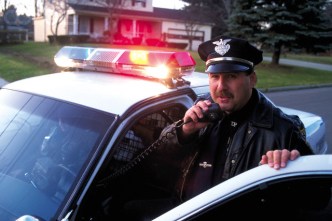
Police OfficerOne of the reasons crime is so prevalent is that criminals have too many protections under the law that embolden them. If more Americans armed themselves, and more would-be felons were killed by people who stood up to defend each other, then would-be-criminals who are on the fence about committing a felony might think twice.

I have a great amount of respect for our people in uniform overseas and on America’s streets. But I’m sick of the police telling me that I should allow myself to be victimized because the felon has rights too.

If the police had a 100% prosecution rate, if a victim’s property was always returned in tact, and the victim never suffered permanent bodily injury or emotional damage, maybe I could go along with giving the felons rights. But conviction rates are around 80%, and that’s only when they are able to find and arrest a defendant. Plus, property loss along with physical and emotional injury are the norm.

So with respect Mr. Police Officer or politician that thinks I should be bound by law to behave rationally when faced with an irrational attack—f*** you. I’ve been the victim of a violent crime twice in my life, and both times wasn’t armed. To this day, I regret not being able to retaliate against those thugs, and that was decades ago. Hopefully there isn’t a third, but if there is, armed with my pistol, I intend to be severely more prepared. Best of luck to my attacker (not really), but be assured I’ll be calling the police to send the coroner, not asking for them to come save me when they can get around to it.

Why can’t I have a nuclear weapon?

Gary Nolan (and THE Scrappy Doo)

In the course of endeavoring for reasoned debate, I often find people who either do not understand the word reasonable, or simply can’t be bothered with reason. These days, they’re often referred to as internet trolls. People who love to use hyperbole, ad hominem attacks, and sometimes, just plain old personal insults to make their point.

In Internet Trollmaking the case for why the Armalite AR-15 should not be subject to some sort of ban, one of those folks asked me a question that was clearly born of hyperbole with the intent of destroying my arguments for why one should be allowed to own such a weapon. On the face of it, it’s actually a poignant question, but the tone of his asking it suggested he wasn’t interested in an answer; he felt the question was redundant, rhetorical, and had proved his point with no further dialogue needed.

The Armalite AR-15questions is often used by gun control zealots, and always given with the same smirky attitude that defines the fringe of any party who aren’t interested in debate, but merely getting you to agree with them. The question was this:

If you can have an AR-15 legally, why can’t you have a nuclear weapon?

After which, he snidely said, “yay, nukes for us all!” This of course being the point I knew he wasn’t interested in an answer.

When nuclear-missile-in-silo[1]he first asked the question, I realized I’ve heard this before, and if I truly believe in ultimate liberty, then why would I not support allowing citizens to own a nuclear weapon? Being someone who strives for consistency in my beliefs, how do I reconcile this question without violating my ideology of liberty?

I’ve made it clear that I am not an anarchist, I am a libertarian. A person who believes in limited government, not a total lack of it. For me, the roles of government are defined as people employed by the populace to protect our rights. In my opinion, anything the government does outside that realm is oppression. This responsibility of government I’ve enunciated is where his argument falls apart.

I personally own an AR-15, and have easily shot thousands of rounds through it at a shooting range and other safe environments. No one has ever died, nor even been hit by a bullet fired from my gun. As such, I can make an argument that I can own and use an AR-15 without being a harm to anyone by virtue of having done so repeatedly. The only person at risk is the guy who thinks my TV should be his TV and has no qualms about attempting to make it so.

However, while I am not a nuclear physicist, I am pretty comfortable in claiming that I could likely not detonate a nuclear weapon without likely threatening the rights to life, liberty, and/or property of another. So the line is pretty simple to me as to what weapons should be legal versus those that must be banned.Nuclear Detonation

If the weapon is one that can be used without harming others, you should have the right to own it—period. If however, that weapon or item is a danger to society with little to no ability to be used without harming someone, it must remain illegal as it is a threat to the rights of another. If you could own a piece of property so remote and isolated from the world that you could detonate an H-bomb on it without risking anyone’s life but your own, then frankly, I’d be OK with it.

So there you have it, a logical answer to a question many assume has no reasonable answer, and consistency in my beliefs about liberty are still in tact. Next question!

We need science, not knee-jerk reactions

Gary Nolan (and THE Scrappy Doo)

Previously, I showed that stats don’t add up when making the case that gun owners are dangerous. Conservative estimates show that for every one person who murders with a gun in a given year, there are approximately 100,000 that own guns without incident—1:100,000 does not a  pattern make, by any standard.Armalite AR-15

I do not subscribe to the, do-something-even-if-it’s-wrong mantra. If the desired outcome is a positive result, doing the wrong thing is fundamentally illogical, and will in all likelihood make matters worse—the infamous Washington DC Gun Ban is a prime example.

When children die, it’s always tragic. Being the intelligent beings we humans are, it’s in our nature to solve problems—that’s a basic part of our evolution. A tragedy such as Sandy Hook would push anyone to action, even if that action was contrary to their own long-held beliefs.

For instance, the famous skeptic Dr Michael Shermer, someone whom I greatly admire and partially credit for shaping my way of thinking, wrote this article  in January of 2012, only to reverse course a bit in the wake of this recent tragedy; he now compassionately asks for a restriction on guns.

I respect the passion with which people have decided to come out in favor of banning so-called “Assault” rifles (a made up term), their concern is understandable. The fact that someone famous for always putting logic over passion like Dr. Shermer can change his opinion shows this issue can move anyone.blog4

But, I believe removing guns from law-abiding and sane citizens will only save one potential victim while making a potential victim out of another. It seems more of a knee-jerk reaction than a logically deduced solution.

We know how many lives were ended by guns, however we can never know the lives saved because a killer was stopped by a good Samaritan with a gun.

For instance, if the Sandy Hook shooter had been shot by a teacher immediately after killing his first victim, there would have been no way to know he would have went on to kill 25 more. As such, you should be wary of anyone who says they have data proving that guns kill more lives than they save. Such numbers are purely theoretical and often swayed by the writer’s opinion.

One common attack levied at gun control dissenters is, “Yes, let’s do nothing.” Sadly, this is a straw man argument that does nothing to further intelligent discussion. Most rational people are not proposing we do nothing, certainly not me. So making that statement towards gun control skeptics as if we advocate doing nothing, then attacking us for being do-nothing people is insulting and wrong.

So in the wake of this awful tragedy, I am proposing we use good science to improve this issue.

In order to keep this story reasonably short, I’m going to focus on spree killers such as the Sandy Hook shooter (for the record, I am purposefully not mentioning the name). If we are to get serious about reducing all violent crime, repealing “vice” laws against certain drugs, gambling, prostitution, etc., is needed. We know this because repealing prohibition worked, yet for reasons of religious ideology, we continue to ban many other victimless crimes because zealots consider them to be immoral.

One of the traits that seems very common amongst spree killers of any type, whether they use a gun, bomb, arson, or any other deadly means of attack, is that they often had a documented history of mental illness and/or psychopathic behavior.

Based on this information, I believe there is usable data that is not being fully taken advantage of. What I am proposing is that the American Psychological Association (APA) have a convention where an open invitation is sent to any psychiatrist who has treated a patient who went on to commit these heinous acts. americanpsychoass[1]

Those doctors would confer and collect data about common traits that were exhibited amongst most or all of the attackers they worked with. This data would be published in medical journals for other mental health professionals to review and provide relevant feedback. The APA would then assemble a list of traits they feel are consistent among spree killers while ruling out those traits that were consistent among killers and non-killers alike. Once we have done this, we should have a reasonable collection of warning signs that can be shared with the public so that we can be aware of what to look for amongst society.

This approach is similar to what was asked of us after 9/11 where the public was given warning signs to look out for to prevent terrorism. If a family member, friend, or acquaintance is behaving in a manner consistent with the behavioral patterns of these killers, we can be more prepared to act.

Gun owners like me for instance, might lock up our guns in a secure safe or remove them from the house altogether. We could call a local medical health facility about what we’ve seen to determine if the person in question may need evaluated. If the person has already been diagnosed and prescribed medication for their issues, we must be diligent about reporting if they go off their meds, which may result in violence.

One look at the Giffords shooter’s (Also not mentioning his name) YouTube videos was rather convincing that the man needed help. I feel that if mental health professionals worked harder at getting info to the public about what to look for and when to report it, the caring among us would do exactly that, and unlike gun bans, lives could be saved with few deadly unintended consequences.

Murder rate statistics of the United States show we are well below average among the rest of the world, so being an alarmist is hyperbole at best—we are not experiencing an epidemic, and immediate action isn’t needed. Other studies have shown that violent crime is simply in steady decline around the world. As we evolve as a species, we become more intelligent, and less violent.

But politicians use hyperbole to advance a political agenda like Gordon Ramsay uses swear words to make a point. There is no epidemic, spike in violence, or reason for panic. What is needed are clear thinking medical scientists applying the scientific method towards mental health issues, then educating the public on how best to deal with them.

As a libertarian, I cringe at the notion of government locking someone up on the premise they might be a threat before they’ve actually done anything wrong. So I believe incarceration should only be done at the behest of licensed medical professionals, and there should be appeals in place to help these people get a second opinion if they feel they are being unfairly detained.

While I’m advocating for advancements in mental health science, and using those advancements to identify threats and potentially get them out of society until they are no longer deemed a threat, it is imperative that like our prison system, we take every step to not detain someone who is of little threat to society.519x361[1]

Logical Americans must demand we use science, not knee-jerk reactions and politically motivated legislation to solve our problems. There’s a reason we have cures for thousands of diseases, rovers on Mars, and mobile phones the size of a playing card—it’s called the scientific method. Unlike politicians and hyperbole, it leads to truths and it actually works—let’s stick with it.


Illogical Arguments That Destroy Your Rights

Gary Nolan (and THE Scrappy Doo)

As we consider how America should respond to recent gun violence and other issues in our country, those eager to take away constitutional  freedoms from millions of law-abiding citizens to thwart future bad acts of a few, often resort to tried and true arguments with little concern for the fact they are completely illogical.

For instance, if you’ve been watching the gun debate recently, one critic of gun rights, CNN’s Piers Morgan, routinely states that no one can make an argument why people need guns such as the Armalite AR-15 platform (contrary to belief, the A is for Armalite, not assault). This statement would only be relevant or logical in a country where freedom is not the default.

I cannot stress enough that in a free country, the starting point is that everything should be legal. From there, we make a case with a well-reasoned argument where We the people agree that something should be made illegal because one person’s right to do it infringes on the rights of another.Piers Morgan

So as we move into the well-reasoned arguments for criminalization and regulation, let me outline one that is commonly improperly formulated; the cause-and-effect argument.

Starting with the aforementioned gun debate, some argue that gun owners are dangerous people. However, a proper analysis of the numbers clearly refutes this. There are approximately 80 million adults in America who own guns and nearly 11,000 criminal gun deaths. That means that 0.01% of gun owners kill, leaving 99.99% who don’t. So by no proper mathematical analysis can you argue gun owners are unsafe when for every one killer among us gun owners, there are 9,999 who are not.Armalite AR-15

Another similar false cause-and-effect argument is that marijuana is a gateway drug. People assert that by virtue of using marijuana, the drug triggers the user to gravitate to harder and more dangerous drugs. The first issue with this argument is that studies show alcohol is usually the drug that addicts of harder drugs start with. Once bored with that, they may gravitate to marijuana, then harder drugs after that. But because alcohol is legal, it is often removed from the dialogue.

But the reason alcohol and marijuana are the drugs people usually start with in the first place is by virtue of their abundance in the marketplace. They are simply the ones most readily available, and therefore, the ones people most often initially experiment with.

But I want to focus on these cause-and-effect arguments as they are completely backwards. In order to argue cause-and-effect, we first start with the cause (in this case marijuana users) and then see how many effects (harder drug use) result. But, the opposite is occurring.

Let me give an example to prove my point. We know that all Boston Celtics are basketball players, but not all basketball players are Boston Celtics—thousands in fact are not, nor ever will be. So those making the marijuana gateway drug cause-and-effect argument falsely are arguing that by virtue of being a basketball player, you are likely to become a Boston Celtic. While many kids with a basketball in their hands might love this notion, there are almost infinitely more with broken dreams and a regular job.Boston Celtics Logo

While I have never used marijuana, I happen to know many habitual users. They’re in the millions across America, so I’m sure you do to.

Like me, I would hope you’ve noticed that most of them have used it for years without ever graduating to cocaine, meth, or anything else. So I’d like to think you knew all along this argument was wrong, but simply hard a hard time refuting the math people gave you because you weren’t aware of their flawed methodology. Now that you realize it’s a false premise, you’ll be better prepared to refute such nonsense in the future.

As a poker player, I’ve seen how such arguments destroy liberty and ruin lives. Look no further than online poker’s infamous Black Friday. Thousands of American rounders were literally forced into unemployment as they were denied their rights to earn an honest living playing a game of skill based on the cause-and-effect argument that gambling ruins lives and therefore should be regulated or outlawed completely.

First let me point out that poker isn’t gambling—it is a game of skill. It has even been ruled as such by the federal government since 1986. So we have people who falsely consider poker to be a game of random chance, who then make it illegal using another false argument of the backwards cause-and-affect. 

Millions of people visit casinos every year without losing their house, car, or child’s college fund, yet because every gambling addict who did lose everything started in a casino, the significantly greater portion who can responsibly lay a few bucks on the line get punished. We can no longer enjoy the one form of entertainment that might actually pay us back.Poker's Pocket Rockets

So next time someone uses the false cause-and-effect argument to take away your rights, I hope this will help you to be better prepared to take them down by destroying their poor methodology.  More importantly, the next time someone says to you, “Why do you need that gun, drug, etc.?,” you can respond by saying something like this:

This is a free country, I don’t have to make such an argument—everything should be legal here. The onus is on you to make a case for making it illegal by explaining how me enjoying that freedom infringes upon your rights. If you cannot make such a case, we’re done here.

If we’re lucky, they will either have an epiphany and embrace freedom like you and I, or they will remain swathed in a blanket of ignorance and intolerance as they wrongly argue to oppress you by using false arguments and logical fallacies under the guise that it’s “For your own good.”