Your humble contributor is an avid political enthusiast, science junkie, former small business owner, limited government, constitutionalist, and all around lover of liberty.
I make every effort to use logic and reasoning, not hate, ad hominem attacks, nor logical fallacy arguments.
Y’all know everyone keeps talking about us being in an opioid epidemic, right? While I personally think some of this is unfair, true stories of bad actors, such as the Sackler family, who own and operate Purdue Pharma, the makers of Oxycontin, don’t exactly paint a wonderful picture of opioids. Their willful dishonesty and disregard for the lives of their customers, led to many addictions and overdoses.
The Hulu docuseries Dopesick is quite interesting, depicts their actions pretty well, and is definitely worth a watch if you’re unfamiliar.
I think the opposite side of this coin, is that many patients, know the dangers of opioids, but will doctor shop, getting multiple prescriptions, so that they can overdose themselves, or worse, turn to black market opioids like heroin.
People who argue as if it’s basically always the fault of doctors and pharmaceutical companies is the work of grade A assholes…and probably socialist anti-capitalism pricks, too.
While some SCOTUS decisions are legal nerdiness which will likely have little effect on most of us, this one, in the words of that great philosopher Biden, is a big fucking deal.
So this case revolves around Alabama pain management physician Dr. Xiulu Ruan, who is potentially just a piece of shit selling prescriptions for money. His job is to mitigate pain, and opioids are fucking GREAT at that. But it is fair to argue that he would at least prescribe more opioids than the average lab coat.
Full disclosure, for over two decades, I’ve used the opioid hydrocodone myself once or twice a month, to deal with neck issues that often trigger unbearable headaches. But because my pain is not chronic, and I rarely have to take them, mine tend to expire before I even use them all.
But Dr. Ruan likely has patients who do have chronic pain that just won’t fucking go away. Lower back pain, and other genetic conditions of that nature, are often well-managed by opioids. And if Dr. Ruan refuses to prescribe an opioid for them, they’ll likely take their business elsewhere and find a doc who will.
Dr. Xiulu Ruan
The aforementioned Sackler cunts poisoned opioids good name, by lying to physicians and their consumers, and saying their version, Oxycontin, was non addictive.
It was a big fucking lie. Not a mistake, a lie. The evidence presented in court showed they knew it was untrue, but simply wanted to sell more of that shit, so they lied.
Anyway, back to Dr. Ruan. The basic gist of this case, is that a federal jury convicted Dr. Ruan of racketeering and other related crimes, as they argued he was basically a “pill mill.” A euphemism for a doctor who just hands out opioid prescriptions for money.
You know, like some dude walks into his office, says his asshole hurts or his dick is broken, then winks and nods, pays the copay, and gets a prescription, while Dr. Ruan picks up a few hundred bucks for basically signing an autograph.
The jury agreed with the prosecution that the amount of opioids and other addictive pain meds he was prescribing, were outside of the norm for a doctor like him.
Dr. Ruan will of course argue, that he prescribed these medicines in good faith, and that he believed the drugs he prescribed were appropriate for the patients he had.
The Controlled Substances Act of 1970 (CSA) basically says it’s illegal to manufacture, distribute, or dispense a controlled substance, such as an opioid. One exception is for doctors, under rules put forth by the attorney general. Rule 21 C.F.R. § 1306.04, which gives doctors license to prescribe drugs like opioids if they are:
Issued for a legitimate medical purpose by an individual practitioner acting in the usual course of his professional practice.
I’ll look over the sexist verbiage that assumes the doctor must be a “he.” It was 1970 after all.
Former President Nixon and two other idiots signing the CSA.
The issue SCOTUS is trying to decide, is basically this. Does a doctor who believes an opioid is the best treatment for their patient, have carte blanche authority to prescribe it? The petitioners call this the “good faith” argument.
It basically means, as long as there’s evidence the doc thought what they were doing was right, it doesn’t matter if they’re prescribing way more opioids than the other doctors in their field. Maybe the other doctors are just biased against opioids, or aren’t prescribing them properly? Or maybe he or she is just a shit doctor. But, being a shit doctor isn’t a crime.
It’s essentially a mens rea argument. I think we’ve discussed mens rea before, but it loosely translates to “guilty mind.” A prime example would be Hillary Clinton’s email bullshit. FBI director James Comey said she definitely committed a potentially criminal act. But there was no evidence they had indicating she knew it was criminal. So without that mens rea, they declined to prosecute. Got it?
Former FBI Director James Comey
On the other side of this, the principle Dr. Ruan was found guilty under in lower courts, was that the amount of opioids he was prescribing were through the fucking roof compared to other doctors like him. As such, the jury believed he was doing it because he wanted a new Ferrari and some top shelf hookers. Not because he thought it was good for his patients.
They feel that in general, if a doctor is doing something rather different from the norm, it’s indicative of malpractice, or some motive other than helping their fucking patients.
The other doctor who’s joined with Dr. Rual, even traded guns and shit, for his “medical services,” aka prescribing pills. So they kinda have a fucking point on these two assholes.
It’s also mentioned that both of them apparently had stock in the pharmaceutical companies that made the drugs they were prescribing. But even the stupidest doctor would know that their prescription pad alone isn’t going to move the needle all that much on the stock price. It’s just as likely they bought stock because they believe in the drug. This is what we call “shit evidence.”
I know I’m being potentially too polite to these doctors, because I believe in the principle they’re fighting. But it’s almost assuredly true that both of these fuckheads have broke bad, and are just doing this shit for the money, with little concern for their patients. They were convicted beyond a reasonable doubt of other related charges that aren’t at issue here. This is them just trying to reduce their sentence.
My bias is probably because the fight against opioids, and the laws that are passed that make it harder to attain them, harms people like me, who use them as directed. Because my usage is so sporadic, I’ll likely never face any addiction issues.
The doctors did agree, that they could have been more thorough in their prescription methodology, but they argue that even if what they did was malpractice, that’s a whole different realm than the criminal intent to distribute that they’re charged with.
The government however, thinks as the government always thinks, that it knows best. They believe they can come up with some sort of standard level of opioid prescriptions, and doctors who deviate from this, must be considered criminals.
But the doctors are like, “If you listen to these cunts, doctors will not prescribe things their patients actually need, just because they’ll be afraid of going to jail. They’ll be in constant fear of some dumb-fuck bureaucrat who decides they know more about medicine than we do. So next time you ask your doc for a med you need, but there’s concerns from congress about that drug, well fuck you. You ain’t gettin’ shit from us.”
They also contend that this could significantly thwart things like “off label” prescriptions. I’ll explain this shit, because it’s kinda interesting.
This is where a drug is FDA approved for one thing, but it’s prescribed to help with something else it’s not approved for.
This “off label” jazz is also somewhat of a big deal, but not always understood.
Remember during COVID when Trump and others were all gung ho about hydroxychloroquine for treating COVID? It all started because observational data suggested it might be effective, but then it was found ineffective under controlled clinical trials, and so most doctors stopped using it.
The reason they were on this path was because doctors, operating in good faith, had reason to believe, from those observational studies, it might work for COVID, even though it’s only FDA approved as treatment for malaria, lupus, and other shit. Thus, prescribing it is “off label.” Meaning, philosophically speaking, the label says it isn’t for COVID, its for that other shit. Make sense?
“Off label” may seem like a fucked up thing for docs to do, but it’s actually based on data. They are generally the product of observed side effects. I’ll give an example. Because not only do I use an opioid, I also have another drug I use off label. This whole case is up my alley!
The drug I use off label is colestipol. It’s meant for people with cholesterol issues, which is what it’s FDA approved for. But during clinical trials for its efficacy in treating people with cholesterol problems, it was noted that for people who routinely get the Hershey squirts, it seemed to make them more “regular.”
Do I really need to caption this?
So the makers of colestipol never bothered to do clinical trials to test it’s efficacy for people with an internal chocolate syrup fountain, but doctors can prescribe it for that condition, because they have data to suggest it might help. The reason drug makers might not seek FDA approval, are likely to do with the cost of doing separate clinical trials for the drug, not because they think it’s not good for that condition. Not to mention, doctors are allowed to prescribe off label, so the FDA approval, is really more about being able to make a fucking commercial for that shit.
Sorry, I keep getting diverted with my nerdiness. Back to the case!
One of the key phrases in the CSA that they argue over, is the phrase “knowingly and intentionally.” The doctors argue that there’s no fucking way on god’s green earth, that they knew beyond a reasonable doubt they’d harm their patients, or that they intended to.
But the government argues that the CSA uses that verbiage well after the part about exceptions for doctors prescribing such drugs, and therefore doesn’t apply to it.
Amici (other third parties) have also pointed out that when something is all over the news, we are some over-reacting mother fuckers. We turn it into a crisis, even if it’s not. Then we pass over-restrictive laws or regulations that we then have to walk back, once we realize we went too fucking far. The makers of South Park have made a living off this premise. The CDC has walked back some of their restrictive opioid rules as a result.
They also argue for people like me. That this could make it harder for us to attain medication that is helpful to us, and isn’t doing us harm, to attain the medicine we need.
Opinion: While my case is pretty mild, some people suffer a LOT, and opioids are a godsend to them. Government has no business making it hard for them to get what they need.
They also argued that when faced with an unusual case, doctors often have to try novel therapies, because the normal shit just won’t work. But if they’re afraid they’ll go to jail, for trying something out of the norm in good faith, they’ll be put in a fucked up position.
As I lay all this out, I think you can understand why, even if these particular docs were pill mills, the principles they argue for are pretty important. If they were just doing it for the money, may they both choke on a bag of dicks. That’s not OK.
As arguments began, counsel Lawrence S. Robbins for Dr. Ruan opened with this.
Thank you, Mr. Chief Justice, and may it please the Court: Dr. Xiulu Ruan’s jury was instructed that it could convict him of federal narcotics offenses if he prescribed “outside the usual course of professional medical practice.” The Eleventh Circuit sustained that instruction precisely because it “told the jury that good faith was a defense” as long as the appellant’s conduct also was in accordance with the standards of medical practice.
Counsel Lawrence S. Robbins
In other words, good faith is a defense in the Eleventh Circuit only for doctors whose prescriptions are already lawful. No lawyer will stand up before the Court this morning and defend either that instruction or the court of appeals’s rationale. And small wonder.
Dr. Ruan received little more than the instruction he would have gotten had this been a civil malpractice action in Alabama. So, in our view, Dr. Ruan’s case must be remanded, and on remand, the Eleventh Circuit should either dismiss this prosecution outright for want of sufficient proof of Alabama substantive standards or, at a minimum, order a new trial on all counts, this time governed by the correct scienter rule.
And that rule, we submit, which largely tracks the law in the First, Seventh, and Ninth Circuits, is that a doctor may not be convicted under Section 841(a)(1) unless the government proves that her prescriptions were made without a good-faith medical purpose. The good-faith medical purpose test makes the best sense of the statutory text, this Court’s case law.
It also accords with principles of federalism that are embedded in the statute itself, enables the jury to focus on the question of intent, as it always does in criminal cases, and affords an appropriate berth for doctors and patients to make the best choices for the individual care of what is often invisible and yet real and intractable pain. I’d be pleased to hear the Court’s questions at this time.
His opening point being that how the fuck can he claim “good faith” as they said he could, if that only applies to usages that are within the bounds of normal usage? None of those cases would ever go to court, and thus good faith is moot in that scenario. So basically, the other side are fucking idiots or assholes…maybe both. They do work for the government, after all.
Justice Roberts chimed in with a hypothetical where he asked, what if I know the speed limit is 55mph, but I’m in fucking Montana, and the roads are long, flat, and boring as fuck. So I decide it makes sense to do 70mph here. We all know your dumb ass gets the ticket. So what’s different here?
Chief Justice John Roberts
But counsel Robbins was ready for his hypo. He was like, “Dude, this isn’t some ‘line drawn in the sand’ drug law that’s like a speed limit. The are arguing the whole ‘good faith’ argument, which is about the doctor’s state of mind.” Not to mention, there is no “Opioid Limit.”
As Justice Sotomayor chimed in, attempting to understand the line he’s drawing, he clarified that his position is that the government must prove he did not act in good faith. We’re talking about some criminal shit here. So it’s not up to the doctor to prove he’s fucking innocent. This is America!
He went on to argue to Justice Sotomayor:
Oh, no, no, I’m sorry, Your Honor.
Nobody is going to tell you this morning that that burden somehow belongs to the defense.
Everybody will concede—if you ask my friend, Mr. Feigin, he will tell you that once the issue is put in play under 885, it then falls to the government to prove beyond a reasonable doubt, the absence of good faith. But I’d like to go back to where Your Honor began her question because you said the words “knowingly and intentionally must prescribe outside the bounds of medicine and without a medical purpose.” It is important for me to be clear that my client didn’t get that instruction.
His jury was told, if he was outside the bounds of medicine, you may convict him, full stop.
No good faith.
No knowingly or intentionally. None of that. So I want to be clear that the premise of Your Honor’s question is a premise under which our conviction should be reversed.
He makes a valid point, we can quibble about the law, but these fuckers were convicted when the jury was not advised properly about the law.
Justice Alito, apparently saddened that he studied law instead of English wanted to discuss the proper use of adverbs. Here’s the passage from the CSA they’re discussing:
§841. Prohibited acts A
(a) Unlawful acts
Except as authorized by this subchapter, it shall be unlawful for any person knowingly or intentionally—
(1) to manufacture, distribute, or dispense, or possess with intent to manufacture, distribute, or dispense, a controlled substance; or
(2) to create, distribute, or dispense, or possess with intent to distribute or dispense, a counterfeit substance.
Justice Alito’s argument was this:
We’re interpreting a statute, so we should start by looking at what the statute says, and it says, “except as authorized by this subchapter, it shall be unlawful for any person knowingly or intentionally to” do a variety of things. As a matter of language, do the adverbs “knowingly” or “intentionally” modify the introductory clause “except as authorized by this subchapter”?
I think my old English teacher would say no, you’ve gotten that answer wrong.
Associate Justice Samuel Alito
There’s no way they can modify “except as authorized by this subchapter.” They modify what comes later.
But explain to me why they modify it as a matter of language, not as a matter of constitutional avoidance or something like that.
After they debated linguistics for what seemed to be 47 years, coming to no real conclusion, they moved on to Alito’s other question about section 885, which reads:
§885. Burden of proof; liabilities
(a) Exemptions and exceptions; presumption in simple possession offenses
(1) It shall not be necessary for the United States to negative any exemption or exception set forth in this subchapter in any complaint, information, indictment, or other pleading or in any trial, hearing, or other proceeding under this subchapter, and the burden of going forward with the evidence with respect to any such exemption or exception shall be upon the person claiming its benefit.
Alito’s argument was that this provision potentially reads that the government does not have to prove the doctor acted maliciously. That if the doctor wants to claim they didn’t, the burden is on the doctor.
So counsel’s beef that the jury in their trial was not instructed about the good faith exception, they were basically just told, if the doc is outside the norm, you’ve gotta convict, which is bullshit, in his legal opinion.
In an odd sort of exchange, Justice Gorsuch basically walked through Robbin’s argument, to make sure he understood it. In doing so, he basically made a more eloquent and simple version of counsel’s argument. Because “good faith” doesn’t appear in the statute, it’s basically their shorthand for the opposite of “knowingly and willfully” that is in the statute, and is just a general legal principle for shit like that.
In a moment of levity, when counsel went to add on to Justice Gorsuch’s explanation, Justice Gorsuch responded, “Be careful.”
Associate Justice Neil Gorsuch
The point was that, if he agreed Gorsuch made the proper argument, he shouldn’t elaborate for fear of changing everyone’s mind, after they already agreed with him. But all he added was that, because of the shitty jury instructions, he believes his clients deserve a new trial.
Next up, amici for the petitioners, Beau B. Brindley.
His argument was that, so long as the doctor believed they were helping their patient, then they were not trafficking drugs. It doesn’t matter if 100 other doctors think this doctor is an idiot. What matters again, is mens rea. Did they know it was wrong and do it anyway. The law is clearly meant to go after people trying to make a living off of peddling drugs, not people trying to help their patients in potentially unconventional ways.
He went on to argue, that if they were to adopt the government’s position, the DEA would become the new US medical board, deciding what is good and bad practice, as opposed to the AMA I’m guessing, which is a private entity.
Congress certainly never authorized the DEA to become Team America Hospital Police.
He argued that there may be extreme examples where no reasonable doctor thinks this is OK, and that’s different. But if it’s plausible this was medically valid, and the evidence suggests the doctor intended to help their patient, then they’re not trafficking drugs.
Justice Kavanaugh, concerned about this “extreme example” theory, jumped on Justice Roberts’ hypothetical with this:
On the hypotheticals, to pick up on the Chief Justice’s hypotheticals, the speeding example, suppose there were a statute that regulated speeding that, like this statute, folded the legal requirements into the offense, okay? If you come in and you—you’re going 35 in a 25 zone, and you say, oh, I thought it was 35 here, maybe a jury will believe that you really did think it was 35, not 25. But, if you’re driving, you know, a hundred in a 25 zone and you come in, oh, I thought it was actually a hundred, was the speed limit, no one’s going to believe that.
Associate Justice Brett Kavanaugh
Isn’t that the way to separate out the outlandish example?
Counsel effectively agreed with Justice Kavanaugh, but then Justice Roberts jumped back in and was like, “Even if a fucking jury totally believed you were thinking it was OK to drive 100 mph, you still get the fucking ticket. What the fuck are we even talking about here?
But as usual, Justice Roberts is like super nice, and said this with a smile…and maybe some softer language.
Justice Coney-Barrett, feeling left out from the party of hypotheticals, chimed in with this elaboration on Justice Roberts’ hypo.
Would this be a closer analogue to your example, to pick up on the Chief Justice’s hypothetical? Except as authorized by law, you must drive under 55 miles per hour.
And you say, well, I thought I was driving in a way that was authorized by law at a hundred miles an hour because I was trying to get my child to the emergency room.
And it turns out that you’re wrong, that that’s not an authorized, you know, exceeding of the speed limit. Is that what you’re trying to get at? That presence of the “except as authorized by law” is what distinguishes the Chief Justice’s hypotheticals from your position?
Counsel Brindley responded:
I think somewhat that’s true to some extent.
Counsel Beau Brindley
What I would say is that the thing that differentiates the — the Chief Justice’s hypothetical from our position is, in this situation, we have a — a situation where the very thing that makes the doctor’s — the only thing that makes the doctor’s writing the prescription improper or criminal is if he writes it with no legitimate purpose, not believing he’s curing a malady of any kind. And so, with respect to that, if he’s sincerely wrong about that, he lacks a culpable state of mind and he should not be convicted.
Next up for the government, we have Eric J. Feigin. He opened up with this diatribe:
Thank you, Mr. Chief Justice, and may it please the Court: Although Petitioners are trying to disclaim it as much as they can, they really are asking this Court to transform their DEA registrations, which are premised on the idea that they’re actually practicing medicine, into licenses to, at their own subjective views, violate the general rule that drug pushing is illegal. They want to be free of any obligation even to undertake any minimal effort to act like doctors when they prescribe dangerous, highly addictive, and, in one case, lethal dosages of drugs to trusting and vulnerable patients. That’s not what this Court said in Moore, where I think everyone agrees the Court implicitly adopted the jury instructions in that case, which distilled the statutory and regulatory requirements here to come up with an honest effort standard. If a doctor is trying, in Moore’s words, “to act as a physician,” he can’t be convicted under Section 841.
But a doctor can’t choose to be the kind of doctor who seeks a DEA registration because he wants to deal with the most dangerous drugs that we have with a recognized medical use and then decide that, notwithstanding the boundaries of that license, he can invoke it to shield all drug dealing that he’s running in the guise of a doctor’s office. There’s been some suggestion today that applying a knowledge standard, you know, what’s the difference? It’s all oblique, these are very oblique examples, and it’s never going to matter in practice.
And I’d like to—if I get a chance later, to explain exactly why this isn’t just a matter of hypotheticals. I can give you three examples, we have more, but three examples of cases, and these are admittedly stylized a bit, but they’re based in reality of why this really matters on the ground. Number one would just be the irrationally egotistical doctor, and these are the kinds of cases we have trouble even bringing, let alone convicting a doctor.
Solicitor General Eric Feigin
It’s a doctor who gets his license and his registration and he says, all right, you know, I think, at bottom, the Hippocratic oath, I just want to treat patients.
And he prescribes substances that any other doctor would say are crazy and lethal.
And he says, at bottom, we’re all doctors, and my subjective belief is, at the end of the day, if doctors see patients, they got to do right by those patients.
And that’s number one. Number two would be the absentee doctor, and one problem with their standard is it really rewards doctors for untethering themselves not only from the medical profession but from their patients.
It’s the kind of doctor, and I think you’ll see some resemblances to the doctors here, who doesn’t follow up on the background of his patients, doesn’t make sure they’re taking the medications, doesn’t even conduct physical exams, doesn’t check the database to see who else is prescribing opioids, and trusts nurse practitioners, who aren’t DEA registrants, aren’t allowed to do this, don’t have medical licenses, to do most of the prescribing.
Justice Sotomayor was quick to ask, “What the fuck is your burden, then? What do you have to prove, to get a conviction?”
Official Portrait of United States Supreme Court Justice Sonia Sotomayor
Click for Biography
Counsel Feigin responded:
So, Your Honor, we place our burden exactly where Moore did, which is an honest effort, which we interpret as some objectively minimal, reasonable effort to practice some recognizable form of medicine.
Call me crazy, but his wishy-washy statements are going to make it hard for the court to draw a distinguishable line, and as such, is making it real hard for them to side with him.
Justice Gorsuch, again decided to walk through his argument, step by step, starting with the now “Be careful” intro he’s apparently going to make his catch phrase.
First, he wanted to make sure that they agreed that it was the government’s burden to prove all the elements (elements is just a fancy word they use for all the the things in the law that make up the law’s requirements, or forbidden actions). Counsel confirmed they agreed.
So then step two was asking if they agreed on the “except” clause as an element.
Counsel Feigin was like, “Well, we’re already off on the wrong foot, my man.”
So Justice Neil “Golden Voice” Gorsuch, was like, “How the fuck do we disagree on this? The issue isn’t that he’s prescribing medicine, your issue is that he’s doing it outside what his DEA registration to prescribe it, says he should do, right?
Counsel Feigin was like, “OK, fair enough. I’m with you now, bro.”
So now Justice Gorsuch is like, “Alright, we’re back on track. So if we agree so far, then the government typically has to negate all the exceptions in any “except” clause, yeah?”
Associate Justice Neil Gorsuch
Counsel Feigin was like, “Woah, woah, woah, woah, WWWWOOOOAAAAHHH! I didn’t say that. We’re off on the wrong foot again, my man!”
Justice Gorsuch was like, “OK, maybe not always, but most of the time, or a lot of the time, or fucking some of the time…I mean, it’s not fucking out of the ordinary, right?”
Counsel Feigin was like, “OK, I’m with you again.”
So then justice Gorsuch was like, “We agree, it’s not just doctors, it’s also for pharmacists, veterinarians, pet owners, family members, et al. Like there’s a lot of people who have exceptions. And it’s pretty fucking hard to negate all of them, when many of them may not be part of the case, yeah?”
Counsel Feigin was like, “Yup.”
So Justice Gorsuch replied, “So then you’d argue that the doctor needs to prove he was acting in good faith to help his patient, yeah?”
Counsel Feigin agreed again.
So Gorsuch was like, “Well then if we agree on all this shit, isn’t it true that once he makes his argument that he was acting in good faith, it’s then government’s job to prove he wasn’t? You can’t just go back to the doc acting outside the norm, and say that’s all you need to prove.”
Counsel Feigin agreed.
So then Justice Gorsuch was like, “So it’s fucking mens rea, yeah? Why is this so fucking difficult? Is it because you work for the government, and you’re stupid?”
Counsel Feigin was like, “I’ll buy your mens rea presumption. That we assume this fuckhead doc intended to help his patient, until we prove he didn’t. But we think, when he just grabs the patients balls and tells him to cough, then gives him a gallon of Oxycontin, that no reasonable person would consider that practicing medicine.”
Associate Justice Amy Coney Barrett
Justice Barrett was like, “Where the fuck do you get that from? I don’t see anything in this law about some reasonable practice bullshit.”
I don’t know if Feigin was nervous, but god damn he fumbled all over his fucking words. He eventually spit it out that basically the FDA regulates such standards, and he therefore thinks that to prove the mens rea, somehow all he has to do is show this doc told the FDA and their standards to go fuck themselves.
Justice Roberts went on to ask:
An opinion from the Eleventh Circuit, it’s quoted at page 16 in Mr. Robbins’ brief, says that a physician’s good-faith belief that he dispensed a controlled substance in the usual course of his professional practice is irrelevant. Do you agree with that statement?
Counsel, being bruised and battered with all these questions argued that if there was some idiot who believed opioids should be taken every day along with their Flintstone vitamins, so he starts doling out Oxies on the street corner, we’d still call him a fucking drug dealer and lock his ass up. So there’s fucking limits to this good faith shit. And they believe that it’s limited to something close to fucking normal, within the medical profession.
In a unanimous decision, SCOTUS sided with the doctors, though. They ruled doctors cannot be convicted under the CSA, unless a jury decides that they did not act in good faith. They want to ensure that doctors feel free to act in the manner they believe will best help their patients, without fear of going to jail, because they were deemed as operating outside the normal standard of care.
While the doctors won on these points, it should be known, that they were scumbags of the highest order, and were convicted of racketeering, and taking kickbacks from drug makers, and will still end up spending some much needed time in a jail cell to think about what they’ve done.
So while good doctors have been protected here, these idiots are still criminals. They’re just less criminal than they were before they started all this shit.
As you may know, West Virginia is generally a low-income state. It’s not the place the rich and famous go to live. Part of the problem with West Virginia, is that its entire surface area is part of the Appalachian mountains—not a flat stretch of land in site.
So sure, it’s gorgeous to look at. But it’s not easy to farm and the roads are more crooked than a Russian politician. Plus, building anything meaningful, such as a factory or highway on a mountain, is expensive as fuck. Even if you do build something, because of the crooked roads and massive elevation changes involved in driving on them, it will make that journey very slow and expensive because of the fuel consumption and lost time.
Because of this, West Virginians don’t really have a whole lot of reasonable options when it comes to local employment. No big corporation is going to move there and build anything. So they work with what they’ve got. And what they’ve got is a shit ton of coal and cheap labor, since people are pretty poor there, and will take whatever job they can get.
As he went on to become president, he tried to make good on that premise by passing the Clean Power Plan, which sought to limit the amount of greenhouse gasses power plants could produce, which was like an atomic bomb thrown into the bank account of any coal-burning plants.
But after Obama, came president Trump, who was a friend of the coal industry, and living in a world of his own making, thought all this hubbub about climate change was a scam propagated by China. No really, he said that shit.
He later went on to say he was joking. Hard to say, but either way, he was much more friendly toward coal energy.
Obama’s plan basically gave each state a goal, put the onus on them to figure out a plan by 2018 on how to meet that goal by 2030. However, in 2016, SCOTUS were like, “Woah, dude. You can’t fucking do this.” and put his plan on indefinite hold—it would never see the light of day.
In 2019, then-President Trump told the EPA to throw Obama’s plan in the Thomas Crapper, and replace it with his plan, the Affordable Clean Energy rule. Trump’s rule was basically, “Hey man. You know your shit is dirty, right? Just clean it up a little, and tell us how you’re going to do it. We’re not going to impose some strict number on you, just make it better, OK?
Back in the day, congress passed the 1970 Clean Air Act. One of the sticking points of this case is section 7411, which gives the EPA the power to determine the “best system of emission reduction” for any business to reduce it’s contributions to the overall air pollution.
According to Trump and his minions, that rule only covered shit they could easily do within their business model. Like simple upgrades to their procedures, or even adding equipment to their facilities. What they called “Inside the fenceline” changes.
In their minds, they felt it did not include forcing them to change their whole fucking business model from a coal-burning plant, to a solar farm, for instance. That’s straight up bullshit!
Anyway, as you can imagine, environmental groups, not happy with Trump’s ideas, sued in a DC District court, who then obliterated Trump’s rule, and his repeal of Obama’s rule. Part of this case hinges around whether that ruling effectively reinstated Obama’s Clean Power Plan.
As you can imagine, the coal industry in West Virginia and other states were like, “What the fuck is wrong with you assholes? We’re trying to make a living here.”
Historic Photo of West Virginia Coal Miners
So on to the Supreme Court they went. SCOTUS was happy to listen to their arguments, but in steps now President Biden. He was like, “Hey my SCOTUS friends. Did I ever tell you how nice you guys look in those robes? Can I smell your hair real quick? Anyway, fuck Obama and Trump. We’re not using either one of their stupid acts. We’re going to come up with something new and better. So if you could just chill, I think we’re going to make this case moot.”
SCOTUS however was not keen to “chill.” They decided to hear the case. This would potentially put up some guardrails on the EPA, before team Biden can come up with something new. Such rulings can be controversial though, because SCOTUS is not an advisory committee. They’re supposed to right the wrong of an injured party, not lay framework to prevent future harm.
So that’s a major part of this case, as West Virginia’s side thinks they are going to be harmed, and have been already, whereas the other side are like, “These regulations aren’t even in force yet. How the fuck were they harmed?”
Also at the heart of this, is the “Major Questions Doctrine.” This isn’t a law or anything, it’s just a principle SCOTUS currently seems to live by, which suggests that because agencies like the EPA, who were created by congress but act at the pleasure of the president, are not elected. So their scope should be rather limited as to what regulating they’re allowed to do.
The law creating the EPA gives them a directive, but it doesn’t mean they can just write some massive fucking regulation that affects everyone in the United States. For something like that, congress should be writing those as laws.
The point being, if we let these agencies write such regulations that affect everyone, we’re essentially giving the president, who these agency-heads report to, the same power congress has in writing laws, since regulations carry the same weight as laws, allowing the president to have a significant advantage in the balance of power between the three.
While the Biden administration think SCOTUS should moot this case and dismiss it, while waiting to see what new regulation they write, the states like West Virginia contend that Biden was Obama’s fucking VP. He’ll assuredly write similar legislation. They were basically besties. Although I’m not sure Biden ever got a chance to give Obama a reach-around while smelling his hair.
So the opponents are asking SCOTUS, under the principles of the major questions doctrine, to put up some strict limits on what the EPA can do, and what it can’t.
Now, on to the arguments!
Counsel Lindsay S. See for West Virginia opened with this:
Mr. Chief Justice, and may it please the Court: In Section 111 of the Clean Air Act, Congress directed EPA to partner with the states to regulate on a source-specific level, which means identifying measures particular buildings can take to reduce their own emissions. The D.C. Circuit gave EPA much broader power, power to reshape the nation’s energy sector, or most any other industry for that matter, by choosing which sources should exist at all and setting standards to make it happen. No tools of statutory construction support that result.
First, electricity generation is a pervasive and essential aspect of modern life and squarely within the states’ traditional zone.
Yet, EPA can now regulate in ways that cost billions of dollars, affect thousands of businesses, and are designed to address an issue with worldwide effect.
This is major policymaking power under any definition. And though Respondents argue EPA can resolve these questions unless clearly forbidden, this Court’s precedents are clear that’s backward.
Unless Congress clearly authorizes it, Section 111 does not stretch so far, and Congress hasn’t done so here. Second, the words Congress did use in the context where it placed them confirms Section 111’s traditional scope.
Read together, key statutory terms like “the requirement standards before individual sources” and “focused on their performance” show that Congress did not green-light this transformative power. And, finally, standing is no reason to avoid the merits.
We’re injured by a judgment that brings back to life a rule that hurts us and that takes off the books a rule that benefits us.
Respondents’ arguments sound in mootness, and it’s their burden to show that EPA’s voluntary cessation and a — and a stay are enough to end the case.
They’re not.
Counsel Lindsay S. See
We’re asking for the classic appellate relief of undoing what the court below did, and this Court has full power to give it. And the weighty issues at stake confirm that it should.
In contrast to EPA’s important but environmentally focused role, Congress and the states are able to weigh all of the competing factors and constituencies in play.
The lower court was wrong to short-circuit that process here, and the Court should reverse. I welcome the Court’s questions.
Justice Thomas, being the most senior member always gets to go first, so he opened by point-blank asking if she loses without the “Major questions” doctrine.
Knowing that this is a guiding principle for the Republican appointees, but not so much for the Democrat appointees, she was like, “No dawg. We think the language in the Clean Air Act law that Obama’s regulation is guided by didn’t authorize this shit explicitly. It’s a fucking stretch at best.”
She was invoking a separate doctrine, the “Clear Statement Rule.” It’s often deemed as synonymous with the Major Questions Doctrine, but a little different. Basically, it’s saying the courts should take laws at their word. Not stretch them and contort them to fit an agency’s desired regulation. If the language isn’t very clear and specifically authorizing such a regulation, then that regulation should be deemed invalid. The major questions doctrine sort of relies on the clear statement rule, but a clear statement rule is not always a major question. It could be some petty shit.
Justice Breyer was concerned that her interpretation of the Clean Air Act basically requires that the EPA look at each individual power plant, and regulate them based on what they’re currently doing, and how to improve upon what they have. But, the EPA, was authorized to devise the:
…best technological system of continuous emission reduction.
So in his mind, a “system” is more about the EPA creating a framework to reduce greenhouse gasses, and all power companies should operate within that system. Therefore, he thinks congress specifically did give the EPA that power, and even if it is a major question, the law that is written, specifically authorizes them to do it, which overcomes the “Major Questions” hurdle.
Associate Justice Stephen Breyer
Justices Sotomayor and Kagan both pushed on the idea that the EPA was tasked with reducing carbon-dioxide emissions, which counsel Lee agree was correct. So to them, these measures the EPA wants to regulate do that, and congress clearly gave them the directive to do that, so what the fuck is the problem?
But counsel Lee was unmoved by their short-sighted line of questioning.
She was like, “Listen, you idiots. Congress authorized the EPA to find ways for existing plants to update their equipment and processes to lower their CO2 emissions. At no point, did congress authorize the EPA to write regulations that a coal burning plant isn’t allowed to be a coal burning plant anymore. That’s not improving their emissions, that’s putting them out of business and improving emissions vicariously. Are you so fucking stupid you can’t see the fucking difference?
Justice Sotomayor then pushed her on the meaning of the word “reduction.” The law from congress gives them the task of reducing CO2, and this regulation does that, so why is it not OK?
Counsel Lee responded to that with, “It says ‘reduce’ not eliminate, moron. They use the word ‘eliminate’ elsewhere in the statute, so clearly they know the fucking difference. If you force a coal plant out of business, you’re not reducing their emissions, which implies they still produce them, just less. You’re eliminating it altogether.”
Justice Gorsuch chimed in about the “mootness” claim that Biden and company suggest. He didn’t so much have a question, as he was just like, “Um, you want to opine on that shit before your time is up?”
Associate Justice Neil Gorsuch
Counsel Lee explained that while many states had already reached the goals, well before Obama’s Clean Power Plan ordered them to, there were twenty states that didn’t. So if Biden’s new rule is anything like Obama’s, it will surely fuck up those states. It’ll definitely fuck up our beloved state of West “By God” Virginia. So we’re asking you to put up some fucking rules before Biden fucks us square in the asshole with a carbon-neutral dildo.
Justice Sotomayor continued to press on the idea that she’s asking the court to be an advisor of sorts, by creating a precedent before Biden even makes his new fucking rule, and that SCOTUS typically doesn’t do that. As such, this shit sure seems moot to her.
But counsel Lee responded, “The old Obama rule is technically in effect, even if it’s on indefinite hold. So this shit isn’t moot unless we can be ensured the old rule is gone for good, and we won’t be harmed by this new rule Biden’s peeps are going to implement. Got it?”
After counsel Lee was done with her arguments for the great state of West Virginia, in comes Jacob M. Roth for the companies who burn the fucking coal. He opened with this:
Mr. Chief Justice, and may it please the Court: On our reading of Section 111(d), the EPA’s power is a bounded one.
It takes an existing pollution source as a given and asks what emissions rate is achievable for that source. Respondents, however, want to divorce the EPA’s best system of emission reduction from the particular source that’s being regulated. That would allow the agency to effectively dictate not only the technical details of how a coal plant operates but also the big-picture policy of how the nation generates its electricity. What is the right mix of energy sources for the nation and, for that matter also, how the nation uses its electricity? And the same would go for every other carbon-emitting industry.
Counsel Jacob M. Roth
That immense authority cannot be reconciled with the statutory text and structure, let alone with the major questions doctrine. With that, I welcome the Court’s questions.
I was thinking about explaining this in plain language, because that’s what I do here, but he kinda does it so well I’m not sure I need to. He’s got a pretty good point. The EPA doesn’t get to set our nation’s energy policy. They can’t just tell a coal company, they need to become a windfarm or some shit. That’s fucking ridiculous.
Justice Breyer was taking counsel Roth to task on the idea that producing less energy means reducing emissions, and as such, it’s what congress intended with their law.
But counsel Roth was like, “Listen you old bastard, aren’t you retired yet? Less production certainly does reduce emissions, but that’s clearly not the point of the fucking regulation, or it could have just been one sentence that capped the amount of energy they may produce.
It’s fucking obvious to any idiot that isn’t you, that the point of this is to say if we produce 100 megawatt hours and 1 ton of CO2 doing it, they want us to produce only 1/2 a ton of CO2 in the future for every 100 megawatts we generate. Reduction, not elimination. Capiche?”
He went on to smack down Breyer’s argument with this statement:
Well, it says standard of performance.
So let me give you an example, Justice Breyer. We talk about standards of performance all the time when we’re talking about fuel, fuel performance standards for cars, right? When we use that phrase, what we mean is, you know, I can get 30 miles a gallon, I can get 35 miles a gallon.
We don’t mean I can take the bus.
We don’t mean I could stay home.
You know, yes, you’re using less fuel that way.
That’s not a standard of performance. I think the same is true here.
Sure, we can shut down the coal plant, and it will emit less, but it is not performing better.
It’s a pretty powerful argument for sure, and I think Justice Breyer was just too stubborn to admit it.
Counsel Roth closed with a response to Justice Barrett asking about why this gets overturned under the major questions doctrine:
Associate Justice Amy Coney Barrett
So, actually, Justice Barrett, I think it is a mismatch and it’s pretty much the same way because I think, if you look at the Clean Power Plan and that interpretation of the statute, the agency really isn’t regulating emissions.
It’s regulating industrial policy and energy policy, right, that is going to have downstream emissions consequences. It’s not actually saying here’s how you can reduce your emissions.
It’s saying, well, we can do the market differently in a way that we won’t need you at all, and then, yeah, sure, you won’t have the emissions from the plant.
I think that is just taking it on up to — to, again, a fundamentally different level in just the same way as — as Brown & Williamson and those precedents.
After he completed his arguments, it was time for Biden’s team to respond, and an amici representing power generation companies that want these regulations to be made.
Veteran SCOTUS Counsel Elizabeth B. Prelogar started off for the government with this opening rant:
Mr. Chief Justice, and may it please the Court: This case is not justiciable, and Petitioners are wrong on the merits in any event. On justiciability, the D.C. Circuit’s judgment leaves no EPA rule in effect.
The agency action challenged here wasn’t the Clean Power Plan; it was the decision to replace it with the ACE Rule.
The D.C. Circuit vacated ACE but chose not to reinstate the CPP, so no federal regulation will occur until EPA completes its upcoming rulemaking. Petitioners aren’t harmed by the status quo and can’t establish Article III injury from the D.C. Circuit’s judgment. Instead, what they seek from this Court is a decision to constrain EPA’s authority in the upcoming rulemaking.
That is the very definition of an advisory opinion, which the Court should decline to issue. If the Court reaches the merits, it should affirm.
No one seriously defends the ACE Rule’s view that the statute restricts states and power plants to inside-the-fence-line measure.
That restriction is unprecedented and would threaten to disrupt an industry that has long relied on measures like trading and averaging to reduce emissions in the most cost-effective way. Nor does the statute limit EPA to inside-the-fence-line measures in identifying the best system of emission reduction. Petitioners claim that interpretation is necessary to prevent the EPA from restructuring the entire industry or shutting down all coal plants. We agree that EPA cannot do those things, but that’s because of the express constraints that Congress included in the statute.
Among other things, the system has to be adequately demonstrated.
It has to be of reasonable cost.
Solicitor General Elizabeth Barchas Prelogar
It can’t threaten the reliability of the energy grid.
And, critically, it must be focused on cleaner production, not on reducing overall levels of production. Finally, Petitioners are wrong to say that this case implicates a major question.
For all their criticisms of the CPP, we know that it wouldn’t have had major consequences.
The industry achieved the CPP’s emission limits a decade ahead of schedule and in the absence of any federal regulation. Given that reality, Petitioners ask the Court to focus on the nature of the statute in the abstract, not on the particular effects of any particular regulation.
But that is never how this Court has looked at major questions, and it just reinforces that Petitioners are seeking an advisory opinion here. I welcome the Court’s questions.
She clearly didn’t think they should even be here, since there’s no fucking rule in place to give the other side standing to sue. She argues that they’re just here to try to get SCOTUS to be an advisor before new rules are made. I suppose in that respect, it’s hard to argue she’s not wrong.
She also made it clear, that despite the fact that neither Trump’s nor Obama’s rules ever actually took effect, 30 fucking states hit those goals. So it seems hard to argue that they’re enduring some amazing harm, when more than half the states were like, “No fucking problem, dude!”
She also pointed out that the rules of Obama’s CPP had deadlines that came and went before it ever took effect, so it’s not like it could be implemented anyway.
Two of the recurring themes of all these arguments that Justice Sotomayor asked counsel Prelogar to explain, were “generation shifting” as we discussed. An example might be a coal plant is forced to become a wind farm, or something of that nature, because as a coal plant, there’s no foreseeable way for them to hit the emissions targets set forth by the EPA.
Official Portrait of United States Supreme Court Justice Sonia Sotomayor
Click for Biography
The second issue she questioned her on, was that there’s also two facets of the law, one is about new sources, and one is about existing sources.
Counsel Prelogar pointed out that under Obama’s CPP plan, new sources were given one standard that took effect immediately, because if you’re going to build a new plant from fucking scratch, it should be compliant right away. Why the fuck would you even build a non-compliant plant just to have to upgrade it later?
Existing plants however, were given seven years to upgrade their shit.
She also argued that there were other methods they could use besides generation shifting, such as carbon capture, which is basically what it fucking sounds like. You have a device on your exhaust to catch the CO2 coming out, that liberates the carbon from the O2, let’s the O2 go free, but keeps the carbon and presumably buries it, or uses it in such a way as to not put it back in the air. In other words, precisely what a tree does.
The other is cap & trade. You’ve probably heard this shit before, because it’s been used before. It’s when a company is a polluter, so they pay another company that is a non-polluter and receive carbon credits for doing so. Basically, they polluter helps fund the non-polluter, to offset their dirty ass ways.
Justice Kavanaugh took her to task on this point:
The other side’s theory, I think, zooming out a bit, is that Congress knows how to do cap-and-trade.
They did it with acid rain.
There were bills pending in Congress to do cap-and-trade for CO2 emissions.
Associate Justice Brett Kavanaugh
Ultimately, those did not pass.
And then what happened is the executive branch, as executive branches are, unhappy with the pace of what’s going on in Congress, tried to do a cap-and-trade regime through an old and somewhat ill-fitting regulation. So the cap-and-trade aspect of this, I just want you to address and kind of put that in context of, like, UARG, squeezing it into a — an old statute that wasn’t necessarily designed for something like this.
This is precisely the point of the major questions doctrine. For years, people who are fighting to improve CO2 emissions have lobbied to pass cap & trade legislation and failed. So how the fuck is it OK, that if congress can’t pass that shit, the president can just have a regulatory agency roll up all dirty, and pass it on the side? This is a clear separation of powers where congress can’t pass a measure, so the president tries to do it by fiat because he’s fucking annoyed with their ineptitude.
Her response was basically that congress’ cap & trade bills were fucking different from the CPP, and that difference means these aren’t the same thing now, either. She basically said that CPP had allowed for states to use cap & trade as a measure of attaining their goals, whereas the cap & trade bill congress failed to pass, was a measure forcing it on everyone.
Justice Roberts decided to chime in, asking her if she even accepted the major questions doctrine, and if so, how she’d explain it. She agreed it was a valid principle, but she felt her arguments overcame it.
Chief Justice John Roberts
Justice Roberts was like, “but wouldn’t you fucking say, knowing that we kinda take that shit seriously, that you shouldn’t create fucking rules that violate the principle in the first place? I mean, you’re wasting our time when you know we’re going to overrule it. We’ve got better shit to do.” But because it’s Justice Roberts, he said it in a nice way with a smile on his face.
She was basically saying, “Hey, we gave them ideas on how to achieve their goals. No one told them they had to do cap & trade. We were just like, “Yo, you could try this shit, if it helps you.””
Remember how counsel Prelogar was trying to argue that both Obama’s CPP and Trump’s ACE regulations never went into effect, and therefore there was no standing for the other side to even sue in the first place?
Justice Breyer had questions about this.
Because the DC court invalidated Trumps ACE because it was fucking stupid, part of the ACE regulation was that it “Trumped” (See what I did there?) Obama’s CPP law. So if the DC court shitcanned that mother fucker Trump put forward, that has to mean that CPP is back on, right?
But counsel Prelogar was like, “Nah, dude. Remember, you put that CPP shit on hold? Well, invalidating ACE just means we went back to a time before ACE was enacted, but after CPP was put on hold. So we still sit here with two regulations that are as worthless as Bernie Senders’ ideas on economics.
Last up—Beth S. Brinkmann, in support of Biden and company, representing power companies who actually like this CPP shit, or at least better than Trump’s ACE shit, presumably because many had already achieved the goals set in CPP, opened with this:
Mr. Chief Justice, and may it please the Court: The statutory framework Congress created in Section 7411 is critical to the power companies.
For years, the power companies have used emissions trading, generation shifting, and other measures to reduce emissions while keeping the lights on at reasonable cost. The ACE Rule would exclude those measures from the BSER because they are not at or to a source, but nothing in the statute excludes them. Congress directed the expert agency to look to reality when it makes the empirical determination of the best system of emission reduction for the source category. Congress would have expected the agency to consider emissions trading.
Counsel Beth S. Brinkmann
Congress had allowed emissions trading by fossil fuel plants to control emissions of various pollutants for decades. We know that Congress did not impose the ACE Rule restriction on the BSER because of the other sections of the statute where Congress did narrow the text to — for certain other emissions limitations but not in 1174(a). The ACE Rule would eliminate significant, long-standing, cost-effective means of lowering emissions.
That’s why the power companies urge rejection of the ACE Rule while embracing the many limits that the Clean Air Act place on EPA’s authority. I welcome questions from the Court.
Justice Thomas opened up by asking her if there were instances under the Clean Air Act (Law, not regulation), where these principles CPP wants to employ were used?
She responded:
Yes.
Associate Justice Clarence Thomas
In 2005, Your Honor, the mercury rule used it in just this way.
Petitioners try and suggest it wasn’t part of the BSER, but it indeed was.
And I would also point, Your Honor, not just to the actual 1174(d) mercury rule but also the acid rain rule and the Good Neighbor rule under 7410. Those were all instances where Congress said that they had to use emissions trading, for example, but they did not require it in 1174(a), but there’s no indication that it excluded it. And if I could, I think that the statute really answers this question.
There are limits, many limits which the solicitor general addressed, but there’s no at-and-to limit.
Justice Roberts, hit her with the extreme hypothetical when he point blank asked if the best system of emission reduction, as the law states, could include just shutting that plant down. Like, if they can order them to lower their emissions, why can’t they just be forced to lower them to zero.
She said no, that’s not how she reads the statute. She agrees it’s about emission reduction, based on the source, with the assumption they’d continue producing the same amount of power.
But then she went on to argue that if plant A is a major polluter for instance, it can create a new plant B that’s not a polluter, such as a windfarm, and it could offset plant A’s dirty fucking exhaust. So it’s still producing the same amount of energy, it’s just now it’s offset by something cleaner.
While I get her point, the amount of energy usage doesn’t change because a new plant comes online. The people use what the people use. So a new clean plant they end up making, which generates new energy that wasn’t there before, will take a piece of that energy pie away from the older plant, in effect harming them.
Justice Alito wanted to understand, that under their interpretation of the major questions doctrine, maybe there was a rule from long ago that no one ever fucking used. So an agency decides, “You know what, I think I’d like to use this shit in my regulation.” Now, the regulation could have broad implications, but in this case, they’re just going to apply it to one small thing. If this regulation would get struck down under major questions philosophy, is it OK if they only implement it to a small group where it doesn’t affect many people?
Counsel Brinkmann was like, “Remember when you struck down OSHA making all employees get vaccinated or wear a mask, but you were OK with HHS requiring vaccines for health care workers who work at a facility that gets Medicare/Medicaid money? Well, that’s how we see that shit, too. So yeah, a smaller pool of people is OK, but fucking everyone, not so much.
Justice Breyer, wanting to press this issue, went for the joke of the day with one of his crazy hypotheticals when he asked:
Associate Justice Stephen Breyer
Look, in tobacco—suppose they started off in saying we are regulating the advertising of four-foot cigars smoked through hookahs, okay?
He was referring to the FDA regulating tobacco. The FDA can regulate facets of tobacco use, but they can’t just fucking ban tobacco. So his hypothetical wants to know about big ass fucking cigar hookah shit.
She tried to walk the line by saying that really, they should look at what’s being regulated, and whether it is in line with the text of the law authorizing them to regulate it, almost entirely ignoring the major questions issue in front of her.
Justice Breyer, ever the modest person was like, “Maybe my hypothetical wasn’t that good.”
Justice Alito, ignoring Breyer’s silliness was like, “OK, let me put it another way. Let’s say we’re all Kool & the Gang with the small regulation against a few people, but then the EPA is like, “Well, that worked, so we’ll expand this to more people…and more people…and more people, until we’re basically a tyrannical oppressor.
But she went back to the idea that basically, she looks at the text of the law, essentially arguing the major questions doctrine away entirely, and not entertaining any hypotheticals.
Associate Justice Samuel Alito
In a 6:3 partisan split, SCOTUS agreed that the EPA did not have the power to implement a regulations that push these companies to completely change their business model. They believed this approach definitely falls under the major questions doctrine, and is something for elected officials to pass as law, not the president to instruct the EPA to craft as regulation.
Justice Roberts, in his majority opinion was unimpressed with the Biden administrations claims that they were passing a new rule anyway, making this moot. He was like, “You fucking talk all the time how great that fucking regulation was you old bastard. So don’t tell us you’re not about to pass something similar. And stay away from my fucking hair. Jesus!”
Roberts also reasoned that this broad approach had not long before, been attempted to be passed by congress, and it failed. So clearly, congress wouldn’t want the fucking EPA to do it instead. If they didn’t want it, they didn’t fucking want it!”
Justice Roberts was not against these measures as a reasonable means to combat climate change. He admitted in his opinion, that they were likely a fair path forward to achieve that end. They just believe such regulations should be laws passed by congress, so the people can decide, not the president.
The minority complained about the majority’s strict adherence to the major questions doctrine. Their argument is that these agencies are appointed because they’re fucking experts, unlike those dumb cunts in congress, or the three brilliant legal minds here on our courthouse. As such, that’s why congress gives them the authority to make those regulations, because they fucking know better than any of us here in Washington. Their willingness to give the executive such power seemingly suggests they forgot that Donald Trump was once president.
Hear oral arguments and/or read about the case here at Oyez or SCOTUSBlog.
For most Americans, what they know about Native Americans is what they learned in history class, and that those fuckers love to gamble. More specifically, they love to open places for American tourists to gamble—that shit is profitable as fuck, and these reservations really need the scratch. Apparently, it’s way better than opening an iPhone factory or some shit. Also, I’m guessing that the reservation’s rules don’t really allow them to open a factory there, but I could be mistaken.
Before we dig in too much, it’s important to point out the difference between a law and regulation. I’m guessing if you’re reading this, you already have more than a passing interest in government, and probably understand the difference, but still, for the weary traveler who stumbled on this page by mistake, and just decided, “Aw fuck it. I’m here, might as well read on to the end,” this is for you.
While I’ll talk about this from the point of view of the federal government, it’s just as true for states and local governments, too.
A law is some rule passed by congress that sets framework for what you may or may not do, or more specifically, creates an invisible line between, “I can get arrested for this, I cannot get arrested for this.”
Library of Congress
Regulations however, are more complicated. Regulations start with congress passing a bill to create a regulatory agency, such as a federal gaming commission. Once that entity is created, the president (or the executive) appoints a head of that agency, which congress then approves. That head of the agency then hires minions to do his or her bidding.
These regulatory agencies are generally created to handle areas which require expertise that congress doesn’t have. They’re all mostly lawyers, so their expertise is generally limited to law.
In our example, they’re not experts on gambling, how people and casinos might cheat, how games should fairly be played, etc. So this head of the gaming commission would typically either be an expert themselves, or a good leader who hires experts to advise them.
Those experts that work for the agency then write regulations for the area they’re tasked by law to govern. Regulations largely carry the same weight as laws, as they’re backed by the laws that created the agency that wrote them. So if you violate a regulation, you’re still penalized by the law authorizing the creation of that regulation. Make sense?
Now, we talked about how Native Americans love to open casinos. This started back in the 1970’s when a Seminole tribe in Florida apparently smoked a shit ton of peyote and were like, “Dude, we should open a fucking casino.” It made a fortune, and so Native Americans all over the country collectively thought, “Wait a minute, there’s a way we can bilk the non-natives out of a lot of their cash, and they’ll be happy we did it? Tell me more!” The golden rule of casinos after all, is “the house always wins.”
In general, in order to repay Native Americans for the ways the US Government has fucked them over the years, we created tribal reservations and let them govern themselves to some extent. However, there’s always this push and pull about how much autonomy they have, versus how much the state they reside in, or the federal government may impose on them. This is the heart of our case, here.
Back in 1987, in California v. Cabazon Band of Mission Indians, SCOTUS basically said that if the state outright bans a particular means of gambling, the Native Americans can’t just do that game on their land. But if the state has regulations around that game, allowing it to be played within the state, so long as it’s within their regulations, then those regulations don’t apply to the Native American’s casino—they are free to regulate their own shit. This precedent later became law when congress passed the Indian Gaming Regulatory Act (IGRA), which incorporated much of the language from the Cabazon Band ruling.
Texas, a state that claims to be all about liberty, except for pregnant women, LGBTQ folks, and Indian casinos apparently, wants to regulate the Native American casinos. Specifically, the reservation belonging to the Ysleta del Sur Pueblo tribe, which has a Bingo-themed casino. But they know based on IGRA, they’re not allowed. So they’ve decided to get creative in their legislation.
Ysleta Del Sur Pueblo
Yselta’s casino has both traditional “live call” bingo, and bingo machines, that are basically slot machines, but for old people who play bingo. However, Texas law only allows bingo to be played with real money, when it’s for a charity, and shit like that, not as part of a profitable business model.
Back in 1968, realizing they had bigger fish to fry, like putting a man on the moon, congress had transferred it’s trust relationship with the pueblo tribes in the Texas area to the state of Texas. But in 1983, Texas courts ruled that transfer violated the Texas constitution, so they were like, “Nah, federal government, they’re your problem.” So the trust was transferred back to the US Government, who shortly after the Cabazon ruling, passed the Restoration Act, resuming control of that trust.
Texas argues that the Restoration Act has language that basically invalidates the Cabazon ruling, meaning they can regulate the fuck out of the Ysleta bingo game. Remember, bingo is legal in Texas, they just regulate it. If it was illegal, the Ysleta tribe would be out of luck, and that shit wouldn’t be allowed at all.
As the good folks at SCOTUSBlog laid out, the relevant passages in the restoration act are these:
First, Section 105(f) grants Texas “civil and criminal jurisdiction within the boundaries of the reservation as if” Texas were subject to Public Law 280. Second, Section 107(a) provides that “[a]ll gaming activities which are prohibited by the laws of the State of Texas are hereby prohibited on the reservation and on lands of the tribe.” Third, Section 107(b) provides: “NO STATE REGULATORY JURISDICTION. — Nothing in this section shall be construed as a grant of civil or criminal regulatory jurisdiction to the State of Texas.”
Public Law 280 was the law that allowed states to ban certain types of gambling on Native Reservations, so long as they were banned outright in the state.
Ysleta Del Sur Pueblo Native Americans performing tribal dances
So Texas’ argument is pretty fucking creative. They say that 107(a) allows them to ban any form of gambling that they have deemed by regulation, as improper. That 107(b) is just about regulations in general, and isn’t about gambling, and thus largely irrelevant.
The Pueblo however, think Texas are fucking idiots who apparently can’t read a law. That clearly, 105(f) in their estimation, means Texas is bound under Public Law 280, and as such, anything that falls under Texas regulation, vs Texas law is like Teflon to the Native Americans. That shit don’t stick.
I’m not sure if I can explain this in a way that makes sense, but I’m sure as fuck going to try.
You know how I love when the justices give hypotheticals, right? Well, I’m going to take a crack at that shit. Bear with me, I’m new at this.
Remember first, that the way the law reads, Texas can ban a game at the casino which they’ve banned in Texas everywhere else. But if they allow a game and merely regulate it, they cannot impose those regulations on the casino.
So here’s my hypo: Imagine there’s an overarching game with certain basic principles, and it’s called Bingo. But then there’s different versions of Bingo, we’ll say there’s one with 50 numbers, and one with 60 numbers.
Now imagine Texas allows Bingo to be played in Texas for money, but their regulations only allow it if it’s the 50-number variety.
In this example, Bingo is legal in Texas, but it’s regulated to the 50-number version.
So Texas’s argument in this hypothetical is that because their regulation prohibits 60-number Bingo, they think that gives them the right to ban it at the casino, because they have “banned “prohibited” it everywhere else in Texas.
The Pueblo people on the other hand, say “Hey look, you Texas assholes. You do allow Bingo in your fucking state, you just regulate certain types of it. So it isn’t fucking “prohibited” in your state, which means you can’t regulate what version we decide to offer.
So where Texas thinks regulations can be related to prohibitions, Ysleta basically argues they’re mutually exclusive.
Make sense? God I hope so. I don’t know how better to explain it, if not.
On to the arguments!
Justice Roberts, seeming skeptical of Yselta’s argument that prohibited means prohibited entirely, not just by regulation asked this question to Ysleta counsel Brant C. Martin:
I was just going to say I don’t know who you’re including in everybody here, but it says prohibited.
Chief Justice John Roberts
And just—I mean, if you had—under Texas law, you can have bingo games sort of up to $100 at stake, okay, and then what’s happening is the tribe is having bingo games up to $1,000. Now, if you told somebody that, that they have games up to $1,000, it would be perfectly natural for that person to say, well, that’s prohibited because there’s a $100 cap.
But counsel Martin fired back, and was like, “Dude, did you read the court’s opinion in Cabazon? I included it in my fucking briefs. Your predecessors specifically made this distinction already. I’m not reinventing the fucking wheel, here. I didn’t just make this shit up.”
But Justice Kagan, who fucking loves to argue (don’t know if I’ve mentioned that before), hit back with this:
Well, suppose that that’s right, Mr. Martin, but I think what the Chief Justice is suggesting is that it’s not the normal term—use of the term “prohibited.” What you’re really relying on is the idea that Cabazon turns this language into a kind of term of art and that Congress was aware of that and that when Congress used the word “prohibited” it was incorporating this distinction that had been made in Cabazon.
And let’s say that your argument really does depend on that.
It’s not the normal use of the word “prohibited.” It’s a Cabazon use of the word “prohibited.” So then the question is, what’s your best evidence that this Court—that the—that Congress, when it passed this statute, really did have Cabazon in mind rather than was using the normal use of the word “prohibited”?
Associate Justice Elena Kagan
Her argument being that Ysleta’s argument relies on the idea that congress adopted the Cabazon ruling’s definition of prohibited, but that those fucks in congress don’t necessarily give a fuck about what SCOTUS says or does. They’re grown ass men and women. They may have decided they didn’t like Cabazon, and wrote the law with a more normal usage of prohibited as Justice Roberts laid out.
But counsel Martin was undeterred. He was like, “Listen, you argumentative old hag, the language in the law, specifically 107(a) and 107(b) clearly states Texas shall have no jurisdiction. How the fuck else can you possibly interpret that shit?”
Justice Alito, also not willing to let this shit go, regarding the meaning of prohibited, asked this to counsel Martin:
If you were in Congress and you were aware of Cabazon and you wanted to use “prohibited” in the normal sense of the word and you said, well, I’m afraid that if I use this word “prohibited,” people are going to think it has the Cabazon meaning, what would you have — how would you have written this?
He went on to ask if they should have used the word “forbidden” instead, or something like that?
Counsel Martin responded:
Your Honor, my submission would be that by using the word “prohibited” in 107(a) and then using no regulatory jurisdiction in 107(b), that it was clear that they were intending to implicate Cabazon.
Brant C. Martin
Justice Barrett, hearing this argument point blank asked if that means that Ysleta loses if Cabazon hadn’t been ruled on, and this law was just a random law congress wrote this way.
Counsel Martin was like, “Hell no. Let’s not get crazy, Justice Barrett. The ordinary meaning of “prohibit” is to forbid. Bingo isn’t fucking forbidden in Texas. I get Justice Robert’s argument, that other normal folk might interpret it that way, but normal folks are morons. We’re fucking lawyers, and we know better.”
As they moved away from defining “prohibited,” they went on to the idea as to whether these machines that are like slot machines, but one where you play Bingo, are really Bingo, or in fact slot machines under the guise of Bingo, and therefore prohibited, even under his definition of prohibited.
Justice Roberts even point blank asked, “Does this fucking thing look like a slot machine?”
Counsel Martin was like, “No dude, it looks like a Bingo machine.”
This bit of comedy garnered a few laughs, which is rare for SCOTUS. But they had been out of session and under COVID restrictions for a while, so maybe they were just a little happy to be back hearing arguments.
The heart of the argument seemed to be whether the casino could get away with having a prohibited slot machine by merely naming it Bingo. But counsel went out of his way to describe that these games are easily recognizable as an electronic form of Bingo, even if they bear some resemblance to a slot machine.
But counsel Martin was quick to point out that Texas wasn’t singling out the slot…’er…bingo machines, they complained about all the Bingo they were playing there.
Justice Thomas went on to question when specifically is Bingo allowed in Texas, and counsel Martin advised him that the statute allows for charitable organizations to play Bingo for money.
So justice Thomas was like, “Well, if the casino isn’t a charity, then how are they not prohibited?”
His argument seems to put forth the idea that the rules of Bingo in Texas aren’t regulated, the “Who can do it” is regulated.
But counsel Martin pointed out that in the Indian Gaming Regulatory Act (IGRA), any game which is allowed to be played under any situation, is allowed under IGRA’s rules, specifically.
Associate Justice Samuel Alito
Justice Alito, seemingly nostalgic over the laughter he heard a few minutes ago, went back to the “machines” line of questioning. And asked this juicy hypothetical, getting a laugh of his own:
Well, I’m puzzled by both your argument and by Cabazon and, in particular, by how a court is going to decide whether these machines, which I don’t have a very clear picture of in my mind, are bingo or not bingo. If they are not bingo, they’re something else.
Let’s say they’re dingo.
And Texas prohibits dingo, then you can’t have them, right?
Counsel Martin tacitly agreed, that if Texas had an all out ban on Dingo, then those machines would not be allowed.
So then Alito was like, “Well who the fuck decides if it’s even Bingo, Dingo, or your mom? Someone has to!”
So counsel Martin was like, “Alright man, I’ll play your stupid fucking game. The Texas Bingo Enabling Act defines Bingo. Our slot…’er…bingo machine fits their fucking definition. There are experts on this shit, and they say it’s Bingo.”
I shit you not, Justice Breyer, looking for some laughs of his own, when he heard about these so-called Bingo experts, chimed in with:
Did you ask my grandmother?
Associate Justice Stephen Breyer
He won the “Joke of the day” award with this one. Congrats Justice Breyer.
Counsel Martin, recognizing a good joke when he hears it, responded humorously, while still answering the question:
My own mother has asked me questions about those very issues, Your Honor.
But there are experts, in fact, that talk about whether or not something has a random number generator or not, whether or not the math makes it bingo, whether or not the evidence of the pattern makes it bingo.
All of those things are taken into account. All of those same things, Your Honor, are taken into account by the NIGC.
Justice Alito, not done with his juicy hypotheticals, threw counsel Martin a curveball with this little nugget:
Do you think that the sale of opioids without a prescription is prohibited, or is it merely regulated?
Counsel Martin was like, “Dude, why the fuck are we talking about drugs? The Restoration Act that we’re talking about here is about gaming, not hitting the crack pipe, so I’m not going near that shit with a 20′ pole. I’m just going to say that our argument is restricted to gaming issues, and move this shit right along. Let’s talk about your drug habits another day.”
Chief Arguer, Justice Kagan wasn’t really done yet with this problem, though. She asked:
You know, Mr. Martin, I guess just following up on what Justice Alito talked about, this Cabazon distinction presents a wealth of sort of complicated and, quite frankly, weird questions. And the slot machine would just be one of like a thousand of them.
Associate Justice Elena Kagan
I mean, it just—Cabazon tells us to make a distinction between “prohibition” and “regulation” when most of regulation prohibits certain things. And then you’re stuck in the middle of trying to figure out what’s a prohibition and what’s a regulation.
But I guess, as I—well, Cabazon is there, it’s not unique to the question of slot machines. I mean, how should we figure in any discomfort about Cabazon and the distinction that it makes itself?
Counsel Martin’s answer was basically that IGRA was specifically drafter about gaming, so hypotheticals about opiods and shit, are a whole different animal, and therefore not relevant to this shit.
The United States agrees with the Ysleta people so much, that they filed an amicus brief with them, in hopes to bolster Ysleta’s argument, and to shut Texas down.
Counsel Anthony Yang opened with this:
Mr. Chief Justice, and may it please the Court: Just six months after this Court drew the distinction in Cabazon under Public Law 280 between gaming activity that is prohibited versus gaming activity that is regulated by state law, Congress enacted Section 107, mirroring that language to draw the same distinction in the exact same Indian gaming context. Section 107(a) forbids a tribe from engaging in gaming activities that are prohibited under Texas law, and Section 107(b) further provides that Section 107(a) does not grant the state civil or criminal regulatory jurisdiction. Texas has conceded in this Court that Section 107(b) restates the limits of Public Law 280.
Those limits draw directly from Cabazon, they limit state regulatory jurisdiction, and they make clear that Section 107 adopts the Cabazon framework. The Fifth Circuit’s contrary view erroneously relies on legislative history and text that Congress once excluded but then removed from the legislation.
This Court should correct that error.
Anthony Yang
Justice Thomas started off questioning what the difference between a regulation and prohibition are, when he asked, “what if there’s a law that says, “Nobody under 21 can come into this fucking establishment.” Is that a prohibition, or regulation?”
But counsel Yang was ready for this:
That could be a prohibition but, here, not in this context.
The statute focuses on gaming activities that are prohibited.
The gaming activity would not be prohibited in that context.
That is a method of conducting the gaming activity with people under the age of 21. This is exactly the distinction that Congress—that this Court in Cabazon drew. And I would point to Williams versus Taylor, which—a unanimous decision of this Court which said that when a later statute on the same subject matter uses words of a prior Supreme Court opinion, those words are given the same meaning unless there’s a specific direction to the contrary. And the word there was “failed.” It wasn’t “failed” can have a lot of different meanings in a lot of different contexts.
Justice Roberts, apparently concerned about the workload of the US Attorney’s office asked this:
Mr. Yang, I think your office is going to be very busy over the next 10 years explaining why the word “prohibited,” in 18 U.S.C. whatever, still covers, you know, activities, possession of whatever, even though it’s permitted at some level, right? I mean, it’s prohibited to possess a certain amount of whatever, but, you know, at — at a level of personal use or medical whatever, it’s okay, then you can’t prohibit it at all.
Chief Justice John Roberts
His point being, that if they give Ysleta the victory, a lot of laws that use the words “prohibit” and “regulate,” are going to be interpreted differently, and may overturn a lot of convictions and shit.
But Mr. Yang, knowing he works for the federal government, and can work his cases in his own time, not worrying about getting fired because government doesn’t give a fuck if there’s a queue a mile long, responded with this:
We aren’t concerned about that because, with respect to this distinction—let me take a step back.
This distinction exists in Public Law 280. It’s done so for a long time.
Cabazon was 35 years ago. Cabazon applied a distinction in Bryan.
Bryan understood that there’s an important principle at stake here. You need to preserve tribal sovereignty and tribal government and that if you allow state regulatory power on tribal lands, you would destroy tribal sovereignty.
That principle in Bryan was extended in Cabazon specifically to the gaming context, where the Court drew this prohibitory/regulatory distinction. We don’t think this is a problem with respect to all of 18 U.S. Code C because, when you’re interpreting a statute like this, particularly a statute enacted directly on the heels of a Supreme Court decision on the same subject matter using the same language, what you look to is not some general understanding of the word “prohibit;” you look to the way that this Court has used the term “prohibit.”
During counsel Yang’s time, the subject of canon’s came up a lot. One was the Indian Canon, the other the Major Questions canon.
Canon’s aren’t so much laws, as they are basic operating principles. The Indian canon is basically that whenever SCOTUS considers a case between the government and Native American tribes, and there’s a bit of a gray area, they should defer to the tribe. Since we’ve historically fucked them over, we owe them that.
The major questions canon is something we’ve sort of discussed before in the OSHA decisions regarding vaccine mandates. It’s basically that for major questions that affect nearly the entirety of the American people, congress should be passing such laws, not regulatory authorities like OSHA, which is why SCOTUS sided against them in that case.
With that in mind, it seems the Indian canon should suggest that Texas loses, unless there’s a pretty compelling argument that the only way to interpret those laws, is Texas winning. Since we’re here, seems like it’s clearly not the only way to interpret them.
After counsel Yang wrapped up, it was counsel Lanora C. Pettit for the great state of Texas’ turn. She opened with an explanation as to why Texas gives a fuck about all this.
Thank you, Mr. Chief Justice, and may it please the Court: In the 1980s, everybody in this case wanted something.
The tribe wanted federal recognition and was willing to cede some of its sovereignty.
Texas wanted to avoid high-stakes gambling, which it saw as an invitation to organized crime, and was willing to cede some of its jurisdiction. The federal government was split about how to balance these sovereign interests.
So everyone made concessions, which are embodied in the Restoration Act.
The tribe got its recognition and may offer gambling to the same extent as other Texans, but further gambling is banned under federal law. The tribe asks to rewrite this legislative bargain based on Cabazon Band, but it’s admitted that Cabazon Band did not address how to interpret a statute that federalizes state law.
Its effort to extend Cabazon Band suffers from three primary faults. First, it ignores that when it comes to gambling, the Restoration Act departs from the Cabazon Band framework by treating both civil and criminal penalties and civil and criminal regulatory jurisdiction the same way. Second, it overlooks that the Cabazon Band test was written to avoid a form of state encroachment into tribal affairs that isn’t possible when a federal court is applying federal law. And, third, it depends on a definition of jurisdiction that disregards the close tie between that term in the 1980s and an adjudicator’s ability to decide a case.
Lanora C. Pettit
That’s how it’s used in Public Law 280, in Section 105(f), and, as Justice Kagan noted, in Section 107(c). Applying that same definition to 107(b), regulatory jurisdiction encompasses a state administrative agency’s ability to exercise oversight through, among other things, reporting requirements, inspections, and ultimately enforcement actions, not the state’s larger ability to set substantive limits on gambling. I welcome this Court’s questions.
Justice Thomas, concerned over the redundancy of “prohibit” and “Regulate” in these laws, wanted to understand where the line was. So he was like, “Give me an example of a situation where there’s a regulation that doesn’t apply, that’s not a prohibition in your eyes.”
Counsel Pettit responded:
There is a regulation that would apply to somebody who’s not the tribe that wouldn’t be a prohibition would, for example, be that the Texas Lottery Commission can typically get access to passwords so that people—they can—would have an ongoing oversight into the way that software functions. That’s a regulation that wouldn’t apply to the tribe because it’s not a prohibition relating to gaming activity.
So apparently, her idea is that a regulation on how the games are played, fall under the banner of prohibition, but other clerical shit, such as forcing the player to log in with a password first, that’s where Texas agrees it should stay the fuck out of it.
Chief Arguer, Justice Kagan really pressed counsel Pettit on the relationship between the Cabazon precedent, and the Restoration Act written shortly after by congress. It seems quite clear, that there’s plenty of text and history to show congress passed this law, in the wake of Cabazon, to make sure it wasn’t merely precedent, it was the fucking law.
Associate Justice Elena Kagan
So for Texas to win, SCOTUS would somehow have to ignore all that, and act like The Restoration Act was written in a vacuum, and that their use of “prohibit” was not the same “prohibit” in Cabazon.
Counsel Pettit replied:
So, in Cabazon, this Court used the phrase “regulatory authority,” not “regulatory jurisdiction.” When referring to the power to set laws, this Court has typically used the term “legislative jurisdiction,” which is tellingly not the word that Congress had selected.
In all this hubbub, it should also be noted that the Restoration Act gave the authority to govern these tribes to federal courts. So basically, if Texas has beef with Yseta’s casino, they go to a federal court to get a judgement.
Justice Kagan, Arguer-in-chief was quite argumentative with counsel Pettit, since that’s her default position. She asked:
Your position requires you to accept the idea that, for example, if Texas has a statute that says bingo has to end at 1 a.m. and instead it goes to 1:10, that all of a sudden that’s a federal crime adjudicable in federal court. I mean, that’s your position.
It’s not—you know, the other person—side’s position is essentially no, the federal courts are there when Texas has a statute that says no table games, and all of a sudden a casino opens up with craps, but your position is like everything, you know, the amount of the betting, the hours, the—I mean, everything that relates to the turn of the wheel or whatever, and that’s a lot of stuff.
After she attempted to argue that away, Justice Gorsuch came right out and asker her if she expected them to overrule Cabazon?
Associate Justice Neil Gorsuch
Counsel Pettit responded that they didn’t think that was the case. That IGRA’s verbiage breaks with Cabazon on this particular argument enough that the two can coexist peacefully. She argued that whole IGRA incorporates much of, and stems from Cabazon, because they were slightly different issues, Cabazon doesn’t necessarily apply here, IGRA does, with her reading of how it’s written.
Near the end of questioning, counsel Pettit also emphasized that other states like California start from the premise that gambling is legal, except when they say it isn’t. Whereas Texas assumes the opposite. All gambling is illegal, unless Texas says you may, because they think it’s basically an engraved invitation for organized crime to come to Texas and set up shop as they did in Nevada.
So in her mind, if all gaming is banned unless specifically authorized, that means that the casinos on Native American reservations in Texas can only have games which Texas specifically allows.
She also took one final swipe at Ysleta, and was like, “Those fucking Bingo machines, they’re fucking slot machines, and any idiot who sees it and plays it, knows it. The fact that it’s bingo-based doesn’t make it bingo, no different than a baseball-themed slot machine is baseball. They’ve really got to be kidding with this fucking nonsense.
So much for Texas being a liberty-minded state. And that’s an oppressive regime if I’ve ever heard one.
In a 5:4 ruling where Justices Gorsuch and Barrett joined the three Democratic appointees, SCOTUS sided with the Ysleta Pueblo. “Regulated” and “Prohibited” are essentially mutually exclusive. Unless the game is banned altogether in the state, the argument can only mean that it’s regulated, and therefore cannot be regulated away within the reservation. If they want to have their fucking Bingo games, they can have their fucking Bingo games.
Gorsuch literally broke out the dictionary, and included the definitions of “Prohibit” and “Regulate” in his opinion, since Texas clearly don’t understand the meaning of these words, and their rather distinct differences. Although, he did politely congratulate them on their colorful and creative interpretation of those two words, and somehow thinking a regulation could be deemed as a ban of certain types of Bingo, even if they’re clearly wrong as fuck.
Once again, Gorsuch has shown that he is quite possibly the biggest friend of the Native American community.
The United States has a long, troubling, and weird history with Native Americans, to say the least. I won’t go into all that here, but this case does revolves around our relationship with Native Americans and how they’re brought to justice in the United States.
In general, to make up for a lot of the ways we wronged Native Americans, the US Government attempts to let them govern themselves where it’s seen as feasible and proper. One way they do this, is by first designation certain parts of the country as Native American reserves, where only Native Americans can live, and then allow them to have their own laws, police, courts, etc., to handle crimes within the reserve.
Ute Mountain Reservation Towaoc Colorado
It’s why you see a lot of casinos on Native American lands, because they know it’s profitable as fuck, brings in a shit ton of tourism, and since they can make their own laws within states that otherwise might not allow such casinos, they can do whatever the fuck they want. They’re grown-ass men and women.
As you may have guessed, some of these lands are pretty spread out and rural in nature, and so occasionally, the tribes don’t have the scratch needed to create their own courts to handle shit in those areas. So the United States tries to help them out by establishing a Court of Indian Offences. It operates like a Native American court, applying their rules, but is a US Government entity.
On the face of it, it might seem like they have basically the same court system other states might have, but that’s not quite true. Apparently, it’s like a kiddie court, with kiddie sentences, so the US Government can look at them and be like, “Aww, that’s cute. Look at them governing themselves.” But the reality was that it was anything but a normal state or local court system.
Back in 1968, congress passed the Indian Civil Rights Act. In this act, it limited their right to impose sentences in such courts for just one year. That’s right. One fucking year. So if they made a law against murder, and you violated it…one fucking year.
Ute Mountain CFR Court
I think the idea was, that they would handle tribal offences, misdemeanors, and shit like that, but bigger capitol offences would be handled by the federal government, I guess. I wasn’t even born in 1968, so I don’t fucking know. But anyway, eventually, they bumped the limit to allow for sentences of up to three years.
Now that you understand that, let’s get into the case. Back in 2017. Navajo tribe member Merle Denezpi, apparently had an erection he didn’t know what to do with, and decided to impose it on an unnamed reservation resident.
He entered what’s called an “Alford Plea.” That basically means, “Yo, dude. I didn’t fucking do it. But that evidence you got against me, it’s pretty fucking hard to overcome. And if I go to trial, I suspect y’all will find my guilty and ‘hang an innocent man’, or some shit. So I’m just going to plea as if I am guilty, accept what you throw at me, even though I’m totally not fucking guilty, and save y’all a trial. But let’s be clear, I am totally not admitting I did this shit. OK?”
Apparently, there’s quite a disparity in offences between Native Americans on reservations, and everywhere else in America. Those natives are some rapy mother fuckers (no pun intended) it seems, and have a much harder (also no pun intended) time controlling their erections. Pretty sad when you think about it. I guess when you try to maintain some level of an antiquated culture, you also maintain the antiquated idea that women aren’t to be treated equal, and you can just take them when you want them.
So Denezpin got 140 days for his misplaced erection of doom Alford plea, and that was that.
For a little while, anyway.
Because about six months later, his victim was like, “140 days? That’s whack. This mother fucker raped me with his dick of doom, and I’m going to the Americans and narc on your ass.”
So a federal grand jury was like, “Well, this is some compelling evidence his erection was wreaking havoc on the reservation, we’re going to have to bust this motherfucker.” And so they did.
Apparently, they really were none too pleased with his mastery over his own erection, and decided it was worth 30 years in prison. None of this punk-ass 3 years or less, nonsense. This is a man’s court!
So Denezpin was like, “Allow me to tell y’all about this thing you call a constitution. In it, there’s phrases like “double jeopardy.” Well, I’ve already been convicted of this shit in your stupid fucking substitute Indian court for kids, so you can’t convict me again!”
But the United States was like, “Bro, that’s not a real court. You know that, right? It’s like the church softball league of courts. Nobody really gives a fuck. Your dick is out of control, and we need to put that shit on ice. So, come talk to us in thirty years.”
Denezpi appealed in district court and lost. He then appealed in the 10th circuit and lost again. He’s on a bad streak, these days. So here he is at SCOTUS hoping these fine nine folks will protect his constitutional rights.
As arguments began, counsel Michael Kimberly for Denezpin opened with this:
Michael Kimberly
Thank you, Mr. Chief Justice, and may it please the Court: The Double Jeopardy Clause implicates two distinct exercises of sovereign authority: first, the authority to say what an offense is, and, second, the authority to put an individual in jeopardy for committing an offense. This Court has consistently assumed the importance to the dual-sovereignty doctrine of both expressions of sovereign power.
The analysis thus asks not only whether the two law-giving entities draw their authority from separate sovereigns but also whether the two law-enforcing entities do so. The government disagrees.
It says that the separateness of the offense-defining entities is all that matters.
But that position would invite the precise abuses that the Double Jeopardy Clause was intended to prevent, and the CFR courts themselves provide the evidence. Assault, for an example, is an offense under both tribal law and the BIA’s regulatory criminal code. According to the government, if Petitioner had gone to trial rather than taking a plea on the tribal offense and he had been acquitted, the very same prosecutor would have been free the very next day to bring a successive prosecution for a substantively identical offense, this time having honed his case and refined his proof based on the lessons learned in the first prosecution.
That is not an outcome that the framers of the Double Jeopardy Clause would have thought tolerable. In arguing otherwise, the government focuses on a single word, “offense,” which it takes entirely in isolation and to which it applies rigid dictionary definitions.
But the Bill of Rights prevents not only transgressions of the amendment’s literal terms but also governmental efforts to circumvent their protections. Blockburger itself embodies this anti-circumvention principle.
It holds that technically different defenses codified in different code sections comprising different elements nonetheless may constitute conceptually the same offense for double jeopardy purposes when, for example, one is a lesser included of the other. And our position is that the same Blockburger rule ought to apply anytime a single sovereign undertakes successive prosecutions, regardless whether separate sovereigns have defined the respective offenses. And I welcome the Court’s questions.
Justice Thomas opened interrogations by giving the hypothetical that everything being the same, but instead of the original charge being in the federal substitute court for native Americans, it was in an actual Indian court. Would that be double jeopardy?
Associate Justice Clarence Thomas
Counsel Kimberly agreed it would not be, because those are separate sovereigns. Like basically, a state and federal government charging separately.
So then Thomas was like, “then what the fuck is the difference? I mean, I know I’m old, but I don’t get it. Just because we created a stand-in court for you? That court is using your rules and shit, and is effectively your court. They’re not using federal government rules.”
Then, Justice Barrett chimed in early on with this question for the petitioner:
Why aren’t you making the argument that the tribal crimes have been assimilated as federal crimes? Because, if that were true, then you have two federal crimes and you’re just looking at Blockburger, right, even under the government’s theory.
Do you think that would be a winning argument if you made it?
Associate Justice Amy Coney Barrett
I guess I should first explain Blockburger. It was an old SCOTUS case from the prohibition era, where some dude was sent up the river on multiple drug charges, where he sold drugs to the same dude on multiple days.
He argued this was double-jeopardy because it was the same drug being sold to the same dude, but the court didn’t agree with him. Why? In that case, they established a double-jeopardy test that has since become known as the Blockburger test. It basically goes like this. Are there elements in one charge that aren’t present in the second charge? If not, then it’s a double-jeopardy situation. So since one offense occurred one day, and one was on the other day, they’re two different elements (the dates), and therefore are not double jeopardy.
Anyway, counsel Kimberly and Justice Barrett hashed this question out in a way that suggested neither one of them understood the other for a minute or two, but they essentially got to the point. Counsel Kimberly basically said, we think these cases have the same elements, and that they’re being tried by the same sovereign, in this case, the federal government. That’s why we think it’s double jeopardy.
We don’t give a fuck about any of this other technical mumbo jumbo people are arguing.
Justice Breyer, understanding that this was a substitute court, wanted to probe about whether this was effectively a tribal court when he asked:
Imagine you are a CFR prosecutor, you’ve been appointed by the federal government but confirmed by the tribe, I take it, and now you want to bring a case.
Associate Justice Stephen Breyer
Do you have to go to Washington or somewhere or the U.S. Attorney and say, can I do it?
His point being, that they may be a rent-a-court from the federal government, but the driver is still the tribe.
They debated this point back and forth a while, too. Counsel agreed that they basically acted like a tribal court. But his argument was that they derived their power from the federal government, not the tribe. In his argument, that’s the only thing that matters.
Justice Roberts, being quite skeptical of this approach, threw this argument at counsel Kimberly:
Counsel, I don’t understand why it’s so problematic to have different federal officials with different perspectives on a particular matter and why that necessarily means that they should be regarded—why that is pertinent on the double jeopardy question. You know, in the federal government, the EPA and the Army Corps of Engineers often have very different ideas about environmental matters, and, yes, at the end of the day, they answer to one authority and that’s controlling. But I don’t know why it’s so surprising that here you would say to one federal official, okay, we want you to represent the interests of the Indian tribe in their courts and their priorities, and that—the idea that he’s the same as a U.S. Attorney with a different set of priorities, I’m not sure that follows.
Chief Justice John Roberts
But counsel Kimberly was like, “Dude, are you aware of any other situation where a federal official is answerable to some other authority than the federal government? I’m sure as fuck not.”
After the petitioner’s wrapped up their arguments, in comes counsel for Biden Incorporated, Emily Ross who had this to say:
Mr. Chief Justice, and may it please the Court: Petitioner’s violent sexual assault violated the laws of both the Ute Mountain Ute Tribe and the federal government.
Petitioner thus committed two offenses, and the Double Jeopardy Clause poses no bar to two prosecutions. For nearly two centuries, this Court has recognized that the clause only prohibits two prosecutions for the same offense and that violating the law of one sovereign is not the same offense as violating the law of another. The Court also has held that the tribes and the federal government are separate sovereigns for these purposes because they derive their power to prescribe conduct from different sources of authority. Indeed, there’s no question in this case that if Petitioner had been convicted of his tribal offense in a tribally operated court, his double jeopardy claim would fail, no matter how much assistance that fed — that tribally operated court received. Petitioner argues for a different result here only because the Ute Mountain Ute Tribe made the sovereign choice for its tribal code to be enforced in a Court of Indian Offenses.
But the Double Jeopardy Clause focuses on the offense, and it is silent as to the form of prosecution or the identity of the prosecutor. Reflecting the clause’s text, this Court’s decisions have likewise focused on the ultimate source of authority for the offense, which here is unquestionably tribal, as I take Petitioner to concede. And the Court has rejected similar inquiries that would turn on a sovereign’s functional autonomy, explaining that they would lead to unclear and inconsistent results. But even if the nature of the court or the prosecutor mattered, Petitioner would fail his own test.
The authority for Petitioner’s first prosecution derived from the tribe’s preexisting power to prosecute offenses between Indians, which the tribe still possesses today. The tribe has simply made the sovereign choice for the time being, which it can change, to use a Court of Indian Offenses to help enforce its laws.
That exercise of the tribe’s sovereignty warrants respect under the Double Jeopardy Clause, as every relevant sovereign, including the tribe itself, has argued to this Court. I welcome the Court’s questions.
US Attorney Erica L. Ross
Justice Thomas, having seniority, was the first to chime in and question counsel Ross.
He was like, “Um, can you explain why the fuck Rapy McRaperson only got 140 days in Native American Rent-A-Court, but then the federal court hit this out-of-control dick-wielding monster 30 years?”
The nature of his argument was to understand why they wasted time on the first trial, which was so fucking lenient, when there was clearly a much bigger prosecution to be had. As I alluded to earlier, the native American courts are largely to prosecute specific native American laws which are generally capped at one year, whereas capital crimes go to the regular US federal courts.
Counsel Ross was like, “Well, that’s kind of our point. We have laws against assault, which he committed, and then you guys handle that rape shit, which is much more serious assault. Two separate crimes, and thus, no double jeopardy.”
The government never argued that they were separate acts or events, mind you. Just separate statutory offenses. Like when a dude commits a crime, and they hit him with a list of shit, but all he really did was just one bad act that broke a lot of laws.
She also went on to argue that their more simple crime and resulting trial was a good way to put this rapy fuck in jail quickly, while federal prosecutors took time to build their bigger case on the separate offense, and put this fucker away for the time him and his unruly dick deserve.
As she finished that argument up, Justice Roberts, hit her with an uppercut, when he interrupted her with this:
…or one reason to do is to get a dry run on the federal trial, right? There’s a lot at stake here.
The sentence shows that.
You want to make sure you have as effective a prosecution as you can, so, you know, run a prosecution through the CFR court, see what evidence they have, whatever, and then take a much stronger case when there’s more at stake.
Chief Justice John Roberts
This argument he’s making is precisely why double jeopardy is prohibited.
But counsel Ross was like, “None of these federal prosecutors were at the first trial, and were taking notes or some shit. So I see your point, but that didn’t happen here.”
But Justice Roberts was like, “But they could have been, and that’s my fucking point.”
Justice Gorsuch, seemingly unimpressed with these separate-sovereign shenanigans was like, “Even if you are separate sovereigns, and we accept that reasoning, these cases fail that Blockburger test, and there’s no rule that we have to adhere to separate sovereigns, do we? It seems to me like this is clearly double jeopardy by any standard, and you fucking well know it. So why should we let you get away with this shit, just because it’s two different government entities, when both are bound under the constitution of the United States?”
Associate Justice Neil Gorsuch
Justice Sotomayor was having none of Counsel Ross’ argument, either. She was like, “I’ve got six cases in the back of my fucking head, where we’ve decided that this dual-sovereign shit doesn’t have to be the rule. That Justice Roberts is fucking right. You’re basically getting a dry run of the federal case, so y’all can practice, before you really go after this rapy fuck. You should’ve just done the fucking federal trial, and you damn well know it. Now we’re in a situation where your dumb ass is forcing us to potentially let this dude walk on a rape, because you decided to hit him with a lesser charge first, when we all agree him and his dick should be in prison for a long fucking time. What the fuck is wrong with you?”
Justice Sotomayor also hit counsel Ross with a ten ton hammer when she was like, “The first trial was The United States v. Denezpi,” not “The Tribe v. Denezpi.” So it seems like your dual sovereign argument is fucking bullshit, is it not?”
Associate Justice Sonya Sotomayor
Justice Breyer started to grill counsel Ross on how the tribes even control this shit, if it’s them being the sovereign as she argues.
She explained that the tribes basically rented the rent-a-court of their own volition, so they’re running the fucking show.
I don’t know if I ever mentioned this before, but justice Kagan fucking loves to argue. She lives for that shit. So she was like, “Who the fuck are these prosecutors?” She left out the word fuck, but that was otherwise, literally her question. And the “fuck” was obviously implied.
She went on to ask this, as to the nature of the question:
You know, you can imagine a couple of different systems.
You know, one is very tribe-centric.
The tribe gives a list to the BIA and the BIA says those look like good people.
Or, on the other hand, you could imagine a world in which they were all detailed from the U.S. Attorney’s Office.
Or you could imagine things in between. What are they?
Associate Justice Elena Kagan
Because in her eyes, if the Federal Government was directing all this shit, it’s not really the tribe acting like a sovereign, is it? She also seemed to take issue with the idea that their system is all over the map. While a tribal council approves these idiots by a 2/3 vote, they seem to do whatever the fuck they want, with how they find these yahoos to run this shit. In this case, the prosecutor was a federal prosecutor acting at the behest of the tribe. Why don’t they have one simple rule, that the prosecutor must be a tribe member, appointed by the tribe, so it’s consistent?”
But counsel Ross was like, “Listen, I’m sick of your argumentative bullshit, Kagan. Just because it COULD BE a system that double-jeopardy rules were designed to prevent, doesn’t mean it fucking is. So far, there’s no evidence of that at all. This fuckwad was tried against tribal laws first, then federal laws second. End of story. So back the fuck up off me with this noise.”
Justice Gorsuch, being ever the friend of the native American community, finished up questioning counsel Ross with this:
So I just want to make sure I understand your position, that the Assistant Secretary could create his own court, appoint his own prosecutor, tell him to report to the Department of Justice, appoint the judge, and then curate the tribal code and choose which tribal offenses can be prosecuted, and there would be no double jeopardy problem, right?
It was quite clear, he questioned the idea that somehow the tribe was guiding this shit, and somehow the federal government had nothing to do with it, except that the entire prosecution and court just happen to work for the federal government.
Associate Justice Neil Gorsuch
But counsel Ross was like:
I think that is right, Justice Gorsuch, with a very serious and substantial caveat, that it would depend on whether the tribe retained the authority to not have a tribal code that is enforceable in the Court of Indian Offenses.
In Rebuttal, counsel Kimberly came back, and basically said, “Look, the tribe doesn’t really have the right to tell the federal government to fuck off and let us handle this. If the tribe doesn’t set up it’s own court, the federal government basically forces this shit on us. So if you don’t want a double-jeopardy situation, just give the tribe the money it needs to set up a court in these podunk areas. Don’t force us to take your people.
In a split, non-partisan, six to three decision, where Breyer and Gorsuch traded ideological places, SCOTUS sided with the United States. They didn’t seem to opine too much on the jurisdictional issue of whether a Court of Indian Offenses could be the first conviction in a double-jeopardy issue where the US federal courts would be the second. So it’s hard to say if they even agree on that underlying point that they’re both technically federal courts or not. Instead, they focused on the constitution’s use of the word “Offence.”
Justice Barrett wrote the majority opinion. Their argument was pretty basic. The two crimes in the two courts were different. The first one was assault and battery under tribal law. The other was aggravated sexual assault (aka rape) under federal law. Even if all the facts (referred to as elements) of both crimes are identical, they’re two different offences, and therefore double jeopardy doesn’t apply, since the constitution classifies double-jeopardy by calling them two separate offences.
Associate Justice Amy Coney Barrett
They basically focused on the idea that because the constitution says “Offence” and not act or something like that, and because the tribal law has one statute, and federal another, those are two different offences in the majority’s mind, even if they were the exact same act.
I’m guessing that the idea of a rapist getting 140 days of time served is not something that they want to just let walk, anyway.
Justice Gorsuch, who’s never met a Native American he doesn’t like, and rarely if ever rules against them, sided with Justice Kagan and Sotomayor in his dissent, writing, “Are you fuckheads stupid, or what? It was the exact same act, and the same time and place, involving the same people. He’s literally being charged for the same thing twice. Here, have a fucking law dictionary. Look up double jeopardy, and learn what the fuck you’re talking about. This colorful argument about the word “offences” you’re using violates the fuck out of the principle of double-jeopardy, and you damn well know it. I can’t even believe we have to point this shit out.”
Occasionally you’ll hear people talk about America having a long history of racism as it relates to the war on drugs. If you’re someone who tends to push back on any claims of racism thanks to race-baiters who make a living off of exploiting racism, and even making it up when they can’t find it (Not mentioning any names, but we’ll call our fictional example Jesse Sharpton), hear me out.
Let me tell you that while I agree, there is a lot of non-racist things that people are calling racism, the war on drugs is not one of them. It is absolutely rooted in racist philosophy.
For instance, laws against marijuana were promoted and enforced by the long time (1930-1962) head of the Federal Bureau of Narcotics, Harry Anslinger, a Democrat from Pennsylvania. He has a long history of racist comments, although apparently some of them are disputable as to whether they were from him or not. I won’t post them here, because I don’t know which ones he actually said, and they’re kinda disgusting enough that I’d rather not share them. But feel free to follow this Google search on the matter.
Harry Anslinger – D
But think about this; while alcohol was the drug of choice for white people, the black community loved that ganja.
It doesn’t take a legal scholar to understand that despite both being pretty benign, the one that black people like is illegal, while white people are allowed to get shitfaced on the daily with few repercussions.
But this case revolves around another racist drug law. Crack cocaine vs the good ole powdery cocaine. Because despite both of them being cocaine, crack was way more popular in the black community, while the powdery nose candy was the version white people tended to use. Yet, despite both being cocaine, the mandatory minimums and sentencing for crack have been significantly higher than the sentences for powdered cocaine over the years, which resulted in black people being convicted and incarcerated for much longer than white people for essentially the same offense.
For instance, under the old laws 5 grams of crack had the same penalty as 500 grams of the powdery shit. That 100:1 ratio, had no justification for it, and you have to ignore a lot of shit to think it was anything other than racist in its nature.
Some Republican and Democrat presidents have acknowledged this problem, and over the years, have pardoned people who were sentenced under these unfair regimes, often using their pardon powers to release those who were tried in federal court.
President Obama issuing pardons
Eventually, congress did act in 2010, to pass the Fair Sentencing Act (FSA), reducing these overtly biased laws, and then in 2018, they passed the First Step Act (also, FSA, so I guess we’ll call it FSA2), making the FSA retroactive. Within a year, over 2,000 non-violent drug offenders got their sentences reduced. I specify non-violent because if they had other crimes related to their drug convictions, where they used violence, they tended to have their claims rejected for being violent assholes. The point of the law, was to let peaceful drug abusers go on about their life, not to let murderers and shit go free.
Now, about this case…
Carlos Concepcion, was a dude who needed a fucking J-O-B. Apparently, being rather talentless, he failed in most occupations, but eventually found his dream job—he was going to sell some fucking crack.
In 2009, that shit got him in trouble though when he decided to sell that shit to a DEA agent who was working undercover. He was quoted as saying, “Whoops! Do over.”
Carlos was hit with a long-ass 19 year sentence, as the law required because it wasn’t his first time getting busted for shit like this.
But once FSA and FSA2 were passed, Carlos was like, “Yo, dawg. Can I get the fuck on up outta here? These new FSA laws are the shit, man. Besides, you know some of that old shit you had me on, got vacated. Not to mention, that 2015 Johnson v. United States shit says my other crimes weren’t violence, either. So like, I totally don’t belong here. Not to mentioned, I got some job training so I don’t have to sell that shit no more, and I’m clean as a new dollar now.”
But a district court was like, “No, dawg. We think you’re special, and we’re going to keep you where you’re at. Enjoy this prison food and a gentle ass-raping later.”
So he went to the US Court of Appeals, who were also like, “No dawg. Stay put. Sure congress laid the framework for you to get an early release, but it doesn’t mean we fucking have to do it.” We think you’re fine right where you are. Did the district court tell you about the food and ass-rapings?”
One of the issues arises from whether other new developments should be considered. Like, if other laws were changed between their conviction and now, if they showed signs of rehabilitation, or any other shit that might suggest their sentence be reduced, should courts look at those too, or just the two FSAs, while ignoring any other new shit.
So despite Concepcion’s valid points that some of his other cases had either been vacated, or were no longer considered violent crimes after that SCOTUS decision in Johnson, coupled with all the shit he’d done in prison to rehabilitate himself, the court determined shouldn’t be considered, and as such, his 19 year sentence, was fairly appropriate for someone who did all the shit he did, even when considering the FSAs.
As per usual, SCOTUS doesn’t really so much care about the interesting shit in all this, they care about some nerdy ass procedural shit, in this case, one simple question: Does they statute mean they MUST or MAY consider new information, or may they only consider the specific changes in the FSAs.
As arguments began, counsel Charles L. McCloud for “Latino Heisenberg” was like, “listen, we’d LOVE for you to say the courts MUST consider other new relevant information, but we’d settle for MAY consider. Just help us out, dawg!”
Justice Roberts and Gorsuch seemed to question the “MAY” interpretation. Justice Roberts started by offering a hypothetical:
It’s like a police officer—you know, you can’t park here or you pay—you have to pay, you know, $20.
You know, it’s one thing to say, yeah, the officer can say, you know, I’m not going to give you a ticket, I see you’re coming down the street or whatever it is.
Doesn’t have to, you know, enforce whatever discretion he has.
But the officer can’t say I think people ought to be able to park here, so I’m never going to give anybody a ticket for that. What is—what is this “may” argument?
Chief Justice John Roberts
The point he was trying to make, which justice Gorsuch also questioned, was if you give courts this much leeway, then you might get some ideological prick of a judge who is like, “I fucking hate druggies, so I’m never going to consider new info. I’ll do what you tell me and consider the FSA x 2 rules, but outside of that, these miscreants can suck a bag of dicks.”
It seems odd that congress would allow such a thing, and there doesn’t seem to be any law where congress authorizes the courts to do so.
But justice Breyer, apparently thinking Justices Roberts and Gorsuch have all of a suddenly lost their marbles chimed in and argued that the courts use discretion all the time. And this debate over “May” seems stupid. He’s like, “Hell, man, it’s written in the fucking statute.
Since there was a party of justices shitting on other justices going on, Justice Elena Kagan who fucking LOVES to argue, and was keen to join this party was like, “Justice Breyer, did you even read this shit? Or are you so close to retirement that you couldn’t even fucking bother. The statute says, “May impose reduced sentencing” it doesn’t say “May use discretion.” I mean, what the fuck, man? I know you’re old, but do your job.”
Counsel McCloud, responding to justice Kagan’s argument, decided to attempt to use this confusion to push for the MUST interpretation by pointing out:
One advantage of the “must consider” rule is that it does not lead to a situation where courts are able to ignore information that everyone would agree is relevant. To go back to the example that I gave in my introduction, it’s inconceivable to me that Congress would have wanted a court to make a decision about sentencing without accounting for the fact that the defendant is suspected in the murder of the prison guard.
Justice Alito, also jumping into the hypotheticals, went in a totally different direction:
Justice Samuel Alito
Now somebody’s been sentenced to, let’s say, 10 years for an offense but behaves really badly in — while in prison, and so Congress says, under those circumstances, you can bring that person back before the sentencing judge and impose a new sentence so that the person is sentenced to a longer term?
Counsel McCloud, assuming justice Alito had hit the crack pipe just deflected, and was like, “The FSA doesn’t have a provision to make the sentence longer, you idiot. What the fuck are we even talking about?”
Eventually, justice Kavanaugh chimed in and asked an interesting question. Let’s say congress makes some change to other laws, like in this case, such as career offender laws, that are related drug laws. But when they make those changes, they don’t make them retroactive like the FSAs, does it makes sense that under FSA resentencing cases, they can really consider these other changes to laws, since they’re not retroactive? Because if so, you may have a career offender in another non-crack crime get no consideration for reduction based on career offender law changes, while an identical crack offender does.
Counsel’s response was to agree with the premise, but point out that the point of the law was specifically about crack offenders, so career offenders slinging other drugs…well…fuck ’em.
The United States had their turn, and counsel Matthew Guarnieri was having none of this “Must/May” shit. He opened with:
Mr. Chief Justice, and may it please the Court: Section 404 of the First Step Act authorizes a limited sentence reduction proceeding, not a plenary resentencing. By its plain terms, Section 404 only requires a district court to take account of one new development, namely, the changes to crack cocaine sentencing made by Sections 2 and 3 of the Fair Sentencing Act. Section 404 does not entitle a defendant to insist that the court consider other unrelated factual and legal developments since the original sentencing, including the more than 75 non-retroactive amendments to the Sentencing Guidelines that the Commission has adopted since 2010. Reading Section 404 to create such an entitlement would result in a significant and unjustified windfall for a select subset of crack cocaine offenders who were sentenced before the effective date of the Fair Sentencing Act. Petitioner’s principal argument, as you’ve heard this morning, in favor of such an entitlement rests on the term “impose” in Section 404, which Petitioner would read to incorporate a requirement to redo the Section 3553(a) analysis that a court does in imposing an initial sentence. That argument is inconsistent with the text of Section 404 as a whole, in particular, with the text of Section 404(c), as well as with the undisputedly limited scope and nature of sentence reduction proceedings. As the statutory text reflects, the lodestar of any proceeding under Section 404 is the defendant’s existing lawful sentence. At every single proceeding under Section 404, the district court has already fully considered the Section 3553(a) factors at the original sentencing, and the only question before the court is whether to reduce that current sentence. In that context, we think that Congress chose to require district courts to consider only the changes made by Sections 2 and 3 of the Fair Sentencing Act, and it sensibly left the consideration of other developments to the Court’s discretion. I welcome the Court’s questions.
So much for president Biden being a friend of the black community. Don’t forget, it’s his DOJ who’s fighting this. He could absolutely instruct them to adopt Concepcion’s view, and go with the notion that the courts must consider this new information, but he didn’t.
But counsel Guarnieri’s argument is that the FSAs aren’t suggesting we ignore the sentencing phase that occurred originally, and resentence them by today’s standards with todays current laws and other knowledge, it’s just saying, “Hey, these discrepancies are bullshit, and you should fix that particular sentence, if someone was sentenced under old guidelines. Here’s how you do it.”
That being said, they were inclined to agreed with the “May” interpretation, and seemed willing to concede that. The part they have beef with, is the “Must” consideration. They are not OK with telling judges ruling on an FSA claim, to throw out all sentencing, and start over from scratch in every case. Sometimes, judges might have reasons not to do that, and they should be given that freedom.
Justice Neil Gorsuch, seemed rather skeptical of the government’s argument, when he asked:
We’re positing two district courts, one of whom who says looking at the person before me and deciding how many years this person must spend in federal prison, I take cognizance of the fact that sentencing guidelines have changed and here is the Commission’s current recommendation. And the other one says: I choose not to do so, for no reason, for no reason.
Now, if he had a bad behavior in prison, that might be a reason, okay, not — not to — not to impose a lower sentence.
Associate Justice Neil Gorsuch
I get that. But just to say “I choose not to” traditionally has never been a good enough reason under this Court’s precedents to ignore the changes in Commission guidance, intervening law, intervening facts, in looking at an individual in the eye at the time he stands before the court. But your submission, I understand it, is different.
And I’m just — I just don’t know another area in which we give lower courts that kind of latitude.
Are you aware of any?
In an unsigned bipartisan opinion where justices Gorsuch and Thomas joined the Democratic appointees, Justice Sotomayor wrote the opinion that indeed they may consider this new information outside the FSAs, but the other Republican appointees were like, “Y’all are some bleeding hear mother fuckers. That’s not what the law says, and you’re just inferring that because you want to. Also, Clarence, what the fuck are you doing? We thought you were with us, bro. Is this about the black thing, because Carlos Concepcion is a Spanish name, you know that, right?
So you’re all familiar with Texas Senator Ted Cruz, right? He’s the bombastic Republican with a voice that skipped right the fuck over puberty.
Because Cruz is a bit of a rabble-rouser, he decided he didn’t like a stupid campaign finance law, creatively named the Bipartisan Campaign Reform Act of 2002, and a 11 CFR regulation from the FEC that relates to it, and he was going to do something about it.
So, Teddy C decided that he was going to pull a political stunt, because ever since he was a little boy, with his little toy lawyer briefcase, and his little toy gavel, he wanted to have a case before the Supreme Court.
I’m just being an ass, to be fair, he clerked for the late justice Rehnquist, and as a lawyer, argued in front of SCOTUS nine times. Although this may be his first case where he’s the petitioner.
With this in mind, he devised a master plan to go after the Federal Election Commission (FEC) and their stupid fucking laws.
In Teddy C’s 2018 election against Beto “I’m coming for your guns” O’Rourke, the day before the votes were cast, Teddy C sprang into action and loaned his campaign $260,000, precisely $10,000 more than the law in question references in its rules.
The basic gist of this law and regulation as I understand it, is this: A candidate is free to loan money to their own campaign. If they loan more than $250k, they can be paid back from the campaign, if the money they received was donated before the election was over, but paid back to them within 20 days after the election. Otherwise, they can only be paid back the $250k, and no more. Any remaining money they loaned to the campaign that isn’t able to be paid back, is treated as a campaign contribution, and they may no longer recover it.
Their logic is that there could be a quid pro quo scheme where people give money to candidates, through their campaign, in exchange for political favors, after the election is over.
But Teddy C believes this is a violation of free speech. If someone wants to give to their own campaign, then pay themselves back after the campaign is over, assuming there’s money still in the till, it’s none of government’s fucking business.
Teddy C also argued that even if this law is to prevent corruption, the other side can’t even name one fucking instance this law would have prevented, where corruption occurred. It’s just those pesky Democrats conjuring up crazy ideas, and passing them as law, even if there’s no evidence it fixes a fucking thing. They’re kinda famous for that.
Senator Ted Cruz
So Teddy C. Paid himself back the maximum $250k from his campaign, and then sued over the remaining $10k, arguing it was a violation of his free speech. Genius, right?
Well, the FEC was like, “What is it with this prepubescent-sounding twat? First of all, he purposefully did this shit, just so he could sue. He was perfectly capable of paying himself back earlier, but he didn’t, just so he could drag all our asses here in his stupid little political stunt. Also, this shit is entirely self-inflicted. No one fucking harmed him. He did it to himself. He’s just a whiny little bitch who doesn’t like a law that he wasn’t able to get voted down in congress. So he’s hoping to get SCOTUS to do it for him,. He’s a pathetic little cunt.”
They also officially declared Shenanigans.
Because of those arguments, the FEC tried to get the case thrown out, arguing Teddy C didn’t even have standing to sue, since he wasn’t harmed in any way. “Standing” just means that you have a right to sue, because you were harmed by the actions of the people you’re suing, or somehow otherwise justified in suing them. Because if you weren’t, it doesn’t really make sense for you to be allowed to sue them.
Like imagine I’m pissed off about a blown call by a referee against my precious Bengals. I can’t sue the ref, as I don’t have standing. The ref’s wooden-eye incompetence harmed the Bengals, not me. Make sense?
The FEC also argued, “How the fuck are we limiting his free speech? This money to pay him back is coming AFTER the election is over. There’s no more speech to be done regarding the election, and thus no reason for his campaign to be raking in money to pay him back. The shit is already decided. Any money coming in now, is almost assuredly a fucking bribe.”
But Cruz hit back saying, “Listen you FEC twatwaffles. If I am worried I may not be able to repay myself after the election, I may not loan my campaign the money out of fear of substantial loss, and thus limiting my free speech through fear created by a law the FEC wrote. So they fucking harmed me. Not to mention, there’s already a $2900 limit on personal contributions. So if you’re worried about some pay to play scheme, that law prevents that. I’m not going to jail for a mere $2900. This one is just fucking stupid.”
Also, are we just going to ignore the weirdly specific $2900 rule? Yes, I guess we are, for now.
As arguments ensued, Justice Alito questioned counsel Malcolm “In the Middle” Stewart for the FEC:
Malcolm Stewart
Mr. Stewart, is one of your arguments the following: A party cannot challenge the constitutionality of a law that imposes an allegedly unconstitutional restriction on the exercise of a right if the party could have very easily satisfied the preconditions for the exercise of the right?
After counsel Stewart agreed, Alito nailed him with a hypothetical. I love this hypothetical shit.
Well, how can that possibly be the law? Suppose a state university says that no person of a particular race may enter any of the university buildings unless that person pauses for two seconds, stands still for two seconds, before entering the building. Would you say, well, you can’t challenge that racial restriction because it’s no big deal to pause for two seconds before you go into the building?
I think that’s a pretty solid point for Alito against the FEC.
But Counsel Stewart, undeterred, battled on. He attempting to hit home the idea that Teddy C had no business doing this shit, making this argument:
If the Appellees had filed their suit seven days before the election and they had said in their complaint Senator Cruz has no intention of loaning money to his campaign regardless of the outcome of this suit, but he feels strongly that the statute is unconstitutional and he would like a judicial determination to that effect, clearly, there would have been no standing, whatever the Court thought of the merits of the constitutional claim. And what we have here is essentially that; that is, Appellees have stipulated that if there were no statute, if there were no reg, they never would have made the loan and they would have promptly repaid it if the loan had been made.
But again, despite his best efforts, Chief Justice Roberts also hit him with a hypothetical. Did I mention that I love this hypothetical shit? It may seem silly, but such hypotheticals are so important in debating, because the underlying purpose of all this shit, is to draw a clear line between what’s allowed and what’s not allowed, that can be applied to any similar situation easily.
Anyway, here’s what the chief had to say:
Well, there’s just sort of a—I mean, there’s—test cases are not always—you don’t always have a lack of standing.
Chief Justice John Roberts
If you get people challenging discriminatory housing practices and they go in and say, you know, we’re thinking about buying this house and they’re discriminated against because of their race and they don’t say, well, you know, whatever, you can’t buy the house. They don’t have to go in and prove that they would actually buy the house, do they?
Counsel Stewart, now with two black eyes, was still punching back, but along came heavyweight champ Clarence Thomas.
Before I outline justice Thomas’ question, we need to explain about Plessy v. Ferguson, a fucking landmark case if ever there was one, from 1896. In Louisiana, at the time, they had a law requiring black passengers sit in separate railway cars from the white passengers. Homer Plessy, who was 7/8 white, was still considered black under Louisiana law. So a group trying to fight the law for racial reasons, teamed up with the railway who didn’t like the law, because it meant they had to spend extra money on railway cars and shit, joined forces, and had Homer Plessy sit in the white passenger car as a means of protest. Plessy was told to move by authorities, and he invited them to suck on his 7/8 white dick, and spin.
The gravesite of Homer Plessy. Try as I might, could not find a picture of him. Kept getting other random people involved in his case.
They eventually ended up at SCOTUS, where Plessy argued that such segregation violated the 14th amendment which grants equal rights to all. But Plessy tragically lost his case, in a 7 to 1 ruling where SCOTUS argued segregation wasn’t unconstitutional. It was a different time in 1896, which is to say, when it came to black people, white people were ginormous dicks.
It wouldn’t be until 1954, in Brown v. Board of Education, that Plessy would be unanimously overruled by SCOTUS, and segregation was in fact deemed unconstitutional, ending it forever.
Now back to Justice Thomas bringing the heat. He went into this exchange with counsel Stewart:
Clarence Thomas
My final question is, going back to your standing, you said a number of times that these self-inflicted injuries can’t be a basis for standing.
At least that’s what I understand. But how would you—using that at that level of generality, what would you say about Plessy sitting in the wrong car?
Malcolm L. Stewart
I would—we would not say that that is self-inflicted in the relevant sense.
Clarence Thomas
Well, why not? I mean, it’s just—all he has to do is go to another car.
Malcolm L. Stewart
That is, Plessy is attempting to assert a legitimate constitutional right and is attempting to do something in the real world that presumably he would do if the law were not on the books; that is, if there had been no law mandating segregation on the means of transportation, presumably, Plessy would have sat in an integrated section and would have had an interest in doing so. This is self-inflicted not just in the sense—it’s a different case when plaintiffs stand on their rights and insist on doing what they would do if the law were not in effect and experience injury as a result of it. This is a case in which the plaintiffs did something they would not otherwise have done solely for the purpose of being injured and then filing a suit.
Either in an unplanned bit of ironically similar thinking to justice Thomas, or riding on the back of Justice Thomas’ argument, counsel for Teddy C, one Charles J. Cooper, had this to say in his opening argument, attacking the idea that because Teddy C did this to himself, it somehow nullifies his right to petition the injustice he’s claiming.
Justice Clarence Thomas
At least since Mr. Plessy sat down in the train car reserved for whites, this Court has repeatedly held that a plaintiff who deliberately subjects himself to the injury of unconstitutional government action for the admitted purpose of challenging it has created his standing, not defeated it.
As is always the case, Justice Elena Kagan really loves to argue. I mean, she fucking loves that shit. Especially when her mind appears already made up that the person arguing in front of her is full of shit.
I won’t paste the exchange here, because fuck it’s long. But basically, she pushed counsel Cooper on the idea that it’s limiting Teddy C’s speech. She argued that isn’t it limiting how much people can give Teddy C for his campaign, similar to the $2900 maximum contribution law, which isn’t being questioned here, because as she put it, it’s preventing Teddy C from getting paid back from others after the election is over.
Here’s one final snippet of her long-ass argument:
Justice Elena Kagan
It just limits the amount of speech that a candidate can make on somebody else’s dime.
It does not limit the amount of speech that a candidate can make on his own dime. And what I’m suggesting is that when we think about limits on the amount of speech that a candidate can make on somebody else’s dime, the appropriate place to look in the law of campaign finance is to the law respecting contribution limits rather than expenditure limits.
Counsel Cooper went on to argue, if the idea is that post-election money is inherently corrupt, why the fuck does congress even allow the first $250,000 to be repaid. Shouldn’t they ban it all, then?
Justice Kagan wasn’t done with counsel Cooper though. Did I mention that she fucking loves to argue? Well, she argued that Teddy C’s repayment scheme amounts to gifts, and that’s what Congress intends to prevent. That someone giving them money to repay their loan to the campaign, is equal to someone just giving them a chunk of money.
While Justice Kagan is surely a strong legal mind, apparently, she’s
reinforcing the stereotype that women suck balls at fucking math.
Let’s help her out. If a candidate loans their campaign $100,000, and then donors pay back, through the campaign, that loan of $100,000, that candidate has precisely zero more dollars than they had when they started. If donors give gifts that amount to $100,000 to a candidate, then that candidate has $100,000 more dollars than they had before. See the difference? Great. Let’s move on.
Justice Barrett made this point earlier, rebutting counsel Stewart, for the FEC, when she said:
But Senator Cruz says that this doesn’t enrich him personally because he’s no better off than he was before. It’s paying a loan, not lining his pockets.
Justice Amy Coney Barrett
While I always want to be humble that the justices know more than me about most things, it’s concerning Justice Kagan’s bias against Teddy C, and the people fighting this law, have ingrained within her, the inability to understand her math logic is woeful.
I also want to be respectful to counsel Cooper, but he didn’t make the point I made, so apparently he sucks at math, too.
Instead, he rebutted justice Kagan with this, which potentially alludes to my point, without using math:
Your Honor, what about the rest of the campaign’s debts? This campaign ended up with $2.7 million worth of debt.
Less than 10 percent of it was the candidate’s debt.
Is every contribution made after the election a gift to all of those creditors? Of course it’s not. And nobody would view it that way. It’s not a gift, Your Honor, when when the debtor pays the creditor what the creditor is owed.
And that’s what we have here. Yes, it is true that all of the campaign’s debts are paid by contributions limited by the base contribution limits.
All of them are.
But the candidate’s debts don’t stand in any different shoes from the ad agency’s or the consultants’ or the landlords’ of a campaign.
Justice Sotomayor took up the fight though, with what I thought may have been a much better argument. They had just established that the law applies to winners of elections as well as losers.
So it was asked if both winners and losers were equally likely to raise funds after the election and get repaid. Counsel Cooper agreed that losers were certainly less likely to raise funds.
So I thought the argument would be, that if only winners are likely to get repaid, it seems like it is kinda a quid pro quo situation, because only people who win, and go on to legislate generally receive such money.
Instead, Justice Sotomayor just responded:
Justice Sonya Sotomayor
So, generally, we don’t look at people who are not likely to be injured when we’re deciding the constitutionality of a statute?
She didn’t ask anything after that. Not sure if she was planning to, and got interrupted by Justices Roberts and Alito, but I didn’t see where she made a point.
It’s also worth mentioning that the justices also argued over the specific 20-day rule, that apparently comes from a separate FEC regulation; 11 CFR § 116.11, and a regulation is separate from a law passed by congress, such as the BCRA. They questioned that it seemed he had beef about the 20-day rule, and therefore should have taken a different path to challenge that, because the issue of the 20-day rule is not a constitutional one, it’s just not anywhere in the BCRA, and so the justices felt he likely should have challenged the non-constitutional issue first, before going after the BCRA as a whole.
I don’t want to get too much into the weeds here, but basically Teddy C filed his suit in such a way, exploiting election law rules, so that his case would go in front of a three judge panel, that then is appealed directly to SCOTUS, skipping all that typical circuit court shit.
But when counsel Cooper for Teddy C opened, he made it clear that the regulation is meant to come from the law, and therefore their goal was to invalidate the law, and not just the regulation, and by doing so, it gets rid of the regulation as well.
Counsel Cooper also had to fend off yet another argument from Justice Kagan, because she refused to budge on the idea that this law and regulation protect against quid pro quo corruption. However, counsel Cooper did some math of his own, and pointed out that if that’s what congress intended, then the $250,000 limit basically means, that the first 86 people who can come up the maximum donation of $2900 (250,000/2900 = 86.2) to give to their candidate were still being allowed to donate, but that 87 potential donors and beyond…well fuck them.
Charles J. Cooper
So basically, it makes no sense that the first 86 are good people, but 87 and beyond are just the corrupt ones. And if this is to stand, basically you’d have a bunch of dishonest fuckheads lining up to be the first 86 to get their money in good, otherwise, they’re out of luck.
They sort of wrapped up arguments with justice Sotomayor questioning how post-election contributions are generally not quid pro quo. They already won. So why keep giving money? Is it not to get the attention of the newly elected politician you’re giving money to?
But counsel Cooper pointed out that it could be money being donated early for their next re-election bid, or it could be money that they essentially promised to give before, but for whatever reason had to wait to give until later. He analogized it to buying a meal with a credit card, and then paying for it a month later.
But in the end, he pointed out that if congress thought that post-election contributions must be quid pro quo, then they should’ve just fucking banned them altogether, and those assholes didn’t bother to do so in any way. They just restricted how much could go to paying back the politician’s loan to their campaign. So we have to assume they felt there were legitimate reasons to make post-election contributions, making her argument stupid as fuck.
He then politely invited justice Sotomayor to kiss his ass.
In a not-so-surprising 6:3 ideological split, SCOTUS sided with Teddy C. They first opined that he did have standing. Even if he purposefully triggered the action against himself, that doesn’t mean he can’t sue as a result. He was still harmed by the FEC law, not by himself. Because without that law, he could be paid in full.
The majority also agreed with Cruz’s logic that it puts a candidate in a position where they could loan money to their campaign, but may not out of fear of not being repaid if they’re able to raise money later. They also agreed congress solved a problem no one had. There was no evidence this fixed one single issue of corruption.
As per usual, the Democratic Appointees closed ranks, and opined that Cruz was a whiny little bitch, our election system is corrupt AF, and you Republican-appointed assholes don’t give a fuck. While I may be paraphrasing a bit, they were long on opinions, but short on any data, so I’m not really that far off.
Strap yourselves in for another procedural snoozefest, everyone.
Y’all remember what a royal prick Adolf Hitler was, right? Well, despite the fact that he’s been dead for nearly 80 years, he’s still occasionally a pain in the ass.
You see, in 1900, one of the petitioner’s ancestors, Paul Cassirer bought a painting made by artist Camille Pissarro. Never mind that Pissarro would be a great name for an artist who paints with urine. The painting was called, Rue Saint-Honoré in the Afternoon. Effect of Rain. As Paul got on in years, he passed this painting on to his family member, Lilly Cassirer, in the 1930’s.
A Marching Bunch of Cunts
Once shit started flying in Nazi Germany, Lilly Cassirer, being Jewish, was like, “I gotta get the fuck on up outta here.”
So she applied for permission to leave. In order to be allowed to do so, she “gave” her Pissarro to the Nazi’s. I quote “gave” because it wasn’t really much of a choice, was it? Basically, it was a racketeering payment.
Lilly was successful, and made her way with family to the United States.
Long after Hitler and his merry band of fuckwads were eliminated, in 1958, Lilly successfully sued the German Federal Republic in the U.S. Court of Restitution (Not going to lie, never fucking heard of this court). Germany paid her approximately $13,000 for her troubles, as opposed to returning the painting, because it was presumed the painting was lost.
While you might be thinking, “seems fair enough.” Well, in today’s money, that painting is apparently worth about $40 million. So, adjusted for inflation, the Cassirer family still got fucked.
Apparently $40 million worth of paint and canvas AKA Rue Saint-Honoré in the Afternoon. Effect of Rain
It turns out though, that the painting wasn’t destroyed. Apparently the Nazi’s who took possession of it, passed it around like a porn star in a gang bang. It made it’s way to a California art gallery in 1951. Since there was no fucking internet then, it apparently wasn’t that easy to know it was safely here in the US.
Apparently, many in the US liked cash more than the painting, because it got sold multiple times after arriving here, eventually making it’s way to Missouri in 1976, when Swiss national Baron Hans Heinrich von Thyssen-Bornemisza bought that shit, and had it sent to a museum he put together in Spain.
Working with the Spanish government, he started the Thyssen-Bornemisza Collection foundation (TBC), a museum of fine art, or some shit. Apparently Spain doesn’t give much of a fuck about Germany stealing valuable paintings, because they didn’t bother looking into whether this painting was legitimately theirs to keep, or had been stolen by the Nazis.
Eventually Claud Cassirer found it in a catalog in 1999, and was like, “Well fuck me, it still exists! I’ve been looking for this mother fucker for decades.” So he sent a letter to Spain and the museum, telling them to give him his family’s painting back. Spain and the museum told him to pound sand.
As you can imagine, claims involving foreign governments and entities are fucking complicated. If it’s a hostile government, you’re basically pissing in the wind. But if it’s an ally of the US, they generally try to work with us and achieve a fair outcome.
Thyssen-Bornemisza Museum
So Cassirer went to a federal district court in California, where he lived, and sued Spain and the museum holding the painting, under the Foreign Sovereign Immunities Act (FSIA). This law basically says, foreign countries are not immune from suits where the issue in question involves a violation of international law, such as Nazi’s stealing a fucking painting.
But Spain was like, “Woah! Sure we helped set up this museum, but that’s it. We didn’t steal or buy the fucking painting.” They went on to cite all kinds of reasons why they didn’t feel they were either liable. Their list included that they weren’t the right party to be suing since the museum had the painting, whether Cassirer filed suit in a timely manner, and pretty much any other fucking reason they could think of to get out of this shit. Cassirer acquiesced, and eventually removed Spain from the suit, going after the museum instead.
So now we’re down to two combatants, Cassirer and Thyssen-Bornemisza Collection (TBC) Foundation.
California federal court had to decide, what trumps what—California or Spanish law?
At the heart of this, is Cassirer’s claims that the museum is guilty of unlawful possession and conversion (a fancy term for someone wrongfully taking possession of someone else’s property) under California law, which is a state-law claim, but that we’re in a federal court with a foreign country’s entity, which wants Spanish law to prevail. Under Spanish law, a trial to determine whether the Museum knew it was stolen when they bought it. If not, then they bought it in good faith and they can keep it.
When a person sues in a Federal court because they’re suing a foreign entity, but their suit revolves around a state law violation, there are precedents for this. The Erie Doctrine, from Erie Railroad Co. v. Tompkins, requires state law from the state the suit was filed under to prevail. There’s also a state-choice-of-law doctrine, from Klaxon Co. v. Stentor Co., which basically says the federal court should defer to whatever the state court would have done, looking at whether a California court would use California law or Spanish law.
As is often the case with SCOTUS hearings, we have multiple federal courts who’ve made decisions on shit like this, and at least two of them don’t agree. While most of the circuits held that state-law would apply, those cunts in the 9th circuit, being squarely located in Californistan, with their touchy-feely rules, decided that Spain law should prevail, because America are assholes, and we want to be kinder to our foreign friends. Under Spanish law, they determined the museum was fucking clueless as to it being stolen, so it’s their painting.
While all this shit was going on, Claud Cassirer couldn’t take it anymore and promptly died. So his heirs, not wanting to just walk away from a $40 million dollar painting, are carrying on in his name.
The Cassirers claimed multiple reasons why they win. “If this museum was in California, and the Museum was a Cali museum, we wouldn’t even fucking be here. We’d win under Cali’s unlawful possession and conversion laws. We just needed to go to federal court, because these assholes are in a foreign country with our shit.
They also argue that the US has a long-standing history of states’ rights, which should mean state law applies, and that the FSIA doesn’t really change that.
Then they also threw in the idea that while the 9th circuit’s interpretation may have some merit to it, they’re literally the only assholes who see it this way, and therefore we should ignore them because they’re idiots.
The federal government joined the Cassirer’s in arguing for their case. They added that the FSIA was meant to lay the framework to sue a foreign state, not to demand federal law take over and preempt state laws in the suit. The state is free to apply it’s own law, and the federal government will support them. They also pointed out that other federal tort laws had already been decided by SCOTUS finding in a similar manner. So basically, the 9th circuit once again, finds themselves isolated on an island with zero friends.
Beverly and Claud Cassirer
But the museum, undeterred, fired back with a litany of their own arguments. Basically, the crux of their argument is with the 9th circuit’s claim that Spanish law apply. Since the museum had no idea, presumably because they were too fucking lazy to even bother checking, the Cassirer’s claim is against the assholes who stole it. So they essentially want them to dig up Hitler, and steal it from his tomb, I guess.
As SCOTUS’ nerdiness knows no bounds, the issue of diversity jurisdiction vs. federal question jurisdiction is at the heart of this.
Let’s say some bad shit goes down in California, to a Californian, and it’s at the behest of Spain. In that instance, California law applies, but because we’re dealing with a Spanish entity in Spain, you go to a federal court who will adjudicate the California law, not federal law. They’re only in federal court so it’s one country fighting with the other, not some punk-ass state going after a foreign country. That’s diversity jurisdiction.
Federal question jurisdiction is when the supposed violation violates federal law, the constitution, etc.
So the museum felt the FSIA laws are the laws at question here, and therefore federal law, not state law prevail, meaning Erie and Klaxon are irrelevant. They then brought up foreign policy concerns, as if somehow Spain and the US are going to go to war over a stupid fucking painting. And they ended it all by saying that the FSIA was created so that when going after a foreign agent, there’s one standard, the federal standard, not fifty fucking laws from fifty fucking states. They were like, “it’s way more efficient, bro!”
Counsel for TBC Thaddeus Stauber, in his opening statement laid it out like this:
But for Mr. Cassirer’s retirement to San Diego, California would have no interest in this case. As this Court in Verlinden tells us, the FSIA arises out of Congress and the executive’s shared goals of normalizing relations among nations during the Cold War and bringing the U.S. in line with international law norms, as recognized by this Court in Philipp v. Hungary — Germany. To achieve these goals, the FSIA establishes a federal regime that is intended to ensure fair and uniform treatment regardless of where in the United States a foreign state is held.
Thaddeus Stauber
Despite this colorful argument, the justices seemed to be having none of it. Justice Kagan grilled him on his logic, arguing that the FSIA basically says, unless this is some nation-to-nation dispute that needs to be handled diplomatically, a foreign entity should be treated like any Joe Blow who fucks over some American. Yet good ole Thaddeus Stauber seems to think that his client still seems to deserve some special treatment because they’re not American.
He went on to say, “Listen, assholes. The painting isn’t in California. It wasn’t stolen in California. The defendants aren’t in California. It’s only the petitioner who is conveniently located in California. So if I’m some asshole who wants to sue someone over something I don’t like, and California is the only place that has a law I could win under, by your dumb fucking logic, all I gotta do is move to Cali, sue there, and get my wish. I mean seriously, WTF?”
Justice Breyer however, was also rather unimpressed, giving this testy exchange:
Stephen G. Breyer
Well, so let’s follow through what you say. I see what—I think I see it.
It says the foreign state, Spain, shall be liable in the same manner and to the same extent as a private individual under like circumstances.
Thaddeus J. Stauber
Yes.
Stephen G. Breyer
Your view is the like circumstance is you’re in a federal court.
Thaddeus J. Stauber
Yes.
Stephen G. Breyer
Okay.
Here, they happen to be suing under California law for property law.
Thaddeus J. Stauber
Yes.
Stephen G. Breyer
Conversion, I think.
Justice Stephen Breyer
Thaddeus J. Stauber
Yes.
Stephen G. Breyer
Okay? Fine.
Now let’s see.
So we pretend that we are in a federal court suing for conversion.
How do we get into federal court? I mean, it’s sort of interesting.
I mean, is it supposed to be an arising-under case? Do we pretend it’s arising under? Maybe we should pretend it’s a bank conversion case, in which case maybe the law of the Vatican applies.
I don’t know. I mean, how do we do this? It sounds a little complicated, your view.
At least the opposite view is simple.
You say what it was. It was a state claim.
State claims belong here in—under these circumstances, under diversity jurisdiction, and so we apply California law.
Okay? But what is your view? We don’t even know what the claim is supposed to be.
Thaddeus J. Stauber
Your Honor, we would submit that our view is actually the simpler view because, if you have a uniform federal common law choice test that will apply in all of the federal circuits and therefore apply in all of the 50 states, then you will not end up with a disparity of treatment for a foreign state regardless of where it appears.
Stephen G. Breyer
Okay.
My only problem with that is I can’t think of any private individual who would be treated that way.
Breyer’s point being that because the US tends to favor state law, a lot of laws for common crimes are only written at the state level, so the federal government often doesn’t even fucking have their own separate laws for them. This happens to be one of those cases. Like, he can’t even think of a federal law that would apply here, but clearly Cassirer has a case. They stole his shit!
Thaddeus Stauber went on to argue:
California’s choice-of-law rule test does not take into consideration the very federal and international concerns which are taken into consideration under the federal common law. In other words, in this particular case, California’s choice-of-law test does not take into consideration the Terezin Declaration or the Washington Principles or the Holocaust Era Art Restitution Act of 2016. It does not take into consideration those national policies which formulate the United States’ position that these court — these cases should be brought to a fair and just resolution through some sort of negotiation or alternative resolution in respect for the laws of all states, not just the United States. And by forcing a federal court to use the state law choice, you are in effect handcuffing that federal court judge who is attempting to administer their case in a fair and balanced way to take into consideration these competing interests which are at play in extraordinary expropriation cases.
In the end, SCOTUS was unmoved by Stauber’s creative arguments, and issue a unanimous decision, once again determining the ninth circuit are fucking idiots and should be ignored, Spain and it’s stupid Spanish law can get fucked, and Cassirer made a more compelling argument. So they go back to California to argue their case under California law. If they’re lucky, assuming they win, the painting may be returned to them. Then again, maybe not. Who knows?
log·i·cal: capable of reasoning or of using reason in an orderly cogent fashion lib·er·tar·i·an: an advocate of the doctrine of free will; a person who upholds the principles of individual liberty especially of thought and action




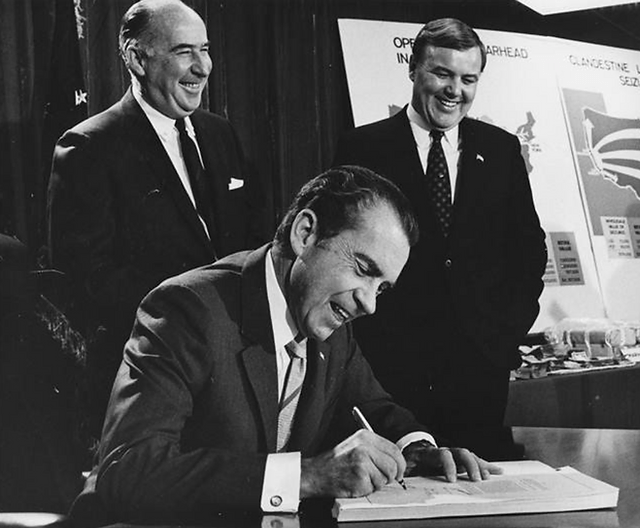
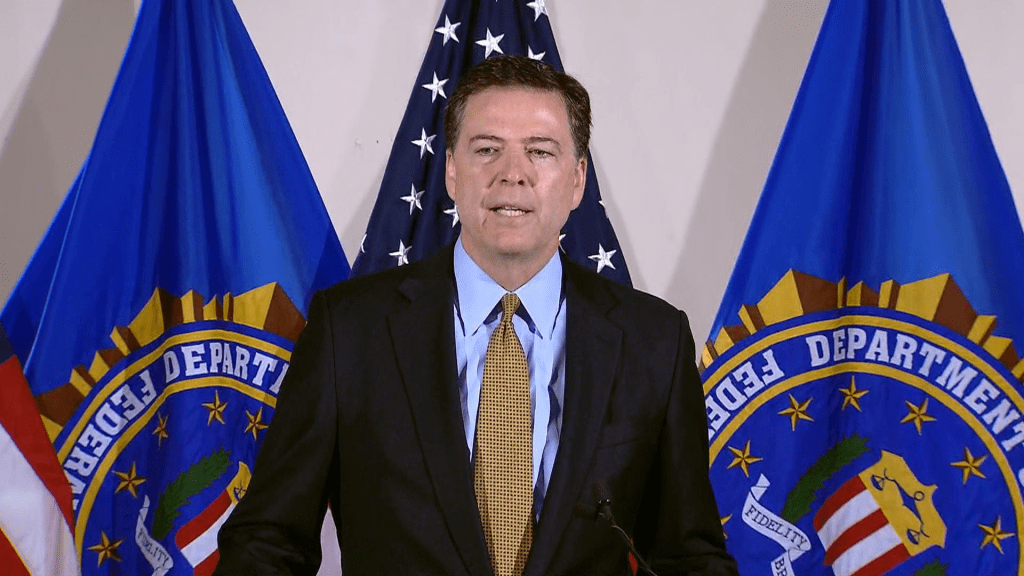




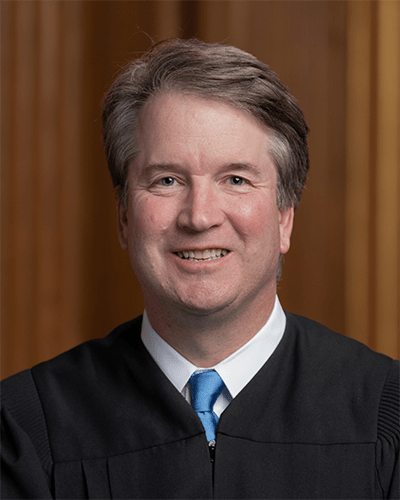





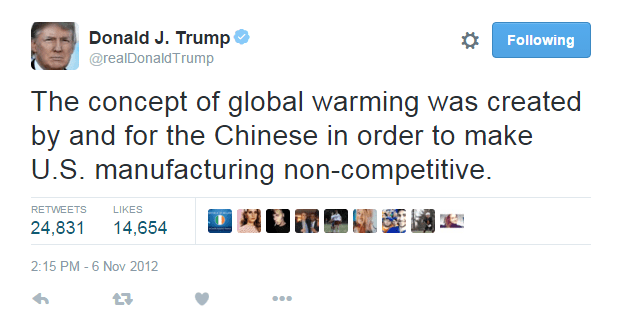



















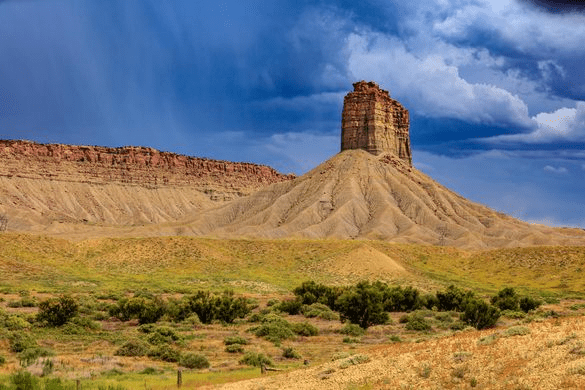

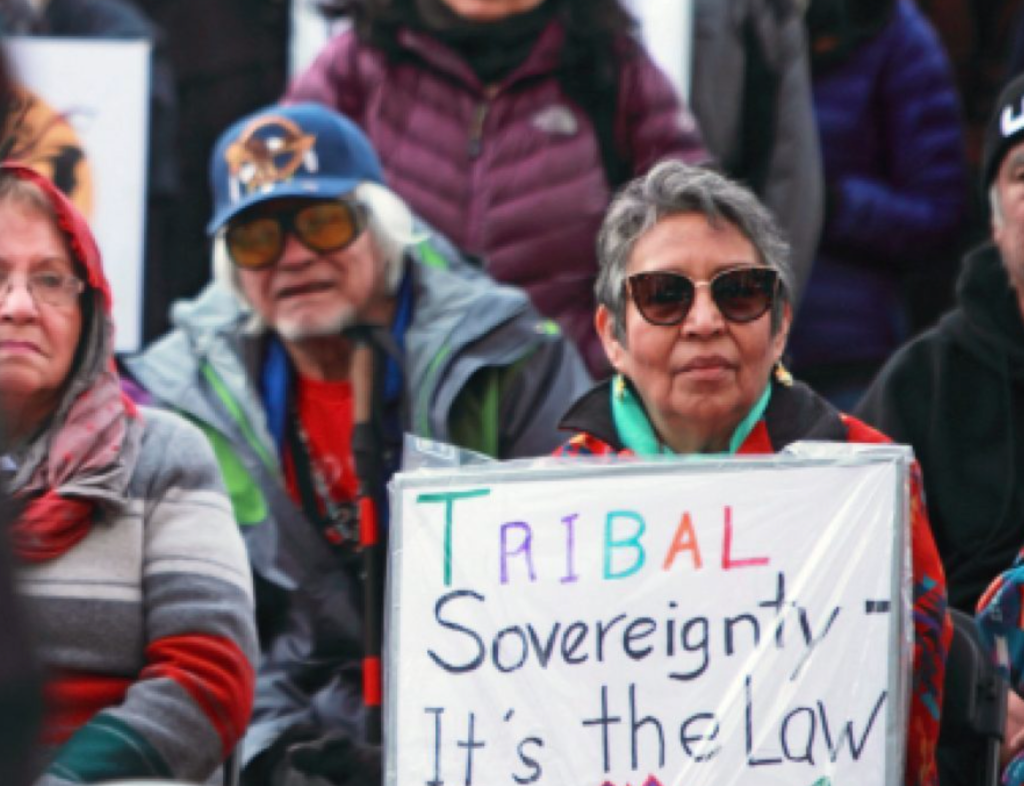


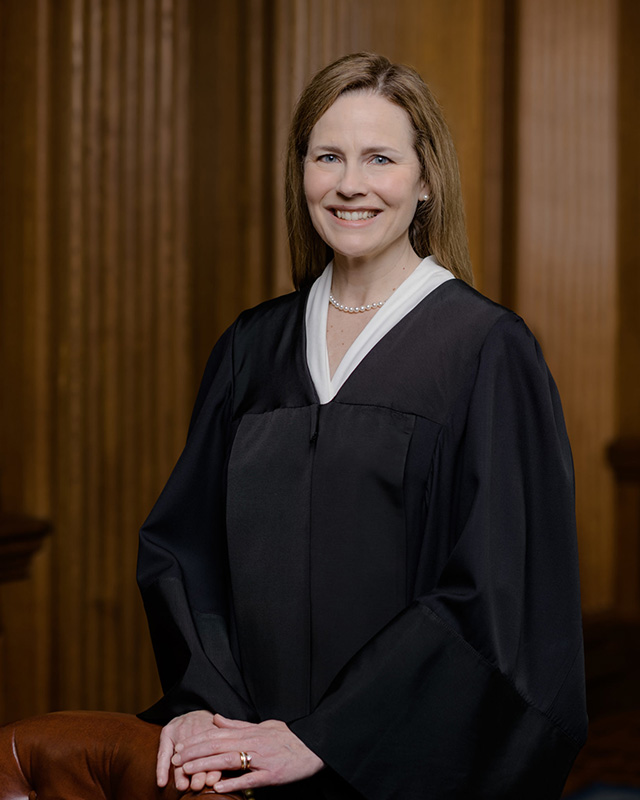


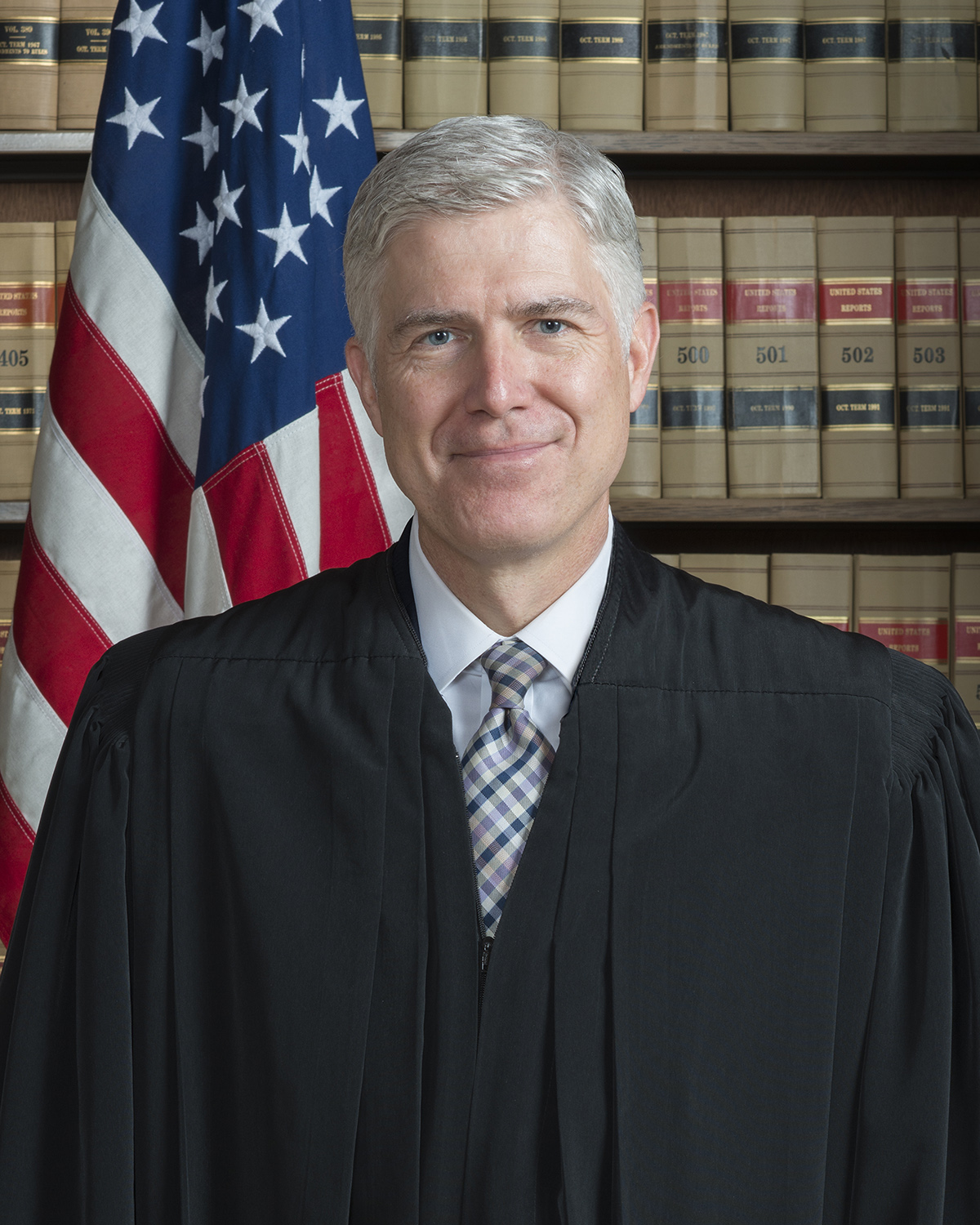




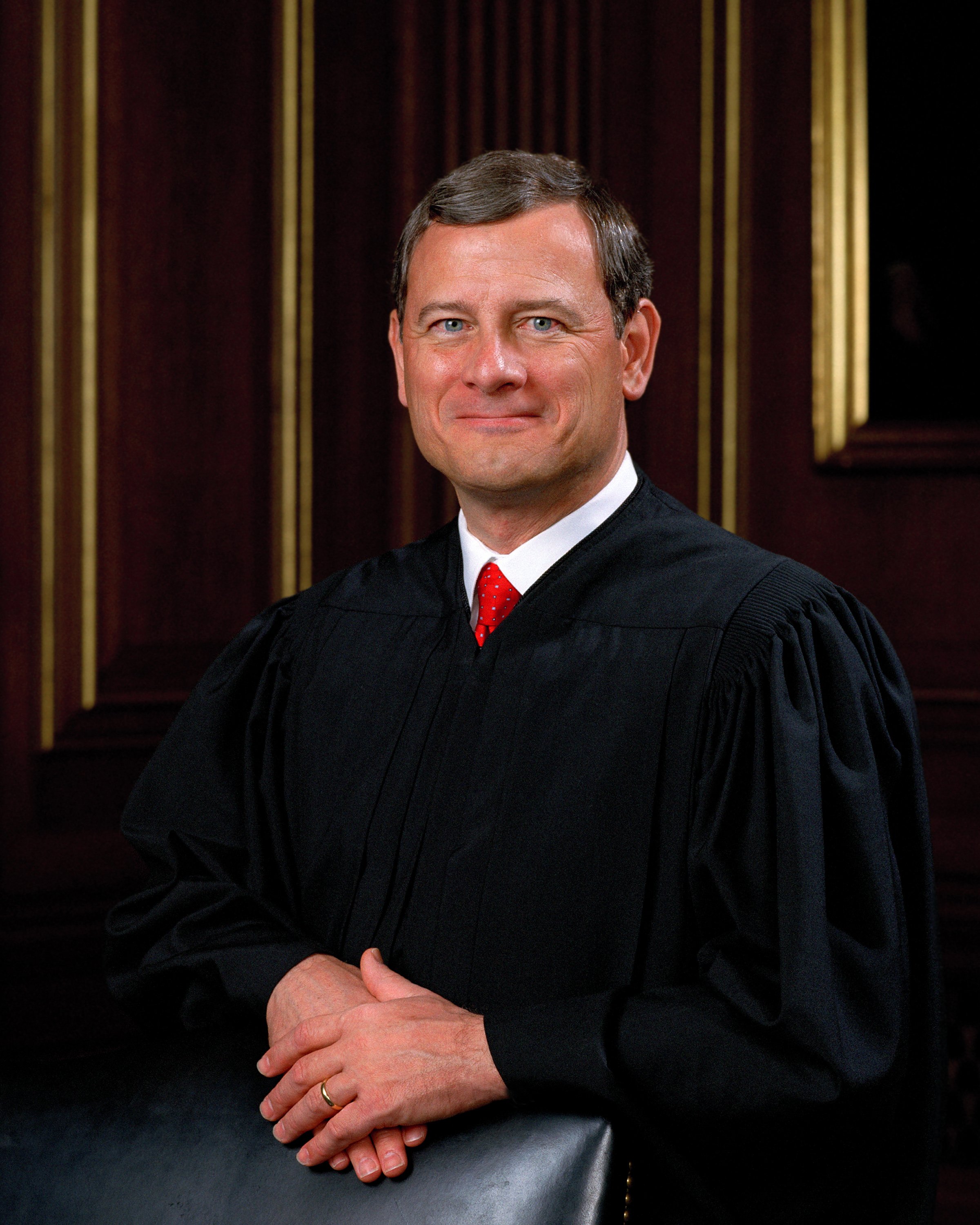
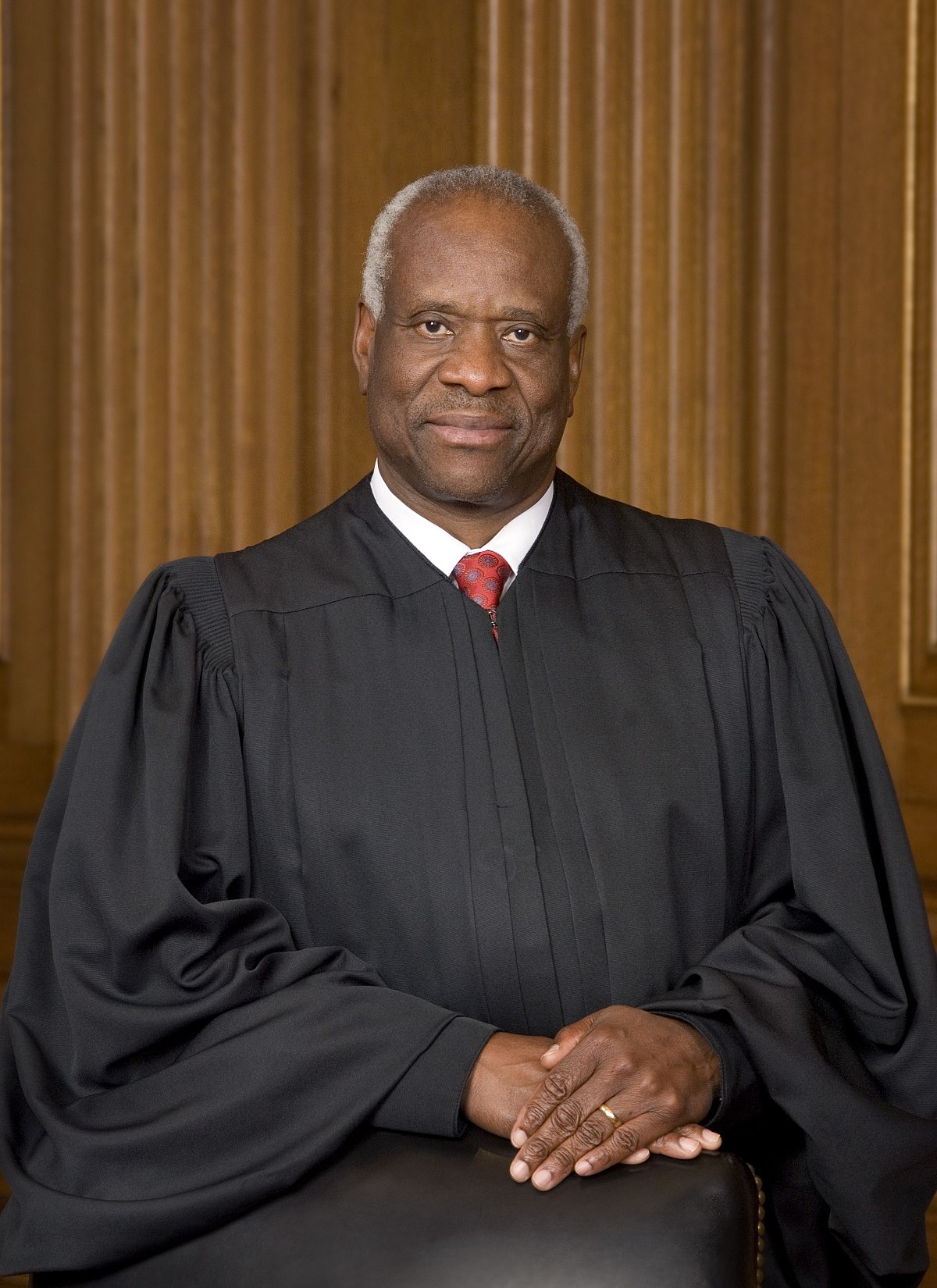
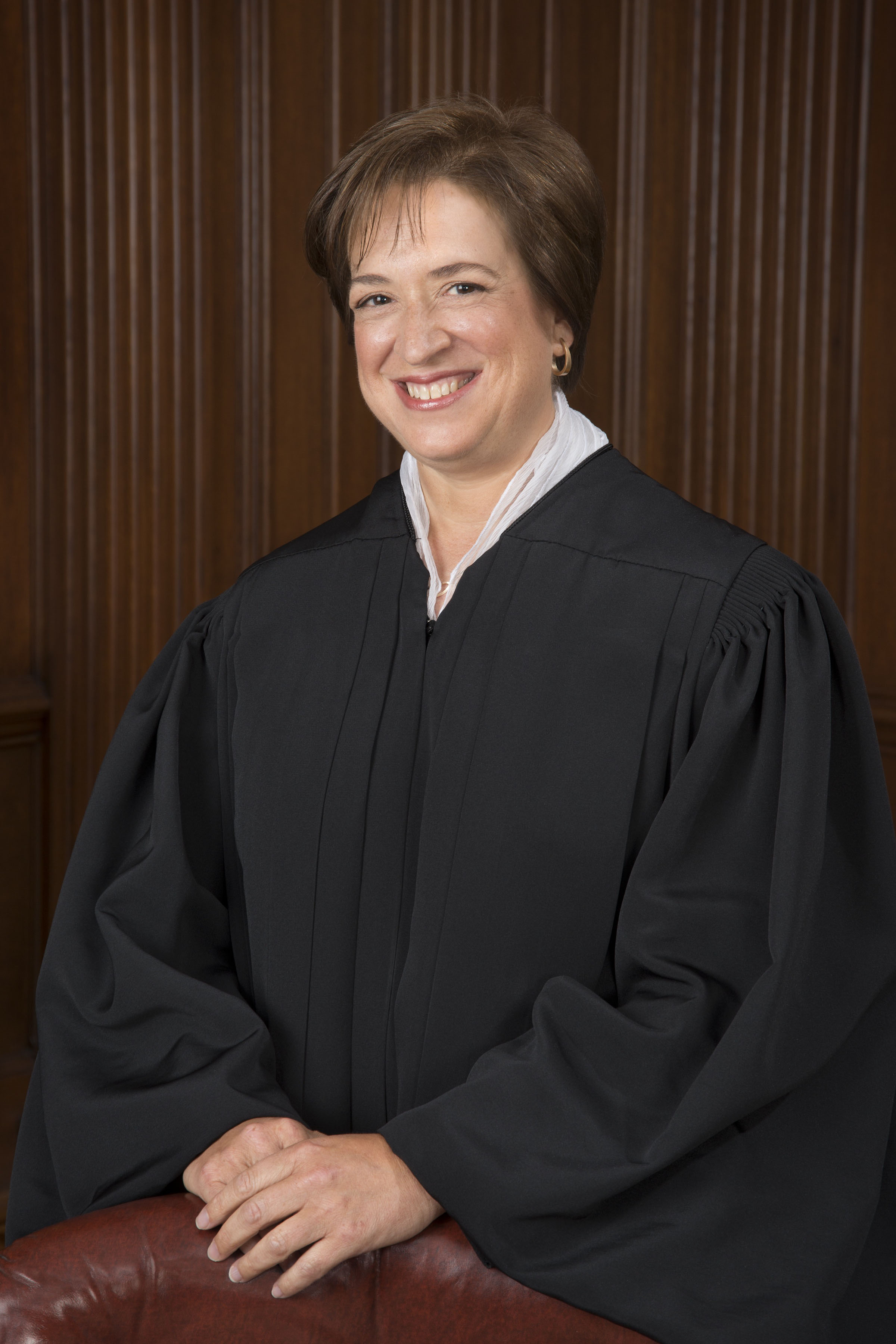
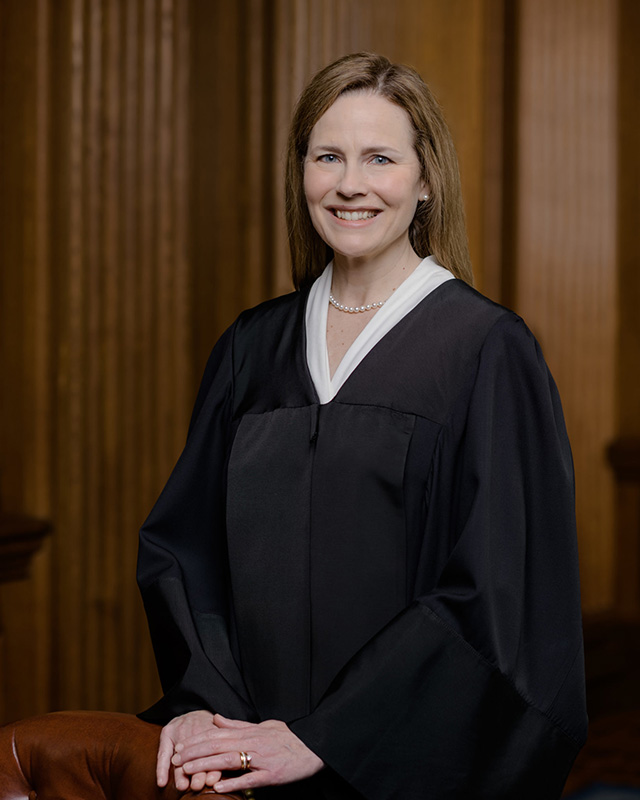

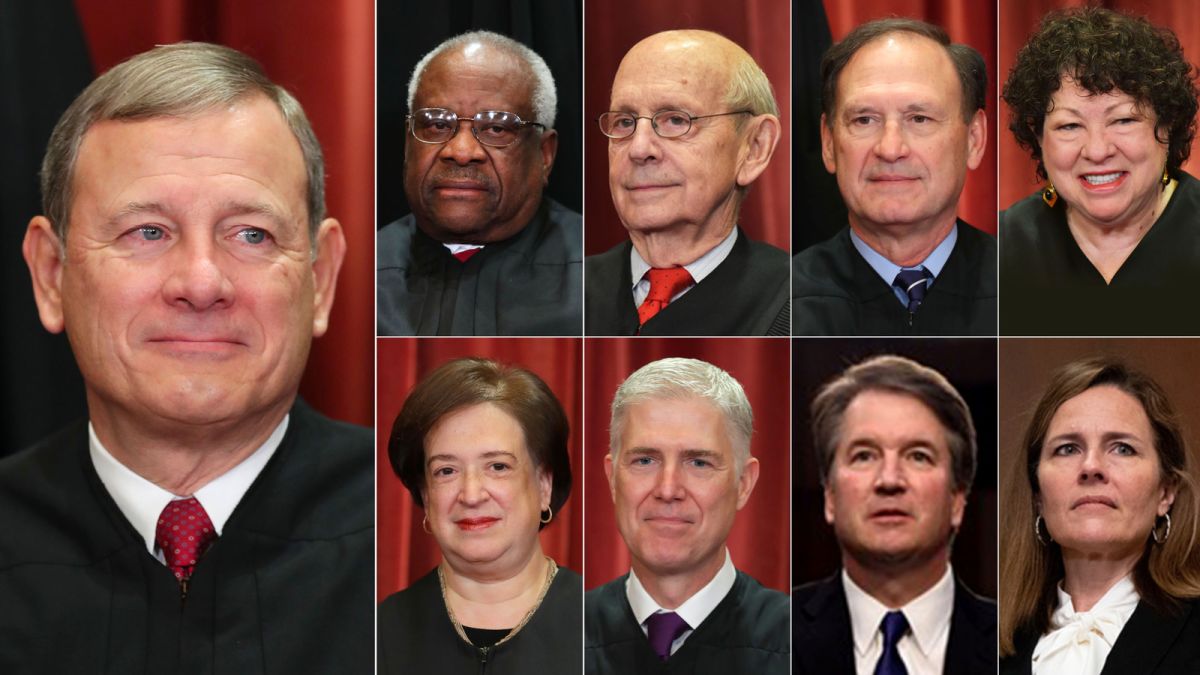




 The Logical Libertarian™