Your humble contributor is an avid political enthusiast, science junkie, former small business owner, limited government, constitutionalist, and all around lover of liberty.
I make every effort to use logic and reasoning, not hate, ad hominem attacks, nor logical fallacy arguments.
The place—Salem Illinois railway yard. The time—August 2016.
All around clumsy dipshit, Union Pacific railroad engineer Bradley LeDure was attempting to prepare some locomotives for an upcoming haul. There were three locomotives coupled together on a side track, typically where locomotives to be repaired are parked.
LeDure boarded the locomotives to prepare them for his trip. All three were turned on, but he felt only one of them need be, so he was going to turn off two of them, and just drag them along on the trip.
While walking on the outside of one of the engines, LeDure slipped and fell. And when I say slipped and fell, I don’t mean like, “Oopsie! That was clumsy of me.” This dumb motherfucker slipped and fell so hard he hurt his spine, shoulder, and head so bad he’s now permanently disabled.
Upon inspection, it was found that there was some oil on the locomotive’s walkway LeDure was walking on, which presumably was the reason he fell.
Union Pacific Train
So why does SCOTUS care about this prick with two left feet?
Under the Locomotive Inspection Act, a locomotive must meet certain safety conditions that would be found during an inspection, if the locomotive is deemed to be “in use” or “allowed to be used.”
Under the Federal Employers’ Liability Act, if there’s a violation of the LIA that leads to an injury, the employer will be liable for any and all damages the person incurs as a result of their shitty inspection service, or lack thereof.
Under the SAA however, that applies more to train cars, and only locomotives that are just being hauled around, and are maybe just used for braking, or electric power generation, but not used as a locomotive to pull the train. If they’re being used for pulling, then see the LIA above.
Now you know, if you’ve been reading my stories about SCOTUS before, they fucking love some nerdy definition shit. For SCOTUS, the question here is, “What the fuck does ‘in use’ mean” within the LIA.”
When LeDure filed his case, the 7th circuit decided that the trains, being on side tracks and not actually moving or anything, were not “in use.” So they told LeDure to go fuck himself. Which is ironic, as he’s disabled and probably can’t do that now.
LeDure was like, “Hey you assholes, that fucking locomotive was on, and was only paused for like an hour before it was to depart again, so it was clearly in use.”
But Union Pacific was like, “Listen, you clumsy fuck. We have the fucking receipts. That engine had been sitting for five fucking hours. So it wasn’t in fucking use.
But LeDure was like, “I could have fucking used it. It was there, turned on, and available. So it was “allowed to be used.” That’s what the statute says. As such, I’m covered.
LeDure’s team points out in their briefs that nearly half the injuries they sought to protect against with this law occur on stationary trains. So clearly, the statute was intended to protect in these instances.
Union Pacific Locomotive Inspecting Pit
Union Pacific argues, “If it was scheduled to be inspected, which is LeDure’s job, then that means it hadn’t been inspected yet, and therefore was inherently risky compared to one that had been inspected. How the fuck are we supposed to guarantee the safety of a locomotive we haven’t fucking inspected yet?”
“At some point, it has to deemed not available while it’s about to be serviced. This clumsy fucking retard was clearly not paying attention, slipped and fell, and doesn’t want to take responsibility for it. Fuck this guy, and his argument.”
Union Pacific agrees that it doesn’t have to be moving to be in use—it could be stopped for something on the tracks, or stopped because it’s all connected and about to depart. But that doesn’t mean it’s always in use if it’s not in the actual garage being worked on. If it’s off to the side, turned on, and waiting to be inspected, what fucking idiot thinks it’s in use? It doesn’t even have any cars attached to it to pull!”
To hammer their point home, they quoted the late Justice Antonin Scalia, when arguing a 1993 case about guns, he said, “When someone asks, ‘Do you use a cane?’, he is not inquiring whether you have your grandfather’s silver-handled walking stick on display in the hall; he wants to know whether you walk with a cane.”
Justice Antonin Scalia 1960-2016
Their argument being, a cane is in use if it’s doing its job, or about to do its job. A train’s job is to pull shit. Not sit there and wait to be serviced. Therefore, not in fucking use. Mic drop, bitches!
They also argued about the “allowed to be used” language which LeDure cited as supporting his argument. They pointed out that the law’s framers were referring to a third party like a lumber company who often uses trains, but aren’t necessarily the railway company. They are “allowed to use” the train, but don’t own it. It was never about whether some asshole like LeDure could just fucking take it.
Union Pacific also argue that if they were to take LeDure’s approach, no locomotive would ever be able to be parked on a side track waiting to be serviced, because in his idiot mind, that’s “in use.”
So if SCOTUS sides with those morons, they’ll have to make sure that all locomotives are immediately transported to a garage for servicing as soon as they’re meant to be out of use. They’ll have to build gargantuan fucking garages because, in case you haven’t noticed, locomotives are fucking huge, because apparently leaving it on tracks outside the garage means it’s still in use.
They were like, “Do you have any idea how much that shit would cost?”
Anyway, enough back story, on to the arguments…
Counsel David C. Frederick opened for the petitioner, Clumsy McClumserson. He pointed out a shitload of old cases from the early 1900s where SCOTUS ruled about trains being in use. In one, people were dining on a car, but it wasn’t connected to shit. A rail worker hurt themselves trying to connect cars to it.
Counsel David Frederick
Justice Roberts immediately called him on this nonsense saying, “Dude, a locomotive, which pulls the cars, has a very different use than a fucking dining car, which is just a place for people to eat, that happens to often get pulled around, but not necessarily. Surely you understand they’re not the same fucking thing.”
“Like, if people are eating on a dining car that wasn’t going anywhere, it’s still being used. But a locomotive just sitting there not pulling anything, isn’t fucking being used.”
Counsel, unimpressed with Roberts’ argument was like, “The SAA lumps locomotives and train cars all together in one big group of ‘rail vehicles.’ So since they’re all lumped together, they all fall under the same rules. As such, with all due respect, I invite you to swing on my nuts, Justice Roberts.”
Justice Roberts did not, in fact, swing on his nuts. He threw a counterpunch.
He told him, “I appreciate your stupid fucking argument, but the LIA deals with locomotives being used to locomote, and only a fucking idiot would say it’s in use while it’s just sitting off to the side. Is your fucking car in use sitting out in the driveway while you’re inside jerking off?” We’re here because your claims are under the LIA, not the SAA. You’re just using that shit to try to help your shitty argument!
Justice Sotomayor, showing a total lack of understanding about trains, threw counsel Frederick a bone when she asked if it was odd to treat a locomotive and a railcar differently, which he obviously agreed with. He needed them to be treated the same.
Official Portrait of United States Supreme Court Justice Sonia Sotomayor
Click for Biography
Counsel, in response, then argued that it was Clumsy McClumserson’s job to check those locomotives before heading out. So how the fuck does it make sense that he’s not protected from injuries that occur while on that fucking locomotive?
Justice Kavanaugh chimed in, presumably to draw a line, asking about what if the locomotive were on a side track for several days. Is it supposed to be inspected every day for such hazards?
Counsel Frederick was undeterred by this line of questioning, and hammered home the idea that if a locomotive is available to be used, it’s “in use.” So yes, in that scenario, the locomotive should be inspected and made sure it’s safe for engineers to board it and do their jobs.
Justice Thomas, humble-bragging about his motorhome, asked counsel Frederick if his car is “in use” when he’s dragging that fucker behind his motorhome?
Counsel Frederick was like, “you bet your ass it is! No one else can use it. The lights are in use, the brakes are in use. It’s in fucking use.”
*Side note: Cars being towed like this, do not have their brakes in use. It’s just the lights.
But justice Thomas being quite the skeptic was like, “The purpose of a car isn’t to be dragged around everywhere. We’re hauling it so we can use it later. So I don’t see how it’s in use now. It’s not serving any purpose now.
Justice Thomas then asked, what if some fuckhead engineer tagged the locomotive to be repaired, which some would argue is taking it out of use. Is it still in use?
Associate Justice Clarence Thomas
Counsel Frederick, seeking to win this case, needs the broadest fucking definition of ‘in use’ he can possible come up with, so he’s like, “Fuck yeah, man! It’s still being used to serve the purpose of the railroad, and people who might climb all over that mother fucker in your scenario, are doing work for the railroad that utilizes that locomotive. Therefore, it’s in fucking use.”
I’ll give him this, pretty fucking creative argument.
Justice Thomas, not done with this fucker yet, then asked, “In the LIA, it uses the term ‘safe to operate.’ So this whole provision seems to revolve around operation of the locomotive. Not when it’s sitting there waiting to be maintained.”
But counsel Frederick reminded justice Thomas that in his briefs, he points out that nearly half the railway injuries occur on stationary trains. So clearly, the law is intended to help these people. My client isn’t just some unlucky clumsy fuck. This is the norm.
But justice Thomas, was having none of his bullshit. He retorted, “Use implies the train is doing some sort of work. So what fucking work is it doing for Union Pacific, if it’s just fucking sitting there?”
Counsel Frederick, using the old “answer the question you wanted them to ask, not the question they actually asked” tactic, responded again about the ways it can be serviced, and then taken out of use.
Justice Thomas was like, “if it’s in maintenance, or on its way to be worked on, it’s in the same condition—it’s fucked up. So how do you differentiate?”
Counsel Frederick responded that rail workers have to transport it to be worked on, so they have a right to a safe work environment. Only the repair people should die, if someone has to. They’re fucking worthless.
Justice Alito, and Sotomayor after, were curious why counsel Frederick thinks somehow the law protects an engineer walking around on a train while it’s “in use” versus a technician taking the train to be serviced, then. If the purpose of the law is to protect railway workers, they’re all fucking railway workers, aren’t they?
He responded that the idiots he’s defending are walking around with the assumption that everything is safe and OK. But the others have an assumption there is a problem, which is why they’re about to work on it.
Next up, for the United States as an amicus in support of Clumsy McClumserson, counsel Colleen E. Roh Sinzdak.
She opened by pointing out that these locomotives are 400,000 lbs, with 5,000 of diesel in them. They’re fucking dangerous and complex machines. They haul freight, but also they can be a simple power supply, a mule to move cars around the yard, or just a standby locomotive, ready to rescue a train that takes a shit out in the field.
Colleen E. Roh Sinzdak
Any of these purposes means it’s in use.
Until these assholes put it into the repair shop, storage, or retirement, it’s in use.
Justice Roberts asked, “what if Union Pacific sets this train aside, making it a little restaurant or something, but they know they could deploy it to haul shit again if needed? Is that “in use?”
Counsel Sinzdak responded that this would be “in storage.”
Justice Roberts asked, “Why? It falls under your argument, it’s one of those locomotives that’s there, ready to rescue some other train that breaks down, isn’t it?”
She was like, “No dawg. They’d have to do a lot of shit to get it up to spec to haul shit again.”
Justice Breyer, in a rare bit of defiance absolutely demolished counsel Sindzak. I’m just going to copy this exchange here.
Stephen G. Breyer
Well, suppose it hasn’t gotten into the service yet?
Colleen E. Roh Sinzdak
Then it’s not in use.
Stephen G. Breyer
Oh, not in use. Okay.
Colleen E. Roh Sinzdak
It’s once the locomotive is placed into service.
Stephen G. Breyer
Associate Justice Stephen Breyer
So we have a yard and the company puts all the locomotives in the yard, that they make one every three months, and there are now 15 in that yard, and they’re all ready to go, and somebody calls from the train station and says can we take any of those? Sure, take them.
Take them whenever you want. And occasionally they do.
Okay? In use or not?
Colleen E. Roh Sinzdak
So, once the locomotive is placed into service, then, yes, it is…
Stephen G. Breyer
What does that mean, “placed into service”?
Colleen E. Roh Sinzdak
Well, usually, it means, for example…
Stephen G. Breyer
It’s there, sitting in the yard.
Colleen E. Roh Sinzdak
Well, it needs to be filled with fuel.
I mean, the 5,000 gallons of fuel is a pretty…
Stephen G. Breyer
Oh, it has to be filled with fuel.
So it’s not used—in other words, a locomotive is not used when it’s sitting somewhere and doesn’t have fuel in it?
Colleen E. Roh Sinzdak
That is correct.
So the FRA generally focuses…
Stephen G. Breyer
Oh, you—what happened to the thing about you used it until you withdraw it from service.
It’s not been withdrawn from service.
Colleen E. Roh Sinzdak
The FRA considers that a locomotive is withdrawn from service once its fluids have been drained and its battery has been detached.
So, for example…
Stephen G. Breyer
Oh, it hasn’t detached the battery, but what they did was they withdrew—they didn’t have fuel in it because we don’t need fuel until next month because there’s a big snowstorm and that won’t be cleared up until next month.
Colleen E. Roh Sinzdak
Right.
So the FRA’s basic…
Stephen G. Breyer
So what my point is, is you want to say that is in use.
And what you’re doing is not following the words in your brief.
You’re following what is your common-sense view of sort of what’s in use or not.
And that’s why I say, if it’s in your brief, hey, you don’t say anything in the brief of not having yet gone into service, I don’t think.
You talk about withdrawn from service. And here you have six words. That’s why I started thinking we’re not going to get anywhere or very far by substituting the words from your brief or any of these briefs for the word “use.” Now you don’t agree with that, so explain.
Colleen E. Roh Sinzdak
I do not agree with that.
While a locomotive is being put to a carrier’s purposes, then it is in use.
I would say that as we note in our brief, you can withdraw a locomotive from service and then it’s no longer in use.
So, obviously, if the locomotive has never been put into service in the first place, then it isn’t in use.
We do think that “use” and “service” are synonymous in this statute. Now we also think there is a very clear line here, and it’s once a carrier has placed the locomotive into use, have they done something to affirmatively withdraw it from service for storage or repair? And the key things that they might do are moving it to a controlled environment like a repair shop, where you just don’t have the same risks of an exposed railroad yard, where you have trains moving everywhere, you have people going everywhere. So you’ve put it in a controlled environment where the only people interacting with it are people who are expecting to be dealing with a defective locomotive.
Or you’ve done something to make sure that there is no way that somebody is going—an employee is just going to hop on that train and turn it on or move it. So, again, you can put it—you can and—and many railroads do put locomotives in storage by detaching the battery and draining the fluids.
And that way, what you don’t have is the risk that an employee is going to get on and move this, again, 400…
Stephen G. Breyer
Now what you’re suggesting is certainly a possible approach. There’s a common law approach.
If we’re Lord Mansfield or Coke or somebody, we might take that.
And you’re suggesting, if that’s what we’re trying to do, we ought to look at the purposes of this statute and decide whether the kinds of risks that are at issue in the case are the kinds of risks the statute is trying to prevent.
Colleen E. Roh Sinzdak
That is one approach, although what I would say is that you could apply the canon of in pari materia and say that we have interpreted the SAA in exactly this way, that the Locomotive Inspection Act was enacted at the same time that Congress…
Stephen G. Breyer
Yeah, but they’re going to say, as you know, because you’ve written this already, so I do interrupt, that the first statute is done for all cars, and it’s done for all cars because people wander around in those cars, particularly employees. But locomotives have special risks, particularly with fuel and other things, and so the statute is meant to go beyond that first statute.
But how far beyond? And now we have the issue in the case.
Colleen E. Roh Sinzdak
I’m actually not sure that we are arguing that the “in use” definition doesn’t go any further.
Stephen G. Breyer
You’re not, but they are.
Colleen E. Roh Sinzdak
Okay.
Well, so, for the FRA, “use” means the same thing in the SAA and in the LIA, and it should be interpreted in that way because—for basic reasons of clarity in the law. When you have two statutes enacted at approximately the same time covering the same topic, it sort of stresses reality to think that a regulated party would read those two laws and think that “use” means one thing as applied to a locomotive in one law and something entirely different is applied to a locomotive in a different law.
So that just—that doesn’t work sort of as a matter of common sense. And it certainly doesn’t work if you do want to look at purpose—I mean you want to look at legislative history, and you see that Congress is expressly borrowing from one statute and putting it in another.
Justice Roberts, also apparently not a fan of counsel Sindzak, blasted her on this last argument.
John G. Roberts, Jr.
Chief Justice John Roberts
No, “use” means the same thing.
It’s just that when you apply it, the use you put a locomotive to is to drive and pull cars.
The use you put a railcar to is to have stuff in it and be attached to a locomotive. It’s the same word.
It just looks to, I guess, the primary purpose of the object that’s involved.
That doesn’t mean you’re using the word differently.
She went on to say, that congress incentivized the railroads to take “defective trains off the line.” Her argument being, that they wanted this to prevent risk of injury from defective trains being problematic.
But Justice Alito was like, “Where the fuck did congress say that?”
She was like, “the fucking law talks about making sure trains are safe, and any issues fixed. So clearly, they were creating a framework to say, “If there’s a problem, it comes out of service to be fixed. If it’s not fucked up, it’s in service.”
She went on to argue that “use” has many connotations. For instance, people would say they “use” a gun to protect their home, but it doesn’t mean they ever pick it up and use it to shoot someone.
*I wish she’d leave the gun arguments to the professionals, because we’d say we “have” a gun for home protection, and we only use it to shoot some motherfucker breaking into our home. Sorry, she lost me on this argument.
She then went on to the argument that again, half the incidents are on stationary trains, and these laws were meant to protect such people. She even shared an anecdote that you used to be able to tell how long someone worked on the railroad by seeing how many fingers they have left. No shit. That was her argument.
She also mentioned they even had ads for prosthetics in publications for railway workers because conditions were so unsafe back in the day.
All this to say that the point of the laws, is to protect workers like Clumsy McClumserson.
She argued that while they accept it was off to the side, and not immediately intended to do any work, it was ready to be used when whomever decided to use it. As such, it needed to be inspected and deemed safe, which it wasn’t.
Multiple times, counsel Sinzdak pointed out that for the train to be not in use for purposes of maintenance, storage, and such, it would have the battery disconnected and the fluids drained. Her argument being that barring that, the train is in use.
Justice Sotomayor, looking to draw a fucking line anywhere, asked if this is where they should draw the line? If the battery is disconnected and fluids are drained, then it’s not “in use?”
Counsel Sinzdak, not wanting to limit herself, was like, “yeah, that’s one way, but there are others. Like it could be parked in a service garage over a maintenance pit.”
She again, hammered home the idea that a train, sitting off to the side, ready to go, has to be deemed in use, because non-maintenance personal have every right and reason to go use them if needed, and therefore, they should be assumed safe.
Wrapping things up for Union Pacific, counsel J. Scott Ballenger was up to bat.
J. Scott Ballenger
He wasted no time in bashing counsel Sinzdak’s argument. He was like, “where the fuck do you see anything about disconnected batteries and drained fluids in this fucking stature. Don’t bother, I’ll answer it myself. If fucking isn’t.”
She’s trying to rewrite this law to what she thinks it should mean, not what it fucking actually says. This is bullshit, and you know it.
Union Pacific has no rule that to take a train out of service, you disconnect the battery and drain the fluids. You could, but that certainly isn’t the only way.
His argument is that the law makes it clear, that as soon as there’s an issue, the train is not to be “used” anymore, and is no longer in service until the issue is fixed.
If the oppositions idiotic statements are true, then they can never comply with that clearly written rule, because they don’t have a way of getting the train from “in use” to “in service.” They can’t just magically wish it from the tracks into a repair shop.
He pointed out that there are in fact regulations that govern the transport of locomotives, and that congress understood that a locomotive being transported to get serviced is not in use. If it’s known defective, then it can no longer be deemed safe until the defect is fixed, and the law has to provide for a way to transport it while defective.
He also pointed out, under questioning from Breyer who’d just invoked the Little Train that Could, the train is also in use, when it’s applying tractive power to the track. Meaning, it’s either moving on the track, or attempting to move by applying power to the wheels. So even though the little train that could is only thinking he can, he’s still applying power, and therefore in use, even if he’s currently not moving because he doesn’t have enough power.
He points out that in the law, they say a dead locomotive, can be idling. Sometimes, trains automatically turn themselves on just to charge their batteries. This doesn’t make it in use.
Justice Sotomayor asked about a locomotive that is being dragged with a train, but isn’t powering the train itself. Is it in use?
Counsel pointed out that under this instance, it is covered under the Safety Appliance Act (SAA), as it’s acting like a railroad car, but it is not then in use under the LIA, because that’s for locomotives, and it’s not locomoting.
Justice Kagan, seemingly siding with Clumsy McClumserson, argued that the statute supported the train as in use, when it’s ready to be used, because the point of the legislation is to get it ready for whatever the train’s operator’s decided to do with it, before it’s put into use.
But counsel Ballenger, understanding Sotomayor knows fuck-all about trains pointed out that Union Pacific’s manuals for engineers like Clumsy McClumserson are supposed to do inspections to make sure the train is safe before operation, which is what he was doing. Within that framework, it must be, that the fucking train might be unsafe, which is why he needs to inspect it.
Justice Thomas chimed in and asked if there were any indication that this locomotive was cleared for use? Like was it available to LeDure?
Counsel Ballenger, with a bit of evidence I’m surprised I didn’t hear earlier pointed out that Union Pacific’s guides forbid using any that are overdue for inspection. That all parties agree it was overdue for inspection, therefore to answer the question, no! It wasn’t available to be used, until it was inspected. That’s our whole fucking point!
Justice Thomas, also looking to draw some lines, asked if there’s an instance where a stationary train would be deemed in use.
Ballenger responded that if it were stopped at a red light, or waiting for a switch, it’s still in use. But as soon as it’s put on a side track, and the true goes home for the day, it’s not in use anymore.
In a split decision where Justice Barrett recused herself as she was on the 7th circuit when they previously decided it, the 7th circuit’s ruling holds. Since there’s no majority decision, it simply stands as if it didn’t happen, and therefore the 7th circuit’s ruling that the locomotive wasn’t “in use” is the ruling. I’d love to share more info here, but they literally just issued like a one-sentence ruling saying they were tied, and as such, there is no opinion.
This means that the questions they faced are still there, and there will need to be a new case asking the same question, they will be asked to decide, if that question is to be answered. The 7th circuit’s decision holds, but that doesn’t mean it becomes precedent, like it would if the majority had voted to hold their opinion.
Imagine going to buy a piece of property, and the realtor tells you it’s prime real estate. But then after you sign on the dotted line, you find out it’s in a flood zone, or close to something noisy like an airport. You got the ole bait n’ switch.
That principle is at the heart of this case for Luxshare, involving 28 U.S.C. § 1782—but for SCOTUS specifically, it’s what the hell constitutes a foreign or international tribunal. I know, you’re already riveted, right?
Well, a lot of people are apparently interested, because unlike most cases which have two sides, one representative each, and maybe one amicus between then, this case had three fucking people arguing for the petitioners, ZF Automotive, and two arguing for the respondents Luxshare. Five fucking people arguing this shit! That’s a record, for me.
Anyway…
Congress wrote 28 U.S.C. § 1782 to assist in international disputes, as a courtesy to other nations. As you may know, when you sue someone, you can request relevant documents, if you have evidence they’re pertinent to your case, via a subpoena.
So the gist of this law is basically that if a company is being sued in Germany for instance, but their headquarters are in New York, the German court can ask New York to order the company they want documentation from, to turn that shit over for use in German court proceedings, just as they’d have to do if the suit were all transpiring in the United States.
Most countries have a similar law—it’s just a way to reciprocate with each other in a world that has a lot of international business disputes.
When 28 U.S.C. § 1782 was originally written in 1948, it specified “courts” as the entity who can demand discovery. But then congress amended the language in 1964 to read as “foreign tribunals.”
It is well understood their intentions in amending this language were meant to broaden the scope to more than just courts, as there are other “official” proceedings that should have a right to subpoena evidence. It’s been applied to magistrates and governmental investigations around the world.
However, people have also attempted to use it to apply to international private arbitrations, which is why we’re here now—SCOTUS has had enough of this shit. Private arbitrations are when two parties agree to hire arbitrators, which are private entities—often lawyers—to settle their dispute out of court.
ZF Automotive
For the case in question here, in 2017, technology company Luxshare bought a Michigan factory owned by German auto-manufacturer ZF Automotive. But after moving into its new digs, Luxshare was not pleased with their purchase. They believed that ZF Automotive were less than honest about the value of this shithole.
As an Ohioan, I’d like to point out that it was in Michigan, so you’d think they’d have known it was basically worthless—nothing good comes from Michigan, except maybe Tom Brady.
Once Luxshare realized they’d gotten got, they wanted restitution. In their purchasing contract with ZF, they agreed to arbitration in Germany if there were any disputes of this nature. So using 28 U.S.C. § 1782 as their wingman, Luxshare requested a Michigan court to force ZF to help them with discovery documents from ZF Auto.
They wanted to prove they were highballed, since the ZF location in question is located in Michigan, but the discovery is to assist in support of their agreed-upon arbitration in Germany.
Stepping back for a second, I suppose I should explain something I haven’t previously. I know I often gloss over this, but in general, it should be understood that basically no one gets to go straight to the fucking Supreme Court.
Otherwise, the opposite of original jurisdiction is “Appellate Jurisdiction,” which is when a lower court rules, and a party of that decision, generally the loser, is none too pleased with those fucking idiots, and decides to appeal to a higher court.
This is called submitting a writ of certiori. The higher court reviews this writ, and decides whether they think it’s worth their time to review, or if they think it’s a big old nothing burger and tell them to pound sand.
If the higher court does grant certiori (agree to hear the appeal), either the petitioner loses again, or the superior court decides the lower court were fucking idiots, and overrule them.
So now, whomever lost the second round is pissed, and they appeal that appeal to a higher court again. This dance of sore losers eventually meanders it’s way to SCOTUS, one higher court at a time.
SCOTUS is generally an appellate court—the prettiest appellate court in all the land. There is no appeal once you lose there—other than maybe trying to get your shit heard again by a newer SCOTUS years later.
While we’re on the subject of shit I often gloss over, it’s also worth noting that on the subject of legal documents, it’s good practice to define terms that are written in your law or contract that could be ambiguous. The better one does this, the less likely the document will be scrutinized in courts.
For instance, in a contract, maybe you have verbiage that says, “This contract is null and void if either party acts like an asshole.”
Asshole is a word that is rather open to interpretation. So the contract would (and should) have a definitions section, and there, it would define “asshole” specifically. It might say, “Asshole: A person who has made publicly disparaging remarks against the other party.”
So now, when courts or arbitrators have to determine if one of the parties was an asshole, they clearly understand what the test is to determine if they were an asshole or not—did that party talk shit about the other publicly?
Make sense?
So, now that you understand that, this a great time to mention that those lazy fucks in congress didn’t define “Foreign or international tribunal” in 28 U.S.C. § 1782. They were too busy insider trading and grandstanding in front of congressional cameras to write an actual well-written law. Classic fucking congress! It should be known that probably 90% of what SCOTUS does, is cleaning up congress’ rather avoidable fucking messes.
SCOTUS is often just an editor for whatever congress writes. Congress writes a law with the linguistic skills of a caveman, so then some member of the public interprets their idiotic law one way, while some other idiot or government official interprets it another way, and now these two have beef which could have been avoided if congress had spent a little time writing a better fucking law.
So SCOTUS had to read 28 U.S.C. § 1782, and be like, “What fucking idiot forgot to define ‘Foreign or international tribunals?’ Here, let us fix this for you, you fucking morons. There’s 538 of you fucking idiots, and you can’t write a decent fucking law between you.”
I know SCOTUS is all polite and professional in public, but you know in closed quarters, this is the language they use.
Anyway, on to the arguments…
Counsel Roman Martinez opened for the petitioner’s ZF Automotive by pointing out that the reports from congress, when updating this law to read “foreign tribunals” clearly show that their intent was to create a cooperative effort with foreign governments in a similar way as we’d hope they’d do for us if the roles were reversed. There’s no fucking mention of private arbitrations in this shit.
Roman Martinez
He also points out that since arbitrations are more common than court proceedings, district courts are going to have these requests falling out of their assholes if the court were to side with Luxshare.
Justice Kagan, ever the skeptic, pointed out that things like “foreign university” or “foreign language” don’t necessarily mean it’s government related. So your fucking argument is full of holes, bro!
Counsel Martinez went out to point out that the rules commission who drafted this new rule, were specifically told to do so by congress, in an effort to enhance cooperation between nations. So how the fuck would that translate to private arbitrations?
Justice Breyer, being ever the contrarian was like, “Sure congress gave them a directive, but this language can be interpreted more broadly to include private arbitration, so what’s the fucking harm in that?”
Next up was counsel Joseph Baio, also arguing for the petitioners. He also wanted to answer Justice Breyer’s question with the Judge Judy defense. No shit!
Joseph Baio
He was like, “If some asshole goes on Judge Judy’s program and asks for discovery, we wouldn’t give that old bag jack shit. Even though she’s an actual judge, her fucking show is just private arbitration. So for you to side with those other assholes, you’d be arguing that a German Judge Judy, would have the right to discovery that American Judge Judy does not!”
My quote may not be verbatim, but that was the basic gist of it.
He went on to tell justice Breyer, “if you side with those dipshits, you’re basically incentivizing ambulance chasers like me to start our arbitrations in foreign countries, so we can bypass your rules here.
Justice Breyer seemed unimpressed.
Counsel Baio, being a man of extreme examples, also put forth his violin defense.
He was like, “A foreign orchestra could hold an audition for a violinist. That is a decision-making process that would be allowed if you ruled for those fucking idiots over there. Do you really want that shit?”
Justice Sotomayor, seemingly unimpressed, asked about the World Trade Organization (WTO). She was like, what if they pick some arbitrators. They’re an independent organization, and not a government. So are they fucked?
Counsel Baio was like, “Listen, I’m sick of your shit. If the individuals disputing the case select the arbitrators, it’s fucking private, and they can get bent. If however the WTO picks the arbitrators, it’s an international organization of cooperating governments, so they get to demand discovery. Why is this so difficult?”
Next up was Edwin Kneedler, acting on behalf of the US Government in support of the petitioners. His opening was basically a greatest hits of the first two. He was like, “Listen, y’all know the reason we passed this fucking law. It was about international cooperation with other governments. Why are we even talking about this shit?”
Edwin Kneedler
He argued quite simply, that the line he draws, is that an international tribunal has to be:
Established by government, and exercising governmental authority.
He also cited international comity. The idea that the standard the respondents want isn’t what other countries recognize. So if he were to lose, the US would be giving up discovery like a twenty dollar whore, where other countries would be more like a thousand dollar whore or something.
Finally, for the respondents, we first have counsel Andrew Davies. He argued that the “best and most natural interpretation” of foreign tribunal includes commercial tribunals, because they’re adjudicating a party’s legal rights.
Andrew Davies
He also points out that the courts benefit from arbitrations, because that means they don’t have to handle all those fucking disputes. So if SCOTUS rules against his side, that will actually create more work for the courts, not less, because people will be less likely to arbitrate international affairs knowing they won’t have that discovery option available.
He also cited that the court has sided with previous arbitrations, as promoting international comity, so the other side are a bunch of fucking liars spewing bullshit. That while they may be right that some countries don’t provide arbitration support, most of our major trading partners do.
Justice Neil “Golden Voice” Gorsuch chimed in and was like, “Back in 1964, arbitration wasn’t “a thing” like it is today. So surely congress then couldn’t have envisioned the world we live in now, with fucking arbitrations all over the god damn place. Clearly, congress wasn’t considering private arbitrations when they wrote this fucking rule, yeah?”
Associate Justice Neil Gorsuch
Counsel’s response was essentially to point out there there are lots of countries already supporting arbitrations in this manner, and the language doesn’t rule it out, so that should be good enough.
Justice Breyer, siding with Gorsuch was like, “Dawg, you crazy.”
Finally, counsel Alexander Yanos for the respondent. He dug deep and was like, “Hey man, these other assholes are just flat wrong when they say congress didn’t anticipate arbitration in this law. The senate report used to incite the committee to draft this law cited a German Mixed Claims Commission, which was effectively arbitration.
Justice Roberts pointed out that a representative for the government was here, and arguing the opposite position. Shouldn’t their opinion matter?
But counsel Yanos was certain that the point of the law was for international cooperation. If an arbitration is set up in a foreign country, and it’s decisions are binding under law, and only appealable by the courts, then it’s an international tribunal, even if it’s private arbitration, because any appeals do end up in court.
Alexander Yanos
Justice Gorsuch, seemingly unimpressed with counsel Yanos’ argument, and in agreement with the idea that it’ll add a lot more work to American courts, pointed out that 3rd party discovery is a pain in the ass that no one fucking likes. As such, he’s pretty sure congress wasn’t intending to make that shit the norm.
In a unanimous decision for ZF Automotive Group, SCOTUS decided that a foreign and international tribunal shall be defined as a governmental agency abroad, and not some rando third party arbitrators. Otherwise, it’ll basically be anarchy up in this bitch. Anyone with an international beef that forms some sort of inquiry board will be asking for shit they have no right to ask for.
As such, ZF is not required to hand over documents to Luxshare under 28 U.S.C. § 1782.
Weirdly, Justice Barrett who authored the opinion acknowledged that the word tribunal could certainly be interpreted as something that isn’t governmental in nature.
Associate Justice Amy Coney Barrett
She also acknowledged that foreign just means not located in the US, it also doesn’t have to mean a foreign government.
But when used together, a foreign tribunal is generally thought of as a governmental agency that isn’t part of the United States. Her argument for this was the term “foreign leader.” She was like, you wouldn’t call the president of a company abroad a foreign leader would you? Fuck no. You’d call the leader of a foreign country that.
They went on to define a foreign tribunal as a governmental agency from a foreign country, and an international tribunal is one where two governments join together to form some intergovernmental agency, like maybe NATO, or the United Nations.
She then suggested that it was plainly obvious the US passed this law to create a level of mutual respect among international governments and the US, and if that’s the purpose, helping third-party arbitrators doesn’t really serve that purpose.
She finally hit her opinion home by pointing out that in the US, third-party arbitrators don’t often get the right to demand discovery. So if we don’t do it here at home carte blanche, why the fuck would we give some international assholes that power?
Isacco Saada and Narkis Golan, a young Italian couple may have been in love when they first married, but it didn’t take long to spiral into nosedive of violence and aggression. Isacco was an abusive piece of shit to his lovely wife, often right in front of their adorable young son Bradley, harming her both physically and psychologically.
Narkis Golan and son Bradley
Narkis, having more than enough of Isacco’s shit, arranged a trip to the United States to visit family who lived here for a wedding—bringing young Bradley in tow.
Once her and Bradley were safely in the United States, Narkis opted to remain here, going to a shelter for abused women, to avoid returning to her abusive husband—for both her and her son’s safety.
While Isacco wasn’t accused of harming Bradley, it’s pretty common that a man who beats his wife, will also beat a child.
But, as you might expect because I’m writing about it, this creates some legal issues. The Hague Convention in 1994 established international rules to protect children in international adoptions. It encompassed a 1980 rule called The Civil Aspects of International Child Abduction, which was largely created to prevent abusive husbands from taking an abused child away from the mother and out of the country, but because of poorly written rules, often was then used to force fleeing abused mothers to return their child to an abusive father who stayed home.
The point of the rule was that a child from a country such as Italy in this case, should have their custody determined by an Italian court. That no parent should gain an advantage by abducting their child and taking it abroad—making it more difficult for the other parent to win back custody.
However, the law did provide an exception in cases where the child was deemed to be in grave danger, if returned to the abusive parent.
The First International Peace Conference, the Hague, May – June 1899
Isacco Saada filed to have his son returned to Italy under these rules, and lower courts looking for ways to safely return Bradly to Italy as Hague rules seek to accomplish, looked at measures to ensure Bradley’s safety if returned, such as counseling, supervised visits, etc.
But Golan was like, “Nothing is going to make this piece of shit any less abusive to me, and if he’s abusive to me, he will eventually become abusive to our son. So fuck you and your measures, we’d like to remain in the United States—far away from this abusive asshole, please and thank you.”
After winning this case, the lower courts still looked to ways where Bradley could be returned to Italy, with rules to protect him against Isacco, but in an attempt to allow Italy to handle the issue instead of the United States.
The question for the court is pretty simple: do the courts have to mull over all possibilities to return Bradley to Italy and potentially Isacco, so long as they are deemed adequate to ensure his safety? Or can they simply decide that the grave risk to Bradley is too great, even if potential measures to ensure Bradley’s safety are brought up for consideration?
Counsel Karen King
Karen King, counsel for the Narkis Golan opened by pointing out that the lower courts are basically fucking morons. The Hague certainly wants to keep children together with their families in their home countries, but they’re also keen to protect those same kids from abusive assholes.
Her argument is that the Hague basically says, “Return them, unless they’re in grave danger if returned.” But she thinks the lower court somehow read that as, “If there’s any possible measure any asshole can think of, that would help ensure the child’s safety, then the courts must consider returning them under those measures, but if you can’t see any method to ensure their safety, then and only then, can you deny their return.”
Counsel King was like, “I don’t know how any smart person could hear the respondent’s argument and not conclude those lower court justices are fucking idiots who apparently can’t fucking read. As further proof that they’re morons, I’d like to point out that there’s no other country in the fucking world that uses this interpretation.”
Department of Justice Assistant Solicitor General Frederick Liu
Counsel Frederick Liu, representing the United States, there to support Nardis Golan argued that the lower court, in their arguments suggested that the child should be returned “if at all possible.” Liu took umbrage with that shit.
He was like, “If at all possible” really favors the abusive father, not the potentially at risk kid. Who the fuck would be OK with that? The Hague rules certainly didn’t lay it out like that. They wrote language to protect the kid for a reason. Do we really think they thought jurisdictional arguments were more important than the safety of a fucking child?
For Saada, counsel Richard Min opened by arguing that the Hague convention clearly seeks to have the kid’s home country adjudicate custody hearings. As such, he wanted to be clear that this isn’t about asking whether his piece-of-shit client should get custody, but merely that Italy should be the ones to determine said custody.
His tactic is pathetic at best, but he was dealt a turd sandwich. He knows any argument suggesting his known-abusive father should get custody is a big old fucking loser. So focusing on the jurisdictional argument is the only path to victory, if there is one.
Of course, he conveniently leaves out that his father Isacco Balboa, is the only person in Italy that would take him in.
Counsel Richard Min
But forgetting all of that, he thinks that the United States, in agreement with all these other countries who were part of the Hague convention, should defer to Italy since we’re talking about an Italian boy.
They do that by determining if there are steps Italy can and will take to protect little Bradley—conveniently ignoring the obvious way to protect him; by leaving him in the United States.
He went on to point out that Italy already has measures in place to protect the child, so if the United States doesn’t send him back, they’re basically saying, “Go fuck yourself, Italy. We don’t trust you mafioso thugs.”
In final rebuttal, counsel King was like, “Did this motherfucker really say the Italian courts already put measures in place to protect young Bradley? They set some fucking court dates. That’s about fucking it. This asshole must be joking right now.
In a unanimous decision, the court decided that young Bradley’s safety was more important than his father’s right to have him returned to Italy. Once the courts determine that Bradley is in potentially grave danger, they’re not required to consider any and every thought on how to return him safely. If Isacco has proven he’s potentially a serious threat to his son, then the US isn’t obliged to return him to Italy or that piece of shit.
The idea was, that once people agreed to arbitration via a contract, they couldn’t just be like, “Fuck this arbitrator, we’re going to court instead.” Presumably, congress also liked the idea of not tying up the courts with a bunch of nonsense that arbitrators could handle.
For those who don’t know, arbitration agreements are basically when two people enter into some sort of relationship, but before they do, they agree that if they have beef with one another which might result in them dragging each other’s asses to court, they’ll use an arbitrator instead. It’s cheaper and easier to settle disputes via arbitration than going to court, plus I’m pretty sure it’s not a matter of public record either, in case you don’t want your private matters on blast.
Your insurance is likely one example. They may have written into the policy that if you disagree with a decision, instead of suing them, you agree to go through arbitration. Whatever the arbitrator decides, you both agree to do that thing.
The arbitrator also must be impartial. Not an employee of other side, or even retained by one party or the other. In some instances, both parties hire their own arbitrator, then those two hire a third impartial arbitrator to be a deciding vote.
This case involves a humble Iowa Taco Bell franchise employee, named Robyn Morgan. The franchise owner is Sundance Incorporated.
Morgan argues that Sundance Inc. failed to pay her overtime as prescribed by the Fair Labor Standards Act (FLSA), which basically says if you are paid hourly, and work more than forty hours in a seven-day period, you must be paid at least 1.5 times your normal wage.
Sundance, when hiring new employees, has an arbitration clause in their application for employment. Pretty standard shit, really.
Well, Morgan, apparently being unaware or uninterested that this was the deal, opted to sue Sundance instead of going to arbitration, starting a class action suit claiming her and many other employees like her, were underpaid for the overtime they worked.
It’s not that these assholes aren’t allowed to go to court, but they had a fucking agreement. If they both waive that agreement, and decide court is the best path, they’re welcome to do so.
Morgan was not the only person alleging Sundance were some no-overtime-paying assholes. There was another case, Wood v. Sundance in Michigan, who also claimed the same. Sundance apparently owns like 150 Taco Bells all over the midwest.
Anyway, when Morgan filed suit, again, it was a class action. So Sundance was like, “Hey, man. There’s already another case out there (Wood v. Sundance), so this bitch is double-dipping. If she wants to sue on her own, fine. But this class action shit is wrong, man!”
The court however, thought the class-action was perfectly fine, and allowed her to proceed.
But, Morgan and Wood, seeing an opportunity to join forces, went into mediation as a united front against those no-overtime-paying mother fuckers. They got a shit ton of payroll data from Sundance, and eventually Wood settled, but Morgan was like, “No way, Jose. We want more.”
At some point, someone at Sundance finally went, “Hey, uhh guys? Don’t we have an arbitration clause? I seem to recall that shit somewhere. Why are we settling this through the courts?”
Another Sundance rep was like, “Fuck, you’re right my brother. How did we forget that? We must have been stoned or something. Let’s file a motion to compel arbitration and stop wasting time with this shit in court, then go get some tacos.”
They tried to argue that they were afraid they’d have to arbitrate with the whole fucking class, which seemed like a pretty big ask, but then when SCOTUS ruled on a similar case, saying such things weren’t required, which gave Sundance the feeling of safety to think they could just push Morgan to arbitrate. But we all know, they were fucking high, forgot, and got the munchies for some tacos, right?
Supreme Court of the United States
Either way, Morgan was like, “The minute you decided to file motions and shit to prevent us from a class action, you fucking waived the arbitration agreement. We’ve spent money and time prepping for court, not arbitration. So you can fuck right the hell off.”
A district court heard Sundance’s argument, but was like, “Sorry you idiots. But you waited too fucking long to compel for arbitration. With all the time and money she spent, you harmed her by waiting around to ask for arbitration until after she spent all the scratch.” This harm indicates that she has been “prejudiced.”
But Sundance was unmoved, and filed an appeal with the 8th circuit, who didn’t feel Morgan was prejudiced by such a delay. Apparently believing any money she spent preparing for court, was also good preparation for arbitration.
Lower courts had used a three-part test to determine the case before it made it to SCOTUS:
Did Sundance fucking know they had an arbitration clause in place?
Did they behave in such a way that suggests they knew they had a fucking arbitration clause and intended to enforce it?
Was Morgan fucking harmed (prejudiced) in some way by them doing what they did prior to deciding to enforce their fucking arbitration agreement.
The debate in this case, is mostly about #3—whether the petitioner (Morgan) has a burden to prove that the respondents (Sundance) waived the arbitration, and such burden, is more of a pain in the ass (shows prejudice) than other burdens a petitioner might have to overcome in contract law. Most other contracts do not need to show prejudice to be ruled unenforceable.
Since SCOTUS previously ruled arbitration agreements shouldn’t be treated as more special than other contracts, Morgan’s team argues that having to show prejudice means she’s required to do more, and thus violates Concepcion’s rule.
As arguments began, Justice Roberts, with the politeness of a 50-year-old Boy Scout, asked counsel for petitioner Morgan, Karla Gilbride, “So what the fuck do we do if there’s a state that has some arbitration-specific rule? Tell the state to go fuck themselves, and shove that rule squarely up their ass?”
Counsel Gilbride was like, “Yeah, basically. Did you even fucking read the FAA? It’s part of my briefs. All contracts created equally.”
Justice Roberts was like, “Well how the fuck do we define waiver then? Isn’t it a case by case basis? No one has a million fucking rules defining what is and isn’t a fucking waiver.”
Chief Justice John Roberts
“Sure, bro. But what the lower court got wrong, was that they added a requirement of prejudice. They did analyze the first two tests, and agreed it had been waived. But then, they added that third part of the test, requiring prejudice. That’s what we take issue with.” Counsel Gilbride responded.
Justice Kagan chimed in and asked if Iowa law had a prejudice requirement in state law for all contracts, would it then be acceptable here?
Counsel Gilbride responded, “If we’re going to discuss things that aren’t true in this fucking case, then sure, since that would apply to all contracts equally, it would jive with the FAA and would be OK.”
Justice Barrett had some monkey wrenches she wanted to throw at counsel Gilbride, so she was like, “Based on the lower courts three part test, I know we’re assuming that they waived their right to arbitration by engaging with the courts instead of asserting arbitration right away. But instead of waivers, aren’t we really talking about estoppel by laches?”
Associate Justice Amy Coney Barrett
What is estoppel and laches you ask? Great fucking question. I didn’t know either. It’s basically the idea that if you wait too long to assert a right, the court will prevent you from asserting it later. So the difference is that a waiver is something you do voluntarily, whereas estoppel is when the court basically waives it for you, and you don’t have a choice.
The reason this matters, is that estoppel by laches does require prejudice. Meaning, for the court to say, “Fuck you, you can no longer assert your right to arbitrate because you waited to long” they must show that the wait fucked up the other party. If so, this puts Morgan back on the hook for #3 of the three part test.
Counsel Gilbride responded, “You’re assuming we’re arguing we weren’t prejudiced, but we’re not and never have. We’re just arguing it shouldn’t be necessary to show prejudice to begin with.”
Counsel Karla Gilbride
For the respondents (Sundance), comes SCOTUS regular, counsel Paul Clement.
He opened that nothing in any of these laws or contracts puts a fucking time limit on when arbitration must be asserted.
So while those other assholes claim that us waiting to assert it is akin to waiving that right, that’s a fucking lie. It’s waived, when we say it’s waived. If you assholes want to prevent us from asserting our right, then that’s estoppel, and you have to show prejudice. But we didn’t do shit to that girl that caused her harm. We were just chilling out, waiting to see what made more sense.”
Justice Gorsuch, seemingly unconvinced by this argument was like, “Are you really trying to say that the courts can never decide you waived your right if there’s no time limit on asserting it? Because that seems pretty fucking crazy, dog.”
Associate Justice Neil Gorsuch
Counsel Clement was like, “If it’s obvious we waived it, sure. But clearly we never made any effort to suggest we voluntarily waived it. They are just assuming that, and trying to get the court to impose it, which then becomes estoppel, and then requires prejudice. This isn’t rocket surgery, man.”
Justice Kavanaugh asked about the lower courts determination that there’s a “presumption of forfeiture” if you don’t demand arbitration in your first response. Once you agree to engage with the courts, you’re waiving arbitration.
Justice Kavanaugh also questioned the idea that Morgan wasn’t prejudiced. Any delays by Sundance due to motions and discovery are going to add costs to Morgan’s case, and that is certainly causing her harm.
Counsel Clement argued that other courts generally don’t require invoking arbitration at the first response, but instead, consider it waived if there’s a shit-ton of requests for evidence (known as discovery) and such that the defense requests for court.
Counsel Paul Clement
Justices Kagan seemed to be having none of Clements arguments, though. While he continued to hammer the point that just filing a few motions in court doesn’t mean his side waived their right to arbitrate, Justice Kagan accused him of just making up rules of default for his own benefit.
But the real dagger was justice Sotomayor chiming in, who laid out all the ways Sundance delayed and stalled, filed motions, and entered into settlement talks, all the while knowing they had an arbitration agreement they weren’t demanding be honored.
By their own admission, they were gambling on another SCOTUS case to see how it was decided, which would then give them a better understanding if they should litigate against the class action, or force arbitration. That decision to gamble, in her mind, was a fucking waiver of their right to arbitrate.
In a unanimous decision where Morgan wins, SCOTUS ruled indeed that the Sundance waived the right to arbitration when it engaged in litigation versus compelling arbitration. Morgan does NOT have to show she was harmed by their actions (prejudiced) before trying to compel arbitration, because that would then be a unique requirement for arbitration agreements, putting them on some unique tier, above other contracts, and that’s some straight up bullshit.
Listen to oral arguments or read about the case at Oyez.com and/or SCOTUSBlog
Imagine a libertarian in the United States. It’s midnight, and he’s sitting at home in his underwear, binge-watching Better Call Saul reruns when he hears the door knob rattling. He spots the silhouette of a suspicious figure trying to gain entry. Is this person looking to rob the house, harm the homeowner, or who knows what?
So anyway, what does the libertarian do? He grabs his gun, which is basically required of all libertarians to own, and as soon as this miscreant steps an uninvited foot into our hero’s home, Captain Liberty turns him into Swiss cheese!
Libertarians are staunch supporters of the Second Amendment and the right to bear arms because they believe it levels the playing field in potential combat situations between individuals.
In the pursuit of freedom, people must have the means to defend themselves using the tools available to them. While it’s possible the intruder is a 120-pound weakling with no weapon and minimal combat skills, our libertarian homeowner, clad only in his underwear, can’t afford to take chances. He must prepare for the worst and ensure that he’s in the best possible position should a confrontation ensue.
As someone who identifies philosophically with libertarianism, I agree with this sentiment entirely. I own several handguns, which I have placed strategically in my home and cars in case someone hurts my feelings. I’ve never drawn down on anyone, but if me, friends, or loved ones are threatened, I’ll do my best to end the threat.
Contrast all this with another tenet of libertarianism—the peacenik. Someone who is staunchly anti-war. How can one support owning a gun as a right, but still be all about peace?
I’d like to think most people understand that being anti-war doesn’t mean anti-self-defense. Many reasonable libertarians agree the country should have a military prepared to defend our nation, in the same manner as they personally might be armed in such a way to defend their home.
The issue I’m raising here, is about being unprepared.
Today, we face potential threats from Russia, North Korea, and China, and the specter of a catastrophic conflict looms, especially if nuclear weapons come into play.
This scenario seemed very unlikely 10-15 years ago. Even President Obama seemed oblivious to the idea Russia could be a threat. Remember this debate where he degraded Romney’s opinion on Russia?
This issue is where I often find myself breaking with ideological libertarians, because as someone who places logic & reason over ideology, I think being prepared for the worst-case scenario, is the wisest thing to do.
I also oppose wars of aggression. We shouldn’t be attacking others who weren’t threatening us or our allies. However, it’s naive to assume that we won’t face a serious threat at some point. We must ensure we’re fully prepared. If attacked, we should respond with overwhelming force to swiftly end the conflict. Appearing weak and easily exploited is not a winning strategy.
Those who were around during the Reagan era, might recall the talk of a Strategic Defense Initiative (SDI) program, also known as “Star Wars.”
To say this program was ambitious, would be an understatement. I won’t try to explain how this system worked entirely, but it was multi-faceted, expensive as hell, and involved things like space lasers.
Reagan felt nuclear weapons were inherently immoral, and that eliminating the threat of them from Russia at the time, was in the interest of all mankind.
But as the Berlin Wall fell, and Russia became our BFFs, the need for such initiatives was considered obsolete. So spending on such technology was thought to be frivolous and wasteful.
Many libertarians go a step further and bash military spending almost entirely, using derogatory terms like “bootlicker” for anyone who disagrees with them.
Such insults hinder productive debate and reveal a lack of intent to discuss the topic fairly. We can acknowledge instances of wasteful military spending while recognizing the importance of maintaining a strong defense against existing threats.
While it’s true Russia and China were largely friendly to the United States between Reagan’s tenure and now, we find ourselves in a position of defending Taiwan and Ukraine, and in so doing, being under threat of nuclear attack from countries we thought were our friends.
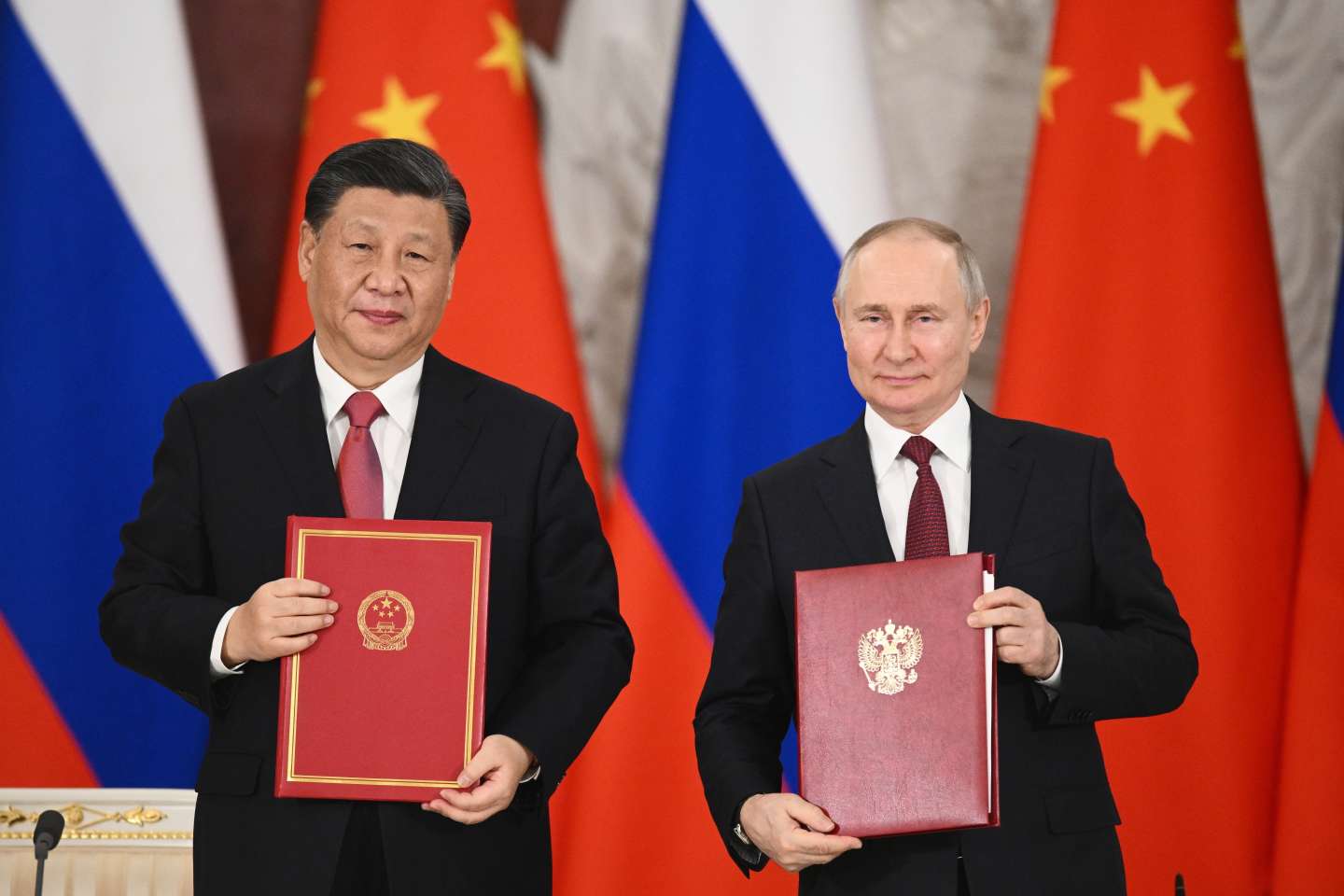
Russian President Vladimir Putin, right, and Chinese President Xi Jinping pose for a photo during a signing ceremony foillowing their talks at The Grand Kremlin Palace, in Moscow, Russia, Tuesday, March 21, 2023. (Vladimir Astapkovich, Sputnik, Kremlin Pool Photo via AP)
But being anti-war should not mean cutting spending in such a way as to make ourselves vulnerable to an existing threat.
While China and Russia were becoming rather friendly with the US, they weren’t exactly eliminating their nuclear arsenal—the threat was there the whole time.
Ronald Reagan was right that the best thing we could do for the future of mankind, was to find a way to make such weapons “impotent and obsolete” as he put it.
Libertarians are correct to oppose wars of aggression. But just as they keep guns to protect themselves from unlikely threats—it would be hypocritical to think the US and our NATO allies shouldn’t advance technology to eliminate the threat of other nations, even from those we currently consider friendly.
The free world should understand that Oppenheimer and company opened Pandora’s box of human mass eradication, and working towards systems that can neutralize that threat is spending that shouldn’t be criticized nearly as much as it is.
Robert Oppenheimer 1956 by Yousuf Karsh
We are on the brink of human extinction from not one, not two, but two and a half dictators (I’m not elevating North Korea to the level of Russia and China). While they were friendly once, the threat never fully went away, it was just our resolve to prepare for it that did. That lax attitude could end us all.
Our current defense systems are thought to be about 50-60% effective at stopping such weapons from hitting their targets. That’s not good.
If we were to face a nuclear catastrophe at the hands of Russia and China, it might have been preventable had we stayed vigilant. Remember the old adage: Si vis pacem, para bellum – if you wish for peace, prepare for war.
In today’s world, a prevailing theme centers around the belief that everyone’s feelings are valid. The underlying message is clear: people are constantly grappling with emotional struggles, and the outdated advice to “suck it up and tough it out” is not only misguided but also detrimental to society’s collective mental well-being.
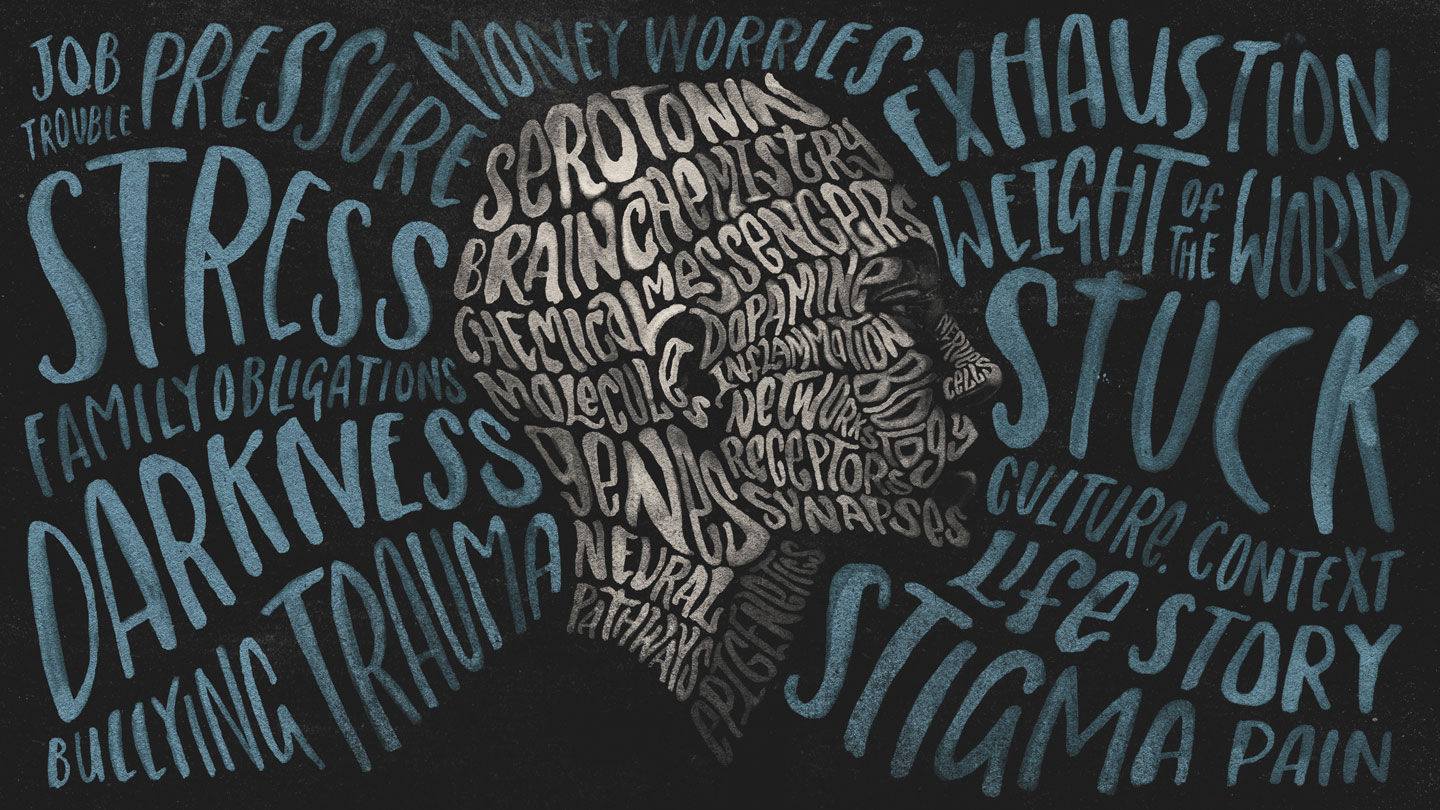
Things like clinical depression, and other depressive disorders can’t just be prayed or willed away. They are the result of something gone awry within the network of our minds, and should be treated with sympathy and science, not dismissive attitudes.
Families and friends alike should be more inclined to ask how their loved ones are doing. Not just out of politeness, but instead, out of a desire to help—to be an outlet for someone they care about.
But it’s important to do it in a way that’s helpful. It shouldn’t have a “suck it up” tone, nor should it be a deflection such as suggesting you both go get drunk. Let them know that you care about them, and you’re willing to listen and/or help—full stop.
This approach mirrors the fundamental principles of therapy practiced by psychologists, where empathy and understanding are paramount.
Yet, amid this push for acknowledging feelings, it’s essential to recognize the fine line between validating emotions and enabling harmful beliefs. Telling someone their feelings are valid implies that their emotional response aligns with the situation they are confronting, even when this may not be the case, especially for individuals dealing with disorders such as bipolar disorder.
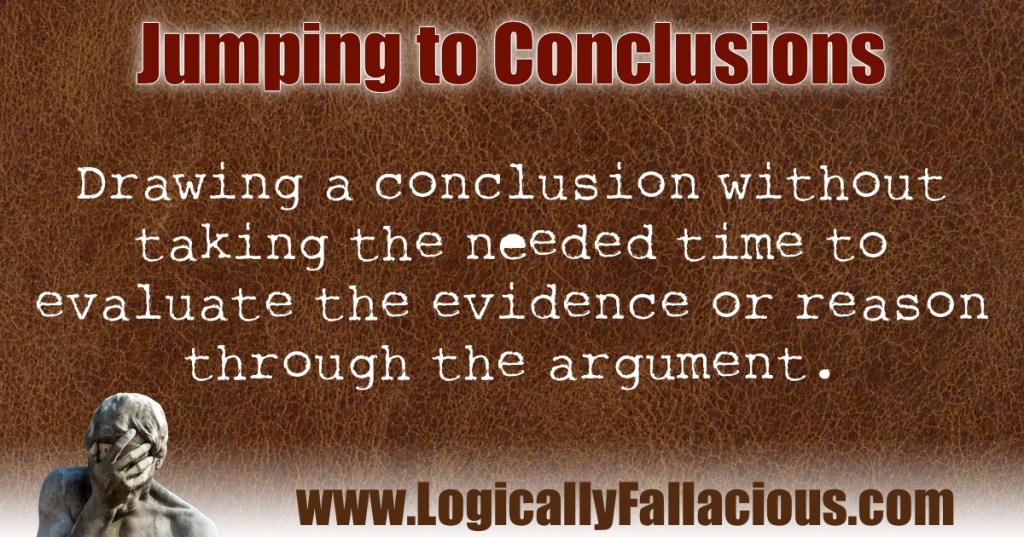
The potential pitfall of validating feelings is akin to committing a logical fallacy known as the Strawman Argument.
A logical fallacy is an argument someone uses that suggests one thing MUST lead to another, when that isn’t true. This fallacy arises when an argument misrepresents someone’s position to make it easier to attack.
In the case of a straw man argument, an example would be if I say, “I like Coca-Cola.” Someone who hears this responds, “Oh, so you hate Pepsi? I can’t trust anyone who hates Pepsi.”
The issue should be obvious that in my statement, I didn’t even mention Pepsi. It’s entirely plausible I like both.
Yet the person arguing against me made an assumption that I hated Pepsi, and argued against that “straw man” of my argument, instead of my actual argument that I simply like Coke.
Make sense?
So why does this mean people’s feelings aren’t valid?
Imagine we meet someone who seems really depressing and cold to talk to. Our feelings might lead us to believe they’re a jerk. Now imagine, we find out this person just got news that they have terminal cancer. Do we still feel that they are a jerk, or do we now realize that we’ve misread the situation?
The fact is, too many of us make assumptions based on far too little information, because it’s uncomfortable feeling like we don’t know things. We think it would mean we’re stupid. So we make up our minds before having even remotely enough factual information to fairly do so.
Through these exercises of jumping to conclusions through false assumptions (the equivalent of straw men), we develop feelings that are often invalid. What’s worse is we often get those invalid feelings reinforced by a society that tells us our feelings are always valid.
We see this play out with people who have taken offense over something. If we are offended at someone, it should be based on the idea that they’ve been disrespectful to us or others.
But being disrespectful requires intent. It is an act of knowing someone wouldn’t like something, and yet doing it anyway. But what if the person who did the thing that offended us had no clue we’d find it upsetting. Maybe they thought we’d find it funny, or completely benign. Were they disrespectful to us? We shouldn’t be able to accidentally disrespect someone, that’s not how any of this works.
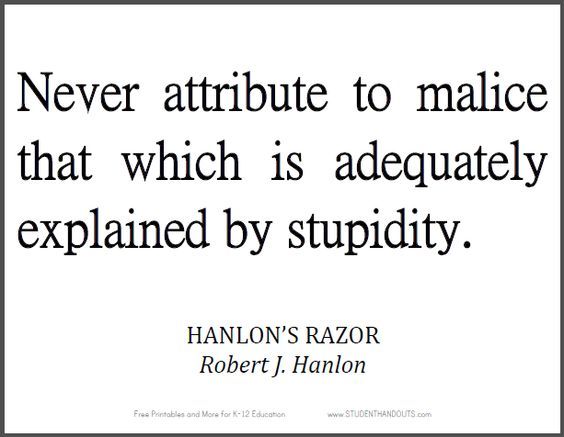
Hanlon’s razor is a good thought on this subject. It says,
The point being, next time we see someone on the internet upset about how disrespectful someone else was, we should first consider whether there’s an explanation that isn’t disrespectful, such as they didn’t know better.
It’s also important to consider if it’s really something to be bothered by in the first place. Society has become obsessed with having reasons for outrage. It makes sense, because the more upset we are about something, the more attention we’ll often get.
It could be because people already agree with us on other stuff, so they don’t want to disagree with us now.
As much as I hate to say it, maybe we’re attractive and people want to hook up with us, so they’ll support whatever nonsense we’re upset about.
I would bet at least $107, if you put an attractive woman on the internet, and have her talk about how all the hate that’s directed towards Nazi’s is wrong, you’ll have a thousand guys respond with an argument as to why they agree, Nazi’s aren’t that bad, they just have a different opinion than the rest of us, and people should be more kind to them.
The point of my post is this. Next time we find ourselves offended or upset by the actions of others, we should take a moment to consider whether there is a scenario where this was innocent. If we can think of at least one, then assuming it must be the worst scenario isn’t fair of us.
One option is to assume the innocent scenario, but that may also be wrong.
A better option is to ask questions of the person if we’re able. This isn’t always doable if the person is famous, but if it’s a friend or an acquaintance, making the effort to ask, “What did you mean by that?”, could be the difference between a fight versus an respectful and interesting discussion.
One of the biggest errors humans make, is the false dichotomy. The idea that there are only two sides and we have to choose one of them.
Maybe an interaction between a cop and citizen goes awry. If we think blue lives matter, we might assume the cop is in the right. If we think cops are bad, we might assume the cop is a serial rights violator. But there are at least two other options.
It could be that both of them behaved poorly. Maybe the cop was being a jerk, but instead of trying to deescalate the situation, the citizen decided to antagonize the cop and ended up making it worse.
The best reaction however, is to simply accept we weren’t there, didn’t see it all, we’re likely missing some context, and thus shouldn’t choose a side at all. Instead, being 100% ready to accept new information if it comes to light is the best way to think.
So next time we find ourselves with excessive emotions, unless a loved one has just died, or a national tragedy occurred, there’s a good chance our feelings aren’t as valid as we think they are. Especially if those emotions are us taking offense at something.
We are responsible for our emotions, not others. It’s up to us, to learn to let stuff go instead of stewing in a cauldron of rage which we lit the fire under.
Sometimes, we will benefit from just taking the time to analyze the situation with questions like:
Is this something I’m going to care about tomorrow?
If there another explanation for this that isn’t offensive?
Do I know this person intended to be disrespectful to me?
What role did I have to play in this situation going badly, and could I have handled it better? (Self-awareness)
Being full of rage requires a lot of concentration on that rage. The mere act of asking ourselves questions as I outlined above can often distract us from our rage, and push us onto a new set of train tracks from the rage train we were on, to one of emotional mastery. Not to mention the friendships we might save along the way, leading to happier and healthier lives.
Back in 2018, North Carolina, convinced they had a voter fraud issue, passed Senate Bill 824, their Voter ID law, requiring voters to present a valid government ID when attempting to vote in person, or by absentee ballot. If the voter does not have a valid ID, North Carolina provides the option to get an ID at no charge.
Their concern is that less than scrupulous people would go and vote more than once. For instance, let’s say Joe Voter, a Democrat, lives with his grandpa Dick Voter, a Republican, and both of them are registered voters. Sadly, grandpa is senile, and doesn’t remember to vote anymore. So Joe voter goes to a polling station in the morning, votes under his name, then hours later, returns hoping not to be recognized, claims he’s Dick Voter, and votes again, both times for a Democrat, even though he knows Dick would have wanted to vote Republican.
Scenarios like this are certainly occurring, but the depth of such voter fraud is thought to be so minimal by Democrats, that it’s implausible to be affecting election outcomes. But many Republicans on the other hand, think it cost Donald J. Trump the 2020 election. Even those who think Trump probably lost, still think it’s a bigger problem than any data shows.
To be fair, it’s kinda hard to poll people on whether they committed voter fraud or not.
As a result of this law, the National Association for the Advancement of Colored People (NAACP), went into full race-baiting mode, declaring that this law is racist on the face of it, and aims to prevent black and Latino voters from casting a ballot. So they sued in federal court, to nullify the law on the basis it discriminates against protected classes—namely people of color.
You might ask if there is anything in the law about black or Latino voters, to buoy this claim. There is not. (I actually searched the law for any words of that nature to confirm).
The NAACP however, argues that apparently, black and Latino voters who have the wherewithal, motivation, and intellect, to make it to a polling location and vote, or request an absentee ballot and vote from home, somehow are too fucking stupid to go get their free government ID, if they don’t already have one.
Opinion: This page is obviously libertarian philosophically, and as such, tend to think both Democrats and Republicans are serial rights violators. We also believe Trump had his ass handed to him in 2020. But, that doesn’t mean there was no voter fraud.
It’s just that what fraud was discovered, was so minimal, that even if all the fraudulent votes went the other way, Trump still lost.
But all that being said, our opinion is that the NAACP’s argument is some of the most racist shit imaginable. It insults every black and Latino voter, arguing that somehow, they’re less capable of getting an ID than their white counterparts.
This is a clear case of two parties, opposed to each other, looking for any means possible, to attack the other. It’s pathetic and shameful by the NAACP, in my opinion.
There are so many real genuinely racist issues affecting minorities in this country that need to be fought vigorously. This isn’t one of them. The NAACP is wasting valuable resources on this, that could be better spent working to fix systemic racism issues elsewhere.
In North Carolina, since the NAACP is suing over the state law, arguing it’s unconstitutional, it’s up to the AG in the state to defend it. As you can imagine, the Republicans who passed it, don’t care for their Democrat AG Josh Stein, and assume he won’t defend it as vigorously as they would.
North Carolina’s congress is majority Republican, but their current governor is a Democrat. So while Republicans passed this voter law, as you can imagine, the governor, and the state attorney general (AG) he appointed, being Democrats, aren’t fans. The governor has vetoed the bill, which was overridden, and he has made several public statements against it.
In comes North Carolina Senator Phil Berger and North Carolina House Rep Tim Moore, both Republicans. They want to act as an amici in this lawsuit, supporting Josh Stein. AG Stein however, is like “I don’t want your fucking help. I don’t need your fucking help. I’ve got this. Now let me do my job.”
But congressmen Moore and Berger are like, “Listen you whiny fucking tree hugger, we know you don’t care for this law. You’ll do the least amount possible to defend it, and we both fucking know it. So whether you want our help or not, we passed this law, and we don’t trust you to defend it, so we’re interjecting ourselves whether you want us to or not.”
The question for SCOTUS is whether North Carolina’s constitution allows for them to forcefully intervene, if the AG can make a fair argument that they’re defending the law properly.
It’s worth noting that the NAACP sought an injunction to stop the law from going into effect, and AG Stein, defending the law then, quashed the injection, keeping the law in force. So he may have a valid point he is defending the law in earnest.
Phil Berger & Tim Moore
The AG’s side contends this violates North Carolina’s constitution. Even before the United States was a country, NC’s charter said that the states legislative, judicial, and executive branches shall be “forever separate and distinct from each other.”
As such, this means in their eyes, that these legislators have no business intervening on the AG’s job, as he is a member of the executive branch.
As oral arguments began, counsel David H. Thompson immediately raised issue with the AG, who answers to NC governor Cooper. He pointed out that Cooper has a long history of thinking this law is grade A unconstitutional bullshit. He goes on to point out that governor Cooper threatened for fire election officials if they enforced this ID shit.
Justice Sotomayor questioned the validity of his concerns when she proposed that since AG Stein defended the injunction successfully, clearly, he’s doing his job defending the law. So these petitioners interfering isn’t about him not doing his job, it’s just that they don’t necessarily agree with his tactics. Remember that the issue isn’t about strategy, it’s about whether the AG is defending the law properly, which arguably he is.
Counsel David H. Thompson
She went on to argue, what if the state senate and house were of different parties, and they each wanted to pose different arguments, or maybe different caucuses within the parties even. Before you know it, you have fifty fucking assholes with an axe to grind, wanting to be heard on the issue, and it’ll be dogs and cats living together! Mass hysteria!
She’s like, “I’ve got better shit to do than read a million fucking briefs, and so do the rest of the courts. So what the fuck, man?”
Justice Barrett chimed on, on top of Justice Kagan and Sotomayor to understand where the line should be drawn as to when state legislators can and cannot intervene in such situations. Counsel Thompson, after going through logic tests from Justice Barrett, basically agreed that if the AG and legislators were perfectly in agreement of the law in question, then legislators may be fairly prohibited from intervening.
Justice Breyer then chimed in, discussing Federal Rule 24 for civil procedure, which in part says, “On timely motion, the court must permit anyone to intervene who claims an interest relating to the property or transaction that is the subject of the action, and is so situated that disposing of the action may as a practical matter impair or impede the movant’s ability to protect its interest, unless existing parties adequately represent that interest.”
He focused on that last bit, “unless existing parties adequately represent that interest.” He’s like, “generally we presume if they’re defending the law, and they’re qualified to do so, then they’re adequately representing the interest. Now you want us to write a new fucking rule of presumption?”
Associate Justice Stephen Breyer
Counsel Thompson responded:
The narrowest grounds to rule in our favor would be to say that this is a paramount interest of a state and it’s entitled under basic principles of federalism to have that federal interest vindicated by a representative who is exclusively focused on that. And they are not required, just because they’ve been sued under Ex Parte Young, to forgo having what they have in state court, which is a champion focused exclusively on winning the suit.
Justice Sotomayor, hearing all this, was still unclear about how he addressed her “fifty fucking assholes being allowed to intervene” situation. He the clarified that if 49 of those assholes are aligned and qualified, then #1 of 49 is the one allowed to intervene. The others can go pound sand up their asses. They were too slow.
Justice Sotomayor, not finished hearing herself speak, asked “What if they have overlapping interest. The fucking AG here is defending your fucking law. Just because you say that the AG and the Board of Elections only care about executing the election, doesn’t mean they don’t care about the integrity of it.”
But counsel Thompson was unamused. He channeled his inner McEnroe, and was like, “You can’t be fucking serious.”
A previous precedent often cited in this case was Trbovich v. United Mine Workers of American, from 1972, where SCOTUS ruled that labor union members could intervene on action from an employer, even when the department of labor was already fighting for them.
So counsel Thompson uses this as the main bedrock to his claim, since Sotomayor rightly points out the AG is defending his law adequately, which by law, should be good enough.
Official Portrait of United States Supreme Court Justice Sonia Sotomayor
Click for Biography
It should also be noted, that he argues since the AG and Board of Elections have different interests than he does. They care about running the election as a practical or procedural matter, but his interests are about the integrity of the elections, and defending his law against constitutional challenges. As such, even if the AG is defending it, he’s only defending it to the point of making sure they are able to execute it, not on it’s merits in a constitutional challenge. Remember, the law cited above mentions “unless existing parties adequately represent that interest.” So he’s creatively arguing that because they have different interests, it’s impossible they are adequately representing his interests, only their own.
Occasionally, I come up with questions I don’t see addressed. I try to be humble and assume it’s just that I don’t know better. But in this case, imagine the AG and governor were also Republican and thought the voter ID law was the best thing since hookers and blow. Would he still be seeking to intervene?
Surely not.
So then his argument about different interests due to their different branches of government, becomes entirely invalid, as those different interests would still exist in that scenario.
So I’d argue, it’s about opposing political parties, not different interests of the job positions they hold.
Next up for the NAACP, we have counsel Elisabeth S. Theodore, who’s suprisingly very white. She opened with this:
Counsel Elisabeth S. Theodore
Thank you, Mr. Chief Justice, and may it please the Court: From Rule 24’s inception through today, a single principle has guided interpretation of the adequacy prong.
When a proposed intervenor’s interest is identical to one that’s already represented in the case, we presume that the existing representative is adequate, and that common-sense presumption holds particular force when the existing representative is a state official charged ethically and legally with defending state interests. The presumption is further supported by the strong federal interest in requiring states to speak with a single voice at a time in federal litigation.
From the vantage point of federal law, there’s one state.
The state as a unified entity is what matters for federalism purposes, and it’s the state that has the sovereign interest in defending state law. Where one state representative decides to no longer represent that interest, like in the Cameron situation, then a properly appointed state representative can come in to vindicate the interest that’s no longer being represented. That’s the same way federal law requires the United States to notify Congress to enable intervention when it stops defending a statute. But where an authorized state representative is actively defending the law, Rule 24’s goals of ensuring coherent presentation and simplified litigation should prevail. And this case is the poster child for why federal law puts a thumb on the scale against intervention when a state agent is already there defending. Unlike in Cameron, there’s just no need for intervention here.
Petitioners explicitly seek to assert the state’s sovereign interest in enforceability and defense of state law, the exact interest the Attorney General is charged by statute with representing and is telling this Court he is representing.
And he’s not only representing that interest, but unfortunately for my clients, he’s winning. And then, on the other side of the ledger, allowing the state to speak with multiple voices at once would complicate litigation and draw federal courts into state law disputes, such as the substantial ones here about what state statutes in the state constitution mean.
So there’s substantial cost without corresponding benefit to accepting what Petitioners propose. I welcome the Court’s questions.
I chuckled a little when she rightly pointed out that the AG was defending their law, and winning. It’s not a silly argument. Hard to argue inadequate representation when my dude is fucking killing it in court.
Chief Justice John Roberts
Justice Roberts, first to chime in, was like, “what’s this requirement for one voice shit you speak of? We have amici falling out of our assholes here at SCOTUS. Hell, half our cases have more than one fucking voice. Clearly, we’ve decided it isn’t ALWAYS to be one voice.”
But as always, because it’s justice Roberts, he said it with politeness and a boyish smile.
She went on to argue that this is bullshit, because this is a state interest issue. In other words, the entire issue is about how North Carolina handles it’s elections. It should not even be in fucking federal court. The only reason it is here, is because of the constitutional issue raised. But surely SCOTUS isn’t in the business of telling states how to run their elections. So addressing the constitutional issue, should be done by whomever the state appoints to address these issues, and currently, that’s the fucking AG.
Again, Justice Barrett, trying to draw a line in the sand, attempted to come up with a scenario counsel Theodore would accept as a valid situation for these legislators to defend the law here.
She advised that they could pass a law saying that in such situations, the legislator shall appoint someone. But then the AG would be off the hook, and could work on other shit.
Associate Justice Amy Coney Barrett
Justice Breyer pointed out in Trbovich, that SCOTUS did allow the unions to intervene, even though the Secretary of labor was helping them, because despite them having the same end goal, the secretary cared about protecting labor laws, whereas the union cared about defending union members. So isn’t this a similar competing interests issue?
But counsel Theodore was like, “I can’t wait until you retire, you old bastard. No, it’s not the fucking same, because one is a public entity protecting their governmental interests, the other is a private company protecting it’s union members. Two different entities are being represented. In our case, we just have two state representatives, representing one fucking state. Do you really want amicus briefs galore up in this bitch?”
Justice Breyer was like, “Riddle me this, you battle axe. Call me fucking crazy, but why wouldn’t the state want fucking help? It’s pretty rare an amici does more harm than good. So why would the AG reject their help, if the AG is defending the law in earnest? Shouldn’t they want all the help you can get?”
Remember, counsel Theodore represents the NAACP, not the state. So this is a weird one, where the petitioner wants to defend a law they passed, one of the respondents doesn’t want them to intervene because then they’re fighting two people, and the other respondent supposedly is defending the petitioner’s position, but doesn’t want the petitioner to stick their fucking nose in and help.
Justice Alito then jumped in and asked, “What if the AG did the absolute fucking minimum? Like basically phoned it in. Refused to bring in experts and shit. Would that be considered inadequate?
Associate Justice Samuel Alito
Counsel Theodore was like, “If that were the case, which we think it certainly fucking isn’t, they could replace him under law. They’re the ones who wrote the law making the AG the person to represent them in these scenarios.”
Justice Roberts rightly pointed out that this seems like the NAACP, which counsel Theodore represents, is basically asking SCOTUS to help her pick who she will fight against, and handicap them by removing a party that really wants to win this fucking case. Remember, it’s not the AG who’s fighting Berger here, it’s the NAACP.
Last up, Sarah Boyce for the state of North Carolina.
She opened by saying, “How the fuck are they going to say we’re not adequately defending their stupid fucking law, when they have yet to identify one issue where their defense of it, and our defense of it is different? Not to mention, we’ve fucking won every single step of the way.”
Deputy NC AG Sarah Boyce
She went on to argue that they’d be happy to allow these assholes to help in the defense, but she takes umbrage with the idea that they’re required to intervene.
She argues that because they have the same arguments, and that they’re winning in each challenge, that clearly it should be presumed they’re providing an adequate defense of the voter ID law, which Federal Rule 24 says they should provide, if they’re not to be replaced as counsel in defense of it.
I have more questions:
Why does the AG give a fuck about this? I’m going to assume that they aren’t in love with the law. His boss is on record hating it. So why wouldn’t the AG be like, “Hey man, you want to defend this? Go right ahead. I’m out. It’s all yours, you whiny bitch.”
They could just use their time for other things, and hand it off to these Republicans legislators and let them fuck this pig dry.
Other than some principled reasons or pride, it seems to me, that maybe the AG and governor hatched a plan to tank it if they were to win here?
Associate Justice Elena Kagan
Justice Kagan, seemingly being skeptical of her own position asked if counsel thinks it’d be OK for them to fight for the specific legislative interest of the law, which everyone seems to agree, isn’t the interest of the AG who is charged with the execution of it.
Counsel conceded that if that were the case, she could see where that would be their right.
In rebuttal, counsel Thompson for the Republican legislators closed with this:
Yes, Mr. Chief Justice, just a few quick points. They claim they’re not trying to pick their opponent, but they are because they filed in federal court, not in state court.
If they had filed in state court, we would be there as defendants, number one. Number two, they invoked the prospect of intramural fights, but there are frequently instances, it happens all the time in 1983 litigation, that a plaintiff will name a variety, a multiplicity of state defendants, and they haven’t been able to point to a single example of when the multiplicity of state defendants in a 1983 suit somehow has created problems in terms of administration of justice. And that’s because of the presumption of good faith.
And they acknowledge at page 55 of their brief, candidly and forthrightly, that they have no doubt that if we come into this case we will work cooperatively with them, as we have done on many occasions before. They invoke the role of the attorney general.
But Rule 24 talks about parties, not lawyers.
And the party here is the State Board of Election, which has the responsibility for administering the election. They say that they prevailed in the Fourth Circuit.
The March 2020 primary was held without this law in effect, and the reason it wasn’t in effect is because they prioritized their administrative responsibilities over the merits and the Purcell violation. And then, finally, there was a discussion about, well, maybe this case will be rendered moot by the state court.
The briefing hasn’t been completed. There’s no argument.
We don’t know how the North Carolina Supreme Court will rule. And it could be capable of repetition yet evading review even if that proceeding ultimately one day did moot things out. Thank you.
In the end, the legislators prevail, in a 6:3 decision divided on party lines. The majority decided that if the legislator believe their interest won’t be represented adequately, they have every right to intervene. They agreed with the argument that the AG’s interests are not the same as theirs, and therefore it’s fair to assume they’ll only represent their own interests.
2022 Supreme Court of the United States
The Democrat-appointed minority, as usual, think the other six are just being assholes again. There’s been a lot of that lately.
log·i·cal: capable of reasoning or of using reason in an orderly cogent fashion lib·er·tar·i·an: an advocate of the doctrine of free will; a person who upholds the principles of individual liberty especially of thought and action


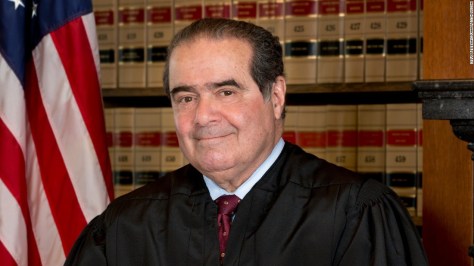





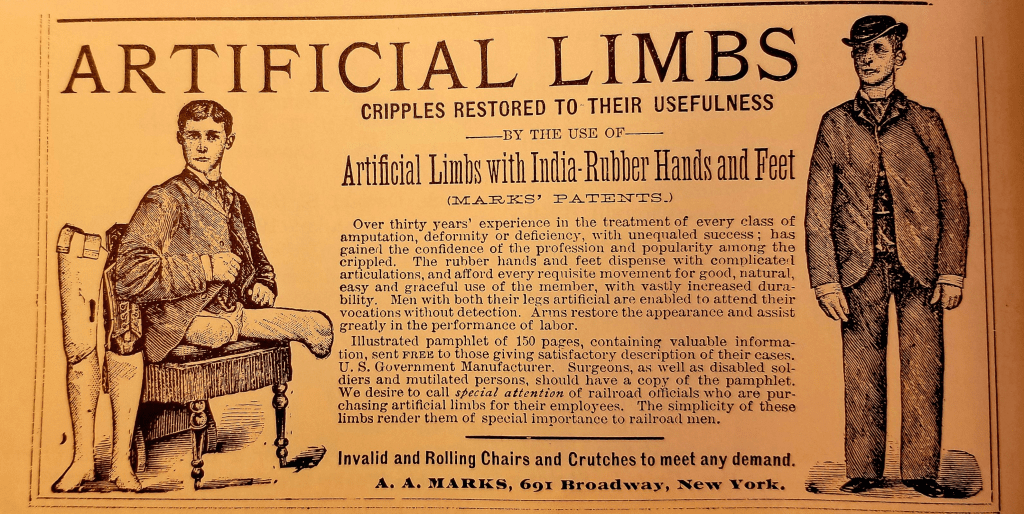

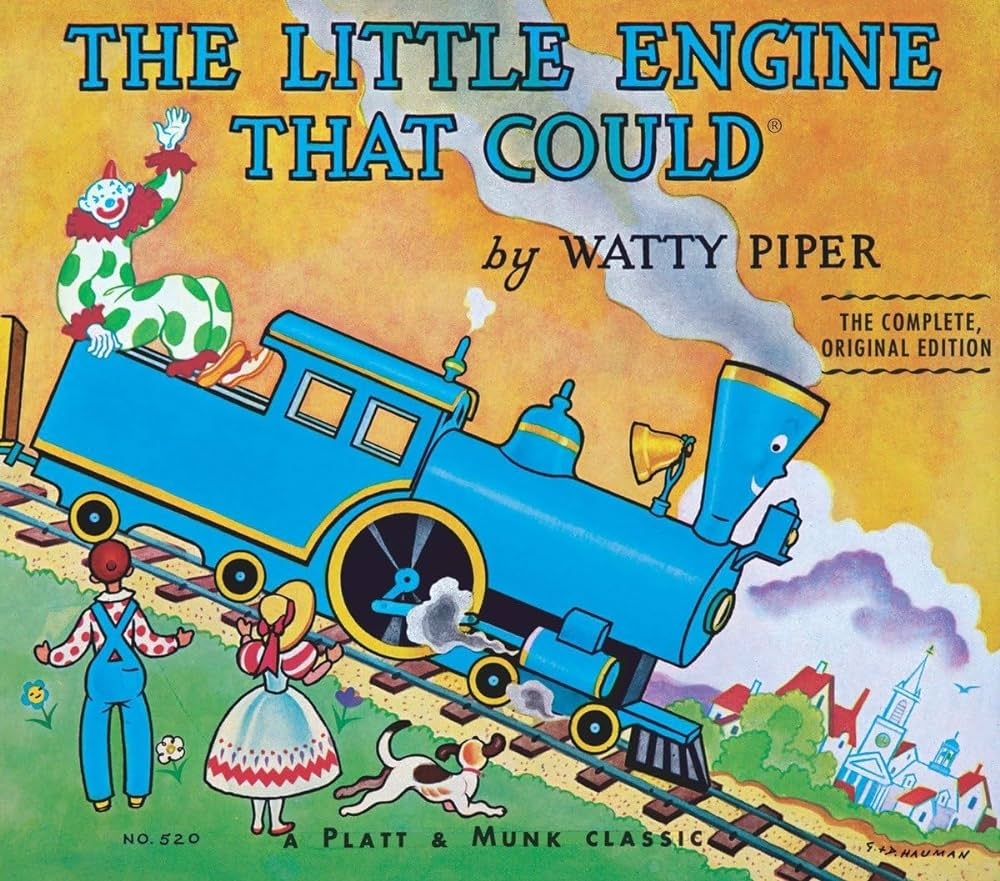
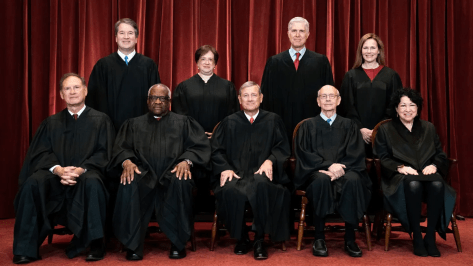




















![i-started-blasting-so-anyway-i-started-blasting[1]](https://logicallibertarian.com/wp-content/uploads/2023/09/i-started-blasting-so-anyway-i-started-blasting1.gif)
![s-l1600[1]](https://logicallibertarian.com/wp-content/uploads/2023/09/s-l16001.jpg)