I’ve been meaning to get to this one for a while because it’s often talked about and almost always misunderstood. I’ve watched people hold viscerally strong opinions on this case who couldn’t tell you who Citizens United are, what questions were before the court, or any other basic facts of the case. They just know what the news, pundits, or their chosen political tribe told them—which is usually somewhere between incomplete and flat-out wrong.
Many journalists don’t have a background in law, probably didn’t read the opinion nor listen to the arguments, and instead just reported what they thought it meant based on what others have said. I hope we all understand that second-hand info is shit.
If you want to understand a court’s opinion, you really either need to go to the source itself, or at least look at an analysis from someone with a background in law. If you’re desperate, you can read my shit.
FYI—BCRA is an acronym. The justices and solicitors don’t say “The Bee-See-Arr-Ay,” which would be more formal—they just say “Bickra.” I’ll do the same throughout this piece—leaving out the “the” before BCRA. So when you see BCRA, that’s what you should hear in your head. I don’t want anyone thinking my grammar is more trash than it already is.
One of BCRA‘s goals was limiting the amount of money that could be spent on political campaigns. The prevailing wisdom is that money buys elections. More importantly, it potentially buys quid pro quo corruption, or at least gives the appearance of it.
Also, ever noticed how candidates in ads always say, “I’m Cunty McCunterson, and I approve this message?” That’s also from BCRA. The thought was that if politicians had to attach their names to ads, they’d be less likely to run nasty or misleading ones, for fear of looking untoward.
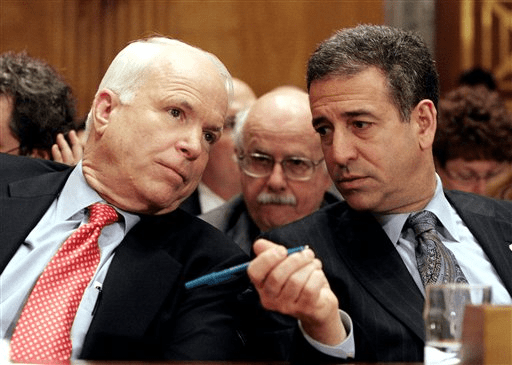
Senators John McCain (R) left, and Russ Feingold (D) right
As it turns out, with both of Trump’s victories, data suggests he spent less than his opponents, so maybe this argument isn’t so strong.
[Editorial: I suspect if you have enough money to get your ads and information out there, that might be sufficient. And frankly, if the other side overspends and inundates you with ads, you might actually be repulsed by it. But who knows, right? I sure as fuck don’t. Psychology is weird, man.]
A Soft Money Ban: Limited political party committees from accepting or spending funds not subject to federal limits.
Electioneering Communications: Restricted unions and corporations from funding television ads that mention a federal candidate within 30 days of a primary or 60 days of a general election.
Section 203 of BCRA amended 441b of FECA to include a ban on such funds being used for electioneering communications as well.
We’ll cover express advocacy and electioneering communications in a bit, but just know that these provisions were pivotal in this case.
You may hear the justices and petitioners refer to 203 or 441b throughout this case. They’re essentially interchangeable for our purposes since one simply modified the other.]
“Stand By Your Ad” Provision: Required candidates to include statements in advertisements identifying themselves and stating they approved the message.
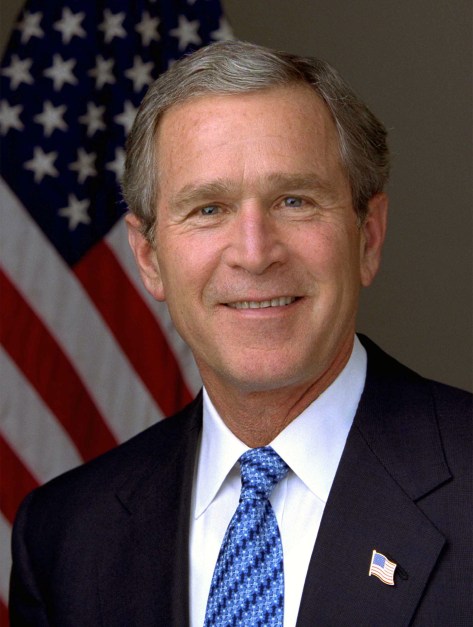
The bill was sponsored by John McCain (R) and Russ Feingold (D) and was signed into law by President George W Bush (R)—so it was a truly bipartisan effort.
Before we go further, I probably need to explain Political Action Committees (PACs), too.
Currently, if you want to personally donate to Cunty McCunterson’s campaign, you may give them only $3,300 per candidate per election.
George W. Bush
If you own a company, however, and you want to write a check to McCunterson’s campaign from the company’s bank account, that’s a big no-no. What you can do instead is form a PAC.
PACs have certain requirements, like disclosing who put money into the PAC.
Your PAC can gather no more than $5,000, and give it to McCunterson’s campaign to use how they see fit—again, per candidate and per campaign. But that money STILL cannot come from the company treasury, it must be from individual donors within the corporation.
The $5,000 is misleading though, because PACs can also bundle up individual donations, too.
Let’s say your company has 100 execs who each want to pitch in the $3,300 max—you’d bundle up that $330,000, and give it to McCunterson’s team, along with the PAC’s $5k donation. A PAC’s not limited on total monies, just money per person.
Executives, shareholders, and their families can be solicited freely, but rank-and-file employees are a different story. They can only be solicited by mail, and only twice a year, so as not to feel pressured by a zealous boss.
Now that we’ve covered that, back to the case.
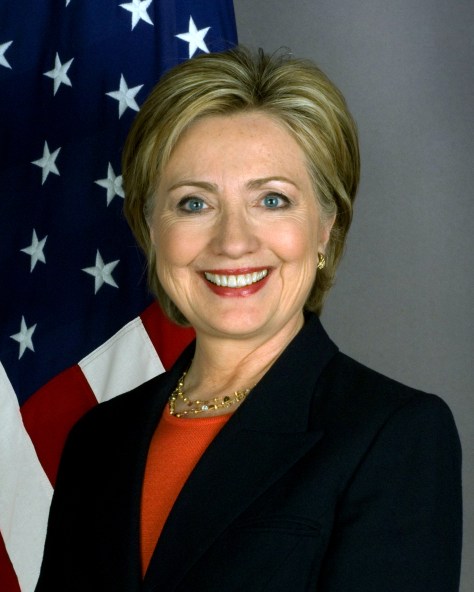
Along came a group called Citizens United—a conservative not-for-profit group that was founded in 1988 by David Bossie. Saying they were not fans of Hillary Rodham Clinton is understatement of the year. Not a lot of us are, but Bossie went nuclear on her.
Once Hillary’s Senate term ended and she began eyeing a presidential run, Bossie went in to action. He put together a documentary about her, funded in part by corporate donations, titled ‘Hillary: The Movie.’ Let’s just say it was less than flattering.
Why did this end up in court?
Citizens United was a 501(c)(4) non-profit organization, which identifies them as a “social welfare” group, not a PAC. That designation means they’re supposed to primarily serve the public good, not advance a political agenda, which I concede, in the view of political zealots, is the same fucking thing.
They got some of the money to make this “documentary” from corporations and intended to release it shortly before the Democratic primary, in which Hillary was an early favorite to win.
Knowing that BCRA might prohibit what they’d done, they proactively reached out to the Federal Election Commission (FEC) to see if they could move forward distributing their stupid film. The FEC gave them a hard “no,” arguing it ran afoul of BCRA’s provisions, exactly as Citizens United feared.
Citizens United screamed, “This is bullshit! We have every right to make our movie and put it out into the world. It’s not a political ad, it’s a documentary. We’re just sharing factual information about her.”
The FEC fired back, “Do you really expect us to believe that this is somehow not an attack ad against Hillary? This clearly violates BCRA rules, and you can go pound sand up your ass if you expect us to believe anything different.”
Funny thing about this case—it was argued twice. That doesn’t happen often. The first oral arguments were largely just about Citizens United themselves, their stupid movie, and whether it was a political ad under BCRA. Since BCRA was a statute, that made this a statutory question.
But the justices kept gravitating toward a bigger issue—do corporations even have First Amendment speech rights in the first place, and if so, can Congress restrict them? That’s a constitutional question—inarguably a far more consequential one.
Neither side really came prepared to make that broader constitutional argument the first time, nor do I think the government’s side wanted to, so they were cordially invited to do some homework and come back a few months later.
Before we get into the arguments, let’s cover something we haven’t discussed much.
When someone appeals to SCOTUS, they don’t just show up to re-litigate their entire case—it’s not a do-over.
Typically, they objected to something in their lower court case, had it overruled, and now they’re appealing that objection. If they didn’t object in lower court, preserving the issue for appeal, they essentially waived their right to appeal it later.
If they feel the lower court applied the law or the Constitution incorrectly, they can appeal that as well. What they don’t appeal are the facts of the case. That was already addressed in the lower court, and ain’t nobody got time for going through all that shit again.
When someone goes to court, they have to formally pose a legal question(s) they want the court to answer.
The courts interpret the law—they don’t just settle beefs between parties.
Petitioners lay out these questions in their briefs. If the court in question is SCOTUS, they decide whether to take the case and answer them—a process called granting certiorari.
This is unique to SCOTUS, which receives thousands of requests each year—they couldn’t possibly hear them all. So they have developed the certiorari process to decide which ones they feel are the best use of their time, typically accepting fewer than 100 cases a year. Lower courts generally have to hear whatever cases are presented to them.
SCOTUS opinions are typically very specific—answering the precise questions asked of it, not just declaring a winner.
The general goal is to answer as narrowly as possible to avoid the argument that they’re legislating from the bench.
If a narrow ruling would give the petitioner everything they asked for, but the court goes buck wild and strikes down an entire law, that starts to look less like interpreting law and more like making it. That’s what people mean when they say a court is “legislating from the bench.”
In this case, there were four questions before the court.
First: This case was decided in January of 2010. But about eight years earlier, SCOTUS heard McConnell v. Federal Election Commission. That particular group of justices ruled that BCRA’s rules banning “soft money” donations were not a violation of free speech. Specifically, BCRA required companies to disclose what they had donated. So it wasn’t so much that it was banned speech, as it was compelled speech.
What the hell is “soft money” you ask?
Well, “hard” money is what is given directly to campaigns. “soft” money is money given to parties to do party work. Hard money must be disclosed, so people were donating soft money to get around that shit.
So the question today: does McConnell already answer the First Amendment question here since that ruling said the disclosure requirement wasn’t a violation of the First Amendment?
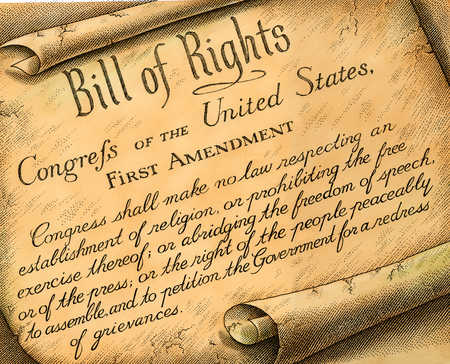
U.S. Constitution: 1st Amendment
Second: There are two types of speech in this realm—political speech and campaign speech.
Political speech is just talking politics in general—you like this idea, hate that policy, whatever.
But campaign speech is “You should vote for this dick-drizzle over here,” or “you should not vote for that twat-waffle over there.”
The argument is that political speech is the most protected of speeches, a Holy Grail, if you will. Campaign speech is electioneering though, and that can be regulated, such as in BCRA’s rules.
Citizens United argued that BCRA’s disclosure requirements are political speech, not campaign speech. So if they’re correct, is it constitutional to regulate their movie, if it’s political speech?
Third: If their speech doesn’t contain “vote for this asshole” or “don’t vote for that cocksucker,” is it subject to regulation under BCRA at all?
And Fourth: Is a feature-length documentary like “Hillary: The Movie” a political advertisement, subject to BCRA’s restraints, or is it just a fucking movie?
Oral Arguments #1 – March 24, 2009
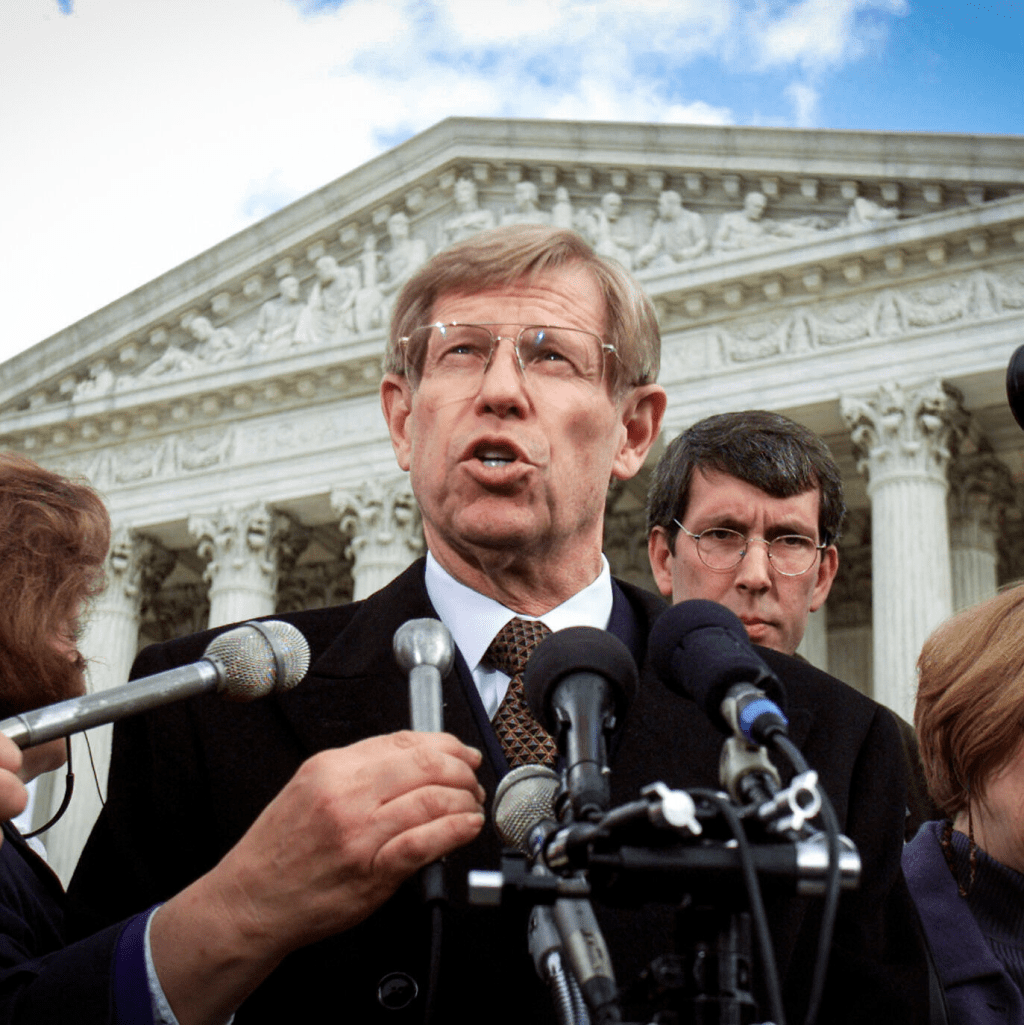
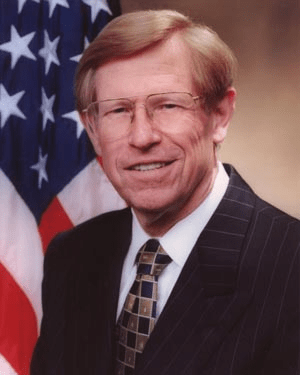
First, for Citizens United (the petitioners), was Theodore B. Olson. His opening argument was this:
Theodore B. Olson
Mr. Chief Justice, and may it please the Court
Participation in the political process is the First Amendment’s most fundamental guarantee. Yet that freedom is being smothered by one of the most complicated, expensive, and incomprehensible regulatory regimes ever invented by the administrative state.
In the case that you consider today, it is a felony for a small, nonprofit corporation to offer interested viewers a 90-minute political documentary about a candidate for the nation’s highest office that General Electric, National Public Radio, or George Soros may freely broadcast.
Its film may be shown in theaters, sold on DVDs, transmitted for downloading on the Internet, and its message may be distributed in the form of a book. But its producers face 5 years in prison if they offer it in the home through the vehicle of Video On Demand.
Because the limitation on speech, political speech, is at the core of the First Amendment, the government has a heavy burden to establish each application of a restriction on that form of speech is a narrowly tailored response to a compelling governmental interest.
The government cannot prove and has not attempted to prove that a 90-minute documentary made available to people who choose affirmatively to receive it, to opt in, by an ideologically oriented small corporation poses any threat of quid pro quo corruption or its appearance.
Indeed, this documentary is the very definition of robust, uninhibited debate about a subject of intense political interest that the First Amendment is there to guarantee.
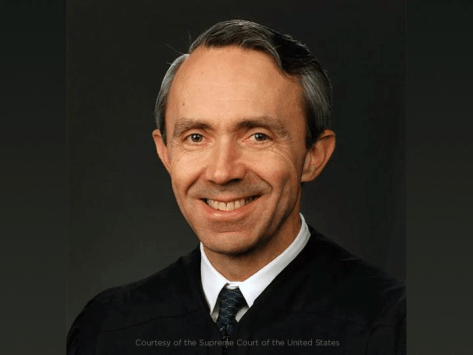
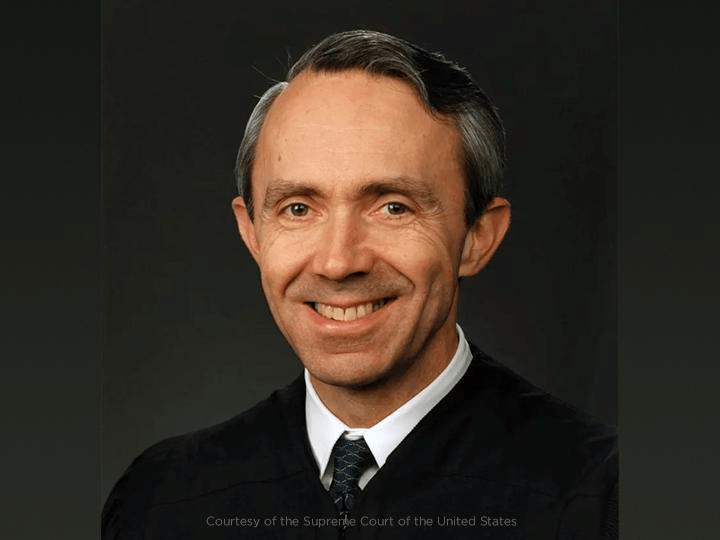
First to question him was Justice David Souter—a fascinating man, may he rest in peace.
More Perfect is the best SCOTUS podcast out there, in my humble opinion—this episode in particular is not to be missed.
Justice Souter started by asking, “What if GM made this ‘movie,’ would the argument be the same?”
He wanted to know if it mattered the size of the group, the amount of money spent, etc., or whether it was just about the speech given? Also, did them being a right-wing organization, versus a corporation with no obvious political leanings, matter?
Olson responded that he didn’t believe BCRA was passed to ban feature-length documentaries, even if they were biased.
David Souter – Associate Justice to the Supreme Court of the United States Served: 1990-2009 Lived: 1939-2025
Justice Breyer, smelling what Souter was cooking, asked if GM could make a 90-minute ad that just said, “Vote for this prick” over and over again. Can the government ban that?
They were drawing lines, as they do, between political speech and campaign speech.
We all know the First Amendment wasn’t created to discuss the weather, yeah? It was meant so you could call the current president a cunt, your Senator a prick, shit like that.
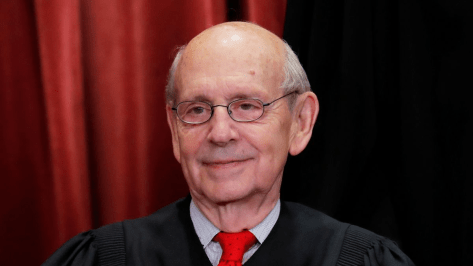
Stephen Breyer – Associate Justice to the Supreme Court of the United States (1994-2022)
BCRA was trying to limit buying elections, but money doesn’t win elections directly—it pays for putting speech in newspapers, magazines, television, or social media, which helps win elections.
But speech is fucking protected—it’s the First Amendment, man!
Before you argue the left’s goal is to stifle free speech, like a right-wing pundit might, it’s fair to point out that they consider things like buying ad space as more of a mechanism to amplify speech, not actually speech itself.
It’s not a horrible point no matter how much you want to have the First Amendment’s baby. The Court rejected this argument in a previous case, Buckley v. Valeo, which we’ll delve into a little later. But I at least wanted to be honest in my portrayal of what the respondents believe.
That’s the impossible tightrope BCRA was trying to walk—limit money in politics without violating free speech.
Olson, trying to draw a distinction, said that Hillary: The Movie wasn’t saying not to vote for Hillary, it was just trying to educate people about what a piece of shit she is. If they learn all that and still think she’s better than Obama or Romney, then fuck it, pull the trigger on her.
Justice Souter asked:
Doesn’t this one fall into campaign advocacy?
I mean, I’ve got the government’s brief open at pages 18 to 19 with the quotations:
She will lie about anything.
She’s deceitful.
David Souter – Associate Justice of the Supreme Court of the United States 1990-2009
She’s ruthless, cunning, dishonest, do anything for power, will speak dishonestly, reckless, a congenital liar, sorely lacking in qualifications, not qualified as commander in chief.
I mean, this sounds to me like campaign advocacy.
Souter clearly struggled with the idea that this was somehow just providing information—it was also inarguably opinion.
Olson responded with a not-so-eloquent dodge—he pointed out that BCRA issues are normally about advertisements that generally last under a minute, not a documentary.
Nice try, but Breyer, who was asking along these lines earlier, chimed in and wasn’t having it. He told Olson to answer the question he was asked. Souter, seemingly answered for him, saying this was clearly a “don’t vote for that prick” situation.
Stephen Breyer – Associate Justice to the Supreme Court of the United States (1994-2022)
Olson’s argument was that this was no different than what you see on the news, or more specifically opinion news, every day. So if Sean Hannity can call Hillary a piece of shit for an hour on his show, why can’t we call her a piece of shit for 90 minutes in our movie?
Breyer then said, “I’ll grant you that information is provided, you don’t just sit there and say, ‘Don’t vote for that scumbag’ over and over again. But still, how is that not trying to influence an election?”
“Are we really going to argue that it’s OK to send someone to the pokey for five years because they dropped some fucking facts about a politician and they weren’t the right type of organization to do so? That doesn’t sound like the America I learned about in school.” Olson asked.
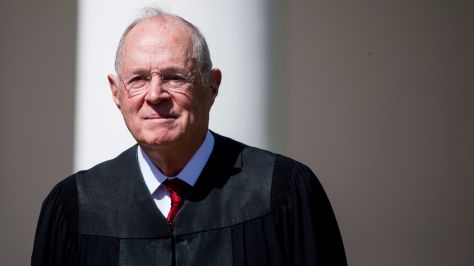
Justice Anthony Kennedy then wondered, “So we should draft an opinion that says if a video is a minute or less, you can fuck right off, but if it’s 90 goddamn minutes, well, it’s golden?”
Olson admitted that was a stretch, but then pivoted to the fact that these one-minute-or-less ads you are inundated with are commercials which interrupt your regularly scheduled programming. What they made was a video-on-demand documentary. If people watched it, it was because they wanted to, not because someone paid to shoehorn it into their Judge Judy reruns.
Chief Justice Roberts, being wise to this pivot, asked, “I get the new angle, but first let’s talk about content. How is a 10-second ad different than your 90-minute diatribe about why Hillary sucks?”
Olson chose to argue about whether he shifted or not, instead of answering the actual question at hand—arguing semantics is probably not a great strategy, if I’m honest.
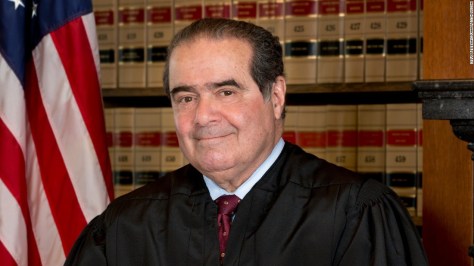
Justice Antonin Scalia, may he rest in peace, seemingly doling out campaign lessons, chirped, “You can inform people in thirty seconds, you don’t need ninety minutes to make a fucking point. Your documentary makes a hundred points, so you could just pick one of them and make it a ninety-second ad, right?”
Antonin Scalia – Associate Justice to the United States Supreme Court Served 1986-2016 Alive: 1936-2016
Olson dodged Scalia’s question too—saying that BCRA was about banning things that were potentially corrupting, like giving money to a candidate for a little quid-pro-quo action.
Olson had been arguing this was a First Amendment issue, but when pressed, suddenly shifted to defending BCRA’s intent instead.
Scalia, never one to let a dodge slide, interjected, “A second ago, we were talking about the First Amendment. Now you’re talking about BCRA. What the fuck is your argument, man?”
Olson quipped, “I’m making both arguments. I’m trying to get you to see that BCRA was constructed to be constitutionally compliant. They wouldn’t have made a law that they thought violated the First Amendment on purpose. So I’m saying that clearly BCRA doesn’t apply to political speech, which is what we think our brilliant fucking movie is.”
He then pointed out that the government is burdened with proving this movie isn’t protected speech, but how can they say it isn’t when it’s the same shit you see on the news every day?
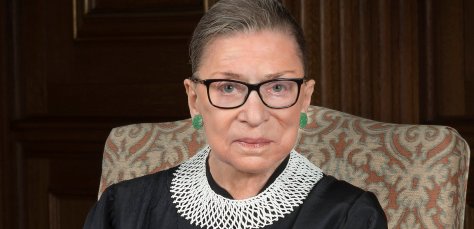
Justice Ruth Bader Ginsburg, may she rest in peace, pointed out that the whole documentary focused on someone who was currently running for president, and only shared how much of a sociopath she is, so folks would consider only the bad shit before voting for that monstrosity in a pantsuit.
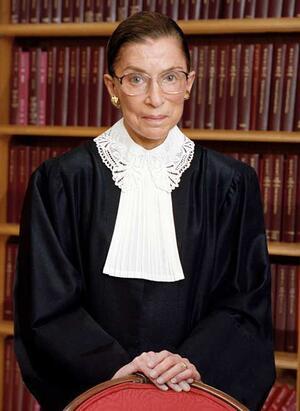
Ruth Bader Ginsburg – Associate Justice of the United States Supreme Court Served: 1993-2020 Lived: 1933-2020
Olson conceded it was likely to influence some voters. But he flipped the script and was like, “Even if it were more even-handed, and we complimented her on what nice pantsuits she wore, we’d still be in trouble. So I don’t think it matters whether we’re even-handed or whether we tell the world what a psychopath she is.”
Justice Souter was quick to jump back into the fray and asked Olson, “What fucking evidence do you have that BCRA cared about 60-second ads arguing what a piece of shit Hillary is, and somehow not 90 minutes of that brilliant point?”
He went back to the argument that he felt BCRA was meant to limit how many times you’d get inundated with ads you don’t choose to view, and this isn’t that—folks clicked on this shit and paid to watch it.
Next up was Deputy Solicitor General of the United States, Malcolm Stewart.
He started his opening remarks with this, but was interrupted before he could even complete it.
Malcolm Stewart – Deputy Solicitor General of the United States
Mr. Chief Justice, and may it please the Court: The lead opinion in Wisconsin Right to Life didn’t just use the term functional equivalent of express advocacy, it explained what that term meant. And on page 2667 of volume 127 of the Supreme Court Reporter, the plurality—the lead opinion stated:
“In light of these considerations, a court should find that an ad is the functional equivalent of express advocacy only if the ad is susceptible of no reasonable interpretation other than as an appeal to vote for or against a specific candidate. “
So the functional equivalence test doesn’t depend on the length of the advertisement or the medium in which the advertisement…
At which point, Chief Justice Roberts jumped in and pointed out that neither this case, nor the Wisconsin Right to Life (WRTL) cared about the length of the video in question.
Wisconsin Right to Life v. Federal Election Commission is worth a quick detour. In 2004, WRTL ran ads urging Wisconsin residents to contact their senators—ironically including BCRA co-sponsor Russ Feingold—urging them to drop the hammer on judicial filibusters.
That’s when minority senators filibuster to prevent the president’s judicial nominees.
The FEC said those ads violated BCRA’s electioneering communications ban because they mentioned federal candidates within 30 days of a primary.
WRTL cordially invited the FEC to eat a bag of dicks. They said, “We’re talking about a Senate procedure, not telling anyone how to vote. We’re directing them as to whom they should call, not telling them who to vote for.”
The Court agreed, and carved out an exception. If an ad can reasonably be interpreted as advocating for an issue rather than a candidate, it can’t be banned under BCRA. Makes sense, right? You can’t bribe a policy position.
That “functional equivalent of express advocacy” test is what Stewart was harping about. His argument was that Hillary: The Movie can only reasonably be interpreted one way—don’t vote for that pantsuit-wearing sociopath. Citizens United disagreed, obviously.
Chief Justice Roberts and Olson bandied about this subject for a bit before Stewart was like, “Listen Chief, Congress’ intent was to look at the definition of electioneering communication. They defined that shit as a broadcast, cable, or satellite communication aired within 30 days of a primary or 60 days of a general election. So this is definitely that.”
Justice Roberts hit him with the ol’ hypo and asked:
So if Wal-Mart airs an advertisement that says we have candidate action figures for sale, come buy them, that counts as an electioneering communication?
He was like, “Fuck Walmart. But they could get an exception if…” at which point Justice Alito interrupted him before he could finish his thought. (I’m sensing a theme here—let the man speak!)
Justice Alito asked if Stewart felt the Constitution forced Congress to draw the line at broadcast, cable, or satellite, as opposed to DVDs, books, the internet, etc.
Stewart didn’t think so. It could have applied to other media as well.
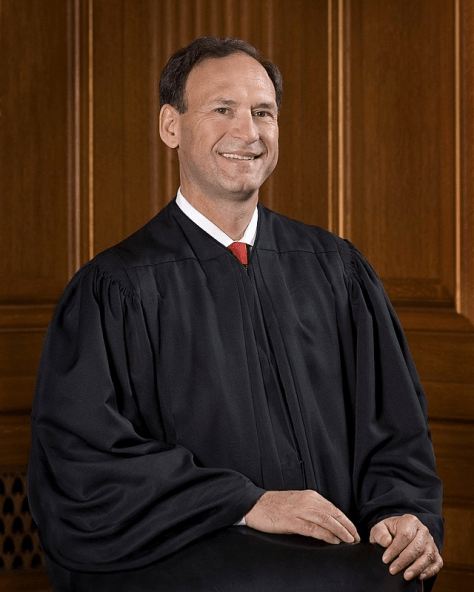
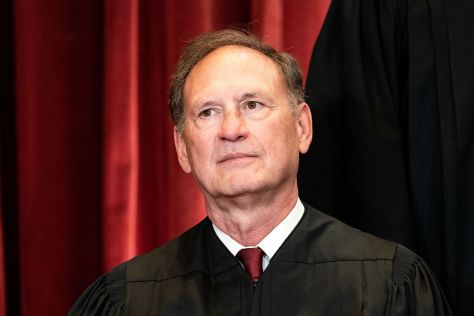
Samuel Alito Associate Justice of the United States Supreme Court
The exchange between him and Alito that followed has become somewhat of a legend.
Samuel A. Alito, Jr.
That’s pretty incredible.
You think that if a book was published, a campaign biography that was the functional equivalent of express advocacy, that could be banned?
Malcolm L. Stewart
I’m not saying it could be banned.
I’m saying that Congress could prohibit the use of corporate treasury funds and could require a corporation to publish it using its PAC.
Samuel A. Alito, Jr.
Well, most publishers are corporations.
And a publisher that is a corporation could be prohibited from selling a book?
Malcolm L. Stewart
Well, of course, the statute contains its own media exemption or media…
Samuel A. Alito, Jr.
I’m not asking what the statute says.
The government’s position is that the First Amendment allows the banning of a book if it’s published by a corporation?
Malcolm L. Stewart
Samuel Alito – Associate Justice of the United States Supreme Court
Because the First Amendment refers both to freedom of speech and of the press, there would be a potential argument that media corporations, the institutional press, would have a greater First Amendment right.
That question is obviously not presented here.
Stewart knew this was not going to go well for him. Banning books is a political death sentence in the United States.
Justice Kennedy then jumped in and asked, “What if some advocacy group wrote a book, and just made an ad to help sell the book?”
Stewart left the door open on that, so Kennedy walked through even further and asked, “What about if it’s on a Kindle, and that Kindle is transmitted to via a satellite?”
Remember, satellite communications are prohibited if you were wondering whether Kennedy was just waxing poetic or some shit.
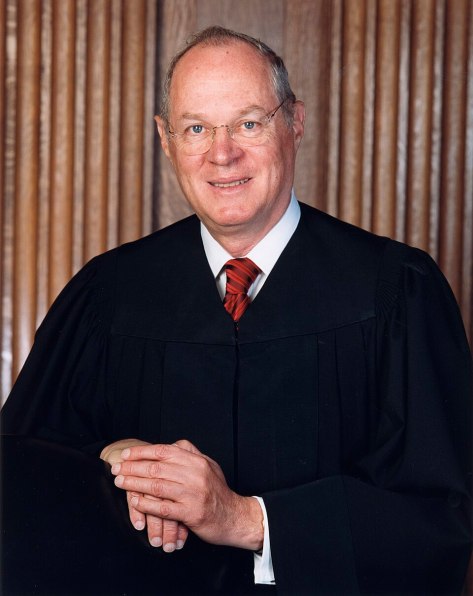
Anthony Kennedy – Associate Justice: Supreme Court of the United States Served: 1988-2018
Stewart was like, “I’m not saying it would be banned. I’m saying the company couldn’t pay for it from its own treasury, it’d have to come from a PAC.”
At this point, Stewart was probably shitting bricks, and the onslaught didn’t stop.
Stewart, later in his career, was recognized by Justice Roberts in session, for appearing before the court and arguing effectively for the government 100 times.
Quite the milestone—but today, by all accounts, he had his ass handed to him by Justice Roberts”.
Their exchange was also quite legendary, and it’s likely a huge reason the FEC lost.
John G. Roberts, Jr.
If it has one name, one use of the candidate’s name, it would be covered, correct?
Malcolm L. Stewart
That’s correct.
John G. Roberts, Jr.
If it’s a 500-page book, and at the end it says, and so vote for X, the government could ban that?
Malcolm L. Stewart
Well, if it says vote for X, it would be express advocacy and it would be covered by the pre-existing Federal Election Campaign Act provisions.
John G. Roberts, Jr.
No, I’m talking about under the Constitution, what we’ve been discussing, if it’s a book.
Malcolm L. Stewart
If it’s a book and it is produced—again, to leave one side the question of…
John G. Roberts, Jr.
Right, right.
Forget the…
Malcolm L. Stewart
…the possible media exemption, if you had Citizens United or General Motors using general treasury funds to publish a book that said at the outset, for instance, Hillary Clinton’s election would be a disaster for this…
John G. Roberts, Jr.
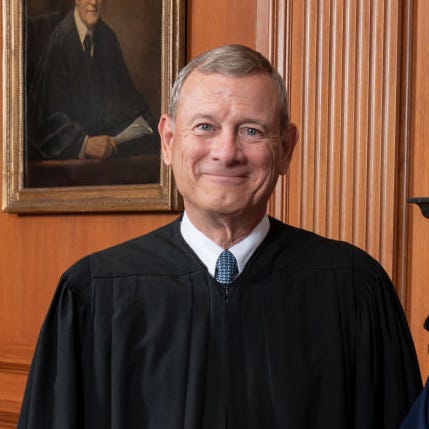
John Roberts – Chief Justice: Supreme Court of the United States
…No, take my hypothetical.
It doesn’t say at the outset.
If funds—here is—whatever it is, this is a discussion of the American political system, and at the end it says vote for X.
Malcolm L. Stewart
Yes, our position would be that the corporation could be required to use PAC funds rather than general treasury funds.
John G. Roberts, Jr.
And if they didn’t, you could ban it?
Malcolm L. Stewart
If they didn’t, we could prohibit the publication of the book using the corporate treasury funds.
Between Alito and Roberts, they got him to admit the government would potentially ban a book.
Justice Breyer, seemingly throwing Stewart a lifeline, asked, “What if The Teamsters said, ‘You know what, we fucking love Hillary Clinton—she’s our kind of corrupt sociopath.’ The First Amendment doesn’t allow them to ban such speech, right? They can only ask who the fuck is paying for them to say it in a public forum, such as buying ad space?”
“The government can’t ban the speech, they can just limit the amount of money spent to promote such speech. Right?” Breyer continued.
Stewart agreed.
Antonin Scalia – Associate Justice: Supreme Court of the United States Served 1986-2016 Alive: 1936-2016
Justice Scalia then jumped in with, “Let’s go back to a media company. That’s their fucking job. So now, they can’t report on candidates and shit, because they’re paying for that news coverage, and your way around this clear paradox is to say that the First Amendment’s freedom of the press makes them, and only them, exempt?”
Elaborating further he asked:
Antonin Scalia
But does “the press” mean the media in that constitutional provision?
You think in 1791 there were people running around with fedoras that had little press tickets in it, (saying) “Press”?
Is that what “press” means in the Constitution?
Doesn’t it cover the Xerox machine?
Doesn’t it cover the right of any individual to write, to publish?
Stewart weirdly switched gears and brought Alito back into this mess to make a new point he hadn’t addressed earlier.
He mentioned that if Citizens United had just put the video on their own webpage or YouTube, we wouldn’t be in this mess. The fact that they made it video on demand, which the government considered broadcast or satellite, is where the problem lies.
Stewart likely didn’t know it, but he handed his own ass to himself on a plate.
Justice Alito saw an open door and walked through it like he was on a mission from god, asking, “Alright, great point. So what if Congress decides that the internet is part of the problem too and amends the law to include that—is that speech now banned?”
Samuel Alito – Associate Justice of the United States Supreme Court
He wasn’t wrong—that seemed like a weak point for Stewart.
He was trying to carve out some technicality exemption to what Alito likely believes is a blatant First Amendment violation, which Congress could easily fix, pulling the rug out from under Stewart’s entire argument.
Justice Kennedy then laid a trap, pressing Stewart on the opposition’s central distinction—the 60-second ad versus the 90-minute documentary.
Stewart argued he saw no legal distinction.
Justice Kennedy was like, “If we rule against you, not only is his 90-minute documentary allowed, but all those 60-second ads are allowed too, right? Because you see no distinction?”
Stewart was like, “That’s up to you, dawg. If you say there’s a distinction between the two, then no.”
Stewart argued that Hillary: The Movie not only painted Clinton in a bad light—it also argued she’d make a shitty president. That second part is a big reason why they’ve got a fucking problem with this—that’s advocacy.
Justice Ginsburg asked about a similar film called Fahrenheit 9/11, from Michael Moore, conveniently released during the 2004 election cycle. It cast President Bush in a pretty negative light. So she asked if that would be banned if it were aired within the 60-day bar that BCRA sets?
Ruth Bader Ginsburg – Associate Justice of the United States Supreme Court Served: 1993-2020 Lived: 1933-2020
“I never watched that shit, so I wouldn’t know. But maybe,” said Stewart.
Justice Scalia, not done with his First Amendment questions yet, asked whether the Constitution protects the person who wants to hear the speech as much as the person making the speech.
Stewart again answered a different question than he was asked. He talked about the efficacy of a 90-minute documentary that people have to ask to watch, versus a campaign commercial that interrupts what they were watching.
Scalia wasn’t having it. He jumped in, “That wasn’t my question, man. Two people, one of them wants to speak, the other wants to hear them speak, and you’re telling me the First Amendment doesn’t apply to that speech—government can just say:
No, the two of you can’t do this?
Stewart, running low on good answers, retreated again to the Video on Demand argument. He felt that VOD fell under the broadcast or satellite rubric, and therefore was a problem. If they had made a DVD people could buy, apparently that would have been OK in his mind.
Sidebar: You may have noticed Stewart dodged a lot of questions, which seems like a bad strategy. However, he may have been sly like a fox. We’ll never know—I can’t peek inside his mind. He was almost certainly afraid of losing on Constitutional grounds, which would be a huge fucking loss with big implications, as we’ll get to later, so I suspect he was hoping to focus solely on the statutory issues instead.
Justice Roberts then waded into the “exemption to disclosure requirements for those with a fear of reprisal” issue.
After a dispute between the two, Alabama tried to compel the NAACP to hand over their membership list. The court unanimously ruled that the NAACP didn’t have to do shit. They rightly reasoned those folks would be harassed by some pricks in white bedsheets and pointy hats who don’t take kindly to people like the NAACP ’round their parts.
Roberts wanted to understand if that applied here. Maybe the disclosure requirements would lead people of one party to attack supporters of the other, and therefore they deserved some level of anonymity. I mean, Trump has had at least three fucking would-be assassins at this point, so it’s fair to say that political disagreements might lead to violence.
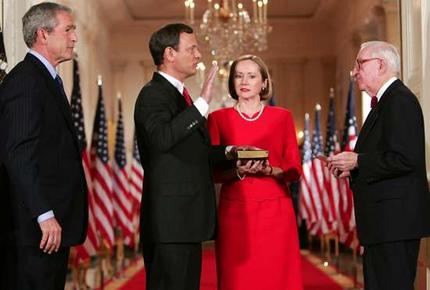
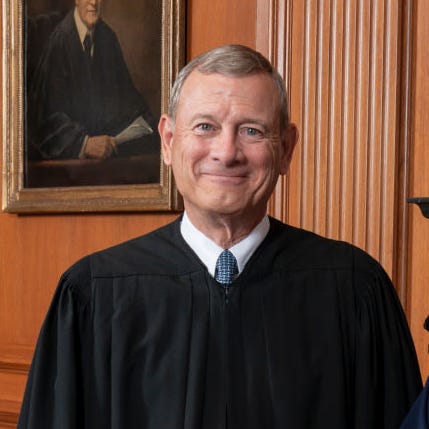
Chief Justice John Roberts Being Sworn In
Counsel Stewart was like, “They fucking disclosed before with no reprisals. So why the fuck we even talkin’ ’bout this, bro?”
“You only get an exemption after someone has faced some sort of reprisal? That doesn’t seem very fucking smart, does it?” said Roberts. “Are we gonna make it so that someone has to get shot before we authorize restraining orders now, too?”
Stewart seemed willing to concede this point—he likely didn’t care about the disclosure aspect of BCRA so much as the banning of anything they considered corporate-funded political ads.
With that, the first oral arguments were complete.
Because there were both statutory and constitutional questions in this case, the court decided that McConnell’s constitutionality may need to be revisited.
This occurred in private deliberations among the justices, so we don’t have records on that. But the logic is pretty clear — they weren’t certain they could reasonably side with Citizens United yet leave McConnell standing.
Since both parties in the first set of oral arguments didn’t fully explore the broad constitutional issues, and focused mostly on the as-applied ones, they were asked to consider those, and come back for round two.
“As-applied” just means that they discussed the constitutionality of BCRA “as it applied” to Citizens United. If they were to win, it could just mean that the Court ruled BCRA didn’t apply to them, but would still remain as valid law for everyone else.
But the Court could also rule that BCRA, or at least the provisions of BCRA in question here, were wholly unconstitutional and must be struck down entirely.
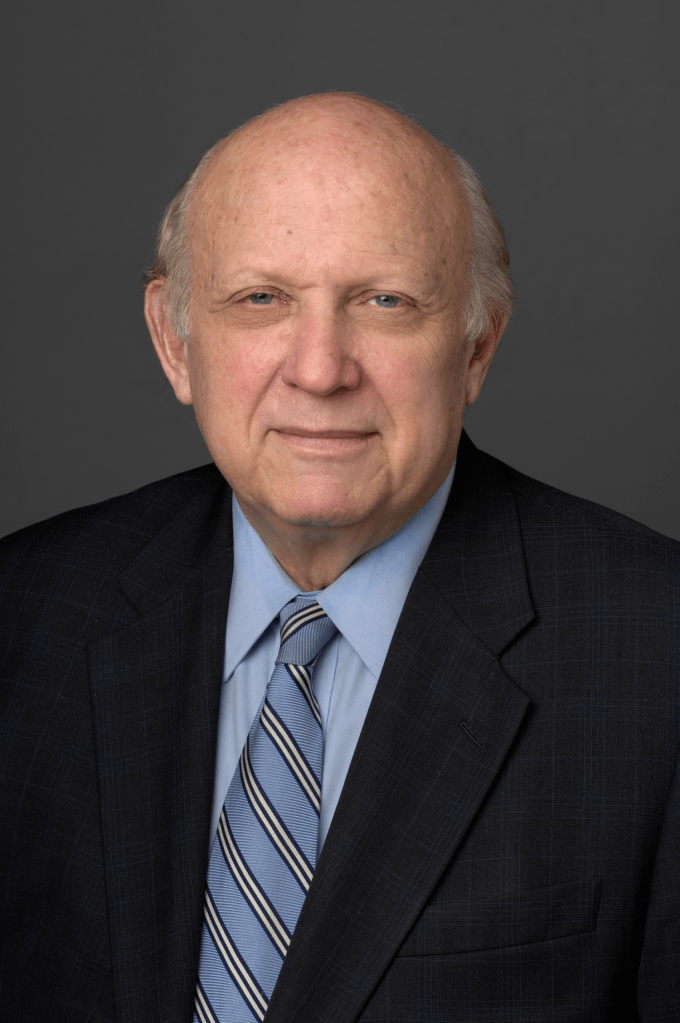
For the second go-around, only Theodore Olson returned to the fray, this time with Floyd Abrams by his side as an amicus (friend of the court) arguing for the ageless Mitch McConnell.
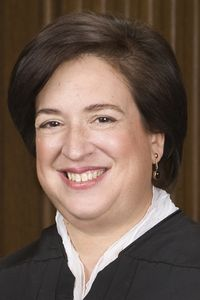
Malcolm Stewart was out for the FEC, replaced by two people—Seth Waxman representing John McCain—who as you recall sponsored BCRA. And also Elena Kagan, then Solicitor General for the DOJ, who is currently now a Supreme Court Justice.
Oral Arguments #2: September 9th, 2009
First up again, Theodore Olson, who opened with this:
Theodore Olson
Mr. Chief Justice and may it please the Court: Robust debate about candidates for elective office is the most fundamental value protected by the First Amendment’s guarantee of free speech.
Yet that is precisely the dialogue that the government has prohibited if practiced by unions or corporations, any union or any corporation.
The government claims it may do so based upon the Austin decision that corporate speech is by its nature corrosive and distorting because it might not reflect actual public support for the views expressed by the corporation.
The government admits that that radical concept of requiring public support for the speech before you can speak would even authorize it to criminalize books and signs.
This Court needs no reminding that the government when it is acting to prohibit, particularly when it is acting to criminalize, speech that is at the very core of the First Amendment has a heavy burden to prove that there is a compelling governmental interest that justifies that prohibition and that the regulation adopted, in this case a criminal statute, is the most narrowly tailored necessary to accomplish that compelling governmental interest.
Justice Ginsburg was the first out of the gate noting that an individual is “endowed by their creator” with inalienable rights but a corporation is just created by a person or persons. “Are we to draw no legal distinction regarding rights, between a person and a corporation?” she wanted to know.
Ruth Bader Ginsburg – Associate Justice of the United States Supreme Court Served: 1993-2020 Lived: 1933-2020
Olson cited several cases where corporations were entitled to First Amendment protections to support his argument that yes, the First Amendment applies to both.
Justice Ginsburg then wanted to know “Even corporations that are owned entirely by foreign nationals outside the United States?”
Olson was like, “Doesn’t fucking matter.”
Because this is a restriction on political speech, he then went on to lay the groundwork for why strict scrutiny applies.
If you’re not familiar with what strict scrutiny means in case law, read this piece I wrote about the subject HERE in a previous post. Strict scrutiny is nearly a century in the making, and case law in the US is littered with examples where it underpinned the ruling. It’s fundamental to this one as well, so I reference it throughout. If you’re interested in the courts, you’ll want to understand this concept.
Justice Scalia asked if the government could prevent foreign interests from funding US electioneering speech.
Antonin Scalia – Associate Justice: Supreme Court of the United States Served 1986-2016 Alive: 1936-2016
Olson responded with the “I don’t know” defense.
That’s fair—it wasn’t an issue here, so he couldn’t fathom everything they’d ask.
Sticking with this theme, Justice Stevens reiterated RBG’s question about the rights of corporations versus people, and then Justice Alito asked if foreign-owned companies, operating in the US, have less free speech rights than American ones as well.
Olson was like, “What is it with you fucking people? The First just says “government shall make no law.” It doesn’t say “make no law if you’re from here.” The Court has said political speech is the pinnacle of protected speech, so to restrict it would have to fall under strict scrutiny.”
Justice Ginsburg asked why Olson kept saying “prohibition.” Corporations aren’t prohibited from funding such speech—they’re just supposed to go through a PAC.
He pointed out that corporations can’t actually contribute via a PAC either. As we covered earlier, a PAC is funded by individual donors within a corporation—executives, shareholders, employees—giving their own personal money—the corporate treasury never enters the picture.
Buckley v. Valeo, which we mentioned earlier, was heavily discussed. The important facet of that case is that there are two types of spending in play.
Donations: money given to a candidate.
Expenditures: money spent independently to express a political view, with no candidate involved.
Remember, Citizens United made a movie. They never gave a dime to Barack Obama, who beat Hillary in the primary, nor to Mitt Romney, who would have been her general election opponent, had she gotten that far.
No campaign donation here—just an expenditure.
I won’t dig deep into Buckley, but the court ruled restrictions on donations were constitutional—restrictions on expenditures were not.
This is an easy concept to understand—it’s the linchpin in this case. If I give a politician money (donations), it stands to reason that asshole might do me a favor in return. That’s quid pro quo, and that’s corruption.
But if I just spend money to advance my opinion to the public (expenditures) without any interaction with a politician, it’s hard to say I corrupted anyone—I never gave a red cent to an actual person.
That meant expenditures were essentially a protected right, and to regulate them would have to pass the strict scrutiny test. Since BCRA limited them to 30 days before the election, Congress felt that the law was narrowly tailored enough, as required by strict scrutiny, to pass the test.
Stephen Breyer – Associate Justice to the Supreme Court of the United States (1994-2022)
Breyer was like, “OK, Congress restricted electioneering communications to a 30-day window, and only on television ads. Doesn’t that survive strict scrutiny? If not, does it not meet the definition of a compelling interest, or is it not narrowly tailored enough?”
Olson responded, “You must always second guess Congress when the First Amendment is in play—they’re shady AF.”
He pointed out that the government provided no evidence of corruption via expenditures, unlike donations, where the appearance of corruption is much harder to dismiss.
Justice Ginsburg had the receipts, though. She mentioned that a three-judge court found that Federal officials feel indebted to corporations or unions who support them.
Olson conceded this, but reasoned, “We’re talking about expenditures, remember? That’s a great point on contributions if we were talking about those—let’s stay on topic, you old battle axe.”
The exchange he had with Breyer, Kennedy, and Ginsburg was largely around coordination. Remember, these laws exist because the government feared bribery and corruption.
If a company just goes off and makes its own ad—at no point discussing it with a candidate—that ad might actually be something the candidate actively opposed, and therefore wouldn’t result in a returned favor.
Consider this—Obama benefitted from Hillary: The Movie, but he may have been none too keen on how badly it reflected on the DNC by association.
So in that light, Citizens United’s speech was politically protected—and Obama, the very person who benefitted, never gave them a thing in return.
Hillary Rodham Clinton
Justices Roberts and Stevens then brought up First National Bank of Boston v. Bellotti, where the court noted that influencing elections was the point of protected speech.
The majority opinion held that the speech is what’s protected, not the speaker.
Put an individual behind these exact same words and nobody bats an eye, so restricting it from a corporation shouldn’t change anything.
They also discussed candidates versus ballot issues. Bellotti involved a company speaking out against an issue, not supporting a candidate.
Again, these laws are restrictions on content-based speech—therefore strict scrutiny applies. The compelling interest is quid pro quo corruption, so how would a ballot issue pay you back for getting it passed?
The ballot issue part of Bellotti doesn’t apply here but the speech protection sure does, according to Olson.
He then made an interesting point—issues and candidates are often inseparable. A corporation might only care about, say, marijuana legalization, and there might be only one candidate who shares their position. If that corporation speaks out in support of legalizing the Devil’s lettuce, does that speech suddenly become a problem just because only one candidate agrees with them?
The corporation might despise everything else about that candidate—their character, their voting record, their stupid haircut—but they agree on this one thing. It’s a hell of a stretch to call that corruption.
Therefore, he argued, the court can’t really distinguish between issue support and candidate support.
Official Portrait of United States Supreme Court Justice Sonia Sotomayor Click for Biography
Justice Sonia Sotomayor, who replaced Justice Souter on the Supreme Court between the first arguments and this second round, asked if Olson was abandoning his statutory argument from the first round, and focusing only on the constitutional ones now.
Olson was like, “Nope. We think we win either way, and both support us. But you dragged my ass back here on these broader constitutional questions, so that’s what I’m talking about now.”
Next up was Floyd Abrams, in support of Citizens United.
Floyd Abrams
He opened by arguing that the courts could just address the statutory question, leave the other precedents alone, and move on.
But if they did, it would lead to an inevitable shit-storm of similar cases they’d have to resolve, until they eventually just decide this is a First Amendment issue and invalidate all this other case law.
So they might as well gut this pig now and save everyone a trip back here in two years.
Not exactly argument of the year, but not wrong either.
That said, the Court usually shies away from answering broad constitutional questions when a simpler statutory one will suffice—this can be deemed legislating from the bench. So Abrams’ argument of expedience is ill-advised.
Abrams was brief, so not much to say about his time at the pulpit, and that was kind of the point.
He was just there as an amicus for Mitch McConnell, whose loss in McConnell v. FEC was mentioned earlier. Ol’ Mitch hated this fucking law with the heat of a thousand suns and he wanted it gone.
Up next was then Solicitor General for the DOJ, Elena Kagan.
She opened by saying:
Associate Justice Elena Kagan
For over 100 years Congress has made a judgment that corporations must be subject to special rules when they participate in elections and this Court has never questioned that judgment.
Justice Scalia was like, “WTF are you talking about? We never questioned it, but we never approved it, either! We’re not some group of political hacks who just jump in and pick shit to approve or disapprove. Someone with standing to do so has to come here and ask us to give an opinion. We don’t just issue opinions out of the blue. Assholes like your clients have to come in and complain first.”
In this case, SCOTUS ruled that similar federal election rules violated MCFL’s First Amendment rights. The Court carved out an exception for MCFL because:
They were formed solely for political purposes
They had no shareholders
They did not accept contributions from for-profit corporations.
In their opinion, no business interests in political influence—no corruption.
Citizens United is a little different in that they accepted money from for-profit corporations to achieve their mission.
While Meat Loaf may argue that two out of three ain’t bad, Kagan and the FEC felt it should be all three or nothing when all of this started.
It’s worth noting that at this point, it was already looking like Citizens United would win.
Kagan’s play was to get the MCFL exemption applied to Citizens United, which is a narrow statutory ruling. That would at least leave the BCRA provisions they were debating in place—and preserve the other case law that helps limit corporate campaign influence.
She was willing to shift her position and lose the statutory battle so the government could still win the constitutional war.
Justice Roberts, clearly understanding this was where she was going, pressed her to admit as much. She responded:
If you are asking me, Mr. Chief Justice, as to whether the government has a preference as to the way in which it loses, if it has to lose, the answer is yes.
Justice Kennedy and Kagan then sparred extensively about whether BCRA, specifically section 203 which prohibited electioneering communications paid for by corporate treasury funds, was overbroad. Meaning, as we know from strict scrutiny (hopefully), laws around restricting what you say (content-based speech) must pass three tests—compelling interest by government, narrowly tailored to meet that interest, and least restrictive means.
Anthony Kennedy – Associate Justice: Supreme Court of the United States Served: 1988-2018
The government arguably has a compelling interest in preventing quid pro quo corruption, so that’s a big check. It’s the “narrowly tailored” part that they’re concerned about.
Seemed like Kennedy was arguing that BCRA may restrict more speech than it needs to, in order to achieve this goal. The concern was that BCRA may prevent people from opining on why they want government to eat their entire ass, even when those people have absolutely no quid pro quo expectation.
Kagan was trying to save section 203, which was arguably on life support at this point. She hoped to get SCOTUS only to quash it as applied to Citizens United. But Kennedy was leaning toward “this whole fucking provision of BCRA is a problem and needs to go.”
She then had exchanges with justices Stevens and Breyer about whether they should just strip out a provision in BCRA that exempts non-profits, which again means Kagan loses, but BCRA 203 remains largely intact.
Justice Roberts next wanted to discuss the compelling interest in a previous case, Austin v. Michigan Chamber of Commerce. He was setting her up, but it’s a fair and nuanced point.
In Austin, a similar case to this about a Michigan law like BCRA, the court ruled that the government’s compelling interest for limiting content-based speech was that corporations shouldn’t appropriate shareholders’ money for expressive purposes. They argued this causes “distortion.”
Sidebar: Distortion is the idea that corporate political spending can make one viewpoint appear more powerful or widely supported than it really is among actual voters.
A corporation may be made up of shareholders, employees, and members with all kinds of political views, but leadership can use corporate treasury money to push one message. That money does not get spread out according to everyone’s opinions; it gets concentrated behind one position, making that opinion artificially louder than it otherwise would be because it has a shit ton of money behind it.
That is the basic concern: corporate economic power can be converted into political influence in a way that does not necessarily reflect genuine democratic support.
The constitutional fight is whether that concern qualifies as a compelling governmental interest to satisfy strict scrutiny and thus allow limiting political speech.
Quid pro quo corruption had already been accepted as a compelling governmental interest by the Court in previous case law, but this “distortion” idea was about to be hotly debated, as SCOTUS hadn’t opined on that shit yet.
Kagan agreed with this understanding of the compelling interest, but she relied on Austin as support for BCRA’s 203 amendment to FECA 441b.
Associate Justice Elena Kagan
Kagan agreed that the government’s compelling interest in Austin was preventing quid pro quo corruption, not distortion. So Justice Roberts was essentially arguing that she can’t rely on Austin to help her if it’s not even the same compelling interest for the purpose of satisfying strict scrutiny.
Kagan, not wanting to lose this argument, essentially argued that she felt both were compelling interests, and each applied in both cases—they were two sides of the same coin.
Justice Scalia then launched this missile. He pointed out that most companies are single-shareholder corporations. So if strict scrutiny applies, and you’re restricting these single-shareholder corporations where distortion clearly would not apply, can you say the law is narrowly tailored and the least restrictive means?
She had no choice but to agree with this point. Again, she was losing this battle, and you had to feel for her. She was trying to salvage something, and it was just not working.
Justice Scalia suggested that Congress too had self-interest. With his trademark cynicism in hand, he argued that the courts are very suspicious when congress restricts content-based speech, because they’d always vote to help themselves, the incumbents, win elections.
But out of nowhere and nearly down for the count, Kagan spotted a weakness and handed him his ass on a plate. She pointed out that:
I think, Justice Scalia, it’s wrong.
Antonin Scalia – Associate Justice: Supreme Court of the United States Served 1986-2016 Alive: 1936-2016
In fact, corporate and union money go overwhelmingly to incumbents.
This may be the single most self-denying thing that Congress has ever done.
If you look at the last election cycle and look at corporate PAC money and ask where it goes, it goes ten times more to incumbents than to challengers, and in the prior election cycle even more than that.
And for an obvious reason, because when corporations play in the political process, they want winners, they want people who will produce outcomes for them, and they know that the way to get those outcomes, the way to get those winners is to invest in incumbents, and so that’s what they do.
As I said, in double digits times more than they invest in challengers.
So I think that that that rationale, which is undoubtedly true in many contexts, simply is not the case with respect to this case.
Kagan then argued that corporations are different because while people might hold a political position because they just like it, for family reasons, moral reasons, religious reasons, the list could go on forever—corporations mostly just care about return on investment, because they’re soulless capitalist pigs.
Justice Roberts responded, “That’s poppycock. Corporations are diverse, just like people, and while it may be true that many are only motivated by money, corporations often reflect the morals of their board members, and it’s a little demeaning to say they only ever care about money.”
John Roberts – Chief Justice: Supreme Court of the United States
It was clear that Justice Roberts was apprehensive about what he saw as socialist rhetoric. Kagan might have been wise to avoid characterizing corporations so pejoratively—implying greed is their only interest.
Justice Scalia then pointed out that single shareholders can just do the same thing as individual voters, without hiding behind the corporate structure. The only reason they wouldn’t is to save on their income taxes.
Justice Breyer, deciding to play a bit of softball, mentioned that he’d seen, in a litany of DC Court briefs, where politicians talked about fundraising as something that’s always on their mind as they grant access to donors.
He was giving Kagan an opportunity to defend BCRA by showing that the appearance of corruption was clearly there, supporting the compelling interest argument.
Here’s the thing, though—we’re discussing expenditures, not donations, remember? Citizens United didn’t give money to anyone, they made a movie that, as far as we know, wasn’t supported by any candidate. So Breyer, while trying to help Kagan, went off the rails here.
Justice Roberts next asked whether it was insulting to assume shareholders in a company couldn’t exercise influence or sell their shares, if they didn’t like a company’s political activities. They’re not helpless, and don’t need big brother to protect them from things they simply don’t like.
Associate Justice Elena Kagan
Kagan argued that it’s tough when a busy person, who owns shares in multiple companies, is juggling a job and multiple investments.
“So isn’t it extraordinary that we have to protect shareholders from themselves?” asked Justice Roberts.
Kagan snapped, “Man, my shares are all wrapped up in mutual funds like most people, I don’t fucking know what those assholes are doing.”
“So we do have to protect idiots from themselves?” Justice Roberts quipped.
Justice Ginsburg, joining Breyer in a game of softball, asked, “It’s not like unions, am I right?”
She was referring to Abood v. Detroit Board of Education. The Court ruled that it’s a violation of the First Amendment to force union members to pay for speech they don’t agree with. If that happens, they can ask for that money back. They are only required to pay for fees the union uses to do its business, not advance political causes.
But then she threw a curveball and asked, “Should we remove unions from BCRA?”
Kagan was like, “Whoa, let’s not get crazy! Unions could still engage in some quid pro quo corruption shit. We’re not just worried about distortion and misrepresentation.”
As Kagan’s time was coming to an end, Justice Ginsburg decided she still had questions. She wanted to know about media such as books and print ads, which are also potentially problematic in BCRA, even though they’re not at issue here.
Ruth Bader Ginsburg – Associate Justice of the United States Supreme Court Served: 1993-2020 Lived: 1933-2020
Kagan, hoping to avoid the whole “banning books” problem all over again, was like, “In 60 years, we haven’t fucked with books, and we’re not gonna start now.”
Justice Scalia was having none of it. He asked:
What happened to the overbreadth doctrine?
I mean, I thought our doctrine in the Fourth Amendment is if you write it too broadly, we are not going to pare it back to the point where it’s constitutional.
If it’s overbroad, it’s invalid.
What happened to that?
Kagan hit back, “Listen, you old prick, we’ve never applied it to books. You could take that shit off—we won’t care—it won’t affect a goddamn thing we’re concerned about. You don’t need to eighty-six a good fucking law because of one little issue. Congress worked hard on that shit.”
Justice Roberts, also not having it, replied:
But we don’t put our First Amendment rights in the hands of FEC bureaucrats.
And if you say that you are not going to apply it to a book, what about a pamphlet?
Kagan, apparently now completely in “fuck it” mode, was like, “Pamphlets are classic electioneering, chief. That’s a different animal.”
Justice Scalia, not done with this argument yet, snapped back:
So you’re a lawyer advising somebody who is about to come up with a book and you say don’t worry, the FEC has never tried to send somebody to prison for this.
This statute covers it, but don’t worry, the FEC has never done it.
That going to comfort your client?
I don’t think so.
With that, Kagan’s time in the hot seat mercifully ended.
Last to argue was Seth P. Waxman in support of the FEC.
He quoted an old court opinion from United States v. Auto Workers (1956), about the Taft-Hartley Act from 1947, which BCRA built on, that said:
What is involved here is the integrity of our electoral process and not less the responsibility of the individual citizen for the successful functioning of that process.
He was invoking what he considered one of the most powerful compelling interests possible: protecting the integrity of elections.
Justice Roberts was like, “As I understand it, no one enforced that fucking law, because they knew it was a classic First Amendment violation, and they wanted to avoid us striking it down.”
Waxman, deciding that a citation from 80 fucking years ago wasn’t old enough, dug up a quote from over a century ago by highly revered Senator Elihu Root, who asked Congress to enact legislation that would address:
A constantly growing evil which has done more to shake the confidence of plain people of small means of this country in our political institutions than any practice which has ever obtained since the founding of our government.
Kennedy was like, “Good quote, but he was talking about contributions, not expenditures, and we all fucking know it.”
Anthony Kennedy – Associate Justice: Supreme Court of the United States Served: 1988-2018
Waxman responded, “There’s no real difference in this example. Corporations are using their great aggregations of wealth to influence elections. That’s the problem—whether they give money or spend money is irrelevant.”
Justice Scalia pushed back:
Great aggregations of wealth.
The amicus brief by the Chamber of Commerce points out that 96 percent of its members employ less than 100 people.
These are not aggregations of great wealth.
You’re not talking about the railroad barons and the rapacious trusts of the Elihu Root era; you are talking mainly about small business corporations.
Waxman was undeterred and hammered home the point that the focus was on much larger corporations. But again, he fell into a trap.
Remember, we were in “strict scrutiny” territory here, which means laws should be “narrowly tailored” and “the least restrictive means.”
We can hardly say that was true if the law affected all corporations when the government was saying it was only worried about the 4% of them that are large corporations.
Scalia pointed out that they could have drawn a line that excluded corporations with less than 100 employees, or some shit like that.
Waxman was like, “If some Podunk company wants to challenge it, let them. But these laws have been on the books forever with no challenges of this nature, until now.”
Samuel Alito – Associate Justice of the United States Supreme Court
Justice Kennedy retorted, “Well, TV ads haven’t been around forever, and the history you’re talking about again applies to contributions, not expenditures.”
Justice Alito seemed rather annoyed at how Waxman kept mentioning legislation older than all of them.
Waxman was hoping that they’d accept the idea that an old law means it’s well-tested and accepted, and therefore beyond reproach.
Alito unimpressed with that quipped, “Old-ass laws get challenged for the first time every day. We don’t fucking care how old it is, we’re judging this shit on the merits—not its tenure.”
That was it for Waxman.
At this point, Theodore Olson had a five-minute rebuttal, and he started with how he believed the government kept moving the goalposts. First they could ban books—then they couldn’t.
But Notorious RBG interrupted him on that point, and argued, “The book-banning issue isn’t in play here, so why you bringing that shit up?”
Olson then added, “The government now says they’re willing to back off certain corporations, where before it was ‘No exceptions!'”
Then he said, “They also keep changing the rationale. Is it corruption, shareholder protection, equalization, distortion? Fucking pick a compelling interest already!”
Stephen Breyer – Associate Justice to the Supreme Court of the United States (1994-2022)
Justice Breyer asked, “The state created this artificial person we call corporations, then gave them abilities and capacities—so surely they can take them away.”
Olson responded, “Stop calling me Shirley,” then ended oral arguments with this:
My point is that the government here has an overbroad statute that covers every corporation irrespective of what its stockholders think, irrespective of whether it’s big, and whether it’s general—a big railroad baron or anything like that, and it doesn’t know, as it stands here today two years after this movie was offered for—to the public for its view, what media might be covered, what type of corporation might be covered and what compelling justification or narrow standard would be applied to this form of speech.
In cases like this that are clearly going to be “big fucking deals,” sometimes the court announces its opinion from the bench, where the Justice(s) who write the opinions give a synopsis of their opinion orally, as well as their written opinion—they did so here.
Justice Kennedy was first, announcing the majority opinion.
Anthony Kennedy – Associate Justice: Supreme Court of the United States Served: 1988-2018
He started by rejecting the notion that this was an objective documentary, as opposed to just a political ad against Hillary Clinton.
Point for the FEC.
Second: Citizens United argued that because this was Video on Demand, delivered one house at a time, it wouldn’t meet the 50,000 or more persons provision for viewership that a normal television program would—it would essentially be one person, over and over again, and each instance would fall 49,999 short.
Kennedy was like, “That’s fucking stupid. One at a time isn’t just one—it can still add up to 50,000, even if they aren’t all viewed at precisely the same time.”
Point two for the FEC.
You might think the FEC is winning, but then his opinion took a quick right turn.
He opined that the difficulties created in interpreting all this shit would lead to a chilling of political speech by companies like Citizens United, who aren’t sure if the rules apply to what they’re doing or not. Political speech is absolutely the speech the First Amendment was designed to protect most.
As such, he announced that McConnell and Austin, which allowed restrictions on corporate political speech, must be “reexamined.”
He then said:
If the First Amendment has any force, it prohibits Congress from fining or jailing citizens or associations of citizens for simply engaging in political speech.
U.S. Constitution: 1st Amendment
Austin in its rationale, however, would allow the Government to ban corporations from expressing political views through any media, including media beyond those presented here and in this case such as by printing books.
Political speech is indispensable to decision making in a democracy and this is no less true because the speech comes from a corporation rather than an individual.
Austin’s rationale would produce the dangerous and unacceptable consequence that Congress could ban political speech of media corporations.
Media corporations are now exempt from 441b’s ban on political speech, but they amass wealth like other business corporations, so under Austin the Government could diminish the voice of a media business.
There is no precedent for permitting this under the First Amendment.
He went on to say:
The Government seeks to use its full power, including the criminal law, to command where a person may get his or her information or what distrusted source he or she may not hear, it uses censorship to control thought.
This is unlawful.
The First Amendment confirms the freedom to think for ourselves.
With that, Austin was overruled.
He then specifically added that with Austin in the shitcan, the ban on corporate independent expenditures was invalid and could not apply to this film.
So this was not just the BCRA 203 FECA amendment which banned electioneering communications, but the original FECA 441b provision which banned express advocacy was annihilated as well.
Big point for Citizens United.
The next point he addressed was the disclosure requirement—the provision in BCRA that requires donors to be outed. Justice Kennedy was like, “An informed electorate is a good thing—the right to free speech doesn’t confer a right to anonymity, so we’ll let that shit slide.”
Another win for the FEC. He left the door open, though, for future cases where one might be able to show that the threat of reprisal for political speech is real and challenge that later. Citizens United didn’t show that to be true for them, so the court wasn’t answering that shit now.
It’s worth noting that because there were many questions before the Court in this case, there was no one opinion answering everything. The justices concurred on certain questions, but then wrote separate opinions on others.
The only other oral opinion given was by Justice Stevens, who concurred in part with the majority, but was the main dissenting opinion.
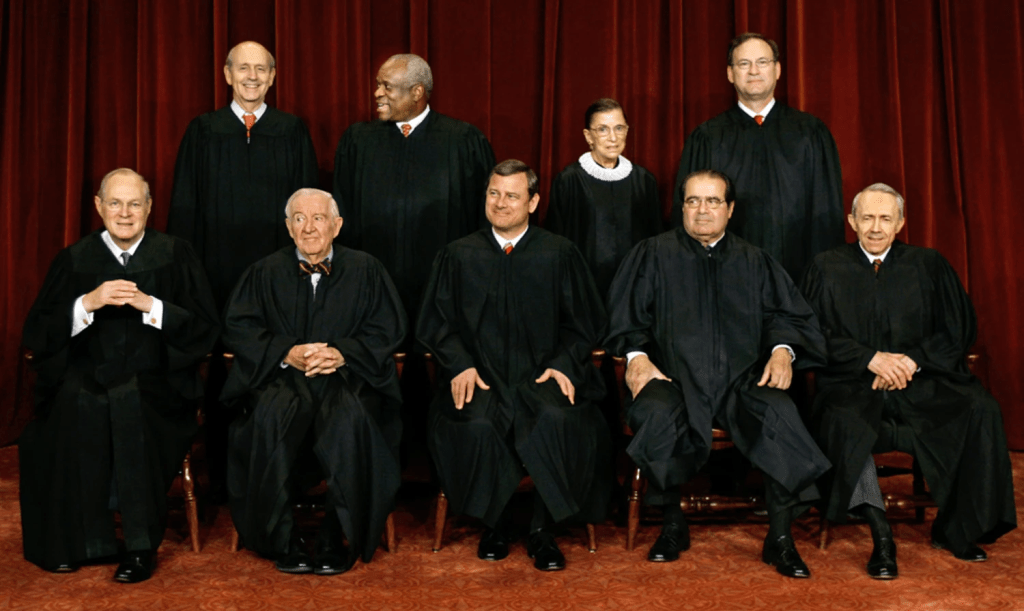
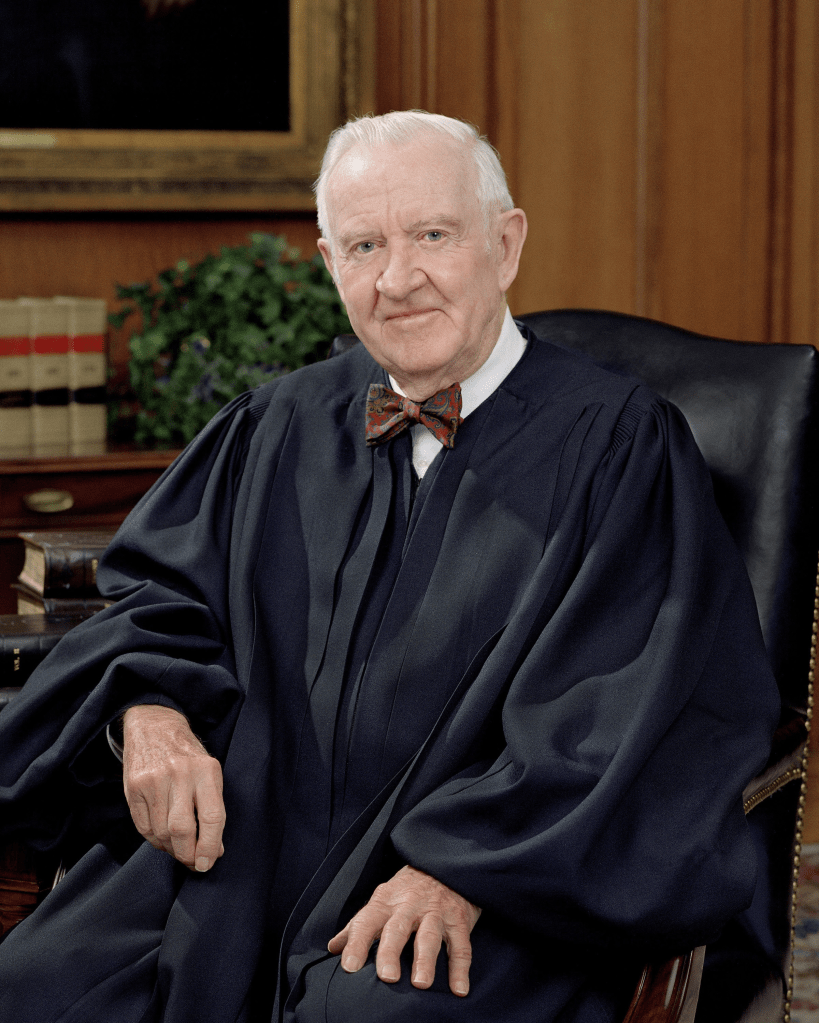
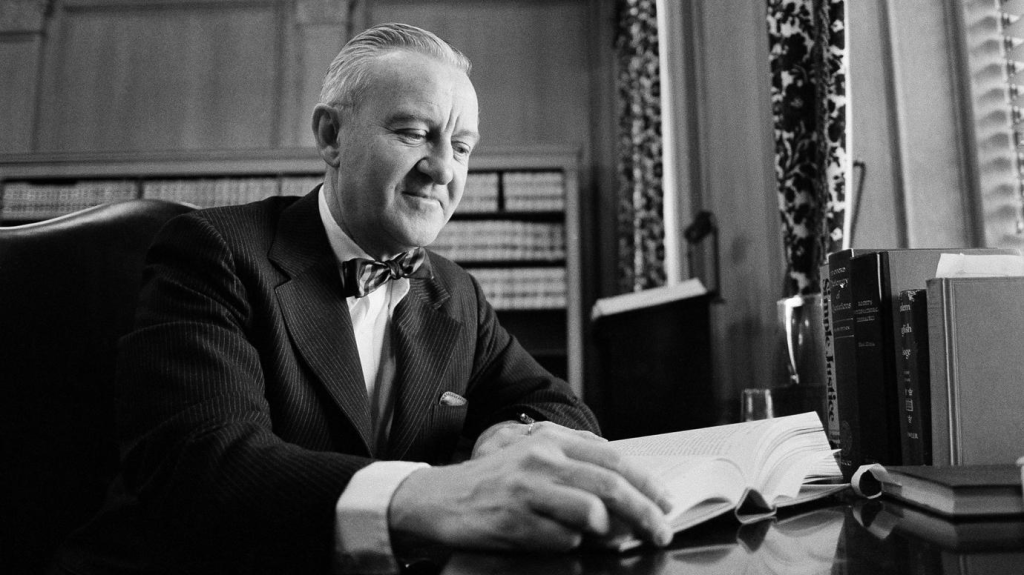
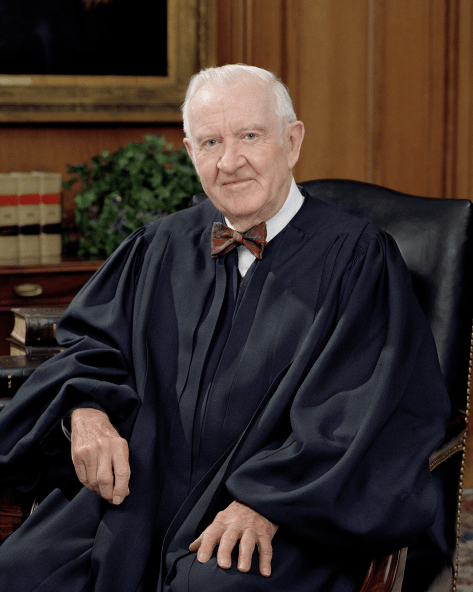
John Paul Stevens – Justice Supreme Court of the United States Served: 1975-2010 Lived: 1920-2019
He, along with Ginsburg, Breyer, and Sotomayor agreed that the reporting and disclosing part of BCRA was hunky-dory.
But they thought striking down BCRA 203 prohibiting corporations and unions from using general treasury funds for electioneering speech, and the overruling of Austin and McConnell were some grade-A bullshit.
Justice Stevens was in the majority on the McConnell opinion, so it was fair to say he hadn’t wavered on the belief of his own genius.
Justice Stevens took issue with the Court making such a broad ruling.
Like Kagan who was trying to choose how she was going to lose, he didn’t think they needed to go nearly this far. They could have left the other case law in place, left BCRA largely alone, and just carved out an exception for non-profits, in a much narrower ruling.
Let’s be honest—he was retiring soon. The idea that if they didn’t rule so broadly, there’d be a shit-ton of cases coming to the Court, seeking similar relief, wasn’t going to be his fucking problem.
He went on to lay out what he saw as five flaws with the majority opinion.
John Paul Stevens – Justice Supreme Court of the United States Served: 1975-2010 Lived: 1920-2019
They said that corporations were banned from political speech, the most protected of speech rights. But he argued this was just a limit on expenditures. He wasn’t wrong, but he wasn’t right, either.
He thought it was bullshit that the First Amendment is absolute for corporations and people alike. He apparently liked the idea that since government created corporations, they were not endowed with inalienable rights like us people.
He really didn’t like this new court shitting all over the previous court’s rulings in Austin and McConnell.
[Editorial: My less-than-libertarian friends will probably always disagree on this, but the fact is corporations are just an entity made up of people.
Limiting a corporation’s speech is limiting the speech of the people who own that corporation. That’s inarguable.
What we’re really fighting about is whether they’re free to use the money the corporation earns to get that speech to more ears than normal. Both arguments have fair points, but I think in a free country, we should err on the side of more freedom, not less.
You might wonder why an owner doesn’t just pay themselves the money and donate it personally—bypassing the whole corporate treasury problem. The answer is our convoluted tax code. The moment that money becomes personal income, they pay income tax on it before donating.
Keeping it in the corporate structure is simply cheaper, which is why these rules exist in the first place—to close that tax loophole. A simple tax structure goes a long way to fix this, and many other legal issues that are surprisingly a result of an overcomplicated tax system.]
He disagreed with the idea that the only compelling interest the government has is quid pro quo corruption, which again was not in play here since these were expenditures, not donations. He thought that the court should consider the “distortion” argument as a compelling governmental interest as well.
He took issue with the idea that an enlightened self-government can only arise in the absence of such regulations.
The majority was hinting that stifling political speech means people who may have wanted to hear that speech, and who would have been moved by it, suddenly wouldn’t get to hear it.
Therefore, we wouldn’t become a better nation, since we missed out on some great fucking arguments, solely because corporations were making them.
He went on to point out that unlimited corporate speech can drown out the speech of individual citizens because it would have so much more money behind it to do so.
He then closed with this zinger:
While American democracy is still imperfect, few outside the majority of this Court would have thought its flaws included a shortage of corporate money in politics.
Whew, that was a doozy.
The court addressed four formal questions—let’s summarize their answers to those, before we get to the more controversial shit they did as well.
1) Did the Supreme Court’s decision in McConnell v. FEC resolve all constitutional as-applied challenges to BCRA when it upheld the disclosure requirements of the statute as constitutional?
Answer: No, it didn’t
2) Do BCRA’s disclosure requirements impose an unconstitutional burden when applied to electioneering communications because they are protected “political speech” and not subject to regulation as “campaign speech”?
Answer: No, they do not
3) If a communication lacks a clear plea to vote for or against a particular candidate, is it subject to regulation under the BCRA?
Answer: No, it is not
4) Should a feature length documentary about a candidate for political office be treated like the advertisements at issue in McConnell and therefore be subject to regulation under BCRA?
Answer: No, it should not
Now, this is the shit that will be debated for as long as Citizens United is case law. The Court went much further than just answering the questions before them, which was a fundamental part of Stevens’ dissent.
The Court overruled Austin and McConnell on constitutional grounds, and Stevens felt that this was judicial overreach (legislating from the bench), which it arguably is.
But Kennedy believed that if you leave Austin in place and carve out some weird statutory exemption for Citizens United, you’ve basically given them a win that only applies to them. A court ruling should carry broader precedential weight than that—it should apply to similar cases going forward, not just this one weird fucking case.
He clearly felt that if they left Austin in place, other similar cases would drag their asses to SCOTUS and bring up the same constitutional questions, until they finally answered this shit once and for all.
Leaving Austin in place as case law, when they clearly didn’t believe in it any more, meant they generally didn’t want other courts relying on it going forward either—they sure as hell wouldn’t rely on it.
He also felt that the “distortion” rationale from Austin was unconstitutional nonsense. Congress built BCRA on top of “distortion” as their “compelling governmental interest.” But the majority was like, “The First Amendment doesn’t go away because a corporation is more or less influential, man. That’s fucking crazy.”
Now that we’ve gotten through it, I urge you to think about all the arguments and take away one thing above all others. Both sides make pretty strong arguments. Let’s assume they mean well, and are trying to make America a better place as they see it, as opposed to holding some zealous ideological line that assumes the other side is evil.
We certainly all want less corruption in politics, and thus would have good cause to support the FEC’s position here. But we also believe in freedom and don’t want political speech stifled. Congress tried to address the issue fairly—BCRA was bipartisan, after all.
It’s clear that the majority feared the slippery slope of governmental censorship, and many of their arguments addressed what could happen if this law were enforced to extremes.
What I’d ask of every reader is to remember a mantra often echoed in science: “That which can be destroyed by the truth, should be.”
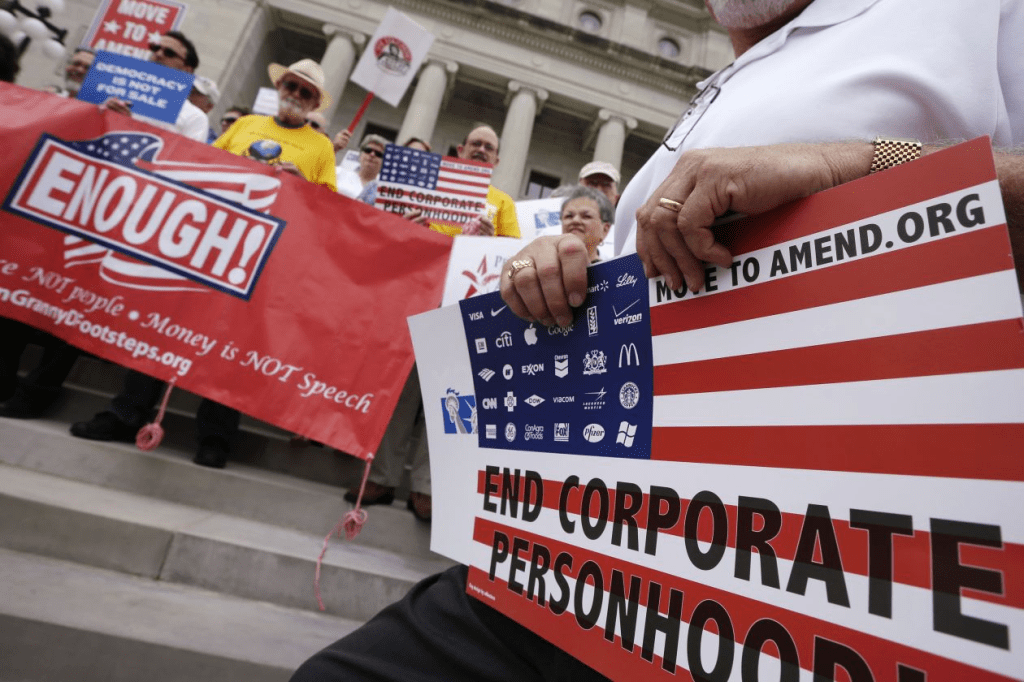
For years, people have said Citizens United created corporate personhood. Let’s shut that shit down right meow.
Nowhere in the majority opinion did that occur—nor the dissent, for that matter.
The opinion was far more nuanced and narrow. An easier way to frame it would be to say this case suggests that the First Amendment protects speech itself, not just the speaker.
Corporations had “rights” for over a hundred years. You couldn’t steal from them, you couldn’t blow them up, you couldn’t violate them in pretty much any way that was illegal if you did it to an actual person.
The second fallacy about this case was that it allowed unlimited corporate money to flow into politics. No the hell it did not.
Remember, this case was about expenditures, not donations. Corporate donations were completely unaffected by this and are still prohibited to this day. Any provisions preventing corporations from greasing palms were left unmolested.
What changed is that corporations were free to put out political messages at their own expense. Since these were independent acts unrelated to the efforts of a politician, where no money exchanged hands, it’s hard to argue it could lead to government corruption. Even the FEC argued it was a distortion issue, not corruption.
I’ll give you the distortion argument all day—that’s real, and a fair argument against this ruling. But the court failed to consider distortion a compelling governmental interest, as required by strict scrutiny when limiting political speech, and I can see that argument. Stifling such speech shouldn’t be taken lightly.
I’ve spoken with a lot of people who have strong opinions about this case, yet know very little about it outside of shit they read on the socials, pundit misinformation, uninformed reporting, or what their idiot uncle Fred read on FreedomEaglePatriot69.com (a most reliable source).
I would suggest everyone find their humility button on these cases. Be open to new information.
Accept that even if you’re a lawyer, you may not fully understand this case unless you took the time to listen to oral arguments and the opinions.
Appreciate that like a significant amount of case law, both sides have fair arguments. If one side was ridiculous, it probably wouldn’t have made it to SCOTUS in the first place.
You can pick who you think should have won, but at least accept the other side wasn’t batshit crazy, and then debate their position with the respect you’d want them to show you.
log·i·cal: capable of reasoning or of using reason in an orderly cogent fashion lib·er·tar·i·an: an advocate of the doctrine of free will; a person who upholds the principles of individual liberty especially of thought and action