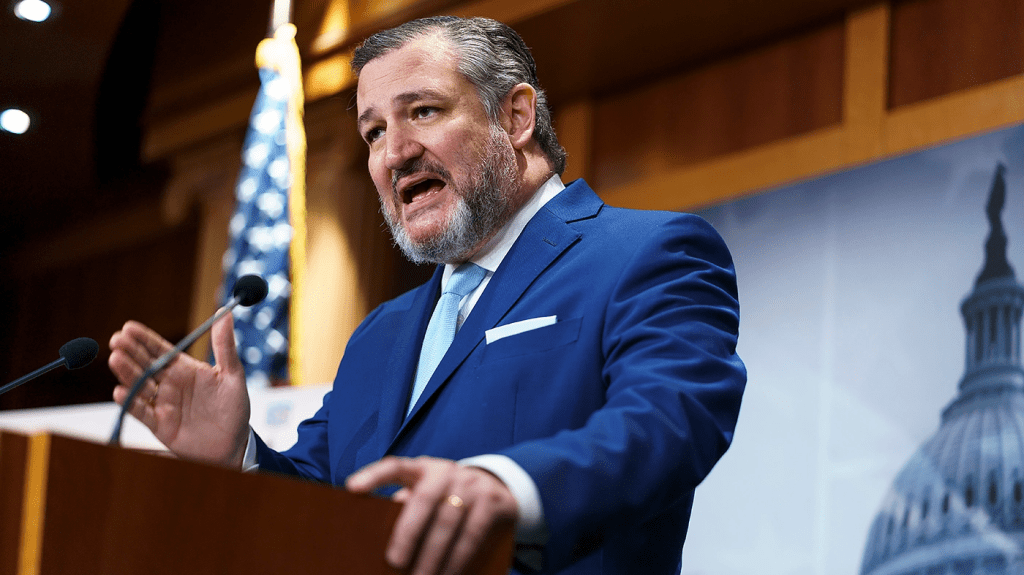
So you’re all familiar with Texas Senator Ted Cruz, right? He’s the bombastic Republican with a voice that skipped right the fuck over puberty.
Because Cruz is a bit of a rabble-rouser, he decided he didn’t like a stupid campaign finance law, creatively named the Bipartisan Campaign Reform Act of 2002, and a 11 CFR regulation from the FEC that relates to it, and he was going to do something about it.
So, Teddy C decided that he was going to pull a political stunt, because ever since he was a little boy, with his little toy lawyer briefcase, and his little toy gavel, he wanted to have a case before the Supreme Court.
I’m just being an ass, to be fair, he clerked for the late justice Rehnquist, and as a lawyer, argued in front of SCOTUS nine times. Although this may be his first case where he’s the petitioner.
With this in mind, he devised a master plan to go after the Federal Election Commission (FEC) and their stupid fucking laws.
In Teddy C’s 2018 election against Beto “I’m coming for your guns” O’Rourke, the day before the votes were cast, Teddy C sprang into action and loaned his campaign $260,000, precisely $10,000 more than the law in question references in its rules.
The basic gist of this law and regulation as I understand it, is this: A candidate is free to loan money to their own campaign. If they loan more than $250k, they can be paid back from the campaign, if the money they received was donated before the election was over, but paid back to them within 20 days after the election. Otherwise, they can only be paid back the $250k, and no more. Any remaining money they loaned to the campaign that isn’t able to be paid back, is treated as a campaign contribution, and they may no longer recover it.
Their logic is that there could be a quid pro quo scheme where people give money to candidates, through their campaign, in exchange for political favors, after the election is over.
But Teddy C believes this is a violation of free speech. If someone wants to give to their own campaign, then pay themselves back after the campaign is over, assuming there’s money still in the till, it’s none of government’s fucking business.
Teddy C also argued that even if this law is to prevent corruption, the other side can’t even name one fucking instance this law would have prevented, where corruption occurred. It’s just those pesky Democrats conjuring up crazy ideas, and passing them as law, even if there’s no evidence it fixes a fucking thing. They’re kinda famous for that.
Senator Ted Cruz
So Teddy C. Paid himself back the maximum $250k from his campaign, and then sued over the remaining $10k, arguing it was a violation of his free speech. Genius, right?
Well, the FEC was like, “What is it with this prepubescent-sounding twat? First of all, he purposefully did this shit, just so he could sue. He was perfectly capable of paying himself back earlier, but he didn’t, just so he could drag all our asses here in his stupid little political stunt. Also, this shit is entirely self-inflicted. No one fucking harmed him. He did it to himself. He’s just a whiny little bitch who doesn’t like a law that he wasn’t able to get voted down in congress. So he’s hoping to get SCOTUS to do it for him,. He’s a pathetic little cunt.”
They also officially declared Shenanigans.
Because of those arguments, the FEC tried to get the case thrown out, arguing Teddy C didn’t even have standing to sue, since he wasn’t harmed in any way. “Standing” just means that you have a right to sue, because you were harmed by the actions of the people you’re suing, or somehow otherwise justified in suing them. Because if you weren’t, it doesn’t really make sense for you to be allowed to sue them.
Like imagine I’m pissed off about a blown call by a referee against my precious Bengals. I can’t sue the ref, as I don’t have standing. The ref’s wooden-eye incompetence harmed the Bengals, not me. Make sense?
The FEC also argued, “How the fuck are we limiting his free speech? This money to pay him back is coming AFTER the election is over. There’s no more speech to be done regarding the election, and thus no reason for his campaign to be raking in money to pay him back. The shit is already decided. Any money coming in now, is almost assuredly a fucking bribe.”
But Cruz hit back saying, “Listen you FEC twatwaffles. If I am worried I may not be able to repay myself after the election, I may not loan my campaign the money out of fear of substantial loss, and thus limiting my free speech through fear created by a law the FEC wrote. So they fucking harmed me. Not to mention, there’s already a $2900 limit on personal contributions. So if you’re worried about some pay to play scheme, that law prevents that. I’m not going to jail for a mere $2900. This one is just fucking stupid.”
Also, are we just going to ignore the weirdly specific $2900 rule? Yes, I guess we are, for now.
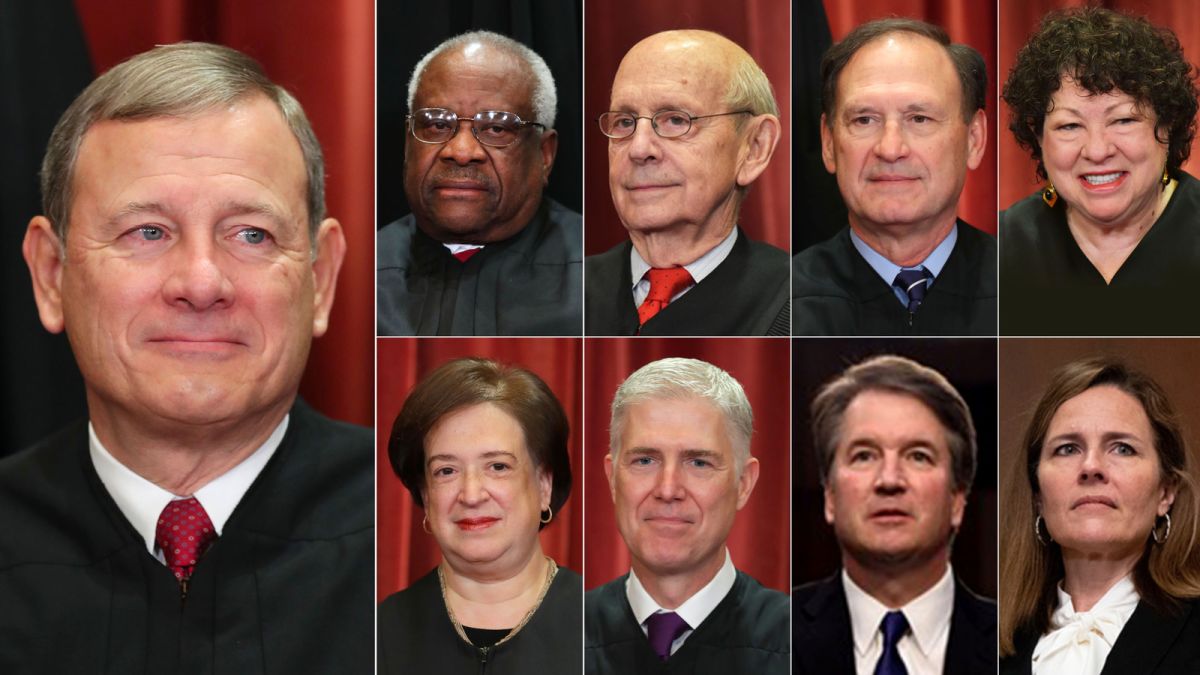
As arguments ensued, Justice Alito questioned counsel Malcolm “In the Middle” Stewart for the FEC:
Malcolm Stewart
Mr. Stewart, is one of your arguments the following: A party cannot challenge the constitutionality of a law that imposes an allegedly unconstitutional restriction on the exercise of a right if the party could have very easily satisfied the preconditions for the exercise of the right?
After counsel Stewart agreed, Alito nailed him with a hypothetical. I love this hypothetical shit.
Well, how can that possibly be the law? Suppose a state university says that no person of a particular race may enter any of the university buildings unless that person pauses for two seconds, stands still for two seconds, before entering the building. Would you say, well, you can’t challenge that racial restriction because it’s no big deal to pause for two seconds before you go into the building?
I think that’s a pretty solid point for Alito against the FEC.
But Counsel Stewart, undeterred, battled on. He attempting to hit home the idea that Teddy C had no business doing this shit, making this argument:
If the Appellees had filed their suit seven days before the election and they had said in their complaint Senator Cruz has no intention of loaning money to his campaign regardless of the outcome of this suit, but he feels strongly that the statute is unconstitutional and he would like a judicial determination to that effect, clearly, there would have been no standing, whatever the Court thought of the merits of the constitutional claim. And what we have here is essentially that; that is, Appellees have stipulated that if there were no statute, if there were no reg, they never would have made the loan and they would have promptly repaid it if the loan had been made.
But again, despite his best efforts, Chief Justice Roberts also hit him with a hypothetical. Did I mention that I love this hypothetical shit? It may seem silly, but such hypotheticals are so important in debating, because the underlying purpose of all this shit, is to draw a clear line between what’s allowed and what’s not allowed, that can be applied to any similar situation easily.
Anyway, here’s what the chief had to say:
Well, there’s just sort of a—I mean, there’s—test cases are not always—you don’t always have a lack of standing.
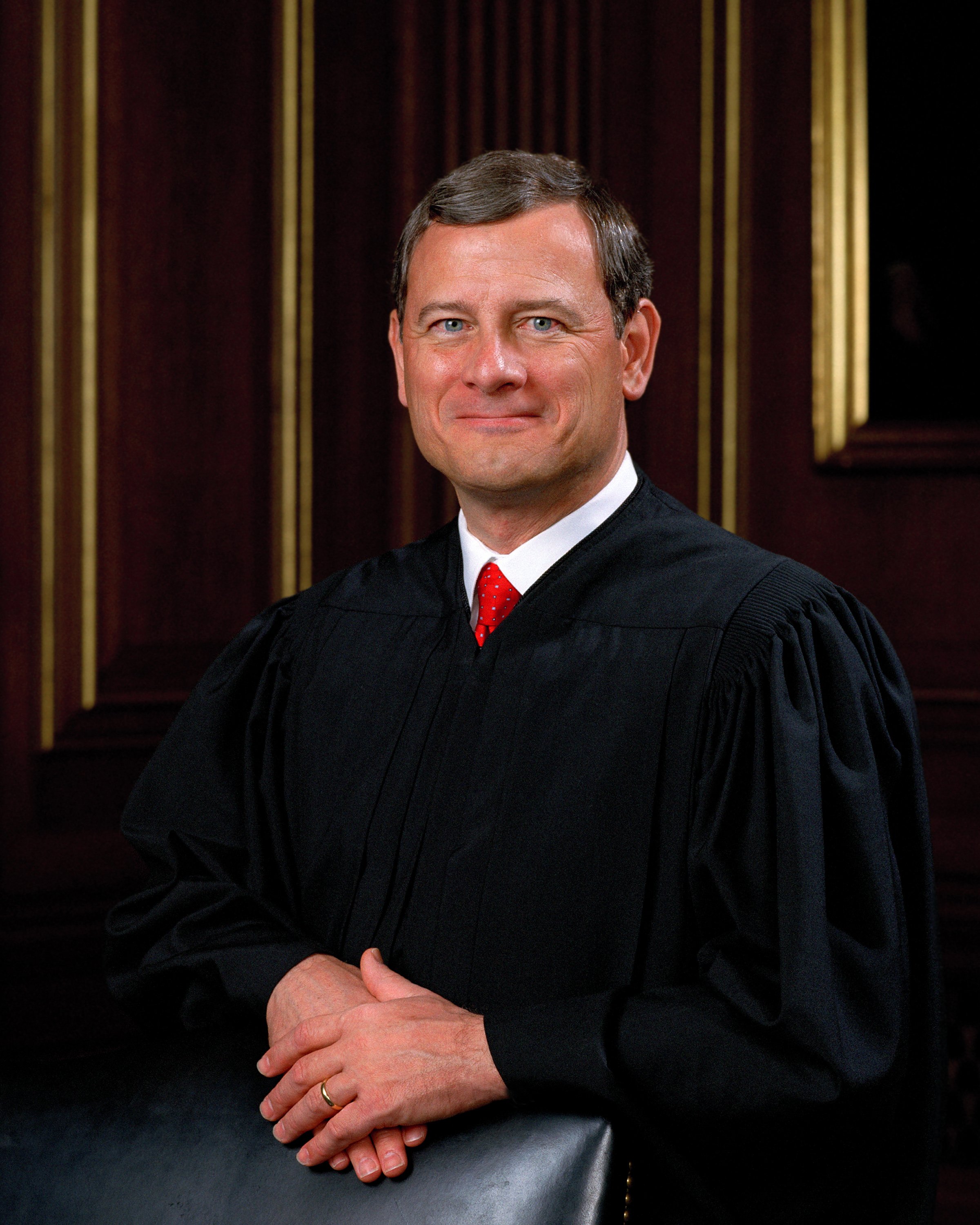
Chief Justice John Roberts
If you get people challenging discriminatory housing practices and they go in and say, you know, we’re thinking about buying this house and they’re discriminated against because of their race and they don’t say, well, you know, whatever, you can’t buy the house. They don’t have to go in and prove that they would actually buy the house, do they?
Counsel Stewart, now with two black eyes, was still punching back, but along came heavyweight champ Clarence Thomas.
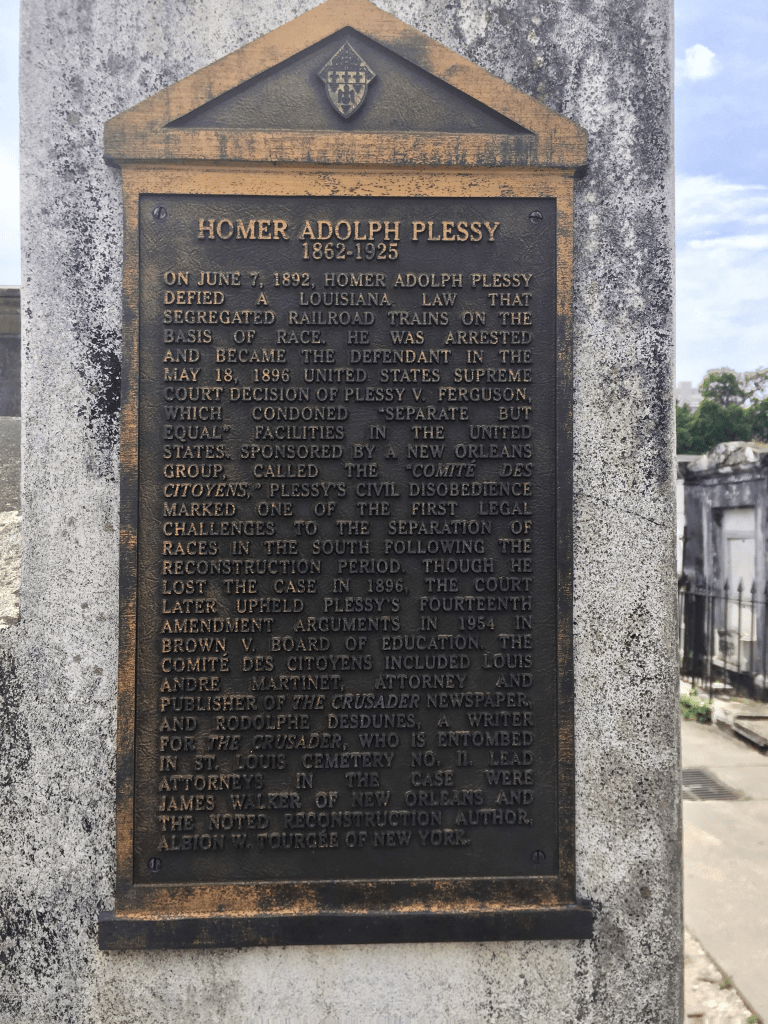
Before I outline justice Thomas’ question, we need to explain about Plessy v. Ferguson, a fucking landmark case if ever there was one, from 1896. In Louisiana, at the time, they had a law requiring black passengers sit in separate railway cars from the white passengers. Homer Plessy, who was 7/8 white, was still considered black under Louisiana law. So a group trying to fight the law for racial reasons, teamed up with the railway who didn’t like the law, because it meant they had to spend extra money on railway cars and shit, joined forces, and had Homer Plessy sit in the white passenger car as a means of protest. Plessy was told to move by authorities, and he invited them to suck on his 7/8 white dick, and spin.
The gravesite of Homer Plessy. Try as I might, could not find a picture of him. Kept getting other random people involved in his case.
They eventually ended up at SCOTUS, where Plessy argued that such segregation violated the 14th amendment which grants equal rights to all. But Plessy tragically lost his case, in a 7 to 1 ruling where SCOTUS argued segregation wasn’t unconstitutional. It was a different time in 1896, which is to say, when it came to black people, white people were ginormous dicks.
It wouldn’t be until 1954, in Brown v. Board of Education, that Plessy would be unanimously overruled by SCOTUS, and segregation was in fact deemed unconstitutional, ending it forever.
Now back to Justice Thomas bringing the heat. He went into this exchange with counsel Stewart:
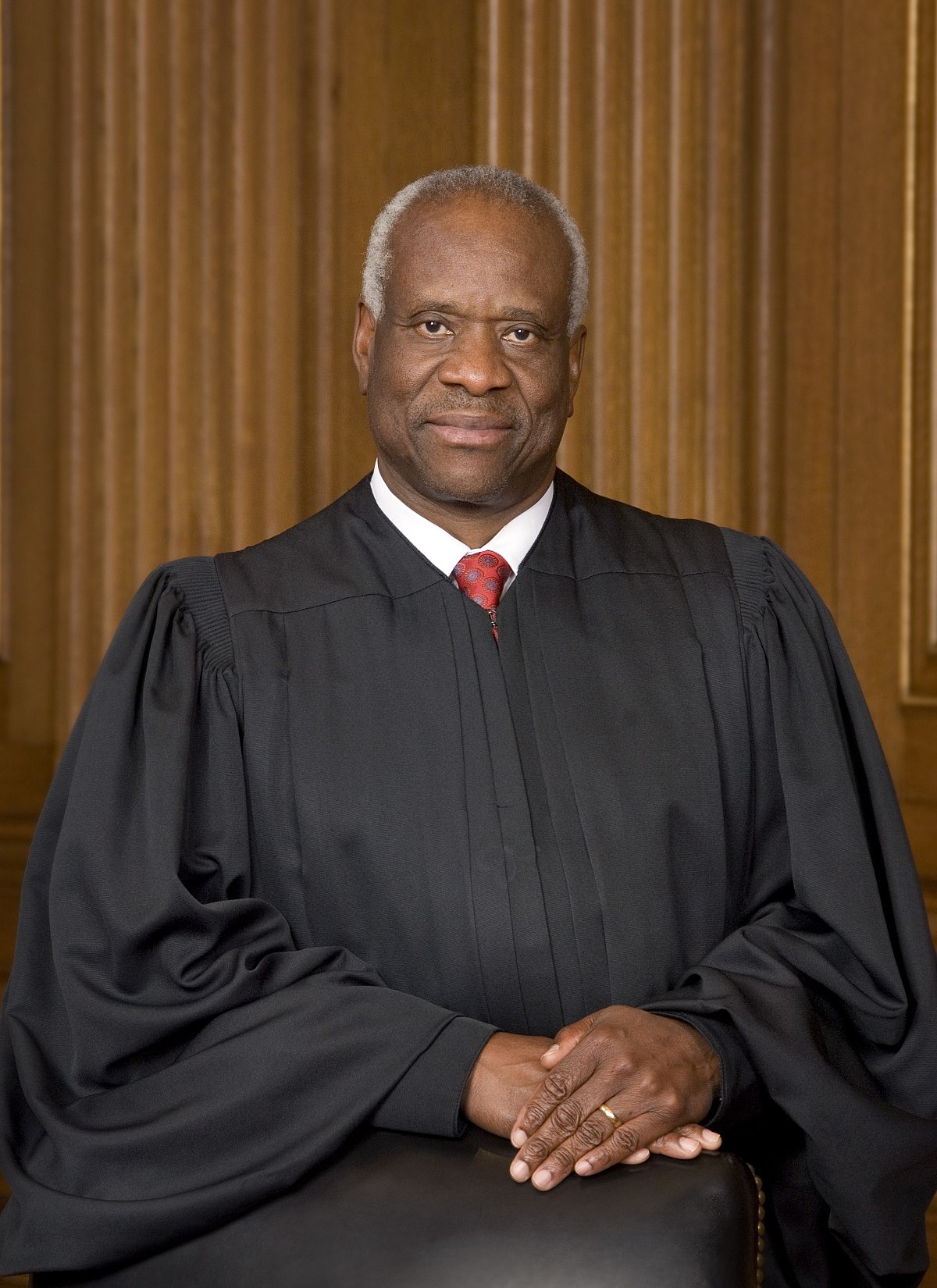
Clarence Thomas
My final question is, going back to your standing, you said a number of times that these self-inflicted injuries can’t be a basis for standing.
At least that’s what I understand. But how would you—using that at that level of generality, what would you say about Plessy sitting in the wrong car?
Malcolm L. Stewart
I would—we would not say that that is self-inflicted in the relevant sense.
Clarence Thomas
Well, why not? I mean, it’s just—all he has to do is go to another car.
Malcolm L. Stewart
That is, Plessy is attempting to assert a legitimate constitutional right and is attempting to do something in the real world that presumably he would do if the law were not on the books; that is, if there had been no law mandating segregation on the means of transportation, presumably, Plessy would have sat in an integrated section and would have had an interest in doing so. This is self-inflicted not just in the sense—it’s a different case when plaintiffs stand on their rights and insist on doing what they would do if the law were not in effect and experience injury as a result of it. This is a case in which the plaintiffs did something they would not otherwise have done solely for the purpose of being injured and then filing a suit.
Either in an unplanned bit of ironically similar thinking to justice Thomas, or riding on the back of Justice Thomas’ argument, counsel for Teddy C, one Charles J. Cooper, had this to say in his opening argument, attacking the idea that because Teddy C did this to himself, it somehow nullifies his right to petition the injustice he’s claiming.
Justice Clarence Thomas
At least since Mr. Plessy sat down in the train car reserved for whites, this Court has repeatedly held that a plaintiff who deliberately subjects himself to the injury of unconstitutional government action for the admitted purpose of challenging it has created his standing, not defeated it.
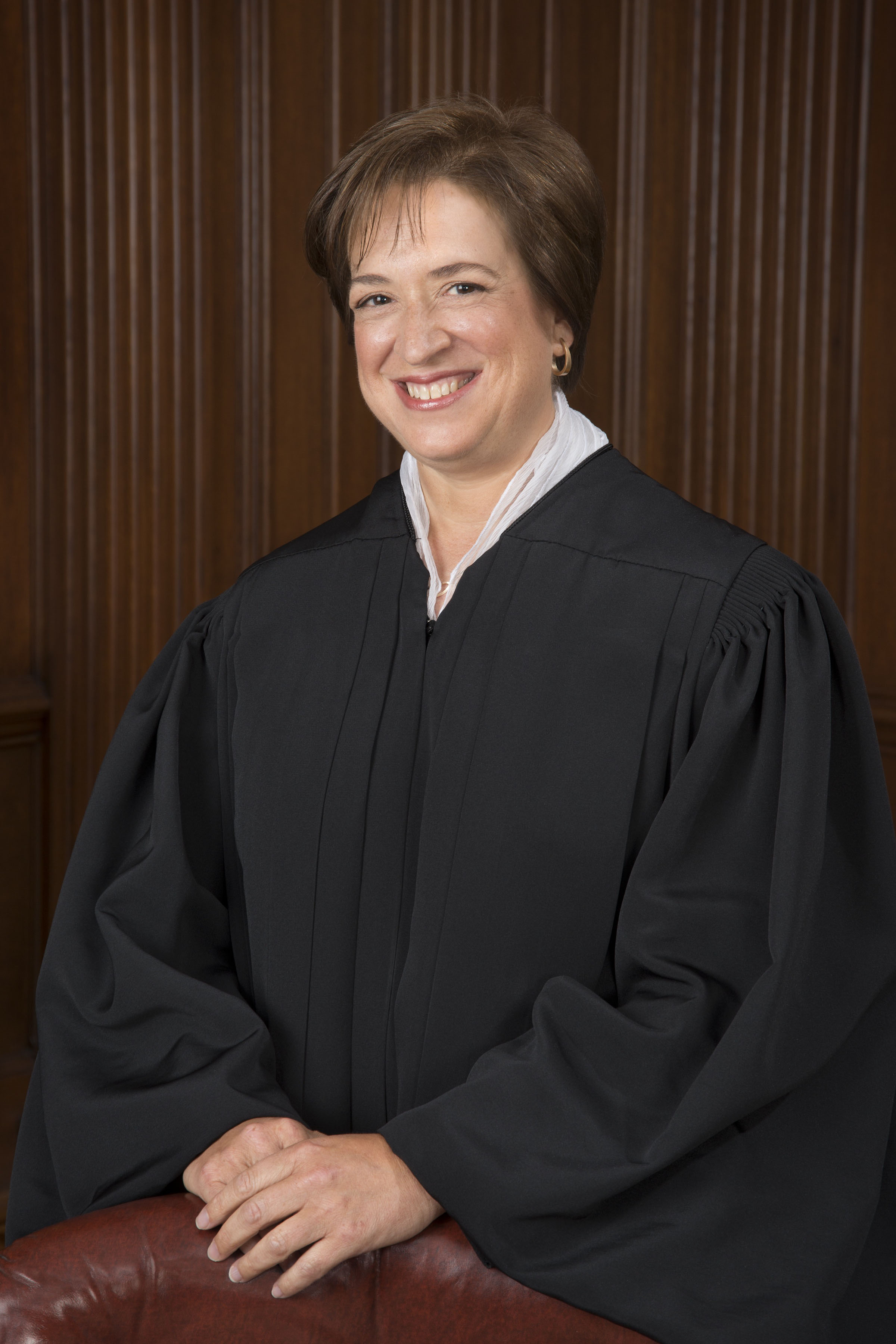
As is always the case, Justice Elena Kagan really loves to argue. I mean, she fucking loves that shit. Especially when her mind appears already made up that the person arguing in front of her is full of shit.
I won’t paste the exchange here, because fuck it’s long. But basically, she pushed counsel Cooper on the idea that it’s limiting Teddy C’s speech. She argued that isn’t it limiting how much people can give Teddy C for his campaign, similar to the $2900 maximum contribution law, which isn’t being questioned here, because as she put it, it’s preventing Teddy C from getting paid back from others after the election is over.
Here’s one final snippet of her long-ass argument:
Justice Elena Kagan
It just limits the amount of speech that a candidate can make on somebody else’s dime.
It does not limit the amount of speech that a candidate can make on his own dime. And what I’m suggesting is that when we think about limits on the amount of speech that a candidate can make on somebody else’s dime, the appropriate place to look in the law of campaign finance is to the law respecting contribution limits rather than expenditure limits.
Counsel Cooper went on to argue, if the idea is that post-election money is inherently corrupt, why the fuck does congress even allow the first $250,000 to be repaid. Shouldn’t they ban it all, then?
Justice Kagan wasn’t done with counsel Cooper though. Did I mention that she fucking loves to argue? Well, she argued that Teddy C’s repayment scheme amounts to gifts, and that’s what Congress intends to prevent. That someone giving them money to repay their loan to the campaign, is equal to someone just giving them a chunk of money.
While Justice Kagan is surely a strong legal mind, apparently, she’s
reinforcing the stereotype that women suck balls at fucking math.
Let’s help her out. If a candidate loans their campaign $100,000, and then donors pay back, through the campaign, that loan of $100,000, that candidate has precisely zero more dollars than they had when they started. If donors give gifts that amount to $100,000 to a candidate, then that candidate has $100,000 more dollars than they had before. See the difference? Great. Let’s move on.
Justice Barrett made this point earlier, rebutting counsel Stewart, for the FEC, when she said:
But Senator Cruz says that this doesn’t enrich him personally because he’s no better off than he was before. It’s paying a loan, not lining his pockets.
Justice Amy Coney Barrett
While I always want to be humble that the justices know more than me about most things, it’s concerning Justice Kagan’s bias against Teddy C, and the people fighting this law, have ingrained within her, the inability to understand her math logic is woeful.
I also want to be respectful to counsel Cooper, but he didn’t make the point I made, so apparently he sucks at math, too.
Instead, he rebutted justice Kagan with this, which potentially alludes to my point, without using math:
Your Honor, what about the rest of the campaign’s debts? This campaign ended up with $2.7 million worth of debt.
Less than 10 percent of it was the candidate’s debt.
Is every contribution made after the election a gift to all of those creditors? Of course it’s not. And nobody would view it that way. It’s not a gift, Your Honor, when when the debtor pays the creditor what the creditor is owed.
And that’s what we have here. Yes, it is true that all of the campaign’s debts are paid by contributions limited by the base contribution limits.
All of them are.
But the candidate’s debts don’t stand in any different shoes from the ad agency’s or the consultants’ or the landlords’ of a campaign.
Justice Sotomayor took up the fight though, with what I thought may have been a much better argument. They had just established that the law applies to winners of elections as well as losers.
So it was asked if both winners and losers were equally likely to raise funds after the election and get repaid. Counsel Cooper agreed that losers were certainly less likely to raise funds.
So I thought the argument would be, that if only winners are likely to get repaid, it seems like it is kinda a quid pro quo situation, because only people who win, and go on to legislate generally receive such money.
Instead, Justice Sotomayor just responded:
Justice Sonya Sotomayor
So, generally, we don’t look at people who are not likely to be injured when we’re deciding the constitutionality of a statute?
She didn’t ask anything after that. Not sure if she was planning to, and got interrupted by Justices Roberts and Alito, but I didn’t see where she made a point.
It’s also worth mentioning that the justices also argued over the specific 20-day rule, that apparently comes from a separate FEC regulation; 11 CFR § 116.11, and a regulation is separate from a law passed by congress, such as the BCRA. They questioned that it seemed he had beef about the 20-day rule, and therefore should have taken a different path to challenge that, because the issue of the 20-day rule is not a constitutional one, it’s just not anywhere in the BCRA, and so the justices felt he likely should have challenged the non-constitutional issue first, before going after the BCRA as a whole.
I don’t want to get too much into the weeds here, but basically Teddy C filed his suit in such a way, exploiting election law rules, so that his case would go in front of a three judge panel, that then is appealed directly to SCOTUS, skipping all that typical circuit court shit.
But when counsel Cooper for Teddy C opened, he made it clear that the regulation is meant to come from the law, and therefore their goal was to invalidate the law, and not just the regulation, and by doing so, it gets rid of the regulation as well.
Counsel Cooper also had to fend off yet another argument from Justice Kagan, because she refused to budge on the idea that this law and regulation protect against quid pro quo corruption. However, counsel Cooper did some math of his own, and pointed out that if that’s what congress intended, then the $250,000 limit basically means, that the first 86 people who can come up the maximum donation of $2900 (250,000/2900 = 86.2) to give to their candidate were still being allowed to donate, but that 87 potential donors and beyond…well fuck them.
Charles J. Cooper
So basically, it makes no sense that the first 86 are good people, but 87 and beyond are just the corrupt ones. And if this is to stand, basically you’d have a bunch of dishonest fuckheads lining up to be the first 86 to get their money in good, otherwise, they’re out of luck.
They sort of wrapped up arguments with justice Sotomayor questioning how post-election contributions are generally not quid pro quo. They already won. So why keep giving money? Is it not to get the attention of the newly elected politician you’re giving money to?
But counsel Cooper pointed out that it could be money being donated early for their next re-election bid, or it could be money that they essentially promised to give before, but for whatever reason had to wait to give until later. He analogized it to buying a meal with a credit card, and then paying for it a month later.
But in the end, he pointed out that if congress thought that post-election contributions must be quid pro quo, then they should’ve just fucking banned them altogether, and those assholes didn’t bother to do so in any way. They just restricted how much could go to paying back the politician’s loan to their campaign. So we have to assume they felt there were legitimate reasons to make post-election contributions, making her argument stupid as fuck.
He then politely invited justice Sotomayor to kiss his ass.
In a not-so-surprising 6:3 ideological split, SCOTUS sided with Teddy C. They first opined that he did have standing. Even if he purposefully triggered the action against himself, that doesn’t mean he can’t sue as a result. He was still harmed by the FEC law, not by himself. Because without that law, he could be paid in full.
The majority also agreed with Cruz’s logic that it puts a candidate in a position where they could loan money to their campaign, but may not out of fear of not being repaid if they’re able to raise money later. They also agreed congress solved a problem no one had. There was no evidence this fixed one single issue of corruption.
As per usual, the Democratic Appointees closed ranks, and opined that Cruz was a whiny little bitch, our election system is corrupt AF, and you Republican-appointed assholes don’t give a fuck. While I may be paraphrasing a bit, they were long on opinions, but short on any data, so I’m not really that far off.
I recently stated among friends, that I’ve vehemently despised Hillary Clinton since she was first lady; she has not done anything to change my opinion of her since.
My friend, attempting to challenge me on this, poignantly asked me what she could have possibly done as first lady to raise my ire. He was assuming I was just being a political ideologue with a hatred for anyone who is a Democrat, or at least Democratic in nature.
Hillary Rodham ClintonLittle did he know, I actually do have a reason, and it’s called The Health Security Act of 1993, affectionately known as Hillary Care. Despite neither being an elected official of Congress or the Senate, Hillary Clinton, at the pleasure of her husband Bill, drafted a legislative proposal for a government mandated single-payer health care system—a socialized medicine scheme. It was similar to what Obama really wanted when he ultimately settled for the Affordable Care Act, a quasi-free market system.
This wasn’t “Just say no” or Michelle Obama’s campaign to get people to eat healthy, this was an attempt at a massive overhaul of the American way of life (free-market capitalism) that would have cost taxpayers more than any other subsidy before it—by far. Yet she didn’t have a single taxpayer vote for her, thus giving her any legitimate reason to do such a thing. Not to mention, it was equally disturbing her husband appointed her to do so.
If Hillary had an ounce of medical training, or a history of leadership in the insurance industry, she would have some qualifications to point to in proposing such a scheme, but she’s a lawyer, nothing more, and thus unilaterally unqualified to run a taxpayer-funded, trillion-dollar (likely) system.
In my opinion, this showed a monumental amount of arrogance, and an unprecedented lack of respect for the Constitution and the American people. As the years have passed, she has never shown herself to be anything other than arrogant, disrespectful to our nation’s framework. Since then, she has also demonstrated a massive amount of untrustworthiness, with her various lies and legal indiscretions.
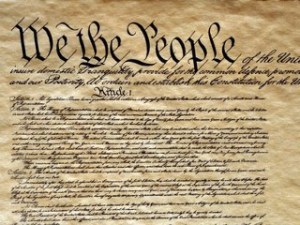
The United States Constitution
While I would never vote for a Democrat due to their current largely non-libertarian ideology, there are many Democrats I at least find respectful and trustworthy, just possessing a different ideology than my own, and I can respect that, to some extent.
Nonetheless, it would appear that the rest of the Democratic machine wants to have a baby with her, and unless she executes a bunny on national TV, she’s likely to be their nominee.
So with that in mind, I want to address Senator Rand Paul’s reaction to her, along with others from the GOP, and potentially the LP.
FORGET ABOUT HER, AS MUCH AS POSSIBLE, UNTIL THE DEBATES.
Rand, Rubio, Cruz, and others are on full attack mode against Hillary, and it’s a horrible strategy. People already hate attack ads, but for better or worse, a trait instilled within all of us is that a man attacking a woman, even if only verbally, is unbecoming and in poor taste. Just close your eyes for a minute, and imagine a bunch of guys angrily ganging up on a woman, and tell me who comes off looking like the villain—I assure you, it isn’t Hillary.
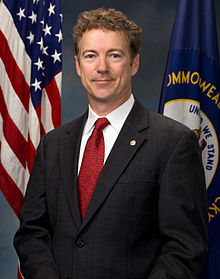
Senator Rand Paul (R)
There is no metric where any GOP or LP candidate will win votes from people who weren’t going to already vote for them by attacking Hillary.
Instead, they should focus on why they will be a great president as they see it, then if asked about Hillary in general, simply respond that they assume she’s a patriot, but simply has a different idea for America than they do, and more importantly, than our forefathers did when they drafted the Constitution.
The news media, led by Fox News, but also some main stream outlets, print media, and internet agencies have challenged Hillary’s shortcomings, let them be the ones pointing out the flaws in her character, they aren’t running for anything.
Her ideas are atrocious, socialism always is. So attacking her character as a campaign opponent is unnecessary when you can simply point out the flaws in the ideas she’s promoting with logic and reason, letting her and her ideology die on their merits, without ever even mentioning her name.
But every time a candidate mentions her, she is effectively getting press. If you mention her in an attack, she’s now getting press as the woman being attacked by those mean men (since no other woman has indicated she is looking to enter the fray). This will only bolster her likability as she milks playing the victim.
Former Governer Gary Johnson – Libertarian nominee for President
I’ve made it clear on numerous occasions that while I like Gary Johnson first and foremost, Senator Paul is the one GOP candidate who would likely wrestle my vote from Governor Johnson. But I would still consider Rubio or Cruz a severe improvement over Obama a monumentally better choice than Hillary, even if they don’t get my vote.
So Senators Paul, Rubio, and Cruz, and anyone else yet to enter the presidential arena who happens to be a champion of liberty, please heed my advice, and consider Hillary “she who should not be named.”
Focus on the issues, and attack Democratic issues, but do whatever you came to not let the name Hillary Clinton leave your mouth unless you have to.
As the 2016 presidential election nears, the speculation as to who the Republican nominee is the grand question for the GOP.
On one hand, you have traditional but young Republicans like Marco Rubio or Paul Ryan. You have wild cards like Chris Christie. There is the old guard like John McCain or Peter King, but then there is the libertarian wing of the GOP headlined by Rand Paul, formerly his father Ron Paul, and although maybe the least known, but arguably the most libertarian, Justin Amash.
Senator Rand Paul (R)
Congressman Justin Amash (R)
Unless evidence is uncovered that Hillary Clinton had an affair with Fidel Castro, it would seem clear she will be the DNC nominee. She will certainly be a formidable opponent to any GOP selection. So the question begs who has the best chance of beating her.
Let’s first discuss polling that is out there. Throw every single one of them out. No matter how reputable these polling organizations are, there is simply too much time until the election for new evidence to come in and change people’s minds. Whether it be a scandal that is uncovered, or just getting to know a candidate better, the last Republican primary and its consant shifts in the front-runner proves that the debates and higher scrutiny of election season can change everything in an instant.
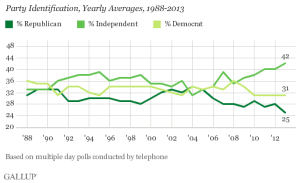
Many on the right feel that a typical Republican is the best way to go because that person will rally the troops. The idea is that the best candidate is the one that makes Republicans the happiest. I get that notion, but it is completely illogical; let me explain why.
With that in mind, that means that if every single Republican votes for a traditional Republican candidate, and they manage to split the independent vote, they still lose by 6%. They must win the lion’s share of that group as well as their own party.
So how do they do that?
When you ask people why they don’t like Republicans, more often than not, you hear that they are stuck in the mud on gay rights, drug laws, or other social-conservative issues they refuse to let go of. While a predominance of people are still religious, many of them don’t want it legislated. We want a free society, and the 1st amendment honored.
Rep. Justin Amash is a shining example of this; he couldn’t be less hypocritical. He is an orthodox Christian, arguably someone who has a higher level of faith than the average Christian, yet he understands that matters of religious faith should be kept between family and friends, not enforced by government at the point of a gun.
Independents are generally sick of the two-party system because both seem to have a penchant for “screwing the public” as they see it. Why do they say this? Because they see bills with pork barrel special favors, government waste, corruption, and infringements to basic rights. Whether it be gun rights, the right for a gay couple to marry, for a person to smoke a joint, or to engage in paid sexual activity. People instinctively want to be free to do what they want so long as they aren’t hurting anybody. So the candidate that best represents that will win those votes.
Independents often say that they are socially liberal, but fiscally conservative when describing why they don’t affiliate with either party. That is libertarianism at its core! If I had a dollar for every person that was a libertarian and just didn’t know it, I’d have enough money to run my own campaign.
If the GOP select a traditional Republican, that candidate will get Republican votes, and that is all they will get.
If they select a libertarian candidate like Rand Paul or Justin Amash (if he were running), they will get all the Republican votes. Because let’s be honest, the GOP’s unofficial slogan for the next presidential election will undoubtedly be “Anybody but Hillary, 2016.”
But with a libertarian, they will also pick up independent voters who are non-religious. Then they will pick up those who want to use recreational drugs like marijuana since neither party seem to be overwhelmingly behind that. There are millions of voters in that demographic—you’re fooling yourself if you think otherwise.
Lastly, they will pick up some voters who would have otherwise voted for the Libertarian Party candidate because now they can comfortably pick a libertarian Republican. I voted for Gary Johnson, but a libertarian like Rand could sway my vote back to the GOP, and I’m sure I’m not alone.
Once people are presented with a candidate who embraces the age-old libertarian mantra of “no victim, no crime,” that person will win independents by a landslide.
The GOP love to invoke The Gipper often, but seem to forget that he considered himself a libertarian. He said quite succinctly that “If you analyze it, I believe the very heart and soul of conservatism is libertarianism.”
Lastly, I would also point out that Rand Paul is the only one reaching out to minorities and other non-traditional GOP supporters in an effort to grow the party in a way no other candidate does.
He visited Howard University before he was even running, taking many questions from all the students. He went to Detroit ahead of their expected bankruptcy. (Update: He also visited Ferguson after the unrest there.) An effort many
So GOP, if you want to win, you shouldn’t just want a libertarian, the numbers and history indicates that you need one. Do yourselves a favor; Rand Paul 2016. It’s truly your best hope.
log·i·cal: capable of reasoning or of using reason in an orderly cogent fashion lib·er·tar·i·an: an advocate of the doctrine of free will; a person who upholds the principles of individual liberty especially of thought and action








![Hillary_Clinton_official_Secretary_of_State_portrait_crop[1]](https://logicallibertarian.com/wp-content/uploads/2015/04/hillary_clinton_official_secretary_of_state_portrait_crop1.jpg?w=240)




 The Logical Libertarian™