In a case, which wins the award for being the longest named SCOTUS case of the last decade or so, we’re talking about COVID. Remember that shit?
In order to minimize the risk to American workers during the COVID pandemic, the Occupational Safety & Health Administration (OSHA), back in November of 2021, issued a mandate that any company with over 100 employees either require employees to get vaccinated, or wear a mask when at work.
While OSHA isn’t the CDC, they felt it was within their jurisdiction, in order to make sure people were safe at work, from anti-vaccine anti-mask zealots.
The National Federation of Independent Business (NFIB) and others filed suit, arguing that this was not within OSHA’s rights to make such a regulation.
Because it was a pandemic issue, and the petitioner’s were seeking a stay of the order that would go into effect in a matter of days, SCOTUS decided to fast track this shit, and hear arguments much faster than normal.
The NFIB’s arguments are basically that this shit would cost employers a shit ton of money. Not that they would be forced to buy the masks or the vaccines, but instead, there are a good number of their employees who are anti-vaccine anti-mask zealots who’d rather take their toys, go home, and quit like the little anti-science crybabies they are, than protect their fellow coworkers.
Actual Photo of Anti-Mask Anti-Vaccine Person
I know it might seem anti-libertarian on the face of it to attack these anti-vaccine folks, but this is the Logical Libertarian, not the Zealous Libertarian, or Anarchist Pseudo-Libertarian. Vaccines fucking work, and any dangers that have been uncovered through the years were not only minimal, but highly overshadowed by their benefits. Any argument to the contrary is either born of ignorance or malice.
On this page, we promote science and libertarianism combined in a logical approach. I’m not interested in hosting an anarchist site where I call myself libertarian just because I know most people hate anarchy as much as they hate communism.
As I see it, the difference between anarchy and libertarianism, is libertarianism promotes the idea that government should exist to protect people’s rights. So while it is fair to debate the merits of all this, and others are welcome to differ in opinion, vaccines aren’t just about saving the vaccinated person’s life, it’s about protecting others they come in contact with. While I do oppose hard vaccine mandates, where everyone must get one no matter what, I think conditional mandates like this are arguably protecting people’s right to life, while still being optional.
A good analogy would be, if you want to drive a car on our roads, you have to agree not to be drunk when doing so. Few libertarians are promoting getting rid of all drunk driving laws. So arguing, “if you want to work for an employer, you have to make a reasonable effort not to put other employees at risk from sickness and death,” isn’t a hugely different proposal.
Obviously, disagreement and fair counter-arguments are always welcome. It just needs to be acknowledged that it’s a fair argument, and there are also fair arguments opposing it. Zealots who can’t accept this, are invited to cordially eat my entire ass.
Apologies for the distraction, I’ll get back to this case in front of SCOTUS now.
Scott Keller, counsel for the NFIB opened with an argument that basically hit two main points. One, OSHA has never regulated vaccines before, and that this rule, effectively makes businesses a “de-facto public health agency” as he put it.
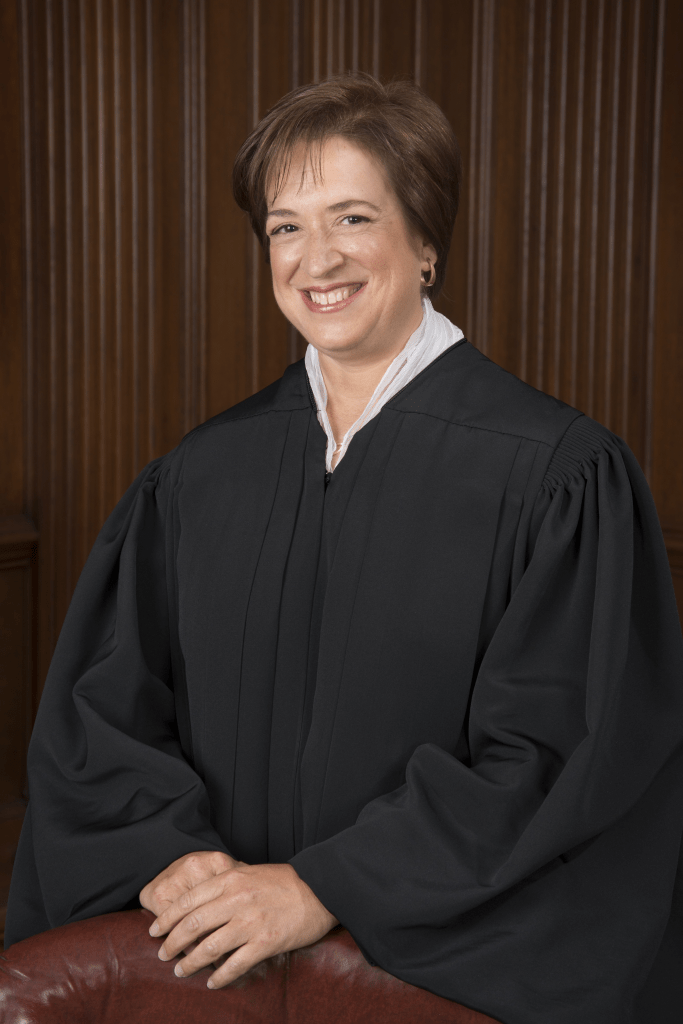
But shortly after his opening arguments, Justice Kagan was having none of his argument. She chimed in with this:
Mr. Keller, I don’t understand the point. Whatever “necessary” means, whether it’s necessary and proper or whether it’s something more than that, why isn’t this necessary to abate a grave risk? This is a pandemic in which nearly a million people have died.
It is by far the greatest public health danger that this country has faced in the last century.
More and more people are dying every day.
More and more people are getting sick every day.
I don’t mean to be dramatic here.
I’m just sort of stating facts. And this is the policy that is most geared to stopping all this.
There’s nothing else that will perform that function better than incentivizing people strongly to vaccinate themselves. So, you know, whatever “necessary” means, whatever “grave” means, why isn’t this necessary and grave?
Justice Elena Kagan
One of the arguments presented by both counselors for the petitioners was that OSHA generally regulates issues that are specific dangers to specific businesses.
For instance, if your business operates a forklift in a warehouse, they’ll regulate how that forklift is to be used to ensure some dumb fuck operating the forklift doesn’t run over some idiot worker not paying attention when a heavy vehicle is driving around next to them.
Or maybe you’re a roofer, OSHA might regulate you wear a safety harness so your dumb ass doesn’t fall 50 feet to your fucking death because you’re clumsy as fuck, and lost your footing. Shit like that.
But this rule, seems to be a nationwide sweeping rule that applies to everyone, everywhere, all the time. Basically, their beef is that if you were the type of worker who is essentially on your own, maybe driving around in a car by yourself, or out on some location where you’re not around other people as a necessary requirement of your job, a vaccine or mask in your situation isn’t really protecting anyone. So then it becomes an overreach.
The second counsel for the petitioners, Benjamin Flowers, hit this point home with his opening argument:
Mr. Chief Justice, and may it please the Court: OSHA typically identifies a workplace danger and then regulates it.
But, here, the President decided to regulate a danger and then told OSHA to find a work-related basis for doing so.
This resulted in the vaccine mandate, a blunderbuss rule, nationwide in scope, that requires the same thing of all covered employers, regardless of the other steps they’ve taken to protect employees, regardless of the nature of their workplaces, regardless of their employees’ risk factors, and regardless of local conditions that state and local officials are far better positioned to understand and accommodate. So sweeping a rule is not necessary to protect employees from a grave danger as the emergency provision requires.
And I want to be clear that states share OSHA’s desire to bring this pandemic to a close, but the agency cannot pursue that laudable goal unlawfully. I welcome your questions.
Benjamin Flowers
He went on to argue, that COVID isn’t a workplace danger, it’s just a danger that exists in the world right now. While he didn’t say it, I think he’s effectively arguing this is the purview of the CDC to regulate, or congress to pass a law, not OSHA.
Using my forklift example, he’s basically arguing that’s not a danger I face at home. It’s specifically a workplace risk. But COVID is a danger I face everywhere. Ergo, not a workplace risk. Ergo, not the purview of OSHA.
But Justice Kagan was having none of this noise. She passionately fired back:
Well, why not? I mean, the combination of lots of people all going in to one indoor space and having to deal with each other for eight hours, ten hours, however many hours a day, in those settings, the combination of the environment and the people that are in that environment create a risk, I would think.
I mean, tell me if I’m wrong about this.
I would think that workplace risk is about the greatest least controllable risk with respect to COVID that any person has. You know, everything else a person can control.
You can go to the baseball game or not go to the baseball game.
You can decide who to go to the baseball game with.
But you can’t do any of that in workplaces.
You have to be there.
You have to be there for eight hours a day.
You have to be there in the exact environment that the workplace is set up with. And you have to be there with a bunch of people you don’t know and who might be completely irresponsible. Where else do people have a greater risk than at the workplace?
One question I have in all this, is while counsel made some pretty creative arguments to the distinction of workplace risk, versus general risk, at no point did anyone arguing for NFIB point out that OSHA has such a distinction in law prohibiting it from creating a regulation to lessen a general risk that also occurs in the workplace.
Whenever I have such questions, there’s a part of me that recognizes, these counselors and justices have forgotten more about law than I’ll ever know, and that surely, they thought of this, it was somehow addressed, and my feeble legal mind just doesn’t understand.
But then there’s another part of me that thinks, “Well, I’m not an idiot. Sometimes, even really talented people make dumb mistakes or oversights. Maybe I’m on to something.” So then I get this notion that if only I were in the halls of the Supreme Court, and could just raise my hand and chime in, I’d be a hero.
Moving on…
Justice Breyer also chimed in, with a well-researched refutation of counsel’s argument, that people who aren’t at risk get no exception:
What this says, what I mean, my law clerks have been busy beavers on this case, I promise you, and what they have on this issue is that there are exceptions here.
There aren’t exceptions business by business, but there are exceptions, those who work from home, alone, or substantially outdoors, or those who can show that their conditions, practices, means, methods, operations, or processes make their workplaces as safe and healthful as the ETS can obtain a variance, okay? So they did make some distinctions.
Not industry by industry, but my question really is, that I’d like to turn this to, is a stay.
You heard what I asked.
Justice Stephen Breyer
I mean, you know, 750 million new cases yesterday or close to that is a lot. I don’t mean to be facetious. But that’s why I said I would find it, you know, unbelievable that it could be in the public interest to suddenly stop these vaccinations.
And the only answer that was given was a lot of people will quit. Well, OSHA considered that.
My wonderful law clerk has 61475, 63422, 61466, 61 474 and 475, those are pages.
I don’t think you should read all 61,000, but, nonetheless, there are at least five or 10 pages where they went into this, and they said, in our view, hmm, yeah, that’s right, some people may quit, maybe 3 percent.
But more may quit when they discover they have to work together with unvaccinated others because that means they may get the disease.
Okay? And more will quit because they’ll be — maybe die or maybe they’ll be in the hospital or maybe they’ll be sick and have to stay home for two weeks.
So they did the pros and cons. So I’d like to take Justice Kagan’s questions, which I think I share on the merits, and just ask you, are you asking us both still to issue a stay today, tomorrow, Monday, and why, if you are?
It’s also worth noting, that while many painted this as a vaccine mandate, there was the option to wear a mask, if one chose not to vaccinate, making it not a mandate.
During the argument from OSHA, Justice Roberts expressed concern that the president is essentially side-stepping congressional action, by getting government agencies to regulate on multiple fronts. He didn’t mention the president directly, so that’s just my interpretation of it.
Justice John Roberts
The point being, congress passes laws, agencies pass regulations. Getting congress to pass a law is a bitch. But if the president wants an agency, or in this case, multiple agencies to create a regulation, which essentially carries the same weight as a law, they just tell them to do fucking do it or get canned. In so doing, it’s basically the president making law, instead of congress.
Justice Alito, also looking for some distinction between this, and other previous OSHA actions asked this:
On the issue of whether you’re trying to squeeze an elephant into a mouse hole and the question of whether this is fundamentally different from anything that OSHA has ever done before, I want to see if it might be fundamentally different in at least two respects and get your answer to the question. Most OSHA regulations, all of the ones with which I’m familiar, affect employees when they are on the job but not when they are not on the job.
And this affects employees all the time.
If you’re vaccinated while you’re on the job, you’re vaccinated when you’re not on the job. Isn’t this different from anything OSHA has done before in that respect?
Justice Samuel Alito
Counsel was quick to correct Justice Alito, that there is a mask option, making it not a permanent action, necessarily.
While Justice Alito went out of his way to agree that the vaccines were safe and effective, he wanted to address that there is some level of risk in a vaccine. So one contention he raised, was asking whether OSHA had imposed any other rules where the person was asked to do something that carried with it additional risk.
While he was directing it at counsel, Justice Sotomayor could not resist an awkward argument between them, where they both were acting like they were talking to counsel for OSHA, but they were clearly trying to tell the other, “Stop being such a fucking idiot, you asshole.”
Sorry, I know this is getting long-winded, but there’s some interesting shit in here. One thing I think that’s worth learning; you’ll hear reference to the “Major questions doctrine.” As I mentioned earlier, Justice Robert’s expressed concern that maybe the president was acting as a lawmaker, by using regulatory agencies to make things happen. The “major questions doctrine” is basically at the heart of what Justice Roberts was asking. If there’s something that is a major question the people should likely decide, allowing unelected agencies to regulate it, is not appropriate, and instead should be a law passed by the people’s representatives instead.
Since laws and regulations have essentially the same power, it’s at least a distinction as to when a law should be passed, versus a regulation be written. A bigger distinction of course being that an agency is generally specialized, and lawmakers aren’t specialists. So for instance, if we’re talking about health issues, lawmakers probably wouldn’t know how to write a law about specific healthcare actions, and instead would leave that up to the FDA or CDC. Congress merely grants those agencies the power to do those things.
Justice Gorsuch, seemingly concerned about Justice Roberts’ point about circumventing congress fairly pointed out:
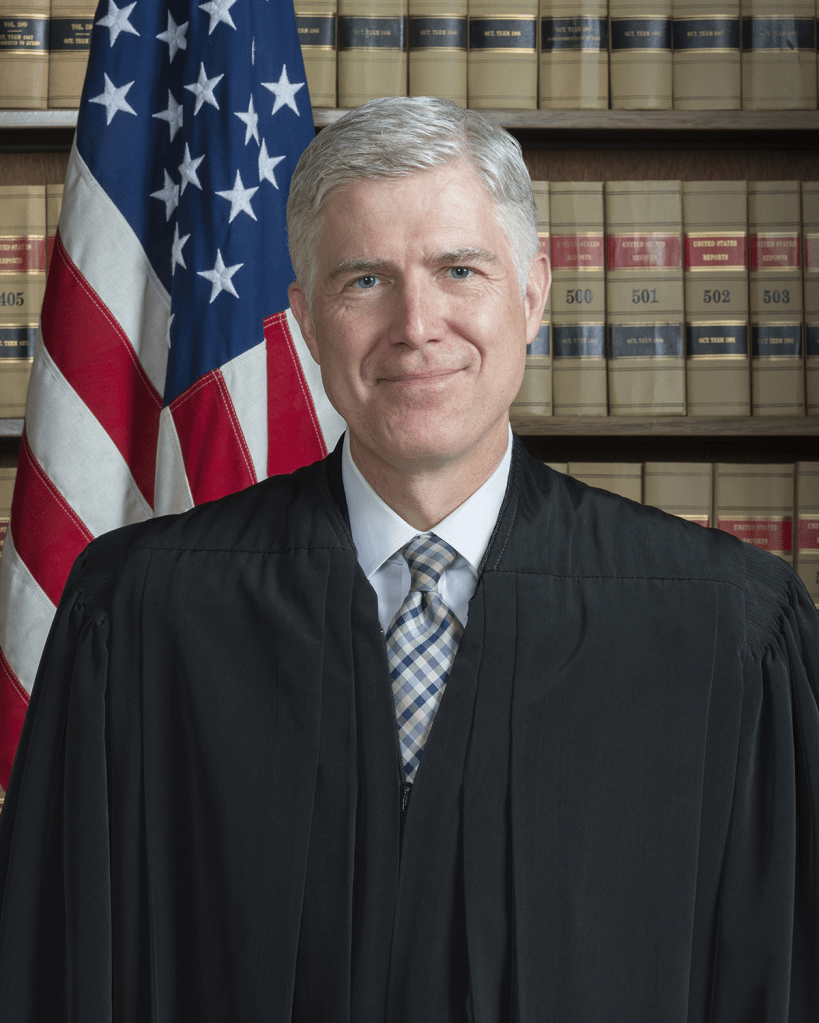
So my question with respect to the major questions doctrine is this: We accept that it’s not our role to decide public health questions, but it is our important job to decide who should decide those questions. I think we all agree on that.
And, here, our choice on the one hand is a federal agency and on the other hand the Congress of the United States and state governments. Now you argue we should not consider the major questions doctrine unless and until we find a statutory ambiguity.
I understand that.
Justice Neil Gorsuch
But let’s — let’s say the Court does find such an ambiguity.
I know you’ll contest the premise, but let’s just work on it. If — if there is an ambiguity, why isn’t this a major question that, therefore, belongs to the people’s representatives of the states and in the halls of Congress, given that the statute at issue here is, as the Chief Justice pointed out, 50 years old, doesn’t address this question. The rule affects, I believe, we’re told, 80 million people, and the government reserves the right to extend it to every private business in the country. Traditionally, states have had the responsibility for overseeing vaccination mandates.
I rejected a challenge to one just the other day from New Mexico. Congress has had a year to act on the question of vaccine mandates already.
As the Chief Justice points out, it appears that the federal government is going agency by agency as a workaround to its inability to get Congress to act. The risks imposed here are not unilateral.
There are risks to those who choose not to be vaccinated that they’re trying to avoid sometimes, as you discussed with Justice Alito and conceded to him. Traditionally, OSHA has had rules that affect workplace hazards that are unique to the workplace and don’t involve hazards that affect individuals 24 hours a day. So that’s kind of the general tick list we have before us, and I’d just like you to address, again, the question, assuming the statute’s ambiguous, why isn’t this a major question that normally under our Constitution would reserve — be reserved for the people’s representatives in the states in the first instance and in the halls of Congress in the second?
Elizabeth Prelogar, for OSHA, while acknowledging the premise of the question, simply argued that OSHA’s mission statement, given to it by congress, is protecting workers in the workplace, which is what this regulation does.
If there were any argument presented that seemed to really make the case against this regulation, was when Justice Gorsuch asked about why they don’t have similar rules for the flu.
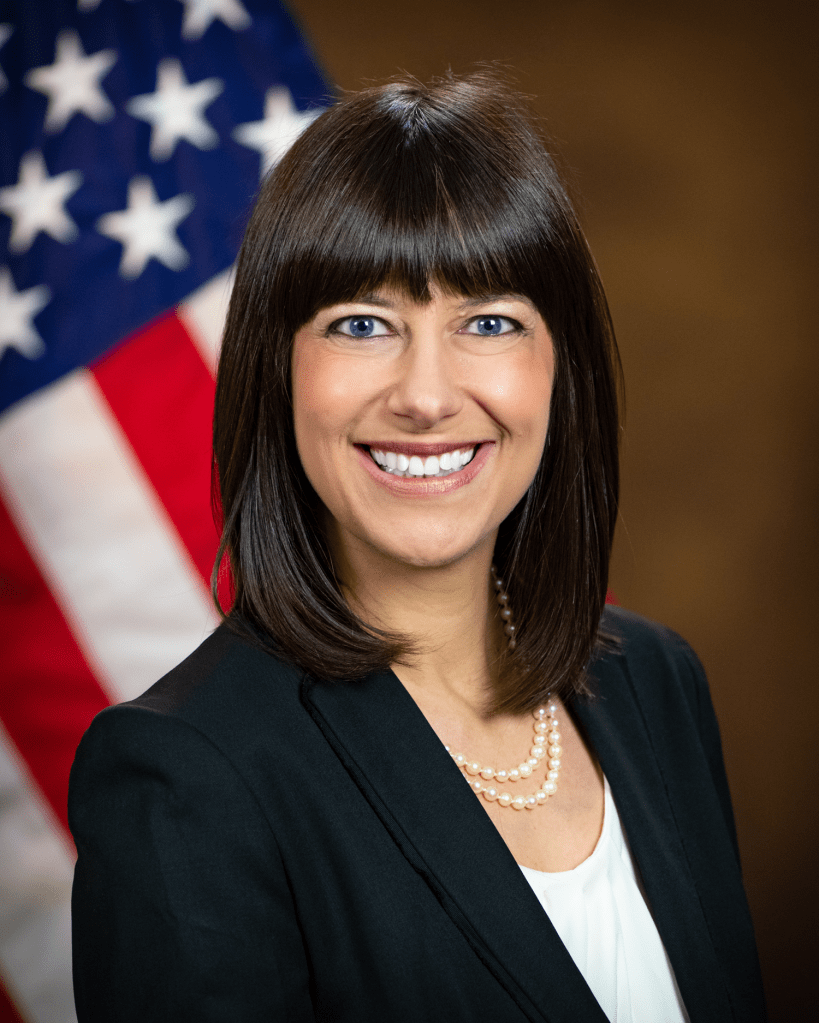
Elizabeth Prelogar
Counsel Prolegar’s answer was fair, but presents basically a subjectivity issue. Influenza can be deadly, but at the time, COVID deaths were far higher than any recent influenza mortality rates. She also pointed out that influenza is seasonal and consistent, whereas COVID was new.
In retrospect, the evidence now suggests COVID will be seasonal and consistent, too. But, essentially, she was drawing a line that hadn’t been established, that the severity of the disease gives them cause to act.
Weirdly, I’m surprised she didn’t just respond that COVID was officially a pandemic at the time, influenza was not. But maybe she wasn’t ready for that question, and didn’t think of that answer. Or, maybe I’m a fucking idiot.
Anyway, in a per curium opinion (that just means it wasn’t authored by any one justice, and it was a pretty brief opinion), that was drawn along partisan lines, the right-wing majority sided with the NFIB. They said that such a large and sweeping rule, should either be delegated by congress or written by congress. This was simply too significant for OSHA to do on its own.
They wrote:
Permitting OSHA to regulate the hazards of daily life — simply because most Americans have jobs and face those same risks while on the clock — would significantly expand OSHA’s regulatory authority without clear congressional authorization.
So there you have it. OSHA gets smacked down, and congress and the president have a better understanding of their roles and the jobs they must do, and must not do going forward
I applaud OSHA for trying their level best, but frankly, it’s hard to disagree with this opinion. While this particular regulation may have seemed like a good thing and saved a significant number of lives, these same powers, if not reigned in, could and would be used for things any one of us may not agree with in the future.
So let’s talk about the first amendment, y’all. The beginning of that baby goes like this, “Congress shall make no law respecting an establishment of religion, or prohibiting the free exercise thereof.” It goes on to talk about free speech and shit, but that’s basically what it says on religion.
You know what it doesn’t say? “Separation of church and state.”
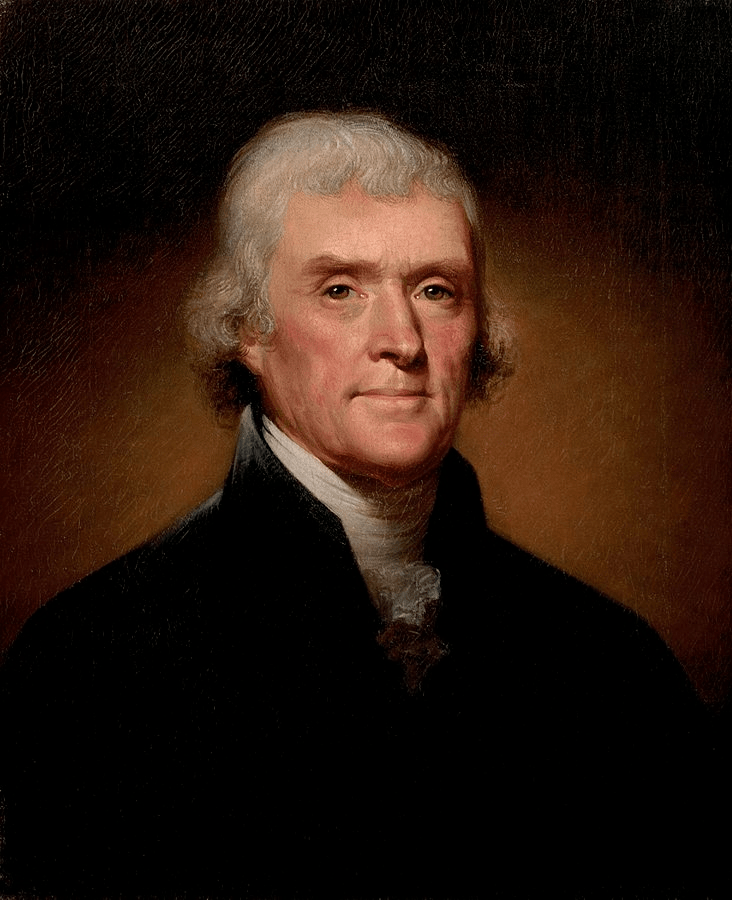
So where did the “separation” phrase come from? Well, it turns out, in 1802, one Thomas Jefferson wrote a letter to a church group, describing the first amendment saying religion was:
A matter which lies solely between Man & his God.
He went on to write:
I contemplate with sovereign reverence that act of the whole American people which declared that their legislature should ‘make no law respecting an establishment of religion, or prohibiting the free exercise thereof,’ thus building a wall of separation between Church & State.
Thomas Jefferson
So, why the history lesson instead of some SCOTUS shit? I’m getting to that.
Since then, SCOTUS has often interpreted the first amendment via precedent, to mean what Jefferson wrote. So while the amendment says “congress shall make no law,” on numerous occasions, SCOTUS has ruled against religious involvement in government, even when it has nothing to do with congress making a law, honoring what Jefferson considered the intent of the first amendment, to create a wall of separation between church and state.
While I’m agnostic-atheist, and agree with the philosophy of their decision, one should still note, what the constitution actually says, as justices like the late Antonin Scalia, and his still sitting counterpart Clarence Thomas largely believe it wasn’t SCOTUS’ fucking business to think about what the writers of the text meant when they wrote it, but that their job was to be strict textualists, and interpret the constitution as written. What Scalia called a “Dead document.“
They fairly argue(d) that there was an amendment process set forth in the constitution. So if the populace doesn’t like the fucking text, Congress can endeavor to amend that shit. If they’re successful, then SCOTUS will rule and review based on the new amended text.
U.S. Supreme Court Justice Antonin Scalia
So this case, centers around this debate, in my estimation. You see, in Maine, kids are guaranteed a free education, which is to be administrated by a Maine government agency known as School Administrative Units (SAUs). If an area doesn’t have schools of its own, the SAU for that area is to pay to send those rugrats to an approved school in the area.
In order to be approved, the school has to meet certain standards. One of which, was that it be secular. Meaning, they can’t be in there shoving God up these kids asses. This is based on the “Separation of church and state” philosophy which SCOTUS has several precedents aligned with.
Here’s the rub, the text says, “congress shall make no law…” So this is a bit of a quagmire. Because if a religious school is prohibited by law from getting government funds and/or approval status, one could colorfully argue it’s kinda a law prohibiting free expression.
Anyway, a handful of bible-thumping parents live in some no-school-having shit district in Maine, and want to send their kids to Jesus Christ University. Since Maine law is like, “that’s fine, but you’re paying for that shit yourself, the parents were like, “Fuck y…I mean bless you, you wonderful heathens. We shall see thine ass in court.”
Counsel Michael Bindas
Early in the arguments, counsel for the petitioner (the bible thumpers), Michael Bindas made a clever argument:
This program does not fund schools. And if religious schools were allowed to participate, it does not fund schools.
It funds families. And not a penny can go to any school but for the genuine private choice of individuals.
His argument being, it isn’t that government funds are paying an institution to teach religion. It’s paying families to educate their kids. Those families can use those funds for the school of their choice, so long as they’re teaching the basic requirements expected of a public school. Allowing said parents the “free exercise” of their religion.
While inventive, I can’t help but wonder what requirements public schools have for teaching science, such as evolution by natural selection, and whether these schools are compliant with that? But I suppose, my atheist views are tiresome to these folks.
A panel for Maine, including retired SCOTUS justice David Souter, argued that they’re not excluding the school solely because of their religious backing, but because they’re teaching religion. That if their curriculum were secular, and they left the religious shit to the church, nobody would give a fuck.
Justice David Souter
The opponents are like, “Cute distinction, bro. But there’s nothing in the constitution supporting that logic.”
But Maine was like, “Listen you Jesus freaks. All we’re saying is, if we’re paying for your schooling, it should be consistent with all the other public schools in Maine, so all these kids in Maine get the same basic education. But because y’all are Jesus’ biggest fans, we know you’re not teaching shit like evolution, for instance, because you guys suck at science.”
They argued, “If these assholes lived in a real fucking city in Maine with real schools, they’d get a real education. Not this “creationism” bullshit you’re surely pushing on your poor kids. So if we’re going to fucking pay for it, we expect them to get the same quality education they’d get at a public school which teaches real science. Capiche?”
Justice Kavanaugh hit home the crux of the petitioner’s argument with this question to the respondent (Maine):
Brett M. Kavanaugh
I just want to follow up on that question from Justice Gorsuch. I think it’s important on this public discord or strife issue to emphasize that, as I understand it, they are seeking equal treatment, not special treatment. They’re saying “don’t treat me worse because I want to send my children to a religious school rather than a secular school. Treat me the same as the secular parent next door.”
I think that’s what they’re asking for, is equal treatment. Special treatment cases are where you’re asking for an exemption from generally applicable law.
That’s the Smith kind of cases. Those are hard cases.
But, here, I think all they’re asking for is equal treatment. And the question then becomes public discord from equal treatment. To follow up on Justice Gorsuch’s question, how should we think about that?
Malcolm L. Stewart
I mean, they are certainly characterizing what they are asking for as equal treatment.
But Maine’s view and our view is they are seeking a benefit different from the one that Maine is willing to provide. Maine is willing to provide a secular education, an education that is the rough analog to what the public school would give you at state expense.
It’s not willing to pay for religious inculcation. And so it’s like a case where the school that doesn’t believe in athletics says, I’m being treated unequally because you are willing to fund a thing that is important to some other schools but not to me. That’s not the kind of equal treatment that either the Free Speech Clause or the Free Exercise Clause would prohibit.
The federal government and the National Association of School Boards both filed briefs supporting Maine as well.
Some cases are really complicated, and frankly take me a long time to even make sense of what the fuck they’re arguing over. Usually some stupid procedural bullshit SCOTUS seems to love, because they’re law nerds or whatever. But this one? Pretty fucking simple, yeah?
In a predictable outcome with the now largely religious conservative majority, a partisan 6:3 decision went to the Jesus freaks. I guess the text trumps everything else. Justice John Roberts argued in his majority opinion that if Maine doesn’t like it, they can build some public fucking schools in that area.
The majority’s reasoning is that Maine’s law violated the “free expression” clause for the parents, who want to teach their kids about the ten commandments.
In dissent, the court’s left-leaning justices basically said, “you fucking conservative assholes are so worried about the “free expression” clause, you don’t seem to give two fucks about the “establishment” clause. If the government pays for these kids to go to these schools, government is fucking establishing religious values in these kids.
While I’m not the tenth SCOTUS justice, it is my firm opinion, if Maine had wanted to win this case, it should have gotten some parents who wanted to send their kid to a Muslim school and get government to pay for it, to join these Christians. I’ve little doubt, the majority would have thought much harder about Maine’s argument if they were about to support the teachings of Allah.
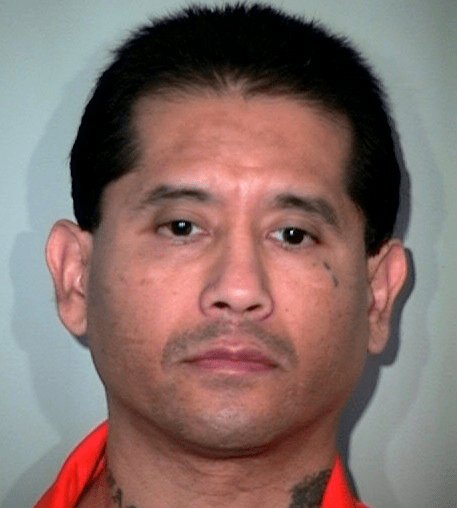
Back in 1989, all around piece of shit, David Martinez Ramirez decided to murder his girlfriend and her 15 year old daughter whom he admitted to raping multiple times in the past, as well as right before he’d killed her.
Ramirez’s case leaves little doubt to his guilt. He was found with the bodies in his apartment, covered in blood. Along with the admissions of what he had done to the daughter, it’s pretty much an open and shut case.
All Around Scumbag David Ramirez
However, after he was convicted, he somehow got the idea in his head that he got screwed, so he appealed his conviction, and when he lost over and over again, he even petitioned SCOTUS who were like, “Fuck you, buddy. We’re not going to waste our time with this shit. Burn in hell.”
So why is this case here at SCOTUS then?
Well, you see, Ramirez isn’t just a piece of shit morally, he’s also a piece of shit financially. As such, he couldn’t hire an attorney when he got busted, and instead, got a court appointed attorney. And, it wasn’t even a creative one like Saul Goodman, either. His counsel had zero experience in capital crimes cases. And when I say zero, apparently she’d never even witnessed a capital case from the sidelines. Yet here she is, trying to give this mother fucker the best defense money can’t buy.
So after Ramirez predictably lost, he tried to appeal his sentencing for various reasons in state court. He basically was trying to avoid the death penalty, not to get off for the crime as a whole. Unfortunately, none of his claims were about ineffective counsel. This is the start of his problems.
After he lost on appeal, he went to Arizona Supreme Court, and they were like, “Nah fam, we’re good. Not interested. Enjoy those death penalty drugs, bro.”
Getting no help in Arizona at all, Ramirez filed an appeal in federal court. The federal court however looked at everything and was like, “Yo, Ramirez…call us crazy, but we’re pretty sure your lawyer here doesn’t know what the fuck they’re doing. You sure you want to proceed with this idiot?”
At the heart of the federal courts thoughts on this, was that Ramirez was found competent to understand what he did by a psychologist, justifying the death penalty. Basically, they tend to avoid killing someone who they think is mentally handicapped, because it seems too cruel.
But after his conviction, it came to light, that he had been diagnosed as mentally disabled, and suffered severe abuse himself as a child, including that his shit parents didn’t even feed this fuck for days on end.
So the psychologist was like, “Woah, why didn’t you assholes tell me this ahead of time? I’m trying to diagnose this piece of shit. Didn’t you think that’d be clinically relevant to my diagnosis?”
After allowing Ramirez to amend his appeal to include a claim of “ineffective counsel” they found that Ramirez had never complained about this before in state courts. The rules set forth in the Anti-Terrorism and Effective Death Penalty Act of 1996 (AEDPA), basically require you to develop evidence for ineffective counsel BEFORE you get to federal court, otherwise, you can pound sand.
As near as I can tell, they’re basically trying to prevent someone about to get the needle from just throwing out any new defense they can think of, clogging up the courts, just to get out of being put to death.
Also, in Arizona, you have to wait until your trial is over to claim ineffective counsel, because they basically assume you wouldn’t have evidence to support this until after the trial is over. Like by some miracle, you might actually win anyway, or some shit. Plus, kinda a big distraction from the trial at hand.
But in a previous SCOTUS case, Martinez v. Ryan, SCOTUS did rule you can bring up an “ineffective counsel” claim at federal court for this first time.
So the contradiction here is that while SCOTUS said you can bring up the claim, AEDPA says you can’t bring any evidence up to develop that claim at federal court. How does that make a lick of fucking sense, right?
So while the state court was like, “We don’t give a fuck. This quack’s new opinion that maybe he was more fucked up than he originally thought, it wouldn’t have changed a fucking thing for us. We can’t wait to fry this motherfucker like a Chicken McNugget,” the federal court, and I mean every fucking judge on the 9th circuit was like, “Woah, woah, WOAH! What the fuck is wrong with you assholes? Look at that shit again. You need to let this motherfucker bring evidence forth to establish this claim of ineffective counsel.”
It’s also worth noting that while SCOTUS long ago ruled you have the right to effective counsel at trial as part of the 6th amendment, that’s AT TRIAL. They don’t seem to have much of an opinion on whether you have such a right after you’ve been convicted.
As for this case, SCOTUS didn’t give a fuck about Ramirez and his guilt. That shit is settled. They’re here to determine this conflict where AEDPA’s rule prohibits a federal court from hearing Ramirez’s evidence for ineffective counsel at trial if it wasn’t done at the state level, while their own precedent says that he can bring up a claim for ineffective counsel.
Counsel for Ramirez closed with a pretty impassioned and fair argument.
Robert M. Loeb
To say that you have a forum for hearing and one where no one’s ever succeeded in to raise an actual innocence claim is not giving you a forum to vindicate one of the most vital rights, the right to effective trial counsel. You know, whether you’re innocent or guilty, you have a right to a fair hearing.
You have a right to an effective trial counsel.
You have a right to have that vindicated. So it’s like them saying, if you’re coaching a basketball game and one team gets five players and one team gets one player and we’re going to play the game, but, at the end of the game, we’re going to give you a shot from half court and that’s going to make the game fair, that does not make the game fair, Your Honor. There is a right to have trial counsel here, and there was never a fair trial for Mr. Ramirez.
Right? And the fact that they give a Hail Mary opportunity for relief at the end of the day or can give a pardon that does not mean that the right to effective trial counsel is being vindicated here. And as Justice Sotomayor pointed out, as a third argument, which pertains only to Mr. Ramirez, which there was no real meaningful response here, because Mr. Ramirez in the appeal before the panel in the Ninth Circuit clearly was relying on materials beyond that which was presented to the state court. And that was not rejected by the state before the panel.
It was not objected to.
They didn’t say, well, (e)(2) bars consideration of that evidence.
They told the panel to consider that evidence. And the panel then went on to render a decision based on the arguments that they made without even them raising (e)(2).
And, of course, then they have the audacity in their cert position, it’s like to say, well, (e)(2) is not even mentioned in the Ninth Circuit decision.
Well, it’s not mentioned because they didn’t raise it. So there it’s completely sandbagged the Ninth Circuit panel here by only raising this in the en banc petition and then their cert petition and blaming the panel for never reaching the issue that they didn’t raise.
They made a decision not to raise (e)(2) before the panel.
That’s a waiver.
It was not fair to the panel.
It’s certainly not fair to Mr. Ramirez. He would have responded to the (e)(2) argument if it was raised before the panel. So, for Mr. Ramirez, you should affirm on the additional basis that the claims against him were waived.
In a 6:3 partisan decision, Justice Clarence Thomas and company sided with Shinn (The state of Arizona). Congress wrote AEDPA, and it says what it says. States are supposed to have power over their jurisdictions vs federal courts. So if they lay out a procedure, and someone they convict doesn’t follow it, well, them’s the breaks.
Justice Thomas basically said, it’s not fair for the federal government to come in and tell the state how to do their business of running a court, conviction, etc., unless it violates the constitution, which nothing here does. That while they did rule in Martinez to allow the introduction of “ineffective counsel” claims, their ruling was quite narrow, and only applied to such claims, where someone was denied constitutional rights, not this shit Ramirez is facing.
It’s also worth noting, about half of Thomas’ opinion cited the heinousness of the underlying crimes, which wasn’t really at issue here, but clearly influenced the majority to not be keen to help this fucker in any way, avoid being put to death.
Kagan, Sotomayor, and Breyer however, were like, “You conservative pricks are racist, and clearly hate Latinos. If someone has shit counsel at the state level, and they don’t really figure it out until the federal level, you’re basically telling them you don’t care about justice, you just don’t want to waste anyone’s time. But this idiot’s gonna die in your interest of saving time, and that’s not cool.
AEDPA tried to set some sort of balance between the state’s rights to manage this shit, and the federal government’s rights to step in, if the state court isn’t acting to the defendant’s liking. But you assholes basically want to let the state do whatever the fuck they want.
In a case where counsel for the petitioner appeared to be high AF (He seemed confused and talked slow through almost everything), self-important entitled deaf and legally blind woman, Jane Cummings went to Premier Rehab, a Texas rehab clinic that receives federal funds, looking for assistance with her fucked up back. Because she can’t hear shit, and can barely see shit, she asked them to provide an American Sign Language (ASL) interpreter for her.
I’m curious how she’s using an ASL person, if she’s also legally blind, but I guess maybe she just wears some thick ass glasses or something. Either way, mother nature dealt her a pretty shitty hand, I’ll give her that.
Premier was like, “Hey, we’re happy to help, but we can’t just eat the cost of an interpreter like this, and we don’t have enough deaf customers to justify such an expense. You can lip read, write notes, or hire an interpreter yourself to bring to the sessions, but otherwise, you can take your Bernie Sanders entitled bullshit right the fuck out of here.”
So Cummings took her business elsewhere like a spoiled brat, but she said the new place she went to sucked balls, and didn’t really help her. Presumably because they wasted all their money on an ASL interpreter, and not a good physiotherapist. So now she’s back to being mad at Premier, since they’re good at what they do, but wouldn’t give her the interpreter she wanted.
Cummings being a persistent, self-important entitled piece of shit, wasn’t done yet though. She sued Premier under the Americans with Disabilities Act (AWDA), The Rehabilitation Act, and the Affordable Care Act, as well as citing Texas Human Resources Code. Hell hath no fury like a deaf, self-important, entitled woman scorned, apparently.
A district court heard her complaint, and argued her damages were bullshit. She was maybe a little humiliated, frustrated, and upset, but for fuck’s sake, you can’t fucking sue over that. In America we have a right to be assholes, and you getting your feelings hurt isn’t cause for damages. You have no right to demand a company hire someone special just to serve you, because you have a condition. Stop being such a self-important entitled piece of shit.
She then rolled up on the fifth circuit, telling them the district court had been mean to her, but they also told her to eat a bag of dicks.
So now at SCOTUS, they’re charged with determining if emotional distress is cause for compensation under these myriad of acts designed to protect those with disabilities. The fact that Premier receives federal funding is at issue, since such recipients, under the law, may not discriminate based on disability. Although, I’d argue there’s a difference between discrimination, and not hiring a special person just for you. One is an order not to do something, the other is an order to do something.
Think of it like rights. The right to free speech, religion, bear arms, etc., orders government not to infringe upon them. No one has to do anything, or incur any expense for those rights to be preserved. But when people argue health care is a right, that’s forcing people to do something—, it does cost money, and force people to do work, and therefore is not a fucking right.
In a partisan 6:3 split, SCOTUS ruled that Cummings was being a self-important and entitled piece of shit. Emotional distress isn’t cause for compensatory damages, as she didn’t lose any fucking money in the situation—her feelings were hurt. But for fuck’s sake, the fact that this is even a case is gross. How dare she feel that a company must hire or contract an employee specifically to serve her. Essentially she’s arguing if they might go out of business, that’s fine by her, as long as she gets her help first.
Any empathy I feel for her disability was lost when I read the premise of this case. Fuck her and every self-important entitled piece of shit like her.
The left justices however, were of the opinion, that such discrimination laws, when violated, would cause emotional distress first and foremost, and therefore, logic dictates that such issues should be compensated. Bestill their bleeding hearts. Clearly, they have no clue what it takes to run a business, and instead would just run it into the ground in the name of wokeness.
Reagan National Advertising and their co-petitioners Lamar Advantage Outdoor own some billboards and shit. On these billboards, they display commercial and non-commercial messages alike.
In the city of Austin, they have a rule that differentiates whether a sign is permitted based on whether the sign is connected to the property it happens to sit on. Like, let’s say there was a billboard for McDonalds, but it’s on McDonald’s property—that’s AOK. But if there’s just some rando billboard not on McDonald’s property, yet it is advertising McDonald’s, well, it’s a fucking eyesore. Take that shit down—or in this case, if it’s not already up, you can’t put it up.
Reagan had some old style signs they wanted to convert to the new digital signs which can change messages routinely, much easier than the old wallpaper style shit we’re so used to.
Austin’s rule though, was that no new signs could be put up on a property that wasn’t the property of the people advertising on the sign, which these digital signs would violate. Old signs built and put up before the regulation were grandfathered in, though. So that meant this was an odd situation. He wanted to convert the signs, not put up new ones. Although to be fair, the conversion is effectively a new sign.
So Reagan was like, “Woah, you assholes. This violates my first amendment freedom of speech. If the people who own this business want the sign up, and we have a buyer to put messages on the sign, a rule that stifles us just because the buyer doesn’t own the property is some grade A bullshit. If the area is zoned for the sign, and the sign isn’t indecent, it fucking goes up.”
Austin was like, “We’re just trying to prevent our beautiful and weird city from a million fucking signs littering the landscape, and making it look like a shithole.”
But Reagan was like, “We already had these signs up, assholes. We’re just converting them.”
Part of the complaint here is also that, if the ruling is about whether the sign’s message is related to the premises it sits on, means that some overpaid assholes in the Austin courts will effectively have to read every fucking sign application, and become a “Supreme Board of Sign Review” as justice Kagan actually called it in a previous case, “Reed v. Town of Gilbert,” which ruled a town could not make different rules based on the messages temporary signs conveyed.
So the city was like, “You really don’t want to read every fucking sign, do you? Just give us our judgement, and let us have our ruling.”
In opening arguments, counsel for Austin explained their position pretty well.
Michael R. Dreeben
This case involves a fundamental question about the meaning of content-based regulation under the First Amendment.
The Fifth Circuit interpreted this Court’s decision in Reed to mean that any time that an officer must read a sign to apply the law, the law is content-based. That holding is wrong and should be reversed.
A law is content-based on its face when the text of the law singles out specific subject matter for differential treatment.
The law in Reed did that by distinguishing ideological, political, and directional signs. A rule regulating off-premises advertising does not.
The off-premises rule is an empty vessel that applies to all subjects and topics.
It turns on the relationship of a sign to its location, not the content of its message. The Fifth Circuit’s rigid rule does not further First Amendment values.
Austin’s law does not skew the marketplace for speech or suppress any ideas.
But the Fifth Circuit’s rule would have untenable effects.
Many ordinances can be applied only by looking at what a sign says.
Temporary event signs are a perfect example.
Strict scrutiny of such laws is unwarranted. Now Respondent offers a new theory, arguing that any sign code provision tied to the function or purpose of speech is content-based on its face.
But many neutral laws are tied to function.
Sign regulation is inherently functional.
Signs function to present information.
And the regulation of solicitation is based on the function of soliciting. So long as these rules are even-handed, they are facially content-neutral. First Amendment review still applies, but the right standard is intermediate, not strict, scrutiny.
Because the Fifth Circuit applied the wrong standard, its judgment should be reversed. I welcome the Court’s questions.
Once it was Austin’s turn, their lead counsel opened with this rebuttal.
Kannon K. Shanmugam
The City of Austin denied Respondents’ application to convert its existing signs to digital signs, and it did so on the ground that the signs advertised off-premises activities. Under this Court’s decision in Reed, Austin’s distinction between signs advertising on-premises and off-premises activities is content-based. That distinction turns on the subject matter, function, and purpose of the content of the messages on the signs, and it has the effect of prioritizing certain messages from certain speakers and limiting, if not prohibiting, others. The fact that Austin’s regulation does not prohibit speech on an entire subject and that the application of the regulation depends on a factor in addition to the sign’s content does not render it content-neutral.
A district court felt the city of Austin had indeed made a decent argument, as they don’t want to deal with this shit day after day after day, and ruled in their favor. But the 5th circuit was like, “Maybe y’all aren’t familiar with the first amendment, so let us help you. The fact that you’re saying what is on the sign matters, means its content-based, and thus…well…first amendment. Overturned, bitches!”
In a 6:3 apolitical ruling however, SCOTUS sided with Austin. They ruled that they weren’t limiting content in their ruling, which would be a violation of free speech. Instead, this was merely limiting where you could put a fucking sign or not, based on whether what the sign was advertising, was related to the property it was on. Essentially saying a business has a right to put up a sign on their property, but fuck those billboard assholes who want to put signs up everywhere, that shit is hideous.
Justices Thomas, Barrett, and Gorsuch dissented, arguing that this rule from previous case “Reed” is being misinterpreted. At first, it was purely about content. Now you assholes are making it about some new standard that can be fudged about however courts see fit. What the fuck was wrong with “content-based” in a very literal sense? We can’t even…with you assholes.
Hear oral arguments and read about the case at the links below.
You know that shit that comes out of your paycheck every time called Social Security? Well, it’s available to people living in all fifty states, Washington DC, and for some odd reason, the Northern Mariana Islands, which the US owns.
For some reason, they apparently didn’t give a flying fuck about Puerto Rico, because those motherfuckers don’t get a damn thing.
Jose Luis Vaello-Madero, a Puerto Rican dude, found his way to New York back in 1985, and presumably, started paying into Social Security plan. In 2012, he got sick as balls, and couldn’t work anymore. As such, he started receiving his SSI benefits, which again, he would have paid into.
In 2013, he went back to Puerto Rico to help care for his wife, who was also experiencing health problems, while continuing to receive his SSI benefits.
The greedy pricks in our federal government eventually found out he was living in excluded Puerto Rico, and were all like, “Slow your roll, dude. Why are you collecting benefits when you’re living in Puerto Rico? Not cool man, not cool. Also, we found out you moved there years ago. So guess what, you’ve gotta pay all that shit back you received while you were living in Puerto Rico. Capiche?”
Jose, was like, “Wait a fucking minute, I paid into this program, you merry band of cunts. This is my fucking money. Also, have you ever read the fucking fifth amendment that says I deserve equal protection under the law? Well, the whole idea you exclude us Puerto Ricans, who belong to your asshole country, violates that. So I’m suing YOU motherfucker! Also, how the fuck did the Marianas negotiate benefits, but somehow Guam, Puerto Rico, and others were left out? You just hate people who speak Spanish, don’t you?”
Justice Sotomayor, seemed pretty inclined to agree with Jose. She questioned:
Sonia Sotomayor
All right.
So let’s look at the plus of that.
This program is fully funded by the federal government, fully administered by the federal government.
There’s no cost to Puerto Rico.
There’s no cost to any state.
And so I don’t understand what the different relationship with Puerto Rico has to do with this program because there’s no cost to the government. It’s not as if it could take this federal money, Puerto Rico, and distribute it in some other way or put this money to use in some other way because the money’s going directly to the people, not to the government.
So I don’t see how that can be a plus with respect to the self-governance of Puerto Rico.
Call me crazy, but when I look at my paycheck, Social Security is one tax taken from my paycheck, federal taxes are completely separate. So Sotomayor’s question makes zero sense to me, since it WOULD in fact cost the govt, since Puerto Rican’s don’t currently pay into the system. It’s as if she doesn’t understand they’re not currently taxed for that.
But maybe she’s just like, “let the pay in like everyone else, and get their fucking benefits.”
A district court, and the 1st Circuit Appellate court were both like, “Jose, you clever son of a bitch. We think you make a good fucking argument.” But the United states, not quick to let go of money they can potentially steal, we’re like, “Fuck you lower-court clowns, we’ll take this shit all the way to SCOTUS.”
In an 8:1 decision, where only Justice Sotomayor dissented, SCOTUS ruled for the United States, deciding Jose’s argument wasn’t so clever after all. They argued that because Puerto Ricans don’t pay into the system, they have no right to expect benefits down the road.
If a Puerto Rican makes their way to the 50 states, and pay into the system, they can receive benefits back out of it. But as soon as they leave, and go to Puerto Rico, Timbuktu, or bumfuck Egypt, benefits end there.
Sotomayor dissented, calling all her cohorts, and the congressional twats who wrote this rule, some racist assholes.
Hear oral arguments and/or read about the case below.
Three Muslims from California, Sheikh Yassir Fazaga, Ali Uddin Malik, and Yasser AbdelRahim, were going to their normal religious proceedings at their chosen Islamic Center. They found out that the FBI, via an informant, had been watching their asses for over a year during a program weirdly called “Operation Flex.” Presumably on some tip or notion that these men were up to some terrorist shit.
Craig Monteilh, some former fitness bro rolled up into local California mosques, claiming he wanted to become all Muslim and shit. While there, he gathered names, license plates, and any other info he could from the local attendees.
He also recorded many conversations, sometimes even leaving the recorder behind to capture convos that ensued after he’d left. Monteihl was obviously looking for terrorists, so he wasn’t shy about starting some “death to America” conversations to see if there were any sympathizers. He was apparently so offputting, that the people he was actually trying to catch as terrorists, reported his dumb ass to the FBI themselves.
Eventually they found out he was an informant and they threw every law and constitutional argument they could at the FBI, claiming they had been violated like a prostitute at a college frat party. One specific law cited was the Foreign Intelligence Surveillance Act (FISA). This lays out what is and isn’t illegal surveillance for the FBI and other government agencies to do.
However, there’s also the State Secrets Act (SSA) which allows government to keep their mouths shut, if any testimony could harm the security of the United States. When the government invoked the SSA, a district court agreed, and told these three to fuck off.
However, the contrarion left wing 9th circuit assholes, as usual, were like, “Not so fast! We’re basically the ACLU here, and we think the SSA doesn’t trump FISA.” They reversed the district court’s decision, and Fazaga and company were back on track.
In opening remarks, counsel for the United States even pointed out that the 9th circuit agreed the info in question fell under the SSA. As such, they believed the 9th circuit is making up a new rule that FISA rules invalidate SSA rules, if the FISA rules are broken.
Section 1806(f) of the FISA allows for a judge to hear in camera procedings to determine of the info in the suit would harm national security. If so, they can grant SSA protections, but if not, then the people can sue the FBI accordingly. But the US government is essentially arguing that the FISA cannot trump the SSA in this manner.
The FISA was set up to determine whether or not such surveillance was legal, it was never set up to override the SSA, nor does any of the text say as much, according to counsel for the US and the FBI.
Fazaga and friends argue that they couldn’t counsel their paritioners like a proper religious leader, because they feared, rightfully so, that their conversations weren’t private. So let’s say a person came in, and was having “death to America” thoughts, and wanted to talk to their Imam about it, they’d be afraid to here him and counsel him, because the FBI would be up his ass with a microscope.
So SCOTUS is charged with determining if FISA rules trump SSA protections. And in a unanimous decision, SCOTUS offered Fazaga and company to eat shit and die. The SSA is not subject to the whims of FISA rules. Nothing in FISA’s language even fucking mentions the SSA, which the court ultimately decided, meant they didn’t attend for it to change anything about SSA protections for the government.
log·i·cal: capable of reasoning or of using reason in an orderly cogent fashion lib·er·tar·i·an: an advocate of the doctrine of free will; a person who upholds the principles of individual liberty especially of thought and action














 The Logical Libertarian™