While OSHA was trying to make a sweeping rule for all workplaces in the other case, the department of Health and Human Services (HHS) here narrowly regulated that anyone who works in a facility that accepts Medicare or Medicaid (we’ll call it Eminem for fun) be vaccinated, unless they have a religious or medical exemption. Failing to do so, would cause a loss of funding from Eminem for being non-compliant.
So to be clear, it wasn’t a law forcing anyone to do anything, it was government saying that if any hospital wants paid by Eminem, it must comply with government’s rules. They were welcome to no longer accept Eminem, and not be subject to this rule.
Aside from the money issue, the elderly who were most at risk, are the people using Eminem, making it additionally important for them.
Also unlike the OSHA case, healthcare workers did not have the option to wear a mask if they chose not to vaccinate.
On a side note, if you’re curious, it’s called Biden v. Missouri because HHS operates at the behest of president Biden, and Missouri is the state that decided HHS had gone too fucking far with this shit.
I’ll go on my soapbox for a second and simply say, if someone has a degree in healthcare, and they’re still anti-vaccine, I’m going to argue that the notion that they slept, drank, or got high most of their way through college, is significantly more likely. The days of a rogue scientist being right against an overwhelming consensus of other scientists pretty much ended with the modern scientific method.
I should be clear, while I have a pretty low tolerance for healthcare workers who are anti-vaccine as a whole, I’m only referring to those who are against vaccines altogether. There are legitimate science-based reasons for a small subset of people not to get vaccinated, so I’m totally not attacking them, nor arguing they must be wrong. Those are the “medical exemption” people mentioned above.
During arguments, Justice Sotomayor apparently opted to “tag in” for the Biden administration, adding her own supporting argument that this is a power within Constitution’s spending clause, as it allows the government to impose conditions it desires, when it offers to give money to an entity.
Justice Sonya Sotomayor
Justice Kagan, also seemingly argued for petitioner’s. When counsel for Missouri argued that people might be put in a position to quit if they were opposed to the vaccine, causing a healthcare worker shortage, Kagan fired back that it’s also true that workers who already left the workplace for fear of contracting COVID might return to work if they know all their idiot antivax coworkers were fired, or sucked it up and took the fucking vaccine.
She also pointed out many people were avoiding going to the hospital for fear of contracting COVID, in part because there are idiots at the hospital who refused the fucking vaccine for their own dumb fucking reasons, instead of science-based ones.
I’m also putting religion into a dumb fucking reason, because I’ve never seen the word “vaccine” in the Bible, Quran, or any other religious book, except maybe Dianetics, but that’s not a religion, it’s a cult. So any religious exemption to vaccines is the imagination of the believer, not the word of their god as handed down by any text that I’m aware of.
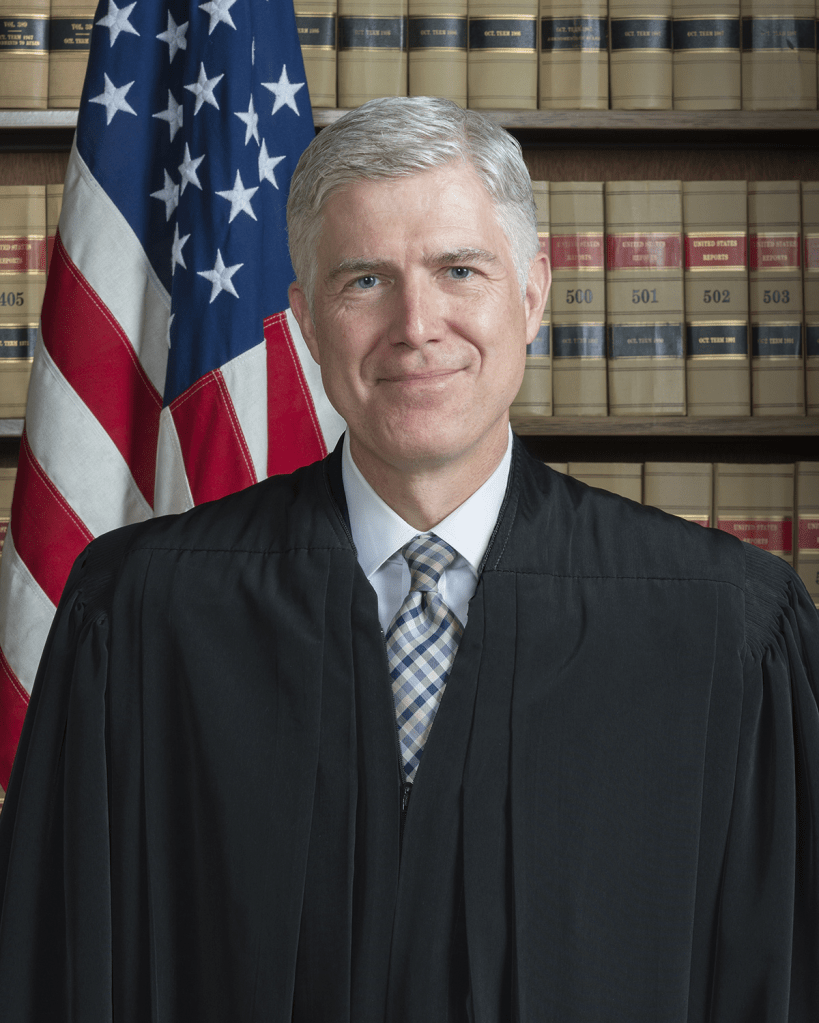
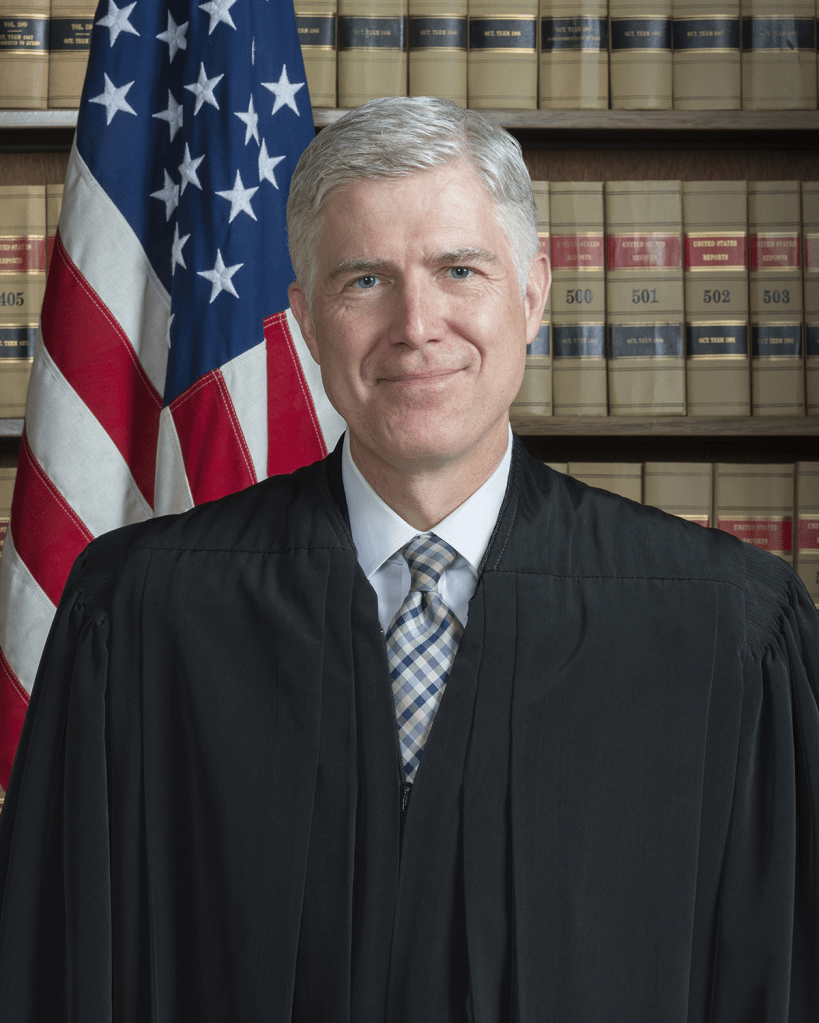
Justice Gorsuch, while grasping the idea that this is a spending clause, still raised concerns this statute is still essentially telling hospitals who to fire, affecting tenure and such (which HHS is prohibited from doing), because it’s…well…I’ll let Justice Gorsuch explain in his own words:
This statute, unlike the OSHA statute, actually contains an express limitation on the Secretary’s authority that we haven’t yet discussed and that I know you’re familiar with.
Among other things, it says the Secretary shall not control the tenure of employees at covered healthcare facilities or their compensation or their selection. And this regulation, arguably, the other side will say—I’m sure we’re going to hear it, so I didn’t want you to not have a chance—is going to say this effectively controls the employment of individuals at these healthcare facilities in a way that Congress specifically prohibited. As I understand your response, it is we’re just providing money or not providing money, and by withholding money, we’re not controlling who you hire. And I might understand that in some circumstances, but in a statute where everything is about spending, it’s a Spending Clause statute, I would have thought that Congress would have understood and we should interpret this language in that light, that you cannot use the money as a weapon to control these things. And, in fact, of course, as you know, the Court has some anti-commandeering law. That’s doctrinal speak for you can’t always use money without—and claim you’re not controlling what’s going on. And I wonder whether we should take particular cognizance of that here given that these statutes sometimes constitute, we’re told, 10 percent of all the funding that state governments receive.
Justice Neil Gorsuch
This regulation affects, we’re told, 10 million healthcare workers and will cost over a billion dollars for employers to comply with. So what’s your reaction to that? Why isn’t this a regulation that effectively controls the employment and tenure of healthcare workers at hospitals, an issue Congress said the agency didn’t have the authority, that should be left to states to regulate?
Their exchange went on for a while, but essentially, counsel for HHS agreed to Gorsuch’s point somewhat, but then gave other examples where HHS set requirements as a condition to get funding such as requiring doctors to be licensed for instance, which no one has beef with. So clearly, there’s some leeway within his concern.
He argues specifically that he felt setting standards doesn’t constitute control. I mean, it kinda is, but hey. Lawyers get paid to come up with colorful arguments, and lawyers who got to argue in front of SCOTUS are the best in the biz.
After The Biden admin peeps finished their arguments, it was time for Missouri to launch their campaign. For that job, they turned to none other than Jesus himself—Jesus Osete.
Counsel Jesus Osete
In his argument, he took issue that the provision that gives HHS the power to act in the interest of the health and safety of patients, that those Biden fuckers are ignoring a lot of other shit to make their claim that it’s OK to add a vaccine mandate of this nature.
Justice Kagan, apparently not having a Jesus fish on her car, was unimpressed with counsel Osete’s argument. It seems being in a 3:6 minority is wearing on her, because she’s been rather belligerent as of late. But to be fair, anti-vax zealots are clearly annoying to me too, so I guess I can’t blame her too much. Either way, her exchange with counsel Osete turned the “testy” level all the way to eleven.
She was asking him for instance, if they can require hospitals to sterilize necessary equipment to prevent infection, which counsel Osete agreed to. So she was like, “then how the fuck is this any different, mother fucker?”
The exchange between them was long AF, so I’m not copying it here, and Justice Kagan was not exactly allowing counsel Osete to make his point anyway, by setting a Guiness World Record for interrupting a respondent. But it’s also true, that counsel Osete was acting in a manner that’s kinda like, “If you don’t like the question, answer the question you wished they’d asked, instead of what they actually asked. He was definitely in spin mode.
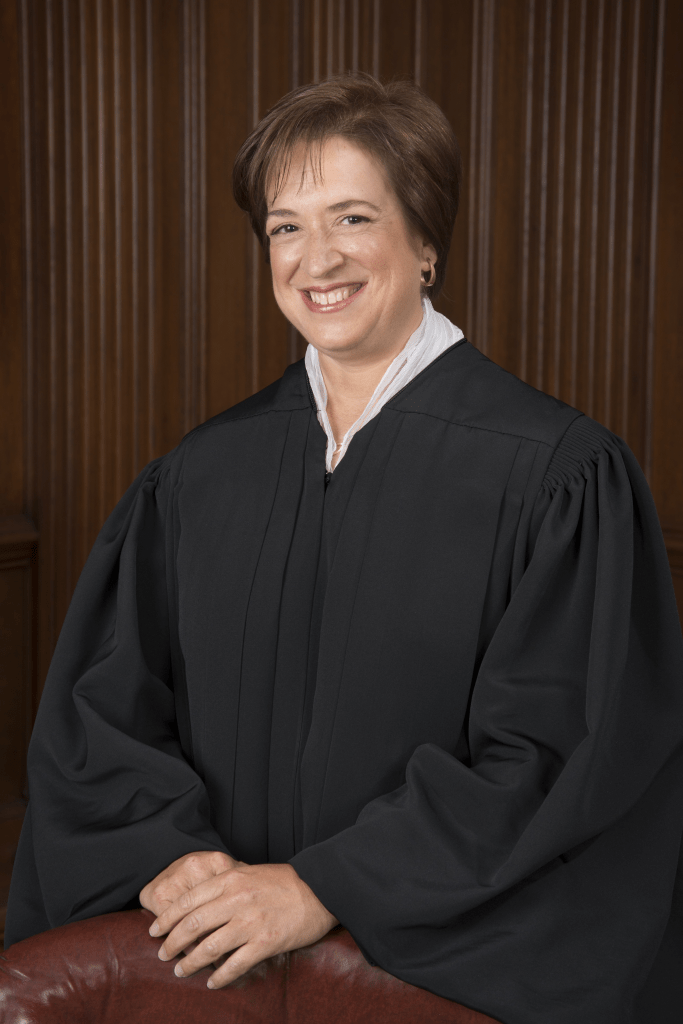
Justice Elena Kagan
Counsel Osete really wanted to hammer home the idea that smaller hospitals would be “devastated” by the rule HHS has adopted. Let’s be clear about what he’s saying. Small hospitals have so many anti-vaccine assholes in their midst, that such a rule, would cripple them.
I’m not sure what kind of data he’s citing to make such an astounding claim, but I’d like to believe that anti-vaccine zealots in the health care industry, are the fringe, not the norm. Although, to be fair, plenty of credible doctors were silenced for promoting the idea that natural immunity shouldn’t be ignored entirely, and if someone already contracted COVID, maybe a vaccine wasn’t completely necessary for them.
After the epic battle with Justice Kagan, Justice Kavanaugh brought up a unique question when he asked:
First, this is an unusual administrative law situation from my experience because the people who are regulated are not here complaining about the regulation, the — the hospitals and healthcare organizations.
It’s a very unusual situation. They, in fact, overwhelmingly appear to support the Secretary’s — the CMS regulation.
So I want — and the government makes something of that. What — what are we to make of that?
Justice Brett Kavanaugh
It is a valid point, that the regulation in many ways, is probably a rule the hospitals wanted to impose themselves, but figured it’d piss off their employees. So getting HHS to make the law instead lets the hospitals off the hook so they can be like, “Hey, it’s not our rule! We’re with you *wink-wink*, it’s those nasty assholes at HHS. Sorry. Here’s your shot.”
Justice Kavanaugh went on to give Counsel Osete an opportunity to ultimately explain his beef with Justice Kagan’s line of questioning.
He asked:
How is a vaccine different in kind, from your perspective, from, say, the requirement to wear gloves or the requirement to wash your hands or the other kinds of requirements? Because I think, if you acknowledge that there’s authority to require the latter, then you need to explain why the — the vaccine is different.
His response:
I don’t think I could say it any better than Chief Judge Sutton did at page 12 of his dissent in the OSHA case, which is masks can come off, gloves can come off.
A vaccine requirement, the taking a vaccine is a permanent medical procedure that cannot come off after work is over.
That is, there are — there are materially different conditions, materially different procedures at stake. And when you look at the context, for example, in the hospital requirement, 1395x(e), nothing in that statute comes close to authorizing this precise mandate in this case, which is going to have devastating consequences for vast swaths of this country, Your Honor.
He at least made a valid point as to the distinctions, even if it isn’t necessarily a distinction the law authorizing HHS to do their jobs makes.
Amici for Missouri, Elizabeth Murrill (an amici is an interested third party, which is not part of the suit, but has officially added their opinion to the case) opened her oral arguments with this:
Thank you, Mr. Chief Justice, and may it please the Court: This case is not about whether vaccines are effective, useful, or a good idea. It’s about whether this federal executive branch agency has the power to force millions of people working for or with a Medicare or Medicaid provider to undergo an invasive, irrevocable, forced medical treatment, a COVID shot.
It’s a bureaucratic power move that is unprecedented. If it can do that, the question still remains as to whether it properly exercised that power here.
The district court answered no to both questions at the preliminary injunction stage, and the court below supported its ruling with a number of well-reasoned conclusions. Now, without even addressing all the underlying bases for the ruling, the government asks this Court to jump ahead of the Fifth Circuit and dissolve the injunction, irrevocably changing the status quo in a way that will effectively give the federal government all the relief it seeks.
This will create chaos in state provider networks, limit access to care for the poor and needy, and eviscerate informed consent for millions of people. The Court should reject the government’s request and maintain the status quo because the district court’s holdings were correct on all counts. I’m happy to take questions or speak to some of the questions that have already been asked by the Court.
Elizabeth Murrill
While she also makes a colorful point, I’d argue that a fundamental flaw is her omission of the options. That at no point is the law requiring any health care worker to get a vaccine. It’s forcing employers to mandate workers to do so, if they want to be receive funds from Eminem.
While it is clear that these hospitals depend on these programs for a huge chunk of their cash flow, and rejecting it, would basically put them out of business, I think alluding to the fact that the option is there, but that it’s just impractical, would be a better and more honest approach than acting like the option is non-existent, which seems more like the argument a politician would make, versus a highly competent lawyer who’s qualified to argue in front of SCOTUS.
So on to the decision. While the conservative majority was not ready to give OSHA such broad powers to regulate vaccinating and masking in all workplaces in the other case, Justices Roberts and Kavanaugh, joined the left-leaning justices to form a different majority who sided with the Biden administration, allowing HHS to regulate their industry in such a specific way. Because this was a much more narrow rule, affecting only health care workers that make a living off of government funding, it wasn’t the broad sweeping power OSHA tried to implement, and thus one they were willing to let lie.
In their dissent, Justices Thomas, Alito, Gorsuch, and Barrett accepted the majority’s reasoning to some extent, but simply believed that HHS had no written authority from congress to enact such a strong regulation. If congress had intended HHS to have such power, they’d have expressly written so in the law creating HHS.
In a case, which wins the award for being the longest named SCOTUS case of the last decade or so, we’re talking about COVID. Remember that shit?
In order to minimize the risk to American workers during the COVID pandemic, the Occupational Safety & Health Administration (OSHA), back in November of 2021, issued a mandate that any company with over 100 employees either require employees to get vaccinated, or wear a mask when at work.
While OSHA isn’t the CDC, they felt it was within their jurisdiction, in order to make sure people were safe at work, from anti-vaccine anti-mask zealots.
The National Federation of Independent Business (NFIB) and others filed suit, arguing that this was not within OSHA’s rights to make such a regulation.
Because it was a pandemic issue, and the petitioner’s were seeking a stay of the order that would go into effect in a matter of days, SCOTUS decided to fast track this shit, and hear arguments much faster than normal.
The NFIB’s arguments are basically that this shit would cost employers a shit ton of money. Not that they would be forced to buy the masks or the vaccines, but instead, there are a good number of their employees who are anti-vaccine anti-mask zealots who’d rather take their toys, go home, and quit like the little anti-science crybabies they are, than protect their fellow coworkers.
Actual Photo of Anti-Mask Anti-Vaccine Person
I know it might seem anti-libertarian on the face of it to attack these anti-vaccine folks, but this is the Logical Libertarian, not the Zealous Libertarian, or Anarchist Pseudo-Libertarian. Vaccines fucking work, and any dangers that have been uncovered through the years were not only minimal, but highly overshadowed by their benefits. Any argument to the contrary is either born of ignorance or malice.
On this page, we promote science and libertarianism combined in a logical approach. I’m not interested in hosting an anarchist site where I call myself libertarian just because I know most people hate anarchy as much as they hate communism.
As I see it, the difference between anarchy and libertarianism, is libertarianism promotes the idea that government should exist to protect people’s rights. So while it is fair to debate the merits of all this, and others are welcome to differ in opinion, vaccines aren’t just about saving the vaccinated person’s life, it’s about protecting others they come in contact with. While I do oppose hard vaccine mandates, where everyone must get one no matter what, I think conditional mandates like this are arguably protecting people’s right to life, while still being optional.
A good analogy would be, if you want to drive a car on our roads, you have to agree not to be drunk when doing so. Few libertarians are promoting getting rid of all drunk driving laws. So arguing, “if you want to work for an employer, you have to make a reasonable effort not to put other employees at risk from sickness and death,” isn’t a hugely different proposal.
Obviously, disagreement and fair counter-arguments are always welcome. It just needs to be acknowledged that it’s a fair argument, and there are also fair arguments opposing it. Zealots who can’t accept this, are invited to cordially eat my entire ass.
Apologies for the distraction, I’ll get back to this case in front of SCOTUS now.
Scott Keller, counsel for the NFIB opened with an argument that basically hit two main points. One, OSHA has never regulated vaccines before, and that this rule, effectively makes businesses a “de-facto public health agency” as he put it.
But shortly after his opening arguments, Justice Kagan was having none of his argument. She chimed in with this:
Mr. Keller, I don’t understand the point. Whatever “necessary” means, whether it’s necessary and proper or whether it’s something more than that, why isn’t this necessary to abate a grave risk? This is a pandemic in which nearly a million people have died.
It is by far the greatest public health danger that this country has faced in the last century.
More and more people are dying every day.
More and more people are getting sick every day.
I don’t mean to be dramatic here.
I’m just sort of stating facts. And this is the policy that is most geared to stopping all this.
There’s nothing else that will perform that function better than incentivizing people strongly to vaccinate themselves. So, you know, whatever “necessary” means, whatever “grave” means, why isn’t this necessary and grave?
Justice Elena Kagan
One of the arguments presented by both counselors for the petitioners was that OSHA generally regulates issues that are specific dangers to specific businesses.
For instance, if your business operates a forklift in a warehouse, they’ll regulate how that forklift is to be used to ensure some dumb fuck operating the forklift doesn’t run over some idiot worker not paying attention when a heavy vehicle is driving around next to them.
Or maybe you’re a roofer, OSHA might regulate you wear a safety harness so your dumb ass doesn’t fall 50 feet to your fucking death because you’re clumsy as fuck, and lost your footing. Shit like that.
But this rule, seems to be a nationwide sweeping rule that applies to everyone, everywhere, all the time. Basically, their beef is that if you were the type of worker who is essentially on your own, maybe driving around in a car by yourself, or out on some location where you’re not around other people as a necessary requirement of your job, a vaccine or mask in your situation isn’t really protecting anyone. So then it becomes an overreach.
The second counsel for the petitioners, Benjamin Flowers, hit this point home with his opening argument:
Mr. Chief Justice, and may it please the Court: OSHA typically identifies a workplace danger and then regulates it.
But, here, the President decided to regulate a danger and then told OSHA to find a work-related basis for doing so.
This resulted in the vaccine mandate, a blunderbuss rule, nationwide in scope, that requires the same thing of all covered employers, regardless of the other steps they’ve taken to protect employees, regardless of the nature of their workplaces, regardless of their employees’ risk factors, and regardless of local conditions that state and local officials are far better positioned to understand and accommodate. So sweeping a rule is not necessary to protect employees from a grave danger as the emergency provision requires.
And I want to be clear that states share OSHA’s desire to bring this pandemic to a close, but the agency cannot pursue that laudable goal unlawfully. I welcome your questions.
Benjamin Flowers
He went on to argue, that COVID isn’t a workplace danger, it’s just a danger that exists in the world right now. While he didn’t say it, I think he’s effectively arguing this is the purview of the CDC to regulate, or congress to pass a law, not OSHA.
Using my forklift example, he’s basically arguing that’s not a danger I face at home. It’s specifically a workplace risk. But COVID is a danger I face everywhere. Ergo, not a workplace risk. Ergo, not the purview of OSHA.
But Justice Kagan was having none of this noise. She passionately fired back:
Well, why not? I mean, the combination of lots of people all going in to one indoor space and having to deal with each other for eight hours, ten hours, however many hours a day, in those settings, the combination of the environment and the people that are in that environment create a risk, I would think.
I mean, tell me if I’m wrong about this.
I would think that workplace risk is about the greatest least controllable risk with respect to COVID that any person has. You know, everything else a person can control.
You can go to the baseball game or not go to the baseball game.
You can decide who to go to the baseball game with.
But you can’t do any of that in workplaces.
You have to be there.
You have to be there for eight hours a day.
You have to be there in the exact environment that the workplace is set up with. And you have to be there with a bunch of people you don’t know and who might be completely irresponsible. Where else do people have a greater risk than at the workplace?
One question I have in all this, is while counsel made some pretty creative arguments to the distinction of workplace risk, versus general risk, at no point did anyone arguing for NFIB point out that OSHA has such a distinction in law prohibiting it from creating a regulation to lessen a general risk that also occurs in the workplace.
Whenever I have such questions, there’s a part of me that recognizes, these counselors and justices have forgotten more about law than I’ll ever know, and that surely, they thought of this, it was somehow addressed, and my feeble legal mind just doesn’t understand.
But then there’s another part of me that thinks, “Well, I’m not an idiot. Sometimes, even really talented people make dumb mistakes or oversights. Maybe I’m on to something.” So then I get this notion that if only I were in the halls of the Supreme Court, and could just raise my hand and chime in, I’d be a hero.
Moving on…
Justice Breyer also chimed in, with a well-researched refutation of counsel’s argument, that people who aren’t at risk get no exception:
What this says, what I mean, my law clerks have been busy beavers on this case, I promise you, and what they have on this issue is that there are exceptions here.
There aren’t exceptions business by business, but there are exceptions, those who work from home, alone, or substantially outdoors, or those who can show that their conditions, practices, means, methods, operations, or processes make their workplaces as safe and healthful as the ETS can obtain a variance, okay? So they did make some distinctions.
Not industry by industry, but my question really is, that I’d like to turn this to, is a stay.
You heard what I asked.
Justice Stephen Breyer
I mean, you know, 750 million new cases yesterday or close to that is a lot. I don’t mean to be facetious. But that’s why I said I would find it, you know, unbelievable that it could be in the public interest to suddenly stop these vaccinations.
And the only answer that was given was a lot of people will quit. Well, OSHA considered that.
My wonderful law clerk has 61475, 63422, 61466, 61 474 and 475, those are pages.
I don’t think you should read all 61,000, but, nonetheless, there are at least five or 10 pages where they went into this, and they said, in our view, hmm, yeah, that’s right, some people may quit, maybe 3 percent.
But more may quit when they discover they have to work together with unvaccinated others because that means they may get the disease.
Okay? And more will quit because they’ll be — maybe die or maybe they’ll be in the hospital or maybe they’ll be sick and have to stay home for two weeks.
So they did the pros and cons. So I’d like to take Justice Kagan’s questions, which I think I share on the merits, and just ask you, are you asking us both still to issue a stay today, tomorrow, Monday, and why, if you are?
It’s also worth noting, that while many painted this as a vaccine mandate, there was the option to wear a mask, if one chose not to vaccinate, making it not a mandate.
During the argument from OSHA, Justice Roberts expressed concern that the president is essentially side-stepping congressional action, by getting government agencies to regulate on multiple fronts. He didn’t mention the president directly, so that’s just my interpretation of it.
Justice John Roberts
The point being, congress passes laws, agencies pass regulations. Getting congress to pass a law is a bitch. But if the president wants an agency, or in this case, multiple agencies to create a regulation, which essentially carries the same weight as a law, they just tell them to do fucking do it or get canned. In so doing, it’s basically the president making law, instead of congress.
Justice Alito, also looking for some distinction between this, and other previous OSHA actions asked this:
On the issue of whether you’re trying to squeeze an elephant into a mouse hole and the question of whether this is fundamentally different from anything that OSHA has ever done before, I want to see if it might be fundamentally different in at least two respects and get your answer to the question. Most OSHA regulations, all of the ones with which I’m familiar, affect employees when they are on the job but not when they are not on the job.
And this affects employees all the time.
If you’re vaccinated while you’re on the job, you’re vaccinated when you’re not on the job. Isn’t this different from anything OSHA has done before in that respect?
Justice Samuel Alito
Counsel was quick to correct Justice Alito, that there is a mask option, making it not a permanent action, necessarily.
While Justice Alito went out of his way to agree that the vaccines were safe and effective, he wanted to address that there is some level of risk in a vaccine. So one contention he raised, was asking whether OSHA had imposed any other rules where the person was asked to do something that carried with it additional risk.
While he was directing it at counsel, Justice Sotomayor could not resist an awkward argument between them, where they both were acting like they were talking to counsel for OSHA, but they were clearly trying to tell the other, “Stop being such a fucking idiot, you asshole.”
Sorry, I know this is getting long-winded, but there’s some interesting shit in here. One thing I think that’s worth learning; you’ll hear reference to the “Major questions doctrine.” As I mentioned earlier, Justice Robert’s expressed concern that maybe the president was acting as a lawmaker, by using regulatory agencies to make things happen. The “major questions doctrine” is basically at the heart of what Justice Roberts was asking. If there’s something that is a major question the people should likely decide, allowing unelected agencies to regulate it, is not appropriate, and instead should be a law passed by the people’s representatives instead.
Since laws and regulations have essentially the same power, it’s at least a distinction as to when a law should be passed, versus a regulation be written. A bigger distinction of course being that an agency is generally specialized, and lawmakers aren’t specialists. So for instance, if we’re talking about health issues, lawmakers probably wouldn’t know how to write a law about specific healthcare actions, and instead would leave that up to the FDA or CDC. Congress merely grants those agencies the power to do those things.
Justice Gorsuch, seemingly concerned about Justice Roberts’ point about circumventing congress fairly pointed out:
So my question with respect to the major questions doctrine is this: We accept that it’s not our role to decide public health questions, but it is our important job to decide who should decide those questions. I think we all agree on that.
And, here, our choice on the one hand is a federal agency and on the other hand the Congress of the United States and state governments. Now you argue we should not consider the major questions doctrine unless and until we find a statutory ambiguity.
I understand that.
Justice Neil Gorsuch
But let’s — let’s say the Court does find such an ambiguity.
I know you’ll contest the premise, but let’s just work on it. If — if there is an ambiguity, why isn’t this a major question that, therefore, belongs to the people’s representatives of the states and in the halls of Congress, given that the statute at issue here is, as the Chief Justice pointed out, 50 years old, doesn’t address this question. The rule affects, I believe, we’re told, 80 million people, and the government reserves the right to extend it to every private business in the country. Traditionally, states have had the responsibility for overseeing vaccination mandates.
I rejected a challenge to one just the other day from New Mexico. Congress has had a year to act on the question of vaccine mandates already.
As the Chief Justice points out, it appears that the federal government is going agency by agency as a workaround to its inability to get Congress to act. The risks imposed here are not unilateral.
There are risks to those who choose not to be vaccinated that they’re trying to avoid sometimes, as you discussed with Justice Alito and conceded to him. Traditionally, OSHA has had rules that affect workplace hazards that are unique to the workplace and don’t involve hazards that affect individuals 24 hours a day. So that’s kind of the general tick list we have before us, and I’d just like you to address, again, the question, assuming the statute’s ambiguous, why isn’t this a major question that normally under our Constitution would reserve — be reserved for the people’s representatives in the states in the first instance and in the halls of Congress in the second?
Elizabeth Prelogar, for OSHA, while acknowledging the premise of the question, simply argued that OSHA’s mission statement, given to it by congress, is protecting workers in the workplace, which is what this regulation does.
If there were any argument presented that seemed to really make the case against this regulation, was when Justice Gorsuch asked about why they don’t have similar rules for the flu.
Elizabeth Prelogar
Counsel Prolegar’s answer was fair, but presents basically a subjectivity issue. Influenza can be deadly, but at the time, COVID deaths were far higher than any recent influenza mortality rates. She also pointed out that influenza is seasonal and consistent, whereas COVID was new.
In retrospect, the evidence now suggests COVID will be seasonal and consistent, too. But, essentially, she was drawing a line that hadn’t been established, that the severity of the disease gives them cause to act.
Weirdly, I’m surprised she didn’t just respond that COVID was officially a pandemic at the time, influenza was not. But maybe she wasn’t ready for that question, and didn’t think of that answer. Or, maybe I’m a fucking idiot.
Anyway, in a per curium opinion (that just means it wasn’t authored by any one justice, and it was a pretty brief opinion), that was drawn along partisan lines, the right-wing majority sided with the NFIB. They said that such a large and sweeping rule, should either be delegated by congress or written by congress. This was simply too significant for OSHA to do on its own.
They wrote:
Permitting OSHA to regulate the hazards of daily life — simply because most Americans have jobs and face those same risks while on the clock — would significantly expand OSHA’s regulatory authority without clear congressional authorization.
So there you have it. OSHA gets smacked down, and congress and the president have a better understanding of their roles and the jobs they must do, and must not do going forward
I applaud OSHA for trying their level best, but frankly, it’s hard to disagree with this opinion. While this particular regulation may have seemed like a good thing and saved a significant number of lives, these same powers, if not reigned in, could and would be used for things any one of us may not agree with in the future.
So let’s talk about the first amendment, y’all. The beginning of that baby goes like this, “Congress shall make no law respecting an establishment of religion, or prohibiting the free exercise thereof.” It goes on to talk about free speech and shit, but that’s basically what it says on religion.
You know what it doesn’t say? “Separation of church and state.”
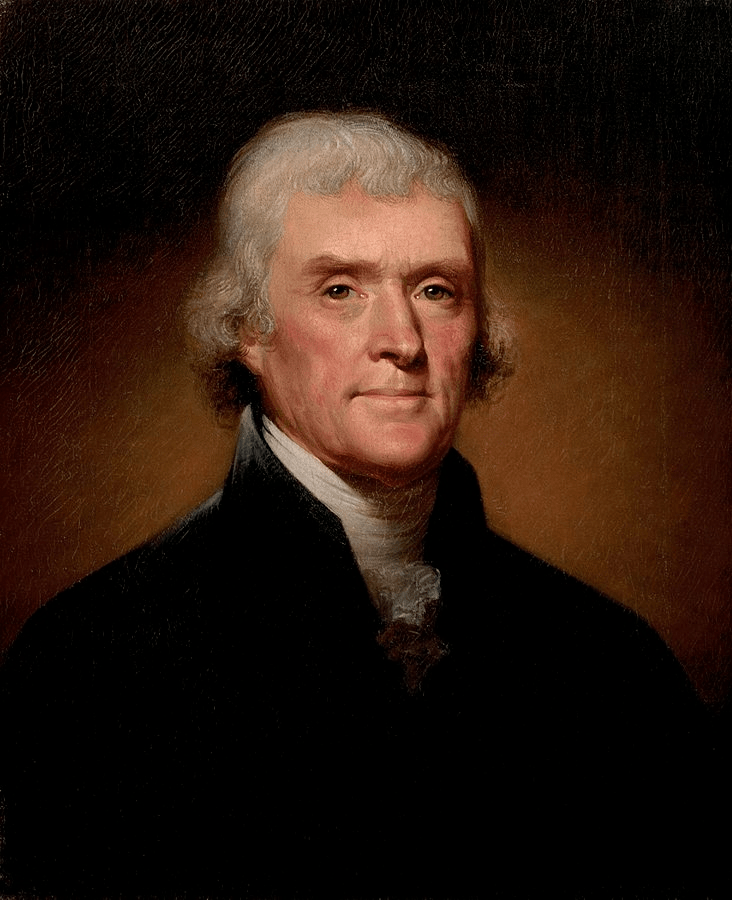
So where did the “separation” phrase come from? Well, it turns out, in 1802, one Thomas Jefferson wrote a letter to a church group, describing the first amendment saying religion was:
A matter which lies solely between Man & his God.
He went on to write:
I contemplate with sovereign reverence that act of the whole American people which declared that their legislature should ‘make no law respecting an establishment of religion, or prohibiting the free exercise thereof,’ thus building a wall of separation between Church & State.
Thomas Jefferson
So, why the history lesson instead of some SCOTUS shit? I’m getting to that.
Since then, SCOTUS has often interpreted the first amendment via precedent, to mean what Jefferson wrote. So while the amendment says “congress shall make no law,” on numerous occasions, SCOTUS has ruled against religious involvement in government, even when it has nothing to do with congress making a law, honoring what Jefferson considered the intent of the first amendment, to create a wall of separation between church and state.
While I’m agnostic-atheist, and agree with the philosophy of their decision, one should still note, what the constitution actually says, as justices like the late Antonin Scalia, and his still sitting counterpart Clarence Thomas largely believe it wasn’t SCOTUS’ fucking business to think about what the writers of the text meant when they wrote it, but that their job was to be strict textualists, and interpret the constitution as written. What Scalia called a “Dead document.“
They fairly argue(d) that there was an amendment process set forth in the constitution. So if the populace doesn’t like the fucking text, Congress can endeavor to amend that shit. If they’re successful, then SCOTUS will rule and review based on the new amended text.
U.S. Supreme Court Justice Antonin Scalia
So this case, centers around this debate, in my estimation. You see, in Maine, kids are guaranteed a free education, which is to be administrated by a Maine government agency known as School Administrative Units (SAUs). If an area doesn’t have schools of its own, the SAU for that area is to pay to send those rugrats to an approved school in the area.
In order to be approved, the school has to meet certain standards. One of which, was that it be secular. Meaning, they can’t be in there shoving God up these kids asses. This is based on the “Separation of church and state” philosophy which SCOTUS has several precedents aligned with.
Here’s the rub, the text says, “congress shall make no law…” So this is a bit of a quagmire. Because if a religious school is prohibited by law from getting government funds and/or approval status, one could colorfully argue it’s kinda a law prohibiting free expression.
Anyway, a handful of bible-thumping parents live in some no-school-having shit district in Maine, and want to send their kids to Jesus Christ University. Since Maine law is like, “that’s fine, but you’re paying for that shit yourself, the parents were like, “Fuck y…I mean bless you, you wonderful heathens. We shall see thine ass in court.”
Counsel Michael Bindas
Early in the arguments, counsel for the petitioner (the bible thumpers), Michael Bindas made a clever argument:
This program does not fund schools. And if religious schools were allowed to participate, it does not fund schools.
It funds families. And not a penny can go to any school but for the genuine private choice of individuals.
His argument being, it isn’t that government funds are paying an institution to teach religion. It’s paying families to educate their kids. Those families can use those funds for the school of their choice, so long as they’re teaching the basic requirements expected of a public school. Allowing said parents the “free exercise” of their religion.
While inventive, I can’t help but wonder what requirements public schools have for teaching science, such as evolution by natural selection, and whether these schools are compliant with that? But I suppose, my atheist views are tiresome to these folks.
A panel for Maine, including retired SCOTUS justice David Souter, argued that they’re not excluding the school solely because of their religious backing, but because they’re teaching religion. That if their curriculum were secular, and they left the religious shit to the church, nobody would give a fuck.
Justice David Souter
The opponents are like, “Cute distinction, bro. But there’s nothing in the constitution supporting that logic.”
But Maine was like, “Listen you Jesus freaks. All we’re saying is, if we’re paying for your schooling, it should be consistent with all the other public schools in Maine, so all these kids in Maine get the same basic education. But because y’all are Jesus’ biggest fans, we know you’re not teaching shit like evolution, for instance, because you guys suck at science.”
They argued, “If these assholes lived in a real fucking city in Maine with real schools, they’d get a real education. Not this “creationism” bullshit you’re surely pushing on your poor kids. So if we’re going to fucking pay for it, we expect them to get the same quality education they’d get at a public school which teaches real science. Capiche?”
Justice Kavanaugh hit home the crux of the petitioner’s argument with this question to the respondent (Maine):
Brett M. Kavanaugh
I just want to follow up on that question from Justice Gorsuch. I think it’s important on this public discord or strife issue to emphasize that, as I understand it, they are seeking equal treatment, not special treatment. They’re saying “don’t treat me worse because I want to send my children to a religious school rather than a secular school. Treat me the same as the secular parent next door.”
I think that’s what they’re asking for, is equal treatment. Special treatment cases are where you’re asking for an exemption from generally applicable law.
That’s the Smith kind of cases. Those are hard cases.
But, here, I think all they’re asking for is equal treatment. And the question then becomes public discord from equal treatment. To follow up on Justice Gorsuch’s question, how should we think about that?
Malcolm L. Stewart
I mean, they are certainly characterizing what they are asking for as equal treatment.
But Maine’s view and our view is they are seeking a benefit different from the one that Maine is willing to provide. Maine is willing to provide a secular education, an education that is the rough analog to what the public school would give you at state expense.
It’s not willing to pay for religious inculcation. And so it’s like a case where the school that doesn’t believe in athletics says, I’m being treated unequally because you are willing to fund a thing that is important to some other schools but not to me. That’s not the kind of equal treatment that either the Free Speech Clause or the Free Exercise Clause would prohibit.
The federal government and the National Association of School Boards both filed briefs supporting Maine as well.
Some cases are really complicated, and frankly take me a long time to even make sense of what the fuck they’re arguing over. Usually some stupid procedural bullshit SCOTUS seems to love, because they’re law nerds or whatever. But this one? Pretty fucking simple, yeah?
In a predictable outcome with the now largely religious conservative majority, a partisan 6:3 decision went to the Jesus freaks. I guess the text trumps everything else. Justice John Roberts argued in his majority opinion that if Maine doesn’t like it, they can build some public fucking schools in that area.
The majority’s reasoning is that Maine’s law violated the “free expression” clause for the parents, who want to teach their kids about the ten commandments.
In dissent, the court’s left-leaning justices basically said, “you fucking conservative assholes are so worried about the “free expression” clause, you don’t seem to give two fucks about the “establishment” clause. If the government pays for these kids to go to these schools, government is fucking establishing religious values in these kids.
While I’m not the tenth SCOTUS justice, it is my firm opinion, if Maine had wanted to win this case, it should have gotten some parents who wanted to send their kid to a Muslim school and get government to pay for it, to join these Christians. I’ve little doubt, the majority would have thought much harder about Maine’s argument if they were about to support the teachings of Allah.
Back in 1987, this dude Ricky Lee Smith was all kinds of fucked up. So he filed for, and received disability insurance. Then 2004 rolled up, and SSI was like, enough’s enough, man. Get a J-O-B.
So Smith was like, “Fine, fuck you.”
Then, eight years later, he crawls his ass back to the SSI office, and is like, “Seriously, I’m fucked up. I need help.” But SSI wasn’t having it, and told him to fuck off. Not once, but twice.
So Smith applied for a hearing with an administrative law judge (ALJ) on March 26, 2014, and the ALJ was like, “You can fuck right the hell off. We agree with the SSI peeps. Get a job. You can work, so work.”
So now, a month later, he files for an appeal by mail (or so he says), and then by fax on October 1st. The claims rep was like, “We never got your shit back in April, but we have it now. So we’ll file it.
But then the appeals council was all like, “Why the fuck did you wait so long? Claim denied, bitch.” Smith was like, “Fuck you, I sent it a month later by snail mail. This October shit was just a follow up.”
But the Council was like, “Prove it, dude. You’re talking shit.”
So then Smith went to the district court, the Appeals Council’s boss, and was like, “Hey man. Those assholes over at the Appeals council are trying to fuck me like I’m in the McDonald’s drive thru. Can you help me out? I’d like some judicial review.”
But then the Appeals Council was like, “sure we denied it, but it wasn’t final or anything yet. No reason to bring the district court into all this man. It’s all good. They’ve got no reason to get involved.”
The district court was like, “Smith, you seem like a lazy piece of shit to us, and we don’t want to hear your shit today. So we agree with the Appeals Council. Go back over there and leave us alone.”
So now Smith, being both too lazy to work, but clearly motivated enough to waste the taxpayer’s money went to SCOTUS and was like, “Can you help me out here? Can you make the district court realize that when the Appeals Council told me I was too late, then I had every reason to go to the District Court and get them to sort those motherfuckers out?”
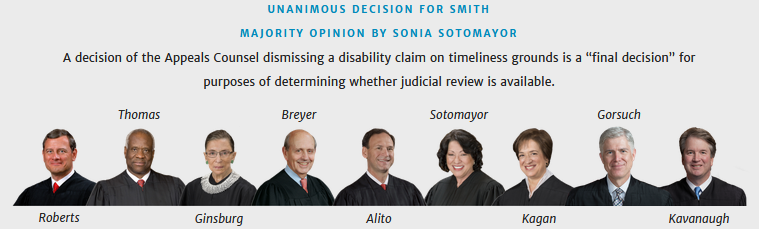
All nine SCOTUS justices sided with Smith. They agreed that the Appeals Council telling him to fuck off for being late, was a final decision on their part, and the now places his fight in the district court to address it through judicial review.
Back in 1918, this park made a war memorial with a big-ass cross in it. At the time, it was a private park. In 1961 the Maryland-National Capital Park and Planning Commission took over that land and everything on it.
This cross racked up big maintenance costs over time, and the Maryland Commission was paying to maintain it. Some non-Christians at the American Humanist Association (I’m atheist, but they sound like the boringest borings that ever bored, don’t they?) were like, “Separation of Church and state, man! This is bullshit.”
So then the American Legion was like, “Listen you atheist assholes. The cross has been used to honor dead people for years. It is often a Christian symbol, sure. But sometimes, it’s secular. So give us a fucking break. Have you ever seen the World War 1 memorial? Crosses are everywhere!”
But American Humanist wasn’t having that bullshit and took them to court. They cited the old Lemon v Kurtzman decision, which sided with atheists that government couldn’t give money to non-secular schools. They were like, “It’s the same god damn thing!”
So as usual, lower courts couldn’t agree, and these peeps found their asses in the sights of SCOTUS.
SCOTUS wasn’t hearing that shit, though. They somehow argued that the cross can indeed have a secular meaning as the American Legion and sided with them accordingly, 7 to 2. Only Ginsburg and Sotomayor dissented. Ginsburg was like, the cross “is the foremost symbol of the Christian faith…” I’m pretty sure she said, “are you fucking nuts?” But they bleeped it out.
Here’s the deal, this is not government establishing religion, or prohibiting free expression thereof, which is what the constitution actually says, not that there should be a separation of church and state. We’re still arguing over this nonsense because SCOTUS seems to care more about precedent than the constitution’s verbiage. As Scalia once said, “that document is dead.” Meaning it should be interpreted as that shit is written, not what you think they meant. If congress doesn’t like it, amend it.
Again, I’m atheist, but if it isn’t a law establishing religion, or prohibiting the free expression thereof, then it doesn’t violate 1A as it’s written. So amend it, or move on.
So this dude Mont was peddling drugs, and got busted in 2005. He was sentenced in federal court (federal is relevant here) for ten years, plus another five years supervised release.
So this dumb motherfucker gets busted doing dumb shit near the end of his supervised release, but they were state crimes. He knew he was fucked, and pleaded guilty.
Here’s where this shit gets kinda funny. So he pleaded guilty in state court about 6 months before his supervised release from the federal term, but the state being the state, took forever to sentence this motherfucker. Precisely 15 days after his supervised release had ended.
So his probation officer for the federal crime went all narc and shit, and told on this motherfucker to the federal circuit court. And they were all like, “Mont, you dumb motherfucker. You’re going to jail for 42 months on top of the time you’ll serve for your state convictions. How dare you violate during your supervised release!”
So then Mont’s attorney, trying to be the clever ambulance chaser that he was, decided to play the angles. So he was like, “Look feds, he didn’t get sentenced until after his federal release was over. So he served his time and you were done with him before this new crime. So you have no jurisdiction here.” This despite the fact he plead guilty and committed the crime well before his supervised release.
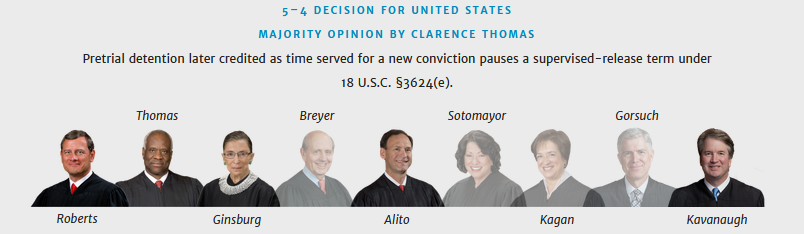
So it lands at the lap of SCOTUS, who were clearly unsympathetic to Mont. Because they were like, “Hey, the clock paused on Mont’s supervised release when his dumb ass was sent to pretrial detention, and this moves his date back past the state conviction date, giving the feds jurisdiction. So fuck you, off to jail you go, you little shit.”
5:4 Decision for United States, in a pretty non-partisan decision. Breyer, Sotomayor, Kagan, and Gorsuch were the dissenters, saying that pretrial detention doesn’t remove the presumption of innocence. It’s there to make sure that dumb fuck shows up for trial, not punish him. As such, it shouldn’t pause shit. But, they’re in the minority, so they are in the loser’s lounge with Mont.
We all know that Roe v. Wade made abortion legal across the United States, but the this shit is WAY more nuanced and complicated than most know. So let’s really dig into this bitch, because it’s interesting AF.
First, Jane Roe was a fictional name used to represent an anonymous woman. She chose to remain anonymous at the time, but was later identified as Norma McCorvey. She had gotten pregnant with her third child, and wanted an abortion. The first two she had given up for adoption, but this time, she didn’t want to go through all difficult shit associated with bringing a child to term, then putting it up for adoption.
But there was a Texas law that said outside of rape and incest, unless your doctor orders an abortion to save your life, your doctor can’t perform a fucking abortion on you.
As a result, “Jane” lied and said she had been raped. But when there was no police report to corroborate the rape, they suspected she was full of shit, and denied her an abortion, leaving her with no way in Texas to get a legal abortion.
Jane Roe wasn’t the only petitioner in the case, though. There was also an anonymous couple that had gotten pregnant, and a doctor Hallford who was under indictment for performing an abortion (Presumably not the lead singer for Judas Priest, Rob Halford, although that’d be pretty fucking awesome).
They sought justice in a Texas district court citing first amendment violations (presumably arguing it was a law based on religion). But she also argued Fourth, Fifth, Ninth, and Fourteenth Amendments violations.
The Texas district court gave her a victory on 9th amendment grounds, that just because the right to an abortion isn’t enumerated in the Constitution, doesn’t mean she doesn’t have a right to do it. But also, it effectively argues a person has a right to privacy. They cited the 14th amendment as well, which guarantees rights to “all citizens born.” So if you aren’t born yet, you’ve got no rights, little fella.
But Texas only gave a declaratory relief (they clarified the law), not injunctive relief, which would have effectively intervened on Roe’s behalf so she could get her abortion.
Texas decided that despite this decision, it was going to continue prosecuting doctors for performing illegal abortions.
By the time it made it to SCOTUS, the petitioner focused on the 9th amendment and 14th amendment arguments, since that’s how they won in Texas, when pleading their case to SCOTUS.
Also, the petitioners argued that based on some of the situations that were unique to that time, the law made Roe a victim. She noted that when a woman got pregnant, some jobs forced the woman to quit, some schools compel the woman drop out, and the woman can’t get unemployment or welfare benefits if she’s pregnant.
Counsel for Roe stated,
It disrupts her body. It disrupts her education. It disrupts her employment. And it often disrupts her entire family life.
And we feel that, because of the impact on the woman, this certainly, and as far as there are any rights which are fundamental is a matter which is of such fundamental and basic concern to the woman involved that she should be allowed to make the choice as to whether to continue or to terminate her pregnancy.
Here’s where this shit starts to get interesting. The Texas law only forbade a doctor from doing the abortion. And it held a significantly lower penalty than murder. Petitioners fairly argued that this showed they weren’t considering it murder. A woman could perform her own abortion, which is dangerous as hell to her (not just the fetus), and there was no law against that shit at all. As a matter of fact, in the law, the pregnant female was considered the victim, and the doctor was the criminal.
Part of the blow dealt to Texas was that from the doctor’s perspective, the law was too vague or subjective, a term under the law referred to as “Constitutionally vague.” Meaning that a doctor could run afoul of the law, and not even know. Laws must clearly define when you are crossing the line into illegality, otherwise you have no way to know how to avoid doing so.
Imagine if the doctor performed the abortion because they said the mother’s life was in danger. But then another doctor comes in after the fact and argues that the mother wasn’t in danger, the doctor performing the abortion was a shit doctor, and thus it’s an illegal abortion. Who the hell wants to sort that shit out? And what doctor will ever perform an abortion, when they know they could be thrown in jail for it later, even if they did so in good faith?
So this shady motherfucker on the side of Wade, tried to argue the case moot, because it had been 21 months, and Roe had long since given birth, then put the baby up for adoption. Basically, this dipshit was establishing a system where a woman could never get injunctive relief, because it would take too long to get it, and actually be able to perform the abortion. This case took 21 months, but obviously, the abortion needs to happen within a few months. So the court called him out on this nonsense, and the exchange was awkward at best:
Justice Byron R. White
How do you suggest, if you’re right, what procedure would you suggest for any pregnant female in the State of Texas ever to get any judicial consideration of this constitutional claim?
Jay Floyd – Wade advocate
Your Honor, let me answer your question with a statement, if I may. I do not believe it can be done. There are situations in which, of course as the Court knows, no remedy is provided.
Now I think she makes her choice prior to the time she becomes pregnant. That is the time of the choice. It’s like, more or less, the first three or four years of our life we don’t remember anything.
But, once a child is born, a woman no longer has a choice, and I think pregnancy may terminate that choice. That’s when
Justice Byron R. White
Maybe she makes her choice when she decides to live in Texas.
As arguments proceeded, the question was asked of the state by SCOTUS, what’s your interest here? To preserve the life of the fetus? So Wade’s attorney was all like, I don’t fucking know, sounds about right.
You’ll think I’m joking there, but he genuinely fucking said when asked what the state’s interest was,
“They recognized the humanness of the embryo, or the fetus, and they said, we have an interest in protecting fetal life.
Whether or not that was the original intent of the statute, I have no idea.”
Clearly, this motherfucker was prepared.
So then the justice was like, well then how the fuck is the woman the victim? Shouldn’t the woman and the doctor be the criminals, and the fetus be the victim?
It became clear that no compelling argument had been made, nor precedent set, to constitute a fetus being a life with equal protection under the law. As a matter of fact, this motherfucker when asked about not making the fetus the victim said,
That is correct, Your Honor. And the matter has been brought to my attention. Why not punish for murder, since you are destroying what you – or what has been said to be a human being?
I do not know, except that I will say this. As medical science progresses, maybe the law will progress along with it. Maybe at one time it could be possible, I suppose, statutes could be passed. Whether or not that would be constitutional or not, I don’t know.
I’ve eaten a bowl of alphabet soup and shit better arguments than that. No wonder that mother fucker lost. Seriously!
He was so bad, that when the case was re-argued at the suggestion of justice Harry Blackmun nearly a year later (due to the fact the court was two justices short from retirements prior to the case, and those seats having not yet been filled), Texas replaced his dumb ass as their advocate.
Anyway, back to Captain Anonymous, Jane Roe. Effectively, if the court accepted that the state’s interest was protecting a life other than the mother’s life, then the court was put into a quagmire, where they’re forced to choose between competing rights for the mother and the fetus.
Eventually SCOTUS decided 7-2 in favor of Roe. Based on the idea that they’re choosing one life over the other, they divide the pregnancy up into three trimesters, which is where the whole “trimester” term came to be.
They gave the mother sole discretion, with her doctor, to terminate in the first trimester, putting the mother’s rights to life and bodily autonomy first.
They gave deference to the mother in the second trimester to terminate if her life was at risk, removing the bodily autonomy right, allowing the state could regulate outside of that parameter. Then they gave deference to the state’s ability to protect the fetus in the third trimester. Basically they argued, the state could legislate it to say, “you’ve come this fucking far, just have the baby and put it up for adoption if you don’t want it.” But if the state didn’t pass such a law, go ahead and have the abortion.
No doubt a complicated case, as it’s not often two humans with rights, find themselves in a scenario where one’s rights interfere with another. As such, the trimester decision was pretty fucking fair, in my estimation.
Justices Rehnquist and White were the two who dissented.
log·i·cal: capable of reasoning or of using reason in an orderly cogent fashion lib·er·tar·i·an: an advocate of the doctrine of free will; a person who upholds the principles of individual liberty especially of thought and action