I’m going to assume you’ve all heard of Miranda rights, correct?
It’s some version of this, depending on the state:
You have the right to remain silent.
Anything you say can and will be used against you in a court of law.
You have the right to an attorney.
If you cannot afford an attorney, one will be appointed for you before any questioning if you wish.
In the United States, the fifth amendment reads as follows:
Fifth Amendment
No person shall be held to answer for a capital, or otherwise infamous crime, unless on a presentment or indictment of a Grand Jury, except in cases arising in the land or naval forces, or in the Militia, when in actual service in time of War or public danger; nor shall any person be subject for the same offence to be twice put in jeopardy of life or limb; nor shall be compelled in any criminal case to be a witness against himself, nor be deprived of life, liberty, or property, without due process of law; nor shall private property be taken for public use, without just compensation.
Miranda addresses the part about not being compelled to be a witness against yourself. You see, back in 1963, Ernesto Miranda decided to kidnap a women, then put his dick some place it didn’t belong.
Ernesto Miranda
The police picked him up, questioned him for two hours, and eventually obtained a written confession from him. At no point however, did police tell Ernesto that he had a right to a lawyer.
So armed with the confession, Arizona prosecuted his ass—easily winning their case against him.
Miranda eventually obtained a lawyer, however, who decided that there should be a fucking rule that forces police to advise a person of their rights when they’re arrested. Without that, such confessions should be thrown out, as a lawyer may have advised their client to say or do something quite different from what they actually said and did.
Folks, remember four words if you’re ever being questioned by police: “SHUT THE FUCK UP!” That’s it. SHUT THE FUCK UP!
Ask for a lawyer, and say nothing, no matter what the situation is. Period. Always. Every fucking time. Got it?
It’s not that police are bad, but when you’re a hammer, everything looks like a nail. Police tend to feel like everyone they’re talking to is a bad actor. So on the off chance you might say something that makes them question your innocence, even when you are innocent, you could find yourself in a bad situation because you failed to SHUT THE FUCK UP.
Anyway, Miranda won at SCOTUS and his confession was thrown out, making his trial a mistrial. Since appellate victories don’t trigger the double jeopardy rule, Arizona tried Miranda again, without the confession, and still won.
So while Miranda changed US Law forever—helping innocent people not get railroaded by aggressive government tactics, that fucker was guilty as sin, and his SCOTUS victory didn’t help him one iota.
This is a law that says, if government violates your constitutional rights, you can fucking sue them for civil damages.
Miranda and code 1983 are what’s at issue here in this case.
Terence Tekoh was a low-level patient transporter at a Los Angeles hospital.
Terence Tekoh
A young lady was in the hospital, and at one point, under heavy sedation. During that time, she asserted that Tekoh channeled his inner Miranda and stuck a finger in her vagina while she was in the hospital.
The hospital called the fuzz, and Officer Carlos Vega showed up, questioned Tekoh for some time, without ever reading him his Miranda rights, and eventually Tekow wrote an apology for touching the patient inappropriately, which was deemed as a confession.
However, Tekoh was acquitted in his second trial after an initial mistrial.
I’m not sure how someone’s first hand testimony that he molested them wasn’t sufficient for a conviction, but I guess I have to trust the 12 angry men on this one.
Anyway, Tekoh, feeling like he won the lottery after his acquittal decided to double down and sue Officer Vega for violating his constitutional rights.
He argued that he didn’t vountarily talk with Vega, Vega pulled him aside, called him a bunch of racial slurs, threatened to deport his family, and a whole host of other shit, until he confessed.
I won’t bore you with the lower court shit, just know it made it to SCOTUS, and their question was, is Miranda a constitutional right, and if so, can Tekoh sue if he’s not Mirandized?
Let’s go to the arguments:
Roman Martinez
First up: Roman Martinez representing officer Vega.
He opened by arguing Miranda is simply a prophylactic rule designed to protect a person’s fifth amendment rights, and is not a right in and of itself. Just because you’re not mirandized, doesn’t necessarily mean your constitutional rights were violated.
He argues that while Miranda helps protect the fifth amendment rights of the individual, if some moron just blurts out a confession before officers mirandized them, you can’t fairly say the cops violated their constitutional rights and coerced a confession.
He argues that Vega merely took Tekoh’s statement. There was no evidence of coercion, courts and juries didn’t feel Vega did anything wrong, Tekoh just blurted out what he had done.
Justice Thomas was the first to chime in, since he has seniority and all. He asked about a previous case, Dickerson V. United States. So let’s discuss that for a minute.
Associate Justice Clarence Thomas
In that case, congress has passed 18 U.S. Code § 3501 – Admissibility of confessions. This statute came about after the Miranda case law was established, and was congress’ attempt to legislate away Miranda rights by saying voluntary confessions given before Miranda rights are given, should be admissible in court.
However, SCOTUS told congress to go pound sand with this shit, and the reason why is very important.
I know I go off on tangents—not even gonna apologize for that. Eat my entire ass if you don’t like it—I’m trying to learn y’all something.
The courts job is to interpret laws, regulations, executive orders, the constitution, and other case law. When they do this, it establishes new case law. But not all laws are on the same tier.
In the case of Miranda, they were interpreting the constitution. The case law they created in Miranda therefore is at the constitutional tier. Congress pass statutes, but they are on a lower tier to the constitution. So while congress could create new statutes to invalidate case law regarding a statute, they can’t write a statute invalidating case law over a constitutional principle, otherwise a law would be trumping the constitution. This is Dickerson in a nutshell. SCOTUS ruled in Dickerson, that congress cannot legislate away constitutional case law.
OK, done digressing, back to the case.
Justice Thomas wanted to know if Dickerson destroyed Vega’s case. If SCOTUS ruled that Miranda couldn’t be overruled solely by statute, then doesn’t that make Miranda a constitutional issue, and therefore qualify it as a constitutional violation?
But Counsel Martinez was like, “Nah, man. Miranda protects a constitutional right, but it isn’t a right in and of itself. It’s constitution-adjacent.”
Justice Roberts next asked:
Supreme Court of the United States Chief Justice John Roberts
John G. Roberts, Jr.
Mr. Martinez, if I could focus just for a minute on the language of the cause of action here, 1983.
It gives individuals a right against the deprivation of any rights, privileges, or immunities secured by the Constitution and laws. Now, under Miranda, you have a right not to have unwarned confessions admitted into evidence.
You wouldn’t have that right if it weren’t for the Constitution.
So why isn’t that right one secured by the Constitution?
Counsel Martinez responded, “Man, a rule to protect a constitutional right isn’t a constitutional right itself. Nowhere else does this occur, that some stupid-ass procedural rule that protects a constitutional right, all of a sudden becomes a constitutional right in and of itself.”
Justice Kagan was the next to chime in. She could not wrap her head around the argument that Miranda is there to ensure the 5th amendment rights are preserved, and that if a Miranda warning isn’t given, that somehow counsel argues that doesn’t necessarily mean his 5th amendment rights were violated.
Associate Justice Elena Kagan
Counsel Martinez suggested that just because Miranda wasn’t given, could it not be true that cops were having a discussion with him, and he admitted to what he had done in a moment of guilt?
That maybe he wanted to confess, even if he knew he didn’t have to answer their questions?
There’s no reason to assume his confession was coerced at all, without evidence of such. Therefore, his right not to self-incriminate doesn’t have to have been violated.
Justice Sotomayor asked:
Can you tell me why we’re here?
Simple question, but complex reason. She’s asking that Vega not Mirandizing him may have violated his Miranda rights, but it was the prosecutor and courts who chose to admit that confession who royally fucked Tekoh in the ass. So why sue Vega?
Martinez was like, “Fucking Vega lied to the prosecutor and the courts about this bullshit confession he obtained. That’s why we’re going after him. The prosecutor and judge were going on bad info from Vega!”
Next up is Vivek Suri. He’s representing the federal government under Biden, as an amicus, in support of Vega.
His opener was a short banger.
Vivek Suri
Mr. Chief Justice, and may it please the Court: Miranda recognized a constitutional right, but it’s a trial right concerning the exclusion of evidence at a criminal trial.
It isn’t a substantive right to receive the Miranda warnings themselves. A police officer who fails to provide the Miranda warnings accordingly doesn’t himself violate the constitutional right, and he also isn’t legally responsible for any violation that might occur later at the trial.
He’s basically saying, even if the cop fucked up and didn’t mirandize, the prosecutor brought the evidence in, and the judge allowed it. So why is Vega the asshole here?
Justice Thomas jumped in first again, and simply asked, what if the officer lies about what happened during the interrogation?
Vivek is largely arguing 1983 claims are about things that happen outside of trial. But things that happen during the trial, are generally not 1983 claims, such as ineffective counsel, or other poor actions by the judge and prosecutor.
Vivek essentially argues that the remedy for a Miranda claim, is just to throw out the testimony that was given before a baddie was mirandized. It’s not to make it rain cash on the poor sucker.
Last up is Paul Hoffman, representing Mr. Tekoh, AKA Goldfinger.
He’s arguing that Officer Vega’s account is bullshit. Tekoh did not just willingly give up this info. Vega threatened him with deportation and shit, until he confessed.
Vega then lied and suggested that Tekoh, out of the blue, was just like, “Hey man, I’m sorry, I fingered her without her consent. I’m an asshole. Totally my bad.” As if somehow, he didn’t even feel he needed to Mirandize him yet, but then Tekoh just dropped the dime on himself straight away.
Paul Hoffman
Problem for Hoffman, none of the fucking trials actually found, based on the evidence, that Vega did coerce Tekoh. It’s Tekoh’s story, but that’s it.
If Tekoh just blurted out his guilt willy nilly, Vega really didn’t do anything wrong. But Hoffman needs to prove that Vega threatened him with deportation and such, and he just doesn’t have any court findings or testimony to back that shit up.
Think of it like three steps. The use of an unMirandized statement is a violating of the fifth amendment. 1983 let’s you sue for damages if your rights are violated. If Vega lied and said the confession wasn’t coerced when it was in fact coerced, and that confession was admitted into evidence, than Tekoh’s constitutional rights were violated by Vega, and Vega should be rewarded with some 1983 dollars.
If Vega is telling the truth, and Tekoh just sang like a canary because he was feeling guilty, as Vega suggested at trial, then Vega didn’t coerce that confession, he’s just reporting what he heard Tekoh say.
Since Tekoh was exonerated, you might wonder what harm he is claiming. The confession didn’t help the government convict Tekoh. But Tekoh’s claiming that the fact his confession was used as evidence against him, led to him having to endure a trial at all, and therefore he was harmed.
Hoffman is arguing that Tekoh’s life and reputation were harmed by all this, and none of it would have happened, had Vega Mirandized him, instead of interrogating him. And that’s what 1983 is there for—violations just like this.
The opinion, written by Justice Alito, and joined by the other 5 Republican appointees, decided it didn’t give a fuck whether Vega lied or not. That Miranda is not a constitutional right, it is a prophylactic rule that merely protects a constitutional right. The remedy for a Miranda violation is the evidence not being allowed into trial. It isn’t 1983 dolla dolla bills y’all.
Essentially, he’s saying that because it’s possible Tekoh just blurted out his confession, and Vega was in earshot of it, which would be admissible in court, that this proves that not mirandizing someone isn’t always a fifth amendment violation.
He wrote:
A violation of Miranda does not necessarily constitute a violation of the Constitution, and therefore such a violation does not constitute “the deprivation of a right secured by the Constitution” which is necessary to secure a 42 U. S. C. §1983 claim.
So Tekoh can go fuck himself, instead of his patients—he’s lucky he was acquitted.
Justice Kagan wrote the dissent. I’ll summarize it this way. “If Miranda is required to protect someone’s 5th amendment rights, and a Miranda warning isn’t given, someone’s fifth amendment rights were fucking violated. Alito, respectfully, you’re a crusty old senile fuck, and you should retire.”
No one knew at the time, that it would be a landmark case, initially, it was your basic snooze fest. But, it has since been cited in other cases over 18,000 god damn times.
Was Chevron a fascinating case with a compelling opinion? That’s a big nope. And, since this isn’t our case today, I’m just going to give a simple overview.
But before we get into that, we need to explain a distinction I don’t think I’ve covered before.
In the United States, we tend to think that congress are the only people who write laws. While this is the framework the constitution lays out, it gets complicated.
The word law, for our purposes, is a generic term that basically encompasses anything the government has created to control, regulate, or restrain itself, or the people. But, there are five types of things that carry the weight of law, which have different purposes.
The Constitution: It is the document creating government and restraining government, which all other laws derive from. So it’s the shit. From there, if:
Congress wrote it: This is called a statute, often called an act. This is how the constitution suggests laws are to be passed, and aside from the constitution, they carry the most weight.
The courts wrote it: This is called case law, or precedent. The constitution didn’t really grant this power to the courts, SCOTUS gave it to themselves in Marbury v. Madison (1803), by suggesting the constitution gave them this power when it created the courts and ordered them to interpret law. (That said, congress can then rewrite the law—invalidating the opinion. However, if the courts strike down a law as unconstitutional, congress can’t just repass a law with the same unconstitutional premise—they’d need a constitutional amendment to do that.
The executive (president) wrote it: This is called an executive order. Also not in the constitution. It derives from the president’s authority to execute the law. It was not initially intended to be law, so much as a temporary order. If the president needed to act quickly in an emergency, and congress wouldn’t have time to act, the president needed some power to get shit done, so this is what they came up with. It carries the weight of law, but congress can simply write a new statute invalidating or clarifying it.
An agency wrote it: This is called a regulation. It is meant to expand upon laws (statutes) congress wrote, not to have been new law created from nothing.
As you can see, congress ultimately has the broadest power to write laws, since they can invalidate any other forms of law, aside from the constitution itself.
President Barack Obama delivers a health care address to a joint session of Congress at the United States Capitol in Washington, D.C., Sept. 9, 2009. (Official White House Photo by Lawrence Jackson)
This case will specifically hinge around statutes and regulations, so I will make sure to use those terms appropriately. I wanted to make sure you, the reader, understand those distinctions, as this case is all about that shit.
We all know about the Environmental Protection Agency (EPA), right? Well, the 1970 Clean Air Act was their jam. It had a rule that said any new major “stationary sources” of pollution had to have a permit.
The idea was, if you had a factory or some large device in a place of business which was putting out pollutants, when it came time to replace that shit or build a new one elsewhere, it required a permit. The permit would then require that the replacement was cleaner than it’s outgoing counterpart.
However, to make life easier, if a company had for instance, a group of major polluting devices that worked in concert together at one location, then one of the components of that group took a shit, the company could replace it without obtaining a new permit, so long as the replacement component didn’t increase the total pollution coming out of the whole “bubble” of devices, as they called it.
It didn’t have to be better, just equal.
So, Chevron went about replacing one of these polluting devices, without upgrading it, under this bubble rule.
Great googly moogly, did that piss off environmentalists—they were none too fucking pleased. They wanted it replaced with a cleaner device.
Since the Clean Air Act (a statute written by congress, remember) didn’t really define a “stationary source” very well, the EPA (a regulatory agency) wrote the “bubble” rule into their regulation to clarify.
In their infinite wisdom, they felt it was a reasonable interpretation of the Clean Air Act’s intent—they were the experts after all. They didn’t think that just needing to repair an otherwise operative system somehow meant a company had to overhaul it completely. Not to mention, sometimes upgrading one component would require upgrading all of them, which could get really expensive.
But of course, environmentalists are the most nauseating group of social justice warriors that ever lived, and they decided to file suit, arguing that the EPA had no right to create this definition out of nowhere, just because it wasn’t well-defined in the Clean Air Act.
SCOTUS however, decided that since the Clean Air Act was ambiguous on this shit, and the EPA were the fucking experts, in such situations the court should defer to their judgement.
This one ruling, and the precedent it set, eventually translated into the idea that all government agencies should be deferred to, going forward, if they made a regulation in their expertise, that clarified ambiguous statutes written by congress, used to create the agency, or written to be regulated by that agency. It became known as the Chevron Deference, and it has been case law ever since.
As you can imagine, with a lot of government agencies, and a shit-ton of regulations, it makes sense that this case has been cited 18,000 times.
Now that you understand the basics of Chevron, let’s move on to our case today.
A group of fisherman (Loper Bright Enterprises) liked to fish in federal waters. But in this country, we often have a problem with over-fishing, where these commercial vessels take so many fish, that those populations of fish can’t reproduce fast enough to keep the species around for others to fish later.
Congress had had enough of this shit. They passed the Magnuson-Stevens Act (MSA), which is enforced by the National Marine Fisheries Service (NMFS), a federal agency, similar to the EPA referenced in the Chevron case above, albeit much smaller.
I know what you’re thinking. You’re thinking, “So how the hell does the government make sure that some asshole fishermen don’t overfish an area? They’re in the middle of the fucking ocean!”
No, it’s not with satellites, or sharks with laser beams on their fucking heads. They decided that they would require these fishermen to take a fed out on the boat with them. What made it worse to the fishermen, they had to fucking pay that fed to sail with them.
Imagine, in order to prevent speeding, if the Highway Patrol made you carry an officer in the car with you, and pay their salary for doing so. It’s hyperbolic, and just used to illustrate the point, but you can see why they might have beef with this.
The Magnuson-Stevens Act passed by congress didn’t specify this was the plan, but the NMFS decided to write that regulation, presumably because they couldn’t afford to pay these narks on their own budget. Since Chevron suggested such ambiguous law could rightly be clarified by them, they fucking went for it.
Under Chevron, the courts couldn’t really undo the rules made by NMFS, since the MSA didn’t create a clear rule for them to follow. So that’s why we’re here. To determine if these fishermen have a fair beef with NMFS, and potentially, if a previous SCOTUS was running a little fast and loose when creating this Chevron deference shit.
I’m going to go out on a limb, and explain the politics of this, because why the fuck not.
It’s important to understand a couple things. Remember, regulatory agencies are created by statutes which congress writes, but then the head of that agency is appointed by the president (with the consent of congress), and can by fired by that president, if the president is unhappy with the work they’re doing.
As such, a regulatory agency, is essentially, part of the executive branch.
So the concern, is that there are situations where the president might want congress to pass a statute, but Congress simply don’t have the votes to do so.
So what may happen, is the president looks at the regulatory agencies they oversee, and if one has some tacit connection to the statute they wanted passed, but couldn’t get passed, they tell the head of that agency to write a regulation that resembles the law they wanted. And then—abracadabra-alakazam—you have a law, and you didn’t need congress to pass it.
Since the constitutional principle of separation of powers suggests laws are to be passed by congress as statutes, and not the executive orders or regulations that come from the president, you can understand the separation of powers issue some people have.
People on the right tend to be for limited government, or at least that’s what they say, so they aren’t keen to give presidents this much power.
For Democrats, they argue that if a law is ambiguous about something, it makes sense for regulatory agencies to clarify. They’re the fucking experts, and it’s why congress creates these agencies in the first place.
For instance, imagine congress passes a law that creates the EPA, and says they’re supposed to ensure that the CO2 levels in the air stay within a range that’s acceptable for all current life on earth.
Since they don’t provide an actual number, it’s ambiguous.
So then they rely on the nerds at the EPA to do some science, come up with a number, and make that the regulation. Scientists are open to revising their beliefs based on new information, so if they find out their number is wrong, they can easily update the regulation based on the new science they did.
But you know who wouldn’t figure out what that number is? The fucking courts. They’re law nerds, not science nerds.
Now that you understand both political arguments, you know what I think? They’re both fucking right! They’re making extremely valid points.
Here’s where the politics come in. The left argue that the right are basically rebuking the expertise of the scientists, and instead, acting like they can do just as good of a job interpreting this shit.
They argue that this “separation of powers” issue is swamp gas. But this, I have a problem with.
I won’t re-explain the whole thing here, just know these basic facts.
Joe Biden is not an expert in virology or communicable diseases.
During the COVID pandemic, Joe Biden wanted congress to pass a law requiring everyone get vaccinated, and if not, to wear a mask in public. Presumably for as long as the CDC suggested we were in a pandemic.
Democrats were tacitly supportive of this, but Republicans were like, “Absolutely not! This is America. We’re a free country, and we don’t do shit like this.”
Joe Biden, being the senile by crafty fucker he is, unable to get congress to pass such a law, asked OSHA to make a regulation requiring vaccinations or a mask in the workplace, instead. This effectively would have had almost the same effect as the law he wanted, since the unemployment rate is only about 4%.
SCOTUS overruled that regulation, and Biden lost. But at the time, for whatever reason, they did not overturn Chevron.
President Joe Biden
So like it or not, there was a real world example of precisely what the right-wing were complaining about, that is quite recent, and quite true. A non-expert president, overstepped his constitutional authority, and bypassed congress to achieve his political goals.
So accusing the right of being conspiratorial and shit, is pretty unfair, in this case.
Anyway, now that you know all that, on to the arguments…
Up first, for the Loper Bright team, represented by veteran SCOTUS counsel Paul Clement.
Paul Clement
He opened first, by arguing that the expense of lugging around, and paying for, a fed on a fishing boat isn’t insignificant. It can be as much as 20% of their cost, for a smaller operation.
Not to mention, some of these boats are small, and an extra person gets in the way.
But then, he went after the big fish—the Chevron deference itself.
He spent most of his opening remarks saying that this deference was wrongly decided, and should be abandoned, while maintaining that the Chevron case itself was probably fairly decided.
His argument is that the courts need not determine whether the statute is ambiguous, and therefore a regulatory agency has the unquestionable right to clarify. But instead, that the courts should do what they always do, give their opinion as to what the best reading of the statute is.
Justice Thomas started by asking counsel about mandamus. What is mandamus you ask? I had to look that shit up, too.
Mandamus is when the courts, issue an order to a lower government official, telling them to do their fucking job the way they think that person ought to do it, under the law.
So for instance, if a higher court thinks a lower court have wrongly denied an innocent person their freedom on appeal, and that lower court refuses to take the actions needed to release the person, maybe because they’re arrogant cunts who think they could not have possibly fucked up, they may use a writ of mandamus and basically say, “We weren’t asking, motherfucker—release him now.”
So the nature of his question, is about whether higher courts should tell lower courts how to consider these questions, versus what the opposition wants, which is to defer to regulatory agencies and their expertise, in matters where the law isn’t very specific.
Clement was like, “the constitution gave the power to interpret law to the fucking courts. Then your predecessors, in Chevron, basically gave that power away to the executive branch, since regulatory agencies answer to the president. That’s some grade A bullshit, right there.”
So in summary, he’s saying it’s a separation of powers issue, and the court was wrong to relinquish that power. Unless we’re to amend the constitution, interpreting statutes is the job of the fucking courts.
So if a statute is ambiguous, either congress needs to rewrite it, or the courts get to interpret it. The courts are certainly free to agree with a regulatory agency, but Chevron suggests they shouldn’t even look at the agency’s regulation if the statute is ambiguous, and that shit is wrong.
Justice Sotomayor, digging her heels in early, accused Clement of using some wonderful rhetoric.
Official Portrait of United States Supreme Court Justice Sonia Sotomayor
Click for Biography
She stated that if a statute uses the word “reasonable,” that it’s delegating the authority to define what is reasonable to the agency the statute created.
However, Clement was having none of this shit. He was like, “the law on domestic fisheries is that they shouldn’t incur more than 2-3% of the cost of the catch—clearly they fucking thought about this issue.
So by what reason would your dumb ass think a 20% expense for these fishermen fishing off-shore waters is what congress intended? Have you ever even running a fucking business?”
While I’m sure the regulatory agency feels empowered to do such a thing, their power comes from congress, and congress wrote similar provisions into the statute where they capped it much lower.
So the problem with Chevron is, courts would normally answer statute questions—they’re the fucking experts on that. They should be well within their wheelhouse to look at one, and say, “this dog doesn’t fucking hunt.”
Justice Roberts, coming to the defense of Chevron asked, “It seems to me, you’re arguing that the law is not ambiguous, and therefore Chevron doesn’t apply. Right?”
Supreme Court of the United States Chief Justice John Roberts
Counsel Clement was like, “let me put it another way. Chevron says, if you look at a law, and you think you could interpret it in more than one way, you assholes normally decide what the best interpretation is.
That’s your fucking job.
So why would it make sense, in this Chevron context, to all of a sudden be like, ‘Nah, we’ll let the president and his fucking minions sort this shit out.’?”
Justice Kagan chimed in next and said, “Listen you little fuckwit. In normal statutes, if congress writes a shitty fucking law, you’re right. We’re on our own interpreting that shit. We do our best best with our legal expertise.
But if there’s a law that creates an agency, congress has given us a tool to answer such questions in the form of experts. Hell, you could even argue, that the law specifically created the agency to answer those questions. But you’re saying we should shove that tool squarely up our asses and ignore it? I think not.
We’ll use that tool, because a lot of times, they fucking understand the issue way better than we do, and why the fuck wouldn’t we defer to them when congress created them for that purpose?”
Counsel Clement then tried to argue that they had an amicus brief from the House of representatives saying it doesn’t want Chevron. But boy did he fuck up mentioning this, because Justice Kagan fucking drilled him.
She rightly pointed out that congress has the power right now to overturn any aspect of Chevron it wants with new law. Clearly they fucking don’t have the votes. For forty fucking years, they haven’t done so. So you and I both know, it’s just a bunch of your right-wing assholes that wrote that shit, not congress as a whole.
Associate Justice Elena Kagan
Counsel Clement regained his composure, and put Justice Kagan back on blast with this:
It’s really convenient for some members of Congress not to have to tackle the hard questions and to rely on their friends in the executive branch to get them everything they want. I also think Justice Kavanaugh is right that even if Congress did it, the president would veto it.
And I think the third problem is, and fundamentally even more problematic, is if you get back to that fundamental premise of Chevron that when there’s silence or ambiguity, we know the agency wanted to delegate to the agency.
That is just fictional, and it’s fictional in a particular way, which is it assumes that ambiguity is always a delegation. But ambiguity is not always a delegation.
And more often, what ambiguity is, I don’t have enough votes in Congress to make it clear, so I’m going to leave it ambiguous, that’s how we’re going to get over the bicameralism and presentment hurdle, and then we’ll give it to my friends in the agency and they’ll take it from here.
And that ends up with a phenomenon where we have major problems in society that aren’t being solved because, instead of actually doing the hard work of legislation where you have to compromise with the other side at the risk of maybe drawing a primary challenger, you rely on an executive branch friend to do what you want.
And it’s not hypothetical.
He’s not wrong. The above Biden example, with his OSHA vaccine mandate—is exactly what counsel Clement is pointing out.
Counsel Clement also mentioned a “Brand X” decision often in his arguments, citing it as a prime example supporting his argument.
He’s referring to National Cable & Telecommunications Association v. Brand X Internet Services. A case where the Rehnquist court in 2005, decided that Brand X, a broadband internet company, who was trying to avoid telecommunications regulations by saying it was an internet company, won their case, because the FCC basically stated they weren’t a telecommunications company, and Chevron deference meant the courts were supposed to simply accept that shit—which they did.
His argument was that the courts didn’t agree with the FCC, but the Chevron precedent suggested they had to go with the FCC’s interpretation whether they liked it or not.
Clement seemed to be arguing that this is an opportunity for the court to say, “You know what, we have the power, not these fucking agencies. We’re not handing the power over entirely anymore, we’re taking it back.
His other underlying concern, is that these agencies are vast and varied. So their decisions create new conflicts and precedents, where one agency might decide one way, and another addressing the same exact ambiguity, might regulate in a polar opposite way.
This is in contrast to the courts, who have case law and precedent, which aims to make consistent, things like this.
He even went on to attack congress rather directly, saying that the minority are using Chevron deference to get the president, if they agree with them, to pass laws as regulations, where they know they don’t have the votes to pass themselves. That’s not a soft jab, that’s a straight bomb to the face.
It’s a clear argument that Chevron is leading to direct violations of the separation of powers doctrine our constitution lays out.
Justice Alito asked counsel Clement about what he thinks changed since Chevron was decided. Was it right then, but wrong now?
Associate Justice Samuel Alito
Counsel Clement first laid out that the courts seem to have embraced textualism more, now.
Textualism just means that the courts interpret the laws as written, not how they think congress may have intended.
He points out, that he thinks the courts were simply wrongly removed from the equation entirely, with Chevron.
If the regulation is based on the expertise of the agency, the courts could and should recognize as much, and let it stand. But the courts should not just assume that’s true and walk away before even examining it.
If the courts recognize that it’s not a regulation based on expertise, but instead, based on politics where the minority and the executive are bypassing congress, the courts should step in and put a stop to it.
Justice Kagan, not a fan of Clement’s position, asked, “we have over 70 SCOTUS cases that relied on Chevron, and over 17,000 lower court cases relied on it. You want us to blow all the shit to kingdom come? What the fuck is wrong with you? The courts will be inundated with new cases, dogs will be sleeping with cars, it’ll be total chaos!”
Clement was like, “I’m not suggesting you blow up anything. No need to revisit a bunch of old cases. I’m suggesting you have the power to interpret law. Not congress. So why the fuck would you entirely give that power to congress, in this context?”
He specifically even said:
I don’t think you actually want to invite, in all candor, that particular fox into your henhouse and tell you how to go about interpreting statutes or how to go about dealing with qualified immunity defenses.
It is rather interesting he’s trying to get the courts to take power back, and the left-leaning justices seem very unwilling to take it.
I know this is disrespectful or arrogant, and I feel bad even saying it, but I think this is a case of political ideology clouding judgement. These justices are toeing a line their political compatriots want them to, instead of thinking critically. But I will try to remain humble, and open to the idea that I’m wrong here.
Clement went on to say, “Listen, I’m not saying overturn a shit ton of cases that relied on Chevron. Again, all I’m saying, is the court shouldn’t remove itself entirely. If the agency can demonstrate to the court, it’s decision is based on expertise the courts don’t have, then the courts should certainly let that shit ride, and not decide it themselves.
But if the courts recognize it’s simple politics, and not expertise, tell them to go pound sand up their ass.
However, Chevron is saying that they shouldn’t even analyze this, and that’s the problem Clement has.
Next up for the government, Solicitor General Elizabeth Prelogar.
Solicitor General Elizabeth Barchas Prelogar
She started off by saying the opposition acknowledges that congress can grant authority to agencies, allowing the executive to fill in the gaps they may leave in their legislation for an expert the executive appoints, to fill.
If so, then what the fuck is this grand attack on Chevron? If congress can expressly delegate those powers, why can’t they implicitly delegate them?
She also pointed out stare decisis (latin for “Stand by what’s decided”). The courts generally don’t like to overrule themselves, because then the law is all over the fucking place. Ain’t nobody got time for that.
So she argues, the court could clarify or build upon Chevron, while maintaining the basic principle, as overruling it entirely violates stare decisis.
Justice Thomas started by asking about situations where the law is ambiguous, versus the law is just silent.
General Prolegar pointed out that there are several provisions in the act pertaining to the fishery that talk about how it would be monitored, and by whom. So she argues that the statute isn’t silent at all.
Associate Justice Clarence Thomas
Justice Neil “Golden Voice” Gorsuch was like, OK if you think this statute is clear, and we think it’s clear, isn’t that the kind of shit we interpret every day? Why should we defer that to someone else?
He then asked, “if we all, in this room, think it’s clear, but a lower court didn’t think it was, isn’t that a fucking problem?
Isn’t that evidence that interpreting the statute is almost always ambiguous? If experts on law like us, can come to two different interpretations, there has to be some ambiguousness.
If so, then this Chevron test itself, is too ambiguous? Certainly we’re not supposed to give up on interpreting every statue and related regulation and let agencies handle it? We’re the experts on statutes, not regulatory agencies.
So we should decide if it’s a statutory issue, or an issue of expertise. If it’s statutory, then we fucking decide it. The nerds can handle the other shit.”
He points out that the “ambiguity” trigger in Chevron is so vague, we can’t even decide if it applies to this case or not.
I understand if congress specifically gives the authority to the agency to answer a question in the statute. But you lost me at the idea we should just infer it if the language seems unclear to anyone. That’s crazy talk!”
Associate Justice Neil Gorsuch
Counsel Prelogar pointed out that when creating an agency, congress wholly understands its limits of expertise. It purposefully leaves gaps in these laws for these agencies to fill in with regulation, and they have the authority to do so. All Chevron does is recognize that, and honor what congress intended.
Justice Barrett then asked about the previous Brand X ruling, that used the Chevron deference as it’s underpinning. She asked, “Brand X basically said, even if we, the court, have an opinion about the law, and we think it’s better than the regulatory agency’s interpretation, if the court deems the agency’s interpretation is fair or reasonable, it has to go with the interpretation, and ignore what the court thinks is best. But you’re saying we don’t do that, we just use our best judgement based on all the interpretations?”
General Prelogar said she didn’t read Brand X that way. She felt that if the court could see congress did or didn’t delegate the authority to the agency in Step 1 (the statute), then there was no need to go to step 2 (the regulation) and decide if the regulation is fair or reasonable—the court should defer to the agency.
This talk of steps should probably be explained. Chevron was a two-step process.
Step one was to determine if the law was ambiguous or not. If it wasn’t, then Chevron doesn’t apply, and the courts should interpret the statue or regulation, how they see fit.
If the courts believe the statute is ambiguous, then they go to step 2, and determine if the regulation the agency wrote to clear up that ambiguity is reasonable. If it is, then the courts should defer to it, as opposed to coming up with their own interpretation.
Justice Barrett seemed concerned that there’s a facet of step 1 that says they don’t even go to step 2. Barrett’s argument is that the courts should at least go to step 2 and consider the regulation. Step 2 could have some pretty repugnant shit that the courts would never allow.
Associate Justice Amy Coney Barrett
Justice Roberts asked if Chevron applies to constitutional questions.
Sometimes the court just clears up ambiguously written law, but sometimes it weighs whether the law is even constitutional.
So if step 1 (the statute) is ambiguous, and step 2 (the regulation) is unconstitutional in the court’s eyes, Chevron seems to suggest the courts should still allow the unconstitutional regulation, because they were not supposed to even go to step 2.
But General Prelogar, conceding Justice Robert’s point, suggested Chevron was not meant to block constitutional questions, only to clarify statutory questions.
Counsel Prelogar suggested that they’re interpreting Chevron wrong. It isn’t that the courts don’t even get to step 2. Her opinion is that they always would.
They look at step one and simply determine if the statute is ambiguous. If it isn’t ambiguous, they would ensure that step 2 jibes with step 1, or is constitutional.
If the statute is ambiguous, then they look at step 2, and see if the regulation is reasonable, and presumably constitutional. If it is, then they roll with that shit, instead of trying to interpret it better themselves. If it isn’t reasonable, then they do what they do best—strike that shit and rewrite it.
Either way, they always get to step 2.
After this, Justice Gorsuch and General Prelogar went on a lengthy back and forth about the idea that when considering a statute, congress goes through a lengthy process, where voters can petition their congressperson, and give their opinions before a statute is passed.
Associate Justice Neil Gorsuch
But regulatory agencies just pass regulations without telling anyone, necessarily.
Justice Gorsuch is concerned that the people’s government isn’t consulting the people when regulations are passed, and Chevron cuts the people out even more.
He even reiterated the idea that every person gets their day in court, if they want it. But this deference rule sort of says, well, if the law is ambiguous, and the regulation says they don’t, then fuck ’em. They can’t get their day in court.
Justice Sotomayor went back and asked about Clement’s previous argument in regards to the 20% cost of the catch estimates, which are too unworkable, and would often leave these fisherman with no profit margin left.
General Prelogar responded that this 20% number they came up with, were from a land of pure imagination.
This was an estimate provided that it said it could go as high as 20%. In the real world where we live, it falls in the 2-3% like the others he mentioned.
She went on to say, that even if it were higher, the agency provided for waivers and exemptions, if it was truly an unworkable burden for them. So in her opinion, Clement was talking shit.
Supreme Court of the United States
I think we’ve talked about the Major Questions Doctrine, before in the aforementioned OSHA case. But it’s worth reiterating that the current court feels that major questions are to be answered by congress, not regulator agencies, working as minions for the president.
Again, citing the OSHA case, it was effectively saying the entire working population should get vaccinated, or wear a mask when at work. That’s a major question, as it affects about 96% of the population. The right-wing segment of the court things such questions should be handled by congress, who are answerable to the people if they vote that way, and should not be sneakily pushed through an agency at the president’s behest instead.
General Prelogar knows this court’s majority agrees with this doctrine, so she made an effort to suggest that Chevron is workable within the major questions doctrine, because again, she’s suggesting that Chevron allows for the courts to analyze both steps, the statutory and regulatory, and decide if there’s some sort of over-reach, or other political bullshit going on, and rule accordingly.
Convincing them of that, is probably her only chance of winning this shit.
Counsel Clement did get an opportunity for rebuttal at the end.
He made the point that because of Chevron, members of congress who want to achieve something controversial, which they know would not pass the house and senate, would purposefully make a law ambiguous. Then, they would lean on a sympathetic president to push the agency under their control, to write a clarifying regulation the way that they wanted to pass the law, but couldn’t.
So he feels that overturning Chevron is necessary to shut this shit down.
And overturn it, they did.
2024 Supreme Court of the United States
In a 6:3 partisan split, where Justices Sotomayor, Kagan, and Jackson dissented, SCOTUS sided with Loper Bright, and while doing so, rebuked the Chevron deference.
The majority’s opinion is pragmatic, in my opinion. We’ve covered the political arguments over this case fairly well, and the courts reiterated them.
They agree, that expert opinions, on areas where expertise is warranted, should be considered, and accepted, if they are reasonable interpretations, they don’t violate any constitutional principles, and it seems fair that the statute used to create that agency, give them the power to make such a regulation.
So the left’s argument that the courts are looking to overrule experts in areas that they don’t have expertise, is hyperbolic nonsense, usually reserved for assholes in congress, not the Supreme Court.
So as an example, if congress writes a law asking the EPA to regulate the air in such a way as to ensure healthy air to breathe for humans, and then the EPA writes a regulation saying the air should have no more than 100 parts per million (PPM) of some harmful pollutant, because studies have shown, that more than 100PPM is when it becomes statistically significant to human health, the courts will and should recognize the court is out of it’s bailiwick, and not try to answer that question better.
If the regulation in question however, seems more about statutory interpretation, then the courts can and should consider how they’d interpret it, and if they feel their interpretation is better, they should have no qualms smacking down the regulatory agency.
For example, if congress passes a statute asking the EPA to regulate the air quality, and the EPAs response is to enact some political scheme that bans fossil fuels, that may be a problem. The courts should consider that as a major question, and decide whether that’s an agency’s expertise, or a political question for congress to decide with the consent of the people.
Because, it’s possible fossil fuels could have a place in the market, along side cleaner energy, and banning them completely isn’t really science at all, but a political ideology being put into play.
Hear oral arguments, read about the case, and the opinion here at Oyez.com
Here is another great video from Yale law professor Jed Rubenfeld, explaining it more professionally, than yours truly.
While professor Rubenfeld seems to take an unbiased approach to these issues, here is another, less than unbiased interpretation from Legal Eagle.
I agree, SCOTUS probably needs to clarify most of these nerdy fucking cases they take, but god damn, some of them are really over very trivial issues.
I’ve said it before, and I’ll say it again, most of their work is due to idiots in congress writing poorly-worded law, so they’re forced to fix it for them.
Nonetheless, let’s get into this shit.
Latrice Saxon, the respondent, worked for Southwest Airlines as a ramp-agent supervisor. Basically, she was in charge of, and sometimes assisted, all the mules that load cargo onto and off of planes.
Most of these employees that work the airline ramps are unionized. But, if you know anything about unions, you know that usually, only the workers can be in the union—management are typically not welcome.
You also likely know that workers are often hourly, and managers often salaried.
Latrice Saxon, was apparently often asked to work more than 40 hours a week, and didn’t fucking appreciate that she was not paid overtime for it, since she was a supervisor. Since she’s not part of the union, she doesn’t really get to fight it much.
In her employment agreement, she’s agreed to arbitration, but apparently, instead of looking to negotiate through arbitration, she instead wants to argue Southwest is breaking the law like Judas Priest, by not paying OT. So off to court she went.
That said, there’s the old Federal Arbitration Act (FAA). It exempts certain people from arbitration—specifically “contracts of employment of seamen, railroad employees, or any other class of workers engaged in foreign or interstate commerce.”
It’s assume Congress wanted to protect these workers specifically from being forced to arbitrate, as they’re so essential to the health of the nation’s commerce.
So whether the can sue in court or not, depends on whether SCOTUS thinks that these drones working the airline ramps are “engage in foreign or interstate commerce.”
Southwest, thinking Saxon is a fucking idiot, argue that because the ramp agents and supervisors keep their ass at one airport all day. Nothing international or foreign about that shit. She never leaves Chicago. A district court, the original to hear this case, agreed with them.
We’re going to get even nerdier, folks. Strap in.
In a previous ruling, SCOTUS set precedent that if a group of items is listed, but then the group ends with a much more broad category of items related to the initial items, the broad item should be thought of as related to the previous items.
I know, what the fuck does that even mean?
Let’s say we talk about “spoons, forks, and other silverware.”
SCOTUS is saying, that clearly “other silverware” is talking about eating utensils in this case, as it’s related to forks and spoons. It is NOT to be construed as any fucking thing made of silver. Capiche?
So, about “seamen, railroad employees, or any other class of workers engaged in foreign or interstate commerce.” If the precedent above holds, then basically, people engaged in foreign commerce are people who travel with the cargo or people, just as seamen and railroad employees might, not people who can claim any dubious connection to interstate commerce.
Saxon however, argues that because the FAA itself says “agreements relating to wharfage … or any other matters in foreign commerce” (Wharfage is fee ports charge for cargo to use their wharves), she argues that it’s clearly linking cargo mules to foreign commerce. Case closed. Microphone dropped.
The seventh circuit agreed with Saxon.
So that means, we have a conflict that is then appealed to the highest court in the land. So on to SCOTUS and oral arguments we go…
Counsel Shay Dvoretzky opened for Southwest.
Mr. Chief Justice, and may it please the Court: Section 1 of the FAA exempts only classes of workers that work on an instrumentality of foreign or interstate commerce, like a plane, ship, or train, as it moves goods or people across borders. That rule follows from Circuit City and Section 1’s text and structure.
Circuit City held that the exemption reaches only classes of workers engaged in foreign or interstate transportation.
As then Judge Barrett held in Wallace, that means an exempted class of workers must perform work analogous to that of seamen and railroad employees. Seamen and railroad employees’ key characteristic was working on ships and trains. We know that because “seamen” was a term of art. It meant workers who predominantly worked on a vessel.
Vessels, by definition, transported or were capable of transporting goods or people over water.
And the paradigmatic seamen, as the Court noted in Chandris, sailed long voyages. That made seamen as a class actively engaged in foreign or interstate transportation. Critically, seamen did not include land-based maritime employees.
Counsel Shay Dvoretzky
By specifying seamen, Congress excluded stevedores, who are land-based cargo loaders. Now Saxon says the exemption covers the entire airline industry.
But Section 1 exempts classes of workers, not industries, engaged in foreign or interstate transportation. It says “seamen,” not maritime employees.
It repeats “foreign or interstate,” emphasizing border crossing.
And placed among these other words, “railroad employees” similarly means workers who perform their duties on the train. Saxon is not exempt from the FAA. Cargo loaders don’t work on planes, just as stevedores didn’t work on ships.
They load cargo before other classes of workers, like seamen and pilots, do the foreign or interstate transportation.
They may facilitate transportation, but that’s not the test Circuit City requires. I’m happy to take the Court’s questions.
Justice Roberts was like, “Are you saying, that for Saxon to win, she must be crossing some border during the course of the duty she’s performing that day?
Chief Justice John Roberts
Dvoretzky was like, “No, bro. We’re only saying, that ramp agent supervisors in general, should be crossing borders commonly as part of their job. They don’t become exempt only in the work that happens to cross borders in that moment.”
Justice Neil “Golden Voice” Gorsuch was rather skeptical of Southwest’s narrow view of interstate or foreign workers. He was like, “Explain to me, why the fuck people loading and unloading a plane, are somehow specifically not engaged in foreign commerce when the people and cargo they’re fucking loading are moving from one state and country to another? Seems fucking fishy, man.”
All the justices seemed to take issue with his argument that somehow seamen doesn’t include stevedores (people who load ships), and that railroad workers doesn’t include cargo loaders. Just because they weren’t named, doesn’t mean we get to just assume that they weren’t considered part of the larger group. So counsel Dvoretzky seemed to have an uphill battle, and it didn’t look like he was winning it.
For Saxon, counsel Jennifer Bennett opened with:
Mr. Chief Justice, and may it please the Court: If Congress wanted to exempt from the FAA just those workers aboard an instrumentality of commerce crossing state lines, it easily could have said so. Instead, it excluded the employment contracts of seamen, railroad employees, and any other class of workers engaged in foreign or interstate commerce. This Court made clear in New Prime that we interpret this exemption just as we would any other statute, by the meaning of its words at the time it was passed.
Those words exempt airline employees who load and unload cargo. Southwest can’t dispute that by 1925 it was blackletter law that the transportation of goods in commerce begins when they’re given to a carrier and it only ends when they’re received at their final destination. Indeed, this Court had repeatedly held that loading and unloading cargo specifically is part of that transportation, not ancillary to transportation or connected to transportation, but it is itself transportation, that it is itself commerce. And just the year before the FAA was passed, as Justice Kavanaugh pointed out, this Court held that it was too plain to require discussion that a worker who unloaded a train was a railroad employee and that that railroad employee was engaged in interstate commerce. Yet Southwest contends that workers who load and unload airplanes are not part of any class of workers engaged in commerce for purposes of the FAA. There’s no support for this contention in the text of the statute.
Counsel Jennifer Bennett
Southwest can’t point to even a single example from any time period in which the phrase “engaged in foreign or interstate commerce” has ever been given the meaning it proposes. So, instead, Southwest invokes the statute’s purpose.
The FAA favors arbitration, Southwest says, so the exemption must be given as narrow a reading as possible regardless of what the text actually means. But this Court rejected that very argument in New Prime.
And even if we were to privilege purpose over text, on Southwest’s interpretation, the exemption would do exactly what Circuit City held it was designed to avoid, unsettle developing and existing dispute resolution regimes at the time. I welcome this Court’s questions.
Justice Roberts, looking for that line to draw started to ask if ticket takers for the airlines are exempt, or what about general counsel for the airline?
Counsel Bennett was hesitant to start naming people who are and aren’t exempt. But her argument was that if they’re directly involved with the cargo or people moving from state to state or country to country, they’re covered. Some asshole lawyer helps the company, but doesn’t really help move goods or people.
She also took issue with the test the opposition put forward, that the test is whether or not people are on the plane.
She was like, “Fucking loadmasters go on the plane and make sure the planes cargo are evenly distributed throughout the plane, so it fucking flies straight. Some of these people never get on the plane, some board it, some fly with it. So are supposed to divide up employees like this based on their stupid test? That would be very discriminating.
She proposed instead that:
Airline employees are those who do the work of the airline. They do the customary work directly contributory to the airline’s transportation function
She then suggested a narrower test that would be:
People who handle goods while they’re in commerce.
Justice Alito, looking to understand if she’s broadening the definition outside the airlines and shipping companies asked who else would fall under her new test?
She responded that this means people in trucking and bussing would be exempt as well, because they would fall under her test.
Justice Roberts, ever skeptical of her test, was like “What about those fuckheads at Amazon. They’re clearly involved in interstate commerce, and touching the goods for purposes of transportation. So are they exempt?” But as usual, it’s justice Roberts, so he said it very politely.
She somewhat agreed that people like Amazon, FedEx, UPS, et al., would be covered if they’re the group of people are putting things on their planes, ships, trucks, etc., and sending them out of state or out of the country.
The Supreme Court Of The United States
In a unanimous decision, where justice Barrett recused herself as she’d ruled on a related case previously, SCOTUS sided with Saxon. They noted that the wharfage exemption mentioned earlier proves congress intended to include cargo workers and such. So therefore, the test is to be that if the workers are engage in loading and unloading cargo, and if so, is that cargo generally interstate or international. If so, then that worker is exempt from the FAA and doesn’t have to go through arbitration.
This doesn’t mean Saxon really wins anything. It’s still up to lower courts to decide if she’s owed overtime. But it at least allows her to bypass arbitration, which she feels is more likely to side with Southwest Airlines for whatever reason.
The place—Salem Illinois railway yard. The time—August 2016.
All around clumsy dipshit, Union Pacific railroad engineer Bradley LeDure was attempting to prepare some locomotives for an upcoming haul. There were three locomotives coupled together on a side track, typically where locomotives to be repaired are parked.
LeDure boarded the locomotives to prepare them for his trip. All three were turned on, but he felt only one of them need be, so he was going to turn off two of them, and just drag them along on the trip.
While walking on the outside of one of the engines, LeDure slipped and fell. And when I say slipped and fell, I don’t mean like, “Oopsie! That was clumsy of me.” This dumb motherfucker slipped and fell so hard he hurt his spine, shoulder, and head so bad he’s now permanently disabled.
Upon inspection, it was found that there was some oil on the locomotive’s walkway LeDure was walking on, which presumably was the reason he fell.
Union Pacific Train
So why does SCOTUS care about this prick with two left feet?
Under the Locomotive Inspection Act, a locomotive must meet certain safety conditions that would be found during an inspection, if the locomotive is deemed to be “in use” or “allowed to be used.”
Under the Federal Employers’ Liability Act, if there’s a violation of the LIA that leads to an injury, the employer will be liable for any and all damages the person incurs as a result of their shitty inspection service, or lack thereof.
Under the SAA however, that applies more to train cars, and only locomotives that are just being hauled around, and are maybe just used for braking, or electric power generation, but not used as a locomotive to pull the train. If they’re being used for pulling, then see the LIA above.
Now you know, if you’ve been reading my stories about SCOTUS before, they fucking love some nerdy definition shit. For SCOTUS, the question here is, “What the fuck does ‘in use’ mean” within the LIA.”
When LeDure filed his case, the 7th circuit decided that the trains, being on side tracks and not actually moving or anything, were not “in use.” So they told LeDure to go fuck himself. Which is ironic, as he’s disabled and probably can’t do that now.
LeDure was like, “Hey you assholes, that fucking locomotive was on, and was only paused for like an hour before it was to depart again, so it was clearly in use.”
But Union Pacific was like, “Listen, you clumsy fuck. We have the fucking receipts. That engine had been sitting for five fucking hours. So it wasn’t in fucking use.
But LeDure was like, “I could have fucking used it. It was there, turned on, and available. So it was “allowed to be used.” That’s what the statute says. As such, I’m covered.
LeDure’s team points out in their briefs that nearly half the injuries they sought to protect against with this law occur on stationary trains. So clearly, the statute was intended to protect in these instances.
Union Pacific Locomotive Inspecting Pit
Union Pacific argues, “If it was scheduled to be inspected, which is LeDure’s job, then that means it hadn’t been inspected yet, and therefore was inherently risky compared to one that had been inspected. How the fuck are we supposed to guarantee the safety of a locomotive we haven’t fucking inspected yet?”
“At some point, it has to deemed not available while it’s about to be serviced. This clumsy fucking retard was clearly not paying attention, slipped and fell, and doesn’t want to take responsibility for it. Fuck this guy, and his argument.”
Union Pacific agrees that it doesn’t have to be moving to be in use—it could be stopped for something on the tracks, or stopped because it’s all connected and about to depart. But that doesn’t mean it’s always in use if it’s not in the actual garage being worked on. If it’s off to the side, turned on, and waiting to be inspected, what fucking idiot thinks it’s in use? It doesn’t even have any cars attached to it to pull!”
To hammer their point home, they quoted the late Justice Antonin Scalia, when arguing a 1993 case about guns, he said, “When someone asks, ‘Do you use a cane?’, he is not inquiring whether you have your grandfather’s silver-handled walking stick on display in the hall; he wants to know whether you walk with a cane.”
Justice Antonin Scalia 1960-2016
Their argument being, a cane is in use if it’s doing its job, or about to do its job. A train’s job is to pull shit. Not sit there and wait to be serviced. Therefore, not in fucking use. Mic drop, bitches!
They also argued about the “allowed to be used” language which LeDure cited as supporting his argument. They pointed out that the law’s framers were referring to a third party like a lumber company who often uses trains, but aren’t necessarily the railway company. They are “allowed to use” the train, but don’t own it. It was never about whether some asshole like LeDure could just fucking take it.
Union Pacific also argue that if they were to take LeDure’s approach, no locomotive would ever be able to be parked on a side track waiting to be serviced, because in his idiot mind, that’s “in use.”
So if SCOTUS sides with those morons, they’ll have to make sure that all locomotives are immediately transported to a garage for servicing as soon as they’re meant to be out of use. They’ll have to build gargantuan fucking garages because, in case you haven’t noticed, locomotives are fucking huge, because apparently leaving it on tracks outside the garage means it’s still in use.
They were like, “Do you have any idea how much that shit would cost?”
Anyway, enough back story, on to the arguments…
Counsel David C. Frederick opened for the petitioner, Clumsy McClumserson. He pointed out a shitload of old cases from the early 1900s where SCOTUS ruled about trains being in use. In one, people were dining on a car, but it wasn’t connected to shit. A rail worker hurt themselves trying to connect cars to it.
Counsel David Frederick
Justice Roberts immediately called him on this nonsense saying, “Dude, a locomotive, which pulls the cars, has a very different use than a fucking dining car, which is just a place for people to eat, that happens to often get pulled around, but not necessarily. Surely you understand they’re not the same fucking thing.”
“Like, if people are eating on a dining car that wasn’t going anywhere, it’s still being used. But a locomotive just sitting there not pulling anything, isn’t fucking being used.”
Counsel, unimpressed with Roberts’ argument was like, “The SAA lumps locomotives and train cars all together in one big group of ‘rail vehicles.’ So since they’re all lumped together, they all fall under the same rules. As such, with all due respect, I invite you to swing on my nuts, Justice Roberts.”
Justice Roberts did not, in fact, swing on his nuts. He threw a counterpunch.
He told him, “I appreciate your stupid fucking argument, but the LIA deals with locomotives being used to locomote, and only a fucking idiot would say it’s in use while it’s just sitting off to the side. Is your fucking car in use sitting out in the driveway while you’re inside jerking off?” We’re here because your claims are under the LIA, not the SAA. You’re just using that shit to try to help your shitty argument!
Justice Sotomayor, showing a total lack of understanding about trains, threw counsel Frederick a bone when she asked if it was odd to treat a locomotive and a railcar differently, which he obviously agreed with. He needed them to be treated the same.
Official Portrait of United States Supreme Court Justice Sonia Sotomayor
Click for Biography
Counsel, in response, then argued that it was Clumsy McClumserson’s job to check those locomotives before heading out. So how the fuck does it make sense that he’s not protected from injuries that occur while on that fucking locomotive?
Justice Kavanaugh chimed in, presumably to draw a line, asking about what if the locomotive were on a side track for several days. Is it supposed to be inspected every day for such hazards?
Counsel Frederick was undeterred by this line of questioning, and hammered home the idea that if a locomotive is available to be used, it’s “in use.” So yes, in that scenario, the locomotive should be inspected and made sure it’s safe for engineers to board it and do their jobs.
Justice Thomas, humble-bragging about his motorhome, asked counsel Frederick if his car is “in use” when he’s dragging that fucker behind his motorhome?
Counsel Frederick was like, “you bet your ass it is! No one else can use it. The lights are in use, the brakes are in use. It’s in fucking use.”
*Side note: Cars being towed like this, do not have their brakes in use. It’s just the lights.
But justice Thomas being quite the skeptic was like, “The purpose of a car isn’t to be dragged around everywhere. We’re hauling it so we can use it later. So I don’t see how it’s in use now. It’s not serving any purpose now.
Justice Thomas then asked, what if some fuckhead engineer tagged the locomotive to be repaired, which some would argue is taking it out of use. Is it still in use?
Associate Justice Clarence Thomas
Counsel Frederick, seeking to win this case, needs the broadest fucking definition of ‘in use’ he can possible come up with, so he’s like, “Fuck yeah, man! It’s still being used to serve the purpose of the railroad, and people who might climb all over that mother fucker in your scenario, are doing work for the railroad that utilizes that locomotive. Therefore, it’s in fucking use.”
I’ll give him this, pretty fucking creative argument.
Justice Thomas, not done with this fucker yet, then asked, “In the LIA, it uses the term ‘safe to operate.’ So this whole provision seems to revolve around operation of the locomotive. Not when it’s sitting there waiting to be maintained.”
But counsel Frederick reminded justice Thomas that in his briefs, he points out that nearly half the railway injuries occur on stationary trains. So clearly, the law is intended to help these people. My client isn’t just some unlucky clumsy fuck. This is the norm.
But justice Thomas, was having none of his bullshit. He retorted, “Use implies the train is doing some sort of work. So what fucking work is it doing for Union Pacific, if it’s just fucking sitting there?”
Counsel Frederick, using the old “answer the question you wanted them to ask, not the question they actually asked” tactic, responded again about the ways it can be serviced, and then taken out of use.
Justice Thomas was like, “if it’s in maintenance, or on its way to be worked on, it’s in the same condition—it’s fucked up. So how do you differentiate?”
Counsel Frederick responded that rail workers have to transport it to be worked on, so they have a right to a safe work environment. Only the repair people should die, if someone has to. They’re fucking worthless.
Justice Alito, and Sotomayor after, were curious why counsel Frederick thinks somehow the law protects an engineer walking around on a train while it’s “in use” versus a technician taking the train to be serviced, then. If the purpose of the law is to protect railway workers, they’re all fucking railway workers, aren’t they?
He responded that the idiots he’s defending are walking around with the assumption that everything is safe and OK. But the others have an assumption there is a problem, which is why they’re about to work on it.
Next up, for the United States as an amicus in support of Clumsy McClumserson, counsel Colleen E. Roh Sinzdak.
She opened by pointing out that these locomotives are 400,000 lbs, with 5,000 of diesel in them. They’re fucking dangerous and complex machines. They haul freight, but also they can be a simple power supply, a mule to move cars around the yard, or just a standby locomotive, ready to rescue a train that takes a shit out in the field.
Colleen E. Roh Sinzdak
Any of these purposes means it’s in use.
Until these assholes put it into the repair shop, storage, or retirement, it’s in use.
Justice Roberts asked, “what if Union Pacific sets this train aside, making it a little restaurant or something, but they know they could deploy it to haul shit again if needed? Is that “in use?”
Counsel Sinzdak responded that this would be “in storage.”
Justice Roberts asked, “Why? It falls under your argument, it’s one of those locomotives that’s there, ready to rescue some other train that breaks down, isn’t it?”
She was like, “No dawg. They’d have to do a lot of shit to get it up to spec to haul shit again.”
Justice Breyer, in a rare bit of defiance absolutely demolished counsel Sindzak. I’m just going to copy this exchange here.
Stephen G. Breyer
Well, suppose it hasn’t gotten into the service yet?
Colleen E. Roh Sinzdak
Then it’s not in use.
Stephen G. Breyer
Oh, not in use. Okay.
Colleen E. Roh Sinzdak
It’s once the locomotive is placed into service.
Stephen G. Breyer
Associate Justice Stephen Breyer
So we have a yard and the company puts all the locomotives in the yard, that they make one every three months, and there are now 15 in that yard, and they’re all ready to go, and somebody calls from the train station and says can we take any of those? Sure, take them.
Take them whenever you want. And occasionally they do.
Okay? In use or not?
Colleen E. Roh Sinzdak
So, once the locomotive is placed into service, then, yes, it is…
Stephen G. Breyer
What does that mean, “placed into service”?
Colleen E. Roh Sinzdak
Well, usually, it means, for example…
Stephen G. Breyer
It’s there, sitting in the yard.
Colleen E. Roh Sinzdak
Well, it needs to be filled with fuel.
I mean, the 5,000 gallons of fuel is a pretty…
Stephen G. Breyer
Oh, it has to be filled with fuel.
So it’s not used—in other words, a locomotive is not used when it’s sitting somewhere and doesn’t have fuel in it?
Colleen E. Roh Sinzdak
That is correct.
So the FRA generally focuses…
Stephen G. Breyer
Oh, you—what happened to the thing about you used it until you withdraw it from service.
It’s not been withdrawn from service.
Colleen E. Roh Sinzdak
The FRA considers that a locomotive is withdrawn from service once its fluids have been drained and its battery has been detached.
So, for example…
Stephen G. Breyer
Oh, it hasn’t detached the battery, but what they did was they withdrew—they didn’t have fuel in it because we don’t need fuel until next month because there’s a big snowstorm and that won’t be cleared up until next month.
Colleen E. Roh Sinzdak
Right.
So the FRA’s basic…
Stephen G. Breyer
So what my point is, is you want to say that is in use.
And what you’re doing is not following the words in your brief.
You’re following what is your common-sense view of sort of what’s in use or not.
And that’s why I say, if it’s in your brief, hey, you don’t say anything in the brief of not having yet gone into service, I don’t think.
You talk about withdrawn from service. And here you have six words. That’s why I started thinking we’re not going to get anywhere or very far by substituting the words from your brief or any of these briefs for the word “use.” Now you don’t agree with that, so explain.
Colleen E. Roh Sinzdak
I do not agree with that.
While a locomotive is being put to a carrier’s purposes, then it is in use.
I would say that as we note in our brief, you can withdraw a locomotive from service and then it’s no longer in use.
So, obviously, if the locomotive has never been put into service in the first place, then it isn’t in use.
We do think that “use” and “service” are synonymous in this statute. Now we also think there is a very clear line here, and it’s once a carrier has placed the locomotive into use, have they done something to affirmatively withdraw it from service for storage or repair? And the key things that they might do are moving it to a controlled environment like a repair shop, where you just don’t have the same risks of an exposed railroad yard, where you have trains moving everywhere, you have people going everywhere. So you’ve put it in a controlled environment where the only people interacting with it are people who are expecting to be dealing with a defective locomotive.
Or you’ve done something to make sure that there is no way that somebody is going—an employee is just going to hop on that train and turn it on or move it. So, again, you can put it—you can and—and many railroads do put locomotives in storage by detaching the battery and draining the fluids.
And that way, what you don’t have is the risk that an employee is going to get on and move this, again, 400…
Stephen G. Breyer
Now what you’re suggesting is certainly a possible approach. There’s a common law approach.
If we’re Lord Mansfield or Coke or somebody, we might take that.
And you’re suggesting, if that’s what we’re trying to do, we ought to look at the purposes of this statute and decide whether the kinds of risks that are at issue in the case are the kinds of risks the statute is trying to prevent.
Colleen E. Roh Sinzdak
That is one approach, although what I would say is that you could apply the canon of in pari materia and say that we have interpreted the SAA in exactly this way, that the Locomotive Inspection Act was enacted at the same time that Congress…
Stephen G. Breyer
Yeah, but they’re going to say, as you know, because you’ve written this already, so I do interrupt, that the first statute is done for all cars, and it’s done for all cars because people wander around in those cars, particularly employees. But locomotives have special risks, particularly with fuel and other things, and so the statute is meant to go beyond that first statute.
But how far beyond? And now we have the issue in the case.
Colleen E. Roh Sinzdak
I’m actually not sure that we are arguing that the “in use” definition doesn’t go any further.
Stephen G. Breyer
You’re not, but they are.
Colleen E. Roh Sinzdak
Okay.
Well, so, for the FRA, “use” means the same thing in the SAA and in the LIA, and it should be interpreted in that way because—for basic reasons of clarity in the law. When you have two statutes enacted at approximately the same time covering the same topic, it sort of stresses reality to think that a regulated party would read those two laws and think that “use” means one thing as applied to a locomotive in one law and something entirely different is applied to a locomotive in a different law.
So that just—that doesn’t work sort of as a matter of common sense. And it certainly doesn’t work if you do want to look at purpose—I mean you want to look at legislative history, and you see that Congress is expressly borrowing from one statute and putting it in another.
Justice Roberts, also apparently not a fan of counsel Sindzak, blasted her on this last argument.
John G. Roberts, Jr.
Chief Justice John Roberts
No, “use” means the same thing.
It’s just that when you apply it, the use you put a locomotive to is to drive and pull cars.
The use you put a railcar to is to have stuff in it and be attached to a locomotive. It’s the same word.
It just looks to, I guess, the primary purpose of the object that’s involved.
That doesn’t mean you’re using the word differently.
She went on to say, that congress incentivized the railroads to take “defective trains off the line.” Her argument being, that they wanted this to prevent risk of injury from defective trains being problematic.
But Justice Alito was like, “Where the fuck did congress say that?”
She was like, “the fucking law talks about making sure trains are safe, and any issues fixed. So clearly, they were creating a framework to say, “If there’s a problem, it comes out of service to be fixed. If it’s not fucked up, it’s in service.”
She went on to argue that “use” has many connotations. For instance, people would say they “use” a gun to protect their home, but it doesn’t mean they ever pick it up and use it to shoot someone.
*I wish she’d leave the gun arguments to the professionals, because we’d say we “have” a gun for home protection, and we only use it to shoot some motherfucker breaking into our home. Sorry, she lost me on this argument.
She then went on to the argument that again, half the incidents are on stationary trains, and these laws were meant to protect such people. She even shared an anecdote that you used to be able to tell how long someone worked on the railroad by seeing how many fingers they have left. No shit. That was her argument.
She also mentioned they even had ads for prosthetics in publications for railway workers because conditions were so unsafe back in the day.
All this to say that the point of the laws, is to protect workers like Clumsy McClumserson.
She argued that while they accept it was off to the side, and not immediately intended to do any work, it was ready to be used when whomever decided to use it. As such, it needed to be inspected and deemed safe, which it wasn’t.
Multiple times, counsel Sinzdak pointed out that for the train to be not in use for purposes of maintenance, storage, and such, it would have the battery disconnected and the fluids drained. Her argument being that barring that, the train is in use.
Justice Sotomayor, looking to draw a fucking line anywhere, asked if this is where they should draw the line? If the battery is disconnected and fluids are drained, then it’s not “in use?”
Counsel Sinzdak, not wanting to limit herself, was like, “yeah, that’s one way, but there are others. Like it could be parked in a service garage over a maintenance pit.”
She again, hammered home the idea that a train, sitting off to the side, ready to go, has to be deemed in use, because non-maintenance personal have every right and reason to go use them if needed, and therefore, they should be assumed safe.
Wrapping things up for Union Pacific, counsel J. Scott Ballenger was up to bat.
J. Scott Ballenger
He wasted no time in bashing counsel Sinzdak’s argument. He was like, “where the fuck do you see anything about disconnected batteries and drained fluids in this fucking stature. Don’t bother, I’ll answer it myself. If fucking isn’t.”
She’s trying to rewrite this law to what she thinks it should mean, not what it fucking actually says. This is bullshit, and you know it.
Union Pacific has no rule that to take a train out of service, you disconnect the battery and drain the fluids. You could, but that certainly isn’t the only way.
His argument is that the law makes it clear, that as soon as there’s an issue, the train is not to be “used” anymore, and is no longer in service until the issue is fixed.
If the oppositions idiotic statements are true, then they can never comply with that clearly written rule, because they don’t have a way of getting the train from “in use” to “in service.” They can’t just magically wish it from the tracks into a repair shop.
He pointed out that there are in fact regulations that govern the transport of locomotives, and that congress understood that a locomotive being transported to get serviced is not in use. If it’s known defective, then it can no longer be deemed safe until the defect is fixed, and the law has to provide for a way to transport it while defective.
He also pointed out, under questioning from Breyer who’d just invoked the Little Train that Could, the train is also in use, when it’s applying tractive power to the track. Meaning, it’s either moving on the track, or attempting to move by applying power to the wheels. So even though the little train that could is only thinking he can, he’s still applying power, and therefore in use, even if he’s currently not moving because he doesn’t have enough power.
He points out that in the law, they say a dead locomotive, can be idling. Sometimes, trains automatically turn themselves on just to charge their batteries. This doesn’t make it in use.
Justice Sotomayor asked about a locomotive that is being dragged with a train, but isn’t powering the train itself. Is it in use?
Counsel pointed out that under this instance, it is covered under the Safety Appliance Act (SAA), as it’s acting like a railroad car, but it is not then in use under the LIA, because that’s for locomotives, and it’s not locomoting.
Justice Kagan, seemingly siding with Clumsy McClumserson, argued that the statute supported the train as in use, when it’s ready to be used, because the point of the legislation is to get it ready for whatever the train’s operator’s decided to do with it, before it’s put into use.
But counsel Ballenger, understanding Sotomayor knows fuck-all about trains pointed out that Union Pacific’s manuals for engineers like Clumsy McClumserson are supposed to do inspections to make sure the train is safe before operation, which is what he was doing. Within that framework, it must be, that the fucking train might be unsafe, which is why he needs to inspect it.
Justice Thomas chimed in and asked if there were any indication that this locomotive was cleared for use? Like was it available to LeDure?
Counsel Ballenger, with a bit of evidence I’m surprised I didn’t hear earlier pointed out that Union Pacific’s guides forbid using any that are overdue for inspection. That all parties agree it was overdue for inspection, therefore to answer the question, no! It wasn’t available to be used, until it was inspected. That’s our whole fucking point!
Justice Thomas, also looking to draw some lines, asked if there’s an instance where a stationary train would be deemed in use.
Ballenger responded that if it were stopped at a red light, or waiting for a switch, it’s still in use. But as soon as it’s put on a side track, and the true goes home for the day, it’s not in use anymore.
In a split decision where Justice Barrett recused herself as she was on the 7th circuit when they previously decided it, the 7th circuit’s ruling holds. Since there’s no majority decision, it simply stands as if it didn’t happen, and therefore the 7th circuit’s ruling that the locomotive wasn’t “in use” is the ruling. I’d love to share more info here, but they literally just issued like a one-sentence ruling saying they were tied, and as such, there is no opinion.
This means that the questions they faced are still there, and there will need to be a new case asking the same question, they will be asked to decide, if that question is to be answered. The 7th circuit’s decision holds, but that doesn’t mean it becomes precedent, like it would if the majority had voted to hold their opinion.
Isacco Saada and Narkis Golan, a young Italian couple may have been in love when they first married, but it didn’t take long to spiral into nosedive of violence and aggression. Isacco was an abusive piece of shit to his lovely wife, often right in front of their adorable young son Bradley, harming her both physically and psychologically.
Narkis Golan and son Bradley
Narkis, having more than enough of Isacco’s shit, arranged a trip to the United States to visit family who lived here for a wedding—bringing young Bradley in tow.
Once her and Bradley were safely in the United States, Narkis opted to remain here, going to a shelter for abused women, to avoid returning to her abusive husband—for both her and her son’s safety.
While Isacco wasn’t accused of harming Bradley, it’s pretty common that a man who beats his wife, will also beat a child.
But, as you might expect because I’m writing about it, this creates some legal issues. The Hague Convention in 1994 established international rules to protect children in international adoptions. It encompassed a 1980 rule called The Civil Aspects of International Child Abduction, which was largely created to prevent abusive husbands from taking an abused child away from the mother and out of the country, but because of poorly written rules, often was then used to force fleeing abused mothers to return their child to an abusive father who stayed home.
The point of the rule was that a child from a country such as Italy in this case, should have their custody determined by an Italian court. That no parent should gain an advantage by abducting their child and taking it abroad—making it more difficult for the other parent to win back custody.
However, the law did provide an exception in cases where the child was deemed to be in grave danger, if returned to the abusive parent.
The First International Peace Conference, the Hague, May – June 1899
Isacco Saada filed to have his son returned to Italy under these rules, and lower courts looking for ways to safely return Bradly to Italy as Hague rules seek to accomplish, looked at measures to ensure Bradley’s safety if returned, such as counseling, supervised visits, etc.
But Golan was like, “Nothing is going to make this piece of shit any less abusive to me, and if he’s abusive to me, he will eventually become abusive to our son. So fuck you and your measures, we’d like to remain in the United States—far away from this abusive asshole, please and thank you.”
After winning this case, the lower courts still looked to ways where Bradley could be returned to Italy, with rules to protect him against Isacco, but in an attempt to allow Italy to handle the issue instead of the United States.
The question for the court is pretty simple: do the courts have to mull over all possibilities to return Bradley to Italy and potentially Isacco, so long as they are deemed adequate to ensure his safety? Or can they simply decide that the grave risk to Bradley is too great, even if potential measures to ensure Bradley’s safety are brought up for consideration?
Counsel Karen King
Karen King, counsel for the Narkis Golan opened by pointing out that the lower courts are basically fucking morons. The Hague certainly wants to keep children together with their families in their home countries, but they’re also keen to protect those same kids from abusive assholes.
Her argument is that the Hague basically says, “Return them, unless they’re in grave danger if returned.” But she thinks the lower court somehow read that as, “If there’s any possible measure any asshole can think of, that would help ensure the child’s safety, then the courts must consider returning them under those measures, but if you can’t see any method to ensure their safety, then and only then, can you deny their return.”
Counsel King was like, “I don’t know how any smart person could hear the respondent’s argument and not conclude those lower court justices are fucking idiots who apparently can’t fucking read. As further proof that they’re morons, I’d like to point out that there’s no other country in the fucking world that uses this interpretation.”
Department of Justice Assistant Solicitor General Frederick Liu
Counsel Frederick Liu, representing the United States, there to support Nardis Golan argued that the lower court, in their arguments suggested that the child should be returned “if at all possible.” Liu took umbrage with that shit.
He was like, “If at all possible” really favors the abusive father, not the potentially at risk kid. Who the fuck would be OK with that? The Hague rules certainly didn’t lay it out like that. They wrote language to protect the kid for a reason. Do we really think they thought jurisdictional arguments were more important than the safety of a fucking child?
For Saada, counsel Richard Min opened by arguing that the Hague convention clearly seeks to have the kid’s home country adjudicate custody hearings. As such, he wanted to be clear that this isn’t about asking whether his piece-of-shit client should get custody, but merely that Italy should be the ones to determine said custody.
His tactic is pathetic at best, but he was dealt a turd sandwich. He knows any argument suggesting his known-abusive father should get custody is a big old fucking loser. So focusing on the jurisdictional argument is the only path to victory, if there is one.
Of course, he conveniently leaves out that his father Isacco Balboa, is the only person in Italy that would take him in.
Counsel Richard Min
But forgetting all of that, he thinks that the United States, in agreement with all these other countries who were part of the Hague convention, should defer to Italy since we’re talking about an Italian boy.
They do that by determining if there are steps Italy can and will take to protect little Bradley—conveniently ignoring the obvious way to protect him; by leaving him in the United States.
He went on to point out that Italy already has measures in place to protect the child, so if the United States doesn’t send him back, they’re basically saying, “Go fuck yourself, Italy. We don’t trust you mafioso thugs.”
In final rebuttal, counsel King was like, “Did this motherfucker really say the Italian courts already put measures in place to protect young Bradley? They set some fucking court dates. That’s about fucking it. This asshole must be joking right now.
In a unanimous decision, the court decided that young Bradley’s safety was more important than his father’s right to have him returned to Italy. Once the courts determine that Bradley is in potentially grave danger, they’re not required to consider any and every thought on how to return him safely. If Isacco has proven he’s potentially a serious threat to his son, then the US isn’t obliged to return him to Italy or that piece of shit.
The idea was, that once people agreed to arbitration via a contract, they couldn’t just be like, “Fuck this arbitrator, we’re going to court instead.” Presumably, congress also liked the idea of not tying up the courts with a bunch of nonsense that arbitrators could handle.
For those who don’t know, arbitration agreements are basically when two people enter into some sort of relationship, but before they do, they agree that if they have beef with one another which might result in them dragging each other’s asses to court, they’ll use an arbitrator instead. It’s cheaper and easier to settle disputes via arbitration than going to court, plus I’m pretty sure it’s not a matter of public record either, in case you don’t want your private matters on blast.
Your insurance is likely one example. They may have written into the policy that if you disagree with a decision, instead of suing them, you agree to go through arbitration. Whatever the arbitrator decides, you both agree to do that thing.
The arbitrator also must be impartial. Not an employee of other side, or even retained by one party or the other. In some instances, both parties hire their own arbitrator, then those two hire a third impartial arbitrator to be a deciding vote.
This case involves a humble Iowa Taco Bell franchise employee, named Robyn Morgan. The franchise owner is Sundance Incorporated.
Morgan argues that Sundance Inc. failed to pay her overtime as prescribed by the Fair Labor Standards Act (FLSA), which basically says if you are paid hourly, and work more than forty hours in a seven-day period, you must be paid at least 1.5 times your normal wage.
Sundance, when hiring new employees, has an arbitration clause in their application for employment. Pretty standard shit, really.
Well, Morgan, apparently being unaware or uninterested that this was the deal, opted to sue Sundance instead of going to arbitration, starting a class action suit claiming her and many other employees like her, were underpaid for the overtime they worked.
It’s not that these assholes aren’t allowed to go to court, but they had a fucking agreement. If they both waive that agreement, and decide court is the best path, they’re welcome to do so.
Morgan was not the only person alleging Sundance were some no-overtime-paying assholes. There was another case, Wood v. Sundance in Michigan, who also claimed the same. Sundance apparently owns like 150 Taco Bells all over the midwest.
Anyway, when Morgan filed suit, again, it was a class action. So Sundance was like, “Hey, man. There’s already another case out there (Wood v. Sundance), so this bitch is double-dipping. If she wants to sue on her own, fine. But this class action shit is wrong, man!”
The court however, thought the class-action was perfectly fine, and allowed her to proceed.
But, Morgan and Wood, seeing an opportunity to join forces, went into mediation as a united front against those no-overtime-paying mother fuckers. They got a shit ton of payroll data from Sundance, and eventually Wood settled, but Morgan was like, “No way, Jose. We want more.”
At some point, someone at Sundance finally went, “Hey, uhh guys? Don’t we have an arbitration clause? I seem to recall that shit somewhere. Why are we settling this through the courts?”
Another Sundance rep was like, “Fuck, you’re right my brother. How did we forget that? We must have been stoned or something. Let’s file a motion to compel arbitration and stop wasting time with this shit in court, then go get some tacos.”
They tried to argue that they were afraid they’d have to arbitrate with the whole fucking class, which seemed like a pretty big ask, but then when SCOTUS ruled on a similar case, saying such things weren’t required, which gave Sundance the feeling of safety to think they could just push Morgan to arbitrate. But we all know, they were fucking high, forgot, and got the munchies for some tacos, right?
Supreme Court of the United States
Either way, Morgan was like, “The minute you decided to file motions and shit to prevent us from a class action, you fucking waived the arbitration agreement. We’ve spent money and time prepping for court, not arbitration. So you can fuck right the hell off.”
A district court heard Sundance’s argument, but was like, “Sorry you idiots. But you waited too fucking long to compel for arbitration. With all the time and money she spent, you harmed her by waiting around to ask for arbitration until after she spent all the scratch.” This harm indicates that she has been “prejudiced.”
But Sundance was unmoved, and filed an appeal with the 8th circuit, who didn’t feel Morgan was prejudiced by such a delay. Apparently believing any money she spent preparing for court, was also good preparation for arbitration.
Lower courts had used a three-part test to determine the case before it made it to SCOTUS:
Did Sundance fucking know they had an arbitration clause in place?
Did they behave in such a way that suggests they knew they had a fucking arbitration clause and intended to enforce it?
Was Morgan fucking harmed (prejudiced) in some way by them doing what they did prior to deciding to enforce their fucking arbitration agreement.
The debate in this case, is mostly about #3—whether the petitioner (Morgan) has a burden to prove that the respondents (Sundance) waived the arbitration, and such burden, is more of a pain in the ass (shows prejudice) than other burdens a petitioner might have to overcome in contract law. Most other contracts do not need to show prejudice to be ruled unenforceable.
Since SCOTUS previously ruled arbitration agreements shouldn’t be treated as more special than other contracts, Morgan’s team argues that having to show prejudice means she’s required to do more, and thus violates Concepcion’s rule.
As arguments began, Justice Roberts, with the politeness of a 50-year-old Boy Scout, asked counsel for petitioner Morgan, Karla Gilbride, “So what the fuck do we do if there’s a state that has some arbitration-specific rule? Tell the state to go fuck themselves, and shove that rule squarely up their ass?”
Counsel Gilbride was like, “Yeah, basically. Did you even fucking read the FAA? It’s part of my briefs. All contracts created equally.”
Justice Roberts was like, “Well how the fuck do we define waiver then? Isn’t it a case by case basis? No one has a million fucking rules defining what is and isn’t a fucking waiver.”
Chief Justice John Roberts
“Sure, bro. But what the lower court got wrong, was that they added a requirement of prejudice. They did analyze the first two tests, and agreed it had been waived. But then, they added that third part of the test, requiring prejudice. That’s what we take issue with.” Counsel Gilbride responded.
Justice Kagan chimed in and asked if Iowa law had a prejudice requirement in state law for all contracts, would it then be acceptable here?
Counsel Gilbride responded, “If we’re going to discuss things that aren’t true in this fucking case, then sure, since that would apply to all contracts equally, it would jive with the FAA and would be OK.”
Justice Barrett had some monkey wrenches she wanted to throw at counsel Gilbride, so she was like, “Based on the lower courts three part test, I know we’re assuming that they waived their right to arbitration by engaging with the courts instead of asserting arbitration right away. But instead of waivers, aren’t we really talking about estoppel by laches?”
Associate Justice Amy Coney Barrett
What is estoppel and laches you ask? Great fucking question. I didn’t know either. It’s basically the idea that if you wait too long to assert a right, the court will prevent you from asserting it later. So the difference is that a waiver is something you do voluntarily, whereas estoppel is when the court basically waives it for you, and you don’t have a choice.
The reason this matters, is that estoppel by laches does require prejudice. Meaning, for the court to say, “Fuck you, you can no longer assert your right to arbitrate because you waited to long” they must show that the wait fucked up the other party. If so, this puts Morgan back on the hook for #3 of the three part test.
Counsel Gilbride responded, “You’re assuming we’re arguing we weren’t prejudiced, but we’re not and never have. We’re just arguing it shouldn’t be necessary to show prejudice to begin with.”
Counsel Karla Gilbride
For the respondents (Sundance), comes SCOTUS regular, counsel Paul Clement.
He opened that nothing in any of these laws or contracts puts a fucking time limit on when arbitration must be asserted.
So while those other assholes claim that us waiting to assert it is akin to waiving that right, that’s a fucking lie. It’s waived, when we say it’s waived. If you assholes want to prevent us from asserting our right, then that’s estoppel, and you have to show prejudice. But we didn’t do shit to that girl that caused her harm. We were just chilling out, waiting to see what made more sense.”
Justice Gorsuch, seemingly unconvinced by this argument was like, “Are you really trying to say that the courts can never decide you waived your right if there’s no time limit on asserting it? Because that seems pretty fucking crazy, dog.”
Associate Justice Neil Gorsuch
Counsel Clement was like, “If it’s obvious we waived it, sure. But clearly we never made any effort to suggest we voluntarily waived it. They are just assuming that, and trying to get the court to impose it, which then becomes estoppel, and then requires prejudice. This isn’t rocket surgery, man.”
Justice Kavanaugh asked about the lower courts determination that there’s a “presumption of forfeiture” if you don’t demand arbitration in your first response. Once you agree to engage with the courts, you’re waiving arbitration.
Justice Kavanaugh also questioned the idea that Morgan wasn’t prejudiced. Any delays by Sundance due to motions and discovery are going to add costs to Morgan’s case, and that is certainly causing her harm.
Counsel Clement argued that other courts generally don’t require invoking arbitration at the first response, but instead, consider it waived if there’s a shit-ton of requests for evidence (known as discovery) and such that the defense requests for court.
Counsel Paul Clement
Justices Kagan seemed to be having none of Clements arguments, though. While he continued to hammer the point that just filing a few motions in court doesn’t mean his side waived their right to arbitrate, Justice Kagan accused him of just making up rules of default for his own benefit.
But the real dagger was justice Sotomayor chiming in, who laid out all the ways Sundance delayed and stalled, filed motions, and entered into settlement talks, all the while knowing they had an arbitration agreement they weren’t demanding be honored.
By their own admission, they were gambling on another SCOTUS case to see how it was decided, which would then give them a better understanding if they should litigate against the class action, or force arbitration. That decision to gamble, in her mind, was a fucking waiver of their right to arbitrate.
In a unanimous decision where Morgan wins, SCOTUS ruled indeed that the Sundance waived the right to arbitration when it engaged in litigation versus compelling arbitration. Morgan does NOT have to show she was harmed by their actions (prejudiced) before trying to compel arbitration, because that would then be a unique requirement for arbitration agreements, putting them on some unique tier, above other contracts, and that’s some straight up bullshit.
Listen to oral arguments or read about the case at Oyez.com and/or SCOTUSBlog
Back in 2018, North Carolina, convinced they had a voter fraud issue, passed Senate Bill 824, their Voter ID law, requiring voters to present a valid government ID when attempting to vote in person, or by absentee ballot. If the voter does not have a valid ID, North Carolina provides the option to get an ID at no charge.
Their concern is that less than scrupulous people would go and vote more than once. For instance, let’s say Joe Voter, a Democrat, lives with his grandpa Dick Voter, a Republican, and both of them are registered voters. Sadly, grandpa is senile, and doesn’t remember to vote anymore. So Joe voter goes to a polling station in the morning, votes under his name, then hours later, returns hoping not to be recognized, claims he’s Dick Voter, and votes again, both times for a Democrat, even though he knows Dick would have wanted to vote Republican.
Scenarios like this are certainly occurring, but the depth of such voter fraud is thought to be so minimal by Democrats, that it’s implausible to be affecting election outcomes. But many Republicans on the other hand, think it cost Donald J. Trump the 2020 election. Even those who think Trump probably lost, still think it’s a bigger problem than any data shows.
To be fair, it’s kinda hard to poll people on whether they committed voter fraud or not.
As a result of this law, the National Association for the Advancement of Colored People (NAACP), went into full race-baiting mode, declaring that this law is racist on the face of it, and aims to prevent black and Latino voters from casting a ballot. So they sued in federal court, to nullify the law on the basis it discriminates against protected classes—namely people of color.
You might ask if there is anything in the law about black or Latino voters, to buoy this claim. There is not. (I actually searched the law for any words of that nature to confirm).
The NAACP however, argues that apparently, black and Latino voters who have the wherewithal, motivation, and intellect, to make it to a polling location and vote, or request an absentee ballot and vote from home, somehow are too fucking stupid to go get their free government ID, if they don’t already have one.
Opinion: This page is obviously libertarian philosophically, and as such, tend to think both Democrats and Republicans are serial rights violators. We also believe Trump had his ass handed to him in 2020. But, that doesn’t mean there was no voter fraud.
It’s just that what fraud was discovered, was so minimal, that even if all the fraudulent votes went the other way, Trump still lost.
But all that being said, our opinion is that the NAACP’s argument is some of the most racist shit imaginable. It insults every black and Latino voter, arguing that somehow, they’re less capable of getting an ID than their white counterparts.
This is a clear case of two parties, opposed to each other, looking for any means possible, to attack the other. It’s pathetic and shameful by the NAACP, in my opinion.
There are so many real genuinely racist issues affecting minorities in this country that need to be fought vigorously. This isn’t one of them. The NAACP is wasting valuable resources on this, that could be better spent working to fix systemic racism issues elsewhere.
In North Carolina, since the NAACP is suing over the state law, arguing it’s unconstitutional, it’s up to the AG in the state to defend it. As you can imagine, the Republicans who passed it, don’t care for their Democrat AG Josh Stein, and assume he won’t defend it as vigorously as they would.
North Carolina’s congress is majority Republican, but their current governor is a Democrat. So while Republicans passed this voter law, as you can imagine, the governor, and the state attorney general (AG) he appointed, being Democrats, aren’t fans. The governor has vetoed the bill, which was overridden, and he has made several public statements against it.
In comes North Carolina Senator Phil Berger and North Carolina House Rep Tim Moore, both Republicans. They want to act as an amici in this lawsuit, supporting Josh Stein. AG Stein however, is like “I don’t want your fucking help. I don’t need your fucking help. I’ve got this. Now let me do my job.”
But congressmen Moore and Berger are like, “Listen you whiny fucking tree hugger, we know you don’t care for this law. You’ll do the least amount possible to defend it, and we both fucking know it. So whether you want our help or not, we passed this law, and we don’t trust you to defend it, so we’re interjecting ourselves whether you want us to or not.”
The question for SCOTUS is whether North Carolina’s constitution allows for them to forcefully intervene, if the AG can make a fair argument that they’re defending the law properly.
It’s worth noting that the NAACP sought an injunction to stop the law from going into effect, and AG Stein, defending the law then, quashed the injection, keeping the law in force. So he may have a valid point he is defending the law in earnest.
Phil Berger & Tim Moore
The AG’s side contends this violates North Carolina’s constitution. Even before the United States was a country, NC’s charter said that the states legislative, judicial, and executive branches shall be “forever separate and distinct from each other.”
As such, this means in their eyes, that these legislators have no business intervening on the AG’s job, as he is a member of the executive branch.
As oral arguments began, counsel David H. Thompson immediately raised issue with the AG, who answers to NC governor Cooper. He pointed out that Cooper has a long history of thinking this law is grade A unconstitutional bullshit. He goes on to point out that governor Cooper threatened for fire election officials if they enforced this ID shit.
Justice Sotomayor questioned the validity of his concerns when she proposed that since AG Stein defended the injunction successfully, clearly, he’s doing his job defending the law. So these petitioners interfering isn’t about him not doing his job, it’s just that they don’t necessarily agree with his tactics. Remember that the issue isn’t about strategy, it’s about whether the AG is defending the law properly, which arguably he is.
Counsel David H. Thompson
She went on to argue, what if the state senate and house were of different parties, and they each wanted to pose different arguments, or maybe different caucuses within the parties even. Before you know it, you have fifty fucking assholes with an axe to grind, wanting to be heard on the issue, and it’ll be dogs and cats living together! Mass hysteria!
She’s like, “I’ve got better shit to do than read a million fucking briefs, and so do the rest of the courts. So what the fuck, man?”
Justice Barrett chimed on, on top of Justice Kagan and Sotomayor to understand where the line should be drawn as to when state legislators can and cannot intervene in such situations. Counsel Thompson, after going through logic tests from Justice Barrett, basically agreed that if the AG and legislators were perfectly in agreement of the law in question, then legislators may be fairly prohibited from intervening.
Justice Breyer then chimed in, discussing Federal Rule 24 for civil procedure, which in part says, “On timely motion, the court must permit anyone to intervene who claims an interest relating to the property or transaction that is the subject of the action, and is so situated that disposing of the action may as a practical matter impair or impede the movant’s ability to protect its interest, unless existing parties adequately represent that interest.”
He focused on that last bit, “unless existing parties adequately represent that interest.” He’s like, “generally we presume if they’re defending the law, and they’re qualified to do so, then they’re adequately representing the interest. Now you want us to write a new fucking rule of presumption?”
Associate Justice Stephen Breyer
Counsel Thompson responded:
The narrowest grounds to rule in our favor would be to say that this is a paramount interest of a state and it’s entitled under basic principles of federalism to have that federal interest vindicated by a representative who is exclusively focused on that. And they are not required, just because they’ve been sued under Ex Parte Young, to forgo having what they have in state court, which is a champion focused exclusively on winning the suit.
Justice Sotomayor, hearing all this, was still unclear about how he addressed her “fifty fucking assholes being allowed to intervene” situation. He the clarified that if 49 of those assholes are aligned and qualified, then #1 of 49 is the one allowed to intervene. The others can go pound sand up their asses. They were too slow.
Justice Sotomayor, not finished hearing herself speak, asked “What if they have overlapping interest. The fucking AG here is defending your fucking law. Just because you say that the AG and the Board of Elections only care about executing the election, doesn’t mean they don’t care about the integrity of it.”
But counsel Thompson was unamused. He channeled his inner McEnroe, and was like, “You can’t be fucking serious.”
A previous precedent often cited in this case was Trbovich v. United Mine Workers of American, from 1972, where SCOTUS ruled that labor union members could intervene on action from an employer, even when the department of labor was already fighting for them.
So counsel Thompson uses this as the main bedrock to his claim, since Sotomayor rightly points out the AG is defending his law adequately, which by law, should be good enough.
Official Portrait of United States Supreme Court Justice Sonia Sotomayor
Click for Biography
It should also be noted, that he argues since the AG and Board of Elections have different interests than he does. They care about running the election as a practical or procedural matter, but his interests are about the integrity of the elections, and defending his law against constitutional challenges. As such, even if the AG is defending it, he’s only defending it to the point of making sure they are able to execute it, not on it’s merits in a constitutional challenge. Remember, the law cited above mentions “unless existing parties adequately represent that interest.” So he’s creatively arguing that because they have different interests, it’s impossible they are adequately representing his interests, only their own.
Occasionally, I come up with questions I don’t see addressed. I try to be humble and assume it’s just that I don’t know better. But in this case, imagine the AG and governor were also Republican and thought the voter ID law was the best thing since hookers and blow. Would he still be seeking to intervene?
Surely not.
So then his argument about different interests due to their different branches of government, becomes entirely invalid, as those different interests would still exist in that scenario.
So I’d argue, it’s about opposing political parties, not different interests of the job positions they hold.
Next up for the NAACP, we have counsel Elisabeth S. Theodore, who’s suprisingly very white. She opened with this:
Counsel Elisabeth S. Theodore
Thank you, Mr. Chief Justice, and may it please the Court: From Rule 24’s inception through today, a single principle has guided interpretation of the adequacy prong.
When a proposed intervenor’s interest is identical to one that’s already represented in the case, we presume that the existing representative is adequate, and that common-sense presumption holds particular force when the existing representative is a state official charged ethically and legally with defending state interests. The presumption is further supported by the strong federal interest in requiring states to speak with a single voice at a time in federal litigation.
From the vantage point of federal law, there’s one state.
The state as a unified entity is what matters for federalism purposes, and it’s the state that has the sovereign interest in defending state law. Where one state representative decides to no longer represent that interest, like in the Cameron situation, then a properly appointed state representative can come in to vindicate the interest that’s no longer being represented. That’s the same way federal law requires the United States to notify Congress to enable intervention when it stops defending a statute. But where an authorized state representative is actively defending the law, Rule 24’s goals of ensuring coherent presentation and simplified litigation should prevail. And this case is the poster child for why federal law puts a thumb on the scale against intervention when a state agent is already there defending. Unlike in Cameron, there’s just no need for intervention here.
Petitioners explicitly seek to assert the state’s sovereign interest in enforceability and defense of state law, the exact interest the Attorney General is charged by statute with representing and is telling this Court he is representing.
And he’s not only representing that interest, but unfortunately for my clients, he’s winning. And then, on the other side of the ledger, allowing the state to speak with multiple voices at once would complicate litigation and draw federal courts into state law disputes, such as the substantial ones here about what state statutes in the state constitution mean.
So there’s substantial cost without corresponding benefit to accepting what Petitioners propose. I welcome the Court’s questions.
I chuckled a little when she rightly pointed out that the AG was defending their law, and winning. It’s not a silly argument. Hard to argue inadequate representation when my dude is fucking killing it in court.
Chief Justice John Roberts
Justice Roberts, first to chime in, was like, “what’s this requirement for one voice shit you speak of? We have amici falling out of our assholes here at SCOTUS. Hell, half our cases have more than one fucking voice. Clearly, we’ve decided it isn’t ALWAYS to be one voice.”
But as always, because it’s justice Roberts, he said it with politeness and a boyish smile.
She went on to argue that this is bullshit, because this is a state interest issue. In other words, the entire issue is about how North Carolina handles it’s elections. It should not even be in fucking federal court. The only reason it is here, is because of the constitutional issue raised. But surely SCOTUS isn’t in the business of telling states how to run their elections. So addressing the constitutional issue, should be done by whomever the state appoints to address these issues, and currently, that’s the fucking AG.
Again, Justice Barrett, trying to draw a line in the sand, attempted to come up with a scenario counsel Theodore would accept as a valid situation for these legislators to defend the law here.
She advised that they could pass a law saying that in such situations, the legislator shall appoint someone. But then the AG would be off the hook, and could work on other shit.
Associate Justice Amy Coney Barrett
Justice Breyer pointed out in Trbovich, that SCOTUS did allow the unions to intervene, even though the Secretary of labor was helping them, because despite them having the same end goal, the secretary cared about protecting labor laws, whereas the union cared about defending union members. So isn’t this a similar competing interests issue?
But counsel Theodore was like, “I can’t wait until you retire, you old bastard. No, it’s not the fucking same, because one is a public entity protecting their governmental interests, the other is a private company protecting it’s union members. Two different entities are being represented. In our case, we just have two state representatives, representing one fucking state. Do you really want amicus briefs galore up in this bitch?”
Justice Breyer was like, “Riddle me this, you battle axe. Call me fucking crazy, but why wouldn’t the state want fucking help? It’s pretty rare an amici does more harm than good. So why would the AG reject their help, if the AG is defending the law in earnest? Shouldn’t they want all the help you can get?”
Remember, counsel Theodore represents the NAACP, not the state. So this is a weird one, where the petitioner wants to defend a law they passed, one of the respondents doesn’t want them to intervene because then they’re fighting two people, and the other respondent supposedly is defending the petitioner’s position, but doesn’t want the petitioner to stick their fucking nose in and help.
Justice Alito then jumped in and asked, “What if the AG did the absolute fucking minimum? Like basically phoned it in. Refused to bring in experts and shit. Would that be considered inadequate?
Associate Justice Samuel Alito
Counsel Theodore was like, “If that were the case, which we think it certainly fucking isn’t, they could replace him under law. They’re the ones who wrote the law making the AG the person to represent them in these scenarios.”
Justice Roberts rightly pointed out that this seems like the NAACP, which counsel Theodore represents, is basically asking SCOTUS to help her pick who she will fight against, and handicap them by removing a party that really wants to win this fucking case. Remember, it’s not the AG who’s fighting Berger here, it’s the NAACP.
Last up, Sarah Boyce for the state of North Carolina.
She opened by saying, “How the fuck are they going to say we’re not adequately defending their stupid fucking law, when they have yet to identify one issue where their defense of it, and our defense of it is different? Not to mention, we’ve fucking won every single step of the way.”
Deputy NC AG Sarah Boyce
She went on to argue that they’d be happy to allow these assholes to help in the defense, but she takes umbrage with the idea that they’re required to intervene.
She argues that because they have the same arguments, and that they’re winning in each challenge, that clearly it should be presumed they’re providing an adequate defense of the voter ID law, which Federal Rule 24 says they should provide, if they’re not to be replaced as counsel in defense of it.
I have more questions:
Why does the AG give a fuck about this? I’m going to assume that they aren’t in love with the law. His boss is on record hating it. So why wouldn’t the AG be like, “Hey man, you want to defend this? Go right ahead. I’m out. It’s all yours, you whiny bitch.”
They could just use their time for other things, and hand it off to these Republicans legislators and let them fuck this pig dry.
Other than some principled reasons or pride, it seems to me, that maybe the AG and governor hatched a plan to tank it if they were to win here?
Associate Justice Elena Kagan
Justice Kagan, seemingly being skeptical of her own position asked if counsel thinks it’d be OK for them to fight for the specific legislative interest of the law, which everyone seems to agree, isn’t the interest of the AG who is charged with the execution of it.
Counsel conceded that if that were the case, she could see where that would be their right.
In rebuttal, counsel Thompson for the Republican legislators closed with this:
Yes, Mr. Chief Justice, just a few quick points. They claim they’re not trying to pick their opponent, but they are because they filed in federal court, not in state court.
If they had filed in state court, we would be there as defendants, number one. Number two, they invoked the prospect of intramural fights, but there are frequently instances, it happens all the time in 1983 litigation, that a plaintiff will name a variety, a multiplicity of state defendants, and they haven’t been able to point to a single example of when the multiplicity of state defendants in a 1983 suit somehow has created problems in terms of administration of justice. And that’s because of the presumption of good faith.
And they acknowledge at page 55 of their brief, candidly and forthrightly, that they have no doubt that if we come into this case we will work cooperatively with them, as we have done on many occasions before. They invoke the role of the attorney general.
But Rule 24 talks about parties, not lawyers.
And the party here is the State Board of Election, which has the responsibility for administering the election. They say that they prevailed in the Fourth Circuit.
The March 2020 primary was held without this law in effect, and the reason it wasn’t in effect is because they prioritized their administrative responsibilities over the merits and the Purcell violation. And then, finally, there was a discussion about, well, maybe this case will be rendered moot by the state court.
The briefing hasn’t been completed. There’s no argument.
We don’t know how the North Carolina Supreme Court will rule. And it could be capable of repetition yet evading review even if that proceeding ultimately one day did moot things out. Thank you.
In the end, the legislators prevail, in a 6:3 decision divided on party lines. The majority decided that if the legislator believe their interest won’t be represented adequately, they have every right to intervene. They agreed with the argument that the AG’s interests are not the same as theirs, and therefore it’s fair to assume they’ll only represent their own interests.
2022 Supreme Court of the United States
The Democrat-appointed minority, as usual, think the other six are just being assholes again. There’s been a lot of that lately.
log·i·cal: capable of reasoning or of using reason in an orderly cogent fashion lib·er·tar·i·an: an advocate of the doctrine of free will; a person who upholds the principles of individual liberty especially of thought and action






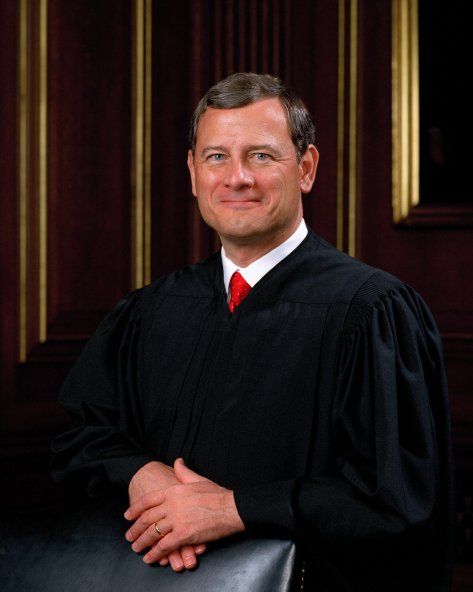







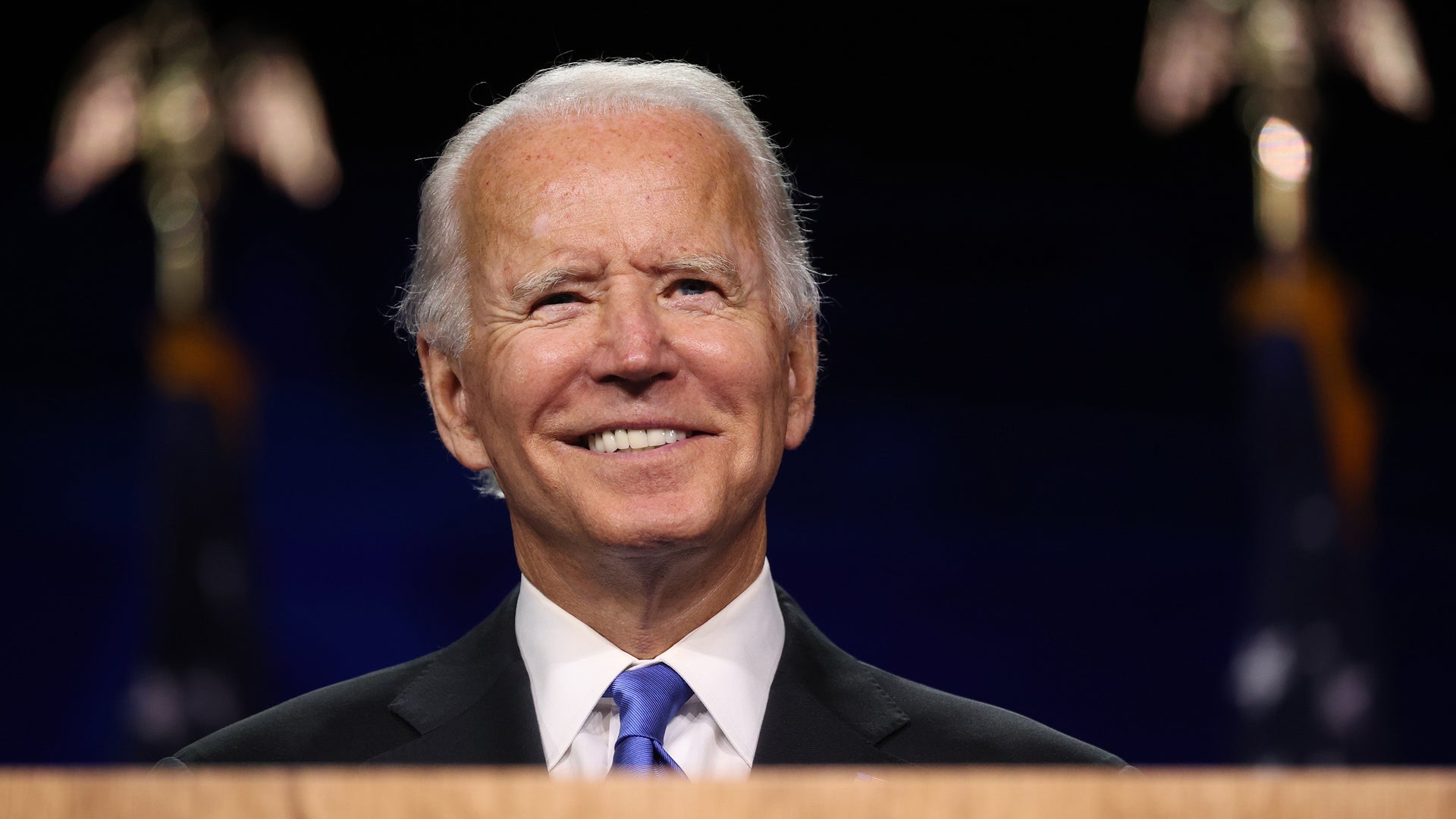


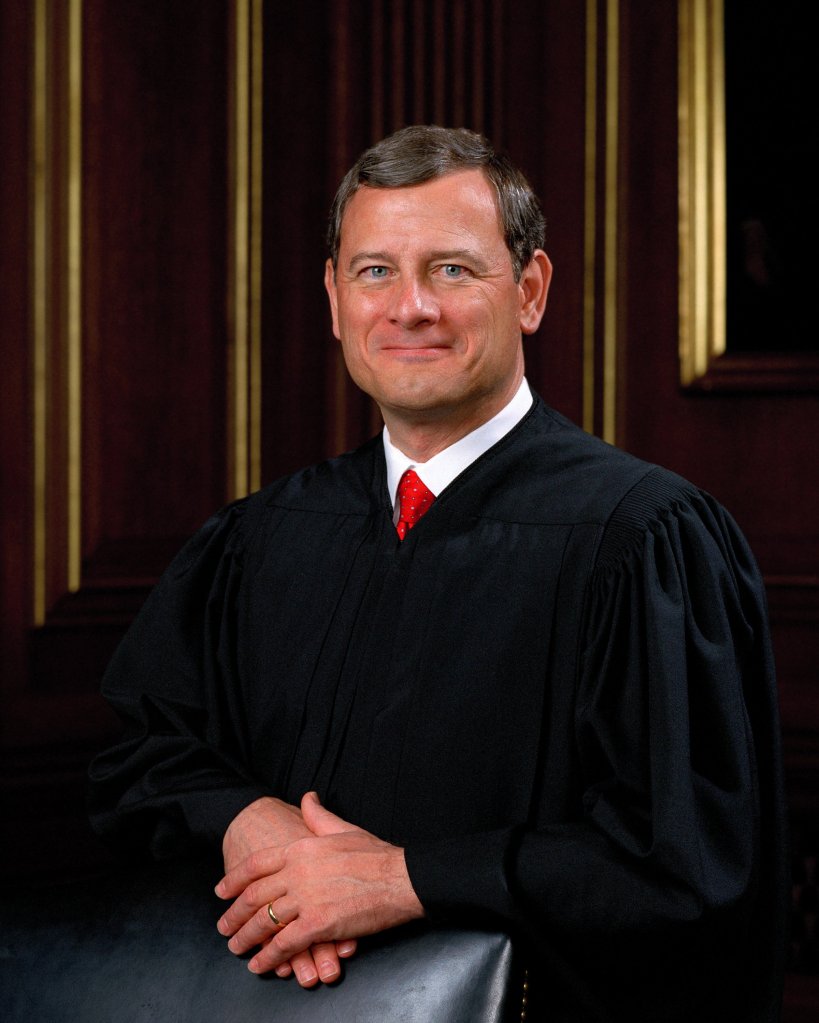






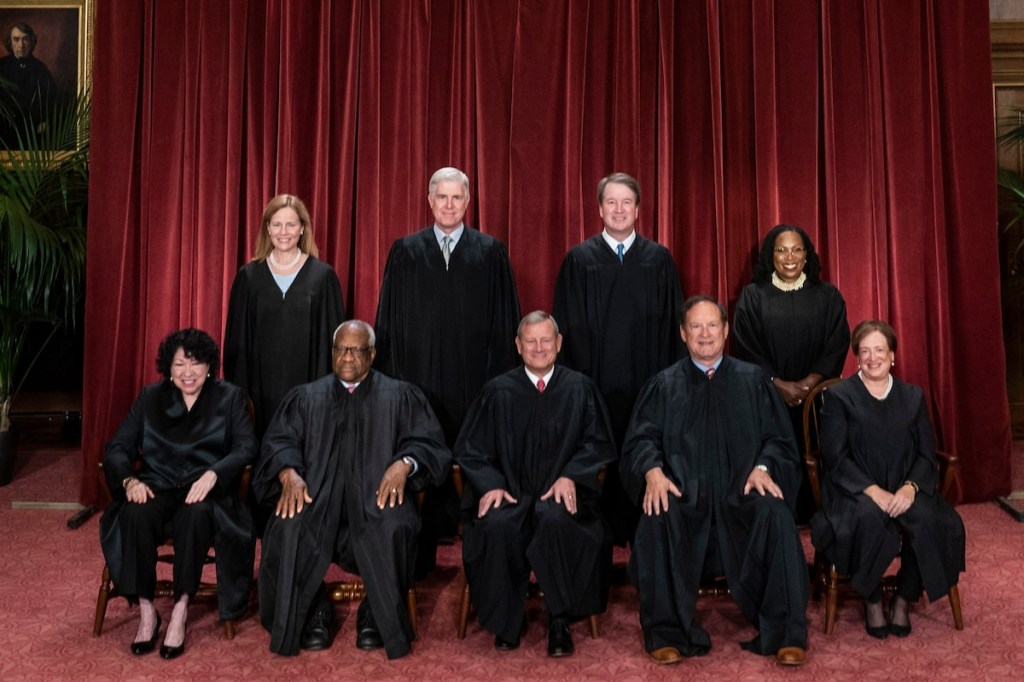







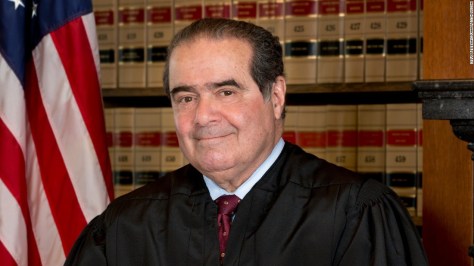





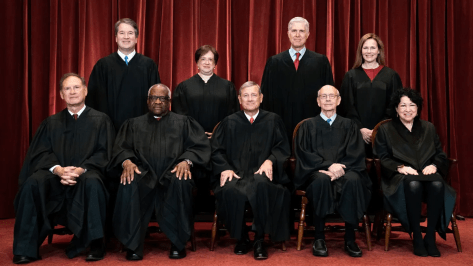










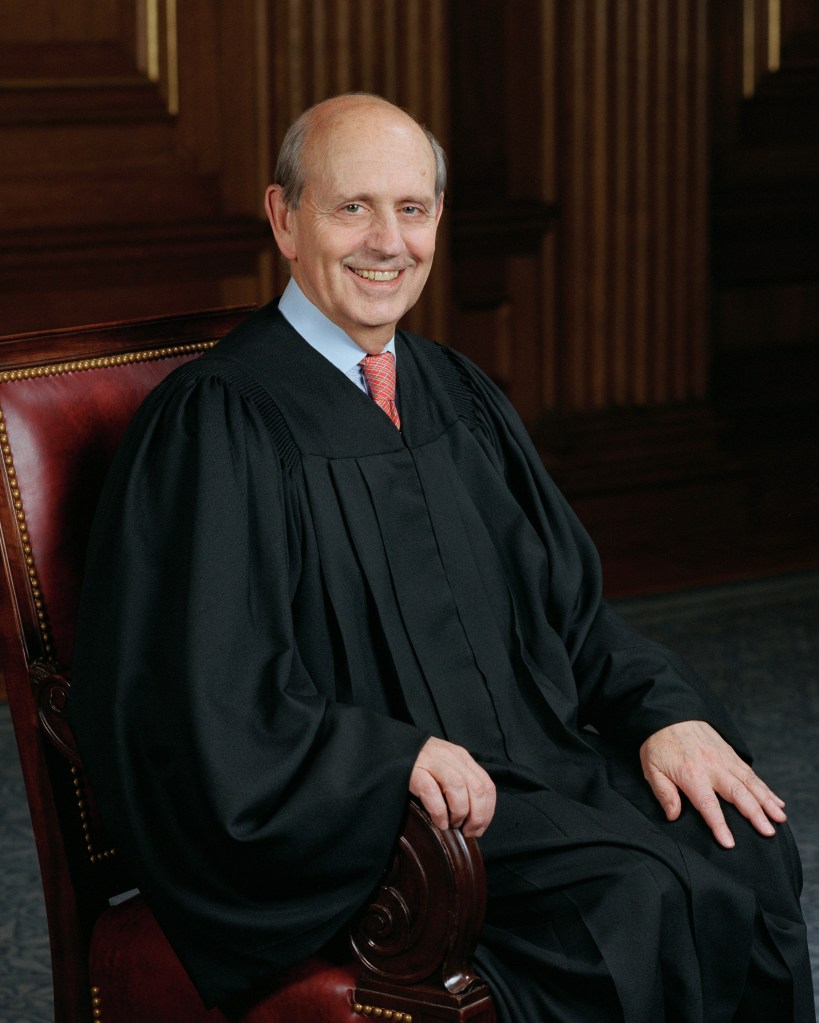




 The Logical Libertarian™