Back in 1971, SCOTUS heard a case called Bivens v. Six Unknown Named Agents of Federal Bureau of Narcotics. I won’t review that case here, but basically, some feds hassled a dude named Bivens by breaking into his house without a warrant and handcuffing him in front of his family. They went on to interrogate him intensely, and even strip-searched him. So Bivens, finding this less than pleasant, sued the feds for being constitution-violating pricks.
At the time, the law prevented people from being allowed to sue cops operating in the line of duty, but SCOTUS was like, “These prick feds aren’t above the law. If they’re clearly acting outside their duties in a way that violates someone’s rights, they can be sued. But, it’s on Bivens to prove damages.”
When SCOTUS made this ruling, it was limited to this exact situation. It was not presented as being a broad precedent applying to all federal officers committing any violation which may seem unconstitutional. So if there are major differences in the new case being compared to the Bivens precedent, they’d be considered an expansion of Bivens if applied.
Ever since, when someone tries to sue a fed, it’s called a Bivens suit. I guess that’s one way to have a legacy. Congrats, Mr. Bivens.
In this case, federal border agent Erik Egbert went to a quaint little US-Canada border B&B called the Smuggler’s Inn located in Washington, and approached a car with a Turkish passenger in it. Officer Egbert had spoken with the owner of the Smuggler’s Inn, Robert Boule, earlier in the day, and Boule had told him this person had come in from Turkey. Apparently Boule isn’t a fan of people from Turkey or some shit. I don’t know. For whatever reason, Boule decided to drop a dime on my dude.
But when Boule later saw officer Egbert show up to question captain Turkey, he cordially invited Egbert to get right the fuck off his property. Apparently he was unaware Egbert would use this earlier info to hassle his customer, or he had some odd change of heart.
Officer Egbert didn’t just decline his polite offer, he pushed Boule to the ground and was all like, “Yo, I’m a fed, bitch! Back the fuck up off me!”
Once it was confirmed that the Turkian, or Turkeyman, or whatever the hell you call a Turkish person, was confirmed to be here legally, officer Egbert and his other federal crips left with no further incident. The Turkey whatever did end up crossing into Canada illegally, so apparently, Egbert’s hunches weren’t wrong. But it was Canada’s problem, not ‘Murica’s
The Smuggler’s Inn
Supposedly, the Smuggler’s Inn had a reputation for attracting miscreants looking to come into the US illegally, and Egbert was presumably quite sick of this shit.
Smuggler’s Inn owner Boule, being rather displeased with officer Egbert’s behavior, called Egbert’s supervisor to complain. But no amount of Karening works on feds, and sadly Boule was not going to find the droids he was looking for.
Having just been majorly Karened by Boule, with apparently no disciplinary action taken, officer Egbert decided this prick Inn owner needed to be taught a fucking lesson in respect. So he hatched a master plan to make Boule’s life even worse. He suggested that the IRS investigate Boule and the Smuggler’s Inn, further antagonizing this poor fuck for just trying to get a nut. As luck would have it, turns out Boule has subsequently plead guilty to breaking some Canadian immigration laws, and he got time served. So he’s not exactly innocent in all this shit.
Egberts legal team argues that the Bivens precedent is bullshit. Fed’s, working in the line of duty, should be immune from suits. If they do something wrong, let the internal affairs assholes deal with it.
But even if SCOTUS isn’t prepared to overturn that shit, they believe this case is different enough that Bivens doesn’t apply, because unlike those cunts in narcotics, border patrol rozzers are a matter of national security, and as such, their issues potentially pose an immediate national security threat. So Egbert argues he should get more leeway than someone trying to prevent some poor fuck from getting high, because he might have to act hastily to prevent a national security problem, whereas some narc is just waging a stupid war on drugs.
Egbert’s team also seems to think that just because Boule complained about him, and he retaliated by sicking the IRS on him, doesn’t mean he violated their first amendment rights. So long as he had a legitimate reason to think there may be tax fraud afoot, he was duty-bound to report that whiny fuck and his little Inn of horrors.
Boule’s claim is twofold. They claim calling the fucking tax cunts because Boule Karened Egbert is penalizing him for free speech, a blatant first amendment violation. He also claims that harassing his Turkish guest was an illegal search, and thus a fourth amendment violation. I think the excessive force of pushing Boule on the ground like a little bitch, also falls under the fourth amendment.
Counsel Sarrah M. Harris
Counsel Sarah M. Harris opened for officer Egbert by basically arguing that even though Bivens is a landmark case at this point, with years of precedent, this case expands on it, and that’s not OK. She also points out that these days, with qualified immunity, it’s pretty fucking clear, Bivens doesn’t jive with how shit is done now.
Justice Roberts was like, “How is this not a similar fourth amendment violation to Bivens. It was an illegal search by a border agent, was it not? Did he have a fucking warrant? Are you really saying that simply because it was close to the Canadian border, that makes it totally OK?”
Counsel Harris was like, “Well, he was there investigating a potential illegal entry issue, which is his fucking job, yeah?”
Supreme Court of the United States Chief Justice John Roberts
But Justice Roberts was unimpressed. He was like, “So somehow the 4th amendment is different near the border than it is in fucking Des Moines or some shit?”
Counsel Harris was like, “Fuck yeah it is. Are you for real right now? They’re near the fucking border. So they’re going to have a lot more people committing crimes there, by virtue of the fact that crossing our border without permission is a fucking crime.”
They eventually congealed around the idea that the agents job, and proximity matter. Like an IRS agent at the border has no more leeway on the fourth amendment, because they’re just about collecting taxes. But a border agent at the border, by the nature of their job, needs to search a lot more people.
Justice Breyer, apparently wanting to show everyone how much he knew about federal agencies, started rattling off every one he could think of, asking counsel Harris if Bivens apply to them. He mentioned Federal prison guards, the FBI, ATF, the US Mint Police, and even the DEA which succeeded the FBN that were at the root of the Bivens case.
Counsel Harris, each time had the brilliant response of “it depends.” Her argument again, seems to hinge around putting the agency and the situation together, and examining whether those two are the same context as Bivens.
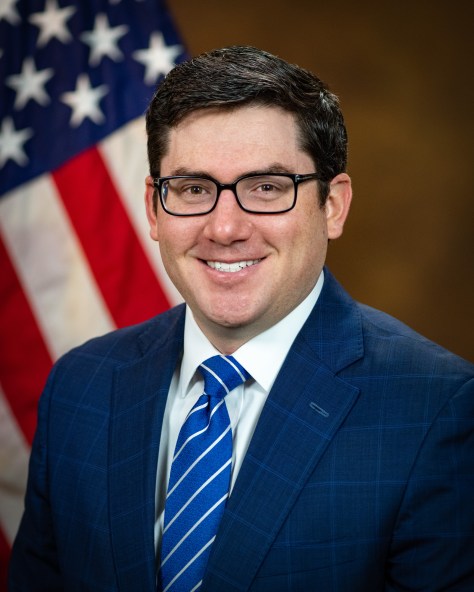
Next up, the US government represented by Michael R. Huston, supporting officer Egbert.
Michael R. Huston
Counsel Huston opened up by arguing, “Even if we think Boule is right in his bullshit claim that this was just retaliation for being Karened, and not because Egbert had reason to believe there was a tax crime being committed, if you side with this prick, you’re going to give the courts a shit-ton of work.
Because every fucking prick that thinks an officer was a dick to them, and that officer took more than one action against them, will be opened up for some retaliatory 1A claim. Are you ready for that fucking shitstorm, SCOTUS?”
As for the fourth amendment claim, his argument was again, basically national security. That somehow, border agents should have more power to violate the constitution. Sounds fucking shady to me, but that’s government for you.
Finally we get to counsel Felicia H. Ellsworth, representing Inn owner and chief Karening officer, Mr. Boule. She opened with this.
Mr. Chief Justice, and may it please the Court: Mr. Boule’s Fourth Amendment claim is materially indistinguishable from Bivens itself. A federal law enforcement agent entered private property without a warrant and used excessive force, just like the federal agents in Bivens, as the Court’s questions have indicated. The fact that the federal agent inquired about the visa status of Mr. Boule’s guest in the process does not make this case any different from the other instances of law enforcement overreach in the search-and-seizure context in which this Court has long recognized that a Bivens remedy lies. And this case has none of the foreign policy or extraterritoriality concerns that animated the Court’s decision in Hernandez.
Felicia H. Ellsworth
For the record, Hernandez was a case where agents shot across the Mexican border and killed a 15 year old Mexican, and so it was a little concerning that Mexico might not appreciate American bullets flying into its country.
Instead, this is a case like the Court observed in Abbasi, where Bivens has continuing force and even necessity. Mr. Boule’s First Amendment claim addresses conduct that is similar to the conduct that this Court assumed in Hartman versus Moore could be remedied via Bivens, but even if it is a new context, there is no reason to withhold the remedy here. There’s no national security considerations, no conceivable national security considerations with regard to the First Amendment claim, and no alternative administrative remedial scheme that exists. Awarding individual damages for federal officer misconduct has long-standing roots dating back to the founding and remains appropriate, albeit more limited, today. And as the Court has observed on several occasions, Congress in the Westfall Act preserved the availability of individual damages for constitutional violations.
Although the reach of Bivens may be narrow, the need for the remedy persists, and the argument that the Court should not recognize a Bivens remedy in any new case flies in the face of this Court’s decision just five terms ago in Abbasi and also would contravene the historical foundations allowing individual damages to right a federal officer’s constitutional wrong. Mr. Boule’s case claims satisfy the framework set forth in Abbasi and should be allowed to proceed. I’d welcome the Court’s questions.
Justice Barrett, trying to figure out what needs to happen near the border like this, that wouldn’t be a Biven’s claim in her eyes, asked this:
So what would he have to do for Bivens not to apply? I mean, the—you know, Boule has been involved in smuggling activity in the past. His B&B is called Smuggler’s Inn.
Associate Justice Amy Coney Barrett
His license plate says “SMUGLER.” You know, there’s this Turkish national who’s staying and there’s suspicion that he’s going to, which, in fact, he did, cross the border into Canada illegally, and this is what Agent Egbert is following up on. What would have to be present? Can you give me a set of facts in which Bivens then would not apply?
Counsel Ellsworth was like, “Well, if he was a border agent enforcing someone coming across the fucking border, that’d do it.
A couple justices were curious as to why Boule told Egbert about the Turkish dude earlier. Counsel did not have an answer to this, but it was known at the time of the hearing that Boule was an informant for the border patrol.
Robert Boule at the Smuggler’s Inn
In a unanimous decision in part, and a split decision in another part, SCOTUS decided with Egbert. They were unanimous on the first amendment claim. Just because Egbert called the IRS on Boule after Boule complained about him, isn’t cause for Boule to sue him. Otherwise, everyone will sue if they say something cross to a fed, and that fed then does something else to prosecute them.
Where they disagreed was on the fourth amendment claim. The Republican appointees made up the majority, agreeing that national security concerns at the border, for border agents, protect these officers more, compared to other federal agencies, from Bivens suits.
The Democrat appointees are like, “Rights are fucking rights, you assholes. Just because they’re at the border doesn’t mean they get to wiper their ass with the constitution. This is bullshit!”
Hear oral arguments here at Oyez or read about the case here at SCOTUSBlog.
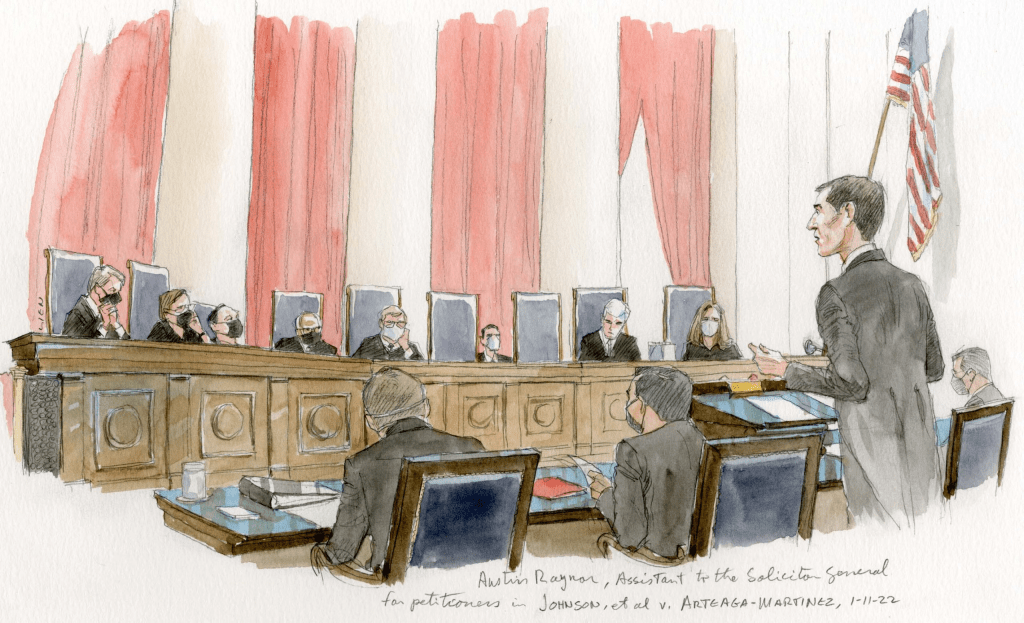
A long time ago, at a border far far away, Antonio Arteaga-Martinez strolled into the United States from Mexico like he fucking owned the place. Not once, not twice, but a lot of fucking times. Who knows at this point? He apparently couldn’t be bothered with all that immigration jazz.
During one of his border-jumping excursions, he was caught, and sent back to Mexico. But, he’s a persistent mother fucker, so he came back again. At least now, the United States had a record of his ass coming here, and being sent home, though.
Aside from the fact that the United States is just a better place to live than Mexico, his reason for coming here is supposedly that he pissed off a Mexican gang when he was in Mexico as well. He claimed they went after him and his family, beating the fuck out of him and stealing a lot of his shit, including his car. So that’s why he was coming to the United States, because he had to get the fuck outta there.
In 2018, Immigration and Customs Enforcement (ICE) found out this dude had crashed our perpetual freedom party again, and were like, “Dude, you gotta go the fuck home. We’ve got rules. Comprende puta?”
But Antonio was like, “Man, shit be crazy in Mexico. You send me back there, you might as well shove a grenade up my ass and pull the pin.”
Now while that might seem like an irrelevant thing to say if someone is here illegally, just to try to get some sympathy or something, in America, we do grant asylum to people who have a reasonable fear of being persecuted or facing some violent action in their home country, through no fault of their own. For instance, someone who is gay, living in a country where they will murder you for being gay, is precisely the kind of person we would not send back.
Because anyone can claim such a thing without proof, the United States will hold them in an immigration facility, until their claim can be processed, researched, and determined their fears are legitimate. An asylum officer did hear his story, and presumably after some investigation, felt his claims weren’t total bullshit, and that a hearing may be in order, as opposed to him being full of shit and getting sent straight back.
Well, Martinez was there for like six fucking months. So he was like, “Dudes, I have money. Can I fucking post bond, and go back to where I was staying while I await my trial to determine whether I can stay? It’s a lot of money, and I worked hard for that shit. I’m not going to just walk away from that.”
In the United States, we have this “Habeus Corpus” rule. I’m sure you’ve heard of it, but few understand it. I know I didn’t at first. It literally translates to “that you have the body.” I’m sure that clears it all up, right? Of course not.
Let me give you an imaginary scenario. You have some dude and you think he murdered his wife. So you arrest him on suspicion of doing so. The problem is, you don’t have a dead wife lying around to prove anyone was murdered. You just have some circumstantial evidence that suggests that some woman was murdered.
In the US, you can’t just be held forever in jail without getting a trial and being prosecuted, that’s bullshit. So basically, in this instance, a habeus petition is like, “If you don’t have the fucking body to prove anyone was murdered, you have to let me fucking go. You can’t just hold me forever while you try to figure out whether I killed someone or not.”
Habeus has since became much more generic, and now basically means, “Either produce the evidence needed to prosecute me or let me go.” In this case, counsel Pratik Shah, for Martinez pointed out that his client wasn’t even close to all the hurdles needed to deport him, so he’d be detained a crazy amount of time before a final decision was made. A segment of his argument was this:
My client is yet another example of someone who — there was no significant likelihood of removal in the reasonably foreseeable future after he had been detained at six months. And that is because he had not even been given a hearing while detained.
We’re not talking about the non-detained docket; we are talking about detained.
Counsel Pratik Shah
He had been detained not — for six months, the government had not given him a hearing on his withholding claim. There is no chance he could have been removed in the reasonably foreseeable future because you can’t remove him until he has a hearing, has an IJ decision, has his BIA appeal.
We are talking months, if not years, until that happens.
So Martinez, filed a habeus petition, and was like, “Hey, man. You can’t just hold me forever. If you’ve got the evidence needed to say my claim is bullshit, then by all means, deport me. Otherwise, I should get my bond hearing at least, so I can do what I need to do, while I wait for my deportation hearing, and all the other shit you’re planning on putting me through before you are finished with me.”
So why does SCOTUS care about this?
Lower courts in the past, have ruled that the government has a limited period of time to grant a bond hearing, and that the burden to determine the person is a flight risk, is on the government. That last part just means that by default, the bond should be granted, and it should be assumed the person is not a flight risk, unless government puts forth some evidence they are.
Martinez’s argument in part, is that he was never given a hearing to determine whether he was someone at risk of non-compliance, so the government didn’t meet its burden. Since an immigration officer agreed his claim seems legit that he’d be murdered if he went back to Mexico, it seems logical he’ll likely be allowed to stay. So let him go on bond, and if at trial, the government finds evidence to suggest he was full of shit, they can send him back then.
There is a rule in place that requires the government to hold non-citizen illegal immigrants for 90 days, after they’re ordered to be removed from the country, but it allows for the government to hold them for more than 90 days if it thinks they’re a danger to society, or they simply won’t leave now that they’ve been told to.
SCOTUS had a previous case, in 2001, Zadvydas v. Davis, where they ruled that there is a time limit on this rule, and it’s six months. That extra time is for someone who is what they call “stateless.” That just means they’re in a situation for instance, where their home country won’t take them back, so where the fuck do you even send them? That takes time to figure out, but it doesn’t take forever. The constitution doesn’t just let government hold people indefinitely. So Zadvydas puts what they considered a reasonable and consistent time limit for the government to determine what to do with these fuckers.
So SCOTUS’ question is does that six month limit mean that they have to get a bond hearing? Or is it just that the government has to send them somewhere at this point, but otherwise stop holding them.
One interesting side issue here, was a question Justice Gorsuch asked:
What is the status of your client? Has he, in fact, received a bond hearing and is he, in fact, at liberty currently?
As it turns out, Martinez had been released under government supervision. I’m guessing maybe an ankle monitor.
The nature of Justice Gorsuch’s claim was, “If this dude is already released, isn’t your claim fucking moot?” (Moot in this case just means, the thing Martinez wanted, he already got, and therefore there’s no reason to be here.)
But counsel Shah pointed out that while government did release him, they’re free to grab him again, unless SCOTUS rules in his favor here, so he’s basically suing for some level of security to know his future, and what government may or may not do.
In a weird unanimous decision, the justices agreed that Martinez loses. He is not required to get a bond hearing. I say it’s weird, because while they all agreed that Martinez loses, they agreed for different reasons, and three different opinions were given as to why he loses.
Alito authored one opinion saying the lower courts can’t force the federal government to give this fucker a hearing, just because he filed a habeus petition.
Justices Thomas and Gorsuch were like, “Not only do we think Martinez doesn’t have a case here, we don’t think it’s any of our business. He doesn’t have any constitutional rights, he’s not a citizen. And furthermore, we think the assholes who decided Zadvydas were on crack, and that shit should be overruled as well. Spoiler alert, Justice Thomas was on that court also, and was in the minority. So apparently, he’s still salty about that shit.
Justice Breyer, ever the contrarian, thinks Zadvydas was decided correctly, that the court that decided it were geniuses, and it applies here. Spoiler alert, Justice Breyer was also on that court, and was in the majority.
So Martinez loses, but they didn’t have the votes to overturn Zadvydas. Case closed…for now.
We all know the United States is seen as a great place to relocate to, if your country is all kinda of fucked up, right?
Well, El Savadorian couple Jose Sanchez and Sonia Gonzalez thought that, and in 1997 and then again in 1998, they came to the United States looking for a better life. Then, in 2001, El Salvador suffered a big fucking earthquake.
That matters, because in the US we have The United States Citizenship and Immigration Services (USCIS) law, which allows for a Temporary Protected Status (TPS) for people who can prove their country is so fucked up, they’re likely to die because of bullets flying everywhere, or some natural disaster. So despite the fact they were already here, and completely unaffected by the earthquakes, they were given that TPS status, so they didn’t have to leave and go back to that whole fucked up situation.
In 2014, after having been here for a couple decades, they were like, “You know what, we’d like to make this our home.” So they applied for permanent residence, and their employer, thinking Sanchez was a pretty awesome fucking worker, helped file a worker immigration visa petition.
But then the government was like, “You’ve been here long enough on a temporary status, go the fuck home. If you want to come back, file your goddamn paperwork from abroad, and get in line like everyone else.”
The rule goes something like this. In order to get permanent residence status, you have to have been admitted to the United States legally. That never happened. They snuck in, then got a temporary protected status so they wouldn’t be deported, but at no point did the United States say, “Come on in, bro.”
The T in TPS is for temporary after all, so it’s not meant as a pathway for permanent residence. Once shit calms down, those folks are supposed to go home. Which if I’m honest, seems kinda fucked up. I mean, they were here for a pretty long time, and established a life here after we said, “OK, you can stay for now.” If they want to stay, and they’re productive motherfuckers, why make them go home first? It’ll mean they’ll lost their job, their home, and all the other shit they worked to achieve.
But, all that being said, there are laws that bar people who came here illegally, from staying here. If they were here illegally for a year or more, they can be barred for attempting to return legally for ten years. So if they go home, now, it’ll be a decade before they could even apply to return.
In a unanimous decision, SCOTUS sided for Mayorkas (Homeland Security). While surely sympathetic, the law is pretty simple. In order to gain permanent residence, you have to have been admitted into the US, which they were not. Sorry, Charlie.
This is a pretty straight forward case about Mexican Refugio Palomar-Santiago, who legally came to the US and was granted permanent residence in 1990. A year later, he was apparently so excited to be an American, he got drunk as a skunk, and jumped behind the wheel of a car, drove like shit, and got popped for DUI.
In California at the time, a DUI was considered a violent crime, and as such, was a deportable offense. So the US told Refugio he could fuck right off back to Mexico.
Since then, three years later, the Ninth Circuit decided in a separate case, that calling a DUI a crime of violence is fucking stupid. So they quashed that law, and made it retroactive so that anyone prosecuted under that law, would no longer be deemed a violent criminal. In 2004, SCOTUS also came to the decision in Leocal v. Ashcroft, that this was bullshit.
Refugio was like, “Sweet” and made his drunk ass back to the US, but this time he came in illegally. He was eventually busted, so he was like, “Hey assholes, you decided the reason you kicked me out the first time was bullshit, so I have a right to be here. I should’ve never been kicked out the first fucking time. You’re just lucky I’m not asking you to cover my travel expenses.”
But the government was like, “Listen fuckhead. There are rules in coming back into the US. You don’t just get to violate them because the reason we kicked you out has been rendered invalid. You still gotta go through the proper channels, or you’re here illegally.”
Their opening argument points out that Refugio had options available to him for judicial review and shit, but he didn’t pass go, he just collected $200.
In a unanimous decision, SCOTUS sided with the US, and told Palomar-Santiago to haul his ass back to Mexico. Had he went through the proper channels to get his removal order invalidated, he’d be fine. But he broke the rules coming back, and that shit ain’t allowed.
Back in July, Trump had the grand idea that the census which is used to determine congressional districts and such, should exclude illegal immigrants in their count used for this. Which seems pretty fair on the face of it, since illegal immigrants are criminals by definition, and not American by definition, thus shouldn’t be represented in Congress.
The census doesn’t even ask this fucking question though, but somehow he wanted them to take their full number of people, and figure out some way to get a tally of illegal immigrants, and remove those fuckers from that total. As usual, Trump is big on ideas, but short on ways to actually do it, and this is no different. So Trump just instructed the Secretary of Commerce to figure it out.
As you can imagine, a bunch of bleeding hearts who know that illegals tend to vote for them more, filed suit to block this order, saying it was unconstitutional, which is a colorful argument at best. Basically, they were saying that the Constitution defines how the census is used to determine the number of house reps, and trying to change that proportion based on a number coming from something other than the census, was contrary to the constitution’s scheme.
A federal district court agreed, so here we are at SCOTUS after Trump challenged it. So now SCOTUS is being asked to determine if the states can even challenge this, since it’s a federal rule. And if so, is Trump’s directive unconstitutional.
In a partisan split, SCOTUS sided with Trump, and essentially said that the lower courts no jurisdiction to give an opinion on this case, and that it was essentially too early for them to sue anyway, since a plan on how to do what Trump wanted to do, hadn’t even been finalized yet. They stated it was, “riddled with contingencies and speculation that impede judicial review.” Basically arguing, you can’t challenge it before he’s even decided how it would work. Besides, Trump’s directive to exclude illegal immigrants may require the use of estimates, which the Constitution doesn’t allow, meaning they could win on that, if Trump doesn’t figure out a plan for solid numbers.
Their ruling leaves an opening for it to be challenged later once Trump’s plan to do this is finalized, which of course is now likely moot since Trump’s dumb ass lost the election.
So while this seems like a win for Trump, it effectively changes very little, and it’s clear that Trump, had he won, could still ultimately lose the ability to do what he hoped to do.
The left-leaning justices dissented because they basically wanted to put an end to Trump’s agenda on this before he went any further.
Agusto Niz-Chavez fled Guatemala and all its glorious violence for the good ole USA in 2005. Since then, he knocked up his wife here three separate times, so now he’s got three citizen babies.
In 2013 he got pulled over for a fucked up taillight, and officers busted him and sent him to immigration. He was issued a Notice to Appear (NTA) which told him to appear in court.
So this is basically a rules issue. If you’re here for more than ten years, we basically say you can stay, barring you being a scumbag murderer or some shit.
Chavez is like, “I’ve been here ten years, assholes. Why are you bothering me. I did my time, I’m here now.”
But the lower court judge was like, “Wait a minute fuck face, you were only here eight years when you got the NTA, and that triggers a stop time rule, meaning that when considering if you fulfilled the ten year requirement, any time after you got the NTA doesn’t count. But Chavez was like, “How can you say the stop time rule is in effect when the notice you sent, didn’t even have a fucking date as to when I was supposed to be removed?”
So basically Chavez ‘s team is trying to say because the notice he initially received didn’t have all the relevant info on it that Chavez needed, the time bar shouldn’t have kicked in, because they fucked up.
So basically, SCOTUS is being asked to let him off on a technicality.
In a 6:3 opinion, where Justices Roberts, Alito, and Kavanaugh dissented, SCOTUS ruled in favor of Niz-Chavez. As Oyez.com writes, the opinion stated that The government must serve a single document that includes all the required information for the notice to appear to trigger the IIRIRA’s stop-time rule.
The dissenters felt like there is no need for all that bullshit. Once you receive the NTA, you know you’ve been fucking told, and you know the government is on to you. You don’t get off because they don’t have a date set yet, or some shit.
Hear oral arguments or read about the case here at Oyez.com
Native of Sri Lanka, Vijayakumar Thuraissigiam tried to sneak his ass into this country through the Mexican border. However, his stealth skills were less than spectacular, and he got caught. He’s a part of a minority group in Sri Lanka known as a Tamil. It’s not a religious sect, it is just about where they’re originally from, similar to native Americans here.
He asked not to be sent back, because he argued he’d be tortured and such, if he did go back, due to his being a Tamil. But an asylum officer felt like he was full of shit, and just using that as an excuse, which is obviously quite common.
There’s an expedited removal process, passed in 1996, which basically says if your dumb ass gets caught near the border coming here illegally, officers can just send you back, without having to send you through some bureaucracy system, costing taxpayers a shitload of money.
But in Vijay’s case, since he claimed fear of persecution, that complicates things a bit, and he at least gets an opportunity to be heard on that issue, called a credible-fear interview.
While Vijay claimed he’d been attacked and severely beaten, and the officer felt that story was likely true (maybe there were scars to substantiate?), he didn’t really show how this was because he was Tamil, and that it wasn’t just some random act of violence.
Vijay filed a habeus motion (a fancy way of exercising their constitutional right to challenge the government’s right to hold them in prison) to stay his removal, because he argued the interpreter was shit, and that the officer reviewing his case, didn’t hear or understand all the facts, and therefore his credible-fear interview wasn’t worth a damn.
But, in the law surrounding the expedited removal process, Congress ordered that judges may only consider three subjects:
Was Vijay not an American resident
Had the officer issued a valid removal order
Had Vijay been given asylum or allowed permanent residence before
Since Vijay’s argument was basically over a language barrier, the courts told him to fuck off.
So now SCOTUS has to decide if the courts can in fact consider Vijay’s argument under the Constitutional habeus rule, and give judicial review to his claim. Or if the expedited-deportation law usurps that.
The government argues, habeus right do not apply to everyone in the world, but only to Americans, which Vijay is not.
In a 7:2 decision, SCOTUS told Vijay to go suck a bag of dicks. That basically, a non-citizen who is here illegally only has certain rights specifically afforded to non-citizens. Due process, being one of those.
log·i·cal: capable of reasoning or of using reason in an orderly cogent fashion lib·er·tar·i·an: an advocate of the doctrine of free will; a person who upholds the principles of individual liberty especially of thought and action









 The Logical Libertarian™