While OSHA was trying to make a sweeping rule for all workplaces in the other case, the department of Health and Human Services (HHS) here narrowly regulated that anyone who works in a facility that accepts Medicare or Medicaid (we’ll call it Eminem for fun) be vaccinated, unless they have a religious or medical exemption. Failing to do so, would cause a loss of funding from Eminem for being non-compliant.
So to be clear, it wasn’t a law forcing anyone to do anything, it was government saying that if any hospital wants paid by Eminem, it must comply with government’s rules. They were welcome to no longer accept Eminem, and not be subject to this rule.
Aside from the money issue, the elderly who were most at risk, are the people using Eminem, making it additionally important for them.
Also unlike the OSHA case, healthcare workers did not have the option to wear a mask if they chose not to vaccinate.
On a side note, if you’re curious, it’s called Biden v. Missouri because HHS operates at the behest of president Biden, and Missouri is the state that decided HHS had gone too fucking far with this shit.
I’ll go on my soapbox for a second and simply say, if someone has a degree in healthcare, and they’re still anti-vaccine, I’m going to argue that the notion that they slept, drank, or got high most of their way through college, is significantly more likely. The days of a rogue scientist being right against an overwhelming consensus of other scientists pretty much ended with the modern scientific method.
I should be clear, while I have a pretty low tolerance for healthcare workers who are anti-vaccine as a whole, I’m only referring to those who are against vaccines altogether. There are legitimate science-based reasons for a small subset of people not to get vaccinated, so I’m totally not attacking them, nor arguing they must be wrong. Those are the “medical exemption” people mentioned above.
During arguments, Justice Sotomayor apparently opted to “tag in” for the Biden administration, adding her own supporting argument that this is a power within Constitution’s spending clause, as it allows the government to impose conditions it desires, when it offers to give money to an entity.
Justice Sonya Sotomayor
Justice Kagan, also seemingly argued for petitioner’s. When counsel for Missouri argued that people might be put in a position to quit if they were opposed to the vaccine, causing a healthcare worker shortage, Kagan fired back that it’s also true that workers who already left the workplace for fear of contracting COVID might return to work if they know all their idiot antivax coworkers were fired, or sucked it up and took the fucking vaccine.
She also pointed out many people were avoiding going to the hospital for fear of contracting COVID, in part because there are idiots at the hospital who refused the fucking vaccine for their own dumb fucking reasons, instead of science-based ones.
I’m also putting religion into a dumb fucking reason, because I’ve never seen the word “vaccine” in the Bible, Quran, or any other religious book, except maybe Dianetics, but that’s not a religion, it’s a cult. So any religious exemption to vaccines is the imagination of the believer, not the word of their god as handed down by any text that I’m aware of.
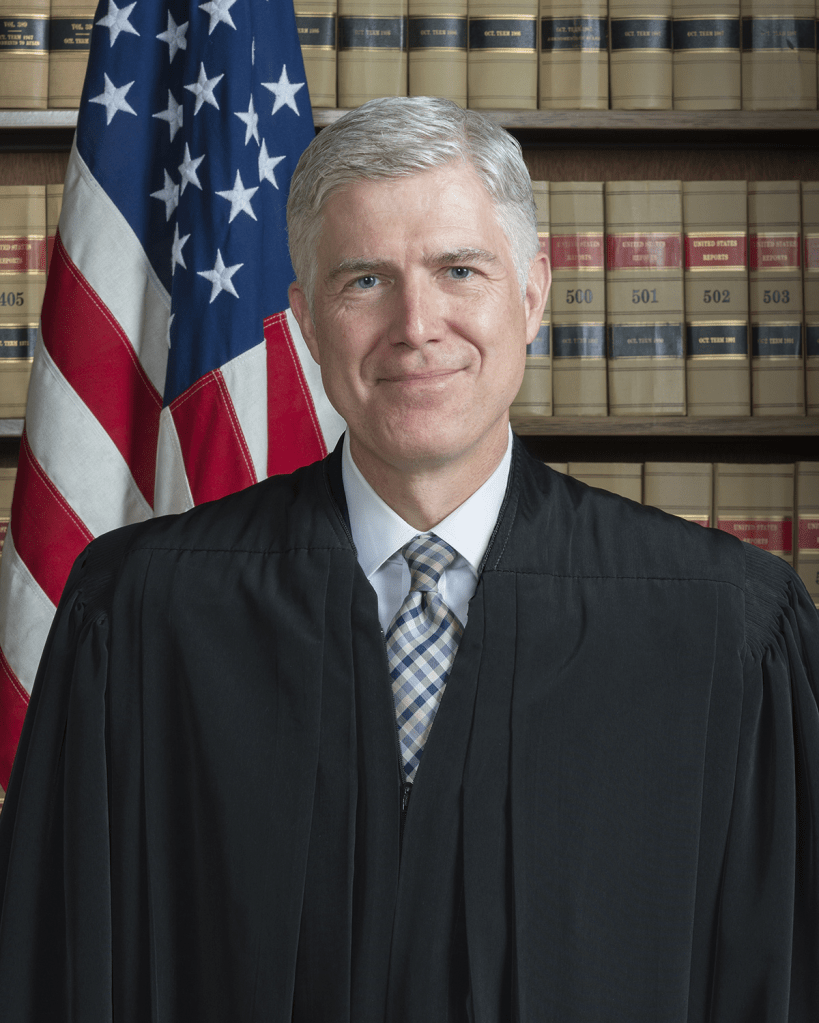
Justice Gorsuch, while grasping the idea that this is a spending clause, still raised concerns this statute is still essentially telling hospitals who to fire, affecting tenure and such (which HHS is prohibited from doing), because it’s…well…I’ll let Justice Gorsuch explain in his own words:
This statute, unlike the OSHA statute, actually contains an express limitation on the Secretary’s authority that we haven’t yet discussed and that I know you’re familiar with.
Among other things, it says the Secretary shall not control the tenure of employees at covered healthcare facilities or their compensation or their selection. And this regulation, arguably, the other side will say—I’m sure we’re going to hear it, so I didn’t want you to not have a chance—is going to say this effectively controls the employment of individuals at these healthcare facilities in a way that Congress specifically prohibited. As I understand your response, it is we’re just providing money or not providing money, and by withholding money, we’re not controlling who you hire. And I might understand that in some circumstances, but in a statute where everything is about spending, it’s a Spending Clause statute, I would have thought that Congress would have understood and we should interpret this language in that light, that you cannot use the money as a weapon to control these things. And, in fact, of course, as you know, the Court has some anti-commandeering law. That’s doctrinal speak for you can’t always use money without—and claim you’re not controlling what’s going on. And I wonder whether we should take particular cognizance of that here given that these statutes sometimes constitute, we’re told, 10 percent of all the funding that state governments receive.
Justice Neil Gorsuch
This regulation affects, we’re told, 10 million healthcare workers and will cost over a billion dollars for employers to comply with. So what’s your reaction to that? Why isn’t this a regulation that effectively controls the employment and tenure of healthcare workers at hospitals, an issue Congress said the agency didn’t have the authority, that should be left to states to regulate?
Their exchange went on for a while, but essentially, counsel for HHS agreed to Gorsuch’s point somewhat, but then gave other examples where HHS set requirements as a condition to get funding such as requiring doctors to be licensed for instance, which no one has beef with. So clearly, there’s some leeway within his concern.
He argues specifically that he felt setting standards doesn’t constitute control. I mean, it kinda is, but hey. Lawyers get paid to come up with colorful arguments, and lawyers who got to argue in front of SCOTUS are the best in the biz.
After The Biden admin peeps finished their arguments, it was time for Missouri to launch their campaign. For that job, they turned to none other than Jesus himself—Jesus Osete.
Counsel Jesus Osete
In his argument, he took issue that the provision that gives HHS the power to act in the interest of the health and safety of patients, that those Biden fuckers are ignoring a lot of other shit to make their claim that it’s OK to add a vaccine mandate of this nature.
Justice Kagan, apparently not having a Jesus fish on her car, was unimpressed with counsel Osete’s argument. It seems being in a 3:6 minority is wearing on her, because she’s been rather belligerent as of late. But to be fair, anti-vax zealots are clearly annoying to me too, so I guess I can’t blame her too much. Either way, her exchange with counsel Osete turned the “testy” level all the way to eleven.
She was asking him for instance, if they can require hospitals to sterilize necessary equipment to prevent infection, which counsel Osete agreed to. So she was like, “then how the fuck is this any different, mother fucker?”
The exchange between them was long AF, so I’m not copying it here, and Justice Kagan was not exactly allowing counsel Osete to make his point anyway, by setting a Guiness World Record for interrupting a respondent. But it’s also true, that counsel Osete was acting in a manner that’s kinda like, “If you don’t like the question, answer the question you wished they’d asked, instead of what they actually asked. He was definitely in spin mode.
Justice Elena Kagan
Counsel Osete really wanted to hammer home the idea that smaller hospitals would be “devastated” by the rule HHS has adopted. Let’s be clear about what he’s saying. Small hospitals have so many anti-vaccine assholes in their midst, that such a rule, would cripple them.
I’m not sure what kind of data he’s citing to make such an astounding claim, but I’d like to believe that anti-vaccine zealots in the health care industry, are the fringe, not the norm. Although, to be fair, plenty of credible doctors were silenced for promoting the idea that natural immunity shouldn’t be ignored entirely, and if someone already contracted COVID, maybe a vaccine wasn’t completely necessary for them.
After the epic battle with Justice Kagan, Justice Kavanaugh brought up a unique question when he asked:
First, this is an unusual administrative law situation from my experience because the people who are regulated are not here complaining about the regulation, the — the hospitals and healthcare organizations.
It’s a very unusual situation. They, in fact, overwhelmingly appear to support the Secretary’s — the CMS regulation.
So I want — and the government makes something of that. What — what are we to make of that?
Justice Brett Kavanaugh
It is a valid point, that the regulation in many ways, is probably a rule the hospitals wanted to impose themselves, but figured it’d piss off their employees. So getting HHS to make the law instead lets the hospitals off the hook so they can be like, “Hey, it’s not our rule! We’re with you *wink-wink*, it’s those nasty assholes at HHS. Sorry. Here’s your shot.”
Justice Kavanaugh went on to give Counsel Osete an opportunity to ultimately explain his beef with Justice Kagan’s line of questioning.
He asked:
How is a vaccine different in kind, from your perspective, from, say, the requirement to wear gloves or the requirement to wash your hands or the other kinds of requirements? Because I think, if you acknowledge that there’s authority to require the latter, then you need to explain why the — the vaccine is different.
His response:
I don’t think I could say it any better than Chief Judge Sutton did at page 12 of his dissent in the OSHA case, which is masks can come off, gloves can come off.
A vaccine requirement, the taking a vaccine is a permanent medical procedure that cannot come off after work is over.
That is, there are — there are materially different conditions, materially different procedures at stake. And when you look at the context, for example, in the hospital requirement, 1395x(e), nothing in that statute comes close to authorizing this precise mandate in this case, which is going to have devastating consequences for vast swaths of this country, Your Honor.
He at least made a valid point as to the distinctions, even if it isn’t necessarily a distinction the law authorizing HHS to do their jobs makes.
Amici for Missouri, Elizabeth Murrill (an amici is an interested third party, which is not part of the suit, but has officially added their opinion to the case) opened her oral arguments with this:
Thank you, Mr. Chief Justice, and may it please the Court: This case is not about whether vaccines are effective, useful, or a good idea. It’s about whether this federal executive branch agency has the power to force millions of people working for or with a Medicare or Medicaid provider to undergo an invasive, irrevocable, forced medical treatment, a COVID shot.
It’s a bureaucratic power move that is unprecedented. If it can do that, the question still remains as to whether it properly exercised that power here.
The district court answered no to both questions at the preliminary injunction stage, and the court below supported its ruling with a number of well-reasoned conclusions. Now, without even addressing all the underlying bases for the ruling, the government asks this Court to jump ahead of the Fifth Circuit and dissolve the injunction, irrevocably changing the status quo in a way that will effectively give the federal government all the relief it seeks.
This will create chaos in state provider networks, limit access to care for the poor and needy, and eviscerate informed consent for millions of people. The Court should reject the government’s request and maintain the status quo because the district court’s holdings were correct on all counts. I’m happy to take questions or speak to some of the questions that have already been asked by the Court.
Elizabeth Murrill
While she also makes a colorful point, I’d argue that a fundamental flaw is her omission of the options. That at no point is the law requiring any health care worker to get a vaccine. It’s forcing employers to mandate workers to do so, if they want to be receive funds from Eminem.
While it is clear that these hospitals depend on these programs for a huge chunk of their cash flow, and rejecting it, would basically put them out of business, I think alluding to the fact that the option is there, but that it’s just impractical, would be a better and more honest approach than acting like the option is non-existent, which seems more like the argument a politician would make, versus a highly competent lawyer who’s qualified to argue in front of SCOTUS.
So on to the decision. While the conservative majority was not ready to give OSHA such broad powers to regulate vaccinating and masking in all workplaces in the other case, Justices Roberts and Kavanaugh, joined the left-leaning justices to form a different majority who sided with the Biden administration, allowing HHS to regulate their industry in such a specific way. Because this was a much more narrow rule, affecting only health care workers that make a living off of government funding, it wasn’t the broad sweeping power OSHA tried to implement, and thus one they were willing to let lie.
In their dissent, Justices Thomas, Alito, Gorsuch, and Barrett accepted the majority’s reasoning to some extent, but simply believed that HHS had no written authority from congress to enact such a strong regulation. If congress had intended HHS to have such power, they’d have expressly written so in the law creating HHS.
In another health care snooze fest, SCOTUS is looking at HHS and their shenanigans regarding how they reimburse certain hospitals for drugs through the Medicare Part B program.
The situation is this. You all know hospitals have to give some patients drugs, right? Well, some hospitals, known as 340B hospitals, apparently get their drugs at ultra-low prices. As a result, HHS was like, “Why the fuck are we paying you full price for drugs that you’re buying on the cheap? This is bullshit. We ain’t doin’ this no more.”
HHS also tried to say, “These are our rules to enforce, so this shit isn’t even up for judicial review.” They cited a previous precedent, used often in judicial review, from Chevron U.S.A. v. Natural Res. Def. Council. This precedent basically said that courts can’t just make up their own rules on how a regulation should work. If the regulating body (HHS in this case) has a “reasonable” interpretation of the regulation, and congress specifically didn’t say they should do something different, it’s their regulation to interpret it, and the courts should stay the fuck out of it. This is partly why they think it’s not up for judicial review.
But the 340Bs were like, “Fuck you, we use that money to help people, we’re not getting rich over here. Plus, you can’t just change the rules willy-nilly however the fuck you want. You’ve at least got to do some research first, and set your reimbursement to a number that shows you know what the fuck this shit actually costs.”
Counsel for HHS was like, “Hey, these cost surveys are a lot of work, and the government accounting office so much as told us not to do so many surveys. So we’re just doing what congress told us. Not to mention, many of these hospitals accepted the rate we gave them as perfectly fucking fine. So I don’t see the problem here, buddy.”
After deliberation, SCOTUS was like, let’s address the idea that this shit isn’t up for judicial review. We’re the Supreme Fucking Court. We’re like a regular court, but with sour cream added. We will decide what we can review, thanks. Chevron is a precedent we set. So we could fuck Chevron right in the ass, just like we did with Roe v. Wade if we want, you randy punks. But even if we leave Chevron alone, someone still has to rule on “reasonable interpretation” of the statute. Who do you think that is? That’s right. It’s us, mother fucker. So sit the fuck down with this, “Not open for judicial review” shit.
After that, they had to decide if the rule was reasonable, to which all nine justices were like, “HHS, are you fuckwads on crack? You couldn’t even be bothered to put together an Excel spreadsheet with pricing info and shit? You just cut the price by throwing darts at a dartboard? You know that’s fucking stupid, right? You give us no choice but to side with the AMA you dumb fucks.”
And with that, the HHS were told to go back to the drawing board, and if they want to cut pricing, put together a fucking pricing survey to back up their reasoning for the prices they put forward.
Hear oral arguments and read about the case at the links below.
With this case, its level of complication is only surpassed by it’s level of boringness. I’ve read it multiple times, and have basically determined that it’s just a prime example of how when government writes a law, they only make things overcomplicated and inefficient.
Basically, the gyst is this. Medicare and Medicaid pay hospitals for treating patients. The amount they pay, is a set amount for a set procedure. So if you have to get your taint amputated because you have ass cancer, they might pay $10,000, no matter where you get that shit done.
That being said, there are hospitals, knows as Disproportionate Share Hospitals (DSH). These hospitals exist to help underprivileged Americans get care they might not otherwise be able to afford to get at other care facilities. As such, these hospitals are broke AF, and need money to help cover these extra expenses. DSHs get higher payments, since their patients are poor, and often in worse health, needing more treatment, as a result of their financial situation.
The Health and Human Services agency, has an algorithm to calculate how much to pay these DSHs., which basically looks at their Social Security Insurance (SSI) benefits, time spent in the hospital, and whether Medicare and/or Medicaid pay for it.
They have two separate algorithms for Medicare and Medicaid, to try to catch everyone using one benefit or the other, but then special rules to make sure if a person uses Medicare and Medicaid, they aren’t counted twice.
This is where it gets laughably complicated. The issue is regarding the phrases “entitled to” and “eligible for.” In the English language, they certainly mean two different things. The first means, it’s yours unless a reason is presented it should not be. The latter means it could be yours, if reasons are presented it should be.
But, HHS, apparently unaware of the English language, treated them as essentially the same. Both phrases represented patients whose bills were paid my either Medicare or Medicaid. But then, an appellate court, looking at the phrase “eligible for” came in and was like, “We don’t give a fuck if Medicare or Medicaid paid their bills, if they’re eligible for either Medicare or Medicaid, then they’re to be counted.” This new definition, broadened the “eligible for” phrase, which now makes the two phrases in question mean something different.
So then, HHS was like, “Well fuck you, appellate court. We think they’re the same. So if you’re going to redefine “eligible for” while just redefine “entitled to” to mean the same thing, using your new and broader definition.
So now, SCOTUS must decide, if HHS overstepped its bounds, broadening these definitions of the statute (as opposed to congress rewriting the law, I’m guessing), which would result in billions more taxpayer dollars finding their way to DHS locations around the country.
In a 5:4 decision authored by Justice Kagan, and joined by Justices Thomas, Breyer, Sotomayor, and Barrett, SCOTUS ruled HHS fucking nailed it. That it doesn’t matter if those agencies paid for the care, if the people were covered by these programs, they count, and HHS is well within their scope of authority to interpret the rule that way. As such, these people can be included in the algorithm, whether Medicare paid for their shit or not.
If I understand this right, and fuck me if I don’t, because this shit is confusing. Since there’s only so much money to be paid out, by expanding the number of people covered in the algorithm, it means the available money is divided up and doled out to more hospitals, thus reducing the amount DSHs will get over regular hospitals.
Justice Kavanaugh wrote the dissent, with Roberts, Alito, and Gorsuch joining him. They looked at the statute itself and felt that if Medicare doesn’t pay for the care they received by statute, the patient and DHS aren’t “entitled to” get Medicare to pay for it by adding them into their algorithm anyway.
Hear oral arguments and read about the case at Oyez here, and SCOTUS Blog here.
log·i·cal: capable of reasoning or of using reason in an orderly cogent fashion lib·er·tar·i·an: an advocate of the doctrine of free will; a person who upholds the principles of individual liberty especially of thought and action







 The Logical Libertarian™