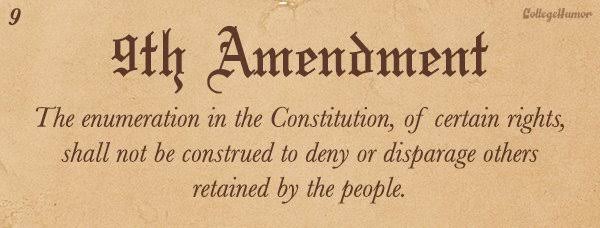
The enumeration in the Constitution, of certain rights, shall not be construed to deny or disparage others retained by the people.
This is the Ninth Amendment to the United States Constitution and unfortunately, it doesn’t do much work. Anyone who’s philosophically pro-liberty, should be quite bothered by this.
We talk about freedom a lot in the United States as the core principle of our nation. But legally, it’s hard to say that’s who we really are. Think about these two competing ideologies.
In a non-free country, you don’t have rights unless the government gives them to you. You can’t do whatever you want, unless the government says it’s OK.
Conversely, in a free country, everything should be considered your right to do, unless the people’s government has a “compelling interest” in making it illegal. We’ll talk about compelling interest in a bit, because it’s kind of a “thing.”
The duty of government I think we most all agree on, no matter where you land on the political spectrum, is that your exercise of freedom should end when that exercise harms another. In that case, the government could, and should, restrict that.
This principle is the essence of the Ninth amendment. Just because we didn’t name other rights in the Constitution, doesn’t mean you don’t have them, and they are equally worthy of Constitutional protections.
There was intense debate when our Constitution was framed as to whether the Bill of Rights should be included, for this very reason. The fear was that naming specific rights might imply that anything not listed wasn’t protected—that the list would be treated as exhaustive. The Ninth Amendment was Madison’s direct response to that concern.
That said, did you know the Ninth is rarely cited in court nor used successfully to protect the people from government oppression as it was intended? Case Law is littered with times that the First Amendment was used to protect people’s rights, so why not the Ninth? The courts have largely abandoned it.
They put it in the Constitution for a reason—it’s not just there to increase word count. It should do some work, yet it just doesn’t.
In our country, the government can and does restrict your freedoms quite often. Unless you can show that your constitutionally-recognized rights were violated by, and you were harmed by, said law, you likely won’t have standing to go to court and challenge it.
Since I mentioned it, it’s worth noting what “standing” is.
Standing just means you essentially have a right to go to court. This matters, because if you weren’t harmed, and just don’t like a law, the court considers this a political issue you should take up with your congressperson.
The courts don’t want someone to be mad Congress passed a law, and try to get the courts to fix it, like when you’re mad at your mom when she says “no,” so you go ask your dad.
Therefore, the Court separates political issues which congress handles, from justiciable issues, which they handle. The difference is generally that if you just don’t like a law, take it up with your congressperson. But if you were harmed by a law and you can show as much, take that to court.
I know we mentioned them earlier, but I should define the term “enumerated rights.” It just means those that are actually laid out in the Constitution by name in the Bill of Rights.
The United States Constitution
This system we have, is arguably not freedom, because it operates as if you have no rights, unless the government gives them to you. That is in direct opposition to principles in the Ninth Amendment and the Constitution itself.
Government overreach wasn’t always as prevalent as it is today. Between 1897 and 1937, an era often called the “Lochner Era.”
Lochner v. New York (1905) was a case where New York passed the Bakeshop Act, which restricted bakers’ hours. Bakeshops were hot places—air conditioning was invented just three years earlier, and was not something you’d find in a typical bakery at the time. So New York was essentially trying to protect workers from hazards like heat stroke or respiratory illness.
The Court struck the Bakeshop Act down as a 14th Amendment due process violation. They argued that it violated the rights of employees and employers to voluntarily enter into a contract they both agreed to.
In the Lochner Era, the courts struck down several laws as 14th Amendment’s due process violations, but it was very Ninth Amendment adjacent, in that it suggested restricting people’s freedom, mostly economic freedom, was a violation of their rights in general, even if those rights weren’t enumerated. So what happened in 1937?
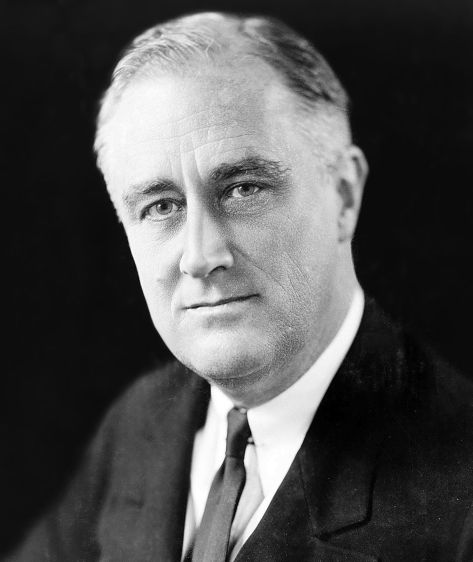
One tyrannical son-of-a-bitch named Franklin Delano Roosevelt (FDR) was president, and he was trying to reshape America with his “New Deal.” It wasn’t just big government, it was massive government. At the time, the court was largely Republican appointees who held laissez-faire capitalism quite near and dear to their hearts, and were striking down laws like Nolan Ryan in his heyday.
Roosevelt, getting sick of being thwarted left and right by the Supreme Court, pitched the Judicial Procedures Reform Bill of 1937, which would pack the Court with additional justices until he had a majority—then use that majority to dismantle the vast case law of his opponents and replace it with New-Deal-friendly precedent.
Franklin Delano Roosevelt – President of the United States Served: 1933-1945 Lived: 1882-1945
Sound familiar? Alexandria Ocasio-Cortez proposed packing the Court when Biden was president to undo the then Republican-appointee majority’s case law, also.
Republicans have their own bag of court manipulation tricks, such as sitting on nominee Merrick Garland, when many argue he rightfully should have been approved. Parties gonna party—neither is innocent.
Many believe that in order to prevent this, Justice Owen Roberts unexpectedly gave FDR a win. Roberts had previously sided with the conservative bloc striking down New Deal legislation, so his vote to uphold minimum wage laws in West Coast Hotel Company v. Parrish came as a surprise.
With the Court appearing to somewhat bend to FDR’s will now, he stopped his efforts to pack the Court. To be fair, such a bill might have failed, but the Court didn’t seem to want to find out.
With all that in mind, let’s talk about scrutiny.
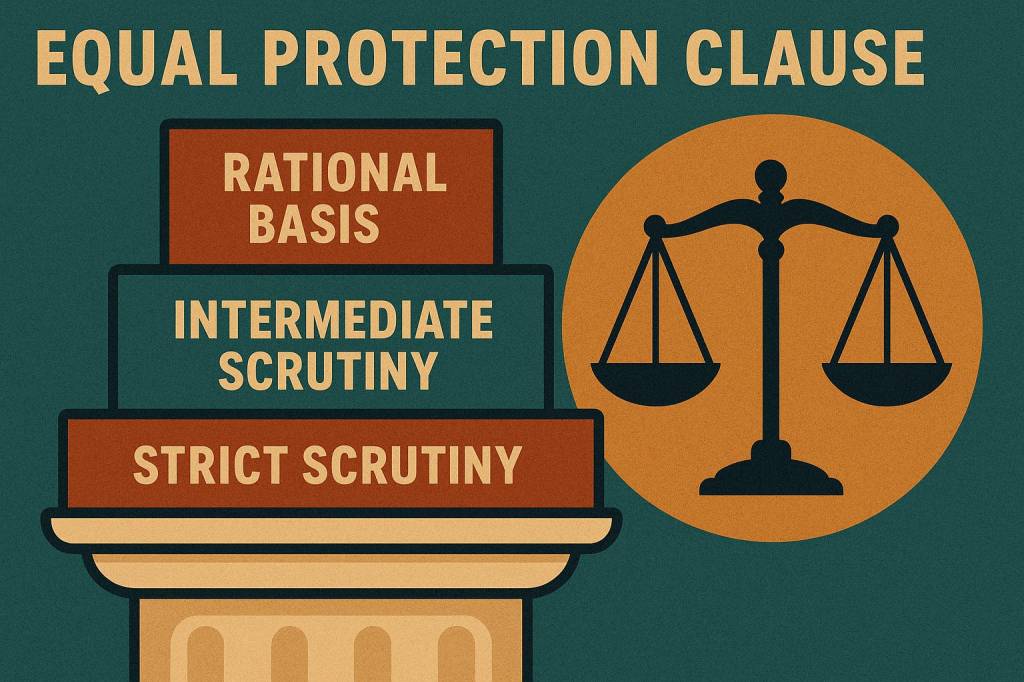
When government restricts your constitutional rights, the courts have developed tests to determine whether that restriction is justified. This isn’t statutory law passed by congress. It’s case law that has formed over many cases. So you won’t find this all wrapped up neatly in one previous case. There are currently three of them.
Rational Basis
Intermediate Scrutiny
Strict Scrutiny
Understand that this framework only applies when constitutional rights are at stake. If a case is purely about what a law means or how it should be applied—with no constitutional rights implicated—these tests don’t enter the picture.
The default is Rational Basis. It’s akin to a speed bump. Pretty much everyone can drive over it, but if someone had a broken-down clunker, they might not make it.
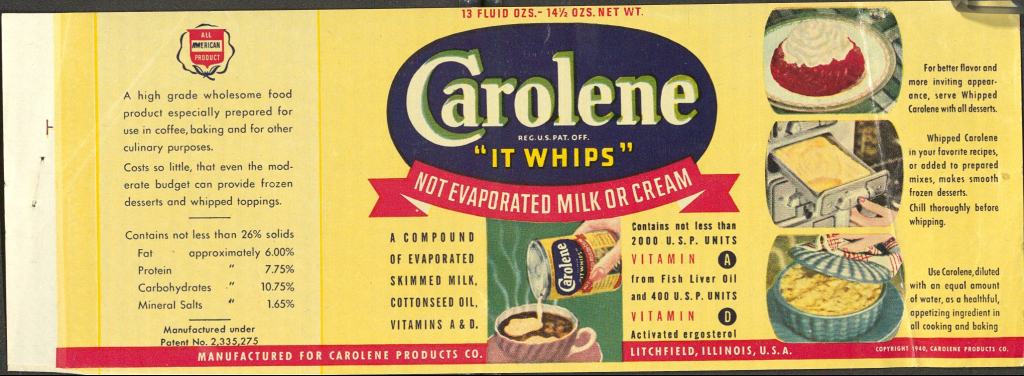
This case was about a company that made “filled milk” which is milk with added ingredients, such as fat or oil, other than milk fat. Carolene Products used vegetable oil in their milk, and then sold off the milk fat for use in making butter, and more valuable products.
In response to this practice, Congress passed the Filled Milk Act of 1923, banning interstate shipment of such milk, arguing it was harmful to public health.
It was nonsense. Filled milk was nutritionally comparable to whole milk; the dairy industry simply didn’t want the competition. Carolene Products was selling the valuable milkfat separately for use in butter, then replacing it with cheaper vegetable oil to make the de-fatted milk palatable—and selling the result at near whole-milk prices.
Rational Basis has a test with two prongs.
Does the government have a legitimate interest in passing the law?
Is the law rationally related to achieving that interest?
That’s it. Pretty easy.
Carolene Products challenged the law, saying it violated their interstate commerce rights, which it arguably did, but the Court decided that the health interests were legitimate, and the law was rationally related to protecting them, allowing the law to stand.
With Rational Basis, the government generally doesn’t even have to name its interest in passing such a law; the courts have often just agreed that if they can conceive of a legitimate interest, that will suffice. The second part is just, “is the law rationally related”—not a large hurdle to jump.
Very few laws have failed Rational Basis, but giving a real-world example helps burn it into your brain, so I’ll give you one.
Obergefell v. Hodges, from 2015, was the landmark case legalizing same-sex marriage. What many don’t know, is two years prior, there was a similar case challenging the Defense of Marriage Act (DOMA) called United States v. Windsor.
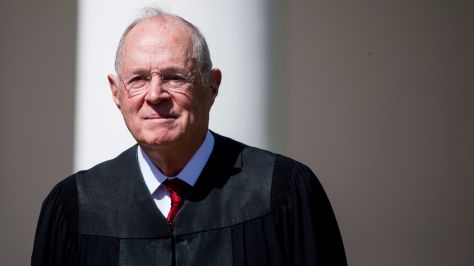
Windsor is somewhat doctrinally contested—Justice Kennedy, who wrote the majority opinion, never explicitly named the standard of review he was applying. But the Court’s reasoning essentially functioned as Rational Basis, and it’s widely discussed in that context.
Anthony Kennedy – Associate Justice: Supreme Court of the United States Served: 1988-2018
DOMA, as you recall, was a federal statute that defined marriage as a legal union between one man and one woman.
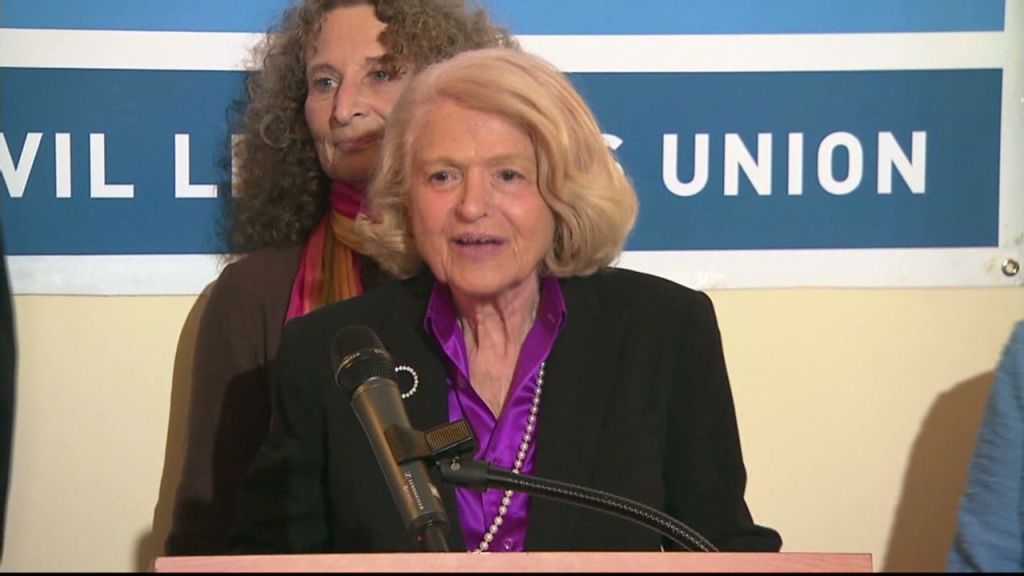
When one partner in a married lesbian couple died, her surviving spouse (Edie Windsor) was forced to pay estate tax because DOMA didn’t recognize her as a legal spouse.
So it was ruled to be a violation of Windsor’s right to equal protection under the law, and the Court’s reasoning, while never explicitly naming a standard of review, essentially applied Rational Basis analysis.
It was a speed bump the Government couldn’t drive over. The Court saw no legitimate reason for government to deny Windsor her rights under equal protection, simply to “defend marriage.”
Edie Windsor
Generally speaking, the harm principle—the idea that your freedom ends where another’s begins — is the philosophical standard I’d argue government should meet. Rational Basis is the legal standard courts actually apply, and it’s considerably more permissive than the harm principle. But even rational basis has its limits, as Windsor shows.
That said, if your law is just discriminating against a certain group without protecting another, courts have held that’s not a legitimate government interest—and therefore such laws fail even the low bar of Rational Basis.
I understand that DOMA was “defending marriage,” but marriage is a thing, not a person. It doesn’t have rights. So DOMA was denying rights to a person who was harming no one.
Make sense?
Next up is Intermediate Scrutiny.
The test for this is as follows
The law serves an important government interest — not just legitimate like Rational Basis
The law is substantially related to achieving that interest — more than rationally connected like Rational Basis
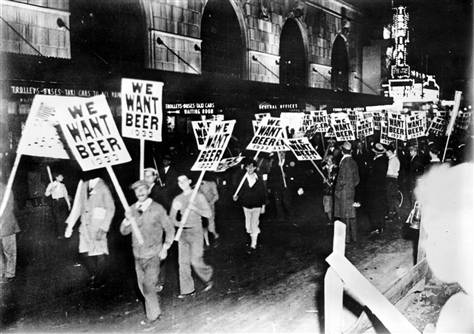
This standard came about in 1976 in a case called Craig v. Boren—a largely unremarkable dispute where Oklahoma allowed women to buy beer at 18 but required men to wait until 21.
The Court decided that discrimination based on sex or gender deserved more than a Rational Basis rubber stamp, but wasn’t quite serious enough to demand Strict Scrutiny. So they created something in between—Intermediate Scrutiny.
So, Test #1: was there an important government interest?
Yes, it was traffic safety. The law was crafted because the Oklahoma legislature felt men got drunk and drove like idiots more than women. So they were trying to keep the roads safe.
Test #2: was the law substantially related?
On that, the Court said no. There wasn’t strong enough statistical evidence to show that men were substantially more likely to cause an accident when drunk than women. So even though the state had a good reason, the law wasn’t backed by data that established a relation to the interest.
Intermediate Scrutiny has since evolved to apply in other cases besides gender discrimination, such as content-neutral speech restrictions. Content neutral just means situations where government restrict when or where you can speak, not what you can say.
Last up is Strict Scrutiny—arguably the most talked about, because it usually involves controversial rights restrictions.
The test for that is currently:
The law serves a compelling governmental interest
The law is narrowly tailored to achieve that interest
It uses the least restrictive means available to achieve it
Strict Scrutiny applies when:
Fundamental rights are involved, like voting, privacy, free speech, etc.
Suspect classification, such as by race or national origin
Content-based speech restrictions—meaning laws targeting what you’re actually saying, like banning certain viewpoints or subjects entirely, rather than just regulating when or where you speak
Even though these three scrutiny classifications exist as a framework, they weren’t created at the same time. We mentioned Carolene Products, in 1938, and Craig v. Boren in 1976.
But Strict Scrutiny was built over time. The first seed was created via dicta in the majority opinion of Carolene Products.
Dicta is text in a court opinion that isn’t strictly binding because it goes beyond what was necessary to decide the case—but it isn’t throwaway either. Justices often use dicta deliberately to signal where the law might go in future cases.
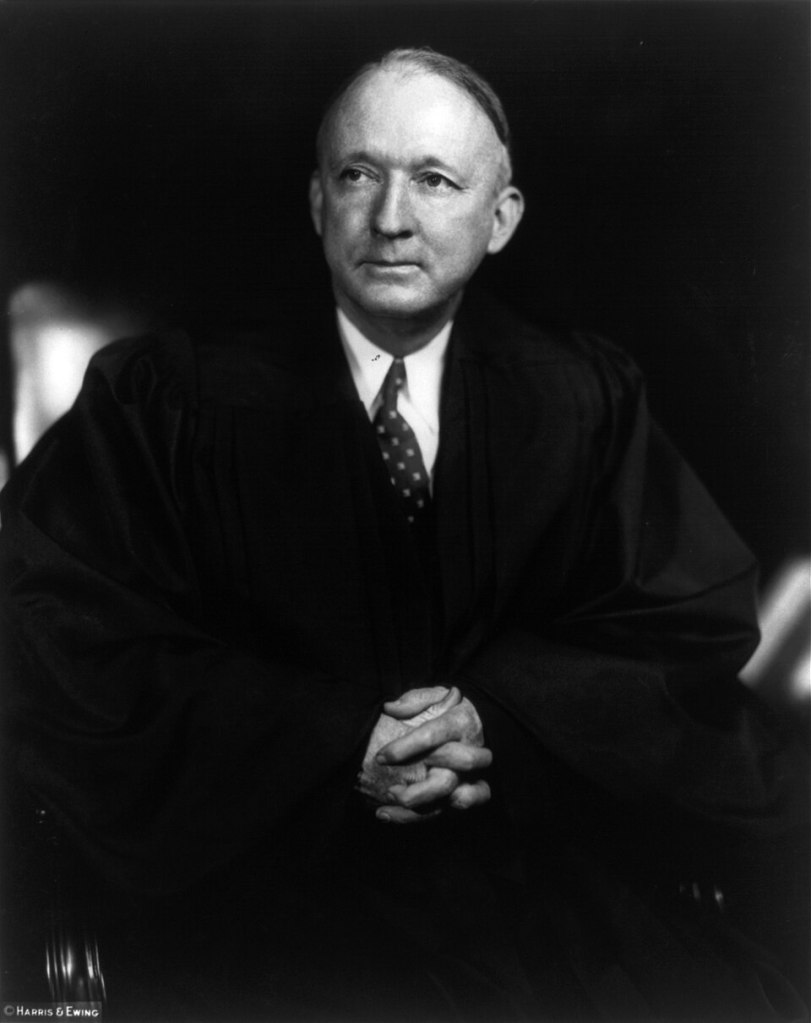
Harlan Fiske Stone – Associate/Chief Justice: Supreme Court of the United States Associate: 1925-1941 Chief: 1941-1946 Lived: 1872-1946
Justice Harlan Fiske Stone, who wrote that majority opinion, said:
There may be narrower scope for operation of the presumption of constitutionality when legislation appears on its face to be within a specific prohibition of the Constitution, such as those of the first ten amendments, which are deemed equally specific when held to be embraced within the Fourteenth.
What he’s saying is, the Court would let this fly under Rational Basis, because there wasn’t any serious denial of enumerated constitutional rights here. But if government were to attack those rights, the Court may have to consider a test stronger than Rational Basis.
And so they did.
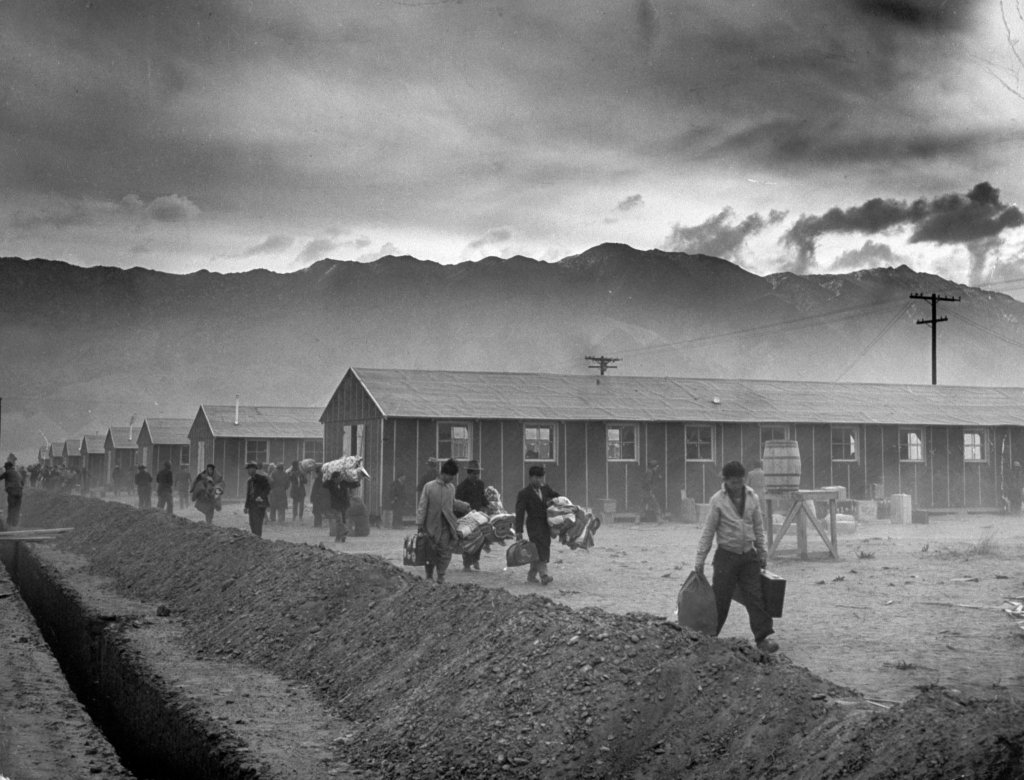
Shortly after, in 1944, SCOTUS decided Korematsu v. United States.
You might recall this little skirmish named World War II?
In the wake of Pearl Harbor—’a day that will live in infamy’—one tyrannical son-of-a-bitch named Franklin Delano Roosevelt (again with this fucking guy) signed Executive Order (EO) 9066 in 1942, forcing Japanese-Americans into internment camps.
If you know anything about EO’s, you know they are orders from the president to employees of the executive branch. So how could FDR direct private citizens like Japanese-Americans to go to these camps?
Well FDR, that tyrannical son-of-a-bitch, and his congressional enablers then passed Public Law 503, which provided criminal penalties for violating military orders issued under EO 9066. Astounding how little respect FDR had for the Constitution.
In this case, Fred Korematsu, a Japanese-American citizen, refused to leave his home and report to an internment camp. He was arrested and convicted of violating the military exclusion order and Public Law 503.
Fred Korematsu
He challenged his conviction, and fought his case all the way to the Supreme Court, but sadly he lost. It was a dark time in America.
In 1983, Korematsu’s conviction was thrown out, when it was shown the government suppressed evidence in the case, and in 1998 then President Clinton awarded him the Presidential Medal of Freedom.
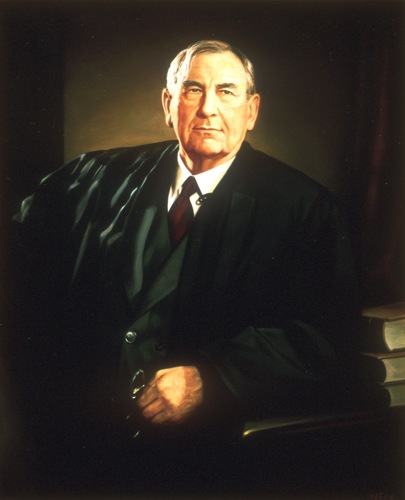
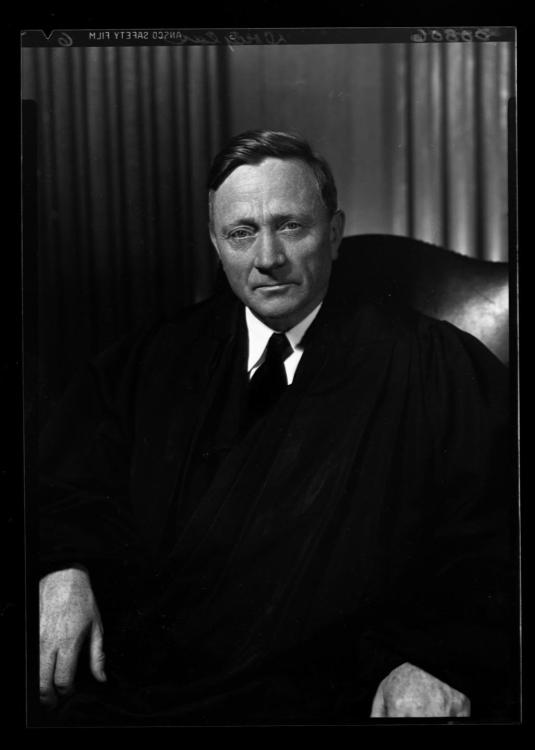
Justice Hugo Black wrote the majority opinion in Korematsu. In that opinion, he said:
It should be noted, to begin with, that all legal restrictions which curtail the civil rights of a single racial group are immediately suspect. That is not to say that all such restrictions are unconstitutional. It is to say that courts must subject them to the most rigid scrutiny. Pressing public necessity may sometimes justify the existence of such restrictions; racial antagonism never can.
You’ll notice he said “most rigid scrutiny,” not “Strict Scrutiny.” So that term came later, but again, Strict Scrutiny was built over time, and this was another step on the Strict Scrutiny ladder.
This established that race alone can never justify a law—any racial classification demands the most searching judicial review, and mere racial antagonism can never satisfy it. You can’t just make law against a certain group of people because you don’t like them. You have to have a compelling reason that goes well beyond mere dislike or antagonism.
Unfortunately for Korematsu, this didn’t translate to a win.
Hugo Black – Associate Justice Supreme Court of the United States Served: 1937-1971 Lived: 1886-1971
The Court ruled that because of the war we were in, the government had a compelling interest to detain Japanese Americans, as they were feared to be spies or operatives.
So they upheld his conviction, because it wasn’t just about racial animus, it was about a real belief that people like Korematsu might be working for the enemy, even though we now know, that was absolute nonsense.
Another case worth mentioning, from 1942, was Skinner v. Oklahoma. The Court addressed Oklahoma’s Criminal Sterilization Act of 1935, which allowed the state to forcibly sterilize people convicted of two or more felonies involving moral turpitude—though notably not all felonies qualified, a distinction that would prove legally significant.
Representing a unanimous Court, Justice William O. Douglas wrote:
Marriage and procreation are fundamental to the very existence and survival of the race. The power to sterilize, if exercised, may have subtle, far-reaching and devastating effects. In evil or reckless hands, it can cause races or types which are inimical to the dominant group to wither and disappear. There is no redemption for the individual whom the law touches. Any experiment which the State conducts is to his irreparable injury. He is forever deprived of a basic liberty. We mention these matters not to reexamine the scope of the police power of the States. We advert to them merely in emphasis of our view that strict scrutiny of the classification which a State makes in a sterilization law is essential, lest unwittingly, or otherwise, invidious discriminations are made against groups or types of individuals in violation of the constitutional guaranty of just and equal laws.
In this case, Skinner won, where Korematsu did not. The Court found that Oklahoma’s sterilization law failed Strict Scrutiny because the state couldn’t demonstrate a compelling interest in sterilizing some felons but not others—the arbitrary distinction between which crimes qualified revealed the classification had no legitimate justification, let alone a compelling one.
William Douglas – Associate Justice Supreme Court of the United States Served: 1939-1975 Lived: 1898-1980
It’s worth pausing here to note a semi-related and ugly part of American jurisprudence. 15 years before Skinner, in a case called Buck v. Bell, the Court took a very different and ugly tone.
Carrie Buck was a young woman who had been raped by a cousin and was institutionalized to hide the shame. There was likely no psychological condition she suffered from. She was just a young girl who had been victimized, not only by a rapist, but then by her immediate family, who unfairly stigmatized her and sent her away.
At the time she was officially called, “Feeble-minded.” Today, it isn’t a recognized medical condition, but back then, it was a catch-all phrase to describe people who were intellectually challenged, or sometimes, such as in Buck’s case, people that nefarious actors just wanted to marginalize.
Buck’s “feeble mind” was a condition that authorities said had been present in her family for three generations.
A Virginia law at the time allowed for sterilization of inmates, or other institutionalized people, ostensibly to promote the “health of the patient or welfare of society.”
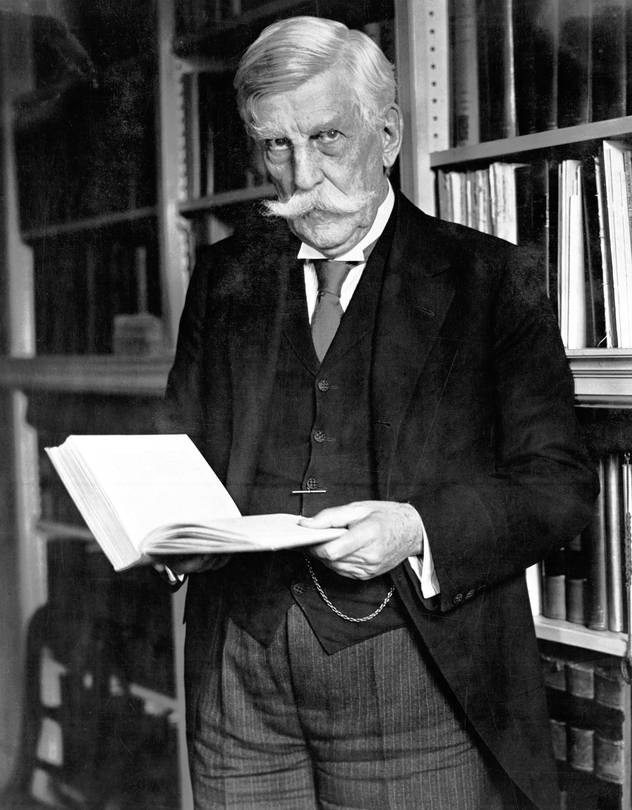
This time, the question of whether sterilization violates due process and equal protection was answered in a way that should make your skin crawl. In the majority opinion, famous (or infamous) justice Oliver Wendell Holmes wrote:
Oliver Wendell Holmes – Associate Justice Supreme Court of the United States Served: 1902-1932 Lived: 1841-1935
Three generations of imbeciles are enough.
Yes, he really said that in a Supreme Court opinion to justify sterilizing a young woman who’s only real crime was being victimized.
If thats not bad enough for you, consider this—Nazi Germany’s eugenics program drew direct inspiration from American eugenics laws like this, and their legal scholars cited Buck v. Bell approvingly as validation for their own racial hygiene policies.
When Americans criticized Nazi eugenics, German officials pointed right back at us and said, essentially, “you’re doing this too.”
They weren’t wrong.
Holmes’ “three generations of imbeciles” line was well known to Nazi eugenicists and cited in their literature. The United States Supreme Court had blessed compulsory sterilization, and Hitler’s government was happy to use that fact as a shield against American moral criticism.
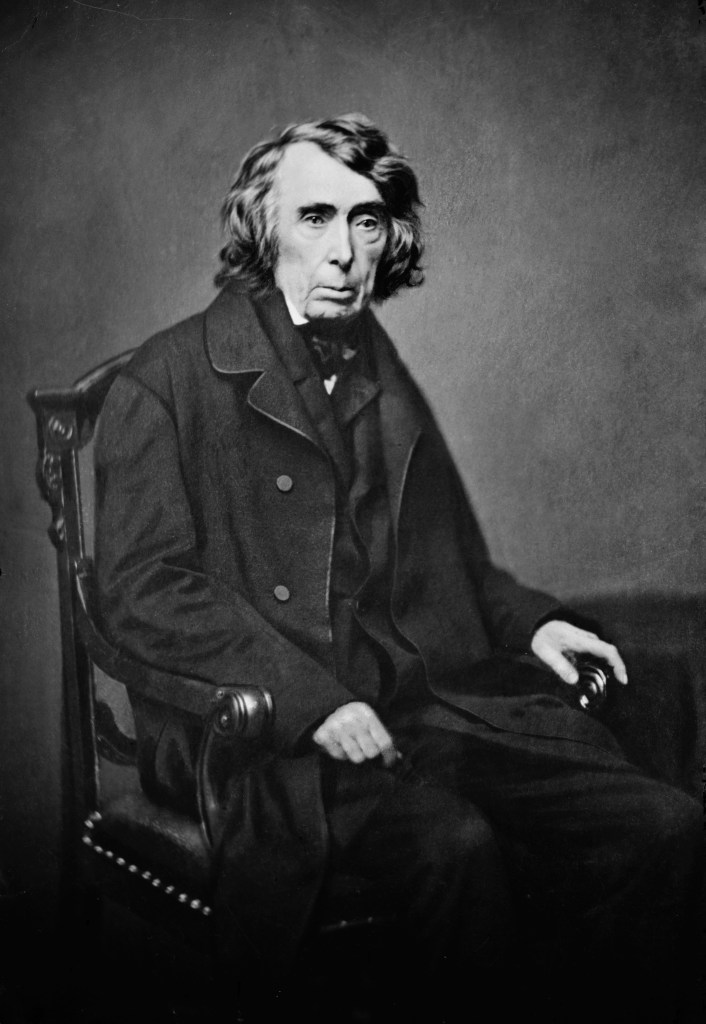
Along with Chief Justice Roger Taney’s opinion in Dred Scott v. Sandford (1857), where he wrote:
They had for more than a century before been regarded as beings of an inferior order, and altogether unfit to associate with the white race either in social or political relations, and so far inferior that they had no rights which the white man was bound to respect, and that the negro might justly and lawfully be reduced to slavery for his benefit.
Roger Taney – Chief Justice Supreme Court of the United States Served: 1836-1864 Lived: 1777-1864
These are possibly two of the most disgusting passages ever penned by someone on our highest court. Both are reminders of why robust judicial scrutiny of laws targeting vulnerable groups matters.
Back to Skinner.
Over the next few decades the three prongs of Strict Scrutiny solidified into the framework we use today—imperfect, judge-made, and still debated, but the strongest tool available for protecting your rights against government overreach.
This brings us back to where we started—the Ninth Amendment, and what it could still become.
So how does this help you, or why should you care?
With this knowledge, if your rights are being violated, you might understand how you could attack those violations in court, using the Constitution and scrutiny as your wingman.
And if you’re motivated enough about protecting all our rights, not just the enumerated ones, YOU might be the person to get the Ninth Amendment involved in more case law—giving those unenumerated rights the legal force they were always promised.
Just because the Ninth doesn’t do much work now doesn’t mean it can’t. The text of the Ninth suggests it could do more heavy lifting than the other nine in the Bill of Rights combined.
I’m going to assume you’ve all heard of Miranda rights, correct?
It’s some version of this, depending on the state:
You have the right to remain silent.
Anything you say can and will be used against you in a court of law.
You have the right to an attorney.
If you cannot afford an attorney, one will be appointed for you before any questioning if you wish.
In the United States, the fifth amendment reads as follows:
Fifth Amendment
No person shall be held to answer for a capital, or otherwise infamous crime, unless on a presentment or indictment of a Grand Jury, except in cases arising in the land or naval forces, or in the Militia, when in actual service in time of War or public danger; nor shall any person be subject for the same offence to be twice put in jeopardy of life or limb; nor shall be compelled in any criminal case to be a witness against himself, nor be deprived of life, liberty, or property, without due process of law; nor shall private property be taken for public use, without just compensation.
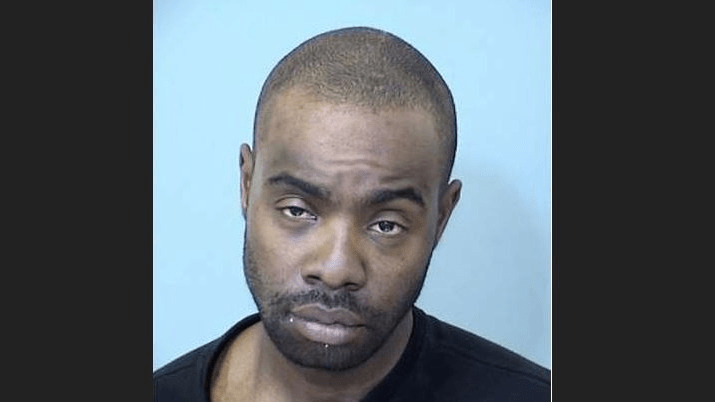
Miranda addresses the part about not being compelled to be a witness against yourself. You see, back in 1963, Ernesto Miranda decided to kidnap a women, then put his dick some place it didn’t belong.
Ernesto Miranda
The police picked him up, questioned him for two hours, and eventually obtained a written confession from him. At no point however, did police tell Ernesto that he had a right to a lawyer.
So armed with the confession, Arizona prosecuted his ass—easily winning their case against him.
Miranda eventually obtained a lawyer, however, who decided that there should be a fucking rule that forces police to advise a person of their rights when they’re arrested. Without that, such confessions should be thrown out, as a lawyer may have advised their client to say or do something quite different from what they actually said and did.
Folks, remember four words if you’re ever being questioned by police: “SHUT THE FUCK UP!” That’s it. SHUT THE FUCK UP!
Ask for a lawyer, and say nothing, no matter what the situation is. Period. Always. Every fucking time. Got it?
It’s not that police are bad, but when you’re a hammer, everything looks like a nail. Police tend to feel like everyone they’re talking to is a bad actor. So on the off chance you might say something that makes them question your innocence, even when you are innocent, you could find yourself in a bad situation because you failed to SHUT THE FUCK UP.
Anyway, Miranda won at SCOTUS and his confession was thrown out, making his trial a mistrial. Since appellate victories don’t trigger the double jeopardy rule, Arizona tried Miranda again, without the confession, and still won.
So while Miranda changed US Law forever—helping innocent people not get railroaded by aggressive government tactics, that fucker was guilty as sin, and his SCOTUS victory didn’t help him one iota.
This is a law that says, if government violates your constitutional rights, you can fucking sue them for civil damages.
Miranda and code 1983 are what’s at issue here in this case.
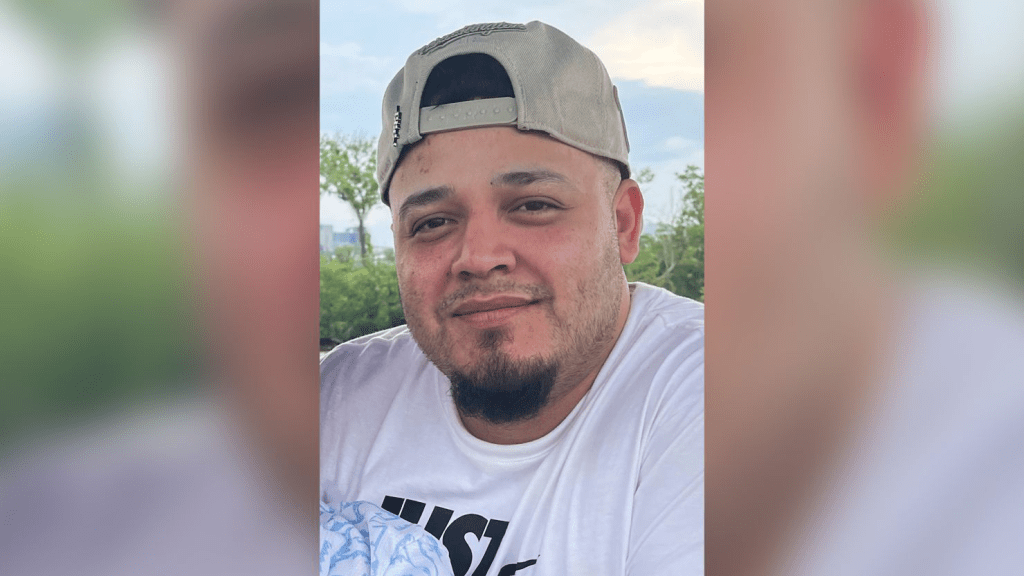
Terence Tekoh was a low-level patient transporter at a Los Angeles hospital.
Terence Tekoh
A young lady was in the hospital, and at one point, under heavy sedation. During that time, she asserted that Tekoh channeled his inner Miranda and stuck a finger in her vagina while she was in the hospital.
The hospital called the fuzz, and Officer Carlos Vega showed up, questioned Tekoh for some time, without ever reading him his Miranda rights, and eventually Tekow wrote an apology for touching the patient inappropriately, which was deemed as a confession.
However, Tekoh was acquitted in his second trial after an initial mistrial.
I’m not sure how someone’s first hand testimony that he molested them wasn’t sufficient for a conviction, but I guess I have to trust the 12 angry men on this one.
Anyway, Tekoh, feeling like he won the lottery after his acquittal decided to double down and sue Officer Vega for violating his constitutional rights.
He argued that he didn’t vountarily talk with Vega, Vega pulled him aside, called him a bunch of racial slurs, threatened to deport his family, and a whole host of other shit, until he confessed.
I won’t bore you with the lower court shit, just know it made it to SCOTUS, and their question was, is Miranda a constitutional right, and if so, can Tekoh sue if he’s not Mirandized?
Let’s go to the arguments:
Roman Martinez
First up: Roman Martinez representing officer Vega.
He opened by arguing Miranda is simply a prophylactic rule designed to protect a person’s fifth amendment rights, and is not a right in and of itself. Just because you’re not mirandized, doesn’t necessarily mean your constitutional rights were violated.
He argues that while Miranda helps protect the fifth amendment rights of the individual, if some moron just blurts out a confession before officers mirandized them, you can’t fairly say the cops violated their constitutional rights and coerced a confession.
He argues that Vega merely took Tekoh’s statement. There was no evidence of coercion, courts and juries didn’t feel Vega did anything wrong, Tekoh just blurted out what he had done.
Justice Thomas was the first to chime in, since he has seniority and all. He asked about a previous case, Dickerson V. United States. So let’s discuss that for a minute.
Associate Justice Clarence Thomas
In that case, congress has passed 18 U.S. Code § 3501 – Admissibility of confessions. This statute came about after the Miranda case law was established, and was congress’ attempt to legislate away Miranda rights by saying voluntary confessions given before Miranda rights are given, should be admissible in court.
However, SCOTUS told congress to go pound sand with this shit, and the reason why is very important.
I know I go off on tangents—not even gonna apologize for that. Eat my entire ass if you don’t like it—I’m trying to learn y’all something.
The courts job is to interpret laws, regulations, executive orders, the constitution, and other case law. When they do this, it establishes new case law. But not all laws are on the same tier.
In the case of Miranda, they were interpreting the constitution. The case law they created in Miranda therefore is at the constitutional tier. Congress pass statutes, but they are on a lower tier to the constitution. So while congress could create new statutes to invalidate case law regarding a statute, they can’t write a statute invalidating case law over a constitutional principle, otherwise a law would be trumping the constitution. This is Dickerson in a nutshell. SCOTUS ruled in Dickerson, that congress cannot legislate away constitutional case law.
OK, done digressing, back to the case.
Justice Thomas wanted to know if Dickerson destroyed Vega’s case. If SCOTUS ruled that Miranda couldn’t be overruled solely by statute, then doesn’t that make Miranda a constitutional issue, and therefore qualify it as a constitutional violation?
But Counsel Martinez was like, “Nah, man. Miranda protects a constitutional right, but it isn’t a right in and of itself. It’s constitution-adjacent.”
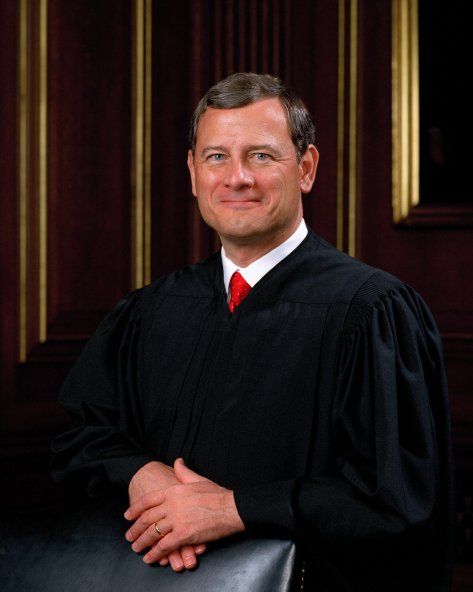
Justice Roberts next asked:
Supreme Court of the United States Chief Justice John Roberts
John G. Roberts, Jr.
Mr. Martinez, if I could focus just for a minute on the language of the cause of action here, 1983.
It gives individuals a right against the deprivation of any rights, privileges, or immunities secured by the Constitution and laws. Now, under Miranda, you have a right not to have unwarned confessions admitted into evidence.
You wouldn’t have that right if it weren’t for the Constitution.
So why isn’t that right one secured by the Constitution?
Counsel Martinez responded, “Man, a rule to protect a constitutional right isn’t a constitutional right itself. Nowhere else does this occur, that some stupid-ass procedural rule that protects a constitutional right, all of a sudden becomes a constitutional right in and of itself.”
Justice Kagan was the next to chime in. She could not wrap her head around the argument that Miranda is there to ensure the 5th amendment rights are preserved, and that if a Miranda warning isn’t given, that somehow counsel argues that doesn’t necessarily mean his 5th amendment rights were violated.
Associate Justice Elena Kagan
Counsel Martinez suggested that just because Miranda wasn’t given, could it not be true that cops were having a discussion with him, and he admitted to what he had done in a moment of guilt?
That maybe he wanted to confess, even if he knew he didn’t have to answer their questions?
There’s no reason to assume his confession was coerced at all, without evidence of such. Therefore, his right not to self-incriminate doesn’t have to have been violated.
Justice Sotomayor asked:
Can you tell me why we’re here?
Simple question, but complex reason. She’s asking that Vega not Mirandizing him may have violated his Miranda rights, but it was the prosecutor and courts who chose to admit that confession who royally fucked Tekoh in the ass. So why sue Vega?
Martinez was like, “Fucking Vega lied to the prosecutor and the courts about this bullshit confession he obtained. That’s why we’re going after him. The prosecutor and judge were going on bad info from Vega!”
Next up is Vivek Suri. He’s representing the federal government under Biden, as an amicus, in support of Vega.
His opener was a short banger.
Vivek Suri
Mr. Chief Justice, and may it please the Court: Miranda recognized a constitutional right, but it’s a trial right concerning the exclusion of evidence at a criminal trial.
It isn’t a substantive right to receive the Miranda warnings themselves. A police officer who fails to provide the Miranda warnings accordingly doesn’t himself violate the constitutional right, and he also isn’t legally responsible for any violation that might occur later at the trial.
He’s basically saying, even if the cop fucked up and didn’t mirandize, the prosecutor brought the evidence in, and the judge allowed it. So why is Vega the asshole here?
Justice Thomas jumped in first again, and simply asked, what if the officer lies about what happened during the interrogation?
Vivek is largely arguing 1983 claims are about things that happen outside of trial. But things that happen during the trial, are generally not 1983 claims, such as ineffective counsel, or other poor actions by the judge and prosecutor.
Vivek essentially argues that the remedy for a Miranda claim, is just to throw out the testimony that was given before a baddie was mirandized. It’s not to make it rain cash on the poor sucker.
Last up is Paul Hoffman, representing Mr. Tekoh, AKA Goldfinger.
He’s arguing that Officer Vega’s account is bullshit. Tekoh did not just willingly give up this info. Vega threatened him with deportation and shit, until he confessed.
Vega then lied and suggested that Tekoh, out of the blue, was just like, “Hey man, I’m sorry, I fingered her without her consent. I’m an asshole. Totally my bad.” As if somehow, he didn’t even feel he needed to Mirandize him yet, but then Tekoh just dropped the dime on himself straight away.
Paul Hoffman
Problem for Hoffman, none of the fucking trials actually found, based on the evidence, that Vega did coerce Tekoh. It’s Tekoh’s story, but that’s it.
If Tekoh just blurted out his guilt willy nilly, Vega really didn’t do anything wrong. But Hoffman needs to prove that Vega threatened him with deportation and such, and he just doesn’t have any court findings or testimony to back that shit up.
Think of it like three steps. The use of an unMirandized statement is a violating of the fifth amendment. 1983 let’s you sue for damages if your rights are violated. If Vega lied and said the confession wasn’t coerced when it was in fact coerced, and that confession was admitted into evidence, than Tekoh’s constitutional rights were violated by Vega, and Vega should be rewarded with some 1983 dollars.
If Vega is telling the truth, and Tekoh just sang like a canary because he was feeling guilty, as Vega suggested at trial, then Vega didn’t coerce that confession, he’s just reporting what he heard Tekoh say.
Since Tekoh was exonerated, you might wonder what harm he is claiming. The confession didn’t help the government convict Tekoh. But Tekoh’s claiming that the fact his confession was used as evidence against him, led to him having to endure a trial at all, and therefore he was harmed.
Hoffman is arguing that Tekoh’s life and reputation were harmed by all this, and none of it would have happened, had Vega Mirandized him, instead of interrogating him. And that’s what 1983 is there for—violations just like this.
The opinion, written by Justice Alito, and joined by the other 5 Republican appointees, decided it didn’t give a fuck whether Vega lied or not. That Miranda is not a constitutional right, it is a prophylactic rule that merely protects a constitutional right. The remedy for a Miranda violation is the evidence not being allowed into trial. It isn’t 1983 dolla dolla bills y’all.
Essentially, he’s saying that because it’s possible Tekoh just blurted out his confession, and Vega was in earshot of it, which would be admissible in court, that this proves that not mirandizing someone isn’t always a fifth amendment violation.
He wrote:
A violation of Miranda does not necessarily constitute a violation of the Constitution, and therefore such a violation does not constitute “the deprivation of a right secured by the Constitution” which is necessary to secure a 42 U. S. C. §1983 claim.
So Tekoh can go fuck himself, instead of his patients—he’s lucky he was acquitted.
Justice Kagan wrote the dissent. I’ll summarize it this way. “If Miranda is required to protect someone’s 5th amendment rights, and a Miranda warning isn’t given, someone’s fifth amendment rights were fucking violated. Alito, respectfully, you’re a crusty old senile fuck, and you should retire.”
When I think Trump is corrupt or willfully doing the wrong thing, I’m pretty harsh in my criticisms of him on “the socials.”
If he’s answering honestly here in this PBS video, then this is not so much me bashing him, as it is me being concerned about him being our president.
To give context, he is asked about the Supreme Court ordering him to effectuate the return of suspected gang member, and known illegal immigrant Kilmar Garcia (Read about this story here, for the unfamiliar), and he replies by saying that the people elected him to deport these folks, and the courts are holding him back from doing it.
So then she asks, “Don’t you need to uphold the Constitution of the United States, as president?”
He responds, “I don’t know. I have to respond by saying again, I have brilliant lawyers that work for me. And they are going to, obviously follow what the Supreme Court said. What you said, is not what I heard the Supreme Court said. They have a very different interpretation.”
It should be concerning he doesn’t understand the constitution, and a court order, at such a basic level, when he’s encountered so many of them at this point.
Kilmar Arbrego Garcia
If you follow Trump and his legal issues, as covered by legal scholars and analysts alike, you’ll know he has a history of losing good lawyers.
A good podcast on this subject is called Serious Trouble, hosted by former federal prosecutor, Ken White. If you’re interested in learning law as it pertains to current issues, it’s really hard to think of a better podcast, and it’s largely apolitical.
It is often very critical of Trump, but don’t mistake this as being partisan. It’s quite possible to be a Republican ideologically, and still not like Trump, or to have apolitical reasons for disliking him.
I don’t think Ken White is a Republican, but the point is, he rarely delves into political opinions or questions, just legal analysis. So be sure to check your biases when listening, and just learn.
Former prosecutor Ken White
Anyway, on the issue of Trump losing good lawyers, an analogy would be the support of capitalism many give, and how it works.
If someone were a horrid employer, they’ll lose good employees, either because the employees won’t want to work for them, or the employer will ask them to do things that they know are wrong or immoral. The employee will, of course, refuse to do these directives, which then prompts the bad employer to fire them because they think the employee is being insubordinate, when the reality is the employer is the one out of line asking them to do those things in the first place.
This is precisely the scenario people describe when it comes to Trump and his lawyer troubles. His lawyers either fire Trump as a client, or he fires them, often after they refuse to do something they consider illegal, which could get them disbarred or worse. So Trump ends up with mediocre and ethically challenged lawyers as a result. Not to mention, he seems to have a penchant for hiring lawyers who are subjectively attractive females, for what I assume are not entirely because of their skills at lawyering.
Christina Bobb (Left), Lindsey Halligan (Center), Alina Habba (Right)
By all accounts, he’s been surrounded most of his life by employees or family members, who’ve all enabled him. It’s led him to believe he’s smarter than he is, because he doesn’t have anyone close to him to tell him he’s wrong or out of line growing up.
Penn Jillette talked about this on his podcast, Penn’s Sunday School. Penn was asked to do an interview for a book about Trump. Out of curiosity, he asked the writer, “What do his friends say about him?”
The writer responded that he hadn’t really been able to find any friends to interview. Just employees, and family members.
Penn Jillette
As a result of this sheltered and unchallenged life, it stands to reason he was turned into an entitled jerk who thinks he’s always right, and thinks anyone disagreeing with him is his enemy.
History is littered with stories like this of boy kings, for instance, who would have servants killed for just making eye contact with them.
As much as I find Trump offputting and reprehensible, I do find it sad that this is how he was brought up and how he turned out.
Maybe he was born a sociopath and was always going to be the basic person he is. But maybe he was raised so poorly, that it made him the bad person he is, and things could have been so much better for him with a better upbringing.
Either way, the idea that he doesn’t understand the Constitution in such a simple sense, is very concerning, when it’s his job to uphold it. With some of his other off-the-wall ideas, like changing the name of the Gulf of Mexico, reopening Alcatraz, or his tumultuous application of tariffs, I think it’s fair to ponder the idea that he’s starting to suffer dementia, like Biden and Reagan before him.
He’s Biden’s age—after all—and older than Reagan was during his presidency, so it’s not a crazy notion.
Either way, I think for the sake of our nation, it’s time for Republicans to move on from Trump as soon as possible before more bad things happen, either through corruption, arrogance, ignorance, or senility.
A well-regulated militia, being necessary to the security of a free state, the right of the people to keep and bear arms, shall not be infringed. ~ 2nd Amendment to the US Constitution.
Nothing seems to evoke more passion from either side of the political aisle than the 2nd amendment to the U.S. Constitution. People on the Individual-Right side of the fence often cite the “shall not be infringed” clause, but those who wish to limit or eliminate the individual right to bear arms often cite the “well-regulated militia” clause.
Former ACLU Leader and Mathematics Professor Ira Glasser
The anti-individual-right argument being that the framers meant for Americans to be able to form militias to protect the people or the country, and those militias would need to be armed. This sentiment has been echoed by such noteworthy Civil Rights leaders as former ACLU head and mathematics professor Ira Glasser, which he discussed at length during the March 2nd, 2018 Comedy Cellar podcast. (click to listen)
NYC Comedy Cellar
Side Note: Don’t be fooled that the podcast is from the Comedy Cellar. Owner Noam Dworman is quite fond of discussing politics, and is incredibly thoughtful, fair, and insightful on the subject.
Oddly, the person who got it right (IMO), contradicting Ira Glasser, was Noam’s co-host, comedian Dan Naturman, who often describes himself as left-leaning. Dan does possess a law degree from Fordham University, and Noam studied law at the University of Pennsylvania, making them the only people trained in law involved in the discussion, not Glasser.
While Noam Dworman tends to seem centerist, he understandably felt the need to defer to Glasser’s judgement, since his work with the ACLU would seem to assert Glasser would be the more knowledgeable person in the room—but on this issue, he just wasn’t.
Comedian Dan NaturmanThe argument the anti-individual-right group presents seems pretty sound on the face of it, but there are several flaws with this line of thinking, making it unarguably incorrect.
But let’s break down the flaws of these arguments one by one.
THE CONTRADICTION
The first issue is that it is entirely contradictory with the rest of the Bill of Rights.
The Bill of Rights was drafted, not as a set of laws for the people to heed, but instead, limits set on government as to how government may restrict the people’s individual rights.
The Bill of Rights Institute writes:
The first 10 amendments to the Constitution make up the Bill of Rights. James Madison wrote the amendments, which list specific prohibitions on governmental power, in response to calls from several states for greater constitutional protection for individual liberties.
So if the 2nd Amendment was drafted to allow the establishment of militias, and was not meant as an individual right, it would be inconsistent with the other nine amendments.
Our founding fathers believed you have inalienable rights by virtue of existing, and they cannot be taken from you. They don’t come from government at all—the founders of our country were very clear on that when they wrote the Declaration of Independence.
The Bill of Rights places limits on what government may do, not establishes the formation of government entities. Those things are laid out in the first portion of the Constitution. But it also is written with the intention that the power comes from the people, not government.
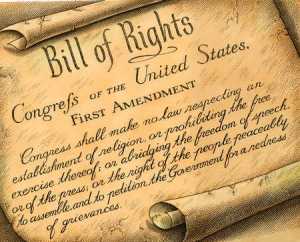
The 1st Amendment
For instance, our first amendment states “Congress shall make no law respecting an establishment of religion…” versus something like “You are free to practice any religion of your choosing.”
This pattern is consistent throughout the Bill Of Rights, and while most see both those phrases as essentially the same, there’s an incredibly important distinction. As the Bill of Rights are written, the people have the power and are imposing a limit on the government’s ability to limit their religious freedom. In the second theoretical example, it implies government has the power and is granting religious rights to the people.
So now that we understand the Bill of Rights (it’s in the name, for Pete’s sake) establishes rights of the people, not of government, and thus contradicts the idea that the 2nd amendment was meant to help local militias to form, let’s move on to issue #2.
THE MEANING OF THE WORD MILITIA
The meaning behind the word “militia” in the second amendment.
If we assume the term “militia” refers to local military and police, which are government entities after all; the people arguing the 2nd amendment was set up to allow local governments to establish militias comprised of the people believe our forefathers wrote an amendment that says that government cannot infringe on government’s rights to bear arms. This is not only inconsistent to the rest of the Bill of Rights, which guarantee individual rights, but its redundancy is nonsensical. If government cannot infringe on government’s rights to carry guns, then there would be no reason to even mention it in the first place.
The militia clause does refer to government, but not just local governments, it means any government. It wasn’t a right of the militia, it was a limit on it. This will make more sense as we move on to the next issues.
THE MEANING OF THE WORD REGULATED
The third important issue people get wrong with this, is believing “well-regulated” is synonymous with “well-organized.”
The last issue with the anti-individual-right argument is what it argues is being protected. The incorrect argument is that it’s protecting a country (state) which is free. But the reality is it is protecting freedom itself, ensuring the state remain free. You’d have to deny nearly all of America’s founding history to believe that freedom wasn’t at the core of everything the founding fathers did. Freedom was always more important in their minds. Far more important than the state.
ANOTHER WAY TO WRITE IT
With all that in mind, let me reword the amendment in the way it was intended using language that is maybe more understandable in today’s vernacular.
In order for the people of the United States to remain free, the militia shall be kept under control by the people of the United States who have the right to keep and bear arms.
This is precisely how the amendment was intended, and the only interpretation of it which cannot be easily challenged.
They knew government will always be prone to becoming bloated and oppressive. And while a government can pass a million laws, those laws have no teeth if there is no militia to enforce them. So in order to keep that government, specifically its enforcement wing (the militia) well-regulated, the people should be armed as well. This way, the government (and militia) always have some level of fear from the people. It’s the only reason to use the word “regulated” that makes sense.
The United States Supreme Court in 2008 with District of Columbia v. Heller held it is an individual right saying the following:
This opinion, being current precedent, effectively settles the argument for now.
IS THIS IDEA OF THE GOVERNMENT FEARING THE PEOPLE EVEN REALISTIC NOW?
Since the United States Military is infinitely more powerful than its armed citizens, many argue the point becomes moot, since we “the people” couldn’t possibly fight them. Which in a narrow scope might seem accurate, but again, if you apply a little skepticism, it isn’t.
But, they’re still given orders by an elected government. When the military kills the citizens, it usually isn’t well-received by the people who voted for them, threatening their re-electability.
It’s also important to remember ours is a voluntary military comprised of the people, and thus aren’t likely to murder their brothers and sisters for no good cause.
So why do gun control advocates believe this is what the 2nd amendment implies? It’s likely a simple case of confirmation bias—a phenomenon whereby someone attempting to prove something they hope to be true/false, eschew interpretations that conflict with their bias and/or accept suspect data that supports their bias, due to an inner desire to substantiate their argument.
We are all prone to do this, and with the exception of devout skeptics like myself, we’ll rarely even know we’re doing it, nor act to correct it.
Their lives were forever changed because of gun violence, so it’s quite reasonable to assume they would advocate limiting our right to bear arms. And when people have been forever affected by senseless gun violence, it behooves all of us to respect their trepidation in respect to lax gun laws. We haven’t walked a mile in their shoes.
But apologies to those who wish to limit our rights to bear arms, and believe the “militia” clause supports your argument. If you want to argue against gun rights, using the “militia” argument, it just isn’t consistent with the rest of the Constitution, and you’re unfortunately misinterpreting the clause.
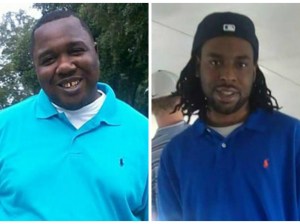
Unless you avoid the news at all costs, you’re fully aware of the shootings by police, killing two black citizens, Alton Sterling and Philano Castile, both under highly questionable circumstances.
Alton Sterling (Left), and Philando Castile (right)
Then Army reservist/Afghan war veteran Micah Xavier Johnson, so enraged by such shootings, murdered several police officers in Dallas in retaliation.
There can be no doubt, that tensions between the governed and the government are at levels that are bordering the animosity that triggered us to war for independence against Great Britain 240 years ago. But how did we get here, and how do we get out?
Facts versus Headlines
It’s fair to say that the media push narratives that get ratings. But while according to the FBI in 2014, most black and white people are killed by people of their own race—89% for the black community, and 82% for the white, they often push a narrative that a young black man is more likely to be killed by a white cop.
There were a total of 444 police shootings deemed justifiable homicide, by police in 2014. Pointing out those deemed justifiable homicide is important to the story, because the concern is that police aren’t prosecuted for such shootings. So for police not to be prosecuted, it means the shooting was deemed justifiable.
The FBI didn’t break them down by race, but even if they were all white cops shooting black victims, which they certainly aren’t, that’s still four times less than the 2,205 black-on-black murders in the same year, or the 2,488 white-on-white murders.
Let’s be clear about that statistic, though. It has little to do with living in violent communities, a narrative that is often asserted. The first clue is that white-on-white murders are very similar.
It actually has to do with people being four times as likely to be killed by someone they simply knew.
See this table from the FBI, also in 2014, which shows that 43% of the time people were killed by an acquaintance or family, compared to 11.5% by strangers. The rest are unknown, but since the dataset is somewhat large, we should reasonably assume that nearly 4:1 ratio would be true for the unknowns as well.
The Attitude Adjustment
We need to change the way we interact with each other.
The police were hired to protect our rights. If one pulls you over or otherwise interacts with you, remember that this person is potentially willing to die for you—treat them accordingly. A little compassion for police who do such a dangerous job would go a long way to improve the exchange you have with that officer.
Credit: inhauscreative Vetta Getty Images
But as always, it takes two to tango.
Police are trained to fear the worst and prepare for it in each interaction they have with the public. The most innocent traffic stop could be their last.
But preparing for the worst doesn’t excuse assuming the worst, nor treating them as if they’re the worst. If police want people to respect them, they must first show citizens the same respect they expect from them. If an officer didn’t specifically witness a citizen harming someone, they are innocent until proven guilty—it’s an officer’s duty to act accordingly.
Blame Legislators Versus The Police Where Appropriate
Whether you’re a Republican or a Democrat (libertarians already generally know this), when you try to socially engineer society by passing victimless crimes, you cause police to have to enforce those crimes—requiring more police.
This puts both police and citizens in harm’s way; increasing the odds of violent interactions between the two parties.
Drugs, prostitution, blue laws, and other such victimless legislation which protect no one—yet risk many, are a huge part of the problem.
If you support passing a law, then you must be comfortable with the notion of putting a gun to the offender’s head and killing them yourself if they violate it. If you’re uncomfortable with this thought, then it’s pure hypocrisy to put police in the situation where they may have to do so in your name.
For instance, if your neighbor were smoking marijuana, would you walk next door, put a gun to their head and tell them to stop or you’ll kill them? Of course not. But if that same neighbor were raping a child, I suspect you’d feel quite differently. This is bad legislation versus good in a nutshell.
If we want to reduce senseless violence, we must first elect someone looking to undo all the senseless laws we’ve passed which trigger senseless violence. Then be sure they don’t pass new ones going forward.
Respect the Constitution
I’m in a state where concealed carry requires a permit. So this means I open carry when walking my dog at night, because I haven’t taken the course and applied for that license. I carry in case I get accosted by a miscreant. In so doing, I often worry I might get accosted by the police.
The current scenario is that if a busy-body citizen calls police to report me walking down the street carrying a gun, the police must investigate. They do this because we’ve allowed a litigious culture where police can be held liable for not investigating.
What should happen however is that the police should respond to the caller with, “Carrying a gun is every American’s right. Does he/she appear to be committing a crime? If not, there’s nothing for us to investigate.”
This may seem wrong at first, but the police would do this if you reported someone just driving a car down the street. Driving a car and carrying a gun are both perfectly legal actions that have an intrinsic danger if done so irresponsibly or maliciously. So while at first it may seem like a horrid analogy, they are almost exactly the same.
The reason it feels wrong is simple conditioning by anti-gun people who deem gun carriers as a threat, despite the fact everyone is a threat in some way, and gun carriers aren’t any more likely to harm someone. Most are responsible citizens exercising their 2nd amendment rights just as all of us exercise our 1st.
We then need to pass serious tort reform to preventing civil action against police who don’t investigate someone carrying a gun, on the off chance that person actually harms someone.
Better Community Outreach via Police Training
This proposal is a bit novel and controversial, and I admit it may have unintended consequences. But I like blue skies thinking, so I’ll propose it anyway just to get some creative juices flowing.
Much like we have food stamps to help the needy eat, I think police could use confiscated weapons that are normally destroyed, and start a program with impoverished citizens in bad neighborhoods to protect themselves by donating these weapons and giving classes on how to use them properly.
Of course those citizens would be screened properly for criminal backgrounds like they would for a gun purchase. And yes, it is possible one of those guns may be used in a crime later. But it’s also highly possible that those guns may save many lives of people too poor to buy one themselves, yet absolutely may need one as a result of living in a high crime area.
If every good citizen were armed, and prepared to defend themselves against a would-be criminal, we’d have a lot less would-be criminals.
Criminal prey on the weak, but it’s hard to call anyone packing heat, weak. Guns are the greatest equalizer mankind has every invented, turning a feeble grandmother into a Chuck Norris level threat.
Police Need To Eschew The Brotherhood Mentality
Being a Corvette owner, we tend to recognize each other—so much so, that nearly all of us wave at another Corvette owner driving past. Motorcyclists do this too. If you were from Boston, visiting California, and overhear the person next to you say he just “Pahked the Cah,” you’ll almost certainly strike up a conversation with him.
This is because people are hard-wired to bond with those they share commonalities with—it strengthens societal bonds. The easiest way to do this, is to bond over a unique common interest or trait. I say “unique,” because if you were both in Boston, you’d pay the same person no attention whatsoever.
Police know that their work is dangerous, so they form strong bonds among one another so they can be confident they’d have the other’s back, even if they don’t personally know each other—it’s a very natural phenomenon.
But they should be taught that this is a natural emotion, and that they should avoid following it blindly. Much like the placebo effect, while it’s natural, it can do far more harm than good if all skepticism is eschewed.
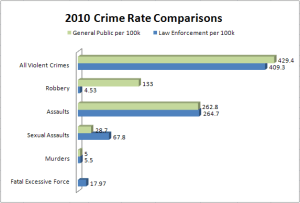
Violent Crime Rate comparison between general population UCR data and law enforcement population NPMSRP data. Click image for the full article
This data shows that police are just as likely to commit criminal acts as the general public.
At first, you might think this seems odd, but the police are regular people, not superheroes.
We often hear stories of good Samaritans doing wonderful things. So being a good person isn’t unique to police, nor is being a criminal unique to the general public either.
The reason I say they need to eschew the brotherhood mentality is that police often defend other police who have clearly done unconscionable things.
While at first, a police officer might think defending their “brothers” is the honorable thing to do, but it’s absolutely not in their best interests.
When an officer commits a crime, they violate their sworn oath to uphold the law of the land, dishonoring their noble profession. But it also creates animosity with the public who feel as though police can operate above the law without repercussion.
This hatred and distrust often leads enraged citizens to act violently towards the police, because they feel it the only way justice will be served—putting good cops needlessly at risk, as evidenced by the aforementioned Micah Johnson.
Instead, if an officer is arrested or put on probation for a potential felonious act, police should distance themselves from that person entirely, and make it clear that if the person is found guilty, that person is no “brother” of mine.
They should also be quick to report any criminal acts among their ranks, and clean their own house unmercifully. They will never get the trust and respect of disenfranchised citizens otherwise.
And let’s be honest, if you are a police officer, are you really OK with one of your own committing a murder or unprovoked assault?
Drew Peterson should serve as a shining example of the harm that can come from this blind loyalty. His fellow officers failed to properly address allegations of abuse against Drew when his then wife Stacy Peterson reported him a multitude of times for serious domestic abuse.
Stacy Peterson
It is almost certain that had his fellow officers taken Stacy’s complaints seriously, and treated Drew like any other violently abusive husband—investigating Drew in earnest, Stacy could very well be alive today, with Drew safely in jail where he belonged.
By all means, police should have each other’s backs, but never at the expense of what is right. A criminal is a criminal, whether they wear a badge or a wife-beater, they should be treated with the same prosecutorial mindset.
I could write an entirely separate post on the tactics police unions use to protect police in ways that harm the general public, and destroy the public’s trust in them. They should merely assign the accused a lawyer, and refrain from professing the person’s innocence or any other public statements until that officer is cleared of any wrongdoing.
But once convicted, their sentences should be as harsh as what would be applied to the general public (in my opinion harsher, since they swore to uphold those laws). The slap on the wrist sentence for an offense that would land us regular citizens in jail is surely one of the largest factors in eroding the relationship between the governed and the government.
We libertarian-minded people often complain that presidents are ruining our nation or that congress are passing unconstitutional laws infringing on our rights. But oddly, you rarely hear complaints about the Supreme Court.
They work just as much as congress does, and with Obama’s golf game in high gear, it seems like they likely work more than him. So why is it that people complain ad nauseam about congress and the president, yet give SCOTUS a pass?
Golfer-In-Chief: President Obama
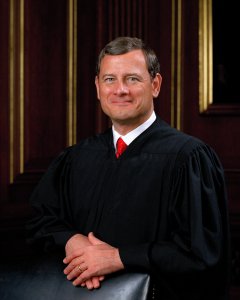
We all know about National Federation of Independent Business v. Sebelius, where Chief Justice John Roberts famously provided the majority decision to treat the Affordable Care Act’s penalty as a tax, therefore accepting the legislation as constitutional, despite the fact that Sebelius’ side specifically argued it was to be a penalty and not a tax.
The administrations reason for calling it a penalty was largely political so that Obama would not be deemed as a willing participant in raising taxes on all Americans, including the poor.
So why would SCOTUS rule in such a way as to effectively rewrite law?
Supreme Court of the United States Chief Justice John Roberts
Sadly they shouldn’t have—the Constitution is quite clear. I accept that the idea of questioning SCOTUS from my layman’s Constitutional perspective seems mighty ambitious, but the Constitution enumerates quite clearly that the Supreme Court’s duty is to adjudicate laws on the basis of their constitutionality, in so doing, setting precedent for lower courts to follow.
Writing law is strictly the job of Congress, and therefore Roberts and the majority. were out of line. They should have just rejected it as it was, and let congress rewrite and repass it in a more Constitution-friendly form.
A million other op-ed writers have elaborated on this case well enough that I feel any opinion I would write would be redundant, so I am instead going to focus on the idea that much of our ire at government in general should be directed at SCOTUS.
First things first, let’s look at their oaths of office. (Yes, there are two.)
If we break this down, it is clear that their personal opinions shall be suppressed, and rulings should be given solely based on what is contained in the Constitution and U.S. law.
Chief Justice Roberts Being Sworn In
There are two potential views on this. There are absolutists who feel the Constitution must be adjudicated as written. That rulings should be based solely on the verbiage of the Constitution, not what SCOTUS justices believed the legislature meant when writing it.
Others believe that the Constitution is a living document where justices are free to rule with the Constitution as their guide, but have license to issue judgments based on what they feel the framers of our Constitution may have meant. But this interpretation essentially allows for SCOTUS justices to rule however they want, so long as they can fabricate some story, no matter how ridiculous it may seem, to align their opinion with the framers’ intentions.
But clearly this makes the Constitution virtually irrelevant if we think this way, as it essentially means that SCOTUS is only limited by individual justice’s imaginations.
For example, in McGowan v Maryland, Sunday closing laws (blue laws, as they’re known) were challenged as a violation of the 1st amendment; the argument being that they were clearly a law establishing religion.
If the justices had been absolutists, the law would have unquestionably been struck down with its clear religious underpinnings. But those who held this decision instead opted to find a way to allow it, despite the Constitution’s concise forbidding of laws establishing religion, because at the time, Christian opposition to overturning such longs would have been quite great. All people want to be loved, including Supreme Court justices I guess, their oath-of-office be damned.
Since the Constitution doesn’t address absolutism versus interpretationism specifically, sadly SCOTUS justices may take either tact at any time.
I find this notion troubling as it seems clear to me that the Constitution’s framers did not intend for this by virtue of the way the Supreme Court is set up.
The 1st Amendment
Firstly, the Justices are appointed, not elected. Then once appointed, they are never reelected or reappointed; they’re a Supreme Court Justice until they retire, do something criminal, or death does them part.
The purpose of this is to ensure that they never make a decision based on popular opinion, nor make a decision based on what the legislature or the president who may have appointed them might want.
If Justice Sotomayor for instance, were to rule against Obama in every constitutional challenge he were to be involved in, despite the fact he appointed her, there is no recourse he has. Once she’s confirmed, her decision shall not affect her job status whatsoever. It’s the only true way that she makes her decisions, no matter how unpopular that decision may be, with sole regard to the constitutionality of it—assuming they adhere to their oaths.
This is the very point of the Constitution in general. Many forget we are not a democracy, but a republic. We have our Constitution, and thus SCOTUS, to protect the rights of the minority from the majority. By definition, there is no point in SCOTUS’ nor the Constitution’s existence, if government is simply to side with popular opinion.
The Supreme Court Of The United States
So the very act of considering congress’ or the people’s opinions when ruling on the constitutionality of something is a violation of the Constitution’s core principles. So in National Federation of Independent Business v. Sebelius, it was not the majority opinion’s right to essentially work with congress and the people to find away to allow an unconstitutional law.
While this was a landmark case, the fact is, this reasoning should apply to a majority of laws in the United States. The Tenth Amendment alone should be grounds for striking much of federal legislation. It states as follows:
The powers not delegated to the United States by the Constitution, nor prohibited by it to the states, are reserved to the states respectively, or to the people.
This essentially states that unless the law in question is of a subject matter that the Constitution defines as a federal issue, or forbids the states from legislating on, the law must be a state issue, or a matter between the people.
So while we lambaste congress and the president for violating our rights, let’s not forget that SCOTUS has the ability, and more importantly, the duty under the Constitution, to be the last line of defense of our rights—something they don’t seem to take too seriously these days. If anyone should know better, it’s them. Their forbidding of cameras in the courtroom, and rare amount of interviews given have kept them out of the limelight, likely by design. But I say let’s make sure we’re pissed at them too.
Imagine a scenario where a middle-aged person of average health like myself gets confronted by a would be attacker who is much younger, fitter, stronger, and faster. I’m expected to make an attempt to flee in states where Duty-To-Retreat is the legislation du-jour instead of Stand-Your-Ground.
What happens in this scenario? Ultimately I run—hopefully to some place safe. But this creates a very unsafe situation for me instead of my attacker, because now I’m on defense and I have to hope I can run fast enough to get away. I also have to hope my attacker doesn’t have a gun, because I wouldn’t know once I started running; I have my back to them—a position that makes me as vulnerable as a person can be. Plus, like most people, I can’t outrun a bullet, if they’re armed.
In this situation, the victim is ultimately expected to put themselves in a more dangerous position because of the actions of a would-be attacker, but also they’re often expected to abandon their property as well. But why does the attacker get the benefit of having the upper hand or having their rights protected while mine are diminished?
Victim Drawing On An Attacker
With Stand-Your-Ground, I simply draw my gun, keep my eyes on my would-be attacker, and ultimately either they flee, or they get shot due to a scenario they created. I could flee if I thought it was the best way to protect myself, but I shouldn’t have the threat of 20-to-life hanging over me if I opt not to.
The problem has often been that politicians hear news stories about young attackers getting shot and killed and court voters as the compassionate one who feels it’s a tragedy a child is dead. While I agree it is sad on the face of it, I feel this is disgusting to act as if a young felon’s life is somehow more important than the life of the innocent victims they decided to attack.
Let’s dispel some scientific nonsense first. Nothing magical happens at 18 years of age. There’s no radical change that takes place in the human body. Making 18 the age of adulthood was something Americans decided via legislators, and it has little do with science. It is generally just that we know humans stop growing around that age, not their mental capacity to understand the weight of their actions; that varies from person to person.
To act as if a 16-year-old for instance, who is putting someone’s life or property at risk with malicious intent is somehow innocent or unaware of what they are doing, or doesn’t understand the heinousness of the act, requires a monumental amount of ignorance.
To act as if the victim should understand the person is under 18 is equally nonsensical. Attackers usually don’t show you an I.D. first.
I don’t want anyone to die needlessly, but whatever bad outcome happens to a violent felon caught in the act, up to and including death, is justice in my eyes. Whether they are 14, 18, or 40 is irrelevant. They voluntarily chose to create this situation, and they’ll potentially pay the price for it. If so, they will serve as a warning to others not to choose a psychopath’s lifestyle.
However, an often not discussed issue I want to delve into is the psyche of the victim. While I don’t profess to live in the middle of gangland, I have had the unfortunate honor of being attacked, robbed, and had a gun put in my face at different times in my life.
While it’s easy for politicians to pass laws that a rational person would adhere to, until you’ve been victimized, it’s impossible to understand the natural and sometimes uncontrollable rage that will fill every victim who is put into that situation.
In each instance, if I had been carrying a firearm, I would have emptied it into my attacker and then probably pulled the trigger at least a dozen more times to make sure there weren’t any bullets left that my gun just somehow missed.
Now maybe you’re thinking I’m a violent guy, but I’ve genuinely never instigated a physical altercation, so the evidence indicates otherwise. These three instances are the only ones I’ve been involved in since 5th grade, and all of them were unprovoked on my part.
It is a fool’s mission to expect a reasonable person to behave reasonably when they are thrust into a situation that puts them in mortal danger. It’s hard to predict what a situation like that will do to someone, but assuming they’re not an emotionless sociopath or a trained soldier mentally equipped for such an act, it will affect them in a way they’ve never been affected before, and a controlled outcome should not be expected.
Putting innocent victims in jail because they overreacted to a violent attack is one of America’s biggest atrocities it commits on its own denizen.
Not only do I believe that the Constitution should be amended to include Stand-Your-Ground, I also believe that the law should clearly state two things:
Attackers have no rights during the commission of, or while fleeing from a felony. Nor shall they or their family have any legal right to civil damages incurred by their counter-attacker later.
If the victim, or an innocent bystander harms the attacker in any way during the commission or fleeing of a felony, the person acting against the attacker should be immunized from all criminal prosecution.
(In both instances, I emphasize during the act—I do not condone hunting them down later in an act of vigilantism)
I understand that people may think my idea is radical and heartless, but you shall not convince me I’m on the moral low ground.
While I do value life, I only value the lives of people who respect the rights of others. If you opt to attack, rape, murder, or rob another person, I feel your early and untimely death will be to the benefit of humanity.
It not only protects society from your future bad acts, but if sociopathy is genetic, which some in the psychiatric profession suspect it is, the genes of a sociopath are removed from the gene pool as well. From a purely logical standpoint, my argument makes the most sense to advance society as a whole.
So what about the Edmund Burke quote? My plan would hopefully encourage the good men from the anecdote to do something instead of nothing. If a victim is killed because a good person who could have helped opted to do nothing out of a fear of prosecution for intervening, then evil will have triumphed, and the right to life isn’t nearly as Constitutionally protected as it should be.
log·i·cal: capable of reasoning or of using reason in an orderly cogent fashion lib·er·tar·i·an: an advocate of the doctrine of free will; a person who upholds the principles of individual liberty especially of thought and action



















![29zZnh0j[1]](https://logicallibertarian.com/wp-content/uploads/2014/10/29zznh0j1-e1562001256653.jpeg)
![No_gun[1]](https://logicallibertarian.com/wp-content/uploads/2012/12/no_gun1.jpg?w=300)


![fbi-logo-404553[1]](https://logicallibertarian.com/wp-content/uploads/2016/08/fbi-logo-4045531.jpg?w=300)

![SundayAlcohol[1]](https://logicallibertarian.com/wp-content/uploads/2013/12/sundayalcohol1.jpg?w=300)
![gun-and-the-constitution[1]](http://lastresistance.com/wp-content/uploads/2013/07/gun-and-the-constitution.jpg)
![oc_zps62e1c21e[1]](https://logicallibertarian.com/wp-content/uploads/2016/08/oc_zps62e1c21e1.jpg?w=300)




![alcohol1[1]](https://logicallibertarian.com/wp-content/uploads/2014/11/alcohol11.jpg?w=294)


![keep-calm-and-stand-your-ground-5[1]](https://logicallibertarian.com/wp-content/uploads/2014/04/keep-calm-and-stand-your-ground-51.png?w=257)


 The Logical Libertarian™