I agree, SCOTUS probably needs to clarify most of these nerdy fucking cases they take, but god damn, some of them are really over very trivial issues.
I’ve said it before, and I’ll say it again, most of their work is due to idiots in congress writing poorly-worded law, so they’re forced to fix it for them.
Nonetheless, let’s get into this shit.
Latrice Saxon, the respondent, worked for Southwest Airlines as a ramp-agent supervisor. Basically, she was in charge of, and sometimes assisted, all the mules that load cargo onto and off of planes.
Most of these employees that work the airline ramps are unionized. But, if you know anything about unions, you know that usually, only the workers can be in the union—management are typically not welcome.
You also likely know that workers are often hourly, and managers often salaried.
Latrice Saxon, was apparently often asked to work more than 40 hours a week, and didn’t fucking appreciate that she was not paid overtime for it, since she was a supervisor. Since she’s not part of the union, she doesn’t really get to fight it much.
In her employment agreement, she’s agreed to arbitration, but apparently, instead of looking to negotiate through arbitration, she instead wants to argue Southwest is breaking the law like Judas Priest, by not paying OT. So off to court she went.
That said, there’s the old Federal Arbitration Act (FAA). It exempts certain people from arbitration—specifically “contracts of employment of seamen, railroad employees, or any other class of workers engaged in foreign or interstate commerce.”
It’s assume Congress wanted to protect these workers specifically from being forced to arbitrate, as they’re so essential to the health of the nation’s commerce.
So whether the can sue in court or not, depends on whether SCOTUS thinks that these drones working the airline ramps are “engage in foreign or interstate commerce.”
Southwest, thinking Saxon is a fucking idiot, argue that because the ramp agents and supervisors keep their ass at one airport all day. Nothing international or foreign about that shit. She never leaves Chicago. A district court, the original to hear this case, agreed with them.
We’re going to get even nerdier, folks. Strap in.
In a previous ruling, SCOTUS set precedent that if a group of items is listed, but then the group ends with a much more broad category of items related to the initial items, the broad item should be thought of as related to the previous items.
I know, what the fuck does that even mean?
Let’s say we talk about “spoons, forks, and other silverware.”
SCOTUS is saying, that clearly “other silverware” is talking about eating utensils in this case, as it’s related to forks and spoons. It is NOT to be construed as any fucking thing made of silver. Capiche?
So, about “seamen, railroad employees, or any other class of workers engaged in foreign or interstate commerce.” If the precedent above holds, then basically, people engaged in foreign commerce are people who travel with the cargo or people, just as seamen and railroad employees might, not people who can claim any dubious connection to interstate commerce.
Saxon however, argues that because the FAA itself says “agreements relating to wharfage … or any other matters in foreign commerce” (Wharfage is fee ports charge for cargo to use their wharves), she argues that it’s clearly linking cargo mules to foreign commerce. Case closed. Microphone dropped.
The seventh circuit agreed with Saxon.
So that means, we have a conflict that is then appealed to the highest court in the land. So on to SCOTUS and oral arguments we go…
Counsel Shay Dvoretzky opened for Southwest.
Mr. Chief Justice, and may it please the Court: Section 1 of the FAA exempts only classes of workers that work on an instrumentality of foreign or interstate commerce, like a plane, ship, or train, as it moves goods or people across borders. That rule follows from Circuit City and Section 1’s text and structure.
Circuit City held that the exemption reaches only classes of workers engaged in foreign or interstate transportation.
As then Judge Barrett held in Wallace, that means an exempted class of workers must perform work analogous to that of seamen and railroad employees. Seamen and railroad employees’ key characteristic was working on ships and trains. We know that because “seamen” was a term of art. It meant workers who predominantly worked on a vessel.
Vessels, by definition, transported or were capable of transporting goods or people over water.
And the paradigmatic seamen, as the Court noted in Chandris, sailed long voyages. That made seamen as a class actively engaged in foreign or interstate transportation. Critically, seamen did not include land-based maritime employees.
Counsel Shay Dvoretzky
By specifying seamen, Congress excluded stevedores, who are land-based cargo loaders. Now Saxon says the exemption covers the entire airline industry.
But Section 1 exempts classes of workers, not industries, engaged in foreign or interstate transportation. It says “seamen,” not maritime employees.
It repeats “foreign or interstate,” emphasizing border crossing.
And placed among these other words, “railroad employees” similarly means workers who perform their duties on the train. Saxon is not exempt from the FAA. Cargo loaders don’t work on planes, just as stevedores didn’t work on ships.
They load cargo before other classes of workers, like seamen and pilots, do the foreign or interstate transportation.
They may facilitate transportation, but that’s not the test Circuit City requires. I’m happy to take the Court’s questions.
Justice Roberts was like, “Are you saying, that for Saxon to win, she must be crossing some border during the course of the duty she’s performing that day?
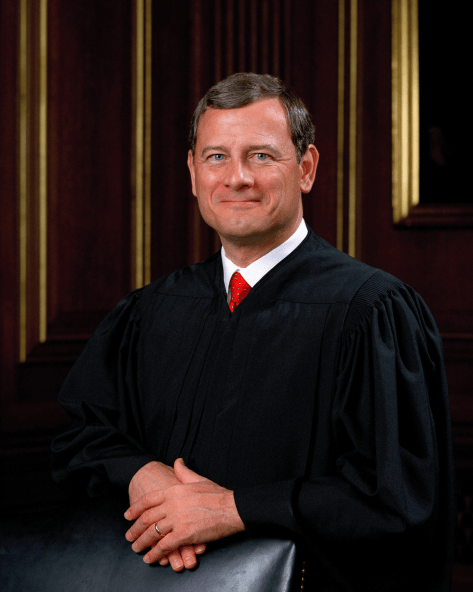
Chief Justice John Roberts
Dvoretzky was like, “No, bro. We’re only saying, that ramp agent supervisors in general, should be crossing borders commonly as part of their job. They don’t become exempt only in the work that happens to cross borders in that moment.”
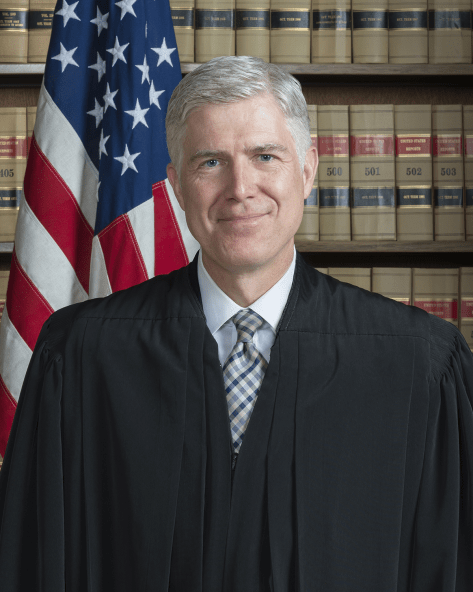
Justice Neil “Golden Voice” Gorsuch was rather skeptical of Southwest’s narrow view of interstate or foreign workers. He was like, “Explain to me, why the fuck people loading and unloading a plane, are somehow specifically not engaged in foreign commerce when the people and cargo they’re fucking loading are moving from one state and country to another? Seems fucking fishy, man.”
All the justices seemed to take issue with his argument that somehow seamen doesn’t include stevedores (people who load ships), and that railroad workers doesn’t include cargo loaders. Just because they weren’t named, doesn’t mean we get to just assume that they weren’t considered part of the larger group. So counsel Dvoretzky seemed to have an uphill battle, and it didn’t look like he was winning it.
For Saxon, counsel Jennifer Bennett opened with:
Mr. Chief Justice, and may it please the Court: If Congress wanted to exempt from the FAA just those workers aboard an instrumentality of commerce crossing state lines, it easily could have said so. Instead, it excluded the employment contracts of seamen, railroad employees, and any other class of workers engaged in foreign or interstate commerce. This Court made clear in New Prime that we interpret this exemption just as we would any other statute, by the meaning of its words at the time it was passed.
Those words exempt airline employees who load and unload cargo. Southwest can’t dispute that by 1925 it was blackletter law that the transportation of goods in commerce begins when they’re given to a carrier and it only ends when they’re received at their final destination. Indeed, this Court had repeatedly held that loading and unloading cargo specifically is part of that transportation, not ancillary to transportation or connected to transportation, but it is itself transportation, that it is itself commerce. And just the year before the FAA was passed, as Justice Kavanaugh pointed out, this Court held that it was too plain to require discussion that a worker who unloaded a train was a railroad employee and that that railroad employee was engaged in interstate commerce. Yet Southwest contends that workers who load and unload airplanes are not part of any class of workers engaged in commerce for purposes of the FAA. There’s no support for this contention in the text of the statute.
Counsel Jennifer Bennett
Southwest can’t point to even a single example from any time period in which the phrase “engaged in foreign or interstate commerce” has ever been given the meaning it proposes. So, instead, Southwest invokes the statute’s purpose.
The FAA favors arbitration, Southwest says, so the exemption must be given as narrow a reading as possible regardless of what the text actually means. But this Court rejected that very argument in New Prime.
And even if we were to privilege purpose over text, on Southwest’s interpretation, the exemption would do exactly what Circuit City held it was designed to avoid, unsettle developing and existing dispute resolution regimes at the time. I welcome this Court’s questions.
Justice Roberts, looking for that line to draw started to ask if ticket takers for the airlines are exempt, or what about general counsel for the airline?
Counsel Bennett was hesitant to start naming people who are and aren’t exempt. But her argument was that if they’re directly involved with the cargo or people moving from state to state or country to country, they’re covered. Some asshole lawyer helps the company, but doesn’t really help move goods or people.
She also took issue with the test the opposition put forward, that the test is whether or not people are on the plane.
She was like, “Fucking loadmasters go on the plane and make sure the planes cargo are evenly distributed throughout the plane, so it fucking flies straight. Some of these people never get on the plane, some board it, some fly with it. So are supposed to divide up employees like this based on their stupid test? That would be very discriminating.
She proposed instead that:
Airline employees are those who do the work of the airline. They do the customary work directly contributory to the airline’s transportation function
She then suggested a narrower test that would be:
People who handle goods while they’re in commerce.
Justice Alito, looking to understand if she’s broadening the definition outside the airlines and shipping companies asked who else would fall under her new test?
She responded that this means people in trucking and bussing would be exempt as well, because they would fall under her test.
Justice Roberts, ever skeptical of her test, was like “What about those fuckheads at Amazon. They’re clearly involved in interstate commerce, and touching the goods for purposes of transportation. So are they exempt?” But as usual, it’s justice Roberts, so he said it very politely.
She somewhat agreed that people like Amazon, FedEx, UPS, et al., would be covered if they’re the group of people are putting things on their planes, ships, trucks, etc., and sending them out of state or out of the country.
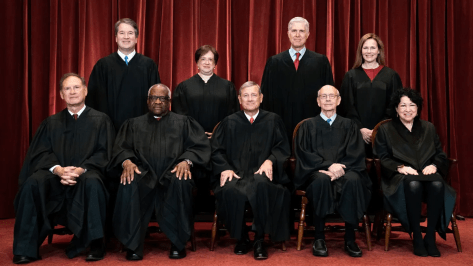
The Supreme Court Of The United States
In a unanimous decision, where justice Barrett recused herself as she’d ruled on a related case previously, SCOTUS sided with Saxon. They noted that the wharfage exemption mentioned earlier proves congress intended to include cargo workers and such. So therefore, the test is to be that if the workers are engage in loading and unloading cargo, and if so, is that cargo generally interstate or international. If so, then that worker is exempt from the FAA and doesn’t have to go through arbitration.
This doesn’t mean Saxon really wins anything. It’s still up to lower courts to decide if she’s owed overtime. But it at least allows her to bypass arbitration, which she feels is more likely to side with Southwest Airlines for whatever reason.
Imagine going to buy a piece of property, and the realtor tells you it’s prime real estate. But then after you sign on the dotted line, you find out it’s in a flood zone, or close to something noisy like an airport. You got the ole bait n’ switch.
That principle is at the heart of this case for Luxshare, involving 28 U.S.C. § 1782—but for SCOTUS specifically, it’s what the hell constitutes a foreign or international tribunal. I know, you’re already riveted, right?
Well, a lot of people are apparently interested, because unlike most cases which have two sides, one representative each, and maybe one amicus between then, this case had three fucking people arguing for the petitioners, ZF Automotive, and two arguing for the respondents Luxshare. Five fucking people arguing this shit! That’s a record, for me.
Anyway…
Congress wrote 28 U.S.C. § 1782 to assist in international disputes, as a courtesy to other nations. As you may know, when you sue someone, you can request relevant documents, if you have evidence they’re pertinent to your case, via a subpoena.
So the gist of this law is basically that if a company is being sued in Germany for instance, but their headquarters are in New York, the German court can ask New York to order the company they want documentation from, to turn that shit over for use in German court proceedings, just as they’d have to do if the suit were all transpiring in the United States.
Most countries have a similar law—it’s just a way to reciprocate with each other in a world that has a lot of international business disputes.
When 28 U.S.C. § 1782 was originally written in 1948, it specified “courts” as the entity who can demand discovery. But then congress amended the language in 1964 to read as “foreign tribunals.”
It is well understood their intentions in amending this language were meant to broaden the scope to more than just courts, as there are other “official” proceedings that should have a right to subpoena evidence. It’s been applied to magistrates and governmental investigations around the world.
However, people have also attempted to use it to apply to international private arbitrations, which is why we’re here now—SCOTUS has had enough of this shit. Private arbitrations are when two parties agree to hire arbitrators, which are private entities—often lawyers—to settle their dispute out of court.
ZF Automotive
For the case in question here, in 2017, technology company Luxshare bought a Michigan factory owned by German auto-manufacturer ZF Automotive. But after moving into its new digs, Luxshare was not pleased with their purchase. They believed that ZF Automotive were less than honest about the value of this shithole.
As an Ohioan, I’d like to point out that it was in Michigan, so you’d think they’d have known it was basically worthless—nothing good comes from Michigan, except maybe Tom Brady.
Once Luxshare realized they’d gotten got, they wanted restitution. In their purchasing contract with ZF, they agreed to arbitration in Germany if there were any disputes of this nature. So using 28 U.S.C. § 1782 as their wingman, Luxshare requested a Michigan court to force ZF to help them with discovery documents from ZF Auto.
They wanted to prove they were highballed, since the ZF location in question is located in Michigan, but the discovery is to assist in support of their agreed-upon arbitration in Germany.
Stepping back for a second, I suppose I should explain something I haven’t previously. I know I often gloss over this, but in general, it should be understood that basically no one gets to go straight to the fucking Supreme Court.
Otherwise, the opposite of original jurisdiction is “Appellate Jurisdiction,” which is when a lower court rules, and a party of that decision, generally the loser, is none too pleased with those fucking idiots, and decides to appeal to a higher court.
This is called submitting a writ of certiori. The higher court reviews this writ, and decides whether they think it’s worth their time to review, or if they think it’s a big old nothing burger and tell them to pound sand.
If the higher court does grant certiori (agree to hear the appeal), either the petitioner loses again, or the superior court decides the lower court were fucking idiots, and overrule them.
So now, whomever lost the second round is pissed, and they appeal that appeal to a higher court again. This dance of sore losers eventually meanders it’s way to SCOTUS, one higher court at a time.
SCOTUS is generally an appellate court—the prettiest appellate court in all the land. There is no appeal once you lose there—other than maybe trying to get your shit heard again by a newer SCOTUS years later.
While we’re on the subject of shit I often gloss over, it’s also worth noting that on the subject of legal documents, it’s good practice to define terms that are written in your law or contract that could be ambiguous. The better one does this, the less likely the document will be scrutinized in courts.
For instance, in a contract, maybe you have verbiage that says, “This contract is null and void if either party acts like an asshole.”
Asshole is a word that is rather open to interpretation. So the contract would (and should) have a definitions section, and there, it would define “asshole” specifically. It might say, “Asshole: A person who has made publicly disparaging remarks against the other party.”
So now, when courts or arbitrators have to determine if one of the parties was an asshole, they clearly understand what the test is to determine if they were an asshole or not—did that party talk shit about the other publicly?
Make sense?
So, now that you understand that, this a great time to mention that those lazy fucks in congress didn’t define “Foreign or international tribunal” in 28 U.S.C. § 1782. They were too busy insider trading and grandstanding in front of congressional cameras to write an actual well-written law. Classic fucking congress! It should be known that probably 90% of what SCOTUS does, is cleaning up congress’ rather avoidable fucking messes.
SCOTUS is often just an editor for whatever congress writes. Congress writes a law with the linguistic skills of a caveman, so then some member of the public interprets their idiotic law one way, while some other idiot or government official interprets it another way, and now these two have beef which could have been avoided if congress had spent a little time writing a better fucking law.
So SCOTUS had to read 28 U.S.C. § 1782, and be like, “What fucking idiot forgot to define ‘Foreign or international tribunals?’ Here, let us fix this for you, you fucking morons. There’s 538 of you fucking idiots, and you can’t write a decent fucking law between you.”
I know SCOTUS is all polite and professional in public, but you know in closed quarters, this is the language they use.
Anyway, on to the arguments…
Counsel Roman Martinez opened for the petitioner’s ZF Automotive by pointing out that the reports from congress, when updating this law to read “foreign tribunals” clearly show that their intent was to create a cooperative effort with foreign governments in a similar way as we’d hope they’d do for us if the roles were reversed. There’s no fucking mention of private arbitrations in this shit.
Roman Martinez
He also points out that since arbitrations are more common than court proceedings, district courts are going to have these requests falling out of their assholes if the court were to side with Luxshare.
Justice Kagan, ever the skeptic, pointed out that things like “foreign university” or “foreign language” don’t necessarily mean it’s government related. So your fucking argument is full of holes, bro!
Counsel Martinez went out to point out that the rules commission who drafted this new rule, were specifically told to do so by congress, in an effort to enhance cooperation between nations. So how the fuck would that translate to private arbitrations?
Justice Breyer, being ever the contrarian was like, “Sure congress gave them a directive, but this language can be interpreted more broadly to include private arbitration, so what’s the fucking harm in that?”
Next up was counsel Joseph Baio, also arguing for the petitioners. He also wanted to answer Justice Breyer’s question with the Judge Judy defense. No shit!
Joseph Baio
He was like, “If some asshole goes on Judge Judy’s program and asks for discovery, we wouldn’t give that old bag jack shit. Even though she’s an actual judge, her fucking show is just private arbitration. So for you to side with those other assholes, you’d be arguing that a German Judge Judy, would have the right to discovery that American Judge Judy does not!”
My quote may not be verbatim, but that was the basic gist of it.
He went on to tell justice Breyer, “if you side with those dipshits, you’re basically incentivizing ambulance chasers like me to start our arbitrations in foreign countries, so we can bypass your rules here.
Justice Breyer seemed unimpressed.
Counsel Baio, being a man of extreme examples, also put forth his violin defense.
He was like, “A foreign orchestra could hold an audition for a violinist. That is a decision-making process that would be allowed if you ruled for those fucking idiots over there. Do you really want that shit?”
Justice Sotomayor, seemingly unimpressed, asked about the World Trade Organization (WTO). She was like, what if they pick some arbitrators. They’re an independent organization, and not a government. So are they fucked?
Counsel Baio was like, “Listen, I’m sick of your shit. If the individuals disputing the case select the arbitrators, it’s fucking private, and they can get bent. If however the WTO picks the arbitrators, it’s an international organization of cooperating governments, so they get to demand discovery. Why is this so difficult?”
Next up was Edwin Kneedler, acting on behalf of the US Government in support of the petitioners. His opening was basically a greatest hits of the first two. He was like, “Listen, y’all know the reason we passed this fucking law. It was about international cooperation with other governments. Why are we even talking about this shit?”
Edwin Kneedler
He argued quite simply, that the line he draws, is that an international tribunal has to be:
Established by government, and exercising governmental authority.
He also cited international comity. The idea that the standard the respondents want isn’t what other countries recognize. So if he were to lose, the US would be giving up discovery like a twenty dollar whore, where other countries would be more like a thousand dollar whore or something.
Finally, for the respondents, we first have counsel Andrew Davies. He argued that the “best and most natural interpretation” of foreign tribunal includes commercial tribunals, because they’re adjudicating a party’s legal rights.
Andrew Davies
He also points out that the courts benefit from arbitrations, because that means they don’t have to handle all those fucking disputes. So if SCOTUS rules against his side, that will actually create more work for the courts, not less, because people will be less likely to arbitrate international affairs knowing they won’t have that discovery option available.
He also cited that the court has sided with previous arbitrations, as promoting international comity, so the other side are a bunch of fucking liars spewing bullshit. That while they may be right that some countries don’t provide arbitration support, most of our major trading partners do.
Justice Neil “Golden Voice” Gorsuch chimed in and was like, “Back in 1964, arbitration wasn’t “a thing” like it is today. So surely congress then couldn’t have envisioned the world we live in now, with fucking arbitrations all over the god damn place. Clearly, congress wasn’t considering private arbitrations when they wrote this fucking rule, yeah?”
Associate Justice Neil Gorsuch
Counsel’s response was essentially to point out there there are lots of countries already supporting arbitrations in this manner, and the language doesn’t rule it out, so that should be good enough.
Justice Breyer, siding with Gorsuch was like, “Dawg, you crazy.”
Finally, counsel Alexander Yanos for the respondent. He dug deep and was like, “Hey man, these other assholes are just flat wrong when they say congress didn’t anticipate arbitration in this law. The senate report used to incite the committee to draft this law cited a German Mixed Claims Commission, which was effectively arbitration.
Justice Roberts pointed out that a representative for the government was here, and arguing the opposite position. Shouldn’t their opinion matter?
But counsel Yanos was certain that the point of the law was for international cooperation. If an arbitration is set up in a foreign country, and it’s decisions are binding under law, and only appealable by the courts, then it’s an international tribunal, even if it’s private arbitration, because any appeals do end up in court.
Alexander Yanos
Justice Gorsuch, seemingly unimpressed with counsel Yanos’ argument, and in agreement with the idea that it’ll add a lot more work to American courts, pointed out that 3rd party discovery is a pain in the ass that no one fucking likes. As such, he’s pretty sure congress wasn’t intending to make that shit the norm.
In a unanimous decision for ZF Automotive Group, SCOTUS decided that a foreign and international tribunal shall be defined as a governmental agency abroad, and not some rando third party arbitrators. Otherwise, it’ll basically be anarchy up in this bitch. Anyone with an international beef that forms some sort of inquiry board will be asking for shit they have no right to ask for.
As such, ZF is not required to hand over documents to Luxshare under 28 U.S.C. § 1782.
Weirdly, Justice Barrett who authored the opinion acknowledged that the word tribunal could certainly be interpreted as something that isn’t governmental in nature.
Associate Justice Amy Coney Barrett
She also acknowledged that foreign just means not located in the US, it also doesn’t have to mean a foreign government.
But when used together, a foreign tribunal is generally thought of as a governmental agency that isn’t part of the United States. Her argument for this was the term “foreign leader.” She was like, you wouldn’t call the president of a company abroad a foreign leader would you? Fuck no. You’d call the leader of a foreign country that.
They went on to define a foreign tribunal as a governmental agency from a foreign country, and an international tribunal is one where two governments join together to form some intergovernmental agency, like maybe NATO, or the United Nations.
She then suggested that it was plainly obvious the US passed this law to create a level of mutual respect among international governments and the US, and if that’s the purpose, helping third-party arbitrators doesn’t really serve that purpose.
She finally hit her opinion home by pointing out that in the US, third-party arbitrators don’t often get the right to demand discovery. So if we don’t do it here at home carte blanche, why the fuck would we give some international assholes that power?
Denise Badgerow worked as a financial advisor for REJ properties, run in part by the respondent Greg Walters, in Louisiana. As a condition of her employment, she agreed to arbitration for any disputes with the three principals of her employer (including Walters), but not her employer itself.
Eventually, after a couple years, she was fired. She claims it’s because she was a woman, which is kinda odd, since they presumably knew this when they hired her. But she also claims they were engaging in securities fraud, and she blew the whistle on that shit.
Badgerow was persistent as hell, going to the EEOC to complain about their gender discrimination, the Financial Industry Regulatory Authority to complain about their business practices, and a federal district court.
All three of them found Badgerow to be out of line, and a bit burdensome, dismissing all her claims entirely and ordering her to arbitration as she agreed to. Her employer asked the federal court to confirm the decisions. While that was going on, Badgerow sued the three principals of the company in state court, saying the decision they got was obtained by fraud.
This has to be the most confusing, and boring case I’ve ever read, bar none. But essentially, SCOTUS is being asked if the federal courts have jurisdiction to rule on an arbitration award, just because a federal question was in play. The question being, in the Federal Arbitration Act (FAA), it gives federal courts jurisdiction to hear a case if the matter at hand is a federal issue, which this isn’t. However, if they’re merely confirming, vacating, or modifying a previous ruling, no such jurisdictional issue is mentioned.
In an older SCOTUS case, Vaden v. Discover Bank, the court ruled that a federal court may “look through” an arbitration petition, to see if the beef the two parties have, is even their jurisdiction. So that’s what the federal court did. They “looked through” this case, and decided they did have jurisdiction, despite the fact that the issue was not a confirm/vacate/modify (CVM) issue.
See, pretty fucking boring, right?
In an 8:1 decision, where only justice Breyer dissented, SCOTUS determined the federal courts do not have jurisdiction because the jurisdictional rule isn’t in the section of the FAA regarding CVM issues.
Justice Breyer, the retiring curmudgeon, felt that going so literal with the FAA’s wording, is overly complex and confusing, apparently being a big friend of the federal courts.
log·i·cal: capable of reasoning or of using reason in an orderly cogent fashion lib·er·tar·i·an: an advocate of the doctrine of free will; a person who upholds the principles of individual liberty especially of thought and action

















 The Logical Libertarian™