Every person who, under color of any statute, ordinance, regulation, custom, or usage, of any State or Territory or the District of Columbia, subjects, or causes to be subjected, any citizen of the United States or other person within the jurisdiction thereof to the deprivation of any rights, privileges, or immunities secured by the Constitution and laws, shall be liable to the party injured in an action at law, suit in equity, or other proper proceeding for redress, except that in any action brought against a judicial officer for an act or omission taken in such officer’s judicial capacity, injunctive relief shall not be granted unless a declaratory decree was violated or declaratory relief was unavailable. For the purposes of this section, any Act of Congress applicable exclusively to the District of Columbia shall be considered to be a statute of the District of Columbia. ~42 U.S.C. § 1983
This little 155-year-old beauty from 1871 (it doesn’t look a day older than 154) was established during the Reconstruction era—the period after the Civil War and the ending of slavery. It gives you, me, and anyone else in the US the right to hold government officials civilly liable if they violate our constitutional rights.
Civilly liable just means you can sue the bejeezus out of them.
For brevity’s sake, we’ll just call it § 1983 going forward.
That one run-on sentence — and it’s a doozy — is the whole statute. Small but important.
But, the Supreme Court has sadly manipulated this well-intentioned statute in ways that few would have imagined.
Before we dig in to how, I’m going to keep a running score regarding the status of § 1983, because this shit gets complicated.
Here’s our baseline:
1871: Government official violates your rights while doing their job? You may sue them. An unmolested § 1983 in a nutshell.
You might be wondering what triggered this law in the first place—you could have always sued someone who wronged you—right?
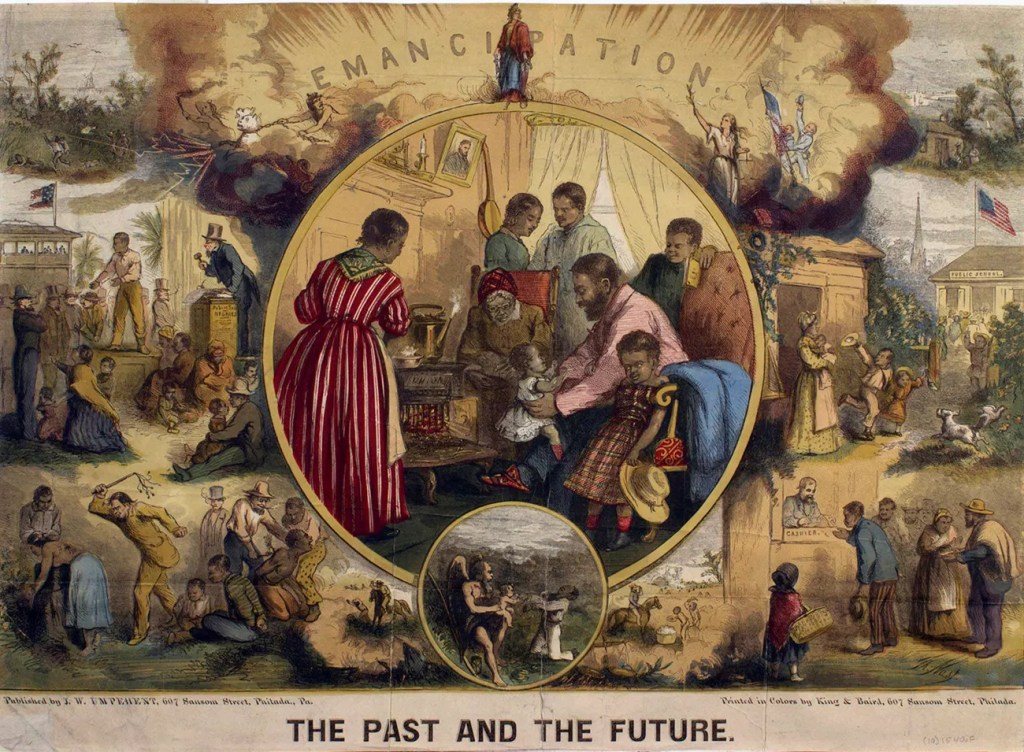
Well, let’s go back to June 19th, 1865 (now known as Juneteenth). After Union soldiers arrived in Galveston, Texas and announced slaves were officially freed, I think we can imagine southern government officials were less than polite to our newly emancipated black friends. Heck, many were members of the Ku Klux Klan and happily committed frequent racist acts of violence towards them.
So here were government officials, fresh off of getting their ass handed to them in the Civil War, who had sworn to support and defend the Constitution of a country they’re probably still pissed at, willfully trampling the rights of the very people they used to own as slaves, whom they’d just been ordered to set free. That order went against everything they fought for—sucked to be them.
The racist acts these traitors committed were so commonplace, and justice was so sparsely meted out when it happened, that Congress felt compelled to take action. They wanted a federal statute that gave anyone harmed by a government official in an unconstitutional manner a way to claw something back and be made whole, because the states where these horrible acts occurred were rarely going to prosecute it themselves—they were part of the problem.
Of course, many atrocities can never be made whole—I think we all understand that—but a large sum of cashola rarely makes anyone less whole.
~ 1875 ~
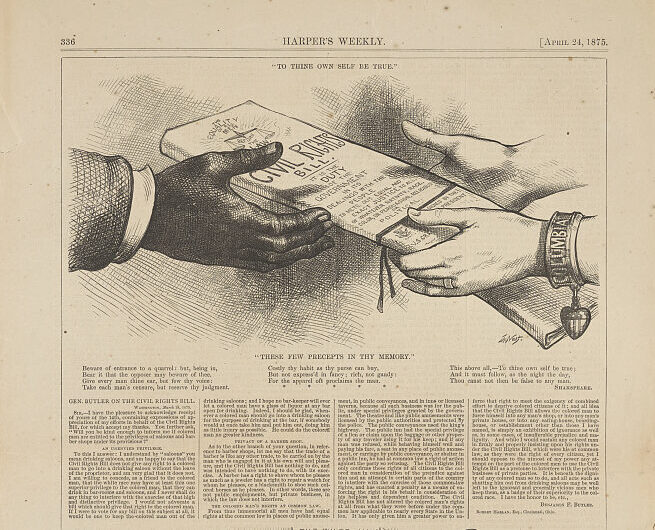
Shortly after the passage of § 1983, Congress then passed the Civil Rights Act of 1875 (CRA 1875). No, not the famous one from 1964 that everybody thinks of today—this older version was an entirely different animal.
It essentially guaranteed that certain public accommodations—inns, public transportation, theaters, and the like—couldn’t turn people away based on race, nor exclude them from juries.
And with that, racism was dead, the Klansmen all hung up their Casper the Friendly Ghost costumes, and the black community lived happily ever after.
If only, right?
~ 1883 ~
Despite Congress’ best intentions with CRA 1875, just eight short years later, SCOTUS decided 8-1 with the Civil Rights Cases, that CRA 1875 was unconstitutional.
I know that’s a weird name for a SCOTUS case—it’s usually two parties with a “v.” in the middle. But there were five separate cases where a black individual was denied accommodations by an entity that would have happily given them to someone who was white. So instead of rattling off five different names against five different respondents, they just combined them all and called them “The Civil Rights Cases.”
While it’s very plausible this ruling against CRA 1875 was motivated by racism, there is a legitimate reason they cited here that’s worth understanding—a fact about federal law that few people know. It’s going to blow your mind—it did for me, anyway.
We often think that Congress can write any law it wants, and technically it can. If it passes and the president signs it—or just sits on it for ten days without vetoing it—it’s active law.
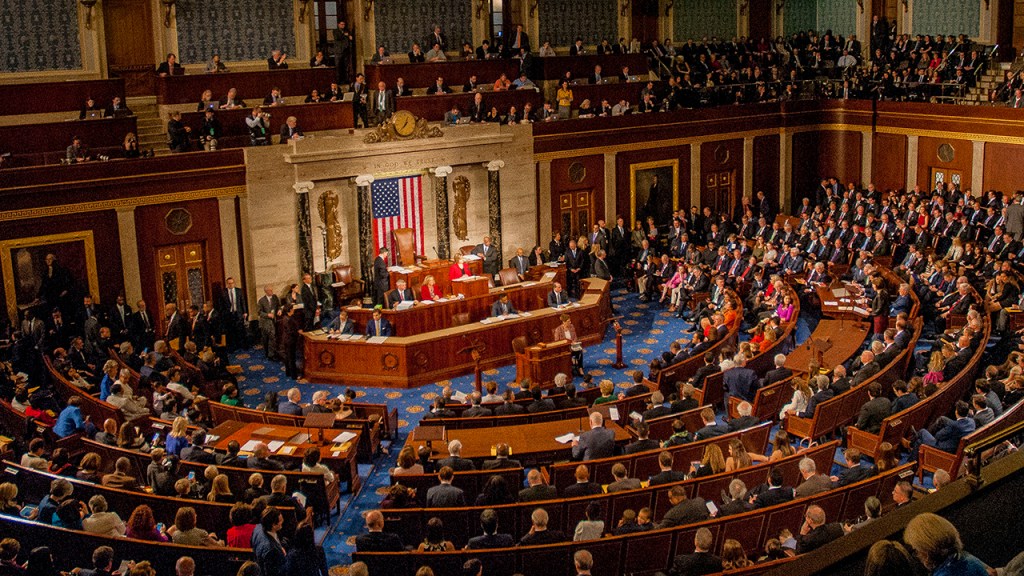
View, from the balcony, of congressmen and congresswomen on the house floor as the 115th Congress is called into session on its opening day, Washington DC, January 3, 2017. (Photo by Mark Reinstein/Corbis via Getty Images)
However, if that law were to be challenged in court, it might face judicial review. The Court could then deem it unconstitutional and strike it down.
We tend to think of courts striking down laws as unconstitutional solely because they take away someone’s enumerated constitutional rights. It might be a hate speech law that violates the First Amendment, or a gun law that violates the Second.
These restrictions apply to government at all levels—not just Washington. This is thanks to a doctrine called incorporation, which runs the Bill of Rights through the Fourteenth Amendment’s Due Process Clause and applies it against the states.
They reason that if the states, counties, and cities weren’t bound by the Constitution, then practically speaking, you wouldn’t have those rights at all—every level of government below the federal one could just take them away from you.
But the mind-blowing side of constitutionality I referred to is the application of the Tenth Amendment and what it actually means. The text says:
The powers not delegated to the United States by the Constitution, nor prohibited by it to the States, are reserved to the States respectively, or to the people.
Right there, in black and white, it tells you that federal laws must be underpinned by something in the Constitution that says Congress can regulate that thing. Anything else must be done at the lower levels of government (e.g. state, county, city).
A great example of this principle is from United States v. Lopez (1995), where a 12th grader carried a concealed firearm into school. While he didn’t shoot anyone, he did get busted and charged under a 1990 law called the Gun-Free School Zones Act (GFSZA).
The government argued it had the authority to pass the GFSZA via the Commerce Clause—Article I, Section 8, Clause 3 of the Constitution, which empowers Congress to:
Regulate Commerce with foreign Nations, and among the several States, and with the Indian Tribes.
They reasoned that schools provide education, education helps kids grow up, those grown-up kids will engage in economic activity, and therefore this law regulates commerce.
No, I’m not making that shit up—that was really the justification the government argued when it defended the law against young Señor Lopez in court.
They argued this convoluted nonsense because the Constitution doesn’t give Congress the power to regulate guns, so a Commerce Clause link was their hail Mary at keeping this law in force.
A staggering amount of federal law is tied to the Commerce Clause. For a big chunk of the twentieth century, courts assumed Congress could find an interstate-commerce angle for almost anything it wanted to pass.
The Commerce Clause
Look, libertarians like me tend to celebrate any time a gun law gets tossed—so take my bias as a given. But this one shouldn’t sit right with the pro-gun-control crowd either.
Forget guns for a second: if a law can be justified because it “affects commerce” this loosely, then Congress can regulate damn near anything. The Tenth Amendment should not be hung out to dry like that—not cool, Congress. Not cool!
SCOTUS thought so too. For the first time in 60 years, they told Congress to cut the shit with this Commerce Clause nonsense, and summarily struck the GFSZA down. Carrying a gun near a school isn’t commerce, and stretching the Commerce Clause to cover it insulted the Court’s intelligence.
Now, that whole Lopez detour wasn’t a random tangent—it’s the exact same principle at work when SCOTUS neutered the Civil Rights Act of 1875. In the aforementioned Civil Rights Cases, SCOTUS ruled that nothing in the Constitution empowered Congress to regulate civil rights the way it sought to. Same “disease” as the gun law—Congress reached for a power it didn’t have, so that law had to “die.”
To defend CRA 1875, Congress leaned on the 13th and 14th Amendments. The 14th, it argued, guarantees equal protection. The 13th which killed slavery, they reasoned, should also let Congress kill slavery’s leftovers.
SCOTUS rejected both of those arguments because the 14th only restrains government, not private businesses.
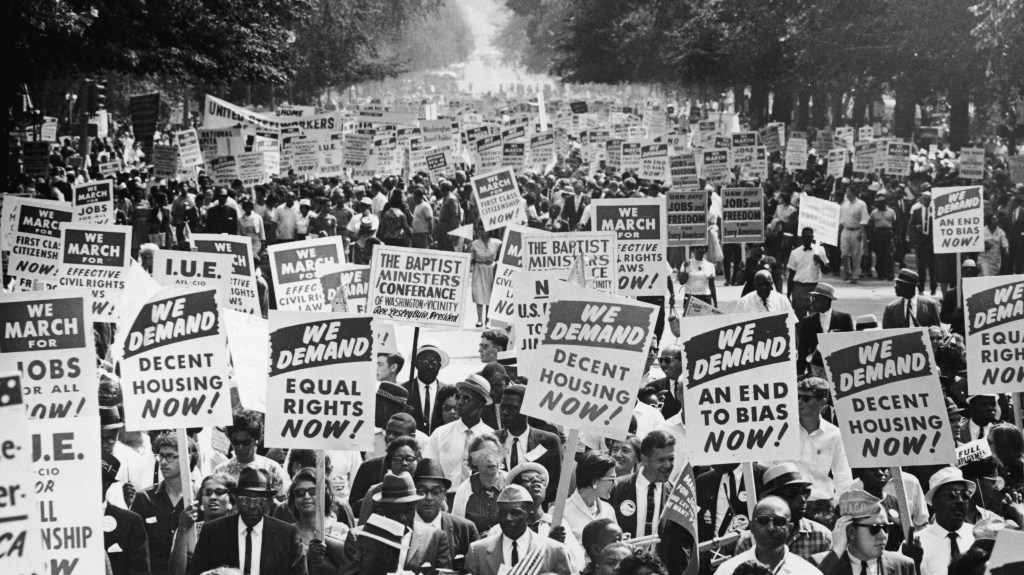
Demonstrators march down Constitution Avenue during the March on Washington on Aug. 28, 1963.
And, getting turned away from a hotel—however humiliating—wasn’t a “badge of slavery” it felt the 13th could reach.
Naturally, you may be wondering how the Civil Rights Act of 1964 has survived.
Well…because its authority was derived from, you guessed it, the good ol’ Commerce Clause. I told you—that shit is everywhere.
Going back to 1883, in its ruling on the Civil Rights Cases, SCOTUS reiterated that a private entity discriminating against you might be vile, but it isn’t “state action.” So the 14th Amendment can’t touch it—a principle known as the state-action doctrine. Therefore CRA 1875 was unconstitutional as a result.
While it’s subtle, the part that matters for our discussion is that the court drew a clear line between what was and wasn’t state action. It did so in helping to interpret the Fourteenth Amendment, but its interpretation went much further.
For instance, what about a government official who abuses their power in a way no law authorizes?
Is a cop beating a random black person “the government acting,” or just a bigoted thug who happens to wear a badge? If it’s the latter, § 1983 won’t reach him at all.
So that unbridgeable gap is where § 1983 went on vacation for nearly eighty years—failing to deliver on its promise almost entirely.
There’s no law that says our wayward racist cop should be beating that person in the first place—so you could argue they’re not acting “under color of law” at all.
More broadly, when would any government pass a statute that orders a government official to blatantly violate your rights? Almost any bad act a government employee does to someone is going to be them running afoul of the law, not enforcing it.
With that nonsensical framework now case law, it was nearly impossible to win a § 1983 claim, making the statute about as useless as a screen door on a submarine.
Our score now:
1883: Government official violates your rights while doing their job? You may sue them—but only if the violation was somehow their official duty. Since violating rights is essentially never anyone’s official duty, § 1983 is now about as useful as a parachute that opens on impact. Paradox #1 created (there will be more)—Godspeed.
Here’s another fact you may not know: just because SCOTUS says a law is unconstitutional, doesn’t mean someone grabs the nearest eraser and deletes that shit from the U.S. Code. It’ll sit there doing nothing in perpetuity unless Congress votes to remove it or SCOTUS throws stare decisis to the wolves and overrules themselves later. Laws ruled unconstitutional merely become unenforceable.
Stare decisis is the courts’ unwritten dogma of sticking to their own past rulings. It’s a Latin term that means “let the decision stand.” Courts adopted this approach to bring some level of consistency, predictability, and stability to the law
Theoretically, if some rogue official tried to enforce such a law anyway, you could sue them under § 1983—and then, in a ironic twist, they’d turn around and claim qualified immunity to dodge you. But that’s mostly academic, because it’d never even get that far in the first place. Courts are bound by precedent, so any prosecution under a dead law gets laughed out of court immediately.
Apologies if this is feeling like an Amway pitch up until now. I’ve danced around what this is about without naming it. But I didn’t want to poison your mind and have you “check out” thinking you already knew it all.
So yes, as you may have guessed, we’re discussing “qualified immunity.”
As you may recall from my post on the origins of strict scrutiny (you can read it here, if you haven’t already), the courts sometimes recognize that rights can’t always be absolute, as a matter of practicality.
Think about the old notion that you “can’t yell fire in a crowded theater”—even though that one’s actually a myth these days (the case behind that notion got overruled in 1969—Brandenburg v. Ohio). But the underlying idea holds: rights have limits. The First Amendment is broad, but it won’t protect you if you incite a riot.
Qualified immunity was a way for courts to protect government officials from what they felt were wrongful and unintended applications of § 1983.
Qualified immunity isn’t a statute from Congress—it’s purely caselaw (Judge-made law, not congressional).
It’s also not a direct result of one case—it was slowly built over time—a series of exceptions the Court deemed necessary and proper when interpreting § 1983.
~ 1958 ~
Now—let’s fast forward to the awakening of § 1983—and also to the building blocks of qualified immunity that got stacked alongside it, one by one, ultimately keeping the statute from ever doing the work it was designed for.
These weren’t gentle knocks and a polite request to search the place. Pape and his crew kicked in two doors, no warrant in sight, and dragged Monroe and his wife—both of them stark naked—into the living room at gunpoint. Then they herded in all six of the Monroe kids to come witness it all for good measure.
Pape went to work on Monroe with his flashlight while dropping N-bombs like there was some racist shock and awe campaign he was training for.
Another officer shoved his wife around while others hit and kicked the kids hard enough to knock them down.
Meanwhile, the rest of the squad tore the place apart—dumping drawers, ripping open mattresses, just generally treating this family’s home like a crime scene they were allowed to invent.
After all that, they hauled Monroe to the station and sat on him for ten hours, interrogating him about the murder without ever bringing him in front of a judge, letting him call a lawyer, or letting him call his own family. Eventually, with no evidence to charge him with, they cut him loose.
Pape and his merry band of asshole cops were investigating the murder of a man named Peter Saisi.
After the murder, Saisi’s wife told investigators that two black men had done it.
The next day, she came to the station and looked at a photo array, stopped at a photo of James Monroe, and said he looked like one of the killers.
So this prompted the incident at the Monroe home above which led to Monroe being hauled in and placed in a lineup where Mrs. Saisi failed to identify him, despite dropping the dime on him a day earlier.
It’s easy to defend Mrs. Saisi by assuming she witnessed a tragedy, and in her unparalleled state of grief committed an act of innocent mistaken identity. It’s also forgivable to wonder whether Monroe had actually committed this crime in the first place, before you’re willing to bestow any sympathy on him.
Her defense at trial was that after the murder, Lansing held a gun on her and threatened to kill her and her children unless she told police it was a black man who did it. The trial court and the Illinois Supreme Court found this claim less than believable. She was already sitting in the pokey—sentenced to 60 years—so they cordially invited her to stay there.
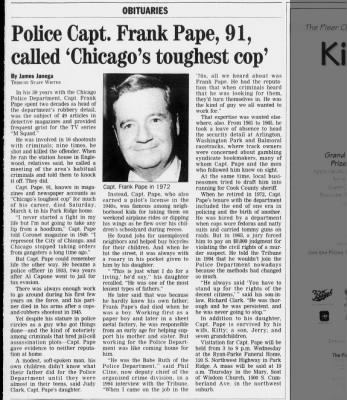
Also, before you think maybe Pape was a fine cop, just know what that prick had to say regarding the citizens he killed: “Of the nine people I shot, every one of them had a gun and in every instance they had used it or were about to use it. I wouldn’t take them into custody and I don’t give a damn who criticized me for it.”
Not for nothing, he also occasionally brought a Tommy gun to raids as well. I think that suggests he wasn’t encumbering himself with the burden of using his handcuffs.
But hey, he inspired a show called M Squad, which ran from 1957 to 1960, so there is that.
~ 1961 ~
In the aftermath of all this came SCOTUS case Monroe v. Pape (1961). Monroe sought to sue those thirteen bastards in blue under § 1983, and the municipality they worked for. He wanted to make them pay him, his wife, and his children a total of $570,000 for all the harm they’d done—a princely sum for the time, according to a loose reference from The Chicago Defender.
The cops argued that because their brutality violated Illinois law, they couldn’t possibly be considered acting “under color of law”—they were just rogue criminals, beyond § 1983’s reach.
Weird that their defense is an admission they were breaking the law, right?
The Court rejected that artistic interpretation, though.
It held that abusing power you possess solely because you wear a badge in the first place is acting under color of law. So yes, § 1983 reached them—not despite the badge, but because of it.
Unfortunately, Monroe didn’t get everything he sought. The same ruling held that the City of Chicago couldn’t be touched at all. A municipality, SCOTUS said, isn’t a “person” under § 1983. So the city’s coffers remained unmolested, and Monroe was left collecting from the individual officers (which is where that $13,000 eventually came from).
The Court felt you can’t blame the city for dumb shit the fuzz does, no matter what the reason. But this wasn’t awarding absolute immunity—it was simpler and dumber than that. Since § 1983 only reaches “persons,” and they ruled a city wasn’t one, the statute never touched Chicago to begin with.
But at least the majority saw the paradox that had festered since the Civil Rights Cases, and had finally had enough. They looked at the history of the law, the congressional debates during its formation, and clarified it so it was no longer self-defeating.
With that ruling, § 1983 was awoken after its 78-year slumber and all of a sudden found some teeth again—thanks James Monroe!
The score now:
1961: Government official violates your rights while doing their job? You may sue them—so long as they’re abusing the authority that job gave them. Paradox #1 solved.
But the city they work for? Untouchable.
~ 1967 ~
The next step in our timeline came six years later with Pierson v. Ray (1967).
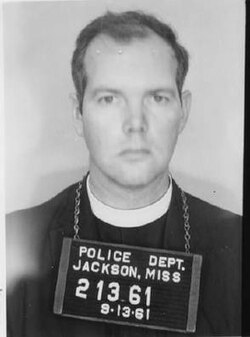
In 1961, fifteen clergymen, some black, some white, decided they were going to preach to the world that God says you shouldn’t be a racist prick. While spreading their message in Jackson, Mississippi, they were at a segregated bus terminal. Realizing this was a teachable moment, they all sat together in the “whites only” room as an act of civil disobedience.
Robert Laughlin Pierson
Jackson police and a Jackson judge—apparently all atheists—were unimpressed by the teachings of Jesus and these clergymen’s show of unity in the matter. So the rozzers arrested them, and the judge threw the book at them, for breach of the peace. Yes, you heard me, their obviously peaceful protest was deemed a breach of the peace.
Ahh, the South in the sixties…a racist’s heaven.
The charges eventually went away. My guess? Arresting clergymen is usually bad fucking press for a city.
But then, four years later, the Court in an unrelated case ruled Mississippi’s breach-of-the-peace law was unconstitutional.
So the clergymen, armed with that knowledge, were like, “Jesus has answered our prayers.” This had to mean the cops violated their constitutional rights, they assumed.
Apparently not completely sold on Jesus’ teaching of forgiveness—they sued those Jackson pricks: the po-po and the judge.
However, in an 8-1 ruling, SCOTUS—seeing that they could be in trouble if they weren’t careful—said judges got absolute immunity from § 1983 for judicial acts. Doesn’t matter how corrupt or morally repugnant it is—they get to interpret the law without fear of being sued if they get it wrong.
Editorial: Many will assume it’s pure self-preservation—giving judges immunity. But my joke aside, the reasoning SCOTUS provided is fair and worth understanding.
Judges are supposed to interpret the law faithfully.
If a judge considers “I might get sued for this” instead of just relying on the legal text, they might make a decision out of fear, not their actual interpretation of the law.
My own take: it’s a great argument, but it should be far more narrowly tailored. There are many ways a judge could violate someone’s rights and not be faithfully interpreting the law in doing so. There should be a mechanism to address that.
As it stands, a judge who takes a bribe to rule a certain way is just as immune from civil damages as one making an honest call. Our founding fathers would have immunized them with musket balls, not legal precedent.
SCOTUS took a little less forgiving approach with the cops, however—while still handing them a win. They created a good-faith exception to § 1983.
They reasoned that if a law is on the books, a police officer is duty-bound to enforce that law—barring the discretion they’re given not to when they deem it unwarranted. But if officers are enforcing active law, you couldn’t sue them for doing their job faithfully.
They also said cops aren’t fucking psychics. If a law is later ruled unconstitutional, you can’t expect some random beat cop to become Nostracopus—accurately predicting that shit. Last I checked, Johnny Law doesn’t keep psychics on staff, either.
That said, if cops aren’t enforcing good law—if they’re just violating people’s rights for no reason—then the good-faith defense doesn’t save them. They were abusing the authority the badge provides, which is exactly what § 1983 was built to reach. So sue away, brother!
Since these cops were enforcing valid Mississippi law at the time, they win. Jesus couldn’t be bothered to come to the courtroom that day.
The score now:
1967: You can still sue officials for abusing their authority—but the exceptions are piling up. Judges? Completely immune, however they rule. Cops? A good-faith defense: if they were enforcing a law on the books, they walk—even if that law gets struck down later.
~ 1970 ~
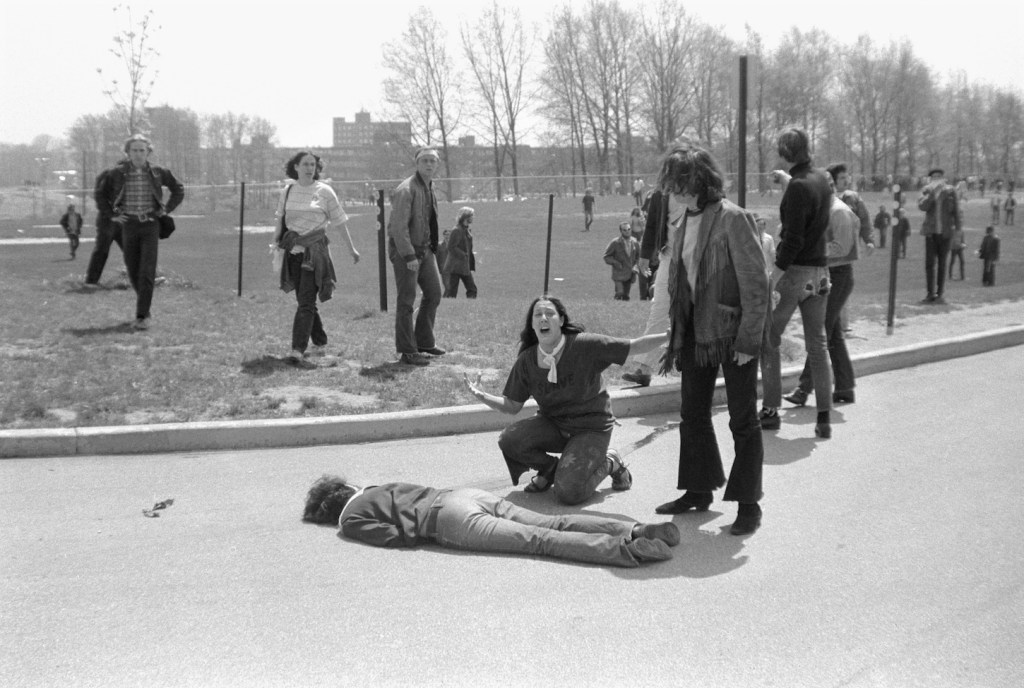
The next step on this journey is the Kent State University shootings in Ohio on May 4th, 1970.
With Vietnam in full swing—Nixon heard that North Vietnam (the communist side) was getting supplied through Cambodia. So ignoring the fact this war was already quite unpopular, he decided: what the fuck, let’s invade Cambodia as well.
Some college students at Kent State University took exception to the Vietnam war, and therefore to the expansion into Cambodia. I suppose it was partly philosophical, but, “I really don’t want to get drafted and sent to Cambodia myself” was surely part of it too.
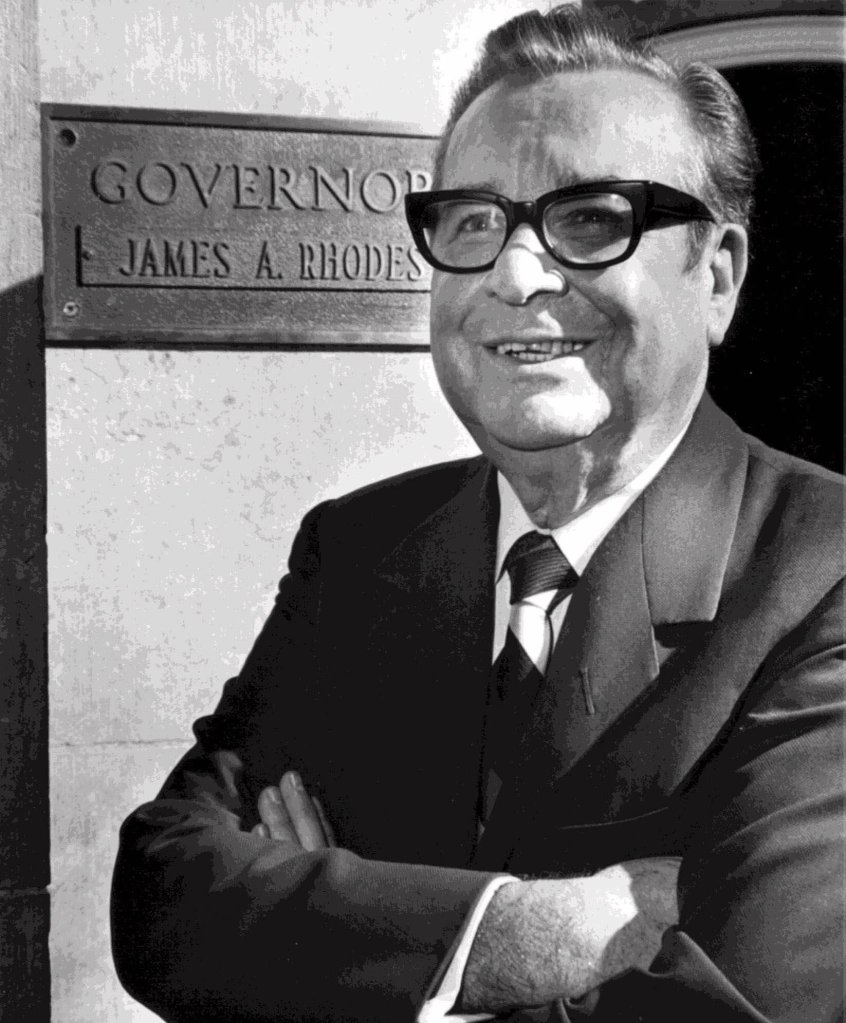
Former Ohio Gov. James A. Rhodes, shown in his office in this 1981 file photo (AP Photo/File)
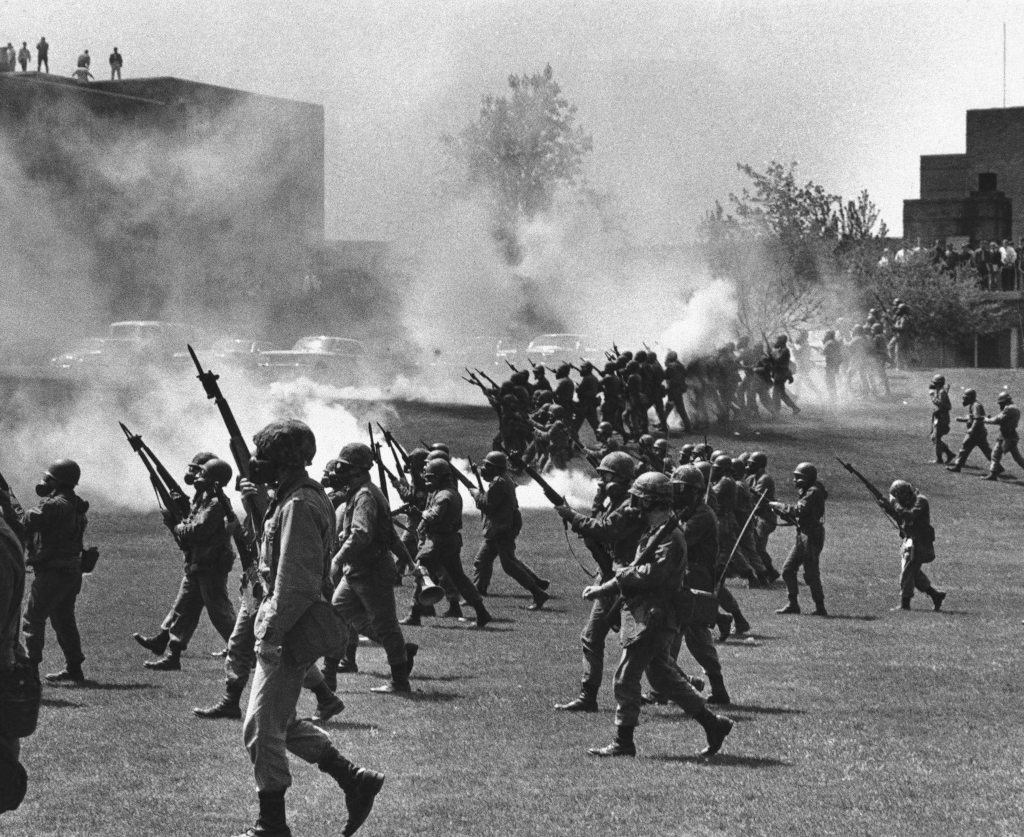
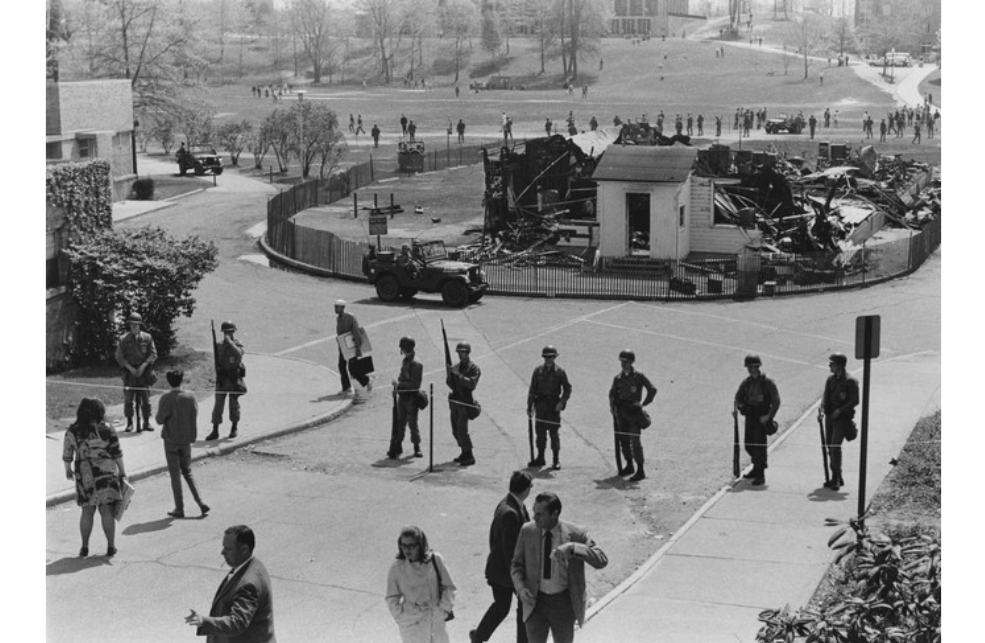
The following day, Guardsmen moved in to disperse the crowd, deploying tear gas and advancing with fixed bayonets. The crowd didn’t take kindly to this and threw rocks and shit at them.
In response, the Guardsmen took position at the top of an area called Blanket Hill, then for reasons we’ll never know, started firing into the crowd—67 rounds in about 13 seconds.
This should bother every American.
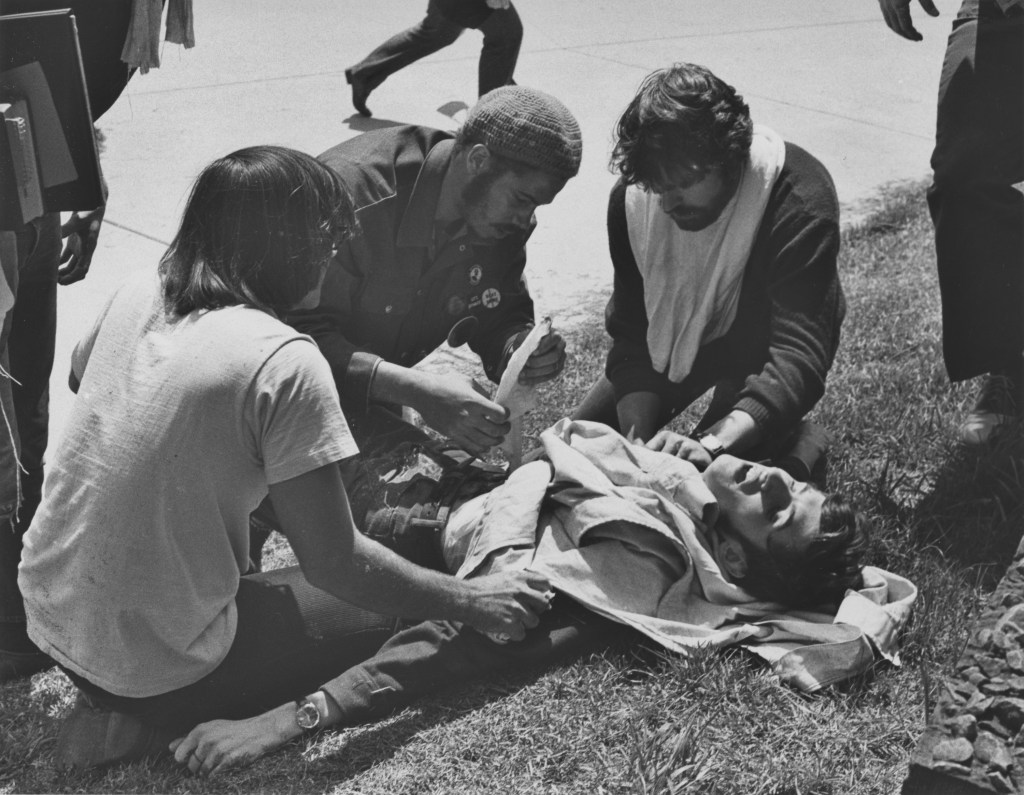
Four students were killed, nine others were wounded. There’s no other way to describe this—in any other circumstance, this would be considered murder. No doubt, one of the darker days in American history.
We’ve been discussing § 1983, which is about civil suits, but surely this incident also carried criminal charges, right? It did, and we’re going to take a little sidebar to explore that.
Technically there is a federal murder statute—18 U.S.C. § 1111—but it only reaches killings on federal turf: military bases, national parks, federal buildings, U.S.-flagged ships, etc.
Why the narrow scope?
Same enumerated-powers wall we’ve been talking about. The Constitution never handed Congress a general power to prosecute murder; it only gets to apply homicide charges where it has a specific foothold, like its own territory or its own ships thanks to the Enclave Clause—Article I, Section 8, Clause 17, which gives them the power to “exercise exclusive legislation in all cases” over any federal lands.
Kent State was a state campus on Ohio soil—so § 1111 wouldn’t apply. Which left the feds reaching for the one hook they did have.
They charged them under 18 U.S.C. § 242—which criminalized “willfully depriving someone of their constitutional rights under color of law.” Known as the Civil Rights statute—it was passed five years prior to § 1983.
That statute was largely underpinned by the same motive—to prevent freed slaves, and the black community in general—from being deprived of their rights. But it provided a path to criminally prosecute civil rights violators, not sue them like § 1983. It was originally written to protect former slaves, and the black community in general, but later broadened to cover all Americans who’ve had their rights trampled on.
The key to that statute is that “willfully” part. You may have heard the term “mens rea” before, yes? It’s a legal term that comes from the Latin phrase for “guilty mind.” It’s a common element in many crimes, which dictates that for the person to be found guilty, the government has to prove they intended to commit the crime at hand, as opposed to an accidental or unintentional act that just ended quite badly.
While federal prosecutors tried, their evidence for mens rea was so flimsy that the judge ended the proceedings mid-trial, feeling that there was insufficient evidence to prove intent—the jury didn’t even get to deliberate or render a verdict. The acquittal carried double-jeopardy protection, so the Guardsmen were free and clear of those federal charges under § 242.
That likely leaves you wondering about state murder charges then. That’d be up to the state of Ohio, where the shooting happened. And here’s the problem: the whole state apparatus—right up to Governor Rhodes—had every incentive to make this go away. You can guess how well that served the victims.
The state reasoned first that it had no idea who actually fired the lethal shots. Forensic matching of the bullets to the guns was nearly impossible. Too many identical rifles in play, and some of the bullets had fragmented and couldn’t be matched anyway.
Not to mention, solid evidence preservation techniques weren’t really “a thing” in law enforcement at that point. They knew how to do it, but they didn’t prioritize it like we do today.
Second, a grand jury failed to indict the Guardsmen, finding it reasonable that they honestly and sincerely believed they’d be attacked by the crowd had they not fired.
But this grand jury was dubious. The prosecution never called the Guardsmen who actually fired to testify, and never presented the FBI’s report on the shooting—hardly an earnest effort to get an indictment. And the whole thing unfolded in a climate Rhodes had inflamed from the start.
Maybe Rhodes was worried about it coming back on him. Who knows? But the end result is the Guardsmen were free to go with no justice being meted out for the victims.
~ 1974 ~
That travesty brings us to Scheuer v. Rhodes (1974). We’ve established that Rhodes was the Ohio Governor. Scheuer was a representative for one of the victims. They sued under § 1983, arguing that Governor Rhodes had acted intentionally, recklessly, willfully, and wantonly in deploying the National Guard, which resulted in the deaths of their loved ones.
Deploying the Guard wasn’t crazy on its face—there’d been serious unrest. And if protesters really did torch the ROTC building, that crosses from peaceful protest into violence. A governor could reasonably call in the Guard to restore order, there.
So the hard question in Scheuer isn’t whether Rhodes could send troops—it’s whether he can be held liable under § 1983 for what those troops did: killing unarmed students. Deploying the Guard is one thing. Four dead kids is another.
The lower courts argued that the 11th Amendment, which says you can’t sue a state in Federal court (a “state’s rights” thing) barred the federal court from even hearing this shit. On appeal, the federal appellate court reasoned that executive immunity applied, and the Governor couldn’t be sued for doing his job—they’d have to sue the state. But that takes us back to the 11th Amendment issue, making this case a spiraling toilet drain of failure for the plaintiffs.
This idea of executive immunity was around long before Trump v. United States from 2024 (which I wrote about here), and it applied to Governor Rhodes here. The idea is that their job is to execute the law, and they must have significant leeway to do so. They can’t be in court every other week because their political opponents keep suing them. The voters put them there to do what they said they’d do, and how they said they’d do it. The court was wary of getting in the way of them achieving the political promises that got them elected.
But remember, unlike politicians, courts are not supposed to make decisions based on popular opinion, so we should oddly have a problem with them considering it.
Editorial: I have my qualms with this “executive immunity” doctrine. At a minimum, immunity should hinge on whether a reasonable person would find the executive was acting in good faith, similar to the Court’s early exemptions for § 1983.
Meaning if a jury felt they were behaving corruptly, such as accepting a bribe to appoint a judge, then fuck ’em, hang ’em at high noon for all I care. There’s no credibly argument I’ve heard for making such acts untouchable—our founding fathers would be ashamed.
In a unanimous win for Scheuer, although not in the way he hoped, SCOTUS reversed the lower courts.
First, it tossed the 11th Amendment argument: because the plaintiffs were suing the officials as individuals for personal liability—not trying to raid the state treasury—it wasn’t really a suit against the state.
Second: the Court flatly rejected the idea that a governor gets absolute executive immunity. Instead, it held the immunity is only qualified—it varies with the official’s discretion and responsibilities, and turns on the circumstances as they reasonably appeared at the time. In other words, good faith and reasonableness matter.
The Court didn’t rule on whether Rhodes himself was liable—it just said the case couldn’t be thrown out on immunity grounds at the starting gate, and sent it back down for trial.
In that opinion, SCOTUS laid the groundwork that the good faith immunity for cops we mentioned earlier could also apply to a governor or other executive branch officials.
Score update.
1974: You can still sue officials for abusing their authority—but now governors and other executive-branch officials join the club: they get qualified immunity too, shielded so long as they acted reasonably and in good faith. Absolute immunity for executives? Rejected.
That shit barely registered on the alcohol scale though, it came in at a measly 0.91% by volume…pussies. Definitely not worth getting in trouble over.
Anyway, a teacher named Mrs. Powell got them to confess to her by saying she’d handle it if they did. But then, MHS Principal Duddy Waller started snooping around after the gossip mill was in high gear, leaving Powell unable to contain it as she promised. So Powell was like, sorry you little bitches, only god can help you now—I’m out. I’m not losing my job over Malt Liquorgate.
Principal Waller suspended the students for two weeks, pending a hearing by the school board, which then expelled them for the rest of the semester—without letting the students attend the hearing and argue their side.
They were given a second hearing where they did attend, but the school board wasn’t swayed and upheld the suspension.
Honestly not sure what their side could have been—”We spiked the punch because we heard alcohol is good for developing young brains?”
Anyway, one of those board members was John Wood (the lead petitioner in the SCOTUS case). Let’s get into their arguments, because it’s some good nerdy law shit.
SCOTUS 1975
First, we’ll talk about a legal principle called “reliance.” We’re all familiar with plea deals, right? A prosecutor says, “Tell me everything and I’ll take the death penalty off the table” or something like that. The person only confessed because they were “relying” on the offered deal. The courts expect the government to honor such deals faithfully, lest they become so dubious criminals would stop making deals altogether.
Well, same thing here, just at a lower level. They confessed to Powell because she said she’d handle the punishment herself if they did. They “relied” on what she told them when they agreed to fess up. But that promise evaporated once it went up the chain to the board. So her “plea deal” got tossed—which, in their view, was fundamentally unfair.
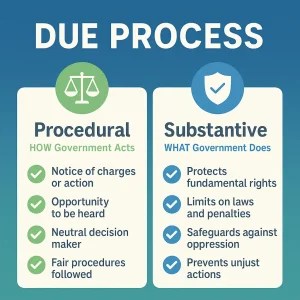
A second issue was procedural due process—basically, the right to a fair hearing. She and her parents weren’t even allowed in the room during the board’s initial deliberations—so how the fuck did they get a fair ruling? Even if they did finally get a bite of the apple at that second hearing, the damage was done.
Third, and the one a lower court seemed to care about most when it sided with the students, is substantive due process. This is where it gets nerdy on a whole new scale.
The school’s policy banned intoxicating beverages—So that was the rule the students were charged with breaking.
So the students argued that the punch, which tested at 0.91% ABV, couldn’t have gotten a fly drunk. Therefore, it wasn’t “intoxicating” under their rule. So they reasoned, they weren’t in violation of anything.
These were pretty solid arguments by the two students who chose to sue—seems like they had some good lawyers.
This isn’t the only nerdy law lesson here. The school board, of course, argued intent, and this is a big facet of law few think about.
Consider this: when cops impersonate a child online to catch a child predator, the scumbag in that scenario was not actually preying on a child, they were chatting up an adult police officer. So how is it a crime?
Well, he’s still guilty, just not of the completed crime (there was no actual child). Instead, he’s guilty of attempting it. The law doesn’t let you off just because your target turned out to be a cop; you intended the crime and took real steps toward committing it. Intent plus action is enough.
Pretty interesting thought experiment, right? And it’s basically the instinct the school board was reaching for: sure, the punch was weak as hell, but the girls intended to spike it—and to the board, that intent was the violation.
SCOTUS was unimpressed though—but not in the way you’d guess. Instead of ruling cleanly for either side, it announced a brand-new rule and sent the case back to the lower court to reconsider accordingly. That rule is now a cornerstone of qualified immunity as we know it.
They said that school officials are immune from § 1983 damages unless they knew—or reasonably should have known—that what they were doing would violate a student’s constitutional rights, or unless they acted with malicious intent.
Or as the dissent characterized it:
Being morons, you can’t expect them to understand the law well enough to know if they’re violating someone’s civil rights, for purposes of a § 1983 violation—they’re trained to be teachers, not stewards of the law.
But let’s be clear—there are limits to that shit.
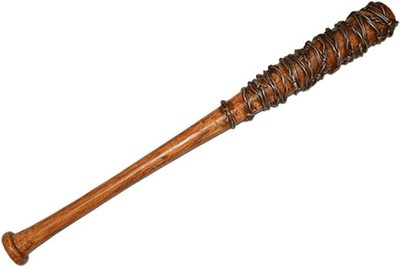
Don’t walk your ass into court after beating some kid’s ass with Lucille from Walking Dead, and ask the court to assume you didn’t fucking know better.
Lucille – Walking Dead
As for the students’ clever weak-liquor argument—SCOTUS wasn’t buying it. It held the board’s reading of its own rule (no alcohol, period—not just the strong stuff) was reasonable and backed by evidence. So they punted the lower court’s ruling in the students’ favor. Mens rea, it turns out, doesn’t haunt a school handbook the way it haunts a criminal statute.
Score Update:
1975: Judges: still absolute. Cops, governors, executives: still good-faith. New this round—school officials get folded in, under a ‘knew or should have known, or acted with malice’ standard.
This case isn’t about qualified immunity, but it profoundly changed § 1983 litigation.
At this time in history, pregnant women weren’t protected by labor laws like they are today. These particular women, employees of New York City, got knocked up and were forced to take an unpaid leave of absence under department rules, even before it was medically necessary.
The women thought this was unconstitutional bullshit and sued the city, seeking backpay for their grievance.
While a district court agreed it was unconstitutional, it didn’t agree these prego ladies could sue the city for wages, because the city wasn’t a person acting under color of law, as stated in our aforementioned Monroe v. Pape case.
SCOTUS, however, decided that this was an official decision by the city, therefore, the city can be treated like a person in situations like this, and sued under § 1983.
This matters because most government officials earn a modest income and have debt like the rest of us. It’s a good job, but they’re rarely getting rich. So if you sue them, they’re likely what’s known in the legal biz as “judgment-proof.” This just means that even if you win a judgment against them, they don’t have the money to pay it.
A million dollar judgment against someone with $57 in the bank isn’t going to go the way you hope—you know—the blood-turnip thing.
So the promise of this ruling is that § 1983 doesn’t just leave you stuck with a broke individual anymore—there’s a path to reach the government behind them, and governments have deep pockets.
It’s fair to ask yourself: If a cop goes rogue—isn’t following orders, wasn’t trained that way, etc.—is it really fair to make the taxpayers pay for the official’s wrongdoing?
That’s a fair point, in my opinion. If I were king for a day, I’d say this: if the government sanctioned the bad act, trained the cop to do it, or looked the other way on prior complaints against that officer for similar acts—then arguably they should be liable. Otherwise, I think it seems fair to limit the liability to just the bad actor(s) alone.
But with this ruling, SCOTUS opened the door to successful § 1983 claims against the individual and now to the government they worked for. You’re still a heavy underdog to win a § 1983 claim, but if you do, you might finally win a life-changing settlement.
Score Update:
1978: Judges: still absolute. Cops, governors, executives: still good-faith. School officials have a ‘knew or should have known, or acted with malice’ standard.
Now, there’s a path to sue the government itself where applicable.
~ 1982 ~
Next we’ll time travel to four years in the “qualified immunity” future and discuss Harlow v. Fitzgerald (1982).
Ernest Fitzgerald, an Air Force analyst, testified before Congress about some eye-watering cost overruns on a cargo plane—$2 billion worth. Fourteen months later, his job was mysteriously “eliminated,” leaving him jobless.
He sued then-President Nixon and the two aides who orchestrated it—Bryce Harlow and Alexander Butterfield. He claimed he was canned for testifying, not because the job was genuinely unneeded, and he wanted compensated for the loss of income.
Ernest Fitzgerald
But here’s a wrinkle worth understanding. Remember the actual text of § 1983? It only reaches someone acting “under color of any statute, ordinance, regulation, custom, or usage, of any State or Territory.”
The statute only targets state and local officials. It says nothing about federal ones. So a city cop, a county sheriff, a state trooper, a public school board? All fair game under § 1983. A federal agent, a soldier, a presidential aide? Not covered.
This left a gaping hole for most of American history. You basically couldn’t sue a federal official for violating your constitutional rights, because no statute provided a vehicle for you to do so.
The courts finally plugged that hole in 1971 with Bivens v. Six Unknown Named Agents, inventing a damages remedy against federal officials out of whole cloth. Think of Bivens as § 1983’s judge-made federal cousin—same idea (sue the official who violated your rights), different entity (federal instead of state).
Since Fitzgerald was suing federal officials, his case rode in on Bivens, not § 1983.
But here’s why it still matters for our story: the immunity rules the Court laid down, they ruled, apply to both vehicles. So this federal case ends up rewriting the qualified-immunity standard for § 1983 cases too.
In an 8-1 decision, SCOTUS sided with Harlow, one of the presidential aides who “fired” Fitzgerald. But what they did regarding qualified immunity was eliminate the good-faith exception and replace it with an objective one.
They felt that trying to get in someone’s head and prove mens rea is pretty fucking hard, and they simply didn’t need to. So they decided instead that if the constitutional right they violated was clearly established law at the time, and the government miscreant reasonably should have known as much, then they can be sued.
That “clearly established” part may sound simple, but it is shady as fuck. Even though the opinion didn’t say it directly, this generally meant the courts must have previously ruled that what the government officials did was a violation before anyone else can sue for it.
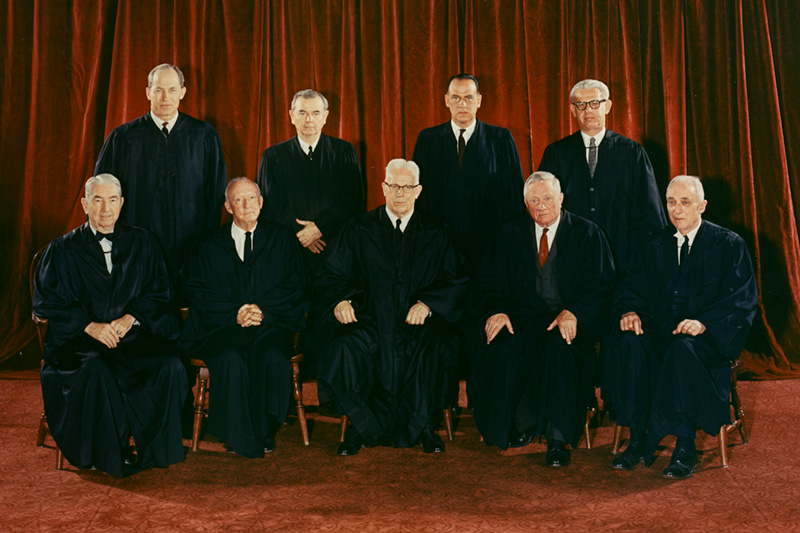
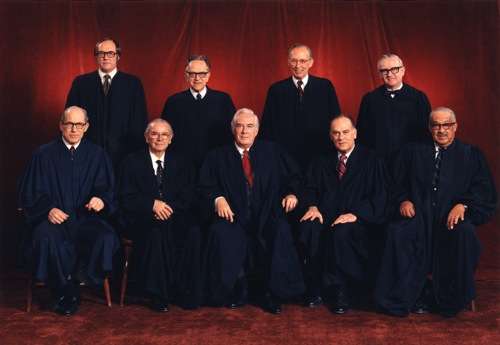
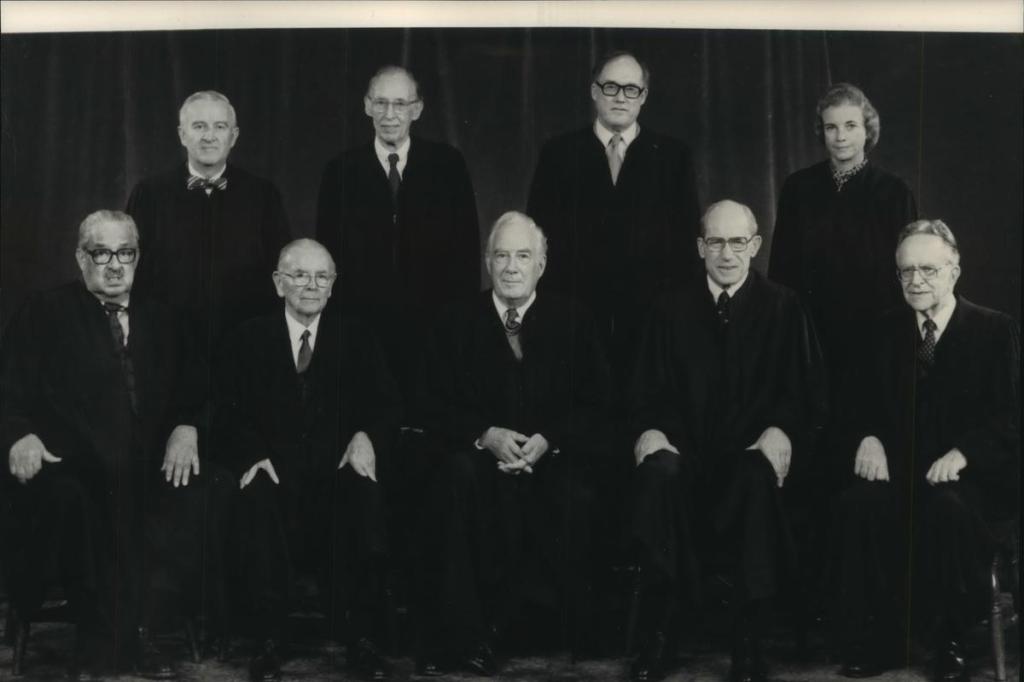
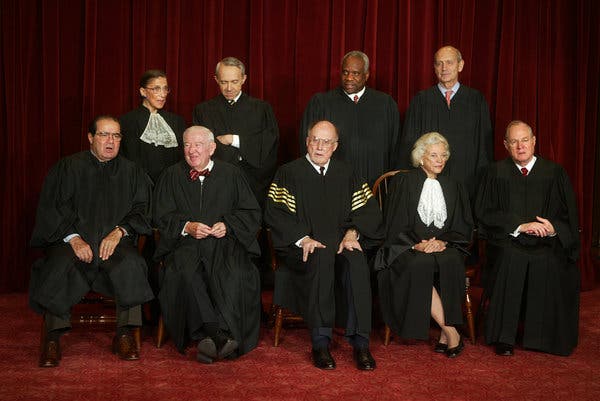
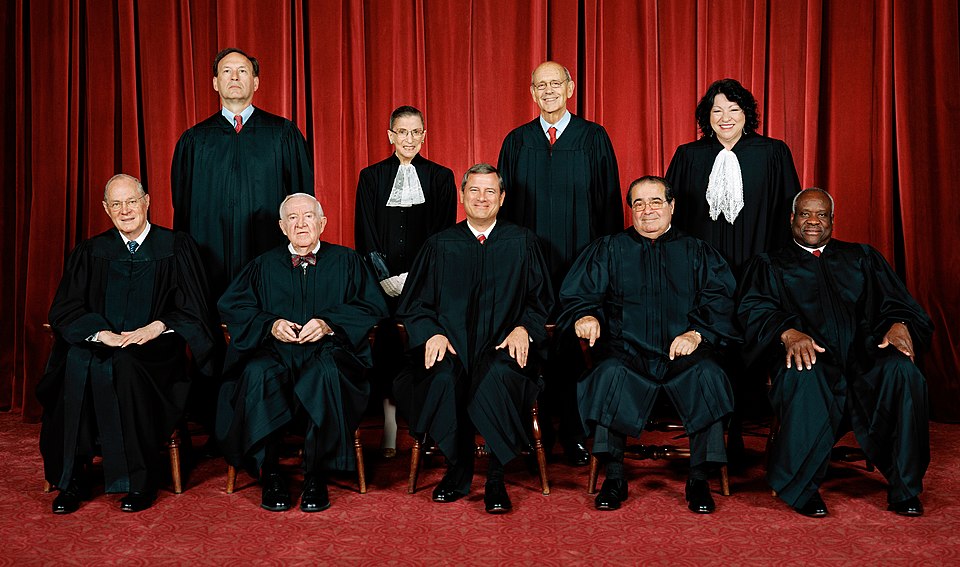
This official 1982 portrait of the Supreme Court shows, seated, from left: Justices Thurgood Marshall, William Brennan Jr., Chief Justice Warren Burger, Justices Byron White and Harry Blackmun. Standing, from left, are: Justices John Paul Stevens, Lewis Powell, William Rehnquist and Sandra Day O’Connor. Four members, Chief Justice Warren Burger and Justices Marshall, Blackmun, and Stevens, once labored in greater anonymity as federal appeals court judges. U.S. Supreme Court
There are exceptions, which we’ll get to later, but the net effect is a catch-22. If no one ever won in court before, the case is dead on arrival without even getting to argue the merits. No new precedent can be created to satisfy “clearly established” in the future, so bad government actors can just keep doing that unconstitutional thing without ever having it ruled as a violation. Not cool, SCOTUS, not cool.
Side note: they also added presidential aides to the list of people who get qualified immunity.
Scoring update:
1982: You can still sue government officials for abusing their authority. Judges are completely off the table.
For everyone else, a good faith defense is gone. Now replaced with the “clearly established constitutional violation” rule: no prior caselaw, no lawsuit.
New paradox unlocked.
~ 1985 ~
Next up, we have Mitchell v. Forsyth (1985). This case started in 1970 when John Mitchell was Nixon’s Attorney General. Based on FBI intel, he suspected the ironically named East Coast Conspiracy to Save Lives (ECCSL) was going to blow up a tunnel connecting two federal buildings, and/or kidnap Henry Kissinger.
So Mitchell issued a warrantless wiretap for ECCSL member William Davidon, who called anti-war activist Keith Forsyth—both Americans.
Not going to go too deep in the woods here, but three years earlier, in Katz v. United States (1967), SCOTUS had already ruled you need a warrant to wiretap somebody in a normal criminal case.
What Katz didn’t settle was whether that rule still held when the government hollered “national security.”
That gray area is exactly the loophole Mitchell tried to drive a truck through. It wouldn’t get closed until two years later, when SCOTUS decided in United States v. U.S. District Court (1972) that if you want to wiretap Americans—national security excuse or not—get a fucking warrant, full stop.
Government is free to wiretap non-Americans not in America, because the Fourth Amendment obviously doesn’t apply to foreign nationals on foreign soil. But Mitchell was spying on Americans.
Anyway, because the Court ruled warrantless wiretaps were unconstitutional, we had a “clearly established constitutional violation” going forward.
But remember how we said cops can’t predict the future? Mitchell couldn’t know that two years later, SCOTUS would ban warrantless wiretaps of Americans entirely. So Forsyth was shit out of luck.
Up to this point, if a government official was going to claim qualified immunity, it would happen at trial where they raised it as a defense. But the courts opted to insert a fast lane to obtain a “get out of jail free” card. They made qualified immunity a procedural protection you could raise and immediately appeal before the trial even started.
So now, even if you had a legitimate “clearly established constitutional violation” claim, the government official could appeal immediately—freezing everything. No discovery, no depositions, no legal maneuvers to help you solidify your case, zip, zilch, zero, nada. The government agent can stall until all their appeals are exhausted while your case lies dying in legal purgatory.
We already established it was nearly impossible for an aggrieved citizen to win a § 1983 claim, but now the courts made it so you had to potentially wait for years, denying you the ability to demand evidence to make your claim. The legal term for this is, Fututus es. (Latin for “you have been fucked.”)
Score Update:
1985: You can still sue officials for abusing their authority. Judges: completely off the table.
Paradox #1 stands: the ‘clearly established’ rule—no prior ruling on point, no case.
Paradox #2 unlocked: officials can appeal an immunity denial before trial even starts, freezing discovery. Can’t get the evidence, can’t build the case. Fututus es
FBI Agent Russell Anderson was on the hunt for suspected bank robber Vadaain Dixon, who had supposedly withdrawn money from a bank earlier that day using a gun instead of a withdrawal slip.
Anderson claimed he had probable cause to believe Dixon was at the home of Robert Creighton Jr., (a black man—I’m sensing a theme) and his family.
So he and his team, without a warrant, went to the Creighton home and knocked on the door. When Creighton opened, they pushed him aside and forced their way in.
Creighton asked for a warrant and was told they didn’t need one, which is true if there’s probable cause coupled with exigent circumstances.
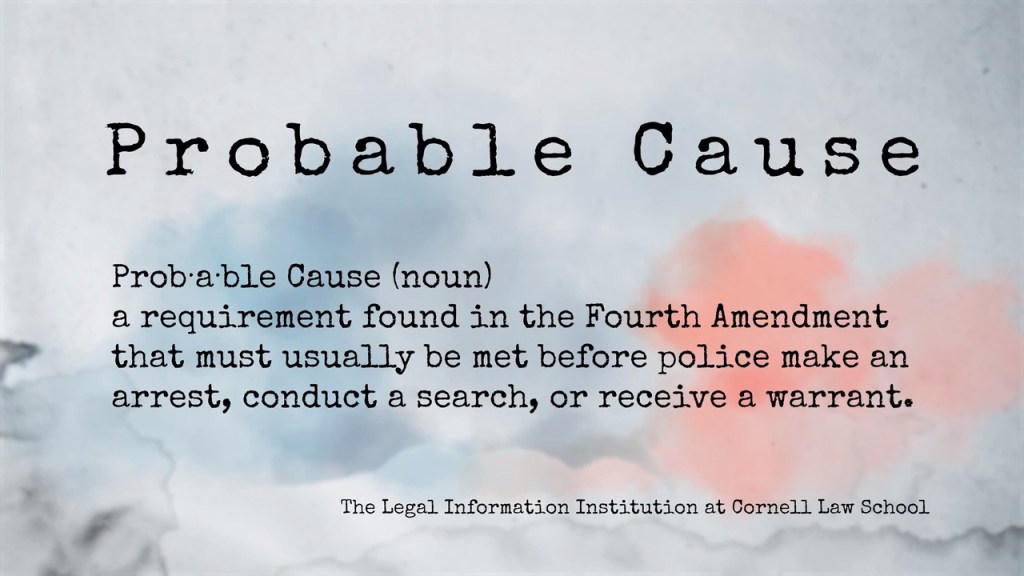
Sidebar: Probable cause is just a fancy way of saying a reasonable person, looking at the facts, would think it’s likely a crime happened, this is the guy, the evidence is in here, etc. It’s more than a hunch, less than certainty. It’s the baseline cops need before they can arrest you, search you, or get a warrant. It can’t just be a gut feeling.
Exigent circumstances is legalese for “there’s no time to screw around getting a warrant.”
Normally, to enter your home, cops need a warrant—the home gets the strongest protection there is. But if there’s a genuine emergency—someone’s about to get hurt, the suspect’s about to bolt, evidence is about to get flushed—they can skip the warrant and go in. The key word is emergency. No emergency, no shortcut.
So to bust into a home without a warrant, you need both: probable cause (good reason to think the guy’s in there) and exigent circumstances (a real emergency that won’t wait). Without either one, the government needs a warrant.
If we assume Anderson was being truthful and acting in good faith, and he really believed Dixon was in the Creighton home, you might justify him being a dick to Creighton, and he most certainly was.
That said, Creighton’s daughter was screaming in terror, and the officer yelled at her to shut up and sit her ass down, then grabbed her arm, injuring it so bad she had to go to the emergency room later.
His wife also asked for a warrant and was forcefully told again that one wasn’t needed, then cordially invited her to shut the fuck up.
So even if you give them a pass on how they handled Creighton—there’s no justifying what they did to his wife and daughter.
When Creighton led officers to his garage as part of the search, an officer punched him and knocked him to the ground. He was then arrested on baseless obstruction charges and spent the night in the pokey before being released when cops realized they had nothing on him.
What we know now is that Dixon was not at the Creighton home, and there’s no evidence he ever was.
You can imagine Creighton was pissed—I sure as hell would be. So he sued—as I sure as hell would have.
The first question I wanted an answer to: what was the probable cause? Reasonable question, right?
Yet I don’t have that information—do you know why? Creighton’s lawyers couldn’t fucking demand it in discovery, because qualified immunity can now be claimed at the outset instead of as a defense during trial.
See the problem now?
Creighton should be able to demand information about why they knocked on his fucking door, in order to determine if the officer was there for good reason. If he was there for an unlawful reason, that’s absolutely a violation of his rights—a reasonable basis for winning a § 1983 claim, or Bivens claim in this case—Anderson was a fed.
Since it was a warrantless search, that is a clearly established rights violation—which means qualified immunity shouldn’t protect Anderson, right?
Well, here’s why this case matters. SCOTUS again added a new layer of protection for officers: even if Anderson’s search was unconstitutional, he’s entitled to qualified immunity as long as he reasonably believed it was legal.
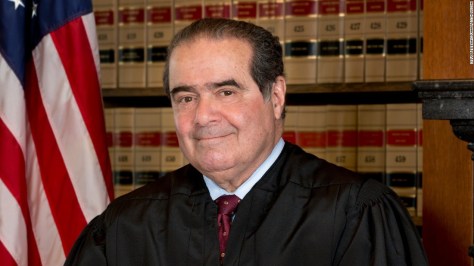
Sure, it was a warrantless search that violated the Fourth Amendment—but Scalia said you can’t define the right that broadly. The specific conduct has to be clearly established as illegal, not just spun out of a general principle like “warrantless searches violate the Fourth Amendment.”
Antonin Scalia – Associate Justice: Supreme Court of the United States Served 1986-2016 Lived: 1936-2016
Meaning, you can’t argue that a particular action violated the Fourth Amendment and therefore any such violation is “clearly established” for purposes of qualified immunity. The specific action—here, a warrantless home search with claimed exigent circumstances—has to be the thing that’s clearly established as unlawful. Otherwise, qualified immunity applies.
I know this is maddening—it’s maddening for me writing it. But you can see the other argument. Five-0 certainly have a tough job. Sometimes they have to react quickly and instinctively, and might get it wrong. We don’t want a good person, trying to do a good thing, to make a mistake and end up in bankruptcy court for it. Fine! I’ll accept that.
However, this position is incredibly short-sighted and assumes things that are often untrue. In this case, Agent Anderson wasn’t in some “I have to react in a split-second” scenario. He and his team had ample opportunity to sit on the house while someone fetched a warrant—they simply chose not to.
So while I accept the court’s desire to protect well-intentioned coppers, I think it’s inexcusable that nine of the premier legal experts in the country so obviously created an avoidable set of paradoxes. I refuse to accept they couldn’t do better.
Justice Stevens in his dissent was certainly furious. He argued that officers already have some protection, because they get the benefit of the doubt on whether probable cause existed. Now they get a second layer that says even if they were wrong, as long as they thought they were right, they’re still immune? That’s ridiculous, and he knew it.
Score update:
1987: You can still sue officials for abusing their authority. Judges: still off the table.
Paradox #1 gets worse: the violation must now be ‘clearly established’ at a specific level—not the general principle (warrantless search bad), but the exact conduct. And good faith sneaks back in the side door: if the officer reasonably believed their action was legal, they’re immune.
Paradox #2 still stands: officials can appeal before trial, freezing discovery
~ 2001 ~
The next wrinkle in qualified immunity came in 2001 with Saucier v. Katz.
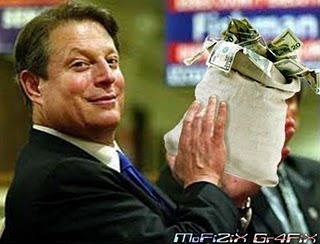
In 1994, at the Presidio Army Base, Vice President Al “I invented the internet” Gore was giving a speech. Elliot Katz was no fan of Gore’s promotion of the national parks at this speech—he was a big animal rights guy. He thought the new park would willingly allow some untoward animal testing, so he decided to protest.
Former Vice President Al Gore
As Gore began to speak, Katz unfurled his banner which read— “Please Keep Animal Torture Out of Our National Parks”—and approached the stage. MP Officer Donald Saucier saw it going down and was like, “absolutely not!”
Saucier and a cohort grabbed Katz and pulled his ass outta there. Katz had a knee brace and wasn’t able to walk very fast, so the officers largely dragged him, then supposedly brutally shoved him into a van.
Katz sued and alleged they used excessive force on him, despite having no injuries to speak of. Saucier, as you’d expect, invoked qualified immunity.
SCOTUS, having recognized they had some serious paradoxes with qualified immunity rules they had made, decided to create a new two-step process to help resolve it in this case.
Their process was simple:
First: taking the facts in the light most favorable to the plaintiff, did the officer’s conduct violate a constitutional right?
Second: if “Yes” to the above, was that right clearly established at the time in the specific context of the case, not as a broad general proposition?
Before this new wrinkle, the right had to be clearly established by prior court rulings—which the paradox prevented. But now, courts had to answer the merits question first—did the officer’s conduct violate a constitutional right? Answering that first puts a ruling on the books and “clearly establishes” that violation for future cases. And THEN they’d decide whether it was already clearly established at the time.
Now, if your rights were violated, you could be the sacrificial lamb for others to benefit from, but you still couldn’t win yourself. You don’t get anything but a sense of having done your civic duty for future victims.
The problem with this fix is that it had multiple egregious unintended consequences. If qualified immunity is still applied at the beginning, before the discovery phase, the trial, the merits, etc., then it’s nearly impossible for courts to obtain evidence to “clearly establish” this as a rights violation—they don’t have access to all the facts!
Because courts were ruling on such thin, incomplete records, they set bad precedent, invited a flood of appeals, and made their own jobs harder—all while degrading the quality of their work.
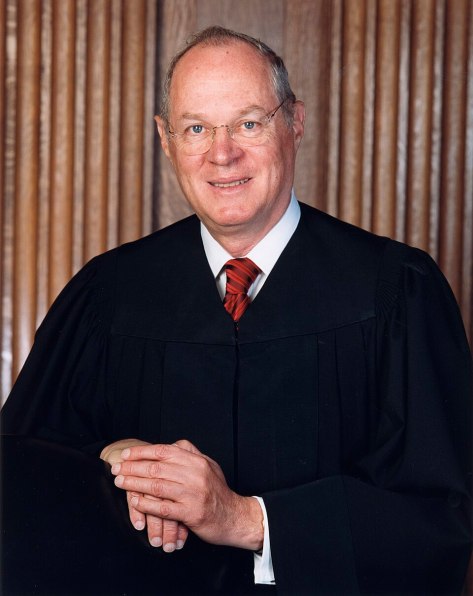
I applaud Justice Kennedy for trying to fix the paradox with his majority opinion, but again, I’m struggling to believe nine of the country’s preeminent legal masterminds couldn’t do better.
Anthony Kennedy – Associate Justice: Supreme Court of the United States Served: 1988-2018
Score Update:
2001: You can still sue officials for abusing their authority. Judges: still off the table.
Still in effect: the violation must be ‘clearly established’ specifically, not generally; and officials who reasonably believed they were acting legally are immune.
New this round—a paradox patch: courts must decide the merits first (was it a violation?), which puts a ruling on the books for future cases. Then they check whether it was clearly established at the time.
Paradox #1 gone, #2 not so much.
~ 2002 ~
The next case we’ll discuss is rather disturbing, but arguably a step in the right direction. It’s Hope v. Pelzer 2002.
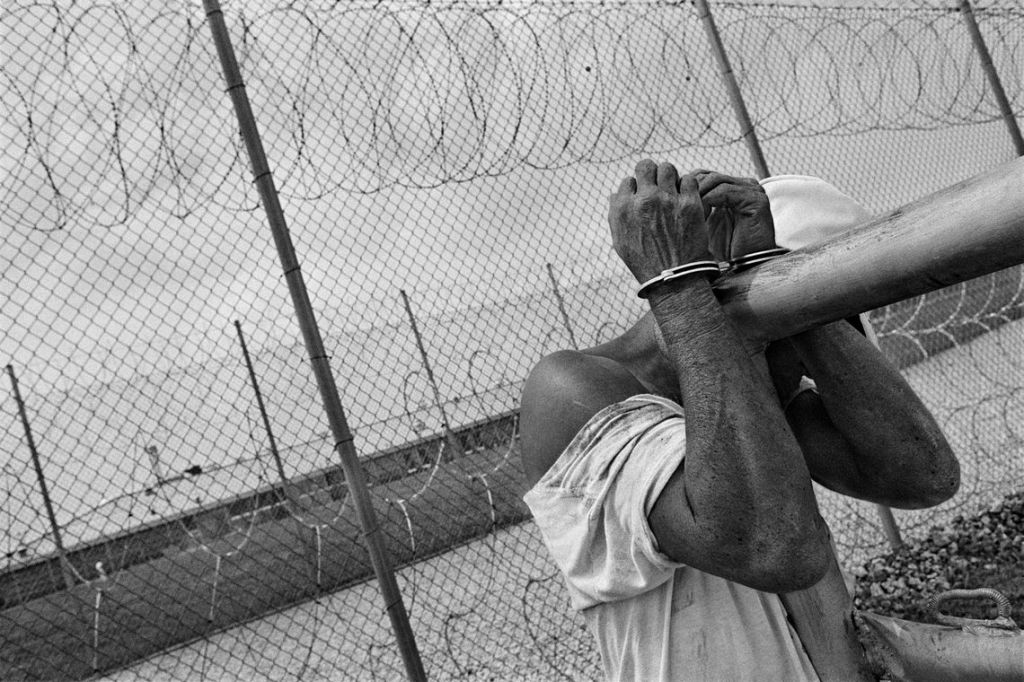
While in prison, guards twice handcuffed Hope to a hitching post for being “disruptive”—the second time for seven hours in the Alabama sun with no shirt. His arms were cuffed above his shoulders, cutting off circulation until he lost feeling in them.
Larry Hope was tied to a post at the Limestone Correctional Facility in Harvest, Alabama, in 1995. James Nachtwey Archive, Hood Museum of Art, Dartmouth
Over those seven hours he was given water once or twice with no bathroom breaks at all—forcing him to piss himself.
The lower courts, trying to apply these “impossible to overcome” qualified immunity rules, argued the guards were entitled to qualified immunity.
But SCOTUS, in a rare move, surprisingly said no—the facts were so clearly a violation of Hope’s rights that the guards had to know it was unconstitutional, even without a prior case on point. Obviousness alone was enough to clear the bar in this case.
Even SCOTUS and its deference to government officials had heard enough. They knew what § 1983’s intent was, and while they tended to shield government officials for good-faith actions, it was plainly obvious that this wasn’t that.
In so doing, they set a precedent letting lower courts make an exception to applying qualified immunity in cases where the violation is so obvious that no official could plausibly claim they didn’t know it was wrong.
SCOTUS 2002
So did this actually change things? Sort of. For nearly two decades, Hope’s caselaw mostly gathered dust—lower courts largely ignored it, and the mountain of pro-immunity Supreme Court rulings buried it.
The Taylor v. Riojas case is a little different, because it’s a per curiam opinion—meaning it comes from the court as a whole, not one particular author. It was also decided without oral argument. That usually happens when the Court takes a case but finds the lower court’s ruling so obviously wrong that it doesn’t need more—it just summarily reverses.
What was so obvious about that one?
The facts of this case were that Trent Taylor, an inmate in Texas, was held in a prison psychiatric unit for mental health care. For six days, guards confined him across two cells. The first was covered in shit—and I mean literally, nearly floor to ceiling: the floor, the walls, the window, even packed inside the water faucet. It was left there by a previous inmate, and they put Taylor in that cell without cleaning it in any way. Taylor was so afraid of contamination he didn’t eat or drink for nearly four days.
The second cell they moved him to was frigidly cold—no furniture, no toilet, just a clogged drain in the floor. He held his bladder for over 24 hours, but eventually his body gave out, and when he relieved himself the clogged drain overflowed, flooding the cell.
With no bunk and no clothing, he was left to sleep naked on the floor, in a cold room, in raw sewage.
Trent Taylor
The guards made statements such as “he’s going to have a long weekend,” and another guard said he hoped he’d “fucking freeze.”
Again, SCOTUS reversed a lower court that had handed the guards qualified immunity—holding that the conditions were so obviously unconstitutional that any reasonable officer should have known better. They pointed to the guard’s own statements as proof.
Score Update:
2002: You can still sue officials for abusing their authority. Judges: still off the table. All the usual paradoxes still apply.
New this round: if the violation is a blatant and obvious rights violation, qualified immunity won’t save your ass, even with no case on point to clearly establish it as a violation.
In 2002, Afton Callahan decided to break bad and started slinging crystal meth like he was going to be the inspiration for Walter White or something.
The Utah police employed a connoisseur of meth himself, an individual named Brian Bartholomew. He liked helping cops more than he liked the idea of going to jail, so he opted to assist Utah detectives in a sting operation to bust Callahan.
First, he went in and set up the buy to go down later. He left, the cops handed him a marked $100 bill, and he went back in.
Armed only with a microphone and cops hiding outside, Bartholomew went back and completed the meth purchase he’d set up earlier.
Bartholomew gave the magic word for cops to come in and yell, “Gotcha,” and they burst through the door like the Kool-Aid man.
You’ll notice I didn’t mention a warrant—this was a warrantless search. However, there’s a doctrine in play called “consent once removed.” It basically goes like this:
Hopefully we all know that if an officer asks if they can come in, and you say yes, they can come in—no warrant needed, right? Eerily similar to vampire rules, but let’s not dwell on that.
That’s consent.
If officers see evidence of a crime in your home, they can use that evidence in court against you because you fucking let them in. It’s as if you never watched a single god damn vampire movie—fuck!
Anyway, sure, Callahan didn’t allow cops in, but he did allow Bartholomew in, and Bartholomew had a secret Batphone to signal the cops if he saw some criminal shit.
So the “consent once removed” doctrine says: because Callahan let Bartholomew in, and Bartholomew then witnessed the deal go down, that consent extended to the cops Bartholomew was working with—letting them come in after—no warrant needed.
If it seems shady, imagine a different scenario where we have a suspected kidnapper of a five-year-old. They of course won’t let cops come in to search their home But what if cops talked their mom to help out. So cops send her in all covertly and shit, she tells them via a wire that she sees the kidnapped lad, and boom! They bust in to save the day.
Surely that’s OK, right? Well, same principle.
Here’s the problem: officers orchestrated everything. This shit took some planning to get Bartholomew in place, set up the buy, etc. Yet not one fucking cop had the wherewithal to think, “maybe I should go get a god damn warrant.”
Bartholomew had gone into Callahan’s shithole earlier wearing his wire, asked for meth, and set up the buy. Cops had probable-cause falling out of their assholes. Getting a warrant at that point would have been easy-peasy-lemon-squeezy.
So Callahan reasoned exigent circumstances didn’t apply because they had ample opportunity to get a warrant and didn’t. Therefore, Fourth Amendment violation—checkmate, bitches!
The 10th Circuit had a problem with this, though. Unlike other courts that had extended it, they believed the “consent-once-removed” doctrine only applies to undercover cops, not informants.
Remember, this is about you consenting for an officer to come in. So they reasoned: if you let an undercover cop in, you technically let the cops in. But if you just let in an informant, you didn’t consent to a cop—that’s just some random schmo. They also figured a cop understands the law and what makes a search lawful, which they felt was important.
On appeal, it went up to SCOTUS, and in a weird move, they decided not only to hear the case and answer the questions in front of them (which is typically all that they do) but they also asked whether the Saucier two-step process needed to go away as well. Because of the problems we noted, it had become a nightmare of jurisprudence, so they opted to “fix” it here.
SCOTUS decided the two steps didn’t have to be steps anymore—just prongs. They could be answered in whatever order the court saw fit.
Which obviously means we’re back in Paradoxland. If courts jump straight to the second prong, they never reach the first—and now a violation never gets “clearly established.” I’m guessing Anthony Kennedy was screaming at his cohorts, “I gave you one fucking job!”
Not saying the courts are lazy, but answering the first question required extra work. So they now had an incentive and a right to just not do that work anymore—so they didn’t.
Score update:
2009: You can still sue officials for abusing their authority. Judges: still off the table. All the prior rules still stand—clearly-established-at-a-specific-level, reasonable-belief immunity, the works.
What’s new: the Saucier two-step is now optional. Courts can answer the two prongs in any order—which means they can skip the ‘was it even a violation?’ question entirely and just rule ‘not clearly established.’ So violations keep happening without ever getting clearly established. Paradox #1, reopened.
This is largely where qualified immunity stands now.
So let’s think skeptically about this. We can understand that the Court is trying to protect government officials acting in good faith—that’s a fair and reasonable goal.
You can also see where it’s fair to say that cops in particular are often faced with split-second decisions, and again, may act with good intentions but get it wrong.
Here’s where I think it starts to break down.
Many of these actions by cops were not split-second well-intentioned decisions. They were premeditated, corrupt, unconstitutional and unlawful acts. The courts have drawn such distinctions before, so they damn well should be able to draw them now.
Justice Kennedy, when he and the majority created the two-step process, clearly identified a paradox. The country’s highest court couldn’t figure this out sooner?
They knew the history of § 1983. When they interpret law, their job is to help ensure the outcome Congress intended when it passes one.
While I can concede some good intentions from the Court, I cannot abide the willful manipulation of a statute with caselaw that creates a nearly impossible situation for anyone trying to win a claim against the government under § 1983.
They knew there are bad government actors out there doing bad things, and that § 1983 is there as a remedy for that. They also knew why that statute existed in the first place. It’s shameful of the Court not to fix the flawed applications of it over the years. It’s additionally disgusting because it’s a problem they created.
It’s worth noting that this is somewhat apolitical. Clarence Thomas, usually a right-wing voice, has consistently opposed qualified immunity, for the same reasons he, Alito, and the majority overruled Roe v. Wade: the rules they were making weren’t rooted in statutory or constitutional text, they were made up by the court. Something he feels the court should not do.
Associate Justice Clarence Thomas
Samuel Alito didn’t get the memo, though—he’s sided with qualified immunity all along, and even wrote the majority opinion in Pearson. It’s an obviously hypocritical position considering his reasoning for overruling Roe was that the courts shouldn’t be making up rules from whole cloth.
Between qualified immunity making civil suits nearly impossible, and the “willfully” standard making criminal convictions almost unwinnable, cops who violate your rights are largely untouchable on both fronts, based on current court interpretations.
That’s a fucking problem!
And here’s the part that should really piss you off. Even in the rare case where a plaintiff does win—clears the qualified immunity gauntlet, survives the pre-trial appeals, gets a judgment—the cop usually doesn’t pay a dime of it—you do.
A national study by UCLA law professor Joanna Schwartz found that governments paid 99.98% of the money plaintiffs recovered in police misconduct suits—about $730 million over the study period. The officers themselves covered the other 0.02%. And it gets worse: officers almost never chipped in even when they were disciplined, fired, or criminally prosecuted for what they did—and they never once paid a punitive damages award.
Professor Joanna Schwartz
So think about what that means for the “deterrence” argument.
The theory behind letting people sue is that the threat of paying damages keeps officials honest.
But if the officer never pays—if the taxpayer foots the bill every single time—then that deterrent effect is essentially zero. Taxpayers are stuck picking up the tab for the bad acts of dirty cops.
You don’t have to assume a single cop is thinking “I’ll never pay for this” to see the problem. Strip away the personal consequence, and you’ve built a system that quietly tolerates abhorrent behavior when it has a mechanism to punish it.
It’s also worth understanding that if a cop commits a crime, there are a lot of issues in play that many don’t think about. The prosecutor who’d have to charge them is often someone they work with every day. That brotherhood—the willingness to overlook things because you’re on the same team—is real, documented, and problematic.
This brings me to a broader point. If you’re anti-cop or anti-government, it makes sense you’d hate qualified immunity and the toothless enforcement of § 242—you see it as cops evading justice, and it certainly can be.
But I’d argue, even if you’re pro-police, you should have a problem with these protections as well.
Decades ago, police were revered. Kids wanted to grow up to be cops. Andy Griffith and Dragnet reruns were on TV, Dirty Harry was considered a hero by most people, not the serial rights violator he obviously was. The police were culturally considered pretty cool.
But with modern generations, that’s changed. Bad cops doing bad things get caught now—by professional media, or by average citizens who all carry cameras in their pockets and post the footage straight to social media. That visibility has severely weakened the once-sterling image cops used to enjoy, because now everyone can see when they cross the line and usually face zero consequences for it.
This isn’t abstract. Cops have been assaulted and even killed in apparent retaliation for misconduct other officers committed—ambushes and attacks fueled by rage at a system that never seems to hold bad cops accountable. When people lose all faith that the badge will ever be checked, some of them decide to check it themselves—and it’s often good cops who pay that price.
If police truly care about the mission—protecting and serving the public—they must abandon this “brothers in blue” mentality and be ready to hang any “brother” out to dry the moment he/she commits a crime or act of corruption. But they rarely do.
But he was one of them, a cop, and her death was initially written off as an accidental drowning. It wasn’t reinvestigated until years later, after his fourth wife, Stacy, vanished without a trace, too.
The police had a duty to investigate Savio’s claims, but because the accused was one of their own, no fair argument can be made that they applied any scrutiny to Peterson at all—they let it go every single time. Had they done their job, she might still be alive.
Kathleen Savio
Every cop should know this story, and every cop should be ashamed that things like this are tolerated among their ranks. If they don’t, they are a disgrace to their badge.
Even if prosecutors want to go after the offending officer—and few do, since they’re coworkers, remember—the officer’s fellow cops will often refuse to cooperate or help gather evidence against one of their own.
It goes beyond cops and prosecutors, though. Executive branch politicians are their bosses, and those people want votes. If a city or state has bad cops in their midst, it reflects poorly on the executives in charge of them. So they often sweep it under the rug to avoid the impression of incompetence.
The courts, however, have no excuse—and this is why qualified immunity is so infuriating. In the rare case where a prosecutor, fellow officers, and local officials all show the courage to go after a bad cop, the courts step in and protect them anyway. So the message becomes: even for a bad cop, leave ’em alone.
I seem to recall this country was founded on defying unjust government. Our founding fathers created the Second Amendment so we’d always have the means to shoot unjust government.
Allow my friends Penn & Teller to explain that bit, if you don’t know what I’m talking about.
The court repeatedly suggests that they will take into account the history and tradition of our country when interpreting laws and the constitution, yet qualified immunity, every step of the way, flies in the face of that.
So how do we fix this? It’s actually pretty simple. If the Court is interpreting the constitution, and the people want to change that interpretation, it requires a constitutional amendment. But, if they’re interpreting a statute, it just requires Congress to pass a new one.
42 U.S.C. § 1983 is a statute. Congress can simply amend it to remove some or all of the protections the Court has built through qualified immunity, and they should do it tomorrow—this madness needs to stop.
It might surprise you that I’m sympathetic to the argument for good faith exceptions to liability—not everything the Court did here is crazy. Congress could incorporate the good parts into an amended statute, and thank the Court for the suggestions.
But so many of these actions above weren’t that—yet they went unpunished. That’s not OK.
Any reasonable person would conclude that many of those bad government officials knew better. If we know anything about American history and our Constitution, we know our founding fathers didn’t want bad government officials to be shielded—they wanted them dead, or at least in prison. It’s time we demand our congresspeople fix this or vote them out.
log·i·cal: capable of reasoning or of using reason in an orderly cogent fashion lib·er·tar·i·an: an advocate of the doctrine of free will; a person who upholds the principles of individual liberty especially of thought and action