Compromise is bad, Common Ground is good

Gary Nolan (and THE Scrappy Doo)

In Congress, for a bill to become law, the process is quite elaborate. Feel free to see how it works here.

As a bill trundles its way  through Congress, it often becomes an over-bloated piece of…er…legislation that bears little resemblance of the original intent with add-ons that are the result of politicians aiming to improve their chances of winning re-election by telling their constituents, “see what I did for you?”

A most fitting example of pork barrel spending; a $1.8 million rider to the 2009 omnibus spending bill to study pig manure odors in Democrat Senator Tom Harkin’s home district. While this amount is a drop in the bucket to our total federal spending, it makes up one of thousands, and those drops add up.

Senator Tom Harkin-D

This bill was certainly not of national interest, and as with most federal law, is a clear violation of the 10th amendment, although the Supreme Court seems to have all but forgotten about that one. However, it flooded $1.8 million into Senator Harkin’s district, no doubt garnering him favor. But, Senator Harkin, or even the DNC as a whole, are not alone in this practice—it is common among both parties.

Many people think Congress fight too much among themselves instead of compromising, and therefore nothing gets done, and consider this a bad thing.

While I used to share that sentiment as a child when I was young and ignorant, it wasn’t until I started becoming interested in politics that I realized this was a good thing and exactly what our forefathers intended.

So why would they do this? Because any law is essentially an erosion of one person’s liberty, they wanted to be sure that any bill that made it into law was ultimately something that would transcend a political agenda or partisan politics.

We start from a point of ultimate freedom or anarchy, then add laws as we deem necessary in order to protect people’s rights. If they don’t pass a majority in the House or Senate—gone. If the President vetoes it—gone. If the Supreme Court, strikes it down—gone. The default position should be no law unless a proper case that almost all of us can agree on as to why it should be allowed.

The Supreme Court Of The United States

On opposite sides of the spectrum, there are politicians like Senator Rand Paul (Doctor) or Senator Ted Cruz (Attorney) who left private practice in the pursuit of a civic duty to restore our country’s liberty. But then there’s our president or the disgraced Anthony Weiner who never spent time in the private sector and who simply always aspired to be part of the ruling class; achieving said goal.

While these two competing ideologies are generally at odds with each other, they certainly agree that murder should be illegal for instance, so passing such a law should be easy, and obviously, such laws exist.

However, when it comes to taxes for instance, they’re generally not going to see eye-to-eye, and a fight will ensue. If the system works as designed, no law is passed through both houses of Congress and/or is vetoed by the President. Or on occasion, overturned by the SCOTUS.

Occasionally, this system breaks down, such as when Obamacare was passed. The Democrats controlled both houses and the White House, but the Supreme Court still had the opportunity to make this right, yet they didn’t. John Roberts, in a peculiar move, opted to find a way to allow the law within the framework of the Constitution by rewriting it as a tax instead of a penalty.

Supreme Court of the United States Chief Justice John Roberts

He indicated that he didn’t feel like the court should try to violate the will of the people who elected the politicians to enact such a law. But, this decision is infuriating and violates the spirit of the Supreme Court who are there to protect the minority from the majority using the Constitution as their basis—not public pressure.

If the Supreme Court ultimately feels they shouldn’t undermine the will of the majority, then there is no reason for them to even consider the Constitution, they would ultimately just become a third house of Congress or a higher court of appeals.

John Roberts ignored his duty to not consider the will of the majority when our rights as enumerated in the Constitution are violated. Since he’s not susceptible to elections, I will never understand his logic here, but it was clearly disappointing to those of us on the side of liberty.

Yet, this is exactly what the people asked for—a compromise. People claim that the left and the right should work together and compromise in order to get more done, but I couldn’t disagree more.

If I want to go to a football game, and my girlfriend wants to go to the ballet, so we compromise and go to a comic convention neither of us wanted to attend because it’s nothing like football or the ballet, is that a good result for both of us?

Instead, Congress and the president should learn to pass laws in smaller chunks, picking only the things that they agree on, and scrapping anything else. Not compromise; common ground.

Sadly, the president had the power to do something like this by line-item veto, but for reasons I can not understand, the Supreme Court struck it down in Clinton v. City of New York. Their logic being it gives the president too much power against Congress. But this argument makes no sense.

If a law makes it to the president, that means essentially everything in it is OKed by Congress, so if the president strikes down certain parts, what’s left should still be OK by Congress. All the president is doing is advancing liberty in some small way by keeping additional legislation off the books.

If Congress doesn’t like this, they pass laws without all this extra nonsense, and if pork barrel spending is worthwhile, it should pass as its own bill on its merits.

So the next time you see Congress fighting and they cannot seem to find common ground, don’t lament that they can’t seem to compromise, cheer that the system is working as intended.

Interesting, Disturbing, and Funny Stuff From The Web: March 7th, 2014

Interesting Science & Medical Stories of the Week


Kudos Of The Week


People Just Need to Chill Out


Villains of the Week


Amazing animals!


Funny Pics of the Week

Wait a minute… Hollywood


Want to know what government looks like behind the scenes? Govt


The most sadistic dad ever. PopRocks


Lincoln was BUFF! Lincoln


Bing, you might want to check that one. Assbag


I wonder if this has been confirmed with clinical studies MagicSheet


If Bruce Lee and John Wayne co-fathered a kid…
Karate


Oh really now…
Cancer


When you’re tired, you’re tired…
tired


‘Merica
Merica


Some days, we all feel like this…
DogPee


Almost had it!
Squirrel


Interesting, Disturbing, and Funny Stuff From The Web: February 28th, 2014

Interesting Science Stories of the Week


Freaks of the Week


Villains of the Week


Funny Pics of the Week

Nice day for a walk…with my snakes?


It turns out, we’re a lot older than we think.


Well, that’s kinda racist.


Use the force, and by force, I mean the light switch
Yoda


Stop! Or I’ll eat this banana!
Banana Gun


Is this the world’s first selfie?
First selfie


Just a man…and his raccoon…sharing some popcorn
Popcorn


Those pesky empty apartments never cooperate.
Empty Apartment


This should go without saying, but…
DontTweet


This could be the luckiest man to be alive ever
Lucky


The simplest way to curb ‘gun violence’ and the left hates it.

Guns have always been a part of American life. It’s in our Constitution that the citizens of this nation will be allowed to bear arms. It’s one of the fundamental principles and the undertone of the checks and balances system that this nation is known for. We are armed for a reason; to protect ourselves from the government, an idea that is still very relevant today.  As usual, American Liberals and the Liberal Establishment have decided for us. They have decided  that guns are too dangerous and since there are those people who would use them improperly, none of us should have them. The only ones that need guns are those employed by the state.

The United States Constitution

I happen to know that the American Liberals that are in power are usually very educated people. They come from hallowed places of higher learning Harvard, Columbia University, etc. I know these people have seen places in which the population is not armed but the government is. And yet in spite of all this, they publicly insist the answer to gun violence is to yank the guns from the hands of citizens. I believe in private, they know that isn’t the answer and I also believe they know the answer is much simpler and easier and wont require a Constitutional Convention or start another American Civil War.

The simplest way to curb gun violence is to start with the children, and begin immediately to introduce gun safety classes in junior high and high schools around the country. It sounds too simple to work, but it does work. The  left are always thrilled at the idea of teaching young people. They claim the answer to everything is ‘education,’ it’s their feel good word that makes everything better.

So why are they not jumping at this idea?  They have introduced other non-essential topics in school classes like how to engage in gay sex properly, and how to report parents to authorities for ‘parental infractions’. Why not introduce a topic that may actually help?

Why not have junior high and high school students learn about guns, what they are for, and a quick overview of what happens when a gun is used improperly? They want to teach kids how to put on condoms in 5th grade, but they don’t want to teach them about guns.  blog3

Not only would gun education classes most likely decrease the number of incidents, but it would also benefit even younger children because the older kids that would have taken this class would most likely share the information with their younger siblings. The classes don’t need to be a daily occurrence, but they can be taught in the same manner as sexual education classes. Most parents of junior high and high school kids are familiar with the permission slip that comes home with the student setting special days for sexual health classes. The same can be done with gun violence classes.family-3[1]

It’s a simple and effective way to address an issue, Also, it’s bipartisan, there are no racial overtones, and there will be no revolution or protests if this idea is on the table. And we just can’t have that, can we?

Libertarians: What they say about us; what we are.

Gary Nolan (and THE Scrappy Doo)

As someone who identifies with the Libertarian Party, the Republican Party, the Tea Party, and libertarianism in general, unless you identify with those groups along with me, you would probably have some stereotypical notions about who I am.

Libertarian Party Logo

Stereotypes, whether they be about someone’s race, religion, sex, or political affiliation are the work of fools. You are engaging in bigotry and ignorant behavior, and you should stop.

With that in mind, I’d like to cover some stereotypes about people like me, and answer them individually. Bear in mind though, that to each person, libertarianism can have a different meaning, and some people are more “hard-core” about it than others. So these are only my views about these stereotypes, other libertarians may differ:

  • Conservatives only care about rich people.

Truth is, we care about liberty for ALL people. Unlike many statist-minded folks, we consider the wealthy among us to be people too. In our opinion, if you feel it’s wrong to steal from someone who is poor, you shouldn’t champion stealing from someone who is rich either.

Conservatives favor tax cuts for the rich AND the poor, despite the notion Democrats attempt to push that we want tax cuts for the rich at the expense of the poor. I’m not aware of any conservative legislation proposed to raise taxes on the poor while lowering them on the rich.

  • Libertarians are anarchists

A libertarian can and occasionally is an anarchist, but usually not in the sense people think of. Anarchy is simply the idea that people can manage themselves without government. It is not the idea that people should just kill, maim, steal, and otherwise violate the rights of others without consequence.

That being said, I generally believe many libertarians are like myself, and are what I’d call “Constitutional Libertarians” who believe in a Republic where the government exists to protect rights to life, liberty, and property by enforcing contracts and prosecuting those who are a danger to society, even if those rights deemed unalienable are against the wishes of the majority.

  • Libertarians just want to legalize drugs because they smoke weed themselves

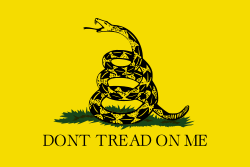
We want to legalize drugs because we believe in the idea of “no victim, no crime.” I’m a staunch supporter of legalizing drugs, yet I’ve never used them unless prescribed by a doctor, and I’ve never been prescribed weed, for the record. Which brings me to another important point.Don't Tread On Me

Libertarians aren’t generally hypocrites. Even though I think recreational drugs are a really bad idea and would never encourage someone to use them, nor have any interest in them myself, I don’t just champion liberty for me, I champion liberty for people who believe differently than I. This sentiment of liberty for all is often lost on traditional Democrats and Republicans.

  • Libertarians are isolationists

Libertarians generally want our country to work out free trade agreements with others. We understand that the best way to keep a positive relationship with other nations, and grow our economy, is to sell things that are of less value to us, to nations who need it more, and for them to do the same in return.

For instance, let’s say here in America, we have an abundance of corn, but not enough oil to fill our needs. So we sell off some of our corn to a nation like Iraq who has more oil than it needs, but cannot grow nearly enough corn in their climate. This is a win-win for both nations, and in essence, what good trade is supposed to be like. I believe almost every libertarian wants this.

The problem is, people mistake our desire to let other countries do whatever they want within their own borders without us sticking our nose in their affairs as isolationist. It’s not. It’s called understanding it’s none of our &%$#@ business how they choose to live.

If you’ve ever been working on a complicated problem that you understand only to have a co-worker come up and impose their ideas when they don’t understand the problem as well as you do, you should understand why libertarians feel this to-each-their-own policy is best.

  • Libertarians want to gut the military

If America, or possibly our allies, were attacked, I believe America should and would respond with all the might the U.S. Military has to offer and destroy anything and everything our enemies who dared attack us could use to wage war. I take a very passive-aggressive approach in this respect.

Predator Drone
Predator Drone

Ronald Reagan had a peace-through-strength mentality, and I tend to agree. It did work after all. For all the complaints about him growing of the military, he put troops in harm’s way less than every president who succeeded him, in large part because America was respected and more importantly feared, under his watch.

But all that being said, the military is somewhat famous for wasting money, sometimes on very big things, such as weapons systems to defend against an enemy that doesn’t exist.

Secondly, we have troops in places where they do not need to be, defending countries who are capable of defending themselves. I don’t want to gut the military, but I don’t want them in harm’s way if they don’t absolutely need to be, and I don’t want to build a defense system to protect us from a technology no one has.

  • Libertarians are atheists who just want to advance a pro-gay marriage agenda, legalize abortions, or remove God from schools

Tell that to Rep. Justin Amash (R) from Michigan, he’s an orthodox Christian, and arguably the most libertarian representative in congress. Ron Paul is a Christian too and does not support legal abortions as noted here.

Congressman Justin Amash (R)

While I am an atheist and am for removing government from marriage altogether as I outlined here, libertarians generally just believe that religion is something that should be between family and friends, not enforced by government at the point of a gun. It is part of the First Amendment after all, and part of the reason it was first, is likely because even our forefathers understood, free speech, religion, and press were the most important components of a free nation.

Thanks for reading. And I hope that armed with this information, you will do your part to squash the libertarian stereotypes. Liberty is worth fighting for, and as libertarians grow in credibility and start winning on election day, liberty itself can and will be restored to this great nation.

Interesting, Disturbing, and Funny Stuff From The Web: February 21st, 2014

I often scour the web throughout the day to inform myself about the world around me. Occasionally I find facts that are odd but really interesting, headlines that are just too funny not to share, animal stories that are just ridiculously cute, heinous people who should be publicly shamed, and random funny pics. So I thought I would start sharing them with you, my readers, hopefully on a weekly basis.

I hope you enjoy them. Don’t forget to share on Facebook and Twitter!


Interesting Science Stories of the Week


Freaks of the Week


Villains of the Week


Funny Pics of the Week


Ad for Olympic Hockey game of USA vs Canada


Yikes! See a doctor, man!


Umm, what?


Gold medal secrets revealed!


I think I would have put Cox first, but hey, maybe they’re fun folks!


Resourceful girl selling Girl Scout cookies outside a marijuana dispensary.


The Real Cost Of Taxes

Gary Nolan (and THE Scrappy Doo)

Government, in order to do the people’s business, must pay for itself. Currently, we achieve this by a myriad of taxes such as:

  • Income taxes, which I would argue are a penalty for success.
  • Sin taxes (or social engineering taxes) on things like alcohol and tobacco, that are over and above normal sales tax,  which are designed to deincentivize people to buy these products because somehow, that’s government’s business?
  • Estate taxes, because now that you’re dead, you don’t need that money, and you’re family certainly doesn’t deserve it more than government.
  • Fuel taxes like those on gasoline which also go over and above normal sales, which are designed to drive certain markets in favor of others.

    Gas Pump Tax Label
    Gas Pump Tax Label
  • Property taxes, because just buying the property shouldn’t make it yours to keep.

This list is by no means complete.

In a previous post, I wrote that I supported a consumption tax like that proposed at Fairtax.org. Something that is simple and easy to understand for people and corporations alike, then get rid of all this other nonsense. After that, use fees as much as possible, such as when you buy a driver’s license or plates to shift government income to fees for what they do instead of taxing everyone for something not everyone benefits from. But why do I believe this is important?fairtax[1]

Because government has its tentacles in everything, it can often hide disturbing practices in an over-complicated tax code and regulatory structure.

For instance; subsidies for an industry that can clearly survive on its own which are conveniently hidden in tax write-offs. Or a federal law that serves one locality greater than another. Why should people in Florida pay for a bridge in California for instance?

Between the taxes one is required to pay, the write-offs one needs to know about in order to keep as much as possible of what they’ve earned, and the regulations they must abide by, this creates expenses that destroy businesses, stress households, and wreak havoc on our economy.

As a former small business owner, I can tell you that the idea of borrowing/investing nearly $100k was infinitely scary. But at the early stages of 2007, the economy seemed quite strong, and I decided to go for it. Bad luck for me, the economy collapsed within months after I started and long before I was stable enough to weather such a tough downturn. Sadly, my business failed within 2-1/2 years as a result.

So what makes a business fail? We can debate about certain principles, but the one inarguable truth is that their income was lower than their expenses, and this was my experience.

The problem with our tax structure isn’t just the taxes themselves, it’s the complexity with which it is administered that add additional costs over and above the taxes themselves. If I didn’t have to file for licenses and worry about massive regulatory compliance issues, I could have saved myself a lawyer’s fee. If I didn’t have a myriad of tax codes and write-offs to deal with, maybe I don’t need to hire an accountant.

On a personal level, you and I pay taxes, but then at the end of the year, many of us are forced to hire an accountant for this as well, and this is in essence, a tax on a tax.

These are thousands of dollars I’m talking about, and I was the sole employee of my tiny corporation.

Would it had saved me? Maybe not. But I was close to surviving, and coupled with a lower tax burden, there’s a good chance it very well could have.

A Fortune 500 sized company however spends millions on lawyers and accountants for compliance and tax purposes. This is money that could be used to hire other people and produce more products at a lower cost. While I’m not insulting tax accountants and lawyers as if they aren’t jobs in their own right, both are noble professions, but the fact is they don’t produce anything for the business.By-The-Book-Taxes-CT-1[1]

If my company makes widgets, the lawyers and tax accountants do nothing to increase my widget output nor even assist with customer service or sales of them. They simply make sure I understand an overcomplicated legal structure and tax code that if done properly by government, I would understand without their help.

As always, I understand that the intentions from Democrats and Republicans alike are often altruistic when they pass laws, but laws were supposed to be about one thing; protecting rights. Not social engineering or market influence.

I should generally be entrusted to understand that throughout the course of doing business, I am or am not infringing on someone’s rights without needing a lawyer and an accountant to explain it to me.

A simplified tax code and a federal register that hasn’t ballooned from a mere 11 pages in 1935 when it was the Federal Register Act was enacted, to an astounding 79,435 pages in 2008 would do wonders to help reduce the intimidation of starting a small business, and help those struggling to make it work on a shoe-string budget. I would bet 99% of these laws violate the tenth amendment alone.

Can we really call ourselves a free nation with 80,000 pages of laws on the federal books? I don’t know about you, but the thought of it doesn’t make me feel very free. I suspect I’m a criminal already and don’t even know it.

log·i·cal: capable of reasoning or of using reason in an orderly cogent fashion lib·er·tar·i·an: an advocate of the doctrine of free will; a person who upholds the principles of individual liberty especially of thought and action