In the United States, we treat our military with a certain amount of reverence and care.
I assume most people know, that if you’re enlisted in the reserves or National Guard, which are temporary military roles where you serve a handful of weeks a year, and one weekend a month, that your employer cannot discriminate against you in some way, for doing this, either before you were employed with them, or during so.
Meaning, if you were enlisted first, and apply for a position, your employer can’t decline to hire you, because of your military status.
If you were employed first, and then opt to join the reserves after, same principle. You’re company cannot fire you, because they know you’ll now be missing time, that you otherwise wouldn’t, playing with guns, tanks, airplanes, and shit.
Another facet of this law however, is if you happen to get called to go kill some fucking terrorists, or other random enemies of the United States, your employer must have a job for you, when you come back.
It’s not so much that they have to keep your job open—that’s unfair to just not have that work done at all, while you’re gone.
So, when a soldier returns home, if their employer can return them to that job, great. Otherwise, a job of similar work, and equal or better pay, will suffice as well. Basically, the soldier shouldn’t be harmed or underpaid in any way, because they were missing for a year or two, snuffing out some assholes on your behalf.
Now that you understand that, in walks a damn-fine American, Leroy Torres, who joined the Army Reserves in 1989, became a Texas state trooper in 1998, then in 2007, got sent to Iraq to fuck some shit up.
However, while in Iraq, what got fucked up, were his lungs. So in 2008, he was honorably discharged for medical reasons.
Our military has a long history of doing whatever it takes to get shit done, sometimes throwing caution to the wind. A less than glorious part of this in Iraq, was getting rid of chemical waste and other dangerous things which they felt needed to be destroyed.
Did the Army create special hazmat disposal sites, with fancy equipment and shit to protect people getting rid of it?
Well…
Clip of the federal government responding to soldiers asking for special hazmat disposal equipment in Iraq
Instead, they dug some big fucking holes, tossed the shit in, and like any real man would do, lit that shit on fire—it’s our love language.
But as you can imagine, the fumes did some serious, and irreparable harm to these fine men and women, engaging in extreme s’more manufacturing.
Let’s be clear about what he endured. A shitload of ER visits, which the Veterans Administration tried to deny paying for, attempts to deal with his condition with unproven alternative therapies, which us pro-science people consider especially heinous, as it’s often charlatans bilking people in need, with therapies that have no evidence supporting them. Then, most sadly, he made a choice to deal with it in the ultimate way—committing an act of suicide, which was thankfully unsuccessful.
Iraq Burn Pits
Seriously, any soldiers who may stumble upon this, know you are loved, respected, and cared about. Please don’t ever consider ending your own life.
Seek help—there is so much available to you, both professionally, and from family and friends. Never be afraid to tell people how you’re feeling. No one will judge you negatively for it.
I have many veteran friends, and I’d be honored if they came to me to talk about their struggles—certainly not bothered in any way. I promise I’m not unique in this.
The people around you, that you think would be better off if you were gone, absolutely do NOT think they’d be better off if you were gone. They love you and care about you, and would miss you immeasurably if you were.
We all have our pride, but never let pride get in the way of asking for help. There are people out there who are fucking great at helping you deal with these things. Let them do their job, and you fight the most important fight of all—being around for your loved ones.
Well, his health issues really tested the limits of USERRA. He could no longer carry out the duties of working for the Texas Department of Public Safety (DPS) as a Texas State Trooper. The only job they had for him, was a low-level temp job, which he wasn’t interested in, as it felt pretty demeaning and unfair to him.
Leroy Torres
So Torres argued that he was effectively being discriminated against because of his military service and ensuing physical injury, which USERRA prohibits.
Torres would go on to become quite the champion of his fellow burn pit victims, and eventually help to create the PACT Act, which aimed to make sure other burn pit victims didn’t have the VA issues Torres did. It was eventually signed into law by President Biden.
I don’t want to deviate too much from the case, just know that the issues arose from the VA not acknowledging that the illnesses these soldiers faced, were because of the burn pits. As such, they denied covering them. It was an especially heinous act from whomever was running the VA at the time.
So, is this why were at SCOTUS?
Well, no.
I don’t know if we’ve really talked in detail about this, so let’s cover it now. I know we’ve covered that SCOTUS is almost always an appellate court —as opposed to original jurisdiction.
The way appeals work, and I’m simplifying, is you have your initial day in court. Along the way, you think the judge or the opposition, are unfairly harming you and your case. So you (via your lawyer) yell…
I know on TV, it just looks like a baller thing to do. But it also is a legal distinction that you’re putting on the record.
Imagine you lose the objection, and the judge overrules it, then you end up losing. If you believe the objection was valid, and it being overruled was the reason you lost the case, you can appeal that objection.
What people tend to think, is if you lose a case, you go to an appellate court, and they hear the whole fucking case again. Well, they don’t.
If you’ve listened to any of these oral arguments, think back on them, and you’ll see what I mean.
All the appellate court does, is hear the arguments about your objection, decide if it was wrongly overruled (or vice versa, if the opposition objected and it was sustained).
If they agree with you, they basically correct the overruling, send that shit back to the lower court to re-review, potentially rehear the case, and then redecide based on the new standard they set.
So in this case, the issue at hand for SCOTUS to decide is whether USERRA is allowed to step all over Texas and its state sovereignty, and allow Torres to sue Texas.
Texas however, argues that the federal government, via USERRA, has no fucking right to tell Texas Super Troopers to take better care of Torres.
If Torres wins, then Texas cannot make the argument that it’s their sovereign right to employ Torres how they want. Got it?
On to the arguments.
First up, counsel Andrew Tutt, in his first time arguing before SCOTUS, representing Mr. Torres
He opened by pointing to the constitution’s language on the federal government’s power to have a military, and defend the nation with it. Then, he argued, only a fucking idiot would think that the states would have a right to interfere or reject that power.
As such, USERRA, plays a pivotal role, in the federal government’s ability to build a fucking military. Who the fuck would join the reserves if the federal government didn’t have the power to make and enforce laws like USERRA?
So it follows that DPS are fucking idiots.
He was stumbling over his words a good bit, at least enough for me to remark on it, but hey, it is his first time here. I’ll cut him some slack.
Andrew Tutt
At issue is whether the federal government can pass a law allowing private citizens to sue a state.
Justices Roberts started by asking about previous cases Allen and Katz.
We’ll talk about Allen first, which is from 2019 case Allen v. Cooper. In that case, a photographer had taken photos of Blackbeard’s Treasure, which were taken in North Carolina. NC liked the photos so much, they put them on their own website, without even asking Allen permission to do so.
He sued the state for copyright infringement. But NC showed him, they passed “Blackbeard’s Law” which basically said they couldn’t be sued for using works which the federal government had copyrighted. Cheeky naming the law after a fucking thief, which they then used to steal someone else’s work.
It was eventually repealed in 2023.
SCOTUS agreed in that case, that the state had a right to pass such a law, and that law trumped federal law protecting copyright holders. Therefore, Allen was shit outta luck, getting NC to pay him for their use of his photos. In so doing, SCOTUS invalidated the federal law called the Copyright Remedy Clarification Act (CRCA).
This matters for our case today, because it basically says that the states can tell the federal government to go fuck itself, under certain conditions.
Conversely, Katz is a 2005 case called Central Virginia Community College v. Katz. This dude named Katz was owed some money from several state-run colleges, through bankruptcy. Virginia tried to argue state sovereign immunity meant they couldn’t be sued. But the SCOTUS at that time said the federal bankruptcy laws trump state sovereign immunity, and they have to pay.
Supreme Court of the United States Chief Justice John Roberts
So you see the conflict here. Allen accepted the states could pass a law preventing themselves from being sued, but Katz said states couldn’t just not pay someone they owed, because federal bankruptcy laws trumped any state law saying it didn’t have to pay.
Torres, in his briefs, cites Katz to support his case. But Justice Roberts’ question was asking, if Allen seems to be so contradictory to Katz, doesn’t it stand that Katz was narrowly decided on just bankruptcy grands, and not trumping state sovereign immunity altogether?
Justices Barrett and Kagan also seemed very curious about this point.
Counsel Tutt seemed to suggest that these two don’t conflict with each other, because one is about canceling state sovereignty altogether, whereas the other is merely about a waiver under certain circumstances.
Justice Barrett suggested that the difference seemed to be that bankruptcy, and eminent domain powers, which override state sovereignty, are the result of court proceedings. Suggesting that you’d have to get some victory in court, before you can tell the state to go pound sand up their ass.
But in Torres’ case, he’s relying on some federal law invalidating a state’s sovereignty, as opposed to constitutional powers, or a court decision.
Justice Kagan, being confused by his rational, asked:
Complete the sentence for me. The war powers are different because what?
Associate Justice Elena Kagan
Counsel Tutt replied:
The war powers are different because they are conferred unconditionally and without qualification.
His argument going back to his opening statement, that the framers intended for the government to be able to form an army, or militia, in times of need. And that since there was no land that wasn’t part of a state, the war powers would have no men to choose from, if they didn’t pluck them from the states.
Justice Kagan asked about a similar situation where the federal government, to protect native American rights, passed the Indian Commerce Clause, which purported to tell the states, they had no authority over Indian tribal lands, and SCOTUS then told congress, they could suck a giant Indian dick.
Justice Kagan, kept hammering, saying that they seem to be asking the question that during the framing of the constitution, they would have had certain expectations about what state’s had as rights, and what they didn’t. She was having a hard time expecting that the states wanted to allow the federal government to force them to give a militia person a cushy job.
Counsel Tutt again pointed out that the constitution makes it very clear, that the federal government’s war powers are sacrosanct. Whereas the federal government’s rights to tell states they have no power over native Americans, isn’t covered in the constitution in any way, and was just a power-grab attempt by congress that the court rightfully struck down.
Justice Barrett agreed that the war powers were rather strong, from the federal government, and that the government could sue Texas over this, if it wanted to. But where does it give Torres himself this power to sue them?
Associate Justice Amy Coney Barrett
Counsel Tutt was like, “the federal government, when it passed USERRA, knew that the best way to protect those rights, was to give them to the people it was intending to protect, the power to sue on their own, so they wouldn’t rely on the federal government.
We all know, government workers are inefficient and lazy (except for you assholes in robes), so better to remove them from the equation.
He even cited that there had been thousands of examples where people did attempt to go through the department of labor, and those worthless fucks did nothing in all but nine cases.
Justice Alito then chimed in and pointed out that the federal interstate highway system was created under war powers, and forces states to build the interstates within their borders (with funding from the federal government).
So Alito asked, can someone sue their state for having a shitty interstate highway that damages their car?
Tutt seemed rather surprised by this question, but trying to think quickly on his feet, simply suggested that there may be a limit on the war powers, that the federal government imposes on itself, but that the states don’t get to limit it.
He pointed out that while congress used the war powers to justify the interstate highway system, that is just a connection they made, and certainly not what the framers had in mind when they created the war powers.
However, recruiting soldiers sure as fuck is. It’s pretty much the one thing that has to be part of the war powers.
He goes on to say that Texas seems to think that the constitution considered the war-making powers strong, but still wanted the states to retain power to rebuke those powers where it saw fit, and he thinks that’s just fucking nonsense. He argues that they instead, specifically gave up that authority in this context.
Justice Thomas sought to understand where there were instances of state sovereignty being waived for money damage suits?
Associate Justice Clarence Thomas
Counsel Tutt pointed out several instances where the federal government had sued states for monetary damages.
But then Justice Thomas was like, “I’m not too fucking concerned about the US government, I’m concerned about private people suing states.”
But counsel Tutt was like, “That shit matters, Justice Thomas. Because these assholes over h’yar, say that if this case had all the same facts, but were The United States v. Texas Department of Public Safety, they’d wouldn’t have fought it.
So we’re saying, that it shouldn’t matter who’s suing, what matters is the merits of the claim.
One thing that is often brought up in this case, is a “Plan of Convention” argument, versus abrogation.
Yeah, I had to look that shit up, too.
So, in order to protect states from just having law suits falling out of their ass like never-ending diarrhea, the states are indemnified from the people suing them, except where they specifically agree to be sued.
I know it sounds kinda fucked up that states have to agree to being sued. When would they ever consent to be sued? That sounds weird.
Well, they don’t mean, like, “OK, you can bring this suit against us.” They’re referring to a time where they accept that they’re not immune (or are sovereign) in certain instances, then down the road, one of those instances occurs.
“Plan of the convention” refers to the meetings the states had, when creating the constitution.
Constitutional Convention
So counsel Tutt’s argument is basically saying, that by the states ratifying the constitution, including the war powers clause, they consented, or waived the right to immunity, over any violation of the war powers clause at convention of states, when they created the constitution.
So his argument is, that there’s no need for the courts to cite precedent, laws, or anything else. This is a “Plan of Convention” waiver of state sovereignty.
It gets tricky for him, because other constitutional issues, like commerce, coining money, and a bunch of other shit, haven’t traditionally been considered to override state sovereign immunity, and the justices have repeatedly sought to understand why counsel Tutt thinks this is different.
His argument is that the war powers provision, is fundamental, to the whole of this nation, to protect itself from not being a nation anymore. Those other punk ass provisions, deal with how the nation should operate among the states. So since the states sort of compete with one another in our commerce system, they band together to defend the nation. That seems to be his distinction on that.
Abrogation, on the other hand, is the federal government, or SCOTUS telling the states, “Fuck you, you can be sued for this shit.” This derives from the 14th amendment, which forbade states to allow slavery, and required due process under the law, as well as other shit. So the federal government effectively took power away from the states after the constitution had been originally drafted.
14th Amendment to the United States Constitution
In simple terms, “Plan of convention” is voluntary, abrogation is imposed.
Next up, we have counsel Christopher Michel, representing the United States, as an amici for Torres. The United States is not directly involved in the suit, but they have enough of an interest, that they were allowed to participate in the hearing.
He came in hot, by saying, “You assholes have NEVER put a limitation on the constitution’s war-powers, and USERRA is vital to that effort. So you’ve got no business giving Texas the power to limit that shit now.”
Justice Neil “Golden Voice” Gorsuch asked, “what are the fucking limits of these constitutional waivers? Can anyone bring any fucking suit to any state over anything that seems tacitly related to the constitutional powers. This shit could get pretty ridiculous, no?”
He then referenced, going back to Alito’s point about the highway system, could someone sue the state for punitive damages because there was a pothole on the highway that damaged their car?
He was then like, “Why couldn’t congress just conscript people? That shit worked for a while. They didn’t have to make this USERRA statute. So why is USERRA connected to the constitution when there are other ways to ensure we have soldiers to fight wars.
Christopher Michel
Counsel Michel’s response didn’t really seem to answer the question specifically. He acknowledged, the pothole argument would be much tougher to defend, and likely wouldn’t stand up.
But he didn’t really draw much of a distinction. Also didn’t address conscription.
He seemingly answered the question he wanted Gorsuch to ask, and just made it clear, that he didn’t see a clear path to draft an Army without USERRA, and therefore, rejecting it as a violation of state sovereignty, against suits from individuals, violates the principles the war-power clause defined.
He then went on to point out to questions from Justice Kavanaugh, that one of the first things volunteers for the reserves and the National Guard ask about when considering joining, is “what about my civilian job?” It’s a major concern, and a huge factor in their choice to volunteer.
Last up: Counsel Judd E. Stone
He chimed in with a distinction mentioned earlier. That states didn’t sign away their fucking sovereignty to private citizens—it signed it over to the federal government. So if the United States wants to sue Texas over this shit, we would accept it. I know they’re here as an amici, but they didn’t see fit to file for Mr. Torres.
The states can’t just let every Tom, Dick, and Harry fucking sue us.
I think what’s also at issue here, is monetary damages. If Torres just wanted them to give him a job or something, the US might have filed for him. But he’s also demanding monetary damages, and I think that’s ultimately what Texas is pissed about, and why the United States isn’t the opposing party.
Judd Stone
Justice Roberts first asked about the other side’s argument regarding “Plan of Convention” waivers.
Counsel agreed, this is their strongest argument, however, he indicates that these waivers are about what the states gave away, and what they didn’t.
In other words, they expected the federal government to field an Army, and are willing to concede that power to the federal government.
He believes, however, that in no way, did the states anticipate a law like USERRA, then people suing for monetary damages over it, and therefore would not have consented to be sued over such things.
Justice Kavanaugh then asked, “We allow private suits in bankruptcy, such as Katz, and we also allow them in eminent domain suits, FMLA violation suits, etc., so why not for war-powers issues?”
Counsel Stone responded that these other decisions, such as Katz, were narrowly suited to those particular issues, which were not war-powers issues. So as much as they may seem similar, they’re not the same, and therefore don’t apply here.
Justice Kagan asked, “In what fucking world, could people sue under eminent domain, and somehow not be able to sue under the war-powers clause? Certainly war powers are more important to national security than eminent domain, right?”
Associate Justice Elena Kagan
Counsel Stone agreed that war powers are obviously pretty fucking important. But he argued that while no one doubts the federal government possesses the right to declare war and field an army, it didn’t grant the right for the people to sue the states over a law, that’s related to fielding an army. The states may have wanted to keep the power to determine for themselves, how best to provide the federal government with soldiers.
For instance, some states might want conscription, while others wants volunteers. There’s no evidence that the states gave the federal government the power to decide this issue for them.
Justice Barrett then asked, “If the states gave up this huge power to field and army and go to war, why would they seek to retain power over how to field the army. That seems rather irrelevant compared to what they gave up, right?”
He was like, “Nope. They guarded the hell outta that shit. If they didn’t specifically give it up, they have every right to expect to keep it.”
Justice Barrett then asked about the potential for states thwarting war efforts. For instance, after Vietnam, there was a lot of condemnation by states over the war, and many soldiers didn’t get the hero’s welcome they deserved upon returning home. So if DPS wins, can they then decide, for instance, if the US opts to get involved in helping Ukraine, that they don’t think it’s a good war, and refuse to participate with their soldiers?
Associate Justice Amy Coney Barrett
Counsel Stone responded that the US is perfectly fine to file suit against Texas, and in this scenario, would. That’s different from here, where Torres himself is filing suit.
Finally, in rebuttal, counsel Tutt reminded the court, that in the Federalist papers #23, Hamilton said that war powers ought to exist without limitation, because it’s impossible to see into the fucking future and know what’s needed.
This mother fucker on the other side of the aisle, is trying to limit it, and he’s fucking wrong for doing so. That’s all I got.
In a bipartisan majority, where justice Roberts and Kavanaugh joined Justices Breyer, Kagan, and Sotomayor, Torres came out victories.
They agree that by joining the United States, they agreed to give the federal government the power it needed to wage war, which extends to a private individual suing them, if the state were to violate a war-powers federal statute.
The remaining justices, wary of giving the federal government such unrestricted powers, disagreed. Their opinion hinged around giving private parties to sue, in relation to these federal powers. They felt that was just a step too god damn far.
Hear oral arguments, and read about the case, and the opinion here at OYEZ.
No one knew at the time, that it would be a landmark case, initially, it was your basic snooze fest. But, it has since been cited in other cases over 18,000 god damn times.
Was Chevron a fascinating case with a compelling opinion? That’s a big nope. And, since this isn’t our case today, I’m just going to give a simple overview.
But before we get into that, we need to explain a distinction I don’t think I’ve covered before.
In the United States, we tend to think that congress are the only people who write laws. While this is the framework the constitution lays out, it gets complicated.
The word law, for our purposes, is a generic term that basically encompasses anything the government has created to control, regulate, or restrain itself, or the people. But, there are five types of things that carry the weight of law, which have different purposes.
The Constitution: It is the document creating government and restraining government, which all other laws derive from. So it’s the shit. From there, if:
Congress wrote it: This is called a statute, often called an act. This is how the constitution suggests laws are to be passed, and aside from the constitution, they carry the most weight.
The courts wrote it: This is called case law, or precedent. The constitution didn’t really grant this power to the courts, SCOTUS gave it to themselves in Marbury v. Madison (1803), by suggesting the constitution gave them this power when it created the courts and ordered them to interpret law. (That said, congress can then rewrite the law—invalidating the opinion. However, if the courts strike down a law as unconstitutional, congress can’t just repass a law with the same unconstitutional premise—they’d need a constitutional amendment to do that.
The executive (president) wrote it: This is called an executive order. Also not in the constitution. It derives from the president’s authority to execute the law. It was not initially intended to be law, so much as a temporary order. If the president needed to act quickly in an emergency, and congress wouldn’t have time to act, the president needed some power to get shit done, so this is what they came up with. It carries the weight of law, but congress can simply write a new statute invalidating or clarifying it.
An agency wrote it: This is called a regulation. It is meant to expand upon laws (statutes) congress wrote, not to have been new law created from nothing.
As you can see, congress ultimately has the broadest power to write laws, since they can invalidate any other forms of law, aside from the constitution itself.
President Barack Obama delivers a health care address to a joint session of Congress at the United States Capitol in Washington, D.C., Sept. 9, 2009. (Official White House Photo by Lawrence Jackson)
This case will specifically hinge around statutes and regulations, so I will make sure to use those terms appropriately. I wanted to make sure you, the reader, understand those distinctions, as this case is all about that shit.
We all know about the Environmental Protection Agency (EPA), right? Well, the 1970 Clean Air Act was their jam. It had a rule that said any new major “stationary sources” of pollution had to have a permit.
The idea was, if you had a factory or some large device in a place of business which was putting out pollutants, when it came time to replace that shit or build a new one elsewhere, it required a permit. The permit would then require that the replacement was cleaner than it’s outgoing counterpart.
However, to make life easier, if a company had for instance, a group of major polluting devices that worked in concert together at one location, then one of the components of that group took a shit, the company could replace it without obtaining a new permit, so long as the replacement component didn’t increase the total pollution coming out of the whole “bubble” of devices, as they called it.
It didn’t have to be better, just equal.
So, Chevron went about replacing one of these polluting devices, without upgrading it, under this bubble rule.
Great googly moogly, did that piss off environmentalists—they were none too fucking pleased. They wanted it replaced with a cleaner device.
Since the Clean Air Act (a statute written by congress, remember) didn’t really define a “stationary source” very well, the EPA (a regulatory agency) wrote the “bubble” rule into their regulation to clarify.
In their infinite wisdom, they felt it was a reasonable interpretation of the Clean Air Act’s intent—they were the experts after all. They didn’t think that just needing to repair an otherwise operative system somehow meant a company had to overhaul it completely. Not to mention, sometimes upgrading one component would require upgrading all of them, which could get really expensive.
But of course, environmentalists are the most nauseating group of social justice warriors that ever lived, and they decided to file suit, arguing that the EPA had no right to create this definition out of nowhere, just because it wasn’t well-defined in the Clean Air Act.
SCOTUS however, decided that since the Clean Air Act was ambiguous on this shit, and the EPA were the fucking experts, in such situations the court should defer to their judgement.
This one ruling, and the precedent it set, eventually translated into the idea that all government agencies should be deferred to, going forward, if they made a regulation in their expertise, that clarified ambiguous statutes written by congress, used to create the agency, or written to be regulated by that agency. It became known as the Chevron Deference, and it has been case law ever since.
As you can imagine, with a lot of government agencies, and a shit-ton of regulations, it makes sense that this case has been cited 18,000 times.
Now that you understand the basics of Chevron, let’s move on to our case today.
A group of fisherman (Loper Bright Enterprises) liked to fish in federal waters. But in this country, we often have a problem with over-fishing, where these commercial vessels take so many fish, that those populations of fish can’t reproduce fast enough to keep the species around for others to fish later.
Congress had had enough of this shit. They passed the Magnuson-Stevens Act (MSA), which is enforced by the National Marine Fisheries Service (NMFS), a federal agency, similar to the EPA referenced in the Chevron case above, albeit much smaller.
I know what you’re thinking. You’re thinking, “So how the hell does the government make sure that some asshole fishermen don’t overfish an area? They’re in the middle of the fucking ocean!”
No, it’s not with satellites, or sharks with laser beams on their fucking heads. They decided that they would require these fishermen to take a fed out on the boat with them. What made it worse to the fishermen, they had to fucking pay that fed to sail with them.
Imagine, in order to prevent speeding, if the Highway Patrol made you carry an officer in the car with you, and pay their salary for doing so. It’s hyperbolic, and just used to illustrate the point, but you can see why they might have beef with this.
The Magnuson-Stevens Act passed by congress didn’t specify this was the plan, but the NMFS decided to write that regulation, presumably because they couldn’t afford to pay these narks on their own budget. Since Chevron suggested such ambiguous law could rightly be clarified by them, they fucking went for it.
Under Chevron, the courts couldn’t really undo the rules made by NMFS, since the MSA didn’t create a clear rule for them to follow. So that’s why we’re here. To determine if these fishermen have a fair beef with NMFS, and potentially, if a previous SCOTUS was running a little fast and loose when creating this Chevron deference shit.
I’m going to go out on a limb, and explain the politics of this, because why the fuck not.
It’s important to understand a couple things. Remember, regulatory agencies are created by statutes which congress writes, but then the head of that agency is appointed by the president (with the consent of congress), and can by fired by that president, if the president is unhappy with the work they’re doing.
As such, a regulatory agency, is essentially, part of the executive branch.
So the concern, is that there are situations where the president might want congress to pass a statute, but Congress simply don’t have the votes to do so.
So what may happen, is the president looks at the regulatory agencies they oversee, and if one has some tacit connection to the statute they wanted passed, but couldn’t get passed, they tell the head of that agency to write a regulation that resembles the law they wanted. And then—abracadabra-alakazam—you have a law, and you didn’t need congress to pass it.
Since the constitutional principle of separation of powers suggests laws are to be passed by congress as statutes, and not the executive orders or regulations that come from the president, you can understand the separation of powers issue some people have.
People on the right tend to be for limited government, or at least that’s what they say, so they aren’t keen to give presidents this much power.
For Democrats, they argue that if a law is ambiguous about something, it makes sense for regulatory agencies to clarify. They’re the fucking experts, and it’s why congress creates these agencies in the first place.
For instance, imagine congress passes a law that creates the EPA, and says they’re supposed to ensure that the CO2 levels in the air stay within a range that’s acceptable for all current life on earth.
Since they don’t provide an actual number, it’s ambiguous.
So then they rely on the nerds at the EPA to do some science, come up with a number, and make that the regulation. Scientists are open to revising their beliefs based on new information, so if they find out their number is wrong, they can easily update the regulation based on the new science they did.
But you know who wouldn’t figure out what that number is? The fucking courts. They’re law nerds, not science nerds.
Now that you understand both political arguments, you know what I think? They’re both fucking right! They’re making extremely valid points.
Here’s where the politics come in. The left argue that the right are basically rebuking the expertise of the scientists, and instead, acting like they can do just as good of a job interpreting this shit.
They argue that this “separation of powers” issue is swamp gas. But this, I have a problem with.
I won’t re-explain the whole thing here, just know these basic facts.
Joe Biden is not an expert in virology or communicable diseases.
During the COVID pandemic, Joe Biden wanted congress to pass a law requiring everyone get vaccinated, and if not, to wear a mask in public. Presumably for as long as the CDC suggested we were in a pandemic.
Democrats were tacitly supportive of this, but Republicans were like, “Absolutely not! This is America. We’re a free country, and we don’t do shit like this.”
Joe Biden, being the senile by crafty fucker he is, unable to get congress to pass such a law, asked OSHA to make a regulation requiring vaccinations or a mask in the workplace, instead. This effectively would have had almost the same effect as the law he wanted, since the unemployment rate is only about 4%.
SCOTUS overruled that regulation, and Biden lost. But at the time, for whatever reason, they did not overturn Chevron.
President Joe Biden
So like it or not, there was a real world example of precisely what the right-wing were complaining about, that is quite recent, and quite true. A non-expert president, overstepped his constitutional authority, and bypassed congress to achieve his political goals.
So accusing the right of being conspiratorial and shit, is pretty unfair, in this case.
Anyway, now that you know all that, on to the arguments…
Up first, for the Loper Bright team, represented by veteran SCOTUS counsel Paul Clement.
Paul Clement
He opened first, by arguing that the expense of lugging around, and paying for, a fed on a fishing boat isn’t insignificant. It can be as much as 20% of their cost, for a smaller operation.
Not to mention, some of these boats are small, and an extra person gets in the way.
But then, he went after the big fish—the Chevron deference itself.
He spent most of his opening remarks saying that this deference was wrongly decided, and should be abandoned, while maintaining that the Chevron case itself was probably fairly decided.
His argument is that the courts need not determine whether the statute is ambiguous, and therefore a regulatory agency has the unquestionable right to clarify. But instead, that the courts should do what they always do, give their opinion as to what the best reading of the statute is.
Justice Thomas started by asking counsel about mandamus. What is mandamus you ask? I had to look that shit up, too.
Mandamus is when the courts, issue an order to a lower government official, telling them to do their fucking job the way they think that person ought to do it, under the law.
So for instance, if a higher court thinks a lower court have wrongly denied an innocent person their freedom on appeal, and that lower court refuses to take the actions needed to release the person, maybe because they’re arrogant cunts who think they could not have possibly fucked up, they may use a writ of mandamus and basically say, “We weren’t asking, motherfucker—release him now.”
So the nature of his question, is about whether higher courts should tell lower courts how to consider these questions, versus what the opposition wants, which is to defer to regulatory agencies and their expertise, in matters where the law isn’t very specific.
Clement was like, “the constitution gave the power to interpret law to the fucking courts. Then your predecessors, in Chevron, basically gave that power away to the executive branch, since regulatory agencies answer to the president. That’s some grade A bullshit, right there.”
So in summary, he’s saying it’s a separation of powers issue, and the court was wrong to relinquish that power. Unless we’re to amend the constitution, interpreting statutes is the job of the fucking courts.
So if a statute is ambiguous, either congress needs to rewrite it, or the courts get to interpret it. The courts are certainly free to agree with a regulatory agency, but Chevron suggests they shouldn’t even look at the agency’s regulation if the statute is ambiguous, and that shit is wrong.
Justice Sotomayor, digging her heels in early, accused Clement of using some wonderful rhetoric.
Official Portrait of United States Supreme Court Justice Sonia Sotomayor
Click for Biography
She stated that if a statute uses the word “reasonable,” that it’s delegating the authority to define what is reasonable to the agency the statute created.
However, Clement was having none of this shit. He was like, “the law on domestic fisheries is that they shouldn’t incur more than 2-3% of the cost of the catch—clearly they fucking thought about this issue.
So by what reason would your dumb ass think a 20% expense for these fishermen fishing off-shore waters is what congress intended? Have you ever even running a fucking business?”
While I’m sure the regulatory agency feels empowered to do such a thing, their power comes from congress, and congress wrote similar provisions into the statute where they capped it much lower.
So the problem with Chevron is, courts would normally answer statute questions—they’re the fucking experts on that. They should be well within their wheelhouse to look at one, and say, “this dog doesn’t fucking hunt.”
Justice Roberts, coming to the defense of Chevron asked, “It seems to me, you’re arguing that the law is not ambiguous, and therefore Chevron doesn’t apply. Right?”
Supreme Court of the United States Chief Justice John Roberts
Counsel Clement was like, “let me put it another way. Chevron says, if you look at a law, and you think you could interpret it in more than one way, you assholes normally decide what the best interpretation is.
That’s your fucking job.
So why would it make sense, in this Chevron context, to all of a sudden be like, ‘Nah, we’ll let the president and his fucking minions sort this shit out.’?”
Justice Kagan chimed in next and said, “Listen you little fuckwit. In normal statutes, if congress writes a shitty fucking law, you’re right. We’re on our own interpreting that shit. We do our best best with our legal expertise.
But if there’s a law that creates an agency, congress has given us a tool to answer such questions in the form of experts. Hell, you could even argue, that the law specifically created the agency to answer those questions. But you’re saying we should shove that tool squarely up our asses and ignore it? I think not.
We’ll use that tool, because a lot of times, they fucking understand the issue way better than we do, and why the fuck wouldn’t we defer to them when congress created them for that purpose?”
Counsel Clement then tried to argue that they had an amicus brief from the House of representatives saying it doesn’t want Chevron. But boy did he fuck up mentioning this, because Justice Kagan fucking drilled him.
She rightly pointed out that congress has the power right now to overturn any aspect of Chevron it wants with new law. Clearly they fucking don’t have the votes. For forty fucking years, they haven’t done so. So you and I both know, it’s just a bunch of your right-wing assholes that wrote that shit, not congress as a whole.
Associate Justice Elena Kagan
Counsel Clement regained his composure, and put Justice Kagan back on blast with this:
It’s really convenient for some members of Congress not to have to tackle the hard questions and to rely on their friends in the executive branch to get them everything they want. I also think Justice Kavanaugh is right that even if Congress did it, the president would veto it.
And I think the third problem is, and fundamentally even more problematic, is if you get back to that fundamental premise of Chevron that when there’s silence or ambiguity, we know the agency wanted to delegate to the agency.
That is just fictional, and it’s fictional in a particular way, which is it assumes that ambiguity is always a delegation. But ambiguity is not always a delegation.
And more often, what ambiguity is, I don’t have enough votes in Congress to make it clear, so I’m going to leave it ambiguous, that’s how we’re going to get over the bicameralism and presentment hurdle, and then we’ll give it to my friends in the agency and they’ll take it from here.
And that ends up with a phenomenon where we have major problems in society that aren’t being solved because, instead of actually doing the hard work of legislation where you have to compromise with the other side at the risk of maybe drawing a primary challenger, you rely on an executive branch friend to do what you want.
And it’s not hypothetical.
He’s not wrong. The above Biden example, with his OSHA vaccine mandate—is exactly what counsel Clement is pointing out.
Counsel Clement also mentioned a “Brand X” decision often in his arguments, citing it as a prime example supporting his argument.
He’s referring to National Cable & Telecommunications Association v. Brand X Internet Services. A case where the Rehnquist court in 2005, decided that Brand X, a broadband internet company, who was trying to avoid telecommunications regulations by saying it was an internet company, won their case, because the FCC basically stated they weren’t a telecommunications company, and Chevron deference meant the courts were supposed to simply accept that shit—which they did.
His argument was that the courts didn’t agree with the FCC, but the Chevron precedent suggested they had to go with the FCC’s interpretation whether they liked it or not.
Clement seemed to be arguing that this is an opportunity for the court to say, “You know what, we have the power, not these fucking agencies. We’re not handing the power over entirely anymore, we’re taking it back.
His other underlying concern, is that these agencies are vast and varied. So their decisions create new conflicts and precedents, where one agency might decide one way, and another addressing the same exact ambiguity, might regulate in a polar opposite way.
This is in contrast to the courts, who have case law and precedent, which aims to make consistent, things like this.
He even went on to attack congress rather directly, saying that the minority are using Chevron deference to get the president, if they agree with them, to pass laws as regulations, where they know they don’t have the votes to pass themselves. That’s not a soft jab, that’s a straight bomb to the face.
It’s a clear argument that Chevron is leading to direct violations of the separation of powers doctrine our constitution lays out.
Justice Alito asked counsel Clement about what he thinks changed since Chevron was decided. Was it right then, but wrong now?
Associate Justice Samuel Alito
Counsel Clement first laid out that the courts seem to have embraced textualism more, now.
Textualism just means that the courts interpret the laws as written, not how they think congress may have intended.
He points out, that he thinks the courts were simply wrongly removed from the equation entirely, with Chevron.
If the regulation is based on the expertise of the agency, the courts could and should recognize as much, and let it stand. But the courts should not just assume that’s true and walk away before even examining it.
If the courts recognize that it’s not a regulation based on expertise, but instead, based on politics where the minority and the executive are bypassing congress, the courts should step in and put a stop to it.
Justice Kagan, not a fan of Clement’s position, asked, “we have over 70 SCOTUS cases that relied on Chevron, and over 17,000 lower court cases relied on it. You want us to blow all the shit to kingdom come? What the fuck is wrong with you? The courts will be inundated with new cases, dogs will be sleeping with cars, it’ll be total chaos!”
Clement was like, “I’m not suggesting you blow up anything. No need to revisit a bunch of old cases. I’m suggesting you have the power to interpret law. Not congress. So why the fuck would you entirely give that power to congress, in this context?”
He specifically even said:
I don’t think you actually want to invite, in all candor, that particular fox into your henhouse and tell you how to go about interpreting statutes or how to go about dealing with qualified immunity defenses.
It is rather interesting he’s trying to get the courts to take power back, and the left-leaning justices seem very unwilling to take it.
I know this is disrespectful or arrogant, and I feel bad even saying it, but I think this is a case of political ideology clouding judgement. These justices are toeing a line their political compatriots want them to, instead of thinking critically. But I will try to remain humble, and open to the idea that I’m wrong here.
Clement went on to say, “Listen, I’m not saying overturn a shit ton of cases that relied on Chevron. Again, all I’m saying, is the court shouldn’t remove itself entirely. If the agency can demonstrate to the court, it’s decision is based on expertise the courts don’t have, then the courts should certainly let that shit ride, and not decide it themselves.
But if the courts recognize it’s simple politics, and not expertise, tell them to go pound sand up their ass.
However, Chevron is saying that they shouldn’t even analyze this, and that’s the problem Clement has.
Next up for the government, Solicitor General Elizabeth Prelogar.
Solicitor General Elizabeth Barchas Prelogar
She started off by saying the opposition acknowledges that congress can grant authority to agencies, allowing the executive to fill in the gaps they may leave in their legislation for an expert the executive appoints, to fill.
If so, then what the fuck is this grand attack on Chevron? If congress can expressly delegate those powers, why can’t they implicitly delegate them?
She also pointed out stare decisis (latin for “Stand by what’s decided”). The courts generally don’t like to overrule themselves, because then the law is all over the fucking place. Ain’t nobody got time for that.
So she argues, the court could clarify or build upon Chevron, while maintaining the basic principle, as overruling it entirely violates stare decisis.
Justice Thomas started by asking about situations where the law is ambiguous, versus the law is just silent.
General Prolegar pointed out that there are several provisions in the act pertaining to the fishery that talk about how it would be monitored, and by whom. So she argues that the statute isn’t silent at all.
Associate Justice Clarence Thomas
Justice Neil “Golden Voice” Gorsuch was like, OK if you think this statute is clear, and we think it’s clear, isn’t that the kind of shit we interpret every day? Why should we defer that to someone else?
He then asked, “if we all, in this room, think it’s clear, but a lower court didn’t think it was, isn’t that a fucking problem?
Isn’t that evidence that interpreting the statute is almost always ambiguous? If experts on law like us, can come to two different interpretations, there has to be some ambiguousness.
If so, then this Chevron test itself, is too ambiguous? Certainly we’re not supposed to give up on interpreting every statue and related regulation and let agencies handle it? We’re the experts on statutes, not regulatory agencies.
So we should decide if it’s a statutory issue, or an issue of expertise. If it’s statutory, then we fucking decide it. The nerds can handle the other shit.”
He points out that the “ambiguity” trigger in Chevron is so vague, we can’t even decide if it applies to this case or not.
I understand if congress specifically gives the authority to the agency to answer a question in the statute. But you lost me at the idea we should just infer it if the language seems unclear to anyone. That’s crazy talk!”
Associate Justice Neil Gorsuch
Counsel Prelogar pointed out that when creating an agency, congress wholly understands its limits of expertise. It purposefully leaves gaps in these laws for these agencies to fill in with regulation, and they have the authority to do so. All Chevron does is recognize that, and honor what congress intended.
Justice Barrett then asked about the previous Brand X ruling, that used the Chevron deference as it’s underpinning. She asked, “Brand X basically said, even if we, the court, have an opinion about the law, and we think it’s better than the regulatory agency’s interpretation, if the court deems the agency’s interpretation is fair or reasonable, it has to go with the interpretation, and ignore what the court thinks is best. But you’re saying we don’t do that, we just use our best judgement based on all the interpretations?”
General Prelogar said she didn’t read Brand X that way. She felt that if the court could see congress did or didn’t delegate the authority to the agency in Step 1 (the statute), then there was no need to go to step 2 (the regulation) and decide if the regulation is fair or reasonable—the court should defer to the agency.
This talk of steps should probably be explained. Chevron was a two-step process.
Step one was to determine if the law was ambiguous or not. If it wasn’t, then Chevron doesn’t apply, and the courts should interpret the statue or regulation, how they see fit.
If the courts believe the statute is ambiguous, then they go to step 2, and determine if the regulation the agency wrote to clear up that ambiguity is reasonable. If it is, then the courts should defer to it, as opposed to coming up with their own interpretation.
Justice Barrett seemed concerned that there’s a facet of step 1 that says they don’t even go to step 2. Barrett’s argument is that the courts should at least go to step 2 and consider the regulation. Step 2 could have some pretty repugnant shit that the courts would never allow.
Associate Justice Amy Coney Barrett
Justice Roberts asked if Chevron applies to constitutional questions.
Sometimes the court just clears up ambiguously written law, but sometimes it weighs whether the law is even constitutional.
So if step 1 (the statute) is ambiguous, and step 2 (the regulation) is unconstitutional in the court’s eyes, Chevron seems to suggest the courts should still allow the unconstitutional regulation, because they were not supposed to even go to step 2.
But General Prelogar, conceding Justice Robert’s point, suggested Chevron was not meant to block constitutional questions, only to clarify statutory questions.
Counsel Prelogar suggested that they’re interpreting Chevron wrong. It isn’t that the courts don’t even get to step 2. Her opinion is that they always would.
They look at step one and simply determine if the statute is ambiguous. If it isn’t ambiguous, they would ensure that step 2 jibes with step 1, or is constitutional.
If the statute is ambiguous, then they look at step 2, and see if the regulation is reasonable, and presumably constitutional. If it is, then they roll with that shit, instead of trying to interpret it better themselves. If it isn’t reasonable, then they do what they do best—strike that shit and rewrite it.
Either way, they always get to step 2.
After this, Justice Gorsuch and General Prelogar went on a lengthy back and forth about the idea that when considering a statute, congress goes through a lengthy process, where voters can petition their congressperson, and give their opinions before a statute is passed.
Associate Justice Neil Gorsuch
But regulatory agencies just pass regulations without telling anyone, necessarily.
Justice Gorsuch is concerned that the people’s government isn’t consulting the people when regulations are passed, and Chevron cuts the people out even more.
He even reiterated the idea that every person gets their day in court, if they want it. But this deference rule sort of says, well, if the law is ambiguous, and the regulation says they don’t, then fuck ’em. They can’t get their day in court.
Justice Sotomayor went back and asked about Clement’s previous argument in regards to the 20% cost of the catch estimates, which are too unworkable, and would often leave these fisherman with no profit margin left.
General Prelogar responded that this 20% number they came up with, were from a land of pure imagination.
This was an estimate provided that it said it could go as high as 20%. In the real world where we live, it falls in the 2-3% like the others he mentioned.
She went on to say, that even if it were higher, the agency provided for waivers and exemptions, if it was truly an unworkable burden for them. So in her opinion, Clement was talking shit.
Supreme Court of the United States
I think we’ve talked about the Major Questions Doctrine, before in the aforementioned OSHA case. But it’s worth reiterating that the current court feels that major questions are to be answered by congress, not regulator agencies, working as minions for the president.
Again, citing the OSHA case, it was effectively saying the entire working population should get vaccinated, or wear a mask when at work. That’s a major question, as it affects about 96% of the population. The right-wing segment of the court things such questions should be handled by congress, who are answerable to the people if they vote that way, and should not be sneakily pushed through an agency at the president’s behest instead.
General Prelogar knows this court’s majority agrees with this doctrine, so she made an effort to suggest that Chevron is workable within the major questions doctrine, because again, she’s suggesting that Chevron allows for the courts to analyze both steps, the statutory and regulatory, and decide if there’s some sort of over-reach, or other political bullshit going on, and rule accordingly.
Convincing them of that, is probably her only chance of winning this shit.
Counsel Clement did get an opportunity for rebuttal at the end.
He made the point that because of Chevron, members of congress who want to achieve something controversial, which they know would not pass the house and senate, would purposefully make a law ambiguous. Then, they would lean on a sympathetic president to push the agency under their control, to write a clarifying regulation the way that they wanted to pass the law, but couldn’t.
So he feels that overturning Chevron is necessary to shut this shit down.
And overturn it, they did.
2024 Supreme Court of the United States
In a 6:3 partisan split, where Justices Sotomayor, Kagan, and Jackson dissented, SCOTUS sided with Loper Bright, and while doing so, rebuked the Chevron deference.
The majority’s opinion is pragmatic, in my opinion. We’ve covered the political arguments over this case fairly well, and the courts reiterated them.
They agree, that expert opinions, on areas where expertise is warranted, should be considered, and accepted, if they are reasonable interpretations, they don’t violate any constitutional principles, and it seems fair that the statute used to create that agency, give them the power to make such a regulation.
So the left’s argument that the courts are looking to overrule experts in areas that they don’t have expertise, is hyperbolic nonsense, usually reserved for assholes in congress, not the Supreme Court.
So as an example, if congress writes a law asking the EPA to regulate the air in such a way as to ensure healthy air to breathe for humans, and then the EPA writes a regulation saying the air should have no more than 100 parts per million (PPM) of some harmful pollutant, because studies have shown, that more than 100PPM is when it becomes statistically significant to human health, the courts will and should recognize the court is out of it’s bailiwick, and not try to answer that question better.
If the regulation in question however, seems more about statutory interpretation, then the courts can and should consider how they’d interpret it, and if they feel their interpretation is better, they should have no qualms smacking down the regulatory agency.
For example, if congress passes a statute asking the EPA to regulate the air quality, and the EPAs response is to enact some political scheme that bans fossil fuels, that may be a problem. The courts should consider that as a major question, and decide whether that’s an agency’s expertise, or a political question for congress to decide with the consent of the people.
Because, it’s possible fossil fuels could have a place in the market, along side cleaner energy, and banning them completely isn’t really science at all, but a political ideology being put into play.
Hear oral arguments, read about the case, and the opinion here at Oyez.com
Here is another great video from Yale law professor Jed Rubenfeld, explaining it more professionally, than yours truly.
While professor Rubenfeld seems to take an unbiased approach to these issues, here is another, less than unbiased interpretation from Legal Eagle.
Some of you may remember, we recently had a president named Donald J. Trump. It was in the news, actually.
Donald Trump
Anyway, after four years in office, he was such a good president, that despite being an incumbent, and having the advantages that come with that, he lost to a senile old man who loses his train of thought like I lose my car keys.
It’s worth noting that he won the election when he wasn’t president, against Satan herself, when he had no power at all. But then, when he was in power, he lost to Captain Dementia, and somehow claimed the election was rigged. Again, he was in fucking power when he lost. If it was to be rigged, he was the one to rig it! It’s like he’s never even heard of Vladimir Putin.
Anyway, after he clearly lost, he decided to go on a spree of videos and Twitter posts claiming the election was stolen—stirring up a shitstorm among his loyal voters.
A few of these fine upstanding assholes even decided to invade congress and take an unguided tour outside of visiting hours. It didn’t go well.
After the peaceful protests became less than peaceful, to his credit, Trump did tell his merry band of miscreants to go home, lending some level of credence to the idea that he wasn’t actually asking for violence. So I’ll give him the benefit of the doubt, that he was seeking some sort of non-violent resolution to his loss that could still keep him in power.
It didn’t work. We got the Inappropriate-Hair-Sniffer-In-Chief.
Trump also tried to fire his Attorney General William Barr if he didn’t try to overturn the election. He tried to get Pence to not certify the election. He called states and tried to get them to submit false electoral votes in his favor. He was a fucking trainwreck, ya’ll.
Anyway, because some believe Trump broke a few fucking laws here, he’s been charged with as much. However, Trump claims that as president, which he was when some of these issues happened, he’s immune from prosecution for anything he does in office.
As you can imagine, prosecutors would love to have at the orange tyrant. But many have put those trials on hold until SCOTUS determine what immunity he is entitled to, if any.
Because this case is a landmark of landmark cases, this question was fast-tracked by SCOTUS. They presumably understood this may need resolved quickly since there’s another election coming up.
Now…on to the arguments!
Opening for Trump, counsel D. John Sauer, with the sultry voice of a diseased chicken (Listen to it and tell me I’m wrong), started with this rather ambitious statement. “Without presidential immunity from criminal prosecution, there can be no presidency as we know it.”
Counsel D. John Sauer
He went on to point out that no president has ever been tried for criminal acts. Not sure where he learned debating, but that could just mean, no president committed a serious crime while in office, that was deemed worth prosecuting.
Also, this statement has a little asterisk next to it, as Nixon almost assuredly would have been, had he not resigned. Plus, Reagan may have been for the Iran Contra-Affair, but it became obvious after he left office, his senility was so great, he could not fairly assist in his own defense.
Trump’s reason for this, is somehow the same as cops use for qualified immunity. “If you do this, no one will want to be president, because when it comes time to react to a tough situation in the moment, they’ll be too afraid to pull the trigger.”
This of course, is overcome by the fact that no previous presidents had these qualms.
Saddam Hussein
He went on to point out that Bush could have been tried for lying about WMDs in Iraq.
Pretty creative, but acts of war are bestowed upon the president, if they can fairly claim they’re defending the country or its allies. Rioting within the US to overturn an election, even if you’re delusional enough to think you won, isn’t a power bestowed upon the president by our Constitution. I don’t think this argument goes very far.
Associate Justice Clarence Thomas
He wrapped up his opening argument that “prosecuting presidents for official acts” is the supposed crime.
I’m not sure what the president is accused of is somehow an official act, but hey. Go for it, bud.
Justice Thomas, who arguably seems to favor Trump, was first to ask questions. He was like, “Where the fuck does it say the president can do this shit while in office?”
The executive Power shall be vested in a President of the United States of America. He shall hold his Office during the Term of four Years, and, together with the Vice President, chosen for the same Term, be elected, as follows
Each State shall appoint, in such Manner as the Legislature thereof may direct, a Number of Electors, equal to the whole Number of Senators and Representatives to which the State may be entitled in the Congress: but no Senator or Representative, or Person holding an Office of Trust or Profit under the United States, shall be appointed an Elector.
The Electors shall meet in their respective States, and vote by Ballot for two Persons, of whom one at least shall not be an Inhabitant of the same State with themselves. And they shall make a List of all the Persons voted for, and of the Number of Votes for each; which List they shall sign and certify, and transmit sealed to the Seat of the Government of the United States, directed to the President of the Senate. The President of the Senate shall, in the Presence of the Senate and House of Representatives, open all the Certificates, and the Votes shall then be counted. The Person having the greatest Number of Votes shall be the President, if such Number be a Majority of the whole Number of Electors appointed; and if there be more than one who have such Majority, and have an equal Number of Votes, then the House of Representatives shall immediately chuse by Ballot one of them for President; and if no Person have a Majority, then from the five highest on the List the said House shall in like Manner chuse the President. But in chusing the President, the Votes shall be taken by States, the Representation from each State having one Vote; A quorum for this Purpose shall consist of a Member or Members from two thirds of the States, and a Majority of all the States shall be necessary to a Choice. In every Case, after the Choice of the President, the Person having the greatest Number of Votes of the Electors shall be the Vice President. But if there should remain two or more who have equal Votes, the Senate shall chuse from them by Ballot the Vice President.
The Congress may determine the Time of chusing the Electors, and the Day on which they shall give their Votes; which Day shall be the same throughout the United States.
No Person except a natural born Citizen, or a Citizen of the United States, at the time of the Adoption of this Constitution, shall be eligible to the Office of President; neither shall any Person be eligible to that Office who shall not have attained to the Age of thirty five Years, and been fourteen Years a Resident within the United States.
In Case of the Removal of the President from Office, or of his Death, Resignation, or Inability to discharge the Powers and Duties of the said Office, the Same shall devolve on the Vice President, and the Congress may by law provide for the Case of Removal, Death, Resignation or Inability, both of the President and Vice President, declaring what Officer shall then act as President, and such Officer shall act accordingly, until the Disability be removed, or a President shall be elected.
The President shall, at stated Times, receive for his Services, a Compensation, which shall neither be encreased nor diminished during the Period for which he shall have been elected, and he shall not receive within that Period any other Emolument from the United States, or any of them.
Before he enter on the Execution of his Office, he shall take the following Oath or Affirmation:– I do solemnly swear (or affirm) that I will faithfully execute the Office of President of the United States, and will to the best of my Ability, preserve, protect and defend the Constitution of the United States.
Section 2
The President shall be Commander in Chief of the Army and Navy of the United States, and of the Militia of the several States, when called into the actual Service of the United States; he may require the Opinion, in writing, of the principal Officer in each of the executive Departments, upon any Subject relating to the Duties of their respective Offices, and he shall have Power to grant Reprieves and Pardons for Offences against the United States, except in Cases of Impeachment.
He shall have Power, by and with the Advice and Consent of the Senate, to make Treaties, provided two thirds of the Senators present concur; and he shall nominate, and by and with the Advice and Consent of the Senate, shall appoint Ambassadors, other public Ministers and Consuls, Judges of the supreme Court, and all other Officers of the United States, whose Appointments are not herein otherwise provided for, and which shall be established by Law: but the Congress may by Law vest the Appointment of such inferior Officers, as they think proper, in the President alone, in the Courts of Law, or in the Heads of Departments.
The President shall have Power to fill up all Vacancies that may happen during the Recess of the Senate, by granting Commissions which shall expire at the End of their next Session.
Section 3
He shall from time to time give to the Congress Information of the State of the Union, and recommend to their Consideration such Measures as he shall judge necessary and expedient; he may, on extraordinary Occasions, convene both Houses, or either of them, and in Case of Disagreement between them, with Respect to the Time of Adjournment, he may adjourn them to such Time as he shall think proper; he shall receive Ambassadors and other public Ministers; he shall take Care that the Laws be faithfully executed, and shall Commission all the Officers of the United States.
Section 4
The President, Vice President and all civil Officers of the United States, shall be removed from Office on Impeachment for, and Conviction of, Treason, Bribery, or other high Crimes and Misdemeanors.
Sauer also claimed that somehow the Marbury v. Madison‘s precedent suggests that the president is immune, since then Chief Justice John Marshall basically allowed the new president Thomas Jefferson (Marshall’s cousin, whom he did not get along with) to withhold a judicial appointment of Justice Marbury, legally commissioned by the previous president John Adams, who Jefferson also disliked.
I guess he thinks Marshall said in this opinion, the president can do whatever they fuck they want in office, as long as it’s official. I don’t recall that part.
Justice Thomas, seeming somewhat skeptical, asked, “If we accept your argument that official acts are where the immunity lies, how the fuck do we determine what an official act is?”
Counsel Sauer pointed to an older case, Nixon v. Fitzgerald, where the court ruled that immunity applied to the “outer perimeter” of his duties. Which basically meant, anything related to his job—a much broader set of duties than something more narrow, like the president’s duties enumerated in the constitution.
Chief Justice Roberts was like, “What if the president appoints someone to an official position after that person or someone else bribed him to get the fucking job. That’s an official act, and it’s a fucking crime. We’re just supposed to sit back and take that shit?”
Chief Justice John Roberts
But as always, it’s the chief, and he did it with a smile.
Counsels response was that “bribery is not an official act.”
Counsel seemingly leaving the door open to the idea that the president is prosecutable for bribery, because that’s a separate act from the appointment.
Counsel didn’t say this, but I assume it plays out that the president would be impeached and prosecuted for accepting a bribe, and the appointee would then be impeached because they were nominated as the result of a bribe.
So while the crux of Trump’s argument is that he has full immunity, counsel Sauer seems to be more tempered in his argument, that it’s just full immunity for official acts. He is likely trying to ensure that he’s not making some overarching case that the president is above the law, which is certainly pretty smart if he’s to win this shit.
Chief Roberts followed up with asking, “bribery isn’t official, but the appointment is. So what do we do with that shit?”
Sauer suggested they defer to the courts to parse out what’s official and what’s not, then prosecute from there, any unofficial acts that are crimes.
Justice Sotomayor, launched a technique that’s rather common in science, and with SCOTUS—think in extremes to test the position.
Official Portrait of United States Supreme Court Justice Sonia Sotomayor
Click for Biography
She asked, “can the president have the military assassinate their electoral rival if they think the person is somehow a threat or corrupt?”
This mother fucker actually responded, “it depends on the hypothetical, but that could well be an official act.”
Are you fucking kidding right now? That’s his response? He could have done so much better on this. I’m guessing he was leaving an opportunity open for a situation where it could be shown the rival was a traitor and had committed some heinous act against the United States, but otherwise no, that’d be murder. He fumbled this one, in my opinion.
Justice Sotomayor points out that in counsel’s examples for Bush and Obama, they did what they did to protect the country, not for personal gain. Trump however, is trying to stay in office when everyone else is telling him he lost, which is for personal gain.
I agree with her, but this is the easiest question for him to answer so far, because he could just say Trump felt he was protecting America by trying to prevent Biden from taking over as president, when he may have truly believed Biden lost.
She pointed out that the framers actually discussed granting immunity to the president, but they never actually put it in the constitution, suggesting that he/she does not have that power. It’s actually a pretty great point from her.
Justice Kentanji Brown Jackson was next to chime in. She first established what counsel Sauer wants, which is absolute immunity. He agreed.
Justice Ketanji Brown Jackson
She then clarified, that in the past, when they grant absolute immunity, it’s in the context of official acts. He also agreed.
So then she asked, so the real question here, if we accept your stupid fucking argument is whether these things he’s being prosecuted for are official acts, right?
He responded that it was an important determination…to which Justice Jackson was like, “mother fucker, it’s THE determination and you know it!”
She then asked, if the president is using the office for personal gain, then by definition, that’s not for the benefit of the fucking United States, is it? Therefore, not an official act. Therefore, you’re talking shit. Therefore, checkmate, bitch.
Counsel Sauer, again was tongue-tied. He tacitly agreed, but then pointed out, that in the Nixon v Fitzgerald case, they didn’t want to allow the courts to assess the president’s state of mind. The business of proving someone’s motives is fraught with issues.
They just wanted to judge the acts on their merits. So if a plausible case could be made that a president does something for the betterment of the country, then BOOM, immunity—otherwise, no immunity. Prosecutors don’t have the need or leeway to prove an additional mens rea element.
She then went on to argue that every fucking president before Trump operated under the premise that they could be prosecuted after they left office, which is laid out in the impeachment process. So what he’s asking for is not the status quo, but for them to somehow infer some new power, granted to the president, that wasn’t accepted before.
Counsel Sauer’s retort was about how Benjamin Franklin once pointed out that “History furnishes one example only of a first Magistrate being formally brought to public Justice. And the people cried out against this.” He was referring to Charles I who was removed and executed.
Colorful argument. Stupid, since again, this didn’t make it into the constitution, but colorful.
Justice Neil “Golden Voice” Gorsuch was next to jump in. He was like, “We all agree, once the prez leaves office, they can be charged with a crime for their personal conduct (not official), yeah?”
Associate Justice Neil Gorsuch
Counsel Sauer agreed.
He asked about a previous circuit course case called Blassingame v. Trump, and the test they provided for separating official vs. private acts, but didn’t elaborate, presumably making sure counsel Sauer was also aware of this case and understood the test.
Counsel Sauer seemed to side with the opinion of Justice Katsas from that case.
My own cursory and amateur pass at the opinion of this case from Katsas is that they argued that if the president were at a campaign rally, or some other shit that was clearly not the work of the people, immunity isn’t attached. But that if they were in office, or doing the work of the people, and during that time, just happened to say some political shit to help their election, such as jabs at their opponent during a state of the union address, then immunity would apply.
Justice Amy Coney Barrett began rattling off things Trump has been accused of, where he had private conversations with his lawyers and shit, asking if those things were private or official.
Associate Justice Amy Coney Barrett
Counsel agreed they were private, and attempted to distinguishing the things he felt his client did officially, which is meeting with the DOJ to determine who’ll be the acting attorney general, communicating with the public, and congress. I wonder if telling them they should “fight like hell” was deemed official by counsel Sauer, because that’s kinda why he’s here?
Sauer, addressing Justice Roberts, suggested that he felt many of the things in the indictment were official acts, and he agreed some may be private.
So he essentially wanted SCOTUS to parse that shit out, removing all official acts from the indictment, and only letting Trump be charged with things that were un-official acts. Presumably feeling the unofficial stuff, in their opinion, weren’t that serious, or were more easily defeated if they go back to court.
Justice Roberts, seeming perplexed by his arguments was like, “if appointing a justice is an official act, but bribing the president to appoint that justice isn’t, how the fuck do we prosecute the president for taking a bribe to appoint a justice? Giving someone money is perfectly legal. Appointing the justice is the official act, and perfectly legal. It’s giving someone money to appoint a justice that’s the fucking problem. If you have us remove the “appointing a justice” part, it’s just giving someone money, and that’s AOK. See the fucking problem here, dipshit?
His response was…well…incoherent to me. I’ll let you be the judge:
In this particular indictment, where we say virtually all the overt conduct is official, we don’t believe it would be able to go forward.
I mean, there could be a case where it would, but if you look at—even the government’s brief in this case divides up the indictment into things that, other than the electors allegations, don’t really—are—they haven’t disputed that they are official acts.
But what they do is say, well, we tie it all together by characterizing it as done, and these are the allegations that the Court just referred to, by an improper private aim or private end.
Again, that’s their words.
And that just runs loggerheads, you know, dead-set against this Court’s case law saying you don’t look at with immunity determinations the—the—the motive—improper motivation or purpose.
I’m not saying Sauer was drunk, but that response felt like someone should have requested a breathalyzer.
Justice Kagan, having none of this shit, was like…
Does it strike you as odd that your understanding of immunity goes way beyond what the Office of Legal Counsel has ever claimed for the former president?
Associate Justice Elena Kagan
He responded by saying that any time a congressional statute seemed to indict a president, they went out of their way to avoid that.
As usual, he didn’t answer the question, and Kagan wasn’t interested in letting that slide.
She then asked, what if the president sold nuclear secrets to enemies?
His answer was that he couldn’t just be tried. He’d have to be impeached, then tried in the senate, and only after a conviction there, could he be tried in criminal court.
I know it seems like I’m mentioning they asked him a bunch of hypotheticals, because they did. Like, there were hypotheticals falling out the court’s asshole.
She went on to ask, what if the president got the military to stage a coup. Clever what she did there, because it wasn’t the military, but that’s kinda the argument as to what he did, right?
He had the same response as before, but Kagan wasn’t done. She was like, but in this case, the president is out of office now, so impeaching him and convicting him in congress is off the table. So he just gets away with it?
I don’t think I’ve ever heard any counsel arguing before SCOTUS struggle to find his words and a coherent argument more than Sauer at this point.
To be fair, he may just be a fine attorney in an unenviable position. But again, Trump has a history of two things:
Firing good attorneys who give him good advice, but said advice just happens to be not what Trump wants to hear
Good attorneys firing Trump as a client because he’s often batshit crazy, from a legal perspective, and asks them to do dumb shit they don’t want to do, for sake of their reputation and law license.
Kagan, like a cat playing with a mouse, finally dropped the hammer. She was like, “the fucking framers didn’t put an immunity clause into the constitution. They weren’t fucking idiots—they certainly knew how to. They just didn’t. Why? Because they didn’t want assholes like your client to become unremovable tyrants. You fucking know this, yeah?”
Again, he attempted to argue the vesting clause above, somehow was understood to provide immunity. But as Trump himself is famous for saying…
His argument was again, that the path to prosecute the president is impeachment, not a trial in criminal court, which is why they created such a process.
Justice Gorsuch posed the question about Trump potentially pardoning himself. He pointed out that the court has thankfully never had to address such a question. Counsel Sauer agreed, and admitted he didn’t have an argument for that either.
Sauer then reiterated the idea that that the president will be afraid to do anything, if they know future congress could pass a law making their acts illegal, and then prosecute them accordingly.
I’m gonna add an editorial here—this argument is fucking nonsense. The president is aware of current laws, and therefore should know not to break them. If a future congress passes future laws to make an act criminal, those laws cannot be retroactive.
You can’t prosecute someone for a law that didn’t exist when they committed the act, because people can’t predict the future. So while this is seemingly a decent argument, it’s my opinion that this argument assumes everyone else is an idiot, and doesn’t understand what I just pointed out.
Trump Impeachment Vote
It’s also worth noting, his position that the impeachment process must be performed to convict a president is really just a way to say, as long as the president’s party controls one of two houses, he’s unlikely to ever be prosecuted, as opposed to a criminal court which would typically weed out such partisanship in the jury selection process.
Justice Barrett chimed in and asked, “Us nine assholes in a robe are also subject to the same impeachment rules as the president. No one has suggested the laws don’t apply to us, have they? Are we afforded that same luxury?”
He disagreed. He argued this only applies to the president, again citing the framers and the constitution without offering an ounce of language to support this argument.
Justice Barrett then hit him with the ole, “What if the crime wasn’t discovered until after they leave office, removing the impeachment process from the equation? They just skip Jail, hit Go, and collect $200?”
His response was that the framers just assumed that risk.
It’s my observation, he assumes a lot with very little evidence.
Justice Barrett also hit him with, “You say the president is exempt from these criminal statutes, except for a couple. So how is he to be convicted after the impeachment process, if he’s exempted as you argue?”
Associate Justice Amy Coney Barrett
She went on to ask, “Giving the example of the president arranging a coup, even if the president were impeached and convicted in the senate, he still couldn’t be convicted in criminal court, unless congress specifically mentioned the president in the law—that somehow he’s presumed exempt.”
Counsel agreed. Let me say that again…counsel AGREED. He didn’t excuse it away, he basically said, unless the congress specifically writes a law that says the president is a criminal if they do this thing, it’s assumed the president cannot be criminally prosecuted for any other crime.
Again, this is fucking crazy, y’all.
Justice Jackson asked, “We know the fucking president, as a matter of fact, has the best lawyers in the world at their disposal. So why the fuck, would the framers give that person immunity, when others do not get it. Seems kinda silly, yeah?”
Counsel Sauer was like, “You’re talking shit. The president must follow the law. Our argument is that you assholes in robes don’t hold them accountable in criminal court, congress does via impeachment.”
She was like, “Maybe I spoke French and you didn’t understand. So let me repeat the question, dipshit. Others, like us, other appointees, and elected officials, don’t have the legal protections the president does. Why? Why can we go to jail, but the president alone is only prosecutable in congress?”
Counsel Sauer responded by citing Nixon v. Fitzgerald again, where it was determined the president can’t be sued. But, that’s fucking civil court—not criminal.
Justice Jackson was like, “Dude, we ruled that way, because we know every Tom, Dick, and Harry would sue the president if they could, and he’d spend his whole life in civil court. But criminal convictions are done by the government, and therefore, that risk isn’t nearly the same. Are you kidding me with this shit?”
Associate Justice Ketanji Brown Jackson
His argument was that the president is held liable by the people who choose not to reelect him (which is ironic), or the congress which can impeach and convict him.
Honestly, there’s no way Sauer needed over an hour to argue. He basically had three songs he sang over and over again. He could have wrapped in ten minutes.
Justice Brown, with her own editorial was like, “Can you imagine someone being elected president, knowing that they’ll be the most powerful person in the world, and then on top of that shit, you tell them they’re immune from any criminal prosecution? That sounds like a recipe for tyranicism. So what disincentivizes the president from becoming such a tyrant in your argument?”
She went on to argue, “You’re asking us to take criminal prosecution off the table, and therefore creating incentives for all future presidents to be career criminals.”
Justice Jackson, then wrapped with, “If congress decides a future action should be criminal, why the fuck do they have to specify it’s criminal if the president does it, too? Do you really expect us to buy that shit? That’s crazy talk.”
And mercifully with that, counsel Sauer’s time in the hotseat was over.
For the United States, counsel Michael Dreeben.
Michael Dreeben
He basically opened with, “My friend on the other side is a fucking idiot. The constitution doesn’t grant immunity for the president anywhere in the text.
If we’re to believe this idiot, the president could ass rape Mitch McConnell on the White House lawn, then shoot him for not lubing up first, and basically not worry about it.
Our founders knew too well about the abuses of a tyrant. No fucking way they give that power to a president.”
Justice Thomas, as usual, was the first with questions. He asked, “Are you saying there’s no presidential immunity whatsoever? Not even for official acts?”
Justice Thomas referred to Operation Mongoose, which was a Kennedy plan to kill Castro in Cuba. “Why wasn’t that prosecuted?” he asked.
He responded that the reason there were no prosecutions, was because there were no crimes.
Woah! I’m kinda on his side, but that seems like a statement that requires balls the size of Texas. But nonetheless, he has my attention.
He points out that in the example Justice Thomas gave, that doesn’t mean that the president can’t commit murder, but that the constitution gives the president the power to command the military to eliminate threats to the United States, in this case, Fidel Castro, but in Obama’s case, generic terrorists.
Justice Alito jumped into the fray, asking counsel Dreeben, why is your opponent’s argument that the president must go through the impeachment process before they can be criminally prosecuted a bad system?
Associate Justice Samuel Alito
Counsel Dreeben was like, “I don’t know if you noticed this, but congress is a bunch of whiny ass political hacks. If the president’s party is in power, then he/she will NEVER get impeached. Or do you not recall Clinton and Trump’s impeachments being thwarted by their respective parties.
Criminal acts shouldn’t be subjected to the political whims of the political parties in charge at the time, it should be up to the criminal courts.
You’re a fucking judge, why would you not see your people are better equipped, and more fair, at handling such things, than those contemptuous zealots in congress? Give me a fucking break, with this question.”
Justices Kavanaugh, Alito, and Gorsuch all seemed to want to understand that with the checks and balances clearly enshrined into our constitution, are there presidential acts that congress may not criminalize.
Meaning, is the president protected from a congress, who simply doesn’t like what the president is doing, all of a sudden, making presidential acts a crime, so they can remove a sitting president they just don’t like?
Counsel Dreeben was like, “No dawg. If the constitution bestows powers onto the executive, congress can’t just criminalize them. It would have to amend the constitution. Surely you know this, yo?”
With that agreement, then Gorsuch was like, “OK, we agree that there are some things that are off limits for congress to do to the president, now we simply have to draw a line as to what congress may or may not do, to criminalize actions a president might take.”
Associate Justice Neil Gorsuch
An example Justice Gorsuch gave was, what if the president arranged a peaceful sit-in at Congress—protesting some legislation they seemed poised to pass—and this sit-in preventing congress from moving forward with their legislative duties, could congress criminalize that?
This is clearly a reference to what happened when President Trump organized rallies to protest Biden’s win, although it eventually was not so peaceful.
Counsel Dreeben’s response was basically, “If it’s not outlined as a power the president is constitutionally enshrined with, it’s complicated.”
After covering powers that he’s granted by the constitution, then past areas where congress may specifically prevent the president from doing something, the answer becomes, is the president subject to criminal law in general. Gorsuch, seemed to agree, that was the heart of the question, which counsel believes they are.
Justice Sotomayor asked:
If he’s not covered by the criminal law, he can’t be impeached for it.
She elaborated on her question by asking if the president is subject to the criminal code, except when somehow a criminal code would criminalize the president’s actions that the constitution grants them.
Dreeben agreed.
She then asked, “is it not mandated that the president faithfully execute the laws, and therefore violating them would be a direct violation of their duty to violate any code they swore to protect?
Dreeben was like, “You’re speaking my love language, mama!”
I think the heart of Sotomayor’s question is that if the president has immunity, then how can they be impeached for “high crimes and misdemeanors” if they’re immune from them? Seems like some weird circular logic to me.
Official Portrait of United States Supreme Court Justice Sonia Sotomayor
Click for Biography
Justice Alito had heard enough of this shit, though. He was like, “The fucking president has to make a lot of tough decision to protect the United States from harm. Isn’t it fair to say on occasion, it might mean breaking a few stupid fucking laws? Like, the president makes one fucking mistake, trying to keep us safe, and you’re going to land their ass in jail?”
Counsel Dreeben, having enough of Alito’s shit, was like, “Mistakes won’t land a fucking president in prison, you ignorant fuck.”
He also pointed out, that the president has no role in certifying their own election. The VP does. So anything a president does to interfere with the election, is not a constitutionally protected action—it’s not in his fucking job description.
Justice Alito, apparently trying to figure out why Trump is the first idiot to be indicted for a crime while he was president asked, “What about Roosevelt throwing Japanese Americans in concentration camps? Could that be something the president could be charged for—violating American’s rights?”
Counsel Dreeben was like, “By today’s standards, hell yes.”
He then went on to add some nuance, part of which was that White House counsel at the time would have fucking told him he was allowed to do that under presidential powers of war, which gives the president some level of innocence.
So Alito asked, “you’re telling me, if his lawyers are like, ‘you’re good dog’, that this ineffective (ignorant) assistance of counsel would exonerate the president from wrongdoing?
Associate Justice Samuel Alito
Dreeben agreed that he felt it would. Presumably the president is not a lawyer. Certainly not in Trump’s case. So if the AG and other top government lawyers give him legal advice, and he follows it, that seems unfair to come after them later—they thought they were following the fucking law.
He brought up a legal principle he called entrapment by estoppel. This is not just about the president, it applies to anyone. If a government official, in this case, Trump’s lawyer, tells you that you may do something, and you then do it, they can’t come later and arrest you for it. That’s fucked up!
Imagine a cop says, “sure, smoke that joint, your fine.” So you do. Then he nabs you and charges you for smoking a joint. I think we can all understand why this is wrong.
So if the Attorney General tells the president, “Hey man, you’re within the law to do this,” it would be wrong for the same reason, for someone to then arrest the president for doing it.
Justice Alito then asked, “but what if the president just picks some random fucking idiot as their AG, and this person is literally hired to be a “yes man?”
But again, Dreeben had an answer for that. “He’s like, again with stupid questions. The president nominates, but the congress approves this person. So such an idiot should never make it to being AG.
Justice Alito then asked the question Gorsuch asked of Sauer earlier, “Can the president pardon him/herself?”
Biden Pardoning President Trump
Counsel Dreeben responded, “we’ve never chimed in on that, and the constitution doesn’t answer it. Probably because we never had any half-wit president consider it before now. So he also had no argument on this one. Plus, to be fair, Trump never said he’d do it, and even tacitly rejected the idea.
Alito then hit Dreeben, who works for the DOJ, with the left hook. “Don’t we need to know your position, as a representative for the DOJ on this? I mean, if you have no position against it, can’t the president just pardon themselves for every imaginable crime on the way out the door?”
It’s worth noting here, the presidential pardon power is for federal crimes only. Not state and local ones. If someone is charged by a state, then the governor of that state is who may pardon them.
Counsel Dreeben was like, “I would assume that the bedrock principle in our laws, that no person shall be the judge in their own case, applies here, and therefore the president may not pardon themselves.”
Justice Kagan asked, “What should we do here? Is it within our power to decide if the president may pardon themselves, if they may commit crimes in office, etc.?” Are we not potentially stepping on the power of congress and the president”
Associate Justice Elena Kagan
Counsel Dreeben agreed that there was plenty of precedent that the courts could indeed draw these distinctions, as they do with any other constitutional questions.
In response to Justice Gorsuch, asking about the distinction in this case, between office seeker, which isn’t protected, and office holder, which is, counsel Dreeben stated that when Trump is on the phone saying he needed them to find 11,000 votes, that’s quite obviously an office seeker, and therefore not protected.
Justice Kavanaugh, almost assuredly referring to New York AG Alvin Bragg, who campaigned on the idea he’d get Trump on criminal charges, asked about the corruption concern of opposing parties picking someone they don’t like, and just looking for a crime to hang on them. This is opposed to what should happen, where there’s evidence of a crime first, then an investigation, which potentially then leads to the person in question.
Counsel Dreeben pointed out that during Iran-Contra, the judge looking at the issue, reviewed the evidence and dismissed the criminal complaint. His suggestion being, that the justice system does have some effective checks to ensure an ambitious prosecutor can’t just go on a political witch hunt, and succeed.
Justice Kavanaugh gave another hypothetical, that what if President Johnson had purposefully lied to the American people about Vietnam, in order to achieve political goals there. Could he have been prosecuted for that?
Counsel Dreeben’s response was a healthy respect for the first amendment, that we don’t prosecute speech. We prosecute illegal actions.
Kavanaugh then asked, “What about Johnson pardoning Nixon?”
Dreebon’s response, “That’s a presidential action granted by the constitution. Soooo…”
Dreeben responded that the DOJ reviewed this and felt it was not an unlawful killing and chose not to prosecute. Suggesting that the system worked to protect the president when he was acting to protect the country.
Truthfully, seems like kind of a dodged question. He didn’t really explain why Obama was deemed to be within his right as president to deny a citizen due process before killing them. But I think he ultimately was relying on the “entrapment by estoppel” argument mentioned earlier, pointing out that White House advisors gave Obama the go-ahead to nuke that terrorist cunt.
In a long series of question, Justice Jackson asked if Dreeben felt there were any acts Trump is accused of, they he feels falls under official acts, and therefore are immune from prosecution.
Dreeben was like, “No. We agree official acts aren’t prosecutable. So we wouldn’t have sought prosecution if we thought for a minute, they were official acts. It’s our position, he did this entirely for personal gain, to take control of an election his dumb ass clearly lost, and he damn well knows it.”
Associate Justice Ketanji Brown Jackson
Without a question in sight, Justice Jackson went on to make a political statement that she thinks Trump’s argument that allowing these prosecutions to go through, would chill all presidents in the future, when they’re faced with a tough action, while valid, is no less valid than the concerns of a president who’s entirely immune from prosecution, going on a criminal bender like they’re both Thelma and Louise.
This case has made my head spin. It’s a pretty crazy thing.
While I always listen to the oral arguments, I rarely read the full opinion of the court. That shit is long, full of legal mumbo-jumbo (mostly citations, actually), and boring. A synopsis is usually good enough for me to opine. But for this one, I actually did read that shit.
Here it is (Click the link), as delivered by the chief himself, Justice Roberts.
Supreme Court of the United States Chief Justice John Roberts
There is a LOT of fucking nuance, and if people have strong opinions about this case, they should shut the fuck up until they’ve actually read the opinion.
Because I think it largely stands on it’s own. Here’s the last few paragraphs of the opinion, if you don’t want to read the whole thing. I think it’s a pretty good summary. I’ve removed the citations below in all the actual quotes to make it easier to read.
This case poses a question of lasting significance: When may a former President be prosecuted for official acts taken during his Presidency?
Our Nation has never before needed an answer. But in addressing that question today, unlike the political branches and the public at large, we cannot afford to fixate exclusively, or even primarily, on present exigencies. In a case like this one, focusing on “transient results” may have profound consequences for the separation of powers and for the future of our Republic.
Our perspective must be more farsighted, for “[t]he peculiar circumstances of the moment may render a measure more or less wise, but cannot render it more or less constitutional.”
Our first President had such a perspective. In his Farewell Address, George Washington reminded the Nation that “a Government of as much vigour as is consistent with the perfect security of Liberty is indispensable.” A government “too feeble to withstand the enterprises of faction,” he warned, could lead to the “frightful despotism” of “alternate domination of one faction over another, sharpened by the spirit of revenge.” And the way to avoid that cycle, he explained, was to ensure that government powers remained “properly distributed and adjusted.”
It is these enduring principles that guide our decision in this case. The President enjoys no immunity for his unofficial acts, and not everything the President does is official. The President is not above the law. But Congress may not criminalize the President’s conduct in carrying out the responsibilities of the Executive Branch under the Constitution. And the system of separated powers designed by the Framers has always demanded an energetic, independent Executive. The President therefore may not be prosecuted for exercising his core constitutional powers, and he is entitled, at a minimum, to a presumptive immunity from prosecution for all his official acts. That immunity applies equally to all occupants of the Oval Office, regardless of politics, policy, or party.
The judgment of the Court of Appeals for the D. C. Circuit is vacated, and the case is remanded for further proceedings consistent with this opinion.
It is so ordered.
Anyway, here’s my analysis of the whole opinion. I know, this is new for me, but let’s give it a whirl.
*takes deep breath in*
Trump largely won.
SCOTUS separated actions by a president into four categories, and then outlined what actions, if any could be taken against the president related to them:
Powers or duties enumerated by the constitution – Absolute immunity
Powers or duties granted by congress – Presumptive immunity
Powers or duties assumed by the people – Presumptive immunity
Unofficial acts (everything else) – No immunity
First, constitutional powers: the basic principle is that powers the president is granted by the constitution are the supreme law of the land. Don’t like it? Amend the fucking constitution.
The president has the discretion on how to achieve these goals, and can’t be prosecuted for doing them, even if some law says that act is illegal. Why? Because laws don’t have more power than the constitution, they have less.
Some on social media, and even the dissent, are showing some level of hyperbole by saying Trump could have ordered the military to kill Biden while in office, to eliminate the threat of losing the election, and that would be OK.
In my humble opinion, that is not what the opinion says. Also, remember when Justice Roberts asked Trump’s counsel Sauer about bribing the president to get an appointment and his response was, “a bribe isn’t an official act?”
Clearly, even Trump’s attorney understood that there is a distinction between something criminal and something official, and that one can lead to the other, but it doesn’t mean they’re entirely enjoined as an official act.
The majority stated that the constitution lays out what the president’s duties are, and if the president does them how they see fit, the president is “absolutely” immune from congress or the courts trying to remove that power from them, or prosecute them from doing them. It’s a separation-of-powers joint. Absolute just means, it can never ever happen, and no takesy backsies.
2024 Supreme Court of the United States
Here’s the snippet from the opinion addressing this:
We conclude that under our constitutional structure of separated powers, the nature of Presidential power requires that a former President have some immunity from criminal prosecution for official acts during his tenure in office. At least with respect to the President’s exercise of his core constitutional powers, this immunity must be absolute.
For instance, the president has an enumerated power to pardon federal criminals. Congress cannot at some point decide that the person the president pardoned, somehow makes that pardon a crime. That power is absolute, and congress can’t fuck with it.
The gave the example of when Lincoln pardoned confederate soldiers. Congress at the time didn’t agree and tried to pass a law preventing the president from doing it. SCOTUS at the time struck that shit down, because of the reasons current SCOTUS is citing now—the president’s power to pardon is a constitutional one which congress cannot remove or modify by law—only a constitutional amendment can change that. Make sense?
Chris Goldstein receives pardon from President Biden for marijuana protests.
From there, we move on to congressional acts giving the president powers and duties.
They ruled that the president has “presumptive” immunity on official acts, that are not enumerated in the constitution.
For instance, congress creates agencies, which then are headed by someone appointed by, and answering to, the president. So in this situation, congress is giving the president a new power.
The courts argue that congress should let the president carry out those duties however the president sees fit. If they don’t like it, amend the fucking law, which SCOTUS agrees is perfectly acceptable.
I believe their concern is with congress trying to retroactively prosecute a president they don’t like by changing laws so they can prosecute them. But they seemed to feel that they could cross that bridge when congress builds it. They just suggested that in the meantime, the president should be presumed to be immune, unless a good case can be made otherwise.
Here’s what they said on that:
As for his remaining official actions, he is also entitled to immunity. At the current stage of proceedings in this case, however, we need not and do not decide whether that immunity must be absolute, or instead whether a presumptive immunity is sufficient.
The last bit, the “outer perimeter” likely refers to acts that are assumed to be the job of the president, but aren’t specifically outlined in the constitution, or created by congress.
For instance, when Donald Trump spoke to supporters after he lost, and conveyed his lame-ass notion the election was stolen, it was arguably him conveying what he thought was necessary information for the people to know. At least, that’s what his rep Sauer said in oral arguments—talking to the people, and informing them, is part of the president’s job, even if there’s no text stating as much.
His detractors argued he was inciting people to riot, of course, which is part of why he’s here now.
I just think he was either delusional, in denial, or full of shit. I don’t think he actually wanted rioting. But I’m an optimist at heart.
Now that we’ve covered that shit, they went on to outline who can prosecute the president and when:
No matter the context, the President’s authority to act necessarily “stem[s] either from an act of Congress or from the Constitution itself.” In the latter case, the President’s authority is sometimes “conclusive and preclusive.” When the President exercises such authority, he may act even when the measures he takes are “incompatible with the expressed or implied will of Congress.” The exclusive constitutional authority of the President “disabl[es] the Congress from acting upon the subject.” And the courts have “no power to control [the President’s] discretion” when he acts pursuant to the powers invested exclusively in him by the Constitution.
If the President claims authority to act but in fact exercises mere “individual will” and “authority without law,” the courts may say so. In Youngstown, for instance, we held that President Truman exceeded his constitutional authority when he seized most of the Nation’s steel mills. But once it is determined that the President acted within the scope of his exclusive authority, his discretion in exercising such authority cannot be subject to further judicial examination.
They’ve clearly outlined the framework of how and when a president can be prosecuted. If the president commits acts that are bestowed upon them in the constitution, congress nor the courts can step on that without violating the separation of powers. So that’s a big old can of “No No.”
If the president exercises power granted to them by congress, or acts that are those understood to be something the president does, then congress may impeach him if they believe he has acted outside the laws they created.
And if it’s an unofficial act entirely, then off to court they may go.
The majority also left it open for the lower courts to decide if they’re official acts or not. If they deem they’re not official, the president could be in real fucking trouble. The “presumptive” thing just means that it is assumed the president is immune, unless they can make a good case why they’re not—establishing a baseline that starts from immunity.
The majority even pointed out that with Nixon and Jefferson, the courts established that a president can be subpoenaed, and compelled to turn over evidence, just as any other citizen may be forced to do. The only narrow exception was if those bits of evidence, if made public, could be a danger to the country or its people.
Former President Richard Nixon
They agreed with Sauers overarching theme, that if the president doesn’t enjoy this immunity structure they’ve laid out, then the president will be “chilled” as they put it, from acting in a way they think is best, if they’re worried about going to jail for it later.
I see their point, but frankly, that bit concerns me, as it seems to be an open door for criminal actors who may become president, to more easily commit crimes, if they can frame it as an official act, well enough.
The majority however, hammered it home by saying:
We must, however, “recognize the countervailing interests at stake.” Federal criminal laws seek to redress “a wrong to the public” as a whole, not just “a wrong to the individual.” There is therefore a compelling “public interest in fair and effective law enforcement.” The President, charged with enforcing federal criminal laws, is not above them.
They then elaborated on how they felt that should be restrained, while still describing when the door is open for the president to be prosecuted:
At a minimum, the President must therefore be immune from prosecution for an official act unless the Government can show that applying a criminal prohibition to that act would pose no “dangers of intrusion on the authority and functions of the Executive Branch.”
They next went on to explain why they kicked the question of what’s official and not official to the lower courts.
The White House
They basically said, none of these assholes in front of us bothered to argue what’s official and what’s not in their briefs for us to consider. Nor did the lower courts who decided these cases that led these assholes here. So we’re not doing that fucking work for you, you lazy pricks. We’re the court who settles your arguments. We don’t make the arguments ourselves.
They then went on to say that the president’s motives for official conduct are off limits. Meaning, if it’s official conduct, it’s official. You don’t get to drag his ass off to court because you don’t like the motives you assume he had while doing it. Not to mention proving someone’s mental state is pretty fucking hard.
They didn’t give an example, but I’ll fucking try. Why not?
The president appoints justices to the supreme court. Imagine a male president appoints some ultra-hot female Instagram influencer. Congress doesn’t get to come in and make that illegal because they believe he only did it to get laid. He has the power, and he did it how he saw fit. His motive can’t be the basis of it being criminal. Make sense? Good.
All of that speaks to their opinion on presidential powers and immunity in general.
They then went on to address the particular past president in front of them—one Donald J. Trump. So let’s dig in to his issues, and why he’s here.
They first addressed Trump threatening to fire his Attorney General William Barr if he didn’t help him overturn the election. Since the AG is answerable to the president, that is within the presidents constitutional authority, and therefore, he cannot be prosecuted for it, even if his motives were bullshit.
Second, we have Trump trying to get Pence to overturn the election by not certifying the vote.
While they acknowledge the president and VP are joined at the hip, and there are a lot of official acts between them, the VPs role is also as the president of the senate. Things the VP does in the senate, are not official acts of the president.
So, they argued presumptive immunity applies there. Meaning, let’s assume he was confiding and advising the VP as a president often does in his official role, but if the government can prove it was anything but that, and a criminal act, then by all means, the lower courts consider the merits of the arguments against him, and proceed accordingly.
Third, they covered a broad range of shit—his communications with state officials, private parties, and the public at large. Specifically, trying to get the states and republican electors, to cast fraudulent votes for Trump.
SCOTUS was like, “You didn’t provide nearly enough evidence in these cases for us to rule on it. We’re not going to provide an opinion facts not in evidence. So they basically punted that to the lower courts, and for the two sides to prepare their cases accordingly.
So no immunity granted or rescinded. Genuinely no opinion. This is for the lower courts to first decide, and we’ll see you later if it comes to that.
Fourth, his Tweets and speeches on January sixth.
Again, they punted this to the lower courts, because the evidence was incomplete. They had some Tweets but not all of them. They had portions of speeches but not the whole speech. The court refuses to opine without the full evidence.
Next, here’s where it gets a bit tricky. If the president uses his official acts to do something unofficial, his official acts cannot be part of the indictment for the unofficial act he’s being tried for.
They didn’t give examples for this, and I’m not sure I can come up with one either. But they point out, if we can use his official actions to secure a conviction on unofficial actions that are deemed criminal, then immunity means nothing.
They wrote on this:
If official conduct for which the President is immune may be scrutinized to help secure his conviction, even on charges that purport to be based only on his unofficial conduct, the “intended effect” of immunity would be defeated.
I get the argument. How can one be immune from something, but that thing still harms them? But still seems maybe a little too friendly to a potentially criminal act by a president, for my tastes.
They then moved on to Trumps much more broad immunity claims. That he can’t go to try for jack shit. That they could only prosecute him by impeachment and removal in the house and senate.
SCOTUS were having none of that shit. They were quoting the Federalist papers, previous precedents, and statements from the framers destroying that gobbledygook.
Trump also alleged that if the impeachment failed while in office, he couldn’t be tried in criminal court later. They shut that shit down as well.
They then turned to the government’s argument that he has no immunity at all. They were like, “You even fucking agreed with us at oral argument when we talked about constitutional powers being absolute. Are you fucking nuts?”
They then dropped a hammer on the idea that such prosecutions by the government against Trump, or future presidents, would be assumed to be on the merits, and not some political witch hunt. They said on this subject:
As for the Government’s assurances that prosecutors and grand juries will not permit political or baseless prosecutions from advancing in the first place, those assurances are available to every criminal defendant and fail to account for the President’s “unique position in the constitutional scheme.” We do not ordinarily decline to decide significant constitutional questions based on the Government’s promises of good faith. “We would not uphold an unconstitutional statute merely because the Government promised to use it responsibly.” Nor do we do so today.
The majority then went after the minority, who…well…let’s just say, may have played a little politics, and got a little (actually a lot) hyperbolic. It was ugly.
On the minority’s assertion that this is bullshit because there is no immunity clause, they wrote:
True, there is no “Presidential immunity clause” in the Constitution. But there is no “ ‘separation of powers clause’ ” either.
The majority frankly took the gloves off with this shit. I think Justices Sotomayor, Jackson, and Kagan probably need an IV drip after this.
Justices Sotomayor, Jackson, and Kagan (left to right)
After shitting all over some of their poorly substantiated arguments, they wrote next that:
The principal dissent’s most compelling piece of evidence consists of excerpted statements of Charles Pinckney from an 1800 Senate debate. See post, at 7. But those statements reflect only the now-discredited argument that any immunity not expressly mentioned in the Constitution must not exist. And Pinckney is not exactly a reliable authority on the separation of powers: He went on to state on the same day that “it was wrong to give the nomination of Judges to the President”—an opinion expressly rejected by the Framers. Given the Framers’ desire for an energetic and vigorous President, the principal dissent’s view that the Constitution they designed allows all his actions to be subject to prosecution—even the exercise of powers it grants exclusively to him—defies credulity.
By now, you’ve all heard that Sotomayor basically said that the court made the president above the law. Oh, boy. The majority was not pleased with that shit. They responded rather forcefully:
Coming up short on reasoning, the dissents repeatedly level variations of the accusation that the Court has rendered the President “above the law.” As before, that “rhetorically chilling” contention is “wholly unjustified.” Like everyone else, the President is subject to prosecution in his unofficial capacity. But unlike anyone else, the President is a branch of government, and the Constitution vests in him sweeping powers and duties. Accounting for that reality—and ensuring that the President may exercise those powers forcefully, as the Framers anticipated he would—does not place him above the law; it preserves the basic structure of the Constitution from which that law derives.
Justices Roberts, Thomas, Alito, Gorsuch, Kavanugh, and Barrett
They went on to accuse Sotomayor and Jackson of “fearmongering” (She kinda was). And they then explained why their argument is so problematic.
That without this framework, congress, courts, prosecutors, etc., can and will go after the president for every little fucking thing they can come up with, and the president will spend his whole fucking presidency dealing with that bullshit.
They’re not wrong. For a while now, we’ve endure several attempts to prosecute former presidents for things that are essentially political grandstanding and posturing, and not really trying to protect the people from real criminal acts.
Trump may well deserve a lot of this shit, but a lot of it was an absolute waste of time and taxpayer money. So I applaud this part of the opinion most. Congress is a fucking joke, and this should help reign in some of the attempts to use the legal system for political gain, when they simply don’t have the votes to win otherwise.
They then went on to complain about how the dissent wanted them to outline official acts and shit. The majority was however, like:
They have a point. The majority can’t come up with every possible scenario and create some sort of fucking legal vaccine. They have to let the parties make their arguments, lower courts can rule on them, and if they think they need to weigh in, they fucking will.
Justice Barrett, in her concurrence, felt that the majority didn’t need to kick everything to the lower courts. She agreed with the constitutional powers immunity, but on the non-constitutional issues, she felt they could have addressed them here.
Meaning, she didn’t think they needed to cover every fucking possible scenario, but they could have at least addressed the ones Trump tried to argue were official acts.
She also took issue with the ability to use official acts as evidence for prosecuting non-official acts. She wrote:
The Constitution does not require blinding juries to the circumstances surrounding conduct for which Presidents can be held liable. Consider a bribery prosecution—a charge not at issue here but one that provides a useful example. The federal bribery statute forbids any public official to seek or accept a thing of value “for or because of any official act.” The Constitution, of course, does not authorize a President to seek or accept bribes, so the Government may prosecute him if he does so. Yet excluding from trial any mention of the official act connected to the bribe would hamstring the prosecution. To make sense of charges alleging a quid pro quo, the jury must be allowed to hear about both the quid and the quo, even if the quo, standing alone, could not be a basis for the President’s criminal liability.
Associate Justice Amy Coney Barrett
As usual, she makes a pretty valid point. Barrett is no idiot.
So, despite what the minority, and every left-wing pundit says, it wasn’t that they made him above the law. They specifically said their opinion was not that.
What they did do, is lay the framework for when the president can be prosecuted and how, while also ensuring congress nor the courts, take presidential power from the executive and give it to themselves.
*exhales*
Hear oral arguments or read about the case, and the final opinions here at Oyez.
As an added bonus, watch this video from Yale Law Professor Jed Rubenfeld, from his “Straight Down the Middle” series. He provides a pretty great and fair analysis.
If you’re reading this, I’m going to assume you’re aware SCOTUS overturned the Roe v. Wade decision in 2022, returning the issue of the legality of abortions to the states. This then meant it was no longer a constitutional right, by precedent, for a woman to have an abortion. If you didn’t know that, sorry to hear you were in a coma, but glad you seem to be recovering.
As a result of that decision, this case, along with many others that address abortion rules and regulations, now became up for debate.
This particular case is about Mifepristone—a commonly drug used to induce a woman to have an abortion by breaking down progesterone in her body, which then causes the uterine wall to become detached, and the fertilized egg/fetus connected to it, to detach from the uterus. A second drug then causes contractions that flush all of that out.
It was approved, under a lot of contentious debate, by the Food and Drug Administration (FDA) in 2000 for this purpose, and is used in over half the abortions performed in the US.
Initially, the drug required the patient go to the hospital and be administered by a doctor, while under supervision, in case an emergency arises. The reason for this requirement was that many were concerned that there would be complications when used, that may need to be immediately treated at the emergency room. Therefore, they didn’t want it to be given outside a hospital setting.
As you can imagine, having to go to the hospital and then stay there while under observation, for a drug that shows almost no danger, is expensive. It clogs up hospitals, and causes excess expense to the women who choose to have an abortion, may of whom are low income, which is why they’re getting one in the first place.
So in 2016, the FDA allowed it to be prescribed by a doctor, so they could use it in the privacy of their own home. This may seem like no big deal, but have you seen an abortion clinic? It’s wall to wall asshole protestors intimidating, scaring, and even attacking both doctors and patients alike.
Hell, they’ve sometimes even opened Crisis Pregnancy Center clinics next door, making them look like they’re abortion clinics, hoping abortion seekers come to their location by accident, where they can shove god up their ass, lie to the them about the dangers of abortions, and hope they bullshit these folks into changing their mind.
So this new regulation, in the immortal words of the famous philosopher Biden, “is a big fucking deal.” It protects women and healthcare practitioners alike, by protecting medical anonymity, as they should.
Then in 2021, when COVID was fucking everything up, they also allowed it to be distributed by mail-order pharmacies after being prescribed by online doctors.
As you can imagine, anti-abortion folks were like, “Wait a fucking minute!” They were not OK.
Despite the FDA’s findings, because of their bias against abortions, they continued to hammer home the idea that it should not be given outside a hospital, for the reasons cited. Forget the fact that the evidence is against them, they’ve got God on their side. God would want them to lie and mislead people to prevent abortions, which he never mentions in the bible once.
I know I attack them unmercifully, but here at Logical Libertarian, we’re both pro-science, and anti-zealotry. So they fucking deserve it.
I concede, there are perfectly fair, valid, and ethical reasons to oppose abortion. It is inarguably a human life being ended. If folks really believe in fetal personhood, and that’s their sole argument, while I don’t agree, I can and will respect that.
But when they make misleading arguments, lie to people, or manipulate them, just for their own political gain, like the ones about risks that just aren’t there, I take issue with that. Bad science should never be tolerated.
It’s frankly far too difficult to have a fair and honest discussion about abortion in this country. I won’t rehash it here, I already wrote about this shit before. So back to the case.
In comes the Alliance for Hippocratic Medicine (AHM). Might sound like some fancy doctor group and shit, but it’s literally just a group of Christian doctors who came together, founded a political “company” which does nothing but fight abortion rights, in Amarillo Texas. It’s conveniently next to one Judge Matthew Kacsmaryk’s district, a Trump appointee who is rather pro-life. And they conveniently filed in that district, since that’s where their bullshit office is located. But no fair argument can be made that this is just some rando group of doctors, who have some actual business in Amarillo, and are bringing this case out of nowhere. This was clearly planned.
Judge Matthew Kacsmaryk
So once this judge put a hold on the drug, based on, and I shit you not, blog posts and studies that were withdrawn from medical journals for ethical and methodology reasons (meaning, they weren’t legit studies), the 5th circuit, who make our current conservative SCOTUS look like Bernie Sanders, affirmed his decision.
But then SCOTUS were like, “Whoa, cowboy. Are you guys fucking nuts? You’re making us on the right look bad with this shit!”
So they put those decisions on hold so they could decide this shit themselves, leaving mifepristone still legal again, until they handed down a decision.
Caution, political argument: If we have to mislead people to get them on our side, we’re probably on the wrong side. The majority of the American public, in poll after poll, are pro-choice under reasonable circumstances, like the ones set forth in the Roe v. Wade decision. So these pro-life groups hide behind misleading names and bullshit arguments to achieve their goals, instead of being open and honest, because they know, they’re just on the losing side of the debate.
Anyway, sorry. I was rambling…back to the case.
AHM decided they’d sue the FDA, and argue the safety issues, which the FDA already overcame, and hope they could convince nine justices to forget all about that science shit, by claiming more research was needed. It isn’t.
So there were a few questions before the court.
First: does AHM even have standing? You’ll hear this “standing” thing a lot in SCOTUS cases. It means, were the people bringing the case harmed by the FDA’s decision in some way that requires a remedy, or are they just butt-hurt little bitches who don’t like the decision. If the answer is no, they don’t have standing, and the other arguments become irrelevant.
Second: Was the FDAs approval arbitrary and capricious? Also a very common argument. In a nutshell, it just means the FDA had no reason for their determination, they just did it because they wanted to. But again, they did have a reason…fucking data.
Third: Was the district court right to give them relief? Prior to getting to SCOTUS, a judge and the 5th circuit did put the sale of mifepristone on hold, agreeing with AHM’s arguments, which is why we’re here on appeal.
Up first, for the FDA, is SCOTUS veteran Solicitor General Elizabeth Prelogar.
She pulled zero fucking punches, opening with saying, “Listen, these assholes have no reason to be here. This isn’t their fight, and not one of those motherfuckers will see any harm from these FDA rulings. So they don’t have standing, and they damn well know it.
Solicitor General Elizabeth Barchas Prelogar
Even if they do have standing, their argument is shit. We have lots of fucking data showing how safe mifepristone is, and therefore, the rule they want is draconian and stupid.
We all know, these assholes are just trying to backdoor a way to make it more difficult for a woman to get an abortion, right?
Lastly, if you give in to these assholes, in states where abortion is legal, you’ll make it so that women may end up doing riskier surgical abortions, causing more harm than to the women these assholes say they’re protecting.
As such, we invite AMH to eat our entire ass. Thank you.”
Justice Thomas, being the elder statesman, goes first. He asked simply, if AMH doesn’t have standing, then who would?
She was like, “Certainly not these assholes. They don’t take the drug, they don’t prescribe the drug, they’re not forced to administer the drug.
If anyone would have standing, it might be mifepristone competitors who feel it was unfairly approved while their shit wasn’t.
Justice Alito, jumping on Justice Thomas’ argument was like, “What about some doctor in an ER somewhere, a woman comes in, having taken mifepristone, is now having complications. And in order to save her life, the doctor must perform an abortion of an otherwise viable fetus. Can that doctor sue?”
General Prelogar was like, “We’ve looked at 20+ years of data. That hasn’t happened, in the tens of thousands of cases reviewed. So, it’s a stupid hypothetical, and you can fuck right the hell off with it. But sure, I’ll play your stupid fucking games. When that happens, that shit doctor can sue here.”
So again, Alito was like, “shouldn’t there be someone who could sue over this regulation?”
Associate Justice Samuel Alito
She responded, “Just because we can’t think of someone who wouldn’t have standing, doesn’t mean these assholes do have it. Capiche?”
Interestingly, she cited a case, Clapper v. Amnesty International, where one Justice Samuel Alito wrote the majority opinion, where he specifically stated, just because we can’t think of someone who’d have standing, doesn’t mean these assholes have it.”
I’m sure the irony wasn’t lost on him, and he probably stewed on the fact that she used his own words against him for the rest of the day.
If the FDA’s rules were different, for instance if doctors were forced to prescribe against their will, or patients who sought other treatments pushed into using mifepristone, you could see some argument for harm being done to them. But since that isn’t the rule, those are just hypotheticals that aren’t based in reality.
She then went on to say, if the FDA had gotten it wrong, and mifepristone were harming people, those people would have standing. But they’d also have tort law to go after the makers of mifepristone. And guess what, mifepristone hasn’t been hit with these suits, because the fucking drug is safe.
The problem for these assholes across the aisle, is it isn’t hurting anyone (except the fetus). The FDA got it right, there’s no one who is harmed, thus no one has standing to be sue over this shit.
Not to mention, doctors can’t have standing here, because they are never required to prescribe any drug. This is America, bro! Freedom and shit.
Before I go into Amy Coney Barrett’s next question. We should explain a few things. In the US, we have a law called The Emergency Medical Treatment and Labor Act (EMTALA). This law, is the reason why a hospital must treat you, if you go to the ER, regardless of whether you can pay. They must only save your life, not treat you for non-life-threatening situations.
Associate Justice Amy Coney Barrett
So Justice Barrett asked, “What about EMTALA, can a doctor, faced with a women who’s going to die if she doesn’t get an abortion, refuse to do the abortion? For them, it’s a dilemma. They’re ending one life to save another.”
But general Prelogar made it clear, that hospitals ask doctors in advance if they have such objections, and staff accordingly, so this situation never occurs. As such, while it’s an interesting objection, it currently has no basis in reality. No doctor, will be forced to provide an abortion.
She then asked general Prelogar, what about other cases where they’ve shown that regulations might cause these groups like AMH to have organizational injuries. Like they may have to do extra paperwork or processes to comply with the regulation. What about that? Isn’t that an injury.
Again, general Prelogar was like, “It would be if it were true. But these assholes at AMH don’t have to do a damn thing because of this regulation. So, this is a useless question. Their expenses are entirely self-afflicted, in an attempt to win this case.”
Justice Neil “Golden Voice” Gorsuch chimed in and asked about the principle of “offended observer standing?” This is something Gorsuch, and Justice Thomas have quashed before. But some courts still seem to want to offer some notion of distress or offense as an injury. So justice Gorsuch, not defending offended observer standing, wanted her to opine on it nonetheless.
General Prelogar responded that in those instances, the government did something directly to the person that offended or distressed them. In this case, government merely removed a restriction on a drug. So it wasn’t an action taken against anyone. Therefore, that argument is fucking stupid.
Associate Justice Neil Gorsuch
Justice Alito, seemingly still skeptical, asked, what about a study that suggested that there were more ER visits from women who received mifepristone outside the hospital?
General Prelogar pointed out, that this doesn’t suggest, on it’s own, that women were experiencing more adverse effects. It just shows, that if a woman takes it without medical supervision, she may experience normal reactions to the drug, that worry her, so she goes to the hospital to make sure she’s OK, and they confirm as much. Most of the additional visits weren’t treated for any condition. The hospital just confirmed they were OK, and sent them home.
For the merits of this case, what matters is whether women had more adverse effects from the drug, which they didn’t.
Justice Sotomayor chimed in and asked, “while the more ER room visits is concerning, whether the rise is deemed a sufficient safety risk is up to the FDA to determine, right?”
Official Portrait of United States Supreme Court Justice Sonia Sotomayor
Click for Biography
General Prelogar confirmed it is, then again hammered home, that adverse affects is what actually matters, and their studies showed no real increase of those.
She went on to point out, that the FDA also considers the burden on the health care industry. They created this rule, not just because mifepristone was quite safe when taken without medical supervision, but also, that the need for medical supervision created an unnecessary burden on the healthcare system. This rule actually makes healthcare safer, because someone might die as a result of a doctor being busy watching a woman take a drug that was of little to not threat to her, instead of being available to help a truly at-risk patient. Not to mention, all the dangers from pro-life activists.
Justice Jackson chimed in with a phenomenal question for the respondents, however, she was still speaking with petitioner’s counsel. Not that she didn’t know that, but she was basically testifying for the petitioner, and getting general Prolegar to agree with her.
Associate Justice Ketanji Brown Jackson
She asked, “Since these assholes are claiming an injury of conscience, where they’re being forced to participate in a process they oppose to on moral grounds, it would make sense to provide them an exemption. But you state they already have that, under federal law. So what they’re asking for, is to not only have to participate, but to prevent others who aren’t morally opposed to also be unable to participate.
General Prolegar was like, “You’re speaking my love language, KBJ!”
What the fuck do they have to do with this? They make mifepristone. So they are here supporting the FDA’s side, and their drug.
She opened by laying out the absurdity of the respondent’s claim. Remember, that they argue they do have standing, if a doctor must perform an abortion, after someone has used mifepristone without medical supervision, in order to save the mother’s life. Let’s review what would have to happen for this to be true:
The drug would have to fail to work as intended. It doesn’t.
The patient would have to have a severe adverse affect that harms the mother. But that isn’t happening.
If they had such an adverse effect, it would somehow cause a severe risk to the mother’s life, yet the fetus would still be viable. This also isn’t happening.
The doctor would have to work at a hospital where no other pro-choice doctor is available. But the hospital’s hire in such a manner as to ensure this doesn’t happen.
If the they were somehow the only doctor on duty at the time, the doctor would then have to perform an abortion procedure under EMTALA. Again, the doctor does have that right under federal law, to refuse to perform a service they morally object to.
Justice Thomas mentioned the Comstock Act and it’s ramifications. This is a law that’s older than your mom, or your mom’s mom. It’s from 1873, for fuck’s sake. You remember, the time when society was very repressed and people walked around with crucifixes up our poop shoots?
These Christian zealots wanted to ban anything that went against their Christian values. The law was drafted by one grade A, Christian fundamentalist asshole, Anthony Comstock, a man who surely never encountered a party he was invited to.
Anthony Comstock
I can’t believe this stupid law is still even on the books. But anyway, it specifically prohibited sending sexually explicit materials and contraception or abortion aids in the mail.
I know what you’re thinking. Then how did I get that mega pack of condoms from Amazon in the mail?
Well, the law has been revised now and again, and for the most part, it’s been construed as limiting those things, if they’re illegal in the state it’s being mailed to. But let’s be honest, the law just needs to go. We’re way past this shit, now. It absolutely violates the fuck out of the first amendment.
Ironically, it may still be law, because it’s rarely enforced, and thus no one has standing to challenge it, because no one gets harmed since they don’t enforce it.
Counsel Ellsworth was like, “Listen, that fucking law hasn’t been enforced in nearly 100 years. So why start now?”
Justice Alito, seeming rather skeptical of counsel Ellsworth and her company’s motives, was seeking first to understand why they’re an amici. He rightly questioned if this is about money for them, as they’ll presumably sell more if the restrictions before 2016 are reimposed.
She agreed.
He then went on a tangent about asking if the FDA’s data is beyond question, and do they ever fuck up.
I don’t think he understands how the FDA works, but for the cheap seats, they don’t just approve something and let it ride. They continue to monitor these drugs, and if new evidence comes to light, they reevaluate their decisions accordingly. This is the scientific method.
Associate Justice Samuel Alito
And frankly, even if they do fuck up, some justice in a robe, is not the person to determine they fucked up. That’s for medical researchers, which the FDA has falling out their assholes. Know your role, Alito!
I think Alito’s argument was that the FDA could’ve fucked up, and that the AMH may have a valid argument. But the FDA have evidence, and the AMH have none. So we don’t bias towards those without evidence in science, any more than we should favor such things in court.
It was frankly, a poor line of questioning from Alito, in my humble opinion. But understandable from someone without a science background, or an understanding of FDA operations.
It’s also worth noting, if AMH were to win on the merits, it would undermine the entire FDA approval process, and every single drug approved for use in the US. Because now, any doctor with beef about a drug, can get the courts, who did zero science and are not scientists, to overrule the FDA, an organization of scientists who are trained to understand the dangers, safeness, and efficacy of drugs.
For instance, if a doctor who thinks people who use pain pills are all addicts who need to suck it up, then they could try to ban all pain pills. Hopefully, you see the problem here?
Justice Kagan then asked about the adverse effect reporting Danco was beholden to. That they were held to a higher standard of reporting.
Justice Kagan’s referring to the FDA’s Risk Evaluation and Mitigation Strategy (REMS).
Associate Justice Elena Kagan
Counsel Ellsworth noted that before 2016, prescribers had to report their adverse events to Danco, and Danco then reported to the FDA. But in 2016 when they changed the rule, they aligned it with the approximately 20,000 other FDA approved drugs, based on it’s safety record. She didn’t explain what changed, but I assume Danco no longer had to be in the middle.
Justice Jackson, shitting on her own branch of government was like, “Do you worry about us law nerds opining on you medicine and pharmacology nerds, and the shit you do, that we clearly don’t fully understand?
Counsel Ellsworth reminded them that the lower court, in the ruling for AMH, relied on citations of anonymous blog posts (not science), and other debunked or flawed studies the FDA would never accept as evidence, because their methodology was so flawed, no scientists would ever consider them good science.
She went on to respectfully point out that this isn’t the expertise of the courts, and that’s why they should rely on the FDA here.
Last up, for AMH, counsel Erin Hawley
If her name sounds familiar to you, she’s the wife of Senator Josh Hawley. A pro-life match made in heaven.
She started off by citing the the increased ER visits noted (and debunked) before, suggesting mifepristone has a significant increased risk when not taken under medical supervision.
Erin Hawley
She then went on to explain why she feels they do have standing, but her arguments, frankly, make little sense in that regard.
She essentially walked into the petitioner’s trap, by reciting the thing about all the things that would have to be true for them to be harmed, as if that wasn’t an absurdity, when the opposition showed it absolutely is.
Justice Thomas was like, “What’s your harm here? You claim additional time and resources, but as near as we can tell, that’s all self-imposed. The additional time and resources used, are just you here fighting this shit.”
She was like, “No, dawg. These doctors are morally opposed to doing an abortion. And this fucking rule might put them into a position where they have to either perform an abortion or let a woman die. That’s some grade A bullshit!”
Again, this was disproven by the petitioners, but that was her argument, and apparently she didn’t have a backup plan.
She then went on to colorfully argue, that now that they’re allowing this drug to be prescribed without medical supervision, their organization has had to divert from their mission of creating a pro-life society, to explaining the dangers of abortion drugs. You know, the dangers that the FDA have a shitload of data suggesting are not harmful at all?
I’m sorry to be so obviously biased here, but again, while I respect the basic pro-life position on it’s face of just wanting to preserve human life, these arguments are trash. They’re desperate attempts to win an argument they know they lose when they’re honest about the merits. It’s pathetic.
Justice Jackson chimed in with the “Show me the money” question. She was like, “where exactly did this injury occur to the doctor from the AMH group?”
Associate Justice Ketanji Brown Jackson
Counsel Hawley started to provide a hypothetical scenario where it would happen, but justice Jackson shut that shit down immediately. She was like, “I don’t want a hypothetical. I want you to show me actual harm your clients incurred. Do you have any?”
She was like, “No, but that doesn’t mean we won’t in the future.”
Justice Jackson was like, “if we ruled, that a doctor will never have to be faced with this extremely absurd hypothetical situation you describe by law, is that good enough?”
Counsel Hawley was like, “Fuck no. These are emergency situations. When the doctor is called and scrubbed in, they may not know that’s the situation. So for them to find out, object, scrub out, and attempt to bring another doctor in, puts the patient at added risk. That’s what we’re worried about.”
Justice Jackson was like, “So because of this highly unlikely scenario, you want to ruin this shit for everyone else because your people are pro-life zealots? I’m sorry, but you’re an asshole.”
Justice Gorsuch, tagged in for Justice Jackson, and was like, “Listen. When we provide a remedy, it’s supposed to be for your clients, but we typically don’t offer a remedy that goes above and beyond that.
For instance, your client lost a thousand bucks, we don’t give them a judgement for two thousand.
So what you’re seeking is a little unfair, is it not?”
Justices Gorsuch. Roberts, and Jackson’s all then asked questions wondering why the fuck are AMH wanting to ruin it for everyone else, when we can offer a remedy just for them…the one they already have by law, where they can refuse to do the treatment.
Chief Justice John Roberts
She really didn’t have a new response. She felt the conscience objection, in and of itself, was sufficient.
Justice Gorsuch then asked about universal injunctions.
What’s that you ask?
It’s when the court forbids government from enforcing a law against anyone, not just the people who got the injunction, which is what she’s asking for here.
Justice Gorsuch was like, “This was never done during Roosevelt’s 12 years in office, and over the last four years, maybe 60 times around the country by lower courts. But we’ve never done it. So what makes you so fucking special?”
Here response was essentially that her side deserves relief, and she feels it’s the only way they can get it, via this desired universal injunction. So that’s what makes them special.
Justice Kagan went on the warpath, next.
Channeling her best Law & Order “gotcha” skills, she was like, “We agree with standing rules, right?”
Counsel agreed.
So she then asked, “if you had to pick one of your asshole clients as the person who has standing here, who would it be?”
Counsel named two of the doctors.
Then Kagan was like, “So what fucking imminent injury are these two assholes facing if we rule against them?”
Associate Justice Elena Kagan
Her response again was a “harm of conscience.” That the doctors not only object to performing an elective abortion (elective just means, not an abortion to save the mother’s life, just an abortion to end the pregnancy because she doesn’t want to have a child), but also, they are morally opposed to finishing a procedure of that nature. For instance, if there were complications after the pregnant women takes the mifepristone.
So then, Justice Kagan was like, “Has she ever had a situation where this occurred to her?”
Counsel replied it had. That the doctor was asked to do a dilation and curettage procedure that was life threatening to the patient.
Justice Kagan then asked, “Did she object, and invoke her right to refuse?”
Counsel replied that there wasn’t time. It was an emergency, and she either did the procedure, or the woman would have likely died, had she opted out and sought another doctor in the hospital to do it.
Justice Kagan, seemed rather skeptical. Arguing that they didn’t make their objection known, they just decided to proceed and help the patient. So it must not bother them that fucking bad.
To Kagan’s point; imagine a neo-Nazi shoots up a Jewish school, gets shot doing it and goes to the ER, the doctors still treat the murderous fuck. Things like this happen all the time. Doctors treat someone they almost assuredly wish would die.
So the idea that they can’t help a desperate pregnant woman who just doesn’t want to see her life fall to shit, deal with complications from taking mifepristone? Give me a fucking break.
But again, counsel hammered home the idea, that it was a dilemma she was faced with, which didn’t provide her time to avoid. She had no way of knowing what she was walking into, and getting someone else to handle it in a timely manner.
Justice Alito threw counsel a bone, when he pointed out a New York voting district case. The courts gave standing to a political group because there was a citizenship question on the census document they tenuously argued would cause them harm. They knew that a certain percentage of citizens wouldn’t fill out the form because that question was there, which would then mean, New York would count fewer citizens than it actually had, leading them to potentially losing a voting district (electoral vote).
So if that convoluted set of “maybes” was good enough for standing, shouldn’t this be?
Counsel was like
Justice Sotomayor, however, was in no “bone throwing” mood with this shit. She went on to ask, that if it’s illegal in these states anyway, then what’s her point? The “injuries” these doctors incurred appear to be before Roe v. Wade was overturned, so they’re essentially claiming that they were injured before when abortions were allowed, so shouldn’t they assume they won’t be in the future?
Counsel Hawley responded that many of these women go out of state to get the prescription, buy the pill, take it, and go home, where the complications then occur.
Justice Barrett jumped in and noted that the two doctors she mentioned never actually terminated a fetus, which is what they claimed their opposed to.
Her response was that it was a broader conscience harm, meaning, she felt she was participating in the abortion process, even if she didn’t specifically terminate the fetus.
Under questioning from multiple justices, she also wanted to point out that requiring in-person visits gives the doctor an opportunity to do an ultrasound and detect complications before they become emergencies.
But as was made clear earlier, the increase was only to ER visits, not actual emergencies. Many were simply women worried about what was happening, and not experiencing life threatening.
Justice Barrett then questioned her on the financial harm she incurred. But again, they all seemed related to the expenses they racked up fighting this regulation, and not regulations they incurred from just doing what the FDA advised or walking away.
She tried to mention studies and such they performed, but they were all to make the case here, not costs they endured just by following the FDAs guidelines. So hard to really call that an expense, as it’s self-inflicted damage.
In the US, we don’t typically let people consider legal expenses, damage. Especially, when they’re the ones who instigate the litigation, and weren’t harmed otherwise.
Anyway, to wrap things up, solicitor general Prelogar was allowed a few minutes of rebuttal where she shit all over counsel Hawley’s claim these doctors incurred an ounce of fucking harm to give them standing.
I’ll let Prelogar wrap it up in her own words.
Solicitor General Elizabeth Barchas Prelogar
Thank you. On associational standing, Mr. Chief Justice, you asked where do you cross the line to get to a certainly impending injury.
One thing the Court has looked at is whether that harm has materialized in the past and how often.
Now it doesn’t always guarantee there will be a future injury, but it can be a source of information.
And, here, what is so telling is that Respondents don’t have a specific example of any doctor ever having to violate this care in violation of their conscience.
Instead, Respondents have pointed to generalized assertions in the declarations that never come out and specifically say by one of their identified members: Here’s the care I provided, here’s how it violated my conscience, and here is why conscience protections were unavailable to me.
The fact that they don’t have a doctor who’s willing to submit that kind of sworn declaration in court, I think, demonstrates that the past harm hasn’t happened, and the reason for that is because it is so speculative and turns on so many links in the chain that would have to occur and at the end would be back-stopped by having the federal conscience protections in play.
On organizational standing, my friend has pointed to the fact that they invested time in preparing their citizen petition.
She says they voluntarily conducted studies and then generally refers to diversion of resources.
If that is enough, then every organization in this country has standing to challenge any federal policy they dislike. Havens Realty cannot possibly mean that.
The Court should say so and clarify it is at the outer bounds and Respondents don’t qualify under that standard.
On remedy, Justice Gorsuch, Justice Jackson, you pointed out the striking anomaly here of the nationwide nature of this remedy. Justice Jackson, you suggested maybe a more tailored remedy to the parties protecting their conscience protections should have been entered.
The problem here is they sued the FDA. FDA has nothing to do with enforcement of the conscience protections.
That’s all happening far downstream at the hospital level.
And the only way to provide a remedy based on this theory of injury, therefore, was to grant this kind of nationwide relief that is so far removed from FDA’s regulatory authority that it’s ultimately requiring all women everywhere to change the conditions of use o f this drug. And I think it’s worth stepping back finally and thinking about the profound mismatch between that theory of injury and the remedy that Respondents obtained.
They have said that they fear that there might be some emergency room doctor somewhere, someday, who might be presented with some woman who is suffering an incredibly rare complication and that the doctor might have to provide treatment notwithstanding the conscience protections.
We don’t think that harm has materialized.
But what the Court did to guard against that very remote risk is enter sweeping nationwide relief that restricts access to mifepristone for every single woman in this country and that causes profound harm.
It harms the agency, which had the federal courts come in and displace the agency’s scientific judgments.
It harms the pharmaceutical industry, which is sounding alarm bells in this case and saying that this would destabilize the system for approving and regulating drugs.
And it harms women who need access to medication abortion under the conditions that FDA determined were safe and effective.
The Court should reverse and remand with instructions to dismiss to conclusively end this litigation.
In a unanimous decision, authored by Justice Kavanaugh, the FDA prevails by demonstrating that AMH has no standing to bring this to court. They won’t be harmed in any way by a woman taking Mifepristone in an effort to perform an abortion.
2024 Supreme Court of the United States
Standing may seem like something the court does, just to get out of making a decision, but the implications are a “separation of powers” issue. If a plaintiff doesn’t have standing, then it’s effectively the courts just weighing in on a political issue, which isn’t their job.
AMH, if they want this achieved, must convince congress and the president to make it a law. That’s why requiring standing is a thing.
By requiring the plaintiffs have standing, the courts are addressing a specific person being harmed, and attempting to remedy that harm, if they get a judgment, which is the role of the court.
While this may seem like a huge victory for abortions, it should be understood that all this does, is protect its access in states where abortions are legal. There will still likely be prohibitions on prescribing it in states where abortions are banned.
While these podcasts tend to be more supportive of the view from the left, they do a good job covering the courts, and those of us who are more biased towards liberty are adult enough to handle opposing opinions aren’t we? Good good.
I agree, SCOTUS probably needs to clarify most of these nerdy fucking cases they take, but god damn, some of them are really over very trivial issues.
I’ve said it before, and I’ll say it again, most of their work is due to idiots in congress writing poorly-worded law, so they’re forced to fix it for them.
Nonetheless, let’s get into this shit.
Latrice Saxon, the respondent, worked for Southwest Airlines as a ramp-agent supervisor. Basically, she was in charge of, and sometimes assisted, all the mules that load cargo onto and off of planes.
Most of these employees that work the airline ramps are unionized. But, if you know anything about unions, you know that usually, only the workers can be in the union—management are typically not welcome.
You also likely know that workers are often hourly, and managers often salaried.
Latrice Saxon, was apparently often asked to work more than 40 hours a week, and didn’t fucking appreciate that she was not paid overtime for it, since she was a supervisor. Since she’s not part of the union, she doesn’t really get to fight it much.
In her employment agreement, she’s agreed to arbitration, but apparently, instead of looking to negotiate through arbitration, she instead wants to argue Southwest is breaking the law like Judas Priest, by not paying OT. So off to court she went.
That said, there’s the old Federal Arbitration Act (FAA). It exempts certain people from arbitration—specifically “contracts of employment of seamen, railroad employees, or any other class of workers engaged in foreign or interstate commerce.”
It’s assume Congress wanted to protect these workers specifically from being forced to arbitrate, as they’re so essential to the health of the nation’s commerce.
So whether the can sue in court or not, depends on whether SCOTUS thinks that these drones working the airline ramps are “engage in foreign or interstate commerce.”
Southwest, thinking Saxon is a fucking idiot, argue that because the ramp agents and supervisors keep their ass at one airport all day. Nothing international or foreign about that shit. She never leaves Chicago. A district court, the original to hear this case, agreed with them.
We’re going to get even nerdier, folks. Strap in.
In a previous ruling, SCOTUS set precedent that if a group of items is listed, but then the group ends with a much more broad category of items related to the initial items, the broad item should be thought of as related to the previous items.
I know, what the fuck does that even mean?
Let’s say we talk about “spoons, forks, and other silverware.”
SCOTUS is saying, that clearly “other silverware” is talking about eating utensils in this case, as it’s related to forks and spoons. It is NOT to be construed as any fucking thing made of silver. Capiche?
So, about “seamen, railroad employees, or any other class of workers engaged in foreign or interstate commerce.” If the precedent above holds, then basically, people engaged in foreign commerce are people who travel with the cargo or people, just as seamen and railroad employees might, not people who can claim any dubious connection to interstate commerce.
Saxon however, argues that because the FAA itself says “agreements relating to wharfage … or any other matters in foreign commerce” (Wharfage is fee ports charge for cargo to use their wharves), she argues that it’s clearly linking cargo mules to foreign commerce. Case closed. Microphone dropped.
The seventh circuit agreed with Saxon.
So that means, we have a conflict that is then appealed to the highest court in the land. So on to SCOTUS and oral arguments we go…
Counsel Shay Dvoretzky opened for Southwest.
Mr. Chief Justice, and may it please the Court: Section 1 of the FAA exempts only classes of workers that work on an instrumentality of foreign or interstate commerce, like a plane, ship, or train, as it moves goods or people across borders. That rule follows from Circuit City and Section 1’s text and structure.
Circuit City held that the exemption reaches only classes of workers engaged in foreign or interstate transportation.
As then Judge Barrett held in Wallace, that means an exempted class of workers must perform work analogous to that of seamen and railroad employees. Seamen and railroad employees’ key characteristic was working on ships and trains. We know that because “seamen” was a term of art. It meant workers who predominantly worked on a vessel.
Vessels, by definition, transported or were capable of transporting goods or people over water.
And the paradigmatic seamen, as the Court noted in Chandris, sailed long voyages. That made seamen as a class actively engaged in foreign or interstate transportation. Critically, seamen did not include land-based maritime employees.
Counsel Shay Dvoretzky
By specifying seamen, Congress excluded stevedores, who are land-based cargo loaders. Now Saxon says the exemption covers the entire airline industry.
But Section 1 exempts classes of workers, not industries, engaged in foreign or interstate transportation. It says “seamen,” not maritime employees.
It repeats “foreign or interstate,” emphasizing border crossing.
And placed among these other words, “railroad employees” similarly means workers who perform their duties on the train. Saxon is not exempt from the FAA. Cargo loaders don’t work on planes, just as stevedores didn’t work on ships.
They load cargo before other classes of workers, like seamen and pilots, do the foreign or interstate transportation.
They may facilitate transportation, but that’s not the test Circuit City requires. I’m happy to take the Court’s questions.
Justice Roberts was like, “Are you saying, that for Saxon to win, she must be crossing some border during the course of the duty she’s performing that day?
Chief Justice John Roberts
Dvoretzky was like, “No, bro. We’re only saying, that ramp agent supervisors in general, should be crossing borders commonly as part of their job. They don’t become exempt only in the work that happens to cross borders in that moment.”
Justice Neil “Golden Voice” Gorsuch was rather skeptical of Southwest’s narrow view of interstate or foreign workers. He was like, “Explain to me, why the fuck people loading and unloading a plane, are somehow specifically not engaged in foreign commerce when the people and cargo they’re fucking loading are moving from one state and country to another? Seems fucking fishy, man.”
All the justices seemed to take issue with his argument that somehow seamen doesn’t include stevedores (people who load ships), and that railroad workers doesn’t include cargo loaders. Just because they weren’t named, doesn’t mean we get to just assume that they weren’t considered part of the larger group. So counsel Dvoretzky seemed to have an uphill battle, and it didn’t look like he was winning it.
For Saxon, counsel Jennifer Bennett opened with:
Mr. Chief Justice, and may it please the Court: If Congress wanted to exempt from the FAA just those workers aboard an instrumentality of commerce crossing state lines, it easily could have said so. Instead, it excluded the employment contracts of seamen, railroad employees, and any other class of workers engaged in foreign or interstate commerce. This Court made clear in New Prime that we interpret this exemption just as we would any other statute, by the meaning of its words at the time it was passed.
Those words exempt airline employees who load and unload cargo. Southwest can’t dispute that by 1925 it was blackletter law that the transportation of goods in commerce begins when they’re given to a carrier and it only ends when they’re received at their final destination. Indeed, this Court had repeatedly held that loading and unloading cargo specifically is part of that transportation, not ancillary to transportation or connected to transportation, but it is itself transportation, that it is itself commerce. And just the year before the FAA was passed, as Justice Kavanaugh pointed out, this Court held that it was too plain to require discussion that a worker who unloaded a train was a railroad employee and that that railroad employee was engaged in interstate commerce. Yet Southwest contends that workers who load and unload airplanes are not part of any class of workers engaged in commerce for purposes of the FAA. There’s no support for this contention in the text of the statute.
Counsel Jennifer Bennett
Southwest can’t point to even a single example from any time period in which the phrase “engaged in foreign or interstate commerce” has ever been given the meaning it proposes. So, instead, Southwest invokes the statute’s purpose.
The FAA favors arbitration, Southwest says, so the exemption must be given as narrow a reading as possible regardless of what the text actually means. But this Court rejected that very argument in New Prime.
And even if we were to privilege purpose over text, on Southwest’s interpretation, the exemption would do exactly what Circuit City held it was designed to avoid, unsettle developing and existing dispute resolution regimes at the time. I welcome this Court’s questions.
Justice Roberts, looking for that line to draw started to ask if ticket takers for the airlines are exempt, or what about general counsel for the airline?
Counsel Bennett was hesitant to start naming people who are and aren’t exempt. But her argument was that if they’re directly involved with the cargo or people moving from state to state or country to country, they’re covered. Some asshole lawyer helps the company, but doesn’t really help move goods or people.
She also took issue with the test the opposition put forward, that the test is whether or not people are on the plane.
She was like, “Fucking loadmasters go on the plane and make sure the planes cargo are evenly distributed throughout the plane, so it fucking flies straight. Some of these people never get on the plane, some board it, some fly with it. So are supposed to divide up employees like this based on their stupid test? That would be very discriminating.
She proposed instead that:
Airline employees are those who do the work of the airline. They do the customary work directly contributory to the airline’s transportation function
She then suggested a narrower test that would be:
People who handle goods while they’re in commerce.
Justice Alito, looking to understand if she’s broadening the definition outside the airlines and shipping companies asked who else would fall under her new test?
She responded that this means people in trucking and bussing would be exempt as well, because they would fall under her test.
Justice Roberts, ever skeptical of her test, was like “What about those fuckheads at Amazon. They’re clearly involved in interstate commerce, and touching the goods for purposes of transportation. So are they exempt?” But as usual, it’s justice Roberts, so he said it very politely.
She somewhat agreed that people like Amazon, FedEx, UPS, et al., would be covered if they’re the group of people are putting things on their planes, ships, trucks, etc., and sending them out of state or out of the country.
The Supreme Court Of The United States
In a unanimous decision, where justice Barrett recused herself as she’d ruled on a related case previously, SCOTUS sided with Saxon. They noted that the wharfage exemption mentioned earlier proves congress intended to include cargo workers and such. So therefore, the test is to be that if the workers are engage in loading and unloading cargo, and if so, is that cargo generally interstate or international. If so, then that worker is exempt from the FAA and doesn’t have to go through arbitration.
This doesn’t mean Saxon really wins anything. It’s still up to lower courts to decide if she’s owed overtime. But it at least allows her to bypass arbitration, which she feels is more likely to side with Southwest Airlines for whatever reason.
The place—Salem Illinois railway yard. The time—August 2016.
All around clumsy dipshit, Union Pacific railroad engineer Bradley LeDure was attempting to prepare some locomotives for an upcoming haul. There were three locomotives coupled together on a side track, typically where locomotives to be repaired are parked.
LeDure boarded the locomotives to prepare them for his trip. All three were turned on, but he felt only one of them need be, so he was going to turn off two of them, and just drag them along on the trip.
While walking on the outside of one of the engines, LeDure slipped and fell. And when I say slipped and fell, I don’t mean like, “Oopsie! That was clumsy of me.” This dumb motherfucker slipped and fell so hard he hurt his spine, shoulder, and head so bad he’s now permanently disabled.
Upon inspection, it was found that there was some oil on the locomotive’s walkway LeDure was walking on, which presumably was the reason he fell.
Union Pacific Train
So why does SCOTUS care about this prick with two left feet?
Under the Locomotive Inspection Act, a locomotive must meet certain safety conditions that would be found during an inspection, if the locomotive is deemed to be “in use” or “allowed to be used.”
Under the Federal Employers’ Liability Act, if there’s a violation of the LIA that leads to an injury, the employer will be liable for any and all damages the person incurs as a result of their shitty inspection service, or lack thereof.
Under the SAA however, that applies more to train cars, and only locomotives that are just being hauled around, and are maybe just used for braking, or electric power generation, but not used as a locomotive to pull the train. If they’re being used for pulling, then see the LIA above.
Now you know, if you’ve been reading my stories about SCOTUS before, they fucking love some nerdy definition shit. For SCOTUS, the question here is, “What the fuck does ‘in use’ mean” within the LIA.”
When LeDure filed his case, the 7th circuit decided that the trains, being on side tracks and not actually moving or anything, were not “in use.” So they told LeDure to go fuck himself. Which is ironic, as he’s disabled and probably can’t do that now.
LeDure was like, “Hey you assholes, that fucking locomotive was on, and was only paused for like an hour before it was to depart again, so it was clearly in use.”
But Union Pacific was like, “Listen, you clumsy fuck. We have the fucking receipts. That engine had been sitting for five fucking hours. So it wasn’t in fucking use.
But LeDure was like, “I could have fucking used it. It was there, turned on, and available. So it was “allowed to be used.” That’s what the statute says. As such, I’m covered.
LeDure’s team points out in their briefs that nearly half the injuries they sought to protect against with this law occur on stationary trains. So clearly, the statute was intended to protect in these instances.
Union Pacific Locomotive Inspecting Pit
Union Pacific argues, “If it was scheduled to be inspected, which is LeDure’s job, then that means it hadn’t been inspected yet, and therefore was inherently risky compared to one that had been inspected. How the fuck are we supposed to guarantee the safety of a locomotive we haven’t fucking inspected yet?”
“At some point, it has to deemed not available while it’s about to be serviced. This clumsy fucking retard was clearly not paying attention, slipped and fell, and doesn’t want to take responsibility for it. Fuck this guy, and his argument.”
Union Pacific agrees that it doesn’t have to be moving to be in use—it could be stopped for something on the tracks, or stopped because it’s all connected and about to depart. But that doesn’t mean it’s always in use if it’s not in the actual garage being worked on. If it’s off to the side, turned on, and waiting to be inspected, what fucking idiot thinks it’s in use? It doesn’t even have any cars attached to it to pull!”
To hammer their point home, they quoted the late Justice Antonin Scalia, when arguing a 1993 case about guns, he said, “When someone asks, ‘Do you use a cane?’, he is not inquiring whether you have your grandfather’s silver-handled walking stick on display in the hall; he wants to know whether you walk with a cane.”
Justice Antonin Scalia 1960-2016
Their argument being, a cane is in use if it’s doing its job, or about to do its job. A train’s job is to pull shit. Not sit there and wait to be serviced. Therefore, not in fucking use. Mic drop, bitches!
They also argued about the “allowed to be used” language which LeDure cited as supporting his argument. They pointed out that the law’s framers were referring to a third party like a lumber company who often uses trains, but aren’t necessarily the railway company. They are “allowed to use” the train, but don’t own it. It was never about whether some asshole like LeDure could just fucking take it.
Union Pacific also argue that if they were to take LeDure’s approach, no locomotive would ever be able to be parked on a side track waiting to be serviced, because in his idiot mind, that’s “in use.”
So if SCOTUS sides with those morons, they’ll have to make sure that all locomotives are immediately transported to a garage for servicing as soon as they’re meant to be out of use. They’ll have to build gargantuan fucking garages because, in case you haven’t noticed, locomotives are fucking huge, because apparently leaving it on tracks outside the garage means it’s still in use.
They were like, “Do you have any idea how much that shit would cost?”
Anyway, enough back story, on to the arguments…
Counsel David C. Frederick opened for the petitioner, Clumsy McClumserson. He pointed out a shitload of old cases from the early 1900s where SCOTUS ruled about trains being in use. In one, people were dining on a car, but it wasn’t connected to shit. A rail worker hurt themselves trying to connect cars to it.
Counsel David Frederick
Justice Roberts immediately called him on this nonsense saying, “Dude, a locomotive, which pulls the cars, has a very different use than a fucking dining car, which is just a place for people to eat, that happens to often get pulled around, but not necessarily. Surely you understand they’re not the same fucking thing.”
“Like, if people are eating on a dining car that wasn’t going anywhere, it’s still being used. But a locomotive just sitting there not pulling anything, isn’t fucking being used.”
Counsel, unimpressed with Roberts’ argument was like, “The SAA lumps locomotives and train cars all together in one big group of ‘rail vehicles.’ So since they’re all lumped together, they all fall under the same rules. As such, with all due respect, I invite you to swing on my nuts, Justice Roberts.”
Justice Roberts did not, in fact, swing on his nuts. He threw a counterpunch.
He told him, “I appreciate your stupid fucking argument, but the LIA deals with locomotives being used to locomote, and only a fucking idiot would say it’s in use while it’s just sitting off to the side. Is your fucking car in use sitting out in the driveway while you’re inside jerking off?” We’re here because your claims are under the LIA, not the SAA. You’re just using that shit to try to help your shitty argument!
Justice Sotomayor, showing a total lack of understanding about trains, threw counsel Frederick a bone when she asked if it was odd to treat a locomotive and a railcar differently, which he obviously agreed with. He needed them to be treated the same.
Official Portrait of United States Supreme Court Justice Sonia Sotomayor
Click for Biography
Counsel, in response, then argued that it was Clumsy McClumserson’s job to check those locomotives before heading out. So how the fuck does it make sense that he’s not protected from injuries that occur while on that fucking locomotive?
Justice Kavanaugh chimed in, presumably to draw a line, asking about what if the locomotive were on a side track for several days. Is it supposed to be inspected every day for such hazards?
Counsel Frederick was undeterred by this line of questioning, and hammered home the idea that if a locomotive is available to be used, it’s “in use.” So yes, in that scenario, the locomotive should be inspected and made sure it’s safe for engineers to board it and do their jobs.
Justice Thomas, humble-bragging about his motorhome, asked counsel Frederick if his car is “in use” when he’s dragging that fucker behind his motorhome?
Counsel Frederick was like, “you bet your ass it is! No one else can use it. The lights are in use, the brakes are in use. It’s in fucking use.”
*Side note: Cars being towed like this, do not have their brakes in use. It’s just the lights.
But justice Thomas being quite the skeptic was like, “The purpose of a car isn’t to be dragged around everywhere. We’re hauling it so we can use it later. So I don’t see how it’s in use now. It’s not serving any purpose now.
Justice Thomas then asked, what if some fuckhead engineer tagged the locomotive to be repaired, which some would argue is taking it out of use. Is it still in use?
Associate Justice Clarence Thomas
Counsel Frederick, seeking to win this case, needs the broadest fucking definition of ‘in use’ he can possible come up with, so he’s like, “Fuck yeah, man! It’s still being used to serve the purpose of the railroad, and people who might climb all over that mother fucker in your scenario, are doing work for the railroad that utilizes that locomotive. Therefore, it’s in fucking use.”
I’ll give him this, pretty fucking creative argument.
Justice Thomas, not done with this fucker yet, then asked, “In the LIA, it uses the term ‘safe to operate.’ So this whole provision seems to revolve around operation of the locomotive. Not when it’s sitting there waiting to be maintained.”
But counsel Frederick reminded justice Thomas that in his briefs, he points out that nearly half the railway injuries occur on stationary trains. So clearly, the law is intended to help these people. My client isn’t just some unlucky clumsy fuck. This is the norm.
But justice Thomas, was having none of his bullshit. He retorted, “Use implies the train is doing some sort of work. So what fucking work is it doing for Union Pacific, if it’s just fucking sitting there?”
Counsel Frederick, using the old “answer the question you wanted them to ask, not the question they actually asked” tactic, responded again about the ways it can be serviced, and then taken out of use.
Justice Thomas was like, “if it’s in maintenance, or on its way to be worked on, it’s in the same condition—it’s fucked up. So how do you differentiate?”
Counsel Frederick responded that rail workers have to transport it to be worked on, so they have a right to a safe work environment. Only the repair people should die, if someone has to. They’re fucking worthless.
Justice Alito, and Sotomayor after, were curious why counsel Frederick thinks somehow the law protects an engineer walking around on a train while it’s “in use” versus a technician taking the train to be serviced, then. If the purpose of the law is to protect railway workers, they’re all fucking railway workers, aren’t they?
He responded that the idiots he’s defending are walking around with the assumption that everything is safe and OK. But the others have an assumption there is a problem, which is why they’re about to work on it.
Next up, for the United States as an amicus in support of Clumsy McClumserson, counsel Colleen E. Roh Sinzdak.
She opened by pointing out that these locomotives are 400,000 lbs, with 5,000 of diesel in them. They’re fucking dangerous and complex machines. They haul freight, but also they can be a simple power supply, a mule to move cars around the yard, or just a standby locomotive, ready to rescue a train that takes a shit out in the field.
Colleen E. Roh Sinzdak
Any of these purposes means it’s in use.
Until these assholes put it into the repair shop, storage, or retirement, it’s in use.
Justice Roberts asked, “what if Union Pacific sets this train aside, making it a little restaurant or something, but they know they could deploy it to haul shit again if needed? Is that “in use?”
Counsel Sinzdak responded that this would be “in storage.”
Justice Roberts asked, “Why? It falls under your argument, it’s one of those locomotives that’s there, ready to rescue some other train that breaks down, isn’t it?”
She was like, “No dawg. They’d have to do a lot of shit to get it up to spec to haul shit again.”
Justice Breyer, in a rare bit of defiance absolutely demolished counsel Sindzak. I’m just going to copy this exchange here.
Stephen G. Breyer
Well, suppose it hasn’t gotten into the service yet?
Colleen E. Roh Sinzdak
Then it’s not in use.
Stephen G. Breyer
Oh, not in use. Okay.
Colleen E. Roh Sinzdak
It’s once the locomotive is placed into service.
Stephen G. Breyer
Associate Justice Stephen Breyer
So we have a yard and the company puts all the locomotives in the yard, that they make one every three months, and there are now 15 in that yard, and they’re all ready to go, and somebody calls from the train station and says can we take any of those? Sure, take them.
Take them whenever you want. And occasionally they do.
Okay? In use or not?
Colleen E. Roh Sinzdak
So, once the locomotive is placed into service, then, yes, it is…
Stephen G. Breyer
What does that mean, “placed into service”?
Colleen E. Roh Sinzdak
Well, usually, it means, for example…
Stephen G. Breyer
It’s there, sitting in the yard.
Colleen E. Roh Sinzdak
Well, it needs to be filled with fuel.
I mean, the 5,000 gallons of fuel is a pretty…
Stephen G. Breyer
Oh, it has to be filled with fuel.
So it’s not used—in other words, a locomotive is not used when it’s sitting somewhere and doesn’t have fuel in it?
Colleen E. Roh Sinzdak
That is correct.
So the FRA generally focuses…
Stephen G. Breyer
Oh, you—what happened to the thing about you used it until you withdraw it from service.
It’s not been withdrawn from service.
Colleen E. Roh Sinzdak
The FRA considers that a locomotive is withdrawn from service once its fluids have been drained and its battery has been detached.
So, for example…
Stephen G. Breyer
Oh, it hasn’t detached the battery, but what they did was they withdrew—they didn’t have fuel in it because we don’t need fuel until next month because there’s a big snowstorm and that won’t be cleared up until next month.
Colleen E. Roh Sinzdak
Right.
So the FRA’s basic…
Stephen G. Breyer
So what my point is, is you want to say that is in use.
And what you’re doing is not following the words in your brief.
You’re following what is your common-sense view of sort of what’s in use or not.
And that’s why I say, if it’s in your brief, hey, you don’t say anything in the brief of not having yet gone into service, I don’t think.
You talk about withdrawn from service. And here you have six words. That’s why I started thinking we’re not going to get anywhere or very far by substituting the words from your brief or any of these briefs for the word “use.” Now you don’t agree with that, so explain.
Colleen E. Roh Sinzdak
I do not agree with that.
While a locomotive is being put to a carrier’s purposes, then it is in use.
I would say that as we note in our brief, you can withdraw a locomotive from service and then it’s no longer in use.
So, obviously, if the locomotive has never been put into service in the first place, then it isn’t in use.
We do think that “use” and “service” are synonymous in this statute. Now we also think there is a very clear line here, and it’s once a carrier has placed the locomotive into use, have they done something to affirmatively withdraw it from service for storage or repair? And the key things that they might do are moving it to a controlled environment like a repair shop, where you just don’t have the same risks of an exposed railroad yard, where you have trains moving everywhere, you have people going everywhere. So you’ve put it in a controlled environment where the only people interacting with it are people who are expecting to be dealing with a defective locomotive.
Or you’ve done something to make sure that there is no way that somebody is going—an employee is just going to hop on that train and turn it on or move it. So, again, you can put it—you can and—and many railroads do put locomotives in storage by detaching the battery and draining the fluids.
And that way, what you don’t have is the risk that an employee is going to get on and move this, again, 400…
Stephen G. Breyer
Now what you’re suggesting is certainly a possible approach. There’s a common law approach.
If we’re Lord Mansfield or Coke or somebody, we might take that.
And you’re suggesting, if that’s what we’re trying to do, we ought to look at the purposes of this statute and decide whether the kinds of risks that are at issue in the case are the kinds of risks the statute is trying to prevent.
Colleen E. Roh Sinzdak
That is one approach, although what I would say is that you could apply the canon of in pari materia and say that we have interpreted the SAA in exactly this way, that the Locomotive Inspection Act was enacted at the same time that Congress…
Stephen G. Breyer
Yeah, but they’re going to say, as you know, because you’ve written this already, so I do interrupt, that the first statute is done for all cars, and it’s done for all cars because people wander around in those cars, particularly employees. But locomotives have special risks, particularly with fuel and other things, and so the statute is meant to go beyond that first statute.
But how far beyond? And now we have the issue in the case.
Colleen E. Roh Sinzdak
I’m actually not sure that we are arguing that the “in use” definition doesn’t go any further.
Stephen G. Breyer
You’re not, but they are.
Colleen E. Roh Sinzdak
Okay.
Well, so, for the FRA, “use” means the same thing in the SAA and in the LIA, and it should be interpreted in that way because—for basic reasons of clarity in the law. When you have two statutes enacted at approximately the same time covering the same topic, it sort of stresses reality to think that a regulated party would read those two laws and think that “use” means one thing as applied to a locomotive in one law and something entirely different is applied to a locomotive in a different law.
So that just—that doesn’t work sort of as a matter of common sense. And it certainly doesn’t work if you do want to look at purpose—I mean you want to look at legislative history, and you see that Congress is expressly borrowing from one statute and putting it in another.
Justice Roberts, also apparently not a fan of counsel Sindzak, blasted her on this last argument.
John G. Roberts, Jr.
Chief Justice John Roberts
No, “use” means the same thing.
It’s just that when you apply it, the use you put a locomotive to is to drive and pull cars.
The use you put a railcar to is to have stuff in it and be attached to a locomotive. It’s the same word.
It just looks to, I guess, the primary purpose of the object that’s involved.
That doesn’t mean you’re using the word differently.
She went on to say, that congress incentivized the railroads to take “defective trains off the line.” Her argument being, that they wanted this to prevent risk of injury from defective trains being problematic.
But Justice Alito was like, “Where the fuck did congress say that?”
She was like, “the fucking law talks about making sure trains are safe, and any issues fixed. So clearly, they were creating a framework to say, “If there’s a problem, it comes out of service to be fixed. If it’s not fucked up, it’s in service.”
She went on to argue that “use” has many connotations. For instance, people would say they “use” a gun to protect their home, but it doesn’t mean they ever pick it up and use it to shoot someone.
*I wish she’d leave the gun arguments to the professionals, because we’d say we “have” a gun for home protection, and we only use it to shoot some motherfucker breaking into our home. Sorry, she lost me on this argument.
She then went on to the argument that again, half the incidents are on stationary trains, and these laws were meant to protect such people. She even shared an anecdote that you used to be able to tell how long someone worked on the railroad by seeing how many fingers they have left. No shit. That was her argument.
She also mentioned they even had ads for prosthetics in publications for railway workers because conditions were so unsafe back in the day.
All this to say that the point of the laws, is to protect workers like Clumsy McClumserson.
She argued that while they accept it was off to the side, and not immediately intended to do any work, it was ready to be used when whomever decided to use it. As such, it needed to be inspected and deemed safe, which it wasn’t.
Multiple times, counsel Sinzdak pointed out that for the train to be not in use for purposes of maintenance, storage, and such, it would have the battery disconnected and the fluids drained. Her argument being that barring that, the train is in use.
Justice Sotomayor, looking to draw a fucking line anywhere, asked if this is where they should draw the line? If the battery is disconnected and fluids are drained, then it’s not “in use?”
Counsel Sinzdak, not wanting to limit herself, was like, “yeah, that’s one way, but there are others. Like it could be parked in a service garage over a maintenance pit.”
She again, hammered home the idea that a train, sitting off to the side, ready to go, has to be deemed in use, because non-maintenance personal have every right and reason to go use them if needed, and therefore, they should be assumed safe.
Wrapping things up for Union Pacific, counsel J. Scott Ballenger was up to bat.
J. Scott Ballenger
He wasted no time in bashing counsel Sinzdak’s argument. He was like, “where the fuck do you see anything about disconnected batteries and drained fluids in this fucking stature. Don’t bother, I’ll answer it myself. If fucking isn’t.”
She’s trying to rewrite this law to what she thinks it should mean, not what it fucking actually says. This is bullshit, and you know it.
Union Pacific has no rule that to take a train out of service, you disconnect the battery and drain the fluids. You could, but that certainly isn’t the only way.
His argument is that the law makes it clear, that as soon as there’s an issue, the train is not to be “used” anymore, and is no longer in service until the issue is fixed.
If the oppositions idiotic statements are true, then they can never comply with that clearly written rule, because they don’t have a way of getting the train from “in use” to “in service.” They can’t just magically wish it from the tracks into a repair shop.
He pointed out that there are in fact regulations that govern the transport of locomotives, and that congress understood that a locomotive being transported to get serviced is not in use. If it’s known defective, then it can no longer be deemed safe until the defect is fixed, and the law has to provide for a way to transport it while defective.
He also pointed out, under questioning from Breyer who’d just invoked the Little Train that Could, the train is also in use, when it’s applying tractive power to the track. Meaning, it’s either moving on the track, or attempting to move by applying power to the wheels. So even though the little train that could is only thinking he can, he’s still applying power, and therefore in use, even if he’s currently not moving because he doesn’t have enough power.
He points out that in the law, they say a dead locomotive, can be idling. Sometimes, trains automatically turn themselves on just to charge their batteries. This doesn’t make it in use.
Justice Sotomayor asked about a locomotive that is being dragged with a train, but isn’t powering the train itself. Is it in use?
Counsel pointed out that under this instance, it is covered under the Safety Appliance Act (SAA), as it’s acting like a railroad car, but it is not then in use under the LIA, because that’s for locomotives, and it’s not locomoting.
Justice Kagan, seemingly siding with Clumsy McClumserson, argued that the statute supported the train as in use, when it’s ready to be used, because the point of the legislation is to get it ready for whatever the train’s operator’s decided to do with it, before it’s put into use.
But counsel Ballenger, understanding Sotomayor knows fuck-all about trains pointed out that Union Pacific’s manuals for engineers like Clumsy McClumserson are supposed to do inspections to make sure the train is safe before operation, which is what he was doing. Within that framework, it must be, that the fucking train might be unsafe, which is why he needs to inspect it.
Justice Thomas chimed in and asked if there were any indication that this locomotive was cleared for use? Like was it available to LeDure?
Counsel Ballenger, with a bit of evidence I’m surprised I didn’t hear earlier pointed out that Union Pacific’s guides forbid using any that are overdue for inspection. That all parties agree it was overdue for inspection, therefore to answer the question, no! It wasn’t available to be used, until it was inspected. That’s our whole fucking point!
Justice Thomas, also looking to draw some lines, asked if there’s an instance where a stationary train would be deemed in use.
Ballenger responded that if it were stopped at a red light, or waiting for a switch, it’s still in use. But as soon as it’s put on a side track, and the true goes home for the day, it’s not in use anymore.
In a split decision where Justice Barrett recused herself as she was on the 7th circuit when they previously decided it, the 7th circuit’s ruling holds. Since there’s no majority decision, it simply stands as if it didn’t happen, and therefore the 7th circuit’s ruling that the locomotive wasn’t “in use” is the ruling. I’d love to share more info here, but they literally just issued like a one-sentence ruling saying they were tied, and as such, there is no opinion.
This means that the questions they faced are still there, and there will need to be a new case asking the same question, they will be asked to decide, if that question is to be answered. The 7th circuit’s decision holds, but that doesn’t mean it becomes precedent, like it would if the majority had voted to hold their opinion.
Isacco Saada and Narkis Golan, a young Italian couple may have been in love when they first married, but it didn’t take long to spiral into nosedive of violence and aggression. Isacco was an abusive piece of shit to his lovely wife, often right in front of their adorable young son Bradley, harming her both physically and psychologically.
Narkis Golan and son Bradley
Narkis, having more than enough of Isacco’s shit, arranged a trip to the United States to visit family who lived here for a wedding—bringing young Bradley in tow.
Once her and Bradley were safely in the United States, Narkis opted to remain here, going to a shelter for abused women, to avoid returning to her abusive husband—for both her and her son’s safety.
While Isacco wasn’t accused of harming Bradley, it’s pretty common that a man who beats his wife, will also beat a child.
But, as you might expect because I’m writing about it, this creates some legal issues. The Hague Convention in 1994 established international rules to protect children in international adoptions. It encompassed a 1980 rule called The Civil Aspects of International Child Abduction, which was largely created to prevent abusive husbands from taking an abused child away from the mother and out of the country, but because of poorly written rules, often was then used to force fleeing abused mothers to return their child to an abusive father who stayed home.
The point of the rule was that a child from a country such as Italy in this case, should have their custody determined by an Italian court. That no parent should gain an advantage by abducting their child and taking it abroad—making it more difficult for the other parent to win back custody.
However, the law did provide an exception in cases where the child was deemed to be in grave danger, if returned to the abusive parent.
The First International Peace Conference, the Hague, May – June 1899
Isacco Saada filed to have his son returned to Italy under these rules, and lower courts looking for ways to safely return Bradly to Italy as Hague rules seek to accomplish, looked at measures to ensure Bradley’s safety if returned, such as counseling, supervised visits, etc.
But Golan was like, “Nothing is going to make this piece of shit any less abusive to me, and if he’s abusive to me, he will eventually become abusive to our son. So fuck you and your measures, we’d like to remain in the United States—far away from this abusive asshole, please and thank you.”
After winning this case, the lower courts still looked to ways where Bradley could be returned to Italy, with rules to protect him against Isacco, but in an attempt to allow Italy to handle the issue instead of the United States.
The question for the court is pretty simple: do the courts have to mull over all possibilities to return Bradley to Italy and potentially Isacco, so long as they are deemed adequate to ensure his safety? Or can they simply decide that the grave risk to Bradley is too great, even if potential measures to ensure Bradley’s safety are brought up for consideration?
Counsel Karen King
Karen King, counsel for the Narkis Golan opened by pointing out that the lower courts are basically fucking morons. The Hague certainly wants to keep children together with their families in their home countries, but they’re also keen to protect those same kids from abusive assholes.
Her argument is that the Hague basically says, “Return them, unless they’re in grave danger if returned.” But she thinks the lower court somehow read that as, “If there’s any possible measure any asshole can think of, that would help ensure the child’s safety, then the courts must consider returning them under those measures, but if you can’t see any method to ensure their safety, then and only then, can you deny their return.”
Counsel King was like, “I don’t know how any smart person could hear the respondent’s argument and not conclude those lower court justices are fucking idiots who apparently can’t fucking read. As further proof that they’re morons, I’d like to point out that there’s no other country in the fucking world that uses this interpretation.”
Department of Justice Assistant Solicitor General Frederick Liu
Counsel Frederick Liu, representing the United States, there to support Nardis Golan argued that the lower court, in their arguments suggested that the child should be returned “if at all possible.” Liu took umbrage with that shit.
He was like, “If at all possible” really favors the abusive father, not the potentially at risk kid. Who the fuck would be OK with that? The Hague rules certainly didn’t lay it out like that. They wrote language to protect the kid for a reason. Do we really think they thought jurisdictional arguments were more important than the safety of a fucking child?
For Saada, counsel Richard Min opened by arguing that the Hague convention clearly seeks to have the kid’s home country adjudicate custody hearings. As such, he wanted to be clear that this isn’t about asking whether his piece-of-shit client should get custody, but merely that Italy should be the ones to determine said custody.
His tactic is pathetic at best, but he was dealt a turd sandwich. He knows any argument suggesting his known-abusive father should get custody is a big old fucking loser. So focusing on the jurisdictional argument is the only path to victory, if there is one.
Of course, he conveniently leaves out that his father Isacco Balboa, is the only person in Italy that would take him in.
Counsel Richard Min
But forgetting all of that, he thinks that the United States, in agreement with all these other countries who were part of the Hague convention, should defer to Italy since we’re talking about an Italian boy.
They do that by determining if there are steps Italy can and will take to protect little Bradley—conveniently ignoring the obvious way to protect him; by leaving him in the United States.
He went on to point out that Italy already has measures in place to protect the child, so if the United States doesn’t send him back, they’re basically saying, “Go fuck yourself, Italy. We don’t trust you mafioso thugs.”
In final rebuttal, counsel King was like, “Did this motherfucker really say the Italian courts already put measures in place to protect young Bradley? They set some fucking court dates. That’s about fucking it. This asshole must be joking right now.
In a unanimous decision, the court decided that young Bradley’s safety was more important than his father’s right to have him returned to Italy. Once the courts determine that Bradley is in potentially grave danger, they’re not required to consider any and every thought on how to return him safely. If Isacco has proven he’s potentially a serious threat to his son, then the US isn’t obliged to return him to Italy or that piece of shit.
log·i·cal: capable of reasoning or of using reason in an orderly cogent fashion lib·er·tar·i·an: an advocate of the doctrine of free will; a person who upholds the principles of individual liberty especially of thought and action


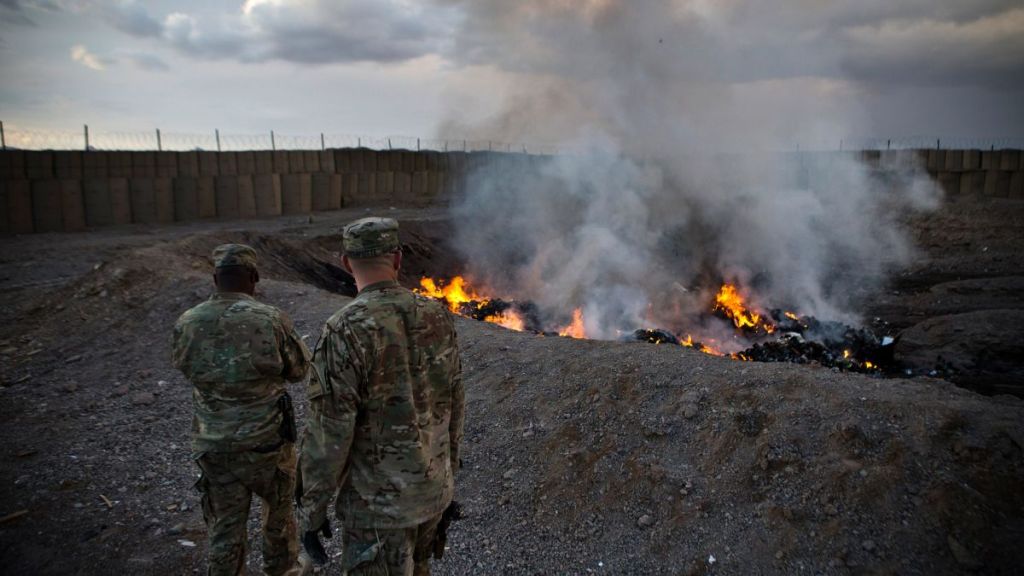
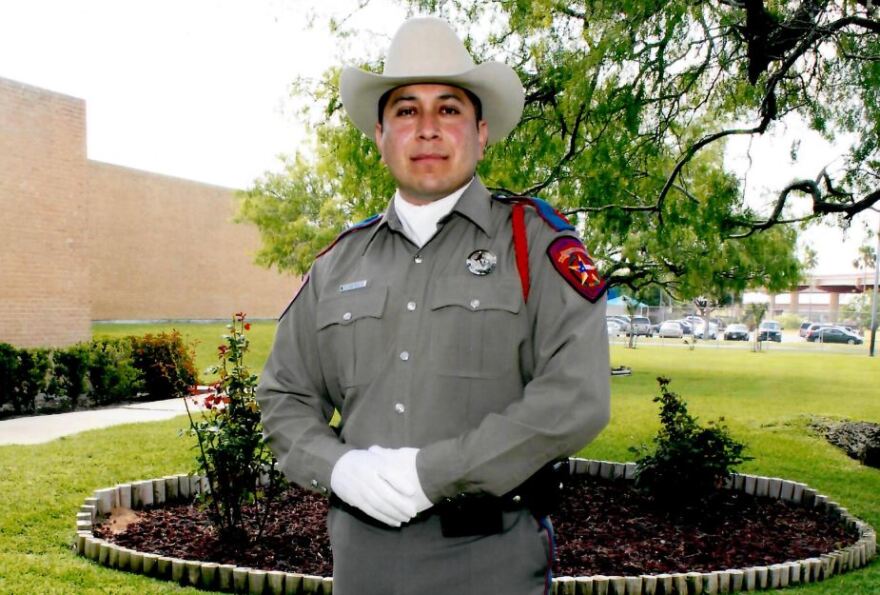



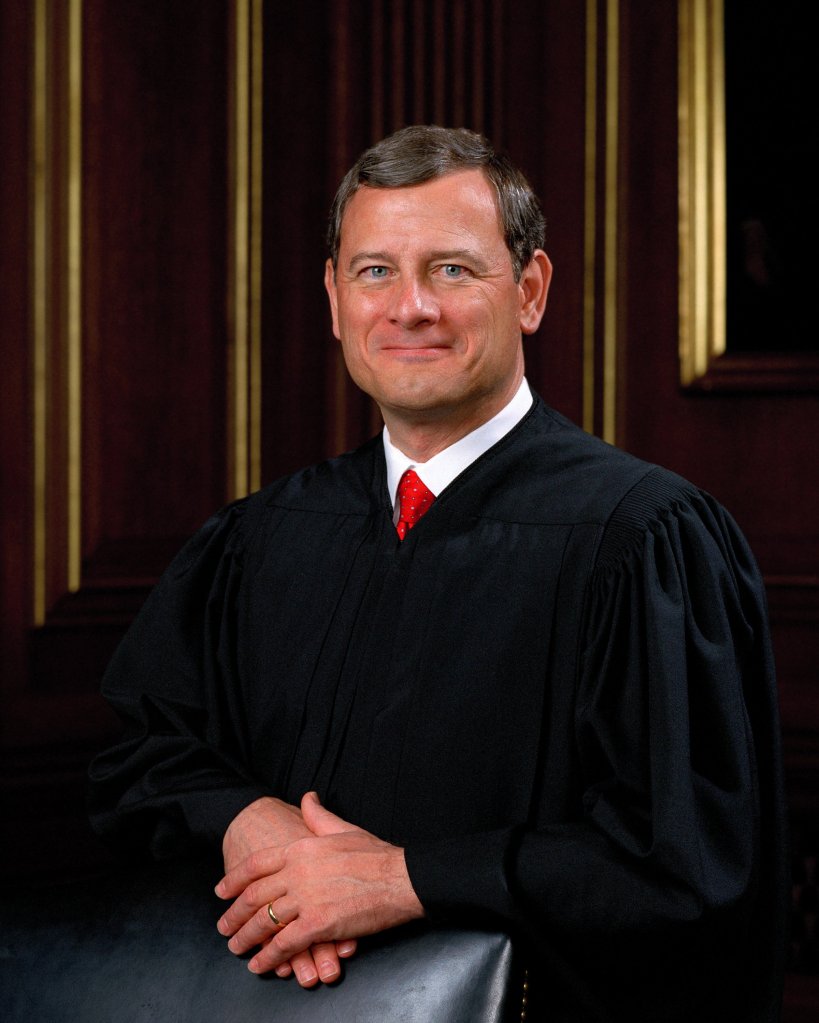


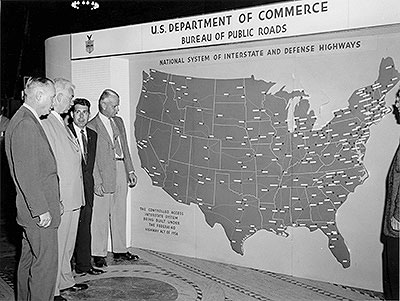


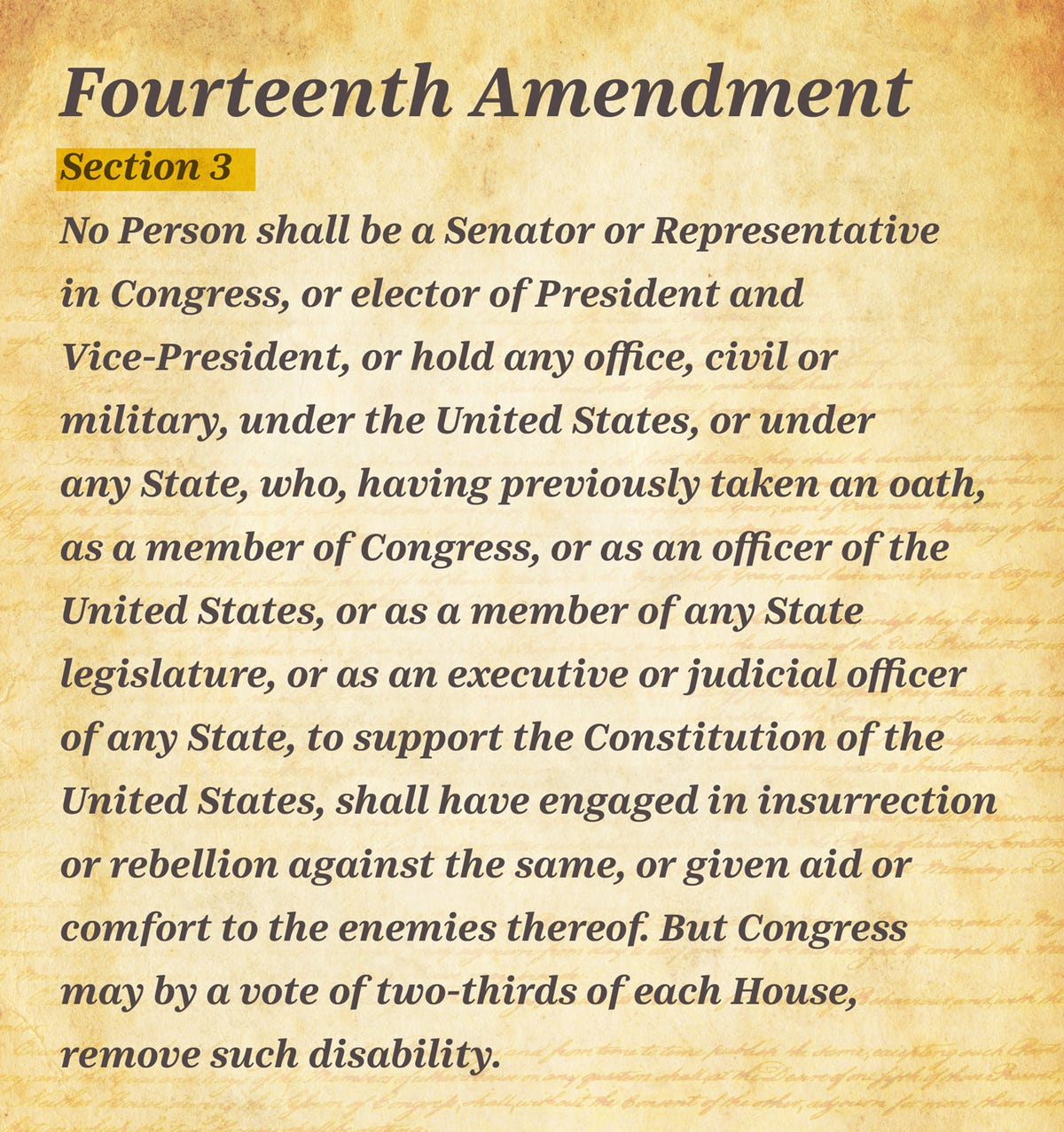















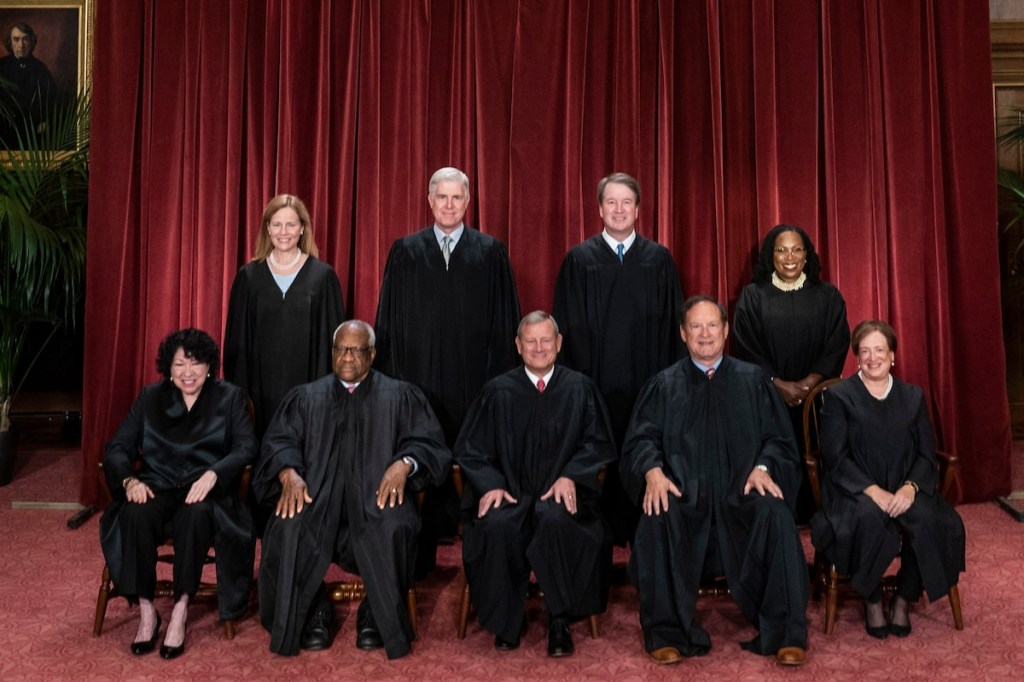


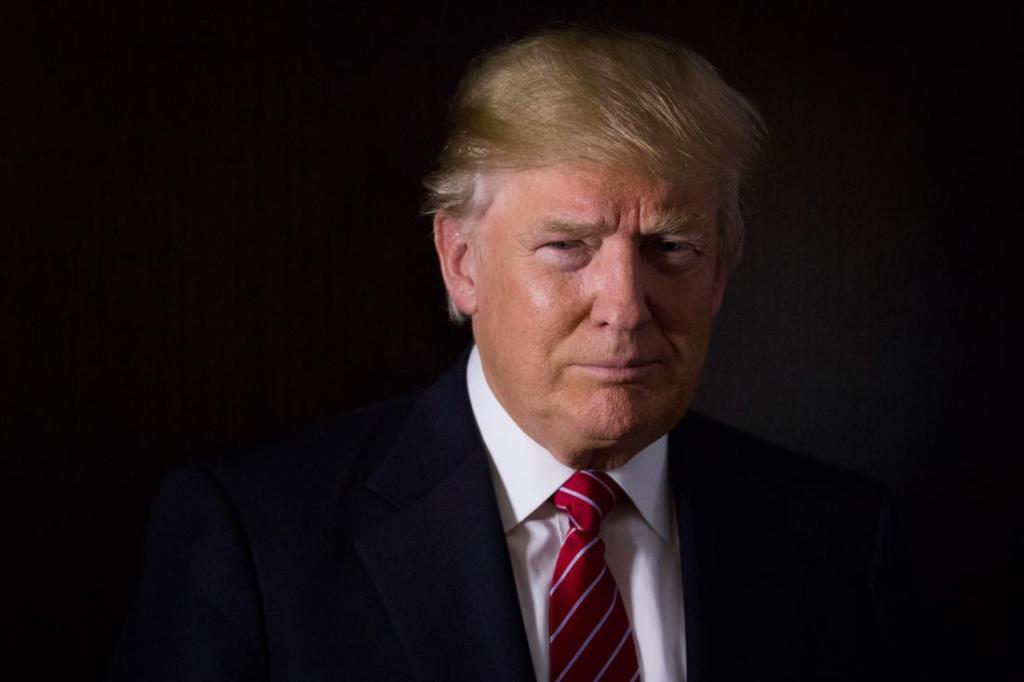




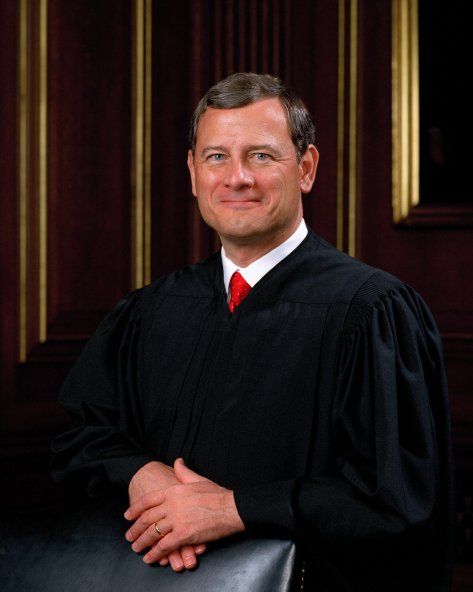

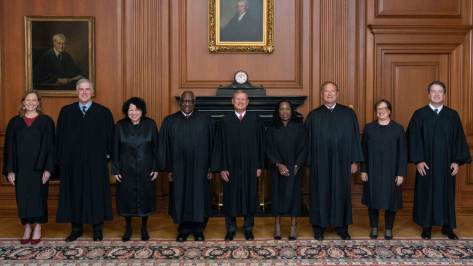
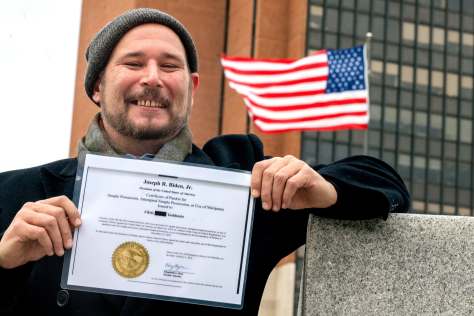




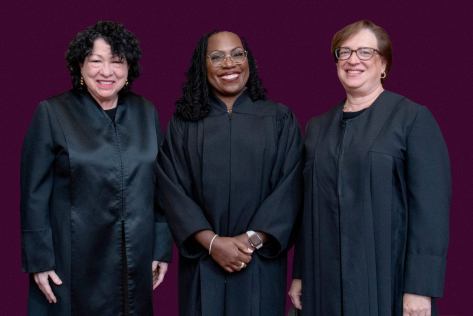
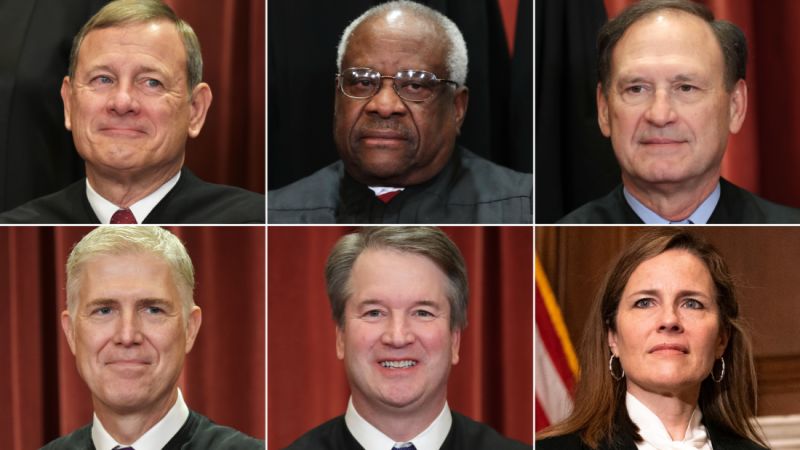





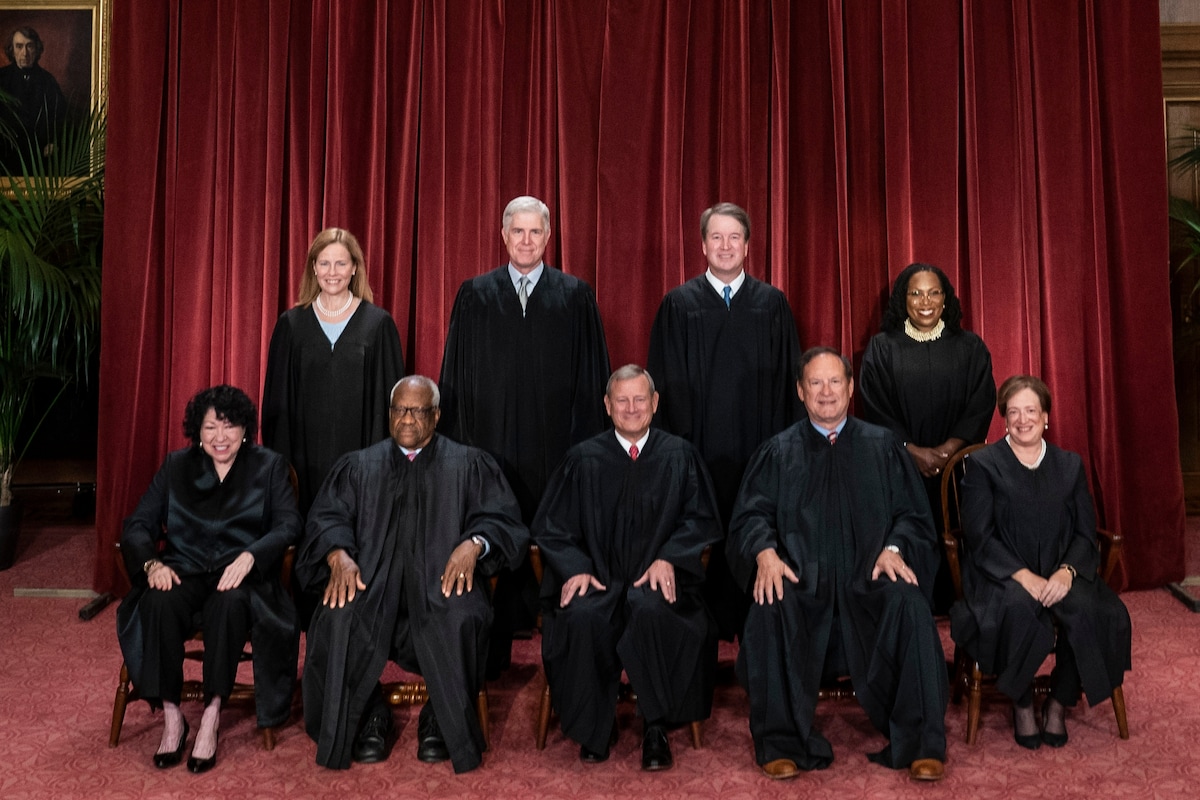



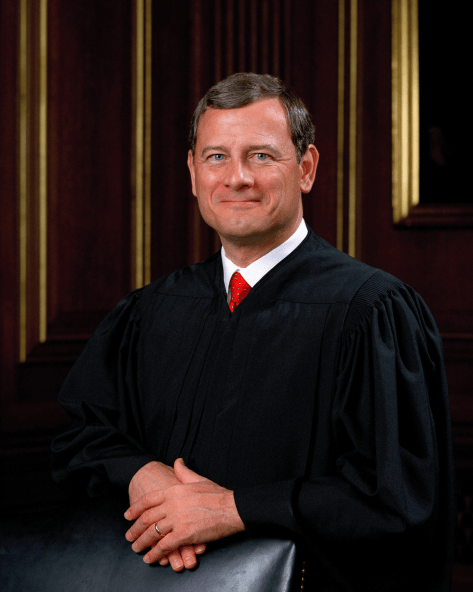


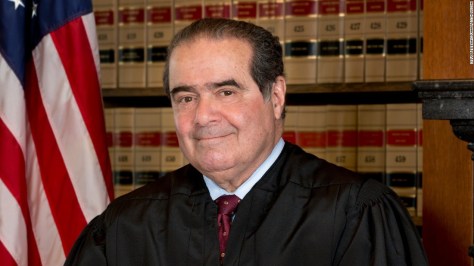
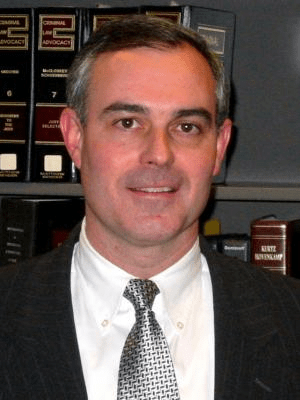




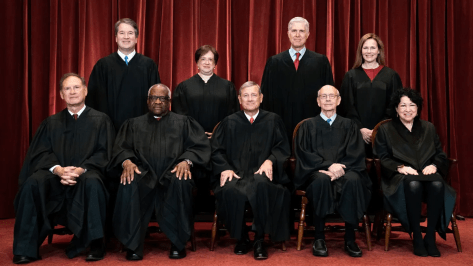






 The Logical Libertarian™