Category Archives: Social Issues

Utopia: The Grand Oxymoron

Gary Nolan (and THE Scrappy Doo)

The Associated press recently reported here that in Michigan, after a year of repealing their mandatory helmet law, motorcycle injury costs were on a significant rise. Since more riders are riding sans helmet, this makes sense. But is it a problem? I say yes and no.

As you may know, the Emergency Medical Treatment and Labor Act (EMTALA) which passed in 1996 prohibits a practice called patient dumping, thus requiring hospitals to treat critically ill or injured patients regardless of their ability to pay, or the reckless actions that may have put them in that situation.

Helmet Law Map
Helmet Law Map

EMTALA is a very good example of how one law often leads to another which is only justified by citing the first. We libertarians argue that the duty to protect our rights is the only duty of government. EMTALA gives the left a reason to use our own arguments against us by saying that we have to enact helmet laws to protect the public from having to pay for their reckless decisions, when if we didn’t have EMTALA in the first place, that wouldn’t be an issue.

Health care is part of the market place, but people often see hospitals as a public service like local police, fire, and rescue, then pass laws that treat them as such. Their argument being that if government has a duty to protect your life, then health care is, by extension, a right as well, and thus a role of government.

Why do I believe otherwise? Because government mandated health care means I have to pay for your poor choices; like doing drugs, over-eating, or riding a motorcycle without a helmet. Therefore, it violates my right to property to preserve your right to life. A conflict that only occurs if you choose the opinion of those pushing for health care as a publicly mandated service that must be provided to everyone. If it’s a private service available to those who can pay for it or those whom doctors choose to help pro-bono, the conflict is gone.

We feel it’s morally wrong to let someone die—I do to, to some extent. But it’s a moral issue, not a legal one. Just as I don’t want the government outlawing adultery, lying, or just generally being a jerk, I don’t want them outlawing the ability of a doctor to decide to help or not help someone who has done themselves harm—passing those costs on to me afterwards.

Health Care CostsWe all agree that when someone dies, it is sad, even tragic. But we also all know that no one gets out alive. Death is a natural and unchangeable part of life, at least for now. So if we understand we’re all going to die anyway, we cannot spend ourselves into oblivion trying to evade the inevitable.

When asked about the difference between libertarians and authoritarians, one of the distinctions I feel is often overlooked is that authoritarians are idealists, libertarians are realists. Authoritarians believe that government can create a Utopia if they just spend and regulate enough to rid the world of every immoral or dangerous act; creating a perfectly sterile and safe society. Libertarians see this as foolhardy and misguided goal.

While I generally abhor comparisons to Hitler; they’re so often hyperbole used for shock value, in this case it is somewhat appropriate here. Hitler also believe he could create a Utopia through ridding the world of all but the master race and by using advancements in genetic engineering. What he wanted to do violently and unethically, authoritarians aspire to achieve through legislation and regulation.

“The rich should all be like Bill Gates and Warren Buffett, giving their money away to charity and happily paying more taxes. If they don’t, we’ll legislate it away from them” is just a financial version of “People should all worship this particular god or be killed.” One is an infringement of property, one life, but our Constitution guarantees rights to both. So why tolerate the first if we wouldn’t dream of tolerating the second?

I don’t want a boring life without any danger, and I defy you to honestly tell me you’ve never done something reckless just for the thrill of it. But if we take the authoritarian mentality to its logical conclusion, all risky behavior will be illegal.

Casual BASE Jump
Casual BASE Jump

We ride motorcycles without a helmet (I alternated depending on my mood), jump out of airplanes, or engage in extreme sports because we enjoy the freedom and the excitement that comes from the inherent danger. Humans love pushing the envelope, and without it, we wouldn’t be happy. So doesn’t that defeat the point of a Utopia?

I’m sad for these people who got injured without helmets. I was wearing mine when I wrecked and despite my noggin surviving in tact, I still got a collapsed lung out of the deal. Maybe we should legislate a suit of armor for motorcycle riders, and training wheels while we’re at it? The last two of course seem silly, so why is the first not?

Risk is fun, but risk means there’s also a chance of harm. While death may be the downside of risk, no one wants to live in a world without it—we’d all effectually become drones.

So I say that Utopia is an oxymoron. It’s supposed to be a perfect world where everyone is happy, but human nature dictates that almost no one would actually be happy in a Utopia. So let’s always mourn the lost—I’m not arguing that death is good; but let’s champion the freedom that allowed them to live and die by their own accord instead.

What makes a terrorist a terrorist?

Gary Nolan (and THE Scrappy Doo)

As I watch the news about the latest incident in London, I couldn’t help but notice David Cameron didn’t hesitate to call it a terrorist act. When Obama refuses to call similar acts terrorism here, you wonder why? The media have often made a big deal of whether or not something is referred to as terrorism by our political leaders, and I find this semantics argument somewhat nauseating. People are dead because of a senseless act, or at least senseless to those of us not mired in dogmatic ideology anyway. Does it really matter what words we use to describe it? What we call it doesn’t change the nature of the act, but merely changes our attitude about it.

Dog Giving Birth To A Terrorist

Being a peaceful agnostic/atheist, I think killing in the name of religion is just as senseless as killing for any other personal reason. Unless that person was about to kill you, your loved ones, or was otherwise threatening to infringe on your rights, you have no reason to use deadly force against them. Per Greg Gutfeld’s public request, I’ve attached a proper picture of a terrorist being born, so as not to give fame or infamy to the real terrorists.

Nonetheless, it seems clear that Obama avoids using the word for two likely reasons:

  1. He doesn’t want to offend Muslims at home and abroad.
  2. He doesn’t want to admit that maybe his administration is vulnerable to terrorist attacks more so than his predecessor, since he was so vocal in criticizing Bush’s handling of this issue.

I find both of these reasons pathetic, and anti-leadership in nature, but Obama seems to relish the idea of somehow being a leader who doesn’t lead.

As far as I know, there has been no official definition that we can apply to decide whether a murderous act should be called murder versus terror. I feel like I know it when I see it, but defining it with words is difficult.

To me, I feel it has something to do with sending a message. Murder is just killing someone because you have an issue with them and you want them dead, or in the case of some serial killers, because you simply enjoy the rush of killing.

Terrorism however is killing someone so that it serves as a message to others to not cross the person or party committing the act—thus spreading terror to others.

Nonetheless, since many seem to want to differentiate between murders & serial killers versus terrorists, I’ll throw it to you, my readers and people who just accidentally stumbled here via a Google search for something quite possibly completely unrelated.

How would you define terror versus murder? What quality or qualities do you think one has that the other doesn’t? Does it matter to you what the president calls it so long as he vigilantly pursues the people who commit such acts? What say you?

Internet Trolls Thrive On Attention—But Please Don’t Feed The Animals

Gary Nolan (and THE Scrappy Doo)

Political and religious discourse are often anything but respectful. One sweep of social media feeds will reveal personal attacks that would lead you to believe evolution has spawned a human sub-species known as Homo-Internet-trollius—I raise my glass to them succumbing to natural selection. Sadly, professional writers and TV analysts aren’t often much better.

Internet Troll
Internet Troll

To support my blog, I have Twitter and Facebook pages where I invite people to engage in respectful debate—emphasis on respectful. Most people do exactly that, occasionally even swaying me from my original opinion in light of new information. But far too often, the personal insults fly in like birds on a newly seeded lawn.

I choose not to engage these people, I just block them—such debate is not worth my time and aggravation. People may say that this is not very libertarian of me; but I’m not asking for legislation to prevent them from spewing their hateful rhetoric, I’m just walking away so I’m not tempted to lower myself by responding to it. Proper debate involves exchange of opinions, ideas, and facts—nothing else.

A while back, I watched a panel of people debate the idea of a creator in-depth at Chapman University after seeing a similar debate on Stossel—Dinesh D’Souza, Deepak Chopra, and Michael Shermer among the participants. They were compelling discussions largely due to the nature of the discourse. The fact that reasonable human beings could speak about something as passionate as religion; yet be respectful towards each other despite their vehement disagreement was refreshing. It inspired me to strive for more respectful dialogue in my own debates going forward.

The reason for the respectful dialogue is pretty easy to explain however when you understand one simple concept; opinions versus facts. Facts are truths, opinions are interpretations of those truths based on one’s own environment and life experiences. The people involved understood the difference, and debated accordingly. While you are not entitled to your own facts, opinions will always vary from person to person.

For instance, if we look at opinions; conservatives believe higher taxes are wrong, liberals believe that the rich can hardly be taxed enough—neither is right or wrong. While it may be true that historically, lower taxes have proven to be greater economically, to someone who is uncomfortable with freedom or whom religion trumps economics, more government can often reduce their anxiety by eliminating personal responsibility. For those people, authoritarian rule is better, and they’re willing to trade opportunity and freedom for security and forced theology. You often see this in nations who move from an authoritarian system to a democratic one. Rebels act as if they are fighting for freedom, when they’re so often just fighting over which authority they wish to be ruled by.

As political opinion talking heads bring on guests, they frequently lose sight of the idea that opinions simply have no proper answer. You can watch liberals go on rants about evil corporations only to be countered by conservatives going off on the president in a polar opposite diatribe—neither citing facts; merely opinions, but both insisting the other is wrong.

The fact that Jerry Springer, Steve Wilkos, and Maury Povich make a living doing what they do has shown that we like to be entertained just as much as we like to be informed. If we’re lucky, they may actually kill each other on the air, right? People insulting each other is far more exciting than two adults respectfully agreeing to disagree. If any of you watched the Chapman University video above and didn’t finish it, you probably got bored; proving my point.

As long as the market desires violence, the art of proper debate will be left to the scientific community, and us political consumers and voters won’t be nearly as well-educated as we should be because we’re getting debating’s version of the WWE—rich on entertainment, low on substance.

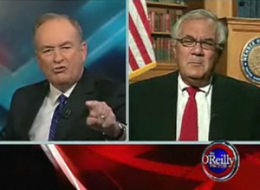
Bill O'Reilly vs Barney Frank
Bill O’Reilly vs Barney Frank

So what are some signs of improper debate?

  • If anyone refers to you as a “So-called  _______”

When someone uses the term “so-called” in describing you,  there’s no point in going further. I see Republicans call other Republicans RINO’s (Republicans In Name Only) when they disagree. I’ve had people tell me I’m no Libertarian because I don’t believe in anarchy. I’ve seen liberals attack each other because they don’t agree on gun rights or the evilness of corporations. I’ve even seen religious groups attack their own for how they vary in worship.

No one person is the sole arbiter of what is a Democrat, Republican, Libertarian, Christian, Muslim, etc. If you feel you most closely identify with a particular group, that’s likely how you’ll identify yourself. These aren’t private clubs you can be kicked out of, they’re names attached to a basic set of ideals. Someone referring to you as a “so-called” anything is simply displaying contempt—an ultimate form of disrespect where they feel you are inferior to them.

  • Inability to distinguish facts from opinions

If someone lays out facts that are incorrect, they should rightfully be corrected. If you really want to do it right; cite reliable sources. But when arguing opinion, anyone who tells you that you are wrong, laughs at your opinion, or cites opinion columns from someone else, are not debating respectfully.

I see people citing Paul Krugman articles to prove their point on economics, when he’s not done any science, but merely advancing an opinion. I’ve had people cite Ron Paul and Ludwig von Mises op-eds to tell me I’m wrong on my idea of libertarianism. In doing so, they haven’t proven their point, they’ve only proven someone agrees with them or that my libertarian views are different from others.

  • Citations of the same person repeatedly

Science requires that all opinions be considered, respected, and evaluated in order to come to one truth. If a person constantly quotes a particular politician, economist, TV personality, or anything else, this person is not doing anything scientific, it’s the opposite of independent thought. While I personally prefer my opinion reporting come from organizations that are “libertarian-friendly,” I’m at least aware of my bias, and honest about reporting it. I do call my page the Logical Libertarian after all.  

On my RSS reader however, I follow 85 different websites of varying opinions and genres. I make the effort to research any opinion I put forth from several sources when possible, and I will reevaluate such opinions if anyone provides me with new information. Being part of a cult-like group-think crowd is the polar opposite of independent and intelligent thought.

  • All or nothing

Anyone who has agreed with you 95% of the time, but now this 1 in 20 instance where you don’t sends them into a tirade is exhibiting serious signs of bipolar disorder. It’s the underlying root of the word bipolar where there is only a positive and negative, nothing in between. They believe that if you aren’t 100% in agreement with them, you might as well be 0% in agreement with them.

People who take this all or nothing approach aren’t interested in the truth. They want to be the leader of a cult, and expect you to be part of it. That may seem like hyperbole, but think about every cult you know of—how many allowed for varying opinions? There is nothing proper about such behavior. The scientific method relies on varying ideas. Those who view any deviation from their ideology as an insult should be avoided.

  • Anyone using logical fallacies.

Brian Dunning at skeptoid.com has done an amazing job explaining logical fallacies here and here (It was a two-parter).

Skeptoid's Brian Dunning
Skeptoid’s Brian Dunning

 These include straw man arguments, ad hominem attacks, appeals to authority, special pleading, anecdotal evidence, observational selection, appeal to ignorance, non-sequiturs, post hoc, confusion of correlation and causation, slippery slope, excluded middle, small number statistics, weasel words, fallacy of the consequent, loaded question, red herring, proof by verbosity, poisoning the well, and bandwagon fallacies.

I implore you to either read at the links provided, or listen to the attached audio podcast version for explanations. Brian has done a phenomenal job comprising them; it’s worth your time; as are all Skeptoid podcasts.

The golden rule of debating should be this: Explain your position until your opponent understands you. Let them explain their position until you understand them. If at that point you still don’t agree, the debate is over, you must respectfully agree to disagree—emphasis on respectfully. But whatever you do, remember that internet trolls thrive on attention, please do not feed the animals.

America Could Learn A Lot From Tiger Woods (The Golfer)

Gary Nolan (and THE Scrappy Doo)

Tiger Woods, arguably the greatest golfer ever to play the game, is a courageous man. He was the highest paid athlete in the world until marital issues cost him a few sponsors. But putting aside those issues, he’s also a pretty good model for America. (Seriously, put them aside for this discussion. This is a theoretical concept with Tiger Woods ‘the golfer’ not ‘the husband’ as my example.)

Shortly after having won The Masters by an astounding 12 strokes in 1997, he concluded his golf swing was flawed and opted to wipe the slate clean, start all over, and invent a better method to pound golf balls into the stratosphere. His intention: to be consistently better as opposed to occasionally dominant. We all know how this turned out, he subsequently won—a lot. It worked so well in fact, that he went on to renovate his swing two more times; each time requiring many months of hard work and countless hours at the range.

Tiger Woods - 1997 Masters
Tiger Woods – 1997 Masters

He could have settled for making minor tweaks to his swing like everyone else on tour, but he holds himself to a higher standard. You’ll note I said like everyone else on tour; had he decided not to reinvent his swing, that’s likely what he would have been—like everyone else on tour.

For someone who is on top of the world to recognize his own flaws, be honest with himself about them, and even though he was ranked #1, reinvent his sole source of income anyway, seemed like a huge risk that would end in career suicide. But now that he’s nipping at the records of Jack Nicklaus and Sam Snead, the joke is on all of his naysayers. He’s atop the rankings again having won a third of the tournaments he’s played in this year; a record any other golfer only dreams of.

Tiger Woods is to golf what The United States is to all other countries—a dominant force. In a world where the PC Police,  in order to be sensitive to the feelings of those on the losing side, have sports teams running out the clock with a commanding lead, Tiger Woods slaughtered his opponents by 12 strokes with no concern about how it would affect their egos. There should be no doubt he will do it again if he can.

John Daly enjoying a cigarette mid-swing

Did the rest of the PGA tour quit, were their feelings hurt, did they all cry their eyeballs out and walk off the course, were their fragile psyches destroyed forever? Of course not. The rest of the tour simply started spending more time at the range and the gym, like Tiger, and now you see a playing field that has been unilaterally improved.

The rest of the tour came up to Tiger’s level instead of him dropping to theirs. Like it or not, Tiger changed the game by forcing players to work harder or find another way to make a living. Competition; the heart of sport and capitalism, improved golf immeasurably. What was once a sport for smokers, drinkers, and people more likely to be found eating a push-up than doing one, now is peppered with guys like Tiger who can bench over 300 lbs and twist themselves into a windsor knot doing it.

As a libertarian, I’ll also point out that while golf has rules officials to answer questions for the competitors, players self-impose their own penalties—they literally police themselves. When’s the last time you saw LeBron James call a foul on himself that the ref missed? As honorable sports go, golf is unequalled in my opinion, and it’s a classic example of the idea that free people usually do the right thing when they are governed less.

America could learn a lot from the example of Tiger. We are the world’s number one economy and military power. While others wish to quash American exceptionalism by giving our wealth away in foreign aid, I say we need to do the opposite and focus on being the best nation we can be and let other nations manage their own affairs. I’m not an isolationist; we should trade with any nation who wishes to do so honestly, and to some extent, protect allies who are attacked as we did with Europe during WW2 or Kuwait in 1991. But, “America: World Police” needs to hang up its badge and tell the U.N. we’re retired.

Tiger Woods
Tiger Woods

If America reverses course towards liberty and free markets and reduces the military to a size that keeps us safe without being the U.N.’s attack dog, we could easily grow our advantage over other nations while drastically reducing government spending and scope to pay down our debt. Not because we want to destroy other nations economically, but because we aspire to be as exceptional as we can be—period.

If other nations don’t like us being at the top of the food chain, then they can strive to be better or learn to deal with their inferiority. I’m personally OK with knowing I have no chance of beating Tiger at golf, other nations have no qualms knowing they’ll never compete with us too; so long as they strive to be as good as they can be, who cares? This whole notion that our exceptionalism makes us inherently bad is nonsense.

Countries comprised of intelligent beings will learn from our successes and elevate themselves just like the PGA Tour did after hurricane Tiger blew through. If they are countries mired in religious or socialist dogma fueling government oppression, like many eastern hemisphere nations, then their people will continue to live in poverty until they revolt; none of which is our business.

England was once a world superpower, yet a few centuries ago, we broke off and decided to do something novel. We established a government based on liberty and self-governance. Instead of choosing rulers, we elected people to do our bidding, and established a way to peaceably remove those people from power if desired. At the time, such a system of governance was unheard of; just as a golfer who benched 300 lbs, spent 40+ hours a week at the range and the gym, and educated himself on the physics of the golf swing was a few decades ago.

But now, centuries later, there are democracies and republics all over the world, including England, because the U.S.A. paved the way. We proved that through liberty, we could build a better nation, and much of the world has followed our example. Almost every free nation on Earth owes that freedom to the U.S.A. Some because we helped liberate them, but many because we simply inspired them by demonstrating liberty works.

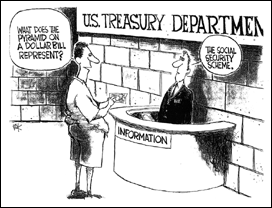
Like Tiger, Social Security Schemewe shouldn’t be afraid to overhaul something that is inherently flawed. Our education system could be privatized. Our tax system could be converted to a consumption based tax. Instead of settling for a SSI system that’s going broke, giving people their money back and letting them invest privately could be implemented.
Such changes might be scary to some, but change is good when it’s change backed by good science or historical evidence. We cannot keep careening on the path to insolvency and expect to remain strong. Tiger Woods proved that overhauling a flawed system is better than putting lipstick on a pig. I understand that to some, a complete revamp of age-old programs is scary, but our fears should be directed at those who are unwilling to be honest about our flaws and lack the courage to fix them, not those who have their sleeves rolled up and are ready to go to work—like Tiger Woods.

Money isn’t a cure for poverty; it’s a morphine drip

Gary Nolan (and THE Scrappy Doo)

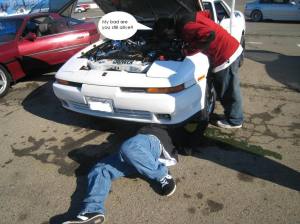
As someone with an extensive background in automotive repair, I can tell you there are two types of technicians: those who use science and logic to diagnose a car, and those who merely throw parts at it in hopes the condition goes away.

The former is efficient and precise while the other costs the car owner a lot of money in bad guesswork—rarely fixing anything other than occasionally by blind luck. This is also true of well-meaning politicians who think that throwing money at the non-rich (average income people like me, and the poor as well) will be the most efficient way to solve all our economic woes. They’ve racked up trillions of debt dollars; yet our economy is far from fixed.

Bad MechanicOne way to win an election is to promise people free money. Convincing the masses that government would be there in their time of need was Obama’s most effective election tactic.

It’s easy to understand why this campaign strategy works, just look at the abundance of people who play the lottery. The idea of something for nothing is alluring, but just as physics dictates you cannot create energy from nothing, free money is an equally ridiculous notion—it came from someone who earned it, not thin air,  and not an endless well of cash in Washington.

Most reasonable people agree corporatism is immoral; good investment or not. But what about subsidies to the average and poor? As heartless as this may seem, throwing money at the non-rich is a horrible investment of our tax dollars; plus, it is also immoral.  Just because I’m smiling as I steal from a “have” and give to a “have-not,” doesn’t magically make it something other than theft.

Many of us believe that if we were awarded a fortune, we would be on easy street forever. Yet, average people who win a substantial sum often end up filing for bankruptcy. Stories on this phenomenon are here, here, and here. This happens because the non-rich, as obvious as it should seem, are just not good at investing, budgeting, and maintaining wealth.

If you won the lottery, who would you want investment advice from? Steve Forbes or your uncle Sam who’s currently down $16 trillion on his E*Trade account but is patiently awaiting for those penny stocks to go crazy? I have news for you, Sam isn’t investing his money, he’s investing yours and mine. Can we please agree he should stop?

Uncle SamMost people who earn a 4 or 5-figure salary are simply not as motivated to be rich commensurate to those who went to college for 8 years and attained a degree they actually use, nor as courageous as those who took the plunge and invested their money into a business idea like Steve Jobs or Elon Musk. They don’t bother reading books on investing, they don’t strive to get promotions at work, they spend more time partying than focusing on their career, and ultimately, they’re content being an average Joe whether they admit it or not.

Sacrificing all of one’s free time to grow a business or get a difficult degree requires a dedication few have. They don’t need to be pitied or pandered to by politicians who act as though making an average income means you’ve failed. Many people who are not rich, love their life as it is. It is disgusting for statist-like politicians to try to convince these people that they are being taken advantage of by the rich in order to solicit votes.

Obama would have you believe that the only difference between people like you and I versus Bill Gates and Warren Buffett is opportunity. As much as I’d like to believe that those business giants are no better than me, they just are. I’ve never had an idea as good as Microsoft Windows, and despite all of the educational trading information available to me, Warren Buffett has had bowel movements with better investment ideas than me.

The fact is, if we gave Warren Buffett one million dollars to start with today, based on his record, he’d likely double it in 5-7 years. If we gave the smelly young panhandler who lives on the streets because his parents “just don’t understand him” a million dollars, he’d likely be back on the street in less than a year with a bottle in a bag and some awesome party stories.

Honest Panhandler
Honest Panhandler

The plethora of self-made entrepreneurs in this country who started with nothing are proof that you can go from meager to millionaire if you do the right things; opportunity abounds here. But, America can’t guarantee happiness; we only guarantee the right to pursue it. No politician should endeavor to do anything more.

If the needy need help, their family, friends, local church, or some other community group will find a way, that’s what we did before social programs, and to some extent do today. If none of those people wish to help that person, then we need to have an honest discussion about why. By and large, good people help other good people. Bad people are properly shunned without assistance; as it should be.

Our forefathers never intended for the people to have a federal safety net. Liberty only exists when we allow people to succeed and to fail at their own hands. Gambling with our money (which is ultimately what investments/subsidies are) is wrong, no matter how well-intentioned. We are free-market capitalists, not statists—at least not yet.

So I love you Uncle Sam, but please understand what our forefathers (men who knew what tyranny was like, and worked so hard to prevent it) understood—you should protect our rights and our shores; then politely get the hell out of our way.

Let’s Protect The Victims, Not The Felons

Gary Nolan (and THE Scrappy Doo)

This may not seem very libertarian of me to some, but often we have our own unique views of liberty. Some libertarians are anarchists who believe in no rule of law whatsoever. But much like socialism; anarchy relies on the notion that people will always do the right thing, which is obviously unrealistic. Under anarchy, those who don’t respect the rights of others would be brought to justice solely by vigilantism; a scary proposition. As such, like socialism, anarchy would never work if we are to maintain a civilized society.

So as a logical libertarian, I feel there is a need for police to protect one person’s constitutional rights from another who might infringe upon them. If this occurs, then government applies commonly accepted justice to the offenders. However, the power to protect ourselves must remain with the people first.

Home IntruderHere’s the part where I think my opinion may be somewhat unique and controversial. While I consider myself a humanitarian, I draw a very clear and concise line on the lives I respect.
It stops at people who would willingly infringe upon my rights; such as rapists, murderers, molesters, and other violent felons. If someone breaks into my home in an attempt to take my life or property, I feel they’ve voluntarily forfeited their rights, and I will kill them with little remorse—a scenario most castle doctrines allow. I am always content to read about such attackers getting killed by either the police or their victims; it’s the epitome of swift justice.

Having liberty means that you have the right to take risks. You should be able to sky-dive, smoke a cigarette, drive without a seat belt, or drink a 20-oz soda (despite his excellency King Bloomberg’s wishes) if you so desire. So then in my opinion, if someone decides to engage in a felonious act against another person, whatever happens to them during that act was the risk they took in doing so.

If a man decides to rape a woman, and she shoots him in the back as he climbs off of her and runs away, you expect me to believe that she’s done something wrong? Yet by law, she is a murderer.

Jonathan Lowe's Mother
Jonathan Lowe’s Mother

I was disgusted last year to read about disabled veteran Jonathan Lowe being prosecuted, despite being the victim, because he stabbed a man to death who violently attacked him. How can any reasonable person consider this justice? The reason given was that the attacker had gotten up and was fleeing when Jonathan grabbed him and stabbed him, but I don’t care. Jonathan’s reaction was purely understandable.

The issue with many lawmakers and pacifists is that they’ve never been a victim of a violent crime, nor seem to appreciate the reaction it induces in even the most altruistic people. It requires unfathomable hubris to assume that they know how people will react in such a situation if they’ve not experience such an attack themselves. Controlling one’s instincts, emotions, and resultant actions after such an event is nearly impossible.

Humans have an innate sense or instinct of self-preservation. No matter how hard we might try to suppress it, we will react in an uncontrollable manner to stay alive. Don’t believe me? It is virtually impossible to commit suicide by holding your own breath. You’ll either breathe despite your best efforts not to, or you’ll pass out and then take a breath once you’re unconscious.

We’re unfairly penalizing people for succumbing to this instinct in a situation that they did not cause nor create. Once your life is threatened, unless you’re a soldier or police officer trained to stay calm in life-threatening events, temporary insanity will often ensue as you fight to stay alive and destroy that which threatens you. Anyone who has ever been violently attacked knows this.

With all that in mind, I am proposing victim protection legislation that would involve the following:

  • Duty to retreat laws should be abolished and prohibited at all levels.
  • Stand-your-ground-legislation should be a constitutionally enumerated right.
  • A carry-conceal permit from one state should be recognized by all states, just as a driver’s license currently is.
  • Committing an unprovoked felony would constitute a total forfeiture of rights under the law during the commission and escape of the felony by the felon.
  • The state, nor the perpetrator and their family should ever be allowed to criminally or civilly prosecute a victim, Samaritan, or officer who retaliated against the felon, no matter what injuries the felon may have sustained as long as the actions were committed during the commission of, or the fleeing from, the crime scene. If the felon escapes visual contact, only then should the victim or defender be required to cease any attempt to retaliate and allow the police to take over. as to stop vigilantism.
  • If someone retaliates recklessly, such as shooting a fleeing felon on a city street, the original victim could be charged for discharging a weapon within city limits or other applicable crimes, but the victim could not be charged in any way for a crime against the felon.

I specified “unprovoked” so that random bar fights and other escalations that started off civilly and grew to a felony would be treated differently. My act should only pertain to violent felonies involving premeditated intent, not flared tempers.

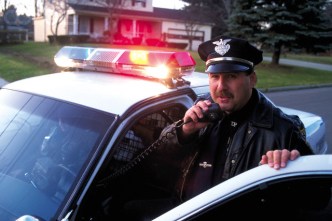
Police OfficerOne of the reasons crime is so prevalent is that criminals have too many protections under the law that embolden them. If more Americans armed themselves, and more would-be felons were killed by people who stood up to defend each other, then would-be-criminals who are on the fence about committing a felony might think twice.

I have a great amount of respect for our people in uniform overseas and on America’s streets. But I’m sick of the police telling me that I should allow myself to be victimized because the felon has rights too.

If the police had a 100% prosecution rate, if a victim’s property was always returned in tact, and the victim never suffered permanent bodily injury or emotional damage, maybe I could go along with giving the felons rights. But conviction rates are around 80%, and that’s only when they are able to find and arrest a defendant. Plus, property loss along with physical and emotional injury are the norm.

So with respect Mr. Police Officer or politician that thinks I should be bound by law to behave rationally when faced with an irrational attack—f*** you. I’ve been the victim of a violent crime twice in my life, and both times wasn’t armed. To this day, I regret not being able to retaliate against those thugs, and that was decades ago. Hopefully there isn’t a third, but if there is, armed with my pistol, I intend to be severely more prepared. Best of luck to my attacker (not really), but be assured I’ll be calling the police to send the coroner, not asking for them to come save me when they can get around to it.

Entitlements are the seeds of socialism; sociopaths are the fertilizer

Gary Nolan (and THE Scrappy Doo)

Disclaimer: This article is not about everyone who collects entitlements; many of whom are good and honest people who truly need help. So before I get accused of attacking all of those who collect entitlements, I am only assailing the programs themselves, and those who abuse them.


During one of President Obama’s speeches, he made a statement that was patently false. He stated:

“Nobody wants a handout. Nobody wants something for nothing.”

obamabill1[1]In an ideally moral world, this would be correct, but America is not Utopia. Some people are burdened with a conscience, others simply are not; a basic form of sociopathy.

I saw the videos of a woman; overwhelmingly giddy, saying she couldn’t wait for her Obama money. I personally know people collecting various entitlements even though they are capable of being self-sufficient. These people aren’t urban legends, they’re just the Lazyburg population behaving as if they hit the lottery, and they are out there in droves. So Obama is either ignorant, delusional, disingenuous—or a combination of all three.

Sociopaths and psychopaths are often believed to be the same; these terms are somewhat loosely defined. But in general and for our purposes, we’ll define psychopaths as violent sociopaths, whereas sociopaths are simply people with little or no capacity for empathy, but non-violent. They know what society considers to be morally right and wrong, but only comply to avoid imprisonment or retaliatory assault; their compliance is not out of any sense of morality. They live a life that is exclusively self-serving.

Humans have evolved as social beings. Our ancient ancestors fought off and hunted larger and more dangerous predators and prey by virtue of our intellect and our social interaction with each other—strength in numbers. Being kind to one another is evolutionarily beneficial; a point Dr. Michael Shermer eloquently makes here. But while sociopathy is an anomaly in humans, it isn’t inherently bad, nor even all that uncommon. Scientific American published a great article outlining the silver linings of sociopathy; it’s interesting reading.

The purpose of going into all of this psychobabble is to point out that most entitlement programs are built under the false assumption that people generally do the right thing, but for a much larger portion of the population than these bureaucrats care to admit, this isn’t true. Most logical folks know there are a great number of people who will often fail to do the right thing.

Here are some examples:

  • Disability: Imagine someone hurts their back and can no longer lift anything heavy. Instead of learning a less physically demanding new career, they often opt for disability. The fact that they are living off their neighbor’s tax dollars doesn’t bother them. Why should they work if we’re willing to pay them not to?
  • Welfare: Imagine a woman having multiple children; collecting more from welfare for each one. By paying her more per child, we are assuring she’ll never have to work again. To her; being a baby mill is more desirable and profitable than working or at least finding a supportive spouse and creating a typical family unit. Why should she work when we’ll pay her not to?
  • Unemployment insurance: Imagine someone collecting UI until that perfect opportunity comes along instead of taking a lesser job to get off the government dole sooner. Why should they take a job “beneath” their skills when you’ll pay them to wait until they find something better?

In each case, many of us would see these examples as morally wrong. To the sociopath, it’s merely the path of least resistance. As such, it is quite natural. The questions I asked at the end of each one, are the questions they rhetorically ask to justify this existence.

Beggar_Saint_Elisabeth_Group[1]I do believe that many serial entitlement-collectors wouldn’t have the courage to go to a town gathering, look people in the eye, and ask for money personally. The guilt of knowing they are asking for something they don’t need nor deserve would be too much for most. But with government entitlements, they don’t have to. They can do it behind the anonymity of a government worker, or worse yet, by simply filing an application online or via snail mail. While some may have some semblance of a conscience and are not complete sociopaths, the anonymity shields what little moral fiber they have from any social pressure whatsoever.

So am I saying people shouldn’t get help? Of course not. Most Americans are generous, and willing to help one another. For instance, the Mormon Church is legendary for being the first on scene when a crisis occurs. As tragedies happen around the world, American charities easily out-donate the next most generous country. Charities designed to help unfortunate Americans abound as well. So the idea that Americans wouldn’t help each other if government doesn’t, isn’t backed by any data. Good people who truly need help would often get it, whereas the scammers would be rightfully quashed.

Government caseworkers are charged with preventing fraud, but it’s nearly impossible when they rarely, if ever, meet the claimant. But small social circles know each other. My ex-roommate for instance was someone prone to find a host, pay rent a few months, then fabricate a reason why he can’t find a job, and as such, can’t pay rent. I put a stop to his all-expenses-paid vacation by simply evicting him. But if I were the government, booting him would have been significantly more difficult, lest they be accused of unlawful bias and then sued accordingly.

As the left push for more assistance, I wish to point out that one cannot fraud a program that doesn’t exist in the first place. If we continue to offer free money based on a simple set of criteria, and that money is enough to support a lifestyle, ingenious sociopaths will find a way to meet that criteria, regardless of whether they actually need assistance. It’s the path of least resistance, a phenomenon all of nature generally and understandably adheres to. These people aren’t evil, they’re just not encumbered by social pressure like the rest of us.

when-the-people-find-they-can-vote-themselves-money-that-will-herald-the-end-of-the-republic[1]America is the land of the free, and as heartless as it seems, freedom means being allowed to fail as well. Charities, churches, social groups, and loved ones will find a way to help the truly needy. That was never something this government was intended to do. I say that entitlements are the seeds of socialism, but Benjamin Franklin said it best:

When the people find they can vote themselves money, that will herald the end of the republic.

We cannot let quasi-socialists redefine our love for freedom as heartlessness. Good people will almost always help other good people. They just need the government to stop stealing the money they would otherwise have to do so.