The United States has a long, troubling, and weird history with Native Americans, to say the least. I won’t go into all that here, but this case does revolves around our relationship with Native Americans and how they’re brought to justice in the United States.
In general, to make up for a lot of the ways we wronged Native Americans, the US Government attempts to let them govern themselves where it’s seen as feasible and proper. One way they do this, is by first designation certain parts of the country as Native American reserves, where only Native Americans can live, and then allow them to have their own laws, police, courts, etc., to handle crimes within the reserve.
Ute Mountain Reservation Towaoc Colorado
It’s why you see a lot of casinos on Native American lands, because they know it’s profitable as fuck, brings in a shit ton of tourism, and since they can make their own laws within states that otherwise might not allow such casinos, they can do whatever the fuck they want. They’re grown-ass men and women.
As you may have guessed, some of these lands are pretty spread out and rural in nature, and so occasionally, the tribes don’t have the scratch needed to create their own courts to handle shit in those areas. So the United States tries to help them out by establishing a Court of Indian Offences. It operates like a Native American court, applying their rules, but is a US Government entity.
On the face of it, it might seem like they have basically the same court system other states might have, but that’s not quite true. Apparently, it’s like a kiddie court, with kiddie sentences, so the US Government can look at them and be like, “Aww, that’s cute. Look at them governing themselves.” But the reality was that it was anything but a normal state or local court system.
Back in 1968, congress passed the Indian Civil Rights Act. In this act, it limited their right to impose sentences in such courts for just one year. That’s right. One fucking year. So if they made a law against murder, and you violated it…one fucking year.
Ute Mountain CFR Court
I think the idea was, that they would handle tribal offences, misdemeanors, and shit like that, but bigger capitol offences would be handled by the federal government, I guess. I wasn’t even born in 1968, so I don’t fucking know. But anyway, eventually, they bumped the limit to allow for sentences of up to three years.
Now that you understand that, let’s get into the case. Back in 2017. Navajo tribe member Merle Denezpi, apparently had an erection he didn’t know what to do with, and decided to impose it on an unnamed reservation resident.
He entered what’s called an “Alford Plea.” That basically means, “Yo, dude. I didn’t fucking do it. But that evidence you got against me, it’s pretty fucking hard to overcome. And if I go to trial, I suspect y’all will find my guilty and ‘hang an innocent man’, or some shit. So I’m just going to plea as if I am guilty, accept what you throw at me, even though I’m totally not fucking guilty, and save y’all a trial. But let’s be clear, I am totally not admitting I did this shit. OK?”
Apparently, there’s quite a disparity in offences between Native Americans on reservations, and everywhere else in America. Those natives are some rapy mother fuckers (no pun intended) it seems, and have a much harder (also no pun intended) time controlling their erections. Pretty sad when you think about it. I guess when you try to maintain some level of an antiquated culture, you also maintain the antiquated idea that women aren’t to be treated equal, and you can just take them when you want them.
So Denezpin got 140 days for his misplaced erection of doom Alford plea, and that was that.
For a little while, anyway.
Because about six months later, his victim was like, “140 days? That’s whack. This mother fucker raped me with his dick of doom, and I’m going to the Americans and narc on your ass.”
So a federal grand jury was like, “Well, this is some compelling evidence his erection was wreaking havoc on the reservation, we’re going to have to bust this motherfucker.” And so they did.
Apparently, they really were none too pleased with his mastery over his own erection, and decided it was worth 30 years in prison. None of this punk-ass 3 years or less, nonsense. This is a man’s court!
So Denezpin was like, “Allow me to tell y’all about this thing you call a constitution. In it, there’s phrases like “double jeopardy.” Well, I’ve already been convicted of this shit in your stupid fucking substitute Indian court for kids, so you can’t convict me again!”
But the United States was like, “Bro, that’s not a real court. You know that, right? It’s like the church softball league of courts. Nobody really gives a fuck. Your dick is out of control, and we need to put that shit on ice. So, come talk to us in thirty years.”
Denezpi appealed in district court and lost. He then appealed in the 10th circuit and lost again. He’s on a bad streak, these days. So here he is at SCOTUS hoping these fine nine folks will protect his constitutional rights.
As arguments began, counsel Michael Kimberly for Denezpin opened with this:
Michael Kimberly
Thank you, Mr. Chief Justice, and may it please the Court: The Double Jeopardy Clause implicates two distinct exercises of sovereign authority: first, the authority to say what an offense is, and, second, the authority to put an individual in jeopardy for committing an offense. This Court has consistently assumed the importance to the dual-sovereignty doctrine of both expressions of sovereign power.
The analysis thus asks not only whether the two law-giving entities draw their authority from separate sovereigns but also whether the two law-enforcing entities do so. The government disagrees.
It says that the separateness of the offense-defining entities is all that matters.
But that position would invite the precise abuses that the Double Jeopardy Clause was intended to prevent, and the CFR courts themselves provide the evidence. Assault, for an example, is an offense under both tribal law and the BIA’s regulatory criminal code. According to the government, if Petitioner had gone to trial rather than taking a plea on the tribal offense and he had been acquitted, the very same prosecutor would have been free the very next day to bring a successive prosecution for a substantively identical offense, this time having honed his case and refined his proof based on the lessons learned in the first prosecution.
That is not an outcome that the framers of the Double Jeopardy Clause would have thought tolerable. In arguing otherwise, the government focuses on a single word, “offense,” which it takes entirely in isolation and to which it applies rigid dictionary definitions.
But the Bill of Rights prevents not only transgressions of the amendment’s literal terms but also governmental efforts to circumvent their protections. Blockburger itself embodies this anti-circumvention principle.
It holds that technically different defenses codified in different code sections comprising different elements nonetheless may constitute conceptually the same offense for double jeopardy purposes when, for example, one is a lesser included of the other. And our position is that the same Blockburger rule ought to apply anytime a single sovereign undertakes successive prosecutions, regardless whether separate sovereigns have defined the respective offenses. And I welcome the Court’s questions.
Justice Thomas opened interrogations by giving the hypothetical that everything being the same, but instead of the original charge being in the federal substitute court for native Americans, it was in an actual Indian court. Would that be double jeopardy?
Associate Justice Clarence Thomas
Counsel Kimberly agreed it would not be, because those are separate sovereigns. Like basically, a state and federal government charging separately.
So then Thomas was like, “then what the fuck is the difference? I mean, I know I’m old, but I don’t get it. Just because we created a stand-in court for you? That court is using your rules and shit, and is effectively your court. They’re not using federal government rules.”
Then, Justice Barrett chimed in early on with this question for the petitioner:
Why aren’t you making the argument that the tribal crimes have been assimilated as federal crimes? Because, if that were true, then you have two federal crimes and you’re just looking at Blockburger, right, even under the government’s theory.
Do you think that would be a winning argument if you made it?
Associate Justice Amy Coney Barrett
I guess I should first explain Blockburger. It was an old SCOTUS case from the prohibition era, where some dude was sent up the river on multiple drug charges, where he sold drugs to the same dude on multiple days.
He argued this was double-jeopardy because it was the same drug being sold to the same dude, but the court didn’t agree with him. Why? In that case, they established a double-jeopardy test that has since become known as the Blockburger test. It basically goes like this. Are there elements in one charge that aren’t present in the second charge? If not, then it’s a double-jeopardy situation. So since one offense occurred one day, and one was on the other day, they’re two different elements (the dates), and therefore are not double jeopardy.
Anyway, counsel Kimberly and Justice Barrett hashed this question out in a way that suggested neither one of them understood the other for a minute or two, but they essentially got to the point. Counsel Kimberly basically said, we think these cases have the same elements, and that they’re being tried by the same sovereign, in this case, the federal government. That’s why we think it’s double jeopardy.
We don’t give a fuck about any of this other technical mumbo jumbo people are arguing.
Justice Breyer, understanding that this was a substitute court, wanted to probe about whether this was effectively a tribal court when he asked:
Imagine you are a CFR prosecutor, you’ve been appointed by the federal government but confirmed by the tribe, I take it, and now you want to bring a case.
Associate Justice Stephen Breyer
Do you have to go to Washington or somewhere or the U.S. Attorney and say, can I do it?
His point being, that they may be a rent-a-court from the federal government, but the driver is still the tribe.
They debated this point back and forth a while, too. Counsel agreed that they basically acted like a tribal court. But his argument was that they derived their power from the federal government, not the tribe. In his argument, that’s the only thing that matters.
Justice Roberts, being quite skeptical of this approach, threw this argument at counsel Kimberly:
Counsel, I don’t understand why it’s so problematic to have different federal officials with different perspectives on a particular matter and why that necessarily means that they should be regarded—why that is pertinent on the double jeopardy question. You know, in the federal government, the EPA and the Army Corps of Engineers often have very different ideas about environmental matters, and, yes, at the end of the day, they answer to one authority and that’s controlling. But I don’t know why it’s so surprising that here you would say to one federal official, okay, we want you to represent the interests of the Indian tribe in their courts and their priorities, and that—the idea that he’s the same as a U.S. Attorney with a different set of priorities, I’m not sure that follows.
Chief Justice John Roberts
But counsel Kimberly was like, “Dude, are you aware of any other situation where a federal official is answerable to some other authority than the federal government? I’m sure as fuck not.”
After the petitioner’s wrapped up their arguments, in comes counsel for Biden Incorporated, Emily Ross who had this to say:
Mr. Chief Justice, and may it please the Court: Petitioner’s violent sexual assault violated the laws of both the Ute Mountain Ute Tribe and the federal government.
Petitioner thus committed two offenses, and the Double Jeopardy Clause poses no bar to two prosecutions. For nearly two centuries, this Court has recognized that the clause only prohibits two prosecutions for the same offense and that violating the law of one sovereign is not the same offense as violating the law of another. The Court also has held that the tribes and the federal government are separate sovereigns for these purposes because they derive their power to prescribe conduct from different sources of authority. Indeed, there’s no question in this case that if Petitioner had been convicted of his tribal offense in a tribally operated court, his double jeopardy claim would fail, no matter how much assistance that fed — that tribally operated court received. Petitioner argues for a different result here only because the Ute Mountain Ute Tribe made the sovereign choice for its tribal code to be enforced in a Court of Indian Offenses.
But the Double Jeopardy Clause focuses on the offense, and it is silent as to the form of prosecution or the identity of the prosecutor. Reflecting the clause’s text, this Court’s decisions have likewise focused on the ultimate source of authority for the offense, which here is unquestionably tribal, as I take Petitioner to concede. And the Court has rejected similar inquiries that would turn on a sovereign’s functional autonomy, explaining that they would lead to unclear and inconsistent results. But even if the nature of the court or the prosecutor mattered, Petitioner would fail his own test.
The authority for Petitioner’s first prosecution derived from the tribe’s preexisting power to prosecute offenses between Indians, which the tribe still possesses today. The tribe has simply made the sovereign choice for the time being, which it can change, to use a Court of Indian Offenses to help enforce its laws.
That exercise of the tribe’s sovereignty warrants respect under the Double Jeopardy Clause, as every relevant sovereign, including the tribe itself, has argued to this Court. I welcome the Court’s questions.
US Attorney Erica L. Ross
Justice Thomas, having seniority, was the first to chime in and question counsel Ross.
He was like, “Um, can you explain why the fuck Rapy McRaperson only got 140 days in Native American Rent-A-Court, but then the federal court hit this out-of-control dick-wielding monster 30 years?”
The nature of his argument was to understand why they wasted time on the first trial, which was so fucking lenient, when there was clearly a much bigger prosecution to be had. As I alluded to earlier, the native American courts are largely to prosecute specific native American laws which are generally capped at one year, whereas capital crimes go to the regular US federal courts.
Counsel Ross was like, “Well, that’s kind of our point. We have laws against assault, which he committed, and then you guys handle that rape shit, which is much more serious assault. Two separate crimes, and thus, no double jeopardy.”
The government never argued that they were separate acts or events, mind you. Just separate statutory offenses. Like when a dude commits a crime, and they hit him with a list of shit, but all he really did was just one bad act that broke a lot of laws.
She also went on to argue that their more simple crime and resulting trial was a good way to put this rapy fuck in jail quickly, while federal prosecutors took time to build their bigger case on the separate offense, and put this fucker away for the time him and his unruly dick deserve.
As she finished that argument up, Justice Roberts, hit her with an uppercut, when he interrupted her with this:
…or one reason to do is to get a dry run on the federal trial, right? There’s a lot at stake here.
The sentence shows that.
You want to make sure you have as effective a prosecution as you can, so, you know, run a prosecution through the CFR court, see what evidence they have, whatever, and then take a much stronger case when there’s more at stake.
Chief Justice John Roberts
This argument he’s making is precisely why double jeopardy is prohibited.
But counsel Ross was like, “None of these federal prosecutors were at the first trial, and were taking notes or some shit. So I see your point, but that didn’t happen here.”
But Justice Roberts was like, “But they could have been, and that’s my fucking point.”
Justice Gorsuch, seemingly unimpressed with these separate-sovereign shenanigans was like, “Even if you are separate sovereigns, and we accept that reasoning, these cases fail that Blockburger test, and there’s no rule that we have to adhere to separate sovereigns, do we? It seems to me like this is clearly double jeopardy by any standard, and you fucking well know it. So why should we let you get away with this shit, just because it’s two different government entities, when both are bound under the constitution of the United States?”
Associate Justice Neil Gorsuch
Justice Sotomayor was having none of Counsel Ross’ argument, either. She was like, “I’ve got six cases in the back of my fucking head, where we’ve decided that this dual-sovereign shit doesn’t have to be the rule. That Justice Roberts is fucking right. You’re basically getting a dry run of the federal case, so y’all can practice, before you really go after this rapy fuck. You should’ve just done the fucking federal trial, and you damn well know it. Now we’re in a situation where your dumb ass is forcing us to potentially let this dude walk on a rape, because you decided to hit him with a lesser charge first, when we all agree him and his dick should be in prison for a long fucking time. What the fuck is wrong with you?”
Justice Sotomayor also hit counsel Ross with a ten ton hammer when she was like, “The first trial was The United States v. Denezpi,” not “The Tribe v. Denezpi.” So it seems like your dual sovereign argument is fucking bullshit, is it not?”
Associate Justice Sonya Sotomayor
Justice Breyer started to grill counsel Ross on how the tribes even control this shit, if it’s them being the sovereign as she argues.
She explained that the tribes basically rented the rent-a-court of their own volition, so they’re running the fucking show.
I don’t know if I ever mentioned this before, but justice Kagan fucking loves to argue. She lives for that shit. So she was like, “Who the fuck are these prosecutors?” She left out the word fuck, but that was otherwise, literally her question. And the “fuck” was obviously implied.
She went on to ask this, as to the nature of the question:
You know, you can imagine a couple of different systems.
You know, one is very tribe-centric.
The tribe gives a list to the BIA and the BIA says those look like good people.
Or, on the other hand, you could imagine a world in which they were all detailed from the U.S. Attorney’s Office.
Or you could imagine things in between. What are they?
Associate Justice Elena Kagan
Because in her eyes, if the Federal Government was directing all this shit, it’s not really the tribe acting like a sovereign, is it? She also seemed to take issue with the idea that their system is all over the map. While a tribal council approves these idiots by a 2/3 vote, they seem to do whatever the fuck they want, with how they find these yahoos to run this shit. In this case, the prosecutor was a federal prosecutor acting at the behest of the tribe. Why don’t they have one simple rule, that the prosecutor must be a tribe member, appointed by the tribe, so it’s consistent?”
But counsel Ross was like, “Listen, I’m sick of your argumentative bullshit, Kagan. Just because it COULD BE a system that double-jeopardy rules were designed to prevent, doesn’t mean it fucking is. So far, there’s no evidence of that at all. This fuckwad was tried against tribal laws first, then federal laws second. End of story. So back the fuck up off me with this noise.”
Justice Gorsuch, being ever the friend of the native American community, finished up questioning counsel Ross with this:
So I just want to make sure I understand your position, that the Assistant Secretary could create his own court, appoint his own prosecutor, tell him to report to the Department of Justice, appoint the judge, and then curate the tribal code and choose which tribal offenses can be prosecuted, and there would be no double jeopardy problem, right?
It was quite clear, he questioned the idea that somehow the tribe was guiding this shit, and somehow the federal government had nothing to do with it, except that the entire prosecution and court just happen to work for the federal government.
Associate Justice Neil Gorsuch
But counsel Ross was like:
I think that is right, Justice Gorsuch, with a very serious and substantial caveat, that it would depend on whether the tribe retained the authority to not have a tribal code that is enforceable in the Court of Indian Offenses.
In Rebuttal, counsel Kimberly came back, and basically said, “Look, the tribe doesn’t really have the right to tell the federal government to fuck off and let us handle this. If the tribe doesn’t set up it’s own court, the federal government basically forces this shit on us. So if you don’t want a double-jeopardy situation, just give the tribe the money it needs to set up a court in these podunk areas. Don’t force us to take your people.
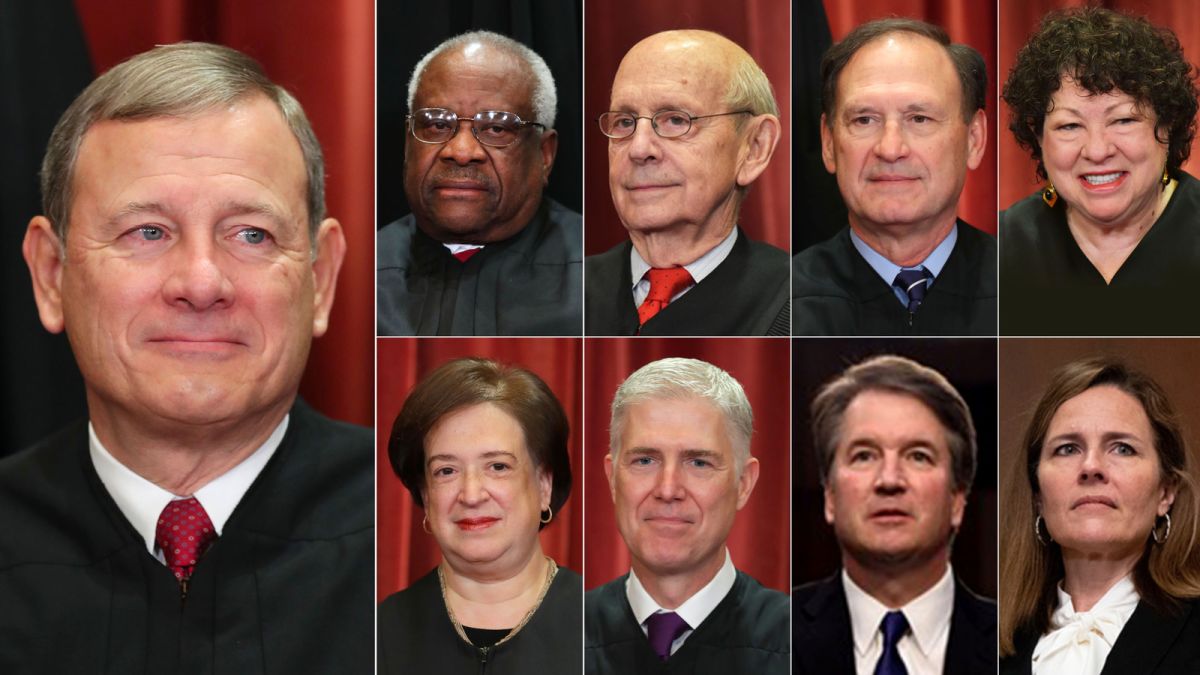
In a split, non-partisan, six to three decision, where Breyer and Gorsuch traded ideological places, SCOTUS sided with the United States. They didn’t seem to opine too much on the jurisdictional issue of whether a Court of Indian Offenses could be the first conviction in a double-jeopardy issue where the US federal courts would be the second. So it’s hard to say if they even agree on that underlying point that they’re both technically federal courts or not. Instead, they focused on the constitution’s use of the word “Offence.”
Justice Barrett wrote the majority opinion. Their argument was pretty basic. The two crimes in the two courts were different. The first one was assault and battery under tribal law. The other was aggravated sexual assault (aka rape) under federal law. Even if all the facts (referred to as elements) of both crimes are identical, they’re two different offences, and therefore double jeopardy doesn’t apply, since the constitution classifies double-jeopardy by calling them two separate offences.
Associate Justice Amy Coney Barrett
They basically focused on the idea that because the constitution says “Offence” and not act or something like that, and because the tribal law has one statute, and federal another, those are two different offences in the majority’s mind, even if they were the exact same act.
I’m guessing that the idea of a rapist getting 140 days of time served is not something that they want to just let walk, anyway.
Justice Gorsuch, who’s never met a Native American he doesn’t like, and rarely if ever rules against them, sided with Justice Kagan and Sotomayor in his dissent, writing, “Are you fuckheads stupid, or what? It was the exact same act, and the same time and place, involving the same people. He’s literally being charged for the same thing twice. Here, have a fucking law dictionary. Look up double jeopardy, and learn what the fuck you’re talking about. This colorful argument about the word “offences” you’re using violates the fuck out of the principle of double-jeopardy, and you damn well know it. I can’t even believe we have to point this shit out.”
Occasionally you’ll hear people talk about America having a long history of racism as it relates to the war on drugs. If you’re someone who tends to push back on any claims of racism thanks to race-baiters who make a living off of exploiting racism, and even making it up when they can’t find it (Not mentioning any names, but we’ll call our fictional example Jesse Sharpton), hear me out.
Let me tell you that while I agree, there is a lot of non-racist things that people are calling racism, the war on drugs is not one of them. It is absolutely rooted in racist philosophy.
For instance, laws against marijuana were promoted and enforced by the long time (1930-1962) head of the Federal Bureau of Narcotics, Harry Anslinger, a Democrat from Pennsylvania. He has a long history of racist comments, although apparently some of them are disputable as to whether they were from him or not. I won’t post them here, because I don’t know which ones he actually said, and they’re kinda disgusting enough that I’d rather not share them. But feel free to follow this Google search on the matter.
Harry Anslinger – D
But think about this; while alcohol was the drug of choice for white people, the black community loved that ganja.
It doesn’t take a legal scholar to understand that despite both being pretty benign, the one that black people like is illegal, while white people are allowed to get shitfaced on the daily with few repercussions.
But this case revolves around another racist drug law. Crack cocaine vs the good ole powdery cocaine. Because despite both of them being cocaine, crack was way more popular in the black community, while the powdery nose candy was the version white people tended to use. Yet, despite both being cocaine, the mandatory minimums and sentencing for crack have been significantly higher than the sentences for powdered cocaine over the years, which resulted in black people being convicted and incarcerated for much longer than white people for essentially the same offense.
For instance, under the old laws 5 grams of crack had the same penalty as 500 grams of the powdery shit. That 100:1 ratio, had no justification for it, and you have to ignore a lot of shit to think it was anything other than racist in its nature.
Some Republican and Democrat presidents have acknowledged this problem, and over the years, have pardoned people who were sentenced under these unfair regimes, often using their pardon powers to release those who were tried in federal court.
President Obama issuing pardons
Eventually, congress did act in 2010, to pass the Fair Sentencing Act (FSA), reducing these overtly biased laws, and then in 2018, they passed the First Step Act (also, FSA, so I guess we’ll call it FSA2), making the FSA retroactive. Within a year, over 2,000 non-violent drug offenders got their sentences reduced. I specify non-violent because if they had other crimes related to their drug convictions, where they used violence, they tended to have their claims rejected for being violent assholes. The point of the law, was to let peaceful drug abusers go on about their life, not to let murderers and shit go free.
Now, about this case…
Carlos Concepcion, was a dude who needed a fucking J-O-B. Apparently, being rather talentless, he failed in most occupations, but eventually found his dream job—he was going to sell some fucking crack.
In 2009, that shit got him in trouble though when he decided to sell that shit to a DEA agent who was working undercover. He was quoted as saying, “Whoops! Do over.”
Carlos was hit with a long-ass 19 year sentence, as the law required because it wasn’t his first time getting busted for shit like this.
But once FSA and FSA2 were passed, Carlos was like, “Yo, dawg. Can I get the fuck on up outta here? These new FSA laws are the shit, man. Besides, you know some of that old shit you had me on, got vacated. Not to mention, that 2015 Johnson v. United States shit says my other crimes weren’t violence, either. So like, I totally don’t belong here. Not to mentioned, I got some job training so I don’t have to sell that shit no more, and I’m clean as a new dollar now.”
But a district court was like, “No, dawg. We think you’re special, and we’re going to keep you where you’re at. Enjoy this prison food and a gentle ass-raping later.”
So he went to the US Court of Appeals, who were also like, “No dawg. Stay put. Sure congress laid the framework for you to get an early release, but it doesn’t mean we fucking have to do it.” We think you’re fine right where you are. Did the district court tell you about the food and ass-rapings?”
One of the issues arises from whether other new developments should be considered. Like, if other laws were changed between their conviction and now, if they showed signs of rehabilitation, or any other shit that might suggest their sentence be reduced, should courts look at those too, or just the two FSAs, while ignoring any other new shit.
So despite Concepcion’s valid points that some of his other cases had either been vacated, or were no longer considered violent crimes after that SCOTUS decision in Johnson, coupled with all the shit he’d done in prison to rehabilitate himself, the court determined shouldn’t be considered, and as such, his 19 year sentence, was fairly appropriate for someone who did all the shit he did, even when considering the FSAs.
As per usual, SCOTUS doesn’t really so much care about the interesting shit in all this, they care about some nerdy ass procedural shit, in this case, one simple question: Does they statute mean they MUST or MAY consider new information, or may they only consider the specific changes in the FSAs.
As arguments began, counsel Charles L. McCloud for “Latino Heisenberg” was like, “listen, we’d LOVE for you to say the courts MUST consider other new relevant information, but we’d settle for MAY consider. Just help us out, dawg!”
Justice Roberts and Gorsuch seemed to question the “MAY” interpretation. Justice Roberts started by offering a hypothetical:
It’s like a police officer—you know, you can’t park here or you pay—you have to pay, you know, $20.
You know, it’s one thing to say, yeah, the officer can say, you know, I’m not going to give you a ticket, I see you’re coming down the street or whatever it is.
Doesn’t have to, you know, enforce whatever discretion he has.
But the officer can’t say I think people ought to be able to park here, so I’m never going to give anybody a ticket for that. What is—what is this “may” argument?
Chief Justice John Roberts
The point he was trying to make, which justice Gorsuch also questioned, was if you give courts this much leeway, then you might get some ideological prick of a judge who is like, “I fucking hate druggies, so I’m never going to consider new info. I’ll do what you tell me and consider the FSA x 2 rules, but outside of that, these miscreants can suck a bag of dicks.”
It seems odd that congress would allow such a thing, and there doesn’t seem to be any law where congress authorizes the courts to do so.
But justice Breyer, apparently thinking Justices Roberts and Gorsuch have all of a suddenly lost their marbles chimed in and argued that the courts use discretion all the time. And this debate over “May” seems stupid. He’s like, “Hell, man, it’s written in the fucking statute.
Since there was a party of justices shitting on other justices going on, Justice Elena Kagan who fucking LOVES to argue, and was keen to join this party was like, “Justice Breyer, did you even read this shit? Or are you so close to retirement that you couldn’t even fucking bother. The statute says, “May impose reduced sentencing” it doesn’t say “May use discretion.” I mean, what the fuck, man? I know you’re old, but do your job.”
Counsel McCloud, responding to justice Kagan’s argument, decided to attempt to use this confusion to push for the MUST interpretation by pointing out:
One advantage of the “must consider” rule is that it does not lead to a situation where courts are able to ignore information that everyone would agree is relevant. To go back to the example that I gave in my introduction, it’s inconceivable to me that Congress would have wanted a court to make a decision about sentencing without accounting for the fact that the defendant is suspected in the murder of the prison guard.
Justice Alito, also jumping into the hypotheticals, went in a totally different direction:
Justice Samuel Alito
Now somebody’s been sentenced to, let’s say, 10 years for an offense but behaves really badly in — while in prison, and so Congress says, under those circumstances, you can bring that person back before the sentencing judge and impose a new sentence so that the person is sentenced to a longer term?
Counsel McCloud, assuming justice Alito had hit the crack pipe just deflected, and was like, “The FSA doesn’t have a provision to make the sentence longer, you idiot. What the fuck are we even talking about?”
Eventually, justice Kavanaugh chimed in and asked an interesting question. Let’s say congress makes some change to other laws, like in this case, such as career offender laws, that are related drug laws. But when they make those changes, they don’t make them retroactive like the FSAs, does it makes sense that under FSA resentencing cases, they can really consider these other changes to laws, since they’re not retroactive? Because if so, you may have a career offender in another non-crack crime get no consideration for reduction based on career offender law changes, while an identical crack offender does.
Counsel’s response was to agree with the premise, but point out that the point of the law was specifically about crack offenders, so career offenders slinging other drugs…well…fuck ’em.
The United States had their turn, and counsel Matthew Guarnieri was having none of this “Must/May” shit. He opened with:
Mr. Chief Justice, and may it please the Court: Section 404 of the First Step Act authorizes a limited sentence reduction proceeding, not a plenary resentencing. By its plain terms, Section 404 only requires a district court to take account of one new development, namely, the changes to crack cocaine sentencing made by Sections 2 and 3 of the Fair Sentencing Act. Section 404 does not entitle a defendant to insist that the court consider other unrelated factual and legal developments since the original sentencing, including the more than 75 non-retroactive amendments to the Sentencing Guidelines that the Commission has adopted since 2010. Reading Section 404 to create such an entitlement would result in a significant and unjustified windfall for a select subset of crack cocaine offenders who were sentenced before the effective date of the Fair Sentencing Act. Petitioner’s principal argument, as you’ve heard this morning, in favor of such an entitlement rests on the term “impose” in Section 404, which Petitioner would read to incorporate a requirement to redo the Section 3553(a) analysis that a court does in imposing an initial sentence. That argument is inconsistent with the text of Section 404 as a whole, in particular, with the text of Section 404(c), as well as with the undisputedly limited scope and nature of sentence reduction proceedings. As the statutory text reflects, the lodestar of any proceeding under Section 404 is the defendant’s existing lawful sentence. At every single proceeding under Section 404, the district court has already fully considered the Section 3553(a) factors at the original sentencing, and the only question before the court is whether to reduce that current sentence. In that context, we think that Congress chose to require district courts to consider only the changes made by Sections 2 and 3 of the Fair Sentencing Act, and it sensibly left the consideration of other developments to the Court’s discretion. I welcome the Court’s questions.
So much for president Biden being a friend of the black community. Don’t forget, it’s his DOJ who’s fighting this. He could absolutely instruct them to adopt Concepcion’s view, and go with the notion that the courts must consider this new information, but he didn’t.
But counsel Guarnieri’s argument is that the FSAs aren’t suggesting we ignore the sentencing phase that occurred originally, and resentence them by today’s standards with todays current laws and other knowledge, it’s just saying, “Hey, these discrepancies are bullshit, and you should fix that particular sentence, if someone was sentenced under old guidelines. Here’s how you do it.”
That being said, they were inclined to agreed with the “May” interpretation, and seemed willing to concede that. The part they have beef with, is the “Must” consideration. They are not OK with telling judges ruling on an FSA claim, to throw out all sentencing, and start over from scratch in every case. Sometimes, judges might have reasons not to do that, and they should be given that freedom.
Justice Neil Gorsuch, seemed rather skeptical of the government’s argument, when he asked:
We’re positing two district courts, one of whom who says looking at the person before me and deciding how many years this person must spend in federal prison, I take cognizance of the fact that sentencing guidelines have changed and here is the Commission’s current recommendation. And the other one says: I choose not to do so, for no reason, for no reason.
Now, if he had a bad behavior in prison, that might be a reason, okay, not — not to — not to impose a lower sentence.
Associate Justice Neil Gorsuch
I get that. But just to say “I choose not to” traditionally has never been a good enough reason under this Court’s precedents to ignore the changes in Commission guidance, intervening law, intervening facts, in looking at an individual in the eye at the time he stands before the court. But your submission, I understand it, is different.
And I’m just — I just don’t know another area in which we give lower courts that kind of latitude.
Are you aware of any?
In an unsigned bipartisan opinion where justices Gorsuch and Thomas joined the Democratic appointees, Justice Sotomayor wrote the opinion that indeed they may consider this new information outside the FSAs, but the other Republican appointees were like, “Y’all are some bleeding hear mother fuckers. That’s not what the law says, and you’re just inferring that because you want to. Also, Clarence, what the fuck are you doing? We thought you were with us, bro. Is this about the black thing, because Carlos Concepcion is a Spanish name, you know that, right?
So you’re all familiar with Texas Senator Ted Cruz, right? He’s the bombastic Republican with a voice that skipped right the fuck over puberty.
Because Cruz is a bit of a rabble-rouser, he decided he didn’t like a stupid campaign finance law, creatively named the Bipartisan Campaign Reform Act of 2002, and a 11 CFR regulation from the FEC that relates to it, and he was going to do something about it.
So, Teddy C decided that he was going to pull a political stunt, because ever since he was a little boy, with his little toy lawyer briefcase, and his little toy gavel, he wanted to have a case before the Supreme Court.
I’m just being an ass, to be fair, he clerked for the late justice Rehnquist, and as a lawyer, argued in front of SCOTUS nine times. Although this may be his first case where he’s the petitioner.
With this in mind, he devised a master plan to go after the Federal Election Commission (FEC) and their stupid fucking laws.
In Teddy C’s 2018 election against Beto “I’m coming for your guns” O’Rourke, the day before the votes were cast, Teddy C sprang into action and loaned his campaign $260,000, precisely $10,000 more than the law in question references in its rules.
The basic gist of this law and regulation as I understand it, is this: A candidate is free to loan money to their own campaign. If they loan more than $250k, they can be paid back from the campaign, if the money they received was donated before the election was over, but paid back to them within 20 days after the election. Otherwise, they can only be paid back the $250k, and no more. Any remaining money they loaned to the campaign that isn’t able to be paid back, is treated as a campaign contribution, and they may no longer recover it.
Their logic is that there could be a quid pro quo scheme where people give money to candidates, through their campaign, in exchange for political favors, after the election is over.
But Teddy C believes this is a violation of free speech. If someone wants to give to their own campaign, then pay themselves back after the campaign is over, assuming there’s money still in the till, it’s none of government’s fucking business.
Teddy C also argued that even if this law is to prevent corruption, the other side can’t even name one fucking instance this law would have prevented, where corruption occurred. It’s just those pesky Democrats conjuring up crazy ideas, and passing them as law, even if there’s no evidence it fixes a fucking thing. They’re kinda famous for that.
Senator Ted Cruz
So Teddy C. Paid himself back the maximum $250k from his campaign, and then sued over the remaining $10k, arguing it was a violation of his free speech. Genius, right?
Well, the FEC was like, “What is it with this prepubescent-sounding twat? First of all, he purposefully did this shit, just so he could sue. He was perfectly capable of paying himself back earlier, but he didn’t, just so he could drag all our asses here in his stupid little political stunt. Also, this shit is entirely self-inflicted. No one fucking harmed him. He did it to himself. He’s just a whiny little bitch who doesn’t like a law that he wasn’t able to get voted down in congress. So he’s hoping to get SCOTUS to do it for him,. He’s a pathetic little cunt.”
They also officially declared Shenanigans.
Because of those arguments, the FEC tried to get the case thrown out, arguing Teddy C didn’t even have standing to sue, since he wasn’t harmed in any way. “Standing” just means that you have a right to sue, because you were harmed by the actions of the people you’re suing, or somehow otherwise justified in suing them. Because if you weren’t, it doesn’t really make sense for you to be allowed to sue them.
Like imagine I’m pissed off about a blown call by a referee against my precious Bengals. I can’t sue the ref, as I don’t have standing. The ref’s wooden-eye incompetence harmed the Bengals, not me. Make sense?
The FEC also argued, “How the fuck are we limiting his free speech? This money to pay him back is coming AFTER the election is over. There’s no more speech to be done regarding the election, and thus no reason for his campaign to be raking in money to pay him back. The shit is already decided. Any money coming in now, is almost assuredly a fucking bribe.”
But Cruz hit back saying, “Listen you FEC twatwaffles. If I am worried I may not be able to repay myself after the election, I may not loan my campaign the money out of fear of substantial loss, and thus limiting my free speech through fear created by a law the FEC wrote. So they fucking harmed me. Not to mention, there’s already a $2900 limit on personal contributions. So if you’re worried about some pay to play scheme, that law prevents that. I’m not going to jail for a mere $2900. This one is just fucking stupid.”
Also, are we just going to ignore the weirdly specific $2900 rule? Yes, I guess we are, for now.
As arguments ensued, Justice Alito questioned counsel Malcolm “In the Middle” Stewart for the FEC:
Malcolm Stewart
Mr. Stewart, is one of your arguments the following: A party cannot challenge the constitutionality of a law that imposes an allegedly unconstitutional restriction on the exercise of a right if the party could have very easily satisfied the preconditions for the exercise of the right?
After counsel Stewart agreed, Alito nailed him with a hypothetical. I love this hypothetical shit.
Well, how can that possibly be the law? Suppose a state university says that no person of a particular race may enter any of the university buildings unless that person pauses for two seconds, stands still for two seconds, before entering the building. Would you say, well, you can’t challenge that racial restriction because it’s no big deal to pause for two seconds before you go into the building?
I think that’s a pretty solid point for Alito against the FEC.
But Counsel Stewart, undeterred, battled on. He attempting to hit home the idea that Teddy C had no business doing this shit, making this argument:
If the Appellees had filed their suit seven days before the election and they had said in their complaint Senator Cruz has no intention of loaning money to his campaign regardless of the outcome of this suit, but he feels strongly that the statute is unconstitutional and he would like a judicial determination to that effect, clearly, there would have been no standing, whatever the Court thought of the merits of the constitutional claim. And what we have here is essentially that; that is, Appellees have stipulated that if there were no statute, if there were no reg, they never would have made the loan and they would have promptly repaid it if the loan had been made.
But again, despite his best efforts, Chief Justice Roberts also hit him with a hypothetical. Did I mention that I love this hypothetical shit? It may seem silly, but such hypotheticals are so important in debating, because the underlying purpose of all this shit, is to draw a clear line between what’s allowed and what’s not allowed, that can be applied to any similar situation easily.
Anyway, here’s what the chief had to say:
Well, there’s just sort of a—I mean, there’s—test cases are not always—you don’t always have a lack of standing.
Chief Justice John Roberts
If you get people challenging discriminatory housing practices and they go in and say, you know, we’re thinking about buying this house and they’re discriminated against because of their race and they don’t say, well, you know, whatever, you can’t buy the house. They don’t have to go in and prove that they would actually buy the house, do they?
Counsel Stewart, now with two black eyes, was still punching back, but along came heavyweight champ Clarence Thomas.
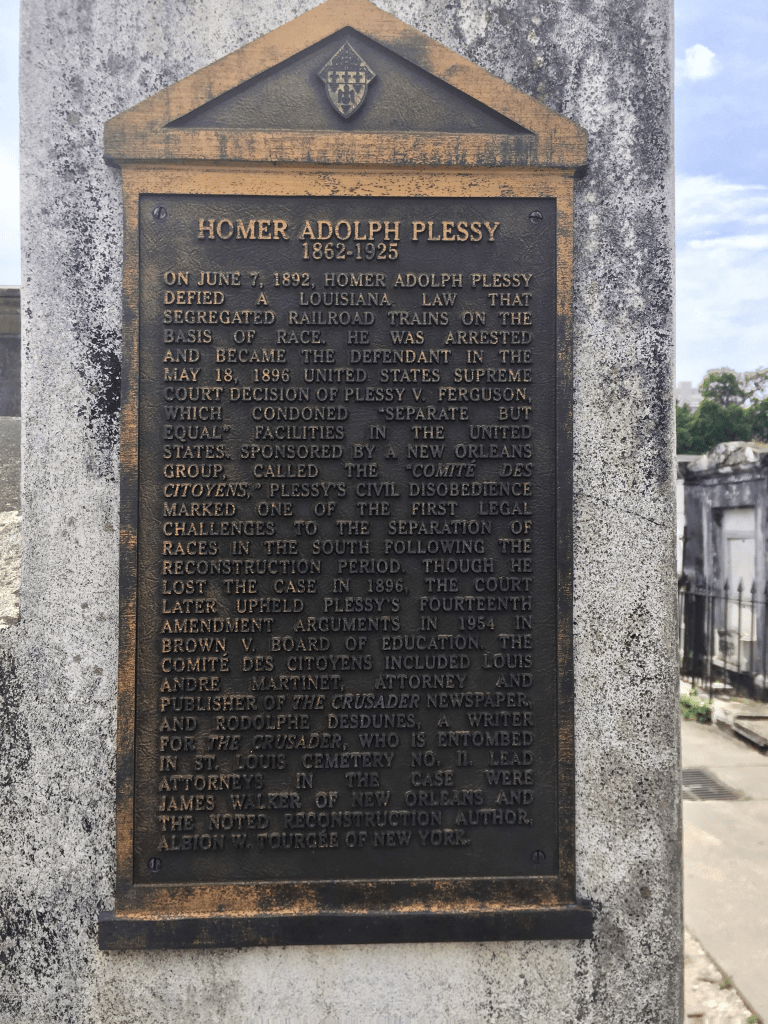
Before I outline justice Thomas’ question, we need to explain about Plessy v. Ferguson, a fucking landmark case if ever there was one, from 1896. In Louisiana, at the time, they had a law requiring black passengers sit in separate railway cars from the white passengers. Homer Plessy, who was 7/8 white, was still considered black under Louisiana law. So a group trying to fight the law for racial reasons, teamed up with the railway who didn’t like the law, because it meant they had to spend extra money on railway cars and shit, joined forces, and had Homer Plessy sit in the white passenger car as a means of protest. Plessy was told to move by authorities, and he invited them to suck on his 7/8 white dick, and spin.
The gravesite of Homer Plessy. Try as I might, could not find a picture of him. Kept getting other random people involved in his case.
They eventually ended up at SCOTUS, where Plessy argued that such segregation violated the 14th amendment which grants equal rights to all. But Plessy tragically lost his case, in a 7 to 1 ruling where SCOTUS argued segregation wasn’t unconstitutional. It was a different time in 1896, which is to say, when it came to black people, white people were ginormous dicks.
It wouldn’t be until 1954, in Brown v. Board of Education, that Plessy would be unanimously overruled by SCOTUS, and segregation was in fact deemed unconstitutional, ending it forever.
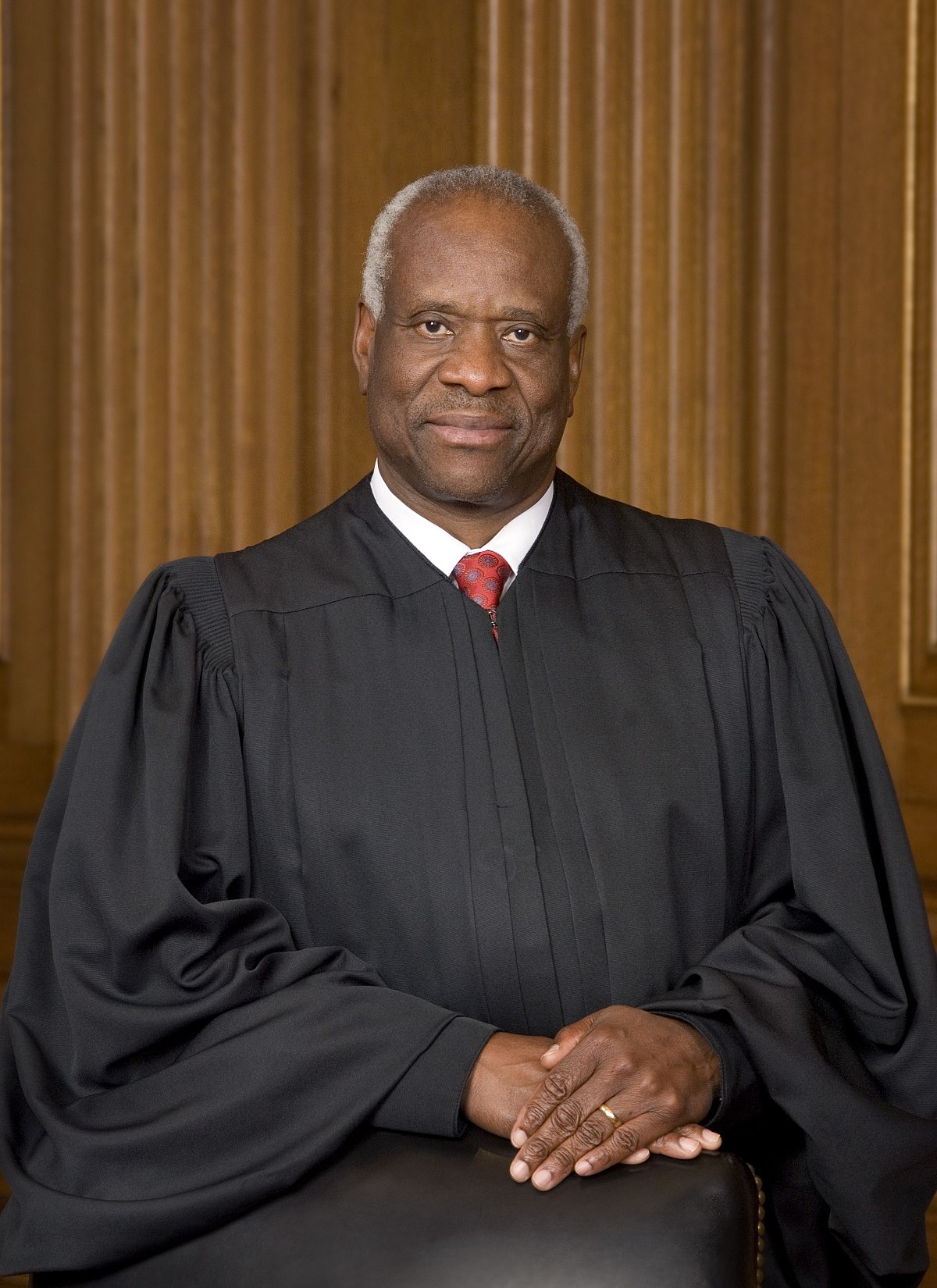
Now back to Justice Thomas bringing the heat. He went into this exchange with counsel Stewart:
Clarence Thomas
My final question is, going back to your standing, you said a number of times that these self-inflicted injuries can’t be a basis for standing.
At least that’s what I understand. But how would you—using that at that level of generality, what would you say about Plessy sitting in the wrong car?
Malcolm L. Stewart
I would—we would not say that that is self-inflicted in the relevant sense.
Clarence Thomas
Well, why not? I mean, it’s just—all he has to do is go to another car.
Malcolm L. Stewart
That is, Plessy is attempting to assert a legitimate constitutional right and is attempting to do something in the real world that presumably he would do if the law were not on the books; that is, if there had been no law mandating segregation on the means of transportation, presumably, Plessy would have sat in an integrated section and would have had an interest in doing so. This is self-inflicted not just in the sense—it’s a different case when plaintiffs stand on their rights and insist on doing what they would do if the law were not in effect and experience injury as a result of it. This is a case in which the plaintiffs did something they would not otherwise have done solely for the purpose of being injured and then filing a suit.
Either in an unplanned bit of ironically similar thinking to justice Thomas, or riding on the back of Justice Thomas’ argument, counsel for Teddy C, one Charles J. Cooper, had this to say in his opening argument, attacking the idea that because Teddy C did this to himself, it somehow nullifies his right to petition the injustice he’s claiming.
Justice Clarence Thomas
At least since Mr. Plessy sat down in the train car reserved for whites, this Court has repeatedly held that a plaintiff who deliberately subjects himself to the injury of unconstitutional government action for the admitted purpose of challenging it has created his standing, not defeated it.
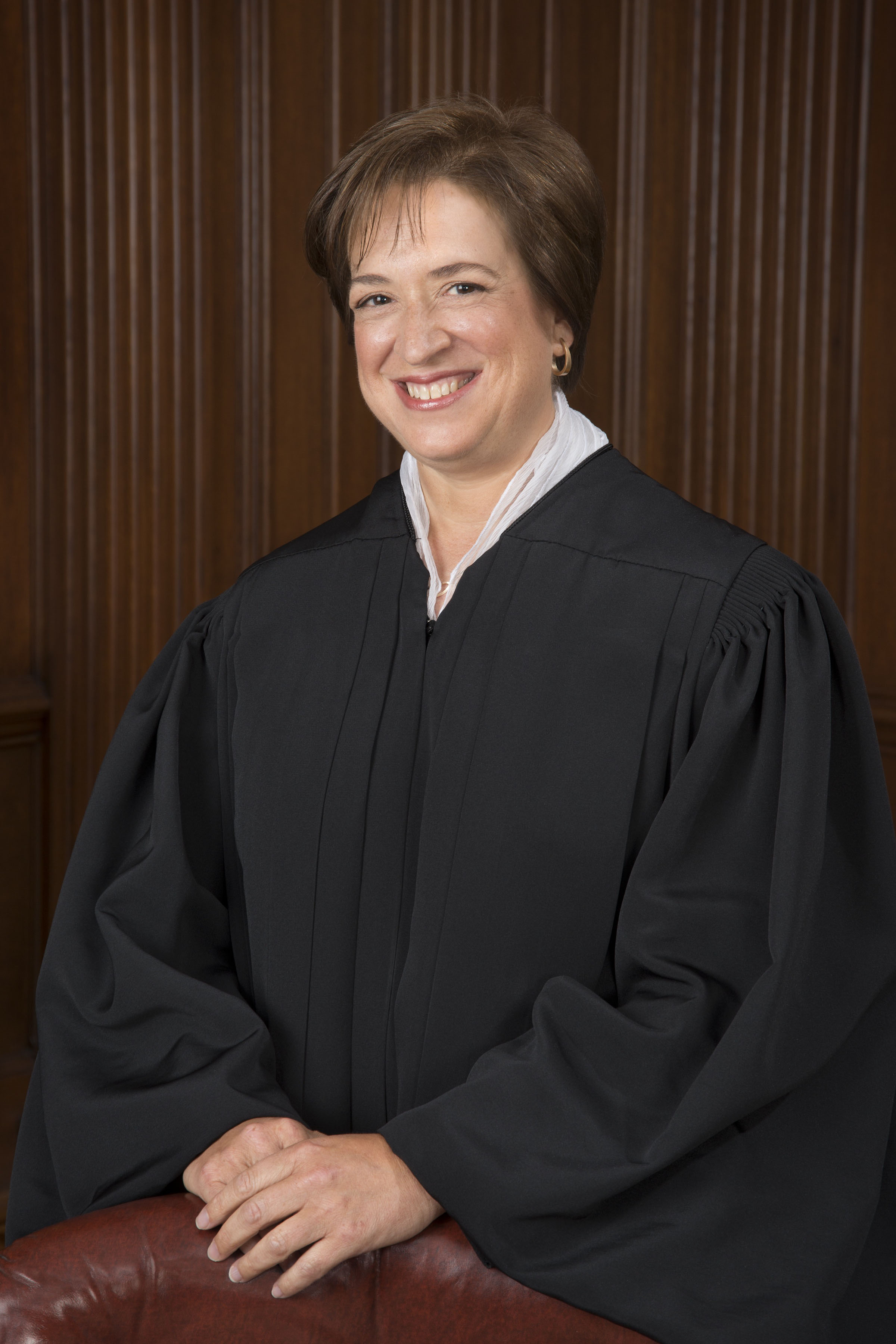
As is always the case, Justice Elena Kagan really loves to argue. I mean, she fucking loves that shit. Especially when her mind appears already made up that the person arguing in front of her is full of shit.
I won’t paste the exchange here, because fuck it’s long. But basically, she pushed counsel Cooper on the idea that it’s limiting Teddy C’s speech. She argued that isn’t it limiting how much people can give Teddy C for his campaign, similar to the $2900 maximum contribution law, which isn’t being questioned here, because as she put it, it’s preventing Teddy C from getting paid back from others after the election is over.
Here’s one final snippet of her long-ass argument:
Justice Elena Kagan
It just limits the amount of speech that a candidate can make on somebody else’s dime.
It does not limit the amount of speech that a candidate can make on his own dime. And what I’m suggesting is that when we think about limits on the amount of speech that a candidate can make on somebody else’s dime, the appropriate place to look in the law of campaign finance is to the law respecting contribution limits rather than expenditure limits.
Counsel Cooper went on to argue, if the idea is that post-election money is inherently corrupt, why the fuck does congress even allow the first $250,000 to be repaid. Shouldn’t they ban it all, then?
Justice Kagan wasn’t done with counsel Cooper though. Did I mention that she fucking loves to argue? Well, she argued that Teddy C’s repayment scheme amounts to gifts, and that’s what Congress intends to prevent. That someone giving them money to repay their loan to the campaign, is equal to someone just giving them a chunk of money.
While Justice Kagan is surely a strong legal mind, apparently, she’s
reinforcing the stereotype that women suck balls at fucking math.
Let’s help her out. If a candidate loans their campaign $100,000, and then donors pay back, through the campaign, that loan of $100,000, that candidate has precisely zero more dollars than they had when they started. If donors give gifts that amount to $100,000 to a candidate, then that candidate has $100,000 more dollars than they had before. See the difference? Great. Let’s move on.
Justice Barrett made this point earlier, rebutting counsel Stewart, for the FEC, when she said:
But Senator Cruz says that this doesn’t enrich him personally because he’s no better off than he was before. It’s paying a loan, not lining his pockets.
Justice Amy Coney Barrett
While I always want to be humble that the justices know more than me about most things, it’s concerning Justice Kagan’s bias against Teddy C, and the people fighting this law, have ingrained within her, the inability to understand her math logic is woeful.
I also want to be respectful to counsel Cooper, but he didn’t make the point I made, so apparently he sucks at math, too.
Instead, he rebutted justice Kagan with this, which potentially alludes to my point, without using math:
Your Honor, what about the rest of the campaign’s debts? This campaign ended up with $2.7 million worth of debt.
Less than 10 percent of it was the candidate’s debt.
Is every contribution made after the election a gift to all of those creditors? Of course it’s not. And nobody would view it that way. It’s not a gift, Your Honor, when when the debtor pays the creditor what the creditor is owed.
And that’s what we have here. Yes, it is true that all of the campaign’s debts are paid by contributions limited by the base contribution limits.
All of them are.
But the candidate’s debts don’t stand in any different shoes from the ad agency’s or the consultants’ or the landlords’ of a campaign.
Justice Sotomayor took up the fight though, with what I thought may have been a much better argument. They had just established that the law applies to winners of elections as well as losers.
So it was asked if both winners and losers were equally likely to raise funds after the election and get repaid. Counsel Cooper agreed that losers were certainly less likely to raise funds.
So I thought the argument would be, that if only winners are likely to get repaid, it seems like it is kinda a quid pro quo situation, because only people who win, and go on to legislate generally receive such money.
Instead, Justice Sotomayor just responded:
Justice Sonya Sotomayor
So, generally, we don’t look at people who are not likely to be injured when we’re deciding the constitutionality of a statute?
She didn’t ask anything after that. Not sure if she was planning to, and got interrupted by Justices Roberts and Alito, but I didn’t see where she made a point.
It’s also worth mentioning that the justices also argued over the specific 20-day rule, that apparently comes from a separate FEC regulation; 11 CFR § 116.11, and a regulation is separate from a law passed by congress, such as the BCRA. They questioned that it seemed he had beef about the 20-day rule, and therefore should have taken a different path to challenge that, because the issue of the 20-day rule is not a constitutional one, it’s just not anywhere in the BCRA, and so the justices felt he likely should have challenged the non-constitutional issue first, before going after the BCRA as a whole.
I don’t want to get too much into the weeds here, but basically Teddy C filed his suit in such a way, exploiting election law rules, so that his case would go in front of a three judge panel, that then is appealed directly to SCOTUS, skipping all that typical circuit court shit.
But when counsel Cooper for Teddy C opened, he made it clear that the regulation is meant to come from the law, and therefore their goal was to invalidate the law, and not just the regulation, and by doing so, it gets rid of the regulation as well.
Counsel Cooper also had to fend off yet another argument from Justice Kagan, because she refused to budge on the idea that this law and regulation protect against quid pro quo corruption. However, counsel Cooper did some math of his own, and pointed out that if that’s what congress intended, then the $250,000 limit basically means, that the first 86 people who can come up the maximum donation of $2900 (250,000/2900 = 86.2) to give to their candidate were still being allowed to donate, but that 87 potential donors and beyond…well fuck them.
Charles J. Cooper
So basically, it makes no sense that the first 86 are good people, but 87 and beyond are just the corrupt ones. And if this is to stand, basically you’d have a bunch of dishonest fuckheads lining up to be the first 86 to get their money in good, otherwise, they’re out of luck.
They sort of wrapped up arguments with justice Sotomayor questioning how post-election contributions are generally not quid pro quo. They already won. So why keep giving money? Is it not to get the attention of the newly elected politician you’re giving money to?
But counsel Cooper pointed out that it could be money being donated early for their next re-election bid, or it could be money that they essentially promised to give before, but for whatever reason had to wait to give until later. He analogized it to buying a meal with a credit card, and then paying for it a month later.
But in the end, he pointed out that if congress thought that post-election contributions must be quid pro quo, then they should’ve just fucking banned them altogether, and those assholes didn’t bother to do so in any way. They just restricted how much could go to paying back the politician’s loan to their campaign. So we have to assume they felt there were legitimate reasons to make post-election contributions, making her argument stupid as fuck.
He then politely invited justice Sotomayor to kiss his ass.
In a not-so-surprising 6:3 ideological split, SCOTUS sided with Teddy C. They first opined that he did have standing. Even if he purposefully triggered the action against himself, that doesn’t mean he can’t sue as a result. He was still harmed by the FEC law, not by himself. Because without that law, he could be paid in full.
The majority also agreed with Cruz’s logic that it puts a candidate in a position where they could loan money to their campaign, but may not out of fear of not being repaid if they’re able to raise money later. They also agreed congress solved a problem no one had. There was no evidence this fixed one single issue of corruption.
As per usual, the Democratic Appointees closed ranks, and opined that Cruz was a whiny little bitch, our election system is corrupt AF, and you Republican-appointed assholes don’t give a fuck. While I may be paraphrasing a bit, they were long on opinions, but short on any data, so I’m not really that far off.
Strap yourselves in for another procedural snoozefest, everyone.
Y’all remember what a royal prick Adolf Hitler was, right? Well, despite the fact that he’s been dead for nearly 80 years, he’s still occasionally a pain in the ass.
You see, in 1900, one of the petitioner’s ancestors, Paul Cassirer bought a painting made by artist Camille Pissarro. Never mind that Pissarro would be a great name for an artist who paints with urine. The painting was called, Rue Saint-Honoré in the Afternoon. Effect of Rain. As Paul got on in years, he passed this painting on to his family member, Lilly Cassirer, in the 1930’s.
A Marching Bunch of Cunts
Once shit started flying in Nazi Germany, Lilly Cassirer, being Jewish, was like, “I gotta get the fuck on up outta here.”
So she applied for permission to leave. In order to be allowed to do so, she “gave” her Pissarro to the Nazi’s. I quote “gave” because it wasn’t really much of a choice, was it? Basically, it was a racketeering payment.
Lilly was successful, and made her way with family to the United States.
Long after Hitler and his merry band of fuckwads were eliminated, in 1958, Lilly successfully sued the German Federal Republic in the U.S. Court of Restitution (Not going to lie, never fucking heard of this court). Germany paid her approximately $13,000 for her troubles, as opposed to returning the painting, because it was presumed the painting was lost.
While you might be thinking, “seems fair enough.” Well, in today’s money, that painting is apparently worth about $40 million. So, adjusted for inflation, the Cassirer family still got fucked.
Apparently $40 million worth of paint and canvas AKA Rue Saint-Honoré in the Afternoon. Effect of Rain
It turns out though, that the painting wasn’t destroyed. Apparently the Nazi’s who took possession of it, passed it around like a porn star in a gang bang. It made it’s way to a California art gallery in 1951. Since there was no fucking internet then, it apparently wasn’t that easy to know it was safely here in the US.
Apparently, many in the US liked cash more than the painting, because it got sold multiple times after arriving here, eventually making it’s way to Missouri in 1976, when Swiss national Baron Hans Heinrich von Thyssen-Bornemisza bought that shit, and had it sent to a museum he put together in Spain.
Working with the Spanish government, he started the Thyssen-Bornemisza Collection foundation (TBC), a museum of fine art, or some shit. Apparently Spain doesn’t give much of a fuck about Germany stealing valuable paintings, because they didn’t bother looking into whether this painting was legitimately theirs to keep, or had been stolen by the Nazis.
Eventually Claud Cassirer found it in a catalog in 1999, and was like, “Well fuck me, it still exists! I’ve been looking for this mother fucker for decades.” So he sent a letter to Spain and the museum, telling them to give him his family’s painting back. Spain and the museum told him to pound sand.
As you can imagine, claims involving foreign governments and entities are fucking complicated. If it’s a hostile government, you’re basically pissing in the wind. But if it’s an ally of the US, they generally try to work with us and achieve a fair outcome.
Thyssen-Bornemisza Museum
So Cassirer went to a federal district court in California, where he lived, and sued Spain and the museum holding the painting, under the Foreign Sovereign Immunities Act (FSIA). This law basically says, foreign countries are not immune from suits where the issue in question involves a violation of international law, such as Nazi’s stealing a fucking painting.
But Spain was like, “Woah! Sure we helped set up this museum, but that’s it. We didn’t steal or buy the fucking painting.” They went on to cite all kinds of reasons why they didn’t feel they were either liable. Their list included that they weren’t the right party to be suing since the museum had the painting, whether Cassirer filed suit in a timely manner, and pretty much any other fucking reason they could think of to get out of this shit. Cassirer acquiesced, and eventually removed Spain from the suit, going after the museum instead.
So now we’re down to two combatants, Cassirer and Thyssen-Bornemisza Collection (TBC) Foundation.
California federal court had to decide, what trumps what—California or Spanish law?
At the heart of this, is Cassirer’s claims that the museum is guilty of unlawful possession and conversion (a fancy term for someone wrongfully taking possession of someone else’s property) under California law, which is a state-law claim, but that we’re in a federal court with a foreign country’s entity, which wants Spanish law to prevail. Under Spanish law, a trial to determine whether the Museum knew it was stolen when they bought it. If not, then they bought it in good faith and they can keep it.
When a person sues in a Federal court because they’re suing a foreign entity, but their suit revolves around a state law violation, there are precedents for this. The Erie Doctrine, from Erie Railroad Co. v. Tompkins, requires state law from the state the suit was filed under to prevail. There’s also a state-choice-of-law doctrine, from Klaxon Co. v. Stentor Co., which basically says the federal court should defer to whatever the state court would have done, looking at whether a California court would use California law or Spanish law.
As is often the case with SCOTUS hearings, we have multiple federal courts who’ve made decisions on shit like this, and at least two of them don’t agree. While most of the circuits held that state-law would apply, those cunts in the 9th circuit, being squarely located in Californistan, with their touchy-feely rules, decided that Spain law should prevail, because America are assholes, and we want to be kinder to our foreign friends. Under Spanish law, they determined the museum was fucking clueless as to it being stolen, so it’s their painting.
While all this shit was going on, Claud Cassirer couldn’t take it anymore and promptly died. So his heirs, not wanting to just walk away from a $40 million dollar painting, are carrying on in his name.
The Cassirers claimed multiple reasons why they win. “If this museum was in California, and the Museum was a Cali museum, we wouldn’t even fucking be here. We’d win under Cali’s unlawful possession and conversion laws. We just needed to go to federal court, because these assholes are in a foreign country with our shit.
They also argue that the US has a long-standing history of states’ rights, which should mean state law applies, and that the FSIA doesn’t really change that.
Then they also threw in the idea that while the 9th circuit’s interpretation may have some merit to it, they’re literally the only assholes who see it this way, and therefore we should ignore them because they’re idiots.
The federal government joined the Cassirer’s in arguing for their case. They added that the FSIA was meant to lay the framework to sue a foreign state, not to demand federal law take over and preempt state laws in the suit. The state is free to apply it’s own law, and the federal government will support them. They also pointed out that other federal tort laws had already been decided by SCOTUS finding in a similar manner. So basically, the 9th circuit once again, finds themselves isolated on an island with zero friends.
Beverly and Claud Cassirer
But the museum, undeterred, fired back with a litany of their own arguments. Basically, the crux of their argument is with the 9th circuit’s claim that Spanish law apply. Since the museum had no idea, presumably because they were too fucking lazy to even bother checking, the Cassirer’s claim is against the assholes who stole it. So they essentially want them to dig up Hitler, and steal it from his tomb, I guess.
As SCOTUS’ nerdiness knows no bounds, the issue of diversity jurisdiction vs. federal question jurisdiction is at the heart of this.
Let’s say some bad shit goes down in California, to a Californian, and it’s at the behest of Spain. In that instance, California law applies, but because we’re dealing with a Spanish entity in Spain, you go to a federal court who will adjudicate the California law, not federal law. They’re only in federal court so it’s one country fighting with the other, not some punk-ass state going after a foreign country. That’s diversity jurisdiction.
Federal question jurisdiction is when the supposed violation violates federal law, the constitution, etc.
So the museum felt the FSIA laws are the laws at question here, and therefore federal law, not state law prevail, meaning Erie and Klaxon are irrelevant. They then brought up foreign policy concerns, as if somehow Spain and the US are going to go to war over a stupid fucking painting. And they ended it all by saying that the FSIA was created so that when going after a foreign agent, there’s one standard, the federal standard, not fifty fucking laws from fifty fucking states. They were like, “it’s way more efficient, bro!”
Counsel for TBC Thaddeus Stauber, in his opening statement laid it out like this:
But for Mr. Cassirer’s retirement to San Diego, California would have no interest in this case. As this Court in Verlinden tells us, the FSIA arises out of Congress and the executive’s shared goals of normalizing relations among nations during the Cold War and bringing the U.S. in line with international law norms, as recognized by this Court in Philipp v. Hungary — Germany. To achieve these goals, the FSIA establishes a federal regime that is intended to ensure fair and uniform treatment regardless of where in the United States a foreign state is held.
Thaddeus Stauber
Despite this colorful argument, the justices seemed to be having none of it. Justice Kagan grilled him on his logic, arguing that the FSIA basically says, unless this is some nation-to-nation dispute that needs to be handled diplomatically, a foreign entity should be treated like any Joe Blow who fucks over some American. Yet good ole Thaddeus Stauber seems to think that his client still seems to deserve some special treatment because they’re not American.
He went on to say, “Listen, assholes. The painting isn’t in California. It wasn’t stolen in California. The defendants aren’t in California. It’s only the petitioner who is conveniently located in California. So if I’m some asshole who wants to sue someone over something I don’t like, and California is the only place that has a law I could win under, by your dumb fucking logic, all I gotta do is move to Cali, sue there, and get my wish. I mean seriously, WTF?”
Justice Breyer however, was also rather unimpressed, giving this testy exchange:
Stephen G. Breyer
Well, so let’s follow through what you say. I see what—I think I see it.
It says the foreign state, Spain, shall be liable in the same manner and to the same extent as a private individual under like circumstances.
Thaddeus J. Stauber
Yes.
Stephen G. Breyer
Your view is the like circumstance is you’re in a federal court.
Thaddeus J. Stauber
Yes.
Stephen G. Breyer
Okay.
Here, they happen to be suing under California law for property law.
Thaddeus J. Stauber
Yes.
Stephen G. Breyer
Conversion, I think.
Justice Stephen Breyer
Thaddeus J. Stauber
Yes.
Stephen G. Breyer
Okay? Fine.
Now let’s see.
So we pretend that we are in a federal court suing for conversion.
How do we get into federal court? I mean, it’s sort of interesting.
I mean, is it supposed to be an arising-under case? Do we pretend it’s arising under? Maybe we should pretend it’s a bank conversion case, in which case maybe the law of the Vatican applies.
I don’t know. I mean, how do we do this? It sounds a little complicated, your view.
At least the opposite view is simple.
You say what it was. It was a state claim.
State claims belong here in—under these circumstances, under diversity jurisdiction, and so we apply California law.
Okay? But what is your view? We don’t even know what the claim is supposed to be.
Thaddeus J. Stauber
Your Honor, we would submit that our view is actually the simpler view because, if you have a uniform federal common law choice test that will apply in all of the federal circuits and therefore apply in all of the 50 states, then you will not end up with a disparity of treatment for a foreign state regardless of where it appears.
Stephen G. Breyer
Okay.
My only problem with that is I can’t think of any private individual who would be treated that way.
Breyer’s point being that because the US tends to favor state law, a lot of laws for common crimes are only written at the state level, so the federal government often doesn’t even fucking have their own separate laws for them. This happens to be one of those cases. Like, he can’t even think of a federal law that would apply here, but clearly Cassirer has a case. They stole his shit!
Thaddeus Stauber went on to argue:
California’s choice-of-law rule test does not take into consideration the very federal and international concerns which are taken into consideration under the federal common law. In other words, in this particular case, California’s choice-of-law test does not take into consideration the Terezin Declaration or the Washington Principles or the Holocaust Era Art Restitution Act of 2016. It does not take into consideration those national policies which formulate the United States’ position that these court — these cases should be brought to a fair and just resolution through some sort of negotiation or alternative resolution in respect for the laws of all states, not just the United States. And by forcing a federal court to use the state law choice, you are in effect handcuffing that federal court judge who is attempting to administer their case in a fair and balanced way to take into consideration these competing interests which are at play in extraordinary expropriation cases.
In the end, SCOTUS was unmoved by Stauber’s creative arguments, and issue a unanimous decision, once again determining the ninth circuit are fucking idiots and should be ignored, Spain and it’s stupid Spanish law can get fucked, and Cassirer made a more compelling argument. So they go back to California to argue their case under California law. If they’re lucky, assuming they win, the painting may be returned to them. Then again, maybe not. Who knows?
We have yet another case were the first amendment’s free speech clause to talk about your stupid religion is at odds with the first amendments freedom of religion clause, which is often interpreted as “Separation of church and state,” despite the fact that it doesn’t actually say that.
In the city of Boston, that’s Bahstin to the locals, their city hall has three flagpoles. The first pole has Old Glory with a POW/MIA flag underneath it. The second pole has a Massachusetts flag on it. Nobody gives a fuck about those two. It’s the third one we need to have a “come to Jesus” about.
While it typically flies the Boston flag, they’re totally OK if you want to fly some other flag on it, like for some local charity, movement, or some other shit. Just submit your stupid fucking petition, and they’ll generally green light that shit and put it up for you.
Bahstin City Hall and it’s miscreant three flags
As is typical in life, good times are often ruined by some cross-waving bible-thumping Jesus freak—in this case, Harold Fucking Shurtleff.
Bahstin had flown a Juneteenth flag, an LGBTQ flag, and even the flag of other countries, including flags from asshole countries like China and Cuba. But along comes Harold Fucking Shurtleff, with a Jesus fish buried in his asshole, and his message that America has lost its way and needs to get right with god. So in 2017, he submits an application to fly his stupid Latin cross flag, because he wanted to hold some Jesus rally that day in the plaza in front of city hall.
Harold Fucking Shurtleff represents a group called Camp Constitution. Don’t even get me fucking started on how a group who says their goal is to defend the constitution seems blissfully ignorant that our forefathers didn’t want religion to be a part of government.
Anyway, back to the case. Greg Rooney, Commissioner of Boston’s Property Management Department, is the dude you talk to, when you want to raise your “I’m going to change the world with my stupid message” flag at Bahstin City Hall.
Over the course of about 12 years, Greg was looser than a twenty-dollar whore. Out of 284 applications, he’s rejected precisely zero of them…until now.
Camp Constitution Jesus Freak Flag
In comes Harold Fucking Shurtleff with his, “I’m going to tell you I care about the Constitution with my group’s name, but what I really want is you heathens to all burn in hell” flag, hoping to fly that shit for a day. I mean, why the fuck not, if we’re going to fly Cuba’s or China’s flag there?
Well, Greg Rooney has heard this phrase, “Separation of church and state,” assumed it was the law, and was like, “sorry dude, we can’t fly that shit here.”
Harold Fucking Shurtleff, apparently having watched way too much Bill O’Reilly, felt that our country was a Judeo Christin country, and we needed to remember that. Despite the fact many of the founding fathers were actually deists, and just believed in a generic god that created the world, and then fucked right the hell off, leaving mankind to do whatever the fuck they wanted.
So Harold Fucking Shurtleff, accuses Greg Rooney of being the devil, and sued him, so he could fly his stupid fucking flag. It’s the American way.
This case is similar to other religious cases we’ve talked about recently, where the “Separation of church and state” interpretation of the first amendment is put under the microscope against the First Amendment’s actual text, and its free speech clause.
The argument is that the First Amendment says, “Government shall make no law…” not “Separation of church and state.” Flying a flag isn’t making a law. So it doesn’t violate the First Amendment’s establishment clause. (The establishment clause is the part about government not establishing religion. That’s just what it’s normally called for brevity’s sake.)
The second argument is that by singling these Jesus freaks out, you’re denying their right to free speech, by using this errant interpretation of the establishment clause.
Harold Fucking Shurtleff (Right)
The argument from god’s soldiers is that denying Harold Fucking Shurtleff and his merry band of Jesus freaks the right to fly their flag, when they apparently let every other asshole fly their stupid flag, denies Harold Fucking Shurtleff his first amendment right to free speech be singling him out specifically because his flag was based on religion.
I’ll say it once, and I’ll say it again, if the government (in this case Bahstin) wants to win these cases, instead of just going after some Christian cause, they need to get a fucking Muslim to apply to fly a flag of Allah on the cross, or some shit. Deny them the right to fly that. And then get the Muslim to join the Jesus freaks in their suit. Once the justices are faced with the idea of a Muslim flag flying, we won’t have to worry about having Jesus shoved up our ass, anymore. No way would they side with a Muslim wanting to fly a flag with “Death to Infidels” on it, or some shit.
As per usual, the reason SCOTUS is hearing this, is because when Harold Fucking Shurtleff sued, a district court told him to get fucked. So he went to the First Circuit US Court of Appeals, and they also invited him to go fuck himself.
As is always the case, these Jesus freaks are fucking persistent, and for whatever reason, SCOTUS just loves these First Amendment arguments, lately. So here we are.
As arguments got underway, counsel for Harold Fucking Shurtleff, Mathew Staver, a man who is efficient with his use of the letter T in his name, was pelted with questions as to whether there is a limit to what kind of flag can be flown there. They asked if an Al Qaeda flag could be flown (no, really they did) for instance.
But Staver, committed to the argument, was like, “they never had any fucking rules. They literally allowed every fucking flag imaginable until my fucking client came along. Apparently his review process was, ‘Is it a flag? Great. It’s approved.'”
After Justice Roberts grilled him on limits, Justice Kagan REALLY went for the extreme hypothetical:
Elena Kagan
Mathew D. Staver
Mr. Staver, just to follow up on the Chief Justice’s question, and this is not this case, but it’s an important question because we have to set lines and we’re giving instruction to cities about how they can create their own policies. And suppose a city thinks two things. It thinks we like this idea of having our flagpole be a public forum and having a wide variety of organizations use it to identify themselves and to express messages, so we sort of like this sort of civic organization kind of activity.
Justice Elena Kagan
But, at the same time, we think that there are limits. So the city has a policy of that kind, and then somebody comes to it and says, we’d like to put up this swastika on your pole.
Does the city really have to say yes at that point?
If it’s a designated public forum, I think the answer is yes.
Elena Kagan
So, really, what you’re saying is that a city can’t possibly have a kind of open policy like this because no city is going to want to put up a swastika or a KKK flag or something like that.
So, really, what you’re saying is that this is just a kind of policy that a city can’t have?
Mathew D. Staver
No, Justice Kagan.
In fact, the City could have a more limited policy.
It didn’t choose to do that. Now the City’s brief tries to indicate certain limitations on categories of subject matters.
But that’s nowhere to be found in the 12-year or 13-year policy, and it’s not in the 2018 codification of that policy anyway. That is not limited to subject matters or speaker identity.
If the City wants to open up a forum but limit it to certain kinds of subject matters or speakers, certainly, the City is capable of doing so.
Counsel Mathew Staver
So Staver’s argument is that if the city had put some boundaries on this shit early on, and wrote that shit into some sort of code for what flags they will and won’t raise, then that’d be all Cool & The Gang. But instead, those lazy fucks couldn’t be bothered, and just we’re like, “Meh, approved.” 284 times, until our client, Harold Fucking Shurtleff rolled up with his Jesus flag, and all of a sudden, they’ve got a fucking problem.
He was like, “These mother fuckers just hate Jesus. That’s what this is really all about.”
Justice Kagan, ever the skeptic, wasn’t done with counsel Staver, though. She went on to ask:
Elena Kagan
I guess, though, that one of the points that Justice Breyer was making is, if you’re on the street in Boston and looking over to City Hall and see these three flagpoles, and now you say there’s maybe a fourth, but the three are sort of together, you know, why would you think that this is anything other than government flying a flag?
Mathew D. Staver
I think, when you look at that, Justice Kagan, you’re going to see, one, that’s clearly government speech, as Justice Barrett was referring to in terms of limiting. You have the United States flag always up, and underneath it is always the POW/MIA flag.
It’s always there.
That’s clearly the government’s speech.
Elena Kagan
Right.
And then there’s the Commonwealth flag.
And then there’s this third flagpole.
And you’ve walked the street many times and mostly you’ve seen the City of Boston’s flag on it, but occasionally you see another flag on it.
Why wouldn’t you think that this is the City of Boston deciding to put up a substitute flag for its own purposes?
Mathew D. Staver
Because an informed observer would understand the history, the policy.
Elena Kagan
Well, that is very, very informed.
I mean, that is not your typical person who walks the street in Boston. And, you know, all they know is, I’ve seen the City of Boston flag here a thousand times, and now I see another flag.
It must be the City of Boston decided to do something else today.
In rebuttal, Staver’s argument was like, “Listen, generally these fucking flags flown are in conjunction with some even in the plaza, or a particularly special day, to which people would know, the flag is flying in relation to that thing. Many of which aren’t governmental things. So anyone with half a fucking brain would know this wasn’t government sending a message, but instead, government allowing the people to promote whatever bullshit they want to promote that day.”
Seems like a stretch to me. Honestly, I’m surprised that the city can’t just be like, “Hey, if someone wanted to put a flag up of someone’s asshole, we’d have rejected that, too. It’s just that most people fucking know what’s appropriate in a setting like this, and Harold Fucking Shurtleff is just the first idiot to decide to push the envelope.”
In response to the petitioner’s the city’s counsel Douglas Halward-Driemeier opened with this:
Mr. Chief Justice, and may it please the Court: The sole issue here is whether the City’s decision to lower Boston’s flag from the City Hall flagpole and raise another in its place is the City’s own speech.
If so, then, as Summum held, the City is free to select the views it wants to express. If, however, the flag-raisings were private speech and the flagpole had become a public forum, then the City agrees that it cannot exclude Petitioners’ flag. Thus, whether the flag-raisings were government or private speech is dispositive. The facts here are at least as supportive of the City as in Summum.
And Petitioners’ counter-arguments rest upon a caricature of the actual events. First, Summum held that exercising final approval authority constituted effective control.
Petitioners stipulated at Pet. App. 149a that before “final approval,” any flag-raising, Commissioner Rooney “must review whether the City’s decision to raise a flag is consistent with the City’s message.” As in Summum, there is no record of prior denials but also no record of flag-raisings inconsistent with the City’s message.
And, unlike Walker, there are no purely private messages. Second, Summum looked to the general practice of governments erecting monuments. And, similarly here, governments speak from government-owned flagpoles.
That is what the observer would expect.
Whereas Pleasant Grove made no express statement of its message, here, the City has.
It has a specific policy with respect to foreign flag-raisings, and it has issued resolutions in connection with others. Third, as in Summum, the — it would defeat the flagpole’s essential function as the City’s bully pulpit to treat it as a public forum.
Douglas Halward-Driemeier
The City cannot effectively use its flagpole to communicate its own message if it must remain neutral and also carry the opposite message. Private parties are free to wave their flags on City Hall Plaza or even raise a temporary flagpole there, but they cannot commandeer the City’s flagpole to send a message the City does not endorse. I welcome the Court’s questions.
And I’m happy to address some of the questions
Counsel Driemeier for Bahstin went on to establish that there was an established policy, and it was also on their website. Alluding to my earlier point, that their argument should just be, that the reason they approved everything else prior to this, was because up until this asshole showed up, no one tried to put anything up there that violated our policies:
So, Your Honor, to be clear, the City policy, which appears at Joint Appendix 569, states that the City, through its Commissioner, may allow raising of flags to commemorate an event or occasion.
And that’s one bucket that we’ve described, these holidays or other similar events or occasions. Also, on the City’s website, there is a statement of the goals of the flag-raising program, and it says, we commemorate, we, the City, commemorate flags of many countries.
We want to create an environment in which everyone feels included.
We also want to raise awareness in Boston and beyond about the many countries and cultures of the world.
Our goal is to foster diversity by celebrating the communities within Boston. So the foreign nation flag-raising is described in the goals.
It’s on the City’s website.
The policy states we do this in commemoration of events or occasions.
And so the categories we’ve given are explicit there. And, moreover, the rules are actually a subcategory.
The policy incorporates the rules.
And then, under the rule/policy, the first rule is that we, the City, will not put up a flag that is discriminatory, offensive, or that supports religion. The City is going to stay silent, neutral, with respect to religion. We’re not going to support a religion.
Neither will we offer something that is derogatory of religion.
And that’s consistent with the principles of the Establishment Clause.
Justice Alito took counsel Driemeier to task, and posited a hypothetical that what if someone wanted to give a speech in front of city hall, and that speech was a religious speech?
But counsel rebutted that the difference is, that instance would be a person giving a speech in a place where they’re typically allowed to protest government and such, and therefore that’s OK. Because like all rights, it simply requires that government to do nothing.
In this case, the government has a flagpole, and it literally raises and lowers it’s flag, and puts up whatever stupid fucking flag they agree to put up for you. So this requires government to do something—lower their flag and raise yours. That’s what makes it different.
Justice Kavanaugh, apparently growing tired of these cases about the Establishment Clause, basically was like, “Listen fuckhead, haven’t we answered this shit in multiple other cases? Letting religious people be heard on government property, isn’t a violation of the fucking establishment clause. There are so many more interesting things I could be doing with my life right now, than answering this question again and again and again.”
I’m paraphrasing, but you can read the transcript and see I’m not that far off.
Counsel went on to point out that had Harold Fucking Shurtleff just brought some flag for his Camp Constitution group, that didn’t have a fucking cross on it, or at least, if he hadn’t written into his petition that he was specifically asking for a day to get with god, we’d have totally let him raise that shit. It’s just his religious message we don’t want on our fucking lawn.
In a rather surprising unanimous decision (not surprised with the decision, but that it was unanimous), SCOTUS sided with Harold Fucking Shurtleff. They argue that this third-flag program isn’t the government endorsing anything, it’s just a friendly thing they do for Bahstonians, and so denying Harold Fucking Shurtleff his right to fly his stupid fucking flag, is a violation of his first amendment rights to free speech.
Part of the problem for Bahstin, the court reasoned, was that up until new, Greg Rooney had a 284 to zero record, in allowing flags. So the fact that he decided to reject this one, was clearly aimed at denying Harold Fucking Shurtleff’s right to free speech, based on religion. If they had a history of rejecting others that were controversial for whatever reason, they might have won this shit.
SCOTUS also reasoned that this was not historically considered the opinion of the city, when flying these flags. It was always well understood it was just random Bahstonians and their stupid causes. So if the city isn’t pushing the agenda of the flag, then it’s not a 1A violation.
Bahstin Flag
Justice Gorsuch, in his concurring but separate opinion whent on to criticize “The Lemon Test.”
The Lemon Test is an old 1971 SCOTUS precedent, related to a case, Lemon v. Kurtzman. Also a religious speech case.
You’ll often here the term “test” in court cases. All that means is, when considering how to decide, the court asks a question, which becomes a dividing line for how they would choose. So for instance, a test might be, “was the speed at which you were driving above the speed limit?” If so, you’re guilty, if not, you’re AOK. That question is the “test.”
Make sense?
So the Lemon Test, was created in the decision of that 1971 case, and it goes like this:
Laws (1) must have a secular legislative purpose; (2) must have a principal or primary effect . . . that neither advances nor inhibits religion . . .; (3) and must not foster ‘an excessive government entanglement with religion.
So the idea was, that when considering religious first amendment cases, SCOTUS or any other court, going forward, should apply that test.
Well, here we are, 52 years later, and Justice Neil Gorsuch is like, those old bastards were idiots, and that’s a stupid fucking test. We shouldn’t bother with that shit anymore. While Justice Thomas joined him in this separate opinion, they were in the minority in overturning Lemon. They just all agreed in this case, Harold Fucking Shurtleff wins.
As a result of all this nonsense, Bahstin has enacted a new policy, in which Harold Fucking Shurtleff still loses, but now he has a law written especially for assholes like him, to cite as to why he loses. Seems like a lot of work to lose anyway. But in the interim, he did get to raise his dumb fucking flag once, anyway.
Hello, SCOTUS nerds. In today’s episode of “How Fast Can I Put You To Sleep?” we have a monstrously boring procedural issue at play.
The basic idea is that Boechler P.C., some podunk Fargo North Dakota law firm (yes, that Fargo), submitted the taxes they withheld for their employees, but apparently their accountant sucks royal ass—making a good number of mistakes in their submission to the IRS.
So the IRS sent Boechler a letter saying, “Hey, you’re into law? So are we. Cool-cool-cool. Hey, um…we couldn’t help but notice your accountant’s math is about as accurate as a storm trooper’s aim. They kinda fucked up your employee’s tax withholdings. But it’s all good, we don’t want no trouble or anything. Could you please just correct it, and resubmit it. Thank you so much. Call us sometime. Toodles!”
Jeanette Boechler
Here’s the rub, not only is Boechler’s accountant trash, but apparently their mailroom sucks balls too, because they got the letter, and either lost it, or just didn’t respond to it all.
So the IRS got their feelings hurt at this point because they were ghosted by Boechler. Since they’re whiny little bitches, they wielded their superpower to fine people for shit they don’t like, hitting Boechler with a 10% “We got our feelings hurt” fee, amounting to a little over $19,000.
In a rather admirable move, Boechler, ever the master ghosting artists didn’t respond to that shit either. Apparently there are a lot of people in North Dakota who need lawyers, and they’re just to busy to deal with the IRS’ shit right meow.
So now the IRS’ feelings were REALLY hurt. This time, they’re like, “You know what, fuck you. We didn’t want to talk to you anyway. But we want our $19,250, so we’re levying your ass, and we’re just going to conveniently pull that shit right out of your bank account. How do you like dem apples, mother fucker?”
Knowing that they were going to be stuck paying this shit, Boechler finally decided to respond. They started off by saying, “First of all, fuck you. And fuck your petty-ass fine, too. We’re submitting a request for a “Collection Due Process” (CDP) hearing. We’ll see you cunts in tax court.”
They were told in the notice they received from the IRS they had 30 days to respond. The deadline according to the IRS, was August 28th, 2017, 30 days after they mailed that shit out. Boechler, being the consummate troll, mailed that shit August 29th, 2017, precisely one day late, by the IRS’ definition.
So you’re probably wondering why SCOTUS is involved with this shit, right? Well, we’ve talked before about how SCOTUS loves nerdy shit. Well…here comes the nerdgasm.
You see, that 30 day time limit that required they respond by August 28th…it’s debatable when the clock starts on that 30 days. The IRS argues it starts as soon as they mail it. But Boechler, being a law firm, loves to fucking argue with anyone they can. It’s what they do.
So they were like, “Listen you IRS cunts, I don’t know if you’re aware of this, because you’re an incompetent bunch of government hacks, but there’s another group of incompetent government hacks called the United States Postal Service. And it might come as a surprise to you dumb fucks, but they don’t deliver mail instantaneously like an email. It takes them several days to bring that shit to us. As such, we think the 30-day response limit should start from when we received your letter, not from when you sent it. I mean, how does that make any fucking sense? We’re not fucking psychics. We don’t know you even fucking mailed a letter until we receive it. So this is some straight up bullshit.”
*Mic drop*
The issue at hand for SCOTUS to decide, is a legal principle called “Equitable Tolling.” It basically means that in instances like this, where there’s a time bar (a legal term for a time limit), the courts have the authority to decide when the clock starts, stops, and even sometimes when it pauses.
The U.S. Courts of Appeals for the 8th and 9th Circuits were like, “Fuck Boechler. Rules are rules. The court hearing Boechler’s argument lacks jurisdiction to allow for equitable tolling.” But then along comes the U.S. Court of Appeals for the District of Columbia Circuit, and they’re like, “Whoa, you assholes. Boechler has a fair fucking point. They filed an appeal, and the court should absolutely have the right to apply equitable tolling if they think it’s appropriate.
So the question before SCOTUS is whether the U.S. Tax Court has the right to apply equitable tolling in this case, and potentially grant relief to Boechler, extending their deadline to 30 days after they received the letter, as opposed to when the letter was sent.
As arguments began, one sticking point was in the tax code itself. Code 26 U.S.C. § 6330 (d)(1) says the following
The person may, within 30 days of a determination under this section, petition the Tax Court for review of such determination (and the Tax Court shall have jurisdiction with respect to such matter).
So the IRS is arguing that this 30-day time bar written into this statute is as solid as an 18 year old boy’s dick at a strip club in this wording, and only if the person files within 30 days (by the IRS’ definition), can a tax court opine on whether this person owes the IRS their fines and shit. But because that shit is worded before the part in parenthesis giving the tax courts jurisdiction, it means the tax courts don’t have jurisdiction on the time bar, and thus can’t grant equitable tolling.
But those creative legal fucks at Boechler argue that the part in parenthesis about the Tax Court having jurisdiction, applies to everything, including whether or not to grant equitable tolling.
So when I say SCOTUS loves nerdy shit, I’m going to tell you, I’m serious, y’all. They spend a LOT of time debating why Congress would put this shit in parenthesis, and how that mattered in the decision of this case.
To begin arguments, counsel Melissa Arbus Sherry opened with this:
Mr. Chief Justice, and may it please the Court: This Court has repeatedly held that time limits are rarely jurisdictional and that if Congress wants to make them jurisdictional, it has to speak clearly.
Section 6330(d)(1) does not have the needed clarity. The first clause reads like an ordinary statute of limitations.
It says what the taxpayer may do, and it says nothing about the Tax Court’s jurisdiction.
The second clause does speak to jurisdiction, but the only reference back to the first is through the two words “such matter.” Now we think “such matter” refers to a petition to the Tax Court for review of a CDP determination.
The Commissioner agrees, but he says it also refers to the 30-day deadline to file that petition. Our reading is more natural.
It stops at the closest reasonable antecedent, and it uses the word “matter” as it’s ordinarily understood.
The Commissioner’s reading requires more work, and it requires this Court to treat the time limit the same as subject matter in the context of subject matter jurisdiction.
If nothing else, it is far from clear. The statutory history resolves any doubt.
Melissa Arbus Sherry
As originally enacted, the same time limit governed the Tax Court and the district courts and it was not jurisdictional.
The relevant language has not changed.
It has to mean the same thing today as it did in 1998. Congress enacted this collection due process regime in order to protect taxpayers from IRS abuses.
It would not have included a rare and harsh jurisdictional deadline to close those courthouse doors, let alone through a vague parenthetical reference to “such matter.” And equitable tolling easily follows from that.
That is the presumption, and it is not overcome here.
The limitations period looks just like the one in Irwin, and it looks nothing like the deadlines in Brockamp.
The CDP regime is remedial, and it is a place where equity finds a comfortable home. I welcome the Court’s questions.
By and large, the justices seemed to accept counsel Sherry’s argument, not really seeming to argue against her in any way. They all seemed of the opinion that the wording of the statute could have specifically addressed time bar jurisdiction, and it didn’t, leaving the idea of equitable tolling open to the Tax Court which has jurisdiction otherwise in this statute.
Justice Clarence Thomas
For the IRS, counsel Johnathan Bond argued that the statute above basically says that the Tax Court has jurisdiction over their CDP claim, if it’s filed within the time bar, meaning that the time bar is absolute, and only if they submit it on time, can the tax court give their opinion. So if this is true, then the tax court can’t fuck around with no equitable tolling.
Justice Thomas chimed in immediately and asked if there was ever an instance where equitable tolling was considered for such cases.
This started off a fairly interesting exchange between counsel Bond, and Justices Roberts and Barrett:
Jonathan C. Bond
Yes, there are statutory grounds for tolling that apply that are different fundamentally from equitable tolling, and if I could address those specifically. There’s one in this provision itself, 630 — 6330(d)(2) for cases of bankruptcy. There are also general statutory tolling provisions that apply to this and many other provisions in the code for cases where a person is in a combat zone or a disaster area. What’s fundamentally different about those — about each of those areas is that the information the IRS needs to know in order to determine whether it can proceed with collection is in its possession and is automatically processed by its system. The IRS gets monthly data from the Department of Defense on whether someone is in a combat zone.
It has — its systems automatically query whether someone’s ZIP code is affected by a disaster declaration.
And the IRS is served with a bankruptcy petition and knows whether to put a freeze code on that person’s account. Equitable tolling is fundamentally different.
Jonathan C. Bond
And the open-ended exception that I think Petitioner is proposing would not be workable for the IRS because, when the IRS issues these 26,000-plus collection due process determinations, it would have no way of knowing whether a particular taxpayer who doesn’t pay or doesn’t file their petition on time is subject to an equitable circumstance or an extraordinary circumstance that stands in their way.
John G. Roberts, Jr.
They get monthly reports from the Department of Defense over who’s in a combat zone?
Jonathan C. Bond
They receive monthly data from the Department of Defense that is — that flows into the IRS’s data system, that’s correct.
John G. Roberts, Jr.
Well, how do they even know that — I mean, when do they find out? I mean, nobody knows if they’re going to make — file a claim for something until they file a claim. I mean, I — I’m just — there are a lot of people, and the Department of Defense — I — I — I just am struck by the difficulty that that presents and want to make sure I understand what’s involved.
Jonathan C. Bond
Sure.
As — as — as we understand it, the Department of Defense provides this data that goes into the IRS’s system addressing taxpayers generally, not just those —
John G. Roberts, Jr.
Taxpayers generally? Like every taxpayer in the country?
Jonathan C. Bond
Those — those who are in combat zones, that data is provided by the Department of Defense.
John G. Roberts, Jr.
Chief Justice John Roberts
So there is somewhere in there something said, you know, Fred Smith not in combat zone.
And we don’t even know if Fred Smith’s going to file something in the Tax Court or not.
Amy Coney Barrett
And do you cross-reference it when the list comes in and — and — and —
Jonathan C. Bond
Yes, this is processed by the IRS’s computers.
And that — that’s because this doesn’t just affect collection due process but a number of other deadlines and provisions in —
John G. Roberts, Jr.
Yeah, I know. But my point is that your name is there even though you’ve got nothing to do with — there’s no reason the IRS should worry about you, or —
Jonathan C. Bond
Well, if you’re a taxpayer. It’s not all persons generally but all taxpayers.
John G. Roberts, Jr.
Wow. Okay.
So let me summarize what was said here and what his argument is. He’s saying the fucking IRS gets monthly reports from the government as to who is going through bankruptcy, who’s in a combat zone, or who is in a disaster area. Even if they don’t owe the IRS a fucking dime. Sounds like a big fucking list, yo.
The IRS then cross reference that with all the fuckwads they think owe them money, against this grand list of people who are going through some shit, and any matches they find, they’ll cut them a little slack on that 30 day time limit. Everyone else? Fuck ’em.
“Wow” indeed, justice Roberts. “Wow” indeed.
I don’t know about you, but this seems like a pretty crazy system the IRS has set up, just to determine who can get a little leniency on the 30-day time bar.
Justice Breyer also seemed to think counsel Bond might have been hitting the crack pipe before he walked into the court room, because he took him to task on his knowledge on the meaning of words. See, counsel Bond argued that the tax court’s ability to hear a CDP petition rests on the “timely” submission of the request, according to the statute. So he thinks that means that “timely” must be settled first, before the tax court gets involved. But justice Breyer seemed to be having none of this shit:
Stephen G. Breyer
Justice Stephen Breyer
So does that mean it’s well established — look, the obvious thing in English — I don’t know about the last antecedent rule and so forth, but — but just in ordinary English, it says here “such matter.” Okay? Now that could refer to the appeal of such determination, or it could refer to the appeal of such determination filed within 30 days.
Okay? Now I think that was Justice Kavanaugh’s point.
And it got me why it couldn’t refer to either.
And — and then, if you go back to (e), it does say timely, but, I mean, you go back to laws — Black’s Law Dictionary, I don’t know, maybe you go back to Justinian, and it says what tolling does is it stops the clock.
Okay? It stops the clock. So, if you do have tolling and you stop the clock for three days because the person involved was very ill or his family was or something, and the best reason in the world he couldn’t get to the post office, there was black ice everywhere, I don’t know, but then it stopped three days later.
Okay? Then it was timely when he got around to filing it, and they excused it. I mean, can’t it be read that way? I mean, I guess everybody’s asking the same question, just emphasizing “can’t.”
Jonathan C. Bond
So I don’t think “timely” in (e)(1) can mean that —
Stephen G. Breyer
Why?
Jonathan C. Bond
— again because — because — again, for two reasons.
First, that’s not how this — that’s the opposite of how this Court has described the effect of tolling in the equitable tolling context on which Petitioner relies.
And in this particular provision, where Congress is saying a timely petition is a jurisdictional prerequisite, it’s passing strange for Congress to say timely when they — if what they meant was timely only by operation of equitable doctrines that do not apply to jurisdictional prerequisites. So I think that argument just doesn’t hold.
Stephen G. Breyer
The law dictionary says equitable tolling is a court’s discretionary extension of a legal deadline.
So they extended the legal deadline, and, therefore, it is timely.
Justice Breyer, hearing his arguments, and clearly not being too impressed by them, went on to ask, “OK, you dumb fuck. Let me ask you this. If we side with Boechler, explain to us exactly what bad shit is going to happen to the IRS as a result?”
Counsel Bond resonded:
So I would point you to two things, one specific to this context and more a — a broader concern of spillover effects in the code. The specific consequence here is that if tolling is available, then when the 30-day deadline to petition runs, in the 26,000 cases where the IRS issues these determinations, it then will be in a state of uncertainty about what, if anything, it can do to collect because it will know that a taxpayer may file a late petition, assert tolling, and months or years later a court will conclude that tolling was, in fact, available.
And I think that puts the IRS in an impossible position. More broadly, I would — I would point the Court to spillover effects of interlocking relationships in the code.
The Ninth Circuit, in the Organic Cannabis case, pointed to an illustration of this if you apply Petitioner’s approach to Section 6213(a) governing deficiency.
And that’s 95 percent of the court’s docket.
And they explained that if you apply equitable tolling there, because of the interrelationships of the code, you’ll end up harming taxpayers by precluding them from seeking — or from bringing refund suits. The Taxpayer Advocate has acknowledged that
Counsel Bond seems to be arguing that the time bar is paramount and absolute, and thus not available for tolling, because congress knew it would cause the IRS to wonder if and when it’s gonna get fucking paid. Congress needs that money, yo! They argue if tolling is allowed, then when someone fails to respond, the IRS will have to sit around with their thumbs in their asses, waiting to see if these deadbeat tax-dodgers are going to ask for equitable tolling. The IRS would much rather be stealing money out of these fuckers’ bank accounts than engaging in some thumb ass play, as appealing as that might sound.
In a unanimous decision, siding with Boechler, SCOTUS told the IRS that while their argument was wildly creative, they’re basically a bunch of fucking idiots. Apparently, SCOTUS are no fans of the IRS, nor the 8th and 9th circuit of appeals.
They argued that the law in question could have been written by congress in such a way as to make it clear who has jurisdiction over these time bars, and congress didn’t. The idea that the statute above somehow means that the tax court can’t opine on whether equitable tolling is warranted, is absurd. When they wrote “Such matter” into the clause giving the tax court jurisdiction, they could have excluded the time limit, and they didn’t. So “Such matter” can and should include the time limit.
SCOTUS is apparently not much of a fan of those lazy fucks in congress either, because this ruling basically says that going forward, if congress wants to limit who has jurisdiction to apply equitable tolling, they had better fucking do so explicitly, otherwise all the courts who have jurisdiction to hear the case, can consider equitable tolling. When they use ambiguous terms such as “Such matter” they leave their laws open to interpretations they may not have intended, and thus we’re sick of having to sort their shitty laws that appear to have been written by a fucking twelve year old out.
Part of their argument also seems to be that equitable tolling is an important part of judicial review. As such, it must be the default position that courts may consider tolling, until congress specifically writes otherwise, for whatever dumb fucking reasons they can think of.
Maybe the IRS will be a little more efficient now, too. Since they won’t have to do any more crazy cross-referencing.
This case is basically the same as the previous case I covered, AVERAGE JOE SCOTUS: JOHNSON V. ARTEAGA-MARTINEZ. So I will try not to repeat myself too much. You have a couple Mexican citizens who decided they don’t believe in borders—we’re all just one planet, man.
Unlike Arteaga-Martinez, Esteban Aleman Gonzalez and Gutierrez Sanchez are not out on bail, but are still being detained.
So they’re like, “Mother fucker, we’ve been here for six months, and haven’t gotten a bond hearing. Know the law, man!”
Part of the reason they’re being held, like the previous case, is due to them claiming that we shouldn’t send them back, because they’ve got enemies in Mexico who’ll light ’em up if they’re sent back. Deporting someone is called a “removal” order. But as I mentioned in the other case, an illegal immigrant can apply for a “withholding of removal,” which is where the US will not deport them if they think the person will be persecuted or tortured by doing so. We’re kinda nice like that, as opposed to some shitholes.
Here’s the thing about “withholding of removal” claims; they take time to investigate and process. Apparently, much longer than the six months SCOTUS determined is a constitutional right such people have to have some decision made, so they can go on about their lives. Since it takes government way longer apparently to figure that shit out, the idea is that they should get a bond hearing within six months, so they can potentially be released into the wild, under supervision, while government determines if they can stay indefinitely, or if their claim is bullshit and they gotta go home.
The government isn’t keen on the idea of letting them go, which will potentially make it hard to find them once they are ready to process their “withholding of removal” claim—especially if they decide to give them a one-way ticket to their home country. So government is arguing that if congress had wanted such folks to be eligible for a bond hearing within a particular time, they’d have written as much into the law. They’ve written similar provisions before, so it’s not like those dumb fucks in congress don’t know how.
They refer to a particular segment of law that seems to be in dispute.
Regardless of the nature of the action or claim or of the identity of the party or parties bringing the action, no court (other than the Supreme Court) shall have jurisdiction or authority to enjoin or restrain the operation of the provisions of part IV of this subchapter, as amended by the Illegal Immigration Reform and Immigrant Responsibility Act of 1996, other than with respect to the application of such provisions to an individual alien against whom proceedings under such part have been initiated.
The relevance of the above is this, as I understand it. The lower courts were the ones who ordered the detainees to get bond hearings. But this statute clearly states that only SCOTUS has jurisdiction to make any orders regarding this, meaning the lower courts were out of line.
Justice Elena Kagan
Justice Elena Kagan, apparently in an attempt to set a record for the longest exchange in SCOTUS history, was REALLY latching on to what the fuck “enjoin” means. I thought about copying and pasting the whole here, but was certain it would break the internet.
But here’s the opening snippet if her exchange with counsel Curtis Gannon for the government:
Elena Kagan
Okay.
So I’m just going to — I mean, of course, you’re right that if you look up the word “enjoin” in the dictionary, you can find something that suggests not “stop” but something like “order” or “require” or something like that. But I’m just looking at this phrase, “enjoin or restrain the operation of certain statutory provisions,” and let me — let me give you some examples about what the word “enjoin” would mean in similar phrases. The plaintiff seeks to enjoin enforcement of the law.
Does that mean stop?
Curtis E. Gannon
I — I think it’s hard to tell from that context whether it means that they seek to have the law —
Elena Kagan
Really?
In the statute above, you see the phrase “enjoin or restrain.” Well to her, it made sense that both were basically synonymous. So when he tried to argue otherwise, she comes back like an offended kindergartner with “Really?”
Counsel Curtis Gannon
If Kagan’s theory is true, then the statute is saying only SCOTUS can prevent them from doing their job, but lower courts can certainly still tell them to do their job. In her mind, it’s the only way to read that. But, apparently, Justice Kagan is woefully lacking an ounce of imagination.
In her mind, she can only imagine that congress was redundant in what they wrote?
Let’s look at Merriam Webster’s definition. There are two.
1-To direct or impose by authoritative order or with urgent admonition. 2-Forbid, Prohibit: to prohibit by a judicial order : put an injunction on
So, if you take the first definition, Justice Kagan is wrong. And also, it removes the redundancy of the two words being used that mean the same thing.
While I don’t doubt that Justice Kagan’s interpretation could be correct, her idea that the idiots in congress couldn’t have possibly meant the first meaning for “enjoin” is pretty fucking short-sighted. She’s lucky if congress even knows one fucking definition of enjoin.
Justice Breyer, ever the historian, decided to press counsel Gannon on what they fuck they’re thinking as to the idea that they don’t have to offer someone a bail hearing. As if somehow, this is the one time and one place, that a bail hearing isn’t required.
Justice Stephen Breyer
Well, I — I just wonder if you’re on the merits there.
This seemed to me to be simpler than you have been suggesting and was suggested.
It’s not really a statutory case, say, Zadvydas.
I mean, we’re talking about bail.
And the reason it becomes a statutory case is because the words of the statute are “may detain.” So you can read that word “may” to read in certain conditions that long have been constitutionally required in other cases. And the reason Demore is different and the reason Rodriguez is different is it didn’t use those words, which is just what the Court says.
“Shall be detained” are the words there. “Shall be taken into custody.” And so, of course, the majorities thought that made a difference, shall or may. So, here, we deal with “may.” Now that’s the statutory issue.
As far as the underlying issue, I mean, you know it as well as I do, everybody gets bail hearings that you’re going to detain for a significant amount of time, every criminal case. Debtors used to in debtor prison. Mental people being confined in hospitals have the equivalent.
Extradition people get the hearing.
I looked at every case we could find. I didn’t find any that said you don’t get eventually a bail hearing when you’re detained for a reasonably long length of time.
And that’s why Blackstone in 1771 said that the king’s bench or its judges may bail in any case whatsoever. Okay.
Now you think that’s not in the Constitution, the Eighth Amendment, liberty.
I mean, please.
Okay.
So the question is, can you read that in? And the really basic thing is, why in heaven’s name shouldn’t you read that in here where it goes the detention is too long? Now you can say, well, we don’t want to take six months precisely or we don’t have precisely this proceeding or that proceeding.
Fine, that’s a reasonable argument. But given the history of this nation and Britain, where you’re going to detain a person, not even a criminal, you know, for months and months and months, why aren’t they at least entitled to a bail hearing? That’s all that’s at issue.
Justice Neil Gorsuch
Justice Gorsuch expressed concern that immigration judges are agents for the Department of Justice, and thus aren’t real fucking judges. As such, the detainees aren’t really getting adjudicated by the judicial branch in any way, but instead, the executive branch, who are biased to prosecute instead of adjudicate, are making the decisions for these poor bastards.
Counsel Matthew Adams for Gonzalez and company made his best effort to succinctly lay out how his argument is the same as SCOTUS held in a similar case:
As is often the case in habeas challenges, a federal court will grant the writ and instruct an immigration judge to conduct the bail hearing that’s required if a bail hearing is required. But what’s clear from this statute, as this Court held in Zadvydas, is that in order to ensure that detention remains tethered to its lawful purpose and, as all agreed in Zadvydas, the lawful purpose was either to guard against risk to the community or a failure to appear for removal, so what is required to guard against that risk? At the point detention becomes prolonged, there must be a determination as to removability or to flight risk. And that’s precisely what the lower courts have ordered, a determination for each one of these individuals at the point their detention becomes prolonged, which this Court held in Zadvydas is at six months.
His argument being, that even if we’re debating whether the lower courts had jurisdiction or not, the fact is, they just ordered to be done, what SCOTUS has already said should be done previously in Zadvydas—make your case, or give them bail and let them go on their merry way, once you’ve held them for six months.
He went on to address Justice Gorsuch’s argument above:
Importantly, the agency’s procedures themselves as — and the regulations with — that — that provide the government’s interpretation fail miserably to ensure that the statute remains tethered to its lawful purpose.
They do not provide for an independent decisionmaker. Time and again, this Court has confirmed that when making a custody determination, because physical liberty goes to the core of the Due Process Clause, it requires an independent decisionmaker, and that can’t be a law enforcement officer. Now the court didn’t question the integrity of the sheriff or prosecutor, no more than we’re questioning the integrity of the ICE officials.
Counsel Matt Adams
But the point was that their law enforcement responsibilities in arresting, charging, and prosecuting the removal of these individuals necessarily color the lens through which they make their own custody determination.
When Justice Alito asked Counsel Adams if the government has the burden of proving their clients are a flight risk, if they desire to keep holding them, Counsel Adams laid it all out, with a pretty eloquent argument:
Where that person has already been found by a DHS official to have a bona fide claim for protection under — and is entitled under statute to seek relief because of their fear of persecution or torture and is, therefore, transferred before the immigration court, every single one of these individuals have those proceedings because they passed that initial screening because they have bona fide claims, and where they’re facing prolonged detention, then — then, yes, I would confirm that the Constitution requires the government to bear that burden, as this Court made clear in Addington, because civil liberty — physical liberty is at the heart of the Due Process Clause.
And civil detention requires the government to shoulder that responsibility when dealing with this fundamental right. But, again, that is a separate finding that does not go to the Ninth Circuit’s statutory interpretation of this statute. And I would go back to the agency’s regulations.
Not — not only do they not provide an independent decisionmaker, they do not provide an adversarial hearing, Earlier, the Petitioners’ counsel asserted that there’s an entitlement to counsel at — at these interviews. Well, that — that is wrong.
Even their own regulations say that the individual may be accompanied at the discretion of both ICE and the detaining institution, so only if ICE affords you that right. And in my experience, that never happens.
You’re never notified that ICE is going to drop by the cell at 2:30 tomorrow afternoon to show up.
That simply does not occur.
There’s no right to confront the evidence. If the agency has decided that you are to remain detained because you present a risk because of a burglary charge against you, you don’t have the opportunity to even learn of that charge or that basis for the agency’s reasoning. You don’t have the opportunity to present the documents to show that that charge was subsequently dismissed, or, if they’re relying on the fact that your case is on appeal, you don’t have the opportunity to then confront that evidence and point out that you actually prevailed before the lower court, but now the government has appealed your case, dragging it out for another year. All of these are clear interpretations from the government that demonstrate the statute is no longer tethered to its lawful purpose. If you look at Mr. Aleman, he was denied release on custody after six months based solely on the fact that he continued to be in withholding-only proceedings.
There was no individualized analysis of risk of — or — or of danger to the community, risk of flight or danger to the community.
All it was was a rubber stamp by the same agency affirming its prior decision to keep him in custody. And, indeed, the regulations themself assert — under 241.4(d)(1), under the custody determination, states that even though an individual must demonstrate they are not a flight risk or a danger to the community in order to be released, that the agency retains the discretion to continue their detention, illustrating amply that their detention is no longer tethered to its lawful purpose. In Zadvydas, both the majority and the dissent clearly agreed that the purpose of the statute was to prevent risk of flight or danger. And just as this Court found that it is arbitrary to detain someone who may no longer be removed, it is equally arbitrary and unlawful to detain someone who does not present a flight risk or a danger to the community. And because of this, it is clear that the government’s interpretation fails to satisfy basic constitutional concerns. And because it raises those constitutional concerns and because the text of the statute, this Court’s construction in Zadvydas, and the agency’s own implementing regulations demonstrate that the court of appeals’ construction is more than fairly possible, that construction should be affirmed. The lower courts had the authority and the responsibility under Zadvydas to make those independent determinations at the point the individuals before them, the class members’ detention became prolonged. And that does not mean they’re going to get out at six months.
It only indicates that they will have a neutral decisionmaker deciding whether, in fact, their detention remains tethered to its lawful purpose.
So with all that being said, it should be understood what question SCOTUS is answering. The question is whether lower courts had jurisdiction to order the bond hearings, based on the statute above.
In a 6:3 partisan decision, after Counsel Adams had made a pretty convincing case, the Republican-appointed justices didn’t give a fuck if he made a whole lot of sense, they sided with the government. That the provision above absolutely bars lower courts from ordering detainees to get a bond hearing in a limited period of time. Even if those lower courts were interpreting a previous SCOTUS precedent, since SCOTUS does have jurisdiction.
The justices determined that the Department of Justice needs the time it needs to process the claims. Since these people came here illegally, they don’t get to force the government to make a hasty, and potentially wrong decision. They’re stuck waiting it out, until government figures out what the fuck to do with them.
I’m guessing that the question about whether these people get a bond hearing or not within six months, may end up in a future case, since they apparently only cared about the lower court’s jurisdiction here.
The three Democrat-appointed justices think the Republican six are far too enamored with dictionary definitions of words written into such statutes, and lack the creativity and intellect to piece together what was meant from such statutes. That clearly, congress intended for detainees to get processed in a reasonable amount of time, which is written in other parts of immigration law, and as per usual, the courts have jurisdiction to clarify any situation which the law makes somewhat ambiguous. This stupid provision doesn’t all of a sudden render all lower courts with no power to ever do anything on this front.
log·i·cal: capable of reasoning or of using reason in an orderly cogent fashion lib·er·tar·i·an: an advocate of the doctrine of free will; a person who upholds the principles of individual liberty especially of thought and action