A few years back, I knew a person that was a potential customer of mine, not a friend. I only say this to explain why I was interacting with him and the level of our relationship. I have a scenario that always troubled me, and I thought, why not see what others think, here.
I was calling on his place of business as I did every week, and one day he decided to tell me he probably wouldn’t be working there much longer, and why. I should point out at this time, he was probably making $12 an hour at best.
His reason was this. He was told by some acquaintance that there was a publicly traded company called ABC Oil (Made up name for this post) that was currently selling at nearly a penny per share. This acquaintance of his advised him that in short order, they expected this stock to balloon to approximately $25 a share within a few months. So if he bought $2,000 worth of stock, it would be worth $500,000 later.
I’m not a trader, but I am a devout skeptic. So of course, my bullshit radar went through the roof. After speaking with him, a quick Google search showed that ABC Oil stock purchases were a scam. But aside from that, I know enough about stocks to know two things.
Stocks do not multiply by 2500 times within a few months. A company worth $100,000 isn’t going to suddenly be worth $250,000,000 tomorrow. It may have happened in history somewhere, but these stories are clearly more bogus urban legend than common occurrence or even rare occurrence.
The acquaintance investor who was rich had NOTHING to gain by giving him this tip, UNLESS they already owned this worthless stock and needed to dump it. If it was truly going to grow 250,000%, they would have just bought it themselves.
So my question to you is this: knowing that this was most certainly a scam, that he was fairly poor and didn’t really have $2,000 to waste, that he wasn’t a friend or someone I knew very well, and he was about to get duped, (He had either already committed to buy, or wrote them a check, but I vaguely recall he was somewhat already obliged.) would you have said something and tried to stop him? Or would have let him have a dream for 2 months, then a $2,000 life lesson thereafter?
This past election, Barrack Obama and the DNC-loyals were attacking Mitt Romney and other business people for shipping jobs overseas. Like most patriotic Americans, it upsets me to see jobs leave the United States as well. But was this really a fair criticism of business owners?
As a former entrepreneur myself, let me give you an analogy. This criticism is akin to farting while sitting next to me, then getting upset when I leave because you’ve made the room smell like three-month-old milk and despair.
If we were a statist nation like former Russia, China, Cuba, etc., businesses would exist to serve the state; something many on the left seem to wish were the case here—you know, the people who supported millionaire capitalist Michael Moore by attending his movies bashing capitalism yet fail to see the hypocrisy in that?
The reason I believe this idea is so ridiculous, is because despite my requests, not one of these people can name a statist nation whose people don’t live in absolute squalor. Note that Russia’s GDP has nearly quadrupled in the last 12 years, and they’re budding ideas on capitalism are still being ironed out. So I’ll be happy to consider statism a practical system of governance for maintaining quality of life and basic human rights when a successful example arises.
In our capitalist system however, businesses are the product of a risk an entrepreneur takes to offer a good or service to the public to make a living for themselves, as opposed to working at the behest of someone else. We all know that the greater the risk, the greater possibility for reward. This carrot on a stick is what makes entrepreneurs take such a risk.
So to explain my flatulence analogy; America has the third highest corporate tax rate on the planet. We also have one of the most intrusive regulatory networks as well, thanks to NHTSA, OSHA, the EPA, and other federal and local legislations and regulators. Add labor unions to that, which infect businesses like a cancer feeding off the host until the Hostess dies. All these roadblocks make America a very expensive place to do business. So how is it fair to blame people who leave America when we make it such an inhospitable place to do business?
Let’s ignore all the ideology for a moment and think about this skeptically and empathetically. What are some of the issues of doing business outside the United States?:
There are regulatory issues of your home country and the one you’re doing business in, requiring you to hire a plethora of compliance lawyers and staff just to make sure what you are doing is even legal.
Language barriers exist for nations that do not have English as their primary language.
Shipping, tariffs, and customs expenses increase.
Massive expenses in building a new facility and moving operations from a U.S. based plant to a foreign one.
Travel expenses increase for those headquartered in the United States that have to often visit overseas facilities.
Loss in quality assurances due to lack of direct oversight.
These are but a few issues I can think of off the top of my head; certainly there are many more. So if all these issues exist, why even do it? Because doing it is still more profitable than doing business here in the United States. Stop and think about that for a minute—let it fester in any liberty-minded bones you have in your body. If you’re like me, it should offend you to the core.
Because we are one of the richest nations in the world, American workers are not going to work for the pennies a day that some third world nations consider a reasonable salary, so if we intend to compete in the world market, you’d like to think our legislators would make every effort to overcome our higher wage demands by keeping corporate taxes and regulations as unobtrusive as possible so we can be competitive. Greater expenses make it more expensive to the consumer. Yet, during the election, the people like Mitt Romney were vilified as heartless rich bastards for attempting to rectify this.
I propose we start calling out those who want to bash the rich, playing the hero while doing it. This pure ignorance of economics, history, and logic is offensive. Our economy depends on people with money investing in American products and workers. But why would they when we treat them like dirt, tax them to hell and back, and regulate them like a dog on a choker chain dying to run ahead of its master?
If you’ve ever been in the middle of a productive task and had someone interrupt to “help” you, only to slow you down and make matters worse, then you should inherently understand what government does to entrepreneurship every single day.
Unless we vote for liberty minded candidates, entrepreneurs will observe the basic physics principle of taking the path of least resistance. We have no one to blame but ourselves for electing and re-electing those who are content to push them away to pass “feel-good” legislation that is a product of jealousy as opposed to evidence based hypotheses. When emotion trumps logic, we all lose.
I’m going to try an interesting op-ed approach; debating with myself. While this may seem silly, this is how logical thinking and skepticism usually works. I list the pros and cons in order to come to a logical conclusion and attempt to refute my own theories to see if they hold up. The latter part, a version of falsification, being the most important.
Normally I do this before I write something, then write my opinion once I’ve come to a conclusion. But on this one, I just cannot commit to a particular opinion. So instead, I’ll lay out my arguments, and at the end, just leave it open for further discussion. I would love to hear your own opinions and why.
As a young man, I had been initially enamored with the idea of Ross Perot as president (as evidenced by my trusty old guitar case). I don’t even remember any of his actual positions, I was just beginning my politically literate phase in life. But what I did know is that this man, having borrowed $1,000 in 1962 to start a company called EDS (I believe his wife had to sign because he had bad credit, no less), later sold that company to General Motors for an astounding $2.5 billion in 1984. By all accounts, a pretty good investment and an amazing American success story.
I say initially interested, because as you may know, his campaign soured in the end with claims of death threats and such that seemed to indicate Ross might be either succumbing to senility, or was honestly just a kook.
The part that interested me about Ross though, was the generic idea of a businessman in office. Whether it be as a president or legislator, I felt that the people running our government should have business acumen so that they actually knew how to manage employees and solve problems—something successful business owners do in the marketplace every day.
But is this really logical?
H. Ross Perot
Let’s first ask if we’ve had any successful businessmen as president. Herbert Hoover stands out as the only truly successful businessman who went on to become president, and in the scientific community, when trying to establish a pattern, only one data point isn’t exactly helpful. We’ve likely had numerous successful businessmen as legislators, but it’s nearly impossible to judge a single legislator’s success when everything they do is by committee. So for now, we’ll stick to theoretical arguments as we can’t really use history.
I believe that one of the problems of government is that it is inefficient. In the business world, this is the path to insolvency, but in government, it is quite common and somewhat by design.
Inefficiencies in the government work place are indeed problematic though, and having a leader that not only inspires people to be better, but holds them accountable when they’re not, should improve productivity and reduce waste. This is my initial case for a businessman as president.
But when it comes to a president who works with legislators, they’re not supposed to be efficient at making change. The point of our Constitution and resultant system of government is one that is intended to be insusceptible to changing on a whim. A constitutional republic protects the minority from the majority, whereas a pure democracy could change in a heartbeat due to panicked legislators making knee-jerk reactions or merely those wishing to serve at the whim of a charismatic president.
Huyton Internment Camp
An easy hypothetical to explain my meaning on this would be to go back to September 11, 2001 and imagine we were a pure democracy. Once we were aware that it was radical religious zealots at the behest of Osama Bin Laden who attacked us, the majority of America could have easily demanded that we deport all Muslim immigrants, instate Muslim internment camps, and/or attempt to close any Muslim mosques. There was a significant amount of anti-Muslim sentiment in those following months; if they were the majority, it would have been a real possibility without our Constitution and the 1st amendment to prevent such actions.
So would a businessman who is used to being able to put their foot down be able to deal with a Constitution, legislative branch, and judicial branch telling them what they may or may not do? I’m not convinced someone used to having “the power” could make the change without becoming jaded and end up giving up. Arnold Schwarzenegger seems to be a perfect example of this.
One of the other problems I perceive is of a fundamental nature. A successful businessman achieves success by growing his business. But in a free country, a successful politician should be one that shrinks government to what is considered to be the bare essentials. Two diametrically opposed philosophies, and ones that may not translate well.
Businesspeople solve problems, politicians fancy themselves as people who solve problems; but, unlike a business person a good politician should recognize when it’s not their problem to solve. That more often than not, they should simply abstain and let free people work it out.
I have conversely read news stories (can’t remember the name) of a legislator leaving office for the private sector only to get frustrated by laws that he had been instrumental in getting passed in the first place; showing regret for all he surely must have done to harm businesses he had intended to help.
Ted Kennedy
In both situations, an opinion on politics was formed due to the effect of government on the private sector. This is something that life long politicians like the late Ted Kennedy likely never understood.
So I do believe that any politician should have some understanding of how laws they might pass will affect those being governed—it’s the difference between theory and reality. I hope there is not a capitalist among us that doesn’t want to vomit every time they hear the words “Compliance-lawyer.” The thought of having to pay someone to make sure you’re legal, in a free country, seems ridiculous. Shouldn’t one know when they’re doing something wrong?
So here is where I throw it to you the reader. Surely there are other pros and cons to be considered, what say you?
Political and religious discourse are often anything but respectful. One sweep of social media feeds will reveal personal attacks that would lead you to believe evolution has spawned a human sub-species known as Homo-Internet-trollius—I raise my glass to them succumbing to natural selection. Sadly, professional writers and TV analysts aren’t often much better.
Internet Troll
To support my blog, I have Twitter and Facebook pages where I invite people to engage in respectful debate—emphasis on respectful. Most people do exactly that, occasionally even swaying me from my original opinion in light of new information. But far too often, the personal insults fly in like birds on a newly seeded lawn.
I choose not to engage these people, I just block them—such debate is not worth my time and aggravation. People may say that this is not very libertarian of me; but I’m not asking for legislation to prevent them from spewing their hateful rhetoric, I’m just walking away so I’m not tempted to lower myself by responding to it. Proper debate involves exchange of opinions, ideas, and facts—nothing else.
A while back, I watched a panel of people debate the idea of a creator in-depth at Chapman University after seeing a similar debate on Stossel—Dinesh D’Souza, Deepak Chopra, and Michael Shermer among the participants. They were compelling discussions largely due to the nature of the discourse. The fact that reasonable human beings could speak about something as passionate as religion; yet be respectful towards each other despite their vehement disagreement was refreshing. It inspired me to strive for more respectful dialogue in my own debates going forward.
The reason for the respectful dialogue is pretty easy to explain however when you understand one simple concept; opinions versus facts. Facts are truths, opinions are interpretations of those truths based on one’s own environment and life experiences. The people involved understood the difference, and debated accordingly. While you are not entitled to your own facts, opinions will always vary from person to person.
For instance, if we look at opinions; conservatives believe higher taxes are wrong, liberals believe that the rich can hardly be taxed enough—neither is right or wrong. While it may be true that historically, lower taxes have proven to be greater economically, to someone who is uncomfortable with freedom or whom religion trumps economics, more government can often reduce their anxiety by eliminating personal responsibility. For those people, authoritarian rule is better, and they’re willing to trade opportunity and freedom for security and forced theology. You often see this in nations who move from an authoritarian system to a democratic one. Rebels act as if they are fighting for freedom, when they’re so often just fighting over which authority they wish to be ruled by.
As political opinion talking heads bring on guests, they frequently lose sight of the idea that opinions simply have no proper answer. You can watch liberals go on rants about evil corporations only to be countered by conservatives going off on the president in a polar opposite diatribe—neither citing facts; merely opinions, but both insisting the other is wrong.
The fact that Jerry Springer, Steve Wilkos, and Maury Povich make a living doing what they do has shown that we like to be entertained just as much as we like to be informed. If we’re lucky, they may actually kill each other on the air, right? People insulting each other is far more exciting than two adults respectfully agreeing to disagree. If any of you watched the Chapman University video above and didn’t finish it, you probably got bored; proving my point.
As long as the market desires violence, the art of proper debate will be left to the scientific community, and us political consumers and voters won’t be nearly as well-educated as we should be because we’re getting debating’s version of the WWE—rich on entertainment, low on substance.
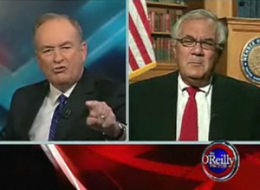
Bill O’Reilly vs Barney Frank
So what are some signs of improper debate?
If anyone refers to you as a “So-called _______”
When someone uses the term “so-called” in describing you, there’s no point in going further. I see Republicans call other Republicans RINO’s (Republicans In Name Only) when they disagree. I’ve had people tell me I’m no Libertarian because I don’t believe in anarchy. I’ve seen liberals attack each other because they don’t agree on gun rights or the evilness of corporations. I’ve even seen religious groups attack their own for how they vary in worship.
No one person is the sole arbiter of what is a Democrat, Republican, Libertarian, Christian, Muslim, etc. If you feel you most closely identify with a particular group, that’s likely how you’ll identify yourself. These aren’t private clubs you can be kicked out of, they’re names attached to a basic set of ideals. Someone referring to you as a “so-called” anything is simply displaying contempt—an ultimate form of disrespect where they feel you are inferior to them.
Inability to distinguish facts from opinions
If someone lays out facts that are incorrect, they should rightfully be corrected. If you really want to do it right; cite reliable sources. But when arguing opinion, anyone who tells you that you are wrong, laughs at your opinion, or cites opinion columns from someone else, are not debating respectfully.
I see people citing Paul Krugman articles to prove their point on economics, when he’s not done any science, but merely advancing an opinion. I’ve had people cite Ron Paul and Ludwig von Mises op-eds to tell me I’m wrong on my idea of libertarianism. In doing so, they haven’t proven their point, they’ve only proven someone agrees with them or that my libertarian views are different from others.
Citations of the same person repeatedly
Science requires that all opinions be considered, respected, and evaluated in order to come to one truth. If a person constantly quotes a particular politician, economist, TV personality, or anything else, this person is not doing anything scientific, it’s the opposite of independent thought. While I personally prefer my opinion reporting come from organizations that are “libertarian-friendly,” I’m at least aware of my bias, and honest about reporting it. I do call my page the Logical Libertarian after all.
On my RSS reader however, I follow 85 different websites of varying opinions and genres. I make the effort to research any opinion I put forth from several sources when possible, and I will reevaluate such opinions if anyone provides me with new information. Being part of a cult-like group-think crowd is the polar opposite of independent and intelligent thought.
All or nothing
Anyone who has agreed with you 95% of the time, but now this 1 in 20 instance where you don’t sends them into a tirade is exhibiting serious signs of bipolar disorder. It’s the underlying root of the word bipolar where there is only a positive and negative, nothing in between. They believe that if you aren’t 100% in agreement with them, you might as well be 0% in agreement with them.
People who take this all or nothing approach aren’t interested in the truth. They want to be the leader of a cult, and expect you to be part of it. That may seem like hyperbole, but think about every cult you know of—how many allowed for varying opinions? There is nothing proper about such behavior. The scientific method relies on varying ideas. Those who view any deviation from their ideology as an insult should be avoided.
These include straw man arguments, ad hominem attacks, appeals to authority, special pleading, anecdotal evidence, observational selection, appeal to ignorance, non-sequiturs, post hoc, confusion of correlation and causation, slippery slope, excluded middle, small number statistics, weasel words, fallacy of the consequent, loaded question, red herring, proof by verbosity, poisoning the well, and bandwagon fallacies.
I implore you to either read at the links provided, or listen to the attached audio podcast version for explanations. Brian has done a phenomenal job comprising them; it’s worth your time; as are all Skeptoid podcasts.
The golden rule of debating should be this: Explain your position until your opponent understands you. Let them explain their position until you understand them. If at that point you still don’t agree, the debate is over, you must respectfully agree to disagree—emphasis on respectfully. But whatever you do, remember that internet trolls thrive on attention, please do not feed the animals.
Previously, I showed that stats don’t add up when making the case that gun owners are dangerous. Conservative estimates show that for every one person who murders with a gun in a given year, there are approximately 100,000 that own guns without incident—1:100,000 does not a pattern make, by any standard.
I do not subscribe to the, do-something-even-if-it’s-wrong mantra. If the desired outcome is a positive result, doing the wrong thing is fundamentally illogical, and will in all likelihood make matters worse—the infamous Washington DC Gun Ban is a prime example.
When children die, it’s always tragic. Being the intelligent beings we humans are, it’s in our nature to solve problems—that’s a basic part of our evolution. A tragedy such as Sandy Hook would push anyone to action, even if that action was contrary to their own long-held beliefs.
For instance, the famous skeptic Dr Michael Shermer, someone whom I greatly admire and partially credit for shaping my way of thinking, wrote this article in January of 2012, only to reverse course a bit in the wake of this recent tragedy; he now compassionately asks for a restriction on guns.
I respect the passion with which people have decided to come out in favor of banning so-called “Assault” rifles (a made up term), their concern is understandable. The fact that someone famous for always putting logic over passion like Dr. Shermer can change his opinion shows this issue can move anyone.
But, I believe removing guns from law-abiding and sane citizens will only save one potential victim while making a potential victim out of another. It seems more of a knee-jerk reaction than a logically deduced solution.
We know how many lives were ended by guns, however we can never know the lives saved because a killer was stopped by a good Samaritan with a gun.
For instance, if the Sandy Hook shooter had been shot by a teacher immediately after killing his first victim, there would have been no way to know he would have went on to kill 25 more. As such, you should be wary of anyone who says they have data proving that guns kill more lives than they save. Such numbers are purely theoretical and often swayed by the writer’s opinion.
One common attack levied at gun control dissenters is, “Yes, let’s do nothing.” Sadly, this is a straw man argument that does nothing to further intelligent discussion. Most rational people are not proposing we do nothing, certainly not me. So making that statement towards gun control skeptics as if we advocate doing nothing, then attacking us for being do-nothing people is insulting and wrong.
So in the wake of this awful tragedy, I am proposing we use good science to improve this issue.
In order to keep this story reasonably short, I’m going to focus on spree killers such as the Sandy Hook shooter (for the record, I am purposefully not mentioning the name). If we are to get serious about reducing all violent crime, repealing “vice” laws against certain drugs, gambling, prostitution, etc., is needed. We know this because repealing prohibition worked, yet for reasons of religious ideology, we continue to ban many other victimless crimes because zealots consider them to be immoral.
One of the traits that seems very common amongst spree killers of any type, whether they use a gun, bomb, arson, or any other deadly means of attack, is that they often had a documented history of mental illness and/or psychopathic behavior.
Based on this information, I believe there is usable data that is not being fully taken advantage of. What I am proposing is that the American Psychological Association (APA) have a convention where an open invitation is sent to any psychiatrist who has treated a patient who went on to commit these heinous acts.
Those doctors would confer and collect data about common traits that were exhibited amongst most or all of the attackers they worked with. This data would be published in medical journals for other mental health professionals to review and provide relevant feedback. The APA would then assemble a list of traits they feel are consistent among spree killers while ruling out those traits that were consistent among killers and non-killers alike. Once we have done this, we should have a reasonable collection of warning signs that can be shared with the public so that we can be aware of what to look for amongst society.
This approach is similar to what was asked of us after 9/11 where the public was given warning signs to look out for to prevent terrorism. If a family member, friend, or acquaintance is behaving in a manner consistent with the behavioral patterns of these killers, we can be more prepared to act.
Gun owners like me for instance, might lock up our guns in a secure safe or remove them from the house altogether. We could call a local medical health facility about what we’ve seen to determine if the person in question may need evaluated. If the person has already been diagnosed and prescribed medication for their issues, we must be diligent about reporting if they go off their meds, which may result in violence.
One look at the Giffords shooter’s (Also not mentioning his name) YouTube videos was rather convincing that the man needed help. I feel that if mental health professionals worked harder at getting info to the public about what to look for and when to report it, the caring among us would do exactly that, and unlike gun bans, lives could be saved with few deadly unintended consequences.
Murder rate statistics of the United States show we are well below average among the rest of the world, so being an alarmist is hyperbole at best—we are not experiencing an epidemic, and immediate action isn’t needed. Other studies have shown that violent crime is simply in steady decline around the world. As we evolve as a species, we become more intelligent, and less violent.
But politicians use hyperbole to advance a political agenda like Gordon Ramsay uses swear words to make a point. There is no epidemic, spike in violence, or reason for panic. What is needed are clear thinking medical scientists applying the scientific method towards mental health issues, then educating the public on how best to deal with them.
As a libertarian, I cringe at the notion of government locking someone up on the premise they might be a threat before they’ve actually done anything wrong. So I believe incarceration should only be done at the behest of licensed medical professionals, and there should be appeals in place to help these people get a second opinion if they feel they are being unfairly detained.
While I’m advocating for advancements in mental health science, and using those advancements to identify threats and potentially get them out of society until they are no longer deemed a threat, it is imperative that like our prison system, we take every step to not detain someone who is of little threat to society.
Logical Americans must demand we use science, not knee-jerk reactions and politically motivated legislation to solve our problems. There’s a reason we have cures for thousands of diseases, rovers on Mars, and mobile phones the size of a playing card—it’s called the scientific method. Unlike politicians and hyperbole, it leads to truths and it actually works—let’s stick with it.
As we consider how America should respond to recent gun violence and other issues in our country, those eager to take away constitutional freedoms from millions of law-abiding citizens to thwart future bad acts of a few, often resort to tried and true arguments with little concern for the fact they are completely illogical.
For instance, if you’ve been watching the gun debate recently, one critic of gun rights, CNN’s Piers Morgan, routinely states that no one can make an argument why people need guns such as the Armalite AR-15 platform (contrary to belief, the A is for Armalite, not assault). This statement would only be relevant or logical in a country where freedom is not the default.
I cannot stress enough that in a free country, the starting point is that everything should be legal. From there, we make a case with a well-reasoned argument where We the people agree that something should be made illegal because one person’s right to do it infringes on the rights of another.
So as we move into the well-reasoned arguments for criminalization and regulation, let me outline one that is commonly improperly formulated; the cause-and-effect argument.
Starting with the aforementioned gun debate, some argue that gun owners are dangerous people. However, a proper analysis of the numbers clearly refutes this. There are approximately 80 million adults in America who own guns and nearly 11,000 criminal gun deaths. That means that 0.01% of gun owners kill, leaving 99.99% who don’t. So by no proper mathematical analysis can you argue gun owners are unsafe when for every one killer among us gun owners, there are 9,999 who are not.
Another similar false cause-and-effect argument is that marijuana is a gateway drug. People assert that by virtue of using marijuana, the drug triggers the user to gravitate to harder and more dangerous drugs. The first issue with this argument is that studies show alcohol is usually the drug that addicts of harder drugs start with. Once bored with that, they may gravitate to marijuana, then harder drugs after that. But because alcohol is legal, it is often removed from the dialogue.
But the reason alcohol and marijuana are the drugs people usually start with in the first place is by virtue of their abundance in the marketplace. They are simply the ones most readily available, and therefore, the ones people most often initially experiment with.
But I want to focus on these cause-and-effect arguments as they are completely backwards. In order to argue cause-and-effect, we first start with the cause (in this case marijuana users) and then see how many effects (harder drug use) result. But, the opposite is occurring.
Let me give an example to prove my point. We know that all Boston Celtics are basketball players, but not all basketball players are Boston Celtics—thousands in fact are not, nor ever will be. So those making the marijuana gateway drug cause-and-effect argument falsely are arguing that by virtue of being a basketball player, you are likely to become a Boston Celtic. While many kids with a basketball in their hands might love this notion, there are almost infinitely more with broken dreams and a regular job.
While I have never used marijuana, I happen to know many habitual users. They’re in the millions across America, so I’m sure you do to.
Like me, I would hope you’ve noticed that most of them have used it for years without ever graduating to cocaine, meth, or anything else. So I’d like to think you knew all along this argument was wrong, but simply hard a hard time refuting the math people gave you because you weren’t aware of their flawed methodology. Now that you realize it’s a false premise, you’ll be better prepared to refute such nonsense in the future.
As a poker player, I’ve seen how such arguments destroy liberty and ruin lives. Look no further than online poker’s infamous Black Friday. Thousands of American rounders were literally forced into unemployment as they were denied their rights to earn an honest living playing a game of skill based on the cause-and-effect argument that gambling ruins lives and therefore should be regulated or outlawed completely.
First let me point out that poker isn’t gambling—it is a game of skill. It has even been ruled as such by the federal government since 1986. So we have people who falsely consider poker to be a game of random chance, who then make it illegal using another false argument of the backwards cause-and-affect.
Millions of people visit casinos every year without losing their house, car, or child’s college fund, yet because every gambling addict who did lose everything started in a casino, the significantly greater portion who can responsibly lay a few bucks on the line get punished. We can no longer enjoy the one form of entertainment that might actually pay us back.
So next time someone uses the false cause-and-effect argument to take away your rights, I hope this will help you to be better prepared to take them down by destroying their poor methodology. More importantly, the next time someone says to you, “Why do you need that gun, drug, etc.?,” you can respond by saying something like this:
This is a free country, I don’t have to make such an argument—everything should be legal here. The onus is on you to make a case for making it illegal by explaining how me enjoying that freedom infringes upon your rights. If you cannot make such a case, we’re done here.
If we’re lucky, they will either have an epiphany and embrace freedom like you and I, or they will remain swathed in a blanket of ignorance and intolerance as they wrongly argue to oppress you by using false arguments and logical fallacies under the guise that it’s “For your own good.”
Now that Psy is making news again for singing lyrics that advocate killing US soldiers many years ago, I’ve decided this might be a good lesson in proper skepticism. People are often quick to jump to conclusions about someone based on one tidbit of information, but that’s just not a good way to be. Too often you end up jumping to wrong conclusions, or leaving yourself vulnerable to attack because you ignored other important evidence.
For instance, if I told you there was a man long ago who was upset by the fact that cars were only available to the rich, and commissioned a car company to build affordable cars that the average person could buy, you’d think that sounds like a good person.
If you read my post called The Beetle is dead, and government killed it, you’d know that person was Adolf Hitler. So hopefully you understand the importance of gathering all of the facts before judgement is passed.
I don’t presume to know what’s in anyone’s heart, and neither should you. But one of the first things that concerned me on this is something that happens often when people judge musicians. They assume that the lyrics have meaning to the artist. When Andrew Kevin Walker wrote the movie Se7en, no one asserted he was advocating killing all sinners in brutal fashion. Why? Because it was a fictional movie. Phil Collins’ famous song “In the air tonight” is often mistakenly assumed to be written because Phil witnessed someone committing a violent act. In reality, he has repeatedly stated that it was pure fiction.
So when judging a musician based on some lyrics they wrote, first you must stop and ask was this just a work of fiction or were they truly advocating this sentiment. Based on Psy’s own statements, he was upset about American soldiers who killed two Korean nationals, and were acquitted of any wrong doing. He was highly upset, and as a result, spewed some pretty hateful things. So this was not a work of fiction, he actually meant it.
So then I think about what motivated him to say it and how would I feel if the roles were reversed. If Koreans soldiers killed two Americans and were acquitted, would I be mad? Probably. Would I say hateful things? Well, I’m a proper skeptic, so I’d do the research and not jump to conclusions, but if I were an impulsive, young, dumb, musician prone to spouting off through my music, maybe I would.
So then I ask myself; is he someone who has never really come to know America? People in other countries are often anti-American, and spread a lot of lies, hyperbole, misinformation, and half-truths about the good things we actually do around the world. Musicians sometimes live in a pro-anarchy bubble of friends who love to demonize any government as well. However, Psy spent 4 years here in America prior to writing these hateful lyrics, so he has certainly had an opportunity to come to know America, and should have known better.
So then I ask myself, does he still believe this? Well, he did issue an apology. So as not to leave out any context, here it is in its entirety:
As a proud South Korean who was educated in the United States and lived there for a very significant part of my life, I understand the sacrifices American servicemen and women have made to protect freedom and democracy in my country and around the world. The song I was featured in — from eight years ago — was part of a deeply emotional reaction to the war in Iraq and the killing of two innocent Korean civilians that was part of the overall antiwar sentiment shared by others around the world at that time… While I’m grateful for the freedom to express one’s self I’ve learned there are limits to what language is appropriate and I’m deeply sorry for how these lyrics could be interpreted. I will forever be sorry for any pain I have caused anyone by those words.
I have been honored to perform in front of American soldiers in recent months — including an appearance on the Jay Leno show specifically for them — and I hope they and all Americans can accept my apology… While it’s important we express our opinions, I deeply regret the inflammatory and inappropriate language I used to do so. In my music I try to give people a release, a reason to smile. I have learned that though music, our universal language we can all come together as a culture of humanity and I hope that you will accept my apology.
So after reading this, do I believe his apology? As I look at it, I have a couple of problems with it. A proper apology doesn’t try to justify the behavior in any way, it just says, “I’m sorry.” But here, he does seem to make excuses for why he acted the way he did. He also says, “…how these lyrics could be interpreted.” Here are some excerpts:
Kill those fucking Yankees who have been torturing Iraqi captives and those who ordered them to torture.
And
Kill [the Yankees’] daughters, mothers, daughters-in-law and fathers / Kill them all slowly and painfully.
I don’t know about you, but to me there was little ambiguity there in what he said. I do believe I read they were lyrics from a song by someone else that he was just repeating. But, I don’t see how it was open to interpretation, either way. So again, it seems like he was trying to downplay the severity of the things he said instead of just properly apologizing for them.
So then the last thing I would ask, is if his apology is motivated by anything other than remorse? Well, he is trying to sell CD’s after all. Being universally hated by the most powerful economy in the world isn’t exactly a brilliant business strategy for a musician looking to achieve international fame. So he has a motive other than regret for his apology that cannot be ignored.
So what is my skeptical analysis?
I’d say he probably doesn’t feel the anti-American hate he did back then these days based on his words and actions as of late, but I doubt he’s truly sorry he said those things either. He’s probably just embarrassed. I suspect he has hate for those soldiers that killed his countrymen, but understands that America is the only reason there even is a free South Korea in the first place.
Can a person change? Well, I used to say I was Republican who thought Libertarians were crazy, and now I’m a Libertarian. I used to be a Christian but now I’m agnostic/atheist. So yes, people can change.
Is it possible Psy went from being an America hater to an America lover? Of course!
Does he a really want to kill Americans? I doubt it.
Was he prone to make emotional, hateful, and idiotic statements back then? Probably.
So I would accept his apology at face value, but I wouldn’t assume him to be pro-America either. America has been pretty good to his career as of late, so that may have changed in light of his new success here.
I do know this, I listened to Gangnam Style once just to see what all of the fuss was about, and after doing so, I realize that I cannot unhear it, I’m eternally scarred, and I want my 5 minutes back. Only a monster could write something so hideous.
log·i·cal: capable of reasoning or of using reason in an orderly cogent fashion lib·er·tar·i·an: an advocate of the doctrine of free will; a person who upholds the principles of individual liberty especially of thought and action


 As a former entrepreneur myself, let me give you an analogy. This criticism is akin to farting while sitting next to me, then getting upset when I leave because you’ve made the room smell like three-month-old milk and despair.
 So to explain my flatulence analogy; America has the third
  If you’ve ever been in the middle of a productive task and had someone interrupt to “help” you, only to slow you down and make matters worse, then you should inherently understand what government does to entrepreneurship every single day.
 As a young man, I had been initially enamored with the idea of






![americanpsychoass[1]](https://logicallibertarian.com/wp-content/uploads/2015/03/americanpsychoass1.jpg?w=300&h=300)
![519x361[1]](https://logicallibertarian.com/wp-content/uploads/2013/01/519x3611.jpg?w=300&h=208)







 The Logical Libertarian™