In December 2014, The Supreme Court heard arguments in the case Heien v. North Carolina. You can click on the link to read the entirety of the case if interested, but I’ll give you fairly brief synopsis here.
In 2010, a man named Maynor Vasquez was pulled over by police for having one of his two brake lights inoperative. Police observed his friend, Nicholas Heien sleeping in the back seat of the car. Thinking this behavior seemed a little odd, police fairly asked if they could search the car, and were given permission to do so.
Official Portrait of United States Supreme Court Justice Sonia Sotomayor Click for Biography
Upon the search, they discovered 54 grams of cocaine in the vehicle, then arrested and convicted Heien of two counts of trafficking, presumably due to the amount larger than one person’s normal usage.
Heien’s lawyer challenged the traffic stop as North Carolina law only requires you have a working brake light, not both of them. As such, council argued the police stopping Vasquez and Heien constituted an illegal stop, and the search was therefore the proverbial “fruit of the poisonous tree,” and should have been thrown out.
Eventually, certiorari was granted, and SCOTUS heard the case in 2014. The court ruled against Heien in an 8:1 decision—Sotomayor being the only dissenter.
During oral arguments, Sotomayor asked the petitioner:
(You can click below for the entire oral arguments transcript)
It’s fairly common knowledge, that SCOTUS at that time was comprised of what most considered five right-leaning justices, and four left-leaning. Sotomayor being one of the left—as she was appointed by Obama.
The issue at hand was whether Heien’s Constitutional rights were violated by a search under the Fourth Amendment which reads:
“[t]he right of the people to be secure in their persons, houses, papers, and effects, against unreasonable searches and seizures, shall not be violated, and no Warrants shall issue, but upon probable cause, supported by Oath or affirmation, and particularly describing the place to be searched, and the persons or things to be seized.”
While it is often believed that the left-leaning justices don’t often seem too concerned with the Constitution, if you listen to oral arguments long enough, you start to see both sides indeed heavily use the constitution for the basis of their arguments.
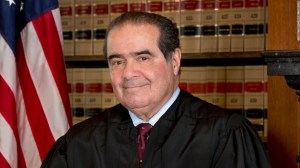
Justice Antonin Scalia 1960-2016
What’s often the case however, is that some are absolutists, and use the constitution strictly as it’s written.
However, other justices try to interpret what was intended when the Constitution or its amendments were written, instead of interpreting it solely by its verbiage—referring to the Constitution as a living document. Most notably, former Chief Justice William Rehnquist, who wrote this piece explaining his ideals.
United States Supreme Court Chief Justice William H. Rehnquist 1924-2005
This “Living Document” idea also means that they often try to modernize the Constitution in such a way as to essentially say, “If the framers knew what we know today, this is what they’d have written or done.”
Scalia (and I agree wholeheartedly) would argue that it is for congress to rewrite the Constitution through the amendment process, and that the “Living Constitution” concept is nothing less than legislating from the bench—blurring the lines of the separation of powers intended by creating the Judicial, Legislative, and Executive branches.
But nonetheless, Justice Sotomayor’s lone dissent, was clearly the only decision made with the Constitution in mind as written, almost stunningly not echoed by the late Justice Scalia and other conservative justices.
The United States Constitution
In today’s highly politicized society, we often wish to assume that partisan’s, including justices, are always on the side of their party, but every once in a while, you will find an ally in the most unlikely places, and on this particular issue, the only ally to liberty was Justice Sotomayor, recognizing that you cannot allow police to search someone’s car under a false pretense, and then allow prosecution to proceed accordingly.
I’m often pretty outspoken in my disdain for any politician who is consistently on the wrong side of liberty, but I’ve always said I worship ideals, not people. I just give people credit where it’s due, and attack when I believe it’s warranted. On this day, Justice Sotomayor was right, and she should be commended for it.
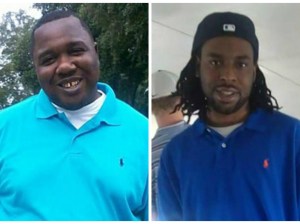
Unless you avoid the news at all costs, you’re fully aware of the shootings by police, killing two black citizens, Alton Sterling and Philano Castile, both under highly questionable circumstances.
Alton Sterling (Left), and Philando Castile (right)
Then Army reservist/Afghan war veteran Micah Xavier Johnson, so enraged by such shootings, murdered several police officers in Dallas in retaliation.
There can be no doubt, that tensions between the governed and the government are at levels that are bordering the animosity that triggered us to war for independence against Great Britain 240 years ago. But how did we get here, and how do we get out?
Facts versus Headlines
It’s fair to say that the media push narratives that get ratings. But while according to the FBI in 2014, most black and white people are killed by people of their own race—89% for the black community, and 82% for the white, they often push a narrative that a young black man is more likely to be killed by a white cop.
There were a total of 444 police shootings deemed justifiable homicide, by police in 2014. Pointing out those deemed justifiable homicide is important to the story, because the concern is that police aren’t prosecuted for such shootings. So for police not to be prosecuted, it means the shooting was deemed justifiable.
The FBI didn’t break them down by race, but even if they were all white cops shooting black victims, which they certainly aren’t, that’s still four times less than the 2,205 black-on-black murders in the same year, or the 2,488 white-on-white murders.
Let’s be clear about that statistic, though. It has little to do with living in violent communities, a narrative that is often asserted. The first clue is that white-on-white murders are very similar.
It actually has to do with people being four times as likely to be killed by someone they simply knew.
See this table from the FBI, also in 2014, which shows that 43% of the time people were killed by an acquaintance or family, compared to 11.5% by strangers. The rest are unknown, but since the dataset is somewhat large, we should reasonably assume that nearly 4:1 ratio would be true for the unknowns as well.
The Attitude Adjustment
We need to change the way we interact with each other.
The police were hired to protect our rights. If one pulls you over or otherwise interacts with you, remember that this person is potentially willing to die for you—treat them accordingly. A little compassion for police who do such a dangerous job would go a long way to improve the exchange you have with that officer.
Credit: inhauscreative Vetta Getty Images
But as always, it takes two to tango.
Police are trained to fear the worst and prepare for it in each interaction they have with the public. The most innocent traffic stop could be their last.
But preparing for the worst doesn’t excuse assuming the worst, nor treating them as if they’re the worst. If police want people to respect them, they must first show citizens the same respect they expect from them. If an officer didn’t specifically witness a citizen harming someone, they are innocent until proven guilty—it’s an officer’s duty to act accordingly.
Blame Legislators Versus The Police Where Appropriate
Whether you’re a Republican or a Democrat (libertarians already generally know this), when you try to socially engineer society by passing victimless crimes, you cause police to have to enforce those crimes—requiring more police.
This puts both police and citizens in harm’s way; increasing the odds of violent interactions between the two parties.
Drugs, prostitution, blue laws, and other such victimless legislation which protect no one—yet risk many, are a huge part of the problem.
If you support passing a law, then you must be comfortable with the notion of putting a gun to the offender’s head and killing them yourself if they violate it. If you’re uncomfortable with this thought, then it’s pure hypocrisy to put police in the situation where they may have to do so in your name.
For instance, if your neighbor were smoking marijuana, would you walk next door, put a gun to their head and tell them to stop or you’ll kill them? Of course not. But if that same neighbor were raping a child, I suspect you’d feel quite differently. This is bad legislation versus good in a nutshell.
If we want to reduce senseless violence, we must first elect someone looking to undo all the senseless laws we’ve passed which trigger senseless violence. Then be sure they don’t pass new ones going forward.
Respect the Constitution
I’m in a state where concealed carry requires a permit. So this means I open carry when walking my dog at night, because I haven’t taken the course and applied for that license. I carry in case I get accosted by a miscreant. In so doing, I often worry I might get accosted by the police.
The current scenario is that if a busy-body citizen calls police to report me walking down the street carrying a gun, the police must investigate. They do this because we’ve allowed a litigious culture where police can be held liable for not investigating.
What should happen however is that the police should respond to the caller with, “Carrying a gun is every American’s right. Does he/she appear to be committing a crime? If not, there’s nothing for us to investigate.”
This may seem wrong at first, but the police would do this if you reported someone just driving a car down the street. Driving a car and carrying a gun are both perfectly legal actions that have an intrinsic danger if done so irresponsibly or maliciously. So while at first it may seem like a horrid analogy, they are almost exactly the same.
The reason it feels wrong is simple conditioning by anti-gun people who deem gun carriers as a threat, despite the fact everyone is a threat in some way, and gun carriers aren’t any more likely to harm someone. Most are responsible citizens exercising their 2nd amendment rights just as all of us exercise our 1st.
We then need to pass serious tort reform to preventing civil action against police who don’t investigate someone carrying a gun, on the off chance that person actually harms someone.
Better Community Outreach via Police Training
This proposal is a bit novel and controversial, and I admit it may have unintended consequences. But I like blue skies thinking, so I’ll propose it anyway just to get some creative juices flowing.
Much like we have food stamps to help the needy eat, I think police could use confiscated weapons that are normally destroyed, and start a program with impoverished citizens in bad neighborhoods to protect themselves by donating these weapons and giving classes on how to use them properly.
Of course those citizens would be screened properly for criminal backgrounds like they would for a gun purchase. And yes, it is possible one of those guns may be used in a crime later. But it’s also highly possible that those guns may save many lives of people too poor to buy one themselves, yet absolutely may need one as a result of living in a high crime area.
If every good citizen were armed, and prepared to defend themselves against a would-be criminal, we’d have a lot less would-be criminals.
Criminal prey on the weak, but it’s hard to call anyone packing heat, weak. Guns are the greatest equalizer mankind has every invented, turning a feeble grandmother into a Chuck Norris level threat.
Police Need To Eschew The Brotherhood Mentality
Being a Corvette owner, we tend to recognize each other—so much so, that nearly all of us wave at another Corvette owner driving past. Motorcyclists do this too. If you were from Boston, visiting California, and overhear the person next to you say he just “Pahked the Cah,” you’ll almost certainly strike up a conversation with him.
This is because people are hard-wired to bond with those they share commonalities with—it strengthens societal bonds. The easiest way to do this, is to bond over a unique common interest or trait. I say “unique,” because if you were both in Boston, you’d pay the same person no attention whatsoever.
Police know that their work is dangerous, so they form strong bonds among one another so they can be confident they’d have the other’s back, even if they don’t personally know each other—it’s a very natural phenomenon.
But they should be taught that this is a natural emotion, and that they should avoid following it blindly. Much like the placebo effect, while it’s natural, it can do far more harm than good if all skepticism is eschewed.
Violent Crime Rate comparison between general population UCR data and law enforcement population NPMSRP data. Click image for the full article
This data shows that police are just as likely to commit criminal acts as the general public.
At first, you might think this seems odd, but the police are regular people, not superheroes.
We often hear stories of good Samaritans doing wonderful things. So being a good person isn’t unique to police, nor is being a criminal unique to the general public either.
The reason I say they need to eschew the brotherhood mentality is that police often defend other police who have clearly done unconscionable things.
While at first, a police officer might think defending their “brothers” is the honorable thing to do, but it’s absolutely not in their best interests.
When an officer commits a crime, they violate their sworn oath to uphold the law of the land, dishonoring their noble profession. But it also creates animosity with the public who feel as though police can operate above the law without repercussion.
This hatred and distrust often leads enraged citizens to act violently towards the police, because they feel it the only way justice will be served—putting good cops needlessly at risk, as evidenced by the aforementioned Micah Johnson.
Instead, if an officer is arrested or put on probation for a potential felonious act, police should distance themselves from that person entirely, and make it clear that if the person is found guilty, that person is no “brother” of mine.
They should also be quick to report any criminal acts among their ranks, and clean their own house unmercifully. They will never get the trust and respect of disenfranchised citizens otherwise.
And let’s be honest, if you are a police officer, are you really OK with one of your own committing a murder or unprovoked assault?
Drew Peterson should serve as a shining example of the harm that can come from this blind loyalty. His fellow officers failed to properly address allegations of abuse against Drew when his then wife Stacy Peterson reported him a multitude of times for serious domestic abuse.
Stacy Peterson
It is almost certain that had his fellow officers taken Stacy’s complaints seriously, and treated Drew like any other violently abusive husband—investigating Drew in earnest, Stacy could very well be alive today, with Drew safely in jail where he belonged.
By all means, police should have each other’s backs, but never at the expense of what is right. A criminal is a criminal, whether they wear a badge or a wife-beater, they should be treated with the same prosecutorial mindset.
I could write an entirely separate post on the tactics police unions use to protect police in ways that harm the general public, and destroy the public’s trust in them. They should merely assign the accused a lawyer, and refrain from professing the person’s innocence or any other public statements until that officer is cleared of any wrongdoing.
But once convicted, their sentences should be as harsh as what would be applied to the general public (in my opinion harsher, since they swore to uphold those laws). The slap on the wrist sentence for an offense that would land us regular citizens in jail is surely one of the largest factors in eroding the relationship between the governed and the government.
Your humble correspondent has many favorite pass-times. At the top of my list is autocross racing; a form of road racing for beginners—using their own cars to get the thrill of something like Formula 1, without the $100 million dollar budget, death-defying 200+ mph speeds, or the need to be the best driver in the world. See the video below for a short, but wonderful documentary on autocross. If you like motorsports, I encourage you to check out your local SCCA or NASA (not that NASA) club and check it out. It’s cheap yet awesome!
Before every event, they have a driver’s meeting where the person running the event (a volunteer) lays out the plans for the day, and the safety steward (also a volunteer) explains the rules of safety.
One of these officers from the events I went to, one Jon Beerman, would always say, “Safety second! If we put safety first, we wouldn’t be out here doing this in the first place.” Jon has a crazy fast Corvette, and if you know me or follow me on Twitter, you know I have a deep love for all things Corvette, so this makes Jon a well respected man in my book straight away.
Jon Beerman and his Corvette of Death
All kidding aside, I always thought this was pretty insightful of him, but also, a great analogy for the American spirit. We were a country born out of a passion for freedom. The freedom to do something really dumb, adventurous, dangerous, and/or even crazy (as long as you don’t hurt anyone doing it). Why would you do such a thing? Why not?!
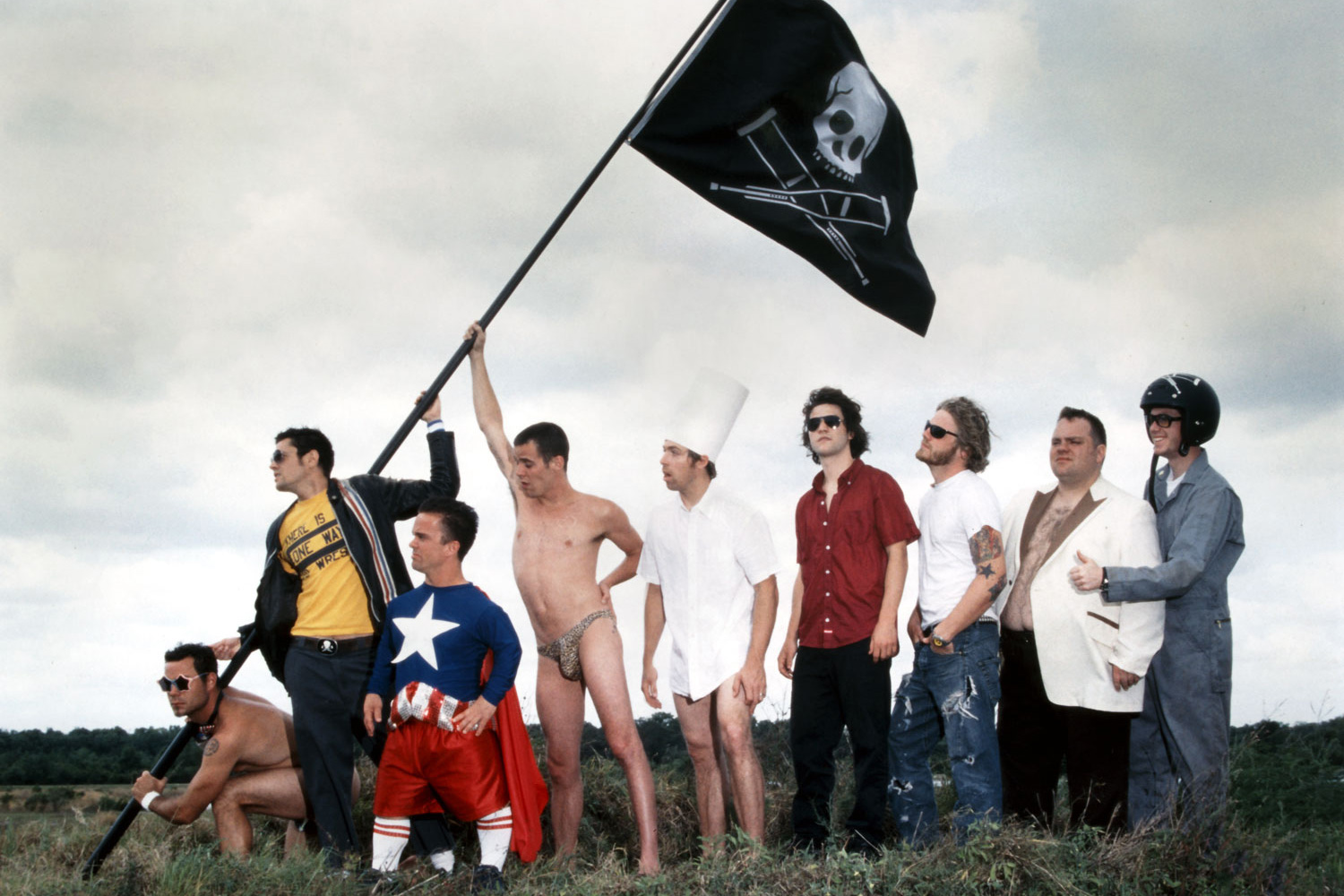
The crew from the Jackass movies, for instance, put their lives and limbs on the line, just to make a living entertaining us. Nothing they do is ever advisable, and certainly isn’t safe. But obviously they are doing what they love for a living, and those of us who find it entertaining are thankful they do. But if all we cared about was safety, nothing like that would ever exist. Thankfully, both the Jackasses and us viewers live a happier life, in some small part, because they do.
The Cast from Jackass
Yet these days, that concept seems to be lost on most Americans as we strive to put warning labels on everything, barricade our children into the house until they’re 18, pass laws to erase any ounce of danger in life (even if we’re only endangering ourselves), and generally destroy anything that is fun in the name of safety.
The whole point of freedom is the ability to do things that other people might not think you should do, but so long as you’re not hurting someone doing it, you should happily be able to do so with no impediment from government.
Whether it be currently legal activities like skydiving and/or road racing, or things currently illegal like using recreational drugs, gambling, hiring a prostitute, or all of the above. It’s your life, you should be free to live it as you see fit.
As with most all things, we’re dealing with a simple trade off. You can lead a riskier life you enjoy more, but may die younger as a result. Or you can lead a more sterile life, live longer, but be miserable doing so.
After reading that last paragraph, you’ve probably thought about it and picked one life or the other for yourself. But here’s the thing that you should really think about. Whichever you picked, you have no right to dictate that someone else pick the same for themselves.
If you opted to go the Evel Knievel route, great! Have fun and good luck. The funny thing about such daredevils, is that they rarely, if ever, try to force that lifestyle on you. Some of them do their shenanigans in public and risk the populace around them, which I would never condone—that’s criminal, violates the rights to life of others, and they rightfully should be locked up.
Evel Knievel Crash – Wembley Stadium
But at the opposite end of the spectrum, those who think risk-taking is always bad and avoid them at all costs, love to vote on legislation to ensure you lead their sanitized lifestyle.
It can be something as benign as a helmet or seat belt law, or as intrusive as the aforementioned drug, prostitution, or other vice laws.
If you know a few friends who like to sit around and get high; you know they rarely if ever, hurt anyone. So how is it the business of anyone else if they do that to themselves? I know it’s popular opinion among those who aren’t around such people, mostly based on folklore, that people who sell or use drugs are violent killers, but most are just trying to pay a few bills, and escape the miseries of life peacefully.
While Hollywood paints prostitution to be a crime ridden enterprise, the fact is that many of the consumers are just lonely guys, maybe not very attractive, who want to know what it’s like to be with a beautiful woman, and often treat the providers fairly respectfully.
Here’s where the illegality part becomes the problem. If the consumers are abusive, the laws against prostitution actually work against the victims, because they cannot call the police to help them without admitting they were engaging in prostitution.
Some areas stipulate police cannot check a person’s immigration status if that person calls the police to report a crime, because we want those people to report those crimes without fear of deportation. Yet somehow, if someone’s rights are violated during a vice encounter such as drugs or prostitution, now the same legislators don’t seem to care.
It’s rather hypocritical, quite immoral, and nearly unconstitutional to worry about the rights of someone who isn’t a citizen, yet care less about the rights of someone who is, just because they were engaging in behavior you think is wrong.
So I will always argue that America should be safety second, and enjoy your life to the fullest should be the resounding first.
I, as most of you, was compelled by the Making a Murderer series on Netflix. The validity of the claims aside for a moment, it was certainly compelling TV, and Netflix deserves all credit for the entertainment value of it.
Also, like you, after watching it, I felt as though Avery and his nephew were wrongly convicted in both instances, not just the initial conviction of Avery we know was wrong.
Steven Avery: Making a Murderer on Netflix
But I’d ask you all to apply come critical thinking for a second.
Most of you who watched the documentary feel he’s innocent. I’d say a fair estimate is at least 11 out of 12 of you anyway.
Yet, in a court of law, where all the evidence was presented, 12 out of 12 people all came to the opposite conclusion and agreed Avery and his nephew were guilty beyond a reasonable doubt. Not the majority of them, but every single one of them. Such a large disparity cannot be explained away by a simple anomaly.
Clearly, they heard a different story than us Netflix viewers did. This story would be one where the prosecution and the defense presented their cases with equal opportunity.
I’m not saying a jury never gets it wrong, surely they do, and did in fact for his initial conviction. But let’s understand that the jury is made of people just like you and I. So if the majority of us think he’s innocent, yet all of them found him guilty, clearly we’re missing some info that the jury heard.
Here’s a link to some evidence that was left out of the documentary, in my opinion, somewhat shamefully if they intended to be fair. It paints a very different picture of Avery.
Let’s also remember that the car was found on Avery’s property. If Avery is entirely innocent as he claims, and was framed by the police, when they found Halbach’s vehicle, instead of investigating her murder in earnest, they immediately opted instead to use the opportunity to plant the evidence at Avery’s place, hoping that someone would find it. It’s pretty far-fetched.
Either way, let’s explore another possibility that fits with all the evidence, not just the evidence supporting Avery’s innocence.
It is entirely possible that Avery is guilty, but prosecutors and police didn’t have enough evidence to convict him, and thus planted evidence to get that conviction they needed.
If this is true, this means both Avery and Manitowac county are villains.
By all means, it was an entertaining series which in my opinion shows that the Manitowac county government has some serious ethics issues. When libertarians like me try to convince the populace to stop growing government, it’s because government has corruption issues like this throughout. We understand that the only way to lessen government corruption is to lessen the size and scope of government itself.
But let’s not assume Avery is innocent based on a documentary with a clearly biased agenda. While I don’t argue they presented false information, it is obvious they ignored presenting information that paints Avery out in a bad light; specifically all the evidence that led to his ultimate conviction. As well as the evidence that shows he exhibited psychopathic and violent behavior.
Avery being guilty, and Manitowac County being corrupt are not mutually exclusive hypotheses. Keep in the back of your mind that it is entirely possible both are true. Watch the series, find it interesting. Look at other sources and find them interesting as well. But no one should be asserting that they know one or the other is true. Question everything, and enjoy the journey.
Donald Trump has recently announced that as president, he would use executive order to ban Muslims from entering the country temporarily.
As an atheist, I feel all religion can be dangerous if taken to extremes. But that being said, there can be no doubt that around the world, in the 21st century, the overwhelming majority of atrocities committed in the name of religion are committed by people of the Muslim faith.
Any time a tragedy happens, we as a people tend to believe we should try to analyze the problem that caused the tragedy and fix it. If the problem is too big for any one of us to fix, the non-libertarian population often feel government should fix it for them.
But let’s apply a little critical thinking to Trump’s idea of banning foreign Muslims from entering the United States.
How exactly do we go about banning all Muslims? If a Muslim applies to come to America, do the authorities ask that Muslim if they’re Muslim?
While an honest Muslim might answer truthfully, knowing it would preclude them from coming, wouldn’t a radical Muslim intending to kill Americans, or a desperate but peaceful Muslim hoping to flee a war-zone, just lie to get into the United States?
Quite similarly to the “If guns are outlawed, only criminals will have them” argument, if Muslims are banned from entering the United States, only deceitful Muslims will enter.
There is no DNA test that tells you what religion someone is—religion isn’t genetic. There is nothing science has to offer to detect one’s religion.
The 1st amendment states that, “Congress shall make no law respecting an establishment of religion, or prohibiting the free exercise thereof; or abridging the freedom of speech, or of the press; or the right of the people peaceably to assemble, and to petition the Government for a redress of grievances.”
By the letter of the Constitution, the president could in-fact pass such an order, because it isn’t Congress passing a law, it’s the president passing an executive order.
So while some have put forth the constitutionality argument, I would have to argue it is a non sequitur.
U.S. Constitution: 1st Amendment
But, the Supreme Court continues to allow Blue Laws which are clearly an establishment of religion, proving the letter of the Constitution isn’t always their ultimate guide.
So it’s quite possible that the Supreme Court would strike such an executive order down based on the “principles” of the first amendment, versus the letter of it, as they tend to err on the side of secularism these days—something I typically appreciate.
The Supreme Court Of The United States
So now we understand that if Trump wrote such an order, there’s no way to know who is and isn’t a Muslim. Even if the Supreme Court didn’t strike it down as an executive order, if Congress tried to pass it as law, it would most assuredly get struck down then.
But also, it is important to consider that even if such a law did somehow evade the Supreme Court’s wrath, and scientists invented a Muslim detector that really worked; when exactly is “temporary” over?
We’ve been fighting the war on terror since 2001, and it’s not like there are any fewer radical Muslims killing people. While the radicals may be a small minority at best, if he’s passing such an order to eliminate the threat, the threat won’t be eliminated until all Muslims are dead—an idea I assume most people would not support.
Because much like it’s impossible to identify a Muslim with any certainty if they choose to hide it, it’s equally impossible to identify a radical Muslim hell-bent on killing innocent civilians they deem to be infidels deserving of death.
Hopefully, Trump and his supporters will come to their senses and realize this isn’t a workable plan, and instead look for ways to better screen all people coming into the United States. But they should also understand that with freedom comes danger, as illustrated by our gun laws—something most Trump supporters do support, and anyone else who is serious about liberty.
So if we’re OK with one danger, we should be OK with the other, lest we be hypocrites.
While I don’t claim to have the answer; if we’re seeking one, I’d at least like to know there’s a bit of logic and reason behind the ideas being proposed, because this one has very little.
“If you see something, say something,” is a much simpler notion, it’s something we can all do to help government officials find these people. Exercising our 2nd amendment rights to arm ourselves so we can take down any would-be killers in our midst if we encounter one is pretty simple too.
Both are far more likely to be effective and far more doable than Trump’s entirely unworkable notion.
You may have read about a recent incident in Texas where a man, witnessing another man beating up a woman, stopped and drew his legal firearm on the woman’s attacker. A bystander contacted 911 who dispatched police moments later, and the attacker was eventually arrested by police with no shots fired, neither by the hero nor the police (the attacker appears to have been unarmed).
The police went on to say that they commended the heroic man’s actions for coming to the rescue of this woman. But as police so often do, stated that they didn’t want citizens exposing themselves to danger in this way.
This statement has a couple of interpretations.
Giving police the benefit of the doubt, this was to indemnify themselves from the impression that they would promote vigilantism. Meaning, that if they congratulated him entirely, gave him a key to the city, and/or named a street after him, it would encourage others to perform similar acts, one of which, if taken too far, could be felonious. There’s a line between justifiable homicide and murder, but sadly, it’s not like they teach this in school, so many may not know their rights as well as they should.
So taking this a step further, the next would-be hero-cum-felon might then say, “Well, I saw how police praised the other guy, so I wanted to do the same thing.” This then opens police up to a civil suit, arguing that the police encouraged such behavior.
The Bill of Rights
It is upsetting we have allowed our country to become so overly litigious to the point where we’re afraid to speak honestly in such a way, but alas, tort reform is a subject for another post.
However, the other motive for these officer’s comments I most lean toward is the complete lack of hubris they often possess which leads them to believe that because they have went to a police academy and/or have former military experience, only they are qualified to use force to save a life.
I have regrettably never served in our military, nor have I went to any police academy. But I’ve been to the shooting range often, and I know my weapon’s operation well enough for defense purposes in the event use of deadly force were justifiable in a given situation.
More importantly though, I was raised with a set of morals that prohibits me from standing by and letting someone die when I’m capable of saving their life.
One good punch could mean the difference between life and death in a situation like this. I’m not about to roll the dice on an innocent life by calling 911 and hoping the police arrive in time when my partners Smith & Wesson can assist me in putting this business to rest now.
Government often wants us to subjugate ourselves to the men in blue. If I’m committing a crime and get caught in the act, I would agree—you’re busted, take your lumps. But to all the police officers out there who feel I should always comply with them, even when I’m in the right, I want to make a couple quick points.
You serve me, not the other way around. I also pay your salary. We citizens entrust you to enforce laws we voted to enact. It has never been our duty to comply with you, it is your duty to serve and protect us, and your responsibility to know the law and operate within it. If you don’t understand and appreciate all of that—you are essentially violating the oath you took when you signed up to be police officer; so resign now.
If it were your wife who had been getting beaten half to death, would you still have wanted this man to wait? Or would you have preferred him to intervene as soon as possible? I think we know the answer to this, so don’t be a hypocrite.
We have a guaranteed right to bear arms in this country. One of the reasons is because our forefathers wanted us to be free to defend ourselves. If you don’t like an armed citizenry, you can either attempt to get the votes to amend the Constitution, or you can expatriate. Otherwise, accept that you serve in a support role. So long as we have our Constitution, the power lies with “We The People,” not “You the police.” It is not our duty to comply with you. If you are in the wrong, we should not comply. If you attempt to get us to comply with force, you can rightfully be killed in self-defense.
At this time, the hero in question is unnamed, but his actions are highly commendable in my opinion—I’d gladly buy him the drink of his choice. Since this is an opinion website, unlike many police officers I suspect might actually agree with me, I don’t mind saying that I think we should be doing more of this, not less.
Every American citizen, at least the non-criminal ones anyway, should exercise their right to arm themselves. And more importantly, every state in the union should have the same laws on how and what you can defend.
So while I am thankful for the 2nd amendment, I would welcome an addendum to it that reads something like:
The right for the people to defend themselves, innocent others, their property, and their position in space, shall not be infringed.
I feel this language is consistent with the Constitution’s paradigm of being a restriction on government, but I think it would further solidify one of the inherent intents of our Constitution’s second amendment, by taking away the ability of colorful language often used to subvert the 2nd amendment currently.
While there’s no doubt, self-defense wasn’t the only reason we have that enumerated right, and thus why it wasn’t specifically written in to the second amendment, the need for it was certainly understood and part of the equation. So I see no harm in specifically broadening that right. No matter where you are in America, when your life, property, space, or the life of an innocent other is threatened, you should not be wishing your lawyer was present to advise you before acting to save someone, your firearm and general understanding of the law should be all that is needed.
With all of the protests lately regarding the police killings of young black men, a lot of people are lashing out at the men and women in blue.
In New York City, protestors were heard chanting:
What do we want?
Dead Cops!
When do we want it?
Now!
While some may assume that being libertarian, I hate the police, the fact is that I don’t. I hate what government has made them become, and that’s a pretty big distinction.
First things first, I hate bad cops with a passion. If you’re given the honor of serving your community, you damn well should remember what an honor it is. If you did it for the money or the power, in my opinion, you’re likely a bad cop already.
I feel that police officers who commit crimes should receive more punitive sentencing than the average citizen. Not only do they know better, but they’re people we trust to enforce these laws, and they’ve abused that trust.
They should be held to a significantly higher standard. Instead, they’re often given an opportunity to resign sans any prosecution on things that might put the rest of us in jail. This often lax, or sometimes non-existent, prosecution of police officers who break the law breeds a massive amount of distrust.
But that being said, bad cops are like bad people—a very small minority of the community. Most selflessly put their lives on the line for us every day, and let’s be honest, don’t get much thanks for it. The days of little kids wanting to grow up to be Andy Griffith, Elliot Ness, or Wyatt Earp are long gone for the most part—which is pretty sad.
Wyatt Earp
I am not one to argue that racism doesn’t exist in America, but I will vehemently argue that racism has both been marginalized and has become equalized.
I think that idealistic or fundamental racists like the KKK or New Black Panthers, as well as people who either publicly or secretly hold such hateful views, are easily a small minority. Furthermore, those people are generally pretty quiet about it because they know it’s no longer widely acceptable behavior as it might have been 40+ years ago or more. It’s not like there are polls asking people if they are bigots, so confirming my opinion is difficult.
But also, I believe that the percentage of black people who hate white people has equalized to the number of whites who hate blacks. While I’ve never attacked someone because of their race, I’ve been the victim of racism a couple of times, and I’m white. Only advancements in scientific understanding and critical thinking will eradicate these non-sensical views, and that just takes time.
With each decade, it is painfully obvious race relations improve, so there’s not much need to do anything different than what we are already doing.
Many of the black people protesting against cops however, are doing EXACTLY what they profess to be the wrong thing to do. Their argument, whether you agree or not, is that the police are bigoted against black people, yet in response, they are being bigoted against cops—a blaring hypocrisy.
Assuming a few of these people have been a victim of a crime, called the police, and had an officer respond to assist them, are they now willing to end the officer’s life who may have helped them previously just because he/she wears that uniform?
I get that these people are angry, but if the desired outcome is to be treated as respectable citizens, behaving in a supremely disrespectful way is not going to help that cause.
The second issue is that if these folks are ever the victim of a crime, are they renouncing their right to call 911? Because if they don’t, that’s also being entirely hypocritical.
Throughout all of these incidents, I’ve tried to use critical thought instead of arriving at some preconceived notion. While I admit that I’m a science geek, and therefore tend to think more analytically than most, asking people to exhibit critical thought as a general rule, should not be deemed an unreasonable request.
So where is all this police hatred coming from? While some believe it’s the actions of the police alone, I feel the issue is far deeper than that.
I see the issue as predominately one of an ever-growing policed state. People instinctively want to be free, just as our forefathers intended. Despite the fact that few identify as libertarian, most people tend to agree with the “no victim, no crime” mantra.
Since Libertarians rarely got more than 5% of the vote, it’s well-known that 95% of black people elected politicians who pass the laws they’re then mad at the police for enforcing. A majority are Democrats, but the GOP isn’t entirely innocent here either. They’re effectively their own worst enemy. But again, it’s entirely hypocritical to vote for politicians who promise to pass these laws, then lashing out at police when they’re charged with enforcing them.
So if we want better relationships between the citizenry and the police, I have four easy solutions:
Stop being bigoted against cops in an effort to stop them being bigoted.
Stop passing laws you wouldn’t support a cop killing someone over.
Don’t call 911 when you need a cop, then treat them like dirt when they respond.
Stop allowing police to evade prosecution by simply resigning. Pass laws that make it clear, government corruption of any type will be dealt with more severely, not less than that of the average citizen.
log·i·cal: capable of reasoning or of using reason in an orderly cogent fashion lib·er·tar·i·an: an advocate of the doctrine of free will; a person who upholds the principles of individual liberty especially of thought and action




![fbi-logo-404553[1]](https://logicallibertarian.com/wp-content/uploads/2016/08/fbi-logo-4045531.jpg?w=300&h=225)

![SundayAlcohol[1]](https://logicallibertarian.com/wp-content/uploads/2013/12/sundayalcohol1.jpg?w=300&h=225)
![gun-and-the-constitution[1]](http://lastresistance.com/wp-content/uploads/2013/07/gun-and-the-constitution.jpg)
![oc_zps62e1c21e[1]](https://logicallibertarian.com/wp-content/uploads/2016/08/oc_zps62e1c21e1.jpg?w=300&h=198)









![visa_application_rejection[1]](https://logicallibertarian.com/wp-content/uploads/2015/12/visa_application_rejection1.jpg?w=300&h=195)


![911[1][1]](https://logicallibertarian.com/wp-content/uploads/2014/12/91111.png?w=300&h=207)


![ap_eric_garner_reaction_12_jc_141203_16x9_992[1]](https://logicallibertarian.com/wp-content/uploads/2014/12/ap_eric_garner_reaction_12_jc_141203_16x9_9921.jpg?w=300&h=169)


 The Logical Libertarian™