In a case, which wins the award for being the longest named SCOTUS case of the last decade or so, we’re talking about COVID. Remember that shit?
In order to minimize the risk to American workers during the COVID pandemic, the Occupational Safety & Health Administration (OSHA), back in November of 2021, issued a mandate that any company with over 100 employees either require employees to get vaccinated, or wear a mask when at work.
While OSHA isn’t the CDC, they felt it was within their jurisdiction, in order to make sure people were safe at work, from anti-vaccine anti-mask zealots.
The National Federation of Independent Business (NFIB) and others filed suit, arguing that this was not within OSHA’s rights to make such a regulation.
Because it was a pandemic issue, and the petitioner’s were seeking a stay of the order that would go into effect in a matter of days, SCOTUS decided to fast track this shit, and hear arguments much faster than normal.
The NFIB’s arguments are basically that this shit would cost employers a shit ton of money. Not that they would be forced to buy the masks or the vaccines, but instead, there are a good number of their employees who are anti-vaccine anti-mask zealots who’d rather take their toys, go home, and quit like the little anti-science crybabies they are, than protect their fellow coworkers.
Actual Photo of Anti-Mask Anti-Vaccine Person
I know it might seem anti-libertarian on the face of it to attack these anti-vaccine folks, but this is the Logical Libertarian, not the Zealous Libertarian, or Anarchist Pseudo-Libertarian. Vaccines fucking work, and any dangers that have been uncovered through the years were not only minimal, but highly overshadowed by their benefits. Any argument to the contrary is either born of ignorance or malice.
On this page, we promote science and libertarianism combined in a logical approach. I’m not interested in hosting an anarchist site where I call myself libertarian just because I know most people hate anarchy as much as they hate communism.
As I see it, the difference between anarchy and libertarianism, is libertarianism promotes the idea that government should exist to protect people’s rights. So while it is fair to debate the merits of all this, and others are welcome to differ in opinion, vaccines aren’t just about saving the vaccinated person’s life, it’s about protecting others they come in contact with. While I do oppose hard vaccine mandates, where everyone must get one no matter what, I think conditional mandates like this are arguably protecting people’s right to life, while still being optional.
A good analogy would be, if you want to drive a car on our roads, you have to agree not to be drunk when doing so. Few libertarians are promoting getting rid of all drunk driving laws. So arguing, “if you want to work for an employer, you have to make a reasonable effort not to put other employees at risk from sickness and death,” isn’t a hugely different proposal.
Obviously, disagreement and fair counter-arguments are always welcome. It just needs to be acknowledged that it’s a fair argument, and there are also fair arguments opposing it. Zealots who can’t accept this, are invited to cordially eat my entire ass.
Apologies for the distraction, I’ll get back to this case in front of SCOTUS now.
Scott Keller, counsel for the NFIB opened with an argument that basically hit two main points. One, OSHA has never regulated vaccines before, and that this rule, effectively makes businesses a “de-facto public health agency” as he put it.
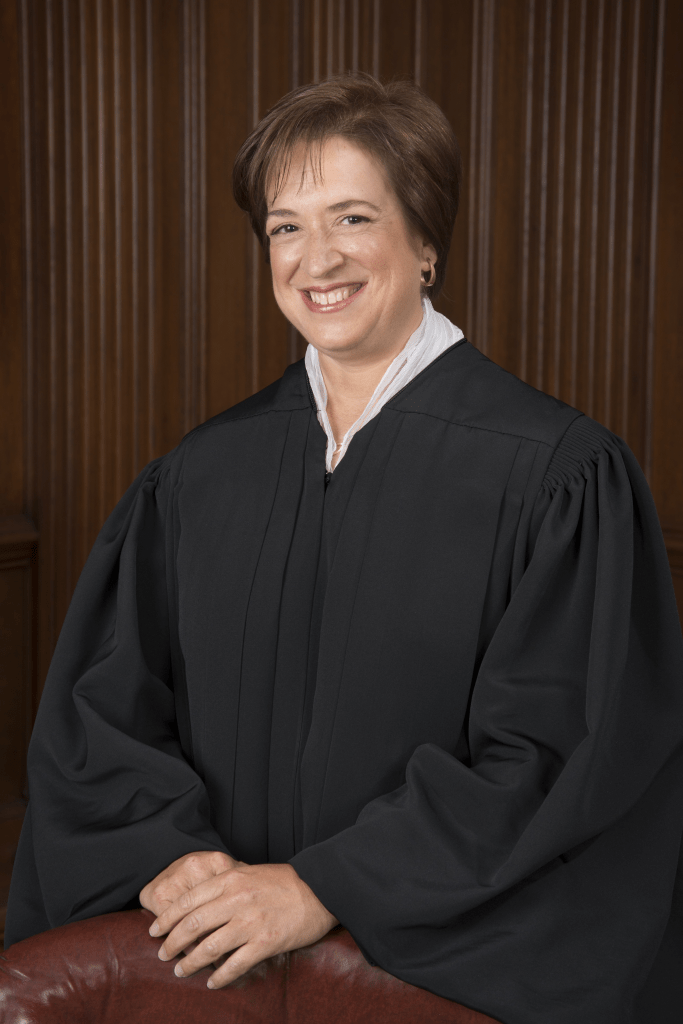
But shortly after his opening arguments, Justice Kagan was having none of his argument. She chimed in with this:
Mr. Keller, I don’t understand the point. Whatever “necessary” means, whether it’s necessary and proper or whether it’s something more than that, why isn’t this necessary to abate a grave risk? This is a pandemic in which nearly a million people have died.
It is by far the greatest public health danger that this country has faced in the last century.
More and more people are dying every day.
More and more people are getting sick every day.
I don’t mean to be dramatic here.
I’m just sort of stating facts. And this is the policy that is most geared to stopping all this.
There’s nothing else that will perform that function better than incentivizing people strongly to vaccinate themselves. So, you know, whatever “necessary” means, whatever “grave” means, why isn’t this necessary and grave?
Justice Elena Kagan
One of the arguments presented by both counselors for the petitioners was that OSHA generally regulates issues that are specific dangers to specific businesses.
For instance, if your business operates a forklift in a warehouse, they’ll regulate how that forklift is to be used to ensure some dumb fuck operating the forklift doesn’t run over some idiot worker not paying attention when a heavy vehicle is driving around next to them.
Or maybe you’re a roofer, OSHA might regulate you wear a safety harness so your dumb ass doesn’t fall 50 feet to your fucking death because you’re clumsy as fuck, and lost your footing. Shit like that.
But this rule, seems to be a nationwide sweeping rule that applies to everyone, everywhere, all the time. Basically, their beef is that if you were the type of worker who is essentially on your own, maybe driving around in a car by yourself, or out on some location where you’re not around other people as a necessary requirement of your job, a vaccine or mask in your situation isn’t really protecting anyone. So then it becomes an overreach.
The second counsel for the petitioners, Benjamin Flowers, hit this point home with his opening argument:
Mr. Chief Justice, and may it please the Court: OSHA typically identifies a workplace danger and then regulates it.
But, here, the President decided to regulate a danger and then told OSHA to find a work-related basis for doing so.
This resulted in the vaccine mandate, a blunderbuss rule, nationwide in scope, that requires the same thing of all covered employers, regardless of the other steps they’ve taken to protect employees, regardless of the nature of their workplaces, regardless of their employees’ risk factors, and regardless of local conditions that state and local officials are far better positioned to understand and accommodate. So sweeping a rule is not necessary to protect employees from a grave danger as the emergency provision requires.
And I want to be clear that states share OSHA’s desire to bring this pandemic to a close, but the agency cannot pursue that laudable goal unlawfully. I welcome your questions.
Benjamin Flowers
He went on to argue, that COVID isn’t a workplace danger, it’s just a danger that exists in the world right now. While he didn’t say it, I think he’s effectively arguing this is the purview of the CDC to regulate, or congress to pass a law, not OSHA.
Using my forklift example, he’s basically arguing that’s not a danger I face at home. It’s specifically a workplace risk. But COVID is a danger I face everywhere. Ergo, not a workplace risk. Ergo, not the purview of OSHA.
But Justice Kagan was having none of this noise. She passionately fired back:
Well, why not? I mean, the combination of lots of people all going in to one indoor space and having to deal with each other for eight hours, ten hours, however many hours a day, in those settings, the combination of the environment and the people that are in that environment create a risk, I would think.
I mean, tell me if I’m wrong about this.
I would think that workplace risk is about the greatest least controllable risk with respect to COVID that any person has. You know, everything else a person can control.
You can go to the baseball game or not go to the baseball game.
You can decide who to go to the baseball game with.
But you can’t do any of that in workplaces.
You have to be there.
You have to be there for eight hours a day.
You have to be there in the exact environment that the workplace is set up with. And you have to be there with a bunch of people you don’t know and who might be completely irresponsible. Where else do people have a greater risk than at the workplace?
One question I have in all this, is while counsel made some pretty creative arguments to the distinction of workplace risk, versus general risk, at no point did anyone arguing for NFIB point out that OSHA has such a distinction in law prohibiting it from creating a regulation to lessen a general risk that also occurs in the workplace.
Whenever I have such questions, there’s a part of me that recognizes, these counselors and justices have forgotten more about law than I’ll ever know, and that surely, they thought of this, it was somehow addressed, and my feeble legal mind just doesn’t understand.
But then there’s another part of me that thinks, “Well, I’m not an idiot. Sometimes, even really talented people make dumb mistakes or oversights. Maybe I’m on to something.” So then I get this notion that if only I were in the halls of the Supreme Court, and could just raise my hand and chime in, I’d be a hero.
Moving on…
Justice Breyer also chimed in, with a well-researched refutation of counsel’s argument, that people who aren’t at risk get no exception:
What this says, what I mean, my law clerks have been busy beavers on this case, I promise you, and what they have on this issue is that there are exceptions here.
There aren’t exceptions business by business, but there are exceptions, those who work from home, alone, or substantially outdoors, or those who can show that their conditions, practices, means, methods, operations, or processes make their workplaces as safe and healthful as the ETS can obtain a variance, okay? So they did make some distinctions.
Not industry by industry, but my question really is, that I’d like to turn this to, is a stay.
You heard what I asked.
Justice Stephen Breyer
I mean, you know, 750 million new cases yesterday or close to that is a lot. I don’t mean to be facetious. But that’s why I said I would find it, you know, unbelievable that it could be in the public interest to suddenly stop these vaccinations.
And the only answer that was given was a lot of people will quit. Well, OSHA considered that.
My wonderful law clerk has 61475, 63422, 61466, 61 474 and 475, those are pages.
I don’t think you should read all 61,000, but, nonetheless, there are at least five or 10 pages where they went into this, and they said, in our view, hmm, yeah, that’s right, some people may quit, maybe 3 percent.
But more may quit when they discover they have to work together with unvaccinated others because that means they may get the disease.
Okay? And more will quit because they’ll be — maybe die or maybe they’ll be in the hospital or maybe they’ll be sick and have to stay home for two weeks.
So they did the pros and cons. So I’d like to take Justice Kagan’s questions, which I think I share on the merits, and just ask you, are you asking us both still to issue a stay today, tomorrow, Monday, and why, if you are?
It’s also worth noting, that while many painted this as a vaccine mandate, there was the option to wear a mask, if one chose not to vaccinate, making it not a mandate.
During the argument from OSHA, Justice Roberts expressed concern that the president is essentially side-stepping congressional action, by getting government agencies to regulate on multiple fronts. He didn’t mention the president directly, so that’s just my interpretation of it.
Justice John Roberts
The point being, congress passes laws, agencies pass regulations. Getting congress to pass a law is a bitch. But if the president wants an agency, or in this case, multiple agencies to create a regulation, which essentially carries the same weight as a law, they just tell them to do fucking do it or get canned. In so doing, it’s basically the president making law, instead of congress.
Justice Alito, also looking for some distinction between this, and other previous OSHA actions asked this:
On the issue of whether you’re trying to squeeze an elephant into a mouse hole and the question of whether this is fundamentally different from anything that OSHA has ever done before, I want to see if it might be fundamentally different in at least two respects and get your answer to the question. Most OSHA regulations, all of the ones with which I’m familiar, affect employees when they are on the job but not when they are not on the job.
And this affects employees all the time.
If you’re vaccinated while you’re on the job, you’re vaccinated when you’re not on the job. Isn’t this different from anything OSHA has done before in that respect?
Justice Samuel Alito
Counsel was quick to correct Justice Alito, that there is a mask option, making it not a permanent action, necessarily.
While Justice Alito went out of his way to agree that the vaccines were safe and effective, he wanted to address that there is some level of risk in a vaccine. So one contention he raised, was asking whether OSHA had imposed any other rules where the person was asked to do something that carried with it additional risk.
While he was directing it at counsel, Justice Sotomayor could not resist an awkward argument between them, where they both were acting like they were talking to counsel for OSHA, but they were clearly trying to tell the other, “Stop being such a fucking idiot, you asshole.”
Sorry, I know this is getting long-winded, but there’s some interesting shit in here. One thing I think that’s worth learning; you’ll hear reference to the “Major questions doctrine.” As I mentioned earlier, Justice Robert’s expressed concern that maybe the president was acting as a lawmaker, by using regulatory agencies to make things happen. The “major questions doctrine” is basically at the heart of what Justice Roberts was asking. If there’s something that is a major question the people should likely decide, allowing unelected agencies to regulate it, is not appropriate, and instead should be a law passed by the people’s representatives instead.
Since laws and regulations have essentially the same power, it’s at least a distinction as to when a law should be passed, versus a regulation be written. A bigger distinction of course being that an agency is generally specialized, and lawmakers aren’t specialists. So for instance, if we’re talking about health issues, lawmakers probably wouldn’t know how to write a law about specific healthcare actions, and instead would leave that up to the FDA or CDC. Congress merely grants those agencies the power to do those things.
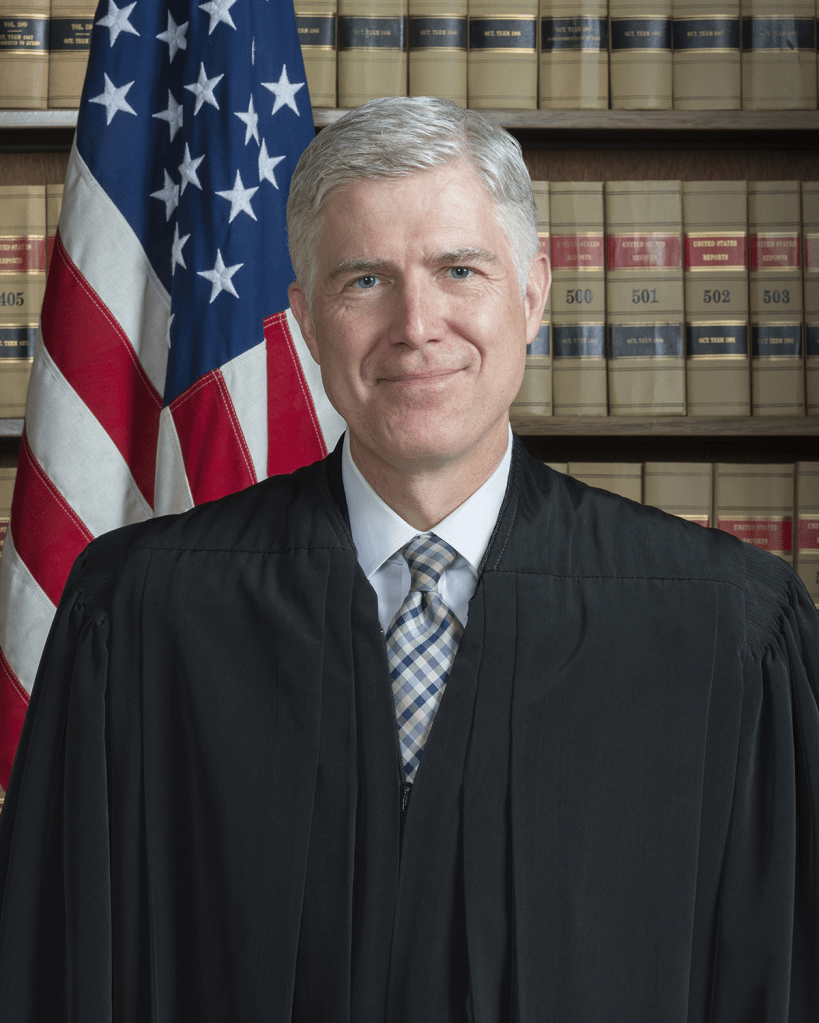
Justice Gorsuch, seemingly concerned about Justice Roberts’ point about circumventing congress fairly pointed out:
So my question with respect to the major questions doctrine is this: We accept that it’s not our role to decide public health questions, but it is our important job to decide who should decide those questions. I think we all agree on that.
And, here, our choice on the one hand is a federal agency and on the other hand the Congress of the United States and state governments. Now you argue we should not consider the major questions doctrine unless and until we find a statutory ambiguity.
I understand that.
Justice Neil Gorsuch
But let’s — let’s say the Court does find such an ambiguity.
I know you’ll contest the premise, but let’s just work on it. If — if there is an ambiguity, why isn’t this a major question that, therefore, belongs to the people’s representatives of the states and in the halls of Congress, given that the statute at issue here is, as the Chief Justice pointed out, 50 years old, doesn’t address this question. The rule affects, I believe, we’re told, 80 million people, and the government reserves the right to extend it to every private business in the country. Traditionally, states have had the responsibility for overseeing vaccination mandates.
I rejected a challenge to one just the other day from New Mexico. Congress has had a year to act on the question of vaccine mandates already.
As the Chief Justice points out, it appears that the federal government is going agency by agency as a workaround to its inability to get Congress to act. The risks imposed here are not unilateral.
There are risks to those who choose not to be vaccinated that they’re trying to avoid sometimes, as you discussed with Justice Alito and conceded to him. Traditionally, OSHA has had rules that affect workplace hazards that are unique to the workplace and don’t involve hazards that affect individuals 24 hours a day. So that’s kind of the general tick list we have before us, and I’d just like you to address, again, the question, assuming the statute’s ambiguous, why isn’t this a major question that normally under our Constitution would reserve — be reserved for the people’s representatives in the states in the first instance and in the halls of Congress in the second?
Elizabeth Prelogar, for OSHA, while acknowledging the premise of the question, simply argued that OSHA’s mission statement, given to it by congress, is protecting workers in the workplace, which is what this regulation does.
If there were any argument presented that seemed to really make the case against this regulation, was when Justice Gorsuch asked about why they don’t have similar rules for the flu.
Elizabeth Prelogar
Counsel Prolegar’s answer was fair, but presents basically a subjectivity issue. Influenza can be deadly, but at the time, COVID deaths were far higher than any recent influenza mortality rates. She also pointed out that influenza is seasonal and consistent, whereas COVID was new.
In retrospect, the evidence now suggests COVID will be seasonal and consistent, too. But, essentially, she was drawing a line that hadn’t been established, that the severity of the disease gives them cause to act.
Weirdly, I’m surprised she didn’t just respond that COVID was officially a pandemic at the time, influenza was not. But maybe she wasn’t ready for that question, and didn’t think of that answer. Or, maybe I’m a fucking idiot.
Anyway, in a per curium opinion (that just means it wasn’t authored by any one justice, and it was a pretty brief opinion), that was drawn along partisan lines, the right-wing majority sided with the NFIB. They said that such a large and sweeping rule, should either be delegated by congress or written by congress. This was simply too significant for OSHA to do on its own.
They wrote:
Permitting OSHA to regulate the hazards of daily life — simply because most Americans have jobs and face those same risks while on the clock — would significantly expand OSHA’s regulatory authority without clear congressional authorization.
So there you have it. OSHA gets smacked down, and congress and the president have a better understanding of their roles and the jobs they must do, and must not do going forward
I applaud OSHA for trying their level best, but frankly, it’s hard to disagree with this opinion. While this particular regulation may have seemed like a good thing and saved a significant number of lives, these same powers, if not reigned in, could and would be used for things any one of us may not agree with in the future.
So let’s talk about the first amendment, y’all. The beginning of that baby goes like this, “Congress shall make no law respecting an establishment of religion, or prohibiting the free exercise thereof.” It goes on to talk about free speech and shit, but that’s basically what it says on religion.
You know what it doesn’t say? “Separation of church and state.”
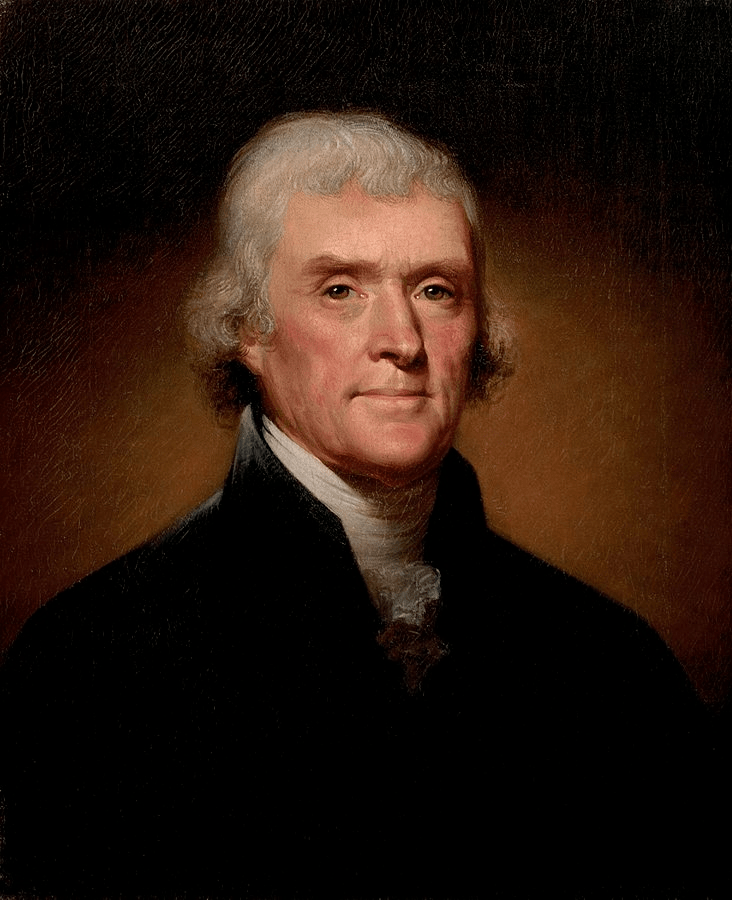
So where did the “separation” phrase come from? Well, it turns out, in 1802, one Thomas Jefferson wrote a letter to a church group, describing the first amendment saying religion was:
A matter which lies solely between Man & his God.
He went on to write:
I contemplate with sovereign reverence that act of the whole American people which declared that their legislature should ‘make no law respecting an establishment of religion, or prohibiting the free exercise thereof,’ thus building a wall of separation between Church & State.
Thomas Jefferson
So, why the history lesson instead of some SCOTUS shit? I’m getting to that.
Since then, SCOTUS has often interpreted the first amendment via precedent, to mean what Jefferson wrote. So while the amendment says “congress shall make no law,” on numerous occasions, SCOTUS has ruled against religious involvement in government, even when it has nothing to do with congress making a law, honoring what Jefferson considered the intent of the first amendment, to create a wall of separation between church and state.
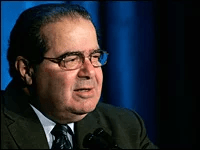
While I’m agnostic-atheist, and agree with the philosophy of their decision, one should still note, what the constitution actually says, as justices like the late Antonin Scalia, and his still sitting counterpart Clarence Thomas largely believe it wasn’t SCOTUS’ fucking business to think about what the writers of the text meant when they wrote it, but that their job was to be strict textualists, and interpret the constitution as written. What Scalia called a “Dead document.“
They fairly argue(d) that there was an amendment process set forth in the constitution. So if the populace doesn’t like the fucking text, Congress can endeavor to amend that shit. If they’re successful, then SCOTUS will rule and review based on the new amended text.
U.S. Supreme Court Justice Antonin Scalia
So this case, centers around this debate, in my estimation. You see, in Maine, kids are guaranteed a free education, which is to be administrated by a Maine government agency known as School Administrative Units (SAUs). If an area doesn’t have schools of its own, the SAU for that area is to pay to send those rugrats to an approved school in the area.
In order to be approved, the school has to meet certain standards. One of which, was that it be secular. Meaning, they can’t be in there shoving God up these kids asses. This is based on the “Separation of church and state” philosophy which SCOTUS has several precedents aligned with.
Here’s the rub, the text says, “congress shall make no law…” So this is a bit of a quagmire. Because if a religious school is prohibited by law from getting government funds and/or approval status, one could colorfully argue it’s kinda a law prohibiting free expression.
Anyway, a handful of bible-thumping parents live in some no-school-having shit district in Maine, and want to send their kids to Jesus Christ University. Since Maine law is like, “that’s fine, but you’re paying for that shit yourself, the parents were like, “Fuck y…I mean bless you, you wonderful heathens. We shall see thine ass in court.”
Counsel Michael Bindas
Early in the arguments, counsel for the petitioner (the bible thumpers), Michael Bindas made a clever argument:
This program does not fund schools. And if religious schools were allowed to participate, it does not fund schools.
It funds families. And not a penny can go to any school but for the genuine private choice of individuals.
His argument being, it isn’t that government funds are paying an institution to teach religion. It’s paying families to educate their kids. Those families can use those funds for the school of their choice, so long as they’re teaching the basic requirements expected of a public school. Allowing said parents the “free exercise” of their religion.
While inventive, I can’t help but wonder what requirements public schools have for teaching science, such as evolution by natural selection, and whether these schools are compliant with that? But I suppose, my atheist views are tiresome to these folks.
A panel for Maine, including retired SCOTUS justice David Souter, argued that they’re not excluding the school solely because of their religious backing, but because they’re teaching religion. That if their curriculum were secular, and they left the religious shit to the church, nobody would give a fuck.
Justice David Souter
The opponents are like, “Cute distinction, bro. But there’s nothing in the constitution supporting that logic.”
But Maine was like, “Listen you Jesus freaks. All we’re saying is, if we’re paying for your schooling, it should be consistent with all the other public schools in Maine, so all these kids in Maine get the same basic education. But because y’all are Jesus’ biggest fans, we know you’re not teaching shit like evolution, for instance, because you guys suck at science.”
They argued, “If these assholes lived in a real fucking city in Maine with real schools, they’d get a real education. Not this “creationism” bullshit you’re surely pushing on your poor kids. So if we’re going to fucking pay for it, we expect them to get the same quality education they’d get at a public school which teaches real science. Capiche?”
Justice Kavanaugh hit home the crux of the petitioner’s argument with this question to the respondent (Maine):
Brett M. Kavanaugh
I just want to follow up on that question from Justice Gorsuch. I think it’s important on this public discord or strife issue to emphasize that, as I understand it, they are seeking equal treatment, not special treatment. They’re saying “don’t treat me worse because I want to send my children to a religious school rather than a secular school. Treat me the same as the secular parent next door.”
I think that’s what they’re asking for, is equal treatment. Special treatment cases are where you’re asking for an exemption from generally applicable law.
That’s the Smith kind of cases. Those are hard cases.
But, here, I think all they’re asking for is equal treatment. And the question then becomes public discord from equal treatment. To follow up on Justice Gorsuch’s question, how should we think about that?
Malcolm L. Stewart
I mean, they are certainly characterizing what they are asking for as equal treatment.
But Maine’s view and our view is they are seeking a benefit different from the one that Maine is willing to provide. Maine is willing to provide a secular education, an education that is the rough analog to what the public school would give you at state expense.
It’s not willing to pay for religious inculcation. And so it’s like a case where the school that doesn’t believe in athletics says, I’m being treated unequally because you are willing to fund a thing that is important to some other schools but not to me. That’s not the kind of equal treatment that either the Free Speech Clause or the Free Exercise Clause would prohibit.
The federal government and the National Association of School Boards both filed briefs supporting Maine as well.
Some cases are really complicated, and frankly take me a long time to even make sense of what the fuck they’re arguing over. Usually some stupid procedural bullshit SCOTUS seems to love, because they’re law nerds or whatever. But this one? Pretty fucking simple, yeah?
In a predictable outcome with the now largely religious conservative majority, a partisan 6:3 decision went to the Jesus freaks. I guess the text trumps everything else. Justice John Roberts argued in his majority opinion that if Maine doesn’t like it, they can build some public fucking schools in that area.
The majority’s reasoning is that Maine’s law violated the “free expression” clause for the parents, who want to teach their kids about the ten commandments.
In dissent, the court’s left-leaning justices basically said, “you fucking conservative assholes are so worried about the “free expression” clause, you don’t seem to give two fucks about the “establishment” clause. If the government pays for these kids to go to these schools, government is fucking establishing religious values in these kids.
While I’m not the tenth SCOTUS justice, it is my firm opinion, if Maine had wanted to win this case, it should have gotten some parents who wanted to send their kid to a Muslim school and get government to pay for it, to join these Christians. I’ve little doubt, the majority would have thought much harder about Maine’s argument if they were about to support the teachings of Allah.
Back in 1989, all around piece of shit, David Martinez Ramirez decided to murder his girlfriend and her 15 year old daughter whom he admitted to raping multiple times in the past, as well as right before he’d killed her.
Ramirez’s case leaves little doubt to his guilt. He was found with the bodies in his apartment, covered in blood. Along with the admissions of what he had done to the daughter, it’s pretty much an open and shut case.
All Around Scumbag David Ramirez
However, after he was convicted, he somehow got the idea in his head that he got screwed, so he appealed his conviction, and when he lost over and over again, he even petitioned SCOTUS who were like, “Fuck you, buddy. We’re not going to waste our time with this shit. Burn in hell.”
So why is this case here at SCOTUS then?
Well, you see, Ramirez isn’t just a piece of shit morally, he’s also a piece of shit financially. As such, he couldn’t hire an attorney when he got busted, and instead, got a court appointed attorney. And, it wasn’t even a creative one like Saul Goodman, either. His counsel had zero experience in capital crimes cases. And when I say zero, apparently she’d never even witnessed a capital case from the sidelines. Yet here she is, trying to give this mother fucker the best defense money can’t buy.
So after Ramirez predictably lost, he tried to appeal his sentencing for various reasons in state court. He basically was trying to avoid the death penalty, not to get off for the crime as a whole. Unfortunately, none of his claims were about ineffective counsel. This is the start of his problems.
After he lost on appeal, he went to Arizona Supreme Court, and they were like, “Nah fam, we’re good. Not interested. Enjoy those death penalty drugs, bro.”
Getting no help in Arizona at all, Ramirez filed an appeal in federal court. The federal court however looked at everything and was like, “Yo, Ramirez…call us crazy, but we’re pretty sure your lawyer here doesn’t know what the fuck they’re doing. You sure you want to proceed with this idiot?”
At the heart of the federal courts thoughts on this, was that Ramirez was found competent to understand what he did by a psychologist, justifying the death penalty. Basically, they tend to avoid killing someone who they think is mentally handicapped, because it seems too cruel.
But after his conviction, it came to light, that he had been diagnosed as mentally disabled, and suffered severe abuse himself as a child, including that his shit parents didn’t even feed this fuck for days on end.
So the psychologist was like, “Woah, why didn’t you assholes tell me this ahead of time? I’m trying to diagnose this piece of shit. Didn’t you think that’d be clinically relevant to my diagnosis?”
After allowing Ramirez to amend his appeal to include a claim of “ineffective counsel” they found that Ramirez had never complained about this before in state courts. The rules set forth in the Anti-Terrorism and Effective Death Penalty Act of 1996 (AEDPA), basically require you to develop evidence for ineffective counsel BEFORE you get to federal court, otherwise, you can pound sand.
As near as I can tell, they’re basically trying to prevent someone about to get the needle from just throwing out any new defense they can think of, clogging up the courts, just to get out of being put to death.
Also, in Arizona, you have to wait until your trial is over to claim ineffective counsel, because they basically assume you wouldn’t have evidence to support this until after the trial is over. Like by some miracle, you might actually win anyway, or some shit. Plus, kinda a big distraction from the trial at hand.
But in a previous SCOTUS case, Martinez v. Ryan, SCOTUS did rule you can bring up an “ineffective counsel” claim at federal court for this first time.
So the contradiction here is that while SCOTUS said you can bring up the claim, AEDPA says you can’t bring any evidence up to develop that claim at federal court. How does that make a lick of fucking sense, right?
So while the state court was like, “We don’t give a fuck. This quack’s new opinion that maybe he was more fucked up than he originally thought, it wouldn’t have changed a fucking thing for us. We can’t wait to fry this motherfucker like a Chicken McNugget,” the federal court, and I mean every fucking judge on the 9th circuit was like, “Woah, woah, WOAH! What the fuck is wrong with you assholes? Look at that shit again. You need to let this motherfucker bring evidence forth to establish this claim of ineffective counsel.”
It’s also worth noting that while SCOTUS long ago ruled you have the right to effective counsel at trial as part of the 6th amendment, that’s AT TRIAL. They don’t seem to have much of an opinion on whether you have such a right after you’ve been convicted.
As for this case, SCOTUS didn’t give a fuck about Ramirez and his guilt. That shit is settled. They’re here to determine this conflict where AEDPA’s rule prohibits a federal court from hearing Ramirez’s evidence for ineffective counsel at trial if it wasn’t done at the state level, while their own precedent says that he can bring up a claim for ineffective counsel.
Counsel for Ramirez closed with a pretty impassioned and fair argument.
Robert M. Loeb
To say that you have a forum for hearing and one where no one’s ever succeeded in to raise an actual innocence claim is not giving you a forum to vindicate one of the most vital rights, the right to effective trial counsel. You know, whether you’re innocent or guilty, you have a right to a fair hearing.
You have a right to an effective trial counsel.
You have a right to have that vindicated. So it’s like them saying, if you’re coaching a basketball game and one team gets five players and one team gets one player and we’re going to play the game, but, at the end of the game, we’re going to give you a shot from half court and that’s going to make the game fair, that does not make the game fair, Your Honor. There is a right to have trial counsel here, and there was never a fair trial for Mr. Ramirez.
Right? And the fact that they give a Hail Mary opportunity for relief at the end of the day or can give a pardon that does not mean that the right to effective trial counsel is being vindicated here. And as Justice Sotomayor pointed out, as a third argument, which pertains only to Mr. Ramirez, which there was no real meaningful response here, because Mr. Ramirez in the appeal before the panel in the Ninth Circuit clearly was relying on materials beyond that which was presented to the state court. And that was not rejected by the state before the panel.
It was not objected to.
They didn’t say, well, (e)(2) bars consideration of that evidence.
They told the panel to consider that evidence. And the panel then went on to render a decision based on the arguments that they made without even them raising (e)(2).
And, of course, then they have the audacity in their cert position, it’s like to say, well, (e)(2) is not even mentioned in the Ninth Circuit decision.
Well, it’s not mentioned because they didn’t raise it. So there it’s completely sandbagged the Ninth Circuit panel here by only raising this in the en banc petition and then their cert petition and blaming the panel for never reaching the issue that they didn’t raise.
They made a decision not to raise (e)(2) before the panel.
That’s a waiver.
It was not fair to the panel.
It’s certainly not fair to Mr. Ramirez. He would have responded to the (e)(2) argument if it was raised before the panel. So, for Mr. Ramirez, you should affirm on the additional basis that the claims against him were waived.
In a 6:3 partisan decision, Justice Clarence Thomas and company sided with Shinn (The state of Arizona). Congress wrote AEDPA, and it says what it says. States are supposed to have power over their jurisdictions vs federal courts. So if they lay out a procedure, and someone they convict doesn’t follow it, well, them’s the breaks.
Justice Thomas basically said, it’s not fair for the federal government to come in and tell the state how to do their business of running a court, conviction, etc., unless it violates the constitution, which nothing here does. That while they did rule in Martinez to allow the introduction of “ineffective counsel” claims, their ruling was quite narrow, and only applied to such claims, where someone was denied constitutional rights, not this shit Ramirez is facing.
It’s also worth noting, about half of Thomas’ opinion cited the heinousness of the underlying crimes, which wasn’t really at issue here, but clearly influenced the majority to not be keen to help this fucker in any way, avoid being put to death.
Kagan, Sotomayor, and Breyer however, were like, “You conservative pricks are racist, and clearly hate Latinos. If someone has shit counsel at the state level, and they don’t really figure it out until the federal level, you’re basically telling them you don’t care about justice, you just don’t want to waste anyone’s time. But this idiot’s gonna die in your interest of saving time, and that’s not cool.
AEDPA tried to set some sort of balance between the state’s rights to manage this shit, and the federal government’s rights to step in, if the state court isn’t acting to the defendant’s liking. But you assholes basically want to let the state do whatever the fuck they want.
Do you have a corporate retirement plan, like a 401k or company stock purchase plan? Well then, this case is for you!
Northwestern University has two plans, an employee match plan, where they throw in cash to match the employee’s contribution, and a Voluntary Savings plan the University doesn’t throw any scratch in.
At issue is the Employee Retirement Income Security Act (ERISA). Employees of Northwestern, led by busybody extraordinaire April Hughes argue that the people managing those funds for Northwestern suck like the vacuum of space at what they do. Performance is weak as balls, and the fees they charge are high.
Hughes and company are like, “Someone needs to make a fucking law to hold these incompetent fucks to a certain standard. We’re losing our asses here.”
But traditionally, the courts have found that as long as people have other options, this is a free-market issue, and y’all need to invest elsewhere if you’re unhappy.
ERISA dictates the people managing this shit operate with “care, skill, prudence, and diligence [of] a prudent man [sic].” One of the complaints against them, is that they offered retail plans with high fees, when the same fucking plan in wholesale version with lower fees was available to them. Plus, they also complain that because they wanted to offer a gazillion fucking options, managing all that shit increased the fees to do so.
Isn’t it ironic that all these fuckwads at a prestigious university are the ones pushing radical left-wing ideology, complaining about greedy corporations, and yet they can’t even manage their own fucking retirement plan without bitching and moaning that their own experts don’t know what they’re fucking doing?
Northwestern is basically like, “This is ridiculous. We’re educated people. How dare you question us, punks!” They argue that in order to lose, Hughes and company have to prove intent to do a shit job. Did they know they were making poor investments, or paying exorbitant fees, and were like, “Fuck ’em, we don’t care. We’re doing this bad shit over here instead.”
A district court, and then the seventh circuit on appeal sided with Northwestern, stating it’s basically a free market issue, and they could have invested elsewhere.
However, in a unanimous decision where Justice Barrett couldn’t be bothered, SCOTUS sided with Hughes, telling the seventh circuit that they’re fucking idiots. Yes of course, they could have gone elsewhere, but ERISA is a law, and these idiots at Northwestern are in violation of it. Their investment skills suck ass, and their fees are ridiculous for such shitty ass work, which therefore means, they aren’t operating with “care, skill, prudence, and diligence” as the law demands.
Hear oral arguments and/or read about the case here.
A well regulated Militia, being necessary to the security of a free State, the right of the people to keep and bear Arms, shall not be infringed.
United States Constitution, Bill of Rights, 2nd amendment.
While the rest of the country seems intensely focus on whether Roe v. Wade is overturned, a good number of us are pretty interested in how this one goes.
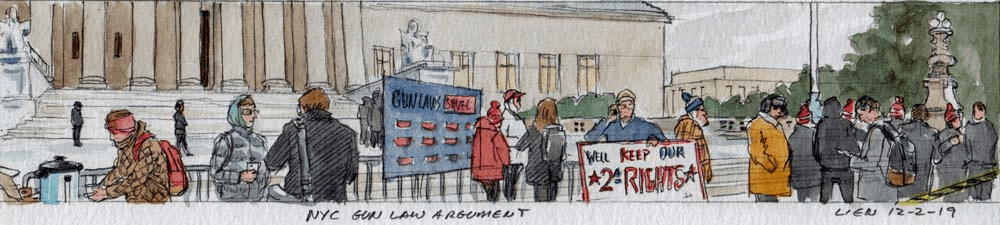
The People’s Republic of New York, the most statist state that ever stated, is under the scrutiny of SCOTUS again, thanks to the New York State Rifle Association (NYSRA), and their crusade against New York’s tyrannical positions on guns.
The latest kerfuffle is over permits to carry. You see, New York knows they can’t ban guns outright, but they have done everything in their power to make sure you can’t actually wield it.
One of these rules is that in order to carry a gun on your person in New York, you must apply for a permit, and show cause for getting one, such as someone has been threatening you, or you’re in some high-risk job.
This seems totally fair, right? Criminals are always courteous enough to give you a heads up that they’re coming for you, so you can apply for such a permit, buy a gun, and be prepared.
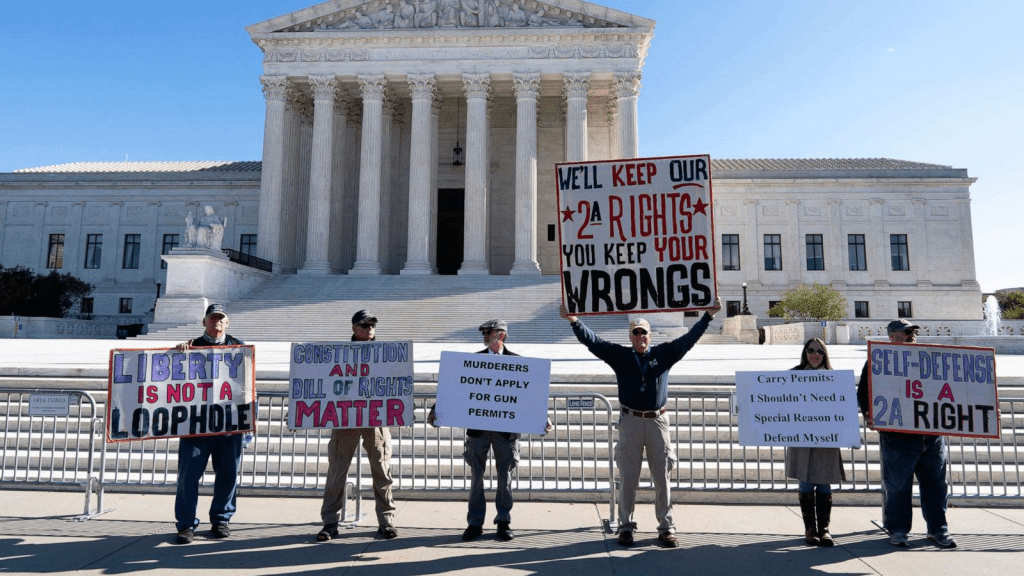
Counsel for NYSRA opened by saying, “Carrying a firearm outside the home is a fundamental constitutional right. It is not some extraordinary action that requires an extraordinary demonstration of need.”
We’re of course biased here at Logical Libertarian towards the freedom to own and carry a gun, but few other rights, if any, allow the state to make you prove your desire to exercise that right. This is highly “atypical” as Counsel Paul Clement put it. The bill of rights specifically says, “to keep and bear arms,” but NY’s law effectively makes “bearing” a privilege the state grants you, not a right.
For instance, you don’t have to go to the Mayor and get a permit to tell your local conseltwerp to eat a bag of dicks, and then be required to supply a load of evidence to suggest said counseltwerp has a demonstrable need to eat that bag of dicks.
Justices Barrett, Roberts, Alito, and Kagen all pressed NYSRA’s counsel on the “sensitive places” allowances. This is the idea that the majority of justices agreed in previous decisions, the government has a right to refuse carrying in places like schools, government buildings, etc. So they were testing the idea of whether NY is just basically declaring the entirety of a city or district, can be deemed a “sensitive place.” The crux of the argument being, when is it OK to declare a place a sensitive place, versus when is the place to broad to be declared as much.
One thing to note, in the sensitive place issue, people still have the right to carry in general, and even if they have a permit, they can’t carry in a sensitive place, so it seems a little disingenuous to debate. The law in question forces people to get a permit to carry in general. The sensitive places restricts anyone other than law enforcement from carrying in that particular place. While they’re related, they are not the same.
Counsel for NYSRA stated succinctly:
At the end of the day, I think what it means to give somebody a constitutional right is that they don’t have to satisfy a government official that they have a really good need to exercise it or they face atypical risks.
~Paul Clement
Counsel Clement went on to point out that while they accept the “sensitive places” limits, and even limits on who can carry, such as criminals and people with mental illness, their side opposes the “atypical” stance NY has adopted. Meaning, that NY is essentially saying a typical person may not carry, only a person who’s atypical, such as someone at elevated risk, is the problem. It can’t be a right, if one has to be unique to exercise it.
One issue that also comes up, is tradition. SCOTUS like to make sure laws are adjudicated consistently, so people who were perfectly OK one day, aren’t criminals the next. Change should come gradually, and not sweeping and fast.
They’ll look at old law, sometimes even English law adopted prior to the Constitution, but which the Constitution got it’s basis from. Sotomayor wanted to cite traditional laws restricting weapons, which states have adopted, many of which American law is inspired by.
She stated:
The one thing that I’ve looked at in this history is the plethora of regimes that states pick, and that starts in English law, through the colonies, through post-Constitution, to post-Civil War, to the 19th Century, to even now, those 43 states that you’re talking about, most of them didn’t give unrestricted rights to carry in one form or another until recent times. Before recent times, there were so many different regulations.
What it appears to me is that the history tradition of carrying weapons is that states get a lot of deference on this.
And the one deference that you haven’t addressed is the question presented is what’s the law with respect to concealed weapons. In 1315, the British Parliament specifically banned the carrying of concealed arms.
In colonial America, at least four, if not five, states restricted concealed arms. After the Civil War, there were many, many more states, some include it in their constitution, that you can have a right to arms but not concealed. You can go to Alabama, Georgia, and Louisiana, which are now more open—more free in granting the right to carry guns, but they prohibited through their history concealed weapons, the carrying of concealed weapons.
It seems to me that if we’re looking at that history and tradition with respect to concealed arms that there is not the same requirement that there is in the home. One of the things Heller pointed to was there were few regulations that prohibited the carrying or the keeping of arms in homes. But that’s not true with respect to the regulations about keeping of arms outside of homes. Putting aside the prohibitions, regulations on sensitive places, regulations on the types of people, it seems to me that I don’t know how I get past all that history
~Justice Sotomayor
But justice Kavanaugh, speaking with Clement reiterated that rights start with the Constitution’s text, not tradition or other laws. So basically, Sotomayor’s argument was stupid, and she should shut the fuck up with that noise.
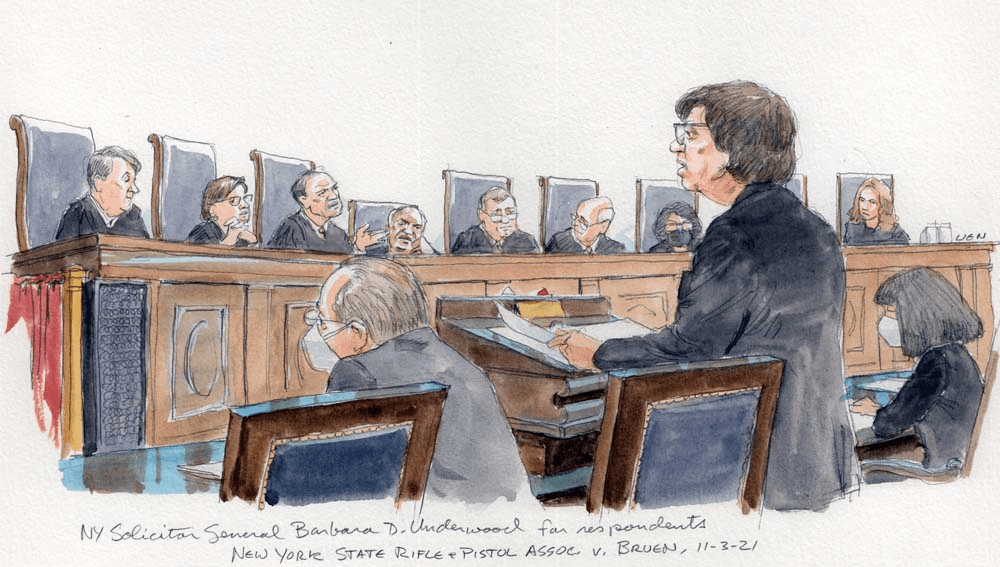
As counsel Underwood for the state of NY came to make her shitty arguments, Justice Roberts hit a home run with this question:
Now Heller relied on the right to defense as a basis for its reading of the Second Amendment, or that was its reading. Now I would think that arises in more populated areas.
If you’re out in the woods, presumably, it’s pretty unlikely that you’re going to run into someone who’s going to rob you on the street.
On the other hand, there are places in a densely populated city where it’s more likely that that’s where you’re going to need a gun for self-defense and, you know, however many policemen are assigned, that, you know, there are high-crime areas. And it seems to me that what you’re saying is that’s probably the last place that someone’s going to get a permit to carry a gun. How is that, regardless of what we think of the policy of that, how is that consistent with Heller’s reasoning that the reason the Second Amendment applies a direct personal right is for self-defense?
~Chief Justice Roberts
Counsel Underwood argued:
Well, and the other thing is that these regulations are all an effort to accommodate the right, to recognize and respect the right of self-defense while regulating it to protect the public safety.
And in areas where people are packed densely together, as the questioning that just happened displays, the risks of harm from people who are packed shoulder to shoulder, all having guns, are much more acute.
~Barbara Underwood
Justice Roberts, realizing this argument was weak, countered with:
What if it’s one of these crime waves, whether it’s a celebrated spate of murders carried out by a particular person, I don’t know who that is—you know, the Son of Sam or somebody else? Is that a good reason to—a atypical reason? Is that a justification? Some random person is going around shooting people.
I’d like to have a firearm even though I didn’t feel the need for one before?
~Chief Justice Roberts
Justice Alito, not to shy away from this line of questioning, pushed Underwood further by asking:
Could I explore what that means for ordinary law-abiding citizens who feel they need to carry a firearm for self-defense? So I want you to think about people like this, people who work late at night in Manhattan, it might be somebody who cleans offices, it might be a doorman at an apartment, it might be a nurse or an orderly, it might be somebody who washes dishes. None of these people has a criminal record.
They’re all law-abiding citizens.
They get off work around midnight, maybe even after midnight.
They have to commute home by subway, maybe by bus.
When they arrive at the subway station or the bus stop, they have to walk some distance through a high-crime area, and they apply for a license, and they say: Look, nobody has said I am going to mug you next Thursday.
However, there have been a lot of muggings in this area, and I am scared to death. They do not get licenses, is that right?
How is that consistent with the core right to self-defense, which is protected by the Second Amendment?
~Justice Alito
Counsel Underwood’s arguments in response again were that basically, a lot of people crowded together with guns, is inherently an unsafe situation, and thus why NY should have the right to prevent such a situation. An argument not supported by any evidence, but commonly argued as justification for restricting gun rights.
Justice Alito really went after her in this exchange:
Samuel A. Alito, Jr.
There are — there are a lot of armed people on the streets of New York and in the subways late at night right now, aren’t there?
Barbara D. Underwood
I don’t know that there are a lot of armed people.
Samuel A. Alito, Jr.
No?
Barbara D. Underwood
I think there are people —
Samuel A. Alito, Jr.
How many — how many —
Barbara D. Underwood
— there are people with illegal guns if that’s what you’re —
Samuel A. Alito, Jr.
Yeah, that’s what I’m talking about.
Barbara D. Underwood
— referring to. Yeah.
Samuel A. Alito, Jr.
How many illegal guns were seized by the — by the New York Police Department last year? Do you — do you have any idea?
Barbara D. Underwood
I don’t have that number, but I’m sure there’s a — it’s a substantial number.
Samuel A. Alito, Jr.
But the people — all — all these people with illegal guns, they’re on the subway —
Barbara D. Underwood
I don’t — I don’t —
Samuel A. Alito, Jr.
— they’re walking around the streets, but the ordinary hard-working, law-abiding people I mentioned, no, they can’t be armed?
Barbara D. Underwood
Well, I think the subways, when there are problems on the subways, are protected by the — the — the transit police, is what happens, because the idea of proliferating arms on the subway is precisely, I think, what terrifies a great many people. The other point is that proliferating guns in a populated area where there is law enforcement jeopardizes law enforcement because, when they come, they now can’t tell who’s shooting, and the — the — the — the shooting proliferates and accelerates.
And, in the end, that’s why there’s a substantial law enforcement interest in not having widespread carrying of guns in densely —
As you can see, NY’s laws are common among anti-gun legislators, that the people should rely on government to protect them, as she points out the transit police. While it may be a compelling argument to people who don’t like guns, it’s antithetical to the principles this country is founded on.
Justice Kavanaugh, took issue with her underlying premise that the state can and should be able to restrict guns in densely populated areas because that’s inherently dangerous, arguing:
Has that happened in those states? I mean, can you make a comparative judgment? Because it seems like before you impose more restrictions on individual citizens and infringe their constitutional rights based on this theory, you should have to show, well, in those other states that have shall issue regimes, actually, there is a lot more accidents, crime.
And I don’t see any real evidence of that.
~Justice Kavanaugh
He clearly felt her justification was based on dubious, if not an entirely fabricated premise. While she responded with generalities that she seemed to thing we should just accept as true, no data was provided.
The United States (The Biden Administration and their merry band of assholes) had an amici also argue, but again, Justice Roberts wasn’t having any of his bullshit. He fired this salvo:
John G. Roberts, Jr.
I mean, what is the appropriate analysis? I mean, you sort of — we — we, I think, generally don’t reinvent the wheel.
I mean, the first thing I would look to in answering this question is not the Statute of Northampton, it’s Heller, and Heller has gone through all this stuff and, obviously, in a somewhat different context, although that’s part of the debate, self-defense at home.
You know, this is different. But I still think that you have to begin with — with Heller and its recognition that the Second Amendment, you know, it — it has its own limitations, but it is to be interpreted the same way you’d interpret other provisions of the Constitution. And I wonder what your best answer is to the point that Mr. Clement makes in his brief, which is that, for example, if you’re asserting a claim to confront the witnesses against you under the Constitution, you don’t have to say I’ve got a special reason, this is why I think it’s important to my — my defense. The Constitution gives you that right. And if someone’s going to take it away from you, they have to justify it.
You don’t have to say when you’re looking for a permit to speak on a street corner or whatever that, you know, your speech is particularly important. So why do you have to show in this case, convince somebody, that you’re entitled to exercise your Second Amendment right?
Brian H. Fletcher
So let me start with the general question and then get to that specific point for Mr. Clement. As to the general question about Heller, we agree completely that the Court ought to apply the method from Heller, which we, like I think all the parties, take to be look to the text, history, and tradition of the Second Amendment right, and we’re applying that now to a somewhat different issue with the benefit of somewhat broader materials. Now, as to the question about why you have to have a showing of need, I think the problem with Mr. Clement’s formulation is that it assumes the conclusion. If you had a right, the Second Amendment conferred a right to carry around a weapon for possible self-defense just because an individual wants to have one available, then, obviously, you couldn’t take away that right or make it contingent upon a discretionary determination. But the whole question is whether the Second Amendment right to keep and bear arms confers that right to have a pistol with you for self-defense even absent a showing of demonstrated need.
John G. Roberts, Jr.
Well, I’m not sure that’s right.
I mean, you would — regardless of what the right is, it would be surprising to have it depend upon a permit system.
You can say that the right is limited in a particular way, just as First Amendment rights are limited, but the idea that you need a license to exercise the right, I think, is unusual in the context of the Bill of Rights.
A district court and the Second Circuit in New York, being sympathetic to New York’s tyrannical scheme dismissed NYSRA’s claims, but luckily for New Yorkers, SCOTUS think those courts are basically idiots.
In a 6:3 split partisan decision, where Breyer, Kagan, and Sotomayor dissented, arguing that states should have the necessary powers to reduce gun violence, even if it involves violating fundamental rights, Justice Thomas laid down the law. New York State’s law violates the 14th amendment (the one that guarantees equal protection and shit), denying some people their second amendment rights. He rightly points out, as was argued, no other right has this burden, so why is the second amendment special? Justice Alito added that a right is a right, whether you intend to lower murders by gun is fucking irrelevant.
Roberts and Kavanaugh agreed, but pointed out that background checks, mental health checks, and other checks to make sure someone is the type of person we agree shouldn’t carry are fine, but that has a foundation in that it’s a right until you prove you’re not someone who should be allowed to exercise that right, where as what NY did, was say you don’t have the right, until you prove you need it, and this shit just ain’t OK.
Hear oral arguments and/or read about the case here.
A trio of Muslims, Muhammad Tanvir, Jameel Algibhah and Naveed Shinwari, are here in the U.S. legally, but not natural born citizens, so they’re either citizens or green card holders.
The FBI in their campaign on the war on terror, sought to have Tanvir and company inform for them against other Muslims who may be involved in terrorist activities. Tanvir and company told the FBI to go fuck themselves, and as a result, were put on a No-Fly List by the FBI.
The Religious Freedom Restoration Act (RFRA) basically prevents government from harassing people based on their religion, unless the government can show that there’s a compelling government interest in doing so, such as preventing a terrorist attack. RFRA also allows people to sue federal agents if they violate those religious freedoms wrongly.
So Tanvir and his merry band of Muslims are suing the federal government officials who put them on the list for doing so, after they refused to rat out their fellow Muslims. But the government is arguing that the RFRA doesn’t allow these guys to sue individual agents, it only says they can seek appropriate relief.
So now SCOTUS must decide if the RFRA allows individual federal agents to be sued under the law.
In a unanimous decision, SCOTUS decided that the FBI assholes were completely out of line, and can be sued for damages by the three Muslim men, paving the way for future suits against other lawless pricks operating in law enforcement.
By now, unless you live under a rock, you’ve no doubt seen the backlash of these tweets from Donald Trump.
But how did we get here?
Most know it started with former San Francisco quarterback Colin Kaepernick, who decided during the 2016 NFL preseason to kneel for the following reasons, as cited here on the NFL website.
I am not going to stand up to show pride in a flag for a country that oppresses black people and people of color. To me, this is bigger than football and it would be selfish on my part to look the other way. There are bodies in the street and people getting paid leave and getting away with murder.
Colin Kaepernick
If you are reasonably familiar with the situation, and on social media, you’ve no doubt noticed most people have an opinion on one side or the other, and it’s nearly as heated and divided as religion and politics infamously are.
Since most opinions I’ve read are pretty passionate instead of objective, I felt it was worth exploring the subject from a skeptic’s point of view. As an issue, between Trump’s position and Kaepernick’s, it’s pretty complicated with a lot of facets worth considering individually.
If we start from the beginning, Kaepernick opted to do this in the wake of a number of police involved shootings of young “black” men, some of which, were unarmed. It appeared to be excessive force by many, and potentially even manslaughter or murder. Yet no charges against said officers were filed in the immediate aftermath. (I’m not aware of whether charges were filed later.)
While I believe the deliberately hateful racists, whether they be white-on-black or vice versa, are an incredibly small minority; many more biases are simply ingrained, and a product of conditioning versus a deliberate intention to demean someone.
Respectful discussions between the two sides can help overcome both, if we’re willing to have them. So I encourage all people, no matter what their skin tone may be, to be open to such discussions. It’s surely the only way tensions will improve.
But moving on from whether Colin has a point or not, let’s discuss his tactics, since they’ve now overshadowed his initial concern he was trying to bring awareness to, which for him, is almost assuredly a tragedy.
Is Kneeling Effective Towards His Goal?
SANTA CLARA, CA – OCTOBER 02: Colin Kaepernick #7 of the San Francisco 49ers kneels on the sideline during the anthem prior to the game against the Dallas Cowboys at Levi’s Stadium on October 2, 2016 in Santa Clara, California. (Photo by Thearon W. Henderson/Getty Images)
Since this started over a year ago, can we honestly say that racism has gotten any better?
It should be noted that it’s virtually impossible to quantify racism, but it is possible to quantify how many police shootings of unarmed black men who weren’t directly witnessed to have committed a crime.
Nonetheless, those parameters aren’t part of any FBI data I’ve seen. So there’s little way to determine if he’s been effective in reducing them.
As such, no claims one way or the other, can be considered anything other than speculation until that data is available. But I will say that it does seem like there have been fewer of these in the news since these protests began.
I think it’s also safe to say that racism is part of many discussions in a meaningful way at a number that’s probably as high as it has been since the civil rights movement.
The media’s coverage of Colin’s actions and their coverage of the police shootings which instigated his actions are largely to blame for this. So it is fair to say that he’s at least helped start the discussions that needed to happen, and are hopefully helping to achieve his end goal.
Are His Actions Congruent With His Goal
On this issue, I have to say I feel Colin missed his mark.
The U.S. flag is generally something that’s attributed to represent our nation, and also the men and women who served our military to defend it. But Colin never insinuated he was mad at those people.
He directed his anger at what he felt were several corrupt law enforcement officers, and the system that seemed to defend that.
So yes, he created awareness, but the people he offended doing it, were largely not the people he was mad at in the first place.
Is Colin Kaepernick a Racist
I cringe when anyone tries to make claims about what’s in someone’s heart. You just can’t know that. So you often have to take people at their word or their actions.
Colin Kaepernick with adoptive parents Rick and Teresa Kaepernick
I don’t recall seeing one instance where Colin said anything negative about Caucasians. It’s also important to note that Colin has a biological mother who is “white,” presumably a “black” father, and adoptive “white” parents who took him in and raised him.
The idea that he’s racist, seems pretty far-fetched, and not supported by any evidence I saw. But feel free to comment below, citing sources, if you’ve seen any statements he uttered against Caucasians in general.
Could He Have Chosen a Better Tactic?
Because Colin is famous, I believe he’d have done far more to improve these relations between the police and young urban minorities by doing community outreach with police. Maybe trying to start a ride-along program with NFL stars, for instance.
Urging NFL players, especially those who were once urban minorities themselves, to go out with officers and start dialogues with them based on mutual respect between the police and many of the NFL players who were former at-risk kids themselves, would certainly help achieve his goal.
If police hear these stories from some of the NFL’s best, maybe it would make the officers see the young men in their community as potential greatness instead of potential criminal young men.
Community Outreach: Dajuan Howze, 13, battles for the ball against Pittsburgh Police officer Gino Perry while Zone 5 police commander Jason Lando waches. The officers played a pick up basketball game with local youth during the Homewood Community Day celebration.
I also believe that if a cop car rolls up in a bad neighborhood with a superstar like Colin riding along with them, it might incite those kids to get to know their local police; building better relationships in the process.
If you’re one of those kids, you’d love to meet an NFL star. And if you meet one thanks to a police officer who brought him to you, all of a sudden that police officer is more likely to be seen as a friend instead of a foe.
Is Colin Trying To Create Unity
On the face of it, a peaceful protest is certainly what Martin Luther King is famous for. And his kneeling is not that different from Rosa Parks sitting on a front bus seat.
Yet once Colin knelt, many took offense, and sadly didn’t see it that way, if that’s how he meant it.
Even if he justifies it by saying that it was only directed at bad cops, I’ve heard multiple racist “white” people justify hateful speech by saying, “There’s black people, and then there’s n*****s”?
They assume because I’m white, I want to hear that nonsense. I assure you, I really REALLY don’t appreciate it. And I usually tell them so if I’m not in a position where I think I’ll be physically attacked for doing it. And Colin’s excuse for wearing those socks is pretty similar, in my opinion.
If rational people like me were apt to side with his peaceful protests, assuming he had nothing but the best intentions in his heart for all parties involved, this went a long way to burn that.
But nonetheless, I try to give him the benefit of the doubt that he was just angry, and did something ill-advised in his enraged state. Haven’t we all, in a moment of anger, said or done things we regret later?
Now let’s discuss Donald Trump’s actions.
Donald Trump Official Portrait
Love him or hate him, I think it’s fair to admit that Trump is open and honest about his opinions. His Twitter feed is laden with unrehearsed, unpolished, and uncensored opinions that clearly seem to be what he actually feels.
So let’s take a skeptical look at those.
Were Trump’s Tweets Divisive When We All Tend To Agree Unity is Needed?
Yes Trump’s comments were divisive. I frankly wish he’d just stop. But so were the people opting to kneel.
You cannot fairly condemn Trump for being divisive, if you won’t equally condemn the players who know it’s upsetting a very large portion of the country, without being hypocritical.
Should Trump Have Said What He Said and Tweeted What He Tweeted?
Trump is effectively two people. He’s a president, and an American citizen.
As president, I want him to be involved in Colin’s (and the NFL’s) actions absolutely zero.
Instead, I’d want to see him order the FBI to investigate police shootings to make sure local police aren’t effectively protecting their own during the investigations of officer shootings. Clearly, letting the San Francisco PD investigate one of their own is as big of a conflict of interest as one could imagine.
I’d also want federal prosecutors to handle any disciplinary actions, up to and including criminal trials.
As for Trump tweeting an official position on the kneeling, he should simply say it’s a private matter for the free market to sort out.
If it kills NFL ratings, then they’ll react accordingly. This is not the business of a government who’s first amendment guarantees free speech.
As an American citizen, he has a right to an opinion on anything, including this. In my opinion, he should have two different Twitter accounts: one for “the president” and one for “the citizen,” which he does (@POTUS and @realDonaldTrump). Then, keep his official positions on one, and his personal opinions on the other.
On this issue, he largely did exactly that. His @POTUS account retweeted the personal account’s tweet below, and that’s all I’ve found. The rest were on his personal account.
In general, I don’t feel Donald Trump has done a remotely admiral job at unifying a divided nation—quite the contrary. His business acumen is about winning, which means he’s often competitive by nature. That aggressiveness comes out in his behavior often, and I suspect it’s not likely to change.
He’s arguably the most divisive president in history, but it’s not like we didn’t know this prior to the election, and yet he still won. So this isn’t exactly an overpromise/underdeliver situation; no bait-and-switch transpired here.
But as much as I disagree with him on significant policy issues, I at least prefer his unfiltered nature. I find it far better than people who are polished and rehearsed yet come off as obviously fake. I’d just prefer to know instead of wonder where you stand, and whether you’re a person I wouldn’t like in real life or not.
Should The NFL/Team Owners Fire Players?
Well, the players work for the teams (franchises), not the NFL. The only people firing them will be the team owners.
The NFL has code-of-conduct policies, which they seem to strictly enforce. For instance, the Cowboys wanted to have a simple sticker in support of a slain officer, and the NFL specifically forbade it.
One can certainly argue that this is somewhat hypocritical to forbid a helmet like this, while allowing some other form of protest on the field, like kneeling for the national anthem.
But nonetheless, the NFL is a private company, and they have every right to be hypocrites if they so desire, and the free market will sort it out accordingly.
As for the teams, if they want to fire the players for representing their brand in a way that’s inconsistent with their team owner’s values, then they have a right to do so. One caveat though: only if they drafted a code-of-conduct clause is in the contract they have with that player, which specifically forbids such actions.
Now that we’ve covered the two actors in this play, let’s discuss the issue in general. Because there’s a lot of hypocritical and/or illogical behavior from the professional media and the John Q Pissed-Offs on social media.
Is This a Free Speech Issue?
This one’s pretty easy:
Is government stifling the action? – Free Speech Issue
Is private enterprise (NFL or team owners) stifling the action? – Not a Free Speech Issue
Since no one is proposing a law to prevent this, or that government intervene to stifle free speech, it’s not a free speech issue. It’s that simple. When such a law or government action is proposed, only then will it become a free speech issue.
Is It About Disrespecting The Flag
Many argue that it’s just a flag, and we shouldn’t get so worked up about it. But here’s the rub with that argument.
Colin and his fellow kneelers aren’t attacking the idea that there’s too many stars and stripes on it, nor are they complaining the colors clash. They’re mad at a country that seems to allow racism and permit cops to kill “black” kids without recourse. The flag is just a representative icon of the country this occurs in, from their perspective.
Coincidentally, the people who are mad at disrespecting the flag aren’t really passionate about “the flag” either.
They’re passionate about all that the flag represents to them.
A country founded on liberty
A soldier who fought and died to protect them
A country they fought for if they are a soldier
The freedom it represents that they don’t have in other countries
That list goes on and on.
No different from you not caring about a piece of celluloid until there’s a picture of someone you love on it, the flag, as a piece of fabric, was never what anyone really cared about.
So when you make an argument that it’s “just a flag” to defend such actions, know that this argument isn’t relevant to this issue, since it wasn’t “just a flag” to either party. All sides would do well to understand that.
As a libertarian, I’m also fervent on the idea that thought-policing has absolutely no place in a free country. If it did, let’s be honest, Colin would be in jail, or worse, murdered by the state. Just ask many Iraqis who lived under the Hussein regime, North Koreans under the Kim Jong regime, or other dictator-run nations, who lost loved ones due to a government that didn’t take kindly to a lack of respect from its citizenry.
So to me, Colin should love America for the freedom it gives him to do these protests, and instead, direct his ire at the individual officers that commit heinous acts, a legal system that doesn’t seem to effectively prosecute them, and the racists who think it’s OK for officers to avoid prosecution for manslaughter of an innocent young man. Not the flag, and all the things that the flag represents to most Americans.
The Peaceful Protest
One of the most shining examples of hypocrisy in this is the people who lashed out at all the rioters after some of these controversial shootings (rightly so), and called for people to peacefully protest, then got mad at Colin and his peers for peacefully protesting.
They did what you asked, and they did it in a forum where they’d get the most attention for doing it. If the NFL allows it, you don’t have to agree with it, but you should at least give them credit for being peaceful, even if you agree with me that it’s misguided and ill-advised.
Again, we have to stop with all the hypocrisy.
Summary
All parties in this have good intentions, even if their tactics are poor. Throughout all of it, most people are calling for unity and peace. So let’s do the things that have a proven record of achieving those goals.
I’m willing to have a respectful discussion, give benefit of the doubt to those with good intentions, even if they aren’t acting like it, and show respect to those I disagree with.
I’d also suggest instead of standing with Trump or Kaepernick, you form your own opinions, while being your own worst critic. Come to a conclusion that you think is fair to both sides, and be honest when it’s obvious you’re being hypocritical. You have no right to demand others be better if you refuse to be better yourself.
log·i·cal: capable of reasoning or of using reason in an orderly cogent fashion lib·er·tar·i·an: an advocate of the doctrine of free will; a person who upholds the principles of individual liberty especially of thought and action




















 One can certainly argue that this is somewhat hypocritical to forbid a helmet like this, while allowing some other form of protest on the field, like kneeling for the national anthem.


