All posts by Gary Nolan

Your humble contributor is an avid political enthusiast, science junkie, former small business owner, limited government, constitutionalist, and all around lover of liberty. I make every effort to use logic and reasoning, not hate, ad hominem attacks, nor logical fallacy arguments.

Contrary To Popular Belief, Laws And Police Rarely Prevent Crime

Gary Nolan (and THE Scrappy Doo)

What are laws actually for? If you’re thinking to prevent crime, think again. While I don’t support anarchy, if there’s no laws to be broken, there’s no crime, right?

The legislature writes laws to set a standard for law-abiding citizens to know what will and won’t land them in jail. It’s the best way to ensure fairness in prosecution.

Some legislators may believe that would-be murderers would pause and think, “I want to kill this person, but Nancy Pelosi says that’s wrong,” but I think most reasonable people know this is simply not true.
Nancy Pelosi (D - California)
Nancy Pelosi (D – California)

Taking it further and speaking in absolutes; a law cannot stop a crime—criminal acts are physical actions. In order to stop a moving object, you need another physical object to interfere. Isaac’s Laws of Motion, remember? But a law is just words on a page and cannot technically prevent anything. A police officer could, but we’ll get to that in a moment.

Let me give an example of why this nuance of defining standards is important and what happens when it’s done wrong.

In 1995, after the repeal of the national 55 mph speed limit, Montana passed a daytime “reasonable and prudent” law. In what could be one of the most glorious acts of libertarianism ever enacted, the state entrusted the people of Montana to determine for themselves a safe speed to travel under the conditions at any given time. To many people’s surprise, studies showed that letting people drive as fast as they wanted actually reduced highway fatalities. They got to where they were going faster too.

Montana Reasonable and Prudent Speed "Limit" Sign
Montana Reasonable and Prudent Speed “Limit” Sign

Then on March 10th, 1996, at a brisk 85 mph, along came Rudy Stanko and his Camaro, when Kenneth Breidenbach, a Montana Highway Patrol officer pulled him over, citing him for unsafe driving in relation to speed. See the legal arguments here.

Stanko was initially convicted, but “Reasonable and prudent” wasn’t properly written, making Stanko the victim of bad law.

Stanko’s attorneys appealed, stating that the “reasonable and prudent” statute was constitutionally vague—they were right. The judge agreed that a person cannot be cited for not driving reasonably and prudently unless the state first defines reasonable and prudent, which it hadn’t. As such, Stanko had no way of knowing if he was doing something that would earn him a ticket, and thus no way to avoid doing it.

Although I hated to see the Montanabahn go, we cannot allow police officers and courts to arbitrarily decide why one person doing 85 is OK, and the other is not. Why? Officer Ken or Justice Joe, for instance, could cite their cheating ex-girlfriends at will for something they let everyone else get away with—I assume you get the point.

As a libertarian (and a Corvette owner), I of course hoped that Montana would have attempted to define reasonable and prudent, which I concede may have been monumentally difficult, but instead, they reverted back to an actual speed limit of 75 mph, and this great bastion of libertarianism died a sad yet preventable death.

So now that I’ve illustrated the purpose of laws and what a good law does, to be fair, I should point out that some laws may serve as a deterrent. However, crimes of a violent nature are also usually crimes of passion, which are usually only preventable with a weapon, not a law.

So do police prevent crime?

Think about all the times you might call the police. More often than not, they are called because either a crime is in progress or has been committed. Also, when police pull someone over, they are doing so because a traffic law has been broken, not because you were about to run a red light—which was clearly still yellow—dammit.

In both instances, the crime is investigated and/or prosecuted, not prevented. It is a very rare occasion you would call the police before a crime is perpetrated and the police would intervene to stop the act before it was able to be carried out. EC689123235C04BEBFE698A4CC_h231_w308_m5_caksoayGp[1]

Again to be fair though, as evidenced by high rates of recidivism, when police arrest someone who committed one crime, they are often preventing the next one on that felon’s “to-do” list.

To all police officers, if you’re one of the many honorable and law-abiding people putting your life at risk for me on a daily basis, I appreciate you immensely—as we all should. So please don’t assume I’m criticizing your sacrifices.

But I believe preventing crime is ultimately a duty of the people. This is one of the many reasons why we have the 2nd amendment and why we all should be more apt to take advantage of it. We should encourage citizen-based crime prevention options, and stand your ground legislation should be nationwide. If a criminal knew most of the neighborhood was armed and would gladly shoot them without repercussion, the innate sense of self-preservation might just override the desire to steal your car stereo—it is not worth dying for.

As far as the police go, I firmly believe that as a nation we should have far less police officers in favor of more police detectives. I don’t blame the officers themselves, they’re just doing a job, but too often the police serve as a means of income for the community via traffic enforcement instead of preventing and solving crime, and this isn’t in the people’s best interests.

So how do we prevent crime then? As you may have imagined, I have some suggestions. Here’s but a few:

  1. Stop writing unneeded laws: I won’t go deep into the drug debate here, but it is a perfect example. Most violent drug-related crimes occur because recreational drugs are illegal. This idea was proven beyond any doubt during alcohol prohibition and its subsequent repeal approximately 80 years ago. Deep within our nature exists a truism: if you encroach on mankind’s freedom, we will lash out—sometimes quite violently. Don’t believe me, tell your kid not to do something, see what happens.YourSpeed
  2. Reign in entitlements: As long as we’re paying welfare mothers to have welfare babies that serve more as a source of income than an outlet for an abundance of motherly love, we’re going to have children who grow up with little to no sense of morality. If I feel I’m entitled to your car, I’ll likely just take it? However, if we force people to sink or swim, we’ll have a lot more people who develop a good work ethic. People who work for things appreciate them and don’t feel compelled to take what others worked for due to another innate quality in most humans—empathy.
  3. Improve education: Get rid of teacher’s unions, public schools, etc., and have proper free market education. If free markets can make a better car, and I think Russia vs. America proved this, then it can build a better school too. Studies have shown private schools routinely outperform their public counterparts. One look at any prison shows that most of the people in there can’t even spell incarceration. Sure there are genius criminal minds, but contrary to Hollywood hype, they’re not as common as you would think. A smarter society is usually a more peaceful one, whereas most criminals are idiots.
  4. Improve the economy: Some criminals are psychopaths, but some criminals are just desperate. Psychopaths will commit crimes as long as they are free, but with a strong economy, you at least reduce the crimes of desperation.

Ultimately we need to adopt a “No victim, no crime” policy then restore our country’s greatness such that people don’t feel the need to do bad things to survive. but the answer is almost never more laws and more police.

Lethal Force Poll

In the wake of the Zimmerman verdict, the use of lethal force and when it is appropriate is a subject of great controversy. With that in mind, when do you believe lethal force is justified?

My Facebook Post Regarding racism. With all the outrage over Trayvon, where’s the defense for Jonathan Lowe?

Gary Nolan (and THE Scrappy Doo)

For anyone who thinks my defense of George Zimmerman has anything to do with race, I care about skin color like I care about hair color and eye color. It’s a descriptor and nothing more. If you think it defines you or someone else to be a particular race, you are the one being racist in doing so.

If you think that I’m defending Zimmerman because he’s not black and Trayvon Martin is, chances are you’re probably more of a racist than I’ll ever be.

I love all human life that respects other human life, but I simply have no respect for people who think they have a right to physically assault someone who didn’t agree to mutual physical combat in advance (Such as two blokes getting into a bar fight).

Back in March, I blogged about my sincere passion on defending Jonathan Lowe, an ex-soldier who was physically assaulted and who happens to be black (Again, not that his race should matter, but I only mention it to show I am defending a black man as vehemently as I defend Zimmerman) who is charged with murder for stabbing one of his assailants to death, yet because his assailant was attempting to flee when Lowe stabbed him, he’s being charged with murder—disgracefully charged in my opinion.

 This person (no idea if his attacker was black or white, but for the 3rd time, it shouldn’t matter) chose to attack someone who had a deadly weapon to defend themselves, and like Trayvon Martin, (by account of all the physical and testimonial evidence provided, and thus the impetus for his acquittal) his choice of aggression over cooperation was the reason for his death.

Maybe instead of prosecuting victims of violent attacks who react with deadly force and ruining their lives, we can talk to children about not being violent in the first place. Maybe if we want to stop racism, we should stop being racist, whether it be white on black racism, black on white racism, or anything in between.

Maybe we could talk about all the young innocent men (of all races) who are routinely killed by others because gang life is considered more glamorous then geek life by today’s youth, and because parents are too busy to put the glorification of thug life in perspective for their children.

I grew up seeing movies about cowboys an Indians, but my parents taught me that such stories were fictional, and that hatred of native Americans is not a good thing. Sure it’s a part of our history, just as slavery, but it’s a part we’ve come to realize we could have and should have handled better. Maybe more parents should teach their kids the same about gang life and white people. Sure we Caucasians have a history of being racist, but that’s largely unaccepted now, and most intelligent people these days know better.

If Zimmerman had acted the exact same way prior to the physical altercation between the two and Trayvon simply had said, “I’m walking to my father’s house, he lives right over there” versus escalating the verbal confrontation to a physical one, does anyone truly believe he wouldn’t be alive today? Honestly think about that statement for a minute and tell me I’m wrong. So if I’m right, and any one of you with the power of reason should be comfortable that I am, then you know Trayvon is sadly, and I do mean sadly, a victim of his own aggression.

I am not a racist. I’m one of the few people that scold those of my own race who exhibit hateful racism in front of me. Indifference is apathy are traits I do not respect. 

I defend Zimmerman and Lowe because they were attacked and they reacted as I would have when I was twice attacked, if I had only had a gun then (once by four black men, once by a white guy, but for the fourth time now, the race shouldn’t matter). Instead of judging Zimmerman and Lowe, I empathize with them. If you’ve never been physically attacked and felt your life was in mortal danger, maybe you should stop judging and recognize that you don’t know how you’d react.

Here’s a link to my blog on the subject of self-defense where I mention Lowe’s situation, not the Zimmerman/Martin one, and it has a link to the story about Jonathan Lowe. All of you who so vehemently want to defend Trayvon Martin should equally and vehemently stand up to defend Jonathan Lowe. If you do, I will stand with you. He’s a black man who truly was an innocent victim, but unlike Trayvon Martin by all accounts, he attacked AFTER he was attacked first, not before.

Let’s Protect The Victims, Not The Felons

Illegal Organizations Operate Legally, But Why?

Gary Nolan (and THE Scrappy Doo)

I wish to lay out some hypothetical arguments to consider before identifying my point in making them—please don’t jump ahead.

  • Let’s imagine that Walmart, K-Mart, Kohl’s, et al. decided they weren’t making enough profit. The companies met and agreed to hike their prices by 10% across the board to address the issue. If they unite together, they can all raise their prices equally, make more money, and the consumer is left no choice but to pay the increased costs. It’s a genius idea for the stores of course, but there is one problem. There’s a name for such shenanigans—it’s called collusion. It is highly illegal because it violates the competitive principle of free-market capitalism.
  • In the world of contract law, in order for a contract to be valid, it must have a quid pro quo. Meaning that if I write a contract that simply said I’d give you a million dollars with nothing in the contract I get in return, that contract is unenforceable—a contract must be beneficial to both parties. Why? Because there’s no logical reason for a person to sign a contract where only the other party benefits. It either implies something illegal that is unwritten,  or someone who is mentally disadvantaged in such a way that they cannot fully understand what they are agreeing to.
  • Standard Oil Common Stock
    Standard Oil Common Stock

    In the 1800’s, as Standard Oil rose to be arguably the most powerful company the world has ever seen, they kept buying up all the smaller oil companies who dared compete with them, making it so no one could get oil unless they got it from Standard. As a result, Standard could charge whatever they wanted, they could treat employees like dirt, and they didn’t have to concern themselves with the quality of their product. Why? Because there was no competition for consumers or employees to force Standard to be better. This is called a monopoly, and is also highly illegal—now. Mostly because of Standard Oil.

  • If I owned an automotive chassis manufacturing business but needed to find an engine builder to help me produce a car I want to bring to market, I would meet with several and begin to work on deciding who best suits my needs. After picking a few who show promise, I’d choose the one I liked best from the group and enter into contract negotiations with them. If none of them were to my liking, no contract would be agreed upon. I’d be back to square one and they’d be out of a job, but at least neither of us entered into an agreement we didn’t want—that’s how contract negotiations work. But more importantly, the option for both parties to walk away is the one and only thing that ensures contract negotiations are fair and mutually beneficial.
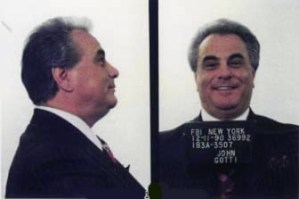
  • John Gotti - Famous Racketeer
    John Gotti – Famous Racketeer

    In an illegal tactic known as a protection racket, if I were to say, “You pay me to protect your business or else…” you would either do it, or you risk me destroying your business’ property or physically attacking you. It’s a tactic made famous by organized crime. Such a contract would be a contract signed under duress, also highly illegal and unenforceable. It is similar to the quid pro quo issue, but the people doing the threatening present the act of not harming you as the thing they are giving you in return.

So now that we’ve covered these tactics, why do I mention all of them? Because labor unions violate each one.

How is this possible?

Government officials over time, courting the unions and the powers they possess to help them get elected, have carved out laws to allow these otherwise illegal practices to be employed by unions. In doing so, it gives the impression they are helping the populace, even though the large majority of Americans are actually non-union.

There was a quid pro quo here, but it wasn’t between the unions and the employers who have a contract with each other, it was between the unions and the politicians. The people and the employers merely got the shaft.Bribe

So how do they violate these rules?

Collusion, protection racket, and contracts signed under duress: Union employees unite together to force employers to pay them more instead of competing with each other in a free employment market. They don’t ask for a raise on their individual merits, they demand them as a collective “or else.”

No quid pro quo: They force companies to sign contracts that are beneficial to the union at the detriment of the employer. They insinuate that their quid pro quo is that they provide a good work force to the employer, but if you asked any employer if they wanted a union versus a non-union workforce off the record, I defy you to find employers who would prefer union-workers. Let there be no doubt that if any unionized business was given the option to get out of a union contract and peacefully hire a new non-union workforce, they’d do it without hesitation. The idea that unions provide a service to the employer is a myth perpetuated by unions to overcome the fact that there is not a proper quid pro quo in their contracts. There is no logical argument one can make whereby a contract between an employer and a labor union is mutually beneficial.

Monopoly: No business or employee gets to choose between which union it deals with, nor are there multiple unions competing with each other in an industry. The applicable union a business is compelled to do business with merely dictate they are the ones to be dealt with whether you like it or not. In non-right to work states, they don’t even have a choice as to whether or not to participate as a condition of employment.

Contracts signed under duress: A business owner has no option to just walk away. This is called union-busting, and there are actually laws to prevent it, which effectively strong-arm business into making a deal by legislative force, also a form of duress. Union workers don’t just threaten to quit and find employment elsewhere if their demands aren’t met, they stand outside your business and prevent, deter, and/or interfere with customers and other workers from going in and doing business there. It’s not a Let’s-Do-Business-Together contract, it’s a Do-Business-With-Us-Or-Else contact. 

The list of companies that were made healthier and more profitable by the addition of a unionized work force is so minimal as to be non-existent. Much like socialism, it’s sold as a system designed to serve the greater good, but also much like socialism, I have yet to see an effective example where the greater good has truly been served. Until labor unions are forced to operate under the same rules as everyone else, they continue to be illegal enterprises only made legal by selective legislation—our economy will suffer until American’s elect honorable politicians who care more about the moral high ground than election results and put an end to this.

Republicans won 225 Years Ago—Democrats just won’t let it go.

Gary Nolan (and THE Scrappy Doo)

Have you ever had one of those common misconceptions you’re constantly prone to correct?

People often state that America is a democracy, yet it’s not—America is a republic because we have a constitution. In a democracy, the majority always rules, but in a republic, the majority only rules when they do not violate a constitution. The purpose? To protect minorities from the whims of the majority.

The 1st Amendment
The 1st Amendment

A great quote from an unknown source, often falsely attributed to Benjamin Franklin is that a Democracy is two wolves and a lamb voting on what’s for lunch. A republic is an armed lamb contesting the vote. Who knows who actually wrote this, but it’s elegant in its accuracy and simplicity.

I find the distinction of a democracy versus a republic odd for Democrats, because they go to great lengths to paint themselves as the party who supports the needs of minorities, but democracy being the heart of their name is the polar opposite.

In theory, being a Republican means you believe in the idea of a constitution—a protector for the rights of everyone, including minorities. Whether that minority is someone of a different race, sex, age, religion, or economic status. Something Republicans of late often struggle with too as they pass legislation which grows government contrary to their core values.

On a side note, the name Libertarian of course is fairly obvious and still very appropriate—we’re solely about liberty. Some are pure anarchists, some are just government minimalists, but the basic mantra of limited government is always the same.

Libertarian Party Logo

Republican and Democrat nomenclature is largely moot these days—Democrats aren’t running on a platform of abolishing the constitution, nor are Republicans running on the platform of establishing a constitution since we already have one.

But, as I think about their respective policies, it is often the Democrats who wish to push through popular legislation regardless of whether it seems to jive with the Constitution or not, leaving Republicans as the one of the two more often standing with our founding document when battling against a populist agenda.

If you look at many social policies to help the poor, they help the majority (those who aren’t rich) at the expense of the minority (those who are rich). Something more charitable wealthy folks like Warren Buffet and Bill Gates may not mind, but others who believe that they can help the people and the economy better by investing themselves, instead of giving their money to a largely wasteful government, find infuriating.

Americans still largely believe socialism and communism are wrong. So politicians proposing laws that are socialistic in nature have had little choice but to rebrand them. They can’t publicly acknowledge many of their policies are socialism, the people would have none of that. But if you call it “Fair share” taxation, and appeal to the class envy of the masses, you can get them to believe that legislative-lemon is legal-lemonade.

But wouldn’t it be nice if we had honesty in politics? If the policies a prospective politician is proposing are so good, shouldn’t they want to be honest about them and let them stand on their merits? As a proper skeptic, the first red flag any voter should recognize is when a politician refuses to go into the nuts & bolts of their proposals. It’s a sure sign there’s something in there they don’t want you to see.

Senator Rand Paul (R)

If you look at politicians like Gary Johnson, Justin Amash, Rand & Ron Paul, they have made a name for themselves telling the people what they need to hear, not what they want to hear.

Their message of, “Give me the power so I can then take it away from myself and the rest of government” is a refreshing sentiment that seems to be gaining ground with the populace in the wake of the recent government scandal smörgåsbord, although I may just be optimistic.

In the coming years, it will be interesting to see if Republicans choose a libertarian leaning candidate like Rand Paul, will the Libertarian Party unite with them to defeat the authoritarian leaning left, or will they continue to fight each other while socialists continue to work with Democrats instead of splitting off like the Libertarian Party did with the Republicans?

I believe the era of big government Republicans is over. As America continues to evolve away from the strict religious dogma of eras past, embrace science in a way that methodically deconstructs most vice laws for the ineffectual farce that they so often are, and become more libertine in their views about sexual orientations and preferences, the future of the Republican Party is best served by becoming more libertarian.

While I understand these core religious beliefs are important to them; they must understand that these are policies better pushed for on a personal level instead of a legislative one. Our forefathers never intended for government to police individual morality; it was designed to protect our rights from another who would threaten them.

Congressman Justin Amash (R)

Our forefathers thought liberty was worth fighting for and dying for. Yet most Americans and politicians seem to overlook that public workers, soldiers, and politicians swear to defend the constitution, not the government.

But either way, the Democrats lost their battle in 1787 when we adopted a Constitution, yet they still won’t let go of the name—it is kind of sad. Then again, they might have an uphill battle if they decide to go with a more accurate “Socialist Party, ” so I guess I can’t blame them.

The Emergency Medical Treatment & Labor Act Poll

As you may or may not know, (you’d know if you read my blog anyway) in 1996 the federal government passed the Federal Emergency Medical Treatment and Labor Act (EMTALA) which requires hospitals to aid a dying patient regardless of their ability to pay or circumstances surrounding their injuries.

Do you feel this is a good thing, bad thing, or somewhere in between?

Prostitution Poll

A common libertarian theme is “No victim, no crime.” If this were true, there would effectively be no police vice squad. With that in mind, since I’ve already asked about drugs in a previous poll, this time let’s talk about what is presumed to be the world’s oldest profession (I still contend hunters preceded prostitutes).

What is your position on prostitution?