The place—Salem Illinois railway yard. The time—August 2016.
All around clumsy dipshit, Union Pacific railroad engineer Bradley LeDure was attempting to prepare some locomotives for an upcoming haul. There were three locomotives coupled together on a side track, typically where locomotives to be repaired are parked.
LeDure boarded the locomotives to prepare them for his trip. All three were turned on, but he felt only one of them need be, so he was going to turn off two of them, and just drag them along on the trip.
While walking on the outside of one of the engines, LeDure slipped and fell. And when I say slipped and fell, I don’t mean like, “Oopsie! That was clumsy of me.” This dumb motherfucker slipped and fell so hard he hurt his spine, shoulder, and head so bad he’s now permanently disabled.
Upon inspection, it was found that there was some oil on the locomotive’s walkway LeDure was walking on, which presumably was the reason he fell.
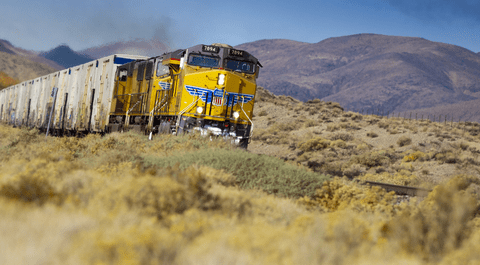
Union Pacific Train
So why does SCOTUS care about this prick with two left feet?
Under the Locomotive Inspection Act, a locomotive must meet certain safety conditions that would be found during an inspection, if the locomotive is deemed to be “in use” or “allowed to be used.”
Under the Federal Employers’ Liability Act, if there’s a violation of the LIA that leads to an injury, the employer will be liable for any and all damages the person incurs as a result of their shitty inspection service, or lack thereof.
Under the SAA however, that applies more to train cars, and only locomotives that are just being hauled around, and are maybe just used for braking, or electric power generation, but not used as a locomotive to pull the train. If they’re being used for pulling, then see the LIA above.
Now you know, if you’ve been reading my stories about SCOTUS before, they fucking love some nerdy definition shit. For SCOTUS, the question here is, “What the fuck does ‘in use’ mean” within the LIA.”
When LeDure filed his case, the 7th circuit decided that the trains, being on side tracks and not actually moving or anything, were not “in use.” So they told LeDure to go fuck himself. Which is ironic, as he’s disabled and probably can’t do that now.
LeDure was like, “Hey you assholes, that fucking locomotive was on, and was only paused for like an hour before it was to depart again, so it was clearly in use.”
But Union Pacific was like, “Listen, you clumsy fuck. We have the fucking receipts. That engine had been sitting for five fucking hours. So it wasn’t in fucking use.
But LeDure was like, “I could have fucking used it. It was there, turned on, and available. So it was “allowed to be used.” That’s what the statute says. As such, I’m covered.
LeDure’s team points out in their briefs that nearly half the injuries they sought to protect against with this law occur on stationary trains. So clearly, the statute was intended to protect in these instances.
Union Pacific Locomotive Inspecting Pit
Union Pacific argues, “If it was scheduled to be inspected, which is LeDure’s job, then that means it hadn’t been inspected yet, and therefore was inherently risky compared to one that had been inspected. How the fuck are we supposed to guarantee the safety of a locomotive we haven’t fucking inspected yet?”
“At some point, it has to deemed not available while it’s about to be serviced. This clumsy fucking retard was clearly not paying attention, slipped and fell, and doesn’t want to take responsibility for it. Fuck this guy, and his argument.”
Union Pacific agrees that it doesn’t have to be moving to be in use—it could be stopped for something on the tracks, or stopped because it’s all connected and about to depart. But that doesn’t mean it’s always in use if it’s not in the actual garage being worked on. If it’s off to the side, turned on, and waiting to be inspected, what fucking idiot thinks it’s in use? It doesn’t even have any cars attached to it to pull!”
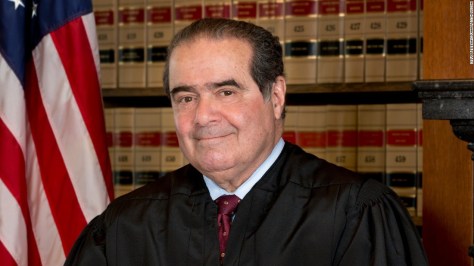
To hammer their point home, they quoted the late Justice Antonin Scalia, when arguing a 1993 case about guns, he said, “When someone asks, ‘Do you use a cane?’, he is not inquiring whether you have your grandfather’s silver-handled walking stick on display in the hall; he wants to know whether you walk with a cane.”
Justice Antonin Scalia 1960-2016
Their argument being, a cane is in use if it’s doing its job, or about to do its job. A train’s job is to pull shit. Not sit there and wait to be serviced. Therefore, not in fucking use. Mic drop, bitches!
They also argued about the “allowed to be used” language which LeDure cited as supporting his argument. They pointed out that the law’s framers were referring to a third party like a lumber company who often uses trains, but aren’t necessarily the railway company. They are “allowed to use” the train, but don’t own it. It was never about whether some asshole like LeDure could just fucking take it.
Union Pacific also argue that if they were to take LeDure’s approach, no locomotive would ever be able to be parked on a side track waiting to be serviced, because in his idiot mind, that’s “in use.”
So if SCOTUS sides with those morons, they’ll have to make sure that all locomotives are immediately transported to a garage for servicing as soon as they’re meant to be out of use. They’ll have to build gargantuan fucking garages because, in case you haven’t noticed, locomotives are fucking huge, because apparently leaving it on tracks outside the garage means it’s still in use.
They were like, “Do you have any idea how much that shit would cost?”
Anyway, enough back story, on to the arguments…
Counsel David C. Frederick opened for the petitioner, Clumsy McClumserson. He pointed out a shitload of old cases from the early 1900s where SCOTUS ruled about trains being in use. In one, people were dining on a car, but it wasn’t connected to shit. A rail worker hurt themselves trying to connect cars to it.
Counsel David Frederick
Justice Roberts immediately called him on this nonsense saying, “Dude, a locomotive, which pulls the cars, has a very different use than a fucking dining car, which is just a place for people to eat, that happens to often get pulled around, but not necessarily. Surely you understand they’re not the same fucking thing.”
“Like, if people are eating on a dining car that wasn’t going anywhere, it’s still being used. But a locomotive just sitting there not pulling anything, isn’t fucking being used.”
Counsel, unimpressed with Roberts’ argument was like, “The SAA lumps locomotives and train cars all together in one big group of ‘rail vehicles.’ So since they’re all lumped together, they all fall under the same rules. As such, with all due respect, I invite you to swing on my nuts, Justice Roberts.”
Justice Roberts did not, in fact, swing on his nuts. He threw a counterpunch.
He told him, “I appreciate your stupid fucking argument, but the LIA deals with locomotives being used to locomote, and only a fucking idiot would say it’s in use while it’s just sitting off to the side. Is your fucking car in use sitting out in the driveway while you’re inside jerking off?” We’re here because your claims are under the LIA, not the SAA. You’re just using that shit to try to help your shitty argument!
Justice Sotomayor, showing a total lack of understanding about trains, threw counsel Frederick a bone when she asked if it was odd to treat a locomotive and a railcar differently, which he obviously agreed with. He needed them to be treated the same.
Official Portrait of United States Supreme Court Justice Sonia Sotomayor
Click for Biography
Counsel, in response, then argued that it was Clumsy McClumserson’s job to check those locomotives before heading out. So how the fuck does it make sense that he’s not protected from injuries that occur while on that fucking locomotive?
Justice Kavanaugh chimed in, presumably to draw a line, asking about what if the locomotive were on a side track for several days. Is it supposed to be inspected every day for such hazards?
Counsel Frederick was undeterred by this line of questioning, and hammered home the idea that if a locomotive is available to be used, it’s “in use.” So yes, in that scenario, the locomotive should be inspected and made sure it’s safe for engineers to board it and do their jobs.
Justice Thomas, humble-bragging about his motorhome, asked counsel Frederick if his car is “in use” when he’s dragging that fucker behind his motorhome?
Counsel Frederick was like, “you bet your ass it is! No one else can use it. The lights are in use, the brakes are in use. It’s in fucking use.”
*Side note: Cars being towed like this, do not have their brakes in use. It’s just the lights.
But justice Thomas being quite the skeptic was like, “The purpose of a car isn’t to be dragged around everywhere. We’re hauling it so we can use it later. So I don’t see how it’s in use now. It’s not serving any purpose now.
Justice Thomas then asked, what if some fuckhead engineer tagged the locomotive to be repaired, which some would argue is taking it out of use. Is it still in use?
Associate Justice Clarence Thomas
Counsel Frederick, seeking to win this case, needs the broadest fucking definition of ‘in use’ he can possible come up with, so he’s like, “Fuck yeah, man! It’s still being used to serve the purpose of the railroad, and people who might climb all over that mother fucker in your scenario, are doing work for the railroad that utilizes that locomotive. Therefore, it’s in fucking use.”
I’ll give him this, pretty fucking creative argument.
Justice Thomas, not done with this fucker yet, then asked, “In the LIA, it uses the term ‘safe to operate.’ So this whole provision seems to revolve around operation of the locomotive. Not when it’s sitting there waiting to be maintained.”
But counsel Frederick reminded justice Thomas that in his briefs, he points out that nearly half the railway injuries occur on stationary trains. So clearly, the law is intended to help these people. My client isn’t just some unlucky clumsy fuck. This is the norm.
But justice Thomas, was having none of his bullshit. He retorted, “Use implies the train is doing some sort of work. So what fucking work is it doing for Union Pacific, if it’s just fucking sitting there?”
Counsel Frederick, using the old “answer the question you wanted them to ask, not the question they actually asked” tactic, responded again about the ways it can be serviced, and then taken out of use.
Justice Thomas was like, “if it’s in maintenance, or on its way to be worked on, it’s in the same condition—it’s fucked up. So how do you differentiate?”
Counsel Frederick responded that rail workers have to transport it to be worked on, so they have a right to a safe work environment. Only the repair people should die, if someone has to. They’re fucking worthless.
Justice Alito, and Sotomayor after, were curious why counsel Frederick thinks somehow the law protects an engineer walking around on a train while it’s “in use” versus a technician taking the train to be serviced, then. If the purpose of the law is to protect railway workers, they’re all fucking railway workers, aren’t they?
He responded that the idiots he’s defending are walking around with the assumption that everything is safe and OK. But the others have an assumption there is a problem, which is why they’re about to work on it.
Next up, for the United States as an amicus in support of Clumsy McClumserson, counsel Colleen E. Roh Sinzdak.
She opened by pointing out that these locomotives are 400,000 lbs, with 5,000 of diesel in them. They’re fucking dangerous and complex machines. They haul freight, but also they can be a simple power supply, a mule to move cars around the yard, or just a standby locomotive, ready to rescue a train that takes a shit out in the field.
Colleen E. Roh Sinzdak
Any of these purposes means it’s in use.
Until these assholes put it into the repair shop, storage, or retirement, it’s in use.
Justice Roberts asked, “what if Union Pacific sets this train aside, making it a little restaurant or something, but they know they could deploy it to haul shit again if needed? Is that “in use?”
Counsel Sinzdak responded that this would be “in storage.”
Justice Roberts asked, “Why? It falls under your argument, it’s one of those locomotives that’s there, ready to rescue some other train that breaks down, isn’t it?”
She was like, “No dawg. They’d have to do a lot of shit to get it up to spec to haul shit again.”
Justice Breyer, in a rare bit of defiance absolutely demolished counsel Sindzak. I’m just going to copy this exchange here.
Stephen G. Breyer
Well, suppose it hasn’t gotten into the service yet?
Colleen E. Roh Sinzdak
Then it’s not in use.
Stephen G. Breyer
Oh, not in use. Okay.
Colleen E. Roh Sinzdak
It’s once the locomotive is placed into service.
Stephen G. Breyer
Associate Justice Stephen Breyer
So we have a yard and the company puts all the locomotives in the yard, that they make one every three months, and there are now 15 in that yard, and they’re all ready to go, and somebody calls from the train station and says can we take any of those? Sure, take them.
Take them whenever you want. And occasionally they do.
Okay? In use or not?
Colleen E. Roh Sinzdak
So, once the locomotive is placed into service, then, yes, it is…
Stephen G. Breyer
What does that mean, “placed into service”?
Colleen E. Roh Sinzdak
Well, usually, it means, for example…
Stephen G. Breyer
It’s there, sitting in the yard.
Colleen E. Roh Sinzdak
Well, it needs to be filled with fuel.
I mean, the 5,000 gallons of fuel is a pretty…
Stephen G. Breyer
Oh, it has to be filled with fuel.
So it’s not used—in other words, a locomotive is not used when it’s sitting somewhere and doesn’t have fuel in it?
Colleen E. Roh Sinzdak
That is correct.
So the FRA generally focuses…
Stephen G. Breyer
Oh, you—what happened to the thing about you used it until you withdraw it from service.
It’s not been withdrawn from service.
Colleen E. Roh Sinzdak
The FRA considers that a locomotive is withdrawn from service once its fluids have been drained and its battery has been detached.
So, for example…
Stephen G. Breyer
Oh, it hasn’t detached the battery, but what they did was they withdrew—they didn’t have fuel in it because we don’t need fuel until next month because there’s a big snowstorm and that won’t be cleared up until next month.
Colleen E. Roh Sinzdak
Right.
So the FRA’s basic…
Stephen G. Breyer
So what my point is, is you want to say that is in use.
And what you’re doing is not following the words in your brief.
You’re following what is your common-sense view of sort of what’s in use or not.
And that’s why I say, if it’s in your brief, hey, you don’t say anything in the brief of not having yet gone into service, I don’t think.
You talk about withdrawn from service. And here you have six words. That’s why I started thinking we’re not going to get anywhere or very far by substituting the words from your brief or any of these briefs for the word “use.” Now you don’t agree with that, so explain.
Colleen E. Roh Sinzdak
I do not agree with that.
While a locomotive is being put to a carrier’s purposes, then it is in use.
I would say that as we note in our brief, you can withdraw a locomotive from service and then it’s no longer in use.
So, obviously, if the locomotive has never been put into service in the first place, then it isn’t in use.
We do think that “use” and “service” are synonymous in this statute. Now we also think there is a very clear line here, and it’s once a carrier has placed the locomotive into use, have they done something to affirmatively withdraw it from service for storage or repair? And the key things that they might do are moving it to a controlled environment like a repair shop, where you just don’t have the same risks of an exposed railroad yard, where you have trains moving everywhere, you have people going everywhere. So you’ve put it in a controlled environment where the only people interacting with it are people who are expecting to be dealing with a defective locomotive.
Or you’ve done something to make sure that there is no way that somebody is going—an employee is just going to hop on that train and turn it on or move it. So, again, you can put it—you can and—and many railroads do put locomotives in storage by detaching the battery and draining the fluids.
And that way, what you don’t have is the risk that an employee is going to get on and move this, again, 400…
Stephen G. Breyer
Now what you’re suggesting is certainly a possible approach. There’s a common law approach.
If we’re Lord Mansfield or Coke or somebody, we might take that.
And you’re suggesting, if that’s what we’re trying to do, we ought to look at the purposes of this statute and decide whether the kinds of risks that are at issue in the case are the kinds of risks the statute is trying to prevent.
Colleen E. Roh Sinzdak
That is one approach, although what I would say is that you could apply the canon of in pari materia and say that we have interpreted the SAA in exactly this way, that the Locomotive Inspection Act was enacted at the same time that Congress…
Stephen G. Breyer
Yeah, but they’re going to say, as you know, because you’ve written this already, so I do interrupt, that the first statute is done for all cars, and it’s done for all cars because people wander around in those cars, particularly employees. But locomotives have special risks, particularly with fuel and other things, and so the statute is meant to go beyond that first statute.
But how far beyond? And now we have the issue in the case.
Colleen E. Roh Sinzdak
I’m actually not sure that we are arguing that the “in use” definition doesn’t go any further.
Stephen G. Breyer
You’re not, but they are.
Colleen E. Roh Sinzdak
Okay.
Well, so, for the FRA, “use” means the same thing in the SAA and in the LIA, and it should be interpreted in that way because—for basic reasons of clarity in the law. When you have two statutes enacted at approximately the same time covering the same topic, it sort of stresses reality to think that a regulated party would read those two laws and think that “use” means one thing as applied to a locomotive in one law and something entirely different is applied to a locomotive in a different law.
So that just—that doesn’t work sort of as a matter of common sense. And it certainly doesn’t work if you do want to look at purpose—I mean you want to look at legislative history, and you see that Congress is expressly borrowing from one statute and putting it in another.
Justice Roberts, also apparently not a fan of counsel Sindzak, blasted her on this last argument.
John G. Roberts, Jr.
Chief Justice John Roberts
No, “use” means the same thing.
It’s just that when you apply it, the use you put a locomotive to is to drive and pull cars.
The use you put a railcar to is to have stuff in it and be attached to a locomotive. It’s the same word.
It just looks to, I guess, the primary purpose of the object that’s involved.
That doesn’t mean you’re using the word differently.
She went on to say, that congress incentivized the railroads to take “defective trains off the line.” Her argument being, that they wanted this to prevent risk of injury from defective trains being problematic.
But Justice Alito was like, “Where the fuck did congress say that?”
She was like, “the fucking law talks about making sure trains are safe, and any issues fixed. So clearly, they were creating a framework to say, “If there’s a problem, it comes out of service to be fixed. If it’s not fucked up, it’s in service.”
She went on to argue that “use” has many connotations. For instance, people would say they “use” a gun to protect their home, but it doesn’t mean they ever pick it up and use it to shoot someone.
*I wish she’d leave the gun arguments to the professionals, because we’d say we “have” a gun for home protection, and we only use it to shoot some motherfucker breaking into our home. Sorry, she lost me on this argument.
She then went on to the argument that again, half the incidents are on stationary trains, and these laws were meant to protect such people. She even shared an anecdote that you used to be able to tell how long someone worked on the railroad by seeing how many fingers they have left. No shit. That was her argument.
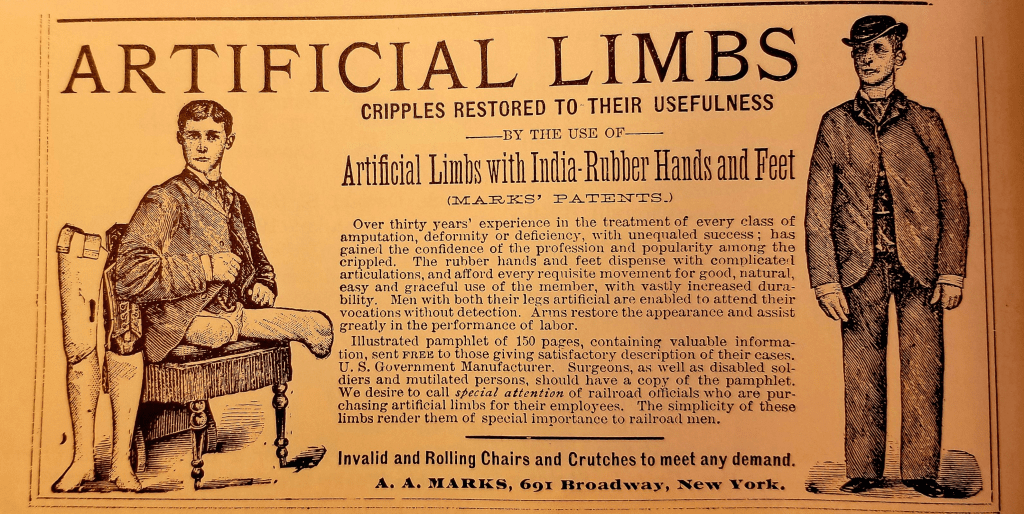
She also mentioned they even had ads for prosthetics in publications for railway workers because conditions were so unsafe back in the day.
All this to say that the point of the laws, is to protect workers like Clumsy McClumserson.
She argued that while they accept it was off to the side, and not immediately intended to do any work, it was ready to be used when whomever decided to use it. As such, it needed to be inspected and deemed safe, which it wasn’t.
Multiple times, counsel Sinzdak pointed out that for the train to be not in use for purposes of maintenance, storage, and such, it would have the battery disconnected and the fluids drained. Her argument being that barring that, the train is in use.
Justice Sotomayor, looking to draw a fucking line anywhere, asked if this is where they should draw the line? If the battery is disconnected and fluids are drained, then it’s not “in use?”
Counsel Sinzdak, not wanting to limit herself, was like, “yeah, that’s one way, but there are others. Like it could be parked in a service garage over a maintenance pit.”
She again, hammered home the idea that a train, sitting off to the side, ready to go, has to be deemed in use, because non-maintenance personal have every right and reason to go use them if needed, and therefore, they should be assumed safe.
Wrapping things up for Union Pacific, counsel J. Scott Ballenger was up to bat.
J. Scott Ballenger
He wasted no time in bashing counsel Sinzdak’s argument. He was like, “where the fuck do you see anything about disconnected batteries and drained fluids in this fucking stature. Don’t bother, I’ll answer it myself. If fucking isn’t.”
She’s trying to rewrite this law to what she thinks it should mean, not what it fucking actually says. This is bullshit, and you know it.
Union Pacific has no rule that to take a train out of service, you disconnect the battery and drain the fluids. You could, but that certainly isn’t the only way.
His argument is that the law makes it clear, that as soon as there’s an issue, the train is not to be “used” anymore, and is no longer in service until the issue is fixed.
If the oppositions idiotic statements are true, then they can never comply with that clearly written rule, because they don’t have a way of getting the train from “in use” to “in service.” They can’t just magically wish it from the tracks into a repair shop.
He pointed out that there are in fact regulations that govern the transport of locomotives, and that congress understood that a locomotive being transported to get serviced is not in use. If it’s known defective, then it can no longer be deemed safe until the defect is fixed, and the law has to provide for a way to transport it while defective.
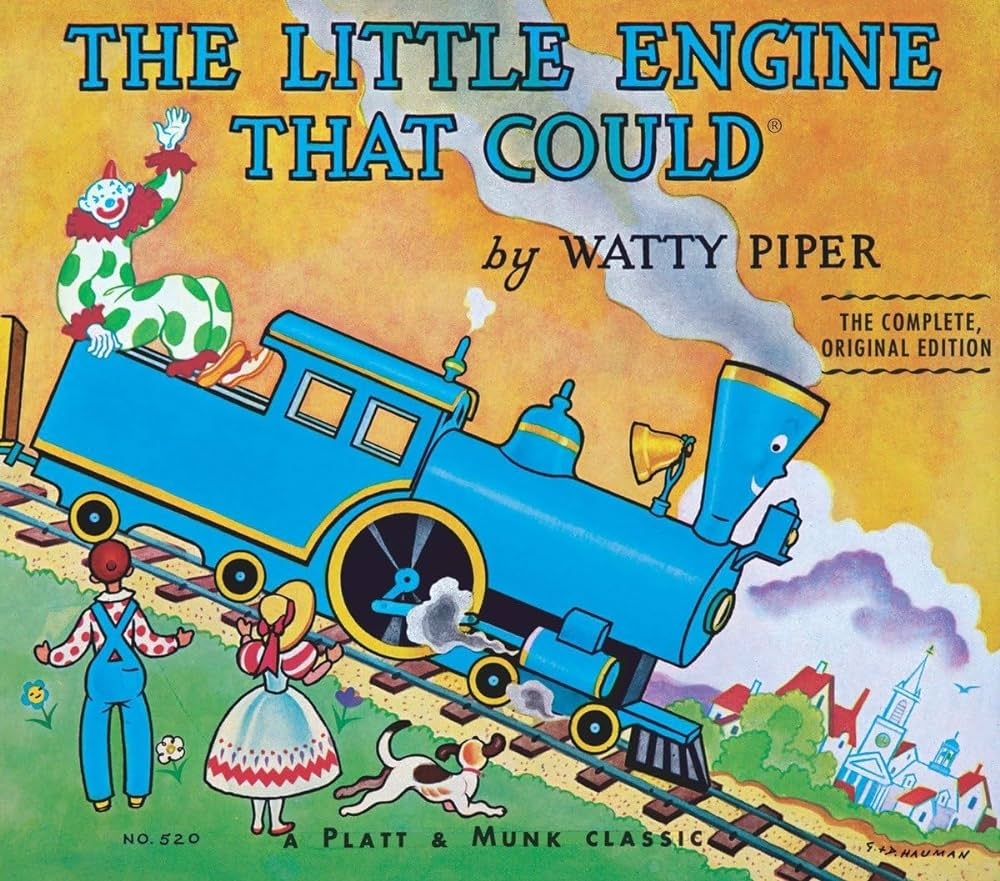
He also pointed out, under questioning from Breyer who’d just invoked the Little Train that Could, the train is also in use, when it’s applying tractive power to the track. Meaning, it’s either moving on the track, or attempting to move by applying power to the wheels. So even though the little train that could is only thinking he can, he’s still applying power, and therefore in use, even if he’s currently not moving because he doesn’t have enough power.
He points out that in the law, they say a dead locomotive, can be idling. Sometimes, trains automatically turn themselves on just to charge their batteries. This doesn’t make it in use.
Justice Sotomayor asked about a locomotive that is being dragged with a train, but isn’t powering the train itself. Is it in use?
Counsel pointed out that under this instance, it is covered under the Safety Appliance Act (SAA), as it’s acting like a railroad car, but it is not then in use under the LIA, because that’s for locomotives, and it’s not locomoting.
Justice Kagan, seemingly siding with Clumsy McClumserson, argued that the statute supported the train as in use, when it’s ready to be used, because the point of the legislation is to get it ready for whatever the train’s operator’s decided to do with it, before it’s put into use.
But counsel Ballenger, understanding Sotomayor knows fuck-all about trains pointed out that Union Pacific’s manuals for engineers like Clumsy McClumserson are supposed to do inspections to make sure the train is safe before operation, which is what he was doing. Within that framework, it must be, that the fucking train might be unsafe, which is why he needs to inspect it.
Justice Thomas chimed in and asked if there were any indication that this locomotive was cleared for use? Like was it available to LeDure?
Counsel Ballenger, with a bit of evidence I’m surprised I didn’t hear earlier pointed out that Union Pacific’s guides forbid using any that are overdue for inspection. That all parties agree it was overdue for inspection, therefore to answer the question, no! It wasn’t available to be used, until it was inspected. That’s our whole fucking point!
Justice Thomas, also looking to draw some lines, asked if there’s an instance where a stationary train would be deemed in use.
Ballenger responded that if it were stopped at a red light, or waiting for a switch, it’s still in use. But as soon as it’s put on a side track, and the true goes home for the day, it’s not in use anymore.
In a split decision where Justice Barrett recused herself as she was on the 7th circuit when they previously decided it, the 7th circuit’s ruling holds. Since there’s no majority decision, it simply stands as if it didn’t happen, and therefore the 7th circuit’s ruling that the locomotive wasn’t “in use” is the ruling. I’d love to share more info here, but they literally just issued like a one-sentence ruling saying they were tied, and as such, there is no opinion.
This means that the questions they faced are still there, and there will need to be a new case asking the same question, they will be asked to decide, if that question is to be answered. The 7th circuit’s decision holds, but that doesn’t mean it becomes precedent, like it would if the majority had voted to hold their opinion.
Imagine going to buy a piece of property, and the realtor tells you it’s prime real estate. But then after you sign on the dotted line, you find out it’s in a flood zone, or close to something noisy like an airport. You got the ole bait n’ switch.
That principle is at the heart of this case for Luxshare, involving 28 U.S.C. § 1782—but for SCOTUS specifically, it’s what the hell constitutes a foreign or international tribunal. I know, you’re already riveted, right?
Well, a lot of people are apparently interested, because unlike most cases which have two sides, one representative each, and maybe one amicus between then, this case had three fucking people arguing for the petitioners, ZF Automotive, and two arguing for the respondents Luxshare. Five fucking people arguing this shit! That’s a record, for me.
Anyway…
Congress wrote 28 U.S.C. § 1782 to assist in international disputes, as a courtesy to other nations. As you may know, when you sue someone, you can request relevant documents, if you have evidence they’re pertinent to your case, via a subpoena.
So the gist of this law is basically that if a company is being sued in Germany for instance, but their headquarters are in New York, the German court can ask New York to order the company they want documentation from, to turn that shit over for use in German court proceedings, just as they’d have to do if the suit were all transpiring in the United States.
Most countries have a similar law—it’s just a way to reciprocate with each other in a world that has a lot of international business disputes.
When 28 U.S.C. § 1782 was originally written in 1948, it specified “courts” as the entity who can demand discovery. But then congress amended the language in 1964 to read as “foreign tribunals.”
It is well understood their intentions in amending this language were meant to broaden the scope to more than just courts, as there are other “official” proceedings that should have a right to subpoena evidence. It’s been applied to magistrates and governmental investigations around the world.
However, people have also attempted to use it to apply to international private arbitrations, which is why we’re here now—SCOTUS has had enough of this shit. Private arbitrations are when two parties agree to hire arbitrators, which are private entities—often lawyers—to settle their dispute out of court.
ZF Automotive
For the case in question here, in 2017, technology company Luxshare bought a Michigan factory owned by German auto-manufacturer ZF Automotive. But after moving into its new digs, Luxshare was not pleased with their purchase. They believed that ZF Automotive were less than honest about the value of this shithole.
As an Ohioan, I’d like to point out that it was in Michigan, so you’d think they’d have known it was basically worthless—nothing good comes from Michigan, except maybe Tom Brady.
Once Luxshare realized they’d gotten got, they wanted restitution. In their purchasing contract with ZF, they agreed to arbitration in Germany if there were any disputes of this nature. So using 28 U.S.C. § 1782 as their wingman, Luxshare requested a Michigan court to force ZF to help them with discovery documents from ZF Auto.
They wanted to prove they were highballed, since the ZF location in question is located in Michigan, but the discovery is to assist in support of their agreed-upon arbitration in Germany.
Stepping back for a second, I suppose I should explain something I haven’t previously. I know I often gloss over this, but in general, it should be understood that basically no one gets to go straight to the fucking Supreme Court.
Otherwise, the opposite of original jurisdiction is “Appellate Jurisdiction,” which is when a lower court rules, and a party of that decision, generally the loser, is none too pleased with those fucking idiots, and decides to appeal to a higher court.
This is called submitting a writ of certiori. The higher court reviews this writ, and decides whether they think it’s worth their time to review, or if they think it’s a big old nothing burger and tell them to pound sand.
If the higher court does grant certiori (agree to hear the appeal), either the petitioner loses again, or the superior court decides the lower court were fucking idiots, and overrule them.
So now, whomever lost the second round is pissed, and they appeal that appeal to a higher court again. This dance of sore losers eventually meanders it’s way to SCOTUS, one higher court at a time.
SCOTUS is generally an appellate court—the prettiest appellate court in all the land. There is no appeal once you lose there—other than maybe trying to get your shit heard again by a newer SCOTUS years later.
While we’re on the subject of shit I often gloss over, it’s also worth noting that on the subject of legal documents, it’s good practice to define terms that are written in your law or contract that could be ambiguous. The better one does this, the less likely the document will be scrutinized in courts.
For instance, in a contract, maybe you have verbiage that says, “This contract is null and void if either party acts like an asshole.”
Asshole is a word that is rather open to interpretation. So the contract would (and should) have a definitions section, and there, it would define “asshole” specifically. It might say, “Asshole: A person who has made publicly disparaging remarks against the other party.”
So now, when courts or arbitrators have to determine if one of the parties was an asshole, they clearly understand what the test is to determine if they were an asshole or not—did that party talk shit about the other publicly?
Make sense?
So, now that you understand that, this a great time to mention that those lazy fucks in congress didn’t define “Foreign or international tribunal” in 28 U.S.C. § 1782. They were too busy insider trading and grandstanding in front of congressional cameras to write an actual well-written law. Classic fucking congress! It should be known that probably 90% of what SCOTUS does, is cleaning up congress’ rather avoidable fucking messes.
SCOTUS is often just an editor for whatever congress writes. Congress writes a law with the linguistic skills of a caveman, so then some member of the public interprets their idiotic law one way, while some other idiot or government official interprets it another way, and now these two have beef which could have been avoided if congress had spent a little time writing a better fucking law.
So SCOTUS had to read 28 U.S.C. § 1782, and be like, “What fucking idiot forgot to define ‘Foreign or international tribunals?’ Here, let us fix this for you, you fucking morons. There’s 538 of you fucking idiots, and you can’t write a decent fucking law between you.”
I know SCOTUS is all polite and professional in public, but you know in closed quarters, this is the language they use.
Anyway, on to the arguments…
Counsel Roman Martinez opened for the petitioner’s ZF Automotive by pointing out that the reports from congress, when updating this law to read “foreign tribunals” clearly show that their intent was to create a cooperative effort with foreign governments in a similar way as we’d hope they’d do for us if the roles were reversed. There’s no fucking mention of private arbitrations in this shit.
Roman Martinez
He also points out that since arbitrations are more common than court proceedings, district courts are going to have these requests falling out of their assholes if the court were to side with Luxshare.
Justice Kagan, ever the skeptic, pointed out that things like “foreign university” or “foreign language” don’t necessarily mean it’s government related. So your fucking argument is full of holes, bro!
Counsel Martinez went out to point out that the rules commission who drafted this new rule, were specifically told to do so by congress, in an effort to enhance cooperation between nations. So how the fuck would that translate to private arbitrations?
Justice Breyer, being ever the contrarian was like, “Sure congress gave them a directive, but this language can be interpreted more broadly to include private arbitration, so what’s the fucking harm in that?”
Next up was counsel Joseph Baio, also arguing for the petitioners. He also wanted to answer Justice Breyer’s question with the Judge Judy defense. No shit!
Joseph Baio
He was like, “If some asshole goes on Judge Judy’s program and asks for discovery, we wouldn’t give that old bag jack shit. Even though she’s an actual judge, her fucking show is just private arbitration. So for you to side with those other assholes, you’d be arguing that a German Judge Judy, would have the right to discovery that American Judge Judy does not!”
My quote may not be verbatim, but that was the basic gist of it.
He went on to tell justice Breyer, “if you side with those dipshits, you’re basically incentivizing ambulance chasers like me to start our arbitrations in foreign countries, so we can bypass your rules here.
Justice Breyer seemed unimpressed.
Counsel Baio, being a man of extreme examples, also put forth his violin defense.
He was like, “A foreign orchestra could hold an audition for a violinist. That is a decision-making process that would be allowed if you ruled for those fucking idiots over there. Do you really want that shit?”
Justice Sotomayor, seemingly unimpressed, asked about the World Trade Organization (WTO). She was like, what if they pick some arbitrators. They’re an independent organization, and not a government. So are they fucked?
Counsel Baio was like, “Listen, I’m sick of your shit. If the individuals disputing the case select the arbitrators, it’s fucking private, and they can get bent. If however the WTO picks the arbitrators, it’s an international organization of cooperating governments, so they get to demand discovery. Why is this so difficult?”
Next up was Edwin Kneedler, acting on behalf of the US Government in support of the petitioners. His opening was basically a greatest hits of the first two. He was like, “Listen, y’all know the reason we passed this fucking law. It was about international cooperation with other governments. Why are we even talking about this shit?”
Edwin Kneedler
He argued quite simply, that the line he draws, is that an international tribunal has to be:
Established by government, and exercising governmental authority.
He also cited international comity. The idea that the standard the respondents want isn’t what other countries recognize. So if he were to lose, the US would be giving up discovery like a twenty dollar whore, where other countries would be more like a thousand dollar whore or something.
Finally, for the respondents, we first have counsel Andrew Davies. He argued that the “best and most natural interpretation” of foreign tribunal includes commercial tribunals, because they’re adjudicating a party’s legal rights.
Andrew Davies
He also points out that the courts benefit from arbitrations, because that means they don’t have to handle all those fucking disputes. So if SCOTUS rules against his side, that will actually create more work for the courts, not less, because people will be less likely to arbitrate international affairs knowing they won’t have that discovery option available.
He also cited that the court has sided with previous arbitrations, as promoting international comity, so the other side are a bunch of fucking liars spewing bullshit. That while they may be right that some countries don’t provide arbitration support, most of our major trading partners do.
Justice Neil “Golden Voice” Gorsuch chimed in and was like, “Back in 1964, arbitration wasn’t “a thing” like it is today. So surely congress then couldn’t have envisioned the world we live in now, with fucking arbitrations all over the god damn place. Clearly, congress wasn’t considering private arbitrations when they wrote this fucking rule, yeah?”
Associate Justice Neil Gorsuch
Counsel’s response was essentially to point out there there are lots of countries already supporting arbitrations in this manner, and the language doesn’t rule it out, so that should be good enough.
Justice Breyer, siding with Gorsuch was like, “Dawg, you crazy.”
Finally, counsel Alexander Yanos for the respondent. He dug deep and was like, “Hey man, these other assholes are just flat wrong when they say congress didn’t anticipate arbitration in this law. The senate report used to incite the committee to draft this law cited a German Mixed Claims Commission, which was effectively arbitration.
Justice Roberts pointed out that a representative for the government was here, and arguing the opposite position. Shouldn’t their opinion matter?
But counsel Yanos was certain that the point of the law was for international cooperation. If an arbitration is set up in a foreign country, and it’s decisions are binding under law, and only appealable by the courts, then it’s an international tribunal, even if it’s private arbitration, because any appeals do end up in court.
Alexander Yanos
Justice Gorsuch, seemingly unimpressed with counsel Yanos’ argument, and in agreement with the idea that it’ll add a lot more work to American courts, pointed out that 3rd party discovery is a pain in the ass that no one fucking likes. As such, he’s pretty sure congress wasn’t intending to make that shit the norm.
In a unanimous decision for ZF Automotive Group, SCOTUS decided that a foreign and international tribunal shall be defined as a governmental agency abroad, and not some rando third party arbitrators. Otherwise, it’ll basically be anarchy up in this bitch. Anyone with an international beef that forms some sort of inquiry board will be asking for shit they have no right to ask for.
As such, ZF is not required to hand over documents to Luxshare under 28 U.S.C. § 1782.
Weirdly, Justice Barrett who authored the opinion acknowledged that the word tribunal could certainly be interpreted as something that isn’t governmental in nature.
Associate Justice Amy Coney Barrett
She also acknowledged that foreign just means not located in the US, it also doesn’t have to mean a foreign government.
But when used together, a foreign tribunal is generally thought of as a governmental agency that isn’t part of the United States. Her argument for this was the term “foreign leader.” She was like, you wouldn’t call the president of a company abroad a foreign leader would you? Fuck no. You’d call the leader of a foreign country that.
They went on to define a foreign tribunal as a governmental agency from a foreign country, and an international tribunal is one where two governments join together to form some intergovernmental agency, like maybe NATO, or the United Nations.
She then suggested that it was plainly obvious the US passed this law to create a level of mutual respect among international governments and the US, and if that’s the purpose, helping third-party arbitrators doesn’t really serve that purpose.
She finally hit her opinion home by pointing out that in the US, third-party arbitrators don’t often get the right to demand discovery. So if we don’t do it here at home carte blanche, why the fuck would we give some international assholes that power?
log·i·cal: capable of reasoning or of using reason in an orderly cogent fashion lib·er·tar·i·an: an advocate of the doctrine of free will; a person who upholds the principles of individual liberty especially of thought and action




















 The Logical Libertarian™