Marietta Memorial Hospital Employee Health Benefit Plan (MMHEHBP…this acronym sucks balls), is a health insurance company for employees of the Marietta Memorial Hospital in Ohio. It’s governed by the Employee Retirement Income Security Act (ERISA).
Marietta Memorial Hospital
Their opponents in this legal battle are DaVita Inc., which are a company specializing in dialysis.
The basic concept of the law around this shit, is that the Medicare Secondary Payer Act prohibits care plans from discriminating against people with ESRF. But the cheap-asses at MMHEHBP are like, “Woah, dude. These people with ESRF are milking us dry with their never-ending need for dialysis, and they’re gonna die anyway, so…”
As such, they launched an evil plan. They have a tiered system where tier 1 pays the highest percentage of total costs, at a rate that is industry normal. But that only occurs if the employee of the hospital seeks care within the hospital. Makes sense, as they can control their costs that way.
Then there’s tier 2, which is anyone out of their network. This is where DaVita comes in. People who go to places like DaVita get a lower reimbursement than those who get dialysis at the hospital or an in-network provider. Plus, for outpatient dialysis, they don’t pay the going rate, they pay the rate Medicare pays, which is significantly less, but Medicare gets away with it, because they buy in bulk, I guess.
It appears their hope was to push these people to pay so much for this shit, that they’d cancel their private insurance, and go straight to the swaddling arms of Medicare.
But Congress, trying to control costs of their own, made law to prevent insurers from pushing people off their private plans with shitty reimbursements, onto Medicare, with it’s limitless supply of money congress thinks it has.
So by law, for the first 30 months, the private plans are on the hook, and only after then, does Medicare kick in. Even if the patients are eligible for Medicare before the 30 months end, the private companies still pay for that first 30 month’s.
Just so we understand, insurance is like gambling. Insurance companies have a shit ton of statistics on how many people get what disease, and how much on average that costs. People called actuaries jerk off over crunching numbers like this, then come up with what they think the insurance companies should charge for premiums.
If the average medical expenses a person might incur is $1,000 a year, then they might charge $1,200. The $200 difference, if these actuary nerds did their math right, is the insurance company’s profit.
The government argues this is the risk the insurance companies took when agreeing to insure this person, so they’re on the fucking hook, even if it does break the bank.
But the insurance companies, trying to avoid going bankrupt because their actuaries screwed the pooch, are hoping to dump that shit on Medicare wherever they can.
MMHEHBP basically argue that under their plan, this company is a specialist of sorts which the client has opted to go see, and as such, are “out of plan” and get less reimbursement. As if somehow, they didn’t need this, or some shit.
But DaVita is like, “You’re specifically giving us a shitty reimbursement because we’re the fucking people helping ESRF patients. It’s expensive AF to do this shit, and you’re using this tier 2 bullshit to get out of covering the treatment they need. We’re not some overpriced specialists doling out rainbows and popsicles, we’re just the ones who provide the service these people fucking need. Now stop being cheap assholes.”
Because the law prevents discrimination against people with ESRF, this system by MMHEHBP appears to be a creative way to discriminate against them, without specifically discriminating against them.
Imagine legislators wanted to prohibit you from using your food stamps at McDonalds, but since they can’t just single out McDonalds, they prevent you from using it on any food that starts with the letters “Mc.” That’s basically what’s happening here.
MMHEHBP however says, “Listen, assholes. We cover dialysis at the same rate for everyone, whether they have end-stage renal failure or not, doesn’t change a thing for us. It’s not our fault it just happens to be our totally non-biased and creative rules only discriminate people with ESRF. You don’t see any mention of ESRF in our rules, do you? So obviously, we’re not discriminating, it’s just bad luck or something for these people.”
Patient receiving dialysis
While that may be true, let’s be clear, what they cover is pretty low. People without ESRF need minimal dialysis—few visits—done. They are going to just pay their “out of pocket” expenses and move on.
But people who have ESRF need significantly more dialysis—they need it for the rest of their life! Their kidneys don’t fucking work anymore. So either they get dialysis forever, get a transplant, or they die. It’s literally that fucking simple. So unless their last name is Musk, they probably can’t afford this shit, even with the insurance picking up a portion of the tab.
So DaVita makes a pretty strong case that MMHEHBP are effectively discriminating against people with ESRF, because it’s the only way in their mind, to keep their premiums at an acceptable level while still being profitable. No doubt that dialysis on the reg, is expensive AF. It’s not like you can just strap an oil filter to someone’s ass and send them on their way.
DaVita points out that Marietta typically pays at the “going rate” for most services, for outpatient dialysis, it somehow only pays 87.5% of what Medicare pays, which is already lower than normal. Since DaVita is king in this industry, their rate is assuredly going to be the average “going rate” for dialysis. So again, MMHEHBP seems to be singling out DaVita and people with ESRF.
Counsel John J. Kulewicz for the insurance company, opened with this.
Mr. Chief Justice, and may it please the Court: For four decades, the Medicare Secondary Payer Act has been a coordination of benefits statute.
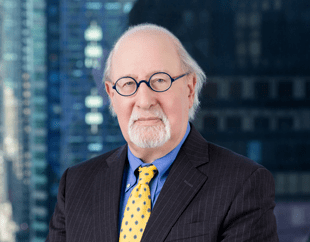
John J. Kulewicz
It establishes that a group health plan must pay its benefits first during a 30-month coordination period when the plan and Medicare both cover an individual who must contend with end-stage renal disease. The plan must not take into account the Medicare entitlement or eligibility of an individual during that time or differentiate in the benefits that it provides between individuals with end-stage renal disease and other individuals covered by the plan on a basis that relates to that diagnosis. The Sixth Circuit has determined that there also is an implied mandate that dialysis providers occupy a specific position to be determined relative to providers who serve other vital healthcare needs of the 157 million American people who depend upon group health plans to defray the costs of their healthcare. When Congress requires a specific benefit or parity between benefits, it does so directly.
It did not do that here.
The Medicare Secondary Payer Act coordinates benefits.
It does not prescribe them.
The plan at issue in this case provides the same benefits uniformly to all participants and as primary payer during the 30-month coordination period. Respondents fail to state a claim under the Medicare Secondary Payer Act.
Because the alleged violations of the Medicare Secondary Payer Act are the express and only basis of their ERISA claims, Respondents also fail to state a claim under ERISA. The Court should reverse the Sixth Circuit and enter final judgment in favor of Petitioners on all remaining claims. I welcome the questions of the Court.
You’ll see mention of “Failure to state a claim.” This basically means, that even if everything the respondents say are accurate, it’s not cause for a judgement on their behalf. It’s like, imagine as a kid, you wanted part of your brother’s steak. Your mom asked why, and you argue it’s because he’s a poopyhead. Assuming your brother is a poopyhead, that still doesn’t justify that you should get some of his steak. Got it?
Justice Thomas started the questioning by insinuating their plan seems to target people who are poor, with ESRF, putting them in a position where they couldn’t possibly pay their portion.
Associate Justice Clarence Thomas
But counsel for MMHEHBP was like, “No way man. Under our plan, they’d pay way less. Like they’d pay $1800 per treatment under their bullshit, but they only pay $96 under our plan. So, are we done here? Everybody happy? Good, good.”
However, Justice Breyer was like, “Slow down, Spanky! Let me ask you this. Is your hospital one big building?”
Counsel confirmed it was.
So the Breyer asked, “Anyone going to your hospital under your plan, gets the tier 1 reimbursement, yo?”
Counsel confirmed again
Breyer then asked, “Do you offer this outpatient dialysis, bro?”
Counsel was like, “Woah, what’s with all the questions, man? Geez Louise! Who gives a fuck if we don’t offer it? I mean, we don’t. But in the immortal words of Hillary Clinton, what difference does it make?”
Justice Breyer’s point being, that while they act like this patient makes the choice to go to DaVita over their hospital, their hospital doesn’t fucking offer the service. As such, there’s no fucking way for them to get the tier 1 rate.
Associate Justice Stephen Breyer
Justice Sotomayor, smelling a rat, really pushed him on this idea that their tiered system for dialysis really does bias against people needing outpatient dialysis, when only people with ESRF need outpatient dialysis, effectively making it a bias against people with ESRF.
Justice Kagan jumped on counsel with Justice Sotomayor, and went on to ask, “According to the fucking numbers, 99.5% of people who have ESRF need outpatient dialysis, and 97% of people needing outpatient dialysis have ESRF. If those numbers were 100% each, then clearly, one is an analog for the other, because they’d be mutually inclusive, yeah? So is this pathetic little .5% and 3% really enough to say you’re not discriminating against ESRFs, asshole? Give me a fucking break with this noise.”
She later quite angrily chimed in with this:
You also can’t distinguish on the basis of the need for renal dialysis.
All right.
Now what does Congress mean when it says that? And it’s not particularly precise and it’s not particularly grammatical, but why is that there? It’s there because they know you’re going to do exactly what you’re doing.
It’s there because they’re saying don’t try to distinguish between those with end-stage renal disease and those without end-stage renal disease by finding the perfect proxy, which is the therapy rather than the condition.
Associate Justice Elena Kagan
So that’s why that’s there. And then the “in any other manner,” in case there’s a proxy that we haven’t thought of, don’t try that one either.
So all together this is basically saying you can’t distinguish between people with end-stage renal disease and those without.
You can’t do it directly.
You can’t do it by means of the fact that this group needs dialysis and this group doesn’t.
And you can’t do it by finding any other proxy that perfectly separates these two groups.
To say she was overly annoyed with counsel Kulewicz, would be a massive understatement.
Next up, counsel Matthew Guarnieri, representing the government as an amici, weirdly supporting MMHEHBP. This seems odd, as the government will end up paying more, if they side with him. But apparently, counsel Guarnieri is arguing on principle. He once worked with Justice Kagan, and she, despite thinking his side of the argument is whack, compliments him on adhering to principle, even when it cuts against the government he represents.
He opened by basically arguing what MMHEHBP did. They didn’t single out ESRF people, so they’re not discriminating against them, as the law is written. He even goes on to say that the proxy argument Kagan put forth is “irrelevant.” Going to assume that stung her a little, since they’re former coworkers, and he basically called her a moron.
Justice Alito was concerned about the financial harm that might be incurred by the patient. If MMHEHBP agreed to pay the going rate, which is what DaVita charges, and is well above what Medicare allows, that means their 30% deductible will be 30% of the higher number, costing the patient more, even if it helps DaVita.
Counsel Seth P. Waxman, up next for DaVita, opened with this.
Mr. Chief Justice, and may it please the Court: Differential treatment of outpatient renal dialysis is most certainly differential treatment of individuals with ESRD.
Congress determined that, and it determined it because Congress understood in 1972 and in 1981 and thereafter that ESRD patients uniquely and utterly need outpatient dialysis for the rest of their lives. And a plan whose purpose as alleged here and effect is to move primary coverage of ESRD patients to Medicare is one that most certainly “takes into effect those patients’ eligibility for Medicare.” The reading urged by the Petitioners and the solicitor general by which the anti-discrimination provision bars only plans that single out ESRD patients by name and the take-into-account provision only applies to plans that reference Medicare eligibility expressly, renders both of these statutory protections utterly toothless. And in each respect, their reading violates the text of the statute.
Seth P. Waxmen
Take the anti-differentiation provision, which has occupied, I think, virtually all of the argument so far. That provision protects ESRD patients by prohibiting differential treatment either by express reference to ESRD patients or by proxy. The particular proxy codified in the statute and the one that is relevant here expressly prohibits differential treatment “on the basis of the need for renal diagnosis,” a treatment that Congress has long understood to be completely inseparable from ESRD itself. Ninety-nine and a half percent of all of DaVita’s outpatient patients, outpatient dialysis patients, have ESRD.
There is simply no reasonable argument for singling out outpatient dialysis as anything but differential treatment of individuals with ESRD. And as was noted, I think by Justice Sotomayor, even the Ninth Circuit in Amy’s Kitchen agreed, and I’m quoting from the opinion, “a plan would violate the MSP if it provided differential coverage for routine maintenance dialysis,” that is, dialysis received only by persons with ESRD, than for all other dialysis.
That is exactly what this plan does. Now, I know that I’m trenching on my two minutes, but I just wanted to reference the fact that as has been mentioned by several members of the Court, there is another provision that is on the basis of either ESRD, calling it out by name, or the need for renal dialysis or any other manner. And that’s because, as I think Justice Kagan’s question suggested, Congress understood at the time that other proxies for ESRD might exist or more likely might come to exist with medical advances. And so the statute also prohibits differentiation on any other manner, which, in context, should be understood to mean in any other manner that in effect singles out a treatment for ESRD. I want to clarify just a couple of, I think, errors that my friend on the other side made.
The notion that they are actually helping beneficiaries because they are limiting the amount of balance billing available is utterly wrong. One of the main reasons that renal dialysis is disadvantaged here is that the plan says unilaterally there is no in-network service for this.
If there were in-network service, as there is for virtually all employment group plans in the United States—this is an extreme outlier.
There’s no balance billing at all. If there was an in-network option — and this goes to, I think, Justice Alito’s questions about who’s harmed.
If there was an in-network option, there would be no balance billing and patients would have a right to treatment.
They would have a right to treatment by somebody who was in network.
Right now, they don’t. And as there are some really terrific and very knowledgeable amicus briefs filed in this case.
It is completely clear and Congress has understood that if this Court accepts the other side’s ruling, there is no reason on God’s green earth that UnitedHealth and AEtna and all the big health plans and big, big employer health plans, all of whom do not differentiate in any basis on the need for renal dialysis.
Justice Gorsuch, who up to now had been rather quiet, jumped in with a rather long exchange between himself and counsel Waxmen.
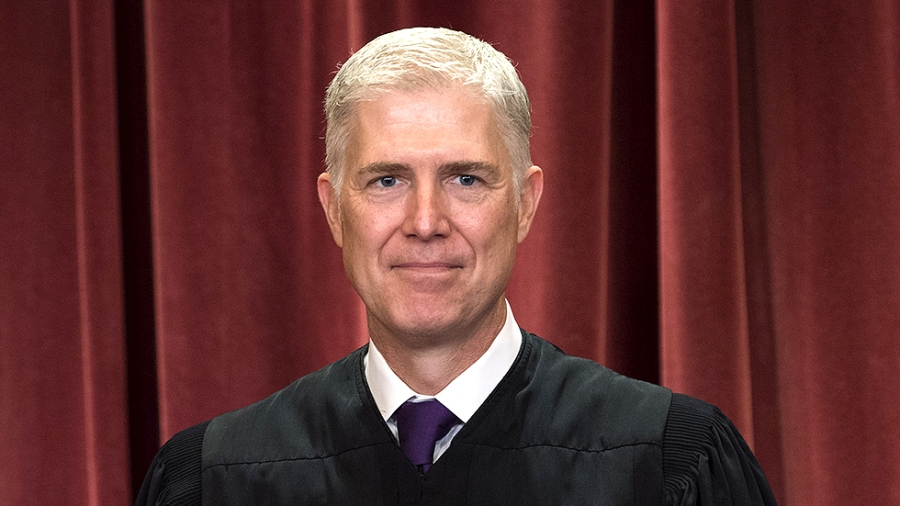
Associate Justice Neil Gorsuch
The plan only has this lower reimbursement amount for this out-of network dialysis. So justice Gorsuch was like, “If the plan also put people with congestive heart failure on this lower paying plan, would you lose your case?”
Counsel Waxmen agreed they would, because now it’s not singling out ESRF.
After this, Justice Gorsuch was trying to get in his question, when counsel Waxmen kept interrupting to make his point. After a few moments of this, counsel was reminded by Gorsuch who’s in whose courtroom. He sternly asked him to stop.
He finally got to answer this line of questioning with what was almost another opening argument:
Well, I think Mr. Guarnieri has told you in his argument that the government is on the other side because it feels some duty to defend one particular sub-provision of its regulations which, as our briefs explain, is inconsistent with both the statute and the provision that immediately precedes it. He has said in his brief and today here that the government is quite troubled by what this plan is trying to do and it acknowledges that there very likely will be an adverse financial effect on the Medicare fisc if the Court reverses and adopts the reading of the statute that Judge Murphy provided in dissent below. But here is—and I apologize if I was wrangling with you, but I was objecting to your suggestion, which I know you don’t mean, but I had heard it mistakenly, that the only people who are harmed here are possibly the Medicare fisc and my company or the companies. The harm here—and this is probably laid out as well as anywhere by the amicus brief of the dialysis patients coalition, which is 30,000 dialysis ESRD sufferers, who explain all the ways in which the provisions of this plan harm people. Now you can say that, you know, this is just a payment dispute, but it’s not. The core benefit that these plans provide is payment for medical services. And there’s real harm, number one, that uniquely, for this service, there is no in-network available.
So there is no provider who has agreed not to balance bill and who has guaranteed that you can get treatment. It requires higher co-pays and deductibles, up to $7,000 a year.
It doesn’t provide any relief whatsoever for the first three months in which there is no Medicare backstop. And you can say: Oh, well, this is the Medicare Secondary Payer Act, you can always enroll in Medicare secondary.
The government says that’s an extra $170 a month, which is, by the way, the minimum.
It is certainly not applicable to everybody. You pay Medicare $170 a month or $250 a month if you can get the secondary coverage. This is in addition to what these people of limited means and who are facing end-of-life worries are already paying to the group health plan.
And if they can’t reasonably afford to pay two sets of benefits, they do what Patient A did in this case
Justice Alito, chimed in with a completely different approach, where he seemingly argued DaVita has a monopoly, and as such, their rates probably aren’t fair market value—they’re inflated because they’re the only game in town.
Associate Justice Samuel Alito
He pointed out that the average cost for the service is around $270, but they charge over $1,000. Seems like one helluva markup.
In a 7:2 decision, SCOTUS sided with MMHEHBP. The way the law is written, MMHEHBP is not in violation of it. They seemed to agree it violates the spirit of the law, but they don’t rule on spirits, they rule on verbiage. MMHEHBP treat every person who needs dialysis the same, whether they have ESRF or not, and that’s enough to be compliant, even if their plan is clearly far less helpful for people with ESRF.
Justice Sotomayor and Kagan are like, “Are you fucking joking?” See my McDonald’s analogy above. They’re basically saying the same thing. In their view, MMHEHBP simply crafted rules to discriminate against people with ESRF, by lowballing dialysis as a whole, knowing for people without ESRF, it wouldn’t be a huge burden, but people with it, would be devastated financially.
But in the majority’s eyes, if they don’t like it, congress should have written the fucking law better. It’s not SCOTUS’ job to rewrite laws in a more intelligent way.
This is an important thing to consider when hearing a SCOTUS decision. I’m sure that if they were to be asked if they felt MMHEHBP was discriminating against people with ESRF, it would have been a 9:0 agreement that they were. But the Republican appointees tend to be textualists. They think it’s their job to interpret the law or the constitution as written, not to rewrite it as they see fit.
So I’m not joking when I say they may think that MMHEHBP are being pricks, but they’re not condoning that. This decision is more of an admonishing of congress for poor wording of the law they wrote. If they don’t like it, it’s their job to fix it.
Hear oral arguments and read about there case here at Oyez, or at SCOTUSBlog.
Y’all know everyone keeps talking about us being in an opioid epidemic, right? While I personally think some of this is unfair, true stories of bad actors, such as the Sackler family, who own and operate Purdue Pharma, the makers of Oxycontin, don’t exactly paint a wonderful picture of opioids. Their willful dishonesty and disregard for the lives of their customers, led to many addictions and overdoses.
The Hulu docuseries Dopesick is quite interesting, depicts their actions pretty well, and is definitely worth a watch if you’re unfamiliar.
I think the opposite side of this coin, is that many patients, know the dangers of opioids, but will doctor shop, getting multiple prescriptions, so that they can overdose themselves, or worse, turn to black market opioids like heroin.
People who argue as if it’s basically always the fault of doctors and pharmaceutical companies is the work of grade A assholes…and probably socialist anti-capitalism pricks, too.
While some SCOTUS decisions are legal nerdiness which will likely have little effect on most of us, this one, in the words of that great philosopher Biden, is a big fucking deal.
So this case revolves around Alabama pain management physician Dr. Xiulu Ruan, who is potentially just a piece of shit selling prescriptions for money. His job is to mitigate pain, and opioids are fucking GREAT at that. But it is fair to argue that he would at least prescribe more opioids than the average lab coat.
Full disclosure, for over two decades, I’ve used the opioid hydrocodone myself once or twice a month, to deal with neck issues that often trigger unbearable headaches. But because my pain is not chronic, and I rarely have to take them, mine tend to expire before I even use them all.
But Dr. Ruan likely has patients who do have chronic pain that just won’t fucking go away. Lower back pain, and other genetic conditions of that nature, are often well-managed by opioids. And if Dr. Ruan refuses to prescribe an opioid for them, they’ll likely take their business elsewhere and find a doc who will.
Dr. Xiulu Ruan
The aforementioned Sackler cunts poisoned opioids good name, by lying to physicians and their consumers, and saying their version, Oxycontin, was non addictive.
It was a big fucking lie. Not a mistake, a lie. The evidence presented in court showed they knew it was untrue, but simply wanted to sell more of that shit, so they lied.
Anyway, back to Dr. Ruan. The basic gist of this case, is that a federal jury convicted Dr. Ruan of racketeering and other related crimes, as they argued he was basically a “pill mill.” A euphemism for a doctor who just hands out opioid prescriptions for money.
You know, like some dude walks into his office, says his asshole hurts or his dick is broken, then winks and nods, pays the copay, and gets a prescription, while Dr. Ruan picks up a few hundred bucks for basically signing an autograph.
The jury agreed with the prosecution that the amount of opioids and other addictive pain meds he was prescribing, were outside of the norm for a doctor like him.
Dr. Ruan will of course argue, that he prescribed these medicines in good faith, and that he believed the drugs he prescribed were appropriate for the patients he had.
The Controlled Substances Act of 1970 (CSA) basically says it’s illegal to manufacture, distribute, or dispense a controlled substance, such as an opioid. One exception is for doctors, under rules put forth by the attorney general. Rule 21 C.F.R. § 1306.04, which gives doctors license to prescribe drugs like opioids if they are:
Issued for a legitimate medical purpose by an individual practitioner acting in the usual course of his professional practice.
I’ll look over the sexist verbiage that assumes the doctor must be a “he.” It was 1970 after all.
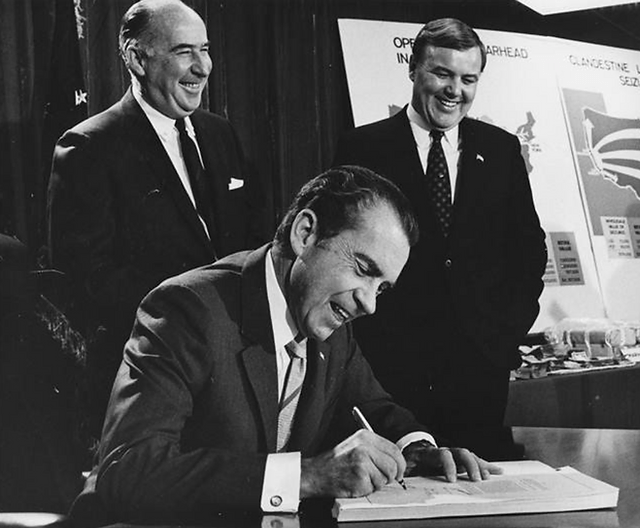
Former President Nixon and two other idiots signing the CSA.
The issue SCOTUS is trying to decide, is basically this. Does a doctor who believes an opioid is the best treatment for their patient, have carte blanche authority to prescribe it? The petitioners call this the “good faith” argument.
It basically means, as long as there’s evidence the doc thought what they were doing was right, it doesn’t matter if they’re prescribing way more opioids than the other doctors in their field. Maybe the other doctors are just biased against opioids, or aren’t prescribing them properly? Or maybe he or she is just a shit doctor. But, being a shit doctor isn’t a crime.
It’s essentially a mens rea argument. I think we’ve discussed mens rea before, but it loosely translates to “guilty mind.” A prime example would be Hillary Clinton’s email bullshit. FBI director James Comey said she definitely committed a potentially criminal act. But there was no evidence they had indicating she knew it was criminal. So without that mens rea, they declined to prosecute. Got it?
Former FBI Director James Comey
On the other side of this, the principle Dr. Ruan was found guilty under in lower courts, was that the amount of opioids he was prescribing were through the fucking roof compared to other doctors like him. As such, the jury believed he was doing it because he wanted a new Ferrari and some top shelf hookers. Not because he thought it was good for his patients.
They feel that in general, if a doctor is doing something rather different from the norm, it’s indicative of malpractice, or some motive other than helping their fucking patients.
The other doctor who’s joined with Dr. Rual, even traded guns and shit, for his “medical services,” aka prescribing pills. So they kinda have a fucking point on these two assholes.
It’s also mentioned that both of them apparently had stock in the pharmaceutical companies that made the drugs they were prescribing. But even the stupidest doctor would know that their prescription pad alone isn’t going to move the needle all that much on the stock price. It’s just as likely they bought stock because they believe in the drug. This is what we call “shit evidence.”
I know I’m being potentially too polite to these doctors, because I believe in the principle they’re fighting. But it’s almost assuredly true that both of these fuckheads have broke bad, and are just doing this shit for the money, with little concern for their patients. They were convicted beyond a reasonable doubt of other related charges that aren’t at issue here. This is them just trying to reduce their sentence.
My bias is probably because the fight against opioids, and the laws that are passed that make it harder to attain them, harms people like me, who use them as directed. Because my usage is so sporadic, I’ll likely never face any addiction issues.
The doctors did agree, that they could have been more thorough in their prescription methodology, but they argue that even if what they did was malpractice, that’s a whole different realm than the criminal intent to distribute that they’re charged with.
The government however, thinks as the government always thinks, that it knows best. They believe they can come up with some sort of standard level of opioid prescriptions, and doctors who deviate from this, must be considered criminals.
But the doctors are like, “If you listen to these cunts, doctors will not prescribe things their patients actually need, just because they’ll be afraid of going to jail. They’ll be in constant fear of some dumb-fuck bureaucrat who decides they know more about medicine than we do. So next time you ask your doc for a med you need, but there’s concerns from congress about that drug, well fuck you. You ain’t gettin’ shit from us.”
They also contend that this could significantly thwart things like “off label” prescriptions. I’ll explain this shit, because it’s kinda interesting.
This is where a drug is FDA approved for one thing, but it’s prescribed to help with something else it’s not approved for.
This “off label” jazz is also somewhat of a big deal, but not always understood.
Remember during COVID when Trump and others were all gung ho about hydroxychloroquine for treating COVID? It all started because observational data suggested it might be effective, but then it was found ineffective under controlled clinical trials, and so most doctors stopped using it.
The reason they were on this path was because doctors, operating in good faith, had reason to believe, from those observational studies, it might work for COVID, even though it’s only FDA approved as treatment for malaria, lupus, and other shit. Thus, prescribing it is “off label.” Meaning, philosophically speaking, the label says it isn’t for COVID, its for that other shit. Make sense?
“Off label” may seem like a fucked up thing for docs to do, but it’s actually based on data. They are generally the product of observed side effects. I’ll give an example. Because not only do I use an opioid, I also have another drug I use off label. This whole case is up my alley!
The drug I use off label is colestipol. It’s meant for people with cholesterol issues, which is what it’s FDA approved for. But during clinical trials for its efficacy in treating people with cholesterol problems, it was noted that for people who routinely get the Hershey squirts, it seemed to make them more “regular.”
Do I really need to caption this?
So the makers of colestipol never bothered to do clinical trials to test it’s efficacy for people with an internal chocolate syrup fountain, but doctors can prescribe it for that condition, because they have data to suggest it might help. The reason drug makers might not seek FDA approval, are likely to do with the cost of doing separate clinical trials for the drug, not because they think it’s not good for that condition. Not to mention, doctors are allowed to prescribe off label, so the FDA approval, is really more about being able to make a fucking commercial for that shit.
Sorry, I keep getting diverted with my nerdiness. Back to the case!
One of the key phrases in the CSA that they argue over, is the phrase “knowingly and intentionally.” The doctors argue that there’s no fucking way on god’s green earth, that they knew beyond a reasonable doubt they’d harm their patients, or that they intended to.
But the government argues that the CSA uses that verbiage well after the part about exceptions for doctors prescribing such drugs, and therefore doesn’t apply to it.
Amici (other third parties) have also pointed out that when something is all over the news, we are some over-reacting mother fuckers. We turn it into a crisis, even if it’s not. Then we pass over-restrictive laws or regulations that we then have to walk back, once we realize we went too fucking far. The makers of South Park have made a living off this premise. The CDC has walked back some of their restrictive opioid rules as a result.
They also argue for people like me. That this could make it harder for us to attain medication that is helpful to us, and isn’t doing us harm, to attain the medicine we need.
Opinion: While my case is pretty mild, some people suffer a LOT, and opioids are a godsend to them. Government has no business making it hard for them to get what they need.
They also argued that when faced with an unusual case, doctors often have to try novel therapies, because the normal shit just won’t work. But if they’re afraid they’ll go to jail, for trying something out of the norm in good faith, they’ll be put in a fucked up position.
As I lay all this out, I think you can understand why, even if these particular docs were pill mills, the principles they argue for are pretty important. If they were just doing it for the money, may they both choke on a bag of dicks. That’s not OK.
As arguments began, counsel Lawrence S. Robbins for Dr. Ruan opened with this.
Thank you, Mr. Chief Justice, and may it please the Court: Dr. Xiulu Ruan’s jury was instructed that it could convict him of federal narcotics offenses if he prescribed “outside the usual course of professional medical practice.” The Eleventh Circuit sustained that instruction precisely because it “told the jury that good faith was a defense” as long as the appellant’s conduct also was in accordance with the standards of medical practice.
Counsel Lawrence S. Robbins
In other words, good faith is a defense in the Eleventh Circuit only for doctors whose prescriptions are already lawful. No lawyer will stand up before the Court this morning and defend either that instruction or the court of appeals’s rationale. And small wonder.
Dr. Ruan received little more than the instruction he would have gotten had this been a civil malpractice action in Alabama. So, in our view, Dr. Ruan’s case must be remanded, and on remand, the Eleventh Circuit should either dismiss this prosecution outright for want of sufficient proof of Alabama substantive standards or, at a minimum, order a new trial on all counts, this time governed by the correct scienter rule.
And that rule, we submit, which largely tracks the law in the First, Seventh, and Ninth Circuits, is that a doctor may not be convicted under Section 841(a)(1) unless the government proves that her prescriptions were made without a good-faith medical purpose. The good-faith medical purpose test makes the best sense of the statutory text, this Court’s case law.
It also accords with principles of federalism that are embedded in the statute itself, enables the jury to focus on the question of intent, as it always does in criminal cases, and affords an appropriate berth for doctors and patients to make the best choices for the individual care of what is often invisible and yet real and intractable pain. I’d be pleased to hear the Court’s questions at this time.
His opening point being that how the fuck can he claim “good faith” as they said he could, if that only applies to usages that are within the bounds of normal usage? None of those cases would ever go to court, and thus good faith is moot in that scenario. So basically, the other side are fucking idiots or assholes…maybe both. They do work for the government, after all.
Justice Roberts chimed in with a hypothetical where he asked, what if I know the speed limit is 55mph, but I’m in fucking Montana, and the roads are long, flat, and boring as fuck. So I decide it makes sense to do 70mph here. We all know your dumb ass gets the ticket. So what’s different here?
Chief Justice John Roberts
But counsel Robbins was ready for his hypo. He was like, “Dude, this isn’t some ‘line drawn in the sand’ drug law that’s like a speed limit. The are arguing the whole ‘good faith’ argument, which is about the doctor’s state of mind.” Not to mention, there is no “Opioid Limit.”
As Justice Sotomayor chimed in, attempting to understand the line he’s drawing, he clarified that his position is that the government must prove he did not act in good faith. We’re talking about some criminal shit here. So it’s not up to the doctor to prove he’s fucking innocent. This is America!
He went on to argue to Justice Sotomayor:
Oh, no, no, I’m sorry, Your Honor.
Nobody is going to tell you this morning that that burden somehow belongs to the defense.
Everybody will concede—if you ask my friend, Mr. Feigin, he will tell you that once the issue is put in play under 885, it then falls to the government to prove beyond a reasonable doubt, the absence of good faith. But I’d like to go back to where Your Honor began her question because you said the words “knowingly and intentionally must prescribe outside the bounds of medicine and without a medical purpose.” It is important for me to be clear that my client didn’t get that instruction.
His jury was told, if he was outside the bounds of medicine, you may convict him, full stop.
No good faith.
No knowingly or intentionally. None of that. So I want to be clear that the premise of Your Honor’s question is a premise under which our conviction should be reversed.
He makes a valid point, we can quibble about the law, but these fuckers were convicted when the jury was not advised properly about the law.
Justice Alito, apparently saddened that he studied law instead of English wanted to discuss the proper use of adverbs. Here’s the passage from the CSA they’re discussing:
§841. Prohibited acts A
(a) Unlawful acts
Except as authorized by this subchapter, it shall be unlawful for any person knowingly or intentionally—
(1) to manufacture, distribute, or dispense, or possess with intent to manufacture, distribute, or dispense, a controlled substance; or
(2) to create, distribute, or dispense, or possess with intent to distribute or dispense, a counterfeit substance.
Justice Alito’s argument was this:
We’re interpreting a statute, so we should start by looking at what the statute says, and it says, “except as authorized by this subchapter, it shall be unlawful for any person knowingly or intentionally to” do a variety of things. As a matter of language, do the adverbs “knowingly” or “intentionally” modify the introductory clause “except as authorized by this subchapter”?
I think my old English teacher would say no, you’ve gotten that answer wrong.
Associate Justice Samuel Alito
There’s no way they can modify “except as authorized by this subchapter.” They modify what comes later.
But explain to me why they modify it as a matter of language, not as a matter of constitutional avoidance or something like that.
After they debated linguistics for what seemed to be 47 years, coming to no real conclusion, they moved on to Alito’s other question about section 885, which reads:
§885. Burden of proof; liabilities
(a) Exemptions and exceptions; presumption in simple possession offenses
(1) It shall not be necessary for the United States to negative any exemption or exception set forth in this subchapter in any complaint, information, indictment, or other pleading or in any trial, hearing, or other proceeding under this subchapter, and the burden of going forward with the evidence with respect to any such exemption or exception shall be upon the person claiming its benefit.
Alito’s argument was that this provision potentially reads that the government does not have to prove the doctor acted maliciously. That if the doctor wants to claim they didn’t, the burden is on the doctor.
So counsel’s beef that the jury in their trial was not instructed about the good faith exception, they were basically just told, if the doc is outside the norm, you’ve gotta convict, which is bullshit, in his legal opinion.
In an odd sort of exchange, Justice Gorsuch basically walked through Robbin’s argument, to make sure he understood it. In doing so, he basically made a more eloquent and simple version of counsel’s argument. Because “good faith” doesn’t appear in the statute, it’s basically their shorthand for the opposite of “knowingly and willfully” that is in the statute, and is just a general legal principle for shit like that.
In a moment of levity, when counsel went to add on to Justice Gorsuch’s explanation, Justice Gorsuch responded, “Be careful.”
Associate Justice Neil Gorsuch
The point was that, if he agreed Gorsuch made the proper argument, he shouldn’t elaborate for fear of changing everyone’s mind, after they already agreed with him. But all he added was that, because of the shitty jury instructions, he believes his clients deserve a new trial.
Next up, amici for the petitioners, Beau B. Brindley.
His argument was that, so long as the doctor believed they were helping their patient, then they were not trafficking drugs. It doesn’t matter if 100 other doctors think this doctor is an idiot. What matters again, is mens rea. Did they know it was wrong and do it anyway. The law is clearly meant to go after people trying to make a living off of peddling drugs, not people trying to help their patients in potentially unconventional ways.
He went on to argue, that if they were to adopt the government’s position, the DEA would become the new US medical board, deciding what is good and bad practice, as opposed to the AMA I’m guessing, which is a private entity.
Congress certainly never authorized the DEA to become Team America Hospital Police.
He argued that there may be extreme examples where no reasonable doctor thinks this is OK, and that’s different. But if it’s plausible this was medically valid, and the evidence suggests the doctor intended to help their patient, then they’re not trafficking drugs.
Justice Kavanaugh, concerned about this “extreme example” theory, jumped on Justice Roberts’ hypothetical with this:
On the hypotheticals, to pick up on the Chief Justice’s hypotheticals, the speeding example, suppose there were a statute that regulated speeding that, like this statute, folded the legal requirements into the offense, okay? If you come in and you—you’re going 35 in a 25 zone, and you say, oh, I thought it was 35 here, maybe a jury will believe that you really did think it was 35, not 25. But, if you’re driving, you know, a hundred in a 25 zone and you come in, oh, I thought it was actually a hundred, was the speed limit, no one’s going to believe that.
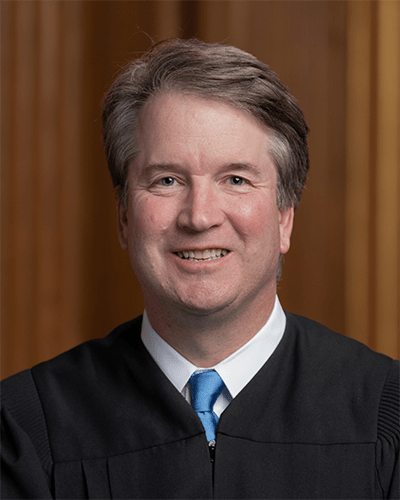
Associate Justice Brett Kavanaugh
Isn’t that the way to separate out the outlandish example?
Counsel effectively agreed with Justice Kavanaugh, but then Justice Roberts jumped back in and was like, “Even if a fucking jury totally believed you were thinking it was OK to drive 100 mph, you still get the fucking ticket. What the fuck are we even talking about here?
But as usual, Justice Roberts is like super nice, and said this with a smile…and maybe some softer language.
Justice Coney-Barrett, feeling left out from the party of hypotheticals, chimed in with this elaboration on Justice Roberts’ hypo.
Would this be a closer analogue to your example, to pick up on the Chief Justice’s hypothetical? Except as authorized by law, you must drive under 55 miles per hour.
And you say, well, I thought I was driving in a way that was authorized by law at a hundred miles an hour because I was trying to get my child to the emergency room.
And it turns out that you’re wrong, that that’s not an authorized, you know, exceeding of the speed limit. Is that what you’re trying to get at? That presence of the “except as authorized by law” is what distinguishes the Chief Justice’s hypotheticals from your position?
Counsel Brindley responded:
I think somewhat that’s true to some extent.
Counsel Beau Brindley
What I would say is that the thing that differentiates the — the Chief Justice’s hypothetical from our position is, in this situation, we have a — a situation where the very thing that makes the doctor’s — the only thing that makes the doctor’s writing the prescription improper or criminal is if he writes it with no legitimate purpose, not believing he’s curing a malady of any kind. And so, with respect to that, if he’s sincerely wrong about that, he lacks a culpable state of mind and he should not be convicted.
Next up for the government, we have Eric J. Feigin. He opened up with this diatribe:
Thank you, Mr. Chief Justice, and may it please the Court: Although Petitioners are trying to disclaim it as much as they can, they really are asking this Court to transform their DEA registrations, which are premised on the idea that they’re actually practicing medicine, into licenses to, at their own subjective views, violate the general rule that drug pushing is illegal. They want to be free of any obligation even to undertake any minimal effort to act like doctors when they prescribe dangerous, highly addictive, and, in one case, lethal dosages of drugs to trusting and vulnerable patients. That’s not what this Court said in Moore, where I think everyone agrees the Court implicitly adopted the jury instructions in that case, which distilled the statutory and regulatory requirements here to come up with an honest effort standard. If a doctor is trying, in Moore’s words, “to act as a physician,” he can’t be convicted under Section 841.
But a doctor can’t choose to be the kind of doctor who seeks a DEA registration because he wants to deal with the most dangerous drugs that we have with a recognized medical use and then decide that, notwithstanding the boundaries of that license, he can invoke it to shield all drug dealing that he’s running in the guise of a doctor’s office. There’s been some suggestion today that applying a knowledge standard, you know, what’s the difference? It’s all oblique, these are very oblique examples, and it’s never going to matter in practice.
And I’d like to—if I get a chance later, to explain exactly why this isn’t just a matter of hypotheticals. I can give you three examples, we have more, but three examples of cases, and these are admittedly stylized a bit, but they’re based in reality of why this really matters on the ground. Number one would just be the irrationally egotistical doctor, and these are the kinds of cases we have trouble even bringing, let alone convicting a doctor.
Solicitor General Eric Feigin
It’s a doctor who gets his license and his registration and he says, all right, you know, I think, at bottom, the Hippocratic oath, I just want to treat patients.
And he prescribes substances that any other doctor would say are crazy and lethal.
And he says, at bottom, we’re all doctors, and my subjective belief is, at the end of the day, if doctors see patients, they got to do right by those patients.
And that’s number one. Number two would be the absentee doctor, and one problem with their standard is it really rewards doctors for untethering themselves not only from the medical profession but from their patients.
It’s the kind of doctor, and I think you’ll see some resemblances to the doctors here, who doesn’t follow up on the background of his patients, doesn’t make sure they’re taking the medications, doesn’t even conduct physical exams, doesn’t check the database to see who else is prescribing opioids, and trusts nurse practitioners, who aren’t DEA registrants, aren’t allowed to do this, don’t have medical licenses, to do most of the prescribing.
Justice Sotomayor was quick to ask, “What the fuck is your burden, then? What do you have to prove, to get a conviction?”
Official Portrait of United States Supreme Court Justice Sonia Sotomayor
Click for Biography
Counsel Feigin responded:
So, Your Honor, we place our burden exactly where Moore did, which is an honest effort, which we interpret as some objectively minimal, reasonable effort to practice some recognizable form of medicine.
Call me crazy, but his wishy-washy statements are going to make it hard for the court to draw a distinguishable line, and as such, is making it real hard for them to side with him.
Justice Gorsuch, again decided to walk through his argument, step by step, starting with the now “Be careful” intro he’s apparently going to make his catch phrase.
First, he wanted to make sure that they agreed that it was the government’s burden to prove all the elements (elements is just a fancy word they use for all the the things in the law that make up the law’s requirements, or forbidden actions). Counsel confirmed they agreed.
So then step two was asking if they agreed on the “except” clause as an element.
Counsel Feigin was like, “Well, we’re already off on the wrong foot, my man.”
So Justice Neil “Golden Voice” Gorsuch, was like, “How the fuck do we disagree on this? The issue isn’t that he’s prescribing medicine, your issue is that he’s doing it outside what his DEA registration to prescribe it, says he should do, right?
Counsel Feigin was like, “OK, fair enough. I’m with you now, bro.”
So now Justice Gorsuch is like, “Alright, we’re back on track. So if we agree so far, then the government typically has to negate all the exceptions in any “except” clause, yeah?”
Associate Justice Neil Gorsuch
Counsel Feigin was like, “Woah, woah, woah, woah, WWWWOOOOAAAAHHH! I didn’t say that. We’re off on the wrong foot again, my man!”
Justice Gorsuch was like, “OK, maybe not always, but most of the time, or a lot of the time, or fucking some of the time…I mean, it’s not fucking out of the ordinary, right?”
Counsel Feigin was like, “OK, I’m with you again.”
So then justice Gorsuch was like, “We agree, it’s not just doctors, it’s also for pharmacists, veterinarians, pet owners, family members, et al. Like there’s a lot of people who have exceptions. And it’s pretty fucking hard to negate all of them, when many of them may not be part of the case, yeah?”
Counsel Feigin was like, “Yup.”
So Justice Gorsuch replied, “So then you’d argue that the doctor needs to prove he was acting in good faith to help his patient, yeah?”
Counsel Feigin agreed again.
So Gorsuch was like, “Well then if we agree on all this shit, isn’t it true that once he makes his argument that he was acting in good faith, it’s then government’s job to prove he wasn’t? You can’t just go back to the doc acting outside the norm, and say that’s all you need to prove.”
Counsel Feigin agreed.
So then Justice Gorsuch was like, “So it’s fucking mens rea, yeah? Why is this so fucking difficult? Is it because you work for the government, and you’re stupid?”
Counsel Feigin was like, “I’ll buy your mens rea presumption. That we assume this fuckhead doc intended to help his patient, until we prove he didn’t. But we think, when he just grabs the patients balls and tells him to cough, then gives him a gallon of Oxycontin, that no reasonable person would consider that practicing medicine.”
Associate Justice Amy Coney Barrett
Justice Barrett was like, “Where the fuck do you get that from? I don’t see anything in this law about some reasonable practice bullshit.”
I don’t know if Feigin was nervous, but god damn he fumbled all over his fucking words. He eventually spit it out that basically the FDA regulates such standards, and he therefore thinks that to prove the mens rea, somehow all he has to do is show this doc told the FDA and their standards to go fuck themselves.
Justice Roberts went on to ask:
An opinion from the Eleventh Circuit, it’s quoted at page 16 in Mr. Robbins’ brief, says that a physician’s good-faith belief that he dispensed a controlled substance in the usual course of his professional practice is irrelevant. Do you agree with that statement?
Counsel, being bruised and battered with all these questions argued that if there was some idiot who believed opioids should be taken every day along with their Flintstone vitamins, so he starts doling out Oxies on the street corner, we’d still call him a fucking drug dealer and lock his ass up. So there’s fucking limits to this good faith shit. And they believe that it’s limited to something close to fucking normal, within the medical profession.
In a unanimous decision, SCOTUS sided with the doctors, though. They ruled doctors cannot be convicted under the CSA, unless a jury decides that they did not act in good faith. They want to ensure that doctors feel free to act in the manner they believe will best help their patients, without fear of going to jail, because they were deemed as operating outside the normal standard of care.
While the doctors won on these points, it should be known, that they were scumbags of the highest order, and were convicted of racketeering, and taking kickbacks from drug makers, and will still end up spending some much needed time in a jail cell to think about what they’ve done.
So while good doctors have been protected here, these idiots are still criminals. They’re just less criminal than they were before they started all this shit.
log·i·cal: capable of reasoning or of using reason in an orderly cogent fashion lib·er·tar·i·an: an advocate of the doctrine of free will; a person who upholds the principles of individual liberty especially of thought and action




















 The Logical Libertarian™