Tag Archives: libertarianism

Let’s not play Monopoly!

Gary Nolan (and THE Scrappy Doo)

Most people know that monopolies are illegal, but not everyone understands the history of antitrust and collusion laws or why they exist at all.

As a libertarian, I basically support free market capitalism and laissez-faire, but why do we libertarians and other liberty minded people support this? Because free people who run free enterprise are free to innovate and this innovation brings us a superior product. Competition among innovators also drives down the price as they seek to gain market-share. It’s why you can get a miracle of modern technology like the iPhone or Droid for a mere pittance—with a 2-year contract anyway.

U.S. Steel - Youngstown Ohio
U.S. Steel – Youngstown Ohio

But if we look at the history of monopolies here in America, Standard Oil and U.S. Steel were the most popular in our history, and what transpired was not good. Thus making the case for some semblance of government oversight.

I am often berated by anarchist-like libertarians for championing even the most minor government regulations in our marketplace, ensuring they compete and that they don’t violate our rights, but these people are ignoring historical evidence to promote an ideal I agree with, yet know doesn’t work if left unchecked. History has already proven it. Just because none of us were alive during that era, doesn’t mean we don’t have the documentation to know what happened when we had market-anarchy.

Standard Oil Common Stock

Prior to antitrust and collusion regulations, the quality of goods from these trusts was poor, the working conditions were so atrocious that workplace deaths and injuries were quite common, and the cost of what came off the production lines wasn’t cheap. Why would it be? If you’re the only game in town, providing a quality product, safe work environment, and competitive pricing and wages, simply aren’t needed. Just as absolute power in government corrupts, absolute power in business corrupts too. The moment a business owner needn’t fear people buying from his/her competitor because no competitor exists, corruption can, and likely will, be born.

Anarchists argue that if workers don’t like it, they can go work somewhere else. But where do you propose people go work? The very definition of a monopoly is that it’s the only business in an industry. Thus, there is nowhere else to work. If an enterprising person attempts to go into business for themselves, they’re either forced to sell to the monopoly, or crushed by it if they don’t. These are not wild conspiracy theories I’m floating, it’s historically documented evidence.

The design of free-market capitalism, is not dissimilar to socialism or anarchy. In a perfect world, they would work as intended and yield the desired positive result. History has proven however, that they also have the same flaw. There will always be sociopaths among us who don’t have the power of empathy or value the benefits of being societal. The only decent way mankind has ever dealt with these people is via rule of law. Such people have no qualms about taking advantage of others and doing them harm for personal gain. Our Constitution is designed to prevent these people from corrupting our government, and competition should prevent them from corrupting our markets. So ensuring competition is vital to our society, our rights, and our economy.

Andrew Carnegie, Cornelius Vanderbilt, John D Rockefeller

John D. Rockefeller, J.P. Morgan, and Andrew Carnegie proved that there’s a point at which if you do something right, you can control an industry to such an extent that no one else can compete. These men were likely decent people who considered themselves altruistic and good, but the unfettered power they eventually wielded corrupted them in such a way that they became consumed with winning and had little issue engaging in immoral practices to accomplish this goal.

So aside from protecting our rights to life, liberty, and property, in my opinion, government should justly be ensuring our markets stay competitive and uncorrupted.

So now that we understand, and hopefully agree with regulations preventing monopolies, I’d like to point something out:

Government is a monopoly!

The federal government competes with no one. State and local governments may seem to compete with each other, but if you live in Ohio and don’t like the service the Ohio government provides you, you can’t choose to do business with the Virginia government unless you move to Virginia. It’s quasi-competition at best where states compete to lure residents and businesses, but it’s certainly nothing like Apple versus Microsoft or Ford versus Chevrolet.

So when people like me beg and plead voters to elect more libertarian-like officials, it’s because we know that they’re the only politicians who intend to rebuke and regulate away power bestowed to their predecessors once they inherit it. In doing so, lowering the possibility of corruption, because the smaller government is, the less opportunity for corruption to occur. In the face of the IRS, Benghazi, and press scandals committed against the AP and Fox News, I sincerely hope you understand why we libertarians have been right all along, and are starting to feel vindicated for making these arguments so many seem to laugh away not long ago.

Do you remember Barack Obama making this commencement address speech at my beloved Ohio State University about a month ago?

The irony of this speech that occurred as all three conspiracies started to break into the mainstream media is chilling. It is exactly why we must only trust a politician who tells us not to trust him/her, not to grant them authority, and not to give up your freedom to their ideas of how we should be ruled.

“Experience has shown, that even under the best forms of government those entrusted with power have, in time, and by slow operations, perverted it into tyranny.”
― Thomas Jefferson

Drug Legalization Poll

By all accounts, the war on drugs, despite Nancy Reagan’s best efforts, has failed. People are not just saying no. So if you were president and legislator, what would you do?

Si vis pacem, para bellum – If you wish for peace, prepare for war

Gary Nolan (and THE Scrappy Doo)

Si vis pacem, para bellum – If you wish for peace, prepare for war

One of the traits often associated with libertarians is anti-war. I’ve always found this moniker somewhat odd, as I can’t think of anyone who is pro-war. There are merely those willing to fight for their rights, and those who feel there is always away to settle differences without war—you know—the people who have apparently never heard of Adolf Hitler, Saddam Hussein, Emperor Hirohito, et al. If you wish to argue Hussein doesn’t belong on that list, tell that to the people of Kuwait.

I understand that some will consider the 2003 Iraq war the result of a pro-war sentiment, but being the type who doesn’t believe complex conspiracy theories easily, I trust that the Coalition-of-the-willing who decided to re-engage Iraq in 2003 were reacting on what they believed was a real and imminent threat, as well as enforcing U.N. resolution 687, U.N. resolution 1441, etc.

The United Nations
The United Nations

Iraq had violated U.N. resolutions 16 times in total after being driven from Kuwait, which ultimately was the legal basis for going to war as noted here. The threat of WMD’s which turned out to be either Saddam Hussein’s own false bravado, or they were simply moved to Syria as reported by Saddam’s former Air Force general, was perceived to be real by all involved and I will not engage any other wild theories about why we removed Saddam from power.

When people say it was an illegal war and all nations who participated are guilty of war-crimes, I generally assume they are mired in Bush-hatred to the point of being delusional. I’m not necessarily condoning the war, but reasonable people must understand that hindsight is 20/20—had we known he wasn’t the threat he worked so hard to convince us he was, I have little doubt we would have continued to work towards peaceful resolutions with Hussein and focused our military efforts solely on Al-Qaeda in Afghanistan and Pakistan.

But that being said, if we’re not prepared to back up a surrender agreement and/or U.N. resolutions with military force, what is the point of accepting the agreement or enacting the resolution in the first place? If we’re going to allow someone to violate them 16+ times without repercussion, we are a paper tiger.

So about the size and scope of our military, I wish to make a few points.

  1. I believe it is foolhardy to assume that if we just left the world alone, no one would ever attack us. We tried avoiding war during World War II, but Japan attacked us anyway. We are a resource-rich nation with a lot worth stealing, and these resources and our rights are worth defending. Are we involved in too much? Absolutely. Should we be completely uninvolved? Absolutely not.
  2. If we understand point one, then we must have a system of defense. Every organism  has a defense mechanism, why shouldn’t we? I understand the idea of peace, love, and happiness, and I generally support it. But it’s hard to have peace, love, and happiness with people who want to kill you and/or take your stuff. To deny this, would be akin to arguing that every serial killer was simply misunderstood and likely provoked by their victims.
  3. If we are to have a system of defense, there’s not much point in having it if we refuse there’s ever a reason to use it. There must be a point at which you decide it is the best alternative, and reasonable people are always going to disagree on when that is. But for me, it’s when us or our allies’ are attacked or credibly threatened.
Ronald Reagan
Ronald Reagan

So with all that in mind, I’d like to reiterate something I noted in my earlier post, Great Leaders Make Results, Not Excuses. While Reagan was often criticized for military spending, and was arguably the greatest builder of the U.S. Armed Forces, every successive president has placed our military in harm’s way more than Reagan did. So how is this?

It may seem counter-intuitive that a president hell-bent on maintaining the most powerful military in the world would rarely use them, but as most martial arts practitioners or gun owners already know, being trained to thwart any aggression against you doesn’t make you aggressive, it just makes you prepared.

For the benefit of those not alive during the Reagan era like I was, it’s hard to appreciate the overall feeling of the people at that time. We were in a cold war with Russia, and mutually assured destruction hung over us like a dark cloud that could send shivers down your spine just thinking about it. A real and rational fear of death was everywhere.

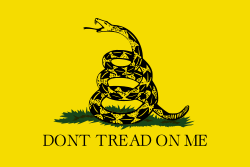
Don't Tread On MeBut one thing we understood was that if anyone dared attack us, the sleeping giant that was the United States would demonstrate the “Don’t Tread On Me” flag’s message with deadly consequences. Reagan was as affable as any president in modern history, but there was little doubt he would not hesitate to eliminate any threat against us.

For eight years, no one dared to attack us because of the threat of imminent death that would result. With the exception of Grenada, we were pretty keen to leave them alone too.

Andrei Arlovski
Andrei Arlovski

To illustrate this point, imagine you were walking down the street and ran into MMA fighter Andrei Arlovski, even if you hated the guy, you probably wouldn’t pick a fight with him. We all inherently understand the idea of not attacking someone we have little chance of defeating—it’s an example of our DNA’s self-preservation attribute. It’s for that reason that Peace-Through-Strength is the best chance for the safety of the United States.

So when should we attack? I wasn’t alive during Hitler’s reign, but my father was. One point he made to me was that after Hitler was defeated, the people of the allied nations had a collective belief that we could never let another Hitler be allowed to forcibly take over nations in a bid of world dominance. Hitler became more dangerous with every action we avoided taking against him.

Being the world’s last remaining super-power, on occasion, we may have to step in as we did for Kuwait in 1991 for the same reason. Had we not, Hussein surely would have become the Hitler of the middle east without stopping until someone had the courage to intervene as we did.

The United States is undoubtedly spread far too thin around the world. With the miracles of modern technology, we can cut spending by reducing troop levels yet increasing the capabilities of future weapons systems. But the best way to assure the safety of the United States and its allies, is to assure that we are so powerful, no one would dare mess with us.

I will never condone wasteful spending by any government agency, including the military, nor will I condone putting our military in places where we don’t ultimately need them, but I will never believe that reducing our government should involve reducing our military to a level that makes us vulnerable to defeat from an attack. If you truly want peace, you must prepare for war.

Business People In Office: A Good Thing?

Gary Nolan (and THE Scrappy Doo)

I’m going to try an interesting op-ed approach; debating with myself. While this may seem silly, this is how logical thinking and skepticism usually works. I list the pros and cons in order to come to a logical conclusion and attempt to refute my own theories to see if they hold up. The latter part, a version of falsification, being the most important.

Normally I do this before I write something, then write my opinion once I’ve come to a conclusion. But on this one, I just cannot commit to a particular opinion. So instead, I’ll lay out my arguments, and at the end, just leave it open for further discussion. I would love to hear your own opinions and why.


GCaseAs a young man, I had been initially enamored with the idea of Ross Perot as president (as evidenced by my trusty old guitar case). I don’t even remember any of his actual positions, I was just beginning my politically literate phase in life. But what I did know is that this man, having borrowed $1,000 in 1962 to start a company called EDS (I believe his wife had to sign because he had bad credit, no less), later sold that company to General Motors for an astounding $2.5 billion in 1984. By all accounts, a pretty good investment and an amazing American success story.

I say initially interested, because as you may know, his campaign soured in the end with claims of death threats and such that seemed to indicate Ross might be either succumbing to senility, or was honestly just a kook.

The part that interested me about Ross though, was the generic idea of a businessman in office. Whether it be as a president or legislator, I felt that the people running our government should have business acumen so that they actually knew how to manage employees and solve problems—something successful business owners do in the marketplace every day.

But is this really logical?

H. Ross Perot
H. Ross Perot

Let’s first ask if we’ve had any successful businessmen as president. Herbert Hoover stands out as the only truly successful businessman who went on to become president, and in the scientific community, when trying to establish a pattern, only one data point isn’t exactly helpful. We’ve likely had numerous successful businessmen as legislators, but it’s nearly impossible to judge a single legislator’s success when everything they do is by committee. So for now, we’ll stick to theoretical arguments as we can’t really use history.

I believe that one of the problems of government is that it is inefficient. In the business world, this is the path to insolvency, but in government, it is quite common and somewhat by design.

Inefficiencies in the government work place are indeed problematic though, and having a leader that not only inspires people to be better, but holds them accountable when they’re not, should improve productivity and reduce waste. This is my initial case for a businessman as president.

But when it comes to a president who works with legislators, they’re not supposed to be efficient at making change. The point of our Constitution and resultant system of government is one that is intended to be insusceptible to changing on a whim. A constitutional republic protects the minority from the majority, whereas a pure democracy could change in a heartbeat due to panicked legislators making knee-jerk reactions or merely those wishing to serve at the whim of a charismatic president.

Huyton Internment Camp

An easy hypothetical to explain my meaning on this would be to go back to September 11, 2001 and imagine we were a pure democracy. Once we were aware that it was radical religious zealots at the behest of Osama Bin Laden who attacked us, the majority of America could have easily demanded that we deport all Muslim immigrants, instate Muslim internment camps, and/or attempt to close any Muslim mosques. There was a significant amount of anti-Muslim sentiment in those following months; if they were the majority, it would have been a real possibility without our Constitution and the 1st amendment to prevent such actions.

So would a businessman who is used to being able to put their foot down be able to deal with a Constitution, legislative branch, and judicial branch telling them what they may or may not do? I’m not convinced someone used to having “the power” could make the change without becoming jaded and end up giving up. Arnold Schwarzenegger seems to be a perfect example of this.

One of the other problems I perceive is of a fundamental nature. A successful businessman achieves success by growing his business. But in a free country, a successful politician should be one that shrinks government to what is considered to be the bare essentials. Two diametrically opposed philosophies, and ones that may not translate well.

Businesspeople solve problems, politicians fancy themselves as people who solve problems; but, unlike a business person a good politician should recognize when it’s not their problem to solve. That more often than not, they should simply abstain and let free people work it out.

What about combined experience? Clint Eastwood famously ran for mayor of a little town called Carmel, California after being offended by the bureaucracy of zoning laws and other restrictions that he felt were unfair. He understood how government affected him and would go on to make decisions accordingly.

I have conversely read news stories (can’t remember the name) of a legislator leaving office for the private sector only to get frustrated by laws that he had been instrumental in getting passed in the first place; showing regret for all he surely must have done to harm businesses he had intended to help.

Ted Kennedy
Ted Kennedy

In both situations, an opinion on politics was formed due to the effect of government on the private sector. This is something that life long politicians like the late Ted Kennedy likely never understood.

So I do believe that any politician should have some understanding of how laws they might pass will affect those being governed—it’s the difference between theory and reality. I hope there is not a capitalist among us that doesn’t want to vomit every time they hear the words “Compliance-lawyer.” The thought of having to pay someone to make sure you’re legal, in a free country, seems ridiculous. Shouldn’t one know when they’re doing something wrong?

So here is where I throw it to you the reader. Surely there are other pros and cons to be considered, what say you?

Great leaders make results, not excuses. Reagan v Obama

Gary Nolan (and THE Scrappy Doo)

For many, an interest in politics, who our leaders are, and which political side we’ll choose to stand on is sparked by single events. For me, as a pre-teen adolescent, it was the Iran hostage situation. I could not fathom how one of the world’s two superpowers was allowing a little 3rd world country to hold our people hostage. It was troubling, and I detested Jimmy Carter for not sorting it out. To be fair to Carter; being so young, I was blissfully ignorant of the behind the scenes actions that were being attempted—all I saw was the big picture.

Carter Era Gas Shortage Sign

The long lines at gas pumps, thanks to Carter’s poor handling of OPEC, were hurting adults trying to make a living as well, but as a kid, I simply didn’t understand economic issues yet, so it didn’t really affect me like the Iran hostage situation. As we all know, Ronald Reagan took office, and our hostages came home. From then on, I was a Reaganite.

One of the things that upset me this past election was the notion that the economy was still so horrible because of what Obama inherited. While we all mostly agree he did inherit a poor economy, four years later, is it really an acceptable excuse?

 As Reagan took office, he inherited a misery index of 20.76. It was the highest recorded misery index in history going back to that statistic’s inception in 1948—it hasn’t been to a higher level since either. Carter may have been a nice man and a brilliant scientist, but as a president, he failed miserably at maintaining America’s economic strength, much less growing it.

By comparison, Barack Obama inherited a misery index of 9.65. Less than half of Carter’s benchmark. While I agree G.W. Bush’s handling of the economy at the end was poor, it was a far cry from the disaster Carter presided over.

So approaching the “Inherited a poor economy” argument, let’s see how Reagan and Obama handled what they inherited:

After four years under Reagan, the misery index improved from the aforementioned 20.76 to 11.81—a significant improvement. After four years of Obama, it went from 9.65 to a slightly worse 10.15. Reagan wins this battle; one point for the Gipper.

But let’s delve further. If we look at GDP numbers, at the end of the Carter administration, dividing our total GDP by our population, we have approximately $11,433 per person in 1979. After 1983, that number improved to $15,171; an improvement of 25%.

Now let’s look at Obama. In 2008, the average GDP per capita was $47,363. At the end of 2012, that number grew to $49,494; an improvement of 4.3%. Reagan wins again; two points for the Gipper.

1984 Election Results

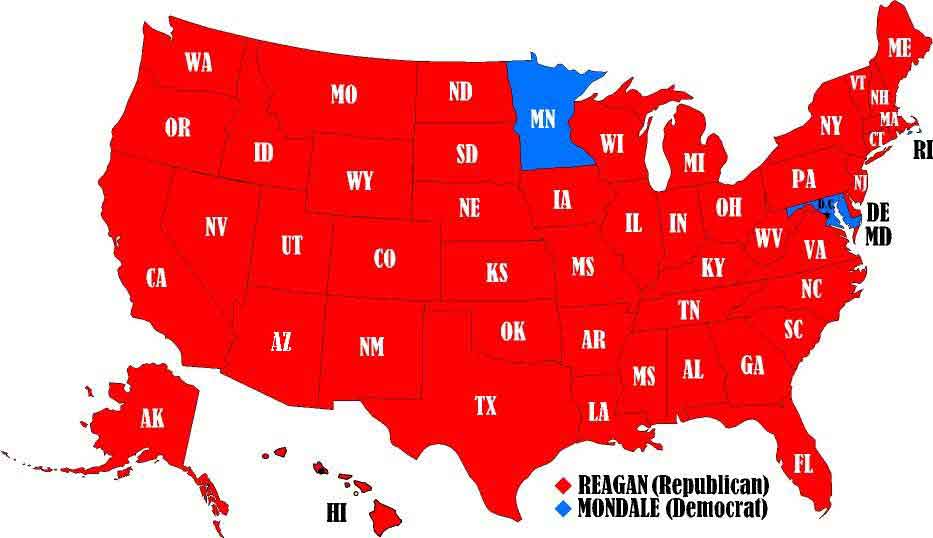
All that being said, one of the fairest tests of a president in a democratically-elected contest is how he is judged by the people he governs during a reelection. After four years of Reagan, he resoundingly beat Walter Mondale 49 to 1 states—Minnesota the lone stand out. He won 525 electoral votes compared to 13 for Mondale, and a popular vote of 58.8% vs 40.6% (54,455,472 to 37,577,352 votes). This means that a Republican actually won the left-wing bastions of California and New York! It was the greatest election defeat in history.

Barack Obama against Mitt Romney on the other hand was 26 to 24 states; 332 to 206 electoral votes; 51.1% to 47.2% with 65,910,437 votes to 60,932,795. We’ll call that an easy Reagan victory as well—three to nil; the Gipper.

Ronald Reagan
Ronald Reagan

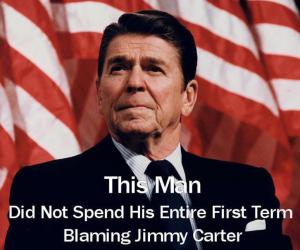
It was a long time ago, but when questioned about the state of the economy, I don’t remember Reagan blaming Carter his complete first term; he was too busy making his case for the future. He lowered the top-tier tax rate from 70% to 28%, gave people their money back, and just as planned, the economy took off like a rocket. So well in fact, that we reduced the world’s superpower population by half as Russia crumbled while attempting to compete. It was capitalism versus communism; capitalism won.

So why am I promoting Ronald Reagan if I’m a libertarian? Because not only do I believe that the GOP should be the libertarian party, I believe Ronald Reagan was my generation’s closest thing to a libertarian president, and this excerpt from a 1975 interview with Reason Magazine should illustrate why:

If you analyze it I believe the very heart and soul of conservatism is libertarianism. I think conservatism is really a misnomer just as liberalism is a misnomer for the liberals–if we were back in the days of the Revolution, so-called conservatives today would be the Liberals and the liberals would be the Tories. The basis of conservatism is a desire for less government interference or less centralized authority or more individual freedom and this is a pretty general description also of what libertarianism is.

Now, I can’t say that I will agree with all the things that the present group who call themselves Libertarians in the sense of a party say, because I think that like in any political movement there are shades, and there are libertarians who are almost over at the point of wanting no government at all or anarchy. I believe there are legitimate government functions. There is a legitimate need in an orderly society for some government to maintain freedom or we will have tyranny by individuals. The strongest man on the block will run the neighborhood. We have government to ensure that we don’t each one of us have to carry a club to defend ourselves. But again, I stand on my statement that I think that libertarianism and conservatism are traveling the same path.

One of the constant knocks against Reagan by libertarians and liberals was his massive spending on defense—a criticism he fairly leveled at himself. But people seem to lose sight of the fact that for all of Reagan’s spending on defense, every succeeding president has put more troops in harm’s way than Reagan did. Contrary to belief, he avoided conflicts as well as any president could.

What he did do however, was ensure that America was deemed to be so powerful, that any nation endeavoring to threaten us would understand it would be assured destruction. And with the exception of Russia, it wouldn’t be mutual. He referred to it as peace through strength.

When America was founded, there were many superpowers—we weren’t yet even one of them. But by the end of 1988, in no small part thanks to Reagan, we were the only one left standing, and remain as the only one still today.

If you lead by example, others will follow. America was a leader 200+ years ago in adopting a principle of liberty, and as a result of our success, there are free nations all over the world who followed our lead; including the monarchies we rebelled against so many years ago. Sadly, they may never give us credit for inspiring them, but true greatness doesn’t need acknowledgement, it’s content in the knowledge it is great.


Internet Trolls Thrive On Attention—But Please Don’t Feed The Animals

Gary Nolan (and THE Scrappy Doo)

Political and religious discourse are often anything but respectful. One sweep of social media feeds will reveal personal attacks that would lead you to believe evolution has spawned a human sub-species known as Homo-Internet-trollius—I raise my glass to them succumbing to natural selection. Sadly, professional writers and TV analysts aren’t often much better.

Internet Troll
Internet Troll

To support my blog, I have Twitter and Facebook pages where I invite people to engage in respectful debate—emphasis on respectful. Most people do exactly that, occasionally even swaying me from my original opinion in light of new information. But far too often, the personal insults fly in like birds on a newly seeded lawn.

I choose not to engage these people, I just block them—such debate is not worth my time and aggravation. People may say that this is not very libertarian of me; but I’m not asking for legislation to prevent them from spewing their hateful rhetoric, I’m just walking away so I’m not tempted to lower myself by responding to it. Proper debate involves exchange of opinions, ideas, and facts—nothing else.

A while back, I watched a panel of people debate the idea of a creator in-depth at Chapman University after seeing a similar debate on Stossel—Dinesh D’Souza, Deepak Chopra, and Michael Shermer among the participants. They were compelling discussions largely due to the nature of the discourse. The fact that reasonable human beings could speak about something as passionate as religion; yet be respectful towards each other despite their vehement disagreement was refreshing. It inspired me to strive for more respectful dialogue in my own debates going forward.

The reason for the respectful dialogue is pretty easy to explain however when you understand one simple concept; opinions versus facts. Facts are truths, opinions are interpretations of those truths based on one’s own environment and life experiences. The people involved understood the difference, and debated accordingly. While you are not entitled to your own facts, opinions will always vary from person to person.

For instance, if we look at opinions; conservatives believe higher taxes are wrong, liberals believe that the rich can hardly be taxed enough—neither is right or wrong. While it may be true that historically, lower taxes have proven to be greater economically, to someone who is uncomfortable with freedom or whom religion trumps economics, more government can often reduce their anxiety by eliminating personal responsibility. For those people, authoritarian rule is better, and they’re willing to trade opportunity and freedom for security and forced theology. You often see this in nations who move from an authoritarian system to a democratic one. Rebels act as if they are fighting for freedom, when they’re so often just fighting over which authority they wish to be ruled by.

As political opinion talking heads bring on guests, they frequently lose sight of the idea that opinions simply have no proper answer. You can watch liberals go on rants about evil corporations only to be countered by conservatives going off on the president in a polar opposite diatribe—neither citing facts; merely opinions, but both insisting the other is wrong.

The fact that Jerry Springer, Steve Wilkos, and Maury Povich make a living doing what they do has shown that we like to be entertained just as much as we like to be informed. If we’re lucky, they may actually kill each other on the air, right? People insulting each other is far more exciting than two adults respectfully agreeing to disagree. If any of you watched the Chapman University video above and didn’t finish it, you probably got bored; proving my point.

As long as the market desires violence, the art of proper debate will be left to the scientific community, and us political consumers and voters won’t be nearly as well-educated as we should be because we’re getting debating’s version of the WWE—rich on entertainment, low on substance.

Bill O'Reilly vs Barney Frank
Bill O’Reilly vs Barney Frank

So what are some signs of improper debate?

  • If anyone refers to you as a “So-called  _______”

When someone uses the term “so-called” in describing you,  there’s no point in going further. I see Republicans call other Republicans RINO’s (Republicans In Name Only) when they disagree. I’ve had people tell me I’m no Libertarian because I don’t believe in anarchy. I’ve seen liberals attack each other because they don’t agree on gun rights or the evilness of corporations. I’ve even seen religious groups attack their own for how they vary in worship.

No one person is the sole arbiter of what is a Democrat, Republican, Libertarian, Christian, Muslim, etc. If you feel you most closely identify with a particular group, that’s likely how you’ll identify yourself. These aren’t private clubs you can be kicked out of, they’re names attached to a basic set of ideals. Someone referring to you as a “so-called” anything is simply displaying contempt—an ultimate form of disrespect where they feel you are inferior to them.

  • Inability to distinguish facts from opinions

If someone lays out facts that are incorrect, they should rightfully be corrected. If you really want to do it right; cite reliable sources. But when arguing opinion, anyone who tells you that you are wrong, laughs at your opinion, or cites opinion columns from someone else, are not debating respectfully.

I see people citing Paul Krugman articles to prove their point on economics, when he’s not done any science, but merely advancing an opinion. I’ve had people cite Ron Paul and Ludwig von Mises op-eds to tell me I’m wrong on my idea of libertarianism. In doing so, they haven’t proven their point, they’ve only proven someone agrees with them or that my libertarian views are different from others.

  • Citations of the same person repeatedly

Science requires that all opinions be considered, respected, and evaluated in order to come to one truth. If a person constantly quotes a particular politician, economist, TV personality, or anything else, this person is not doing anything scientific, it’s the opposite of independent thought. While I personally prefer my opinion reporting come from organizations that are “libertarian-friendly,” I’m at least aware of my bias, and honest about reporting it. I do call my page the Logical Libertarian after all.  

On my RSS reader however, I follow 85 different websites of varying opinions and genres. I make the effort to research any opinion I put forth from several sources when possible, and I will reevaluate such opinions if anyone provides me with new information. Being part of a cult-like group-think crowd is the polar opposite of independent and intelligent thought.

  • All or nothing

Anyone who has agreed with you 95% of the time, but now this 1 in 20 instance where you don’t sends them into a tirade is exhibiting serious signs of bipolar disorder. It’s the underlying root of the word bipolar where there is only a positive and negative, nothing in between. They believe that if you aren’t 100% in agreement with them, you might as well be 0% in agreement with them.

People who take this all or nothing approach aren’t interested in the truth. They want to be the leader of a cult, and expect you to be part of it. That may seem like hyperbole, but think about every cult you know of—how many allowed for varying opinions? There is nothing proper about such behavior. The scientific method relies on varying ideas. Those who view any deviation from their ideology as an insult should be avoided.

  • Anyone using logical fallacies.

Brian Dunning at skeptoid.com has done an amazing job explaining logical fallacies here and here (It was a two-parter).

Skeptoid's Brian Dunning
Skeptoid’s Brian Dunning

 These include straw man arguments, ad hominem attacks, appeals to authority, special pleading, anecdotal evidence, observational selection, appeal to ignorance, non-sequiturs, post hoc, confusion of correlation and causation, slippery slope, excluded middle, small number statistics, weasel words, fallacy of the consequent, loaded question, red herring, proof by verbosity, poisoning the well, and bandwagon fallacies.

I implore you to either read at the links provided, or listen to the attached audio podcast version for explanations. Brian has done a phenomenal job comprising them; it’s worth your time; as are all Skeptoid podcasts.

The golden rule of debating should be this: Explain your position until your opponent understands you. Let them explain their position until you understand them. If at that point you still don’t agree, the debate is over, you must respectfully agree to disagree—emphasis on respectfully. But whatever you do, remember that internet trolls thrive on attention, please do not feed the animals.

NASA and Global Warming: Respect The Method Or Don’t Do The Science

Gary Nolan (and THE Scrappy Doo)

I don’t often weigh in on the global warming debate as I’m not a climatologist. I have made it clear however, that I believe in maintaining proper scientific skepticism in life.

First and foremost, I wish to say that I believe climatologists on both sides of the aisle have done good science. Mankind certainly produces a lot of CO2 which will no doubt have an effect on the environment, and these effects are worth investigating.

That being said, I wish to consider a few points.

Earth is rather large. Every organism living on this planet, along with objects in our solar system, are all variables that affect our climate. Accounting for all of them is nearly impossible.

The Blue Marble
The Blue Marble

Therefore, not accounting for all of them while making claims about how they will react to increased CO2 production, will always be educated guesswork.

Also, when climatologists make predictive models, as near as I can tell, they often make these models while assuming all other variables will either remain constant, or will not counteract the change, but instead merely succumb to it.

For example, imagine one were to observe two birds in their back yard; they look every day for a month, but on average, they always see about two birds. Now imagine this person throws a bag of bird seed in their back yard each day. Considering no other variable, one would assume the result would be an ever-growing pile of bird seed in their yard. In reality, their bird population of two would elevate to fifty or more birds, which wouldn’t result in a pile of bird seed as predicted, but a pile of bird poop instead.

With Earth being an ecosystem, as we animals (yes, humans are animals) produce more CO2, I’ve yet to hear anyone rule out that the plant kingdom, which would thrive in a CO2 rich environment, would not simply grow in numbers, evolve plants which consume more CO2, and/or spawn a new mechanism for filtering or consuming CO2 that we haven’t even imagined; in doing so, counteracting the increased greenhouse gasses produced by the increasing animal population. Just as the deer population, if left unchecked, will die of disease and famine, nature always seems to randomly, and quite unpredictably at times, find a way to maintain balance through evolution.

I’m not making this case mind you; again, I’m not a climatologist—please no hate mail. But one thing I do know is that predictive climate models have often been wrong. Eschewing climate science would be a terrible mistake, but let’s continue to compare actual results with predicted ones; leaving politics out of it for now, until we can accurately predict the effects, and effectively devise mechanisms to deal with the issues that we determine nature cannot naturally resolve for us.

There’s a saying I once heard that in science, most great discoveries are not followed with an exclamation of “Eureka, I’ve found it!” but instead, a far less exciting, “Hmm, that’s odd.”

Viagra was supposed to be a heart medication; it failed miserably. But oddly enough, it turns out Viagra can pitch a tent like a scout troop leader. Microwave ovens came about after Percy Spencer’s chocolate bar melted when placed near a magnetron and he wondered why. Post-it notes were a failed attempt at making a strong adhesive, which it clearly wasn’t. Instead of scrapping a million dollar project, 3M made lemonade out of lemons.

The list of happy accidents like these goes on forever. Science isn’t just about resolving a given issue, it’s also about investigating random discoveries that were often diversions along the way.

Sometimes however, good intentions can go seriously wrong. For instance, I took a tour of Mammoth Cave in Kentucky; I highly recommend it. In Mammoth Cave, as with all caves, the temperature and the humidity are basically constants. Mammoth Cave is a cool and damp ≈54°F 24/7/365. In 1839, Dr. John Croghan, a sufferer of tuberculosis, observed that the cave’s cold and damp air made him feel refreshed and well.

Tuberculosis hut, Main Cave, Mammoth Cave, Mammoth Cave National Park, Kentucky, KY, USA

He bought the cave and opened up a tuberculosis clinic inside it. Today, we know that warm and dry air is best for people suffering from TB, but Dr. Croghan found out the hard way that cold and damp air is bad for it—all 15 patients died. Dr. Croghan didn’t follow the scientific method, he proceeded based on anecdotal evidence and a hunch. Such science, when lives are at stake, while often informative by virtue of observed results, is dangerous and irresponsible.

Let’s look at the scientific method in a nutshell.

  • A person has a question that needs answered.
  • This person then runs tests and collects evidence.
  • Based on the evidence, a hypothesis is formed in an attempt to explain the question.
  • A person then tries to disprove their hypothesis, a process known as falsification. The purpose? If you have a valid hypothesis, it should be true under any tests one subjects it to.
  • If the hypothesis passes these tests, one then publishes it for peer review. They explain their method for coming to such conclusions, their methodology at attempting falsification, and then allow others to review it, debate it, attempt to falsify it, and/or attempt to replicate it with total consistency.
  • Once the hypothesis has passed all these steps, only then does it become accepted wisdom, or even accepted natural law, such as Isaac’s laws of motion.


Recently, NASA’s Gavin Schmidt went on FNC’s Stossel and made brilliant points about the research NASA has done on climate change . He laid out the testing they’ve done, explained how they eliminated other variables, and thus concluded that mankind is increasing the CO2 in the air, and that this ever-increasing CO2 production will cause detrimental climate change. Hearing him speak alone, you could be easily convinced he had done his homework and was spot on in his hypotheses. From there however, it all went wrong.

Dr. Gavin Schmidt
Dr. Gavin Schmidt

Good science, by definition, allows for more than one opinion, otherwise you merely have the will of one man—which is the basis of cult. ~ Quote from The Master (a movie loosely based on Scientology)

Gavin Schmidt refused to sit next to Dr. Roy Spencer, a climate change scientist himself, with proper credentials, who happens to be skeptical of the climate doomsday scenarios often portrayed by others. In doing so, violating the process of peer review and meaningful discussion. His reason? He said he wasn’t interested in being part of a political debate.

Dr. Roy Spencer
Dr. Roy Spencer

The discussion however was not about politics, it was about the science of climate change. If Gavin Schmidt is unwilling to have his science debated, he has zero business doing scientific research at all, especially on the taxpayer’s dime.

If his science is correct, there should be no fear in defending against a skeptic. Every objection the skeptic might raise should be easily explained and dismissed if Gavin has done a thorough job and come to proper conclusions. If he cannot overcome a skeptic’s objections, then guess what? That means it isn’t settled science and his work is incomplete or even possibly false.

Convincing people the Earth is round and that the sun doesn’t revolve around it took time. But barring the most ignorant of idiots, we all agree that these statements are true now.

Al Gore
Al Gore

Those purporting climate change need to stop sensationalizing like Al Gore, debate educated climate skeptics intelligently, and stop acting like we’re all idiots for not buying what they’re selling.

As for the politics of all this? I believe we should not bankrupt the nation based on phenomena that is still not fully understood, and legislators must recuse themselves from the debate until it is. Because much like me, they aren’t climatologists either.

Sources:

http://www.hsl.virginia.edu/historical/reflections/tuberculosis/cave.html

http://en.wikipedia.org/wiki/History_of_tuberculosis

http://en.wikipedia.org/wiki/Post-it_notes

http://en.wikipedia.org/wiki/Percy_Spencer

http://en.wikipedia.org/wiki/Sildenafil