What Does It Take To Be A Great President?

An American president is an icon, “The leader of the free world,” they’re often referred to. History has judged some kindly, others—not so much.

So what qualities does it take to ensure that a president has the kind of legacy that guarantees people will think of them with reverence?

First, the president must be a leader. Ask anyone what it takes to be  a leader, and you’ll hear things like charisma, strong ideas, motivation, etc. But frankly, the only thing you need to be a leader, by definition, is followers.

While I don’t think there are any polls indicating how many Americans consider themselves apolitical, the fact is, if you attempt to start a political conversation with a majority of Americans, in my experience, people more often than not will say things like, “they’re all corrupt” or “I couldn’t care less about politics.”Political Corruption

Many people do have political views, but not many can be bothered to actually listen to the news, inform themselves on the issues, consider both sides of an argument, and actively be engaged in the political process.

The Washington Times reported that voter turnout was just 36.4% in 2014, indicating that a significant majority of Americans have simply succumbed to whatever fate the voting minority foists upon them. This is a clear indication that few of our politicians anymore are leaders, because they simply aren’t engaging people in a way that makes them want to participate.

So what should a potential president do to be a leader?

Leaders are the opposite of followers. Seems simple enough, but that means that by definition, they should not be using polling, social media trending, or other such factors when making arguments. Instead, they should be original in their thoughts.  Find issues people have either ignored, forgotten about, or weren’t aware of, and bring them to light with a fresh focus, and clearly understandable arguments.

For instance, Steve Jobs brought the iPod, iPhone, and iPad to market, not because of focus groups, but because he thought of something no one else did that we consumers didn’t even know we wanted, but now can’t live without. There was no focus group telling him to do it, he used his imagination to pave a trail every one of his competitors are now following. That’s leadership.

Steve Jobs - Apple Founder
Steve Jobs – Apple Founder

Rand Paul is doing a great job of this by reaching out to colleges, minority groups, and other potential voters who traditionally do not vote GOP, and he’s making a solid case as to why they should.

A great president must also be strong. One little forgotten example would have to be George H.W. Bush in his dealing with Iraq invading Kuwait. After gaining support to address Hussein militarily, Bush delivered an ultimatum to Saddam Hussein to leave Kuwait by January 15th, 1991 or else.

Saddam Hussein ignored the warning, and the full brunt of the United States military and its willing allies was unleashed on Saddam’s army the following night. Bush did not give him a second warning, he did not do some half-hearted, “I mean it Saddam, get out” nonsense, extending the deadline to avoid war. He said what he was going to do and he did it. This kind of strength of conviction puts all other would-be enemies on notice that we are not to be messed with.

George H.W. Bush
George H.W. Bush

A president must be an intelligent problem solver. Some of the greatest corporate leaders are great, not because they know everything, but because they know who to ask when they need answers and/or help, and can make intelligent decisions based on the information those advisers provide.

When you see a president who behaves as if they know everything, that should be your first sign they are not an effective leader, as they’re simply far too arrogant and ignorant to listen to people who often know better.

For instance, when Obama fired then GM CEO Rick Wagoner, as if somehow he knew what was better for GM than their acting CEO, his unwarranted hubris was obvious to everyone in the automotive industry, many of who rightfully found it offense and wrong, and of course, GM ended up filing for bankruptcy anyway, which is what Wagoner said needed done all along.

A most recent Gallup poll shows that 42% of Americans are also independent. This makes independents effectively the largest “party” in America, albeit effectively a non-party. So a great president will find a way to not only appeal to their base, but also to reach out to people who aren’t partisan.

How does a president do that? It is my opinion that such a president would have to show that he or she places logic and reason before party lines. Any conclusion they come to should be well thought out, well-reasoned, and then told in a way that everyone can understand.

It is all too common for a Democrat or Republican to be strangely apoplectic about something the opposition does that is obviously quite benign, and most people can’t be bother with. A president should understand that the more they complain about their political opponents, the more they become the boy who cries wolf. If you want to be a great president, put politics aside when analyzing any issue, and make sure if you do attack, it is genuinely warranted—pick your battles wisely.

The president should be someone who doesn’t want the job, but begrudgingly accepts the position for the greater good.

George Washington railed against the idea of a president at all, fearing a president would be too much like a king. He begrudgingly accepted the nomination once it was determined there would be one, and was elected handily.Gilbert_Stuart_Williamstown_Portrait_of_George_Washington[1]

When it was asked by the Senate if he wanted a title such as “your excellency” or “your highness,” Washington simply wanted to be called the more modest “Mr. President.”

When it came time for a potential 3rd term, he stepped down voluntarily, again to avoid the idea of being some sort of supreme ruler. As such, all following presidents, until the American statist icon Franklin D. Roosevelt ran and was re-elected for a third term, never sought out a 2nd re-election as an homage to Washington.

An American president should ultimately see themselves not as a ruler, but as a guarantor of rights—a person charged with protecting the people, not presiding over them. Sadly, Gary Johnson and Rand Paul seem to be the only two candidates running with this mentality. But with any luck, one of them will gain the traction to bring America what can fairly be called another great president.


Sexual Orientation Is Not A Choice

Recently, famed neurologist and potential 2016 presidential hopeful Dr. Ben Carson recently argued that being gay was a choice, citing that some men enter prison straight and leave homosexual.

He later apologized for any hurt he might have caused, stating that he could not really argue it was a choice, but instead, that it’s a simple unknown, correctly pointing out that there are no proper studies to indicate how someone becomes gay.

Dr. Carson, while being a brilliant neurologist by all accounts, is someone whose profession involves dealing with the mechanical aspects of the brain. A psychiatrist however, is someone who deals with the behavioral aspects of the brain. Two very different sciences, arguably only related by the fact that they both revolve around the brain.

This means Dr. Carson is someone who would not be considered to have an expert opinion on the psychological aspects of human sexual behavior.

Neurologist Dr. Ben Carson

The American Psychological Association (APA) however are experts, and they define sexual orientation as “normal aspects of human sexuality.” But let’s delve a little further into what it means to be gay.

While your humble author is not gay, and cannot speak to what it feels like to be gay, I don’t have to be. We can analyze this pretty easily by looking at multiple aspects of sexuality in general with a skeptical eye.

First, we must understand that being homosexual, and engaging in homosexual acts are two entirely different things that under any situation, may or may not be related.

Acting homosexual would be the process of engaging in a homosexual act, and that is entirely a choice of basic human free will. Using the prison example, if I were to be raped by another man, I involuntarily engaged in a homosexual act, but that does not mean that I magically became homosexual in that instant.

Being homosexual, means that a person is sexually attracted to members of the same sex and not the opposite, irrelevant of whether they’ve actually engaged in the act. For instance, there are many accounts of gay men who marry and mate with women, even though they are genuinely only attracted to other men, in order to fit into societal structures better. Despite never having homosexual sex, such men are homosexual.gay-marriage1[1]

I had a person argue that once you first engage in sex with someone of the same sex, then and only then, are you gay. But by this logic, all virgins are asexual, and will only have their sexual orientation determined once they finally get to enjoy that sweet lovin’.

Are we really going to argue two twelve-year-old boys for instance, who haven’t had sex yet, but one is attracted to girls, the other boys, are the same? This logic is unilaterally flawed.

But let’s get back to the idea of choice, and specifically what sexual orientation even is.

Again, consulting the APA, “Sexual orientation refers to an enduring pattern of emotional, romantic and/or sexual attractions to men, women or both sexes.”americanpsychoass[1]

We all know what attraction means on the surface of it, but what is attraction psychologically? It’s an instinct all animals in the animal kingdom possess (yes, humans are animals), usually for the purpose of procreation, but some animals also use it for social bonding or even fun. Humans are not exclusive in this, research has shown that many animals engage in sex for non-procreational purposes.

The social bonding and fun issues can explain away Dr. Carson’s prison analogy easily enough. Prisons are not co-ed, so if you introduce any person into a population with only their own sex to interact with, the natural order of things for these people will be to form social bonds, some of which will likely escalate to one of a sexual nature. While this is not true for sociopaths who don’t need such bonds, not all prisoners are sociopaths.

In prison, homosexuality is merely the only option for sexual activity available to them, so the instinct to have sex for the pleasure and the emotional bonds it may bring, eventually overcomes the instinct to have sex only with someone of the opposite sex. Once they get over that initial fear of the unknown, like overcoming the fear of jumping out of an airplane with each successive jump, it would be quite easy for an otherwise heterosexual male to embrace homosexual behavior if it were the only option available to him.

While I accept that many may have experienced homosexual activity for the first time in prison, I could find no study to support that many don’t leave prison and resume heterosexual activity once members of the opposite sex are again made available to them.

But is attraction in general a choice? The answer must be no, and I can prove it.

Throughout my life, I’ve often fallen in love with women who didn’t love me back, nor gave me any indication they ever would.670px-Deal-With-Unrequited-Love-Step-8[1]

I’m obviously not alone in this. If hydrogen is the most common element in the universe, unrequited love must surely be the second. I think most of us have experienced it at one time or another.

Unrequited love brings one thing and one thing only—pain. While masochists may like a little pain, no one enjoys the pain of knowing someone you want doesn’t want you back.

Let’s try an experiment. If you’re single, there’s likely someone right now that you are in love who doesn’t love you back, otherwise, you wouldn’t be single, right? You know being in love with them only brings you pain, so right now, I want you to stop being in love with them…go ahead…close your eyes and make that choice. Wasn’t that easy? It wasn’t? You couldn’t just choose to not be in love with them anymore? Why not?

If you can’t choose to turn off your attraction, by what logic could one argue that homosexuals can choose to change who they’re attracted to either? It’s a clear contradiction of concepts that cannot be reconciled except to acknowledge it’s not a choice.

Since I experimented with the single men earlier, married men, you and I both know that you are attracted to women other than your wife on occasion. It’s in our core nature to spread our seed everywhere. You may love your wife entirely, but you can’t control that sexual desire.

But if you’re truly a loving husband, you choose to remain faithful to your wife, despite your desire to have sex with another. That’s the exact same thing that happens when a gay person chooses to only engage in heterosexual sex, proving that being gay and acting gay are not the same thing. One is a choice, one is an uncontrollable instinct.


Liberalism Ain’t What It Used To Be. Don’t Let Democrats Hide Behind This Word.

At the root of the word “Liberal” is the Latin “Liber” which means, “Free Man.”  It’s no coincidence that this is also at the root of the word liberty and libertarian.

Many libertarians call themselves classic liberals, because liberal and libertarian are, or at least should be and used to be, essentially synonymous.liberalism-definition-then-and-now[1]

However, modern-day Democrats have hijacked this word to describe themselves, and I suspect that there are a number of reasons why. Let’s analyze a few.

Evolution

Since liberal started out as someone described as a free man, it stands to reason that free men would have been about advancing mankind in general through the benefits of free thought. It is true that Democrats of the modern era have been quicker to embrace things like gay marriage rights, marijuana legalization, and other social liberties. Since they are often promoting freedom on such social issues, unlike many of their Christian-conservative counterparts, it is fair to call their positions there liberal. So the word just evolved to be synonymous with Democrats despite the fact it’s meaning is often incongruent with their beliefs.

But liberal should mean that you are accepting of all beliefs, even of those contradictory to your own. Ask a Democrat how they feel about libertarians, Fox News, or anyone right of center, and they are often condescending and apoplectic.tumblr_m4t6dxnd5a1r47rkpo1_500[1]

To some extent, you are what you believe yourself to be, and I hate when people insultingly call a person who identifies as a Republican a RINO, or refer to me as a “so-called” libertarian because I believe in some amount of government. But nonetheless, for people who identify as liberals, they’re rarely actually being liberal in their beliefs.

Deceit

I would like to believe people are honest for the most part, but many people who in certain circles admit to being statist, socialist, or communist (I’ll use the word statist to describe all three for the sake of simplicity going forward), publicly call themselves a liberal.

Maybe they simply don’t know any better, but statism of any kind is certainly the polar opposite of liberal. But the cold war solidified the idea in America that statism is a very bad thing. So when someone who is a statist admits to it, it’s a sure-fire way to ensure you don’t get votes.

So instead, they use the much friendlier sounding “liberal” so as not to scare independent voters away who might not be too keen on casting their vote for a statist.Statism-c-c[1]

While it’s a shady tactic, if you care about winning more than your integrity, it’s not much of a stretch to do this. However, if your ideas are so great, shouldn’t you be proud of them and stand behind them 100%?

I’m proud to be a libertarian, and never claim to be anything different. It’s a shame these statists masquerading as liberals don’t have the same honest conviction.

Ignorance

To be a statist, you essentially have to believe that government knows better than you, in regards to important matters. Intelligent people generally just want to be left alone to sink or swim however they see fit, but ignorant people think that they can’t survive without a government safety net wherever they go. Since Democrats, who are largely statist in their views call themselves liberals, it stands to reason someone not intelligent enough to manage their own affairs, isn’t intelligent enough to understand the difference between a statist and a liberal.

So having little understanding of the etymology of “liberal,” they call themselves one simply by association.

If I go back to the deceit aspect for a moment, whether it be honest deceit through ignorance, or willful deceit by a dishonest statist politician trying to win a vote, it shouldn’t matter. To those of use libertarians and Republicans who form the opposition, we shouldn’t assist them in this charade.

If you are someone who loves liberty as I do, I implore you not to allow these people to call themselves liberals without calling them on it. If they are championing a non-rights-defending role of government, tell them that’s not a liberal position, that’s a statist one.No_Socialism[1]

If you are using social media, and referring to a statist-minded person, don’t ever call them liberal, call them the statist that they are. If they complain, rightly point out that they just championed a state-run position, therefore they are being statist, not liberal, and that you’re just being honest. Remember, it’s not an insult, and you’re not being rude or condescending doing so, you are truly being accurate.

If they don’t like being called statists, they shouldn’t behave like statists. If they firmly believe in their statist views, then tell them to embrace what they are and be honest about it. But for the love of liberty, stop helping them perpetuate the lie.

Liberty With A Price Tag Isn’t Liberty. Colorado’s Legal Marijuana Isn’t As Good As You Think

Recently it was announced that Colorado’s overwhelmingly successful venture into legalizing recreational marijuana has generated so much tax revenue, that the people are owed a refund.

Before I condemn them on this tax, I must at least give them all due credit for having a clause in their state constitution that limits the amount of tax revenue that Colorado is allowed to collect before it must refund a portion to the people. It’s referred to as the Taxpayer Bill of Rights (TaBOR), and it’s a very pro-liberty thing to do.

Sadly, Colorado Republicans and Democrats alike are now upset they may have to give some of this money back however. I understand the Democrats being upset, they’ve never met a taxpayer dollar they didn’t genuinely believe they could spend better than the person who earned it. But it’s sad that the Colorado Republicans, the party that’s supposed to be about limited government, are somehow upset with this too.

Forget all of that though, because there is a much deeper issue here. This Colorado legal-pot situation is not as libertarian-friendly as one might think.

Marijuana Harvest
Marijuana Harvest

Colorado was smart enough to embrace the science that shows that marijuana is a fairly benign drug that is often less risky in its consumption than alcohol. They were also non-hypocritical enough to know that allowing alcohol while not allowing marijuana made little sense—kudos to them on both counts. But that’s where the liberty segment of their new pot-friendly legislation ends.

Sadly, politicians love new revenue streams more than I love my mom. Because the legislators in Colorado decided that instead of just giving people more freedom to choose what they put in their body, they would give them a way to do it prosecution-free, if and only if, they paid an additional tax over and above the normal sales tax, which exceeds 25% when all of them are added together.

Knowing this would generate a significant amount of tax revenue was certainly part of the equation, if not the impetus for legalization, when the one and only reason should have been that in a free country (or state in this case), it should have never been illegal in the first place.

What Colorado is essentially doing is no different from the sugary drink tax in Berkeley, California, cigarette taxes across the country, or any other tax on a product over and above the standard sales tax. They are using the tax system to encourage behavior like a backwards carrot on a stick. No rights are being protected, nor is any governmental service being offered.

Berkeley Soda Tax
Berkeley Soda Tax

As someone who supports a consumption tax system like the FairTax.org proposal, one might think that I and other libertarians would support a marijuana tax, but it’s very anti-libertarian on multiple fronts.

When sin taxes such as these are passed, it assumes that government has an interest in what you do to yourself and should penalize you for what they have determined is bad behavior. But government’s duty is to protect you from others who would harm you, not from yourself. They have no right to tell you how to live your life or be the arbiter of what is good behavior. Are you comfortable letting them tell you what shows you should watch or what kind of mate you should choose?

The reason to support a consumption tax is that it’s effectively a fee for services rendered. If government builds infrastructure, and enforces contracts between enterprises which allow all of these products to freely come to market, it’s a fair way to charge people for that government service. But what service is Colorado providing for the marijuana tax?

For instance, I can fairly argue it’s okay to add a diesel/gasoline tax, because that money then pays for roads. You’re being charged a fee for services rendered. However, there is no additional service Colorado is providing with their multitude of tacked on taxes to marijuana, it’s simply a revenue stream that goes into the state’s general fund, and the oh-so-common “It will go towards helping schools” argument is also part of the equation.ColoradoMarijuanaTax.thumbnail[1]

I’ll set aside my argument that there shouldn’t be public schools in the first place, but why exactly is a pot smoker disproportionately responsible for educating Colorado children or paying for other non pot-related issues?

If we love liberty, we should never support a tax that cannot be directly attributed to the item being taxed as a fee for a service government is providing. With government, we are often forced to accept compromise to appease the statist-minded voters and politicians, and I’m sure Colorado’s marijuana tax is no different, but we are most certainly not to a point where we can call Colorado’s legal marijuana system a victory for libertarianism.

It’s no more of a victory than if a football team were losing 70-0 and in the closing seconds scored a field goal to avoid getting blown out. Sure it feels good to put points on the board, but you still lost in the end.

Drug Testing For Government Checks? How About Work For Government Checks?

For nearly as long as we’ve had government entitlements, we’ve had people wanting government to drug test the people receiving them. The purpose being that if I have to take a drug test to get a job to pay into this system, they should have to take a drug test to get the money out of it.

Aside from that, many would like to know that their hard-earned tax dollars are not going towards buying drugs instead of food, water, and shelter—the things these programs are supposed to be for. It’s a fair point that I used to agree with it. However, as I see the issue, this is frankly a red herring.failed-drug-test[1]

If our concern is about misspent monies, then why give them money at all? With food stamps for instance, they would just get actual food, not cash to buy food. While that still doesn’t prevent trading food for drugs, it would at least make it significantly more difficult since most drug dealers are usually not apt to take two steaks for a dime bag.

What about the people who use the money for new Air Jordans, wheels for their car, fur coats, or other frivolous items. These are no more what that money was intended for than drugs, but no drug test will sniff out other frivolous waste like this. Not to mention, alcohol is equally wasteful, equally mind-numbing, and very commonly where money from government entitlements ends up.

Getting away from those who rightfully qualify for these programs, what about the fraudsters? Many people do side work under the table, easily make enough to support themselves, but because there’s no W-2 to rat them out, they get a government check because it appears they qualify for assistance.

These people could be people doing illegal work like selling drugs or prostitution (which should be legal in my opinion), or these could be people who are doing legal work, but just getting paid under the table for it tax-free.prostitution-car[1]

The system, no matter how you work it, is always highly corruptible, and thus the reason most limited government advocates like myself feel government should not be in the business of salvaging the lives of those who have chosen a path that doesn’t afford them their basic food, drink, and shelter needs.

If we move off of the corrupt things people might do with government entitlement monies, does someone failing a drug test mean that they used taxpayer money to buy drugs? Not necessarily.

For instance, pot smokers in general are usually rather friendly in my experience. While I’ve never used marijuana myself (no joke), I’ve been offered it more times than I can count. Maybe this person who might fail a dug test was just at a friend’s house Friday night and benefitted from some “puff-puff-pass.”

Insuring that government money is used for the purpose intended is nearly impossible, and as such, a fool’s mission. This is why libertarian-minded people like me would simply argue that you can’t corrupt what doesn’t exist in the first place, and end all such programs. As heartless as it may seem, we honestly believe charities would do a better job, and people would be more charitable if given those tax dollars back.

But there is another way. While most libertarians want to quash entitlements altogether, there may be a more capitalistic way we all benefit from them doing it, and the answer is in community service.

Instead of offering money for doing nothing, why not offer government on-the-spot labor? Instead of having to apply for government handouts, you simply go to a government office, and say, “what can I do?”help-wanted-marijuana-legalized-jobs[1]

In any town around the country, there can be litter and trash lying around, infrastructure that could use improvement, graffiti that needs cleaned off walls, schools that could use adults standing guard, or any other myriad of things we’d like to do, but we don’t often have the money to do it.

Local citizens might contact their government office with needs that these people could fill such as help mowing a lawn or shoveling a driveway even. Or companies could broker deals to get on-the-spot labor through local government assistance office. Local businesses often need an extra person due to employee illnesses, random promotional events that may require extra help, etc. The citizens or companies would pay the people directly, the welfare office would simply connect the two parties.

No one has a right to get paid for doing nothing, and government is a guarantor of rights, not a charity.community-service-trash

The jobs they’d be assigned would be menial, difficult, unrewarding tasks that no one else wants to do, thus  ensuring that people will seek gainful employment elsewhere, doing community service for no longer than is necessary to bridge the gap between jobs.

It has never been, nor ever will be government’s business to know what you put in your body, and suggesting we should drug test people to get government assistance is a violation of their rights after my rights were violated by stealing from me to assist them, despite my objections to it.

Under my proposal, I frankly don’t care what they do with that money. If they provided a valuable service, they earned it, and like me, should be able to spend it however they see fit. They win, the taxpayers win, and nobody got something for nothing.


Libertarians Are Far Too Often Libertarianism’s Worst Enemy

When I launched LogicalLibertarian.com, my intent was to not only spread the message of why liberty and science are important, but also to incite reasoned debate. Through such debate, I believe we evolve for the better.

My last post about vaccinations, and why I believe that making them mandatory if you are not going to self-quarantine, was a prime example of what happens when someone is forced to challenge their own beliefs. Mine changed 180° from when I was first presented the issue and about three hours later after considering it critically.

When I became an adult, mostly thanks to the economic recovery during the Reagan era, I considered myself a Republican.

Ronald Reagan
Ronald Reagan

Adulthood also brought me to the embracing of science. While I hadn’t fully understood the scientific method and the concept of being a skeptic, my questioning of the world around me led me to leave religion behind, and become agnostic.

The term agnostic is not always understood as to how it varies form an atheist. An agnostic would say that they have no evidence to support there is a god, but are open to all evidence. A devout atheist actively believes no god exists, just as theists believe there is a god, and are generally not open to evidence supporting a creator.

Even though none of these really affect me personally, things like blue laws, the drug war, preventing gay-marriage, and other such laws with an obvious religious underpinning, were areas where I simply didn’t agree with my beloved Republican Party. “No victim, no crime” just made sense to me.gay-marriage1[1]

My friend Pat and I share a common love for the game of poker, which is how we came to know each other. Like me, Pat is also atheist and libertarian.

Despite it’s sometimes seedy reputation, poker is a game that attracts brilliant minds who often like to discuss just about anything. Occasionally, the subject of politics comes up, and as far as I know, Pat has always been libertarian.

At first, I didn’t know much about the party other than what I saw from a couple of interviews with Dr. Ron Paul I had seen on TV. While I often agreed with Dr. Paul, I always found his delivery to be a bit whiny, and sometimes he came off almost kooky. It wasn’t until I came to understand Dr. Ron Paul years later, that I began to listen to his message, despite his unappealing delivery, and appreciate his logic.

Ron Paul
Ron Paul

As we discussed politics, it was Pat who convinced me, through reasoned debate instead of personal attacks, that I was in fact, more libertarian than Republican. While I was always for legalizing pot, even though I don’t use it, it was Pat who convinced me that we should legalize all drugs, not just cannabis; again, using reasoned debate.

So the libertarian collective was increased by one person, thanks to my friend Pat, and I’m happy for it.

There is no doubt I’m opinionated as hell, but I’ve always felt it’s important to have as few sacred cows as possible, and these days, I have two. Logic and liberty—hence my website.

The one difference between Pat and I, is that if there were no libertarian option, he would choose a Democrat, and I would choose a Republican. So when Dr. Rand Paul voiced the “vaccines may lead to mental illness” hypothesis in a recent interview, Pat brought it to my attention in an unflattering way, since he knew I was a fan of the junior Dr. Paul.

At first, I was annoyed that he did it, because I know it was somewhat of a dig at my Republican-leaning views, but knowing that I love science, he was right to point this out to me. Indeed, this is one time I don’t “Stand with Rand.”

Senator Rand Paul (R)

But that’s OK, because I’ve always made it clear, I champion ideals, not people or parties. As long as I agree with Rand more often than I do any other presidential contender, he’s going to get my nod.

What I didn’t do, is troll Rand Paul on Twitter and call him a “So-Called-Libertarian,” or demean him as a person in any way.

Instead, I gave the subject serious thought and decided to come to my independent conclusion, regardless of what Dr. Paul or my friend Pat had to say. So I did my research, challenged the science in my post, and respectfully agreed to disagree on the matter with Rand. Thankfully, I’m not the only libertarian doing this, but if we want libertarianism to grow, we need more.

Austin-petersen-libertarian-republic
Austin Petersen

For instance, recently, Austin Peterson from Libertarian Republic talked about how Sarah Palin wouldn’t be that bad of a choice for the VP if Rand Paul were to win the GOP nod. This despite most libertarians disliking her immensely, he argued she’s actually pretty supportive of libertarians, and far lass combative with us. It’s this kind of open-mindedness from Austin, putting logic over party, that I strive for myself. Yet, as expected, if you look at the comments, the libertarian trolls came out in droves.

It is important to understand that it’s this kind of open-mindedness that will attract independent voters to the libertarian cause, which I hope is what we want, not slinging insults like monkeys fling poo.

Have you ever changed your views because the person challenging that view called you an idiot? I know I often don’t. It usually closes my mind completely—an effect I’m assuming is often the opposite of what the “libertarianazi” wanted.

If libertarianism is about freedom, then it should be about free thought too. I can disagree with Ron or Rand Paul on a couple of issues without losing respect for them as a whole.

Many libertarians were incredibly disrespectful towards Glen Beck when he stated he was becoming libertarian. But let’s think about the logic of this for a second. He is a man with a huge following due to his own internet media site, who can clearly spread the message of libertarianism more than most of us, and instead of trying to welcome him with open arms, some libertarians act like they don’t want him in our party?

Glen Beck
Glen Beck

It was the saddest display of nonsensical arrogance by some libertarians I’ve ever seen, and it certainly wasn’t done with libertarianism’s best interests in mind.

We cannot insult other libertarians who aren’t anarchists, some of us feel there is a role for government. Instead we must respectfully challenge them with reasoned debate, possibly outlining the unforeseen outcomes they may have missed in their proposal. But otherwise, encourage them to join us wholeheartedly where we agree.

We must also encourage Republicans and Democrats alike that we’ll stand with them in times when we agree on an issue.

And lastly, on a side note, for the love of God, the Guy Fawkes masks so many libertarians use as a social media icon is not helping either. The masks are creepy at best. But more importantly, they are certainly not libertarian.

Guy Fawkes
Guy Fawkes

If you’re libertarian and proud of it, show your own face. Hiding behind a mask tells people you have something to hide and that you’re untrustworthy. Do you want to attract good people, or do you want to attract people who are one run-in with government away from blowing up a building with innocent people in it? Guy Fawkes was a would-be terrorist, not a libertarian. People like that will not help our cause.

Vaccine Or No Vaccine: The Facts And This Libertarian’s Opinion

The latest litmus test for politicians seems to be the idea of mandatory versus voluntary vaccinations. Even libertarians are somewhat divided on this, but the liberty-minded factions seem to support pro-choice, and the statist-leaning folks are going towards making them mandatory.

First, let’s point out that most people agree that vaccinations are one of mankind’s greatest medical achievements. Whether you’re pro-choice or not, I think we all agree that science has proven them to be overwhelmingly effective.

Rand Paul recently weighed in that he supported a pro-choice position, but he got himself into trouble when he stated, “I have heard of many tragic cases of walking, talking normal children who wound up with profound mental disorders after vaccines.”

If I were to give Rand Paul the benefit of the doubt here, I would like to believe he was simply arguing that some people are afraid of vaccines because children have been diagnosed with mental disorders after being vaccinated, as a means to explain why people might not want to vaccinate, even if this is anecdotal evidence, which is definitively not scientific.

I would like to think he was not arguing that there was any causality, since studies have almost universally debunked this myth. But if he was, that is sadly a very unscientific position for someone who is currently practicing medicine to posit.

While it has been reported that some vaccines may cause temporary issues, I don’t think any credible studies have supported the notion that any permanent complications have arisen.

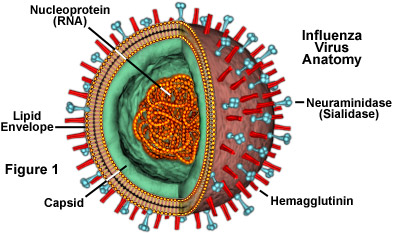
But either way, let’s explore what actually happens when you’re given a vaccine. A vaccine is essentially a dead, or severely weakened version of a real virus.

Influenza Virus
Influenza Virus

To over-simplify things a bit, living things introduced into your body that don’t have your DNA will be seen by your immune system as a threat, and your immune system will go about trying to destroy it.

This is the reason that your immune system must be suppressed when you receive a donor organ for instance, and why organs harvested from your own DNA are much safer and advantageous.

On a side note, as fantastic as this may sound, I don’t think I’m overstating this one iota when I say that this particular field of research will revolutionize the world of medicine forever; we are truly on the cusp of never needing organ donors again.

Think of the vaccine as a new first-person war-simulating video game you just bought. At first, you don’t know any of the levels, how to defeat any of the enemies, etc. So you play the game on its easiest mode until you learn the most effective means to slay your enemies. Once you’ve mastered it, you are ready for the more advanced levels.

Characters from Halo 5

This is what vaccines are effectively doing. Because the vaccine is a dead or weak form of the virus, it’s like the game on “easy” mode where it’s of little to no threat to you. In this state, your body can train itself to kill the virus so it’s better prepared to kill the full strength version down the road, if it’s introduced into your system.

So why does it not work sometimes? Well, what if the copy of the video game you received was Halo, but the real disease is Call of Duty? You’ve prepared for the wrong game. There isn’t just one influenza virus, there are various strains. So it’s important that the medical field do their research well and introduce a vaccine that prepares you for the influenza strain that is expected to be most prevalent.

Now, let’s also explore the effects on your body when you get a vaccine. Your immune system is not magic, it uses energy from what you consume—energy you would otherwise use to run, jump, and play.

So it’s not uncommon for some short-term effects as your body diverts its resources to the battle you’ve just entered it into with the vaccine. When you get sick, you get weak also, right? It’s because your body is diverting energy to fight the virus you have. Whether it’s a vaccine or a live virus, your immune system has a lot of work to do, and you will be affected in that moment.

Since every person is different, people’s reactions will vary. Some people might get the vaccine and feel almost nothing, others may get the vaccine and feel like their energy level has been reduced by half. It’s for this reason that Rand Paul suggested staggering these immunizations so that your body can tackle one virus at a time to keep the short-term weakening effects to a minimum. Plus, if your immune system is busy fighting one battle, it may not be well-suited to fight another, which should make basic sense.

Now that we’ve covered the facts, let’s get towards the opinion of whether it should be optional or mandatory.

Vaccines are rather effective, but they’re not bulletproof. Depending on the vaccine, you will see here that the CDC has found the effectiveness to vary anywhere from as low as 59% and as high as 92%. This is the single most important factor I used in forming my opinion.

Some people online have posted memes asking the question, “If vaccines work, and you’ve had one, why are you concerned if I get one?”58737535[1]

On the face of it, it seems like a fair question, but it’s one born out of ignorance. As I stated above, at best, they seem about 90% effective. So imagine a scenario that I am interacting with you, and you have the virus in question. If you haven’t been vaccinated, there’s a 1:10 chance I may get the disease from you. But if you’ve also been vaccinated, that means my risk now goes from 1:10 to 1:100 (1/10 x 1/10 = 1/100). The more people who get vaccinated, the more the odds go down.

If enough get vaccinated, the odds will eventually exceed the number of people in an area, and the disease will likely be eradicated. Meaning that if the odds of you catching it get to 1:1,000, but there’s only 900 people in your community, the odds would then favor eradication of the disease—basic math.

Assuming you’re not an anarchist, almost all of us believe government’s duties are to protect our rights. Statists think government has many more duties, but I don’t know of any non-anarchists championing government causes that don’t include protecting rights first. The most important of these rights? The right to life.

So if vaccines are anything less than 100% effective, which they are, government enforcing you to get one isn’t for your benefit, it’s to protect others from you if you catch the virus.

What so often happens is people want to create a paradox to sound smart, something no one should ever intelligently do. For instance, it’s like asking a Christian if God can build a wall so high even he can’t climb it—a purely nonsensical  question.

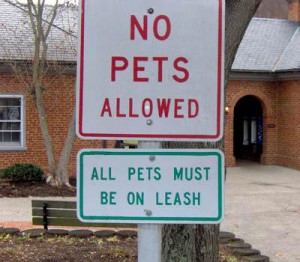
The Pet Paradox
The Pet Paradox

Arguing that vaccines should be a choice creates a similar liberty-paradox. Because while you’re giving liberty to one person, you’re effectively taking it away from everyone else they’ll come in contact with, which mathematically, is a net loss for liberty.

It would be no different from arguing that slavery should be legal because it gives liberty to the slave owner, or as Greg Gutfeld pointed out (I don’t want to take credit for his argument), it would be like legalizing drinking and driving because you’re restoring liberty to the future AA member.

The only way you are truly for liberty is if you champion the view that gives the greatest amount of liberty. Giving one person liberty while denying the rights of ten others, is not a libertarian position, it’s a selfish one, in my opinion.

Now, you can rightfully argue I’ve created my own liberty-paradox by denying the right of the anti-vaccine person, but I have an answer for that. If they choose to self quarantine in some way, then by all means, let them not vaccinate. I’m perfectly OK with that—problem solved, paradox gone.

Otherwise, I think the only fair libertarian position is that you cannot own a slave, you cannot drink and drive, you cannot drive a car without insurance to cover me if you hit me, and as much as I hate government mandates, I feel you should not be allowed to introduce yourself or your children into the public arena unless you vaccinate.


log·i·cal: capable of reasoning or of using reason in an orderly cogent fashion lib·er·tar·i·an: an advocate of the doctrine of free will; a person who upholds the principles of individual liberty especially of thought and action