In case you’ve been under a rock, we have this president who loves tariffs. I don’t mean he thinks they’re good. I mean, he is actively trying to figure out how he could stick his Anthony Wiener in tariffs and make little orange tariff babies—it’s unsettling.
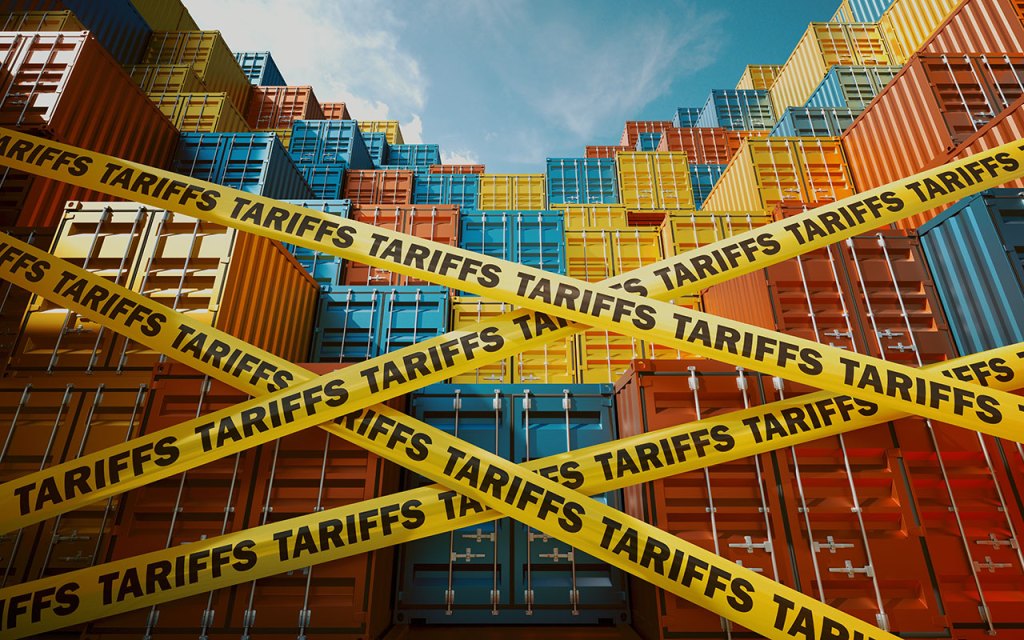
Here’s the issue, tariffs are a tax on goods, under another name. The only thing making them different is unlike a sales tax that applies to everything except tax exempt stuff, and are applied at the point of sale, tariffs only apply to foreign goods, and the tax is applied at the point of import.
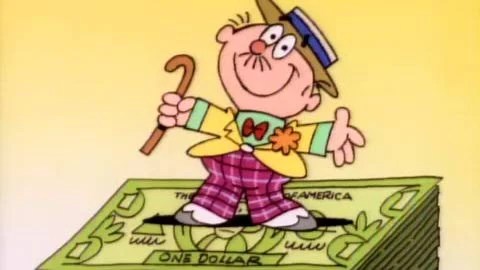
Tax Man Max from Schoolhouse Rock
With that in mind, I’ll take you back to grade school government. Who has the power to levy taxes? Not the fucking president, that’s who. There’s this group of 535 assholes (subject to change) we call congress—that’s their bag, baby.
Despite the fact that the GOP control the Senate and the House of Representatives, Trump refuses to work to get congress to enact such tariffs—he’s decided he must do it himself by fiat.
Trump, not certain whether he’s a fucking king or not, decided to figure out if there was some law, any law, that would give him the power to impose tariffs at will, and he fell on The International Emergency Economic Powers Act (IEEPA).
This law essentially says, if the president declares there to be an emergency, he has certain powers to deal with that emergency. The phrase in the statute he relies on to impose tariffs says:
The President may regulate importation or exportation of any property in which any foreign country or a national thereof has any interest.
I won’t go into how stupid this is, but suffice it to say, I have a trade deficit with Walmart. Not because they’re taking advantage of me and creating an emergency, they just have more things I want from them, than they want from me.
This is a global economy, and trade deficits are a natural part of it. They’re certainly not a fucking emergency. Not to mention, this was often done because someone from that country annoyed him. To argue he was somehow methodical and precise in this, would be ridiculous.
So, anyway, the folks at Learning Resources, Inc. buy some shit to sell here in the US that comes from lands far far away, and Trump’s tariffs are making it hard for them to stay profitable. So they dusted off their copy of IEEPA, and were like, “I don’t see the word tariff in this mother fucker anywhere.”
And with that, they decided to challenge our Tariffer-In-Chief for enacting tariffs they believe he does not have the power to enact. They argue that the major questions doctrine (remember that from cases like Loper Bright?) should certainly apply here—that these tariffs affect a shit ton of folks, and it’s a power the president wasn’t explicitly given. Therefore, fuck that asshole.
As per usual, a lower court decided against Trump. Also, as per usual, Trump got his wittle feewings hurt, and appealed. I told you, he really wants to have a little orange tariff baby—he ain’t fucking around.
So off we go to SCOTUS, and to see if they’ll give him an unearned victory.
The Arguments: Team Trump
First up, we have the tender strains of John “Gravel Voice” Sauer. I don’t mean to pick on the guy, but I think him and RFK Jr. went to the same vocal coach.
John Sauer
Mr. Chief Justice, and may it please the Court: On April 2, President Trump determined that our exploding trade deficits had brought us to the brink of an economic and national security catastrophe. He further pronounced that the traffic of fentanyl and other opioids into our country has created a public health crisis, taking hundreds of thousands of American lives. President Trump has declared that these emergencies are country-killing and not sustainable, that they threaten the bedrock of our national and economic security, and that fixing them will make America strong, financially viable, and a respected country again.
Counsel John Sauer
Due to IEEPA tariffs, President Trump has negotiated agreements worth trillions of dollars with major trading partners, including most recently China. Unwinding those agreements, he warns, would expose us to ruthless trade retaliation by far more aggressive countries and drive America from strength to failure, with ruinous economic and national security consequences. In Dames & Moore against Reagan, this Court held that IEEPA’s sweeping and unqualified language grants the President’s actions the strongest presumption of validity and the widest latitude of judicial interpretation. Yet plaintiffs argue that tariffs, IEEPA’s least blunt and most nimble tool, are virtually the only tool that Congress did not grant the President to deal with foreign emergencies. That is wrong. The phrase “regulate importation” plainly embraces tariffs, which are among the most traditional and direct methods of regulating importation. And plaintiffs concede that IEEPA authorizes quotas and other tariff equivalents. The major questions doctrine does not apply here. IEEPA confers major powers to address major problems on the President, who is perhaps the most major actor in the realm of foreign affairs. And the nondelegation doctrine casts no doubt on IEEPA because Congress may assign the President broad authority regarding the conduct of foreign affairs, where he enjoys his own inherent Article II powers. I welcome the Court’s questions.
So he begins with a “ends justify the means” statement. That’s not how any of this works, when it comes to presidential powers.
Then, his tactic is to argue some perceived success of Trump’s tariffs, as if that’s justification. He’s taking a marketing approach to lawyering. Novel, but seems stupid.
Anyway…Sauer picks a tenuous argument that somehow, IEEPA giving the president the power to regulate importation should be meant to include tariffs. This is a stretch, but we’ve been here before with Sauer and Trump in the presidential immunity case, where I thought his arguments looked like trash, and yet that fucker won.
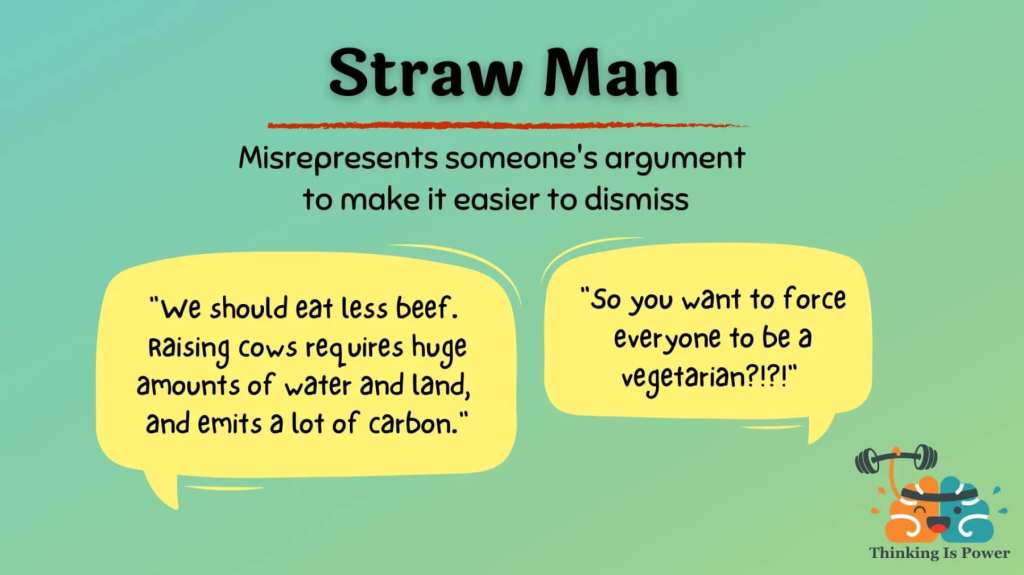
It’s worth noting, he used a pretty logically fallacious argument, saying that somehow the other side is saying that the only tool not available to Trump is tariffs. They absolutely did not say that. Quite the strawman he built there.
He also argues somehow that tariffs are the least harmful way to regulate trade, as opposed to bans or embargos. But that’s also just him giving an unsubstantiated opinion.
There are an infinite number of ideas the Trumpster Fire could have come up with to regulate trade. That’s how new ideas work. Most of them were potentially open to him. So the idea that tariffs were the only tool, is absolutely ridiculous. Even if Trump isn’t exactly a creative genius, he has people around him who could have come up with something new.
Justice Thomas the elder chimed in and asked how the major questions doctrine doesn’t apply here.
Associate Justice Clarence Thomas
He first started by arguing that congress certainly inferred a president to have some major authority on certain issues, apparently setting the stage for why they inferred this major issue to him.
This SCOTUS has almost always struck shit down for “major questions doctrine” reasons in the past. So Sauer attempting to short circuit that philosophy seems ill advised.
He then went on to say that congress infers such major powers, but “keeps an eye on that shit” just in case.
He argued some how, The Constitution’s Article II powers over foreign affairs often give him such massive authority.
What the fuck? Is he stoned?
Before he could get to his next point, Justice Kagan chimed in and was like, “Bro, do you have a single example here? Taxation is an Article I power delegated to Congress, and tariffs are part of that shit. So what article II power is so fucking huge, that you think it justifies him taking Article I powers away from Congress? Are you fucking mad?”
He tried to argue that if shit were all cool and the gang with these foreign entities we trade with, IEEPA wouldn’t apply. But somehow because Trump decided trade deficits were an emergency, he can then use said declaration to do something about that shit, because he has constitutional authority over foreign affairs.
Ballsy!
He went on to say, and I’m not making this shit up…
We don’t contend that what’s being exercised here is the power to tax. It’s the power to regulate foreign commerce. These are regulatory tariffs. They are not revenue-raising tariffs. The fact that they raise revenue is only incidental.
Sauer has balls the size of Jupiter to look at these nine justices dead in the eye, and bold-faced bullshit them.
Justice Sotomayor, wholly unimpressed with Sauer’s argument, chimed in with what is essentially, “Are you fucking nuts?” The power to tax resides with congress. So you argue tariffs are not a tax to circumvent that. But clearly, it’s a fucking tax. It raises revenue for the government, for fuck’s sake.
She then went on to questions his “it’s regulatory” claim. She’s like, “You’re raising revenue, man. If you wanted to limit goods coming from China, you just fucking limit them with quotas or an embargo. Your dumb fucking boss is the one who decided to make revenue off of it.”
Official Portrait of United States Supreme Court Justice Sonia Sotomayor Click for Biography
She also blasted Sauer on the notion that somehow the president just arbitrarily deciding something is an emergency doesn’t all of a sudden give him new powers to enact sweeping taxes. Otherwise, every fucking president would be doing that shit.
Sauer, answering the major questions doctrine point first, somehow felt his iron clad defense was that the court had never applied the major questions doctrine to foreign policy. That’s it. That’s his brilliant fucking response. We’re talking about a tax, which he know kills his whole claim, so he’s trying his level best to reframe it as a foreign policy issue.
Sotomayor decided to hit him with the ole hypothetical. She’s like, “So Biden could have just declared that student loan debt was an emergency, and then slapped a tariff on foreign oil to pay for it? He’s declared an emergency, and it would have went against foreign goods?
Sauer stammered a bit without getting to an answer before Sotomayor, still like a dog with a bone, was like, “I can point to at least 16 fucking laws here where congress wrote in the word tariff or tax into a law when they wanted that to be an option. But they didn’t in IEEPA. So what logic do you have to suggest that they inferred it here when they didn’t explicitly write it in.”
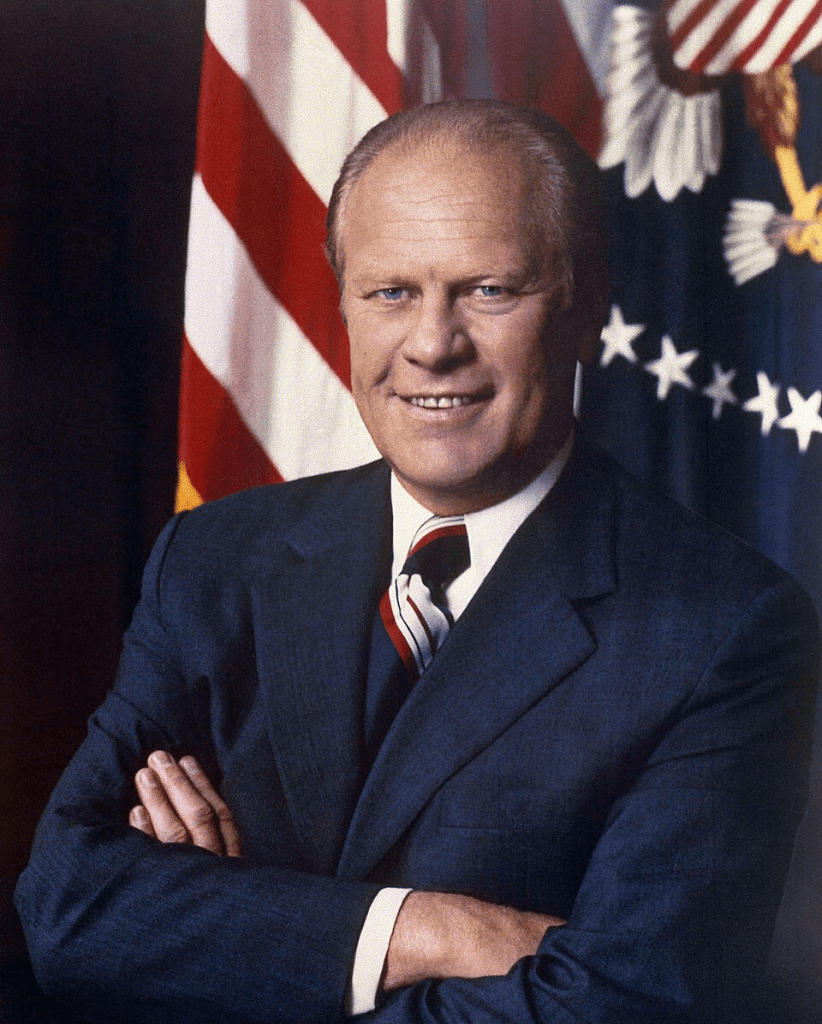
Sauer pointed to a different case (Algonquin) where the court allowed then president Gerald Ford to set licensing fees on foreign goods if the secretary of the treasury argued that a country was importing so much of something that it created a national security issue. This relied on section 232(b) of the Trade Expansion Act of 1974 (TEA). They were concerned about oil imports, specifically.
38th President of the United States – Gerald Ford
But the Algonquin opinion was a narrow ruling, and they even stated that allowing this specific thing shouldn’t lead future courts to give license to the president to do similar shit.
They allowed this because the specific law in question delegated quite specifically, the power to the president to regulate the import of these goods, which they felt must include tariffs, licenses, etc.
Frankly, this is so far the only good argument I’ve heard from Sauer, and it’s still a little sketchy because the court literally said they should not consider this ruling to allow broader presidential authority, which is exactly what Sauer is doing here.
Also worth noting, the Trade Expansion Act of 1962 (TEA) they’re citing, during peacetime, requires the Secretary of Commerce to do a formal investigation and show a national security risk, before the president can impose fees on those goods.
Trump has used this law to put tariffs on steel, aluminum, and oil before, so he has relied on it as well as IEEPA he’s using now. However, many of the tariffs Trump has imposed are political in nature, and therefore wouldn’t fall under TEA, if you were wondering.
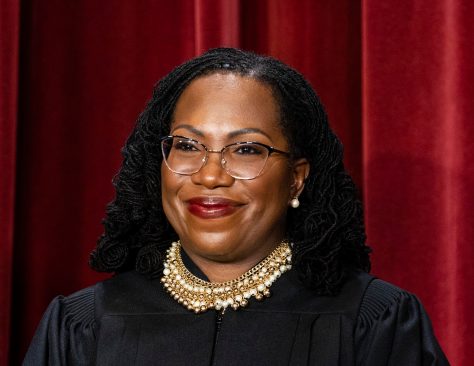
Justice Jackson took issue with Sauer wanting to compare the Trading With The Enemy Act (TWEA)’s interpretation to IEEPA.
Associate Justice Ketanji Brown Jackson
Congress enacted this legislation (IEEPA) with the intent of preventing the President from having unlimited powers in this area, and you’re asking us to now interpret that statute consistent with an understanding that Congress wanted to allow the President to do pretty much whatever he wanted in this area.
You see, TWEA was passed in 1917—WW1 times, but as time went on, congress felt it gave the president too much power. So IEEPA, passed in 1977, was meant to restrain some of that, and better define what the president could and could not do during an economic emergency.
Sauer argued that the phrase “regulate importation” must carry with it, the power to impose tariffs. He also places a lot of weight that the duty is due “at the border” as if to say, it’s not a tax on the people, because it occurs at the border, not within the border. Hint: That’s not a thing.
Justice Barrett was next to hit Sauer with a question. She kept it simple. She asked:
General Sauer, can I just ask you a question? Can you point to any other place in the Code or any other time in history where that phrase together, “regulate importation,” has been used to confer tariff -imposing authority?
Associate Justice Amy Coney Barrett
Sauer really stumbled on this one, as he could only cite the court’s rulings on Algonquin, and similar instances, but not where Congress specifically conferred this power with the “regulate importation” text.
After citing precedents several times, even Sotomayor had had enough, and point blank asked him:
Could you just answer the Justice’s question?
But all he had was unrelated precedents. He kept arguing that foreign tariffs are regulating imports, as if somehow he can’t believe they don’t understand that.
Again, IEEPA (1977) amended TWEA (1917). As you might imagine from the name, this was about a president, during war time, being able to ban imports from someone who’s our enemy. But then in 1933, FDR got it amended to broaden it from “only during war time” to “during any national emergency.” Let’s just say, presidents abused that shit, so IEEPA was formed to reign it back in. This was what Justice Jackson was complaining about above.
So congress did a little “copy and paste” shit with TWEA to IEEPA. To that point, counsel Sauer argued:
Let me put it this way: You look at all nine verbs together and you’re looking at a spectrum of powers from the most sort of negative, “nullify,” “block,” “prohibit,” “void,” to the most affirmative, “direct,” “compel,” and then also powers in between that are more intermediate, “regulate,” “investigate,” and so forth. So the natural common -sense inference from that grammatical structure is the intention of Congress to sort of cover the waterfront.
So his argument is that because congress used that same language in IEEPA, surely they still meant for the president to be able to impose tariffs, and with all the negative, position, and ambiguous words, he can’t see how tariffs aren’t just a part of that.
But in response to this, Justice Kagan said:
Well, possible, General, possible, except Congress did take out a whole bunch of verbs. It took out “confiscate,” “vest,” “hold,” “use,” “administer,” “liquidate,” “sell,” which were in the prior statute. And crucially, what it doesn’t have here is anything that refers to raising revenue. So it has a lot of verbs. It has a lot of actions that can be taken under this statute. It just doesn’t have the one you want.
Justice Sotomayor chimed in with:
Official Portrait of United States Supreme Court Justice Sonia Sotomayor Click for Biography
I’m sorry, counsel, it doesn’t say “regulate tariffs.” It says “regulate importations and exportations.” You agree that they can’t put tariffs or taxes on exportations constitutionally?
He agreed.
So she was like, “Then why the fuck should we assume it means to confer the power to tariff imports?”
Again, his only argument is that regulating imports must include the power to tariff.
Sotomayor, still skeptical asked:
Why is it that Congress has always used “regulate” and “tax” together in the Code? Are you telling us that with respect to its use of “regulate” in other statutes, the taxing reference is superfluous? They didn’t need to do that?
His argument was that going back to TWEA and it’s power to tariff, there’s pedigree here.
But IEEPA replaced TWEA because TWEA was being abused. They were literally reigning in presidential power. So by what logic would such a huge power like tariffs somehow be casually left in place, even though they didn’t put that language in there?
Justice Roberts really hammered Sauer on the idea that tariffs are taxes, and it seems pretty sketch that congress just gave that away to the president, when IEEPA was intended to reign in presidents.
And all this is somehow based on the idea that imposing tariffs is the main way of regulating imports? It’s just not. There’s embargos, quotas, product bans, and any new shit the president could think up. Sauer’s argument that tariffs is the only way, is pretty ridiculous.
Sauer argued that revenue raising was just “incidental.” That the goal, is to get people to stop buying foreign goods and only buy American. In that case, no revenue would be raised, making these tariffs regulatory.
Justice Sotomayor jumped in and asked, “if that’s your fucking goal, then why the fuck didn’t that orange prick just bar importations altogether. If that’s his fucking goal, embargos and bans are much more effective than tariffs. It literally fixes the problem overnight.”
Justice Jackson then pointed out that TWEA, via a senate report, explained that it was trying to control or freeze property transactions where a foreign interest was involved. It didn’t say a fucking thing about raising revenue. She also points out that this was a wartime provision, to prevent trading with an enemy country. How the fuck then, does this justify tariffs on our friends?
Sauer again reiterated it wasn’t about raising revenue, even though that’s all Trump talks about it being for. Then went on to say, that quotas are basically the same as tariffs, which they’re certainly fucking not. I think his tactic of assuming the justices are morons isn’t going to favor him here.
If I may riff on this a bit. He keeps arguing quotas were part of the language, and they're similar to tariffs, so he doesn't see the harm. This is stupid. quotas just limit amounts of goods that can come in. Tariffs add taxes to goods that are paid by the American people. The idea that Sauer and other Trump cronies refuse to acknowledge that, is insultingly stupid.
Up to now, most of the arguments were statutory. Meaning, does the IEEPA statute give the president the power to enact tariffs?
But justice Kagan then moved on to a constitutional question about whether congress can delegate it’s power to tax to congress.
Associate Justice Elena Kagan
This is sometimes referred to as the nondelegation doctrine. A philosophic principle that basically says congress cannot give away it’s powers to the president, without clear guidelines.
Sauer and Kagan had quite the lengthy exchange here, but ultimately he relies on the idea that this is merely about foreign affairs, not taxation. Again, hitting the ole, “It’s a regulatory tariff, not a tax” argument.
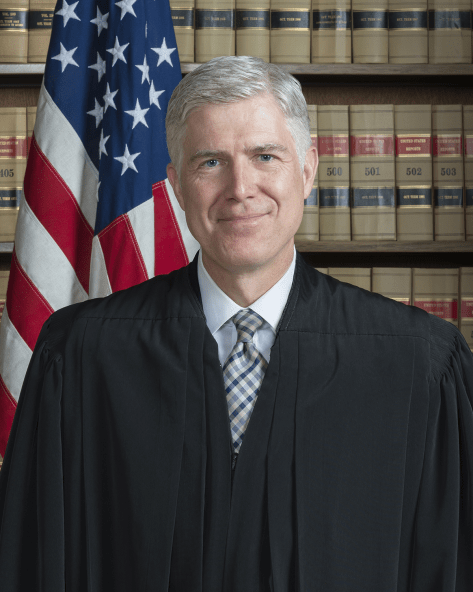
Next up was Justice Gorsuch. I’m just gonna say this now, I think he takes the major questions doctrine, and the nondelegation doctrine pretty damn seriously. He launched into a very polite tirade, which included this…
What would prohibit Congress from just abdicating all responsibility to regulate foreign commerce, for that matter, declare war, to the President?
Sauer responded that he didn’t think they could do that, and Gorsuch literally just responded, “Why not?”
He’s not wrong. That’s kinda Sauer’s argument.
Sauer tried to go back to IEEPA and it’s “limitations” which are kinda a joke. He’s talking about how the president has to declare an emergency first, and shit like that. But the executive branch controls that, so there’s no real guardrails on that shit. The president can just call it an emergency for whatever reason they want, and they’re off to the races. There’s no limits on how much he could tariff, as evidenced by his 100%+ tariffs he hammered on some countries, nor is there a limit to how long the tariffs can be in place, in IEEPA, remember, tariffs aren’t mentioned at all.
So it’s a pretty ridiculous argument from Sauer, which he also made with Justice Sotomayor, who pointed out that there’s nothing really stopping the president from declaring an emergency.
But Gorsuch nipped that shit in the bud. He responded…
I’m not asking about the statute. General. I’m asking for your theory of the Constitution and why the major questions and nondelegation, what bite it would have in that case.
He wants to know if congress has that right to delegate such power at all in any statute. This is a swing for the fences on the nondelegation clause, which basically says Congress can’t delegate it’s constitutional powers at all.
Gorsuch then asked:
You’re saying there’s inherent authority in foreign affairs, all foreign affairs, so regulate commerce, duties, tariffs, and war. It’s inherent authority all the way down, you say. Fine. Congress decides tomorrow, well, we’re tired of this legislating business. We’re just going to hand it all off to the President. What would stop Congress from doing that?
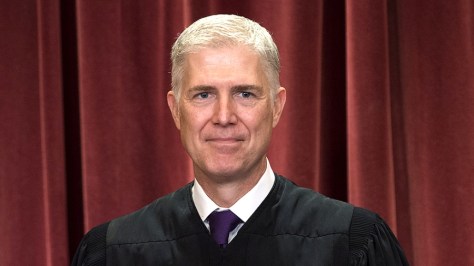
Associate Justice Neil Gorsuch
Counsel Sauer argued that this would be too far. That congress can delegate within certain parameters, they can’t just give it away entirely.
Gorsuch then asked:
Okay. You emphasize that Congress can always take back its powers. You mentioned that a couple of times. But don’t we have a serious retrieval problem here because, once Congress delegates by a bare majority and the President signs it—and, of course, every president will sign a law that gives him more authority—Congress can’t take that back without a super majority. And even—you know, even then, it’s going to be veto-proof. What president’s ever going to give that power back? A pretty rare president. So how should that inform our view of delegations and major questions?
The reason justice Gorsuch argues they’d need a super majority, is because presidents love power. Any attempt to change the law, even if it passed the house and senate, would likely get vetoed by any president who wanted to exploit it. So there would then need a super majority to overcome a presidential veto if congress tried to take back some of IEEPA’s delegated powers.
Gorsuch is playing 3D chess over here.
Sauer conceded this point, but essentially argued it’s not impossible. Especially if the sitting president agrees with the change they’re trying to make, even at the expense of their own power. He cites in 2023 where congress ended the 2020 declaration from Trump that COVID was an emergency, and Biden signed it.
It’s not a horrid example, but it’s not a great one, either. COVID was no longer a pandemic, and if Biden had tried to exercise some huge authority to combat COVID at that point, it would have been political suicide. So no reason not to let that one go, from Biden’s perspective.
Gorsuch snuck in another principle on him when he asked if all tariffs were foreign affairs. I think the heart of this question is to determine if there’s some conflict between a president’s job in foreign affairs versus congress’ job in levying taxes.
Associate Justice Neil Gorsuch
Sauer agreed they largely are, while arguing that there’s a spectrum, so to speak, and that regulatory tariffs are more foreign affairs related, and revenue raising tariffs are more domestic policy, and that was the end of that.
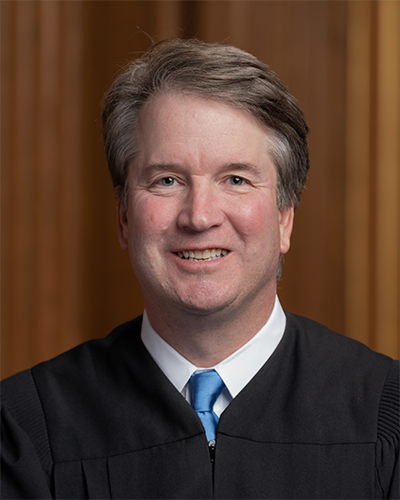
Justice Kavanaugh wanted to know, why haven’t any other previous presidents, since IEEPA was enacted, used it for tariffs.
Counsel Sauer said they reviewed 69 emergencies. (Side note: I think Sauer just had a prop bet with his buddies at the firm to see if he could sneak in saying 69 during oral arguments.) None of them were really the kind of emergency a tariff would solve, in his estimation, as opposed to this trade deficit “emergency,” which seems well-suited for tariffs.
Justice Barrett asked Sauer to elaborate on Gorsuch’s question about getting power back. You see, the 2023 example was a case where COVID was clearly no longer an emergency, so Biden had no reason to continue it.
But in this case, Barrett is saying, if we had a president who was relying on IEEPA like President Trump is, surely you understand congress could never get him to sign a law banning him from using it the way he wants to use it, right?
He largely seemed to not want to argue against this, without conceding, since it doesn’t help him.
Then justice Barrett asked about why Trump needed to attach so many tariffs to so many countries, including many who are our friends like Spain and France.
Associate Justice Amy Coney Barrett
He answered by saying they’re so broad, because the emergency is so broad. He didn’t cite any data to support this, I guess we’re just supposed to take Trump’s word on it.
The Arguments: The Petitioners – Learning Resources Inc. (and other Private Parties)
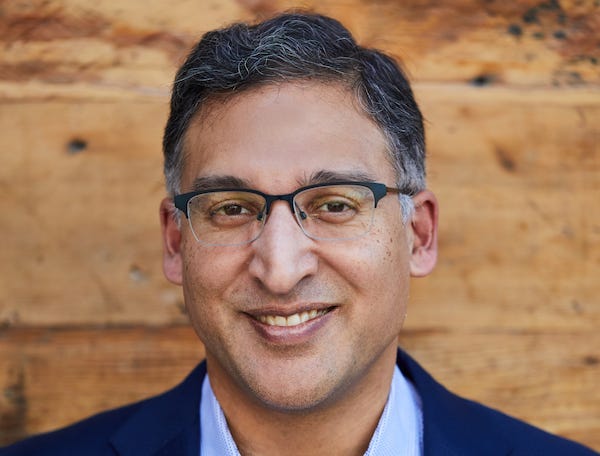
Up next is Counsel Neal Kumar Katyal, who opened with this.
Thank you, Mr. Chief Justice, and may it please the Court: Tariffs are taxes. They take dollars from Americans’ pockets and deposit them in the U.S. Treasury. Our founders gave that taxing power to Congress alone. Yet, here, the President bypassed Congress and imposed one of the largest tax increases in our lifetimes.
Many doctrines explain why this is illegal, like the presumption that Congress speaks clearly when it imposes taxes and duties and the major questions doctrine.
But it comes down to common sense.
It’s simply implausible that in enacting IEEPA Congress handed the President the power to overhaul the entire tariff system and the American economy in the process, allowing him to set and reset tariffs on any and every product from any and every country at any and all times.
And, as Justices Gorsuch and Barrett just said, this is a one-way ratchet. We will never get this power back if the government wins this case. What president wouldn’t veto legislation to rein this power in and pull out the tariff power?
IEEPA is a sanction statute. It’s not a tax statute where Congress gave away the store. Congress knows exactly how to delegate its tariff powers. Every time for 238 years, it’s done so explicitly, always with real limits.
IEEPA looks nothing like those laws. It uses “regulate,” which Congress has used hundreds of times, never once to include tariffs. And it lacks the limits of every other tariff statute. And that is why, even though presidents have used IEEPA to impose economic sanctions thousands of times, no president in IEEPA’s 50-year lifetime has ever tried to impose tariffs.
Neal Kumar Katyal
And the President bypassed statutes that do address tariffs, like Section 122 for large and serious trade deficits, but that imposes a clear guardrail, 15 percent cap, 150-day limit. This is Youngstown at its lowest ebb. If the government wins, another president could declare a climate emergency and impose huge tariffs without fines without floors or ceilings, as Justice Gorsuch said. My friend’s answer?
This administration would declare it a hoax. The next president may not quite say that. This is an open-ended power to junk the tariff laws and is certainly not conveyed by the word “regulate.” I welcome the Court’s questions.
Justice Thomas asked about how embargoes are somehow OK, but tariffs aren’t.
Counsel Katyal advised that tariffs are taxes, they raise revenue. Embargos are a hard stop in trade altogether. Maybe they have similar goals, but very different actions.
Justice Roberts was up next, and asked about the fact that tariffs are foreign facing, and that foreign affairs is the purview of the president, not congress. So should they support Trump’s case here?
Counsel Katyal agreed with most of that, but stated that the constitution never gave the executive the power to raise revenue, even while at war. He then quoted Justice Robert Jackson from a 1952 case, Youngstown Sheet & Tube Company v. Sawyer, where President Truman, in order to fend of a labor union strike he felt would create a national emergency, attempted to seize control of the nation’s steel mills. In a 6-3 loss, Truman was advised to go fuck himself.
In that opinion, Justice Jackson said,
Emergency powers tend to kindle emergencies, so it’s essential the public may know the extent and limitations of the powers that can be asserted and persons affected may be informed from the statute of its rights and duties.
His point being, we can’t just let the president declare an emergency, and then citing that emergency, do whatever the fuck he wants. Otherwise, every president will declare everything an emergency, then do whatever the fuck they want. As an example? Donald J. Trump, and his bullshit “emergency” tariffs.
Justice Kavanaugh wanted to understand if Katyal agreed that if congress had specifically said the president could issue tariffs in IEEPA, that it’s constitutionally permissible.
Associate Justice Brett Kavanaugh
Counsel Katyal agreed, assuming there are limits that are clearly defined.
He didn’t agree that president could just put a 300% tariff on someone and call it an emergency, for fuck’s sake.
He pointed out that Trump imposed a 39% tariff on Switzerland, and not only are they an ally, they actually buy more goods from us than we do from them. So how the fuck does that make sense as a trade emergency?
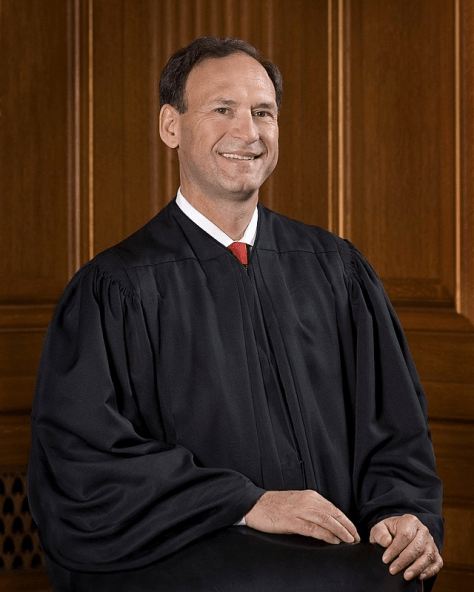
Justice Alito, seeming skeptical of Katyal’s argument asked, “What if Congress told the president to regulate parks. A park is particularly busy. So could the president have them charge an admission fee to reduce visitor counts?
He said, if it raises a fee, then no. Congress needs to explicitly give him that power.
Alito then went on to show the power of logic has left him by asking an inane question. He asked, what if they’re not revenue raising tariffs? His example was, a tariff is enacted but not imposed until 90 days if the country doesn’t comply. So if they do, no tariff is collected.
How the fuck does that work? He’s asking if it’s OK as long as no one ever violates it? That’s fucking stupid. I hate to be disrespectful to Alito, I’ve been there where I couldn’t come up with a great example, but still, it’s a pretty nonsensical question.
Associate Justice Samuel Alito
Counsel Katyal pointed out that Trump’s brief, and statements publicly suggest it’d raise 4 trillion smackaroos. I’d call that revenue.
He went on to point out, that if the president is saying a trade imbalance is an emergency, then he can enforce quotas, which would be more precise than tariffs.
So I know you were thinking I was overreaching by saying Alito was getting inane in his arguments, but folks, he wasn’t done. He then asked this:
You say that these executive orders do not address an unusual and extraordinary threat. I understand that argument. Suppose that the facts were that there was an imminent threat of war, not a declared war but an imminent threat of war with a very powerful enemy whose economy was heavily dependent on U.S. trade. Could a president under this provision impose a tariff as a way of trying to stave off that war, or would you say, no, the president lacks that power under this provision?
What the fuck is he even talking about? How does this scenario make any sense? For the love of God, Alito is losing it. I don’t know if this is just him really trying to support Trump, or if he’s losing his marbles, but Alito is compromised, man.
How the fuck could it be that an enemy of the US is about to go to war with us, but they sell goods to us, and so we impose a tariff against them, and that somehow gets them to like us more and not start a war? For fuck’s sake, if this hypothetical were true, an embargo would be the only fucking lever you’d pull. This is insane, from Alito.
Katyal again pointed out that the things IEEPA specifically gives him the authority to do aren’t raising revenue, where tariffs do.
He then hit Alito with a compelling and accurate response, IMO. He said:
If you ruled for us and the president says, I need this power, he could go across the street to Congress tomorrow and get it by a simple majority through reconciliation. But, if you vote for them, this power, as Justice Gorsuch said, as Justice Barrett said, is going to be stuck with us forever.
Neal Kumar Katyal
He’s absolutely right here. Again, the president is unlikely to sign a statute congress passes, which takes power away he wants to exploit from him. So they’d need a veto-proof majority. Therefore, getting congress to give him that power explicitly, is the more logical path.
In a response to a question from Justice Thomas who wanted to know if the president could impose tariffs as a means of getting a country to free an American hostage.
Katyal said, “The President is seeking the power to set aside all of our trade treaties unilaterally under the word “regulate.” I just don’t think it can bear that weight.”
Justice Alito went on to ask about other statutes that authorize tariffs, seemingly addressing the constitutional issue. But Katyal responded:
That’s something that can be decided by other courts at other times. As these folks come to the Court, as the government comes to the Court today, they’re citing one statute and one statute only, IEEPA, and we submit to you it doesn’t come even close to authorizing these worldwide tariffs that they’re seeking today.
This suggests he’s not really raising the constitutional nondelegation issue at all.
In a particularly feisty exchange with Justice Kavanaugh about previous times presidents imposed tariffs, Katyal points out that in all those other instances, the statutes which gave the president the authority to impose tariffs, there were clearly outlined limitations. Essentially, that congress would never give the president the limitless power to tariff, and if they did, surely they’d say so. So the lack of limits suggest, they weren’t intending for the president to be able to do that, because they’re always worried about that fucker going crazy.
Associate Justice Brett Kavanaugh
Justice Barrett asked if he agreed, since licensing is outlined in IEEPA, could the president impost a licensing fee?
Counsel Katyal said:
Not a fee. So I should have said this earlier, but license is different from a licensing fee. IEEPA and TWEA authorize licenses, not license fees. And no president has ever charged, to my knowledge, fees under those two statutes for the licenses. So fee is impermissible. License is okay.
He then again specified that if there was a licensing fee to cover costs of the licensing, that might be OK, because it’s not revenue raising. But Trump pointed out he expects the tariffs to raise 4 trillion dollars.
Justice Barrett asked about refunds, if Katyal were to win, of all the tariffs already collected.
When this case started, Katyal’s side asked for an injunction on the tariffs, because if Katyal’s side wins, refunding those tariffs could be quite the fucking mess.
But the government responded like this.
They then said, that refunds would be easy-peasy if they lose, so no reason to put a pause on them.
But now that they’re here in court, they’re acting like the refunds would be a huge burden, and therefore that’s why they should win. So that’s surely hypocritical.
The Arguments: The Petitioners (The States)
Last up is Solicitor General for Oregon, Benjamin Gutman who simply opened by saying IEEPA licenses never were fees. It was just a way to carve an exemptions for humanitarian reasons, or something like that. Clearly not revenue raising.
So an argument you’ve heard from the president and his peeps, was also put forward by Justice Kavanaugh. He asked, how the fuck could it make sense that the president could launch an embargo, which shuts down trade entirely, but a 1% tariff is somehow a problem. Sure one is a more major act than the other.
Deputy Attorney General of Oregon, Benjamin Gutman
I’d argue that tariffs are taxes on the American people, embargos just stop the trade altogether. But it doesn’t inherently cost the people any money.
But Gutman just argued that there’s never been another time where “regulate” on it’s own, was used to justify tariffs. All other instances, they used language to suggest revenue-raising efforts were allowed.
He went on to clarify to Justices Kavanaugh, Kagan, and Jackson, who all asked the same question in a roundabout way, that the reason they are different, is that with tariffs, there’s something in it for the government. For embargos, there isn’t. Sure, maybe a 1% tariff is less impactful than an embargo, but still, the government doesn’t benefit from an embargo, and the president doesn’t now have a new source of revenue to potentially exploit.
Justice Jackson, seemingly arguing for SG Gutman instead of questioning him responded:
And it would make perfect sense, I think, in a time of emergency for many of the reasons that General Sauer pointed out that Congress would want the President to have the kind of authority that is imposed when you are embargoing things, when you are stopping the trade, when you are saying, you know, for emergency reasons we’re not letting any of this product come in. I mean, sure, that’s a big deal, but the nature of it makes sense in terms of an emergency. I think what you’re saying is that the idea that the government would use its authority to be raising revenues in this situation is a different kind of power.
Associate Justice Ketanji Brown Jackson
Gutman agreed.
Justice Kavanaugh, lacking imagination, again argued that it seems nonsensical that a president could do an embargo, but not a small tariff.
The problem with this argument, and the reason I say he lacks imagination, is that the law doesn’t just allow embargos. It allows licenses and quotas, too. So Kavanaugh is ignoring the other tools that are there, to make this ridiculous false dichotomy argument that it’s the nuclear option or nothing, when it absolutely isn’t.
Counsel Gutman agreed with me.
Justice Sotomayor took the gloves off and attacked the president’s pettiness by pointing out the 10% he put on Canada because it hurt his feelings that it ran an ad about tariffs, and a 40% tax on Brazil because they prosecuted a friend of his. So this is why those powers must be restrained.
The Arguments: Respondent’s Rebuttal
Counsel Sauer had one final chance to rebut the other two, and so he went on a long diatribe, talking about how the tariffs did bring some countries to the negotiating table, and therefore they achieved the goals of resolving the emergency Trump declared under IEEPA.
The problem with this, is again, it lacks imagination. Trump didn’t try an embargo, but I’m sure that would have worked as well. Trump didn’t try quotas, but that could have also been effective. Like Kavanaugh, he made a false dichotomy argument, as if somehow tariffs were the only effective option.
The Opinion of the Court
Alrighty, place your bets, folks.
And the winner is…drumroll…Learning Resources Inc. et al., thanks to Justices Roberts, Kagan, Sotomayor, Barrett, Gorsuch, and Jackson.
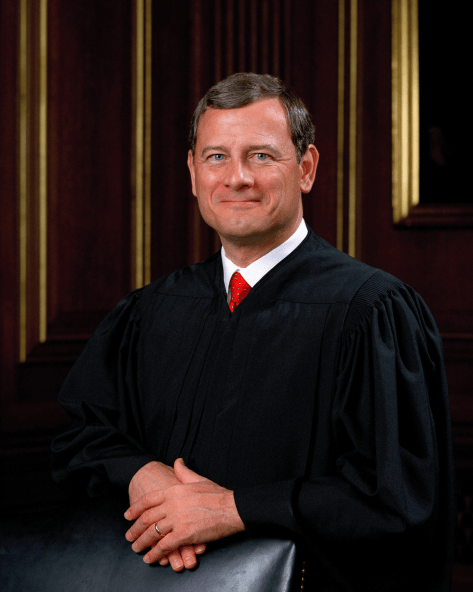
So listen, there are no less than six fucking opinions on this ruling, and I’m not going to cover all of them entirely, but the one that matters is from the chief, himself.
He wrote:
Based on two words separated by 16 others in Section 1702(a)(1)(B) of IEEPA—“regulate” and “importation”—the President asserts the independent power to impose tariffs on imports from any country, of any product, at any rate, for any amount of time. Those words cannot bear such weight.
Chief Justice John Roberts
He argues that the tariffs Trump imposed were so limitless, that clearly a tacit reference to regulate imports couldn’t have allowed for something so impactful, especially during peacetime.
He continued that SCOTUS rarely allows the president to exercise power that isn’t explicitly and clearly granted to him by statute. He also reiterates Katyal’s argument that when congress does give such powers to the president, it does so with limits and guidelines—certainly not just saying the executive can regulate imports, and nothing else.
He then wrote:
Against this backdrop of clear and limited delegations, the Government reads IEEPA to give the President power to unilaterally impose unbounded tariffs.
On this reading, moreover, the President is unconstrained by the significant procedural limitations in other tariff statutes and free to issue a dizzying array of modifications at will. All it takes to unlock that extraordinary power is a Presidential declaration of emergency, which the Government asserts is unreviewable. And the only way of restraining the exercise of that power is a veto-proof majority in Congress.
That view, if credited, would represent a transformative expansion of the President’s authority over tariff policy, and indeed—as demonstrated by the exercise of that authority in this case—over the broader economy as well.
It would replace the longstanding executive-legislative collaboration over trade policy with unchecked Presidential policymaking. Congress seldom effects such sea changes through “vague language.”
Justice Roberts also cited that there was no other time IEEPA was used to impose tariffs, as was discussed at length during oral arguments, and pointed to other statutes that had been used by presidents to impose tariffs. I believe he was pointing out that other statutes have limits, guardrails, etc., which is the likely reason Trump didn’t use them—he wants the power to change them on whims.
He also argued that the sheer magnitude of what Trump had done, should give the courts pause. They should really consider whether congress clearly meant to infer such power. Since it’s not even mentioned IEEPA—safe to say they didn’t.
2025-2026 Supreme Court of the United States
He then addressed the “emergencies beget emergencies” concern, with which he agreed.
Trump’s side tried to argue that in times of emergency, the president needs broad sweeping powers to act. Instead, Justice Roberts suggested that in times of emergency, when the president is executing emergency powers, the courts should be increasingly skeptical, and require clear, inarguable authority powers were granted, not a single word, like “regulate,” that could just as easily be argued didn’t mean what the president says it means, such as in this case.
He then said, in a shot across the bow of Alito, Thomas, and Kavanaugh, who usually side with the major questions doctrine, but carved out an exception here:
There is no major questions exception to the major questions doctrine.
The dissent’s argument was that because the constitution gives the president dominion over foreign affairs, and tariffs are arguably foreign affairs, that somehow this means the major questions doctrine wouldn’t apply.
However, tariffs are paid for by American’s, no matter what Trump’s team tries to argue. Imported goods show up in America, and tariffs are paid for by the American companies who bought them, and then that expense is baked into the price that American consumers pay for them. So while there’s a foreign affairs component to it, the goal of tariffs isn’t to prevent people from exporting to the US, it’s to get Americans to stop buying imports, and that is not a foreign affairs issue, that’s a “government picking winners and losers in a free market” issue.
In his concurring, but separate opinion, Neil Gorsuch wrote this, and I think it’s so good, I’m going to post it without edit.
Associate Justice Neil Gorsuch
For those who think it important for the Nation to impose more tariffs, I understand that today’s decision will be disappointing.
All I can offer them is that most major decisions affecting the rights and responsibilities of the American people (including the duty to pay taxes and tariffs) are funneled through the legislative process for a reason.
Yes, legislating can be hard and take time. And, yes, it can be tempting to bypass Congress when some pressing problem arises. But the deliberative nature of the legislative process was the whole point of its design.
Through that process, the Nation can tap the combined wisdom of the people’s elected representatives, not just that of one faction or man. There, deliberation tempers impulse, and compromise hammers disagreements into workable solutions.
And because laws must earn such broad support to survive the legislative process, they tend to endure, allowing ordinary people to plan their lives in ways they cannot when the rules shift from day to day.
In all, the legislative process helps ensure each of us has a stake in the laws that govern us and in the Nation’s future. For some today, the weight of those virtues is apparent. For others, it may not seem so obvious.
But if history is any guide, the tables will turn and the day will come when those disappointed by today’s result will appreciate the legislative process for the bulwark of liberty it is.
On a recent episode of Stossel, Neil Sroka; the communications director for Democracy for America came on the show. He is an ardent supporter of Bernie Sanders, and his ideals of democratic socialism.
Here’s a transcript of a portion I’d like to discuss. I’m not going to type out the entire interview, but since this was the first real question, there was indeed nothing preceding it that would leave you missing any context.
John Stossel – Fox Business Network
Stossel: Now socialism generally means that the government owns the means of production. Do you want that?
Sroka: Well, I think there is [sic] some antiquated views about what socialism is. I don’t think anyone’s calling for, you know, state ownership of the gas station down the street. But what we are saying is, is [sic] that the current system that we have right now isn’t working. Uh, you know, when over 40 million Americans are still living in poverty at the same time that, you know, a millionaire and billionaire class is trying to essentially own all political discourse in this country, that [sic] that’s problematic. And that’s what we have to work together to dismantle.
John did a pretty good job of debating the issues with Neil, I don’t need to belabor those further here.
But one thing that is often repeated that wasn’t addressed in the interview, is a claim by many on the left (and the right for that matter); the notion that whatever “it” is in America, “it” somehow isn’t working or is broken.
The United States of America is the single most powerful nation in the world—by a wide margin. Not just in military force, but in economic force.
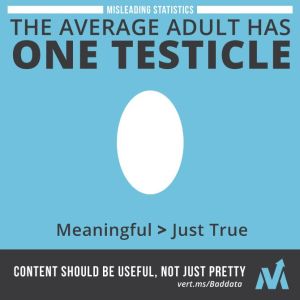
Misleading Statistics
Neil argued that there are over 40 million people (It’s 45 million, in fact) under poverty in America, but that number is a bit misleading.
Neil isn’t ignorant when he uses that number, it’s such a large number, it sounds horrible—giving it quite the shocking impact.
While I feel for such people (I am almost one of them, so I really do feel for them), they are at the bottom 15%, and aren’t even close to the majority. Poverty is always a problem for people, and I don’t deny that. But America doesn’t have a poverty problem, I’d argue that the large majority of people under poverty have a personal problem—they’re not doing what is needed to get themselves out of poverty.
Still not convinced? Think about this. Imagine a random seven people you might meet on any given day. Then consider whether you think at least one of them, on average, is not really putting forth the kind of effort needed to be successful enough in life to be above the poverty level. I genuinely don’t feel like that’s a stretch by any measure.
In 2007, Obama didn’t start with a lot of money when he initially ran for president either. Hillary was the one with all the money behind her at the onset of that election cycle.
Presidential candidate Sen. Bernie Sanders, I-Vt.
Socialists like Sanders like to create a cause-and-effect argument between money spent, and elections won, as if the money came first and drove the election results.
But it’s also entirely possible that instead; the money follows the person with the best ideas, and is therefore the effect versus the cause, which seems to be the case with Obama versus Clinton in 2007; assuming we can agree Obama is more charismatic and interesting than Hillary Clinton, and I think we can.
Stating that the system is broken and doesn’t work, appeals to people who are driven to have more, by exploiting the human tendency for confirmation bias. Americans know subconsciously that America is a strong and powerful economic nation. But many of these socialist supporters are unhappy with their own lives because of whatever their shortcomings might be, and it hurts to think of yourself as worse than average in any way.
So when someone points out that the system is broken, it gives such people a way to argue that their own inadequacies aren’t their problem after all; society, corporations, or rich people are actually to blame—just ask that guy.
So unless those of you in that $30k bracket or higher, who are behind socialists like Bernie, are ready to give up 80-90% of your salary to the rest of the world as many socialists suggest the richest 1% in American be forced to give to the rest of us Americans, you are indeed, quite the hypocrite—congratulations and #FeelTheBern.
Forget all of that though, because there is a much deeper issue here. This Colorado legal-pot situation is not as libertarian-friendly as one might think.
Marijuana Harvest
Colorado was smart enough to embrace the science that shows that marijuana is a fairly benign drug that is often less risky in its consumption than alcohol. They were also non-hypocritical enough to know that allowing alcohol while not allowing marijuana made little sense—kudos to them on both counts. But that’s where the liberty segment of their new pot-friendly legislation ends.
Sadly, politicians love new revenue streams more than I love my mom. Because the legislators in Colorado decided that instead of just giving people more freedom to choose what they put in their body, they would give them a way to do it prosecution-free, if and only if, they paid an additional tax over and above the normal sales tax, which exceeds 25% when all of them are added together.
Knowing this would generate a significant amount of tax revenue was certainly part of the equation, if not the impetus for legalization, when the one and only reason should have been that in a free country (or state in this case), it should have never been illegal in the first place.
What Colorado is essentially doing is no different from the sugary drink tax in Berkeley, California, cigarette taxes across the country, or any other tax on a product over and above the standard sales tax. They are using the tax system to encourage behavior like a backwards carrot on a stick. No rights are being protected, nor is any governmental service being offered.
Berkeley Soda Tax
As someone who supports a consumption tax system like the FairTax.org proposal, one might think that I and other libertarians would support a marijuana tax, but it’s very anti-libertarian on multiple fronts.
When sin taxes such as these are passed, it assumes that government has an interest in what you do to yourself and should penalize you for what they have determined is bad behavior. But government’s duty is to protect you from others who would harm you, not from yourself. They have no right to tell you how to live your life or be the arbiter of what is good behavior. Are you comfortable letting them tell you what shows you should watch or what kind of mate you should choose?
The reason to support a consumption tax is that it’s effectively a fee for services rendered. If government builds infrastructure, and enforces contracts between enterprises which allow all of these products to freely come to market, it’s a fair way to charge people for that government service. But what service is Colorado providing for the marijuana tax?
I’ll set aside my argument that there shouldn’t be public schools in the first place, but why exactly is a pot smoker disproportionately responsible for educating Colorado children or paying for other non pot-related issues?
If we love liberty, we should never support a tax that cannot be directly attributed to the item being taxed as a fee for a service government is providing. With government, we are often forced to accept compromise to appease the statist-minded voters and politicians, and I’m sure Colorado’s marijuana tax is no different, but we are most certainly not to a point where we can call Colorado’s legal marijuana system a victory for libertarianism.
It’s no more of a victory than if a football team were losing 70-0 and in the closing seconds scored a field goal to avoid getting blown out. Sure it feels good to put points on the board, but you still lost in the end.
Read any want ad section and you will notice one thing is abundantly clear. A predominance of the jobs available in the United States are in the field of sales & marketing. This phenomenon has always troubled me.
A salesperson is selling a product, but someone has to produce that product, a process that is surely more labor intensive than selling it. So how can it be that we always need more sales people? Because the production jobs are going away.
I’ll briefly point out that many sales positions are commissioned, so companies often over-hire because they don’t really have to pay salespeople unless they do well. They’re effectively throwing ten darts at once in hopes of hitting a bull’s-eye instead of putting the effort in to being a better dart thrower. It’s both lazy and ineffective. You often damage your brand more than improving your actual sales.
But while advertising is important, it should always play second fiddle to production, let me give an example.
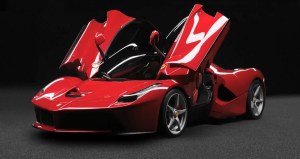
If I were to offer you the car of your choice, cost-no-object, what would it be? All over the world, many of you would choose a Ferrari. Yet, have any of you ever seen a Ferrari television or magazine ad? Likely not.
2014 LaFerrari from Ferrari
Yet, millions of you would buy one tomorrow if you could afford it, despite never being faced with a single advertisement from them. Aside from their racing efforts and emails, Ferrari doesn’t really do much marketing. People wear Ferrari-logoed clothing and put up Ferrari posters, essentially marketing Ferrari for free. This is genius! You pay Ferrari for the privilege of marketing their stuff, instead of them paying someone to market it for them.
So how is it possible that one of the most desired and recognized objects on the planet does not need to be sold? Because it sells itself, just look at it!
A beautiful design, flawless engineering, a sound that is mechanically orgasmic, and a palpable passion ooze from these machines. This quick video, one of their few actual marketing efforts which will never air on TV, but has been shared (for free) at the time of this posting 5 million times, should illustrate my point.
The lesson here is pretty clear. Too often you see business owners thinking that their issues stem from poor salesmanship instead of poor craftsmanship.
There are certainly bad salespeople, and some turnover should be expected, but marketing in general seems to be where companies want to spend their money instead of research, development, and production. I see (and occasionally have worked for) companies who have incredibly outdated equipment, inefficient internal processes, and products of inferior quality that could be easily updated, but they’ve emptied their bank account on advertising instead.
We’ve all heard the story of The Goose that laid the Golden Egg, this is exactly what many companies are doing. Profit-margin is the holy grail these folks are after, but this is how they kill the goose.
A company with a great reputation will hunt for a more cheaply made product, often in China, and then hope through marketing they can continue holding on to their market share. But once you gut that goose, and people find out you used a respected name to market an inferior product; profit margins may remain high, but overall profits will start to plummet as people take their business elsewhere.
For instance, let’s look at Irwin tools. You may have never heard of Irwin, but you’ve certainly heard of Vise-Grips, and they’re the makers of them. Since 1921, they have been making these pliers that just about every person has in their “tool drawer” at home. Irwin Vise Grips have been a superior quality hand tool for nearly a century, but no more. Irwin moved them to China in recent years as they hunt for greater profit margin.
As a libertarian, I certainly want companies to have the freedom to build wherever they wish to, but that doesn’t mean I don’t think it’s stupid.
These companies are hoping most people won’t notice the loss in quality and continue paying a premium price, but consumers who use products are pretty good at noticing when a product’s quality has been diminished, and it’s insulting. Believe me, I notice the difference—the new Vise-Grips are clearly inferior.
So these days, I don’t mind buying a cheap $5 pair from the local Harbor Freight, because I know they’re probably the same plier at this point, and I’m not paying extra for the Irwin name if I’m not going to get the legendary Irwin quality.
They’re now just another cheap Chinese version no different from all the other copies out there, there’s a good chance they all come from the same factory—China doesn’t exactly believe in intellectual property. We are talking about a country that brazenly opened up an Apple Store that wasn’t actually affiliated with Apple in any way. So it’s not unlikely that the factory Irwin commissioned to make their pliers isn’t selling the exact same pliers to others, literally giving Irwin’s design away to someone Irwin didn’t sell it to.
I want to point out that there can be no doubt, with labor unions, overbearing regulations, the highest corporate tax rate on Earth, and the ever-increasing cost of living in the United States thanks to a poor economy, the costs of building in the U.S.A. are ruining our chances of keeping these jobs. Irwin is not completely to blame here.
But if the American people demanded our government ease regulations, get rid of the corporate tax rate (they can’t vote, so why should they be taxed?), and make the concept of manufacturing in the United States more viable again, maybe the want ads will be looking for more than just the next Ron Popeil, and real jobs and quality products will again be a part of the American economy.
Government, in order to do the people’s business, must pay for itself. Currently, we achieve this by a myriad of taxes such as:
Income taxes, which I would argue are a penalty for success.
Sin taxes (or social engineering taxes) on things like alcohol and tobacco, that are over and above normal sales tax, which are designed to deincentivize people to buy these products because somehow, that’s government’s business?
Estate taxes, because now that you’re dead, you don’t need that money, and you’re family certainly doesn’t deserve it more than government.
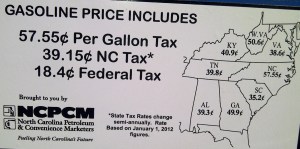
Fuel taxes like those on gasoline which also go over and above normal sales, which are designed to drive certain markets in favor of others.
Gas Pump Tax Label
Property taxes, because just buying the property shouldn’t make it yours to keep.
This list is by no means complete.
In a previous post, I wrote that I supported a consumption tax like that proposed at Fairtax.org. Something that is simple and easy to understand for people and corporations alike, then get rid of all this other nonsense. After that, use fees as much as possible, such as when you buy a driver’s license or plates to shift government income to fees for what they do instead of taxing everyone for something not everyone benefits from. But why do I believe this is important?
Because government has its tentacles in everything, it can often hide disturbing practices in an over-complicated tax code and regulatory structure.
For instance; subsidies for an industry that can clearly survive on its own which are conveniently hidden in tax write-offs. Or a federal law that serves one locality greater than another. Why should people in Florida pay for a bridge in California for instance?
Between the taxes one is required to pay, the write-offs one needs to know about in order to keep as much as possible of what they’ve earned, and the regulations they must abide by, this creates expenses that destroy businesses, stress households, and wreak havoc on our economy.
As a former small business owner, I can tell you that the idea of borrowing/investing nearly $100k was infinitely scary. But at the early stages of 2007, the economy seemed quite strong, and I decided to go for it. Bad luck for me, the economy collapsed within months after I started and long before I was stable enough to weather such a tough downturn. Sadly, my business failed within 2-1/2 years as a result.
So what makes a business fail? We can debate about certain principles, but the one inarguable truth is that their income was lower than their expenses, and this was my experience.
The problem with our tax structure isn’t just the taxes themselves, it’s the complexity with which it is administered that add additional costs over and above the taxes themselves. If I didn’t have to file for licenses and worry about massive regulatory compliance issues, I could have saved myself a lawyer’s fee. If I didn’t have a myriad of tax codes and write-offs to deal with, maybe I don’t need to hire an accountant.
On a personal level, you and I pay taxes, but then at the end of the year, many of us are forced to hire an accountant for this as well, and this is in essence, a tax on a tax.
These are thousands of dollars I’m talking about, and I was the sole employee of my tiny corporation.
Would it had saved me? Maybe not. But I was close to surviving, and coupled with a lower tax burden, there’s a good chance it very well could have.
A Fortune 500 sized company however spends millions on lawyers and accountants for compliance and tax purposes. This is money that could be used to hire other people and produce more products at a lower cost. While I’m not insulting tax accountants and lawyers as if they aren’t jobs in their own right, both are noble professions, but the fact is they don’t produce anything for the business.
If my company makes widgets, the lawyers and tax accountants do nothing to increase my widget output nor even assist with customer service or sales of them. They simply make sure I understand an overcomplicated legal structure and tax code that if done properly by government, I would understand without their help.
As always, I understand that the intentions from Democrats and Republicans alike are often altruistic when they pass laws, but laws were supposed to be about one thing; protecting rights. Not social engineering or market influence.
I should generally be entrusted to understand that throughout the course of doing business, I am or am not infringing on someone’s rights without needing a lawyer and an accountant to explain it to me.
Can we really call ourselves a free nation with 80,000 pages of laws on the federal books? I don’t know about you, but the thought of it doesn’t make me feel very free. I suspect I’m a criminal already and don’t even know it.
In matters of choice, there are two basic options: those made by logical thought versus those made from emotion. As I read about those who attack libertarianism, I can’t help but note that their opinions often eschew logical thought and dive head first down the hole of hypocrisy and illogical assumptions. So with that in mind, let’s explore the hypocritical logic of those who think libertarians are “crazy.” I may use some tongue-in-cheek humor and hyperbole here, but there is a mountain of truth to all of it, the facts are the facts.
The media constantly push to infringe our right to bear arms, yet they’d be apoplectic if we attempted to infringe on their freedom-of-the-press rights. They’re welcome to show me where the Constitution indicates one right as more negotiable than another, but I’ve actually read it, it’s not there.
The left staunchly support a woman’s right-to-choose regarding something as important as aborting what is arguably a life. Yet they think choosing an incandescent light bulb or a toilet that can flush more than 1.6 gallons of water is a choice people cannot be trusted with. I am pro-choice on all accounts, but certainly think the choice to end a potential life is a decision that is infinitely more important than my choice of household appliances.
The left are constantly fighting against hatred and bigotry stating we cannot judge people by their race, religion, sex, etc. They couldn’t be more right—denying the rights of a specific group of people en masse is immoral. Yet they have no qualms with infringing on the rights of those who earn six-figures or more. Apparently, the rich are the new “separate-but-equals”? This should come as no surprise since Democrats have a history of such rights violations with their pointy white hats in tow. Only four Democrats voted to abolish slavery, after all. Hats off to Democrats though, they’ve done a phenomenal job of pinning their own documented history of bigotry on Republicans. While we’re at it, women can thank Republicans for their rights as well.
Democrats will argue we need to improve education in order to win votes—the youth are our future, right? Yet they attack private schools which generally outperform public schools. Then they champion teacher’s unions which have policies like tenure; a system by which teachers remain employed based on their time on the job while ignoring their actual job-performance. I’m curious what would happen if you asked one of them regarding their own children, “If you had the choice of a teacher with documented positive results versus a disinterested teacher just waiting it out until retirement, which one would you choose?” How do you think they’d respond then?
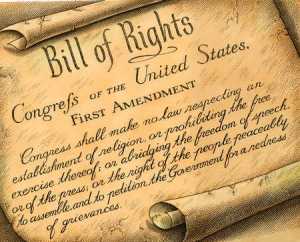
Social conservatives claim to be the party of liberty, limited government, and Constitutionality, yet the liberty of homosexuals or those who wish to engage in paid sexual activity where there is no victim, just two consenting adults…well…we can’t give them liberty, they’re sinners. These “social conservatives” should just ask that we change the first amendment from “establishment of religion” to “establishment of religion unless it’s the King James Bible” and get it over with. As long as I’m potentially forbidden to buy liquor on Sundays in this great nation, I do not live in a country free from religious oppression. It is free-ish at best.
The 1st Amendment
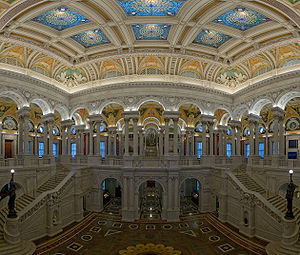
Both sides of the aisle claim to be against government waste, yet have you ever seen a government building? They’re often ornate structures with massively expensive architecture. If they were serious about reducing government waste, city halls would be as sparse as pole barns, if they even existed at all. They could meet at private meeting halls for much less money. I look at the White House, Congress, and the Supreme Court buildings, and all I can think about is how much of the cost of those monoliths affects my ability to pay my electric bill each month. While I’m at it, no American branch of government should be permitted to buy statues, paintings, or other decorative items either. How exactly do they serve the people’s interest?
Library of Congress
The left tout small business as the people they are vehemently in support of. Yet somehow, when a small business owner gets it right and becomes a large corporation, they have suddenly become evil and should be taxed to hell and back? At what point exactly did they become evil? Was it the part where they had a good idea, wanted control of their own destiny, or just the part where they made a profit?
If we disagree with Barack Obama or Hillary Clinton, it’s because we’re racist and/or sexist. If we support Thomas Sowell or Ayn Rand, we’re still somehow racist and/or sexist.
The left often champion socialist policies like Social Security or single-payer healthcare, ignoring the history which shows the deplorable living conditions and human rights violations of Cuba, North Korea, China, Nazi Germany, or the former Russia, all shining examples of what socialism is when taken to its ultimate conclusion. If the left could supply one example of a socialist nation whose people live in conditions that are remotely as good as those in America, I’ll be willing to talk about the logic of social engineering. They argue that there is a good balance between socialism and capitalism to be met. I like to retort, “then there must be a good balance between a healthy diet and an arsenic diet as well.” They’re usually not amused.
A man solely with a law degree, two years of senatorial experience, and no private sector work experience was eminently qualified to govern the United States. Two former governors with a plethora of executive experience and both highly successful business owners as well (Mitt Romney and Gary Johnson) somehow were not.
The left complained about The Patriot Act, drone strikes, and Guantanamo Bay under Bush. Obama has either carried these policies on, or even grown them, but it’s now magically the right thing to do.
When Obama lies about keeping our health care plans, Benghazi, etc., it’s OK because he knows what’s best for us and he meant well. When Bush received what appeared to be bad intelligence in hindsight, and then acted earnestly on that bad info to protect American interests, he should have been impeached and imprisoned. There was never a shred of evidence that Bush knew the info was wrong, making it an error, not a lie. And there is evidence the weapons were simply relocated out of Iraq prior to the invasion. I am neither accepting or rejecting this theory without more info, and I’m not condoning the Iraq war either, but it leaves reasonable doubt about whether Bush was inaccurate on Iraq’s WMD’s.
While I could go on forever it seems, let me end it here: Princeton University defines classical liberalism as “a philosophy committed to the ideal of limited government and liberty of individuals including freedom of religion, speech, press, assembly, and free markets. So what has transpired here? There is a stigma attached to socialism and communism. As such, leftists who are fully aware they are promoting socialist policies have decided somehow to call it liberalism, something big government and non-free markets certainly are not. If socialism really works, let it stand on its merits, don’t lie and call it something it is not. I intend to never to call them liberals again. But to be clear, I won’t call myself one either just to avoid the confusion. That word is dead to me.
The word liberty is rooted in the word *libertarian—makes sense, right? That’s the cause for which we always fight. But believe it or not, while it may often not seem like it, Democrats and Republicans fight for liberty also.
For instance, Democrats often push for it on social issues such as gay rights and abortion, but they push just as rigorously to deny fiscal liberties to those achieving the American dream of unfettered wealth.
Republicans strive for liberty on financial issues such as lower taxation and corporate rights, but they attempt to deny social rights to people via legislation such as the Defense of Marriage Act or The War On Drugs.
Libertarians like myself of course, take liberty to the brink of anarchy and fight for both. We generally believe government’s role should be restricted to protecting our rights to life, liberty, and property as enumerated in the Constitution.
As we libertarians watch Republicans and Democrats squabble over which liberties are important and which liberties are expendable, we wonder why those parties don’t agree that liberty for all is best. It’s in our pledge of allegiance after all.
To be fair to the GOP, there is a new sect of libertarian-leaning Republicans like Rand Paul and Justin Amash to whom this rarely applies, and their rise in popularity is encouraging. I cannot recall a libertarian-leaning democrat, or I’d mention them too.
Congressman Justin Amash (R)
In matters of issues like assisted suicide, recreational drugs, prostitution, gay marriage, and gambling for instance, these acts rarely involve a party whose rights were violated. But all of these practices are still often considered socially unacceptable despite the fact that if you’re not an active participant, they don’t affect you in the slightest.
Legislators tend to look at a behavior they don’t agree with and determine it is their civic duty to legislate it away in order to elevate our collective moral compass. Their proposed legislation being a mirror image of how they would choose to live their own lives. But when it comes to fighting for liberty for those who don’t share their views, they often can’t find the will to do so. Instead, they insist on making futile attempts to socially engineer our great nation.
I say “futile” because anyone who has ever been told they aren’t allowed to do something they really want to do and wouldn’t harm anyone doing it, knows that the simple act of telling them “no,” often incites them to do so even more—making a special effort to not get caught. So these laws don’t prevent such acts, they merely add a new element of danger for those who will likely do them anyway.
I want liberty for everyone, including the people I have little to no respect for. If you’re a member of the Ku Klux Klan or the Black Panthers and want to open a white/black only business establishment; go for it! I think your bigotry and hatred make you a vile human being, but I’ll still fight for your rights to be the biggest piece of trash you want to be and let the market sort it out.
Black Panthers
Want to go on a crack bender until you fall off a twenty story building because you thought you could fly? I think you’re an idiot, but go for it! It’s your life, live it or end it how you see fit. Just be sure not to land on someone on your way down, thus violating their right to life.
I want to fling poo like a zoo monkey at Westboro Baptist Church members every time I think about those hateful bastards. As I’m writing this, I wish them all the worst possible outcome in life. But if I were a legislator tomorrow, I wouldn’t dream of putting my pen to paper to draft a bill denying their right to spew their massively bigoted and ignorant rhetoric.
Westboro Baptist Church Member
So why would I support these people’s rights to be this way?
It’s important for us level-headed people to know such demons exist. We can choose to either encourage them to change, or marginalize them and ignore them. But believe it or not, I feel they do serve a purpose. It is hard to explain “good” when you don’t have a “bad” standard-bearer to compare “good” to.
It is human nature to want the freedom to do the things you want to do and therefore fight for the liberty of people like you—it’s why all three political camps do so. But the minute you try to quash the liberty of someone you don’t agree with, you have stumbled your way into the land of legislative hypocrisy. It takes a much stronger conviction to fight for the rights of those you despise, but it’s the only way to legislate without being a hypocrite.
So my request to Democrats and the non-libertarian Republicans is simple. Give me one good reason your liberty is important but the liberty of others who don’t share your ideology isn’t. If the answer to this question renders you stumbling for an answer that makes any logical sense, welcome to the libertarian camp—we’re happy to have you. Now stop writing so many new laws; you’ve done enough damage already.
*Libertarian with a capital L represents the Libertarian party. But with a small L, it represents people who just champion liberty regardless of party affiliations. For instance, Gary Johnson is a Libertarian and a libertarian, whereas Rand Paul is just a libertarian.
log·i·cal: capable of reasoning or of using reason in an orderly cogent fashion lib·er·tar·i·an: an advocate of the doctrine of free will; a person who upholds the principles of individual liberty especially of thought and action











![ColoradoMarijuanaTax.thumbnail[1]](https://logicallibertarian.com/wp-content/uploads/2015/02/coloradomarijuanatax-thumbnail1.jpg)


![zhuhai-iphone-store[2]](https://logicallibertarian.com/wp-content/uploads/2014/05/zhuhai-iphone-store2.jpg?w=300)

![fairtax[1]](https://logicallibertarian.com/wp-content/uploads/2012/12/fairtax1.jpg?w=300)
![By-The-Book-Taxes-CT-1[1]](https://logicallibertarian.com/wp-content/uploads/2014/02/by-the-book-taxes-ct-11.jpg?w=300)


![PHP491F5DFE68687[1]](https://logicallibertarian.com/wp-content/uploads/2013/12/php491f5dfe686871.jpg)



 The Logical Libertarian™