It is well known that Sir Richard Branson has founded Virgin Galactic to eventually take civilians into space. At first, the space-tourists will go up and come back down again to the same port, simply going to see the view from space first-hand. But eventually, space flights will go from point A to point B. What are the advantages of this, besides the view?
Virgin Galactic’s Space Ship Two
Currently, a normal flight from New York to Australia takes 21 hours in an airplane, which usually travel at around 500 mph. But when Branson’s space-plane achieves orbit, outside the Earth’s atmosphere, like the International Space Station, it will be traveling at around 17,500 mph, 35 times faster than the aforementioned airplane. Do a little math, and a 21 hour flight, 35 times faster, is reduced to 36 minutes.
Plus, there’s generally much less fuel used as well, which will make environmentalists happy. Whereas a plane will have to maintain 500 mph using its engines the entire journey, once the space ship is in orbit, it will coast the whole way until the moment the pilots slow it down and let gravity return it to Earth.
Safer isn’t always Safer
In 1975, professor Sam Peltzman outlined a theory referred to as the Peltzman effect. What it states is that when you increase the safety of something, people will engage in riskier behavior that will potentially offset any gains in safety, or even be more unsafe.
Imagine, I were to ask you to walk a tight rope between two buildings, assuming you’re not part of the Wallenda clan, you’d probably say no. But put an airbag or safety net underneath the tightrope, and now you’re far more likely to do it.
Nick Wallenda
If you had initially said no, you were in no danger whatsoever, you said no after all. But if you walk across with the safety net, you could still fall and hurt yourself if the net failed, or you didn’t land right, thus increasing your danger.
Navy Rail Guns
Ever hold two magnets together, and have them repel away from each other? That’s the science behind the Navy’s latest weapon, a rail gun. Using electromagnets, the guns repel the projectile out of the barrel at a staggering 4,500 mph, or 6 times the speed of sound. Why so fast?
This has to do with kinetic energy, which is calculated as 0.5 x mv². M = mass, V = velocity. So the faster something is traveling, the more energy it will impart on something when it hits it.
Think about it this way, would you rather get hit by a 10-ton truck moving 10 mph, or a 1 ton car doing 100 mph? Assuming you would choose the item that is ten times faster, not heavier, why? The fact that the velocity in the equation is squared tells you velocity is significantly more important, something you instinctively already knew.
Notice the fire coming off the projectile in the video, that’s not because explosives or gun powder were used to fire it, that’s because wind resistance is burning it up, just like when space ships return to Earth and generate heat, or how comets become fireballs when they enter the Earth’s atmosphere.
Not only is this more destructive power, but the rail gun’s projectiles are inert, with no explosives in them, they’re just a metal projectile. So sitting on the ship waiting to be shot, there’s no chance they might accidentally get detonated, making it safer for the ship’s crew to handle them.
They do significantly more damage because of their velocity, so they don’t need to be explosive.
Hybrid Vehicle Technology
Thinking of buying a hybrid vehicle? There are some things to consider. Hybrids effectively have two engines, a gas engine, and an electric one. Why both? Because electric engines don’t have a very good range at the moment, and where you can fill your gas tank in about five minutes, an electric car takes overnight to charge.
But here’s the problem; since hybrid’s have two engines, They are much heavier than a normal car, and therefore require more energy to lug around the added weight of the electric motor? So how do they make it up? Regenerative braking.
When you apply your brakes on a normal car, two pads in a fixed position, clamp down on a spinning rotor inside your wheel, not that different from the hand brake on your bicycle. What this does from a physics perspective is converts kinetic energy into heat energy through friction. Your brake rotors will sometimes get glowing red if used often and hard. See this Corvette C6.R race car below, it’s brake rotors are glowing from the massive heat created, and this is normal.
Corvette C6.R
This heat is a large amount of energy being wasted. Think of it this way, a 3,000 lbs. car is barreling down on you at 60 mph, and you have to stop it with your bare hands, how much energy do you think you’d need to do so?
Since brakes convert this energy into heat, they’re basically just wasting that energy, venting the heat into the atmosphere around them. But hybrids put electric generators on the driveline of the car so that when you apply the brakes, instead of pads and rotors converting kinetic energy into heat, the electric motor is essentially placed into reverse and the electric motor charges the batteries as it slows the car.
What does this mean to you, a potential buyer? If your driving mainly consists of highway driving, and you don’t do much braking, such as you might do if you do mostly in town driving, a hybrid vehicle is a very bad idea for you, since you won’t be taking advantage of what makes hybrids more efficient. You’d be better off with something like a Volkswagen clean diesel.
Being the science buff that I am, I thought it would be fun to assemble a few basic science facts you may or may have not known. Wherever necessary, sources are cited. Enjoy.
Ever hear the term, “The observable universe?” The “observable” part has to do with the speed of light. If you look up in the sky, you are seeing light that has had time to reach you. So if something were 1 light year away, and it were a year old, it’s in the “observable” universe. If it is 1.1 light years away, and only one year old, it would NOT be in the observable universe. How could you observe it when its light hasn’t gotten here yet?
How Orbits Work
Many people believe that astronauts on the space station, the moon, the planets, etc., are floating in space with no real understanding of why they’re in orbit. Orbit just means that they are actually falling towards other objects they’re orbiting.
Imagine Earth as a big ball, which it is, and you’re standing on top of it. You hold a gun horizontally and fire it. The bullet, like the ball’s shape, will have an arc to its trajectory. Gravity will pull the bullet to fall towards the ball. If the bullet goes too slow (Figure A), the bullet’s trajectory arc will be shorter than the shape of the ball’s arc, and the bullet will fall onto the ball.
But if the bullet is too fast, the bullet’s trajectory arc will be larger than the ball’s arc (Figure B) and it will go away from the ball as the ball falls away from it.
Get it just right however, and the bullet will circle around the ball, falling forever. This is what constitutes orbit.
So when astronauts in orbit are ready to return to Earth, all they do is decrease their speed (They are doing about 18,000 mph while in orbit), and gravity does the rest.
Obedience
After the holocaust, many people were skeptical of Nazi soldier’s claims that they weren’t necessarily in support of the movement, they were just doing what they were told. How could acts so heinous be done by people for no other reason than they were just following orders? Stanley Milgrim, a psychologist at Yale University, in 1963, aimed to find out.
He devised an experiment with “teachers” and “learners.” The teachers were the experiments, the learners were just actors playing a part.
Stanley Milgram
The teachers were to ask the learner a question via intercom in a separate room (the teachers could not see the learners, only hear them). If the learner got the answer wrong, the teacher was to administer a shock. The shock wasn’t real, but the teacher’s didn’t know that, since they were part of the experiment. The learners got the questions wrong of course, and the teachers started shocking them, upping the voltage with each successive wrong answer as instructed by the person running the experiment.
As the learners cried out in pain, some learners even indicating they had a heart condition (remember, this was all a rouse, there were no actual shocks), the teachers kept shocking them. Some teachers expressed concern, and a few did stop, but most indeed did as they were told.
Unlike Nazi soldiers, the experiment directors were neither armed, nor threatening the teachers in any way, thus demonstrating that many Nazi soldiers indeed may have not been doing anything more than doing as they were told.
Sonic Booms
So why the boom? This has to do with the speed of sound, obviously. Imagine a plane were stationary, and sound was emanating from it. That sound is actually waves of energy hitting you at very fast intervals. We’ll say a thousand times a second for convenience’s sake, but that interval changes with frequency.
That sound takes time to get to you, and in that moment between the sound being created and you hearing it, you’ll hear nothing, even though the plane is making a sound, because the sound hasn’t gotten to your ears yet.
Now imagine the plane is coming to you at the speed of that sound (the speed at which a sonic boom is created). So its sound waves are traveling at you at a thousand times a second again, but each successive wave of that one thousand waves per second is 1/1000th of a second closer to you than the last one. Therefore, the plane, and all of those one thousand waves in that second are going to hit your ears at exactly the same time, instead of 1000 times over the course of one second, and BOOM!
Gravity
Imagine you were to drop a bowling ball and a feather, which will hit the ground first? Everyone knows that the bowling ball, and the belief is because it’s heavier. But this isn’t really true, instead it’s about wind resistance. Gravity pulls on all items equally, and if there were no air to slow the feather down, which the bowling ball bores through much easier, the two would strike the ground at exactly the same time. Don’t believe me? See below.
As I began my transition from a high school student to part of the labor force years ago, my very first job was at a local pool hall/carry out restaurant called Top Cue Billiards & Pizza in Whitehall, Ohio.
We had two rooms, the front room for food and socializing, and the adjoining room which had eight billiard tables. Although we didn’t serve alcohol, there was a bar next door. While it had a couple of pool tables of its own, it was not uncommon to have many of the bar’s patrons come next door to Top Cue for some action over and above the typical $1 a game folly you might find at the bar.
My passion for pool started as a boy. My grandfather had a pool table in his basement; the only pool table anyone owned in my limited social circle as a child. Twice a year, on Father’s Day and Christmas, we all gathered at grandma & grandpa’s house.
There weren’t many kids my age at these gatherings, so aside from grandpa’s “pull my finger” trick, it was generally pretty boring for me just sitting around while the adults caught up on their lives. So I’d sit there on pins and needles until an adult FINALLY suggested we play a little pool.
At sixteen, I discovered Top Cue was in the next town over. So I’d beg mom for a few bucks and the keys to her car to go play. In the first two years I frequented it, I became an OK player, but was by no means special.
After graduation, I received a summer job at Top Cue and began playing significantly more. We didn’t have an official closing time, per se, we just shut down when there were no customers left, which was often around 1:00-2:00 am.
Once we closed, one patron or another would often hang around and practice with me, since I couldn’t play on the clock. Practicing until daylight came was not out of the norm.
There were a lot of wonderful characters that were incredibly kind to me through the years there; they taught me a lot about life and the game.
There was “Shotgun” (Never knew his real name), your archetypical Harley-Davidson rider; he looked like Jesus with an extra 200 lbs. He came complete with his “I may not go down in history, but I’ll go down on your little sister” T-shirt.
Shotgun loved to play one-pocket. He wasn’t much good at it, but he enjoyed what can arguably be called the chess-match of pocket billiards more than any other game. Me being the type who loved mental challenges as well, learned to love it too.
There was “Fast” Eddie, A 70-year-old black preacher who moved at a snail’s pace, thus the facetious “Fast Eddie” moniker, stolen from the movie The Hustler.
The Hustler – Starring Paul Newman as Fast Eddie Felson
Eddie was possibly the kindest person I’ve ever met, and was one of the few people who would give me a good one-pocket match without needing to gamble on it, since it was against his religious beliefs.
There was “Taiwan Tony” who was neither from Taiwan, nor named Tony. The best hustler I ever met. He probably took to teaching me the most. He oddly never tried to hustle me personally, probably because I was hooking him up with free practice time in the process. But I appreciated him imparting some great wisdom on me nonetheless.
Tony could beat someone out of $40 at $2 a game, and have them leave thinking they almost had him—trust me, they didn’t. He would play horrible, but just-good-enough-to-win, one minute; then switch gears and play lights-out to beat a much more formidable opponent the next. It was poetry in motion to watch.
Although he spoke perfectly good English, albeit with a strong accent, Tony was a master at purposefully acting like he was a dumb foreigner who could barely speak English, in order to win a buck or two.
There was Kenny McCoy, a man Pool & Billiard Magazine called one of the greatest shot makers of all time; many simply knew him as the truck driver. The kindest soul you’ll ever meet, he never went pro, but many pros came to town looking for a game with him, and left town with an empty wallet.
There are shots I’ve seen him make that make me laugh just thinking about how seemingly impossible they were. And these weren’t trick shots he did for fun after trying several times, these were shots he pulled off with very high stakes on the line. It was almost scary to witness, but rest assured, I’ll tell my grand kids about Kenny if I ever have any.
There were also the Williams twins. Us regulars could tell them apart fairly well, but it was always fun to watch someone be afraid to play one of them because of an experience playing the other, thinking it was the same guy. Then again, they were both fairly evenly matched, so it really didn’t matter anyway. They were fixtures in the place, and always made me, and every other patron feel welcome and part of “the club.” You almost couldn’t imagine Top Cue without them.
There was a man named Butch Poe, a great player who was always happy to play me for a sandwich. I could never beat him, but it was a great learning experience getting my ass beat by him for the mere cost of a sub and a Dr. Pepper.
Butch once had a guy quit in the middle of a best-of-seven 9-ball match with him after Butch had run the first five of seven racks without a single miss.
When Butch asked the kid why he was quitting, the kid responded, “I can’t beat you, man.”
Butch promptly responded, “How do you know; you haven’t even shot yet!”
After losing $50 in a game he didn’t even get to participate in, the kid was not amused.
One night, a regular named Brian came in, and was looking for a game. I was about to close up, so I figured I’d give him a go after hours like usual. We entered into a $20 a game one-pocket match. At the time, I was making maybe $100-$120 a week, but on that fateful night, I lost $320—and yes, I remember it to the penny.
Losing three weeks pay was a horrible event in the short-term, but it was ultimately a life changing event for the better.
Many of you know my love for science, but oddly enough, it didn’t come from a science teacher in school, it came from that night. Losing like that taught me the value of analytics; that I shouldn’t just play by feel, but I should study, learn, and be able to assess my abilities and correct my mistakes on the fly. I could only do that if I actually knew what I was doing.
It may have seemed like a gambling addiction issue I had that night, but it was simply me refusing to believe I couldn’t correct my game, which was poorer than normal that night. But how could I correct it, I never really learned how to play right in the first place?
As a result, I immersed myself in lessons with Jay, the owner, who sadly died shortly after. But I also studied with all the people above, soaking up every bit of knowledge from them I could. Why them? Because they all knew MORE then me.
I also started learning from videos and books from a pool teaching legend named Robert Byrne, a man with a degree in engineering, he essentially taught physics and how it applied to billiards, beginning my love of physics which carried on long after my love for pool waned.
Here’s a little excerpt if you’re interested.
Since then, I’ve taken golf lessons, studied the game-theory of poker, and read about the physics of autocross racing, to name a few.
While I may be a master at none of these sports, what I am is someone who has the knowledge and ability to make myself better at any one of them given the time and motivation to practice. What I didn’t do was just jump in and “see what happens.”
This has also allowed me to share my love of these sports with others by passing on what I’ve learned from those wonderful characters from Top Cue and my various other sporting ventures that followed, and do it in a way that I’ll know I’m not just passing on bullshit.
It doesn’t matter how you become a skeptic, showing an eagerness to learn all you can about that which you are passionate about; if you endeavor to do it right, then you must learn to do it right. You can only get that information from the science that knowledgeable people can impart on you.
There were a million horrible players who didn’t know the first thing about pool, yet attempted to teach me. But because I had learned from some of the best who actually knew what they were doing, I knew to ignore the riff-raff. Most were drunken fools.
A great truism is that you don’t know what you don’t know. Therefore, it is impossible to teach yourself, you can only learn. But how you choose to learn is entirely up to you. I suggest learning from those who are better than you at your chosen passion, but most importantly, those who can explain the science of what you want to do so you truly understand the hows and whys.
Science is everywhere, not just a classroom. It is not something we should be intimidated by, it’s a process we can all benefit from whether we’re a professor of physics, or a simply layman with a passion for learning like me. Embracing the scientific method will make you infinitely better at whatever your passion may be. Enjoy the ride.
I must confess, I hate buzzwords. Take “awareness” for example. Every October, we have “Breast Cancer Awareness” month. Is there really anyone in the developed world who isn’t aware of breast cancer? We don’t need awareness, we need money to fund research for a cure.
Awareness is a word that would be appropriate for things like the current Ebola scare where money isn’t necessarily what’s needed; people also need to be aware of how it is contracted, aware of how at risk they are, aware of what it actually is, etc.
Ebola Virus
As with many buzz words, “awareness” started off being used appropriately, then turned into a bastardized version of itself as people started applying it to every cause of the week. It’s not unlike the word “liberal,” which has a meaning quite the opposite of the ideology that drives most people today who describe themselves as such.
The buzzword I want to discuss however, which seems to be common in the current lexicon, is “tolerance.” The concept being that to each their own, live and let live, etc. This ideology is the core of libertarianism.
Democrats may claim to be the ones who are most tolerant of gays wanting to marry for example, but even our president was against it at the time of his election; libertarians were for it all along. The Libertarian Party is the true party of tolerance, and always has been. It is refreshing to see that sentiment is permeating through to the other two parties though, liberty is a principle that is near and dear to us all, thankfully. Some just take longer than others to champion it for those who are different from them.
I’ve outlined many times that issues are generally broken up into two categories: subjective and factual. The problem with “tolerance” is that much like “awareness” people often want to apply it in places where it doesn’t belong.
Would you tolerate someone who argues that two plus two is five or that the sun revolves around the Earth? We all have a right to our opinions, but no one has a right to their own “facts.” Facts stand on their own, despite whatever opinion someone may have; this is important to understand when dealing with the idea of being tolerant.
Whether it be gay rights, music preferences, or taste in cuisine, it is not uncommon to see people who are wrongfully intolerant of those choices by insulting them or demeaning them for such choices. Disrespecting someone or infringing on their rights because they disagree with you on such matters is always going to be an immoral practice.
The problem arises when people expect you to be tolerant on matters of fact. Since I’m quite opinionated, it’s not uncommon for me to lash out at people who I deem to be misrepresenting the truth. The difference between myself and someone who is intolerant, is I do so with people who make claims which aren’t supported by the evidence. Especially when they feel the need to disrespect me for not agreeing with them.
When I rightfully tell these people they are wrong, such as my last post about people who promote alternative medicine, I was not being intolerant, I’m protecting others from their lies (or non-facts if I give them credit for just being ignorant versus malicious). But I’m also making it clear I am not one to accept false information as fact. This distinction has a very fine line though.
Veganism and vegetarianism are perfect examples. There are two reasons to choose this dietary lifestyle. Some do so because they don’t want to be part of a group who exploits animals. This is a matter of opinion, and no one should rightfully disrespect them for taking that position. It’s a perfect example of when you should be tolerant.
But, if a vegan/vegetarian makes a claim that they have done so for health reasons, that is a claim of biological fact and should be scrutinized. Many studies have been done on the health effects of veganism, and it consistently has the opposite effect, depending on which aspect of health you’re focusing on. ScienceBasedMedicine.org has done a good job of gathering much of this information here. So choosing this lifestyle for that reason is not a call for tolerance, but for skepticism instead.
I’m not promoting the idea of taking that lifestyle away from a vegan/vegetarian, they have the right to choose so for whatever reason they’ve decided. But I won’t tolerate them encouraging others to choose that lifestyle for health reasons with no evidence to support that claim. They are essentially giving medical advice without a medical degree or any scientific evidence supporting them. Since the facts often don’t support their argument, it would be immoral for me to let such falsehoods go unchallenged.
The purpose of promoting tolerance is about the morality of judging someone based on their beliefs, not tolerating them spreading potentially harmful lies and/or misinformation. As P.C. Hodgell wrote in Seeker’s Mask, “That which can be destroyed by the truth, should be.”
This brings me to my “friends” on the left, because this principle applies to politics just the same. I strive to be tolerant of someone who prefers socialism, acknowledging that it’s OK for them to want a system where we collectively work towards a common good and pool our resources accordingly; all being managed by a benevolent governing body.
But they rarely give us liberty-minded folks the same deference. They argue socialism works, blatantly disregarding the historical evidence of socialism. But more importantly, they vote in people who force socialism onto me.
If I force liberty onto them, they would have the freedom to enter into their own oppressive sanctuary if they chose to. But if they force socialism onto me, I don’t have the option to be free. Clearly, I am not the intolerant one.
There can be no doubt, many people suffer from iatrophobia —a fear of doctors. Being poked with needles, recommended for surgeries, or placed on never-ending drug regiments can make people want to curl up in a ball somewhere and hide forever.
As a result of this somewhat understandable fear, people often look to alternative medicine for the answers to their problems. Whether it be practices like chiropractic, homeopathic, holistic, acupuncture—the list is mind numbing.
So first, let’s look at the definition of the word medicine.
med·i·cine
ˈmedəsən/
noun
noun: medicine; plural noun: medicines
the science or practice of the diagnosis, treatment, and prevention of disease (in technical use often taken to exclude surgery).
a compound or preparation used for the treatment or prevention of disease, especially a drug or drugs taken by mouth.
When discussing the idea of alternative medicine, it should first be understood that there is essentially no such thing as alternative medicine.
There is medicine: practices or compounds that treat a medical condition or disease.
There is non-medicine: practices or compounds that do not treat a disease or medical condition.
There is no middle ground here, the item in question either works, or it doesn’t work. The level of effectiveness may very, but there has to be a noted effect, above the margin of error or the placebo effect, or it cannot be considered medicine.
In a fictional example, I will create a drug called Libertol (I had to throw a little politics in this thing), and I will have invented it to treat a disease called oppressionitis.
Assuming I’m a drug company, I’m going to be biased to confirm that the millions of dollars I spent developing Libertol actually yielded a functional, and thus marketable product. Since that bias could either unintentionally skew my results, or raise concerns I might purposefully have skewed the results, I would find an independent party to test Libertol in order to rule out any actual or perceived biases I might have.
The independent testing facility would start by looking for a number of people with oppresionitis, and ask them if they’d be willing to submit to a study on a new drug to treat this horrible disease. For the sake of argument, let’s say we get 500 people to be our guinea pigs.
Clinical Study Map. Click for more info
Why 500? Because “anecdotal evidence isn’t evidence.” (Great science maxim #1, there will be more) But what do scientists mean by that?
Imagine you flip a coin once, and it lands heads up. Would you then assume that every time you flip a coin, it will land heads up because of that one flip? Of course you wouldn’t. That is essentially anecdotal evidence. One, or barely more than one, instance is almost never to be treated as if its results are indicative of what should be expected on a consistent basis. This is also why you are wise to often get a 2nd or even 3rd opinion when seeing doctors.
So maybe you flip the coin ten times? It lands heads seven out of ten due to random chance, which is not implausible. If I’ve done my math right, is likely to happen about 1 out of 8 times (15:125 to be exact). So does that mean a coin is prone to land heads up 70% of the time? Again, of course not. The more times you flip it, the closer it will get to its actual probability of 50:50 as the odds start to balance out.
So when doing a clinical trial, the more people you can test, the more accurate your results will be, and this is why we want 500 people in our above fictional example.
These trials are actually done in phases, with only about 20-80 people at first, if the drug ends up having detrimental side effects, you don’t want it to affect a large number of people, after all. But by the time the study hits phase 3, there will likely be thousands of participants being evaluated. But I’m simplifying the three phases down to one, and the process in general, for the purposes of this article.
Once volunteers are gathered up, half of them will be given the actual drug, the other half will be given a placebo (a non-drug). This placebo is designed to control for the placebo effect, a condition whereby a person will convince themselves a drug works, even if it doesn’t.
The placebo effect will generally not alter things that are purely quantitative, like blood pressure, heart rate, or other measurable conditions, but it can have quite the profound effect on subjective data, such as pain level and other issues the user merely reports on versus being tested with equipment.
The results of the group who took Libertol would then be tested against the people who took the placebo they thought was Libertol, and Bob’s your uncle—you have a result.
If Libertol actually worked, it would show as such by being more effective than the placebo was at treating oppressionitis. Otherwise, the results will come back as “no more effective than a placebo,” and Libertol would be sent to the ineffective drug graveyard in the sky, barring any noted side effects that may be beneficial elsewhere.
So the moral here, is that you shouldn’t take medical advice from someone who tried something once and it worked. There are infinite other possibilities to explain why it seemed effective, rather than it actually being effective. Instead, ask your doctor and if you’re a true skeptic, research yourself for clinical trial results.
People who had actual acupuncture reported similar results, within the margin of error, to people who were treated with fake acupuncture where the needles were purposely misplaced. It has never been shown to be more effective despite its hundreds of years of history. The only “ancient Chinese secret” here, is that it doesn’t work.
Acupuncture
While we place a lot of trust in doctors, not all of them adhere to the scientific method exclusively, some are flat-out quacks. But if you want medicine versus non-medicine, you should demand as such. So lesson learned, I won’t be seeing that neurologist again.
There are two types of alternative medicine practitioners:
Fraudsters who know they’re taking advantage of you, or
ignorant people who simply don’t know better. But why give your money to either one?
If someone is purposefully deceiving you for a fee, that is a horribly immoral practice where you take someone’s hard-earned money that could be used for something that would help them, and instead sell them something that won’t. If I lived in an anarchistic country, I would want to destroy every one of these sociopaths. They are valueless human beings, in my opinion.
But even if they’re just ignorant and think these practices actually work, they’re still taking your hard-earned money for something that doesn’t. Assuming you don’t have money to burn, why do exactly that?
It is true, an argument can be made that if the placebo effect does work for things like pain, giving someone a placebo might make them feel better without introducing foreign chemicals into their body. But it’s still inherently dishonest, and I would hope none of you would willingly pay someone to lie to you.
All health claims are scientific in nature, meaning there are biological processes that are either going to get better, stay the same, or get worse in your body after treatment. So trust in things that have passed the test of the scientific method, and understand that “that which can be destroyed by the evidence, should be.” (Great science maxim #2)
“Extraordinary claims, require extraordinary evidence.” (Great science maxim #3) This is what clinical trials provide beyond any reasonable doubt.
So if I am a libertarian, why do I care? Shouldn’t people be free to put into their body whatever they want? Absolutely!
While I would never prosecute a non-medicine consumer (I refuse to call it alternative medicine), fraud is a violation of your right to property, specifically, your money, and should be prosecuted to the full extent of the law.
I’d like to quickly dispel a couple of these myths by showing you the purpose, methodology and power of skepticism, or critical though, hopefully encouraging you to do your own.
Things like acupuncture, for instance, are said to be practices that are hundreds of years old (as if that is somehow evidence), and that doctors won’t often recommend them because there’s no money to be made. Might I point out that acupuncturists do in fact work for money? Therefore there is actually money to be made—they’re making it. In order to believe this argument, you must do no critical thinking whatsoever. I just dispelled it in one sentence.
People argue we have a cure for cancer, but drug companies are suppressing it to make more money on drugs that only treat cancer, not cure it. This one requires a little more skepticism, but let’s bring up some valuable points to debunk this.
Drug companies do make drugs that cure cancer. Chemotherapy and radioactive seeds are but a couple. We simply don’t have one drug that cures all cancer all the time, nor one drug that doesn’t have harmful and potentially fatal side effects as chemotherapy does.
This assumption also means that a drug company would have to invest the typically millions of dollars required to develop a drug that works, then shelve it without recouping any of that money as a return on their investment. Why would they develop it in the first place if they don’t want such a return? These conspiracy theorists are arguing how greedy drug companies are, then asserting a claim that they are purposefully throwing money away—an overwhelming contradiction.
Then we must also assume that the scientists who went to medical school, usually with the intent of saving lives, many of them specifically dreaming of being “the one” who cures cancer, spent years developing a drug that works. However, once realizing their dream of curing cancer, completely eschewed their ideals and agreed to suppress the drug for money. A theory that’s insulting to every moral medical student who ever slaved away for eight years in college to save your life.
Lastly, the above two bullets would both involve more than one person. The drug company has a board of directors, and the labs often have tens or hundreds of people on staff, yet not one of them headed over to CNN or Fox News to blow the whistle?
I could go on and on pointing out the logical fallacies and ignorance of thinking these ways. But hopefully my two examples of how to be a proper skeptic will inspire you to do more critical thinking of your own, instead of buying into these radical conspiracies. The life and the pocketbook you save could be your own.
P.S. I linked to an article debunking acupuncture above. Here is another debunking homeopathy with what is effectively simple, yet astounding math. I promise, it is worth the read. (Click the picture)
Also, here’s a great video demo from Twitter’s @ScienceBabe
I have a confession to make. I cannot endure country, Top 40, or hip-hop music for any lengthy period of time. You might as well waterboard me before subjecting me to their overly repetitive and simple riffs.
When I was younger, I would rail against these genres mercilessly, ridiculing the artists and their fans alike for being musically ignorant amoebas who can hardly count to four, nevertheless keep a 4/4 beat.
But as I got older, became a skeptic, and embraced the idea of critical thought, it dawned on me that I was wrong for doing this.
Aside from the fact I was just being a jerk, one must first understand that claims are generally broken in to two groups: quantifiable or subjective, and I believe they are essentially, mutually exclusive.
Quantifiable claims are things that can be proven to be true—a scientific claim of fact. But subjective claims have no right or wrong answer, they are merely opinion.
The reason I was such a music snob, is largely due to the influence of my former high school band director. A charismatic man who taught us the value of striving to be greater tomorrow than you are today, no matter how good you may already be. Think of Dr. Lee played by Orlando Jones in Drumline, and you’re really close.
Orlando Jones as Dr. Lee from the movie Drumline (left)
It’s not that he taught us to be music snobs, it’s that he taught us the incredibly complex challenges advanced music can offer, the science of music—or what’s known as music theory.
Let’s be clear, that was not best rock, jazz, classical, or country guitarist, that was “overall” guitarist. The things he can do with six strings and a block of wood are scary. See just a smidgen of his prowess in this video.
The more I learned about great musicians like this, the more it upset me that people like Eddie Van Halen were hailed as the best guitarist ever. He’s good, but not “Steve Morse” good, and I believe Eddie himself would agree. But where Van Halen sold millions of albums, someone like Steve Morse was hardly known outside the music community. The idea that the most technically proficient musicians are rarely the most famous is a travesty of justice to me, so how could this be?
Larry BirdFor instance, if we look at sports, Larry Bird was one of the greatest NBA shooters of all time. He was also one of the most popular. His raw talent, just like Michael Jordan after him, garnered him the recognition he deserved. So why is this often not true of musicians?
It boils down to understanding the difference between quantitative versus subjective claims.
First things first though, if we’re making a quantitative claim, the word “better” has to be defined—the word is quite ambiguous. In my claim, it refers to more technically proficient.
We would quantify that Larry Bird was better than other NBA stars by using his career statistics. But how can we quantify one musician as more technically proficient than another?
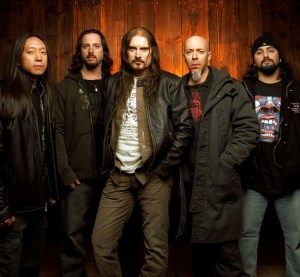
It’s simple. I could choose any Beatles song (and I do mean any), and challenge Dream Theater to play it. Knowing both band’s works as I do, I can all but guarantee that Dream Theater could easily perform the chosen piece within an hour or two, playing it note for note at the same tempo or faster than the Beatles recorded it at, without breaking a sweat.
Now if we flip the tables and ask the Beatles to replicate a Dream Theater song, the Fab Four would be hard pressed to replicate more than 1-2% of them, even if they were given months or even years to achieve said goal. This song should illustrate my point.
I’m not being overly mean to the Beatles, nor overly generous to Dream Theater. Any knowledgeable musician, if familiar with both bands, knows I’m being very fair and accurate here. It’s not that Dream Theater are superhuman (although it seems like it at times), or that the Beatles are incompetent, it has everything to do with the amount of hours both bands put in to mastering their instruments.
The Beatles, like many other famous bands, made catchy songs, sold a lot of albums, and did all they needed to do to make a damn good living as musicians. They likely never felt the need to go further.
Aside from Dream Theater’s Julliard and Berklee educations, something the Beatles did not do, having met Dream Theater on a couple of occasions, I can tell you that they are driven to challenge themselves technically and musically; there is clearly less focus on just selling records.
So why was I wrong for calling Dream Theater “better,” and behaving like such a music snob? While I defined “better” as more talented, I could just as easily have defined it as most record sales—then the Beatles obviously win in a landslide. I began to understand that the whole concept of “better” in relation to art, is innately flawed. If you’re going to use that word, you cannot use it for subjective things.
This was the impetus for my understanding of the difference between art and science.
While sports statistics are quantitative, music is an art form, and therefore largely subjective. It can be quantified to some extent as I did above, but unlike sports, technical prowess is no guarantor of success in music because art as a whole is not about achieving a measurable goal, but merely satisfying the artistic thirst of the user. This is something the Beatles must assuredly be declared the winners of, much to my dismay.
The Beatles
This knowledge began the transition of my love for music into my love for science, as the latter began to seem infinitely more attractive and important.
Art is like science without the burden of having to be correct and accurate. So in my mind, unlike science, art can never truly be important.
When lives are at stake and problems need solved, we don’t call painters, musicians, poets, or philosophers, we call doctors, engineers, and physicists. A 911 call will never yield the work of an artist.
So then I asked myself if science is “better” than art. Are art and science at odds with one another?
Actually, many scientific endeavors started with arts like philosophy or movies. A person simply dreamed without limits, and those dreams posed challenges that science brought to reality. Many scientists were inspired by the arts as children, such as scientists inventing things they saw in sci-fi movies as a child.
So how does this all affect me? My love for complex music is still great, but I no longer insult those who love the simpler stuff. My preference for the conservative-biased Fox News doesn’t prompt me to insult MSNBC watchers. My passion for Ferraris and Corvettes no longer prompts me to insult people who drive Porsches and Lamborghinis.
Corvette ZR1
While I still maintain my preferences, I understand the difference between what I can quantify, and what is truly subjective. Not only am I more accurate in my perception, I’m no longer compelled to insult people for their varied tastes, but instead, often ask them why they appreciate something I do not.
Their answer may not sway me, but many times, it opens my mind to new and interesting things, some of which, allow me to grow my own creative mind by pointing me in a direction I would have never discovered on my own. If there’s anything a scientifically oriented person likes most, it’s learning new things.
So if you find yourself being a snob, calling one artistic endeavor better than another—stop! More often than not, claiming something is “better” is an inherently flawed thing to do. It is an ambiguous word, that without being clearly defined, and applying only to a quantitative bit of data, should never be used to compare one thing to another.
Coke isn’t better than Pepsi, but Coke’s sales are. Know the difference.
As you read the U.S. Constitution, one thing becomes quite obvious. It is concise, all-encompassing, and there is ambiguity throughout. This is often surprising when you consider it was written by government. Unlike The Affordable Care Act which spans thousands of pages, the Constitution, which was intended to serve as the entire framework of the role of the federal government, comes in at a svelte six.
Looking at the First Amendment above, it simply says the right to free speech shall not be infringed. What it doesn’t say, is that the right to complain about government shall not be infringed or something of that nature. They could have tried to list all of the speech they wanted to protect, but they understood the beauty of ambiguity.
If they had specified anti-government speech as a protected right, then the right to call your boss names could have been in question. One could argue, “the Constitution specifically mentions ‘anti-government’ speech, but it doesn’t mention ‘one person insulting another’ speech, therefore we must conclude that they didn’t want to unilaterally protect that speech.” They would have a legal leg to stand on by doing so.
But by simply saying “the right to free speech shall not be infringed,” they make it clear that no matter what type of speech you think of bestowing on the ears of another; it’s protected. The content is infinitely irrelevant.
Herman Cain has a bachelor’s degree in mathematics, a masters in computer science, and a trail of business success a mile long. He was almost certainly in possession of a greater intellect than Jon Stewart, or any of the other disrespectful people who tried to make an ignorant joke against his proposal. These jokes were insulting with no basis in reality, but Stewart’s leftist base ate it up.
Herman understood that laws do not have to be thousands of pages long. The smartest man in any room, Albert Einstein, is quoted as saying, “Make everything as simple as possible, but not simpler.”
So why does it happen? Complex legislation is the result of two things.
Many in Washington who have a background in law and are used to writing contracts where every imaginable scenario is envisioned and accounted for to protect their clients. As such, they write laws the same way.
But also, with legislation a mile long, it allows pork barrel spending, to be stealthily added so as to hopefully go unnoticed by the masses.
While Herman was certainly intelligent enough to understand complex legislation, he knew that if the power resides with the people as our Constitution explicitly states, that the people should be able to read, understand, and then advise their elected leaders on how they desire them to proceed. Yet, I’d wager that 99.99% of our populous didn’t read a single page of The Affordable Care Act for instance.
Such simple legislation makes it nearly impossible to corrupt good legislation with the myriad of special legislative favors that are commonplace in Washington now.
Imagine you picked any random person off of the street, let them read the Constitution, and then ask them to explain it. I would bet that most would be able to easily do so. Ask them to do the same with the Affordable Care Act however, and aside from the fact that you’d have to come back a month later in order to give them time to read it, I’m comfortable most would not retain or grasp half of what’s in it.
It is highly possible on any given day, YOU have committed a federal crime and you wouldn’t have a clue.
YOU have to pay law enforcement to investigate and enforce every law enacted.
If you own a business, YOU have to pay a lawyer to research every law for compliance.
YOU have to pay for judges and prosecutors to carry out enforcement of these laws.
With nearly 79,000 pages of legislation, can you fairly argue America is still a free country? Our federal government seems to have hoarders’ disease, amassing an amazing collection of legislation, 90% of which likely violate the Tenth Amendment alone, which clearly states that if a subject is not specifically outlined in the Constitution, that subject should be pushed to the states or the people. Where is healthcare mentioned in the Constitution, for instance?
So how do we fix this?
There’s an old adage that says, “Vote the bums out!” It really is that simple. There are libertarian politicians in the Libertarian Party and the Republican Party just itching to take over government, then do their damnedest to reduce it down to its Constitutional core and give you your rights back. They’re the polar opposite of tyrants.
It is important we elect a more concise government that doesn’t spend us into oblivion or do special favors for their districts and friends.
We must demand they appoint Supreme Court with justices that respect the Constitution (including the Tenth Amendment) regardless of their own political beliefs.
And we must require they pass laws that are simple and ambiguous, thus allowing judges and juries to be more able to make decisions on the spirit of the law instead of the verbiage of it as a result.
As long as there is government, we are never ultimately free. But much like science pursues all knowledge with the knowledge it can never truly know everything, what’s wrong with wanting government who will strive to work themselves out of a job, knowing they will always exist in some form?
log·i·cal: capable of reasoning or of using reason in an orderly cogent fashion lib·er·tar·i·an: an advocate of the doctrine of free will; a person who upholds the principles of individual liberty especially of thought and action




![fission[1]](https://logicallibertarian.com/wp-content/uploads/2015/01/fission1.jpg?w=300&h=150) 210,000,000 eV. (No, that is not a typographical error). The same amount of fuel is literally 150,000,000 times more efficient.
210,000,000 eV. (No, that is not a typographical error). The same amount of fuel is literally 150,000,000 times more efficient.



![Creation_Of_Pull_My_Finger_by_oriel6six6[1]](http://fc02.deviantart.net/fs70/i/2010/053/7/9/Creation_Of_Pull_My_Finger_by_oriel6six6.png)

![IMG_9076_-_Copy[1]](https://logicallibertarian.com/wp-content/uploads/2014/12/img_9076_-_copy1.jpg?w=300&h=140)



![539838_10150934532972695_942140407_n-560x700[1]](https://logicallibertarian.com/wp-content/uploads/2014/11/539838_10150934532972695_942140407_n-560x7001.jpg?w=240&h=300)
![Statism-c-c[1]](https://logicallibertarian.com/wp-content/uploads/2014/11/statism-c-c1.jpg?w=300&h=171)

![doctor_needle2[1]](https://logicallibertarian.com/wp-content/uploads/2014/11/doctor_needle21.jpg?w=300&h=199)
![medicine[1]](https://logicallibertarian.com/wp-content/uploads/2014/11/medicine1.png?w=300&h=169)

![Coin[1]](https://logicallibertarian.com/wp-content/uploads/2014/11/coin1.jpg?w=285&h=300)
![viagra[1]](https://logicallibertarian.com/wp-content/uploads/2014/11/viagra1.jpg?w=474)

![burning-money-e1340332352315[1]](https://logicallibertarian.com/wp-content/uploads/2014/11/burning-money-e13403323523151.jpg?w=300&h=203)
![539838_10150934532972695_942140407_n-560x700[1]](https://logicallibertarian.com/wp-content/uploads/2014/11/539838_10150934532972695_942140407_n-560x7001.jpg?w=474&h=592)


![larry-bird-dribble300400[1]](https://logicallibertarian.com/wp-content/uploads/2014/10/larry-bird-dribble3004001.jpg?w=225&h=300)


 not be infringed. What it doesn’t say, is that the right to complain about government shall not be infringed or something of that nature. They could have tried to list all of the speech they wanted to protect, but they understood the beauty of ambiguity.


 The Logical Libertarian™