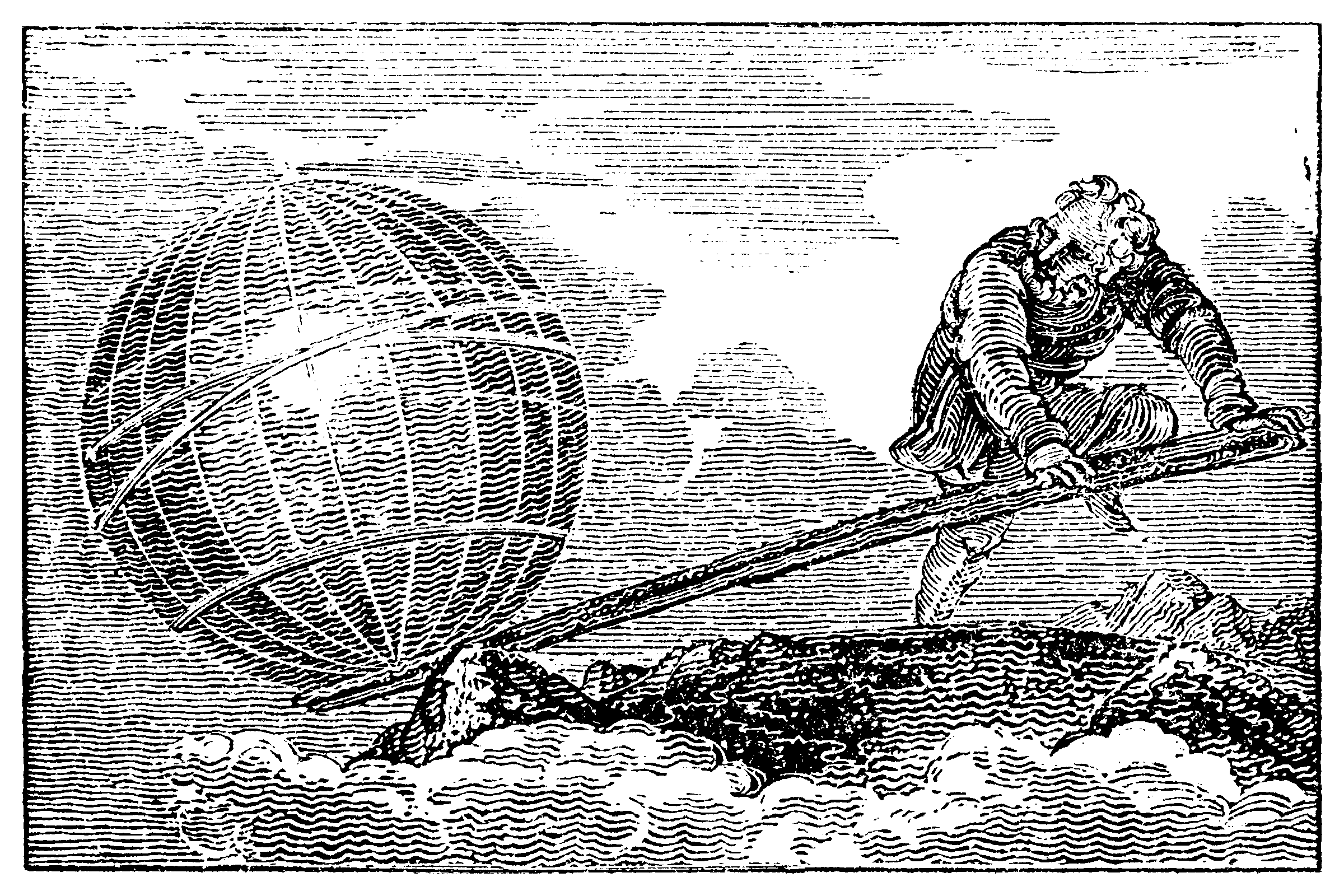
Archimedes (287 BC – 212 BC) is quoted as having once said, “Give me a big enough lever, and a place to put the fulcrum, and I will move the world.” (English translation)
It was of course, a theoretical statement, but based on the scientific principle of leverage Archimedes was so eloquent at explaining.
But this then begs the question, what’s the math on his theoretical question? So let’s take a look!
We don’t know what Archimedes weighed, but let’s assume he was an even 200 lbs., an average weight for an adult male, and a nice round number to do our math with.
First, let’s understand leverage.If you have a fulcrum (pivot point) in the middle of a lever supporting two bodies of mass, and those masses are the same distance from the lever, assuming the lever is a uniform weight its entire length, the two bodies will balance.
If however, one mass is twice as heavy as the other, then the lighter item needs to be twice as far from the fulcrum to balance with the heavier one…and so on.
If he was indeed 200 lbs., and wanted to lift Earth (which is believed to be approx 5.9 sextillion tons) one foot, he would place the fulcrum 1 foot away from the end of his lever under the Earth, and the other side of the lever would have to be approximately 5,587,121,210,000,000 miles away.
Archimedes Lever
This then also means he would have to move vertically 5,587,121,210,000,000 miles as well, in order to lift the other side just one foot.
This is of course theoretical, for fun, let’s think about some of the other things that would have to be true.
It assumes the lever is some miracle material that is unbreakable, it is being asked to lift 5.9 sextillion tons, after all.
Yet somehow, this unbreakable lever must have no mass of its own. Otherwise, it changes your equation, and you’d have to account for that.
It requires that Earth would be laying on top of another body that has the same mass as Earth, because something needs to be not only providing a gravity force to pull earth down, but also, he needs some place to put his fulcrum.
Any physicists out there want to add any critique or additional insights, please feel free to do so in the comments section below. Always an honor to have my work reviewed.
Have you ever heard the expression that the definition of insanity is doing the same thing and expecting a different result? Rest assured, you probably didn’t hear it from a psychiatrist, because it’s utter nonsense.
As it turns out, insanity is a rather generic term used in the legal realm for many disorders that would in fact be listed in the DSM, that would render a suspect unable to distinguish right from wrong, and therefore unable to assist in their defense.
Any numbers of diseases could be cause for finding someone legally insane, but the APA calling you insane, would be akin to the American Medical Association (AMA) giving you an official diagnosis of “Having a cold.” It’s simply a very broad and generic term that isn’t really used in the clinical world in any official capacity.
However, all that being said, there are many conditions and behaviors insanity could be attributed to. Certainly one of them might be someone who bangs their head up against a wall and thinks, “Ouch, that hurt.” Then, does it again nonetheless.
So while someone who does the same thing and expects a different result might in fact have a condition that would qualify them for an insanity defense in a court of law, it is in no way the definition of insanity.
So I’d like to quash this silly anecdote by not using it, and explaining to those who do, that it’s incorrect. Why, you might ask?
Why do space ships and comets get so hot returning to Earth?
Most people know that comets turn into a big ball of flames that burn up as they hurdle through the sky, and that space vehicles get extremely hot during re-entry into Earth’s atmosphere, but why?
There is a misconception that this is because of the friction of the air passing around the object, but that’s not the case.
If you’ve ever put your hand out the window of your moving car with your palm pacing forwards, you know what wind resistance feels like—that pressure pushing your hand backwards. Chances are, unless you or the driver had a death wish, you haven’t been doing much greater that 60-70 mph doing it.
All pressure generates heat because it compresses the atoms closer together than they would be if they weren’t under pressure. At 60-70 mph, not much heat is generated. At 18,000 mph, the speed that spacefraft are doing when they are in orbit however, a massive amount of heat will be generated as the spacecraft falls towards Earth through our atmosphere. Comets and other celestial bodies may even be going much faster than that depending on what forces sent them careening through space in the first place.
So the heat is from the pressure of the object pushing on the air in front of it which can’t get out of the way fast enough.
Another great example of this same phenomena are the rail guns the U.S. military is testing. These guns use magnets to fire an entirely inert projectile at thousands of miles per hour. They don’t use any explosives, gun powders, etc., whatsoever. Instead, they use magnets to repel the projectile away like when you put a magnet near another magnet with the same pole.
Yet, when the projectile is fired, it is launched at thousands of miles per hour; much faster than a traditional projectile. In the video below, you can see the flames all around it. Again, with no explosives used whatsoever, this is entirely due to the heating up of the air in front of it—just like a comet entering Earth’s atmosphere.
Do planets really orbit stars?
Technically, planets like Earth don’t orbit around their stars like our sun, they orbit around the center of the mass between the two objects.
Imagine a planet and a star had the exact same mass, they would both orbit round the point in space exactly between the two. If the sun for instance, was twice as big as Earth, the sun’s orbit would be half the size of Earth’s, and so on.
Think of a bola (See image below); a weapon that’s two balls tied to either end of a string. When you throw it, the two balls spin around a point at the very center of the string.
Scale it up to make those two balls a planet and a star, the string is gravity.
Since our sun has so much more mass than Earth (or any other orbiting body in our solar system), the sun’s orbit is mass-proportionate to the orbital motion of Earth (and the other planets, dwarf planets, and asteroids). For instance, an object that is 1/100th the mass of the sun would have an orbit 100 times larger than the sun.
All the planets, dwarf planets, etc. are many in numbers, so their orbits aren’t perfect circles, as they all affect each other dependent upon how close they are in relation to each other, and the proportionate mass of each of them. But the sun as well as the planets are all orbiting around a central imaginary point to all of them.
Warp-Drive – Not so awesome after all
In many Sci-Fi movies, you see space travelers go from a standard space cruising speed, to some “warp-drive” feature that sends them to light speed within about one second.
There’s a problem with this though. That acceleration puts G-Forces on the body.
Gravity is measured in m/s/s (meters per second per second), and gravity’s standard value for this on Earth is 9.8m/s/s.
I know that’s a tad confusing, so let me explain.
Since this is theoretical, to be literal, you would have to remove all the air from Earth so there would be no wind resistance first. But once that is done, if you dropped any object above Earth, the first second, it would fall at 9.8 meters per second. The 2nd second would be 19.6 meters per second. The 3rd, 29.4 meters per second, and so on…each second increasing in speed 9.8 meters per second.
This is the acceleration of gravity, or often referred to as 1 g.
Knowing this, just to give you some examples of G-Forces people experience, many top fuel dragsters accelerate so fast, the drivers are exposed to 5 g’s of gravity, fighter pilots can get over 15 g’s of gravity, but risk black-outs doing so.
How many g’s can a person withstand?
Over a period of time, 15 g’s is about the most we can endure, and even then, only if you’re in peak physical condition. Because at 15 g’s, your effective weight is 15 times greater than normal, making your average 200 lbs. male a whopping 3,000 lbs.
But for a brief moment, like slamming into a wall (which are negative G’s, or deceleration vs. acceleration), humans have been known to survive as much as 46 g’s.
See link below, and poor John Stapps face, while achieving those negative g’s. He voluntarily strapped himself into a contraption that exposed himself to those high g’s for scientific research. If there was ever a hero who took one for the team of science, it’s that guy.
Now, here’s where the problem comes in for warp-drive.
In space, the fastest mankind has ever went is about 25,000 mph, when we went to the moon. So let’s assume that’s the approximate “cruising” speed that our Sci-Fi characters are bumbling about at.
25,000 mph is approximately 11,176 meters per second (m/s).
The speed of light is “slightly” faster, at a whopping 299,792,458 m/s.
So that means, that the acceleration is 299,781,282 meters per second per second (m/s/s) if they went from 25,000 mph to the speed of light in one second. If my calculations are right, and of course 1 g is 9.8 m/s/s, then that means that our Sci-Fi characters would be exposed to 30,589,927 g’s of force, roughly. Or 30,589,881 g’s more than any human has ever survived.
In order for them to accelerate to light speed from 25,000mph, and achieve no more than 10 g’s, a force that is still virtually unbearable, it would take approximately 3,058,992 seconds, 50,983 hrs, 2,124 days, or 5.8 years, then doubling of course to allow for the the equally powerful negative G-forces you’d achieve slowing back down.
So the moral of the story, is that they’d be human pancakes in a fraction of a second—which is not so cool after all. Not to mention, their space ship would be torn to shreds as well. While the writers at Star Trek deserve a little credit for identifying this problem and coming up with the idea of “inertial dampers” to overcome the effect, such inertial dampers fall under a category I like to call literary bullshit.
As someone who loves science, with more than just a passing interest, I tend to trust scientists in general far more than politicians, Hollywood stars, CEO’s or the general public.
Sometimes scientists get things wrong, but I think you’d be hard-pressed to argue that any group of people are more right about how the world works; my trust is placed in the most capable hands.
One of the more controversial subjects these days is genetically modified organisms (GMOs). Many people consume them without knowing it, some actively avoid them, and some are like me—trustful of the people who know more than me that the product that they are bringing to market has been well-researched, and has provided no evidence of any harmful effects to the consumer.
McDonald’s have not elaborated on their reasons to my knowledge, but assuming they’re aware of the science behind them, and the rigorous testing these potatoes must have passed by their manufacturer, J.R. Simplot, and then the FDA, I feel it’s safer to assume McDonald’s is simply making a smart marketing decision.
People who are OK with GMOs will still buy from McDonald’s if they already were a customer, and people who are afraid of GMOs will too. The only people McDonald’s might lose are people making a principled stand to avoid them because they’re being anti-science, and I suspect such people are pretty small in numbers.
One group of people are unwitting hypocrites however, and that’s the high number of marijuana users who say they only consume organic, non-GMO foods.
Go to any pot dispensary, and you will find a myriad of choices available to the consumer so vast, that no other consumable crop likely exceeds it in variance. There are certainly more marijuana choices available than there are varieties of apples and potatoes.
The reason for this is that marijuana is one of the most heavily genetically modified organisms on the planet. People have been combining varieties of seeds for centuries to come up with crops that are either heartier to produce a greater yield of usable plant, or more often than not to yield a higher THC content for better highs.
The bottom line is that it’s nearly impossible to procure marijuana in its natural state these days.
Marijuana Harvest
So these users are either supremely ignorant as to how that pot came to be, or somehow have decided that the “scientist” who lives next door working out of their basement, and may or may not have taken a few biology classes, knows more than the multitude of PhD holders at Monsanto, Simplot, and/or the FDA as to what is safe for human consumption. If there’s logic in that, I don’t see it.
The argument is that marijuana is genetically modified by cross-pollination, or cross-breeding, a process where the pollen of one plant is introduced into the stigma of another. Essentially, it’s the plant version of crossing a horse with a donkey to create a mule.
By doing this, you’re coupling two plants with DNA which is nearly identical, but specifically that share a common trait you hope to enhance by combining them. This will usually work to some extent, because that’s how procreation works in general.
This is oversimplifying it a bit, but basically, when any two organisms procreate, the commonalities they share have a high chance of being part of the offspring, the traits they don’t share have a 50:50 shot at becoming part of the offspring, and of course, if neither have a particular trait, they are all but guaranteed not to produce offspring with that trait.
Think of shooting a shotgun at a target 100 feet away. Most of the shot may centralize around the bulls-eye, assuming your aim was true, but there will be scattered buckshot all around your aiming point that’s rather indiscriminate. This is cross breeding. You’ll get pretty close, and you’ll often have something close to the desired result (a bulls-eye), but you’ll likely have a lot of other stuff you didn’t necessarily want as well (shot outside the bulls-eye).
What people like Monsato and Simplot are doing however, is specifically activating or deactivating a particular and singular gene they know will give the offspring they create the desired result, without changing anything else. If cross-breeding is a shotgun at 100 feet, GMOs are a marine sniper on his best day from just 5 feet.
While I know this can be a soft spot for creationists, evolution is a very natural process. Traits that are most common in surviving species carry on, traits that aren’t usually die off before procreation, and go extinct. It’s an incredibly slow process that can take up to hundreds, if not thousands of generations. Cross-breeding and GMOs simply speed it up to one generation, and often obtains something pretty close to the desired result of the breeder, GMOs are simply the significantly more precise of the two.
It may not seem natural, and by definition it isn’t, but it’s effectively just an infinitely faster version of evolution, something that is indeed entirely natural.
Science, somewhat justifiably so, isn’t always considered trustworthy. There is a long history of scientific discovery that has been at the expense of human lives. Whether it be malicious Nazi scientists doing experiments on their Jewish captors, or well-intentioned experiments that have simply gone wrong, scientific endeavors have occasionally killed humans.
However, when you think of all the diseases that have been eradicated, all the organ transplants and medical procedures that have given people new leases on life, or all of the wonderful technology that simply makes our lives easier, clearly science has had an overwhelmingly positive influence on the human race.
GMO producers are simply either trying to being a better product to market, or often save lives by creating crops that can grow in places around the world who are starving because the produced GMO’s natural cousin won’t grow there, saving many lives. So if you’re against that, you’re unwittingly asking people to starve to death because you think it’s wrong for mankind to “play god” with food.
Either way, I love science, and I love the idea of using science to provide the world a better organism. Now pass me the GMO french fries.
Recently, famed neurologist and potential 2016 presidential hopeful Dr. Ben Carson recently argued that being gay was a choice, citing that some men enter prison straight and leave homosexual.
Dr. Carson, while being a brilliant neurologist by all accounts, is someone whose profession involves dealing with the mechanical aspects of the brain. A psychiatrist however, is someone who deals with the behavioral aspects of the brain. Two very different sciences, arguably only related by the fact that they both revolve around the brain.
This means Dr. Carson is someone who would not be considered to have an expert opinion on the psychological aspects of human sexual behavior.
While your humble author is not gay, and cannot speak to what it feels like to be gay, I don’t have to be. We can analyze this pretty easily by looking at multiple aspects of sexuality in general with a skeptical eye.
First, we must understand that being homosexual, and engaging in homosexual acts are two entirely different things that under any situation, may or may not be related.
Acting homosexual would be the process of engaging in a homosexual act, and that is entirely a choice of basic human free will. Using the prison example, if I were to be raped by another man, I involuntarily engaged in a homosexual act, but that does not mean that I magically became homosexual in that instant.
Being homosexual, means that a person is sexually attracted to members of the same sex and not the opposite, irrelevant of whether they’ve actually engaged in the act. For instance, there are many accounts of gay men who marry and mate with women, even though they are genuinely only attracted to other men, in order to fit into societal structures better. Despite never having homosexual sex, such men are homosexual.
I had a person argue that once you first engage in sex with someone of the same sex, then and only then, are you gay. But by this logic, all virgins are asexual, and will only have their sexual orientation determined once they finally get to enjoy that sweet lovin’.
Are we really going to argue two twelve-year-old boys for instance, who haven’t had sex yet, but one is attracted to girls, the other boys, are the same? This logic is unilaterally flawed.
But let’s get back to the idea of choice, and specifically what sexual orientation even is.
The social bonding and fun issues can explain away Dr. Carson’s prison analogy easily enough. Prisons are not co-ed, so if you introduce any person into a population with only their own sex to interact with, the natural order of things for these people will be to form social bonds, some of which will likely escalate to one of a sexual nature. While this is not true for sociopaths who don’t need such bonds, not all prisoners are sociopaths.
In prison, homosexuality is merely the only option for sexual activity available to them, so the instinct to have sex for the pleasure and the emotional bonds it may bring, eventually overcomes the instinct to have sex only with someone of the opposite sex. Once they get over that initial fear of the unknown, like overcoming the fear of jumping out of an airplane with each successive jump, it would be quite easy for an otherwise heterosexual male to embrace homosexual behavior if it were the only option available to him.
While I accept that many may have experienced homosexual activity for the first time in prison, I could find no study to support that many don’t leave prison and resume heterosexual activity once members of the opposite sex are again made available to them.
But is attraction in general a choice? The answer must be no, and I can prove it.
Throughout my life, I’ve often fallen in love with women who didn’t love me back, nor gave me any indication they ever would.
Unrequited love brings one thing and one thing only—pain. While masochists may like a little pain, no one enjoys the pain of knowing someone you want doesn’t want you back.
Let’s try an experiment. If you’re single, there’s likely someone right now that you are in love who doesn’t love you back, otherwise, you wouldn’t be single, right? You know being in love with them only brings you pain, so right now, I want you to stop being in love with them…go ahead…close your eyes and make that choice. Wasn’t that easy? It wasn’t? You couldn’t just choose to not be in love with them anymore? Why not?
If you can’t choose to turn off your attraction, by what logic could one argue that homosexuals can choose to change who they’re attracted to either? It’s a clear contradiction of concepts that cannot be reconciled except to acknowledge it’s not a choice.
Since I experimented with the single men earlier, married men, you and I both know that you are attracted to women other than your wife on occasion. It’s in our core nature to spread our seed everywhere. You may love your wife entirely, but you can’t control that sexual desire.
But if you’re truly a loving husband, you choose to remain faithful to your wife, despite your desire to have sex with another. That’s the exact same thing that happens when a gay person chooses to only engage in heterosexual sex, proving that being gay and acting gay are not the same thing. One is a choice, one is an uncontrollable instinct.
When I launched LogicalLibertarian.com, my intent was to not only spread the message of why liberty and science are important, but also to incite reasoned debate. Through such debate, I believe we evolve for the better.
My last post about vaccinations, and why I believe that making them mandatory if you are not going to self-quarantine, was a prime example of what happens when someone is forced to challenge their own beliefs. Mine changed 180° from when I was first presented the issue and about three hours later after considering it critically.
When I became an adult, mostly thanks to the economic recovery during the Reagan era, I considered myself a Republican.
Ronald Reagan
Adulthood also brought me to the embracing of science. While I hadn’t fully understood the scientific method and the concept of being a skeptic, my questioning of the world around me led me to leave religion behind, and become agnostic.
The term agnostic is not always understood as to how it varies form an atheist. An agnostic would say that they have no evidence to support there is a god, but are open to all evidence. A devout atheist actively believes no god exists, just as theists believe there is a god, and are generally not open to evidence supporting a creator.
Even though none of these really affect me personally, things like blue laws, the drug war, preventing gay-marriage, and other such laws with an obvious religious underpinning, were areas where I simply didn’t agree with my beloved Republican Party. “No victim, no crime” just made sense to me.
My friend Pat and I share a common love for the game of poker, which is how we came to know each other. Like me, Pat is also atheist and libertarian.
Despite it’s sometimes seedy reputation, poker is a game that attracts brilliant minds who often like to discuss just about anything. Occasionally, the subject of politics comes up, and as far as I know, Pat has always been libertarian.
At first, I didn’t know much about the party other than what I saw from a couple of interviews with Dr. Ron Paul I had seen on TV. While I often agreed with Dr. Paul, I always found his delivery to be a bit whiny, and sometimes he came off almost kooky. It wasn’t until I came to understand Dr. Ron Paul years later, that I began to listen to his message, despite his unappealing delivery, and appreciate his logic.
Ron Paul
As we discussed politics, it was Pat who convinced me, through reasoned debate instead of personal attacks, that I was in fact, more libertarian than Republican. While I was always for legalizing pot, even though I don’t use it, it was Pat who convinced me that we should legalize all drugs, not just cannabis; again, using reasoned debate.
So the libertarian collective was increased by one person, thanks to my friend Pat, and I’m happy for it.
There is no doubt I’m opinionated as hell, but I’ve always felt it’s important to have as few sacred cows as possible, and these days, I have two. Logic and liberty—hence my website.
The one difference between Pat and I, is that if there were no libertarian option, he would choose a Democrat, and I would choose a Republican. So when Dr. Rand Paul voiced the “vaccines may lead to mental illness” hypothesis in a recent interview, Pat brought it to my attention in an unflattering way, since he knew I was a fan of the junior Dr. Paul.
At first, I was annoyed that he did it, because I know it was somewhat of a dig at my Republican-leaning views, but knowing that I love science, he was right to point this out to me. Indeed, this is one time I don’t “Stand with Rand.”
Senator Rand Paul (R)
But that’s OK, because I’ve always made it clear, I champion ideals, not people or parties. As long as I agree with Rand more often than I do any other presidential contender, he’s going to get my nod.
What I didn’t do, is troll Rand Paul on Twitter and call him a “So-Called-Libertarian,” or demean him as a person in any way.
Instead, I gave the subject serious thought and decided to come to my independent conclusion, regardless of what Dr. Paul or my friend Pat had to say. So I did my research, challenged the science in my post, and respectfully agreed to disagree on the matter with Rand. Thankfully, I’m not the only libertarian doing this, but if we want libertarianism to grow, we need more.
It is important to understand that it’s this kind of open-mindedness that will attract independent voters to the libertarian cause, which I hope is what we want, not slinging insults like monkeys fling poo.
Have you ever changed your views because the person challenging that view called you an idiot? I know I often don’t. It usually closes my mind completely—an effect I’m assuming is often the opposite of what the “libertarianazi” wanted.
If libertarianism is about freedom, then it should be about free thought too. I can disagree with Ron or Rand Paul on a couple of issues without losing respect for them as a whole.
Many libertarians were incredibly disrespectful towards Glen Beck when he stated he was becoming libertarian. But let’s think about the logic of this for a second. He is a man with a huge following due to his own internet media site, who can clearly spread the message of libertarianism more than most of us, and instead of trying to welcome him with open arms, some libertarians act like they don’t want him in our party?
Glen Beck
It was the saddest display of nonsensical arrogance by some libertarians I’ve ever seen, and it certainly wasn’t done with libertarianism’s best interests in mind.
We cannot insult other libertarians who aren’t anarchists, some of us feel there is a role for government. Instead we must respectfully challenge them with reasoned debate, possibly outlining the unforeseen outcomes they may have missed in their proposal. But otherwise, encourage them to join us wholeheartedly where we agree.
We must also encourage Republicans and Democrats alike that we’ll stand with them in times when we agree on an issue.
And lastly, on a side note, for the love of God, the Guy Fawkes masks so many libertarians use as a social media icon is not helping either. The masks are creepy at best. But more importantly, they are certainly not libertarian.
Guy Fawkes
If you’re libertarian and proud of it, show your own face. Hiding behind a mask tells people you have something to hide and that you’re untrustworthy. Do you want to attract good people, or do you want to attract people who are one run-in with government away from blowing up a building with innocent people in it? Guy Fawkes was a would-be terrorist, not a libertarian. People like that will not help our cause.
The latest litmus test for politicians seems to be the idea of mandatory versus voluntary vaccinations. Even libertarians are somewhat divided on this, but the liberty-minded factions seem to support pro-choice, and the statist-leaning folks are going towards making them mandatory.
First, let’s point out that most people agree that vaccinations are one of mankind’s greatest medical achievements. Whether you’re pro-choice or not, I think we all agree that science has proven them to be overwhelmingly effective.
Rand Paul recently weighed in that he supported a pro-choice position, but he got himself into trouble when he stated, “I have heard of many tragic cases of walking, talking normal children who wound up with profound mental disorders after vaccines.”
If I were to give Rand Paul the benefit of the doubt here, I would like to believe he was simply arguing that some people are afraid of vaccines because children have been diagnosed with mental disorders after being vaccinated, as a means to explain why people might not want to vaccinate, even if this is anecdotal evidence, which is definitively not scientific.
I would like to think he was not arguing that there was any causality, since studies have almost universally debunked this myth. But if he was, that is sadly a very unscientific position for someone who is currently practicing medicine to posit.
While it has been reported that some vaccines may cause temporary issues, I don’t think any credible studies have supported the notion that any permanent complications have arisen.
To over-simplify things a bit, living things introduced into your body that don’t have your DNA will be seen by your immune system as a threat, and your immune system will go about trying to destroy it.
On a side note, as fantastic as this may sound, I don’t think I’m overstating this one iota when I say that this particular field of research will revolutionize the world of medicine forever; we are truly on the cusp of never needing organ donors again.
Think of the vaccine as a new first-person war-simulating video game you just bought. At first, you don’t know any of the levels, how to defeat any of the enemies, etc. So you play the game on its easiest mode until you learn the most effective means to slay your enemies. Once you’ve mastered it, you are ready for the more advanced levels.
Characters from Halo 5
This is what vaccines are effectively doing. Because the vaccine is a dead or weak form of the virus, it’s like the game on “easy” mode where it’s of little to no threat to you. In this state, your body can train itself to kill the virus so it’s better prepared to kill the full strength version down the road, if it’s introduced into your system.
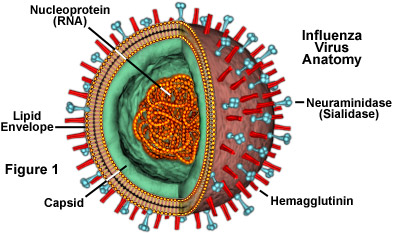
So why does it not work sometimes? Well, what if the copy of the video game you received was Halo, but the real disease is Call of Duty? You’ve prepared for the wrong game. There isn’t just one influenza virus, there are various strains. So it’s important that the medical field do their research well and introduce a vaccine that prepares you for the influenza strain that is expected to be most prevalent.
Now, let’s also explore the effects on your body when you get a vaccine. Your immune system is not magic, it uses energy from what you consume—energy you would otherwise use to run, jump, and play.
So it’s not uncommon for some short-term effects as your body diverts its resources to the battle you’ve just entered it into with the vaccine. When you get sick, you get weak also, right? It’s because your body is diverting energy to fight the virus you have. Whether it’s a vaccine or a live virus, your immune system has a lot of work to do, and you will be affected in that moment.
Some people online have posted memes asking the question, “If vaccines work, and you’ve had one, why are you concerned if I get one?”
On the face of it, it seems like a fair question, but it’s one born out of ignorance. As I stated above, at best, they seem about 90% effective. So imagine a scenario that I am interacting with you, and you have the virus in question. If you haven’t been vaccinated, there’s a 1:10 chance I may get the disease from you. But if you’ve also been vaccinated, that means my risk now goes from 1:10 to 1:100 (1/10 x 1/10 = 1/100). The more people who get vaccinated, the more the odds go down.
If enough get vaccinated, the odds will eventually exceed the number of people in an area, and the disease will likely be eradicated. Meaning that if the odds of you catching it get to 1:1,000, but there’s only 900 people in your community, the odds would then favor eradication of the disease—basic math.
Assuming you’re not an anarchist, almost all of us believe government’s duties are to protect our rights. Statists think government has many more duties, but I don’t know of any non-anarchists championing government causes that don’t include protecting rights first. The most important of these rights? The right to life.
So if vaccines are anything less than 100% effective, which they are, government enforcing you to get one isn’t for your benefit, it’s to protect others from you if you catch the virus.
What so often happens is people want to create a paradox to sound smart, something no one should ever intelligently do. For instance, it’s like asking a Christian if God can build a wall so high even he can’t climb it—a purely nonsensical question.
The Pet Paradox
Arguing that vaccines should be a choice creates a similar liberty-paradox. Because while you’re giving liberty to one person, you’re effectively taking it away from everyone else they’ll come in contact with, which mathematically, is a net loss for liberty.
It would be no different from arguing that slavery should be legal because it gives liberty to the slave owner, or as Greg Gutfeld pointed out (I don’t want to take credit for his argument), it would be like legalizing drinking and driving because you’re restoring liberty to the future AA member.
The only way you are truly for liberty is if you champion the view that gives the greatest amount of liberty. Giving one person liberty while denying the rights of ten others, is not a libertarian position, it’s a selfish one, in my opinion.
Now, you can rightfully argue I’ve created my own liberty-paradox by denying the right of the anti-vaccine person, but I have an answer for that. If they choose to self quarantine in some way, then by all means, let them not vaccinate. I’m perfectly OK with that—problem solved, paradox gone.
Otherwise, I think the only fair libertarian position is that you cannot own a slave, you cannot drink and drive, you cannot drive a car without insurance to cover me if you hit me, and as much as I hate government mandates, I feel you should not be allowed to introduce yourself or your children into the public arena unless you vaccinate.
log·i·cal: capable of reasoning or of using reason in an orderly cogent fashion lib·er·tar·i·an: an advocate of the doctrine of free will; a person who upholds the principles of individual liberty especially of thought and action

![cigar_label_600dpi[1]](http://www.math.nyu.edu/~crorres/Archimedes/Pictures/cigar_label_600dpi.jpg)
![snap2[1]](http://www.mathteacherctk.com/blog/wp-content/uploads/2009/11/snap2.gif)

![americanpsychoass[1]](https://logicallibertarian.com/wp-content/uploads/2015/03/americanpsychoass1.jpg?w=300&h=300)


![john-stapp-during-a-high-g-force-test-on-a-sled-nasa[1]](https://logicallibertarian.com/wp-content/uploads/2015/06/john-stapp-during-a-high-g-force-test-on-a-sled-nasa1.jpg?w=474&h=281)

![fda_sign_web_14_0_0[1]](https://logicallibertarian.com/wp-content/uploads/2015/04/fda_sign_web_14_0_01.jpg?w=300&h=168)
![Simplot logo[1]](https://logicallibertarian.com/wp-content/uploads/2015/03/logo1.jpg?w=474)

 This is cross breeding. You’ll get pretty close, and you’ll often have something close to the desired result (a bulls-eye), but you’ll likely have a lot of other stuff you didn’t necessarily want as well (shot outside the bulls-eye).

![gay-marriage1[1]](https://logicallibertarian.com/wp-content/uploads/2014/12/gay-marriage11.jpg?w=300&h=223)
![670px-Deal-With-Unrequited-Love-Step-8[1]](http://pad1.whstatic.com/images/thumb/2/25/Deal-With-Unrequited-Love-Step-8.jpg/670px-Deal-With-Unrequited-Love-Step-8.jpg)






![58737535[1]](https://logicallibertarian.com/wp-content/uploads/2015/02/587375351.jpg?w=474)


 The Logical Libertarian™