Category Archives: Libertarianism

Liberty With A Price Tag Isn’t Liberty. Colorado’s Legal Marijuana Isn’t As Good As You Think

Recently it was announced that Colorado’s overwhelmingly successful venture into legalizing recreational marijuana has generated so much tax revenue, that the people are owed a refund.

Before I condemn them on this tax, I must at least give them all due credit for having a clause in their state constitution that limits the amount of tax revenue that Colorado is allowed to collect before it must refund a portion to the people. It’s referred to as the Taxpayer Bill of Rights (TaBOR), and it’s a very pro-liberty thing to do.

Sadly, Colorado Republicans and Democrats alike are now upset they may have to give some of this money back however. I understand the Democrats being upset, they’ve never met a taxpayer dollar they didn’t genuinely believe they could spend better than the person who earned it. But it’s sad that the Colorado Republicans, the party that’s supposed to be about limited government, are somehow upset with this too.

Forget all of that though, because there is a much deeper issue here. This Colorado legal-pot situation is not as libertarian-friendly as one might think.

Marijuana Harvest
Marijuana Harvest

Colorado was smart enough to embrace the science that shows that marijuana is a fairly benign drug that is often less risky in its consumption than alcohol. They were also non-hypocritical enough to know that allowing alcohol while not allowing marijuana made little sense—kudos to them on both counts. But that’s where the liberty segment of their new pot-friendly legislation ends.

Sadly, politicians love new revenue streams more than I love my mom. Because the legislators in Colorado decided that instead of just giving people more freedom to choose what they put in their body, they would give them a way to do it prosecution-free, if and only if, they paid an additional tax over and above the normal sales tax, which exceeds 25% when all of them are added together.

Knowing this would generate a significant amount of tax revenue was certainly part of the equation, if not the impetus for legalization, when the one and only reason should have been that in a free country (or state in this case), it should have never been illegal in the first place.

What Colorado is essentially doing is no different from the sugary drink tax in Berkeley, California, cigarette taxes across the country, or any other tax on a product over and above the standard sales tax. They are using the tax system to encourage behavior like a backwards carrot on a stick. No rights are being protected, nor is any governmental service being offered.

Berkeley Soda Tax
Berkeley Soda Tax

As someone who supports a consumption tax system like the FairTax.org proposal, one might think that I and other libertarians would support a marijuana tax, but it’s very anti-libertarian on multiple fronts.

When sin taxes such as these are passed, it assumes that government has an interest in what you do to yourself and should penalize you for what they have determined is bad behavior. But government’s duty is to protect you from others who would harm you, not from yourself. They have no right to tell you how to live your life or be the arbiter of what is good behavior. Are you comfortable letting them tell you what shows you should watch or what kind of mate you should choose?

The reason to support a consumption tax is that it’s effectively a fee for services rendered. If government builds infrastructure, and enforces contracts between enterprises which allow all of these products to freely come to market, it’s a fair way to charge people for that government service. But what service is Colorado providing for the marijuana tax?

For instance, I can fairly argue it’s okay to add a diesel/gasoline tax, because that money then pays for roads. You’re being charged a fee for services rendered. However, there is no additional service Colorado is providing with their multitude of tacked on taxes to marijuana, it’s simply a revenue stream that goes into the state’s general fund, and the oh-so-common “It will go towards helping schools” argument is also part of the equation.ColoradoMarijuanaTax.thumbnail[1]

I’ll set aside my argument that there shouldn’t be public schools in the first place, but why exactly is a pot smoker disproportionately responsible for educating Colorado children or paying for other non pot-related issues?

If we love liberty, we should never support a tax that cannot be directly attributed to the item being taxed as a fee for a service government is providing. With government, we are often forced to accept compromise to appease the statist-minded voters and politicians, and I’m sure Colorado’s marijuana tax is no different, but we are most certainly not to a point where we can call Colorado’s legal marijuana system a victory for libertarianism.

It’s no more of a victory than if a football team were losing 70-0 and in the closing seconds scored a field goal to avoid getting blown out. Sure it feels good to put points on the board, but you still lost in the end.

Drug Testing For Government Checks? How About Work For Government Checks?

For nearly as long as we’ve had government entitlements, we’ve had people wanting government to drug test the people receiving them. The purpose being that if I have to take a drug test to get a job to pay into this system, they should have to take a drug test to get the money out of it.

Aside from that, many would like to know that their hard-earned tax dollars are not going towards buying drugs instead of food, water, and shelter—the things these programs are supposed to be for. It’s a fair point that I used to agree with it. However, as I see the issue, this is frankly a red herring.failed-drug-test[1]

If our concern is about misspent monies, then why give them money at all? With food stamps for instance, they would just get actual food, not cash to buy food. While that still doesn’t prevent trading food for drugs, it would at least make it significantly more difficult since most drug dealers are usually not apt to take two steaks for a dime bag.

What about the people who use the money for new Air Jordans, wheels for their car, fur coats, or other frivolous items. These are no more what that money was intended for than drugs, but no drug test will sniff out other frivolous waste like this. Not to mention, alcohol is equally wasteful, equally mind-numbing, and very commonly where money from government entitlements ends up.

Getting away from those who rightfully qualify for these programs, what about the fraudsters? Many people do side work under the table, easily make enough to support themselves, but because there’s no W-2 to rat them out, they get a government check because it appears they qualify for assistance.

These people could be people doing illegal work like selling drugs or prostitution (which should be legal in my opinion), or these could be people who are doing legal work, but just getting paid under the table for it tax-free.prostitution-car[1]

The system, no matter how you work it, is always highly corruptible, and thus the reason most limited government advocates like myself feel government should not be in the business of salvaging the lives of those who have chosen a path that doesn’t afford them their basic food, drink, and shelter needs.

If we move off of the corrupt things people might do with government entitlement monies, does someone failing a drug test mean that they used taxpayer money to buy drugs? Not necessarily.

For instance, pot smokers in general are usually rather friendly in my experience. While I’ve never used marijuana myself (no joke), I’ve been offered it more times than I can count. Maybe this person who might fail a dug test was just at a friend’s house Friday night and benefitted from some “puff-puff-pass.”

Insuring that government money is used for the purpose intended is nearly impossible, and as such, a fool’s mission. This is why libertarian-minded people like me would simply argue that you can’t corrupt what doesn’t exist in the first place, and end all such programs. As heartless as it may seem, we honestly believe charities would do a better job, and people would be more charitable if given those tax dollars back.

But there is another way. While most libertarians want to quash entitlements altogether, there may be a more capitalistic way we all benefit from them doing it, and the answer is in community service.

Instead of offering money for doing nothing, why not offer government on-the-spot labor? Instead of having to apply for government handouts, you simply go to a government office, and say, “what can I do?”help-wanted-marijuana-legalized-jobs[1]

In any town around the country, there can be litter and trash lying around, infrastructure that could use improvement, graffiti that needs cleaned off walls, schools that could use adults standing guard, or any other myriad of things we’d like to do, but we don’t often have the money to do it.

Local citizens might contact their government office with needs that these people could fill such as help mowing a lawn or shoveling a driveway even. Or companies could broker deals to get on-the-spot labor through local government assistance office. Local businesses often need an extra person due to employee illnesses, random promotional events that may require extra help, etc. The citizens or companies would pay the people directly, the welfare office would simply connect the two parties.

No one has a right to get paid for doing nothing, and government is a guarantor of rights, not a charity.community-service-trash

The jobs they’d be assigned would be menial, difficult, unrewarding tasks that no one else wants to do, thus  ensuring that people will seek gainful employment elsewhere, doing community service for no longer than is necessary to bridge the gap between jobs.

It has never been, nor ever will be government’s business to know what you put in your body, and suggesting we should drug test people to get government assistance is a violation of their rights after my rights were violated by stealing from me to assist them, despite my objections to it.

Under my proposal, I frankly don’t care what they do with that money. If they provided a valuable service, they earned it, and like me, should be able to spend it however they see fit. They win, the taxpayers win, and nobody got something for nothing.


Libertarians Are Far Too Often Libertarianism’s Worst Enemy

When I launched LogicalLibertarian.com, my intent was to not only spread the message of why liberty and science are important, but also to incite reasoned debate. Through such debate, I believe we evolve for the better.

My last post about vaccinations, and why I believe that making them mandatory if you are not going to self-quarantine, was a prime example of what happens when someone is forced to challenge their own beliefs. Mine changed 180° from when I was first presented the issue and about three hours later after considering it critically.

When I became an adult, mostly thanks to the economic recovery during the Reagan era, I considered myself a Republican.

Ronald Reagan
Ronald Reagan

Adulthood also brought me to the embracing of science. While I hadn’t fully understood the scientific method and the concept of being a skeptic, my questioning of the world around me led me to leave religion behind, and become agnostic.

The term agnostic is not always understood as to how it varies form an atheist. An agnostic would say that they have no evidence to support there is a god, but are open to all evidence. A devout atheist actively believes no god exists, just as theists believe there is a god, and are generally not open to evidence supporting a creator.

Even though none of these really affect me personally, things like blue laws, the drug war, preventing gay-marriage, and other such laws with an obvious religious underpinning, were areas where I simply didn’t agree with my beloved Republican Party. “No victim, no crime” just made sense to me.gay-marriage1[1]

My friend Pat and I share a common love for the game of poker, which is how we came to know each other. Like me, Pat is also atheist and libertarian.

Despite it’s sometimes seedy reputation, poker is a game that attracts brilliant minds who often like to discuss just about anything. Occasionally, the subject of politics comes up, and as far as I know, Pat has always been libertarian.

At first, I didn’t know much about the party other than what I saw from a couple of interviews with Dr. Ron Paul I had seen on TV. While I often agreed with Dr. Paul, I always found his delivery to be a bit whiny, and sometimes he came off almost kooky. It wasn’t until I came to understand Dr. Ron Paul years later, that I began to listen to his message, despite his unappealing delivery, and appreciate his logic.

Ron Paul
Ron Paul

As we discussed politics, it was Pat who convinced me, through reasoned debate instead of personal attacks, that I was in fact, more libertarian than Republican. While I was always for legalizing pot, even though I don’t use it, it was Pat who convinced me that we should legalize all drugs, not just cannabis; again, using reasoned debate.

So the libertarian collective was increased by one person, thanks to my friend Pat, and I’m happy for it.

There is no doubt I’m opinionated as hell, but I’ve always felt it’s important to have as few sacred cows as possible, and these days, I have two. Logic and liberty—hence my website.

The one difference between Pat and I, is that if there were no libertarian option, he would choose a Democrat, and I would choose a Republican. So when Dr. Rand Paul voiced the “vaccines may lead to mental illness” hypothesis in a recent interview, Pat brought it to my attention in an unflattering way, since he knew I was a fan of the junior Dr. Paul.

At first, I was annoyed that he did it, because I know it was somewhat of a dig at my Republican-leaning views, but knowing that I love science, he was right to point this out to me. Indeed, this is one time I don’t “Stand with Rand.”

Senator Rand Paul (R)

But that’s OK, because I’ve always made it clear, I champion ideals, not people or parties. As long as I agree with Rand more often than I do any other presidential contender, he’s going to get my nod.

What I didn’t do, is troll Rand Paul on Twitter and call him a “So-Called-Libertarian,” or demean him as a person in any way.

Instead, I gave the subject serious thought and decided to come to my independent conclusion, regardless of what Dr. Paul or my friend Pat had to say. So I did my research, challenged the science in my post, and respectfully agreed to disagree on the matter with Rand. Thankfully, I’m not the only libertarian doing this, but if we want libertarianism to grow, we need more.

Austin-petersen-libertarian-republic
Austin Petersen

For instance, recently, Austin Peterson from Libertarian Republic talked about how Sarah Palin wouldn’t be that bad of a choice for the VP if Rand Paul were to win the GOP nod. This despite most libertarians disliking her immensely, he argued she’s actually pretty supportive of libertarians, and far lass combative with us. It’s this kind of open-mindedness from Austin, putting logic over party, that I strive for myself. Yet, as expected, if you look at the comments, the libertarian trolls came out in droves.

It is important to understand that it’s this kind of open-mindedness that will attract independent voters to the libertarian cause, which I hope is what we want, not slinging insults like monkeys fling poo.

Have you ever changed your views because the person challenging that view called you an idiot? I know I often don’t. It usually closes my mind completely—an effect I’m assuming is often the opposite of what the “libertarianazi” wanted.

If libertarianism is about freedom, then it should be about free thought too. I can disagree with Ron or Rand Paul on a couple of issues without losing respect for them as a whole.

Many libertarians were incredibly disrespectful towards Glen Beck when he stated he was becoming libertarian. But let’s think about the logic of this for a second. He is a man with a huge following due to his own internet media site, who can clearly spread the message of libertarianism more than most of us, and instead of trying to welcome him with open arms, some libertarians act like they don’t want him in our party?

Glen Beck
Glen Beck

It was the saddest display of nonsensical arrogance by some libertarians I’ve ever seen, and it certainly wasn’t done with libertarianism’s best interests in mind.

We cannot insult other libertarians who aren’t anarchists, some of us feel there is a role for government. Instead we must respectfully challenge them with reasoned debate, possibly outlining the unforeseen outcomes they may have missed in their proposal. But otherwise, encourage them to join us wholeheartedly where we agree.

We must also encourage Republicans and Democrats alike that we’ll stand with them in times when we agree on an issue.

And lastly, on a side note, for the love of God, the Guy Fawkes masks so many libertarians use as a social media icon is not helping either. The masks are creepy at best. But more importantly, they are certainly not libertarian.

Guy Fawkes
Guy Fawkes

If you’re libertarian and proud of it, show your own face. Hiding behind a mask tells people you have something to hide and that you’re untrustworthy. Do you want to attract good people, or do you want to attract people who are one run-in with government away from blowing up a building with innocent people in it? Guy Fawkes was a would-be terrorist, not a libertarian. People like that will not help our cause.

Vaccine Or No Vaccine: The Facts And This Libertarian’s Opinion

The latest litmus test for politicians seems to be the idea of mandatory versus voluntary vaccinations. Even libertarians are somewhat divided on this, but the liberty-minded factions seem to support pro-choice, and the statist-leaning folks are going towards making them mandatory.

First, let’s point out that most people agree that vaccinations are one of mankind’s greatest medical achievements. Whether you’re pro-choice or not, I think we all agree that science has proven them to be overwhelmingly effective.

Rand Paul recently weighed in that he supported a pro-choice position, but he got himself into trouble when he stated, “I have heard of many tragic cases of walking, talking normal children who wound up with profound mental disorders after vaccines.”

If I were to give Rand Paul the benefit of the doubt here, I would like to believe he was simply arguing that some people are afraid of vaccines because children have been diagnosed with mental disorders after being vaccinated, as a means to explain why people might not want to vaccinate, even if this is anecdotal evidence, which is definitively not scientific.

I would like to think he was not arguing that there was any causality, since studies have almost universally debunked this myth. But if he was, that is sadly a very unscientific position for someone who is currently practicing medicine to posit.

While it has been reported that some vaccines may cause temporary issues, I don’t think any credible studies have supported the notion that any permanent complications have arisen.

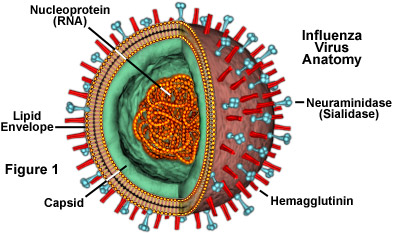
But either way, let’s explore what actually happens when you’re given a vaccine. A vaccine is essentially a dead, or severely weakened version of a real virus.

Influenza Virus
Influenza Virus

To over-simplify things a bit, living things introduced into your body that don’t have your DNA will be seen by your immune system as a threat, and your immune system will go about trying to destroy it.

This is the reason that your immune system must be suppressed when you receive a donor organ for instance, and why organs harvested from your own DNA are much safer and advantageous.

On a side note, as fantastic as this may sound, I don’t think I’m overstating this one iota when I say that this particular field of research will revolutionize the world of medicine forever; we are truly on the cusp of never needing organ donors again.

Think of the vaccine as a new first-person war-simulating video game you just bought. At first, you don’t know any of the levels, how to defeat any of the enemies, etc. So you play the game on its easiest mode until you learn the most effective means to slay your enemies. Once you’ve mastered it, you are ready for the more advanced levels.

Characters from Halo 5

This is what vaccines are effectively doing. Because the vaccine is a dead or weak form of the virus, it’s like the game on “easy” mode where it’s of little to no threat to you. In this state, your body can train itself to kill the virus so it’s better prepared to kill the full strength version down the road, if it’s introduced into your system.

So why does it not work sometimes? Well, what if the copy of the video game you received was Halo, but the real disease is Call of Duty? You’ve prepared for the wrong game. There isn’t just one influenza virus, there are various strains. So it’s important that the medical field do their research well and introduce a vaccine that prepares you for the influenza strain that is expected to be most prevalent.

Now, let’s also explore the effects on your body when you get a vaccine. Your immune system is not magic, it uses energy from what you consume—energy you would otherwise use to run, jump, and play.

So it’s not uncommon for some short-term effects as your body diverts its resources to the battle you’ve just entered it into with the vaccine. When you get sick, you get weak also, right? It’s because your body is diverting energy to fight the virus you have. Whether it’s a vaccine or a live virus, your immune system has a lot of work to do, and you will be affected in that moment.

Since every person is different, people’s reactions will vary. Some people might get the vaccine and feel almost nothing, others may get the vaccine and feel like their energy level has been reduced by half. It’s for this reason that Rand Paul suggested staggering these immunizations so that your body can tackle one virus at a time to keep the short-term weakening effects to a minimum. Plus, if your immune system is busy fighting one battle, it may not be well-suited to fight another, which should make basic sense.

Now that we’ve covered the facts, let’s get towards the opinion of whether it should be optional or mandatory.

Vaccines are rather effective, but they’re not bulletproof. Depending on the vaccine, you will see here that the CDC has found the effectiveness to vary anywhere from as low as 59% and as high as 92%. This is the single most important factor I used in forming my opinion.

Some people online have posted memes asking the question, “If vaccines work, and you’ve had one, why are you concerned if I get one?”58737535[1]

On the face of it, it seems like a fair question, but it’s one born out of ignorance. As I stated above, at best, they seem about 90% effective. So imagine a scenario that I am interacting with you, and you have the virus in question. If you haven’t been vaccinated, there’s a 1:10 chance I may get the disease from you. But if you’ve also been vaccinated, that means my risk now goes from 1:10 to 1:100 (1/10 x 1/10 = 1/100). The more people who get vaccinated, the more the odds go down.

If enough get vaccinated, the odds will eventually exceed the number of people in an area, and the disease will likely be eradicated. Meaning that if the odds of you catching it get to 1:1,000, but there’s only 900 people in your community, the odds would then favor eradication of the disease—basic math.

Assuming you’re not an anarchist, almost all of us believe government’s duties are to protect our rights. Statists think government has many more duties, but I don’t know of any non-anarchists championing government causes that don’t include protecting rights first. The most important of these rights? The right to life.

So if vaccines are anything less than 100% effective, which they are, government enforcing you to get one isn’t for your benefit, it’s to protect others from you if you catch the virus.

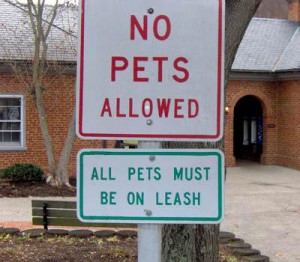
What so often happens is people want to create a paradox to sound smart, something no one should ever intelligently do. For instance, it’s like asking a Christian if God can build a wall so high even he can’t climb it—a purely nonsensical  question.

The Pet Paradox
The Pet Paradox

Arguing that vaccines should be a choice creates a similar liberty-paradox. Because while you’re giving liberty to one person, you’re effectively taking it away from everyone else they’ll come in contact with, which mathematically, is a net loss for liberty.

It would be no different from arguing that slavery should be legal because it gives liberty to the slave owner, or as Greg Gutfeld pointed out (I don’t want to take credit for his argument), it would be like legalizing drinking and driving because you’re restoring liberty to the future AA member.

The only way you are truly for liberty is if you champion the view that gives the greatest amount of liberty. Giving one person liberty while denying the rights of ten others, is not a libertarian position, it’s a selfish one, in my opinion.

Now, you can rightfully argue I’ve created my own liberty-paradox by denying the right of the anti-vaccine person, but I have an answer for that. If they choose to self quarantine in some way, then by all means, let them not vaccinate. I’m perfectly OK with that—problem solved, paradox gone.

Otherwise, I think the only fair libertarian position is that you cannot own a slave, you cannot drink and drive, you cannot drive a car without insurance to cover me if you hit me, and as much as I hate government mandates, I feel you should not be allowed to introduce yourself or your children into the public arena unless you vaccinate.


What Constitutes A Fair Share?

As the president’s State Of The Union speech came and went, we were again reminded how he feels that everyone should get their “fair share;” he brought it up twice.

I couldn’t agree with him more; each person does deserve their fair share. But here’s the rub, he isn’t actually promoting policies that would garner us citizens our fair share.

Your fair share consists of two things: that which you have earned and that which you are entitled to.

What you have earned is simple enough, you work forty hours, you make $20 an hour, you’ve earned $800 of your employer’s revenue stream that week.

If you want more, you must either negotiate for more, find an employer willing to pay more, or start your own company and make more, but you agreed to $20 an hour when you were hired, so that’s all you can rightfully lay claim to.

What you’re entitled to however, is any amount people have voluntarily directed towards you, or which you are owed; a somewhat more complex amount to explain, as there are many possible examples.1151px-Wounded_Warrior_Project_logo.svg[1]

If you’re a soldier who has lost a leg in battle for instance, and you were to contact the Wounded Warrior Project for help, you would be entitled to your fair share of what the WWP receives in donations, since helping soldiers like you is their raison d’etre.

If you own stock in a company that pays dividends, you’re fair share are the dividends your shares in that company earned.

But one example I think is most egregiously violated by government would be if a relative gives you what they earned or inherited, either through death or good will. It was their property, and they wanted you to have it. Yet Uncle Sam, via death taxes, feels that they are entitled to a portion, which is upsetting since this money was already taxed when your benefactor earned it.

So what isn’t your fair share? Despite Obama’s best efforts to convince us otherwise, what someone else has earned or is otherwise entitled to. That is their fair share, not yours, and you have no reasonable claim to it.

Barack Obama
Barack Obama

When Obama suggests people aren’t getting their fair share, he’s actually proposing legislation to equalize shares. He wishes to close the gap between the richest and the poorest under the guise of compassion. While this is a noble goal, so long as people are inherently different in intellect, skill, luck, and motivation; this type of equality can never fairly exist.

Statists feel that definitions of “fair” and “equal” are synonymous. But equal implies a like amount, fair applies an amount that you can fairly lay claim to. So why does Obama use the word fair instead of equal?

As I pointed out in my last post, tests with Capuchin monkeys showed that humans aren’t the only animal with the innate understanding of a fair share.

These monkeys were trained to give the researcher a piece of granite. In return for this bit of “work,” they were given their “pay;” either a cucumber, or a grape. The grapes being significantly more preferable than the cucumbers to the monkeys, were effectively the “greater” share for purposes of the experiment.

As you can see, when the monkey’s weren’t given their “fair share,” they reacted as anyone else would act—they were furious. They did equal work, but didn’t get equal pay.

What Obama’s doing by using the term fair share, is appealing to that sense of fairness instilled in our genetic code. But he’s doing so behind a fallacious argument.

If I were to walk up to you, put a gun to your head, and demand you give your money to the person next to you, whether they are poorer or not, it’s a felonious crime. Yet somehow, when we vote for government officials to do that exact same thing (the IRS is armed after all), it’s miraculously, and rather contrarily, deemed compassionate.Statism-c-c[1]

There is no feasible argument one can make to explain away this blatant hypocrisy by statist-minded politicians and their supporters—ideology has tainted their sense of reason here.

I don’t profess to know what is in Barack Obama’s mind. Maybe he feels that “equal” and “fair” are synonymous, and therefore isn’t purposefully being misleading.

While the experimenters tested the monkeys for their concept of fairness, they didn’t test to see if the monkeys have statist instincts. But, do you believe that the monkeys, if given two grapes for their work, would just give one of the grapes to a random third “Welfare-monkey,” who could have done some work, but chose not to? I doubt it.

But wouldn’t giving money to the needy help them and therefore make society better as a whole? That’s the argument being made.

We all know that it takes money to make money. You give Warren Buffett $100,000, he will very likely double it in seven years or less. You give a career welfare earner the same amount, you will likely find that they’ve spent it on frivolous items that will eventually lead to them no longer having $100, nevertheless $100,000.

Don’t believe me? In 2010, researchers from Vanderbilt published a study showing that people who won between $50,000 to $150,000 were far more likely to file for bankruptcy than those who won lesser amounts, such as $10,000 or less.

What does this show? Even if you take money from earners and give it to the non-earners, that money will eventually just find its way back to the earners, because…they are earners.

Removing those who are truly disabled for purposes of this discussion, the only way to help the non-earners of society is to force them into a sink or swim situation where they are forced to either be productive or face societal banishment, shaming, isolation, and possibly death. Much like electricity and water, people will choose the path of least resistance. Give them something they didn’t earn, and they often won’t bother to earn for themselves.

Income redistribution is not fair, it does not advance our species, nor is it logical. So I am all for fair share, I just wish Obama and his supporters understand the term better.


Money Is Not The Root Of All Evil

“Money is the root of all evil.” How many times have you heard this phrase from someone?

There’s a number of reasons why people might feel this way, but none of the arguments amount to anything more than a logical fallacy. But let’s examine the different truths and psychological aspects of this sentiment.Burning Money

One reason for such a belief is from the idea of overt greed that is assumed to go with people who have money—one person, trying to collect it all, often at the expense of others. It’s a popular Hollywood storyline, but is it true?

It’s certainly consistent with dictators who take it all by force, but that’s usually one sociopath ruling over many victims. And I say they’re sociopaths, because they are often committing genocide, or at least routinely kill their ideological components.

But applying that sentiment to CEO’s and other rich people in a free country is usually just the product of jealousy and ignorance. Firstly, America’s richest make their money by providing a product the rest of us voluntarily buy—not compelled to buy, such as the services offered by a tyrant. But also, the rich have historically been quite charitable. And this makes perfect sense.

Bill Gates
Bill Gates

Humans have two qualities that are fairly consistent among all of us—competitiveness and empathy.  Sociopaths lack empathy, but as near as I can tell, there is no word for people who lack a competitive spirit, but I suppose they could be called competipaths for the sake of our discussion. It is believed sociopaths make up a mere 4% of the population, but who knows about competipaths? No such research exists.

But nonetheless, I highly doubt they’re in greater numbers. Competition fuels adrenaline and provides a rush, leading us to strive to earn more. If you have ever competed in a sports activity and were upset about losing, or mad that a coworker earned more than you, you have a competitive spirit. But even if you’re very competitive, at some point empathy causes us to want to help those when we can.

Many of us want to win, but we don’t necessarily want others to lose. Ever watch two fighters in the UFC’s octagon beat each other to a pulp, then hug each other when the match is over? Then you’ve witnessed what I’m referring to.

While we have an innate self-preservation instinct that keeps most of us from being too giving, some people don’t even seem to have that; exhausting themselves and their resources trying to solve other people’s problems.

Rich people are not a different species, they just have more drive, luck, intellect, or any combination of the three. Some are sociopaths and will never be charitable, but the rich are no more likely to be sociopaths than the poor—they’re just more successful.

But moving from the psychology aspect to the facts, the truth is that money is nothing more than an instrument of trade. If we go back to a time without money, when the barter system would have been the norm, imagine you built wooden widgets from an oak tree you’ve chopped down out of the oak forest in your back yard. Your neighbor, however, builds stone gadgets carved out of rocks from a mountainside on his property.

Now imagine you find that you have a need for a gadget, and because you have an oak forest, you have an abundance of widgets you’ve made. So you go to your neighbor and offer him one of your widgets for one of his gadgets. If he has a need for a widget, transaction complete—all is well.

Bartering
Bartering

But what if you break your gadget? So you ask your neighbor if he’ll swap again, but you’re neighbor’s widget is still fully functional, and he has no need for another. Now you’re screwed if you have nothing else to offer him, and this is essentially how money was born.

Because your neighbor has no need for another widget, your widget has no value for him, but money is a universally accepted instrument of trade that has universal value to everyone.

In truth, money only has value because we all agree to it, which is an interesting thought in its own right. Some want us to return to the gold standard, but the fact is that gold only has value because we agree to it too. If I were to somehow stumble upon a lode of 50,000 tons of gold, or gold somehow otherwise became undesirable, gold’s value would plummet tremendously.

The reality is that the only things that will always have value are air, food, and water, because we need them for life.

But back to the subject of money. Now that we understand it’s an instrument of trade, let’s get back to the greed aspect.

I know that many in the religious community take issue with evolution, but I think most people understand the concept well enough, and accept the basic principle that animals have evolved. It’s not like we don’t have an abundance of proof. There are new species of animal discovered often, and a significantly great number of extinct species as well. Not to mention, DNA indicates we’re all descendents of what scientists call LUCA (Last Universal Common Ancestor).

The basic concept behind evolution is the advancement of our species, which means every life form that has ever existed, has instilled within its DNA a need to advance itself. So people think that greed is a uniquely human trait, but nothing could be further from the truth. It’s a completely natural trait in all living things, some more complex than others.

Certain trees grow taller than those around them so they can “steal” the sunlight from shorter plant life. My cats hiss at each other when one tries to eat the other’s food. Studies found that Capuchin monkeys would get mad when they felt they weren’t given their fair share. (See video above) But as long as they were given enough food to survive, why be greedy?

Many people want to believe that this monkey experiment showed a desire for fair share, effectively arguing the monkeys are socialist. But this is actually quite wrong. Yes they wanted a fair share, but the monkeys don’t want other monkeys who didn’t do anything to get free treats, and they certainly aren’t interested in giving the treats away to welfare monkeys. They want paid for the work they did and enjoy the fruits of their labor.  Those monkeys are capitalists.

So money isn’t the root of all evil, it’s an instrument of trade for people who are willing to produce and be a productive part of society. It’s the statists who exhibit traits we would sometimes call evil, they want money for what they didn’t do. If anything is unfair, it’s that.


Anarchy versus Libertarianism

I suppose it could accurately be said that all anarchists are libertarians, but not all libertarians are anarchists.

But I believe anarchists are to libertarianism what socialists are to Democrats. They are the extremists of the wing, and by no means the norm.

In my experience, most libertarians, including the Libertarian party, believe in the rule of law, and a government designed solely to protect rights, such as those enumerated in the United States Constitution. Anarchists of course, want no government nor laws whatsoever.

Libertarian Party Logo

There are anarchists I’ll call the “Chaos Wing” who just want to “burn it all down, ” take whatever they want, kill whomever they want, etc.

Conversely, there are also anarchists I’ll call the “Utopian wing,” who are more practical. They think if we’re all free from any rule of law enforced by government, that we’ll all peacefully coexist.

As with anything in life, there are two sides to an opinion, and then there’s the middle ground that is likely closest to the truth. While I feel both anarchists are misguided in such beliefs, let’s explore the two sides, and what I believe to be the actual truth.

The Chaos Wing think it would be great to just steal whatever they wanted, but let’s think about this. Imagine you steal some rich guy’s Corvette, for instance. At first, it’s great, you have a free Corvette. But with a little critical thinking, it starts to display its problematic logical outcomes.

  • Why would anyone buy a Corvette if they knew that it was just going to get stolen, and they’d have to risk their life in an act of vigilantism to recover it?

    Corvette ZR1
    Corvette ZR1 executing a rather nice burnout
  • Why would Chevrolet build cars at all if they knew no one would pay for them or buy them because of the above?
  • Why would oil and gas companies dig oil out of the ground if they knew people would just steal it so you could drive the Corvette or any other car?
  • If you get shot or harmed in some way while stealing the car, where are you going to go for help? There won’t be hospitals with doctors in them, because they won’t show up if they aren’t getting paid.
  • Why would people go to work to earn money at all if stealing it were the path of least resistance?
  • If no one is working, who is going to build the things you want to steal?

Eventually, there would be no nice things to steal, no technology to enjoy, we would essentially be living the lives of cavemen.

While that seems silly, look at some third world countries that are largely defunct of any government. That’s effectively how they live, like modern day cavemen. The idea of such violent anarchy as a Utopia, is truly an delusional idea. I rarely take the chaos wing seriously, they lack the vision to understand the implications of their ideas. Many are simply violent psychopaths desiring to be unobstructed in life.

But more importantly, I think they are the more delusional of the two wings, because the evidence clearly shows that human nature is such that we’re typically not sociopaths like that. Humans are pack animals who have arisen on Earth as the most dominant species, in large part because of our inherent social nature.

Don’t believe me? How do you think democratically elected governments arose in the first place? It’s literally part of mankind’s natural evolution.

The more serious anarchists however, are of the Utopian wing. They are at least more thoughtful in their ideas, but I fear they are still eronious when considering the actual outcome compared to their desired and predicted outcome.

These folks believe that if people were free to do whatever they wanted, humans are inherently good and won’t harm others due to our genetic predisposition to be social creatures.

They rightly point out that many violent acts towards our fellow-man are because of government laws against things like drugs and prostitution, which encourage people to lash out because of the oppression of such laws, and to defend themselves violently against those who might infringe on their ability to do them freely.

They feel that if you get rid of victimless laws, certainly drug use, prostitution, gambling, etc., will occur, but will occur peacefully between two consenting adults.

In Colorado, where recreational marijuana was legalized, crime rates did indeed go down, despite the adamant belief by prohibitionists that the other would occur. It’s as if these folks forgot we had Alcohol Prohibition from 1920-1933. Not only did it not stop the consumption of alcohol; it drastically increased crime as well.

Marijuana Harvest
Marijuana Harvest

If you look at the number of violent crimes and people in jail because of marijuana consumption and distribution, the parallels to alcohol prohibition are so obvious, I can never fathom how any reasonable person could suggest that repealing alcohol prohibition was the right thing to do, but ending marijuana prohibition isn’t.

However, if I agree that humans are inherently kind to one another, why do I support a government to protect rights versus the rational anarchist system?

Because there are victimful crimes like murder and theft that occur all of the time, for one. And I don’t think the average citizen is capable of processing a crime scene for another. Again, let’s apply some logical thought to this theory.

  • If someone were to steal from me, I may be carrying a gun and shoot them. But what if I come home and my stuff is just gone? Are you really OK with me grabbing my gun and perusing the neighborhood, breaking into homes until I find my stuff? Because that’s the only way I can get justice in a governmentless community.
  • If I were to come home to a murdered relative, do I have the ability to process the crime scene, do a DNA test, and all the other staggeringly expensive investigative processes the police do? Maybe rich people could afford a private investigation, but most couldn’t. So do we want the poor having to resort to vigilantism where they just go after the person they think is guilty?
  • If there is no government to enforce contracts, how many businesses will willingly do business with another knowing there’s no recourse in case of a breach of contract? Most of the goods we have today are because companies have such contracts, so there is no doubt, we wouldn’t enjoy most of the technological advances brought to you by the cooperation amongst vendors.

In America, our government was established by the people and for the people. We have essentially agreed to pool our resources collectively for the purposes of protecting all of us from those who would do us harm. There are non-elected governments who oppress people, but by design, ours is supposed to essentially be an extension of our social nature.

Libertarians like myself, have a decent understanding of the ramifications of passing victimless crime laws, but we also understand the ramifications of anarchy. We want our rights protected honestly and fairly, something government is generally pretty good at in this modern technological era, and certainly better at it than your random individual. But we believe government would be better if it weren’t distracted by all the victimless crimes it’s currently far too involved with, which is why we non-anarchist libertarian fight our fight.