Category Archives: Blue Sky Thinking

Dream Theater Better The Beatles? A Lesson In Art vs. Science.

I have a confession to make. I cannot endure country, Top 40, or hip-hop music for any lengthy period of time. You might as well waterboard me before subjecting me to their overly repetitive and simple riffs.

When I was younger, I would rail against these genres mercilessly, ridiculing the artists and their fans alike for being musically ignorant amoebas who can hardly count to four, nevertheless keep a 4/4 beat.

But as I got older, became a skeptic, and embraced the idea of critical thought, it dawned on me that I was wrong for doing this.

Aside from the fact I was just being a jerk, one must first understand that claims are generally broken in to two groups: quantifiable or subjective, and I believe they are essentially, mutually exclusive.

Quantifiable claims are things that can be proven to be true—a scientific claim of fact. But subjective claims have no right or wrong answer, they are merely opinion.

The reason I was such a music snob, is largely due to the influence of my former high school band director. A charismatic man who taught us the value of striving to be greater tomorrow than you are today, no matter how good you may already be.  Think of Dr. Lee played by Orlando Jones in Drumline, and you’re really close.

Orlando Jones as Dr. Lee from the movie Drumline (left)

It’s not that he taught us to be music snobs, it’s that he taught us the incredibly complex challenges advanced music can offer, the science of music—or what’s known as music theory.

Along the way, I learned about great musicians like Steve Morse, a guitarist and jazz major from Texas A&M, so talented, that from 1988-1993, he was voted Guitar Player Magazine’s Best Overall Guitarist. After winning it five straight years, including 1993, a year  he didn’t even release an album, he was removed from the competition.

Let’s be clear, that was not best rock, jazz, classical, or country guitarist, that was “overall” guitarist. The things he can do with six strings and a block of wood are scary. See just a smidgen of his prowess in this video.

The more I learned about great musicians like this, the more it upset me that people like Eddie Van Halen were hailed as the best guitarist ever. He’s good, but not “Steve Morse” good, and I believe Eddie himself would agree. But where Van Halen sold millions of albums, someone like Steve Morse was hardly known outside the music community. The idea that the most technically proficient musicians are rarely the most famous is a travesty of justice to me, so how could this be?

larry-bird-dribble300400[1]
Larry Bird
For instance, if we look at sports, Larry Bird was one of the greatest NBA shooters of all time. He was also one of the most popular. His raw talent, just like Michael Jordan after him, garnered him the recognition he deserved. So why is this often not true of musicians?

It boils down to understanding the difference between quantitative versus subjective claims.

For instance, here’s a claim I would happily make that would garner a lot of opposition. Dream Theater, a band who met and studied at the Berklee School of Music, who now employ a keyboardist (Jordan Rudess) who was accepted and studied at Julliard at the tender age of 9, and who have won several Guitar Player Magazine, Modern Drummer Magazine, etc., awards are a better band than the Beatles will ever be, and I can essentially prove it.
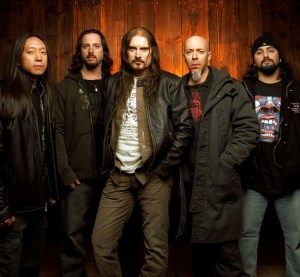
Dream Theater
Dream Theater

First things first though, if we’re making a quantitative claim, the word “better” has to be defined—the word is quite ambiguous. In my claim, it refers to more technically proficient.

We would quantify that Larry Bird was better than other NBA stars by using his career statistics. But how can we quantify one musician as more technically proficient than another?

It’s simple. I could choose any Beatles song (and I do mean any), and challenge Dream Theater to play it. Knowing both band’s works as I do, I can all but guarantee that Dream Theater could easily perform the chosen piece within an hour or two, playing it note for note at the same tempo or faster than the Beatles recorded it at, without breaking a sweat.

Now if we flip the tables and ask the Beatles to replicate a Dream Theater song, the Fab Four would be hard pressed to replicate more than 1-2% of them, even if they were given months or even years to achieve said goal. This song should illustrate my point.

I’m not being overly mean to the Beatles, nor overly generous to Dream Theater. Any knowledgeable musician, if familiar with both bands, knows I’m being very fair and accurate here. It’s not that Dream Theater are superhuman (although it seems like it at times), or that the Beatles are incompetent, it has everything to do with the amount of hours both bands put in to mastering their instruments.

The Beatles, like many other famous bands, made catchy songs, sold a lot of albums, and did all they needed to do to make a damn good living as musicians. They likely never felt the need to go further.

Aside from Dream Theater’s Julliard and Berklee educations, something the Beatles did not do, having met Dream Theater on a couple of occasions, I can tell you that they are driven to challenge themselves technically and musically; there is clearly less focus on just selling records.

So why was I wrong for calling Dream Theater “better,” and behaving like such a music snob? While I defined “better” as more talented, I could just as easily have defined it as most record sales—then the Beatles obviously win in a landslide. I began to understand that the whole concept of “better” in relation to art, is innately flawed. If you’re going to use that word, you cannot use it for subjective things.

This was the impetus for my understanding of the difference between art and science.

While sports statistics are quantitative, music is an art form, and therefore largely subjective. It can be quantified to some extent as I did above, but unlike sports, technical prowess is no guarantor of success in music because art as a whole is not about achieving a measurable goal, but merely satisfying the artistic thirst of the user. This is something the Beatles must assuredly be declared the winners of, much to my dismay.

The Beatles
The Beatles

This knowledge began the transition of my love for music into my love for science, as the latter began to seem infinitely more attractive and important.

Art is like science without the burden of having to be correct and accurate. So in my mind, unlike science, art can never truly be important.

When lives are at stake and problems need solved, we don’t call painters, musicians, poets, or philosophers, we call doctors, engineers, and physicists. A 911 call will never yield the work of an artist.

So then I asked myself if science is “better” than art. Are art and science at odds with one another?

Actually, many scientific endeavors started with arts like philosophy or movies. A person simply dreamed without limits, and those dreams posed challenges that science brought to reality. Many scientists were inspired by the arts as children, such as scientists inventing things they saw in sci-fi movies as a child.

So how does this all affect me? My love for complex music is still great, but I no longer insult those who love the simpler stuff. My preference for the conservative-biased Fox News doesn’t prompt me to insult MSNBC watchers. My passion for Ferraris and Corvettes no longer prompts me to insult people who drive Porsches and Lamborghinis.

Corvette ZR1
Corvette ZR1

While I still maintain my preferences, I understand the difference between what I can quantify, and what is truly subjective. Not only am I more accurate in my perception, I’m no longer compelled to insult people for their varied tastes, but instead, often ask them why they appreciate something I do not.

Their answer may not sway me, but many times, it opens my mind to new and interesting things, some of which, allow me to grow my own creative mind by pointing me in a direction I would have never discovered on my own. If there’s anything a scientifically oriented person likes most, it’s learning new things.

So if you find yourself being a snob, calling one artistic endeavor better than another—stop! More often than not, claiming something is “better” is an inherently flawed thing to do. It is an ambiguous word, that without being clearly defined, and applying only to a quantitative bit of data, should never be used to compare one thing to another.

Coke isn’t better than Pepsi, but Coke’s sales are. Know the difference.

Consenting Adults Amendment: How Columbus City Council Screwed The Little Guy

Gary Nolan (and THE Scrappy Doo)

Like many internet writers, I’m an amateur—I do this for the joy of spreading the liberty and rational thought message to any who will listen. If you’ve ever gotten the impression I’m rich, your hypothesis regarding my financial status, is indeed quite flawed.

Many on the left champion more regulation because they say such things protect and/or help the little guy, the underprivileged guy, the poor guy—that’s me!

So let’s see how this is working out for me so far.

In order to help lift myself out of financial distress, I ultimately need to either get promoted, find a new job, or obtain a second job—I’m ruling out the lottery due to statistical improbability. Of the three choices, the latter is the easiest and least risk-involved, so I endeavored to find additional ways to pad my pocketbook.

As I was watching an episode of The Independents on Fox Business, host Kennedy did a segment on Lyft, the peer-2-peer app based car service. It’s a very novel, yet simple, idea.Pinkout81-640x426[1]

  • You have a car and want to earn some extra cash.
  • You download the Lyft app and apply to be a driver
  • They do a quick background check to ensure you’re not one of Charles Manson’s kids.
  • Then a Lyft mentor comes out, shows you the ropes, inspects your vehicle, then gives you a big pink mustache to put on the front of your car signifying you’re a Lyft driver for users to easily identify
  • Once you’re ready, you launch the app, then signify you’re a driver awaiting a rider
  • Any riders needing a lift would launch the app and select a driver who is available and closest to them
  • You meet up, a ride is given, and upon completion, money is exchanged
  • The driver and rider then both rate each other on the experience. If either rates the other below three stars, they’ll never get matched again

Immediately I thought, this was for me. I have a very clean, well-maintained, low-mileage 2002 Honda Accord sedan that would be ideal.

2002 Honda Accord: According to Columbus City Council—death trap

So I installed the Lyft app, went on to the website, and signed up. I’m a personable guy, I love to talk to people, I can work when I want, and I don’t mind driving. Plus, I get to be self-employed again (I’m a previous small business owner), no jerk boss to deal with—it couldn’t be any more perfect, right? I was genuinely excited!

So Lyft contacted me, set me up with my mentor, but then an overreaching government hit me like a ton of bricks.

My 2002 Honda Accord is two years older than the 10-year-old or newer requirement a recently passed law by Columbus Ohio City Council requires, which meant that legally, I could not be a Lyft driver with my car; I’d need to buy a newer one. Generally speaking, if we had the money to buy newer cars, we likely wouldn’t be looking to drive for Lyft, right?

So these bureaucratic do-gooders, either guided by ignorant benevolence, or pressure from much-richer-than-I taxi company lobbyists (or both), who claim to be out for the little guy like me, took away this little guy’s right to go into business for myself in this manner.

Columbus City Council: AKA People Who Violated My Right To Earn A Living

I’m sure the Columbus City Council patted themselves on the back for their chicanery, touting out how they have protected would-be victims from someone with an unsafe automobile. But this assumes many things which cannot be deemed true with any certainty.

  • It assumes any car 10 years old or newer is safe. (False)
  • It assumes any car 11 years old or older is unsafe (False)
  • It assumes a would-be adult rider cannot make a reasonably intelligent decision about whether to get into a car and accept a ride from someone (Typically false)
  • It assumes that people who want to earn some extra money have the money to buy a newer car (Typically false)
  • It assumes Lyft mentors safety inspections aren’t good enough (Typically false). Remember, unlike Lyft,  government isn’t even inspecting your vehicle. Their regulation’s assumptions are solely based on the age of your car.

As I ponder the idea that I live in a free country where government exists solely to protect my rights, I am appalled that my city council, in a misguided effort to protect others, have harmed me with no legitimate justification—both me, and my car, are quite safe.

While I generally believe our Constitution’s framers did a pretty good job, if you’ve read my previous posts, you’ll recall I’m not afraid to propose constitutional amendments that I think would advance their principles of limited government, and deny power-hungry rights-infringers that which pleases them most.

The 1st Amendment
The 1st Amendment

That said, as a result of this incident, it got me thinking about a new amendment I wish legislators would adopt which would solve this problem and many like it—I’ll call it the “Consenting Adults” amendment.

The right for adults to engage in any agreement among themselves, barring any affected and unwitting third party, shall not be infringed.

It’s simple, and quite consistent with the Constitution’s intent as a limit on the how the government may deny your right to pursue happiness. Whether it be me providing a ride to someone for money; two or more people wanting to get married, regardless of their sex or preference; or any other act wherein consenting adults wish to engage. “We The People” should be able to do whatever we want to do, so long as we’re not hurting anyone else doing it. Libertarianism 101: No victim-no crime.

To be fair, I do understand our government usually acts with the best of intentions when they pass these laws. But sadly, many politicians neither have the intellectually capacity or knowledge to understand the ramifications of their actions to their full extent. Nor do they have the honor to admit when their actions have failed or had detrimental unintended consequences. Such instances should prompt them to repeal these regulations, but they rarely do.

They’re also sorely lacking in the understanding that everything they do, is ultimately done so, at the point of a gun. If such proposals were thought of in this manner, they would often be rejected.

Would you support cops showing up, guns drawn on me, screaming “Don’t you dare give that person a ride in your twelve-year-old death trap, or we’ll shoot!”? I sure hope not. But ultimately, if I defied this regulation long enough, that is precisely what would happen.

SWAT team: AKA People I'd eventually see if I used my 12 year old death trap to give people rides via Lyft
SWAT team: AKA People I’d eventually see if I used my 12-year-old death trap to give people rides via Lyft

Politicians should honestly understand that much of what people ask them to do is simply none of their business. Most of the time, when people say, “there ought to be a law,” they’re wrong. These days, our country is sadly free-ish at best thanks to such people. But if you vote for libertarian-minded politicians, we can correct that.

How to stop Big Brother – A Constitutional Amendment

Gary Nolan (and THE Scrappy Doo)

We’ve all seen them; and we may have gotten a friendly letter in the mail from our local government as a result of them as well. Those infernal speed and/or traffic light cameras.red-light-camera-springfield-ohio[1]

The people who advocate for them say that they are a deterrent to dangerous driving and therefore reduce accidents, but when scientists actually tabulated the results, it turns out those making the “deterrent” argument are often mistaken. big_brother_obama_parody_poster-p228489253510086489tdcp_400[1]

I’m not completely ignorant of the potential benefit of these devices. During the investigation of an accident, all that is truly desired is the truth; these cameras can provide that. If for instance, an accident occurs, and in an attempt to determine who was at fault, the police wish to review footage from a camera, then this is a very good and fair use of such devices.

But when these devices trigger legal action, this is what changes such machines from a technology advancement in investigation towards the ominous Big Brother. George Orwell’s 1984 was not a heart warming story where Big Brother was a robotic June Cleaver after all, I suspect people from almost all political sides were bothered by it.

The reason this is wrong is that it defies the purpose of our government, which by design, exists solely to protect our rights. As such, the point of traffic laws is to ensure people drive safely so as not to harm other motorists, violating their right to life and/or property. The financial penalties should be to help pay for the people to do the work of enforcing traffic laws and to serve as an incentive not to do it again. The government is not a business intended to make a profit, so revenue generation outside the tax structure violates the core of our nation.

So how is a real police officer doing a traffic stop any different from one of these cameras? There are two very important distinctions.

Every day, people manage to drive safely along the highway using the unwritten rule of 5-10 m.p.h. above the speed limit, and they often do so in front of police who rightly determine that as long as people are driving safely, they don’t need to be hassled. But machines cannot make such judgment calls, they are purely indiscriminate.

The second issue is that if an officer on duty sees someone driving unsafely, they will pull them over in an effort to stop them before they harm someone; something I think is often abused, but is necessary nonetheless. There’s never any way to know of course, but it likely saves lives.

A camera doesn’t stop anything however, the motorist continues on their merry way until days later when they receive a letter with their picture on it, if they were driving so dangerous as to likely kill someone, the deed was already done.

So if we understand from the study mentioned above that they are not an effective deterrent, and we know they don’t physically prevent someone from driving unsafely, then their only purpose left in life is investigation, and revenue generation—only one of which should be acceptable.yourspeed[1]

My idea? A “No Big Brother” constitutional amendment. The verbiage would go something like this:

The right of the people to not be policed, fined, or governed by an inanimate object shall not be infringed. Inanimate devices either owned and/or operated by government may not be used as an impetus for legal action.

Governments have already spent millions of taxpayer dollars on these devices, so I’m not suggesting they be scrapped altogether; that would be wasteful. But while 1984 may be fictional, that doesn’t change the fact that these devices are a fairly accurate representation of how something like Big Brother would start if left unfettered. If we endeavor to remain a free country versus a policed-state, that means at some point a line must be drawn.

Our forefathers couldn’t have accounted for this, 1984 was not written or even imagined back then, electricity wasn’t even understood. But this is why they left open the amendment process so that in the future, new restraints on government could be added to fit the times and protect our liberties from an oppressive government, which is the underlying point of the U.S. Constitution.

The line I’m drawing is fairly simple. If  an occurrence needs investigated, use all the technology available to do so. However, if there has been no crime or incident reported, these devices should just be recording information that will be forever ignored.

Our forefathers may not have been able to anticipate a surveillance state, but every ounce of recorded history shows that they certainly didn’t expect nor want the government to be making the king’s ransom.

I never tell a lie, and I’m never wrong. Let’s have some legal reform!

Gary Nolan (and THE Scrappy Doo)

As we all know, politicians are often known for two things: lying and the inability to admit when they are wrong. If you want to see a prime example of both in one instance, look no further than this example from the chairperson of the DNCDebbie Wasserman-Shultz (DWS).

Lying and the inability to admit fault are traits that are generally considered immoral, and are upsetting to the populace these people are elected to serve, but what’s the real reason behind it?

Let’s first discuss the lying which can be either malicious or altruistic.

I’ll give you examples:

  • Malicious: I did not have sexual relations with that woman, Monica Lewinsky ~ Bill Clinton
  • Altruistic: No honey, that dress does not make you look fat ~ Every husband in history

An easy way to tell the difference is to understand who is being protected by the lie. If it’s the liar, then there’s a good chance it’s malicious.

So are all lies that roll off a politicians tongue malicious? Of course not. But, we all understand how malicious lies come about and agree they are wrong, so let’s focus on the altruistic ones instead.

What’s the one type of altruistic lie that’s good? Every time someone called the government because they saw a UFO and were told, “We’ll look into it” when in reality they knew it was the latest super-secret plane the government was testing and weren’t at liberty to discuss—I’m OK with that. The B-2 Stealth Bomber alone is estimated to be responsible for hundreds of reported UFO sightings before the curtain was lifted on it.

B-2 Stealth Bomber
B-2 Stealth Bomber

There is no way for the government to tell Americans their secrets without telling our enemies too. So some things simply must be kept out of the public knowledge base.

With politicians however, most of their altruistic lies are born out of arrogance. Many think voters can’t understand their superior knowledge or intellect well enough to support their ideas. So they lie to get elected, then proceed with their original agenda because “they know better.”

For instance, many on the left lie about the origins of their proposed social engineering policies, calling them anything but socialism, because they know people in America aren’t very fond of the socialist doctrine, even though these politicians honestly believe socialism can be good.

Many on the right lie about their intent to cut government assistance because they know telling people they intend on putting the kibosh to their government aid will be seen as cruel and heartless, when they truly believe it will help promote self-reliance and actually help those it’s expected to hurt.

I would argue that if these policies are good, they will stand on their merits. An intelligent person should be able to explain their position in such a way that reasonably smart people will understand. If socialism or capitalism are good, just make the best case as to why, and let us decide.

It’s hard to paint politicians as completely immoral here, they legitimately think they are doing what is best. But I find the hubris for them to assume they are more intelligent than me, the person they are nominated to serve, distinctly offensive.

Moving on from the lies, let’s discuss the inability to admit wrongdoing.

Although DWS has a degree in political science, not law, she does serve in Congress with a few hundred other law makers, many of whom do have a legal background; our president too.

I’m not attempting to disparage lawyers, it’s a noble profession. But it is common practice for them to vehemently avoid any admission of wrongdoing or offer any apology for a wrongful act. This practice has sadly become part of our fabric, and it affects all of us morally and financially.

Scales of Justice
Scales of Justice

In our current legal system, an apology is admissible evidence against you, so we have been conditioned to never admit wrong-doing. Lack of personal responsibility is everywhere these days, and I think it’s in no small part to our legal system’s exploitation of apologies.

As you saw DSW pirouette around the issue like she was on Dancing With The Stars (They do share the same initials after all), it became clear she knew she had lied, but was adamant about not admitting it.

What can we do about these two issues? While we will never be able to stop people from lying, we can do something about the admission of guilt issue by changing our current legal system.

If we look at health care, many doctors who know they erred when giving treatment will often refuse to give an apology at the insistence of their legal team, due to its evidential liability. Interestingly enough though, a 2001 University of Michigan program showed that while the liability may increase, the number of actual lawsuits decrease as patients are far more apt to accept an apology as restitution than most lawyers give them credit for.

This study shows that we humans care more about personal responsibility than money, and we are capable of forgiveness if it’s simply asked for. So, I have a simple proposal to make a meaningful reform to our legal system.

Introduce legislation that provides certain indemnities to a person when they accept fault. If a person admits their error, apologizes, and/or makes a sincere attempt at restitution prior to legal action being taken against them, (ruling out criminal activity), they should be immune from additional punitive damages in civil court over and above their actual fiscal liability for the damages inflicted.

This one simple change to our legal system could not only introduce a better moral code in our society by encouraging people to accept responsibility, but imagine the dramatic lowering in prices of goods and services, as insurance premiums and general business operating costs drop due to a lower or complete lack of settlement costs.

There you have it, I have improved our sense of morality and helped our economy with a few strokes of my keyboard, and that’s no lie!

The Self-Imposed Death Penalty

Gary Nolan (and THE Scrappy Doo)

After the unforeseen suicide of Ariel Castro, a man who plead guilty to avoid the death penalty in the first place, the Ohio chapter of the ACLU has asked for a full investigation. I have one simple question—why?

In America we have an incessant need to prevent people from killing themselves. Whether it be someone who is depressed, terminally ill, or in prison for a heinous act, we behave as though it is our duty to stop them from ending their own life. But let’s review these three scenarios.

If I had a loved one who was depressed, I would do everything in my power to talk them off the proverbial ledge, and I would want the police to try to convince them otherwise as well; if they were called to the scene anyway. But would I want police arresting them for a failed attempt? Not on your life!

Imagine you were terminally ill with no chance of getting better, on a morphine drip just so you could eke out another few months, and burning through whatever inheritance you had intended to give to your children. Then imagine you finally come to the conclusion that the life ahead of you is only going to get worse, so you just want to end it. Seriously, close your eyes and imagine it. Now imagine some politician telling you that you may not by penalty of law? Now, honestly say you wouldn’t be furious. How dare some bureaucrat insist that you suffer because suicide is immoral in their eyes.

Dr. Jack Kevorkian understood this, and did his best to help those in pain to the most painless end possible, and he was put in prison for it where he eventually died. Every juror, the judge, and the prosecutor should be ashamed at the disgusting perversion of a trial outcome that took this man’s freedom from him when all he did was help people achieve peace.

Dr. Jack Kevorkian
Dr. Jack Kevorkian

In a free society, no one has the right to dictate to another that they must choose to live—it violates the core concept of freedom—that you own your own body. Yet we so often do exactly that. While I suspect that much of this comes from our heritage as a largely Christian nation who consider suicide a mortal sin, legislating religious dogma violates our Constitution and the freedom of those not encumbered with such beliefs.

Moving on to the Ariel Castro situation, the ACLU, an organization I should be in lock-step with based on their name, continues to show that they’re not about civil rights, but instead about contradicting and interfering with any American government agency. Being a constitutional libertarian versus an anarchist one, I believe our government has a place in this country, it’s to protect the rights of others. But unlike many, I also know our forefathers had another duty in mind that was explicitly implied, but never written: they have a duty to stay the hell out of our way.

If Ariel Castro had been attacked by other inmates, the ACLU would be right to want an investigation; prisons most protect prisoners. But if the ACLU had any concern to actually protect civil rights, they’d agree with me that if Ariel Castro wanted to die, we should simply let him. It’s the ultimate civil right.

Analyzing the actions of offenders who have given themselves the death penalty, I can’t see how we as a society have a problem with it. If they feel they did something wrong and wish to atone for it; good for them—it’s their final act of decency.

If they want to protect society because they know that they are prone to do it  again pending a release or escape; again—good for them.

If they simply don’t want to suffer in prison; maybe not good for them, but good for the rest of us. They have assured that society need never fear them in the future.

Part of me wishes to point out the savings to the taxpayer, but fiscal issues should not play into matters of life and death, however I have an idea I’ll get to in a minute.ACLU_oh[1]

Many have said that Castro took the easy way out as opposed to suffering in prison. While I agree; I don’t care. Prison was not meant for the suffering of offenders, we do have a cruel-and-unusual-punishment clause in the Constitution, after all. It was meant to protect society by detaining people who might infringe on the rights of others. By killing themselves, such offenders merely guarantee a safety to society that prisons attempt to accomplish through incarceration.

We all know I’m prone to some blue sky thinking, so what I propose is the exact opposite. If a prisoner wants to die, let them ask to see the warden and volunteer for a lethal injection. Make them wait a period of time such as 24 hours to change their mind, but if that’s what they want, then I say thanks for protecting society from any future bad acts as well as thanks for saving us taxpayers the approximately $28,000 a year we spend to incarcerate them. If we take it one step further, we could even offer a financial incentive to do the right thing. prisoner[1]

For instance, a 30-year-old prisoner is sentenced and decides to self impose the death penalty. The average life expectancy of a prisoner is approximately 78 years old. So 48 years times $28,000 is $1,344,000. If we took half of that money and paid it out in installments to the victim’s families, it would truly be the last decent act of a violent offender, and still save the taxpayers a decent sum of money.

Either way, I think the majority of America, like me, shed no tears for violent offenders who decide to end their own lives. While we are a republic, not a democracy, the Constitution doesn’t forbid it either. So in such situations the majority rules; maybe it’s time the majority decides to make a rule and insist the government let people end their own lives if they want, and leave it up to loved ones to convince them otherwise. But the days of prison having a suicide watch need to end.

Let them be jerks! Deregulating the Heinous.

Gary Nolan (and THE Scrappy Doo)

Imagine you’ve just left your local mom and pop hardware store and mom or pop treated you like an idiot because you didn’t know the difference between a ball peen versus a claw hammer. It happens all the time, right? We get bad service everywhere these days, and that’s part of life. How do we react to it? We don’t frequent that store again unless we absolutely have to.

Dick's Last Resort. The only restaurant famous for being rude. It's their thing.
Dick’s Last Resort. The only restaurant famous for being rude. It’s their thing.

So what actually transpires in this example? You have, in effect, fired that particular store. They work for you for a fee to make a living, and you’ve decided that you no longer wish them to do so. We often consider the firing of an employee a bad or immoral act if the person has committed no crime, but is this hypocrisy? Many of the same people who make such criticisms are the same people who lambaste a company for bad service, vowing never to return, to their friends.

So I want to go out on a bit of a blue-sky limb here with a unique proposal. There should be no regulations in the marketplace unless they fall under two basic parameters:

  • Laws that protect a corporation from violating a persons rights: These would be regulations against practices like dumping toxic waste; stealing intellectual property, patents, etc.; or laws preventing practices that risk the lives of patrons and employees alike not disclosed at the outset. For instance, people who change light bulbs on radio towers or people taking sky-diving lessons are certainly at risk, but they knew that before they agreed to do business together, not afterwards.
  • Laws that preserve competitive capitalism. Regulations such as anti-collusion and antitrust laws that ensure the marketplace remains competitive.

At first, this seems innocent enough, but when I outline what this potentially entails, you may think senility has overcome me. However, hear me out before you dismiss this off the cuff.

Laws that prevent discrimination, harassment, or any other behaviors commonly considered immoral may seem like the right thing to do, but as with any such laws they have unintended consequences.

One issue is that they mask a business owner’s true character, which may be one that you might avoid if they were allowed to be themselves. In doing so, we are affording a person you wouldn’t dream of doing business with greater success than they would get otherwise.

One look at the train wreck known as Amy’s Baking Company and their ensuing media meltdown after Gordon Ramsay had to walk away for the first time in the 100-episode history of Kitchen Nightmares is all it takes to see what free press, word of mouth, and social media can do to right a wronged marketplace of bottom feeders like this couple, and it’s happening without government intervention.

Imagine the New Black Panthers wanted to open up a “African-American Only” restaurant. Obviously I would not be allowed in, but would I want to? Even if the food is great, if the owners and customers are vehemently racist and really don’t like white people, then so be it. I think it’s morally wrong, but the government’s duty isn’t to legislate morality, it’s there to protect my rights—period. I’ll take my business elsewhere just like anyone else who would find this practice offensive.

Just as I never liked Augusta National‘s outdated racist/sexist policies of old, I never felt it was anyone’s right to dictate to them otherwise at the point of a gun, which is ultimately what government regulations are if taken to their ultimate conclusion.

But look what happened with Augusta. The press and people chastised them for being this way, and they eventually got sick of being hated by those of us who actually have a moral compass, and softened their stance accordingly. But to this day, and I know to some this is sacrilege, but if offered a once-in-a-lifetime chance of playing Augusta or TPC Sawgrass Stadium Course, I choose the latter without batting an eye—I doubt Augusta cares though. Freedom dictates Augusta and Sawgrass both be allowed to exist as they wish and fight for market share without government getting involved.

TPC Sawgrass 17th Hole

Going back to Amy’s Baking Company, it was revealed during the show that the owner was not paying his servers the tips they had earned. He was pocketing it himself because he said he was doing much of the work, which was clearly debatable. To Gordon Ramsay’s credit, he announced this to the restaurant, and patrons were none too pleased. At this point, I have little doubt that many of them, as well as the employees and potential future employees and patrons, will never return to this little fascist bistro.

But what if there were laws preventing this? (Actually, I suspect that maybe there are and they just aren’t complying)

Why let the government hide an entrepreneur’s true nature just because it feels right? I want to know what kind of person I’m doing business with, and these morality laws hide that; making me an uninformed consumer in the process. If that business owner hates me because of my race, sex, or religious philosophy, I don’t want to do business with them. So I want them  free to show me who they really are so that I may choose to stay or go.

People often lose sight of what a business is—an investment property owned by an entrepreneur. Just as you wouldn’t want the government prohibiting you from enjoying a stogie in your car, the government shouldn’t be dictating whether the owner of a business can allow people to smoke there. If it were a restaurant and you liked the food, but not the smoke, you can carry out, eat outside, or find another restaurant. You can also suggest to the owner that you may not patron their establishment so long as they allow people to smoke, and let them decide how they wish to proceed. But you, and by virtue of the phrase, “We The People,” the government, have no right dictating to a business owner how they should run their business.US Constitution

So when it comes to business, let them be the jerks that they are, then let the market sort it out accordingly.


Blue Sky Poll: Guns for the poor!

As I was researching open carry laws, an idea came to me. What if the police resold confiscated guns to the underprivileged, but lawfully able masses?

Guns are expensive, and a lot of poor people are simply forced to do without one for protection. But using similar criteria to other government entitlements, police could resell these guns to people who can’t afford a new gun and help these folks out?

The money raised could help the community a bit, the cops could also engage with these people by teaching them proper safety and usage as well as building trust and respect between the police and the underprivileged who are often wary of law enforcement. Plus, we wouldn’t be destroying valuable property that many underprivileged people could really use since their communities are often the most dangerous. A lesson we should have learned with the Cash For Clunkers fiasco.

Or I could just be crazy.

But this is my first blue-sky-thinking poll, so chime in and tell me what you think. Comment below if you wish to elaborate.