Your humble contributor is an avid political enthusiast, science junkie, former small business owner, limited government, constitutionalist, and all around lover of liberty.
I make every effort to use logic and reasoning, not hate, ad hominem attacks, nor logical fallacy arguments.
As I watch the news about the latest incident in London, I couldn’t help but notice David Cameron didn’t hesitate to call it a terrorist act. When Obama refuses to call similar acts terrorism here, you wonder why? The media have often made a big deal of whether or not something is referred to as terrorism by our political leaders, and I find this semantics argument somewhat nauseating. People are dead because of a senseless act, or at least senseless to those of us not mired in dogmatic ideology anyway. Does it really matter what words we use to describe it? What we call it doesn’t change the nature of the act, but merely changes our attitude about it.
Dog Giving Birth To A Terrorist
Being a peaceful agnostic/atheist, I think killing in the name of religion is just as senseless as killing for any other personal reason. Unless that person was about to kill you, your loved ones, or was otherwise threatening to infringe on your rights, you have no reason to use deadly force against them. Per Greg Gutfeld’s public request, I’ve attached a proper picture of a terrorist being born, so as not to give fame or infamy to the real terrorists.
Nonetheless, it seems clear that Obama avoids using the word for two likely reasons:
He doesn’t want to offend Muslims at home and abroad.
He doesn’t want to admit that maybe his administration is vulnerable to terrorist attacks more so than his predecessor, since he was so vocal in criticizing Bush’s handling of this issue.
I find both of these reasons pathetic, and anti-leadership in nature, but Obama seems to relish the idea of somehow being a leader who doesn’t lead.
As far as I know, there has been no official definition that we can apply to decide whether a murderous act should be called murder versus terror. I feel like I know it when I see it, but defining it with words is difficult.
To me, I feel it has something to do with sending a message. Murder is just killing someone because you have an issue with them and you want them dead, or in the case of some serial killers, because you simply enjoy the rush of killing.
Terrorism however is killing someone so that it serves as a message to others to not cross the person or party committing the act—thus spreading terror to others.
Nonetheless, since many seem to want to differentiate between murders & serial killers versus terrorists, I’ll throw it to you, my readers and people who just accidentally stumbled here via a Google search for something quite possibly completely unrelated.
How would you define terror versus murder? What quality or qualities do you think one has that the other doesn’t? Does it matter to you what the president calls it so long as he vigilantly pursues the people who commit such acts? What say you?
By all accounts, the war on drugs, despite Nancy Reagan’s best efforts, has failed. People are not just saying no. So if you were president and legislator, what would you do?
Abortion is one of the hottest subjects of debate among Americans. While science can answer a lot of questions, what it cannot do is define when a life becomes a life versus a growth inside the mother. It’s akin to asking when does cookie dough become a cookie. There is no right or wrong answer to this subject, such conjecture will always be a matter of opinion. So what’s yours?
This past election, Barrack Obama and the DNC-loyals were attacking Mitt Romney and other business people for shipping jobs overseas. Like most patriotic Americans, it upsets me to see jobs leave the United States as well. But was this really a fair criticism of business owners?
As a former entrepreneur myself, let me give you an analogy. This criticism is akin to farting while sitting next to me, then getting upset when I leave because you’ve made the room smell like three-month-old milk and despair.
If we were a statist nation like former Russia, China, Cuba, etc., businesses would exist to serve the state; something many on the left seem to wish were the case here—you know, the people who supported millionaire capitalist Michael Moore by attending his movies bashing capitalism yet fail to see the hypocrisy in that?
The reason I believe this idea is so ridiculous, is because despite my requests, not one of these people can name a statist nation whose people don’t live in absolute squalor. Note that Russia’s GDP has nearly quadrupled in the last 12 years, and they’re budding ideas on capitalism are still being ironed out. So I’ll be happy to consider statism a practical system of governance for maintaining quality of life and basic human rights when a successful example arises.
In our capitalist system however, businesses are the product of a risk an entrepreneur takes to offer a good or service to the public to make a living for themselves, as opposed to working at the behest of someone else. We all know that the greater the risk, the greater possibility for reward. This carrot on a stick is what makes entrepreneurs take such a risk.
So to explain my flatulence analogy; America has the third highest corporate tax rate on the planet. We also have one of the most intrusive regulatory networks as well, thanks to NHTSA, OSHA, the EPA, and other federal and local legislations and regulators. Add labor unions to that, which infect businesses like a cancer feeding off the host until the Hostess dies. All these roadblocks make America a very expensive place to do business. So how is it fair to blame people who leave America when we make it such an inhospitable place to do business?
Let’s ignore all the ideology for a moment and think about this skeptically and empathetically. What are some of the issues of doing business outside the United States?:
There are regulatory issues of your home country and the one you’re doing business in, requiring you to hire a plethora of compliance lawyers and staff just to make sure what you are doing is even legal.
Language barriers exist for nations that do not have English as their primary language.
Shipping, tariffs, and customs expenses increase.
Massive expenses in building a new facility and moving operations from a U.S. based plant to a foreign one.
Travel expenses increase for those headquartered in the United States that have to often visit overseas facilities.
Loss in quality assurances due to lack of direct oversight.
These are but a few issues I can think of off the top of my head; certainly there are many more. So if all these issues exist, why even do it? Because doing it is still more profitable than doing business here in the United States. Stop and think about that for a minute—let it fester in any liberty-minded bones you have in your body. If you’re like me, it should offend you to the core.
Because we are one of the richest nations in the world, American workers are not going to work for the pennies a day that some third world nations consider a reasonable salary, so if we intend to compete in the world market, you’d like to think our legislators would make every effort to overcome our higher wage demands by keeping corporate taxes and regulations as unobtrusive as possible so we can be competitive. Greater expenses make it more expensive to the consumer. Yet, during the election, the people like Mitt Romney were vilified as heartless rich bastards for attempting to rectify this.
I propose we start calling out those who want to bash the rich, playing the hero while doing it. This pure ignorance of economics, history, and logic is offensive. Our economy depends on people with money investing in American products and workers. But why would they when we treat them like dirt, tax them to hell and back, and regulate them like a dog on a choker chain dying to run ahead of its master?
If you’ve ever been in the middle of a productive task and had someone interrupt to “help” you, only to slow you down and make matters worse, then you should inherently understand what government does to entrepreneurship every single day.
Unless we vote for liberty minded candidates, entrepreneurs will observe the basic physics principle of taking the path of least resistance. We have no one to blame but ourselves for electing and re-electing those who are content to push them away to pass “feel-good” legislation that is a product of jealousy as opposed to evidence based hypotheses. When emotion trumps logic, we all lose.
Once you’ve taken the poll, please retweet, share on Facebook, or post on some other media sharing medium of your choosing. As always, the more voters in a poll, the more accurate it is likely to be. Thanks for participating!
In an effort to interact with users more, I wish to engage in some making polls. Plus it’s just fun. So for my first poll, I’d like to ask you if you could elect an atheist president?
Once you’ve taken the poll, please retweet, share on Facebook, or post on some other media sharing medium of your choosing. As always, the more voters in a poll, the more accurate it is likely to be. Thanks for participating!
Si vis pacem, para bellum – If you wish for peace, prepare for war
One of the traits often associated with libertarians is anti-war. I’ve always found this moniker somewhat odd, as I can’t think of anyone who is pro-war. There are merely those willing to fight for their rights, and those who feel there is always away to settle differences without war—you know—the people who have apparently never heard of Adolf Hitler, Saddam Hussein, Emperor Hirohito, et al. If you wish to argue Hussein doesn’t belong on that list, tell that to the people of Kuwait.
I understand that some will consider the 2003 Iraq war the result of a pro-war sentiment, but being the type who doesn’t believe complex conspiracy theories easily, I trust that the Coalition-of-the-willing who decided to re-engage Iraq in 2003 were reacting on what they believed was a real and imminent threat, as well as enforcing U.N. resolution 687, U.N. resolution 1441, etc.
The United Nations
Iraq had violated U.N. resolutions 16 times in total after being driven from Kuwait, which ultimately was the legal basis for going to war as noted here. The threat of WMD’s which turned out to be either Saddam Hussein’s own false bravado, or they were simply moved to Syria as reported by Saddam’s former Air Force general, was perceived to be real by all involved and I will not engage any other wild theories about why we removed Saddam from power.
When people say it was an illegal war and all nations who participated are guilty of war-crimes, I generally assume they are mired in Bush-hatred to the point of being delusional. I’m not necessarily condoning the war, but reasonable people must understand that hindsight is 20/20—had we known he wasn’t the threat he worked so hard to convince us he was, I have little doubt we would have continued to work towards peaceful resolutions with Hussein and focused our military efforts solely on Al-Qaeda in Afghanistan and Pakistan.
But that being said, if we’re not prepared to back up a surrender agreement and/or U.N. resolutions with military force, what is the point of accepting the agreement or enacting the resolution in the first place? If we’re going to allow someone to violate them 16+ times without repercussion, we are a paper tiger.
So about the size and scope of our military, I wish to make a few points.
I believe it is foolhardy to assume that if we just left the world alone, no one would ever attack us. We tried avoiding war during World War II, but Japan attacked us anyway. We are a resource-rich nation with a lot worth stealing, and these resources and our rights are worth defending. Are we involved in too much? Absolutely. Should we be completely uninvolved? Absolutely not.
If we understand point one, then we must have a system of defense. Every organism has a defense mechanism, why shouldn’t we? I understand the idea of peace, love, and happiness, and I generally support it. But it’s hard to have peace, love, and happiness with people who want to kill you and/or take your stuff. To deny this, would be akin to arguing that every serial killer was simply misunderstood and likely provoked by their victims.
If we are to have a system of defense, there’s not much point in having it if we refuse there’s ever a reason to use it. There must be a point at which you decide it is the best alternative, and reasonable people are always going to disagree on when that is. But for me, it’s when us or our allies’ are attacked or credibly threatened.
Ronald Reagan
So with all that in mind, I’d like to reiterate something I noted in my earlier post, Great Leaders Make Results, Not Excuses. While Reagan was often criticized for military spending, and was arguably the greatest builder of the U.S. Armed Forces, every successive president has placed our military in harm’s way more than Reagan did. So how is this?
It may seem counter-intuitive that a president hell-bent on maintaining the most powerful military in the world would rarely use them, but as most martial arts practitioners or gun owners already know, being trained to thwart any aggression against you doesn’t make you aggressive, it just makes you prepared.
For the benefit of those not alive during the Reagan era like I was, it’s hard to appreciate the overall feeling of the people at that time. We were in a cold war with Russia, and mutually assured destruction hung over us like a dark cloud that could send shivers down your spine just thinking about it. A real and rational fear of death was everywhere.
But one thing we understood was that if anyone dared attack us, the sleeping giant that was the United States would demonstrate the “Don’t Tread On Me” flag’s message with deadly consequences. Reagan was as affable as any president in modern history, but there was little doubt he would not hesitate to eliminate any threat against us.
For eight years, no one dared to attack us because of the threat of imminent death that would result. With the exception of Grenada, we were pretty keen to leave them alone too.
Andrei Arlovski
To illustrate this point, imagine you were walking down the street and ran into MMA fighter Andrei Arlovski, even if you hated the guy, you probably wouldn’t pick a fight with him. We all inherently understand the idea of not attacking someone we have little chance of defeating—it’s an example of our DNA’s self-preservation attribute. It’s for that reason that Peace-Through-Strength is the best chance for the safety of the United States.
So when should we attack? I wasn’t alive during Hitler’s reign, but my father was. One point he made to me was that after Hitler was defeated, the people of the allied nations had a collective belief that we could never let another Hitler be allowed to forcibly take over nations in a bid of world dominance. Hitler became more dangerous with every action we avoided taking against him.
Being the world’s last remaining super-power, on occasion, we may have to step in as we did for Kuwait in 1991 for the same reason. Had we not, Hussein surely would have become the Hitler of the middle east without stopping until someone had the courage to intervene as we did.
The United States is undoubtedly spread far too thin around the world. With the miracles of modern technology, we can cut spending by reducing troop levels yet increasing the capabilities of future weapons systems. But the best way to assure the safety of the United States and its allies, is to assure that we are so powerful, no one would dare mess with us.
I will never condone wasteful spending by any government agency, including the military, nor will I condone putting our military in places where we don’t ultimately need them, but I will never believe that reducing our government should involve reducing our military to a level that makes us vulnerable to defeat from an attack. If you truly want peace, you must prepare for war.
log·i·cal: capable of reasoning or of using reason in an orderly cogent fashion lib·er·tar·i·an: an advocate of the doctrine of free will; a person who upholds the principles of individual liberty especially of thought and action


 As a former entrepreneur myself, let me give you an analogy. This criticism is akin to farting while sitting next to me, then getting upset when I leave because you’ve made the room smell like three-month-old milk and despair.
 So to explain my flatulence analogy; America has the third
  If you’ve ever been in the middle of a productive task and had someone interrupt to “help” you, only to slow you down and make matters worse, then you should inherently understand what government does to entrepreneurship every single day.


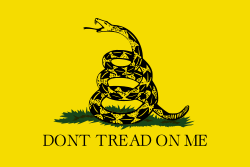 But one thing we understood was that if anyone dared attack us, the sleeping giant that was the United States would demonstrate the “Don’t Tread On Me” flag’s message with deadly consequences. Reagan was as affable as any president in modern history, but there was little doubt he would not hesitate to eliminate any threat against us.

 The Logical Libertarian™