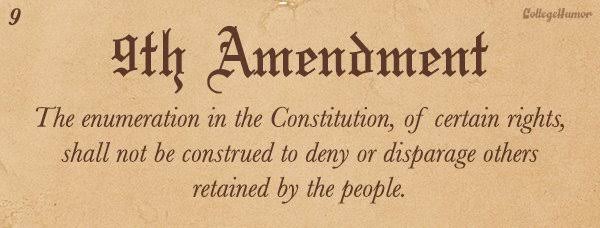
The enumeration in the Constitution, of certain rights, shall not be construed to deny or disparage others retained by the people.
This is the Ninth Amendment to the United States Constitution and unfortunately, it doesn’t do much work. Anyone who’s philosophically libertarian, should be quite bothered by this.
We talk about freedom a lot in the United States, as the core principle of our nation. But legally, it unfortunately is not. Think about these two competing ideologies.
In a non-free country, you don’t have rights unless the government gives them to you. You can’t do whatever you want, unless the government says it’s OK.
Conversely, in a free country, everything should be considered your right to do, unless the people’s government has a “compelling interest” in making it illegal. We’ll talk about compelling interest in a bit, because it’s kind of a “thing.”
The duty of government I think we most all agree on, no matter where you land on the political spectrum, is that your exercise of freedom should end when that exercise harms another. In that case, the government could, and should, restrict that.
This principle is essentially what the Ninth amendment is saying. Just because we didn’t name other rights in the Constitution, doesn’t mean you don’t have them, and they also, are worthy of Constitutional protections.
There was intense debate when our Constitution was framed as to whether the Bill of Rights should be included, for this very reason. The fear was that naming specific rights might imply that anything not listed wasn’t protected—that the list would be treated as exhaustive. The Ninth Amendment was Madison’s direct response to that concern.
That said, did you know the ninth is rarely cited in court nor used successfully to protect the people from government oppression as it was intended? The courts have largely abandoned it.
They put it in the Constitution for a reason—it’s not just there to increase word count. It should do some work, but it just doesn’t.
In our country, the government can and does restrict your freedoms quite often. Unless you can show that your constitutionally-recognized rights were violated by, and you were harmed by, said law, you likely won’t have standing to go to court and challenge it.
Since I mentioned it, it’s worth noting what “Standing” is.
Standing just means you essentially have a right to go to court. This matters, because if you weren’t harmed, and just don’t like a law, the court considers this a political issue you should take up with your congressperson.
The courts don’t want someone to be mad Congress passed a law, and try to get the courts to fix it, like when you’re mad at your mom when she says “no,” and you go ask your dad. So the Court separates political issues which congress handles, from justiciable issues, which they handle. The difference is generally that if you just don’t like a law, take it up with your congressperson. But if you were harmed by a law and you can show as much, take that to court.
I know we mentioned them earlier, but I should define the term “Enumerated Rights.” It just means the rights that are actually laid out in the Constitution by name, like those in the first, second, third amendments, and so on.
The United States Constitution
This system we have, is arguably not freedom, because it operates as if you have no rights, unless the government gives them to you. That is in direct opposition to principles in the Ninth Amendment and the Constitution itself.
This wasn’t always entirely true. Between 1897 and 1937, an era often called the “Lochner Era,” the courts struck down several laws, often citing the 14th Amendment’s Due Process clause, but it was very Ninth Amendment adjacent, in that it suggested restricting people’s freedom, mostly economic freedom, was a violation of their rights in general, even if those rights weren’t enumerated. So what happened in 1937?
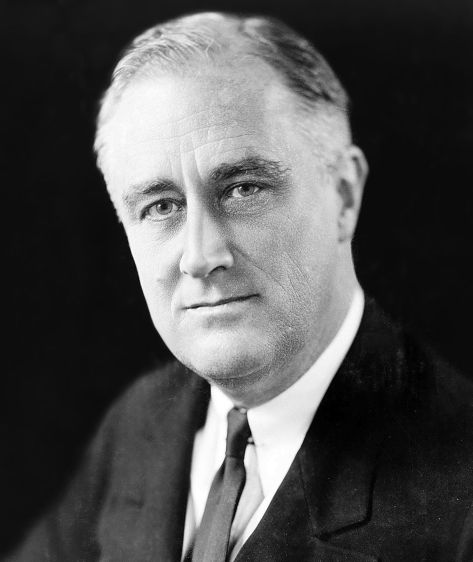
One tyrannical son-of-a-bitch named Franklin Delano Roosevelt (FDR) was president, and he was trying to reshape America with his “New Deal.” It wasn’t just big government, it was massive government. At the time, the court was largely Republican appointees who held laissez-faire capitalism quite near and dear to the heart, and were striking down laws like Nolan Ryan in his heyday.
Roosevelt, getting sick of being thwarted left and right by the Supreme Court, threatened to pack it with new justices until he had a majority — then use that majority to dismantle their rulings and replace them with New-Deal-friendly precedent.
Franklin Delano Roosevelt – President of the United States Served: 1933-1945 Lived: 1882-1945
Sound familiar? We’ve seen this since then. Alexandria Ocasio-Cortez proposed packing the Court when Biden was president to undo the then Republican-appointee majority.
Republicans have their own bag of court manipulation tricks, such as sitting on nominee Merrick Garland, when many argue he rightfully should have been approved. Parties gonna party—neither is innocent.
Many believe that in order to prevent this, Justice Owen Roberts unexpectedly gave FDR a win. Roberts had previously sided with the conservative bloc striking down New Deal legislation, so his vote to uphold minimum wage laws in West Coast Hotel Company v. Parrish came as a surprise.
With the Court appearing to somewhat bend to FDR’s will now, he stopped his efforts to pack the courts. To be fair, such a bill might have failed, but the court didn’t seem to want to find out.
With all that in mind, let’s talk about scrutiny.
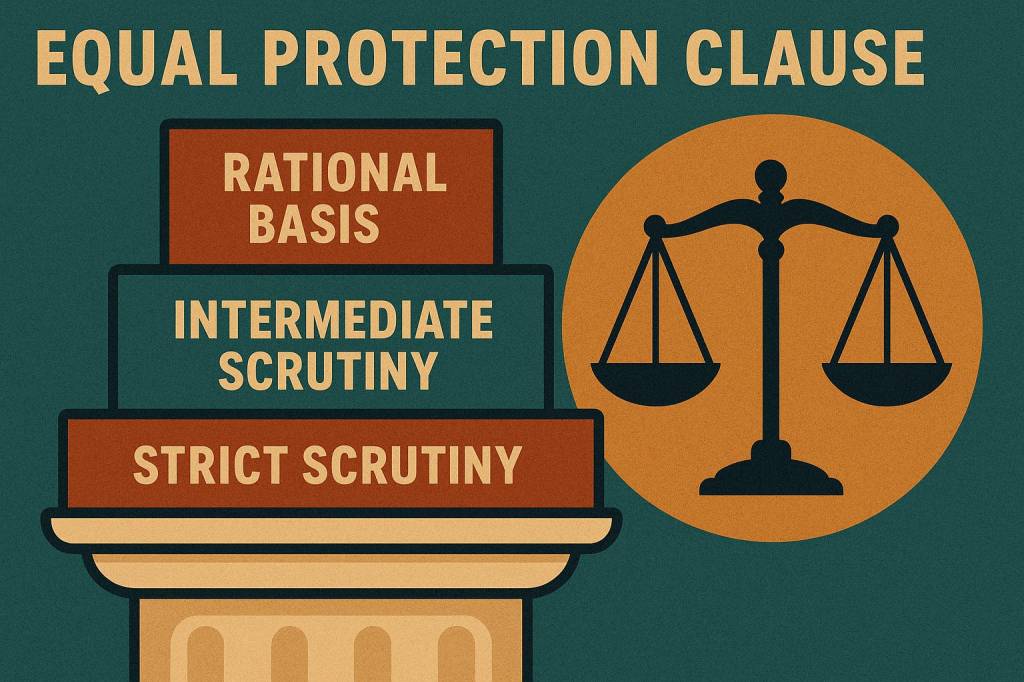
When government restricts your constitutional rights, the courts have developed tests to determine whether that restriction is justified. This isn’t statutory law passed by congress. It’s case law that has formed over many cases. So you won’t find this all wrapped up neatly in one previous case.
Rational Basis
Intermediate Scrutiny
Strict Scrutiny
Understand that this framework only applies when constitutional rights are at stake. If a case is purely about what a law means or how it should be applied—with no constitutional rights implicated—these tests don’t enter the picture.
The default is Rational Basis. It’s kind of like a speed bump. Pretty much everyone can drive over it, but if someone had a broke down clunker, they might not make it.
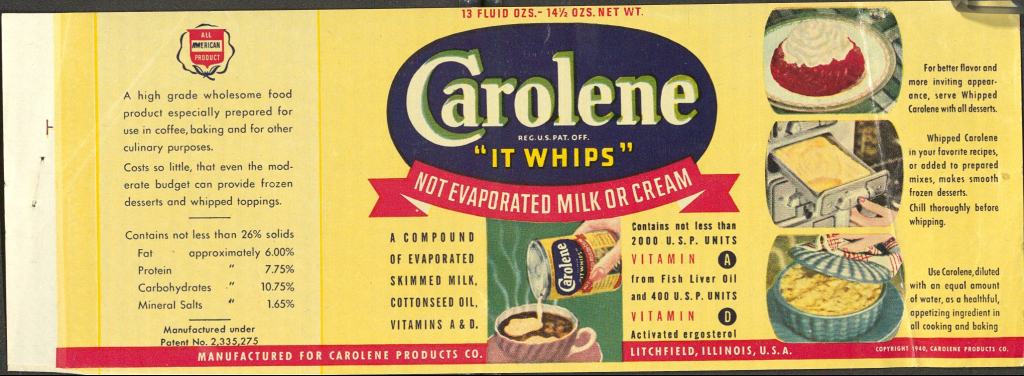
It was an unnamed legal principle for a while, going back to the 1800s, but it was given a name in United States v. Carolene Products (1938).
This case was about a company that made “filled milk” which is milk with added ingredients, such as fat or oil, other than milk fat. They used vegetable oil in their milk, and then sold off the milk fat for use in making butter, and more valuable products.
But Congress passed the Filled Milk Act of 1923, banning interstate shipment of filled milk, arguing it was harmful to public health.
It was nonsense. Carolene Products was selling the valuable milkfat separately for use in butter, then replacing it with cheaper vegetable oil to make the de-fatted milk palatable—and selling the result at near whole-milk prices.
Rational Basis has a test with two prongs.
Does the government have a legitimate interest in passing the law?
Is the law rationally related to achieving that interest?
That’s it. Pretty easy.
Carolene Products challenged the law, saying it violated their interstate commerce rights, but the Court decided that the health interests were legitimate, and the law was rationally related to protecting them.
With Rational Basis, the government generally doesn’t even have to name its interest; the courts have often just agreed that if they can conceive of a legitimate interest, that’s good enough. The second part is just, is the law rationally related—not a large hurdle to jump.
Very few laws have failed Rational Basis, but giving a real-world example helps burn it into your brain, so I’ll give you one.
Obergefell v. Hodges, from 2015, was the landmark case legalizing same-sex marriage. What many don’t know, is two years prior, there was a similar case challenging the Defense of Marriage Act (DOMA). It was United States v. Windsor.
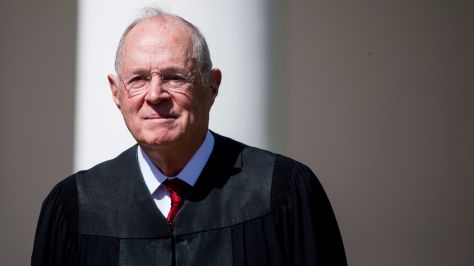
Windsor is somewhat doctrinally contested—Justice Kennedy, who wrote the majority opinion, never explicitly named the standard of review he was applying. But the Court’s reasoning essentially functioned as Rational Basis, and it’s widely discussed in that context.
Anthony Kennedy – Associate Justice: Supreme Court of the United States Served: 1988-2018
DOMA, as you recall, was a federal statute that defined marriage as a legal union between one man and one woman.
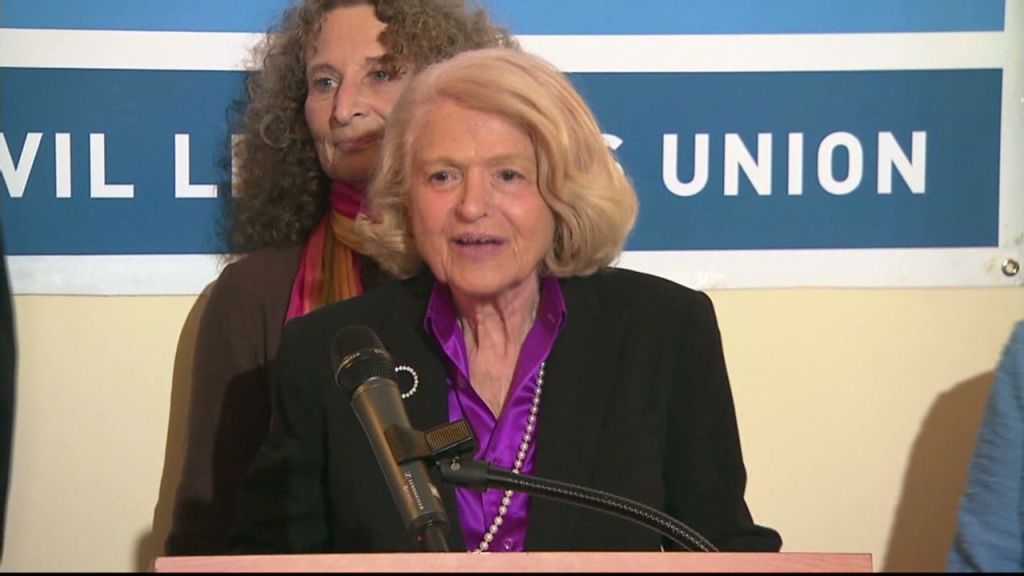
When one partner in a married lesbian couple died, her surviving spouse (Edie Windsor) was forced to pay estate tax because DOMA didn’t recognize her as a legal spouse.
So it was ruled to be a violation of Windsor’s right to equal protection under the law, and the Court’s reasoning, while never explicitly naming a standard of review, essentially applied Rational Basis analysis.
It was a speed bump the Government couldn’t drive over. The Court saw no legitimate reason for government to deny Windsor her rights under equal protection, simply to “defend marriage.”
Edie Windsor
Generally speaking, the harm principle—the idea that your freedom ends where another’s begins — is the philosophical standard I’d argue government should meet. Rational Basis is the legal standard courts actually apply, and it’s considerably more permissive than the harm principle. But even rational basis has its limits, as Windsor shows.
That said, if your law is just discriminating against a certain group without protecting another, courts have held that’s not a legitimate government interest—and therefore such laws fail even the low bar of Rational Basis.
I understand that DOMA was “defending marriage,” but marriage is a thing, not a person. It doesn’t have rights. So DOMA was denying rights to a person who was harming no one. DOMA loses because even the low bar of Rational Basis was too high to clear.
Make sense?
Next up is Intermediate Scrutiny.
The test for this is as follows
The law serves an important government interest — not just legitimate like Rational Basis
The law is substantially related to achieving that interest — more than rationally connected like Rational Basis
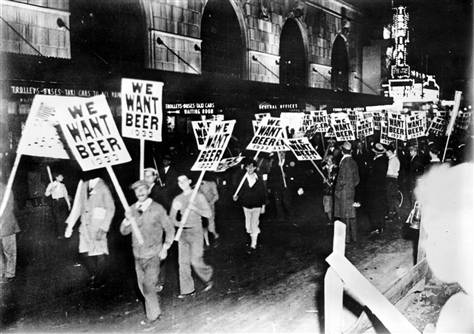
This standard came about in 1976 in a case called Craig v. Boren—a largely unremarkable dispute where Oklahoma allowed women to buy beer at 18 but required men to wait until 21.
The Court decided that discrimination based on sex or gender deserved more than a Rational Basis rubber stamp, but wasn’t quite serious enough to demand Strict Scrutiny. So they created something in between—Intermediate Scrutiny.
So, Test #1: was there an important government interest?
Yes, it was traffic safety. The law was crafted because the Oklahoma legislature felt men got drunk and drove like idiots more than women. So they were trying to keep the roads safe.
Test #2: was the law substantially related?
On that, the Court said no. There wasn’t strong enough statistical evidence to show that men were substantially more likely to cause an accident when drunk than women. So even though the state had a good reason, the law wasn’t backed by data that established a relation to the interest.
Intermediate Scrutiny has since evolved to apply in other cases besides gender discrimination, such as content-neutral speech restrictions. Content neutral just means situations where government restrict when or where you can speak, not what you can say.
Last up is Strict Scrutiny—arguably the most talked about, because it usually involves controversial rights restrictions.
The test for that is:
The law serves a compelling governmental interest
The law is narrowly tailored to achieve that interest
It uses the least restrictive means available to achieve it
Strict Scrutiny applies when:
Fundamental rights are involved, like voting, privacy, free speech, etc.
Suspect classification, such as by race or national origin
Content-based speech restrictions—meaning laws targeting what you’re actually saying, like banning certain viewpoints or subjects entirely, rather than just regulating when or where you speak
Even though these three scrutiny classifications exist as a framework, they weren’t created at the same time. We mentioned Carolene Products, in 1938, and Craig v. Boren in 1976.
But Strict Scrutiny was built over time. The first seed was created via dicta. Dicta is text in a Supreme Court opinion that isn’t strictly binding because it goes beyond what was necessary to decide the case—but it isn’t throwaway either. Justices often use dicta deliberately to signal where the law might go in future cases.
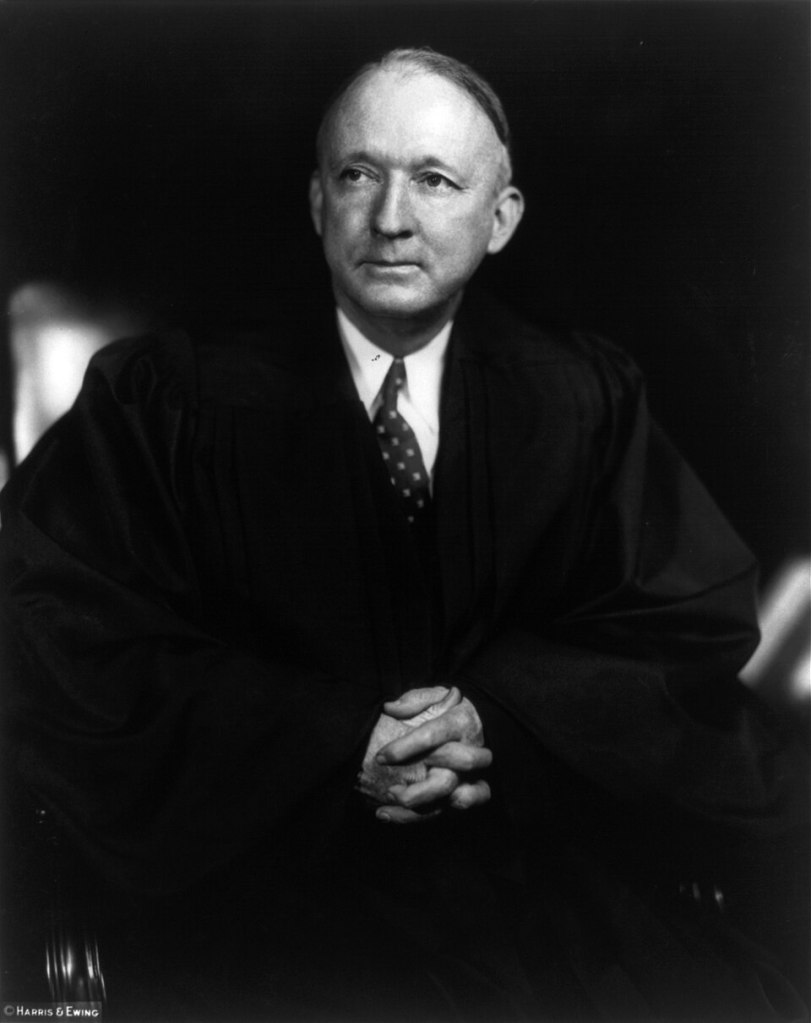
Harlan Fiske Stone – Associate/Chief Justice: Supreme Court of the United States Associate: 1925-1941 Chief: 1941-1946 Lived: 1872-1946
Justice Harlan Fiske Stone, who wrote the majority opinion in Carolene Products, said:
There may be narrower scope for operation of the presumption of constitutionality when legislation appears on its face to be within a specific prohibition of the Constitution, such as those of the first ten amendments, which are deemed equally specific when held to be embraced within the Fourteenth.
What he’s saying is, the Court would let this fly under Rational Basis, because there wasn’t any serious denial of enumerated constitutional rights here. But if government were to attack those rights, the Court may have to consider a test stronger than Rational Basis.
And so they did.
Shortly after, in 1944, SCOTUS decided Korematsu v. United States.
You might recall this little skirmish people called World War II?
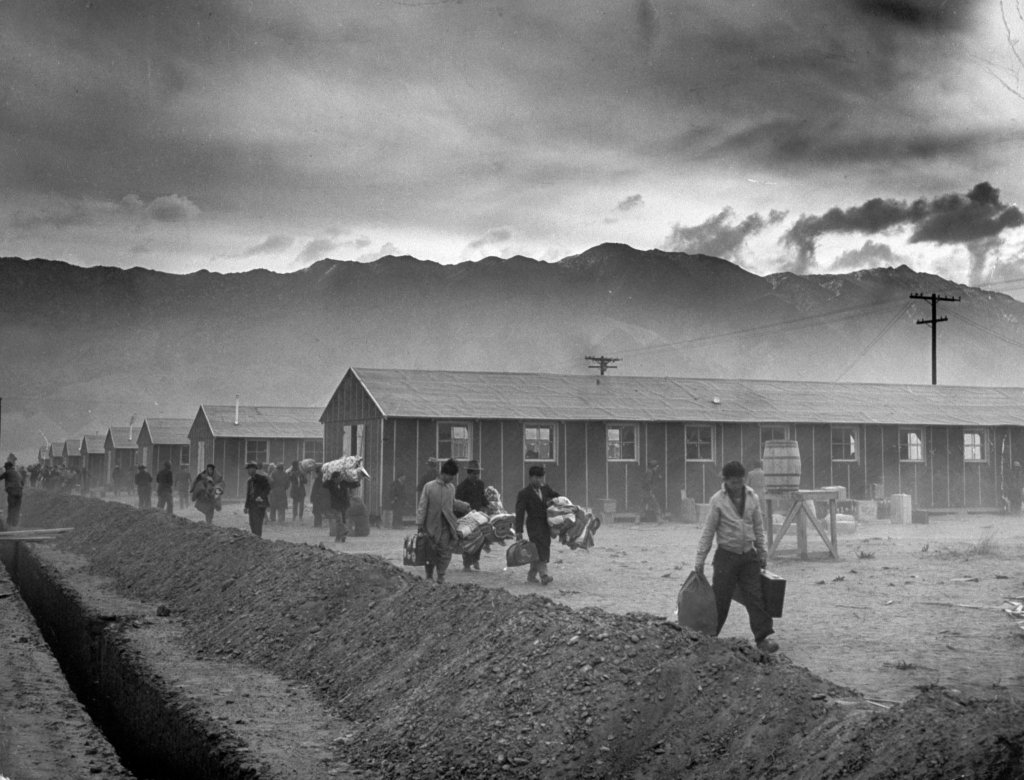
In the wake of Pearl Harbor—’a day that will live in infamy’—one tyrannical son-of-a-bitch named Franklin Delano Roosevelt (again with this fucking guy) signed Executive Order 9066 in 1942, forcing Japanese-Americans into internment camps.
If you know anything about EO’s, you know they are orders from the president, to employees of the executive branch. So how could FDR direct private citizens like Japanese-Americans to go to these camps?
Well, FDR, that tyrannical son-of-a-bitch, and his congressional enablers then passed Public Law 503, which provided criminal penalties for violating military orders issued under Executive Order 9066. Astounding how little respect FDR had for the Constitution.
In this case, Fred Korematsu, a Japanese-American citizen, refused to leave his home and report to an internment camp. He was arrested and convicted of violating the military exclusion order and Public Law 503.
Fred Korematsu
He challenged his conviction, and fought his case all the way to the Supreme Court, but sadly he lost. It was a dark time in America.
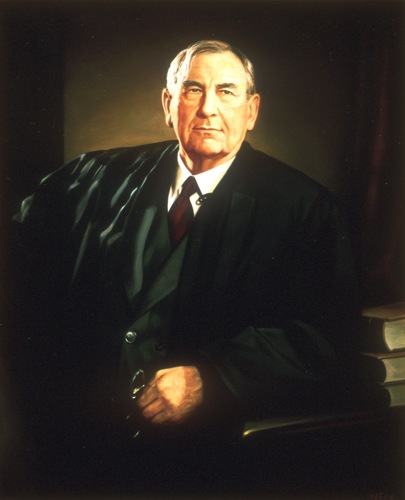
Justice Hugo Black wrote the majority opinion. He wrote:
It should be noted, to begin with, that all legal restrictions which curtail the civil rights of a single racial group are immediately suspect. That is not to say that all such restrictions are unconstitutional. It is to say that courts must subject them to the most rigid scrutiny. Pressing public necessity may sometimes justify the existence of such restrictions; racial antagonism never can.
You’ll notice he said “most rigid scrutiny,” not “Strict Scrutiny.” So that term came later, but again, Strict Scrutiny was built over time, and this was another step on the Strict Scrutiny ladder.
This established that race alone can never justify a law—any racial classification demands the most searching judicial review, and mere racial antagonism can never satisfy it. You can’t just make law against a certain group of people because you don’t like them. You have to have a compelling reason that goes well beyond mere dislike or antagonism.
Unfortunately for Korematsu, this didn’t translate to a win.
Hugo Black – Associate Justice Supreme Court of the United States Served: 1937-1971 Lived: 1886-1971
The Court ruled that because of the war we were in, the government had a compelling interest to detain Japanese Americans, as they were feared to be spies or operatives. So they upheld his conviction, because it wasn’t just about racial animus, it was about a real belief that people like Korematsu might be working for the enemy, even though we now know, that was absolute nonsense.
Another case worth mentioning, from 1942, was Skinner v. Oklahoma. The Court addressed Oklahoma’s Criminal Sterilization Act of 1935, which allowed the state to forcibly sterilize people convicted of two or more felonies involving moral turpitude—though notably not all felonies qualified, a distinction that would prove legally significant.
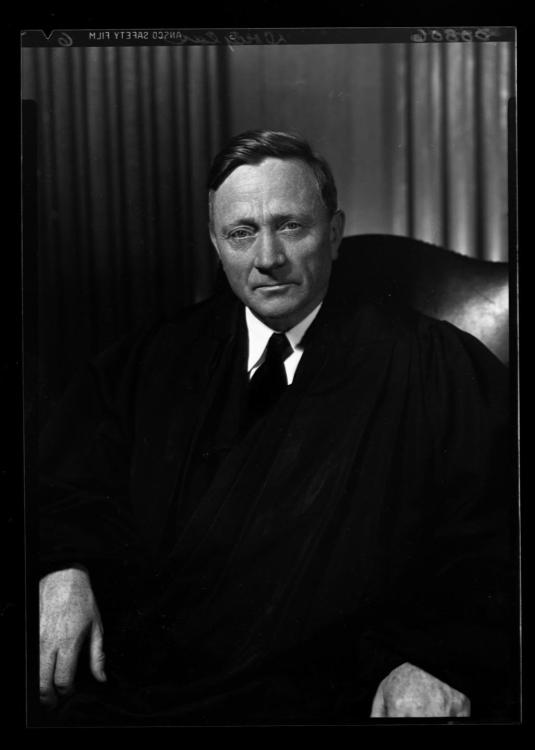
Representing a unanimous Court, Justice William O. Douglas wrote:
Marriage and procreation are fundamental to the very existence and survival of the race. The power to sterilize, if exercised, may have subtle, far-reaching and devastating effects. In evil or reckless hands, it can cause races or types which are inimical to the dominant group to wither and disappear. There is no redemption for the individual whom the law touches. Any experiment which the State conducts is to his irreparable injury. He is forever deprived of a basic liberty. We mention these matters not to reexamine the scope of the police power of the States. We advert to them merely in emphasis of our view that strict scrutiny of the classification which a State makes in a sterilization law is essential, lest unwittingly, or otherwise, invidious discriminations are made against groups or types of individuals in violation of the constitutional guaranty of just and equal laws.
In this case, Skinner won, where Korematsu did not. The Court found that Oklahoma’s sterilization law failed Strict Scrutiny because the state couldn’t demonstrate a compelling interest in sterilizing some felons but not others—the arbitrary distinction between which crimes qualified revealed the classification had no legitimate justification, let alone a compelling one.
William Douglas – Associate Justice Supreme Court of the United States Served: 1939-1975 Lived: 1898-1980
It’s worth pausing here to note a semi-related and ugly part of American jurisprudence. 15 years before Skinner, in a case called Buck v. Bell, the Court took a very different and ugly tone.
Carrie Buck was a young woman who had been raped by a family member and was institutionalized to hide the shame. There was likely no condition she suffered from. She was just a young girl who had been victimized, not only by a rapist, but by her family, who unfairly stigmatized her.
At the time she was called, “Feeble-minded.” Today, it isn’t a recognized condition, but back then, it was a catch-all for people who were intellectually challenged, or sometimes, such as in Buck’s case, people that nefarious actors just wanted to marginalize.
Buck’s “feeble mind” was a condition that authorities said had been present in her family for three generations.
A Virginia law at the time allowed for sterilization of inmates, or other institutionalized people, ostensibly to promote the “health of the patient or welfare of society.”
This time, the question of whether sterilization violates due process and equal protection was answered in a way that should make your skin crawl. In the majority opinion, famous (or infamous) justice Oliver Wendell Holmes wrote:
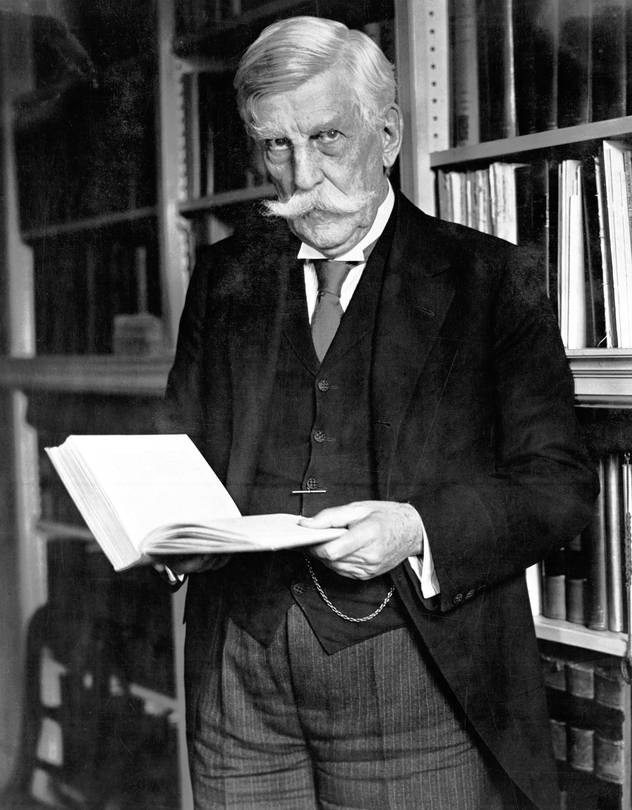
Oliver Wendell Holmes – Associate Justice Supreme Court of the United States Served: 1902-1932 Lived: 1841-1935
Three generations of imbeciles are enough.
Yes, he really said that in a Supreme Court opinion to justify sterilizing a young woman who’s only real crime was being victimized.
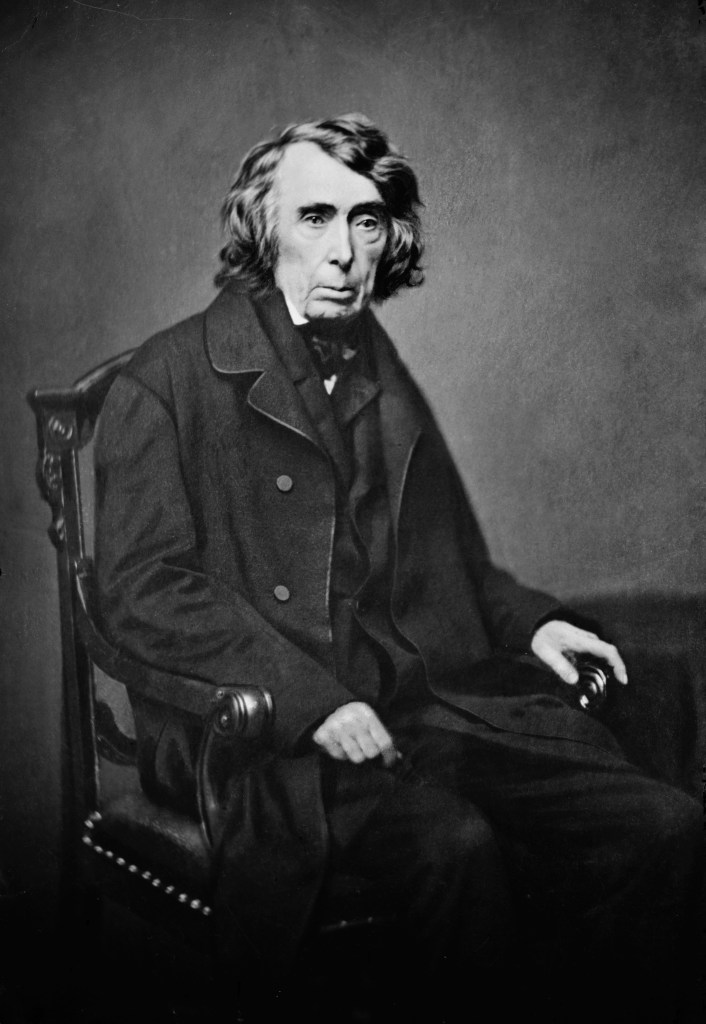
Along with Chief Justice Roger Taney’s opinion in Dred Scott v. Sandford (1857), where he wrote:
They had for more than a century before been regarded as beings of an inferior order, and altogether unfit to associate with the white race either in social or political relations, and so far inferior that they had no rights which the white man was bound to respect, and that the negro might justly and lawfully be reduced to slavery for his benefit.
Roger Taney – Chief Justice Supreme Court of the United States Served: 1836-1864 Lived: 1777-1864
These are possibly two of the most disgusting passages ever penned by someone on our highest court. Both are reminders of why robust judicial scrutiny of laws targeting vulnerable groups matters.
Back to Skinner.
Over the next few decades the three prongs of Strict Scrutiny solidified into the framework we use today—imperfect, judge-made, and still debated, but the strongest tool available for protecting your rights against government overreach.
This brings us back to where we started—the Ninth Amendment, and what it could still become.
So how does this help you, or why should you care?
With this knowledge, if your rights are being violated, you might understand how you could attack those violations in court, using the Constitution and scrutiny as your wingman.
And if you’re motivated enough about protecting all our rights, not just the enumerated ones, YOU might be the person to get the Ninth Amendment involved in more case law—giving those unenumerated rights the legal force they were always promised.
Just because the Ninth doesn’t do much work now doesn’t mean it can’t. The text of the Ninth suggests it could do more heavy lifting than the other nine in the Bill of Rights combined.
log·i·cal: capable of reasoning or of using reason in an orderly cogent fashion lib·er·tar·i·an: an advocate of the doctrine of free will; a person who upholds the principles of individual liberty especially of thought and action





 The Logical Libertarian™