Ever heard of intergovernmental immunity? I sure as hell hadn’t.
During the formation of the United States, state’s rights were a big fucking deal to the founding members. They were wary to create some “all-powerful” federal government—that ish would be too much like the motherfuckers they just shot and killed in order to form our new nation.
That said, they also understood that certain things needed to be controlled by the federal government over the states.
For instance, the Bill of Rights was initially thought of as a limit only on the federal government, but eventually SCOTUS heard Gitlow v. New York (1925).
Some socialist asshole named Gitlow was arrested in New York for passing out commie propaganda suggesting people should overthrow the government. He was arrested under a New York law banning such speech.
SCOTUS, after hearing the case, ruled in favor of Gitlow—the Constitution’s enumerated rights are not rights at all, if the states can violate the fuck out of them. So after that, case law mandated that the rights in the constitution applied to all levels of government, not just federal.
In that decision, SCOTUS was addressing the right to free speech via the first amendment, but it laid the precedent that the states have to abide by the Constitution’s restraints. All the states agreed to this shit—they can’t just back out of it later.
But this isn’t the only time the federal government exerts power of the states. There’s also intergovernmental immunity—which is much older.
Back in 1819, SCOTUS heard McCulloch v. Maryland. McCullough worked for a federal bank. Maryland wanted to tax said bank. McCullough told them to fuck off and die. The case made it to SCOTUS, and legendary chief Justice John Marshall opined that the states cannot tax or regulate property of the federal government, and voila! Intergovernmental immunity was born.
Chief Justice John Marshall
The federal government can allow the states to tax or regulate them, in certain areas, but only if the federal government says it’s cool. We’ll get to that in a minute.
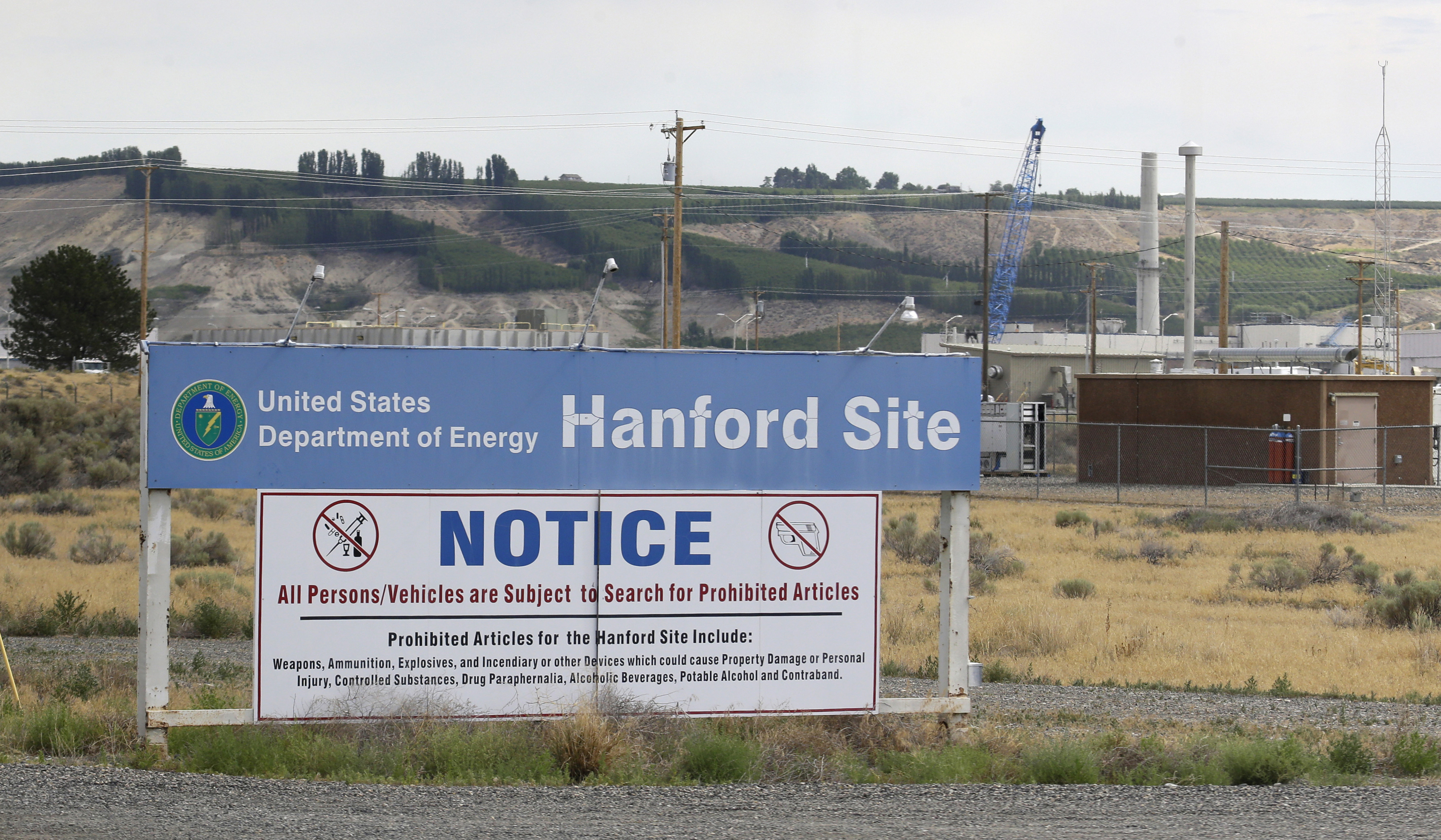
This case revolves around intergovernmental immunity, because the state of Washington has this now-closed nuclear power plant called the Hanford Site. It was built in 1943 as part of the Manhattan Project. It was the first plutonium reactor in the fucking world—’Murica, bitches! Some of the plutonium produced at that site was the fuel used in the Nagasaki bomb.
Back in 1989, they decided that this plant was old, tired, outdated, and ready to be put out to pasture. So since that shit is no longer operational, someone has the duty to erase that mother fucker off the face of the Earth, and all it’s radioactive essence along with it.
That somebody is the federal government, via the U.S. Department of Energy.
The Hanford Site
Now let’s talk about Worker’s Compensation. You know, that government “insurance” program by which, if you’re hurt in the workplace, the government pays out cash money to you?
Well, there isn’t a federal worker’s comp program—that’s usually handled by the states. So, in 1936, the federal government passed 40 U.S.C. § 3172.
Remember when I said the federal government could give the states some power over them if they wanted? This statute gave the states the power to narrowly regulate federal workers on federal property which exists in that state via that state’s worker’s comp program.
Too many times, because of intergovernmental immunity, federal workers were forced to sue the federal government to get paid for on-the-job injuries, so congress passed this law to help.
This saved requiring the lazy fucks in the federal government to pass their own version of such a program.
We know worker’s comp is about injuries that occur at work, such as falling off a ladder and breaking a fucking leg, or something. That’s pretty easy to identify as a workplace hazard and incident.
What’s not so fucking easy, is attributing diseases like cancer, which may be caused by radiation leakage from a defunct nuclear power plant, to a workplace like the Hanford Site. It’s pretty much impossible to prove that someone’s cancer is not just a random cancer they contracted, even if odds suggest it probably is related to handling nuclear waste.
But worker’s comp requires that the claimant can prove the fucking harm was caused by the workplace. So this is a pain in the ass for these people trying to clean up this nuclear site.
As you can imagine, they’re basically real-life Homer Simpsons, working in a pretty hazardous environment. When accidents happen, people will likely get sick and die. Hell, some of the protections they use, may even be insufficient, leading to problems they thought they were protected from.
At the Hanford Site, the federal government was paying claims just fine, until 2018, when Washington changed the rules with H.B. 1723, making it easier for workers to claim workplace injuries there.
Generally, if safety protocols are meticulously followed, barring some fucking equipment failure, these workers should be adequately protected. But Washington noted that protocols often weren’t followed, which then might lead to increased risk.
If workers put their own dumb asses at risk by avoiding safety protocols, it’s hard to blame the workplace for such illnesses. They’re a victim of their own defective idiotic brain—such claims usually aren’t covered.
But Washington was like, “you government assholes aren’t doing a good job monitoring these safety protocols, so we don’t really know if these fuckwits are to blame for their own issues. It could be you lazy fucks, instead.”
So basically, Washington’s rule change went from requiring proof all safety protocols were followed and they got sick anyway, to “if they got sick from a disease that could be caused by exposure, we’ll assume they’re owed compensation. The monitoring of safety protocols is pretty fucking weak at times, and we can’t really determine who’s at fault.”
Even more odd, the law specifically only modified that for the Hartford Site workers. That’s odd, because other people in the state, working for the federal government, the state, or private companies, could be working with similar risks, and subject to the same harms, but for them, they don’t get that presumption of work-caused disease.
Between when SCOTUS agreed to hear this shit, and it was actually heard however, Washington amended the rule with S.B. 5890, which now covers anyone in the state working with radioactive shit.
So the Federal government was like, “Hold on a fucking minute. We were all Kool and the Gang with this shi before, but now it’s getting expensive AF.
It might seem like the federal government wouldn’t care if it covered non-federal workers, as they’re being paid by the state, and thus aren’t on the hook for these additionally-covered workers.
This is where it gets interesting.
Before the latest rule change, the federal government was suing because they felt the state was unfairly discriminating for federal workers. Now that they are applying the rules to everyone, it’s questionable if Washington mooted this case—they’re no longer discriminating in the way the federal government complained.
The federal government is skeptical the latest rule will be retroactive, which Washington says it would be. So the federal government is like, “You assholes didn’t moot shit. We’re still on the hook for these old motherfuckers, and we don’t believe you when you say you’ll apply it to non-federal workers retroactively.
So anyway, that’s the nuts and bolts of this case. Now, let’s check in on the oral arguments…
First up for Petitioners, the good ole USA, is Department of Justice Deputy Solicitor General, Malcolm Stewart.
He opened by pointing out that the changes they made to the law, have not been proven to be to the benefit of the United States, and as such, didn’t moot their fucking claim.
U.S. Deputy Solicitor General Malcolm Stewart
He points out that every other worker on the site, such as state or private workers, are under different rules, and as such, that’s pretty unfair to the United States.
Justice Kagan asked, “if they had passed this new law before you filed for certiori to have us hear it, would you still have filed?”
He agreed, it wouldn’t have been the same argument, but they’d still have filed to ask the court to vacate the lower court’s decision on this, which they lost. But, he also pointed out that he wanted the court to provide clarification on the scope of the 1936 federal law, 3172 mentioned above.
Justice Roberts seemed confused by the statute, and asked Stewart, if the facility were owned by the state, would these workers be covered by state worker’s compensation laws?
I think at the heart of the question Justice Roberts is asking, since the law Washington wrote about these federal workers only applied to them, could they also apply it to the workers if it were a state facility?
Counsel Stewart was like, “Sure, but they didn’t.” He points out that the HB1723 law only applies to Hanford Site workers, which all work for the federal government. So even if the state could apply those rules to other state facilities, the law as written doesn’t allow it. It specifically just calls out the Hanford site.
His beef is that the federal government is being discriminated against other workers doing similar work in Washington, and that’s some bullshit, in his professional opinion. They argued this point, a lot. I mean, a LOT.
Going back to the rule that the federal government has to agree to allow the states to tax or regulate them, which they do here, his argument is that they didn’t agree to be discriminated against. If the rules were the same for everyone else, they wouldn’t fucking be here. But the state, knowing that the federal government has some deep pockets, made rules specifically for the Hanford Site peeps, knowing the state or its business, wouldn’t have to pay it, only Big Daddy Fed would.
Next up is SCOTUS newbie, Tera Heintz.
She opened by arguing that while she thinks they win on the merits, it’s fucking irrelevant because it’s moot. They rescinded and replaced the law that was on the books when SCOTUS agreed to hear this shit, so if they still have a new problem, they need to submit a new case and go through the proper channels again.
Tera Heintz of Morgan, Lewis & Bockius LLP
We’ve seen this tactic before, in a New York State Rifle Association case, when states know they’re out of line, but refuse to budge until SCOTUS agrees to take the case, then all of a sudden they’re like, “Our bad, dawg. We’ll change it.”
While it’s possible some states just coincidentally see the light, and admit the errors of their ways, this seems skeezy at best.
She was like, “their complaint is asking you to invalidate a law on constitutional grounds which no longer even fucking exists. She added, even if they win, what victory can you give them? Nothing, I tell you. NOTHING! The relief they sought when they failed, has already been granted.”
This may seem like a fair argument, as the law was rescinded. But this tactic, is again kinda skeezy. Because the new law replacing it, is offensive to the other side in a slightly different way, and they fucking know it. They effectively admit the other side had a point, but instead of just fixing the error, they try to achieve it by another means, and hope that SCOTUS is so stupid as to let that shit fly.
She goes on to point out that claims filed under the old law, are what the other side is worried about, and those claims will be retroactively amended to the new law. But as the other side argued before, there’s no guarantee this is true, and the law is not written with language that suggests it must be applied retroactively. So they don’t trust this shit further than they can throw it.
Remember, that the new law is supposed to make it so that all workers, federal or not, working with retroactive materials, can now get this presumption that their cancers and shit were because of this exposure to hazardous materials.
Associate Justice Clarence Thomas
Justice Thomas wanted to know, “what if people who benefitted under the old law, want their case updated to the new one?” He’s basically asking, what if their condition changed, and they need more assistance. Maybe the new law doesn’t help them as the old one did, so they want assistance under the old law, where they got help.
Heintz argued that workers who were awarded assistance under the old law would simply refile under the new law if they need new assistance. For pending claims, the new law is retroactive and would be applied to them. Any closed claims under the old law, would need refiled under the new one.
It’s worth noting, they’re here in SCOTUS as an appeal of a Washington Supreme Court (SCOW) ruling. Once SCOTUS makes its decision, it will go back to SCOW.
So Justice Roberts is like, “You’re asking us to assume that SCOW will rule this law to be applied retroactively, right?”
She agreed, stating that that’s how they always come down on laws like this. No reason to think they’ll come down differently here.
But Justice Roberts was like, “You know, for us to moot a case, we need some certainty, and courts are kinda unpredictable.”
She surprisingly said she understood, acknowledging justice Roberts may have a point.
Chief Justice John Roberts
She pointed out though, that the opposition are being rather speculative. They don’t come to court today with any claim of harm or damages, nor do they seek any remedy for them.
They’re asking the court to prevent future damages they fear may occur. But we’re telling you they won’t, and we have good reason to argue as much.
Justice Kagan, being skeptical that she had overcome the high bar SCOTUS has for mooting the case (basically knowing how SCOW will rule), she asked, “Do you have any precedent where we mooted a case just based on previous similar ruling from a lower court, and thus assumptions about how they’d come down on a case we’re considering?”
She didn’t seem to have any cases to cite, but argued that the court could do it if they want.
Justice Gorsuch, jumping on Kagan’s question was like, “By what authority would we just vacate the lower court’s decision, if it’s not moot?”
Counsel Heintz again, surprisingly admitted she didn’t have an answer for that. Justice Gorsuch chuckled and said he didn’t either, and they moved on.
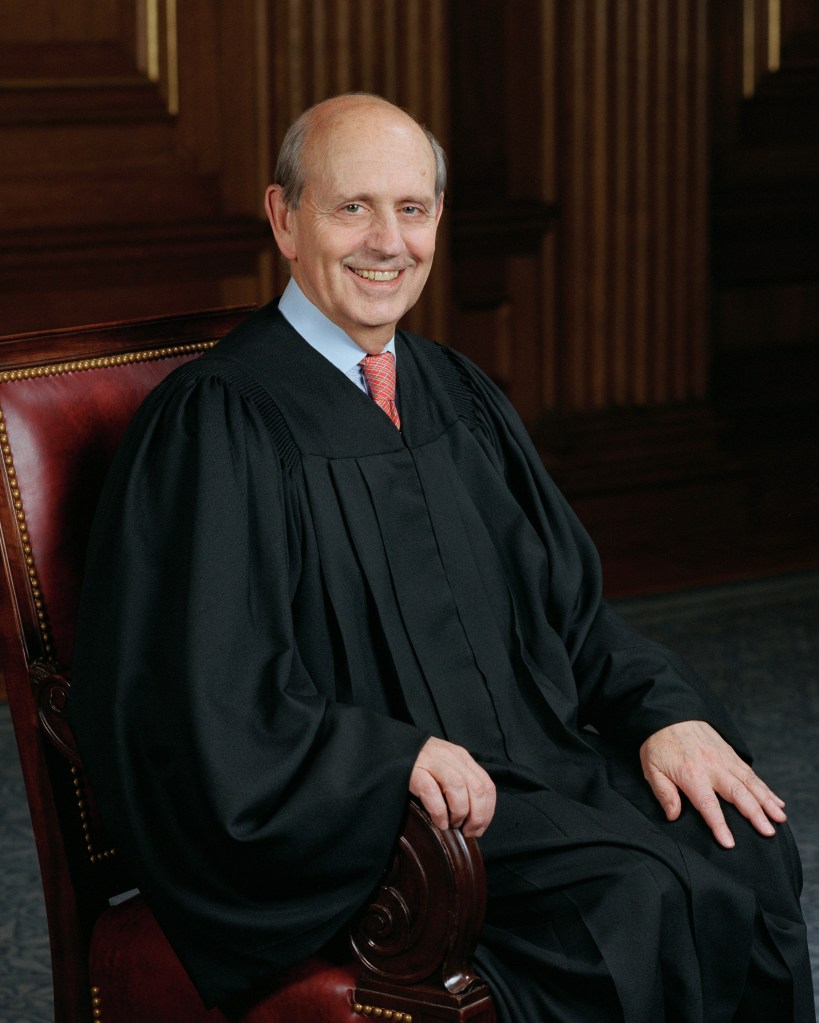
Justice Stephen “Crazy Hypothetical” Breyer, who’d apparently been working on this hypothetical for days, was like, “OK, the old law was about a geographical area, specifically, the Hanford site, and people who worked there, who just happened to be all federal workers.
The new law says it applies to any structure and its lands.
Now imagine, some people who work on the river cleaning out muskrat nests. (Yes, he really said this)
These muskrats pick up some of this radioactive waste, and transport it to their nests. The people cleaning those nests are now exposed to danger, but they’re not near any “structure and its land.”
So what about those workers? You say the new law is very specific, but I’m betting the law doesn’t say a fucking thing about muskrats and their nests. So, I say, it isn’t clear.
What do you say to that?”
She was like, “First of all, you need to stop hitting acid before you come into the courtroom. Secondly, you’d review their case solely on the text of the new law. “
But justice Breyer was like, “But imagine these people filed fourteen claims under the old law, and they won the first thirteen under the old law, but 14 isn’t decided yet. Now, the federal government wants their money back on the first 13, and they want the worker to lose on claim 14, even though the precedent was decided in the first 13 that they won. What say you?”
She was like, “Claim 14 is independent. The 13 previous have no effect on the pending 14th claim, which can only consider the new law’s text.”
Justice Alito then asked, “If this old law is so dead, why do you care if we invalidate it?”
Associate Justice Samuel Alito
Her response seemed to suggest that she was simply trying to save the justices some time. Not sure I buy that argument.
I think the concern for them is that if SCOTUS issues a broad ruling, it could fuck up their new law, too. But if they moot the case, then nothing changes for them.
Justice Alito then asked if the 1936 waiver law allows the state to single out a particular federal facility by name?
She agreed that it could, and that in fact, when the 1936 waiver was enacted, states were already doing that. So this is why she thinks the oppositions argument is invalid.
It’s also worth noting, that this seems to only apply to workers contracted by the federal government. Federal workers are covered by the Federal Employee Compensation Act (FECA). She wants to be able to discriminate against these workers who are specifically, not employees of the federal government, just simply paid and contracted by them.
You might have thought that Justice Stephen “Crazy Hypotheticals” Breyer had worked so hard on his muskrat hypo, that he was exhausted. But he was not.
Associate Justice Stephen Breyer
He then jumped in with this:
I mean, that is exactly the question that is bothering me.
I mean, one day in the legislature a group of federal employees from Hanford show up and they say: You know, it’s tough being a federal employee.
People in the state make much more money.
We have more dangerous jobs.
And the state laws generally are pretty fair to their workers, but try working for the federal government.
This is supposed to strike a chord of agreement. So they say: Now you can’t do much for us because you’re a state legislature, but I’ll tell you one thing you can do.
What you could do for you is you give us, if we’re hurt, and define hurt very broadly, please, so that if we’re even hurt a little bit, we get millions. Now we’ve got to watch that number but, really, it’s high.
And you know the wonderful thing? If you make private employers pay this in the State of Washington, they are voters, so you have to worry about them. And if the government pays for it in the state, well, that’s a problem, you’re going to have to raise taxes.
But do you know who’s paying for this one? The feds.
The feds will pay, the taxpayers in the other states.
So let’s go and really hit the ceiling and we’ll really pay a lot of money and we won’t have to pay for it. Okay.
I know projects like that.
I won’t say which they are, but there we are. Now, to me, did I think Congress intended that? Hmm.
It’s going to take quite a lot of doing before I think they wanted that result.
Now that’s that’s where I am.
So what do you think?
Counsel Heintz responded by pointing out that if congress doesn’t like it, they can always amend the waiver—that’s their right. It’s a broad check against the abuses Justice Breyer outlined in his hypothetical.
Justice Kagan, not interested in hypotheticals like Breyer, glommed on to his line of questioning, though. She asked:
Ms. Heintz, I think the question was really a question of, like, you know, maybe you’re right about the text, but why would Congress have done that? I mean, we can’t really believe that that’s what Congress meant to do. And if you take all the other statutes which you gave us and you said, look, the text is different, and you’re right, the text is different. But, at the same time, we know that Congress has a kind of modus operandi with respect to this, and it basically always says whatever you do elsewhere you can do for facilities like Hanford. It doesn’t say, you know, whatever you could dream of doing elsewhere but actually wouldn’t you could do to federal facilities. And I think that that’s what Justice Breyer is asking.
Like, what sensible Congress would have written the statute the way you say it ought to be read?
Associate Justice Elena Kagan
Counsel Heintz was like, “The federal contractors participated in the political process when the waiver was written. So congress was aware of their concerns and where the shit might go when they wrote the waiver.
Sure, maybe congress didn’t expect us to go THIS far, but they already knew there were other rules like this, that singled out specific facilities.
She also points out that the Hanford site is the riskiest environment in the country to work in. So they surely also knew that special rules might be needed for this fucking place.
Justice Barrett question if the 1936 waiver’s language seemed to be aimed at regulatory agencies, not the state legislature.
Meaning, does the waiver apply to the state passing laws, or only to the regulatory agencies in the state passing regulations? If it’s the latter, then that assumes there’s already a law on the books creating an agency and giving them the power to regulate this.
She seemed to be hinting at the idea that the waiver was granted based on statutes that already existed, and the waiver was responding to them. So if there were new laws passed, would that potentially invalidate the waiver, and require a new waiver to be passed before they could do this?
They agreed, that sounds crazy. But Justice Barrett was essentially arguing that the waiver is directed towards the regulatory agency, not the legislature. But it’s the legislature who enacted the new statute.
Counsel Heintz argued that the waiver did not specifically distinguish between laws and regulations, and as such, the waiver should apply to the new law.
In a unanimous opinion, authored by Justice Breyer, counsel Wentz was unimpressive in her arguments, and the state law is invalidated. When the federal government waived immunity, it certainly didn’t anticipate that the states would bend them over and fuck them in the ass in ways it wouldn’t dream of doing, if the state or local businesses were paying for it.
Hear oral arguments or read about the case here at Oyez or at SCOTUSBlog.
log·i·cal: capable of reasoning or of using reason in an orderly cogent fashion lib·er·tar·i·an: an advocate of the doctrine of free will; a person who upholds the principles of individual liberty especially of thought and action










 The Logical Libertarian™