Tag Archives: Pharmaceuticals

Right To Try Laws

“Right to try” laws have become very contentious in recent years. Because we here at Logical Libertarian pride ourselves on being logical, as you can imagine, our position is that there are two opposing sides of the debate, and the truth is probably somewhere between these ideologies.

Both sides have very valid points, and should be considered. Sadly, what doesn’t happen, is both sides acknowledging the validity of the opposition’s argument, which then might lead to an acceptable solution they both agree is best.

So let’s explore…

First, in one corner, we have the proponents. These are largely libertarian-minded folks like myself. They rightly point out that the FDA approval process for new treatments or medicines is painfully slow.

They’re correct of course, but this is for good reason. When it comes to someone’s life, drugs and treatments shouldn’t be approved willy-nilly. If someone dies because a drug or treatment was harmful, we can’t exactly undo that.

But there’s another problem, even if the drug or treatment is benign.

If there is an approved treatment that works, but for whatever reason, the patient or their doctor don’t opt to use it, because they buy into this unproven and ineffective treatment instead, that ignorant choice could cost them their life. (See Steve Jobs choosing homeopathy for his cancer instead of chemotherapy—a decision he later admitted was wrong.)

Where these proponents are correct, are situations where someone has a treatment resistant issue, or an issue with no approved treatment, they’re potentially suffering from a terminal illness, and they’re open to try anything at this point to save their life. In this scenario, it seems to make sense to allow them to try unapproved treatments, because there’s simply no better option available.

I’m very sympathetic to this argument.

In the other corner, we have scientists. They argue that by allowing people to use these unapproved treatments, we’re opening the door to charlatans and snake oil salesmen, scamming desperately ill folks who are grasping at straws.
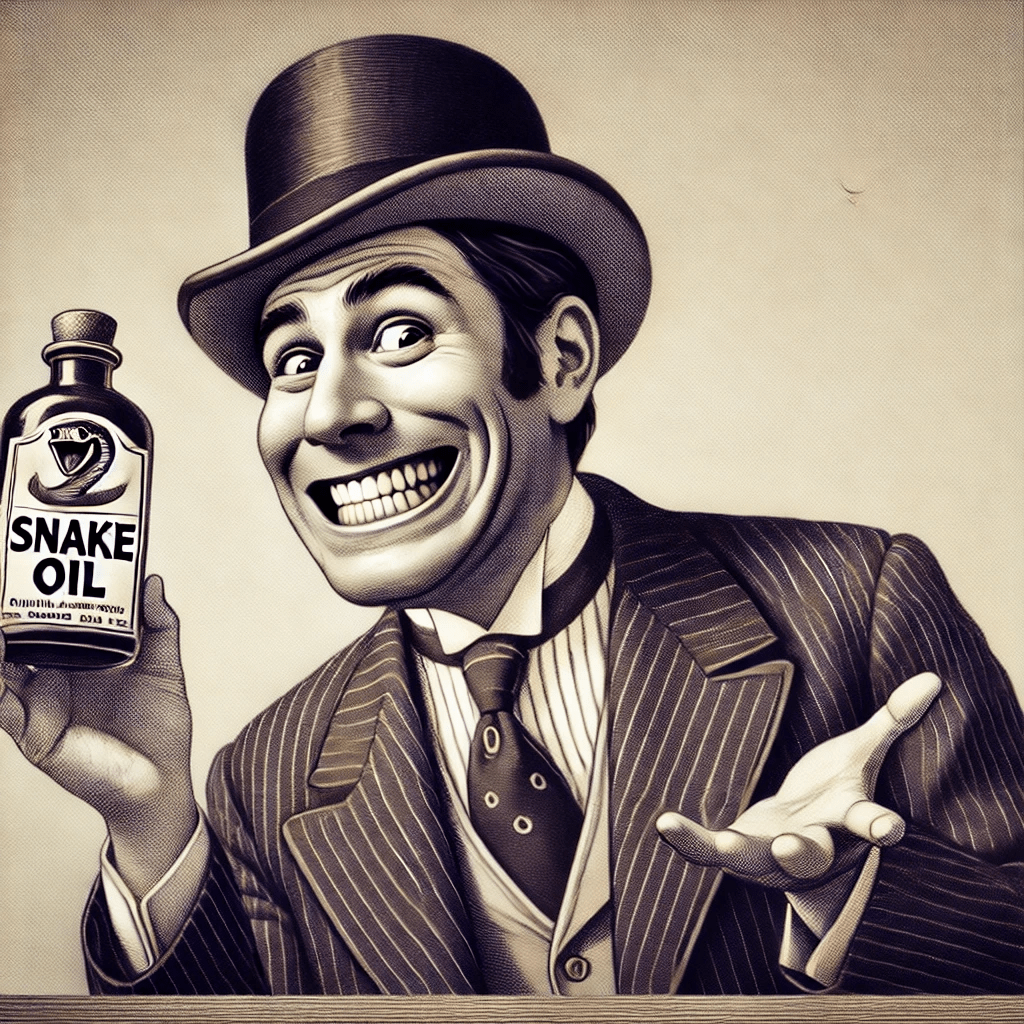
They’re 100% right that this does happen, and will happen at a higher level, if we allow “right to try” laws to pass unilaterally.

The FDA approval process is slow for a reason. There are multiple steps to show efficacy in non-humans, safety in humans, then eventually controlled studies with large sample sizes in humans. After that, it takes years to potentially understand the long term effects of these treatments.

Until scientists understand the mechanisms, outcomes, drawbacks, side effects, etc., giving doctors the green light to try these things, could do much more harm than good.

In a third corner, is me. A non-doctor, philosophical libertarian, who thinks there might be some middle ground which can be found.

My first argument is that unapproved treatments can be placed into four buckets:

  1. Treatments with no studies/data supporting or rejecting them
  2. Treatments with studies/data supporting them, but not enough to reach FDA approval yet
  3. Treatments with conflicting studies supporting and rejecting them
  4. Treatments with studies/data rejecting them

With these buckets, “right to try” laws could have different rules for each, that allay the fears of scientists, while ensuring the rights of people to try potentially promising treatments are also preserved.

Just to disclose my own bias, I think there should be a constitutional amendment forbidding government to get in between a patient and their licensed physician. When I say licensed physician, I’m referring to someone who went to medical school and has a license to practice medicine. Not homeopaths, naturopaths, chiropractors, or others who don’t have a license to practice medicine, but attempt to pass themselves off as “doctors.” I find such behavior reprehensible, immoral, and arguably criminal. They’re con artists if they actually know what they’re doing, and they’re ignoramuses if they don’t.

I know chiropractors are contentious, and some are certainly better than others. But unless they went to medical school and attained their doctorate,  which they didn’t, calling themselves doctors is misleading.

That said, some are at least honest that what they do, provide some temporary relief. But others claim they can cure diseases and such, which are the original claims of chiropractic. That has been thoroughly debunked, and is very irresponsible for any chiropractor to claim.

I hold this idea for an amendment, partly to preserve a woman’s right to have an abortion, especially if her health is at elevated risk. But more generally, just because I think government shouldn’t be passing laws preventing a doctor from performing a treatment that they, and the patient, agree is best for them.

That said, I think government’s most important job, is to protect us from those who would do us harm, including quacks recommending procedures that aren’t backed by an ounce of science (still thinking about Steve Jobs and his choice to treat his cancer with homeopathy).

So I’d reconcile these conflicts of protecting doctor-patient interactions versus protecting patients from malicious practitioners by outlining how I feel about the four buckets above. But understand that first and foremost, my argument to protecting doctor-patient interactions is only about actual medical doctors.

Other so-called health gurus should receive no such protections, and frankly, in my opinion, should mostly be tarred and feathered.

Bucket #1: Treatments with no studies/data supporting or rejecting them

If there are no studies/data supporting them, I’m curious why any doctor would recommend it. But I can imagine a scenario where a doctor has some reason to believe a particular treatment could work, despite no data on it, for or against. That seems to be significantly less likely than charlatans, though.

In this scenario, if a doctor is licensed, that doctor should be required to disclose quite clearly, that there is zero science supporting the idea. But, that the doctor suspects it might be helpful, explain their reasons why, and if the person is willing to take an absolute shot in the dark, then they may proceed.

Bucket #2: Treatments with studies/data supporting them, but not enough to reach FDA approval yet

This is the bucket that I think most people are envisioning when they think of “right to try laws.”

These would be medicines or treatments making their way through the FDA approval process, or being done in other countries with some success, but just aren’t approved here in the United States yet.

Again, let’s assume the position of a well-intentioned physician. They might see the data, and think there’s reason for hope with these. If there’s no approved option for this patient, and the patient has weighed the costs, risks, etc., then by all means, allow them to proceed.

Again, I think it must include full disclosure that it isn’t an approved treatment, and it should be viewed as something to try, only if there aren’t more effective approved treatments, which I think most doctors would choose anyway.

What could get tricky, is if there as an approved treatment that has a low efficacy rate, but there’s this new unapproved treatment that seems to show a much higher efficacy rate, what would a doctor recommend and a patient choose.

We hate to roll the dice on someone’s life, but it’s their life. I think again, as long as they’re well-informed, it should be their choice.

I don’t see an avenue for many charlatans on this path, as they tend to peddle in things which show no efficacy—if there were efficacy, it would be promoted by actual doctors.

Bucket #3: Treatments with conflicting studies supporting and rejecting them

This bucket is admittedly quite challenging. But in the end, since there are some studies showing efficacy, it has some level of hope or promise.

I’d again, make sure that the patient is made fully made aware of the conflicted status, a basic understanding of why it might work, and why it might not, the risks and side effects observed, etc.

From there, the patient can make an informed decision, and move forward.

Bucket #4: Treatments with studies/data rejecting them

For me, this one is pretty easy. It’s not like we don’t have data on these treatments—we do. They have been tested and failed every time.

Of course, any good scientist doesn’t deal in absolutes. Just because there’s no data supporting such treatments doesn’t mean they don’t work. It just means we have no reason to believe it does.

I don’t think any reputable physician should be prescribing such a treatment, and they should be excluded from “right to try” until there is some data to suggest they are safe and effective.

A doctor should inform the patient that such treatments have never been shown to be helpful, and that the doctor, in good conscious, wouldn’t recommend it, lest they be charged with malpractice.


As you may have noticed, in each scenario, I focus on informing the patient thoroughly. This is how I propose the government protect the patient, without standing in the way of preventing a potentially life-saving treatment.

I think these buckets are important, because when many talk about “Right to try” laws, they tend to not differentiate between a treatment which is showing efficacy, versus one that has been thoroughly debunked—those two things should be treated quite differently.

Big Pharma vs Big Supplement

Right behind used car salesman and politicians, some of the most commonly distrusted people in our lexicon are large pharmaceutical companies—if people use the term “big pharma,” you can often assume that their thoughts are less than flattering.

Image result
Turing Pharmaceuticals CEO Martin Shkreli

People like CEO of Turing Pharmaceuticals Martin Shkreli, engaging in a clear example of what can only be called price gouging, and later arrested on securities fraud charges, certainly don’t help the public opinion of the pharmaceuticals industry. And the list of civil and criminal actions against some drug companies don’t help either. As with any industry, there are clearly some bad actors.

Off-Label Promotion/False Advertising

One look at that civil litigation list provided, and you start to see a common theme. Almost all of them are for an “Off-Label” promotion violation of the False Claims Act, originally enacted in 1863. Off-Label promotion is when a drug company promotes a particular drug for treatment of something that isn’t supported by clinical data and thus isn’t approved by the FDA based on that data.

As an example, for men with male pattern baldness (androgenetic alopecia), minoxidil, which is often sold under the brand name Rogaine® from Pfizer was tested on the back of the scalp, often referred to as the bald spot, and as this report from the International Society of Hair Restoration Surgery after a 1-year post marketing study states:

In evaluating minoxidil effectiveness in stimulating hair regrowth, the investigators found the 5% solution very effective in 15.9% of patients, effective in 47.8%, moderately effective in 20.6% and ineffective in 15.7%.

Image result for rogaine


But it was not tested on a receding hair line near the forehead (bitemporal recession), so despite the fact that logic would seem to dictate it would be effective there also, it can only be marketed to restore hair at the scalp until studies confirm its efficacy for bitemporal recession as well.

This kind of false advertising is certainly inexcusable, and I don’t want to claim otherwise—the purpose of this article isn’t to argue that pharmaceutical companies are faultless and incorruptible. But instead, to promote skepticism as to whether they are to be trusted to a lesser degree than supplement companies.

Because of the life-and-death situations or general health implications involved when taking pharmaceuticals, that industry is far more heavily regulated than most—and arguably for good reason.

Image result for regulations

But such heavy-handed regulation has other implications. The more regulations an industry has, the greater the risk they’ll be prosecuted for violations, as their compliance is that much more complicated to achieve.

Said violation may be an intentional misrepresentation, an innocent mistake, or a subjective situation where they feel their claims are fair and accurate, but the courts ultimately disagree.

However, any industry has a list of civil litigation, so the argument that pharmaceutical companies are unique in this where supplement companies aren’t, or any other industry in general isn’t, is patently false logic.

Supplement companies have often been found to make equally false claims through the years, and  as this article from the New York Times shows, the federal government has cracked down on them also.

But it’s imperative to understand that pharmaceutical companies largely make testable and proven claims, where supplement companies almost never do. I don’t think one can fairly argue the people making testable and proven claims most of the time, are somehow less honest than the people who purposefully don’t, because they know they’ll get sued for false advertising if they do.

Profit Motives

There’s this notion that big pharma rakes in huge profits, while supplement companies are promoting all-natural products that work just as well at treating illness, and are being suppressed by the pharmaceuticals industry because they’re so cheap, so big pharma can keep you sick to maintain those huge incomes.

The problem with this argument is that it’s a patently false premise because the supplement industry is incredibly profitable too. As this PBS article from 2016 points out, they’re a $30-billion industry. By comparison, this US Trade Commission report shows that total pharmaceutical sales weigh in at a stout $333 billion.

Big supplement is 1/10th the size of big pharma, but they’re nothing to sneeze at, and at the end of the day, the profit-based-motive argument that decries big pharma is equally true for big-supplement. So one cannot fairly use that to attack big pharma against big supplement. But there’s more meat on this bone than you might think.

Why the Price Discrepancy?

As was noted earlier, the regulations around pharmaceuticals are based on the FDA requiring clinical trial data to support their claims. This is a good thing. But here’s a basic overview of how clinical trials work.

As this information from the FDA points out, (copied and pasted verbatim for accuracy) there are five steps in the drug development process.

  1. Discovery and Development
    Research for a new drug begins in the laboratory.
  2. Preclinical Research
    Drugs undergo laboratory and animal testing to answer basic questions about safety.
  3. Clinical Research
    Drugs are tested on people to make sure they are safe and effective.
  4. FDA Review
    FDA review teams thoroughly examine all of the submitted data related to the drug or device and make a decision to approve or not to approve it.
  5. FDA Post-Market Safety Monitoring
    FDA monitors all drug and device safety once products are available for use by the public.

If you click on the link above, each step is explained in great detail, and they’re incredibly complicated. Especially the Clinical Research portion, which has its own set of four phases within it.

  • Phase 1
    • Study Participants: 20 to 100 healthy volunteers or people with the disease/condition.
    • Length of Study: Several months
    • Approximately 70% of drugs move to the next phase
  • Phase 2
    • Study Participants: Up to several hundred people with the disease/condition
    • Length of Study: Several months to 2 years
    • Approximately 33% of drugs move to the next phase
  • Phase 3
  • Phase 4

Clinical Study Map. Click for more info

As you should easily understand from all of this, at a minimum, 2 years to 6 years of time and money will be spent by the pharmaceutical company, before they’ll ever see a dime of return-on-investment, nevertheless a profit.

But let’s do a little math here. Based on the FDA’s account of how many of those move all the way through the clinical trials process, 70 out of 100 move to phase 2 (70%), 23 out of 70 move on to phase two (33%), and 5-7 out of those remaining 23 move on to phase 4 (25% – 30%). Which means 93-95 out of 100 will not see the light of day, and will be money big pharma will have to write off as a loss. That doesn’t even include the ones that don’t make it through the other four steps that aren’t clinical trials.

So generally speaking, if one drug costs $5-$7 to manufacture, that means a drug company would have to charge, on average, $100 for that drug, just to break even.

When looking at the above, you can understand that since the supplement industry isn’t beholden to all of this, it makes sense that the average pharmaceutical would potentially be twenty times more expensive than the average supplement ($5 compared to $100). Not to mention, they don’t have to invest in all that pesky testing to verify their product does what they say it does either.

Image result for dsheaAs this article points out:

The Dietary Supplement Health and Education Act (DSHEA) of 1994, which was lobbied through Congress by the supplement manufacturers, exempted them from the FDA drug approval process.

How does that compute? Think of it this way. If you’re going to argue some chemical does something to your physiology or health (everything is a chemical, even all-natural supplements, so I’m not talking solely about man-made products), then you simply have to prove it.

If you’re able to prove it, and you want to make that claim, then your product is a pharmaceutical. You will market it as such, because there’s credibility associated with your product if you do so. Not all pharmaceuticals require a prescription after all, things like ibuprofen, NSAIDs (aspirin), and other OTC medications are still pharmaceuticals that make specific, testable, and proven claims. So there’s no harm in marketing your product as such.

However, if you can’t prove it, but you want to sell something anyway, you have to make vague claims that can’t be challenged in court because they can’t be falsified.

For instance, you might say something “promotes heart health.” If something has any dietary value whatsoever, it can fairly be argued it promotes heart health, because nutrients keep you alive. Your basic apple, a juicy steak, or a big fat cheeseburger could make a similar claim, even though the latter two actually can harm heart function too. However, if you want to say it reduces the risk of heart attacks, now you have a very specific claim that must be backed up with data.

The basic gist of the argument is that if your product works, it’ll be a pharmaceutical, and if it doesn’t really do anything, it can still be marketed as a supplement. However, this is not to say that supplements can’t help. If your doctor notes a particular vitamin deficiency, then taking that vitamin supplement is surely an advantageous course of action. But as this Scientific American article points out:

The new studies, published today (Dec. 16) in the journal Annals of Internal Medicine —including two new clinical trials and one large review of 27 past clinical trials conducted by the U.S. Preventive Services Task Force — found no evidence that taking daily multivitamin and mineral supplements prevents or slows down the progress of cognitive decline or chronic diseases such as heart diseases or cancer.

So when comparing the two on the trustability scale, consider this:

With pharmaceuticals, you’re trusting a group who has to support their claims with clinical data under threat of civil action, and therefore spends the millions of dollars to prove their claims.

With supplements, you’re trusting a company who avoids such litigation by making ambiguous claims because they either didn’t want to make the effort to do such studies. Or worse yet, such studies were conducted, and no efficacy was shown for the claim they hoped to make, so they sell it under the guise of an ambiguous and often untestable claim instead.

The Overlooked Downfall of Supplements

With supplements, the reason they’re often unregulated and avoid the skeptical eye of the FDA, is often because the FDA deemed them innocuous, and therefore didn’t need regulated. Think about that for a minute. The FDA basically argued that when taken at their recommended dosages, these supplements do very little, if anything, so there was no need to regulate them.

So how then does one come to a conclusion that such things are better at treating a condition than something which was actually proven to do something, and specifically the something you needed it to do?

But it does get worse. Because there’s a saying in biology that states, “Everything is a poison, what matters is the dose.” In small amounts, most of these supplement compounds are harmless. But as this CBS News video points out, because many people take these supplements on the belief that they can’t harm you, the fact is, some can do harm if taken in excess.

Many people fail to realize that you get almost all the vitamins and minerals you need in your diet, assuming you eat reasonably healthy. So taking a vitamin pill when you don’t have a deficiency of that vitamin, is effectively an overdose. Most of the time, you’re body just sends it out your exhaust pipe, but they can in fact be harmful.

The Naturalistic Fallacy

One of the final arguments I like to address, is the “all-natural” argument. (If you want an explanation of the Naturalistic Fallacy, click the title above.)

Cancer, arsenic, snake venom, and a litany of other things that kill you are also all natural. Many drugs stem from extracting the thing that helps you from a plant for instance, without making you consume other parts of that plant that either don’t help you, or might harm you.

To give you a fictional example, imagine you had a panacea tree. You notice that when eating the panacea tree leaf, that you feel slightly better when you have a stomach ache. So you start eating a lot more panacea tree leaves next time you get an upset stomach, but then you get dizzy because the panacea tree also has a psychotropic substance in it.

So pharmaceutical companies will extract the compound that helps with the indigestion, produce a pill that contains just that, so the next time you have indigestion, you don’t have to eat panacea leaves. You can just take their drug, and not have to deal with the psychotropic side effects from eating the leaves.

That’s clearly an incredibly simplified generic example, but you at least hopefully understand the principle of what pharmaceutical companies might do, and why they should get the presumption of benefit, compared to just eating some random plant that may help somewhat, but harm in other ways.

Expanding on our fictional example, there’s another scenario to note as well. Some of these compounds from a natural source, are so low in that natural source, like 1 PPM (parts per million). But in order for that compound to cure your condition, you’d need a dosage that’s more like 100,000 PPM (or 10%), so you either take a pill that was made with 100,000 molecules of just that compound, or you eat 100,000 of the panacea leaves and blow up your stomach because you ate too much.

Purposefully Keeping You Sick

People argue big pharma only wants to keep you beholden to big pharma by stringing you out on a never-ending supply of drugs. But there’s a few things to note on this point.

If you have an infection, you might take an antibiotic for a week, then you’re done. If you have cancer, you might be treated by something like chemotherapy, be cured, and then you’re done. I’m sure almost every one of you reading this, at one point in your life, had a condition which required you to take a drug for a short period of time, the drug cured your condition, and now you no longer take that drug.

These are all instances where big pharma cured you and did not string you out. But most supplements expect you to take them for the rest of your life, because you’ll be healthier. So who’s stringing you out again?

Risk Mitigation

Many conditions people might have may require surgery. Surgery can be very dangerous and expensive. But there might be a drug that can manage your discomfort much more cheaply and less dangerously. If the condition isn’t life threatening, people will often choose not to have surgery, and just take the drug to manage the pain instead. Things like back surgery for lower back pain and such, come to mind. That’s not big pharma stringing you out, that’s you and your doctor choosing not to take a big risk.

Something May Be Better Than Nothing

Many conditions are degenerative in nature. If you lop a finger off, it won’t grow back. This is true for your bones for instance, as well. So with degenerative disorders like Alzheimer’s disease or osteoarthritis, you cannot cure what is no longer there, at least, not yet.

So sometimes pain medications are the only alternative to osteoarthritis relief. Again, that’s not big pharma stringing you out, that’s your own body falling apart and you managing the pain with pharmaceuticals.

Rheumatoid arthritis and osteoarthritis are different types of arthritis. They share some similar characteristics, but each has different symptoms and etiology.

I say “not yet,” because regenerative medicine (the ability to regrow things on someone that aren’t regrowing naturally) is one of the biggest areas of new discovery these days.

It should also be noted that because researchers are working on regenerative cures, they’re also working to heal you in a short time, then stop treatment once you’re well. If we go back to the “stringing you out” argument, if that was their goal, they’d be pushing painkillers, not spending millions to find cures.

SYNOPSIS:

Both Big Pharma and Big Supplement are hugely profitable. Arguing one is better than the other based on profits is false.

Big Pharma is heavily regulated and backed by science. Big supplement is just a company trying to sell you something that is largely unregulated.

Most people who make pharmaceuticals studied years of biology to do what they do so they could make things that save lives. People who make supplements often don’t have such training, and are largely operating on guesswork, anecdotal evidence, false assumptions, and sometimes, outright lies and speculation which can genuinely be likened to magic and the supernatural in their outrageousness.

You should always be skeptical in life, and I would never promote not questioning big pharma, but if I’m dying and have to trust one of them, I’m going to trust the one with proven results, and I’m willing to pay them in a manner that makes them profitable to do it.