Category Archives: Logic & Reason

Libertarianism: The Non-Hypocritical Ideology

Gary Nolan (and THE Scrappy Doo)

The word liberty is rooted in the word *libertarian—makes sense, right? That’s the cause for which we always fight. But believe it or not, while it may often not seem like it, Democrats and Republicans fight for liberty also.

For instance, Democrats often push for it on social issues such as gay rights and abortion, but they push just as rigorously to deny fiscal liberties to those achieving the American dream of unfettered wealth.PHP491F5DFE68687[1]

Republicans strive for liberty on financial issues such as lower taxation and corporate rights, but they attempt to deny social rights to people via legislation such as the Defense of Marriage Act or The War On Drugs.

Libertarians like myself of course, take liberty to the brink of anarchy and fight for both. We generally believe government’s role should be restricted to protecting our rights to life, liberty, and property as enumerated in the Constitution.

As we libertarians watch Republicans and Democrats squabble over which liberties are important and which liberties are expendable, we wonder why those parties don’t agree that liberty for all is best. It’s in our pledge of allegiance after all.

To be fair to the GOP, there is a new sect of libertarian-leaning Republicans like Rand Paul and Justin Amash to whom this rarely applies, and their rise in popularity is encouraging. I cannot recall a libertarian-leaning democrat, or I’d mention them too.

Congressman Justin Amash (R)

In matters of issues like assisted suicide, recreational drugs, prostitution, gay marriage, and gambling for instance, these acts rarely involve a party whose rights were violated. But all of these practices are still often considered socially unacceptable despite the fact that if you’re not an active participant, they don’t affect you in the slightest.

Legislators tend to look at a behavior they don’t agree with and determine it is their civic duty to legislate it away in order to elevate our collective moral compass. Their proposed legislation being a mirror image of how they would choose to live their own lives. But when it comes to fighting for liberty for those who don’t share their views, they often can’t find the will to do so. Instead, they insist on making futile attempts to socially engineer our great nation.

I say “futile” because anyone who has ever been told they aren’t allowed to do something they really want to do and wouldn’t harm anyone doing it, knows that the simple act of telling them “no,” often incites them to do so even more—making a special effort to not get caught. So these laws don’t prevent such acts, they merely add a new element of danger for those who will likely do them anyway.

I want liberty for everyone, including the people I have little to no respect for. If you’re a member of the Ku Klux Klan or the Black Panthers and want to open a white/black only business establishment; go for it! I think your bigotry and hatred make you a vile human being, but I’ll still fight for your rights to be the biggest piece of trash you want to be and let the market sort it out.

Black Panthers
Black Panthers

Want to go on a crack bender until you fall off a twenty story building because you thought you could fly? I think you’re an idiot, but go for it! It’s your life, live it or end it how you see fit. Just be sure not to land on someone on your way down, thus violating their right to life.

I want to fling poo like a zoo monkey at Westboro Baptist Church members every time I think about those hateful bastards. As I’m writing this, I wish them all the worst possible outcome in life. But if I were a legislator tomorrow, I wouldn’t dream of putting my pen to paper to draft a bill denying their right to spew their massively bigoted and ignorant rhetoric.

Westboro Baptist Church Member

So why would I support these people’s rights to be this way?

It’s important for us level-headed people to know such demons exist. We can choose to either encourage them to change, or marginalize them and ignore them. But believe it or not, I feel they do serve a purpose. It is hard to explain “good” when you don’t have a “bad” standard-bearer to compare “good” to.

It is human nature to want the freedom to do the things you want to do and therefore fight for the liberty of people like you—it’s why all three political camps do so. But the minute you try to quash the liberty of someone you don’t agree with, you have stumbled your way into the land of legislative hypocrisy. It takes a much stronger conviction to fight for the rights of those you despise, but it’s the only way to legislate without being a hypocrite.

So my request to Democrats and the non-libertarian Republicans is simple. Give me one good reason your liberty is important but the liberty of others who don’t share your ideology isn’t. If the answer to this question renders you stumbling for an answer that makes any logical sense, welcome to the libertarian camp—we’re happy to have you. Now stop writing so many new laws; you’ve done enough damage already.

*Libertarian with a capital L represents the Libertarian party. But with a small L, it represents people who just champion liberty regardless of party affiliations. For instance, Gary Johnson is a Libertarian and a libertarian, whereas Rand Paul is just a libertarian.

We would not be alive today if not for skeptics. So what is one?

Gary Nolan (and THE Scrappy Doo)

Although my writings are largely political, the other subject I’m passionate about is science and skepticism—the value of logical thought cannot be overstated. It seems that all too often people will believe what they’re told by a single media source, a politician, a political party, a professor, etc. But as the brilliant fictional “philosopher” Dr. Gregory House always said, “Everybody lies.”

Hugh Laurie as Dr. Gregory House M.D.

Yet when I tell people I’m a skeptic, I get looks of confusion and apprehension. It’s as if I just told them I’m about to profess we never landed on the moon, that Bush was the impetus behind 9/11, that aliens are here among us, or that I’m part of some religious cult. So as a result, I wanted to put some of these myths to bed, but let me address the issues above before I go any further.

  • I believe anyone who believes we didn’t put a man on the moon is ignorant. Click here to see the Mythbusters dismantle these issues on the faked moon landing.
  • I believe anyone who thinks George W. Bush spearheaded 9/11 is disgusting, hateful, and ignorant. This has been thoroughly debunked by many members of the scientific community. National Geographic addressed the 9/11 conspiracy here involving several universities conducting independent studies—please watch. I’m not going to elaborate, they’ve covered it well enough. This nonsense is insulting to the military who would never follow such an unlawful order, even if it were given to them. Our military are far more thoughtful than these hateful idiots ever care to give them credit for.
  • What I know about odds and probabilities leads me to believe there is life in our universe outside of Earth. What I know about physics tells me it would have almost no way of getting here in tact. So yes I believe there is alien life, no I do not believe it has ever inhabited Earth.
  • I’m an agnostic/atheist. I do not believe in any supernatural or spiritual beings. The burden of proof is not on science, as such claims are not falsifiable. The burden lies with the people claiming such phenomena exist. I’m open to the possibility, provided there is any scientific evidence presented to support it—such evidence has yet to be presented.

So if it is not a cult and we don’t have meetings with strange customs like a secret handshake, wrapping our heads in tin foil, or creepy Gregorian chants, what is a skeptic?Tin_foil_hat_2[1]

Saying you are skeptic just means that you question everything (not doubt, just question), and apply the scientific method to answer any questions you might have. Here are a few statements I feel would accurately tell the tale of being a skeptic and some simple rules of thumb to bear in mind.

  • Rule #1 – Extraordinary claims require extraordinary evidence. Skeptics will have an evidentiary based belief system. The greater the claim one makes, the greater the evidence required to support it.
  • While we will often admit a creator is possible, skeptics are often non-religious. This is due to the overwhelming amount of anecdotal evidence and the underwhelming lack of scientific evidence.
  • A skeptic will start from a null hypothesis—the idea that nothing is true until reasonably confirmed with evidence. If you tell me that magnetic wrist band will cure my headaches and increase my sperm count, you’d better have more than a testimonial, which of course are discredited by the placebo effect. Nothing less than a proper peer-reviewed study will do.
  • If we read some random meme on Facebook or Twitter which makes a provable claim, yet seems dubious in any way, we’ll usually assume it’s bunk and not even bother sharing it. If we’re curious, we might check it out on Snopes or other reputable sites, then share if we can confirm it to be true.070e54aedcf606e53698b9f0f2528a9e3f9ecd80b3cf90cd9ca6deb7f0eac351[1]
  • We place our trust in the science. Almost everything we enjoy in life, from gadgets to health care, we have because this method works—it has for centuries.
  • Skeptics are not conspiracy theorists. We don’t invent fantastic tales for shock value or ideology, we present logical arguments, we separate facts from opinions, and we let the chips fall where they may.
  • A skeptic would rarely believe in alternative medicines. If they really do work, proper scientific studies will confirm as much. At which point they’ll cease being alternative medicine and just be actual medicine.
  • A skeptic wants both sides of the argument. In politics, if a Democrat makes a claim, I want to hear a Republican’s or Libertarian’s rebuttal and vice-versa. If a scientist presents an idea, I want a similarly qualified scientist to challenge their findings. One side of a story is rarely accurate and you should be wary of anyone making a claim of absolutes in this manner.
  • We largely will often point out that shows about cryptozoology, astrology, alien abductions, ghost hunting, etc. belong on the The Sci-Fi Channel, not The Science Channel. While presented as science, they’re all largely full of utter nonsense. One cannot make scientific claims about Bigfoot if one does not have a living or dead Bigfoot standard to test.

So why is it important to be a skeptic? If you like being duped, skepticism isn’t for you—ignorance is bliss, right? But as Steve Jobs proved in 2003 when he opted for a homeopathic solution to his cancer instead of what his doctors recommended, being a skeptic can save your life. Jobs’ had been advised that his cancer was treatable and survivable if he were to undergo proper science-based medical treatment. By the time he realized his homeopathic option was bunk however, it was too late.

Steve Jobs - Apple Founder
Steve Jobs – Apple Founder

For those not familiar with homeopathy and why it is junk science, here’s a phenomenal article from Donald Prothero from skepticblog.com. As are all articles on their site, it is worth a read.

But let me go back further into history and explain why I believe mankind owes its very existence to skepticism.

When the black plague was running rampant, many had believed that this was God punishing humanity as he did during the flooding in the tale of Noah’s ark. As such, they felt that there was no way to intervene and stop this deadly scourge, and potentially that it was blasphemy to even try. While they may not have understood the scientific method or the concept of modern skepticism as we do today, it was indeed skeptics who decided that the plague might simply be a biological process with a cure instead of the will of God, applied scientific-like methods to the problem, and proceeded to eventually quash this most devastating of diseases.

While faith gives people comfort, and I would never try to take that away from them, when you start feeling the onset of a heart attack, a stroke, or any other medical emergency arise, who will you call first? 911 or your priest? If you answered 911, you’re already a bit of a skeptic. The next time you hear a claim that seems too fantastic to be true, grab your computer and do some research. I think you’ll find the scientific method quite rewarding once you get the hang of it.

*Please look to the left. You will find a header with a list of sites dedicated to science and skepticism. I encourage you to read as much as you can. While I’m an amateur who is just priming your skeptical pump, these are professionals who do this for a living. Learning is addictive, I hope you’ll check them out.

The often overlooked issue with the Affordable Care Act

Gary Nolan (and THE Scrappy Doo)

Much like oil, natural gas, and other industries with products we simply can’t often forego, insurance companies operate on a pretty thin profit-margin; on average about 3%. We know this because most are publicly held entities, and must report their earnings. While this seems to be too thin of a margin to be true, it is in large part due to these industries not being subjected to the whims of the market as much as others. They don’t need to build up money in the good times to survive the bad—their business is fairly constant.

For instance, jewelry sales, an industry with profit margins that are significantly higher, often tank in a bad economy—that diamond necklace can wait when times are tough. But, you still need gas and insurance no matter what the economic conditions are.

With that being said, if insurance companies could achieve higher profit margins, they owe it to their shareholders to do so. So why don’t they? The problem is that “pesky free-market capitalism.” If one company raises their rates and another doesn’t, the former better be offering something the latter doesn’t or while their profit margins may rise, their actual profits will sink like a mobster with cement shoes.

So now let’s look at the Affordable Care Act (ACA), because a coworker asked me if I was for or against the law.

First let me point out that I can’t say that I’m completely against the law, it’s 9,625 %$#@ pages, depending on how you count it! I don’t know one hundredth of what is in it. There could be 20 pages worth of things that literally say something to the effect of, “…and The Logical Libertarian blog is to receive a $100,000 monthly stipend” for all I know. In which case, my opinion has just evolved in light of new evidence.

Mitch McConnell Standing Next To A Facsimile Of Obamacare In Print Form

But when I consider that the U.S. Constitution is only six pages long, and it’s a damn-effective framework for a whole country to operate from, I’m pretty comfortable in saying the ACA is probably the quintessential Rube Goldberg of legislation—massively overcomplicated.

However, as people complain about this law for various reasons, one thing that is often overlooked is the intent behind it.

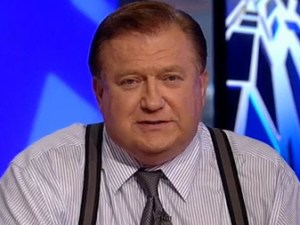
Most of the people behind the ACA take issue with private health insurance companies. While it’s hard to paint a doctor as an uncaring jerk, it’s quite acceptable among the ignorant to attack those evil insurance companies; just watch Bob Beckel on FNC‘s The Five on any given day. The left have conditioned generations of people to forget that insurance companies are simply composed of people with equal unalienable rights as the rest of us, who offer you their money to buy a risk you cannot afford to take yourself. They are not a diabolical monolith hell-bent on draining your blood and back account in one fell swoop.

Bob Beckel - Democratic Strategist on Fox News' The Five
Bob Beckel – Democratic Strategist on Fox News’ The Five

But here’s where the people behind this bill and their atrocious math come in. The ACA was aimed squarely at health insurance costs, not healthcare costs. Since insurance companies are operating on a 3% profit-margin, that means that for every $100 you spend on health insurance, $97 goes to the doctor, medical staff, and insurance company operating costs (something that will have increased, not decreased, to comply with new regulations), $3 goes to the health insurance company’s bank account.

Now lets imagine that this bill completely eradicated every single dollar of health insurance profit, your $100 health insurance bill would now be $97. I don’t know about you, but if I’m trying to reign in burgeoning costs of a bill that’s divided up 97:3, I think I’d focus my efforts on lowering the $97 portion before worrying about the $3 one.

So why didn’t they? I believe there are two issues at play.

Many lawmakers are lawyers by trade, including the president. Legal reforms such as limiting frivolous lawsuits, loser-pays legislation, or my proposal to indemnify people from punitive damages for immediate acceptance of liability (proposed in a previous post here) would severely reduce the income of the ambulance-chaser sub-species of legal counsel.ambulance-chaser_1407[1]

But if we consider the idea that a group of lawyers in Washington are going to pass reforms that would negatively affect the livelihoods of some of their former schoolmates, chances simply aren’t that good. There’s always going to be a sense of loyalty to their fellow law school alum, and sadly it seems to have overridden their oath of office and loyalty to their constituents. These proposed reforms are about justice for those who are being abused by a litigant using the court system as a method of intimidation and ill-gotten gains. There is no rational explanation to oppose them if justice is your goal.

Barack Obama - Harvard Law School
Barack Obama – Harvard Law School

If lowering health care costs isn’t important, just the health insurance costs, they could have opened up insurance markets to increase competition across state lines, dropped coverage requirements, etc., but they didn’t do this either. Capitalism has only been effective for hundreds of years, I’d link to think it has proven itself.

But this bill was passed by people who largely want socialized health care; something they know the populace isn’t willing to accept. They call it “single-payer” because they know “socialism” carries quite the stigma, but I refuse to allow them to rename poison to get me to swallow it.

These lawmakers are offended private health insurance companies even exist because they believe a right to life, and a right to health care are synonymous, and therefore a duty of government. I appreciate the altruism behind it, but that doesn’t make it any less nonsensical.

The problem is that health care isn’t just a thing that exists in the world like food, air, and water that people can consume as needed. It is a service provided by someone who has spent large sums of money and eons of time on education in the field. One person does not, nor ever will have the right to the time and effort of another in a free country.

So if that’s true, and we agree doctors deserve to get paid, why am I against government paying them as a collective then? As cold as it may sound, if I was not physically responsible for you being in a wheelchair, I should not be financially responsible for your wheelchair.

If you want help—ask for it. If I can afford and desire to, I will—it’s called charity, and it’s abundant here. What shouldn’t happen is me being pilfered at the point of government’s gun.

Now that the website is failing, rates are going up, and people are losing their plans that Obama promised they wouldn’t, I think it’s fairly clear that mistakes were made and lies were told. The only way Obama wasn’t lying about being able to keep your plan is if he honestly didn’t know what was in the bill either. The new higher coverage-requirements literally guaranteed this would happen by law.

But maybe they were crazy like a fox all along. Because these policy drops and rate increases, while induced in their entirety by big government, will assuredly be blamed on the evil insurance companies, and then used to promote a healthcare system former Mother Russia would be proud of.

So as we complain about the failed website, the assaults on liberty, the tort reform that didn’t happen, the deregulation promoting competition that were left on the cutting-room floor, and the host of other issues with this law, lets not forget that even if it had been 100% effective, it would still have only lowered costs by a measly 3%, because there was nothing to address health care costs, only health insurance costs; proving once again that math, logic, & reason and big government liberalism are still perfect strangers.

Poker Players Are People Too. Get Government Out Of Our Way!

Gary Nolan (and THE Scrappy Doo)

In 1986, a professional poker player named Billy Baxter fought the law, and the law didn’t win. Baxter v. United States was a landmark decision that forever changed the lives of American professional poker players from that day forward.

Prior to this, Baxter, like all poker professionals, had been taxed on his poker winnings as if what he had done was simple luck, such as winning the lottery—a whopping 70% based on the tax code at that time. However, Baxter argued that poker is a game of skill—he was not just stumbling aimlessly into good fortune the way people who play actual games of chance like roulette, craps, and slots occasionally do.

As such, he deemed he should be taxed under the “Personal Service Income” code at the time, similar to other skilled trades, which had a maximum rate of only 50%. Billy felt the government owed him 20¢ back for every dollar he had been taxed on, and when the arguments were all over, the Ninth Circuit Court of Appeals agreed with him.

Professional Poker Player Billy Baxter

Please allow me to explain how poker is different from other methods of gambling.

A true professional poker player is someone who consistently wins, and there are thousands of them. If it were a game of chance, the winnings would be divided up randomly amongst all parties playing. One person might win more than the other in a short span, but over time, unlike actual games of chance, poker has shown that people can consistently win by employing effective strategies.

A Nevada judge who sided with Billy was quoted as saying to one of his differing-opinion counterparts, “I find the government’s argument to be ludicrous. I just wish you had some money and could sit down with Mr. Baxter and play some poker.” His point being that the dissenters who thought Baxter was just lucky shouldn’t be afraid to play against him with their own money to prove it—there were of course, no takers.

Another important point in his favor is that depending on the variant of poker being played, a high percentage of poker hands are won without any player’s cards being shown. This is due to all other players folding as a result of the actions of the hand winner who may or may not have been bluffing. It cannot be the luck of the cards, when the cards often don’t factor in.

In an amazing feat of skill, poker pro Annette Obrestad famously won a tournament online without ever looking at her own cards, simply by employing behavioral analysis of her opponents and the mathematics of odds and probabilities. To argue that this was luck would require a gross misunderstanding of the word luck.

Professional Poker Player Annette Obrestad

So why is poker and gambling in general treated differently in the eyes of the law?

Well, the historical issue I suspect, is that gambling of any kind is considered a sin in the eyes of many religions. Older repressed generations conditioned people to believe such activities are bad, and like any old dogma, it can take generations before logic wins out over ignorance.

Poker is simply math, game theory, and psychology; fields that are well-respected on their own. But those who don’t play poker simply don’t know that.

Thanks to the movie Rounders, (a phenomenal cast and script; I highly recommend it) and to the Cinderella-story win of Chris Moneymaker at the 2003 World Series of Poker’s (WSOP) Main Event, where a simple $40 entry fee into a lower-level qualifying tournament was parlayed into a $2.5 million dollar payday, poker has started to permeate the mainstream as more people see the allure of this mentally challenging game. The fact that it can also be a decent source of revenue if done right doesn’t hurt either.

Gone are the days of thinking poker players are degenerate gamblers—these folks are often brilliant minds, like M.I.T. grads, Mensa members, or both in the case of award-winning actor James Woods, who often plays in the WSOP Main Event, along with many of his other acting peers like Ray Romano and Jason Alexander.

With Baxter’s 1986 court case win coupled with the evolution of knowledge of poker, you would think poker players were free from government intrusion, but you’d be dead wrong. This brings me to the point of this blog.

On April 15th, 2011, the U.S. government decided to intervene into the law-abiding actions of poker players throughout America. In United States v. Scheinberg, the case that brought about poker’s “Black Friday.” The government shut down three major online poker sites, Poker Stars, Full Tilt, and Absolute Poker. Full Tilt Poker, as it turns out, was engaged in nefarious activity, which I won’t go into here, but here’s a link. The other two sites however are still quite legitimate, albeit outside the U.S.

Actor James Woods
Actor James Woods

The issue with this was quite simple. Thousands of people were making a living playing poker on these sites. They weren’t competing with us normal folks for jobs, they already had one. On Black Friday, the government not only infringed on the American people’s right to pursue happiness, but they actually rendered thousands of professional poker players effectively unemployed.

Barack Obama has stated he intended to create jobs during his presidency, so I’ll never understand why he allowed his justice department to put so many out of work.

A recent Rasmussen Poll shows that only 40% of Americans oppose the government allowing and regulating online gambling, and for poker players like me, it is encouraging the majority favor and/or are open to it. But I hope that more limited-government minds will start to get behind the idea of getting government out of the way of those of us who used to like to play online.

Some conspiracy theorists think the government is simply concerned about its ability to collect tax revenues from these players. While this may also be true, logic dictates I shouldn’t engage in such theories without empirical evidence to support them.

There is hope however; on April 30th, 2013, Station Casinos went live with UltimatePoker.com, albeit, only for residents of Nevada.

I believe there is a reasonable libertarian case to be made for a federal gaming commission to exist; protecting our rights to property by ensuring these games are on the up and up, even if the anarchist wing of libertarianism hates me for saying it. But as long as we continue criminalizing online poker, these sites will go outside the U.S., and a good source of income and tax revenue will be lost.

Even if the tax collection issue is real, legalizing it could simply be a matter of requiring online poker sites to submit W-2’s at the end of the year for all winners, or better yet, get rid of income tax in favor of a consumption tax as the Libertarian Party promotes, and stop worrying about it altogether.

Poker players are intelligent and respectable competitors in a sport of the mind, and it’s time to let us play without government intrusion. Whether it’s a game of skill or a game of chance, one thing’s for sure, it’s none of the government’s concern whether I fritter my hard-earned money away on poker when they wouldn’t care if I did so playing golf or on a $40,000 plate from a Democratic fundraiser.

So I implore those of you who don’t play to not be part of the ignorant group of folks who want to take our rights to compete from us based on old biases, but instead, stand with me and repeat the libertarian code, “Mr. politician, mind your own damn business.”

Forced Medical Treatment Poll

In Ohio recently, an Amish girl was given chemotherapy by doctors despite objections from her parents, who opt instead to have faith in God to heal her. The government appointed a guardian to the girl on the basis they were protecting her right to life, a Constitutional duty of government. But yet this is also a violation of one’s right to religious freedom.

So where do you stand on this issue? Feel free to comment below after voting if you wash to elaborate on your reason for voting.

The Point Of A Gun

Gary Nolan (and THE Scrappy Doo)

On any given day, we are bombarded with news media, film stars, and sometimes just random citizens who champion the idea of government doing more to solve all the world’s woes. Those of us on the side of liberty think these folks are misguided and/or ignorant, but the question has always troubled me as to why two people, often of similar intellect, can come to two drastically different conclusions about the role of government.

I pride myself on embracing empathy. I try to imagine what it is like to think the way my ideological opponents think; it helps to break down any claims of theirs I consider erroneous, if I first understand them. While sometimes I get frustrated to no end with the semi-socialist mantra, I give them credit for simply wanting no person left behind. There is a beautiful altruism in the idea that people should always help other people in need.

So why can’t I come on board with them?

Socialism has been tried many times in history; we have four nations in the world today that practice it as official policy. China, Lao, North Korea, and Cuba. As near as I can tell, living conditions in these nations, by no account whatsoever, can be considered even remotely as nice as what we have in America or most other capitalist nations.

Russia, a former communist nation with similar land mass and natural resources to America collapsed under communist rule while trying to compete with us. We hardly batted an eye vying with them for economic might.

Even comparing same cultures, look no further than Hong Kong versus the motherland China. Where capitalist Hong Kong natives live largely free, make good wages, and enjoy a strong economy; the Chinese struggle to keep workers from just killing themselves.

Suicide Prevention Nets at Foxconn factory

Altruistic or not, history has shown complete socialism, as official policy, doesn’t have any successful examples (from the perspective of the citizenry) to choose from. So being someone who tries to approach everything with logic, why would I champion something so historically laden with failure?

But if someone eschews history, and simply believes that somehow the only reason a government controlled economy has always failed is because they haven’t been the one running it, that person may be stuck in an ideological Alcatraz.

For those who are willing to consider a different viewpoint however, I wish to ask you to empathize with me. I’m going to give you an exercise to try to understand how I think of government, then pick any government policy you condone and apply this simple test.

First, I want you to remember one thing:

Everything government does, it does so at the point of a gun—sometimes just implied, but the threat is always real.

I know that may seem like hyperbole, but I assure you it’s not. The IRS will show up with guns on the doorsteps of those who simply refuse to pay taxes. If you fail to comply with a government demand (they don’t make requests) every step of the way, as the situation escalates, government will not simply say, “OK,” and walk away; the ultimate conclusion will either be you or a government official getting shot and killed.Bad-boys-bad-boys-watcha-gunna-do-courtesy-freepatriot.org_[1]

So when I consider any law, the first thing I imagine is whether I would be willing to put my own gun on that person to make them do what the law being proposed is asked.

For instance, I do not use recreational drugs—I think doing so is an illogical act and they simply do not interest me. But if my neighbor were next door smoking a joint, would I be compelled to walk over there, put a gun to his head, and tell him stop immediately or I’ll shoot?

Of course not.

Yet every one of you who argue to keep marijuana illegal are asking the government to ultimately do exactly that in your name. Government is an extension of you in this country, so if you’re not comfortable doing it yourself, you’re being lazy and hypocritical asking government to do it.

Conversely, if my neighbor were next door molesting a child, would I be compelled to go over and tell him to stop at the point of my gun? Honestly, I’m not so sure I’d even pause to ask him to stop. I’d probably go straight to “kill” mode. Therefore, I’m very comfortable asking government to enforce such a law.

I am firmly convinced that those of you who will not acquiesce to calling yourself a libertarian have never applied this simple principle to every single law you’ve considered a good idea.

But that’s sticking your head in the sand, because you cannot remove “being compelled by lethal force” from the equation of legislation.

Would the average Democrat put a gun to Bill Gates head and demand he pay a welfare mom who refuses to work, despite being physically able to, a chunk of the salary he worked so hard to attain?

Would the average environmentalist put a gun to the CEO of General Motors head and demand his vehicles get 30 mpg or you’ll splatter his brains all over the wall?

Would the average Republican put a gun to the head of a gay couple and tell them they had better not try to marry one another?

I’d like to think none would. But unlike me, they wrongly never take the time to think of considering the government in the proper way I proposed.

Libertarian Party Logo

So I ask all of you, think about a law either proposed or on the books that you condone. Then imagine putting a gun to the head of the would-be violator and honestly ask yourself if you still feel the same.

If you do, I would like to think that for many of you, I can now warmly welcome you into realm of libertarianism. We’re glad to have you.

Would you mind electrocuting this person real quick? Why People Support Overtaxation.

Gary Nolan (and THE Scrappy Doo)

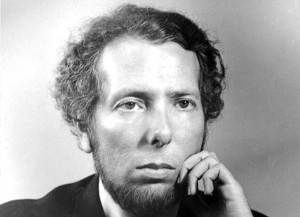
In July of 1961, Yale University psychiatrist Stanley Milgram began an experiment that ended with shocking results—literally! It is now simply known as the Milgram Experiment—his most famous work.

Stanley Milgram
Stanley Milgram

Milgram was troubled with the excuses provided by Nazis in the wake of World War II for the atrocities they had committed. Obviously, they engaged in overly heinous acts toward their fellow man, so horrid in nature it makes one wonder how Hitler got his followers to do them. Yet their responses to the question of why were often the same; they were just following orders.

Milgram was skeptical that people would do something at the direction of an authority figure that they would not in good conscience do on their own. He devised an experiment whereby he would instruct participants to shock other participants they would never meet who were located behind a wall. The shocker was real but was unaware that the shockee was an actor. This actor would fain pain by screaming in agony, and the intent was to see if the shocker would continue to shock the shockee solely because an authority figure told them to, regardless of how dangerous or painful it seemed to be for the person on the other side.

The video below shows what happened. If you’ve never heard of this experiment before, check it out. It is certainly a fascinating study into the human psyche with very surprising results. His experiment showed people were willing to do horrific things to one another if an authority figure told them it was OK to do so, confirming the idea that many Nazis were indeed telling the truth about their motives.

As I think about this experiment, I can’t help but draw what I believe is a very exact parallel to modern-day tax policies.

There were potentially a number of reasons Obama and many Democrats scored victories in the last election, but there can be no doubt that class envy was one of the common motivating factors. The “tax the rich” mantra was a winning campaign strategy, but let’s think about it deeper.

Bill Gates
Bill Gates

Imagine I put a random democrat-voter currently receiving or requesting government assistance in front of Bill Gates or Warren Buffett and asked them to perform one simple task: look Bill or Warren in the eye and explain fairly and logically why you think they owe you something. I suspect most of them would be speechless and embarrassed, I know I would. But then again, I have a conscience and I am a libertarian.

Some may be brazen enough to look Gates and Buffett in the eye and argue that they’re simply too rich and have no right to all that money, but most would know there’s no rational argument to present and would simply accept that any effort to make such an argument would show that they were the ones being greedy by demanding what someone else had worked for, Bill and Warren are merely wanting to control what they’ve earned after all.

I specify “control” versus “keep” because they often donate a lot of their earnings to charities. But, when they give their money away, they choose instead of government choosing for them, who gets what they worked so hard for, and risked so much to obtain.

However, if voters can hide behind the wall of government just like Milgram’s participants hid behind a wall, and an authority figure like a politician tells them it’s OK to harm the wealthiest among us, the Milgram Experiment mentality takes over and people who wouldn’t have the gumption to demand the earnings of someone else in person all of a sudden wave the “tax the rich” banner like it’s part of their religion. If Obama says it’s OK, it must be, right?

What’s the solution? I don’t rightly know. But the first step in fixing a problem is understanding it. I don’t know that too many people have applied Milgram’s findings to politics, but there is no doubt in my mind that this an “apples to apples” comparison. The answer to how we get people to begin to grasp the concept that they are cowardly asking government to do something they would likely never have the hubris to ask for themselves is elusive, and likely always will be.