Category Archives: Blue Sky Thinking

Anti-War ≠ Anti-Self-Defense

Imagine a libertarian in the United States. It’s midnight, and he’s sitting at home in his underwear, binge-watching Better Call Saul reruns when he hears the door knob rattling. He spots the silhouette of a suspicious figure trying to gain entry. Is this person looking to rob the house, harm the homeowner, or who knows what?

So anyway, what does the libertarian do? He grabs his gun, which is basically required of all libertarians to own, and as soon as this miscreant steps an uninvited foot into our hero’s home, Captain Liberty turns him into Swiss cheese!

i-started-blasting-so-anyway-i-started-blasting[1]

Libertarians are staunch supporters of the Second Amendment and the right to bear arms because they believe it levels the playing field in potential combat situations between individuals.

In the pursuit of freedom, people must have the means to defend themselves using the tools available to them. While it’s possible the intruder is a 120-pound weakling with no weapon and minimal combat skills, our libertarian homeowner, clad only in his underwear, can’t afford to take chances. He must prepare for the worst and ensure that he’s in the best possible position should a confrontation ensue.

As someone who identifies philosophically with libertarianism, I agree with this sentiment entirely. I own several handguns, which I have placed strategically in my home and cars in case someone hurts my feelings. I’ve never drawn down on anyone, but if me, friends, or loved ones are threatened, I’ll do my best to end the threat.

Contrast all this with another tenet of libertarianism—the peacenik. Someone who is staunchly anti-war. How can one support owning a gun as a right, but still be all about peace?s-l1600[1]

I’d like to think most people understand that being anti-war doesn’t mean anti-self-defense. Many reasonable libertarians agree the country should have a military prepared to defend our nation, in the same manner as they personally might be armed in such a way to defend their home.

The issue I’m raising here, is about being unprepared.

Today, we face potential threats from Russia, North Korea, and China, and the specter of a catastrophic conflict looms, especially if nuclear weapons come into play.

This scenario seemed very unlikely 10-15 years ago. Even President Obama seemed oblivious to the idea Russia could be a threat. Remember this debate where he degraded Romney’s opinion on Russia?

This issue is where I often find myself breaking with ideological libertarians, because as someone who places logic & reason over ideology, I think being prepared for the worst-case scenario, is the wisest thing to do.

I also oppose wars of aggression. We shouldn’t be attacking others who weren’t threatening us or our allies. However, it’s naive to assume that we won’t face a serious threat at some point. We must ensure we’re fully prepared. If attacked, we should respond with overwhelming force to swiftly end the conflict. Appearing weak and easily exploited is not a winning strategy.

Those who were around during the Reagan era, might recall the talk of a Strategic Defense Initiative (SDI) program, also known as “Star Wars.”Strategic Defense Initiative SDI Star Wars

To say this program was ambitious, would be an understatement. I won’t try to explain how this system worked entirely, but it was multi-faceted, expensive as hell, and involved things like space lasers.

Reagan felt nuclear weapons were inherently immoral, and that eliminating the threat of them from Russia at the time, was in the interest of all mankind.

But as the Berlin Wall fell, and Russia became our BFFs, the need for such initiatives was considered obsolete. So spending on such technology was thought to be frivolous and wasteful.

Many libertarians go a step further and bash military spending almost entirely, using derogatory terms like “bootlicker” for anyone who disagrees with them.

Such insults hinder productive debate and reveal a lack of intent to discuss the topic fairly. We can acknowledge instances of wasteful military spending while recognizing the importance of maintaining a strong defense against existing threats.

While it’s true Russia and China were largely friendly to the United States between Reagan’s tenure and now, we find ourselves in a position of defending Taiwan and Ukraine, and in so doing, being under threat of nuclear attack from countries we thought were our friends.

APTOPIX Russia China
Russian President Vladimir Putin, right, and Chinese President Xi Jinping pose for a photo during a signing ceremony foillowing their talks at The Grand Kremlin Palace, in Moscow, Russia, Tuesday, March 21, 2023. (Vladimir Astapkovich, Sputnik, Kremlin Pool Photo via AP)

We should all be able to agree there are instances of large wasteful spending on the military. Especially when it’s for a weapon the military says it has no need for.

But being anti-war should not mean cutting spending in such a way as to make ourselves vulnerable to an existing threat.

While China and Russia were becoming rather friendly with the US, they weren’t exactly eliminating their nuclear arsenal—the threat was there the whole time.

Ronald Reagan was right that the best thing we could do for the future of mankind, was to find a way to make such weapons “impotent and obsolete” as he put it.

Libertarians are correct to oppose wars of aggression. But just as they keep guns to protect themselves from unlikely threats—it would be hypocritical to think the US and our NATO allies shouldn’t advance technology to eliminate the threat of other nations, even from those we currently consider friendly.

The free world should understand that Oppenheimer and company opened Pandora’s box of human mass eradication, and working towards systems that can neutralize that threat is spending that shouldn’t be criticized nearly as much as it is.

Robert Oppenheimer
Robert Oppenheimer 1956 by Yousuf Karsh

We are on the brink of human extinction from not one, not two, but two and a half dictators (I’m not elevating North Korea to the level of Russia and China). While they were friendly once, the threat never fully went away, it was just our resolve to prepare for it that did. That lax attitude could end us all.

Our current defense systems are thought to be about 50-60% effective at stopping such weapons from hitting their targets. That’s not good.

If we were to face a nuclear catastrophe at the hands of Russia and China, it might have been preventable had we stayed vigilant. Remember the old adage: Si vis pacem, para bellum – if you wish for peace, prepare for war.

Your Feelings Probably Aren’t Valid

In today’s world, a prevailing theme centers around the belief that everyone’s feelings are valid. The underlying message is clear: people are constantly grappling with emotional struggles, and the outdated advice to “suck it up and tough it out” is not only misguided but also detrimental to society’s collective mental well-being.

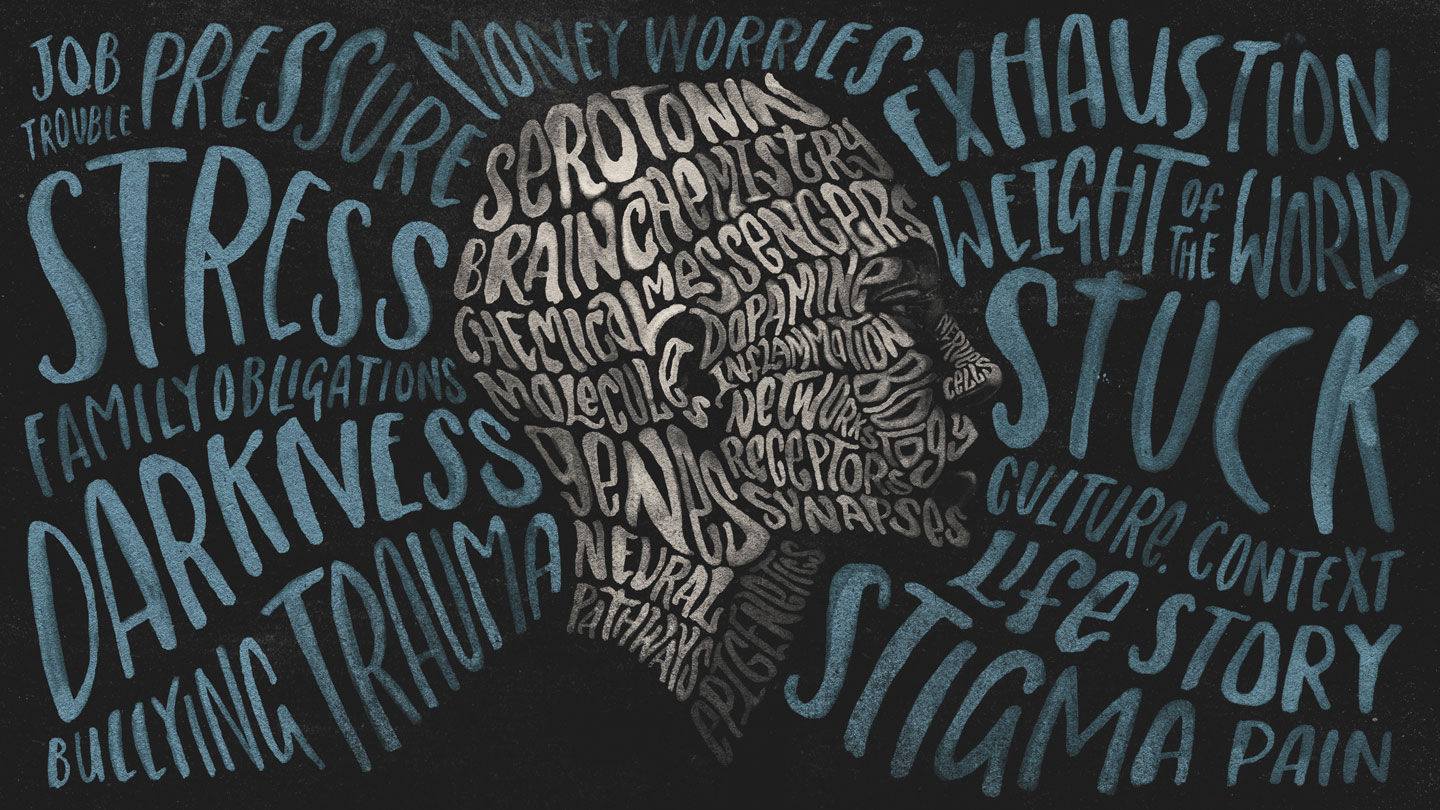
Things like clinical depression, and other depressive disorders can’t just be prayed or willed away. They are the result of something gone awry within the network of our minds, and should be treated with sympathy and science, not dismissive attitudes.

Families and friends alike should be more inclined to ask how their loved ones are doing. Not just out of politeness, but instead, out of a desire to help—to be an outlet for someone they care about.

But it’s important to do it in a way that’s helpful. It shouldn’t have a “suck it up” tone, nor should it be a deflection such as suggesting you both go get drunk. Let them know that you care about them, and you’re willing to listen and/or help—full stop.

This approach mirrors the fundamental principles of therapy practiced by psychologists, where empathy and understanding are paramount.

Yet, amid this push for acknowledging feelings, it’s essential to recognize the fine line between validating emotions and enabling harmful beliefs. Telling someone their feelings are valid implies that their emotional response aligns with the situation they are confronting, even when this may not be the case, especially for individuals dealing with disorders such as bipolar disorder.

The potential pitfall of validating feelings is akin to committing a logical fallacy known as the Strawman Argument.

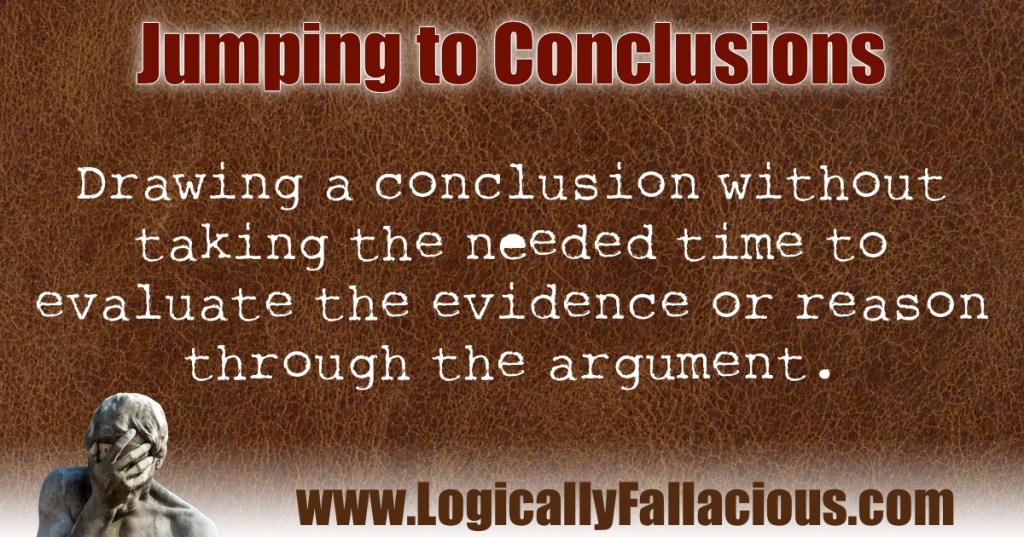
A logical fallacy is an argument someone uses that suggests one thing MUST lead to another, when that isn’t true. This fallacy arises when an argument misrepresents someone’s position to make it easier to attack.

In the case of a straw man argument, an example would be if I say, “I like Coca-Cola.” Someone who hears this responds, “Oh, so you hate Pepsi? I can’t trust anyone who hates Pepsi.”

The issue should be obvious that in my statement, I didn’t even mention Pepsi. It’s entirely plausible I like both.

Yet the person arguing against me made an assumption that I hated Pepsi, and argued against that “straw man” of my argument, instead of my actual argument that I simply like Coke.

Make sense?

So why does this mean people’s feelings aren’t valid?

Imagine we meet someone who seems really depressing and cold to talk to. Our feelings might lead us to believe they’re a jerk. Now imagine, we find out this person just got news that they have terminal cancer. Do we still feel that they are a jerk, or do we now realize that we’ve misread the situation?

The fact is, too many of us make assumptions based on far too little information, because it’s uncomfortable feeling like we don’t know things. We think it would mean we’re stupid. So we make up our minds before having even remotely enough factual information to fairly do so.

Through these exercises of jumping to conclusions through false assumptions (the equivalent of straw men), we develop feelings that are often invalid. What’s worse is we often get those invalid feelings reinforced by a society that tells us our feelings are always valid.

We see this play out with people who have taken offense over something. If we are offended at someone, it should be based on the idea that they’ve been disrespectful to us or others.

But being disrespectful requires intent. It is an act of knowing someone wouldn’t like something, and yet doing it anyway. But what if the person who did the thing that offended us had no clue we’d find it upsetting. Maybe they thought we’d find it funny, or completely benign. Were they disrespectful to us? We shouldn’t be able to accidentally disrespect someone, that’s not how any of this works.

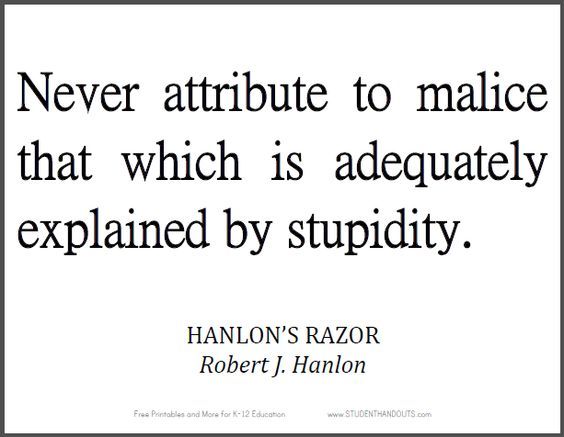
Hanlon’s razor is a good thought on this subject. It says,

The point being, next time we see someone on the internet upset about how disrespectful someone else was, we should first consider whether there’s an explanation that isn’t disrespectful, such as they didn’t know better.

It’s also important to consider if it’s really something to be bothered by in the first place. Society has become obsessed with having reasons for outrage. It makes sense, because the more upset we are about something, the more attention we’ll often get.

It could be because people already agree with us on other stuff, so they don’t want to disagree with us now.

As much as I hate to say it, maybe we’re attractive and people want to hook up with us, so they’ll support whatever nonsense we’re upset about.

I would bet at least $107, if you put an attractive woman on the internet, and have her talk about how all the hate that’s directed towards Nazi’s is wrong, you’ll have a thousand guys respond with an argument as to why they agree, Nazi’s aren’t that bad, they just have a different opinion than the rest of us, and people should be more kind to them.

The point of my post is this. Next time we find ourselves offended or upset by the actions of others, we should take a moment to consider whether there is a scenario where this was innocent. If we can think of at least one, then assuming it must be the worst scenario isn’t fair of us.

One option is to assume the innocent scenario, but that may also be wrong.

A better option is to ask questions of the person if we’re able. This isn’t always doable if the person is famous, but if it’s a friend or an acquaintance, making the effort to ask, “What did you mean by that?”, could be the difference between a fight versus an respectful and interesting discussion.

One of the biggest errors humans make, is the false dichotomy. The idea that there are only two sides and we have to choose one of them.

Maybe an interaction between a cop and citizen goes awry. If we think blue lives matter, we might assume the cop is in the right. If we think cops are bad, we might assume the cop is a serial rights violator. But there are at least two other options.

It could be that both of them behaved poorly. Maybe the cop was being a jerk, but instead of trying to deescalate the situation, the citizen decided to antagonize the cop and ended up making it worse.

The best reaction however, is to simply accept we weren’t there, didn’t see it all, we’re likely missing some context, and thus shouldn’t choose a side at all. Instead, being 100% ready to accept new information if it comes to light is the best way to think.

So next time we find ourselves with excessive emotions, unless a loved one has just died, or a national tragedy occurred, there’s a good chance our feelings aren’t as valid as we think they are. Especially if those emotions are us taking offense at something.

We are responsible for our emotions, not others. It’s up to us, to learn to let stuff go instead of stewing in a cauldron of rage which we lit the fire under.

Sometimes, we will benefit from just taking the time to analyze the situation with questions like:

Is this something I’m going to care about tomorrow?

If there another explanation for this that isn’t offensive?

Do I know this person intended to be disrespectful to me?

What role did I have to play in this situation going badly, and could I have handled it better? (Self-awareness)

Being full of rage requires a lot of concentration on that rage. The mere act of asking ourselves questions as I outlined above can often distract us from our rage, and push us onto a new set of train tracks from the rage train we were on, to one of emotional mastery. Not to mention the friendships we might save along the way, leading to happier and healthier lives.

Framing and Perception: Using Skepticism to Avoid Being Deceived

We’ve all heard the expression there’s two sides to every story. It implies that one side is the truth, and the other side is lying. While that can be true, it can also be that both sides are right, and are both just leaving out crucial factors. It could be that neither side is right, and the truth is something else entirely. It could be that one side is right, and the other believes they’re right, but are simply mistaken. And most commonly, it could be a matter of opinion, and there simply isn’t a right or wrong in the first place.

The point of skepticism, is to be able to consume information in such a way that you are least likely to be deceived, or make bad assumptions. Thus leading to more intelligent decisions, and typically better outcomes for you. Let’s look at some examples.

In April of 2019, it was reported in several news outlets that just eating one slice of bacon can increase your risk of colorectal cancer by 20%. You can see one instance of this report from CNN here. CNN was not dishonest in this reporting, that data is true.

But when you click the actual study, and apply a little skepticism (and some math), you might look at it a little differently.

There were 475,581 participants in the study, and a mere 2609 case of cancer reported among all participants. So if one group is 20% higher than the other, that means it’s approximately 45.4/54.6 split (45.4/54.6 = 120.2%, or 20% more).

54.6% of 2,609 = 1,425 (0.29% of the total group)

45.4% of 2609 = 1,184  (0.24% of the total group)

So while 1,425 is indeed 20% more than 1184, out of the total group or people observed (475,581) a mere 0.55% contracted colorectal cancer. A total of 241 more were the bacon eaters, or a mere 0.05% overall increase (0.29% vs 0.24%).

An almost entirely insignificant 0.05% or 241 out of 475,581 people doesn’t sound nearly as scary as 20%, does it? But scary sells news media, and journalists are rarely scientists.

This problem isn’t entirely about science, because you can apply these same skills to a myriad of things you’ll read or see in the media.

Imagine a news story we’ll call statement A with a headline that reads, “Woman courageously does all that is needed to put food on the plate for her child.”

Female Shoplifter

But then imagine a different news outlet runs a different headline we’ll call Statement B that reads, “Woman fired for drinking while at work, stole unhealthy snacks and booze from a grocery store.”

Statement A makes her sound like a hero, but Statement B tells a very different story. Both can be 100% true, but the context changes how you feel about the story entirely.

The point of all this are to make you think about any news story you read, and maybe think about changing the way you consume information. So here’s a couple of ideas on how to improve how you consume information.

  • Avoid click-bait headlines from sources you’ve never heard of, or that you know are openly biased. You know they’re all almost entirely bullshit. So why waste your time on them? The good ones will link to credibly sources, and you should click on those to read the whole story, if you do go down that road. But in general, if people stop clicking on clickbait, the people doing it will respond to the lack of demand for it, by ceasing to make it.
  • Read the article and not just the headline. Even reputable sources have resorted to click-bait headlines just so you’ll read their stories over the nonsense from non-reputable sites. You’re missing a lot of context and nuance if you don’t read the story. Not to mention, you look silly when you add your own comment that clearly shows you didn’t read the article.
  • Any story that says something like, “The such-and-such that such-and-such doesn’t want you to know” or “Person A destroys person B” is bullshit. All of it. Like every single one of them.” Stop sharing that nonsense. Seriously.
  • If you see a story and it seems pretty amazing, but you aren’t seeing it on reputable sources, I assure you, some podunk website did not scoop Reuters or AP. It’s bullshit that they didn’t vet properly, or worse, that they just made up.
  • Check a second source. This one is huge. If you see a story on a site that’s kinda reputable but not great, look for it on a site like Reuters or AP. If you confirm from multiple reputable sources, then it’s probably true. But if it’s multiple sources with the same bias, you should probably still avoid it.
  • Think about what’s being said in the story, and could there possibly be another way of looking at it.  For instance, if I told you France gets 75% of its energy from nuclear, where the United States only gets 20%, you could easily assume that France is a leader in nuclear energy compared to the United States. But if I told you France has 58 nuclear power facilities whereas the United States has 98, you’d think the US is the leader. Both are true, but both tell a different story. So it pays to dig into the data when you can, and form your own opinion based on all the information.

    Nuclear Power Plant Emits Only Water Vapor

Hopefully this helps you think about how to consume news differently, and prevents you from being that embarrassing friend on social media always sharing bullshit articles everyone but you seems to know isn’t true. You’ll thank me later. 🙂


A Critical Look At Political Correctness, the Easily Offended, and Why We Should Change This Culture

Political correctness is a term that typically evokes annoyance and hatred from almost anyone who hears the term. Yet despite this nearly universal hatred for it, political correctness seems to be as pervasive as ever.

As an example, in 2017, the TV show Bates Motel, a TV adaptation of Alfred Hitchcock’s 1960 epic thriller Psycho, opted to rescript what is arguably the most famous scene in movie history. The story is about a man (Norman Bates) who suffers from multiple personality disorder. Aside from his own personality, he would also take on the persona of his mother, a psychopathic killer who would murder women she felt were immoral.

No Merchandising. Editorial Use Only. No Book Cover Usage.
Mandatory Credit: Photo by Moviestore/REX/Shutterstock (1622408a)
Psycho (On Set)
Film and Television

When Norman became his mother, he would often dress up as her, and in the original and now famous shower scene, where a young woman is stabbed to death by Norman during a schizophrenic episode, he was wearing his mother’s dress.

However, the Bates Motel show runners, for fear of offending the trans-gender community it seems, opted to not have Norman (played by Freddie Highmore) wearing his mother’s clothes. The argument being they didn’t want to paint transgender people in a negative light. On the face of it, this can sound fair, but political correctness always does at first.

Freddie Highmore as Norman Bates – A&E Series Bates Motel

The first issue should be glaringly obvious. Norman Bates wasn’t transgender, he was schizophrenic with multiple personality disorder. He wasn’t a man who identified as a women. In his mind, he was his mother. So the show runners, for fear of offending people they weren’t even depicting, made the scene less accurate, out of irrational fear.

The referenced article above shows the writers clearly understood this, but the fear of offending someone and having the show be attacked by those who misunderstood the show’s intent was so great, they decided not to risk offending them.

In general, the idea of political correctness can be broken down into a couple of camps.

  • One is a selfless reason—you don’t want to offend someone because you’re a good person, and you just don’t like offending people.
  • The other is selfish—you have concerns that it might harm your brand or business if people happen to be offended. You don’t so much care that they’re offended, but if they make a lot of noise in attacking your business (or you personally), you’re concerned it could harm you financially when they do so. The above example falling into the latter camp.

If either camp is genuinely trying to avoid offending people, why is this a problem, then? Shouldn’t that be a good thing? The answer is a little murky, but let’s dig into the dirt a bit.

The Straw Man Argument

You may have heard of the logical fallacy known as the straw man argument. If not, click the video above from PBS. But the Straw Man Fallacy principle also applies to those who are easily offended.

Imagine I said, “I like Gary Johnson, the Libertarian candidate for president in 2012 and 2016.” Full stop. Now imagine a Trump or Clinton supporter who hears my statement, then gets offended and responds to me, “Oh, so you think Hillary/Trump is a bad person then? You’re a horrible person.”

Hopefully you see the problem here. I didn’t say anything about Hillary or Trump, and it’s genuinely quite possible I like all three people. So they’re mad at a straw man version of my argument, not what I actually said and intended.

This is why being easily offended is often the problem of the person who chose to mischaracterize your argument and be offended by it, and not the problem of the person who said something they were offended by.

For this reason, it’s important we not coddle such people, and give their behavior credence. They’ve made a mistake, and condoning and/or excusing that mistake doesn’t help anyone. Worse yet, it creates a whole new problem.

Factitious Disorder Imposed On Self (Munchausen Syndrome) is a condition where people claim to be ill in some way, when they’re either making it up, or they’ve actually harmed themselves, in order to gain sympathy for their illness from people who don’t know they’ve done it to themselves.

Many people who claim to be offended may not actually be offended per se, but much like those who suffer from factitious disorder, have learned that by proclaiming they’ve been offended on social media or some other public forum, gain sympathy from their followers, fans, or friends. They’re being conditioned to be offended about things going forward to attain even more attention (sympathy), creating this downward spiral of dishonest dialogue, fake outrage, and people who are afraid to be speak their mind.

So just by the virtue of it not even being honest outrage, or an honest assessment of the thing that outraged them, it’s already an illogical and potentially immoral condition. But this isn’t where the negatives end.

The Wisdom Of The First Amendment

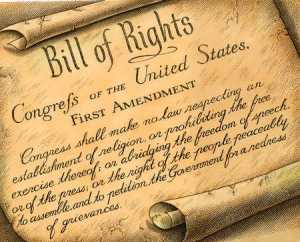
Congress shall make no law respecting an establishment of religion, or prohibiting the free exercise thereof; or abridging the freedom of speech, or of the press; or the right of the people peaceably to assemble, and to petition the Government for a redress of grievances

U.S. Constitution: 1st Amendment

As most people know, the first amendment of the US Constitution wasn’t written so we can discuss the weather freely, nor to believe things we all believe. Our founding fathers understood you should have the right to say something offensive if it’s what you truly feel or believe. You should also be encouraged to speak truth to power when leaders say things that simply aren’t true.

This was of course about freedom from prosecution by government for saying such things, but the logic of protecting that speech is important outside of first amendment constraints as well. If people are afraid to speak their mind, you’ll never learn what they’re thinking. They might have ideas that could change the world, or at least maybe your world view—hear them out.

Martin Luther King Jr. for instance, was saying things we understand are true and not controversial now, but were quite controversial then. So much so, he was murdered over them. But you can go a lot further back in history to see why this is important. Galileo for instance, was famously convicted of heresy, and sent to jail for his arguments about the nature of our solar system. He described heliocentrism—the idea that our sun is at the center of the solar system, and not the Earth, as the Catholic church believed at the time. Not only is this not controversial now, only the most delusional of people think it isn’t fact.

Galileo

While some things may be controversial forever, many things that are edgy today, will almost assuredly be commonplace tomorrow, and this should be deemed as typically a good thing. People are often afraid of change, but adaptation is the key to survival, and free speech is key to having the discussions that help us to evolve our way of thinking as time goes on.

Political correctness and being easily offended are the biggest detriment to these discussions, and reasonable people should make an effort to ensure such discussions aren’t quashed by aggressive social justice warriors.

As for how to fix this, the answer isn’t attacking people verbally with insults and such, that’s not going to win over hearts and minds. Technically, I’m arguing that you do nothing. No really, don’t do a thing. if someone gets upset, and demands apologies because they were offended, don’t say a thing. Let them realize no one agrees with them by not agreeing with them.

If you see attention-seeking behavior like this in general, the best thing you can do is simply not respond to it. It’s like the urban legend version of Ferberizing a baby, letting them cry it out alone, but with adults. (Ferber didn’t actually argue for letting kids cry it out. His actual arguments are here.)

These people are seeking attention. If you don’t give them any, they will be conditioned to not waste the energy for their ineffective technique. We made it effective in the first place, we can make it ineffective, too.

Internet Troll

There will surely be a knee-jerk reaction  to respond by either giving in, if you’re not buying into my idea that it’s a problem, or to troll by lashing out at them for behaving childishly. You would think that those options are opposite each other, but the fact is that they’re both attention. And if you respond negatively to it in an effort to get them to “grow up,” others who don’t share your view (and mine) will sympathize with them even more because you were such a meanie to them.

Now that we’ve talked about how to stifle the political correct and easily offended, how do we promote the reasons for stifling them in the first place?

Also a pretty simple answer. Talk. Not yell or attack, but have respectful discourse with people. If you’re the type to avoid discussions that might get contentious, don’t. If they can’t respond in kind, then again, go back to not responding.

You can also stand up for facts. If someone says something you know isn’t true, chime in respectfully, and let them know they may be incorrect. Cite sources for extra credit. If at any point the conversation devolves, again…walk away. If enough people do this, eventually, reasonable discourse can and will prevail.

How To Improve Relations Between Police and Citizens

Unless you avoid the news at all costs, you’re fully aware of the shootings by police, killing two black citizens, Alton Sterling and Philano Castile, both under highly questionable circumstances.

Alton Sterling (Left), and Philando Castile (right)

Then Army reservist/Afghan war veteran Micah Xavier Johnson, so enraged by such shootings, murdered several police officers in Dallas in retaliation.

There can be no doubt, that tensions between the governed and the government are at levels that are bordering the animosity that triggered us to war for independence against Great Britain 240 years ago. But how did we get here, and how do we get out?

Facts versus Headlines

It’s fair to say that the media push narratives that get ratings. But while according to the FBI in 2014, most black and white people are killed by people of their own race—89% for the black community, and 82% for the white, they often push a narrative that a young black man is more likely to be killed by a white cop.

There were a total of 444 police shootings deemed justifiable homicide, by police in 2014. Pointing out those deemed justifiable homicide is important to the story, because the concern is that police aren’t prosecuted for such shootings. So for police not to be prosecuted, it means the shooting was deemed justifiable.

The FBI didn’t break them down by race, but even if they were all white cops shooting black victims, which they certainly aren’t, that’s still four times less than the 2,205 black-on-black murders in the same year, or the 2,488 white-on-white murders.fbi-logo-404553[1]

Let’s be clear about that statistic, though. It has little to do with living in violent communities, a narrative that is often asserted. The first clue is that white-on-white murders are very similar.

It actually has to do with people being four times as likely to be killed by someone they simply knew.

See this table from the FBI, also in 2014, which shows that 43% of the time people were killed by an acquaintance or family, compared to 11.5% by strangers. The rest are unknown, but since the dataset is somewhat large, we should reasonably assume that nearly 4:1 ratio would be true for the unknowns as well.

The Attitude Adjustment

We need to change the way we interact with each other.

The police were hired to protect our rights. If one pulls you over or otherwise interacts with you, remember that this person is potentially willing to die for you—treat them accordingly. A little compassion for police who do such a dangerous job would go a long way to improve the exchange you have with that officer.

Credit: inhauscreative Vetta Getty Images

But as always, it takes two to tango.

Police are trained to fear the worst and prepare for it in each interaction they have with the public. The most innocent traffic stop could be their last.

But preparing for the worst doesn’t excuse assuming the worst, nor treating them as if they’re the worst. If police want people to respect them, they must first show citizens the same respect they expect from them. If an officer didn’t specifically witness a citizen harming someone, they are innocent until proven guilty—it’s an officer’s duty to act accordingly.

Blame Legislators Versus The Police Where Appropriate

Whether you’re a Republican or a Democrat (libertarians already generally know this), when you try to socially engineer society by passing victimless crimes, you cause police to have to enforce those crimes—requiring more police.

This puts both police and citizens in harm’s way; increasing the odds of violent interactions between the two parties.SundayAlcohol[1]

Drugs, prostitution, blue laws, and other such victimless legislation which protect no one—yet risk many, are a huge part of the problem.

If you support passing a law, then you must be comfortable with the notion of putting a gun to the offender’s head and killing them yourself if they violate it. If you’re uncomfortable with this thought, then it’s pure hypocrisy to put police in the situation where they may have to do so in your name.

For instance, if your neighbor were smoking marijuana, would you walk next door, put a gun to their head and tell them to stop or you’ll kill them? Of course not. But if that same neighbor were raping a child, I suspect you’d feel quite differently. This is bad legislation versus good in a nutshell.

If we want to reduce senseless violence, we must first elect someone looking to undo all the senseless laws we’ve passed which trigger senseless violence. Then be sure they don’t pass new ones going forward.

Respect the Constitutiongun-and-the-constitution[1]

I’m in a state where concealed carry requires a permit. So this means I open carry when walking my dog at night, because I haven’t taken the course and applied for that license. I carry in case I get accosted by a miscreant. In so doing, I often worry I might get accosted by the police.

The current scenario is that if a busy-body citizen calls police to report me walking down the street carrying a gun, the police must investigate. They do this because we’ve allowed a litigious culture where police can be held liable for not investigating.

What should happen however is that the police should respond to the caller with, “Carrying a gun is every American’s right. Does he/she appear to be committing a crime? If not, there’s nothing for us to investigate.”

This may seem wrong at first, but the police would do this if you reported someone just driving a car down the street. Driving a car and carrying a gun are both perfectly legal actions that have an intrinsic danger if done so irresponsibly or maliciously. So while at first it may seem like a horrid analogy, they are almost exactly the same.

The reason it feels wrong is simple conditioning by anti-gun people who deem gun carriers as a threat, despite the fact everyone is a threat in some way, and gun carriers aren’t any more likely to harm someone. Most are responsible citizens exercising their 2nd amendment rights just as all of us exercise our 1st.

We then need to pass serious tort reform to preventing civil action against police who don’t investigate someone carrying a gun, on the off chance that person actually harms someone.

Better Community Outreach via Police Training

This proposal is a bit novel and controversial, and I admit it may have unintended consequences. But I like blue skies thinking, so I’ll propose it anyway just to get some creative juices flowing.

Much like we have food stamps to help the needy eat, I think police could use confiscated weapons that are normally destroyed, and start a program with impoverished citizens in bad neighborhoods to protect themselves by donating these weapons and giving classes on how to use them properly.

Of course those citizens would be screened properly for criminal backgrounds like they would for a gun purchase. And yes, it is possible one of those guns may be used in a crime later. But it’s also highly possible that those guns may save many lives of people too poor to buy one themselves, yet absolutely may need one as a result of living in a high crime area.oc_zps62e1c21e[1]

If every good citizen were armed, and prepared to defend themselves against a would-be criminal, we’d have a lot less would-be criminals.

Criminal prey on the weak, but it’s hard to call anyone packing heat, weak. Guns are the greatest equalizer mankind has every invented, turning a feeble grandmother into a Chuck Norris level threat.

Police Need To Eschew The Brotherhood Mentality

Being a Corvette owner, we tend to recognize each other—so much so, that nearly all of us wave at another Corvette owner driving past. Motorcyclists do this too. If you were from Boston, visiting California, and overhear the person next to you say he just “Pahked the Cah,” you’ll almost certainly strike up a conversation with him.

This is because people are hard-wired to bond with those they share commonalities with—it strengthens societal bonds. The easiest way to do this, is to bond over a unique common interest or trait. I say “unique,” because if you were both in Boston, you’d pay the same person no attention whatsoever.

Police know that their work is dangerous, so they form strong bonds among one another so they can be confident they’d have the other’s back, even if they don’t personally know each other—it’s a very natural phenomenon.

But they should be taught that this is a natural emotion, and that they should avoid following it blindly. Much like the placebo effect, while it’s natural, it can do far more harm than good if all skepticism is eschewed.

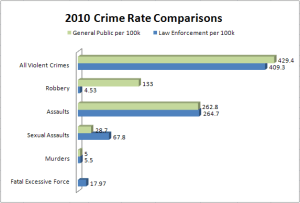
Violent Crime Rate comparison between general population UCR data and law enforcement population NPMSRP data. Click image for the full article
Violent Crime Rate comparison between general population UCR data and law enforcement population NPMSRP data.
Click image for the full article

This data shows that police are just as likely to commit criminal acts as the general public.

At first, you might think this seems odd, but the police are regular people, not superheroes.

We often hear stories of good Samaritans doing wonderful things. So being a good person isn’t unique to police, nor is being a criminal unique to the general public either.

The reason I say they need to eschew the brotherhood mentality is that police often defend other police who have clearly done unconscionable things.

While at first, a police officer might think defending their “brothers” is the honorable thing to do, but it’s absolutely not in their best interests.

When an officer commits a crime, they violate their sworn oath to uphold the law of the land, dishonoring their noble profession. But it also creates animosity with the public who feel as though police can operate above the law without repercussion.

This hatred and distrust often leads enraged citizens to act violently towards the police, because they feel it the only way justice will be served—putting good cops needlessly at risk, as evidenced by the aforementioned Micah Johnson.

Instead, if an officer is arrested or put on probation for a potential felonious act, police should distance themselves from that person entirely, and make it clear that if the person is found guilty, that person is no “brother” of mine.

They should also be quick to report any criminal acts among their ranks, and clean their own house unmercifully. They will never get the trust and respect of disenfranchised citizens otherwise.

And let’s be honest, if you are a police officer, are you really OK with one of your own committing a murder or unprovoked assault?

Drew Peterson should serve as a shining example of the harm that can come from this blind loyalty. His fellow officers failed to properly address allegations of abuse against Drew when his then wife Stacy Peterson reported him a multitude of times for serious domestic abuse.

Stacy Peterson
Stacy Peterson

It is almost certain that had his fellow officers taken Stacy’s complaints seriously, and treated Drew like any other violently abusive husband—investigating Drew in earnest, Stacy could very well be alive today, with Drew safely in jail where he belonged.

By all means, police should have each other’s backs, but never at the expense of what is right. A criminal is a criminal, whether they wear a badge or a wife-beater, they should be treated with the same prosecutorial mindset.

I could write an entirely separate post on the tactics police unions use to protect police in ways that harm the general public, and destroy the public’s trust in them. They should merely assign the accused a lawyer, and refrain from professing the person’s innocence or any other public statements until that officer is cleared of any wrongdoing.

But once convicted, their sentences should be as harsh as what would be applied to the general public (in my opinion harsher, since they swore to uphold those laws). The slap on the wrist sentence for an offense that would land us regular citizens in jail is surely one of the largest factors in eroding the relationship between the governed and the government.

Will Computers Catch Humans?

By the year 2030, famed inventor and Google futurist Ray Kurzweil predicts a singularity. The idea that because of Moore’s Law, an idea proposed by Intel’s co-founder Gordon Moore, which states that the number of transistors that can be packed into a given unit of space will roughly double every two years, that humans and machine will become one, indistinguishable being.

Ray Kurzweil
Ray Kurzweil

You may be wondering if Ray is somewhat like a modern-day Nostradamus, but that would be rather insulting to Ray.

Where Nostradamus had predicted very generic events that could have been attributed to just about anything, and thus people often correlated to very specific events and called his predictions a hit, Kurzweil predicted very specific things to occur in very specific time periods, and has a success rate of about 86%.

So much so, that Google hired him as their futurist, to help guide their own corporate endeavors in the direction Ray predicts the future is going.

Ray’s singularity prediction is rather interesting, because what he’s ultimately arguing is that because of the advances in memory technology, computers will meet the human brain’s computing power in this time frame.

While I don’t profess to have the knowledge Ray has, one thing I would like to point out, is that humans are not just a product of our memory, we are also a product of our intellect. Let’s look at how we’re different from computers, as an example.

Kim Peek - Autistic savant; the man the movie Rain Man was based on.
Kim Peek – Autistic savant; the man the movie Rain Man was based on.

Imagine a Microsoft Excel spreadsheet, with 1,000 rows and columns in size. Your computer remembers them flawlessly; every single character, like a mechanical Rain Man.

But ask a human to do this feat, and nearly no one can. So the argument that computers haven’t caught humans yet is somewhat misleading.

The average human brain has about 100 billion neurons, and many more glial cells. If we think of neurons as computer bits; the smallest level of computer memory, or the thing that is actually a one or a zero; then we can extrapolate how much memory a computer must have to match the human brain.

Four computer bits make a byte, 1,024 bytes make a kilobyte (KB). This 1,024 successive unit pattern then progresses as follows: megabyte (MB), gigabyte (GB), terabyte (TB), petabyte (PB)…and the list goes on.

This means, that the human brain has about 12.5 gigabytes of memory in the neurons alone. Add in the glial cells, and that number grows by at least double, since there are more of them. The above link references that opinions vary wildly about the real storage capacity of the human brain, but put it somewhere between 1 to 1,000 terabytes, the latter of which seems awfully high to me based on the number of neurons.

But the point I think that is missed in Ray’s hypothesis is that where computer memory is virtually flawless, the human brain seems to have mastered what it should and shouldn’t forget in a rather advantageous way. Where the human can’t remember the aforementioned massive spreadsheet data, it makes up for in its ability for inferring things not provided to it. This being the difference between memory (or knowledge), and computing power (intellect).

It’s this human ability to forget, that actually makes it better at processing information. For instance, you might talk to a co-worker all day, and entirely forget what color their shirt and pants are. Why? Because your brain has developed the ability to know that’s not important information, and immediately dumps it into your brain’s recycle bin.

But if your co-worker misspells a word in an email, your brain doesn’t crash and end its comprehension of the data like a computer might. Instead, you quickly understand what was inferred.

The fact is that there are computers with 1,000 terabytes, or nearly one petabyte already; they have the brains memory power. And one look at IBM’s Watson on Jeopardy, shows you that computers can already beat humans in knowledge alone quite easily.

IBM's Watson
IBM’s Watson

So how is it that a computer could beat Jeopardy’s best competitors, yet still cannot replicate human behavior?

One point to remember is that computers are digital, whereas the human brain is analog.

For instance, think of today’s modern digital cameras, which store a massive amount of mega pixels. We marvel in how much memory they can store, yet an analog camera from 50 years ago, effectively stores more, because it isn’t storing it digitally, as ones and zeros, but instead, as just one big picture on a film. Effectively, each molecule of film is one pixel, and that’s a significantly higher amount of data.

Blow up a digital picture, and eventually, you will see it displaying in its smallest constituents (pixels).

Example of a normal digital picture, when blown up, showing the individual pixels.

But if you blow up an analog picture, it never pixelizes, it just becomes so small of an area you can no longer make out what it is.

It’s this difference between analog and digital, that makes Ray’s prediction so uncertain for me. While he may be right, as long as computers rely on digital memory, I’m not convinced they’ll ever be on the level of humans. But instead, machines, and natural life, will always be somewhat separate.

A complete overhaul in the way computers memorize and process information will be needed, not the Moore’s Law doubling of memory in the digital realm.

But it is also worth noting, that Moore’s Law is inappropriately named. It is not in fact scientific law, nor even scientific theory, it is simply something Moore noted, and a pattern that has simply been repeated over the last 50 years, but is not by any stretch going to continue for eternity.

As the Journal of Nature reports, after fifty years, it may indeed be starting to break down. Whereas actual scientific law, such as gravity, and Isaac’s laws of motion; Moore’s “Law” almost invariably must fail at some point, once a transistor has been shrunk to its smallest level.

Speaking theoretically, a transistor, having two states (on and off), if it were shrunk down to one atom, with either one or two electrons depending on whether it’s “on” or “off;” making it smaller would likely prove impossible, and in that moment, Moore’s Law is no more.

Do I believe Kurzweil is crazy? Heck no, the man’s a genius. Do I believe he’s wrong? Not necessarily. More than anything, I would love to ask him about the things I pointed out, and just have an amazing discussion with an amazing man.

Instead, what I’m offering is that you should always be skeptical, and question everything. Whether it’s someone you respect and consider more brilliant than you, or someone you suspect is more likely to be wrong than you. It’s how you learn, and occasionally, it’s how they learn as well. Even the smartest of people can over-analyze something, and miss a simple key aspect, a lesser mind might have caught.

Drug Testing For Government Checks? How About Work For Government Checks?

For nearly as long as we’ve had government entitlements, we’ve had people wanting government to drug test the people receiving them. The purpose being that if I have to take a drug test to get a job to pay into this system, they should have to take a drug test to get the money out of it.

Aside from that, many would like to know that their hard-earned tax dollars are not going towards buying drugs instead of food, water, and shelter—the things these programs are supposed to be for. It’s a fair point that I used to agree with it. However, as I see the issue, this is frankly a red herring.failed-drug-test[1]

If our concern is about misspent monies, then why give them money at all? With food stamps for instance, they would just get actual food, not cash to buy food. While that still doesn’t prevent trading food for drugs, it would at least make it significantly more difficult since most drug dealers are usually not apt to take two steaks for a dime bag.

What about the people who use the money for new Air Jordans, wheels for their car, fur coats, or other frivolous items. These are no more what that money was intended for than drugs, but no drug test will sniff out other frivolous waste like this. Not to mention, alcohol is equally wasteful, equally mind-numbing, and very commonly where money from government entitlements ends up.

Getting away from those who rightfully qualify for these programs, what about the fraudsters? Many people do side work under the table, easily make enough to support themselves, but because there’s no W-2 to rat them out, they get a government check because it appears they qualify for assistance.

These people could be people doing illegal work like selling drugs or prostitution (which should be legal in my opinion), or these could be people who are doing legal work, but just getting paid under the table for it tax-free.prostitution-car[1]

The system, no matter how you work it, is always highly corruptible, and thus the reason most limited government advocates like myself feel government should not be in the business of salvaging the lives of those who have chosen a path that doesn’t afford them their basic food, drink, and shelter needs.

If we move off of the corrupt things people might do with government entitlement monies, does someone failing a drug test mean that they used taxpayer money to buy drugs? Not necessarily.

For instance, pot smokers in general are usually rather friendly in my experience. While I’ve never used marijuana myself (no joke), I’ve been offered it more times than I can count. Maybe this person who might fail a dug test was just at a friend’s house Friday night and benefitted from some “puff-puff-pass.”

Insuring that government money is used for the purpose intended is nearly impossible, and as such, a fool’s mission. This is why libertarian-minded people like me would simply argue that you can’t corrupt what doesn’t exist in the first place, and end all such programs. As heartless as it may seem, we honestly believe charities would do a better job, and people would be more charitable if given those tax dollars back.

But there is another way. While most libertarians want to quash entitlements altogether, there may be a more capitalistic way we all benefit from them doing it, and the answer is in community service.

Instead of offering money for doing nothing, why not offer government on-the-spot labor? Instead of having to apply for government handouts, you simply go to a government office, and say, “what can I do?”help-wanted-marijuana-legalized-jobs[1]

In any town around the country, there can be litter and trash lying around, infrastructure that could use improvement, graffiti that needs cleaned off walls, schools that could use adults standing guard, or any other myriad of things we’d like to do, but we don’t often have the money to do it.

Local citizens might contact their government office with needs that these people could fill such as help mowing a lawn or shoveling a driveway even. Or companies could broker deals to get on-the-spot labor through local government assistance office. Local businesses often need an extra person due to employee illnesses, random promotional events that may require extra help, etc. The citizens or companies would pay the people directly, the welfare office would simply connect the two parties.

No one has a right to get paid for doing nothing, and government is a guarantor of rights, not a charity.community-service-trash

The jobs they’d be assigned would be menial, difficult, unrewarding tasks that no one else wants to do, thus  ensuring that people will seek gainful employment elsewhere, doing community service for no longer than is necessary to bridge the gap between jobs.

It has never been, nor ever will be government’s business to know what you put in your body, and suggesting we should drug test people to get government assistance is a violation of their rights after my rights were violated by stealing from me to assist them, despite my objections to it.

Under my proposal, I frankly don’t care what they do with that money. If they provided a valuable service, they earned it, and like me, should be able to spend it however they see fit. They win, the taxpayers win, and nobody got something for nothing.